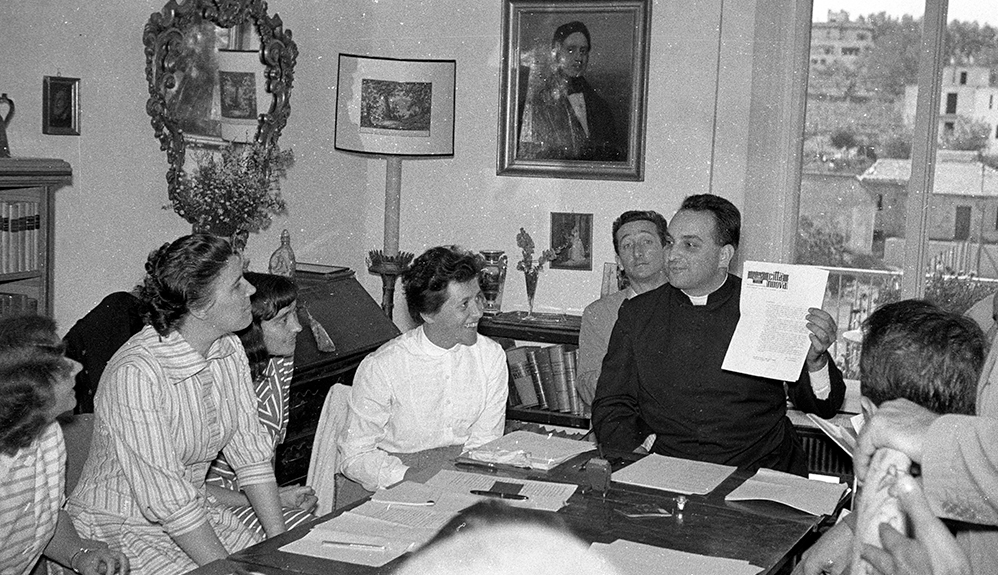
2026 will mark the 70th anniversary of the founding of the Città Nuova magazine. It was the 14th of July 1956 when, in Fiera di Primiero in northern Italy, during a summer meeting of the Focolare Movement called Mariapolis, the foundress and first president of the Focolare Movement, Chiara Lubich, had the idea of creating a “newsletter” so that all the participants could keep in contact.
Since then, thousands of publications have followed, and Città Nuova has always been committed to looking at the facts, reading and exploring current events from the perspective of universal fraternity. It is committed to dialogue on uncomfortable issues, to be close to the most fragile and the forgotten, to build bridges, to be present in the wounds of humanity, to highlight seeds of peace and hope, with a global horizon that looks towards a united world.
As the Movement spread throughout the world, editions were launched in different countries. Today there are 32 editions in 21 languages, both in print and online.
Margaret Karram, President of the Focolare Movement, addressed a video message on the 7th of January 2026 in which she stated that “today, faced with the terrible threats of our time – wars, polarisation of all kinds, environmental crises, an economy often based on exploitation, ethical challenges posed by artificial intelligence – Città Nuova still and always chooses dialogue:
it chooses peace as a difficult but essential pursuit,
it chooses to believe that every encounter, every thought, every word can contribute to changing the direction of the world.”
Here is the complete video message. Activate the subtitles and choose the language you desire.
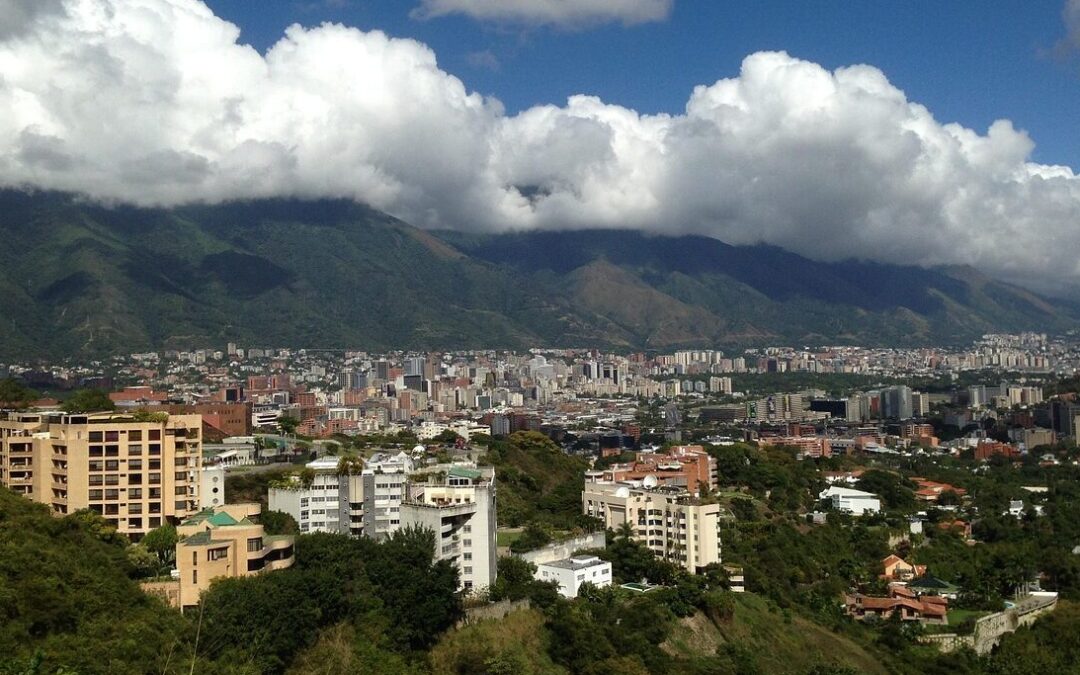
“In the midst of the darkness we are living through today in Venezuela, we remember that we are not alone. Under the roar of the bombs in 1943, Chiara Lubich discovered that there is an Ideal that nothing and no one can destroy: God loves us immensely.”
This is how the “Message of hope and unity” begins. It was shared on the evening of 5th January by the Venezuelan Gen (the young people who adhere to the spirituality of the Focolare Movement), both those who live in Venezuela and those in other parts of the world. They met online to pray and to share how each one is living this critical time for the whole population, never forgetting the choice to love everyone. There was a strong sense of the need to face together what they described as a “sacred” time: “we are not alone because we are supported by the prayer of all those who, from Venezuela and from all over the world, are asking for Peace.”
The message continues:
“Today fear wants to paralyze us, but the response is not hatred, rather unity. Chiara taught us that wheneverything collapses, the only thing that remains is Love. If we become “one”, if we look after one another and place God as our rock, fear loses its power.
Let’s not be afraid. Let’s make this moment an opportunity to:
have full trust that God is our Father and does not abandon us, even when the outlook is difficult;
become “one”: may the suffering of others be our own. Let’s help one another, let’s share the little or the much that we have and break down the walls of indifference;
be builders of peace: let our weapon be solidarity.
If we remain united, Jesus is among us and wherever He is, light ultimately overcomes darkness.
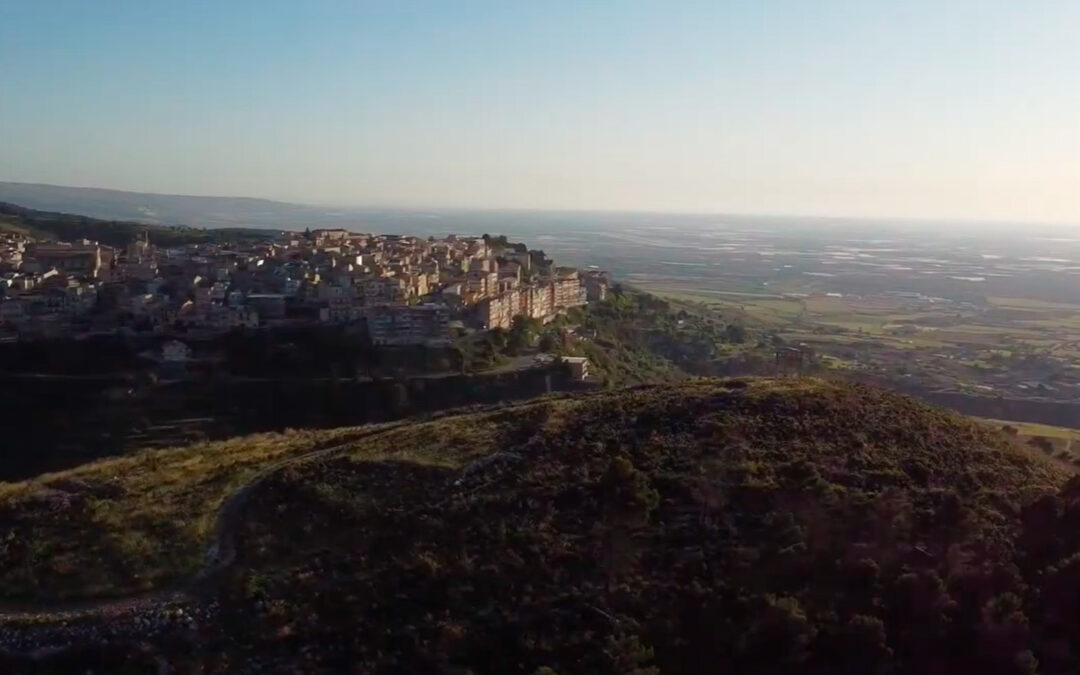
“A New Life” is the story of Hasan Mohammad, an economic migrant who arrived in Sicily (Italy) from Bangladesh. Thanks to the Formation & Communion (Fo.Co.) Cooperative, he found a home, a job and a new family. The “widespread reception” system is not limited to the integration of migrants but aims at reciprocity, where the encounter between different people becomes growth for everyone. Discover how solidarity can transform lives and geographical areas.
In the Muisne district, Esmeraldas, the ‘Sunrise’ project, set up by the Focolare Movement with the support of AMU (Action for a United World) and the Economy of Communion, brings together more than 500 young people in ecology clubs located in towns and villages along the coast. These clubs are not only concerned with ecology, but also with the integral development of the person as a response to the many risks to which they are exposed.
During the Week of Prayer for Christian Unity,[1] we are invited to focus on the theme found in Paul’s letter to the Ephesians. This epistle is one of his socalled prison letters, and in it, he exhorts all those who listen to his message to be credible witnesses to their faith through the unity among them.
This unity is based on one faith, one spirit and one hope and it is the only means of witnessing to Christ’s followers as his “body.”
There is one body and one Spirit, just as you were called to one hope when you were called.
So, Paul calls us back to hope. But what is hope and why are we invited to live it? It is not only a seed that develops but also a gift that we can protect, cultivate and bring to fruition for the good of all. ‘Christian hope sets us upon a narrow mountain ridge that is like a frontier where our vocation asks that we choose to be faithful to God’s faithfulness to us every day and every hour.’ [2].
Our vocation, the call to be Christian, is not just an individual matter between each person and God; it is a ‘convocation’, being called together. It is the call to unity among those who are committed to living the Gospel. In Chiara Lubich’s talks and writings, we often find explicit references to unity as an integral part of her spirituality. It is the fruit of Jesus’ presence among us and this presence is the source of profound happiness.
‘If unity is so important for Christians, then failing to achieve it must be contrary to their vocation. We sin against unity every time we give in to the continual temptation of individualism, which pushes us to do things alone, guided by our own judgement, interests, or personal prestige, and to ignore or even despise others, their needs, and their rights. [3]
There is one body and one Spirit, just as you were called to one hope when you were called.
In Guatemala, there is great collaboration and dialogue between members of different Christian Churches. Ramiro writes, “People from different Churches worked together to organise the Week of Prayer for Christian Unity. The programme included an arts festival that young people helped to initiate and various celebrations in different churches. This was so successful that the Catholic Bishops’ Conference asked us to continue this initiative in preparation for a gathering with Catholic bishops and believers from many Churches who were travelling from across the Americas for a conference commemorating the 1700th anniversary of the Council of Nicaea. It’s not only during these special activities but whenever we come together I feel we always experience a strong sense of unity among us all and the fruits that it brings: fraternity, joy, and peace.”
Edited by Patricia Mazzola & the Word of Life Team
[1] Celebrated 18-25 Jan in the northern hemisphere & at the time of Pentecost in the southern hemisphere. For 2026, the prayers and reflections have been prepared by the faithful of the Armenian Apostolic Church, along with their brothers and sisters of the Armenian Catholic and Evangelical Churches