This is undoubtedly a very difficult time for humanity: wars that continue for years, polarization of every kind, vast numbers of people leaving their homelands in search of a better future that is denied them, climate change, natural disasters…
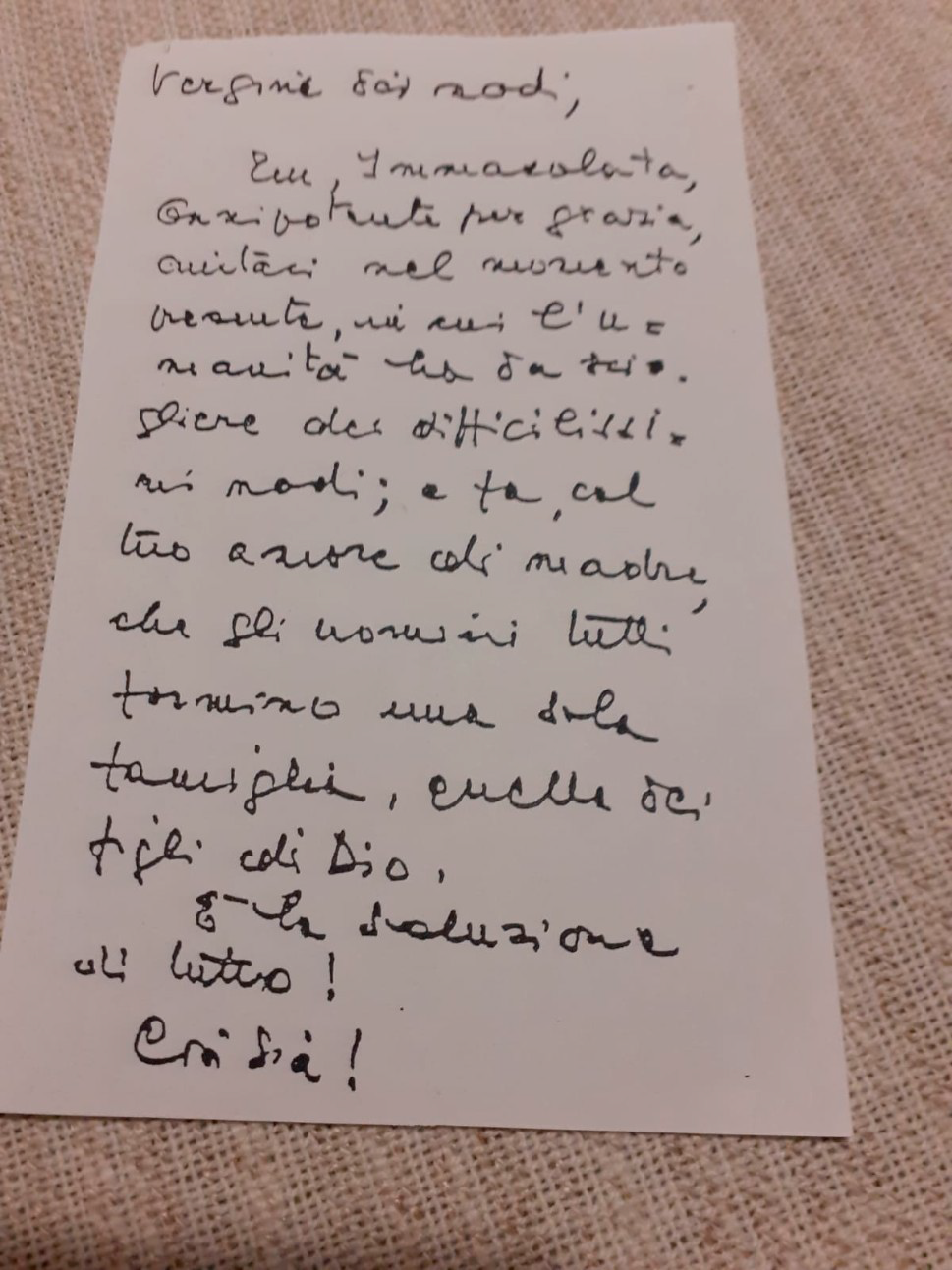
At the end of 2001, Chiara Lubich wrote this prayer to Our Lady Untier of Knots at the request of someone who had sent her a postcard of an image from an 18th-century painting housed in the church of St Peter in Augsburg. It seems to have been written for the very times the world is experiencing today.
Yesterday I experienced one of those moments that are not easily forgotten with one of my colleagues. She is a young woman who has a disabled son and a violent ex-husband with whom she is currently involved in legal proceedings.
She works very hard and I thought of giving her a financial bonus because, with great dedication, she had completed a task that I had entrusted to her. Although given her situation, she sometimes has to be absent due to the court case involving her ex-husband or to some difficulties with her son she is always willing to work. When I gave her the bonus in cash, she burst into tears. Over the weekend money had been stolen from her at a cash machine so this helped to compensate for that loss and it was a greater sum than she had lost. It gave us an opportunity to talk about Providence, Then I remembered something I had heard at an Economy of Communion meeting, namely that “we must anticipate the needs of others”. This prompted me to give her an advance on her wages which, out of humility, she did not dare ask for. We are only stewards.
CK (Argentina) (da “Family News”)
Solidarity
I am an elderly priest collaborator in a parish in Milan, Italy. I also look after some people who are alone and in difficulty, helping them with donations that I receive.
Recently, one particular situation became more serious. I had already booked a place for a few days of summer holiday and I had set aside €140 for extra expenses. After a moment of prayer, I decided to give half of it to the person in need.
This morning, after Mass, an elderly man came up to me and gave me an envelope containing €150. Once again, I found that I was not alone in managing this solidarity.
PL (wrote to us from Milan, Italy)
Recognising one another
Some time ago I began to pay attention to those people whom few notice and whom no one even greets. One day, as I was running to catch the bus, I lost my wallet and went back to look for it. I found a street cleaner who had found it and was trying to track me down. Samuel refused to accept any reward and since then we have met many times to have a coffee.
Fatima is Moroccan, Muslim and works as a cleaner in a neighborhood restaurant. Over time she has told me many things about her family and her homeland. We have talked about beliefs, faith and respect and she demonstrates affection every time she sees me, because no one ever stops to talk “to the cleaner”.
Chaouki is a Tunisian cook who has worked in Italy and Germany, speaks many languages and is a very cultured person. He has taken over a restaurant called “Citizen of the World”: a real statement of respect and tolerance. I told him that I shared his way of thinking and that I was happy to share ideas and actions for a better world. One day I went there to have breakfast with some friends and their surprise was similar to mine in seeing people from various backgrounds who shared his outlook. It’s great to feel surrounded by good people who go about their lives without making a fuss.
Franco and Anna married since 1991, have three children: Benedetta, Francesca and Federico. In August 2025, Franco suddenly left for Heaven, at the age of 63. This news deeply shook many people, not only in their city, Poggio Mirteto (Italy), but also among many friends of the Focolare Movement who knew him, both when he was a Gen (a young member of the Focolare) and, inflamed by the Ideal of Unity, he had said his “Yes” to the call to live for Jesus and also through his work (he worked for years at the Città Nuova publishing house) which brought him into contact with many people.
Together with Anna, their initial “Yes” to forming a family faithful to the promise “where two or more…”, grew throughout their journey of life together, enriched by their commitment in the local community, in particular in the New Families Movement (branch of the Focolare, composed of families who seek to live the spirituality of unity) and by accompanying couples as they prepared for marriage and for the baptism of their children.
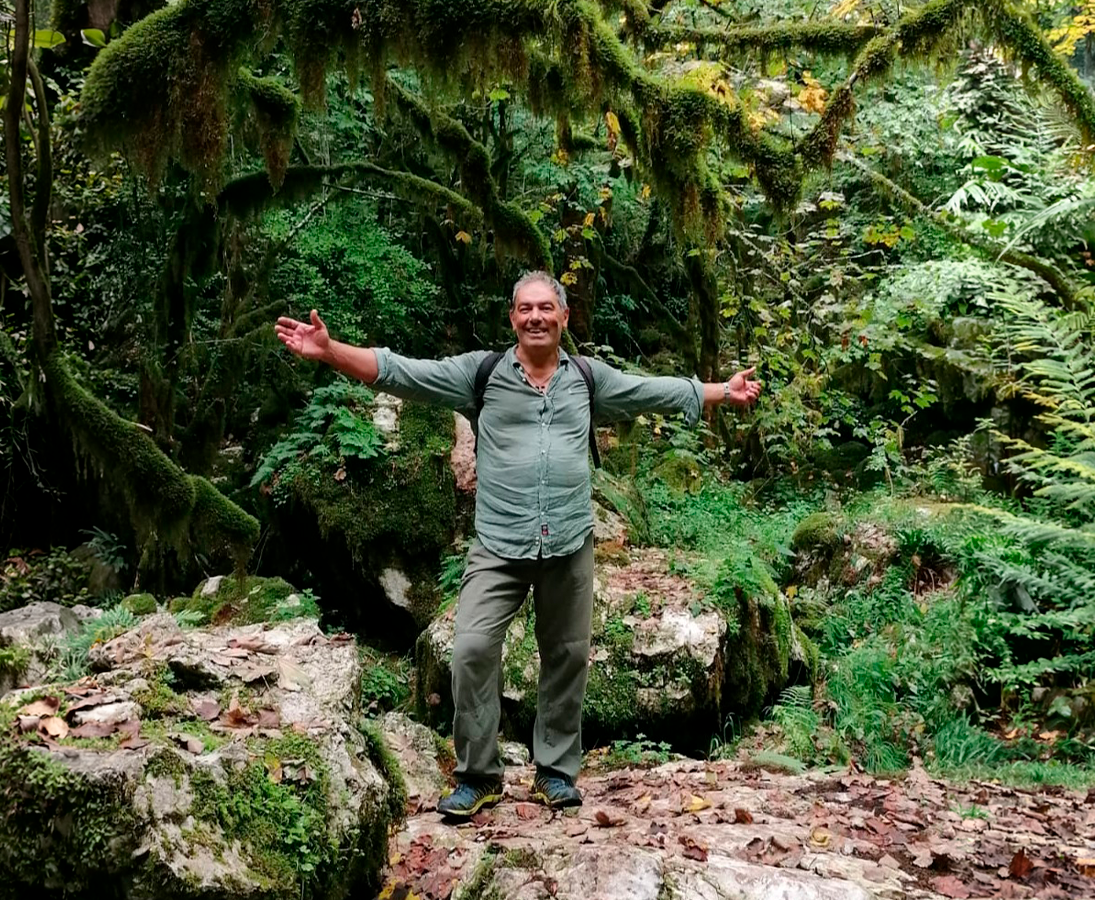
After many years at the publishing house, Franco began a new professional experience as a religious education teacher in a technical institute. He gave himself completely to helping his students grow and flourish, despite the difficulties and personal sorrows that the young people confided in him. What remains most vividly in everyone’s memory are his outdoor lessons, in the shade of the trees in the garden outside the school, his profound ability to listen and his smile. His colleagues too remember that smile along with his commitment to creating a family atmosphere in the school through mountain hikes and social occasions.
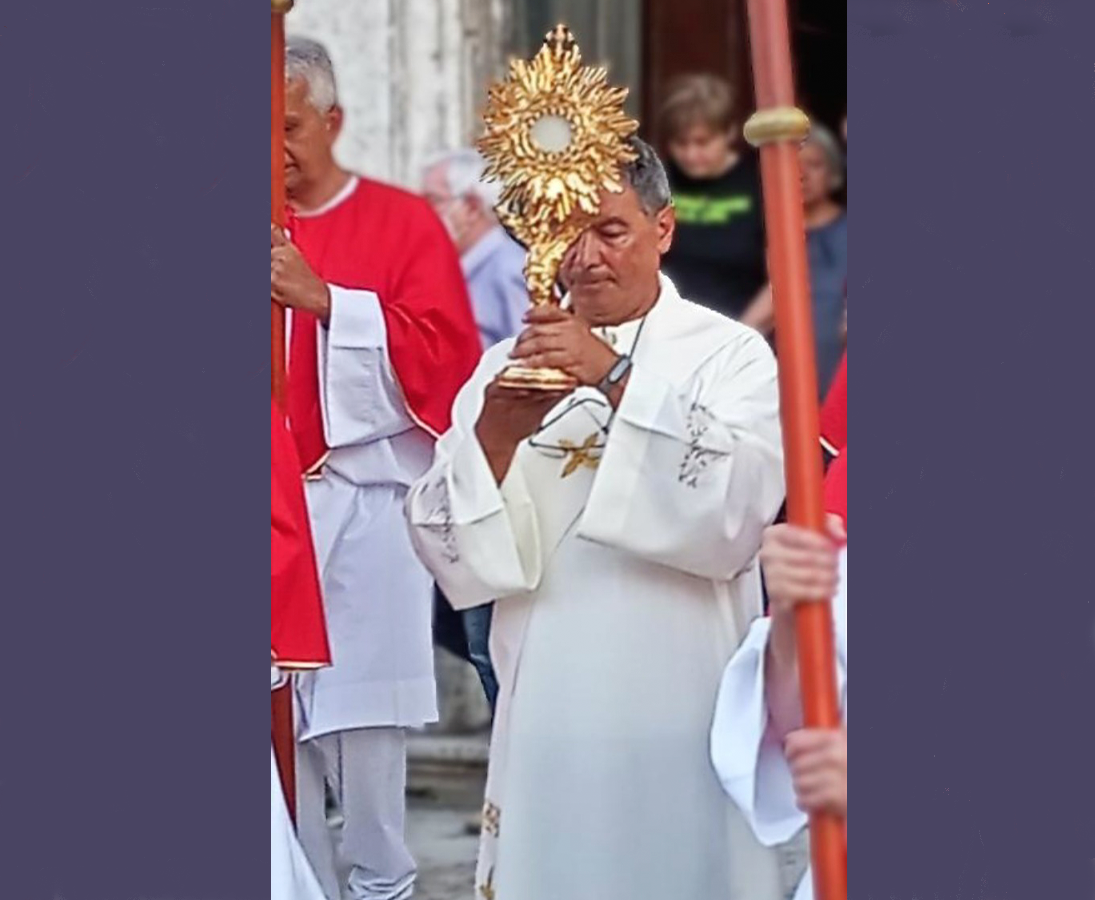
In the final period of his life came his “Yes” to the call to become a Deacon at the service of the Church. He carried this out with humility, quietly but always present, ready to help anyone in difficulty. Those who met him remember how, always with his big smile, he was able to transform the hearts of those who crossed his path.
Pictured: Franco with his whole family; a trip to the mountains; whilst serving as a deacon
Their home was always open to everyone and still is. Many friends continue to support Anna and their children, thanks to the love sown over the years.
Even during Franco’s time in hospital, the last week before his death, the doctors were impressed by the continuous stream of young people who came to visit him to say a last goodbye, embrace the family, or simply to be there at their side for a prayer together.
A colleague of his, who described himself an unbeliever, hailed him as “the closest person to the Gospel” he had ever known.
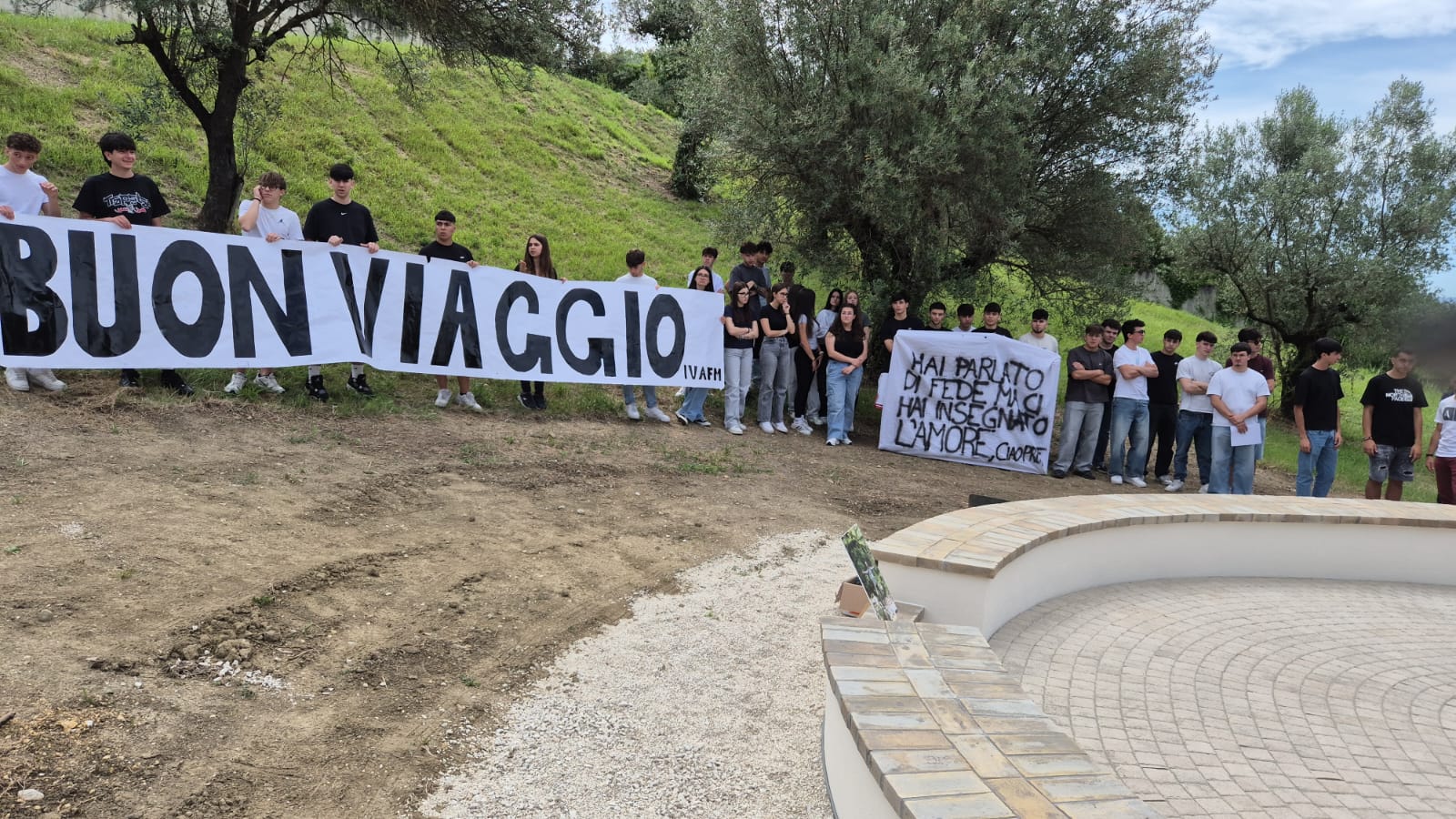
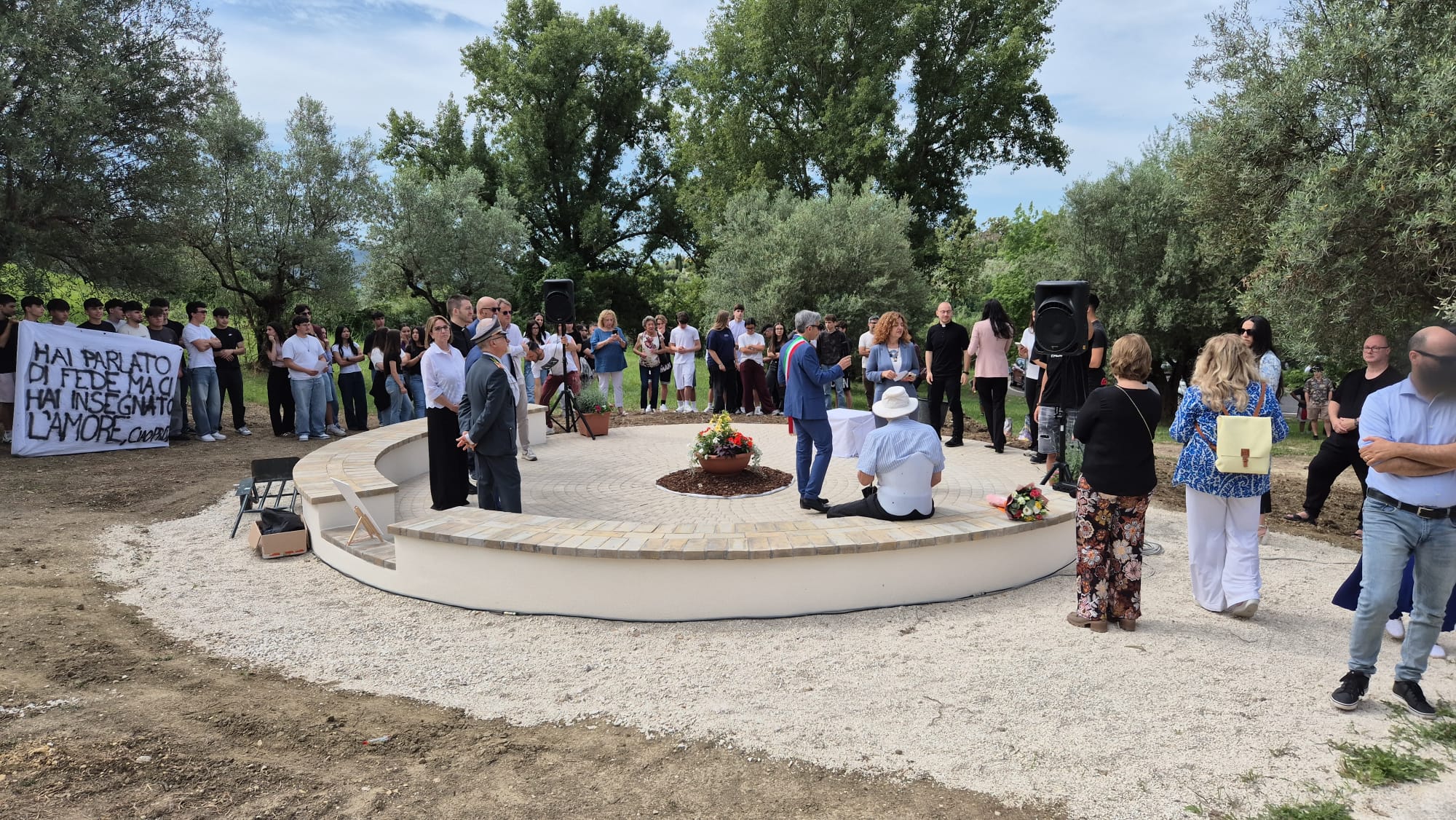
At his funeral in a church packed with people, many young people also gathered in the churchyard: one of their banners read, “You spoke to us of faith but you taught us love”. A large group of priests and deacons stood on the altar around Bishop Ernesto Mandara.
During the homily, Don Mauro Guida, parish priest of the Cathedral of S. Maria Assunta in Poggio Mirteto, quoting Saints Laurence, Claire, Joan, Pontian and Hippolytus, remembered by the Church in the previous days, said: “Every time, every name, every word, every face of holiness, seemed to be the portrait of our dear Franco. Just as once upon a time children showed each other their picture cards, repeating to one another “I have that one, I have it…”, so Franco had suddenly become the image of someone who possessed every quality that could be described or even imagined; “the holiness of the saint next door”, as Pope Francis called it “.
Margaret Karram and Jesus Moran, President and Copresident (in 2025) of the Focolare, said in a letter, “We were deeply moved by the news of Franco’s call to Heaven and fascinated as we followed the story of his life. We assure our prayers and deep gratitude for his beautiful and luminous life. In the certainty that he is has already been welcomed by Jesus, we feel that he is a protector of New Families and of the New Generations. We are united in a very special way to Anna and their children”.
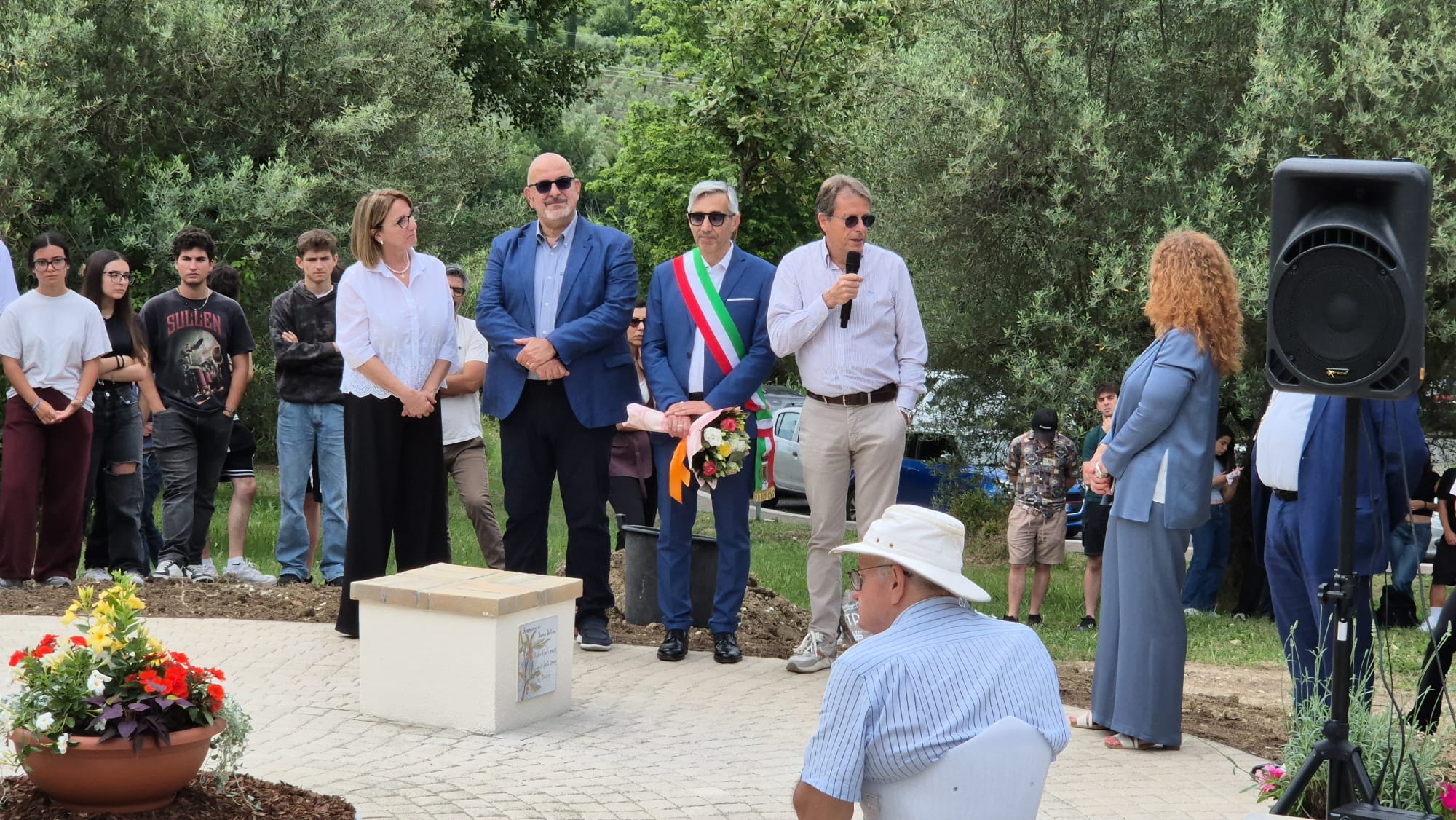
Pictured: the opening of the outdoor classroom at the school where he taught
The school where Franco worked, the IIS Gregorio da Catino di Poggio Mirteto, decided to create an outdoor classroom dedicated to him. This is the post published on the school’s Facebook page: “there are teachers who leave an indelible mark through the way they look at the world: Franco Fortuna was one of them. Today (5th June 2026) in order to remember the love he had for outdoor lesson, we have inaugurated a real outdoor classroom (…). We hope that it can become a place where students can continue to learn, to share ideas and dream, just as Prof. Fortuna would have liked”.
Lorenzo Russo Photos: courtesy of the Fortuna family
Video in English. Turn on subtitles and select your preferred language
For this story, I have to introduce you to my friend Anthony.
He was living in New Jersey at the time.
He had chronic kidney failure. And so, three times a week he had to go on for dialysis, which, of course, made it kind of hard to go about his regular daily life.
At one point in time, I was thinking, “Hey, you know, maybe I could be a kidney donor to him.” But these were kind of like mere thoughts and nothing—you know, I didn’t follow up. I didn’t talk to anybody about it.
A couple months go by, and at one point in time I find myself doing an Easter retreat. On the first day of the retreat, in order also to prepare myself a little bit, I went in for a visit to the chapel. Out of the blue, this question came back to my mind: “Hey, J.P., are you still willing to donate a kidney?”
I was kind of surprised because I hadn’t thought about it for months. But at that very moment there, I prayed about it, I thought about it, and I thought, “Yes, I want to follow up with it. And I want to see if that could eventually be a possibility.”
Then, on the next day of the retreat, one of the young people sharing was Gidget, Anthony’s daughter. First, she shared that during her teenage years, her mom went through a lot of suffering. She had lupus. She had kidney failure. And now, many years later, her dad kind of went through the same situation with the kidney failure. She said, “Even though we suffered so much as a family, I wouldn’t exchange this experience.”
Because recognizing Jesus on the cross in that suffering, she felt that she had come closer to God. And also, it had brought the family a lot closer together as well.
She walks off the stage, she comes back, she grabs the mic again, and she says, “By the way, just in case anybody is interested in knowing, my dad is O-positive.”
That came to me as a shock because I’m also O-positive. So I felt that the only reason she was sharing that was for me to hear that.
Then I understood also that God had allowed me, the day before, to make that decision in all peace and freedom, just between He and I at that moment in the chapel. So there was a gift.
Then we went ahead. We talked about it with some others in the Focolare community. We did some tests for the blood and the tissue. Everything was matching.
A few months later, we actually had the kidney transplant.
Of course, you hear also the consequences are—you know, you can live your life with one kidney. But it was, of course, not on my mind at all. I felt it was not just me wanting to do that, but I also felt kind of like that trigger from God, like, “Hey, if you want, this could be a possibility.” So it was kind of like a subtle invitation on His part to make me make that step out of love for Him. So that was also in the background here.
Of course, Anthony and I stayed in the hospital for a few days. I really felt a tremendous joy in my heart, you know. And I felt there was not just—not a joy because of, “I did something.” But I felt that joy came from God. That was very powerful and very tangible. It was a gift, you know, a special moment.
Jean Pierre Slee (Whashington – USA) Photo: JP Slee’s personal archive
This video is part of the On Point series produced by Focolare Media. This web series explores the key aspects of the Focolare Movement’s spirituality through reflections and real-life experiences. Visit Focolare Media or the YouTube channel to access other resources of this kind, available with subtitles and dubbing in various languages.
A few years ago, while living away from my family, I had to share accommodation for a while with a work colleague. My colleague, Alberto, was an atheist. We would talk about sport, culture, religion etc. On a couple of occasions, I told him what my own conversion and encounter with God through Jesus had meant to me. He always thanked me politely, although he naturally remained faithful to his own convictions.
At the same time, I knew that living the Word of God meant loving this person in a practical way, so I began to take a genuine interest in his life, his family, the things he enjoyed and the things that annoyed or hurt him.
Seeing that Alberto was extremely busy, I offered to do more than my share of the cooking and even washed his clothes. He loved running and although it was far from being my favourite sport, I started going for runs with him so that I could share more deeply in his interests.
One day he invited me to go out with him in search of female company. I politely declined and explained that, for me, sex was something deeply meaningful. He looked at me with some surprise and said, “I need to think about what you’ve just told me.”
Eventually, our paths went in different directions. Years later, we unexpectedly met again at an airport. We embraced and he said, “Do you know where I’ve just come from? A meeting. I’m the president of my parish council.” I was astonished. I could hardly believe it.
Alberto went on, “Miguel, do you remember all those years ago when you cooked on the days it was my turn, or when you washed my clothes and went running with me? I used to watch you, and I could see that there was something within you—a light, a strength in your life that I didn’t have. That was what touched me. Little by little, it began to stir my heart and my mind. “The result was a profound inner dialogue with God. I began reading the Gospel and gradually changed the way I lived. Then I was baptised and here I am: from atheist to President of the Parish Council. “Thank you for those months when we lived together.”