Almost three years after his arrival, medical tests revealed that Elio had a tumour with widespread metastases. Surgery was pointless. A question spontaneously arose within me: why did it happen to him, a person in the fullness of human and spiritual maturity, who could still give a lot to our community, where his wise and calm presence had already helped resolve a difficult situation? Mine was a cry of painful, almost of protest. Then, reflecting with some friends, we reviewed several examples in the Bible, from Abraham to Job, without finding immediate answers. Certain events cannot be explained without faith. During those days I happened to read an illuminating text by Saint Leo the Great: “The Church is the Lord’s field that is clothed with an increasingly rich harvest, because the grains that fall one by one are reborn multiplied”. This is what it was! Only from this perspective could I accept the departure to Heaven of a dear friend. He fell like a large, ripe grain of wheat. I had to believe that from this a full and beautiful ear of wheat would be born.
(G. – Belgium)
Little Great Miracles
I was born in Brazil, but later lived for nine years in another Latin American country with sky-high inflation and widespread poverty that fuelled crime. One day, a friend came to me in tears because she had just been robbed of the only salary which would support her family, since her husband was unemployed and they had four children. What could I do? I simply tried to console her, suggesting that she forgive and pray for the thief’s conversion. But she reacted by saying she would never do that. “In that case,” I replied, “I will pray for him.” A few days later, that same friend came back to see me, but this time with a completely different expression and spirit: happily, she told me that the thief must truly have repented because he had left the bag he had stolen in a shop where she was known. And, astonishingly, her salary was still inside, nothing was missing.
(T.G.S.C. – Brazil)
In a Wheelchair
For a long time now, because of my rheumatoid arthritis, I have been living in a wheelchair. Between hospitalizations and operations, I must have spent three years of my life in hospital. Often, due to the excruciating pain, I find myself completely immobile, unable even to comb my hair or hold a glass. I have had to give up many things I cared about. However, I have a cheerful disposition and often respond to my illness with a touch of humour. Gradually, understanding the “wisdom of the cross” has helped me to accept suffering as the most sublime form of love and to offer my small drop especially for the people who suffer most, for the Church, for the unity for which Jesus prayed. Now I no longer ask God “Why?”, but only: “Help me, Lord”. I try not to burden others with my physical problems and I think that I succeed fairly well, so much so that they find me quite joyful. Everything works for the good if we are open to the love of God. In fact, everyone in our family felt they had to take a step forward. Even our children have matured quickly and have become more responsible.
(Branka – Croatia)
compiled by Maria Grazia Berretta
(taken from The Gospel of the Day, Città Nuova, year XII– no. 1 March-April 2026)
I am a volunteer of the Focolare Movement. Last summer, during a mountain trip with Anna and Toni, friends from our New Families group, it came up that for many years I had worked as a flight attendant for the Italian national airline. They immediately asked me if I knew a neighbour of theirs who had worked for the same company. As soon as I heard his name, I remembered him at once, even though 30 years had passed. They told me that his situation was very sad. Abandoned by his family and suffering from serious illnesses, he was living alone in a large, run-down house that was in urgent need of repairs. I went to visit him and I realized that I needed to lend a hand.
So, together with Toni and Anna, my wife Rita and others, we drew up an action plan. We began by fixing a French window with broken glass, thanks to the help of a carpenter friend. Then we installed a new door leading to the cellar and fixed the bathroom door that had been chewed by the dog. Next we fixed a sliding door that was letting in rain and we also worked on the terrace from which water was leaking into the house. We hired a cleaner, fixed the electrical system with the help of one of our volunteers who is an electrician and who, with the help of Toni also fixed the heating system. My wife added a subtle touch by decorating the courtyard with pots of cyclamens. In short, Cesare, that’s his name, now lives in more humane conditions and feels happy because he is surrounded by people who care for him. He had to go into hospital over the Christmas holidays and we visited regularly.
It’s a joy to know that through those simple gestures, he has regained his faith in humanity.
There is a proverb that says, “Only those who fall can get up again”. This is seen very clearly in the tenderness and courage of young children as they begin to develop their skills. How much willpower they show as they take their first uncertain steps, getting up again and again with determination, until they gain confidence and begin to move with increasing assurance… the journey of life!
As we grow up and face various challenges and problems, getting back up each time becomes more difficult. Life’s trials weigh us down and sometimes we are held back and lose confidence when we encounter people who are different from us or do not think in the same way as we do. Willpower and even a sincere desire to be consistent with our values are not always enough. In these difficult moments, being able to count on a helping hand can give us the impetus to start again without fear. It can create a sense of silence in the depths of our consciences and allows us to be “renewed and whole” within.
Chiara Lubich wrote: “Is there anyone who does not go through trials and challenges? They take the form of failure, poverty, depression, doubt and temptation […] The materialistic and individualistic society that surrounds us is frightening, with its wars, violence and injustice…“. Chiara’s own life was a witness to this. It is precisely in those moments of darkness and struggle that it is important to find the strength to ”start again,“ and confidently say, ”you can still hope for everything.”We need to begin with ourselves[1].
This is what Emilia from Terra Santa managed to do. She works as a manager in a government office where there are a number of Jews, Christians, Muslims and Druze. After October 7, 2023, she understood that love was the only possible response to the great pain everyone was feeling and she began to love everyone around her with a great sense of commitment. In particular, she listened to others so that she could welcome them into her heart. She listened with an attitude of love and humility and understood whatever others people were saying, whether they were Arab or Jewish. As a result, a large number of her colleagues have become so open with each other that they can talk freely about the situation. In turn, this has encouraged other workers to express their fears and struggles and the group has remained peaceful and united[2].
There are many stories of wounded communities that do not give up and that find strength each day in the reciprocal sharing of all they have, believing that hatred cannot have the last word.
Even if we will not be the ones to see the fruits of our commitment, every time we get back up, we contribute to forming “new people” because, as Bonhoeffer said from prison shortly before his death, “For those who are responsible, the ultimate question is not how I can heroically get through this affair, but what the life of the coming generation will be like.”
Jesus climbed a high mountain with Peter, James and John and, from there, the disciples saw the glory of their Master and heard the voice of the Father who recognised him as his son.
This was an extraordinary experience; being face to face with God allowed his creatures to know him in his splendour. The disciples were afraid and fell to the ground, but Jesus touched them and said,
Get up and do not be afraid.
The verb ‘to get up’ is the same one often used in the Gospel in reference to the Resurrection, just as ‘do not be afraid’ are the first words that the Risen Lord addressed to the women at the empty tomb after having greeted them[1]. Jesus’ strong and clear words on this occasion are a decisive invitation to enter into a new life which the disciples were able to experience through the touch of his hand.
We too are sometimes held back by our fears and weighed down by life’s trials and situations that seem to have no solution. When this happens, we cannot rely solely on our own strength if we want to rediscover the enthusiasm and momentum of witnessing to our faith. Instead, we should depend on the grace of God who always goes before us.
“Who does not go through trials in life? They take the form of failure, poverty, depression, doubt or temptation … Furthermore, the materialistic and individualistic society that surrounds us, with its wars, violence and injustices is also frightening… Faced with these situations, doubt can creep in and we may ask ourselves, ‘Where has God’s love gone?’ … Jesus truly entered into every painful situation and took all our trials upon himself … He is Love, and it is love that drives out all fear. Every time we are assailed by fear or suffocated by pain, we can recognise the true reality hidden within it: it is Jesus who is present … Let us allow him to enter our lives. And then let us continue to live as God wants us to do by focusing upon loving our neighbour. We will discover that Jesus is always Love. We will then be able to say to him, just as the disciples did, ‘You are truly the Son of God.’ (Mt 14,33)[2].
Get up and do not be afraid.
Those who have experienced God in their lives have been captivated by his presence, touched and healed by his Word. Sometimes, the witness of a Christian community accompanies us on this divine adventure and gives us the courage to get up again, to step outside ourselves and resume our journey with Jesus and with our brothers and sisters.
“At the end of last year, my country went through a very difficult time. My city was hit by a wave of chaos and fear. I was deeply concerned for my family, my friends and myself. In the midst of so much uncertainty, I tried to remain steadfast in my hope in God and to stay strong despite everything that was happening. Before these events, the young people with whom I am committed to living the Gospel had planned some projects to support families in need by preparing food parcels and organising various initiatives.
But the situation forced us to temporarily suspend all activities. After a few days, we managed to get together and, at that meeting, we found strength and courage in one another. We decided not to let fear overwhelm us, but to put our trust in Jesus and continue on the path we had begun. Thanks to the faith we shared among us, we were able to help more than forty families who were in real need of support. In the midst of those difficulties, we felt that, thanks to God’s love and our unity, we could really make a difference.”
Get up and do not be afraid.
After climbing the mountain with Jesus to meet God and hear his voice, we can also descend with him, to “return to the plain, where we meet so many brothers and sisters weighed down by fatigue, illness, injustice, ignorance, poverty both material and spiritual.” [3].
Even as a Christian community, we may suffer and feel lost, but this Word urges us to set out together, to bring to everyone “the fruits of that experience with God by sharing the graces we have received.” [4].
According to Article 1 of the Regulations of the General Assembly of the Focolare Movement, participants will live this event in profound communion, so as to help unity grow in the entire Movement and guide it toward the fulfilment of its aims. The Assembly is in fact one of the most important moments for the Focolare Movement and takes place every five years, as established by the Decree of the Dicastery for the Laity, the Family and Life (2021).
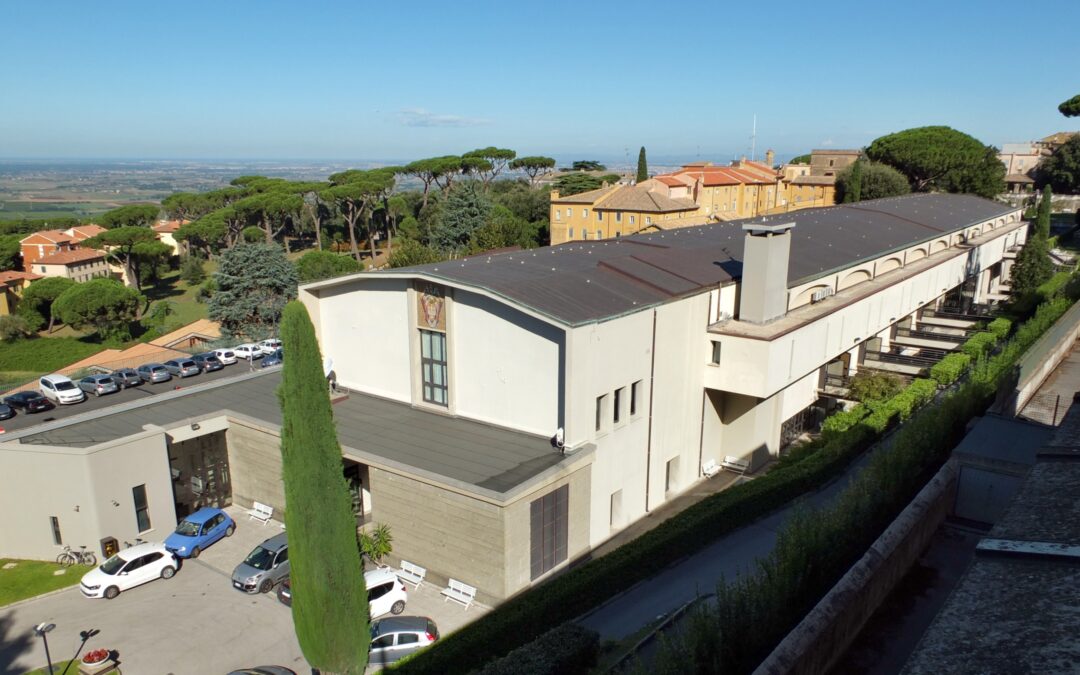
It will be held at the Mariapolis Centre in Castel Gandolfo (Rome, Italy), where 320 participants – including about 50 observers – from different countries, cultures and ecclesial and religious contexts are arriving. They are brought together by their adherence to the spirit and values of the Movement founded by Chiara Lubich (1920–2008) and recognised by the Catholic Church as a private, universal association of pontifical right.
The programme
The Assembly will begin with three days of spiritual retreat. On the 5th of March, the current President, Margaret Karram, will present her end-of-term report, accompanied by some reflections from the Co-President, Jesús Morán. The following days the programme will alternate between plenary sessions and work in 30 groups, dedicated to studying in depth the topics raised by the Focolare communities around the world.
The subjects that will guide the work will focus on the question of how to implement the charism, or rather how to create relationships of fraternity and unity, in the current global context through a commitment to peace and social justice, dialogue in a polarised world, the responsible use of technology, dialogue as a key instrument between Christian Churches and with people of various faiths and convictions, integral ecology, and participatory governance. One of the topics will also be the transmission of the charism of the Focolare Movement to future generations. There will also be sessions for discussion on the proposed amendments to the General Statutes and to the Regulations of the various branches of the Movement.
Thursday, the 12th of March, will be dedicated to the election of the President and the Co-President, positions which, according to the General Statutes of the Focolare Movement, must be confirmed by the Holy See. Then, on the 15th of March, the General Assembly will proceed with the election of the general councillors, thus completing the composition of the new governing body of the Movement.
Towards the General Assembly: a worldwide journey
In preparation for this Assembly, communities of the Focolare Movement in 150 countries took part in an extensive process of listening and synodal discernment, offering ideas and priorities for the future. This resulted in hundreds of contributions on key issues as well as challenges that the Movement is facing internally and in the global context. Local communities also expressed their preferences for candidates for the governing body of the Movement.