Far more than a simple closing celebration, it was the visible stage of a journey built throughout the year by hundreds of young people across Italy and Albania. It is already looking to the future, aiming higher with the desire to involve many more young people, teams, and initiatives in the years ahead, both across Europe and around the world.
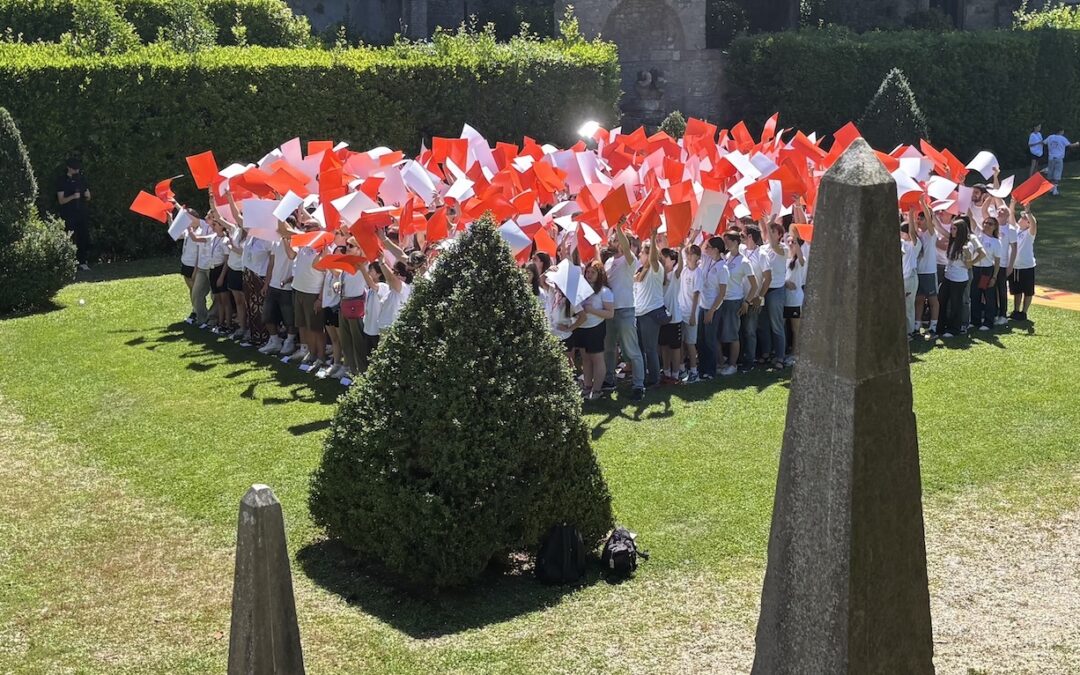
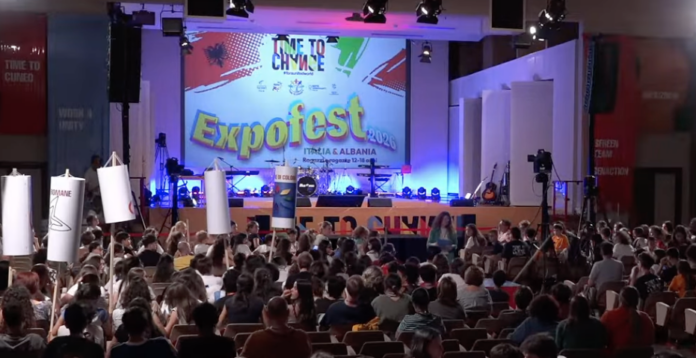
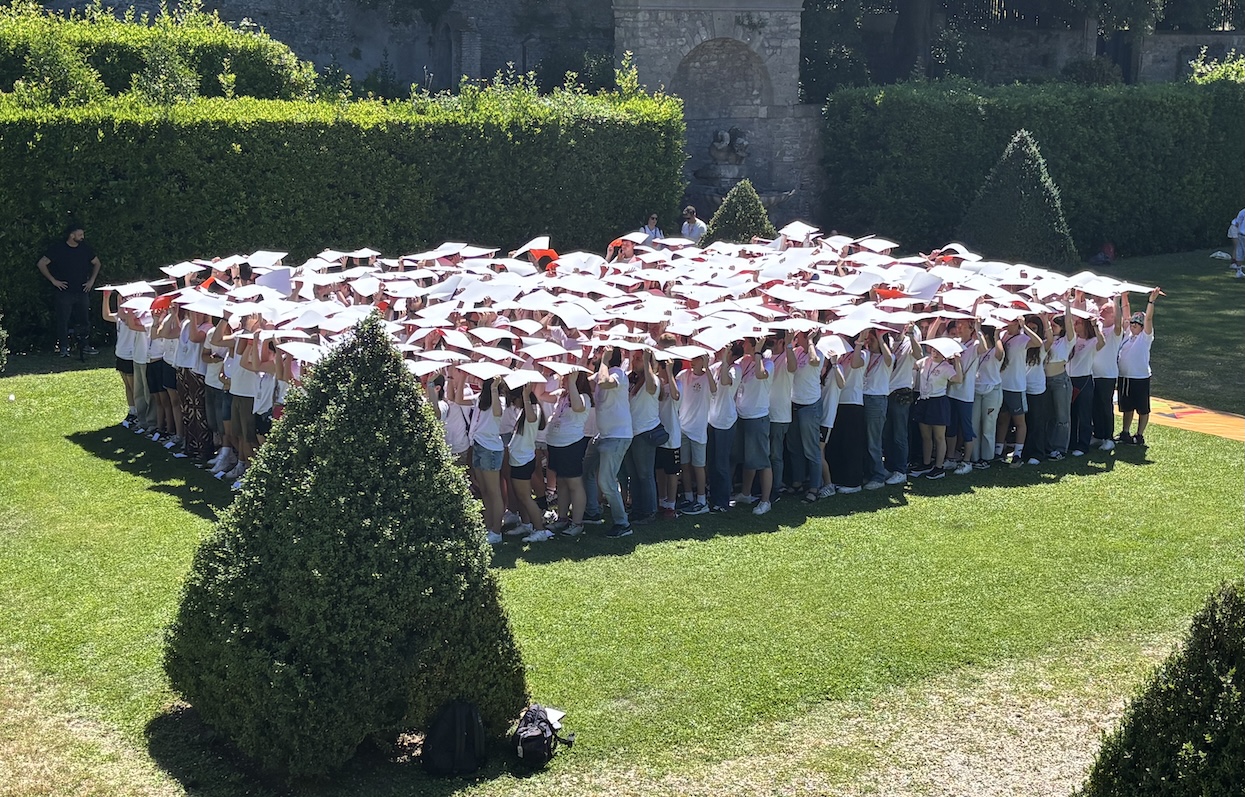
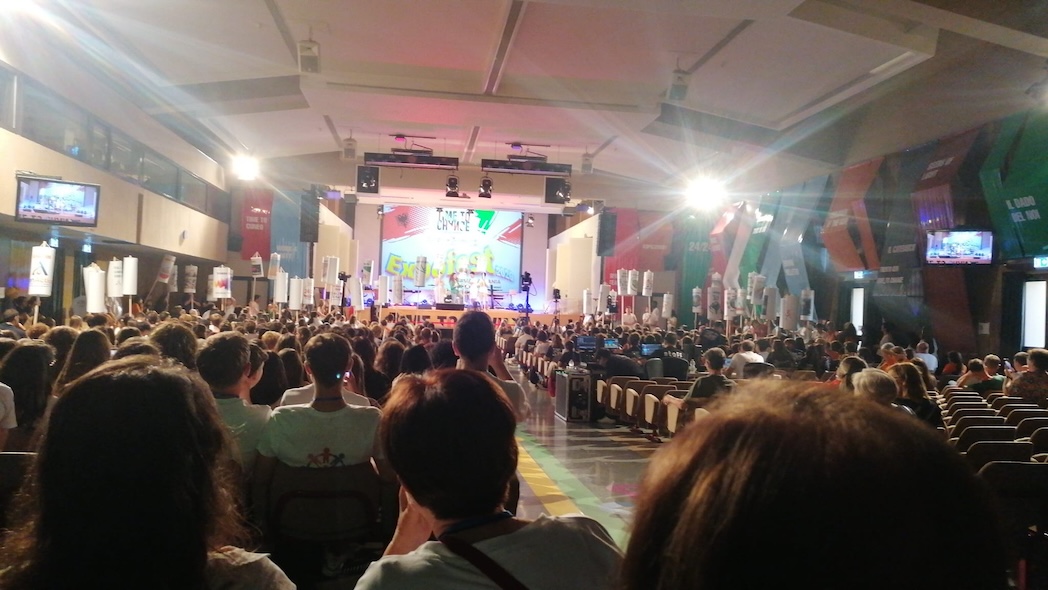
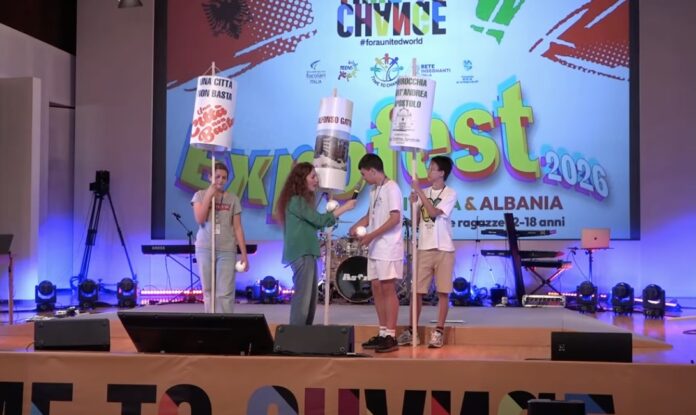
The Expo Fest of Time to Change ended in Castel Gandolfo (Rome, Italy), on 6th-7th June. The programme engaged around 1,300 young people and 105 teams, challenging them to take action through practical projects in solidarity, active citizenship, environmental stewardship, inclusion, and peace for the common good.
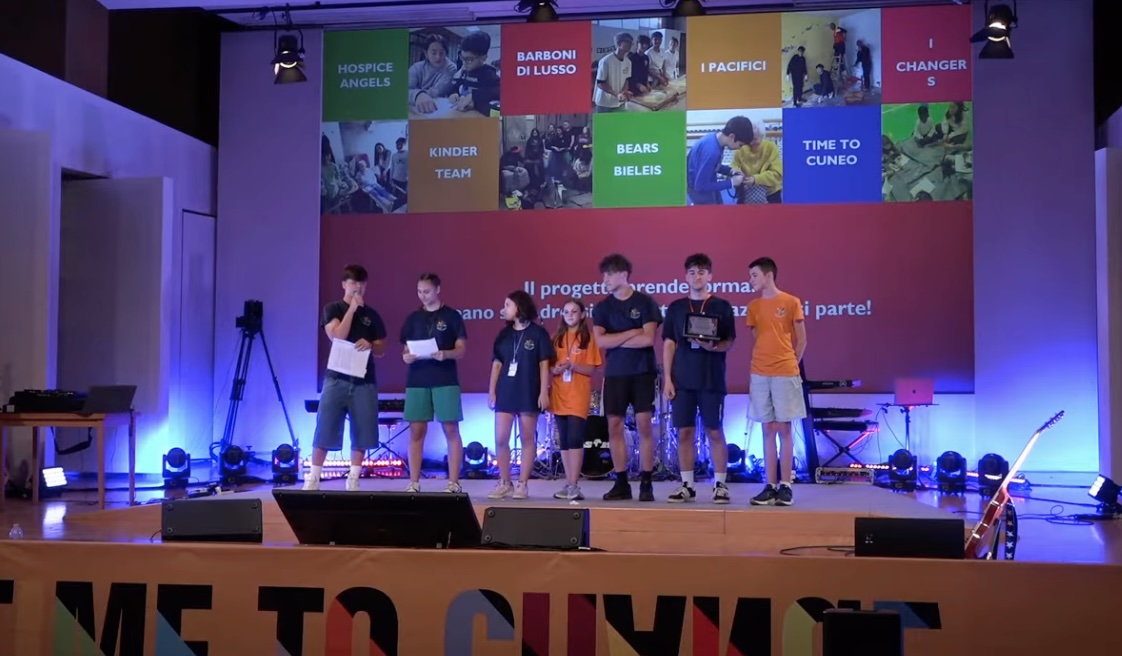
Almost 600 youth from 52 teams met. Among the comments collected from participants were: “I have become more aware of my actions and I have paid much more attention to those who find themselves in difficult situations”. “I understand how valuable some friendships are.” “I carry in my heart the beauty of what was born here and the silent strength that these days have generated”. These are some of the impressions gathered from the participants, protagonists of an event that gave voice not only to the 9 finalist teams, but to all the realities involved.
During the event, voting and the final award ceremony took place. The Trent Gen Time to Change team from Trent won first place; Children of the Sun from Taranto ranked second; Time to Change from Milan ranked third. Special prizes were awarded to the teams from Piedmont and Valle d’Aosta, the “Alfonso Gatto” High School in Agropoli and the Albanian team Alboomerang.
Through moments of sharing, personal testimonies, music, dance, discussion, workshops and flash mobs, each group was able to tell their contribution to change. At the heart of the event was a large space dedicated to stories: those of young people who have chosen to step outside themselves to meet others; of schools that have transformed civic education into a concrete experience; of local groups that created afterschool programmes, artistic initiatives, environmental projects and acts of solidarity towards people living in vulnerable situations.
The projects presented demonstrated how change can be lived in everyday life. For example the Alfonso Gatto Linguistic High School in Agropoli (Salerno), carried out a project dedicated to the1948 Universal Declaration of Human Rights. Students engaged people in the street, with questions about fundamental rights, handing out symbolic badges to “friends of human rights” and donating copies of the Declaration to those who wished to know it better.
There were 18 young people from Albania. Through the Time to Change programme they took part in theatre and art activities for children, ecological walks, training sessions and meetings with young people welcomed into family homes. Regjina Paluca explained, “In the community, there are young people between the ages of three and twenty. Some told us that they grew up in a family home: they arrived as children and now attend university. It was very touching for our youth. They saw that those thirty young people all live together in the same house, while they, at the end of the day, would each return to their own home. We will continue this work in the future, because the project is spreading rapidly: young people carry a beauty within them that they want to share with their friends.”
A significant part of the journey focussed on personal vulnerability. The experiences of Edoardo, Francesca and Victoria told of isolation, depression, anxiety, bereavement, exclusion and reconciliation. Their stories showed how suffering can become a place of growth, relationship, renewed faith, and openness to others.
The journey was also inspired by a poem written in 2005 by Margaret Karram, President of the Focolare Movement, who, in front of “the long, high, grey wall” of Jerusalem, ” stretching through the city, dividing neighbourhoods, streets, lands and families”, reflected on the meaning of her life and the divisions of her Holy Land in the light of Jesus crucified and abandoned, hope against all hope.
During the event, Margaret Karram, presented a travelling trophy to the winning team, Trent Gen Time to Change. The trophy will accompany future editions of the project and will be passed each year to the new winning team.
In her brief greeting, she reminded participants that living peace requires courage, and that peace begins with personal change. “The first peace is Jesus,” she said, “who died for us, but He rose to give us peace and to redeem each one of us.”
As one of the participants wrote, Time to Change “does not limit itself to talking about change, but makes it possible”. The wave started by these young people now continues, reaching ever higher.
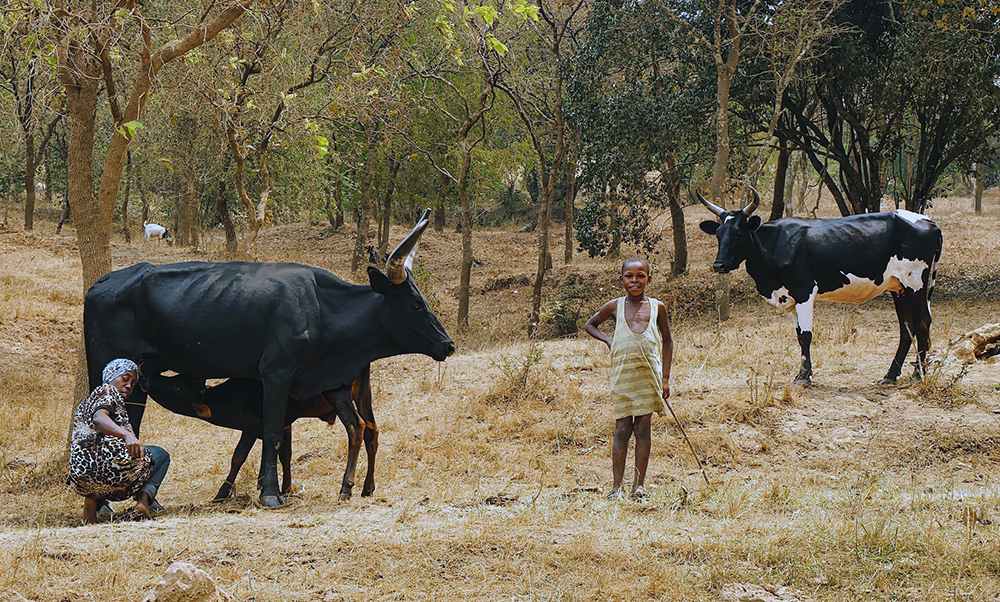
With the arrival of a new parish priest in a neighbouring village, we have begun living the Word of Life together. This is a phrase from the Bible that the Focolare Movement focuses on each month and about which we share our experiences. One evening, our neighbour’s cows got into my bean field and destroyed everything. It was not the first time this had happened and because of it we had not spoken to each other for months. Wanting to teach him a lesson, my wife, the children and I picked up some branches and set off towards his house. On the way, I remembered the Word of Life and said, “Hold on! Last week I received a leaflet that said we must forgive our enemies. If I go to the catechesis meeting, how can I explain it if we go and punish our neighbour now?” We decided to go to his house, but not to speak to him in a threatening way. We simply wanted to explain what had happened and ask him to be more careful with his cows. That is exactly what we did. Expecting a violent confrontation, he was left speechless. He knelt at my feet and apologised over and over again. From that day on, we began speaking to each other again and greeting each other normally. In fact, even more than that: we became friends. A new joy filled our home.
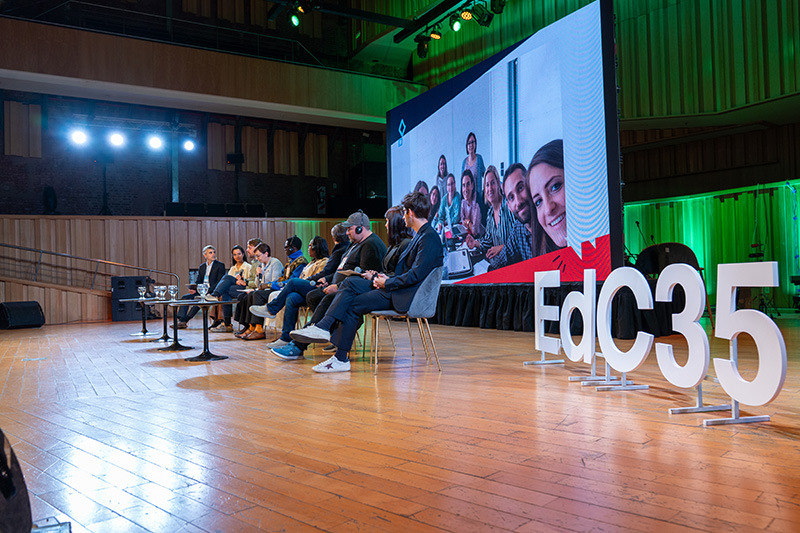
Encounter, celebration and commitment: three words that summarise the 35 years of the Economy of Communion (EoC), commemorated from 25th-30th May 2026.More than 400 people participated in a two-phase program. In the first, participants had an immersive experience in 16 Latin American communities and businesses that put the culture of communion into practice. In the second, they gathered in Buenos Aires, Argentina, for an international forum dedicated to celebrating the journey and present reality of the EoC and committing to its future.
Regenerating “wounds” from the inside out
Communion, as a force for regeneration, stops focusing exclusively on the poverty of a territory and instead highlights its social, cultural and spiritual riches. For this reason, that’s where the celebration began: entering the depths of those who suffer daily in order to get in touch with and imagine together a different economy. Sixteen initiatives from three Latin American countries opened their doors to participants for the first part of this celebration. Through group activities, guided visits, participatory exercises and moments of dialogue, each person was able to listen, welcome the reality of the other, encounter it directly, understand it, express it and share it.
“I participated in the experience at the Nuevo Sol Centres in Buenos Aires. What struck me the most was not the poverty or the enormous inequality that exists in the suburbs of Buenos Aires, but the strength with which love weaves communities in this region. The challenges are more difficult, which is why love is more concrete, more active and closer”, said Luz Villafañe, from Tucumán, Argentina.
The Entrepreneurial Journey with the Economy of Communion
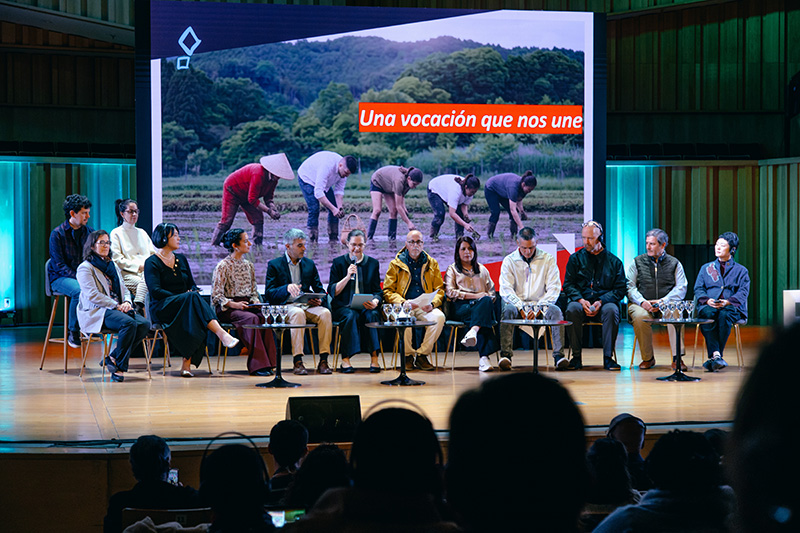
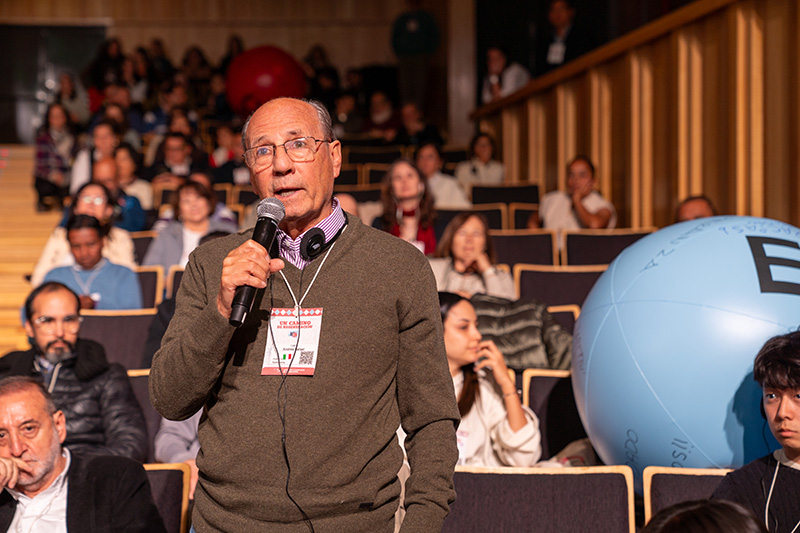
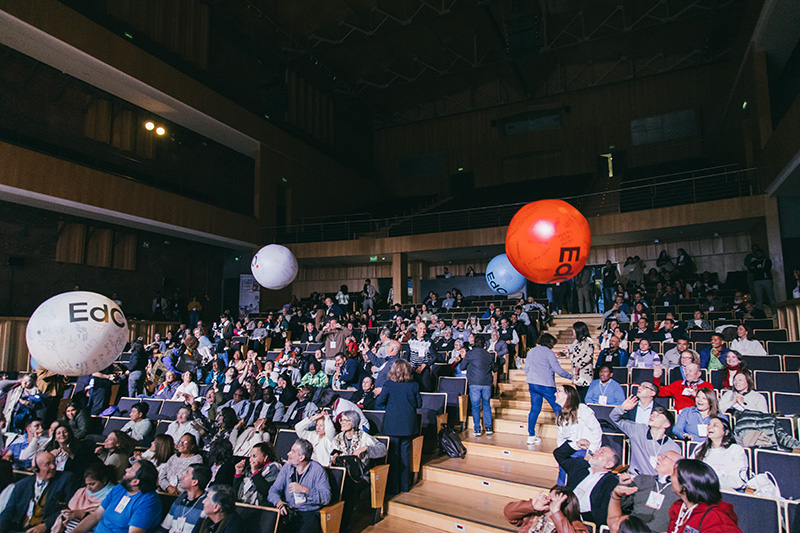
After these experiences, the participants met in Buenos Aires on 29th-30th May and took part in a forum held at the “Usina del Arte” Cultural Centre.
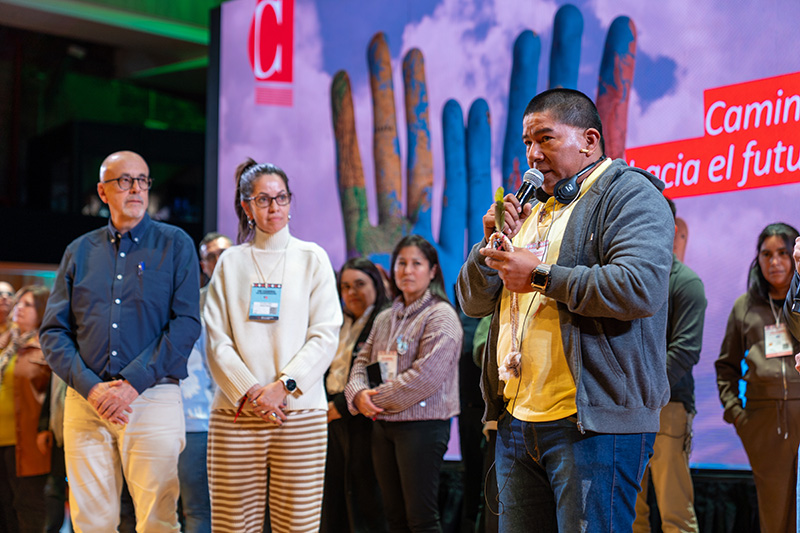
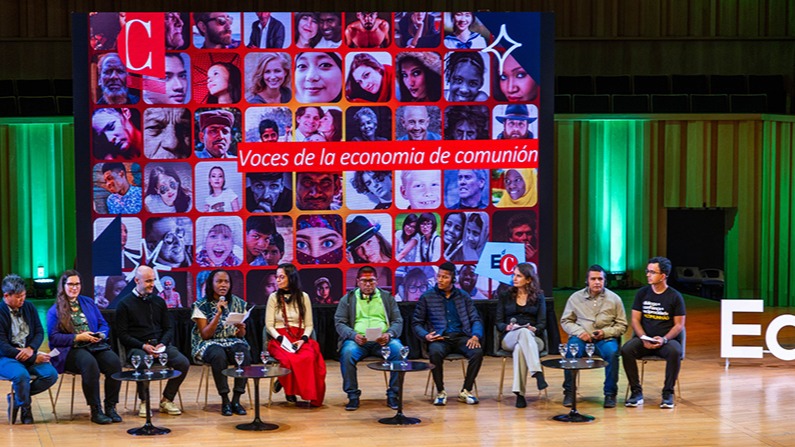
Voices from different countries, cultures and social classes, including entrepreneurs, start-uppers, community leaders and indigenous leader, took turns on stage demonstrating the transformative power of this vocation. There were experiences of small and large entrepreneurs, of those whose projects are dedicated to the care of the earth, of those who live interculturality as a richness and make choices of communion as a vocation, as a lifestyle.
Commitments for the Future
The culminating moment of the celebration was a global pact signed by all those present, individually and collectively, to promote, within the economy, a culture that places human relationships at the centre and aims to put regenerative approaches into practice, approaches capable of creating communion. During a global online link up held on the morning of the 30th, almost 300 people joined the Buenos Aires hall, connected from all over the world, to solemnly reaffirm the pact that unites the entire Economy of Communion network.
The EoC also unveiled two new developments to celebrate the present and look to the future: a new visual identity and a new application to connect people, businesses and projects globally. To learn more, visit https://www.globaledc.org/.
This large global community aspires to carry forward the culture of encounter, to work for a more just economy, to recognize the central role of the people in vulnerable situations, and to contribute to the building of more fraternal communities through relationships. As many repeated during the event, “No one is so poor as to have nothing to give and no one is so rich as to have nothing to receive”.
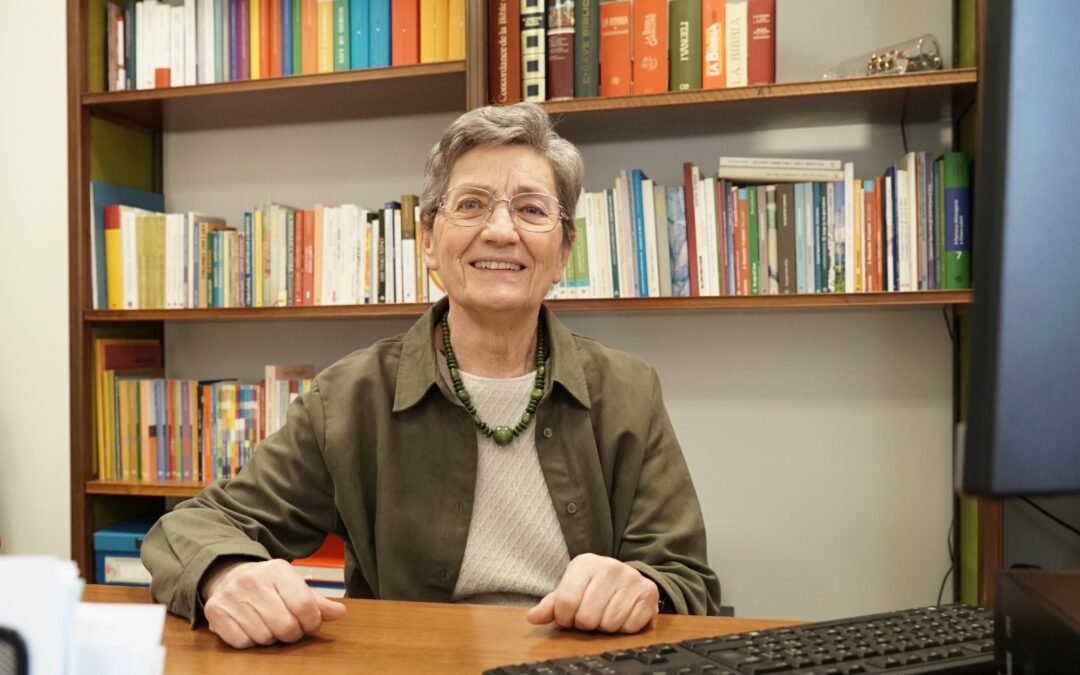
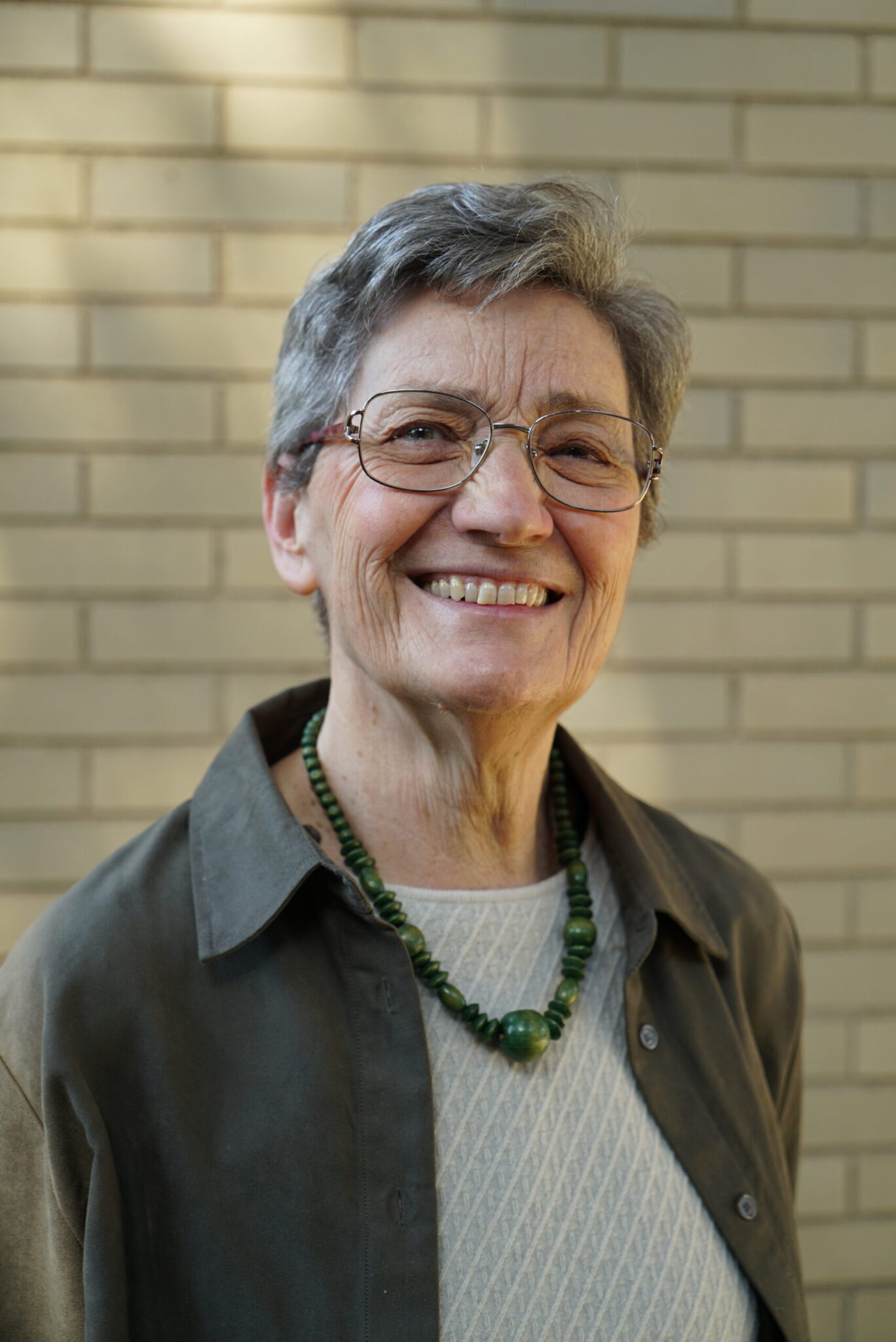
Alba Sgariglia has degrees in philosophy and theology. Since 1975, the year before she entered the focolare, she began working at the Study Centre of the Focolare Movement alongside the foundress, Chiara Lubich.
What did your work at the Study Centre consist of?
I used to go to the library in Florence to photocopy passages from the Greek Fathers, which we would then translate at home, searching through countless pages for those brief phrases that could serve Chiara Lubich to confirm her inspirations. At the time I was working with Marisa Cerini, who told me: for us, building unity means that we should enter into the thought of the Greek Fathers and from there try to understand the light of the charism that Chiara has received. In the following years I also taught religion in secondary schools in Rome. I then joined the governing body of the Movement to oversee the cultural aspect and subsequently I became part of the Abba School, which Chiara founded in 1991 to study the notes from the so-called period of Paradise ’49. Finally, in 2014, Maria Voce Emmaus, then President of the Focolare Movement, entrusted me with the Chiara Lubich Centre, which was established to preserve, study and promote the life and work of Chiara.
What does this newly published book represent?
Paradise ‘49 is a text published posthumously, since it was written, compiled and edited by Chiara Lubich during her lifetime. She wished to describe the mystical experience she had lived between 1949 and 1951, accompanying it with footnotes that would facilitate its comprehension, so as to provide the group of scholars at the Abba School with a text that was accessible and could be used for research. The text contains a mystical experience that Chiara always said she could not keep to herself. Then, urged on by many people, she realized that the text could be understood and used by others in the Movement as well.
For example, in the early 2000s, she herself explained the essence of this experience to the young people of the Movement. Then little by little, she realized that the experience recounted in the text could also be shared with people of other religions. Over the years we have held symposia with Hindus, Buddhists and Muslims, to whom Chiara offered some passages from Paradise ’49. We have also discussed the text with people with no religious affiliation, who have given reflections far deeper than we could ever have imagined, emphasizing that it is a text of great value. There are many founders of charisms who have received this possibility of understanding the work they were carrying out, through so-called “intellectual visions” in which one perceives with the intellect what God is allowing one to see.
But since it is a mystical language, isn’t it difficult for most people to understand?
Mystical language is a unique literary genre; it is neither poetry, nor theatre, nor literature, nor theology. For example, one sometimes encounters difficulties on a theological level, because the mystic seeks words they cannot find, trying to express the inexpressible: a difficult task, so much so that often Chiara herself, whilst we were re-reading these passages, would ask us: “But how could I have written these sentences? What do they mean? Why did I write this?”
This confirms that, in such situations, the founders seek to express what they “see” using the cultural categories and concepts at their disposal, which are sometimes inadequate. For example, in Paradise ’49 there are references to The Divine Comedy because Chiara was familiar with it, or to philosophers such as Kant, whom she had studied. The external setting can also have an influence: Chiara and her first companions began this experience in the mountains of Trent, in Tonadico: it is a natural setting that speaks for itself through its beauty. This, too, helped her to express things she was perceiving for the first time in her life.
Over these 18 years since Chiara’s death, you have published books that shed light on the context of the Paradise ’49 experience…
We have continued to examine the text in depth across various disciplines, using the method Chiara had left us, which is to study everything with “Jesus in our midst”. I believe that three key aspects can be identified in this volume: the first is an educational aspect, as it teaches how to live out the charism of unity and offers a vital key to understanding it; the second aspect can be described as artistic and literary, as the text encompasses many literary genres: diaries, letters, writings and notes; finally, there is the doctrinal aspect, as the text undoubtedly has a theological focus. It is, in fact, a mystical experience that helps us to understand, on the one hand, the truths of Heaven: God, the Trinity, the Word, Mary, creation, hell and paradise; and, on the other hand, the incarnation of the charism in a movement that would have been founded in the following years, that is, after 1949–51. Every time one reads these mystical texts, one understands new things. This is what happens to me too: every time I read these pages, I understand new things, both intellectually and spiritually.
When reading the text, doesn’t Chiara seem to be a bit presumptuous in certain passages?
We need to understand why Chiara says those things in that way. We could say that it is as if God, in order to express concepts that cannot be conveyed through a human being, identifies with that person, seeing things through their eyes. This is why Chiara finds herself writing: “Today I am universal fatherhood.” But she herself asks: “What does that mean?” In that moment, she identifies with that reality, so that she can express it. In the footnotes, she herself comments on and explains her amazement and her joy at seeing that other founders had experienced more or less the same thing.
What advice would you give to someone reading this text?
I would say: take this book and read it whenever and however you like, at any time. You can discuss passages that are unclear or more complex with others, or with an expert. But I suggest that you don’t let yourself be influenced by anyone, because this text speaks directly to the individual. Let’s open it at random and read whatever page we come across. We will understand what we need at that moment, because the text, despite a few difficulties, really touches us deeply. It’s a mystical experience, that can, in a certain way, be “shared”. This is the novelty, as Chiara herself explained to us. She always made sure that everyone could participate in her experience, and this book gives us that opportunity.
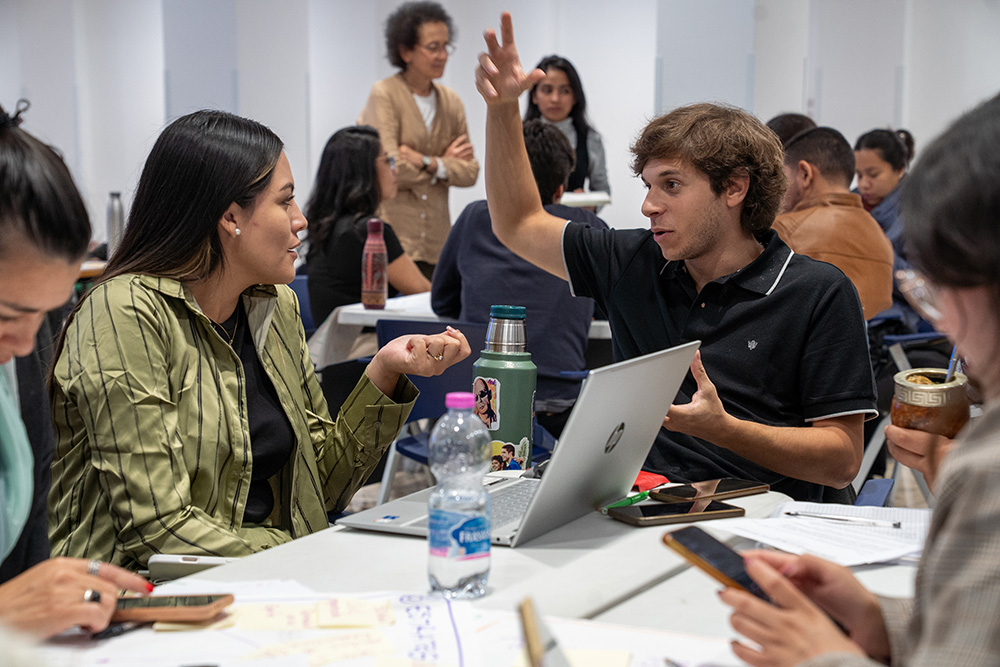
Following the profound experience shared with young people during the 2026 Hackathon, the second phase of the “One Humanity, One Planet: Synodal Leadership” programme is now getting underway. It offers a six-month virtual training course that combines in-depth study and dialogue based on participants’ diverse backgrounds, the exchange of projects and experiences, and the development of initiatives with local impact and global reach.
It is aimed at people aged between 18 and 40 who have experience in political representation, public administration, social movements, political parties and advocacy; who are committed to social and political transformation or interested in strengthening their capacity for dialogue, cooperation and collective action; and who are willing to contribute both practically and intellectually throughout the programme.
Lasting six months, delivered 100% online, completely free of charge with an estimated commitment of three hours per week, the programme aims to reach 500 young people this year.
“We are living in a historical moment marked by deep geopolitical tensions, socio-environmental crises, increasing social fragmentation, and high levels of polarization,” say the organisers in their introduction. “These challenges call upon us: they reveal the limits of traditional governance models and the urgent need for new forms of leadership capable of generating dialogue and activating processes of collective action to promote peace and unity. In this context, we have chosen a synodal style of leadership: a leadership based on listening, participation, shared responsibility, and the construction of shared solutions. If you believe that politics can be a space to regenerate relationships, promote the common good, and care for humanity and the planet, this call is for you. We invite you to become part of an international space for training and cocreation of political initiatives together with other young leaders from different regions of the world, in order to rethink governance in the face of today’s challenges”.
The deadline for applications is Friday 19 June 2026.