The exile in Babylon and the destruction of the temple in Jerusalem created a collective trauma for the people of Israel and gave rise to a theological question: they asked themselves, ‘Is God still with us or has he abandoned us?’ This month’s Word of Life is taken from the part of the book of Isaiah that endeavoured to help the people understand that God was still at work. They could trust him and would, eventually, be able to return to their homeland. In fact, the face of God the creator and saviour is clearly revealed during this experience of exile.
See, I am doing a new thing! Now it springs up; do you not perceive it?.
Isaiah reminds us of God’s faithful love for his people that remains constant and unchanged during the dramatic period of exile. Even though the promises made to Abraham seem unattainable and the covenant seems to be in crisis, the people of Israel are in the privileged position of continuing to experience God’s presence in history.
The prophetic book addresses existential questions that are still fundamental today: who determines the unfolding of history? Who determines its meaning? We can ask these questions on a personal level too. Who holds my fate in their hands? What is the meaning of what I am experiencing now or have experienced in the past?
See, I am doing a new thing! Now it springs up; do you not perceive it?.
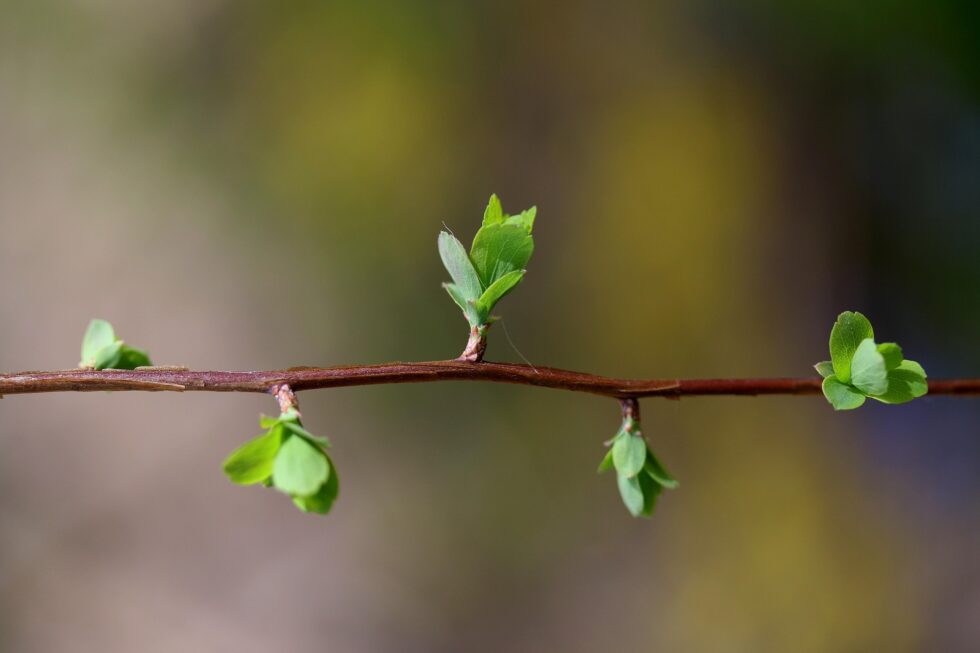
God is working in each person’s life and is constantly, doing ‘new things.’ If we do not always notice or can understand their meaning and scope, it is because they are still springing up or because we are not ready to recognize what he is creating. Perhaps we do not pause long enough to observe these tiny shoots of life that are a certain sign of his presence because we are distracted by all that is happening around us or because thousands of thoughts and worries invade our souls and weigh us down. Nonetheless, he never forsakes us and is continually creating and recreating our lives.
“We are the ‘new thing,’ the ‘new creation’ that God has generated… We no longer look back to the past and sometimes regret what has happened to us or mourn our mistakes: we strongly believe in the action of God who can continue to work new things.”[1].
See, I am doing a new thing! Now it springs up; do you not perceive it?.
We live alongside many other people; they may be members of our community or friends or colleagues at work. Let’s approach them and try to work together without ever losing faith that things will change for the better.
The year 2025 is special because the date of Orthodox Easter coincides with that of other Christian denominations. May this shared celebration of Easter be a testimony to the willingness of the Churches to unceasingly continue to dialogue about the challenges facing humanity and to promote joint action.
Let us prepare to live this Easter season with great joy, faith and hope. Christ rose from the dead so, although we may ‘cross through the desert’, let us continue to be accompanied on our journey by the One who guides both history and our personal lives.
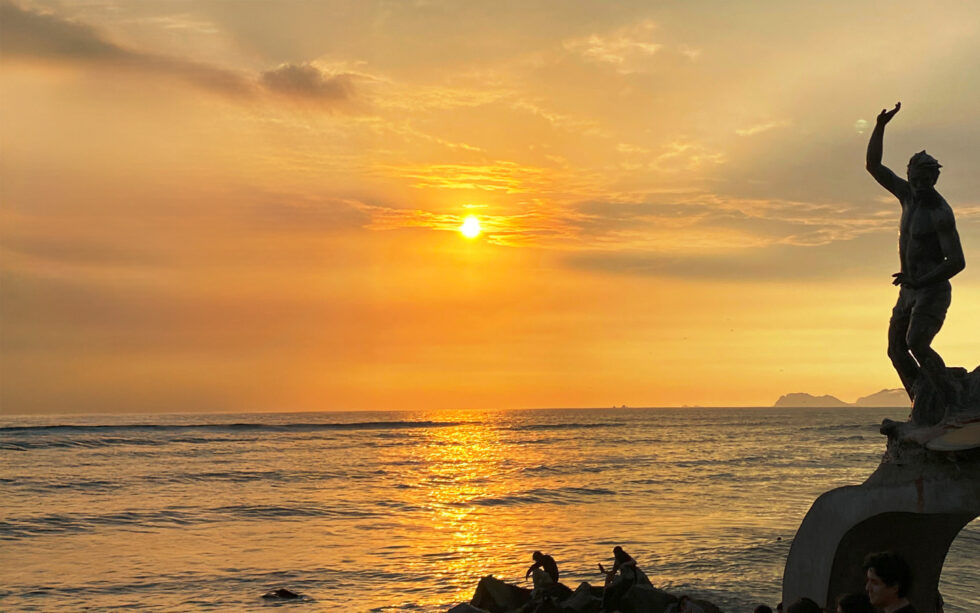
It was a beautiful afternoon with perfect weather. Lima’s waterfront was crowded: entire families enjoying the beach, parents and children arriving with their surfboards and equipment, surf schools with their instructors, tourists and vendors of drinks and ice cream to offer to that swarm of potential customers.
We were accompanying a friend from northern Peru who had come to visit us. Marcelo and I were taking him to the most pleasant and attractive spots. On the horizon you could see surfers skilfully riding the high waves of the Pacific Ocean – an ocean which despite its name is anything but peaceful. It was a real spectacle! The sun was preparing for its final scene of the day casting an exclusive backdrop of fiery orange and red across the sky.
In this beautiful setting, accessible only to a certain social class, everything seemed to be going perfectly. Amidst the crowd, I noticed a tiny, man as thin as a stick carrying four large sacks of waste material that he had collected: cardboard, plastic bottles, glass… This small figure, completely invisible in that environment, was preparing to climb a long flight of stairs, leading to the overpass that crossed the highway from one side to the other, from the beach to the road. He looked like an invisible ant burdened with a load three times his weight.
In that faceless crowd, his presence caught my attention. “Come, sit beside me for a while,” I said, pointing to the empty seat on the bench where I was sitting. He looked at with surprised, then smiled. He set down his heavy sacks and took a seat. “Hi, my name is Gustavo, and you?”. “Arthur,” he replied with a wide, toothless grin. He explained that he had come from far away and that he needed to cross the highway, climbing up the steep staircase, to get the bus that would take him home. There, in his humble neighborhood, he would sell the waste material he had collected. This was his daily job which enabled him and his family to survive.
Marcelo gave him 5 Soles, the price of the bus ticket. We said goodbye shaking his sweaty hand warmly and wishing him good luck. As he climbed the stairs with his bags in his hand, every so often he looked back at us and flashed us his toothless smile.
In the midst of the faceless crowd, Arthur became the most important person, the one who touched our hearts, who stirred something deep within us, who connected us with the Beatitudes, to the way God sees.
The African continent is made up of 54 States. It is crossed by the Equator and the tropics of Cancer and Capricorn, so much of the territory is located in the torrid zone and is characterized by deserts, savannahs and rainforests. It is the continent with the largest area affected by arid and warm climate. Thirty million km² with about one thousand four hundred million inhabitants.
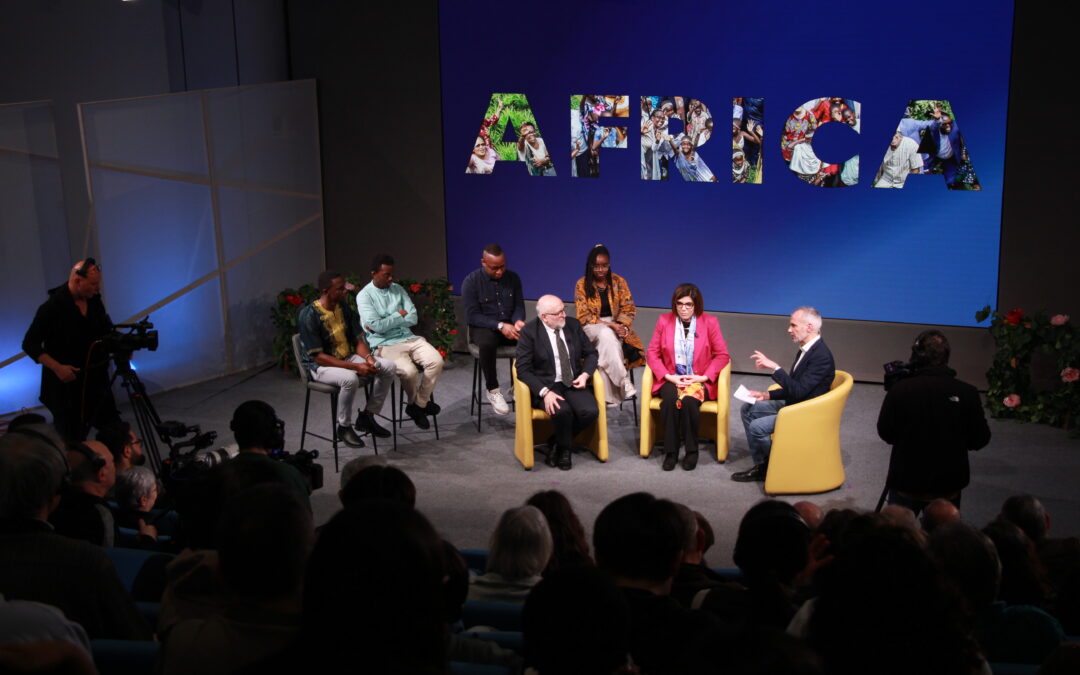
Jesús Morán, Co-President of the Focolare Movement, accompanied by some members of the International Centre, visited some countries in the east and west of the continent from 13th January-9th February 2025. Margaret Karram, President of the Focolare Movement, joined live via video link on nine occasions, especially for the days dedicated to meetings with local communities.
Jesús Morán said, “It is a trip we will remember for a long time.” Margaret Karram added, “This journey which many have called ‘historic’ has remained in our hearts“. Even though I was connected by video, I can still see their faces, their smiles and their commitment. I was deeply moved by the testimony of the communities of the Movement which live the Gospel radically. I think we have a lot to learn from them. ”
The trip included stops in Ivory Coast, Sierra Leone, Kenya, Rwanda and Burundi but many other people from various other African countries participated in many of the meetings.
It is impossible to summarize the intensity and richness of life found in each community. You can see here a part of the Link Up Conference Call of 15th March 2025 which included a report on this journey which was truly an immersion in the life and culture of the African continent.
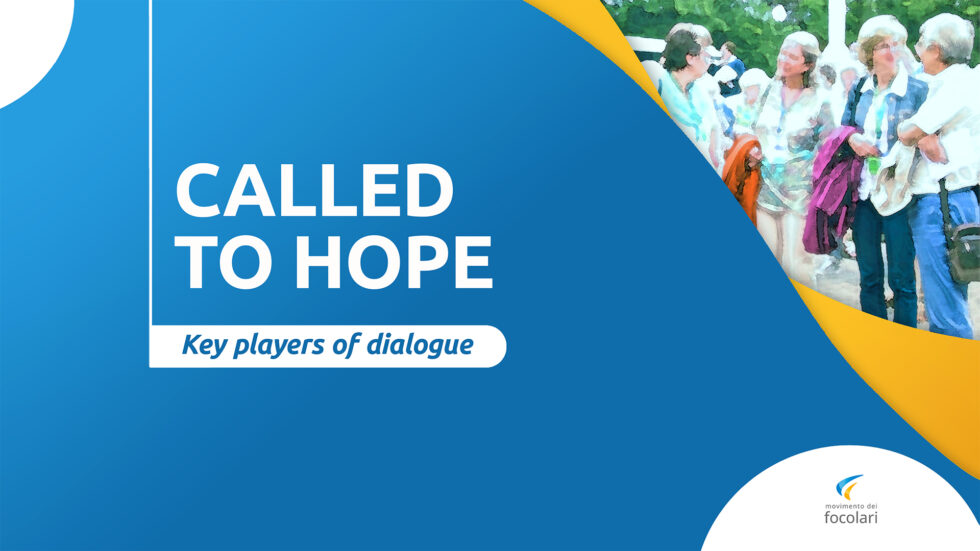
The ecumenical conference Called to hope – Key players of dialogue, will take place from the 26th to the 29th of March 2025 at the Mariapolis Centre of Castel Gandolfo (Italy). It is promoted by “Centro Uno”, the Focolare Movement’s international secretariat for Christian unity. There will be more than 250 faithful of 20 Christian Churches participating in person, coming from over 40 countries of 4 continents, including the Philippines, Serbia, Bulgaria, Slovakia, Ireland, Venezuela, United States. There will be 15 translations, and the conference will also be broadcast via streaming.
Thursday, the 27th of March, the group will go to Rome to visit the Basilica of St. Paul Outside the Walls (at 4:00pm). An ecumenical prayer of reconciliation and for peace open to all is planned.
The conference programme will also focus on the three anniversaries that occur this year: in the context of the Jubilee Year “Pilgrims of Hope” of the Catholic Church, we will commemorate the 1,700th anniversary of the Council of Nicaea, the coincidence of the date of the celebration of Easter for all Churches, and the 60th anniversary of the abolition of mutual excommunications between the Church of Rome and the Church of Constantinople.
Among the ecumenical personalities present who will speak: Msgr. Andrea Palmieri, Undersecretary of the Vatican Dicastery for Promoting Christian Unity, Msgr. Derio Olivero, President of the Episcopal Commission for ecumenism and dialogue of the Italian Bishops’ Conference, Prof. Dr. Martin Illert, representative of the World Council of Churches (WCC), Archbishop Khajag Barsamian representative of the Armenian Apostolic Church to the Holy See, Dr. Natasha Klukach, Director of Research and Operations of the Global Christian Forum, Dr. William Wilson, President of the Pentecostal World Fellowship (via video message), Dr. Elisabeth Newman of the Baptist World Alliance, Dr. Margaret Karram and Dr. Jesús Morán, President and Co-president of the Focolare Movement.
Why is it urgent to work for ecumenism?
In this time of divisions and great challenges – wars, the increase in refugees around the world, unequal distribution of wealth, almost irreversible damage to the earth’s ecosystem – as Christians, we are called together to bear witness to the hope of the Gospel and to be protagonists of dialogue and unity, committing ourselves to live together for peace, to build fraternity, to spread hope. Christian unity is instrumental in bringing peace wherever it is lacking.