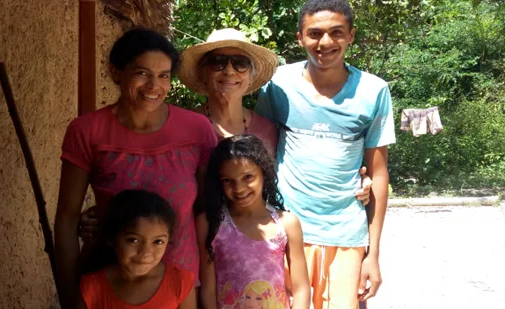
I’m Letícia Alves and I live in the north of Brazil, in Pará.
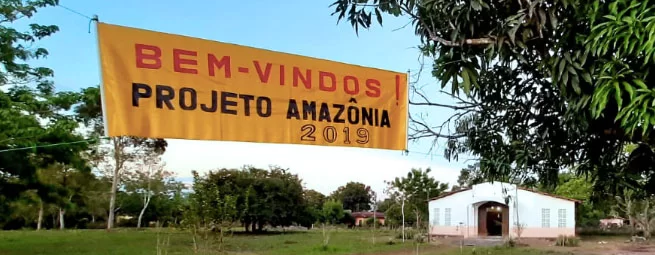
In 2019 I took part in the Amazon Project, and for 2 weeks a group of volunteers and I dedicated our holidays to living with the people of the lower Amazon, in the city of Óbidos.
Before embarking on this adventure, I wondered if I would be able to give myself completely to this experience, which was set in a reality so different from my own. During the project we visited some riverside communities living on the banks of the Amazon River, and everyone welcomed us with unrivalled love.
We provided health, legal and family support services, but the most important thing was to listen deeply and share the lives, stories and difficulties of those we met. The stories were all very diverse: the lack of drinking water, the child who had a toothbrush for the whole family, or even the son who wanted to kill his mother… The more we listened, the more we understood the meaning of our presence there.
“The urgent challenge to protect our common home includes a concern to bring the whole human family TOGETHER”
LS, 13
And among so many stories, I was able to see how much we can make a difference to people’s lives: how much just listening makes a difference, how much a bottle of drinking water makes all the difference.
The project was more than special. We were able to plant a seed of love in the midst of so much suffering and “building together” made us grow. When Jesus is present among us, everything becomes inspiring, full of light and joy.
It wasn’t something I lived for just 2 weeks and that was it, but it was an experience that really transformed my life, I felt a strong presence of God and that gave me the strength to embrace the sufferings of humanity that surround me in this daily construction of a united world.
My name is Francisco. I was born in Juruti in the Amazon, a town near Óbidos. I was surprised to learn that people from different parts of Brazil were travelling across the country to give of themselves to take care of my people and I wanted to join them.
What struck me most was the happiness among everyone, the volunteers and the local people, who even though they lived with very few material possessions, experienced the greatness of God’s love.
After experiencing the Amazonia project in Óbidos, I returned to Juruti with a new outlook and the desire to continue this mission, but in my own town. Over there, I saw the same needs that I had found in Óbidos. This desire became not just mine, but that of our entire community, which embraced the cause. Together we came up with the idea and gave birth to the Amazonia project in the community of São Pedro with the aim of listening and responding to the “cry” of those who need it most, of those who are often not heard. We chose a community on the mainland, began to monitor their needs and then went in search of professionals who could help as volunteers.
With the collaboration of several people, we brought the life of the Gospel, medical care, psychological care, medicines and dental care to that entire community. Above all, we tried to stop and listen to the difficulties and joys of those we met.
I have one certainty: in order to build a more fraternal and united world, we are called to listen to the cries of those who suffer around us and to act, with the certainty that everything done with love is not small and can change the world!
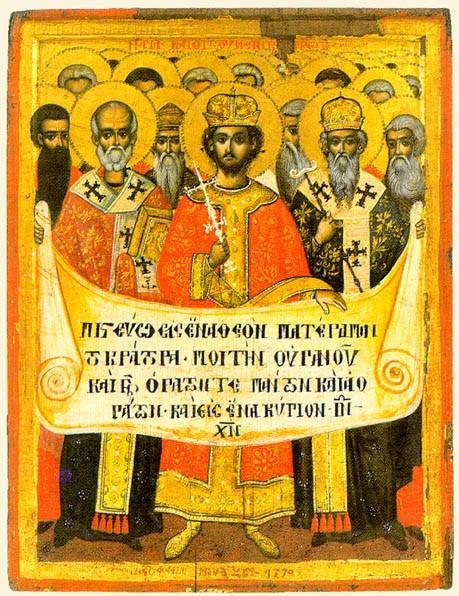
Much has already been said and much more will be said, about the ecumenical significance of the year 2025. The 1700th anniversary of the Council of Nicaea is just one, albeit a fundamental one, of several important anniversaries for the whole of Christianity being marked this year. But why is it still important to remember Nicaea today? What is its relevance? To understand, we need to take a step back into the fourth century.
In 313, Emperor Constantine granted freedom of worship to Christians, ending religious persecution throughout the empire. Later, in 324, Constantine became sole ruler and absolute authority of both the Western and Eastern Roman Empires. He realized that a doctrinal controversy was threatening the peace of the empire. He decided to convene a council of the entire Church to settle the matter. Though he knew it was a religious issue, he also believed that religious unity was key to political stability. Between 250-318 bishops from all parts of the empire came to Nicaea. The aim was to defend and affirm the apostolic faith and doctrine about the divine and human nature of Jesus Christ, in contrast to the teachings of the priest Arius of Alexandria and his supporters, who claimed that Christ was not eternally divine, but the first and most sublime creature made by God.
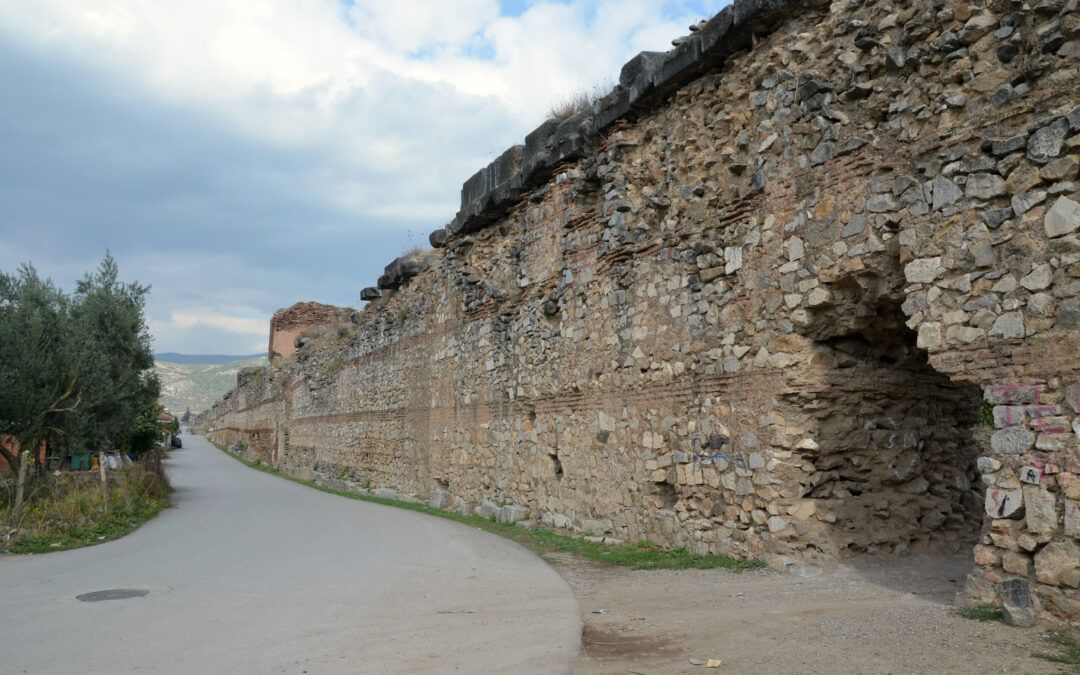
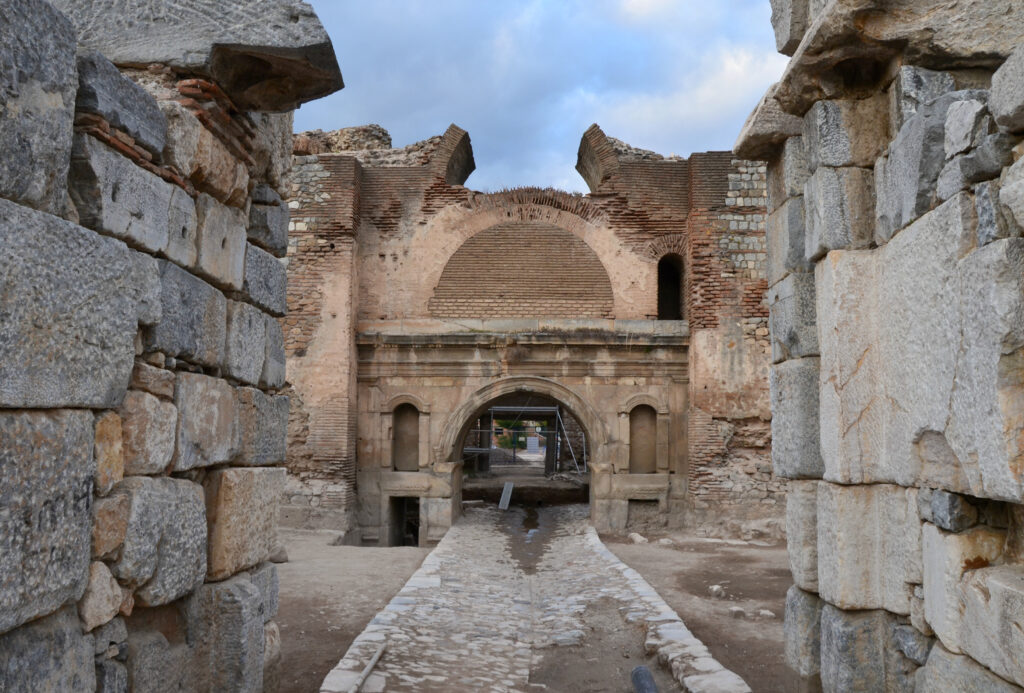
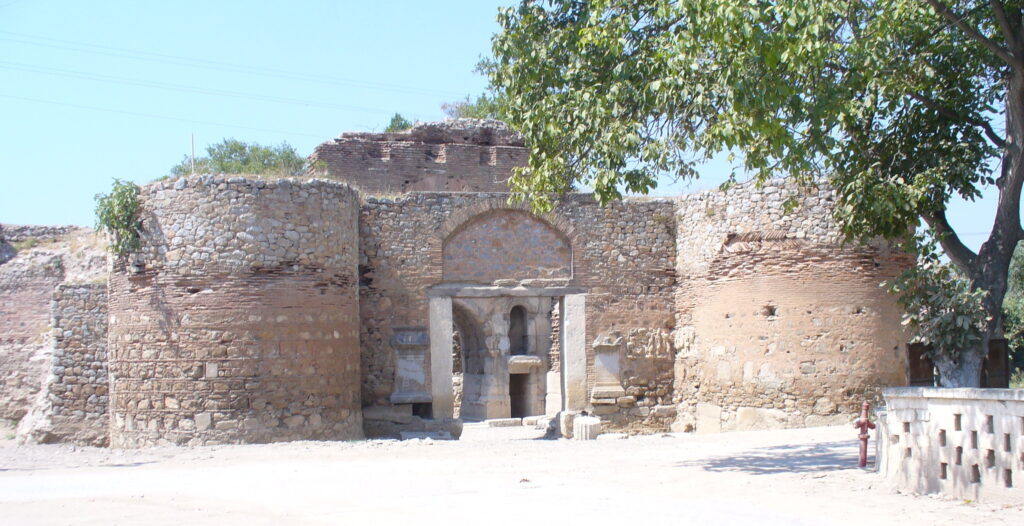
Constantinople Gate (Ancient City of Nicaea)Lefke Gate (Nicaea Wall)
It is understandable that such a mystery, the nature of the person of Jesus Christ, posed a challenge to human intellect. But even more compelling was the testimony of the apostles and the many Christians willing to die for this belief. Indeed, many bishops who came to the Council still bore the physical marks of torture and suffering endured for the faith.
Thus, this Council defined the faith that underpins Christianity and is still professed by all Christian Churches: the God revealed by Jesus Christ is one but not solitary. Father, Son and Holy Spirit are one God in three distinct Persons who have always existed.
Remembering Nicaea today is therefore highly relevant: it was a Council that laid the foundation for the synodal structure of the Church, which we are striving to realize more fully today; it unified the date of Easter for the entire Church (although differences emerged over time due to changes in calendars); and it set out the key points of the Christian faith. In particular, this last aspect challenges us strongly today. Perhaps the tendency to deny the divinity of Christ has never completely disappeared. Today, many find it easier or more comfortable to speak of Jesus focusing on his human qualities, as a wise man, an exemplary figure, a prophet, rather than professing him as the only-begotten Son of God, of one substance with the Father.
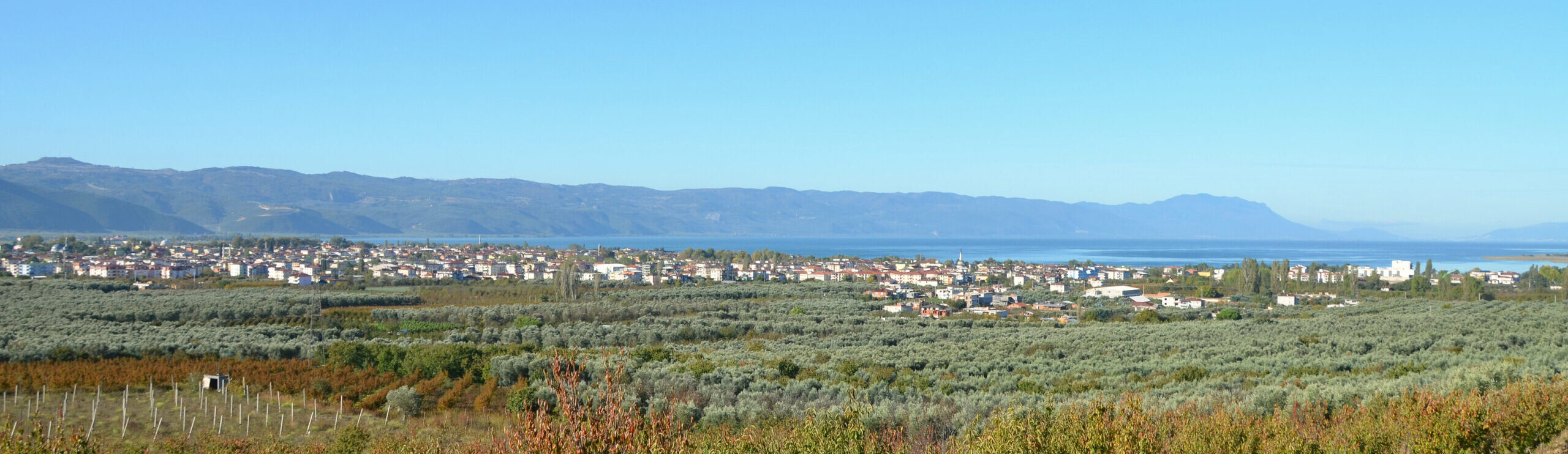
Iznik, ancient Nicaea, today a small town in Turkey
Faced with these challenges, we might imagine Jesus asking us today the same question he once asked the apostles: “But who do you say that I am?” (Mt. 16:13–17).
To accept and profess the Nicene Creed together is thus ecumenically significant. Reconciliation among Christians means reconciliation not only with and among today’s Churches, but also with the tradition of the early and apostolic Church.
Considering today’s world, with all its anxieties, problems and hopes, we become even more aware that Christian unity is not only a Gospel imperative, it is also a historical necessity.
If we want to confess together that Jesus is God, then His words, especially what He called His “new commandment,” the very criterion by which the world would recognize us as His disciples, will take on new meaning for us. Living this commandment “will be the only way, or certainly the most effective way, to speak of God today to those who do not believe, to make the Resurrection of Christ translatable into terms that can be understood by people today.”[1]
[1] BENEDETTO XVI, Luce del mondo. Il Papa, la Chiesa e i segni dei tempi. Una conversazione con Peter Seewald, Libreria editrice Vaticana, Città del Vaticano 2010, p. 98.
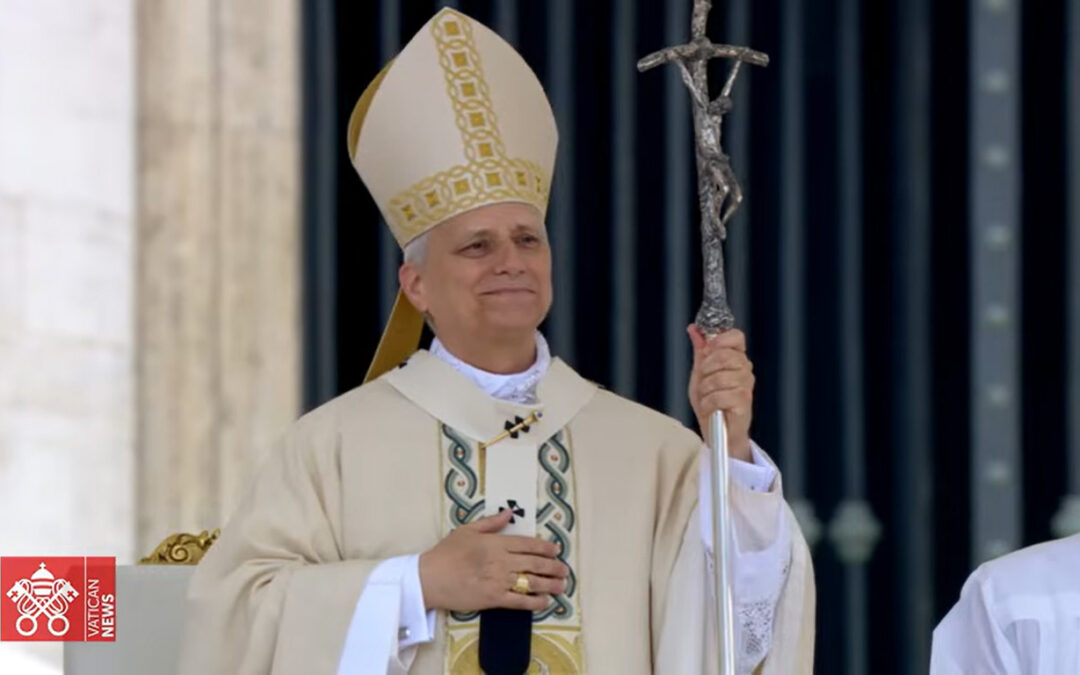
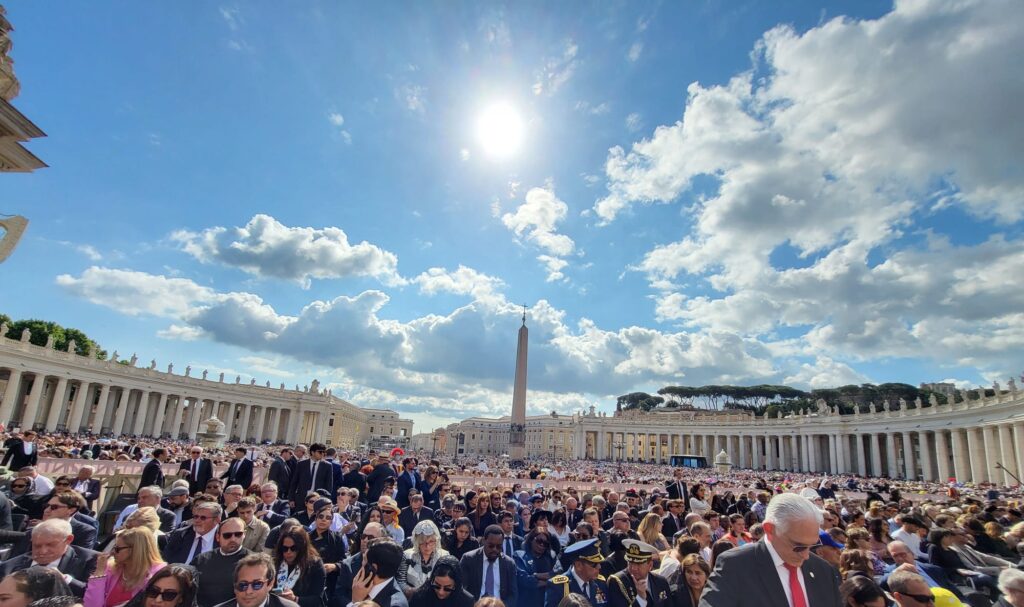
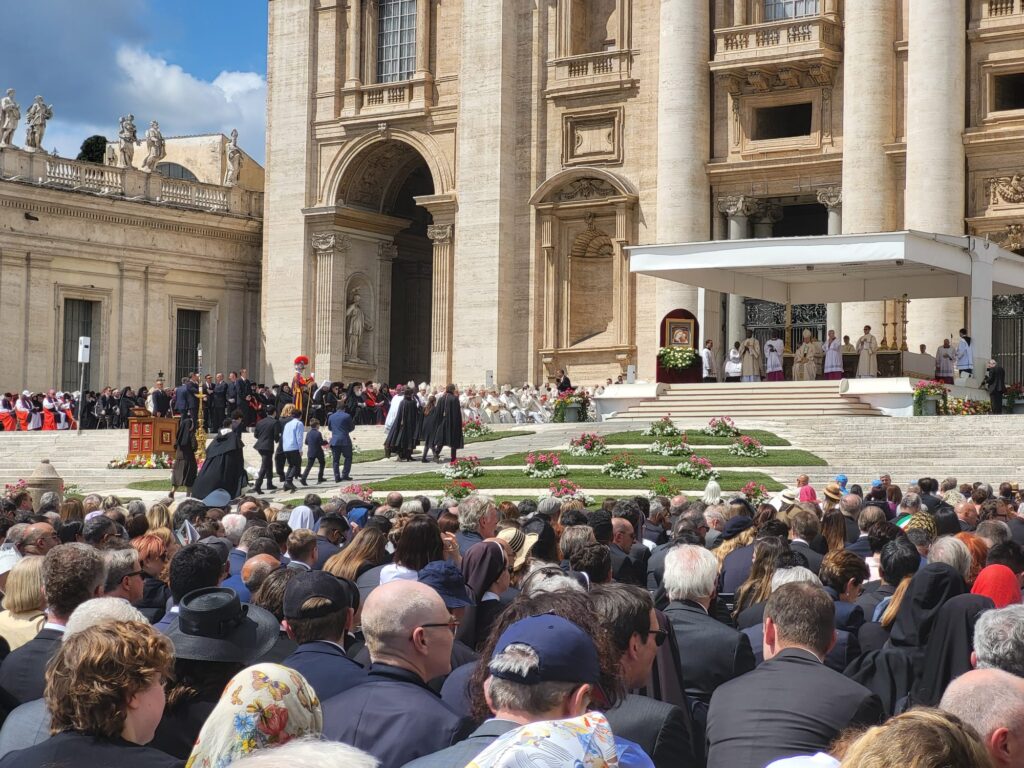
Over 150 delegations from all over the world attended Pope Leo’s inaugural Mass: political leaders, heads of Christian Churches, representatives of different religions and over 200,000 faithful from all over the world. It took place in St. Peter’s Square on 18th May. The new Pontiff wanted to begin by meeting the pilgrims, traveling around the Square and along the Via della Conciliazione in the Pope-mobile, in a long, joyous and emotional greeting. He then paused at the tomb of Peter, of whom he is now the successor, before commencing the Eucharistic celebration.
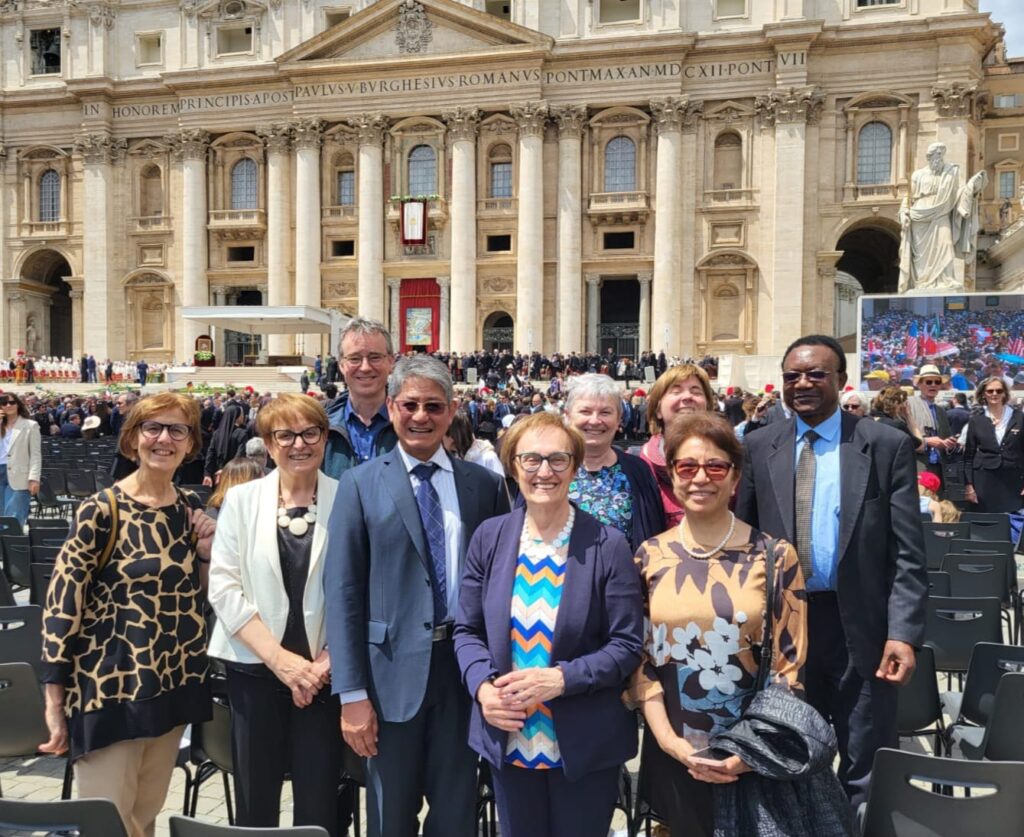
A group from the International Centre of the Focolare attended in representation of the President of the Movement, Margaret Karram and the Co-President Jesús Morán who are currently in the United States.
Silvia Escandell (Argentina), Focolare Central Delegate, described the moment, “This was an experience of the universality of the Church. I felt that Pope Leo XIV, surely also thanks to his charism, draws together this profound diversity into unity. I was impressed by how he immediately used two words, ‘love and unity’ and how his entire address followed this theme . I was also moved when he referred to Peter, to whom Jesus said to cast the nets, and how the Pope called us to do so again, knowing these are the nets of the Gospel, which goes out to meet every person. It seems to me a sign of great hope, for the Church and for humanity ”.
Photos: St. Peter’s Square crowded with the faithful, a moment of the celebration and the group from the Focolare International Centre.
Ray Asprer (Philippines), also Central Delegate of the Focolare Movement, said, “For me today was a powerful experience of progressing towards a united world. . Seeing the entire square filled and above all, listening to the Pope’s appeal expressing his vision of a Church as an instrument of unity, I felt that this was exactly what we were living there, in all its solemnity, but also as a real experience. We were standing together from all over the world, gathered around the Pope who proclaimed that the Church’s mission is love and unity. I felt a call to unity as a sign of the times ”.
Chiara Cuneo (Italy), Councillor at the International Centre of Focolare and co-responsible for Dialogue between Movements and new Communities within the Catholic Church, also spoke of hope, saying.“In this world, in this dark time, hope is a light that guides us. During the Mass I thought that, sometimes, it takes the desert, to allow you to see the sprouts of hope. And today is one of those shoots: something is growing ”.
“The words of the Pope about walking together were very inclusive. He really mentioned everyone, we were all included, absolutely everyone“.
“She concluded, “I was able to greet some Founders and Presidents of various Church Movements. It was a moment of celebration, joy and renewed hope for everyone. We all felt the desire to continue this journey together, truly wishing to love one another more and more, just as the Pope said ”.
Enno Dijkema (Netherlands) Councillor at the International Centre of Focolare and Co-Responsible for the Centre for Christian Unity, added, “There were also many leaders of other Christian Churchesand the Pope clearly said that he wants to be in dialogue with everyone and that he wants to be a servant of the unity of the Church of Christ.I was very movedwhen he spoke of his ministry and described it not as being above all, but below, as love, as service that brings joy and faith to all Christians and to the whole world. In front of so many heads of State it seemed to me a beautiful testimony, a meaningful indication of ‘power’ understood as love, as service ”.
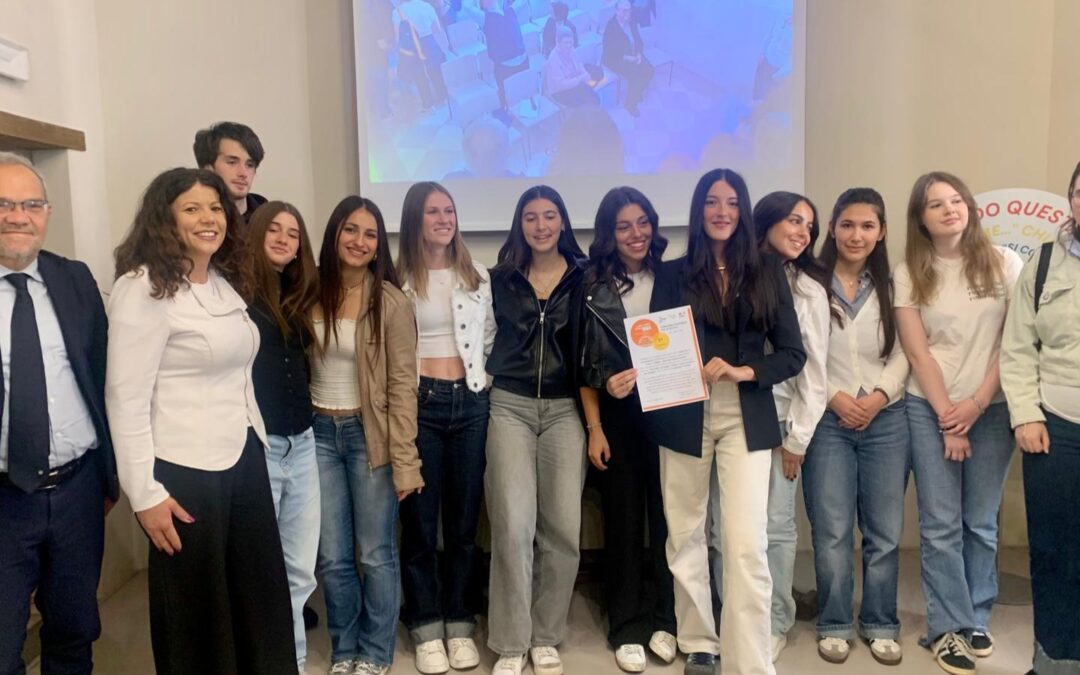
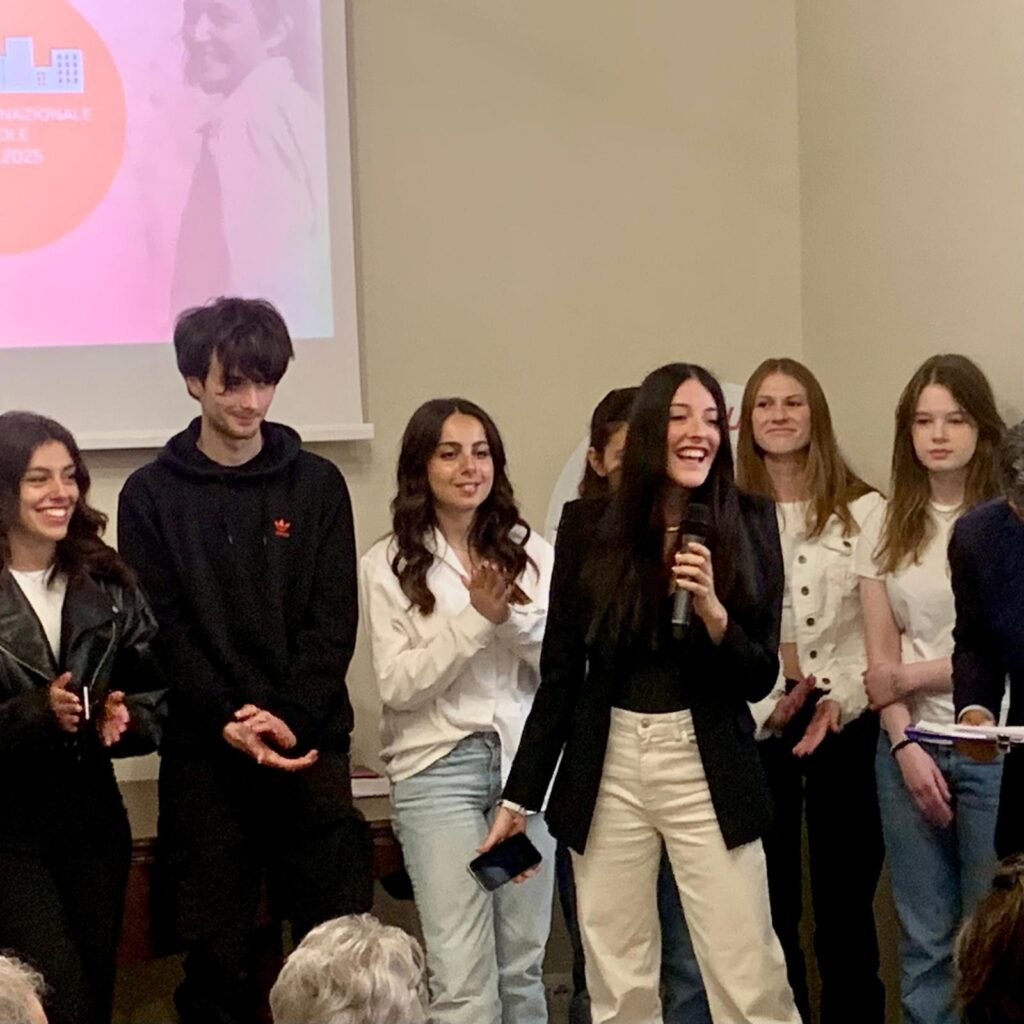
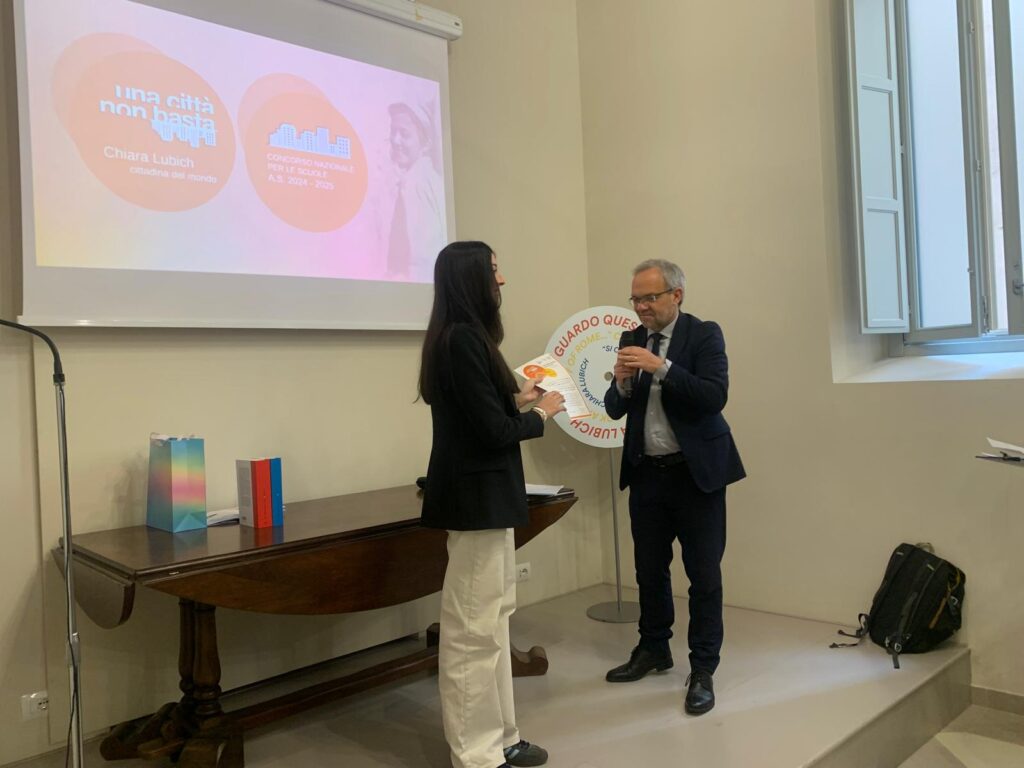
On Friday, 9th May, at the Focolare Meeting Point, in the heart of Rome and through an online live broadcast, the award ceremony of the competition for schools entitled“One city is not enough. Chiara Lubich, citizen of the world” took place. ”. The competition is dedicated to the founder of the Focolare Movement, a woman who was able to combine education, politics and dialogue for peace.
The theme proposed for the fifth edition was: “Exploring the concept of peace, in relation to the thought of Chiara Lubich”. A total of 118 entries (individual and group) were submitted by 35 educational institutions from 15 Italian regions.
The competition is promoted by New Humanity, the Chiara Lubich Centre and the Trent Historical Museum Foundation, in collaboration with the Italian Ministry of Education and Merit. It is an opportunity for teachers and students to reflect on the values of fraternity, hospitality and dialogue between cultures, central themes in the thought and action of Chiara Lubich.
Winning Entries
Upper Secondary School
1st place: “Building Infinity”, from class 5^ A Linguistic, Liceo A. Maffei – Riva del Garda (Trento). With relevant images, the students creatively presented their reflection on the theme of peace, combining it with characteristic elements of Chiara Lubich’s thought which placed great emphasis on close relationships: where there is love there is unity and where there is unity there is peace.
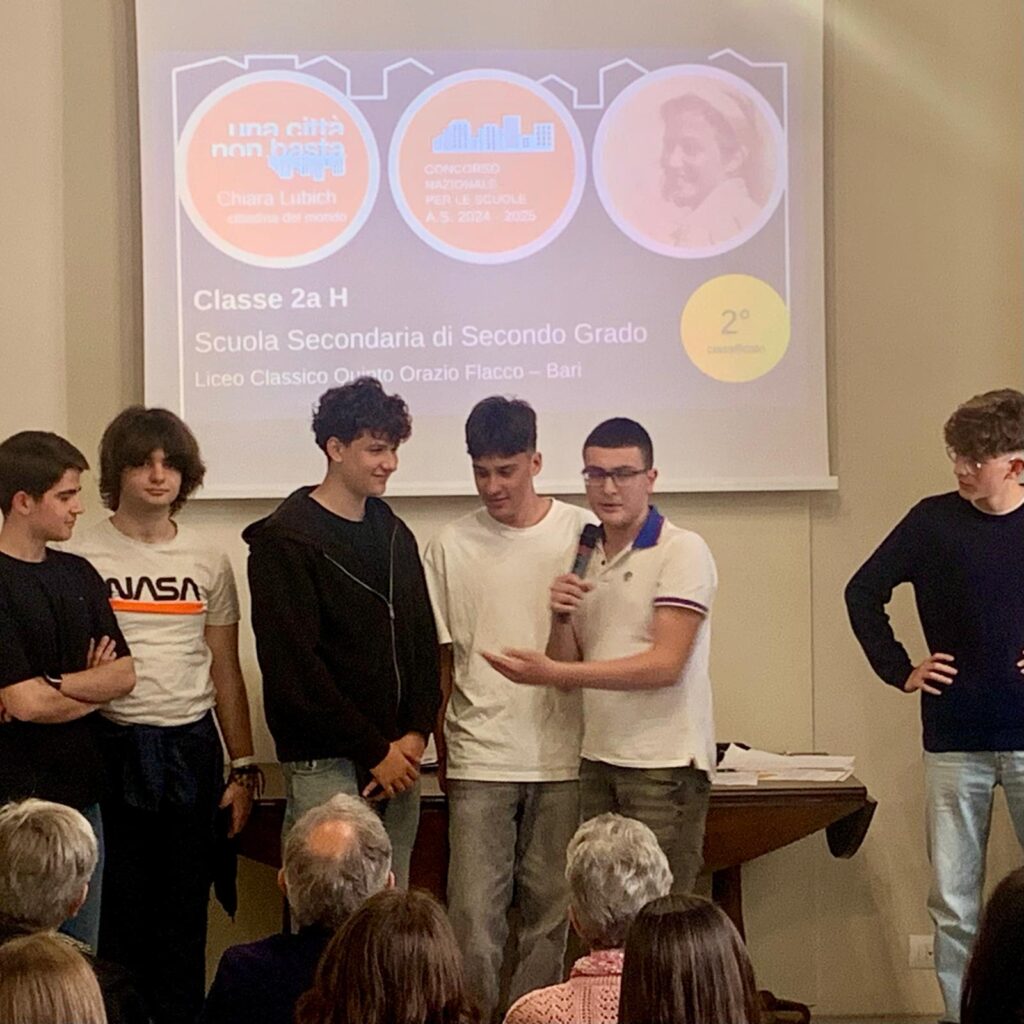
2nd place (tied): “Living Peace”, from class 2^ H, Liceo Classico Quinto Orazio Flacco – Bari. This written entry was particularly appreciated for emphasizing peace as a daily commitment. Significant references were drawn from Chiara Lubich’s legacy of fraternity and practical engagement for a more united world.
2nd place (tied): “Gaze”, by Elena Scandarelli 3rd AU, Liceo Maria Ausiliatrice – Riviera San Benedetto (Padua). In a simple and effective way, the image explicitly communicated the importance that Chiara Lubich placed on being able to look at the world beyond human challenges, facing them with a gaze full of hope.
Lower Secondary school
1st place: 1920-2011, by Alessia Tombacco 3^ C, IC Elisabetta “Betty” Pierazzo – Noale (Venice). The text presented offered an original reflection highlighting the relevance of Chiara Lubich’s thought today and the possibility of a meaningful encounter with her, even outside the time in which she lived. Rich in confidence in the present and hope for the future, it presented the image of the human being as a “cell”: bearer of new relationships for a world without borders.
2nd place: “Voices of Fraternity”, class 3^ D, IC Giovanni XXIII – Villa San Giovanni (Reggio Calabria). In this multimedia work, the active involvement of the students, the first witnesses of a more united and fraternal fragment of the world, was particularly appreciated. The reference to the possibility of being “peacemakers” starting from our closest relationships was viewed as most important.
Primary school
1st place: “A seed of Unity”, by Aurora Pellegrino 5^ A, IC Radice-Alighieri – Catona (Reggio Calabria). The poetic composition expressed an original reflection on the theme of peace in the light of the unique contribution of Chiara Lubich, a woman of dialogue.
2nd place: “One city is not enough”, class 4^ A, IC Antonio Gramsci – Tissi (Sassari). This multimedia entry presented, in an original and effective way, the spaces and values of an ideal world in which, with love, every form of discrimination can be overcome.
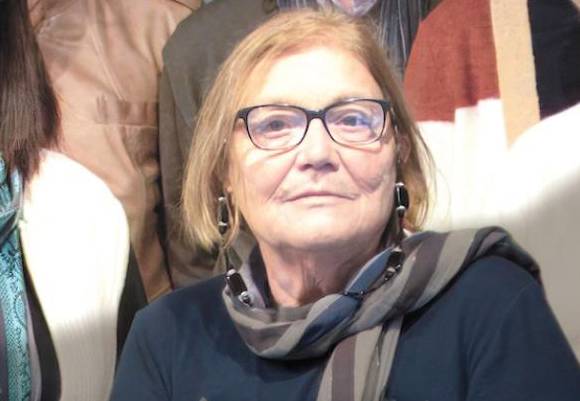
On 18th March, 2025, Luciana Scalacci left us. She was an extraordinary woman, a living witness of concrete and active commitment to 360° dialogue. Luciana, who was married to Nicola, both of non-religious beliefs, always felt that dialogue is a fundamental aspect of contemporary society which is characterised by many forms of division and conflict. A few years ago during a Focolare meeting, Luciana said, “My husband and I are non-believers, or rather, non-believers in God, because we believe in humanity and its potential”.
Luciana was born in Abbadia San Salvatore, a town in the province of Siena. From childhood, she was always committed to the least and the weakest, conveying values of honesty, inclusion and equality to everyone. Nicola and she were engaged in politics and trade unions through leftist activism, always focused on the values of justice, dialogue and freedom. Their encounter with the Focolare Movement came through their daughter Mascia.
Luciana recounted, “One day, our daughter wrote us a letter, in essence saying: ‘Dear parents, I have found a place where I can live out the values you always taught me. She had discovered the Focolare Movement”. So, to better understand their daughter’s decision, Luciana and Nicola decided to attend a Focolare event. “It was a meeting of people of different beliefs, but we didn’t know that. So, to avoid any confusion, we made a point of stating our political and religious position right away. The answer was: ‘And who asked you anyway!’ We immediately had the impression of being in an environment where there was respect for the ideas of others, we found an openness that we had never encountered in other associations or religious movements”.
From that moment on and in the years to come, Luciana Scalacci’s contribution to the Focolare Movement was vital. She first met Chiara Lubich, founder of Focolare in 1995. Alongside her, Luciana worked to initiate and deepen dialogue with people of non-religious convictions, a dialogue that gained strength in large part thanks to Luciana’s enlightened intelligence.
Since 2000 she was a member of the International Commission for Dialogue with People of Non-Religious Convictions, thus contributing to the organisation of conferences such as In Dialogue for Peace, Conscience and Poverty, Women and Men for a Society of Solidarity and many others. Luciana felt in full harmony with the Ideal of unity, through her personal meeting with Chiara and with the Focolare community. She once told a friend: “This dialogue (between people of different beliefs) was born not to convert non-believers, but because with Chiara we understood that the united world is built with everyone. May they all be one. If we exclude even one, it’s no longer All”.
On 26th September, 2014, during an audience granted to the Focolare, she greeted Pope Francis. She recalled the moment in a letter she wrote to the Pope while he was hospitalized at the Gemelli Polyclinic. “On that extraordinary day, I had the privilege of exchanging a few words with you that I will never forget. Now, dear Pope Francis, you are in a hospital bed and I am too. Both of us face the frailty of our humanity. I wanted to assure you that I continue to think about you and to pray for you in a secular way. You pray for me in a Christian way “.
There were many tears of gratitude and deeply heartfelt words of thanks on the day of her funeral. One tribute in particular came from Vita Zanolini, a focolarina and friend of Luciana and Nicola. “Luciana: friend, sister, companion on the frontiers of what is new, but with respect for history and roots, teacher of life and much more,” said Vita, remembering her. “Thinking of her, of her freedom, brings to mind bright and clear skies, intensely colourful; a clear spring that in its sweet and silent flow, becomes a rushing waterfall. A fire burning in a welcoming home reflecting an ever open heart. But also a refined and rich menu with delicious and always creative recipes. Resilience, respect, listening, tenacity in all shades …
Years ago at one of the conferences on dialogue someone asked a rather original question: ‘What is the difference between a believer and a non-believer?’ Luciana’s answer, which was perhaps surprising for many, was: ‘Believers believe in God, Non-believers… God believes in them.’ And I think we can say that Luciana did not disappoint or betray the faith that God had in her!”
Luciana spent the last days of her earthly life in a hospice. She was always very vigilant and proactive in communicating what was in her heart. Despite her shortness of breath, she gave her final advice (sometimes with playful mock threats) with an extraordinary strength interspersed with the memories and stories of the many experiences lived together. Vita added, “It was as she were passing on the baton to us. Our goodbye hug was heart-wrenching and at the same time very serene, with a hint of eternity”.