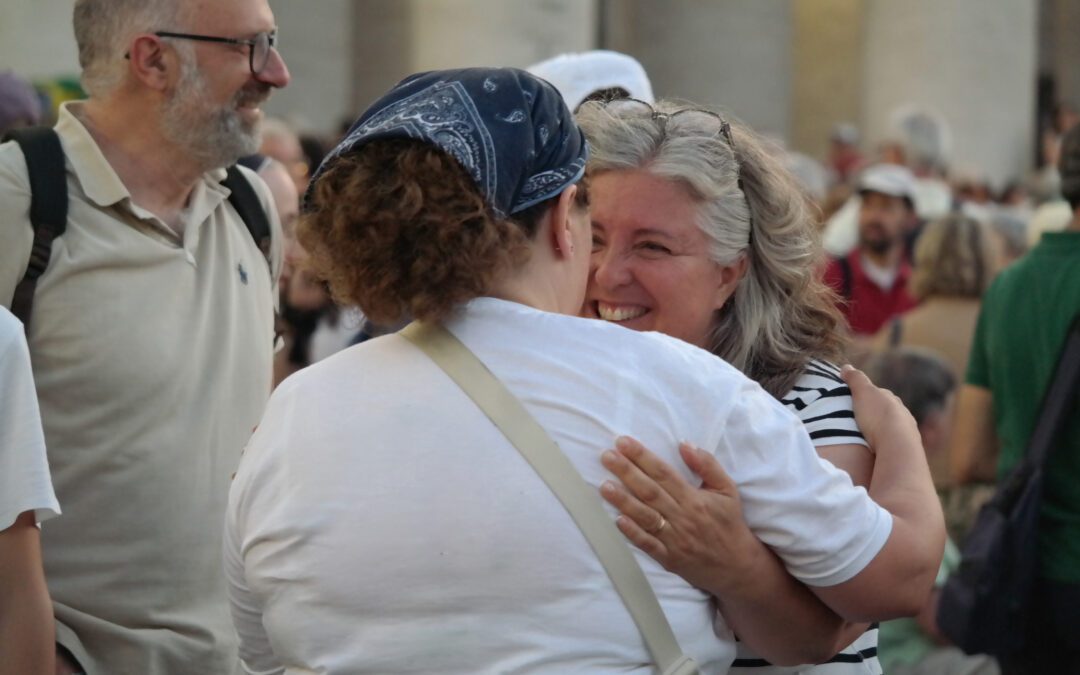
Come exiled brother, let us embrace. Wherever you are, whatever your name, whatever you do, you are my brother. What does it matter to me if nature and social conventions try to separate you from me, with names, conditions, restrictions or laws?
The heart cannot be restrained, the will knows no limits and by making an effort to love we can overcome all these divisions and reunite as a family.
Don’t you recognise me? Nature placed you elsewhere, made you different, within other borders, you may be German, Romanian, Chinese, Indian… You may be yellow, olive-skinned, black, bronze, copper-toned… but what does it matter?
What does it matter that you are from a different country? When this small, still-glowing globe consolidated, no one could have imagined that for such accidental outgrowths, people would kill each other for ages.
And even today, in the face of our political systems, do you think that nature ever asks our permission to express itself through volcanoes, earthquakes or floods? And do you think it cares about our disparities, appearances or hierarchies?
Unknown brother, love your land, your fragment of the shared crust that supports us, but do not hate mine. Under all the trappings, under the all the social classifications, no matter how codified, you are a soul that God created as a sister to mine, to that of every other person (there is only one Father) and you are like every other person who suffers and perhaps you cause suffering, who needs more than he possesses, who falters, who gets tired, hungry, thirsty, sleepy, like me, like everyone else.
“Unknown brother, love your land, your fragment of the shared crust that supports us, but do not hate mine. (…) In you I recognize the Lord. Free yourself and even now, brothers that we are, let’s embrace. “
You are a poor pilgrim following a mirage. You believe yourself to be the centre of the universe and yet you are nothing more than an atom of this humanity that from millennia to millennia struggles more through sorrow than through joys.
You are a speck, brother, so let’s join forces instead of fighting. Do not be proud, do not isolate yourself, do not accentuate the marks of differentiation devised by man.
Didn’t you cry when you were born, as I did? Will you not groan when you die, as I will? Whatever its earthly shell, the soul will return to be naked, equal. So come. From beyond all seas, climates, all laws, from beyond every social, political or intellectual compartment, from beyond all boundaries (man knows only how to circumscribe, divide and isolate) come, brother.
In you I recognize the Lord. Free yourself and even now, brothers that we are, let’s embrace.
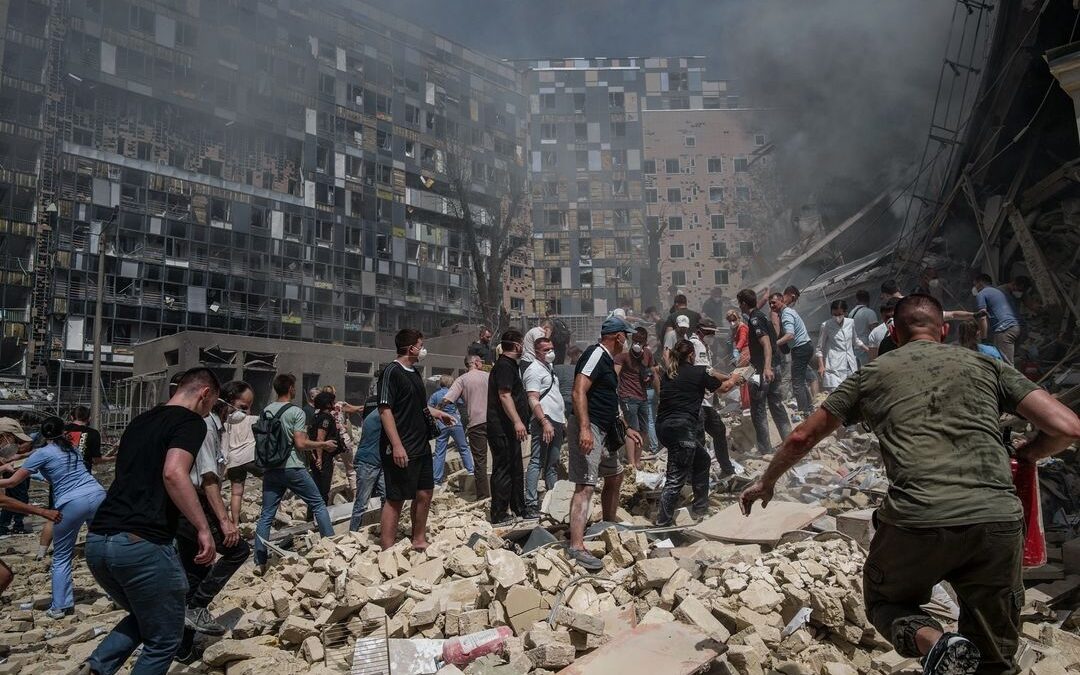
Every day we see a great deal of suffering all around us and this can make us feel overwhelmed and helpless if we do not draw upon deep human values. Sometimes, however, the answer arrives on WhatsApp. This is whath appened to a community that tries to build unity in a small town in Italy: “…In the hospital where I work there is a young man, a foreigner, who is completely alone and dying. Maybe someone could spend a few minutes with him, to bring some dignity to this situation?” This request was a shock: the responses followed quickly. The messages from those who were with the man in his last few hours said, “At his bedside we immediately saw that he was receiving care at the right time and that it was attentive and loving. Really there was nothing for us to to do except be there: he was in a coma and could not benefit from our presence.” Was staying at the man’s bedside unnecessary and a waste of time? In those few hours a small community, inside and outside the hospital, accompanied and brought meaning to that situation. Who knows if a mother will be able to mourn that son in his own country. Surely his “passing” was not in vain for those who could love that young man who was no longer unknown. Compassion is a feeling that comes from within, from the depths of the human heart. It makes us capable of interrupting our busy daily routine of schedules and appointments and take the initiative to approach others and gaze at them with care, unafraid to “touch” their wounds. Chiara Lubich explains it with striking simplicity: “Let us imagine that we are in their situation and treat them as we would like to be treated in their place. Are they hungry? We think – I am hungry too. And let’s feed them. Is that person experiencing injustice? I am suffering injustice too! And let us offer words of comfort and share their sorrows: let’s persevere until they feel enlightened and uplifted. We will slowly see the world around us change.“1. African wisdom also confirms this in a proverb from the Ivory Coast: “The person who welcomes a stranger hosts a messenger.” This Idea offers us a method of living out true humanism: it makes us aware of our common humanity in which the dignity inherent in every man and woman is reflected. It also teaches us to courageously go beyond the understanding that “closeness” is determined by physical and cultural contexts. Thinking in this way, it is possible to expand the boundaries of “us” to the horizon of “all” and rediscover the very foundations of social life. When we feel we are succumbing to the impact of the suffering all around us, it is important to draw upon the help of friends who share our views and accompany us through life and so allow ourselves to be healed. Let’s remember, as psychiatrist-psychotherapist Roberto Almada says, “If the good people give up the battle because of fatigue, our common humanity will run the greatest of risks: value impoverishment.”2.
1. Chiara Lubich, The Art of Loving 2. R. Almada, Il burnout del buon samaritano, Effatà editrice, 2016
THE IDEA OF THE MONTH is currently produced by the Focolare Movement’s “Centre for Dialogue with People of Non religious Beliefs”. It is an initiative that began in 2014 in Uruguay to share with non-believing friends the values of the Word of Life, i.e. the phrase from Scripture that members of the Movement strive to put into practice in their daily lives. Currently, THE IDEA OF THE MONTH is translated into 12 languages and distributed in more than 25 countries, with adaptations of the text according to different cultural sensitivities. dialogue4unity.focolare.org
On 29th June, 1967, Pope Paul VI invited Patriarch Athenagoras to send some representatives to Rome. Since then, the leaders of the two Churches have exchanged visits: on 29th June, the feast of Saints Peter and Paul, a delegation from the Patriarchate of Constantinople comes to Rome – at times, the Patriarch himself has come; while on 30th November, the feast of Saint Andrew, a delegation from the Vatican travels to the Patriarchate on behalf of the Pope. According to Tradition, Saint Peter, bishop of Rome and Saint Andrew, founder of the episcopal see of Constantinople, were brothers. These visits are a reminder for these two Churches that see themselves as sisters, to commit to reconciliation and to strengthen the bonds of solidarity.
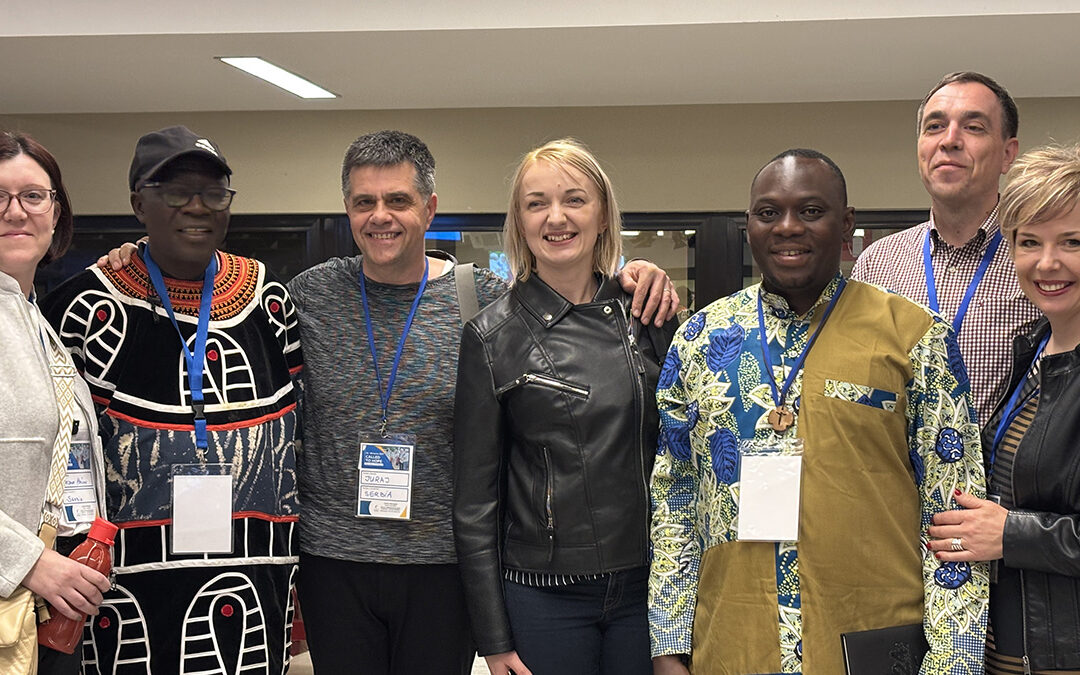
On this feast day, which is meaningful for the journey toward unity among the Churches, we are publishing a video with reflections gathered at the conclusion of the Conference entitled “Called to hope – Key players of dialogue” promoted by Centro Uno, the international secretariat for Christian unity of the Focolare Movement. The event brought together 250 people from 40 countries and 20 Christian Churches, with over 4000 people worldwide following it via streaming.
Turn on subtitles and pick the language you want(International Version)
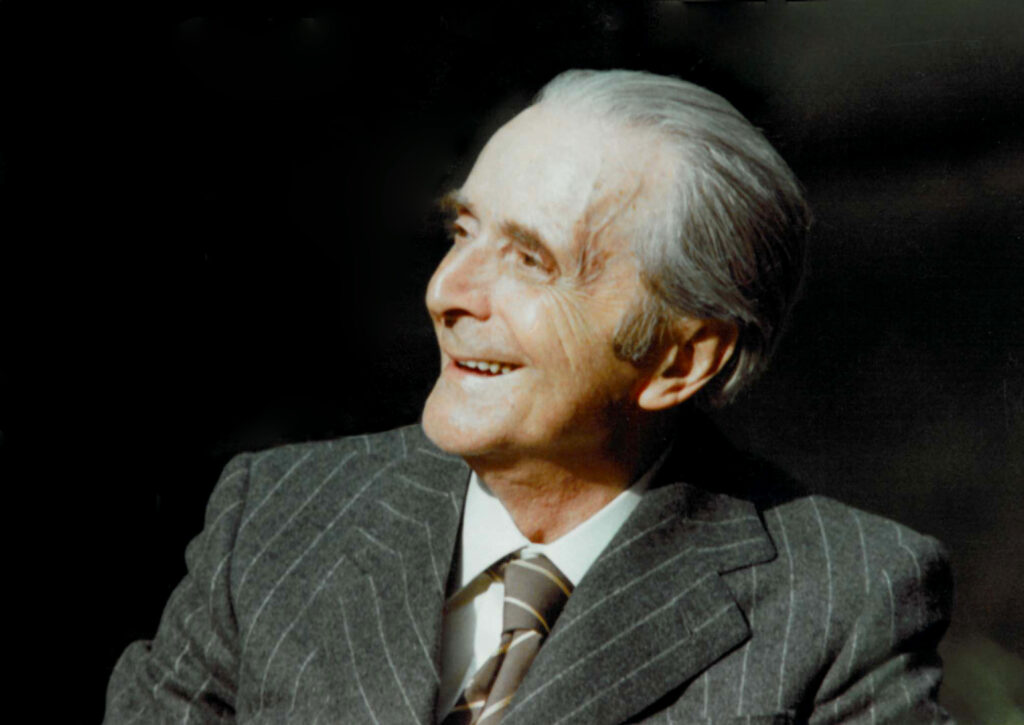
I couldn’t understand how anyone could give life to a young person, have him worn out by studies and sacrifices, in order to prepare him for an operation, in which he would have to kill strangers, unknown, innocent people and in turn, he would be killed by others to whom he had done no harm. I saw the absurdity, the stupidity and above all the sin of war: a sin made more acute by the excuses used to justify it and by the futility with which it was decided.
The Gospel, long meditated upon, taught me that to do good, not to kill was a fundamental duty; to forgive, not to take revenge. And reason itself gave me a sense of how absurd it was to engage in a conflict where victory did not go to the just, but to those with more cannons; not to justice, but to violence.
In the “radiant May” of 1915, I was called to arms. […]
So many bugles, speeches and flags! All this only deepened within me the sense of revulsion for those clashes, in which governments, entrusted with the public good, carried out their task by slaughtering the children of the people, hundreds of thousands and by destroying or allowing the destruction of the assets of the nation: the common good. How stupid it all seemed to me! And I suffered for the millions of people, who were forced to believe in the sanctity of those murders, a sanctity also attested by clerics who blessed the cannons destined to offend God in His masterpiece of creation, to kill God in His image, to carry out fratricide among baptized brothers.
“I saw the absurdity, the stupidity
and above all the sin of war…”
As a recruit I was sent to Modena, where there was a kind of university for the training of warriors and commanders. Coming from the world of Virgil and Dante, the study of certain manuals that taught how to deceive the enemy in order to kill him, had such an effect on me that, in an act of reckless defiance, I wrote in one of them: “Here we are learning the science of imbecility”. I had a very different concept of love of country. I understood it as love and love means service, the pursuit of good, the promotion of well-being, to provide a happier coexistence: for the growth and not for the destruction of life.
But I was young, and I did not understand the reasoning of the older generation, who didn’t really want to understand. They distracted themselves with parades and shouted slogans to numb their senses.
[…]
After a few weeks, having completed my training in Modena, I returned home briefly before departing for the front. I hugged my mother and father, my brothers and sisters (we rarely embraced in my family) and boarded the train. From the train I saw the sea for the first time, much wider than the Aniene River, it felt as though I had fulfilled one of life’s duties. After three days, I reached the trenches along the Isonzo and joined the 111th Infantry Regiment.
The trench. In it, from school I entered life, between the arms of death and cannon fire. […]
If I fired five or six shots, into the air, I did so out of necessity: I never aimed my rifle towards the enemy trenches, for fear of killing a child of God. […]
If all those days spent, in the bottom of the trenches, watching reeds and tufts of brambles and bored clouds and shining blue sky, had been spent working, we would have produced enough wealth to meet all the demands for which the war was being fought. Clearly: but that was reason and war is the opposite of reason.
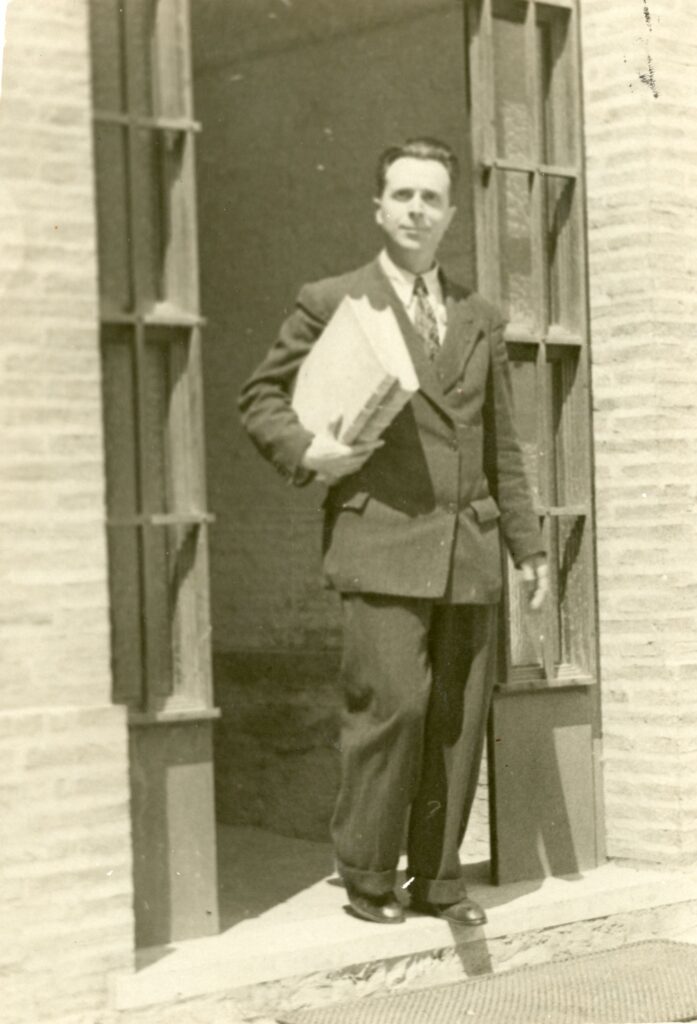
Igino Giordani Memorie di un cristiano ingenuo, Città Nuova 1994, pp.47-53
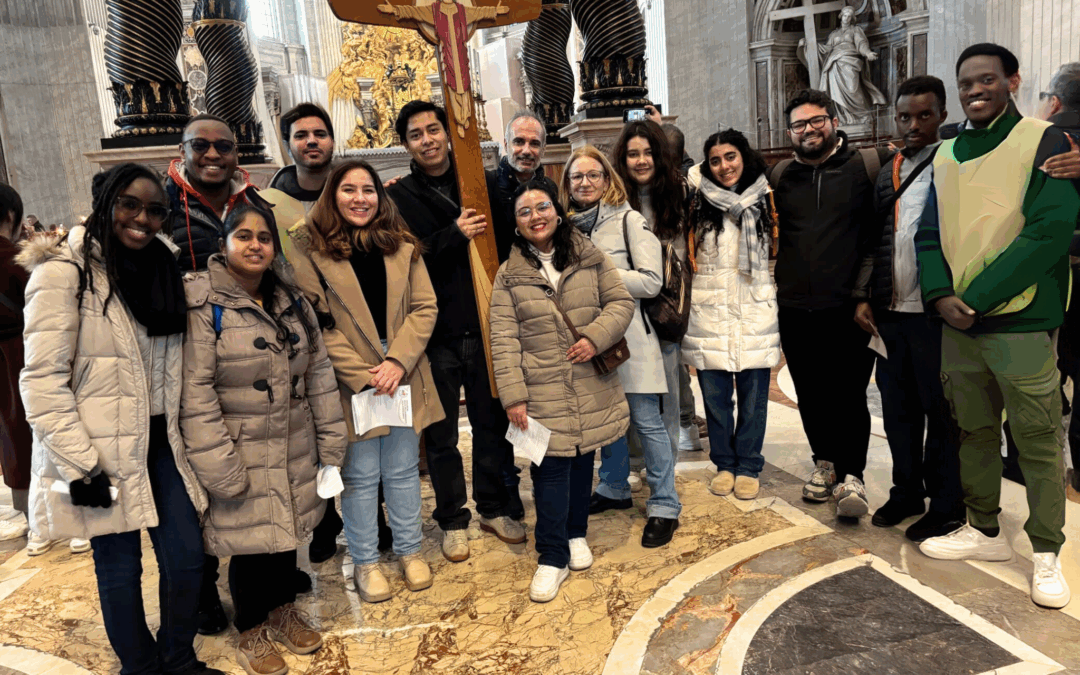
On the occasion of the Jubilee of Youth, from 29th July – 1st August 2025, the young people of the Focolare Movement are offering a special programme for fellow pilgrims: four days of spirituality, sharing, testimonies, prayer, catechesis, fun and walking together!
It is a unique opportunity to set out on a journey through places full of history and spirituality, meeting many people along the way and growing in faith and hope.
Each day is built around a key word, a stop that includes a time for reflection and prayer and a spiritual focus rooted in the Focolare charism of unity, with testimonies and songs so that the Jubilee of Youth may be lived as a journey based on 4 key ideas: pilgrimage (a journey), holy door (an opening), hope (looking forward) and reconciliation (making peace). For those who wish, there will be catechetical sessions at the Focolare meeting point led by Tommaso Bertolasi (philosopher), Anna Maria Rossi (linguist) and Luigino Bruni (economist).
The Pilgrimage to the Seven Churches
The programme follows the historical itinerary used by pilgrims since the 16th century. The Pilgrimage of the Seven Churches was designed by St. Philip Neri. It is a journey of faith and fraternal communion, made up of prayer, songs and reflections on the Christian life.
The stages of this pilgrimage are seven symbolic places in Rome: the Basilicas of: St. Sebastian, St. Paul Outside the Walls, St. Mary Major, St Peter’s, St. Laurence, the Holy Cross in Jerusalem and St. John Lateran. The total route is 20 kms. Over the centuries, thousands of young people and adults have engaged in this experience. Participants will also join the main events of the Jubilee of Youth, including: the moment of reconciliation at the Circus Maximus and the meetings with Pope Leo XIV during the vigil and at the final Mass at Torvergata which was the location of the vigil and the Youth Mass of the Jubilee of 2000. For those who can stay longer, on 4th August, there’s an opportunity to visit the International Centre of the Focolare in Rocca di Papa
This programme offers many opportunities to experience the Jubilee, to discover Rome and to live a moment of deep faith and spirituality together. Along the route, each participant will receive a Pilgrim’s Passport. In every church they visit, they’ll be invited to write a single word describing what they experienced or what struck them most. At the end, this will become a unique keepsake of their journey.