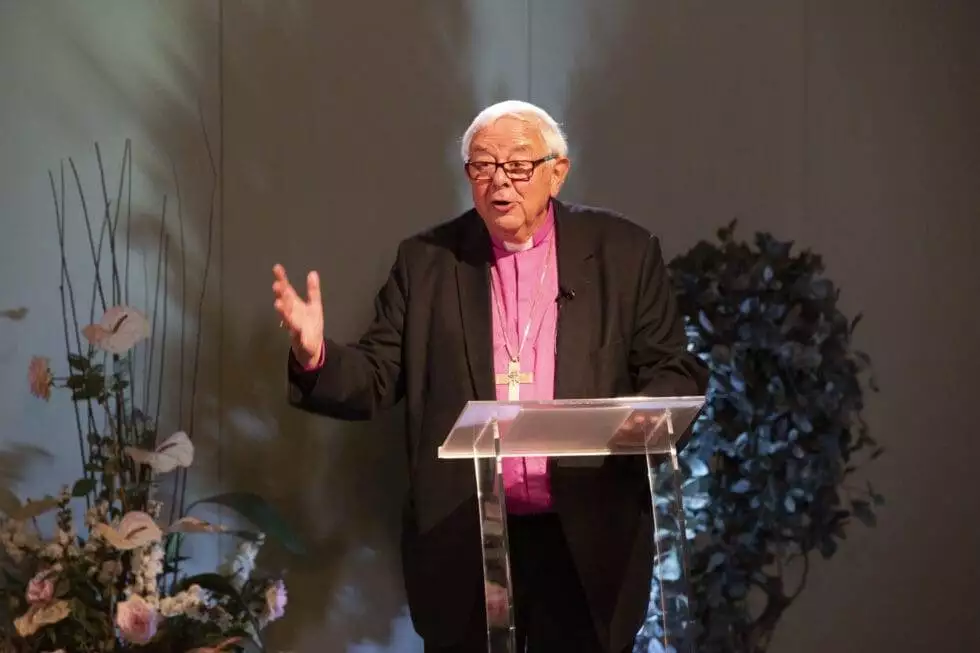
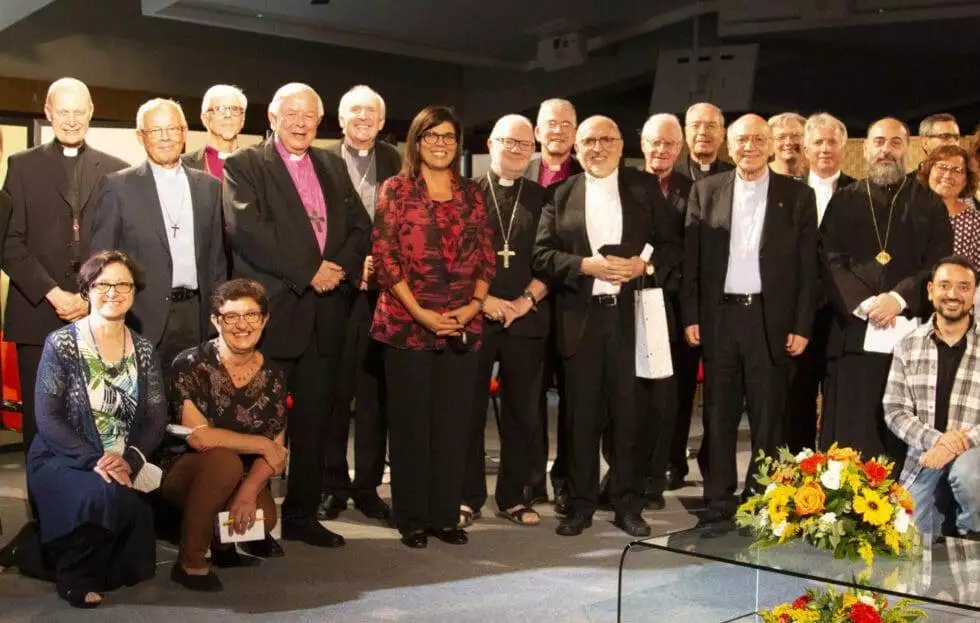
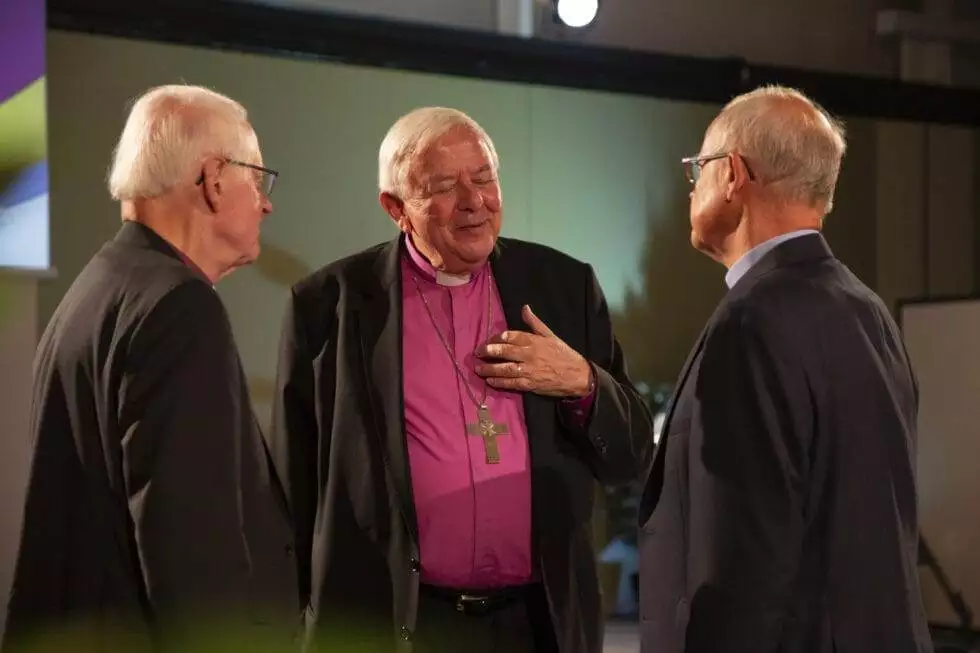
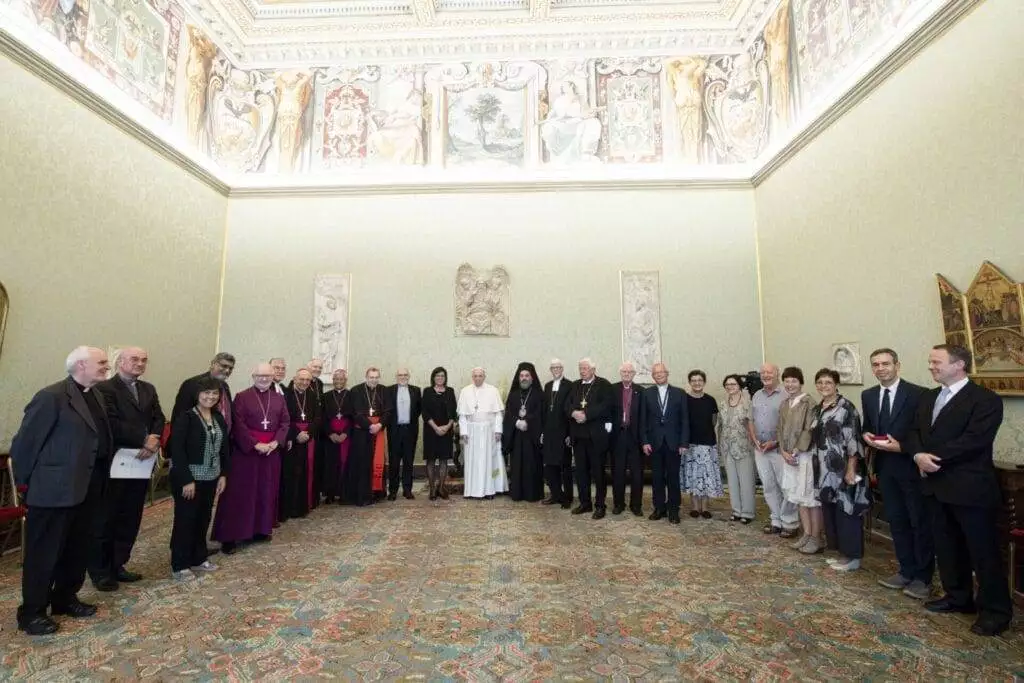
The news of Bishop Christian Krause’s death reached me just as I was beginning a Zoom conference call with Bishops from various churches who are friends of the Focolare Movement, with whom he has been a faithful traveling companion for many years. We knew his health had been deteriorating and we had been praying for him, so it was spontaneous to recite the ‘Our Father’ together, thanking God for his prophetic and encouraging presence among us. He was a man with a big heart and broad horizons.
“Colourful Bishops”
There would be a lot to say about Bishop Christian. As I write, I have before me a photograph of Cardinal Vlk of Prague (Czech Republic), Cardinal Kriengsak of Bangkok (Thailand), Dr. Mor Theophilose Kuriakose of the Malankara Syrian Orthodox Church (India), myself (a Catholic) and Bishop Christian walking towards the city centre of Lund (Sweden), dressed in our ecclesiastical robes, heading for a ceremony at the Cathedral to mark the 500th anniversary of the Protestant Reformation. This ecumenical event, hosted by the Lutheran World Federation (LWF) and attended by Pope Francis, was the first time that Catholics and Lutherans commemorated the Reformation together on a global level.
The photo reminds me of the fondness with which Bishop Christian called the Bishops of various Churches associated with the Focolare Movement “colourful bishops”. He was deeply passionate about the experience of unity in variety and diversity, inspired by a charism and by a spirituality of unity and supported by the Focolare, a predominantly lay movement. Our colourful vestments symbolized the deeper richness of the gifts exchanged during the dialogue of life undertaken by Bishops from various churches since 1982—a dialogue initiated by Bishop Klaus Hemmerle and Chiara Lubich, with the blessing of Pope John Paul II.
An Historic Day
Although Bishop Christian became acquainted with the Focolare in the 1980s through Bishop Hemmerle, his meeting with Chiara Lubich on 31st October, 1999 was a special moment for him. It took place in the context of what was undoubtedly a key moment in his life: the signing, on behalf of the LWF, of the Joint Declaration on the Doctrine of Justification with the Roman Catholic Church, on 31st October 1999 in Augsburg, Germany. Over the years, Bishop Krause has often shared with us the significance of that event, emphasizing its importance as a document signed on the brink of the 21st century. He often recalled how, on that very occasion, a group of founders and leaders of Evangelical and Catholic Movements and Communities gathered in the Focolare little town of Ottmaring to launch the ‘Together for Europe’ project. That day’s meeting with Chiara Lubich opened a path for him into an ecumenical experience whose prophetic possibilities and implications he perhaps understood more deeply than many of us.
Broad Horizons
When I became a bishop in 2013, I came into much closer contact with Bishop Christian within the framework of the Bishops of various churches who are friends of the Focolare Movement. After Lund, several of us met for monthly online teleconferences. Meeting with Christian was always a great way to broaden your horizons, because he liked to see things in the bigger picture. His sense of humour was evident in the sparkle in his eyes and his kind smile.
Bishop Christian Krause was passionate about the Church, about the unity of the Church and the need to move forward. For him, life was not about standing still. If we want to improve the future, we must be ready to disrupt the present! In the case of the Bishop Friends of the Focolare, Bishop Christian urged us to widen the circle and to commit ourselves to promoting circles of living dialogue with the Bishops of various Churches in the Global South. He was so pleased that in September 2021, in the midst of Covid, we were able to organize an online meeting for 180 bishops from 70 Churches from all over the world. It was a wonderful three-day meeting.
Glimpses of Hope
I recently visited Bishop Christian in the nursing home where he had moved in the last weeks of his life. Our conversation was one I will remember for a long time. He spoke to me of his gratitude for having encountered the charism of the Focolare, of the support and friendship he had experienced. Raised in the tradition of “awakening” (pietistic), his encounter with the Movement was in line with his personal conviction of the need for piety, for spirituality.
He did not hide the pain he felt at times, seeing how the world seems to have lost the visionary dynamic of hope from the 1960s, when global mission and the horizons of peace seemed within reach. Equally painful for him was the fact that it was still not possible to receive communion in the Catholic Church.
He told me about an event in the ‘90s when Chiara Lubich was not well. During a meeting, Cardinal Miloslav Vlk invited him to come with him and make a short phone call to Chiara. It was to be a short phone call and so to keep it that way, Bishop Christian simply asked Chiara: “Do you have a word for us?” Chiara did not hesitate to answer: “Always Go Forward!” Christian was very impressed.
“Always Go Forward” was the stimulus that Bishop Christian always brought us. Speaking to me about his preparation for death, he showed his strong faith with which he knew how to look to the future, including death, with hope. He shared with me the prayer taken from a famous poem by Dietrich Bonhoeffer that inspired him in that last period: “By gracious powers so wonderfully sheltered, And confidently waiting, come what may, We know that God is with us night and morning, And never fails to greet us each new day”.
Bishop Brendan Leahy Bishop of Limerick, Ireland
Bishop emeritus Christian Krause was born on 6th January 1940 in Dallgow-Döberitz, Brandenburg (Germany). He studied theology in Germany (Marburg, Heidelberg and Göttingen) and in the United States (Chicago). He was ordained a Pastor of the Evangelical Lutheran Church of Hanover in 1969. He worked as an assistant at the then Department of Theology of the Lutheran World Federation in Geneva (Switzerland) from 1969 to 1970 and at the headquarters of the Christian Service for Refugees of Tanganyika in Dar es Salaam, Tanzania, from 1970 to 1972. From 1972 to 1985 he was responsible for international ecumenical affairs, serving as Executive Secretary (Oberkirchenrat) to the United Evangelical Lutheran Church of Germany and the German National Committee of the LWF in Hanover, Germany. From 1985 to 1994 he was General Secretary of the German Evangelical Kirchentag (Lay Movement of the Protestant Church). He was Bishop of the Evangelical Lutheran Church of Brunswick, Germany, from 1994 to 2002. From 1997 to 2003 he was President of the Lutheran World Federation (LWF). He died on 28th November in Wolfenbüttel, Germany, at the age of 84. Bishop Christian leaves behind his wife Gertrud Krause and four children.
“The competition has been and remains a unique way to introduce Chiara Lubich, founder of the Focolare Movement, to younger generations and to an audience that engages with her work on a cultural level,” says Giuliano Ruzzier, a teacher and collaborator of the Chiara Lubich Centre.
Promoted by the Ministry of Education and Merit, New Humanity and the Historical Museum Foundation of Trentino, this year’s theme is peace. Participants are encouraged to explore the meaning of peace in light of Chiara Lubich’s contributions. Ruzzier explains, “From her extensive legacy, particularly where she explicitly addressed this theme, we have identified four perspectives from which to reflect on peace.”
These perspectives include constructive dialogue among people of different religions and cultures, overcoming economic disparities, fostering personal commitment to fraternity through relationships of proximity and spreading a culture of peace. Prof. Giuseppe Ruzzier continues, “Chiara Lubich viewed humanity as a whole. She is well-known for her call to ‘love others’ countries as our own. Her emphasis on everyday relationships is particularly distinctive. As she said, our days can be filled with practical, humble, intelligent acts of service, expressions of our love. Every little gesture has an effect on society.”
The contest is open to primary, middle and high school students. “As in past years, we especially hope for broad participation from Italian schools abroad, given the clear international scope of this year’s theme.”
When asked how he would encourage his colleagues to promote this initiative, Ruzzier replies: “This contest offers students the chance to reflect independently and creatively on a highly relevant and important topic like peace. It also provides an opportunity to engage with the significant thoughts of a woman who profoundly shaped and experienced the 20th century and expressed herself in many ways.”
This morning, while shopping at the supermarket, I passed by a large trolley where a shop assistant was piling up boxes. I noticed two of them were on the ground.
Fearing that I had inadvertently dropped them, I apologised, picked up the boxes and placed them on the trolley.
The shop assistant thanked me and said not to worry, then called after me: ‘Kindness is rare!’. Another person who was passing by just at that moment confirmed: “That’s very true!” whereupon the shop assistant, by way of explanation, told her what had happened.
As for me, I was happy, not least because this little episode reminded me of a phrase I had heard some time ago which had struck me. It spoke about “sowing kindness”. It felt like a ‘caress’ from God.
G.S. – Italy (*)
Healing relationships
I have a brother, a Catholic Christian, who married a German woman from the Evangelical Church. When they settled in Italy, the relationship between my mother and sister-in-law was not easy, even though she was not against their children being educated in the Catholic Church. As for me, I tried to be a ‘mediator’ between her and my mother. My sister-in-law also suffered because of this misunderstanding, which was however healed shortly before our mother died. For some time now, I have been sharing the ‘Thought for the Day’ with her via Whatsapp which helps us to live Gospel-based love on a daily basis. One day the thought invited us to ‘be merciful’, with this short commentary sentence: “Mercy is a love that knows how to welcome every neighbour, especially the poorest and neediest. A love that does not measure, is abundant, universal, concrete”. Her response was immediate: ‘If I have made you feel bad in certain circumstances over the past years, please forgive me”. Astonished, I replied in turn: “I too apologise”. And she: “I don’t remember any incident for which need to apologise…’.
C. – Italy (*)
Called and sent
Someone very dear to me asked me to write something about my experience as a teacher for an acquaintance of hers from another country who was doing a project on values education.
I realised that it was an opportunity to transform into a testimony and ‘proclamation’ what, in some ways, has been my personal response to the ‘call’ to live according to the teachings of the Gospel as a teacher and as a mother.
The piece took many hours of writing, deleting, correcting, rewriting, remembering aspects that I could add, deleting others that seemed irrelevant and, above all, filtering each word with love. I tried to put myself in the place of the person I was writing for, because even though I did not know her, I could love Jesus in her.
I sent it to my friend, aware that it might not be exactly what she needed, and so was ready to change everything.
To my surprise, she replied: “I have already sent your letter. I really liked it”. No doubt it was not the writing itself that was liked, but the work that God had done in me which could be a little light for others by being shared.
And, of course, the other things I had to do in those days were easily taken care of, as there had been some changes in the rota that left me with more free time.
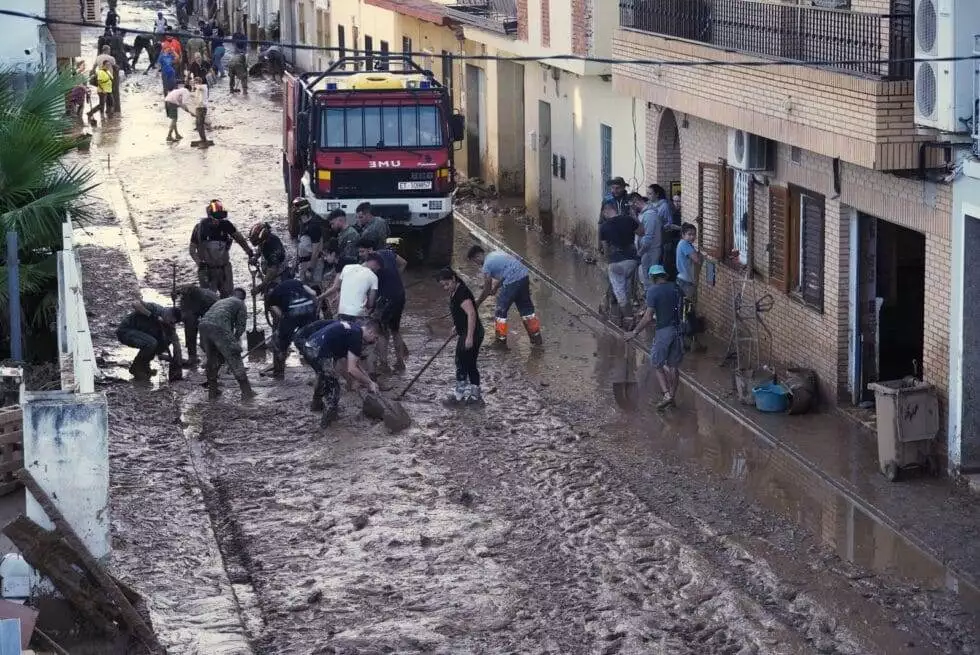
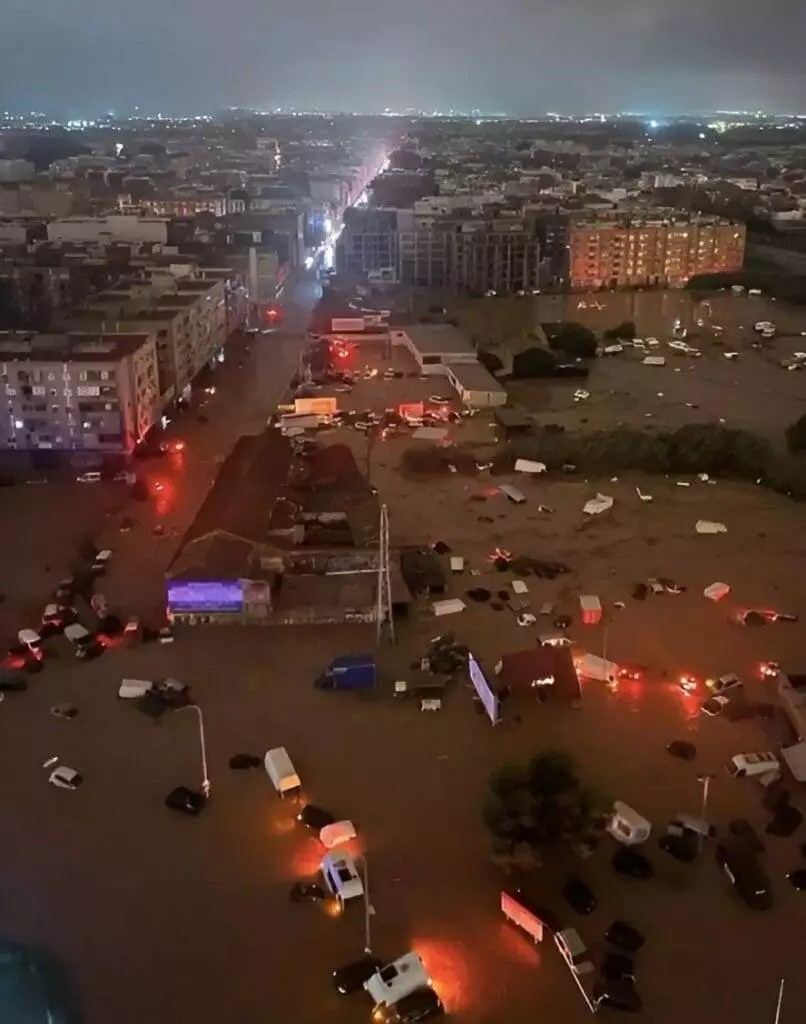
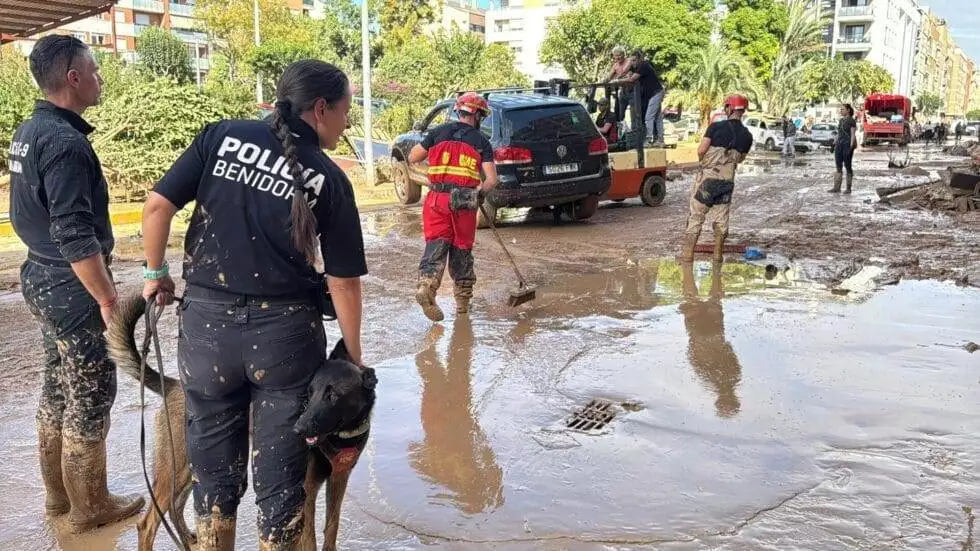
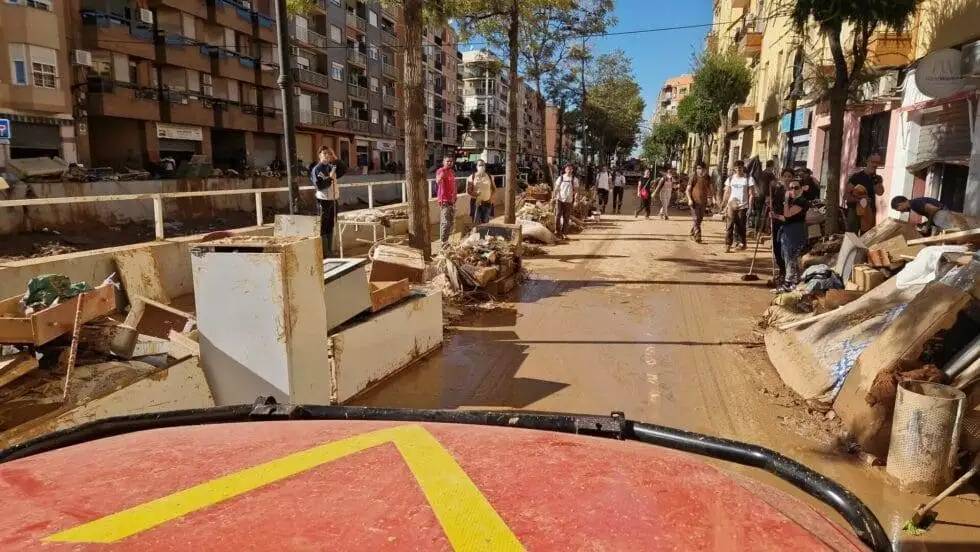
A few days ago, the Spanish province of Valencia experienced one of the greatest natural disasters in its history. Heavy rains, “DANA”, caused massive floods that swept through cities and towns in the region.
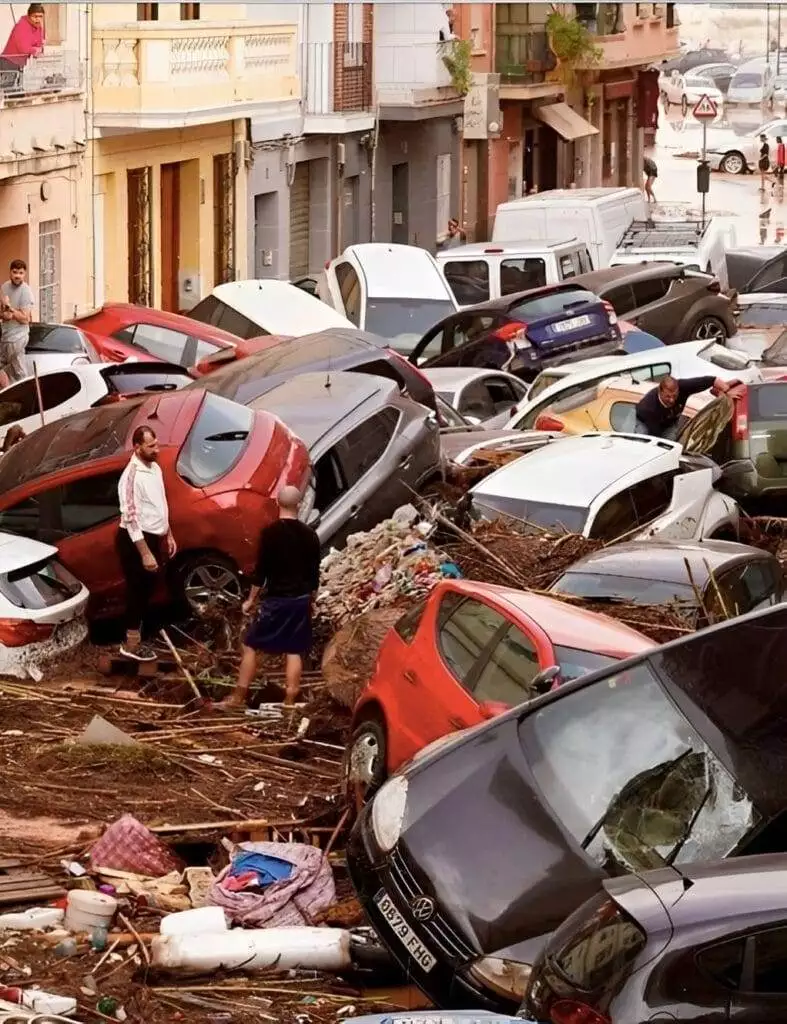
Currently, the toll is 214 dead and 32 people missing. An estimated 800,000 people, one-third of Valencia’s population, have been affected. Around 2,000 small businesses have been swamped with water and mud, losing everything. Cars floated through the streets, piling up like paper boats. The list of families who have lost their livelihoods has yet to be compiled. It is a major disaster made worse by the indefinite postponement of public works needed to prevent floods like these from occurring.
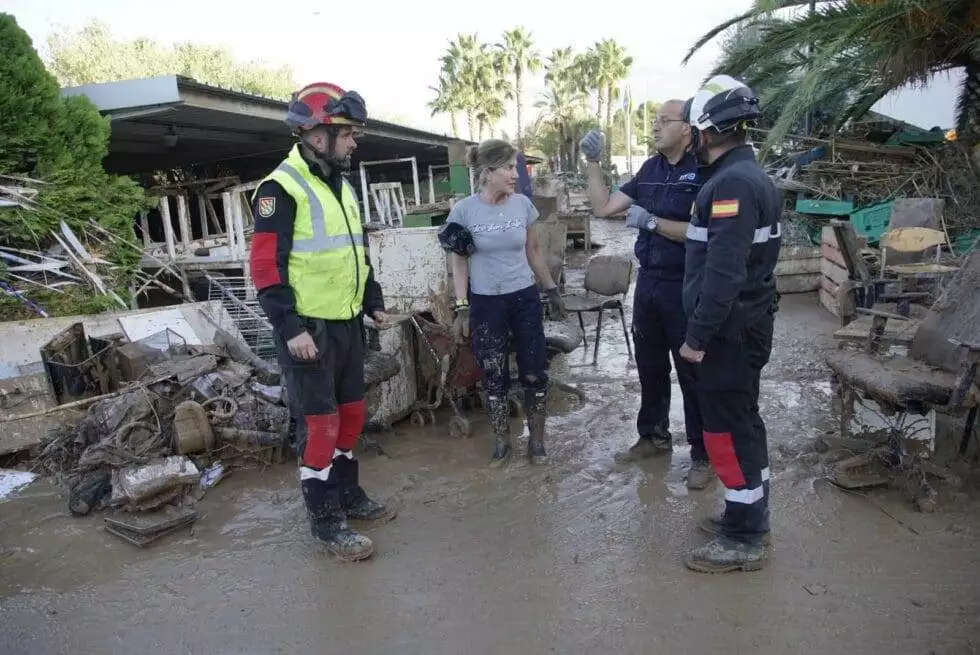
However, alongside this great disaster remarkable solidarity is being demonstrated. In the following days, as the waters receded, revealing a thick layer of mud covering everything, thousands of volunteers, mostly young people, began arriving in the affected area, armed with shovels and brushes, ready to help.
José Luis Guinot is a medical oncologist and president of the Viktor E. Frankl Association of Valencia, which provides emotional support for people affected by illness, suffering, death and other vital losses. The City Council asked him to help at a health and support centre set up for the occasion, where he could “listen and welcome those who need to share what they have experienced.” He said, “This has been and continues to be, an immense tragedy, far beyond anything we could have imagined. We couldn’t believe it was happening.”
He said that a few days later, while attending Sunday Mass, it saddened him to hear only prayers for the dead and those affected by the flood, without mention of any further support. He thought, “It’s not enough just to pray, even though we must pray a lot. We need to be close to people to give them hope. As Christians and as part of the Focolare Movement, we must offer that hope even in harsh experiences. Together and united, we can help each other overcome this situation.”
In one of the affected areas, a Focolare family with young children had their home flooded. Although they were unharmed, everything they owned was lost: washing machine, refrigerator, domestic appliances, furniture… Help from other families came quickly, someone washed their clothes, then another person gave them a new washing machine.
Eugenio, a member of the Focolare Movement who has a disability due to polio, was the President of the Federation of Adapted Sports in Valencia for many years. He couldn’t get around after the flood because of his mobility difficulty but by making phone calls he was able to contact local disabled associations asking for help. José Luis Guinot said, “We must offer ideas, help create solidarity and generate donations.” For example, these associations managed to obtain wheelchairs for those who had lost theirs in the flood.
“I think this is a wake-up call for all of society. Spain is going through a period of politically polarized conflict,” José Luis reflected. “But there’s another side of society, many young people who we think are always glued to social media, yet they’re out here in the mud, seeking a society of solidarity, a united world, a society where fraternity is real. Until now, politicians hadn’t taken this message seriously. But now, no one can deny it.”
Next weekend, the Focolare community will meet to think and plan together how they can continue serving after these emergency days. As José Luis said, everyone can and must be involved, because, “two or three months from now, there will be a need for emotional support, for a sense of belonging to something, to a community or a parish… It will be a challenge for us: we’ll need to be on the phone a lot, visit people, listen to them, encourage them despite their hardships, but letting them know that we are with them. Even if you can’t leave your home, if you’re elderly or have small children… you can talk to your neighbours, make phone calls or offer words of encouragement. We must transmit a sense of community… I won’t try to explain anything to those who have lost loved ones or their livelihood, I will give them a hug and say: ‘We will help you find the strength to move forward'”. .
The Focolare community and the Fundación Igino Giordani, has launched a fundraising campaign. The funds collected will be managed locally to support the victims. The material damage and losses are immense. Many survivors have lost beds, tables, refrigerators, washing machines, cars, work equipment…
Contributions can be made through: Fundación Igino Giordani CaixaBank: ES65 2100 5615 7902 0005 6937 Account Holder: Fundación Igino Giordani Purpose: Emergencia DANA España To claim a tax deduction, send your tax information toinfo@fundaciongiordani.org
Peace is the result of a project: a project of fraternity between peoples, of solidarity with the weakest, of mutual respect. This is how a fairer world is built; this is how war is set aside as a barbaric practice belonging to the dark phase of the history of humanity. Many years have passed since the first publication of this writing, which is still very relevant today, at a time when the world is torn apart by terrible conflicts. History, Giordani tells us, could teach us a lot.
War is murder on a grand scale, clothed in a kind of sacred cult, as was the sacrifice of the first-born to the god Baal: and this is because of the terror it incites, the rhetoric in which it is clothed, and the interests it implies. When humanity will have progressed spiritually, war will be catalogued alongside bloody rites, the superstitions of witchcraft and the phenomena of barbarity.
War is to humanity, like illness to health, like sin to the soul: it is destruction and devastation, it affects body and soul, individuals and the community.
According to Einstein, human beings have a need to hate and to destroy: and war would satisfy this. But it is not so: most human beings, entire peoples, do not manifest this need. At any rate they repress it. Reason and religion condemn it.
« All things crave peace, » according to St Thomas. In fact, they all crave life. Only the insane and the incurable can desire death. And death is war. It is not desired by the people; it is desired by minorities to whom physical violence serves to secure economic advantages or, even, to satisfy harmful passions. Especially today, with the cost of war, the dead and the ruins, war manifests itself as “useless slaughter”. A massacre, and a useless one at that. A victory over life, and one that is becoming a suicide of humanity.
[…] Human ingenuity, destined for quite different purposes, has today devised and introduced instruments of warfare of such power that they strike horror in the soul of any honest person, especially since they do not only affect armies, but often still overwhelm private citizens, children, women, the elderly, the sick, and at the same time, sacred buildings and the most distinguished monuments of art! Who is not horrified at the thought that from the recent conflict, new cemeteries will be added to the numerous existing ones and new smoking remains of villages and towns will accumulate more sad ruins? Who, indeed, does not tremble to think how the destruction of new riches, the inevitable consequence of war, may further aggravate that economic crisis, by which almost all peoples, and especially the humblest classes, are afflicted? » [1]. […]
The futility was reaffirmed by Pius XII in 1951: « Everyone has manifested with equal clarity their horror of war, and their conviction that it is not, and now less than ever, a proper means to settle conflicts and restore justice. This can only be achieved by freely and legally consented understandings. If it could be a question of popular wars – in the sense that such wars respond to the votes and will of the people – it would only be in the case of such a flagrant and destructive injustice of the essential goods of a people as to revolt the conscience of an entire nation. » [2].
Just as the plague serves to infect, hunger to starve, war serves to kill: moreover, it destroys the means of life. It is a funeral industry: a factory of destruction.
Only a fool can hope to derive benefit from a massacre: health from a fainting spell, energy from pneumonia. Evil produces evil, as the palm tree produces dates. And the facts show, even in this field, the practical inconsistency of the Machiavellian saying that « the end justifies the means ».
The end may be justice, freedom, honour, bread: but the means produce such destruction of bread, honour, freedom and justice, as well as of human lives, including those of women, children, the elderly, the innocent of all kinds, that they tragically annul the very end that is proposed.
In essence, war serves no purpose other than destroying lives and riches.