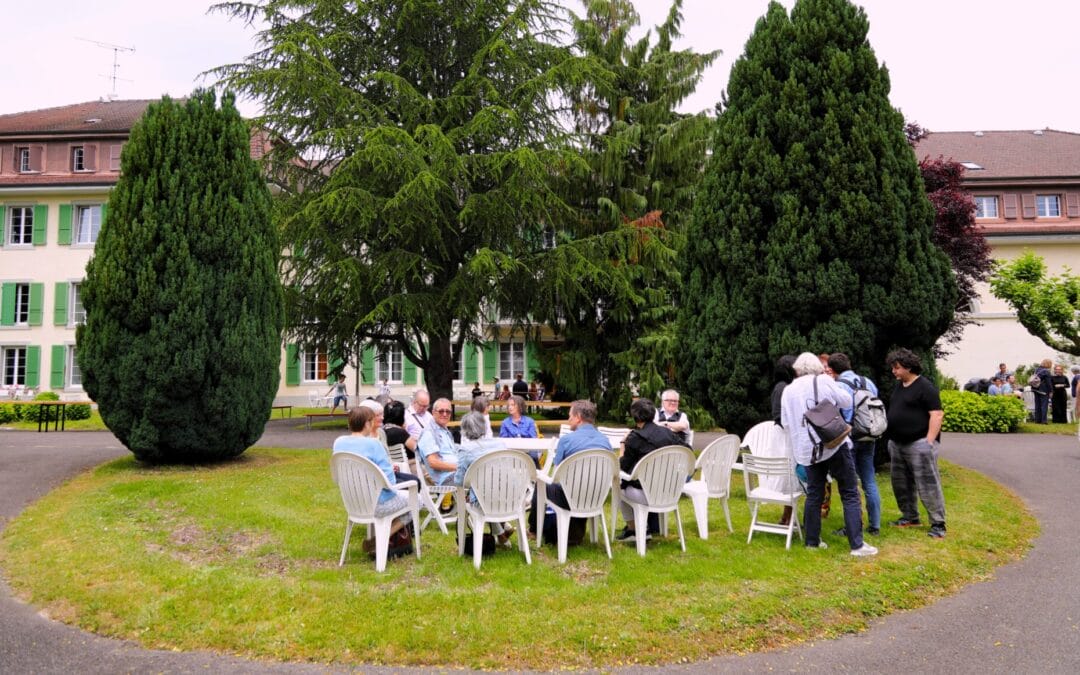
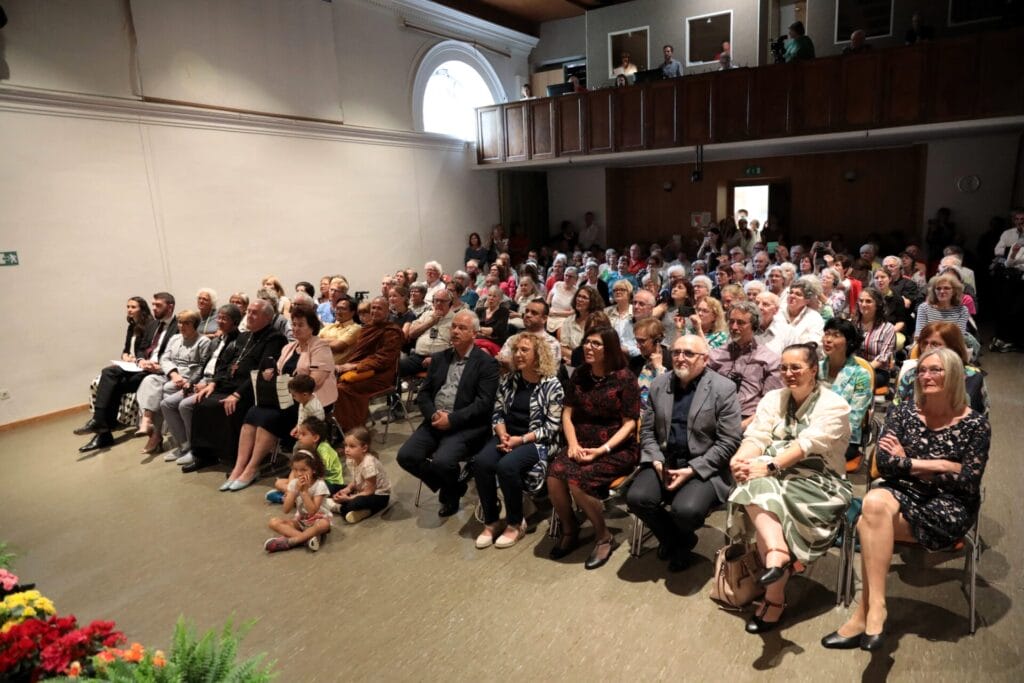
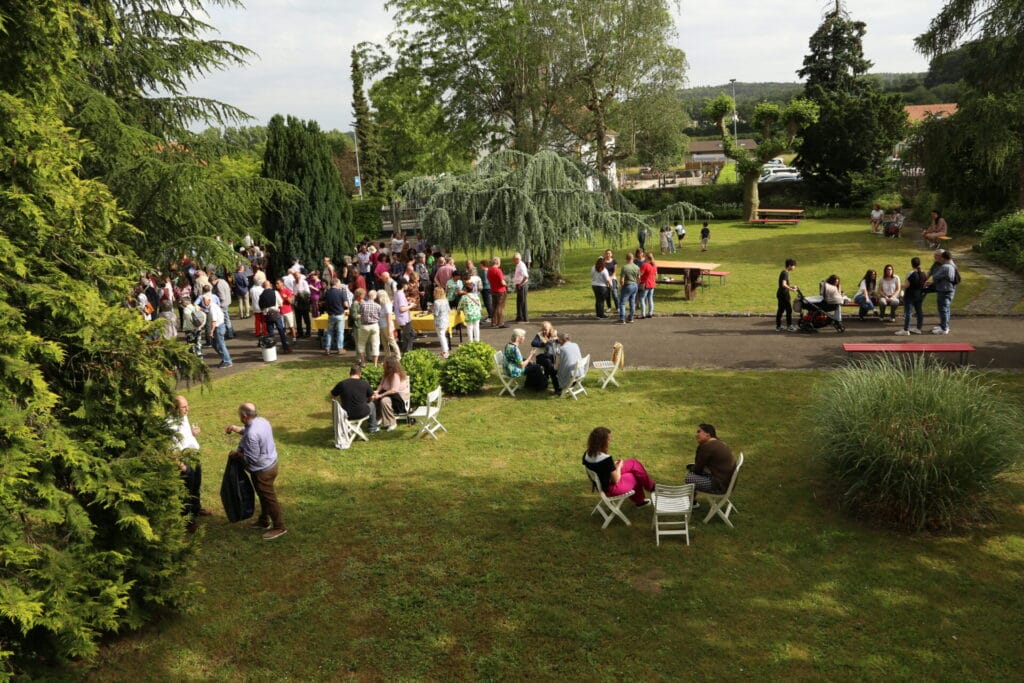
On a sunny day in June 2024, more than 400 guests from all over the world came to Montet, Switzerland, to greet the multicolored and international Focolare community. The Movement’s formation center will indeed be closed and the community will focus its efforts on other formation centers. During the second half of the year 2024, most residents will leave the small town in French-speaking Switzerland to join other communities.
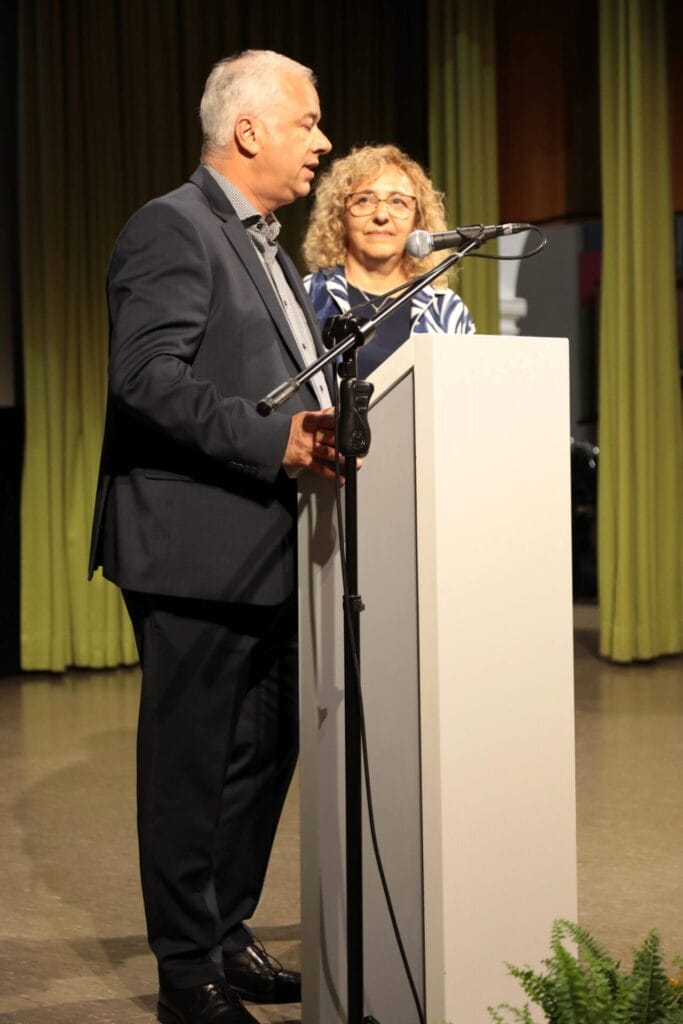
The people in charge of the “Mariapolis Foco,” as this citadel is called, Maria Regina Piazza and Markus Näf explained the path that led to this step: “To understand this decision, one has to look at the path that the Focolare Movement has made considering the decline in vocations to consecrated life and the challenges of today’s society around the world.” It is about “redistributing forces and reducing structures to promote proximity to people where it is most needed.”
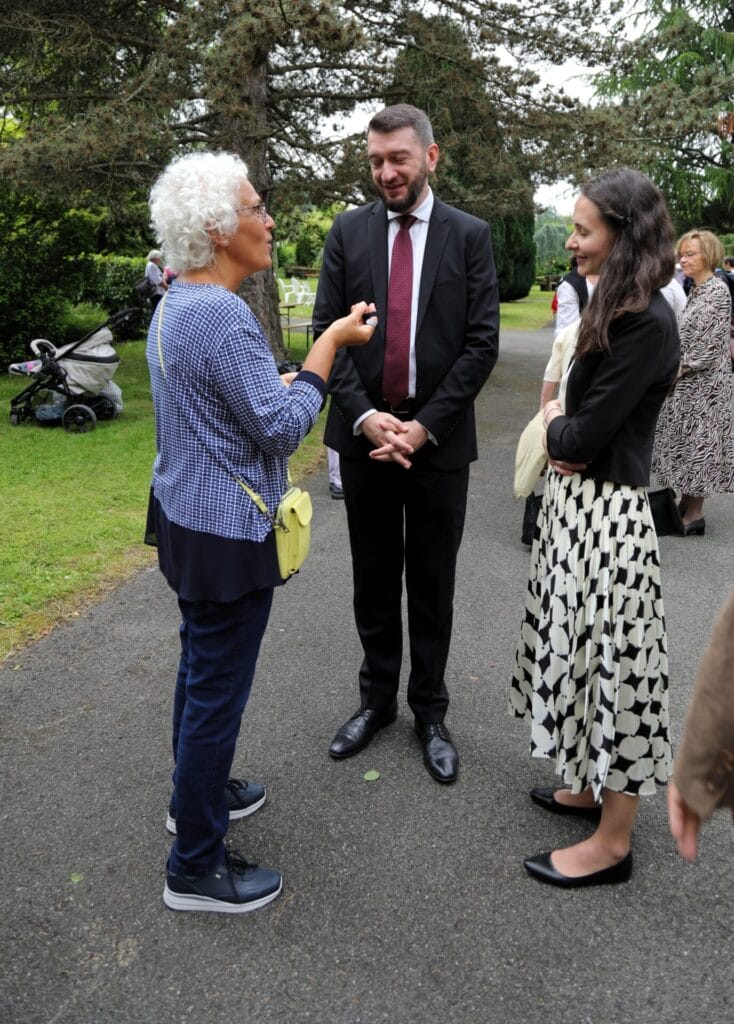
Markus Näf – Maria Regina PiazzaMargaret Karram – Jesús Morán – Celine RuffieuxIon Sauca
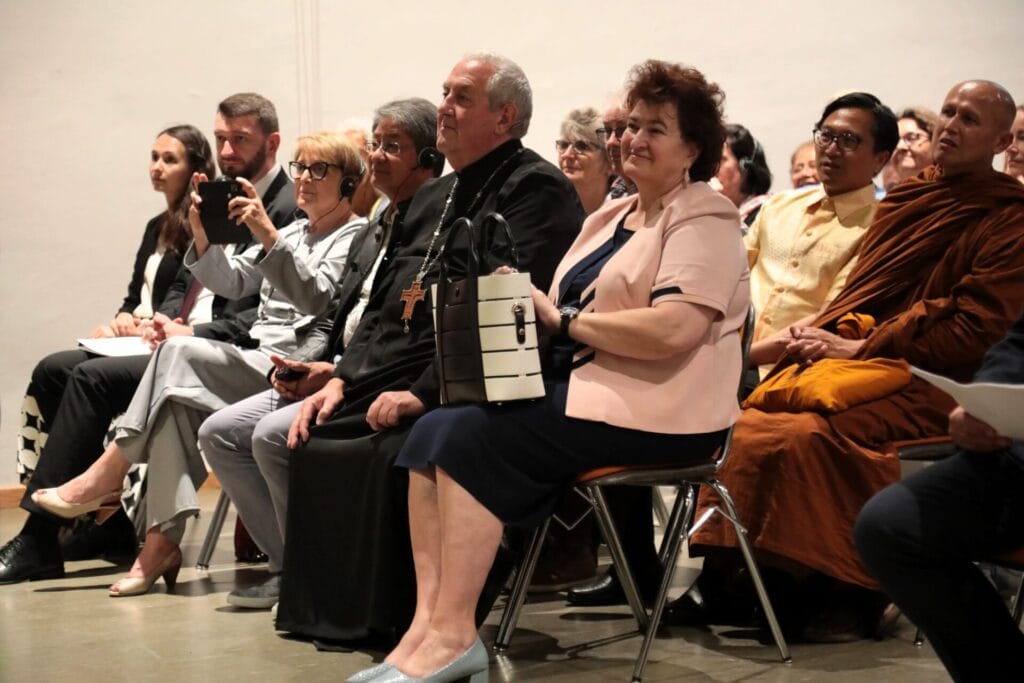
Guests in attendance from the worlds of politics, society and churches emphasized how much the citadel has shaped and positively influenced the surrounding area: peace, a sense of community, a spirit of unity and fraternity were spread, and a testimony of mutual love was given. In total, nearly 3,800 people lived here over the course of 43 years, most of them teenagers and young adults.
In a greeting statement, the Secretary General of the World Council of Churches in Geneva, Rev. Prof. Dr. Jerry Pillay, expressed gratitude for the rich ecumenical experiences shared and lived together during the students’ annual visits to Geneva and emphasized that “the real legacy of the Montet Center is not its physical structure, but rather the fellowship, relationships, and Gospel values promoted.”
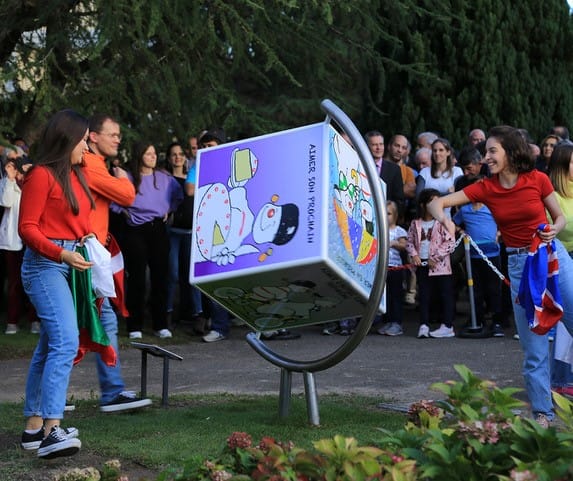
Cédric Péclard, longtime mayor of Les Montets, to whose municipality the village of Montet belongs, greatly regretted this closure. However, he was pleased that the “ Cube of Peace” from the Focolare Center park was donated to the municipality. This interactive sculpture embodies and conveys values that are important to the Focolare Movement and in fact originated in the village: a group of focolarine had created it to work with children during their stay in Montet, then “the cube” spread around the world. A large mobile model of it can be found today in a playground in the center of Les Montets.
Dr. Vasile-Octavian Mihoc
In her speech, Focolare President Margaret Karram, who was present together with Co-President Jesús Morán in Montet, did not hide how painful it was for the international community to close this center. “We feel very clearly that we must look to humanity that awaits the gift of peace, of unity, and that we must be able to grasp, even through circumstances, God’s desire for us and for our activities and structures.” The decision to close the Focolare Citadel in Montet was not taken lightly. “It is like witnessing the pruning of a tree that has borne so much good fruit for many years,” she said. “But we know that nothing happens by chance, but Divine Providence is always behind everything.” And she encouraged everyone – guests and residents – to take the experience gained in Montet to the world: “Many of you will be destined for other cities, other countries, other communities or you will return to your own country and you will take wherever you go the valuable experience that you have had here, and that therefore, will not only continue but will bring you an even greater dimension of love that will amaze you because it will be new.”
The future involves the sale of the 5-hectare estate. A committee headed by Hugo Fasel, former director of Caritas Switzerland, will oversee the sale and ensure that the future use of the property is in line with the values of the Focolare Movement.
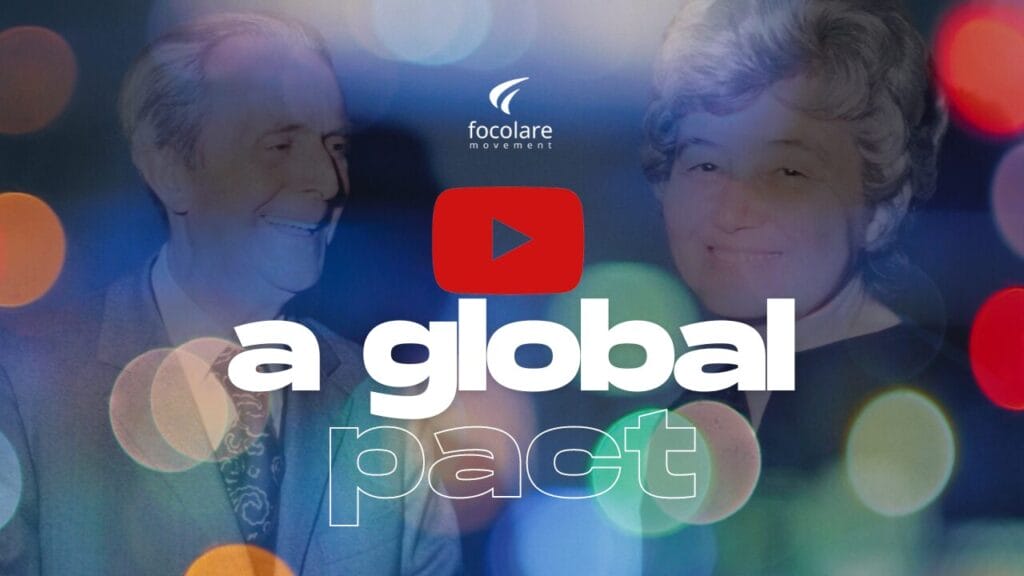
On July 16th, 1949, Chiara Lubich and Igino Giordani made a “Pact of Unity.” It was a spiritual experience that heralded in a period of light and special union with God.
It had an effect on the life of the first Focolare community back then, but also impacted the history of the Movement together with its commitment to working toward a more fraternal and united world.
Seventy-five years after that day, here is a brief look at what that Pact meant then, and what it can mean today as we continue to live by it.
“Peace between peoples, the care of the planet, economics and politics that put the person, justice and dignity at the centre. At the Genfest we will work, discuss and plan for this at a worldwide level”. This is what the youth of the Focolare Movement say, explaining the gathering of thousands of young people for this international event from the 12th to the 24th of July. The event “Juntos para cuidar” aims, as the title suggests, to promote care together at a worldwide level for the most vulnerable and distressed individuals and sectors of humanity, regardless of cultural, ethnic or religious differences.
In this period of change, a new cultural paradigm is needed, no longer based on the individual, but on social relationships open to all in a culture of universal fraternity. In this perspective complexities are valued rather than eliminated, in a deeper understanding of the story of humanity and its peoples.
Genfest 2024will have three phases: voluntary work, a main event, and the creation of groupings (‘communities’) according to academic or professional interest, which will remain connected and work for the furthering of a more united world in countries of origin. It aims to be an immersive experience, where the leaders and thinkers are the youth themselves. Dialogue and collaboration between generations will be the essential components for the changes to be proposed to international institutions. Some parts of the event will be streamed onthe Genfest 2024 Youtube channel.
As a conclusion, the new steps and existing or nascent projects which aim to build a more united and peaceful world will be brought together in a document to be presented to the United Nations Summit of the Future(22-23 September 2024). It will contain projects and practical ideas for a more just and fraternal world, as a contribution to the UN 2030 Agenda.
Those who cannot participate in the main event in Brazil can find an event nearer to home. There will be 44 local Genfests: in South Korea, India, Sri Lanka, The Philippines, Pakistan, Vietnam, Jordan, Egypt, Burundi, Tanzania, Angola, Zambia, Kenya, Ethiopia, South Africa, DRC, Ivory Coast, Cameroon, Burkina Faso, Peru, Bolivia, Mexico, Guatemala, Argentina, Hungary, Serbia, Czech Republic, Slovakia, Germany and Italy.
Juntos para cuidar: the programme
Experience – The first week of Genfest, from the 12th to the 18th of July, is an “immersive” experience of voluntary work in one of 40 projects and organisations offering opportunities in various countries of Latin America and elsewhere. These activities are the result of collaboration with UNIRedes, which brings together more than 50 organisations, projects and social movements in 12 countries of Latin America and the Caribbean, promoting transformation in various spheres (art and culture, the environment, democratic government, education, work, etc.) through the active commitment of all those involved.
Celebrate – From the 18th to the 21st of July the youth will come together for the main event at the National Shrine Arena in Aparecida. They will hear experiences and share strategies for peace and fraternity also through artistic and musical presentations. The event will be streamed to more than 120 different countries. It will be a wide-ranging festival of ideas and initiatives and inspire thousands of young people of many different cultures, ethnic groups and religions to live for a united world.
Learning and sharing – The third phase is from 21st to the 24th of July. The young people will come together in eight groupings called ‘communities’, according to their fields of interest: economics and work, interculturality and dialogue, spirituality and human rights, health and ecology, art and social commitment, education and research, communication and media, active citizenship and politics.
In these spaces the young people will learn, discuss, and formulate new ways of shared commitment to spread the culture of fraternity, through local projects in a global perspective. Returning to their countries of origin, they will work locally in their preferred sector, growing in a culture marked by fraternity and relationality.
An international team of academics, professionals, social and political activists and leaders – young and old – will assist the participants in their discussions and group work.
Among those who have confirmed their presence: Luigino Bruni, economist (Italy), Choie Funk, architect and social activist (Philippines), Jander Manauara, rapper and activist (Brazil), Carlos Palma, coordinator of Living Peace (Uruguay), Myrian Vasques, Indigenous advisor (Brazil), Silvina Chemen, director of the Centre for Interreligious Dialogue at the Rabbinic Seminary (Argentina), John Mundell, director of the Vatican Laudato Si Action Platform (USA), Nicolas Maggi Berrueta, violinist, Peace Ambassador (Uruguay), Israa Safieddine, education consultant and specialist in the teaching of Islam (USA).
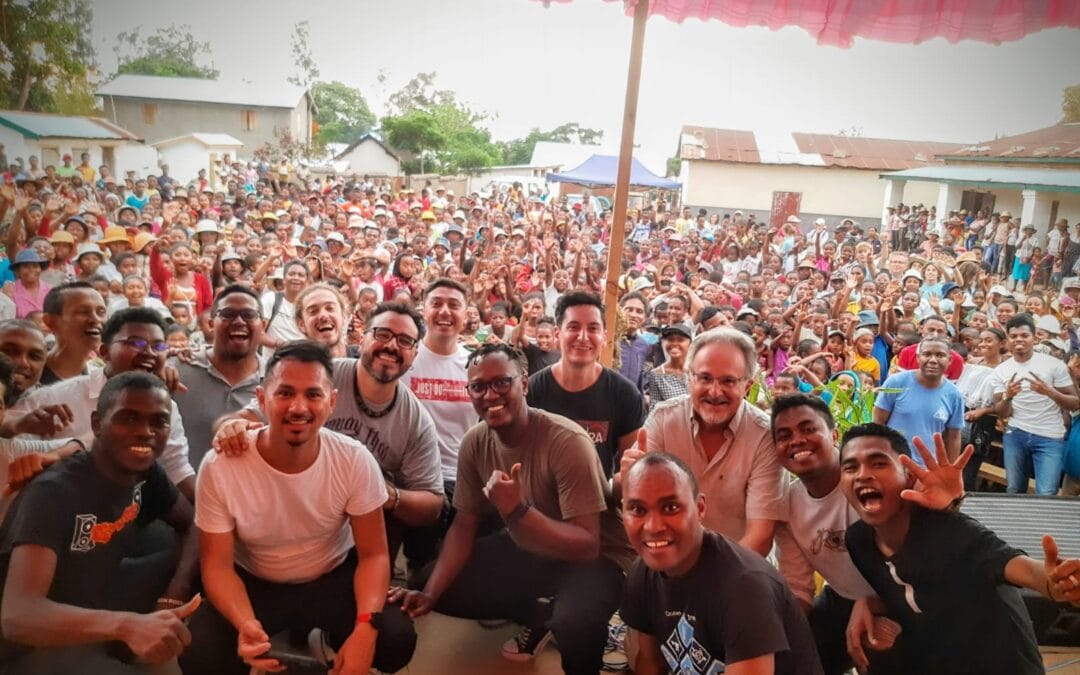
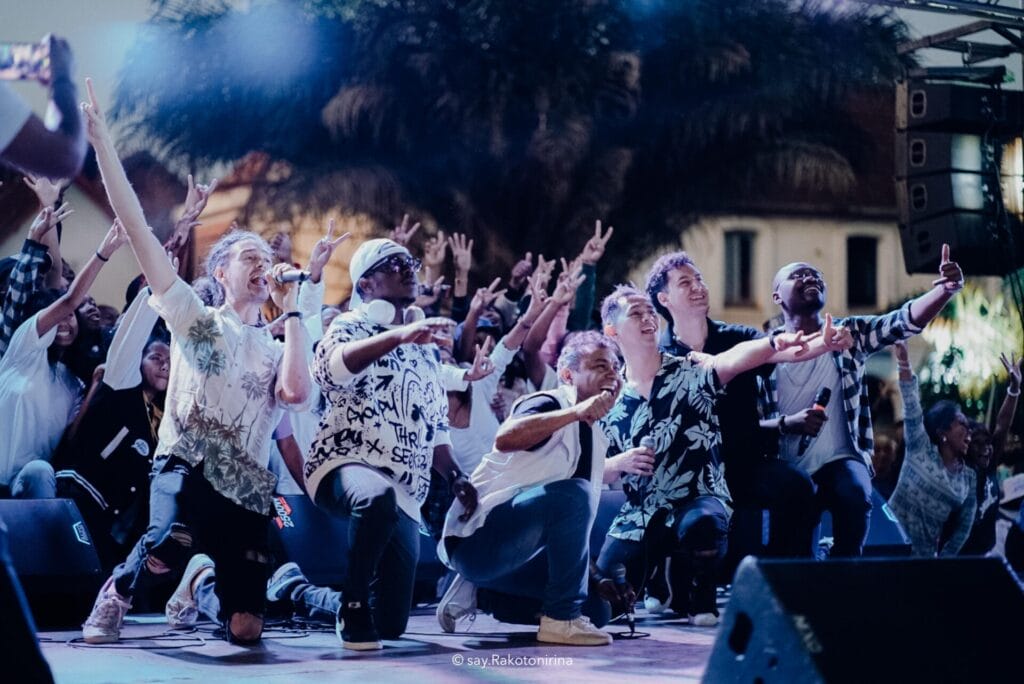
The Gen Rosso international band recently visited Madagascar, performing eight shows in seven cities. They travelled extensively across this beautiful island to spread a message of peace and fraternity through music and dance.
The 950 kms journey from the capital, Antananarivo, to Toliara in the extreme south took two days.
Valerio Gentile, spokesperson for the band, told us, “The community of the Focolare Movement in Tolear welcomed us with a big celebration, gifting us traditional headgear and necklaces and expressing their joy through traditional dances and songs. We performed with a local group, the Choeur des Jeunes de Saint Benjamin, at a well-known restaurant in the city; that was the beginning of our tour in Madagascar”.
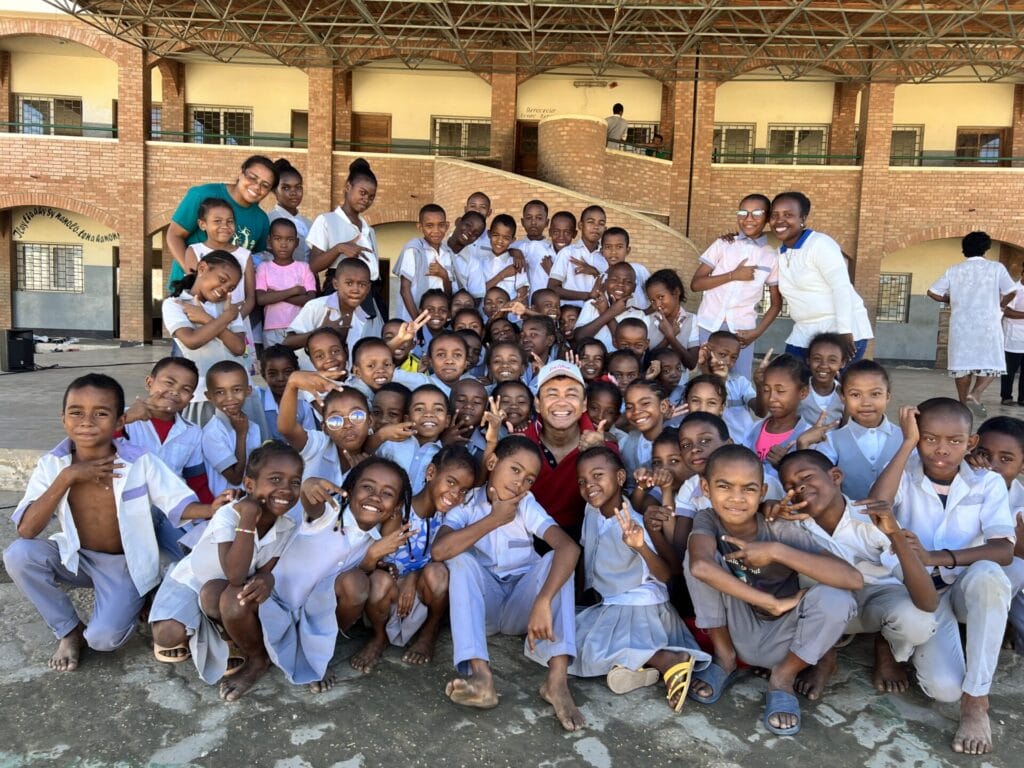
The next day Gen Rosso held workshops at the Don Bosco School, which culminated in a concert in the amphitheatre. One girl, moved to tears, said, “It was the best day of my life,”. And a young teacher added: “You have brought out real values for us to live by; I feel that I have to live my life according to the aims expressed in your songs and that we shared with you during the workshops.”
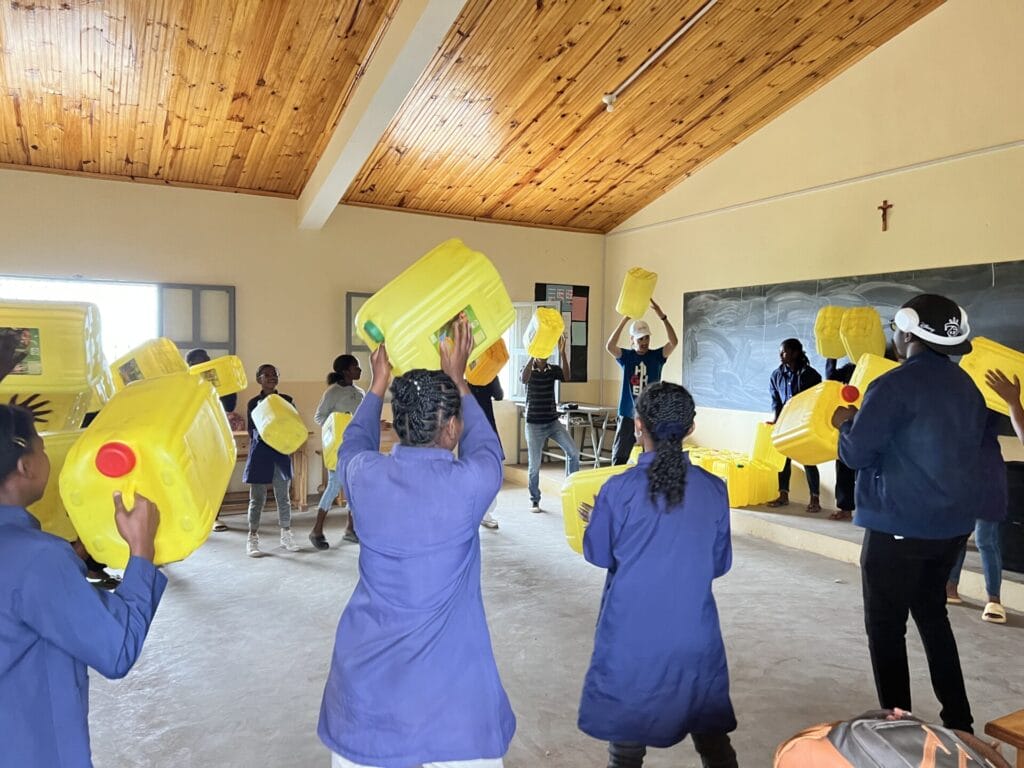
Valerio elaborated on the workshops, highlighting an innovative percussion session using recycled plastic bottles and yellow barrels, commonly used in Africa as water and oil containers. These became improvised musical instruments, turning the session into an environmental action promoting planet protection.
Another significant event took place at the École Père Barré School, where 300 high school students joined Gen Rosso on stage. In the introduction, the participants were invited to live out a saying during the workshop: “make space for love”.
Adelson of Gen Rosso began by saying, “We are not here to put on a show for you, but with you for the whole city”.
The final concert at the Jardin de la Mer came all too soon. It was opened by the Choeur des Jeunes de Saint Benjamin. However, an unexpected power cut interrupted the performance. When the power returned, Gen Rosso resumed, and the young audience participated enthusiastically.
A second blackout occurred at sunset, plunging the area into darkness.
Valerio explained, “We decided to improvise with torches. Several youth groups from the workshops performed, showcasing creativity and joy. The young people of Toliara were the true stars of the show!”
One participant remarked, “Thanks to Gen Rosso, we discovered our resilience,” echoing sentiments about uncovering life’s authentic values, talents, and the right direction to take.
Valerio shared, “These words encouraged us for our final event in Antananarivo at the Fanovozantsoa School. In just a few hours, the young people were ready to sing, dance—hip-hop and Latin American—and perform percussion. The concert on May 18th was a resounding success, filled with applause, hugs, and selfies. It was an unforgettable moment etched in everyone’s hearts.”
he tour concluded with a Mass for Pentecost in Akamasoa, near the City of Friendship, a community established 30 years ago by Argentine missionary Father Pedro to help the poor through job opportunities, education, and health services.
Valerio reflected, “We celebrated with a colourful Mass in the morning and a joyful show in the afternoon in the outdoor amphitheatre. The concert brought together families, young people, the elderly, and children, delivering a message of hope to build a new society based on love.”
On behalf of the band, Valerio concluded, “Thank you, Madagascar, for your millions of hearts beating every day with solidarity, resilience, simplicity, serenity, lightness, humility, joy, and peace. From now on, you ‘travel’ with us as a gift to take to the world!”
Our daily lives are never free from problems and challenges – health, family, work, unforeseen difficulties, etc. In addition, we are aware of the immense suffering experienced today by so many of our brothers and sisters due to war, the consequences of climate change, migration and violence. We may often feel overwhelmed by these situations.
It is normal to feel concern and to want to find security. We may not find a solution to the problem but the closeness of true friends comforts us and gives us strength. Facing difficulties together is a daily reminder to continue believing in those values of fraternity, reciprocity and solidarity that make the journey through life possible. Fraternal relationships help us experience the same security that children feel when they trust in the love of their parents. This helps them live with a sense of freedom and drive.
For Chiara Lubich and for so many who followed and follow her vision of life, this security comes from the faith of having a Father. Chiara said: “…the person knows he or she is loved and believes with all their being in this love….. abandons themselves to it trustingly and wants to follow it. The events that make up our lives, whether sad or joyful, are enlightened by the belief that everything happens because love has willed or permitted them all.” Her words can be applied to all those who have experienced true love at least once in their lives.
The characteristic of a good travelling companion is someone of service, someone who brings a personal dimension based upon knowledge and deep sharing in respect for everyone. This means living transparently, consistently, without a hidden agenda and with a pure and unconditional love that brings peace, justice and fraternity.
When this happens, it produces a new type of leadership that is so necessary nowadays. This leadership fosters a communitarian dynamic and enables us to recognise the unique contribution of each one without losing our individual identities. On the contrary, we know that it is when we are alone we experience disorientation and lack vision.
We ourselves will only be able to be ‘guides’ for those who are living through difficult times if we, in turn, have experienced trust in others. As the Brazilian educationalist and philosopher, Paulo Freire, says: ‘No one educates anyone; no one educates his or her self; people educate each other through the mediation of the world.’ 1 In other words, in the educational community, no one teaches anyone anything, but everyone learns from everyone in a context of dialogue and critical reflection on reality.1. We ourselves will only be able to be ‘guides’ for those who are living through difficult times if we, in turn, have experienced trust in others. As the Brazilian educationalist and philosopher, Paulo Freire, says: ‘No one educates anyone; no one educates his or her self; people educate each other through the mediation of the world.’ 1 In other words, in the educational community, no one teaches anyone anything, but everyone learns from everyone in a context of dialogue and critical reflection on reality.
1 Freire, Paulo (2012)”Pedagogía del oprimido” Ed. Siglo XXI
THE IDEA OF THE MONTH is currently produced by the Focolare Movement’s “Centre for Dialogue with People of Non-religious Beliefs“. It is an initiative that began in 2014 in Uruguay to share the values found in the Word of Life with friends who do not have religious beliefs. Currently, THE IDEA OF THE MONTH is translated into 12 languages and distributed in more than 25 countries, with adaptations of the text according to different cultural sensitivities.