Psalm 23 is one of the best known and most loved psalms. It is both a canticle of trust and a joyful profession of faith expressed by someone who belongs to the people of Israel. Through the prophets, the Lord has promised to be their shepherd. The psalmist expresses his personal happiness because he knows that he is protected in the Temple,[1] a place of refuge and grace, but also, drawing on his experience, he wants to encourage others to have confidence in the presence of the Lord.
The Lord is my shepherd, I lack nothing.
The image of the shepherd and the flock is very dear to all biblical literature. To understand it fully, we must think of the arid and rocky deserts in the Middle East. The shepherd gently guides his flock, for without him they could go astray and die. The sheep must learn to rely on him, listening to his voice. He is their constant companion.
The Lord is my shepherd, I lack nothing.
This psalm invites us to strengthen our intimate relationship with God by experiencing his love. Some may wonder why the author goes so far as to say that ‘I lack nothing’? Nowadays the problems and challenges of health, family, work, etc are part of everyday life. In addition, there is the immense suffering experienced by so many of our brothers and sisters due to war, the consequences of climate change, migration, violence, etc.
The Lord is my shepherd, I lack nothing.
Perhaps the key to interpretation lies in the verse where we read “for you are with me” (Ps 23:4). It refers to certainty in the love of a God who always accompanies us and makes us live in a different way. Chiara Lubich wrote: “It is one thing to know that we can have recourse to a Being who exists, who has mercy on us, who has paid for our sins, and quite another to live and feel ourselves at the centre of God’s predilection, with the consequent banishment of all the fears that hold us back, of all loneliness, of all sense of orphanhood and all uncertainty… Men and women can know they are loved and believe in this love with all their being. They can surrender to it trustingly and follow it. Everything that happens in life, whether sad or joyful, is enlightened by knowing love has willed or permitted it all.” [2].
The Lord is my shepherd, I lack nothing.
Jesus brought this prophecy to fulfilment: in John’s Gospel he does not hesitate to call himself the ‘good shepherd’. Relationships with this shepherd are personal and intimate in nature. “I am the good shepherd, I know my sheep and my sheep know me” (Jn. 10:14-15). He leads them to the pastures of his Word that is life, particularly the Word that contains the message enclosed in the “new commandment”, which, if lived, makes “visible” the presence of the Risen One in the community gathered in his name, in his love.[3]
Edited by Augusto Parody Reyes and the Word of Life Team
THE IDEA OF THE MONTHis currently produced by the Focolare Movement’s “Centre for Dialogue with People of Non-religious Beliefs”. It is an initiative that began in 2014 in Uruguay to share the values found in the Word of Lifeis a phrase from Scripture that members of the Movement strive to put into practice in their daily lives. Currently, THE IDEA OF THE MONTH is translated into 12 languages and distributed in more than 25 countries, with adaptations of the text according to different cultural sensitivities.
Bullying At school, during a break, I was washing my hands in the bathroom when five or six girls and two boys attacked me, pulling my hair and punching and kicking me. They also broke my glasses. They ran away quickly when, at my screams, the janitor rushed in. Why? Yet I seemed to have a good relationship with everyone. From the investigation that was later made, it turned out that on that day the group’s “game” was to attack the first blond girl they would meet. And I am blond. For days I was traumatized by the idea of going back to school. In the Catholic movement of which I am a member, one day we were telling each other how we had experienced Jesus’ invitation to forgive seventy times seven. For the first time I realized how difficult it is to forgive. I thought and thought about it for days. Then I realized that the strength to forgive is a gift from the Risen One. I would not have been able to do that. And when I went back to school, feeling free and peaceful, I felt I had taken an important step in my faith life. (M. H. – Hungary)
A ” Neighborhood Treasury” I had been struck by this definition heard during one of our community meetings, “A city is man in relationship with each other….” “So is a neighborhood,” I concluded, thinking of the one in which I live. Since then, every new day seems more interesting to me if I experience it as a chance to establish authentic relationships with neighbors, acquaintances, etc… One thus enters into the most diverse stories, shares joys and sorrows, discovers ever new ways of meeting certain needs. As in the case of the “neighborhood treasury,” born from the idea of putting something of our money in common for certain needs we learn about: we placed it in the garage provided by one of us, the door of which is not locked, so everyone can access it when needed. On the box are two inscriptions, “Give and you will be given” and “He who loves gives with joy.” The amount collected has sometimes been used to buy special shoes, clothes, for drop-off at a shelter, also for interest-free loans and even loans with no return. (A. – Italy)
Edited by Maria Grazia Berretta
(taken from The Gospel of the Day, Città Nuova, year X- no.1 May-June 2024)
“We were happy because we finally understood and Chiara Lubich confirmed it to us, that we were not made to remain closed in on ourselves, but we were called to go out into the world and meet all the children of the earth”.
Maria Chiara Biagioni, now a journalist, described it as a real mandate received directly from the founder of Focolare 40 years ago; the birth of a reality, of the Teens for Unity, which changed her life and that of many young people.
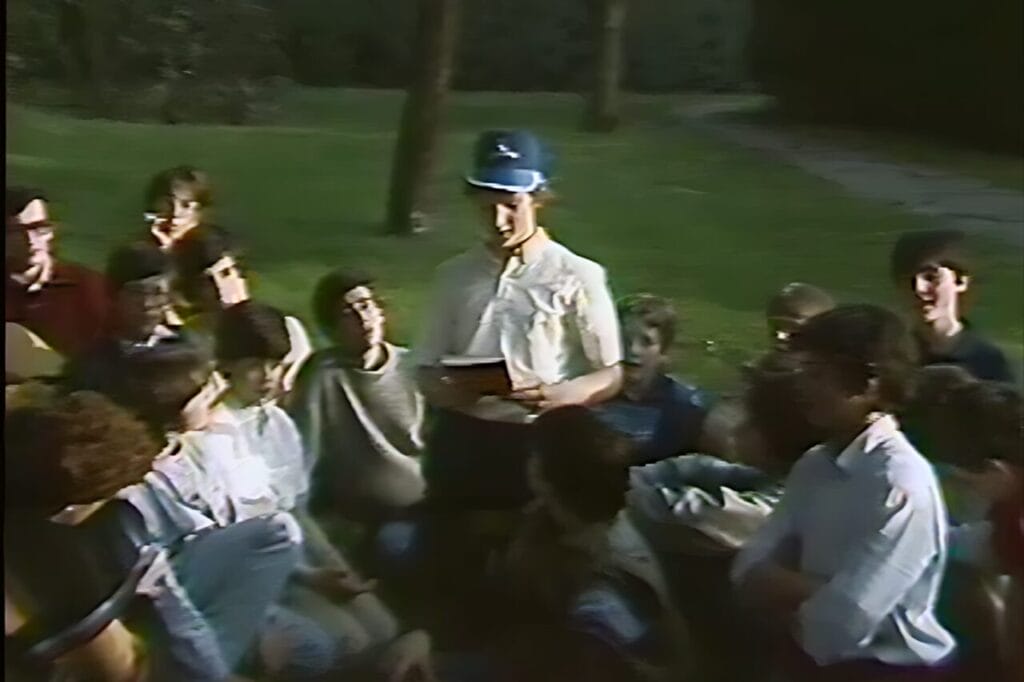
It was Easter 1984 and for the first time, the schools of formation for boys and girls of the Gen 3 Movement were underway in Castelli Romani (Rome). There were about eighty from all over Italy and a few representatives from Germany, Spain, Portugal, Holland, Belgium and the Philippines. No-one imagined being part of the beginning of a “new era”.
Chiara Lubich invited them to the Focolare Centre in Rocca di Papa (Rome) at 5 p.m. on Easter Sunday. Something amazing was waiting for them there.
Chiara had prepared a gigantic Easter egg for them. Inside, like in a series of Russian dolls, there were some envelopes and, in the end, a huge surprise: a message from her in which she announced the foundation of the Movement “Teens for Unity”.
Federica Vivian told us, “That moment was very important for me (…). Chiara Lubich sent us her gift, a long letter and I felt that it perfectly expressed what we were experiencing with our friends and with many others. We did many things to show that we believed in fraternity (…) and that seed gave rise to the desire in me to never set limits, to build bridges with everyone”.
In her message, Chiara Lubich urged the young people to live the Gospel concretely and to bring to many others that ideal they had in their hearts, with a single great purpose: to unite the world. The answers were not long in coming. The “Yes” to this mission resounded in the room and very soon many other answers arrived from all over the world.
Fiammetta Megli, a teacher, said, “I was 12 years old and when that big Easter egg was opened, I felt an immense joy, but I didn’t even realize what was really happening. I felt like I belonged to a big family. Everything I learned in those years, as a young person, not only remained, but is the basis for everything I do today, including the work I do with my students at school”.
Today, after 40 years, Teens for Unity, (the teenagers of the Focolare Movement), is present in 182 countries of the world. They speak different languages, belong to different religions or none but what unites them is that common goal: to work to achieve universal fraternity. They are engaged in the most diverse actions, at all latitudes to break down barriers and divisions, so that a united and peaceful world will soon be a reality among all the peoples of the earth.
Since that day, continued Maria Chiara Biagioni, “indifference had no place in my heart. Everything I saw around me, everything that happened in the world, belonged to me, somehow it involved me and I was committed to meeting the needs, problems and challenges that were also facing me in my life. The second thing was to believe (…) that good is stronger than evil. Believe despite everything, despite people’s tears, the bombs that continue to fall in many countries of the world, despite the many evils that we find around us (…) believe that light is stronger than the darkness, always”.
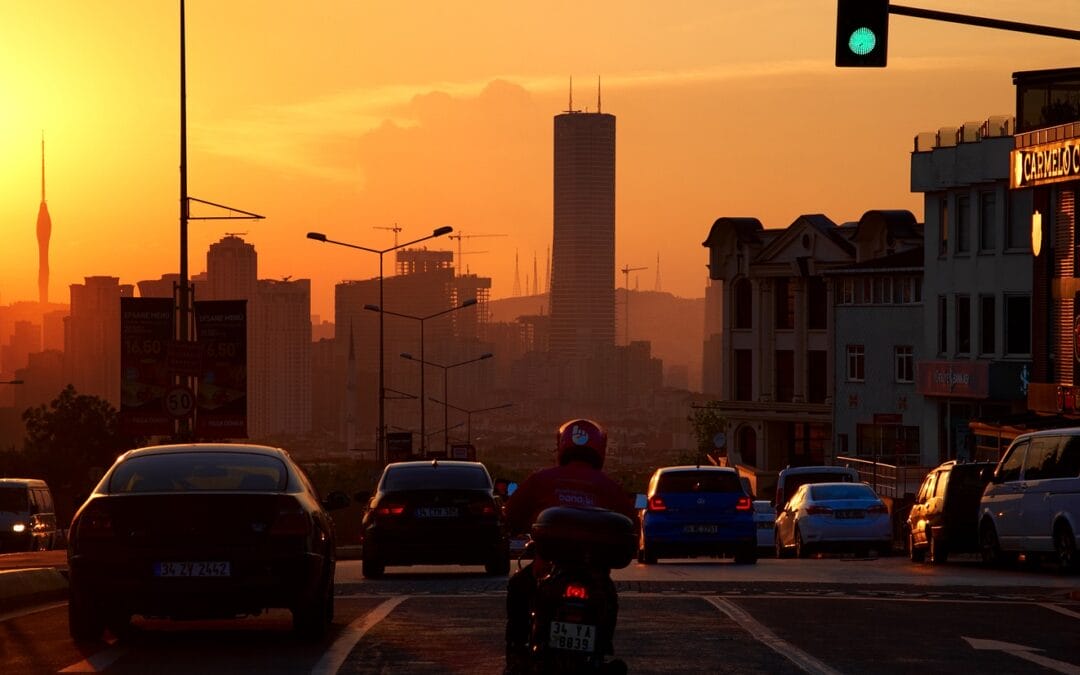
At the traffic light Once a week I take a trip from my town to a larger city to meet with friends with whom I share the same ideals. I try to take extra money with me to help people who ask for alms at traffic lights. Last week, on my way home, I stopped at a red light and was approached by a young man ready to clean my windshield. I rolled down my window and while looking for money to give him I told him not to clean it because he would not make it before the light turned green.
He looked at me and said, “Can you give me a little more? I need to buy some chicken for my children.” I answered yes. In fact what I was giving him was not going to do him much good. He took the money and said, “Will you let me earn it? I promise I will do it quickly.”
Almost without waiting for my response, he started cleaning the windshield, finishing just before the traffic light turned green. Immediately afterwards he approached the window of the car and, with a happy face, shaking my hand, thanked me and wished me well. As I drove home, I thought about what had happened and realized that small gestures sometimes edify us and teach us more about ourselves than the people for whom we do them. I know that God is everywhere, but it never occurred to me that He was waiting for me at a traffic light. (S. Z. – Argentina)
In prison For dealing drugs I had ended up in juvenile detention, but where I continued to receive visits from Valerio, my teacher from when I was in school. And that could not leave me indifferent. In life, I had been involved with bad people who I thought were my friends, but not with Valerio: he loved me without any interest. Moreover, he would tell me stories of other boys, who had made a different choice from mine, gospel facts. One day a new “guest” arrived in my cell: a boy so dirty he was smelly. The cellmates began insulting him, spitting on him, intimidating him to go wash up. Since he had no soap, no towel, and no spare clothes, I intervened in his defense and gave him my clothes, soap, and towel. He went to take a shower and peace returned. This experience was the beginning of a turning point. I thought that because of everything I had done, love had disappeared inside me. Instead it was like a seed that, more alive than ever, was beginning to blossom. (T. – Italy)
Edited by Maria Grazia Berretta
(taken from The Gospel of the Day, Città Nuova, year X- no.1 May-June 2024)
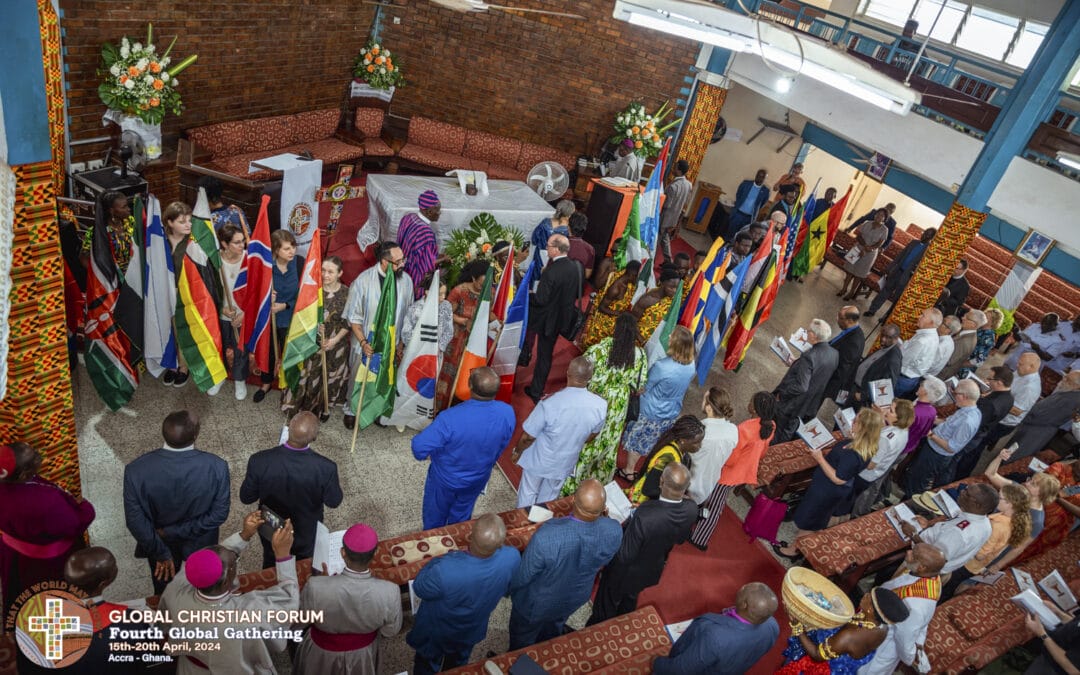
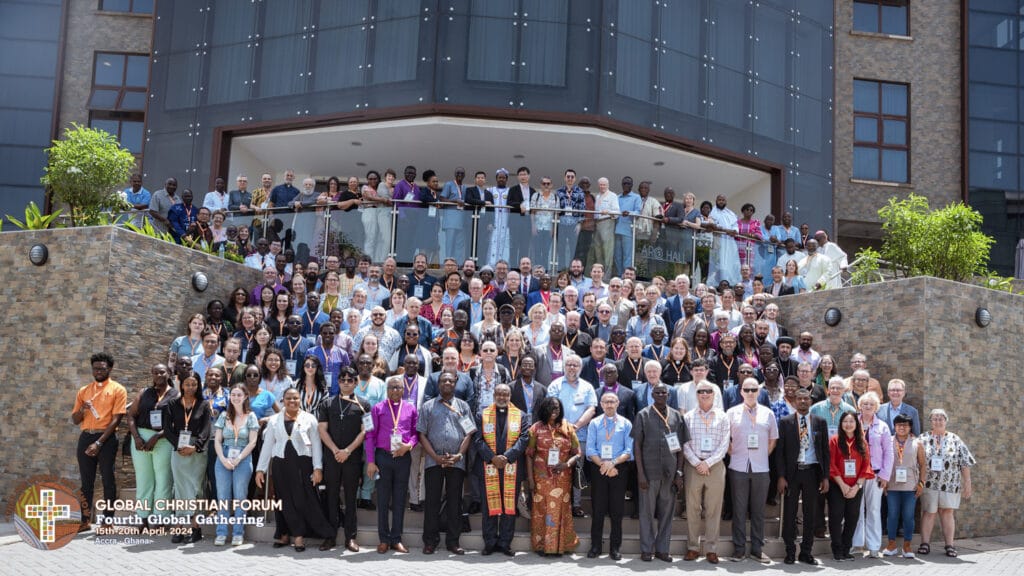
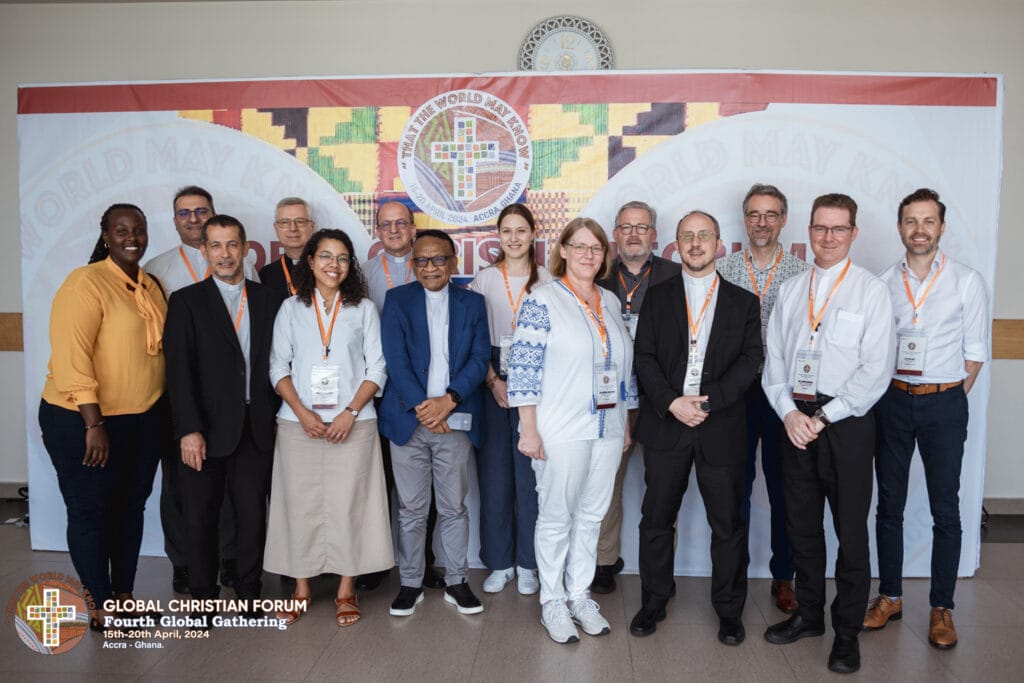
The fourth international six-year meeting of the Global Christian Forum took place in April in Accra, the capital of Ghana, bringing together about 250 people from over 50 countries, representatives of various Churches and global ecclesial networks and organizations.
The event is always held in a different city and on a different continent. Four members of the Focolare Movement attended the event in Ghana.
Alongside the World Council of Churches (WCC), the Global Christian Forum is perhaps the only other platform through which unity among the Churches is promoted on a global scale. Founded in 1998, it aims to promote dialogue with the vast world of Pentecostal Churches and ‘Free Churches’, most of which are not affiliated with the WCC. The approach has been and remains a dialogue “of the heart” rather than a theological dialogue. As the current Secretary General, Casely Essamuah, of Ghanaian origin, explained in Ghana: “It is a space for a profound encounter of faith. This is how we learn to discover the richness of Christ”.
Central to these meetings is the exchange of personal ’faith stories’ in small groups which was a significant feature in Accra. Bishop Rosemarie Wenner, representative of the Methodist Church at the WCC explained, “Seeing Christ in others is the goal of this exercise. Letting the Holy Spirit guide our words and listening carefully to the stories of others.” This truly gives rise to a spiritual friendship and a fraternal unity that generates great joy among all”.
The theme chosen for the meeting was “That they may all be one, so that the world may believe” (Jn. 17:20). Billy Wilson, president of the Pentecostal World Fellowship, highlighted three aspects of this unity: it is above all relational; it is realized in the mission: “so that the world may know and believe” and it is spiritual, like the relationships between the persons of the Trinity.
This gathering in Ghana was an experience of great spiritual richness, reflecting an image of the Church of the future that is already being realized through such encounters.

![The Lord is my shepherd, I lack nothing. (Ps 23[22] [22]:1).](https://www.focolare.org/wp-content/uploads/2024/07/flock-5077402_1920-1080x675.jpg)