“Here is a summary of the event (of the 16th of July) that Chiara offers us, restoring its enchanting Gospel-based inspiration. When Igino Giordani (Foco) suggested (to Chiara Lubich) that they ‘bind themselves closely’ to each other in order to follow Jesus more closely – as Saint Catherine did with her followers – Chiara felt prompted to respond by inviting him to make a ‘pact’, in faithfulness to the Gospel principles to which she had learned to conform her life [1]:
“You know my life: I am nothing. I want to live, indeed, like Jesus Forsaken, who annihilated himself completely. You too are nothing because you live in the same way. So then, we will go to church tomorrow and I will say to Jesus-Eucharist who will come into my heart, as into an empty chalice: ‘On the nothingness of me may you seal a pact of unity with Jesus-Eucharist in Foco’s heart. And, Jesus, bring about between us the bond which is known to you.’ … ‘And you, Foco, do the same.’” (Translation of the Italian – verses 24 and 25 of the text of Chiara Lubich published in “Paradise ‘49”, Città Nuova, Rome 2026).
The narrative is concise and extremely simple. The event that then came as a gift, once the pact had been made and had borne witness, exceeds all human expectations. And in this form, it is also unprecedented in the history of Christian experience.
We could try to discern its meaning from what Chiara first of all tells Foco, in order to “explain to him” – as she wrote – what had happened. “Do you know where we are?” She begins with this question, inviting him to join her in opening the eyes of his soul to the scene that has unfolded through the pact. It is clear from this that the pact prepared the conditions for God’s grace to be made manifest: the mystical perception of the presence of Jesus in Chiara and Foco (and immediately afterwards in those to whom the pact is extended) becoming “one” – brought about in Jesus and by Jesus, through the lived Word and through the Eucharist. And it is so in each of them. Certainly, the lived and perceived identification of Chiara with Jesus, expresses the extraordinary grace common to all authentic mystical experiences attested to throughout the history of the Church. But what comes to light in the experience described here, is that this takes place for Chiara in the unity in and through Jesus, that she lived with Foco, and then gradually with the other people to whom the experience is communicated. To such an extent that they too are drawn into it.
[1] Here we have a specific description of the Christian experience brought about by the charism of unity: the “pact”. Whatever its origin in Chiara’s thought and practice, it is clear that the dynamic of “sealing a pact”, implies sharing with those involved in it, the fundamental focus of one’s existence in God and the decision to carry out his will together. In this way, the pact, among those who live it, becomes an expression of the pact with which God himself established a covenant with his people in the Old Testament, and as “once and for all” renewed it eschatologically in Jesus. Therefore, we see this as a “fundamental” aspect of the experience of Revelation. “Before then,” Chiara recalls in a footnote, “we had lived other pacts, such as the pact of mutual love. This had brought about a qualitative leap in our life, making us experience the presence of Jesus in our midst with the gifts of the Spirit he brings with him: peace, joy, light, strength. Then the pact of mercy (as we called the pact by which we focolarine took the commitment to see each other new every day, without remembering each other’s defects, as if we were meeting each other for the first time) helped us in perfecting our love for one another” (footnote 30). The pact of unity, inspired by Foco’s request and lived out according to the method described by Chiara, brings about a further and decisive “qualitative leap” – in keeping with the unfolding of the charism of unity as a gift from God – namely, that of the identification given and experienced with Jesus, and of finding oneself in the Bosom of the Father.
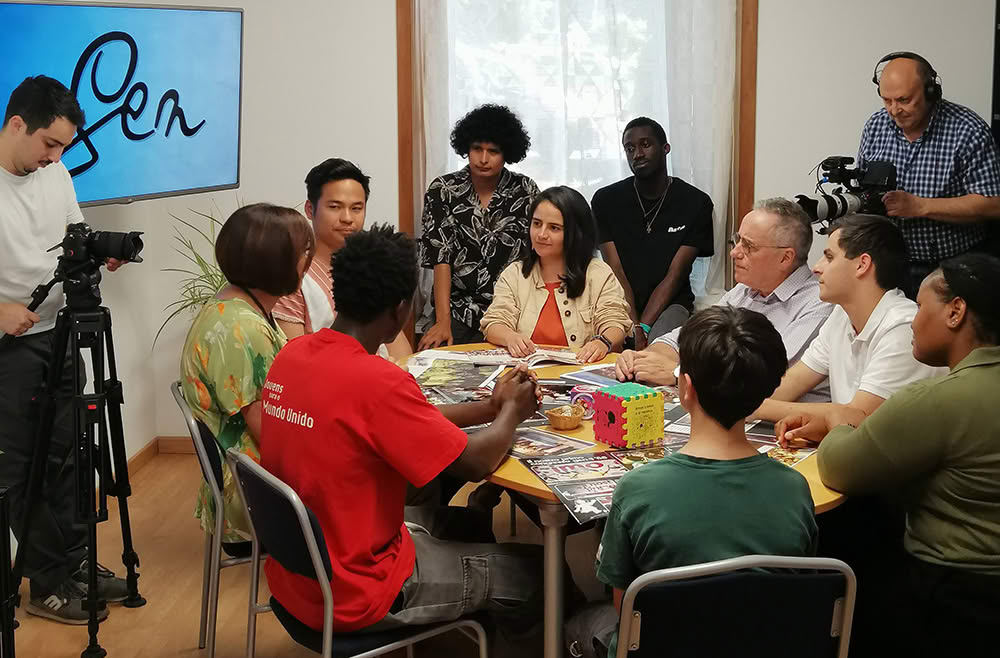
“Young people of the world, unite”: this is the invitation that Chiara Lubich extended to the younger generations 60 years ago, so that each one could answer God’s call to live for unity in a practical way. Today, this mission remains as relevant as ever and, in these extremely troubled times, continues to be a way ahead that often goes against the current. It refuses to let hatred and division have the last word. It means to journey as a family with hope and action, with a constant desire to live for a united world.
A new space created to get to know one another and to share in a direct and informal way. A moment dedicated to sharing news, stories and initiatives, so we can discover what’s happening at the International Centre and in different parts of the world and we can also strengthen our sense of community.
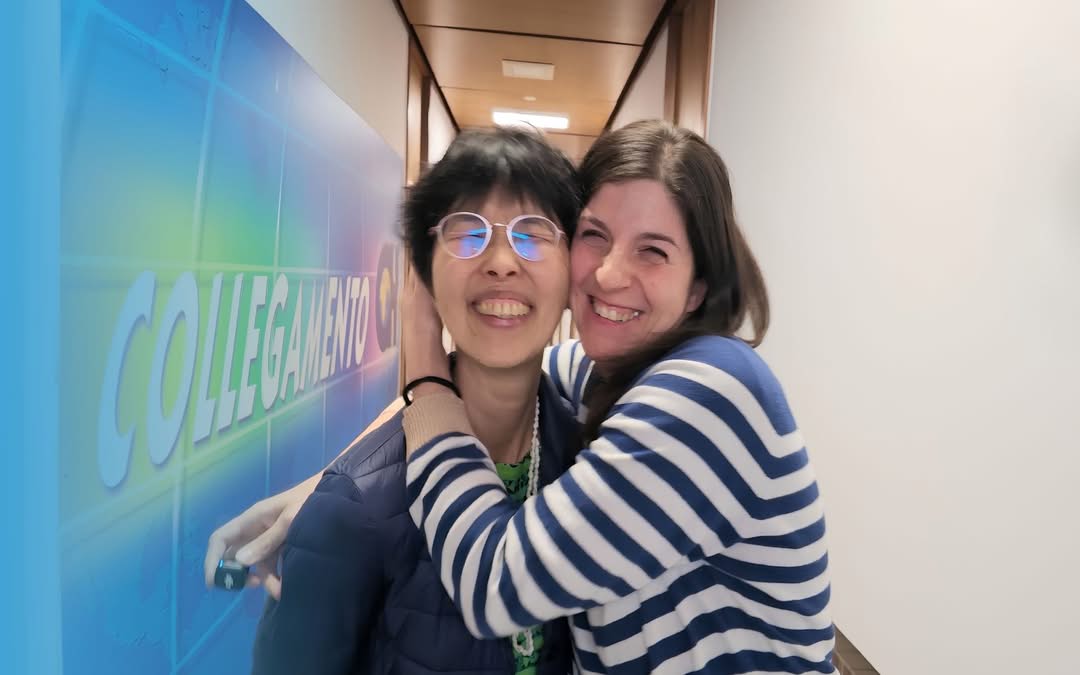
In this first episode, we’ll start at the International Centre (Rocca di Papa, Rome), the heart of the Focolare Movement’s governance, and after a few interesting facts, we’ll get to know some of the Councillors better – those who have completed their term of office following the General Assembly in March 2026.
Let’s get started!
Turn on subtitles and choose your desired language
The Focolare Movement’s Emergency Coordination Team has launched a special fundraising campaign to support the people of Venezuela through Action for a United World (AMU) and Action for New Families (AFN). The donations received will be managed jointly by AMU and AFN to provide the people affected by the June 24, 2026, earthquake with essential aid for food, medical care, housing, and shelter in various cities across the country, in collaboration with local churches.
Every contribution will provide immediate support and allow us to imagine together a future of hope and reconstruction.
Azione per un Mondo Unito ETS (AMU) IBAN: IT 58 S 05018 03200 000011204344 at Banca Popolare Etica Codice SWIFT/BIC: ETICIT22XXX
Azione per Famiglie Nuove ETS | Banca Etica – filiale 1 di Roma – Agenzia n. 0 | Codice IBAN: IT 92 J 05018 03200 000016978561 | BIC/SWIFT: ETICIT22XXX
Reason for payment:: Venezuela Emergency
Tax benefits are available for such donations in many EU countries and in other countries around the world, according to different local regulations.Italian contributors will be able to obtain deductions and allowances from income, according to the rules for non-profit organisations
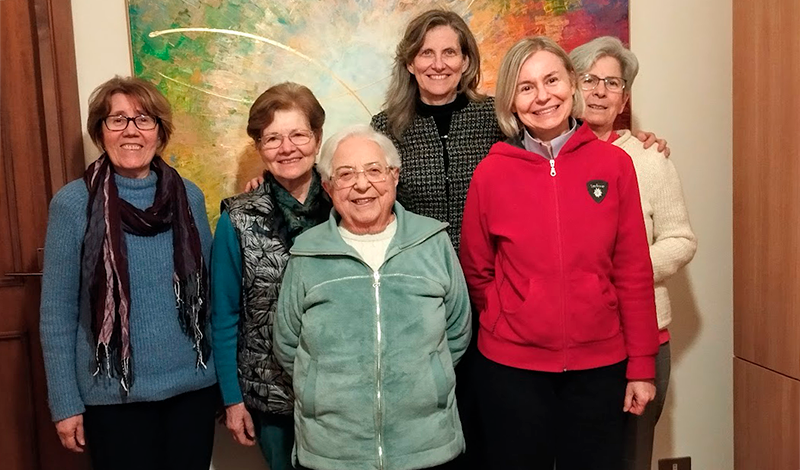
In the daily life of the focolare, Maria Voce lived the Gospel of unity in a simple yet radiant way, expressing it with intelligence, freedom and creativity.
One quality stood out immediately: she engaged her heart, imagination and intellect in loving each person in the way that person most needed to be loved. There were no formulas or ready-made solutions. Every individual was unique, and she took that uniqueness seriously.
One of us, for example, remembers arriving at the focolare unable to eat dairy products. A small detail, one might think. But not for Emmaus. Without ever drawing attention to it, she always made sure there was an alternative available at mealtimes. It was more than simple thoughtfulness; it was her way of saying: you are important just as you are. The same was true of different dietary choices or sensitivities. She respected them with a freedom that allowed her to welcome even what others might have found difficult to understand.
With Emmaus, everything seemed possible. Not because she made grand plans, but because she knew how to listen to people’s deepest desires and help them flourish. In this way, the dream that one of us had – to spend time in an English-speaking country to improve her language skills—became, with surprising simplicity, her birthday gift to that person.
She also had a special sensitivity towards different cultures. She did not merely appreciate them; she welcomed and valued them with profound respect. On the occasion of a traditional Korean celebration, she encouraged one of us, Korean, to embrace the event fully: to wear traditional dress and observe every custom, without shortcuts. Nor did she remain a spectator herself. She wanted to participate wholeheartedly, preparing an envelope with a monetary gift, as tradition prescribes for an elder offering a gift to a younger person. It was her way of saying that every culture is a gift to be treasured.
Emmaus also knew how to recognise and nurture each person’s interests and aspirations. When someone enjoyed cultural events, she did not simply say, “Go—it will be nice.” She actively searched for opportunities nearby, suggested them, encouraged participation and, at times, even accompanied us. It was as though she made other people’s dreams her own.
And then there were the gifts. They were never given merely for the sake of giving. They were carefully considered, sought out and prepared with loving attention. Whether it was a particular watch or a walk by the sea for a birthday, each gift was a tangible expression of personal love. This attentiveness extended not only to us and to other focolare communities, but also to our families—parents, sisters, nieces and nephews.
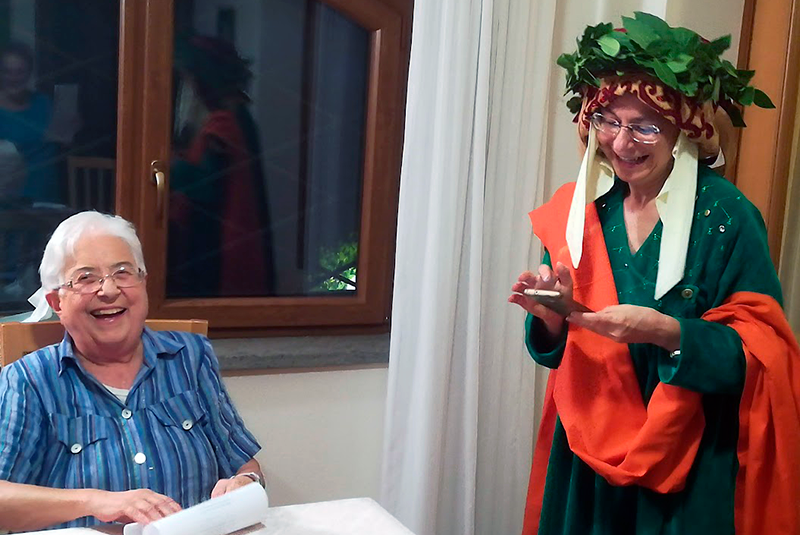
Art, too, was always present in our home and was one of her allies in fostering unity among us. How many times we sang together—she knew countless songs and poems by heart!—or staged small performances. One occasion, prepared for the Feast of the Holy Name of Mary, remains unforgettable: a joyful and imaginative reinterpretation inspired by Dante’s Divine Comedy. Shared with her and for her, it transformed a simple celebration into a profound experience of closeness to Mary.
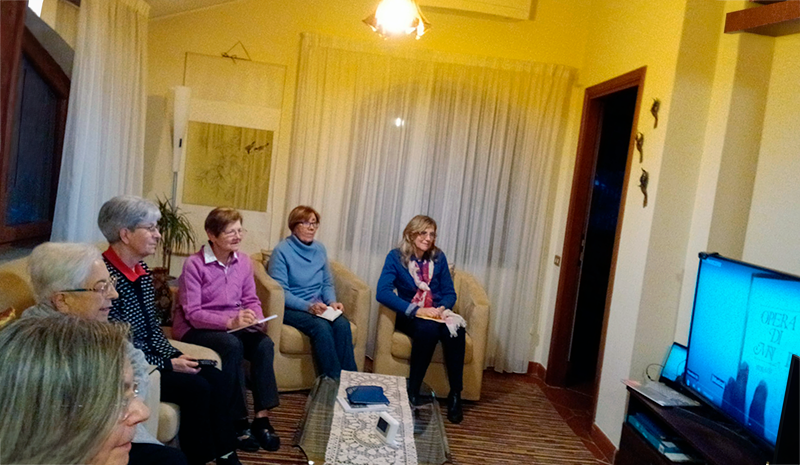
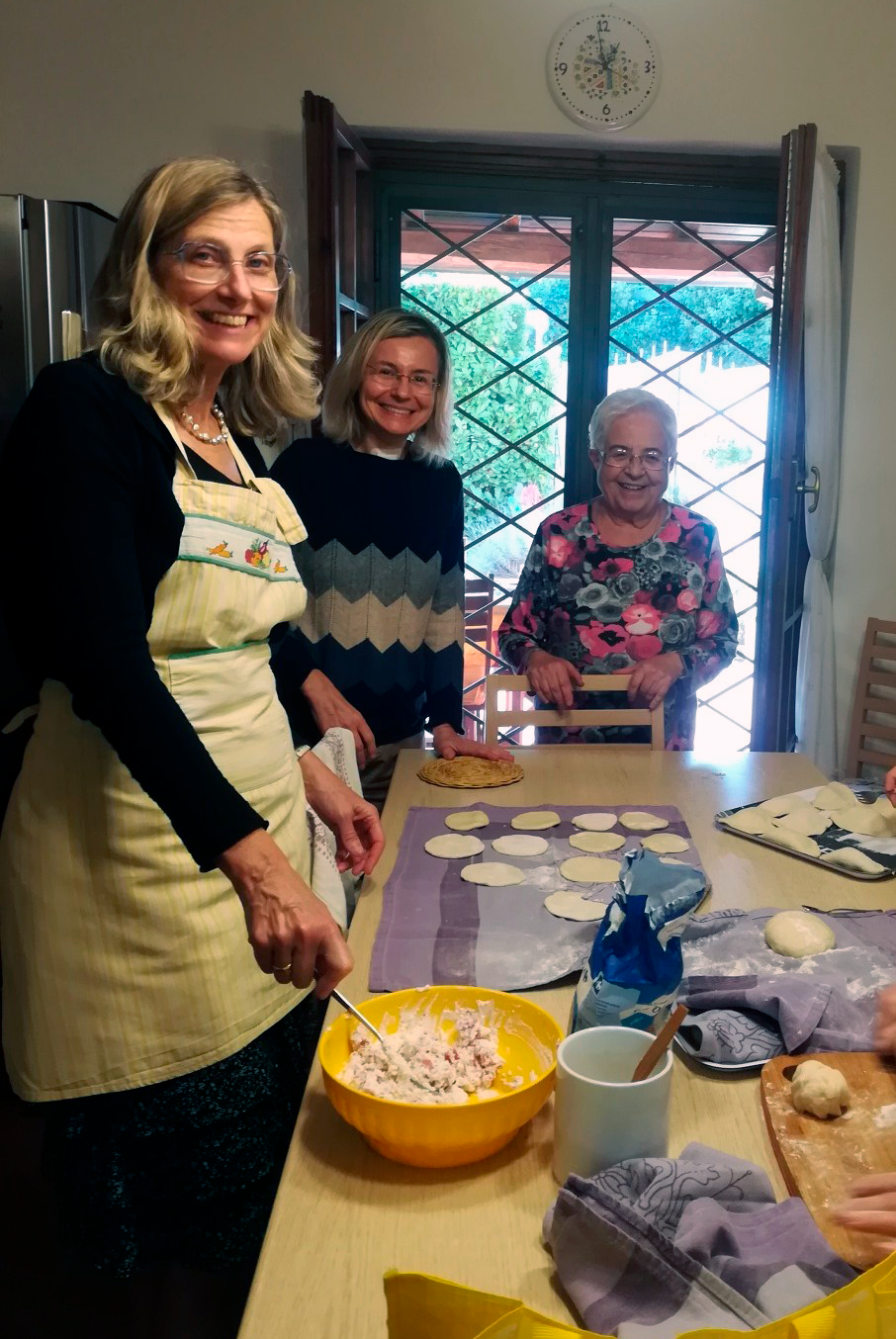
At heart, this was Emmaus’s way of living: she created family. One episode captures this particularly well. One Sunday afternoon, without any prior notice, our entire focolare went to visit a married focolarina who had recently moved to the International Centre. Surprised, she asked through the intercom who it was. Emmaus replied simply and joyfully: “Your family!”
On another occasion, she invited us to join her where she was spending a weekend holiday. To our surprise, she had noticed in a shop several items of clothing that she thought might suit each of us. And she was right. We tried them on and chose according to each person’s taste and style, experiencing that special joy that comes when Jesus is truly present among us.
Looking back on our life with Emmaus, we can say with conviction that unity is not an abstract idea. It is something that takes shape day by day. It calls us to become personally involved in our relationships with others through the small details, thoughtful acts of care and the creativity of love. Emmaus showed us that unity becomes possible when each person truly loves and feels truly loved.
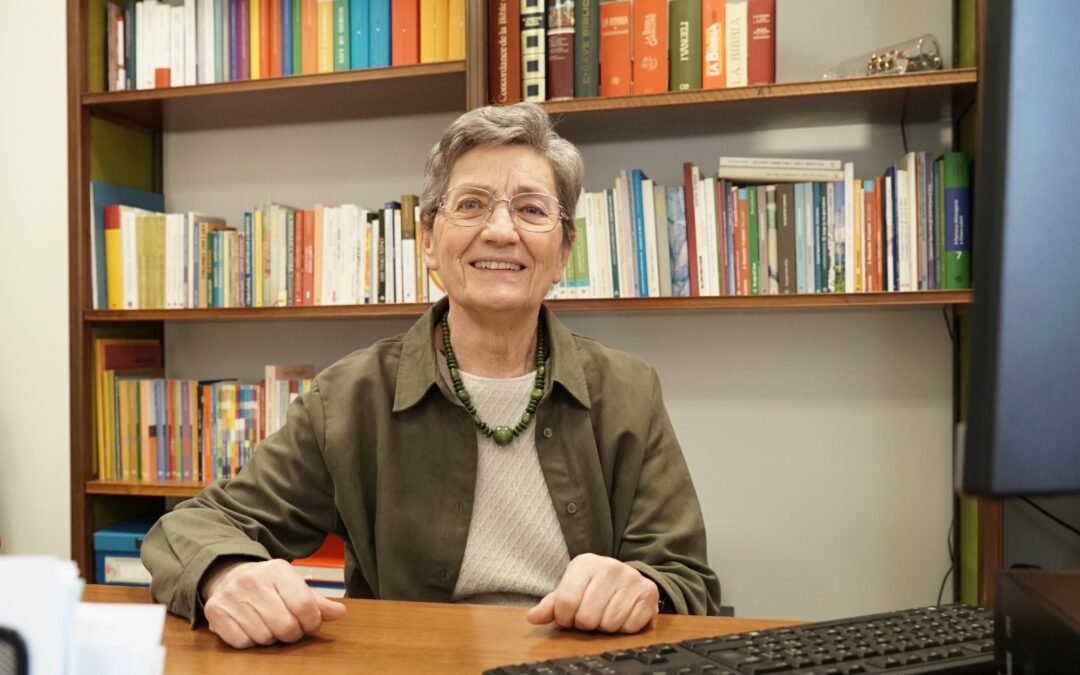
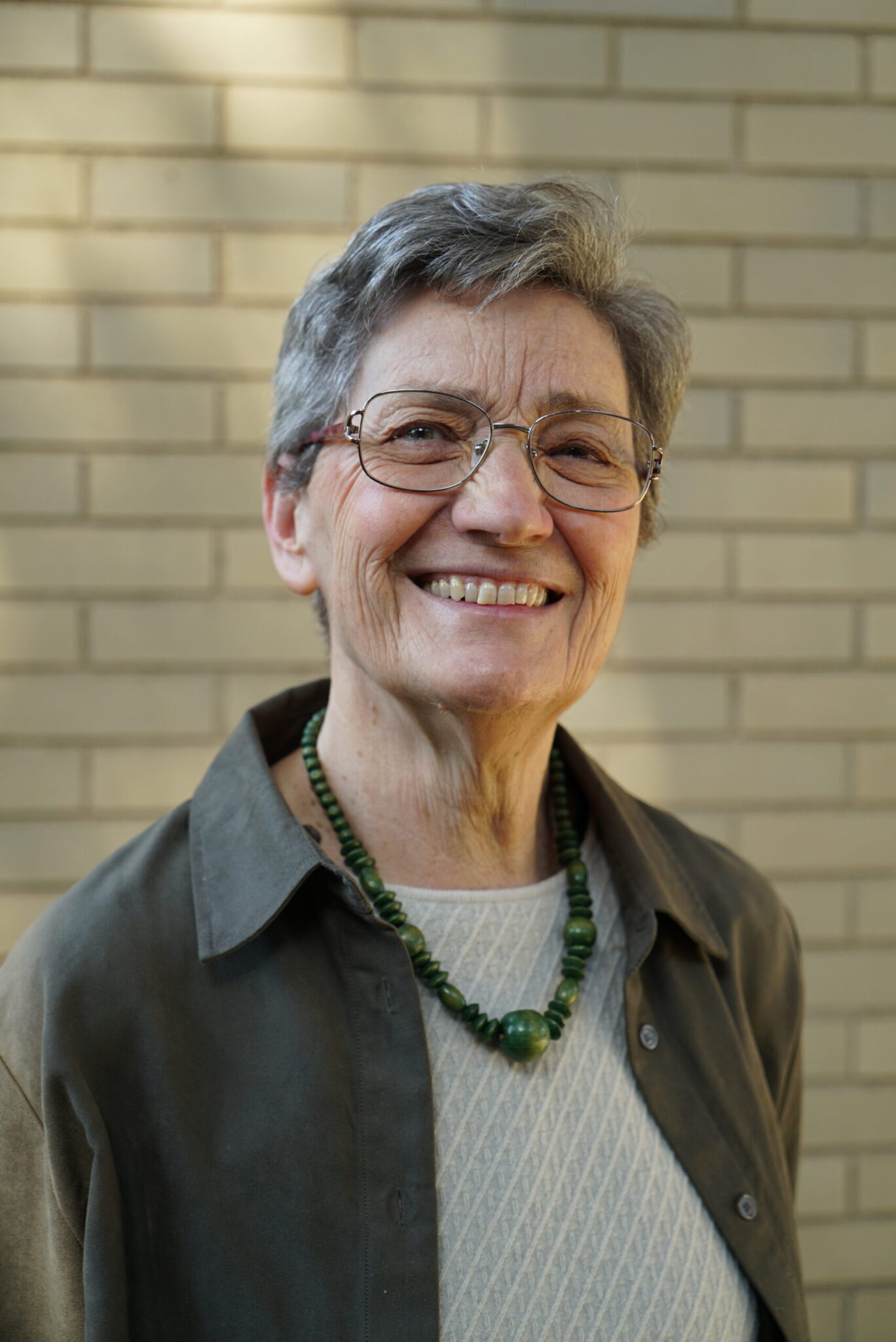
Alba Sgariglia has degrees in philosophy and theology. Since 1975, the year before she entered the focolare, she began working at the Study Centre of the Focolare Movement alongside the foundress, Chiara Lubich.
What did your work at the Study Centre consist of?
I used to go to the library in Florence to photocopy passages from the Greek Fathers, which we would then translate at home, searching through countless pages for those brief phrases that could serve Chiara Lubich to confirm her inspirations. At the time I was working with Marisa Cerini, who told me: for us, building unity means that we should enter into the thought of the Greek Fathers and from there try to understand the light of the charism that Chiara has received. In the following years I also taught religion in secondary schools in Rome. I then joined the governing body of the Movement to oversee the cultural aspect and subsequently I became part of the Abba School, which Chiara founded in 1991 to study the notes from the so-called period of Paradise ’49. Finally, in 2014, Maria Voce Emmaus, then President of the Focolare Movement, entrusted me with the Chiara Lubich Centre, which was established to preserve, study and promote the life and work of Chiara.
What does this newly published book represent?
Paradise ‘49 is a text published posthumously, since it was written, compiled and edited by Chiara Lubich during her lifetime. She wished to describe the mystical experience she had lived between 1949 and 1951, accompanying it with footnotes that would facilitate its comprehension, so as to provide the group of scholars at the Abba School with a text that was accessible and could be used for research. The text contains a mystical experience that Chiara always said she could not keep to herself. Then, urged on by many people, she realized that the text could be understood and used by others in the Movement as well.
For example, in the early 2000s, she herself explained the essence of this experience to the young people of the Movement. Then little by little, she realized that the experience recounted in the text could also be shared with people of other religions. Over the years we have held symposia with Hindus, Buddhists and Muslims, to whom Chiara offered some passages from Paradise ’49. We have also discussed the text with people with no religious affiliation, who have given reflections far deeper than we could ever have imagined, emphasizing that it is a text of great value. There are many founders of charisms who have received this possibility of understanding the work they were carrying out, through so-called “intellectual visions” in which one perceives with the intellect what God is allowing one to see.
But since it is a mystical language, isn’t it difficult for most people to understand?
Mystical language is a unique literary genre; it is neither poetry, nor theatre, nor literature, nor theology. For example, one sometimes encounters difficulties on a theological level, because the mystic seeks words they cannot find, trying to express the inexpressible: a difficult task, so much so that often Chiara herself, whilst we were re-reading these passages, would ask us: “But how could I have written these sentences? What do they mean? Why did I write this?”
This confirms that, in such situations, the founders seek to express what they “see” using the cultural categories and concepts at their disposal, which are sometimes inadequate. For example, in Paradise ’49 there are references to The Divine Comedy because Chiara was familiar with it, or to philosophers such as Kant, whom she had studied. The external setting can also have an influence: Chiara and her first companions began this experience in the mountains of Trent, in Tonadico: it is a natural setting that speaks for itself through its beauty. This, too, helped her to express things she was perceiving for the first time in her life.
Over these 18 years since Chiara’s death, you have published books that shed light on the context of the Paradise ’49 experience…
We have continued to examine the text in depth across various disciplines, using the method Chiara had left us, which is to study everything with “Jesus in our midst”. I believe that three key aspects can be identified in this volume: the first is an educational aspect, as it teaches how to live out the charism of unity and offers a vital key to understanding it; the second aspect can be described as artistic and literary, as the text encompasses many literary genres: diaries, letters, writings and notes; finally, there is the doctrinal aspect, as the text undoubtedly has a theological focus. It is, in fact, a mystical experience that helps us to understand, on the one hand, the truths of Heaven: God, the Trinity, the Word, Mary, creation, hell and paradise; and, on the other hand, the incarnation of the charism in a movement that would have been founded in the following years, that is, after 1949–51. Every time one reads these mystical texts, one understands new things. This is what happens to me too: every time I read these pages, I understand new things, both intellectually and spiritually.
When reading the text, doesn’t Chiara seem to be a bit presumptuous in certain passages?
We need to understand why Chiara says those things in that way. We could say that it is as if God, in order to express concepts that cannot be conveyed through a human being, identifies with that person, seeing things through their eyes. This is why Chiara finds herself writing: “Today I am universal fatherhood.” But she herself asks: “What does that mean?” In that moment, she identifies with that reality, so that she can express it. In the footnotes, she herself comments on and explains her amazement and her joy at seeing that other founders had experienced more or less the same thing.
What advice would you give to someone reading this text?
I would say: take this book and read it whenever and however you like, at any time. You can discuss passages that are unclear or more complex with others, or with an expert. But I suggest that you don’t let yourself be influenced by anyone, because this text speaks directly to the individual. Let’s open it at random and read whatever page we come across. We will understand what we need at that moment, because the text, despite a few difficulties, really touches us deeply. It’s a mystical experience, that can, in a certain way, be “shared”. This is the novelty, as Chiara herself explained to us. She always made sure that everyone could participate in her experience, and this book gives us that opportunity.