In the afternoon of October 1, at the Focolare Movement’s International Mariapolis Center in Castel Gandolfo, Rome, the Raising Hope Conference was inaugurated with the participation of His Holiness Leo XIV, alongside notable figures such as Arnold Schwarzenegger, former Governor of California, and the Hon. Marina Silva, Brazil’s Minister of Environment and Climate Change.
The session combined testimonies, spiritual and artistic moments, in thanksgiving for the 10th anniversary of the encyclical Laudato Si’. Representing the Laudato Si’ Movement, Associate Director Christina Leaño and Brazil Director Igor Bastos presided over the day’s opening.
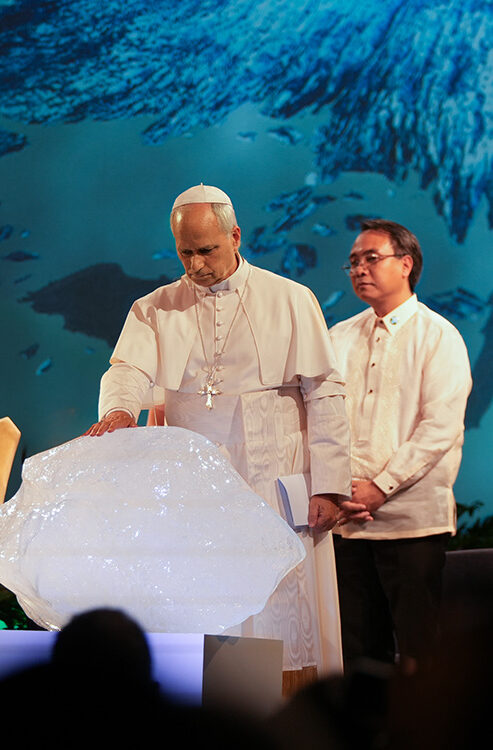
A symbolic moment came when Pope Leo XIV touched and blessed a block of ice more than 20,000 years old, broken off due to climate change from a glacier in Greenland, as well as water brought from around the world—gestures embodying compassion and concern for the cry of the Earth and the poor.
Laudato Si’: What remains to be done?
“This Encyclical has profoundly inspired the Catholic Church and many people of goodwill,” Pope Leo began in his speech on Laudato Si’, “it opened strong dialogue, reflection groups, and academic programs.” The Pope noted how his predecessor’s encyclical spread “to international summits, to ecumenical and interreligious dialogue, to economic and business circles, to theological and bioethical studies.”
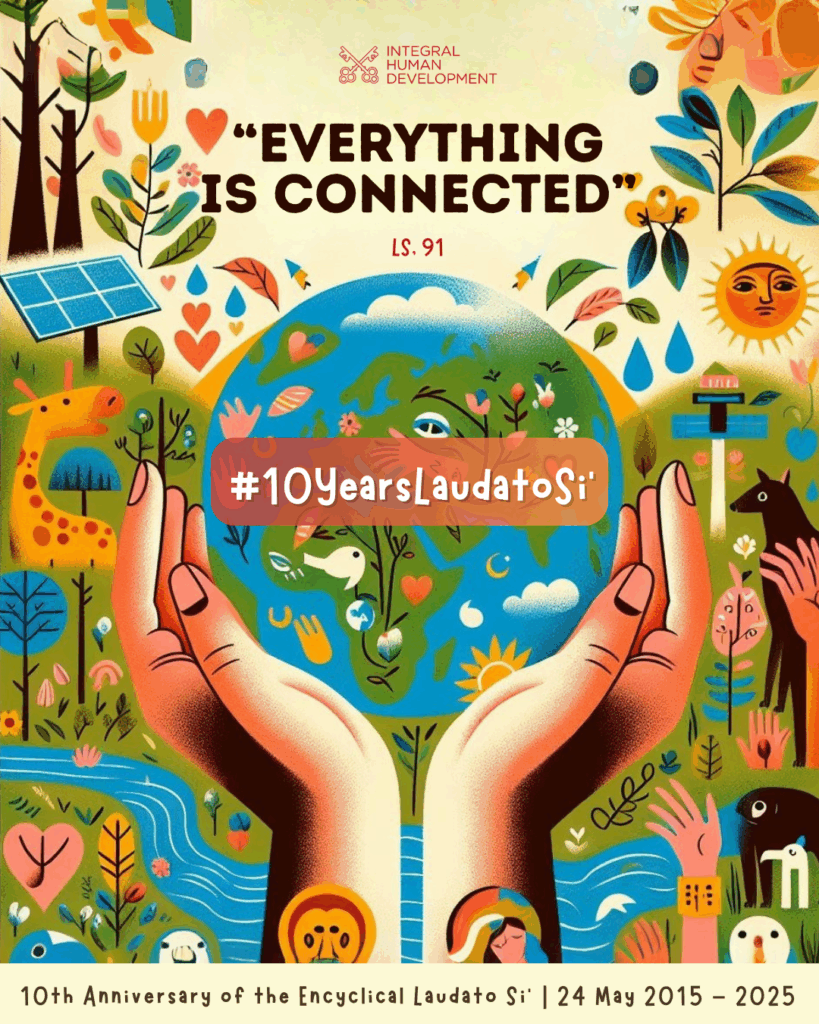
Giving thanks to the Heavenly Father “for this gift we have inherited from Pope Francis,” Leo stressed that today environmental and social challenges are even more urgent. On this anniversary we must ask ourselves: “What remains to be done? What must we do now to ensure that caring for our common home and listening to the cry of the earth and the poor do not appear as passing trends or, worse still, are seen and felt as divisive issues?” he asked.
Return to the heart: from data collection to care
“Today more than ever it is necessary to return to the heart, the place of freedom and authentic decisions,” affirmed the Pontiff, because although it “includes reason,” it also “transcends and transforms it.” “The heart is where external reality has the greatest impact, where the deepest search takes place, where the most authentic desires are discovered, where one’s ultimate identity is found, and where decisions are forged.”
In this regard, he stressed that “only by returning to the heart can a true ecological conversion take place.” “We must move from collecting data to caring; and from environmental discourse to an ecological conversion that transforms both personal and community lifestyles.”
Leo reminded those present that this experience of conversion orients us toward the living God: “We cannot love God, whom we do not see, while despising His creatures. Nor can we call ourselves disciples of Jesus Christ without sharing His vision of creation and His care for all that is fragile and wounded.”
No room for indifference or resignation
Before concluding, the Pope looked with hope to the upcoming international summits —COP30 in 2025, the World Food Security Committee session, and the 2026 Water Conference— “so that they may listen to the cry of the earth and the cry of the poor.”
He also encouraged young people, parents, and those working in administrations and institutions to contribute to “finding solutions to today’s cultural, spiritual, and educational challenges, always striving tenaciously for the common good.”
Finally, he reflected: “God will ask us if we have cultivated and cared for the world He created and for our brothers and sisters. What will our answer be?”
1.5 billion Catholics can get involved
Actor and former Governor of California, founder of the USC Schwarzenegger Institute and the Schwarzenegger Climate Initiative, Arnold Schwarzenegger, began his address by congratulating the Holy Father for installing solar panels on the roofs of the Vatican: “I am standing next to a hero,” he declared.
“There are 1.5 billion Catholics — that power and strength must be used to get involved in the climate movement,” Schwarzenegger said, urging more focus on talking about pollution: “The average person doesn’t understand when we talk about net zero or rising temperatures. Instead of speaking to the head, we must speak to the heart. We can end pollution if we work together, because God put us on this Earth to make it a better place.”
Toward the COP of hope
Next came the Hon. Marina Silva, Brazil’s Minister of Environment and Climate Change, co-chair of COP30. In her address, she expressed being inspired by Christian values in taking part in the conference.
Confidently, she stated: “I am certain that the Pope will make a great contribution so that COP30 goes down in history and becomes, as we all ardently hope, the COP of hope, to preserve and cultivate all forms of life that are part of the beautiful garden God has given us.”
From tears to hope
On stage, the Pope was joined by Dr. Lorna Gold, Executive Director of the Laudato Si’ Movement and President of the Conference Organizing Committee; theologian Margaret Karram, President of the Focolare Movement; Fr. Jesús Morán; and Yeb Saño, Chair of the Board of the Laudato Si’ Movement, who shared his own story of facing climate catastrophes in the Philippines and introduced the testimonies.
A symbolic spiritual moment followed when representatives from East Timor, Ireland, Brazil, Zambia, and Mexico brought water from their homelands, poured into a common bowl on stage. They embodied the cry of indigenous peoples, wildlife, ecosystems, future generations, migrants, the poor, and the Earth itself.
From tears to hope, with the audience on their feet, Pope Leo approached the glacial ice and proclaimed a blessing over the water and all present: “May we work for the flourishing of all creation.” Musical performances by Adenike, Gen Verde, and the Pacific Artists for Climate Justice brought joy and energy to the encounter.
A block of Greenland’s ice
The ice traveled more than 5,000 kilometers from the fjords of Nuuk, Greenland, to Castel Gandolfo, Rome. Artist Olafur Eliasson organized the transfer with the support of geologist Minik Rosing. Collected from the Nuup Kangerlua fjord, the block of ice had detached from the Greenland ice sheet due to climate change and was melting into the ocean. Greenland’s vast ice sheet is one of Earth’s most important climate regulators. Formed from compacted snow over tens of thousands of years, it contains layers more than 100,000 years old with ancient air bubbles recording the history of our atmosphere. NASA’s Earth Observatory estimates Greenland’s ice sheet is losing about 270 billion tons per year due to climate change. As the ice releases meltwater into the ocean, it reminds us that our global relationship with ice sheets is existential: they connect us to the past, shape our present climate, and —depending on our care or neglect— will determine our common future. If the ice melts completely, NASA predicts sea levels could rise by about seven meters (23 feet), reshaping coastlines and displacing millions worldwide.
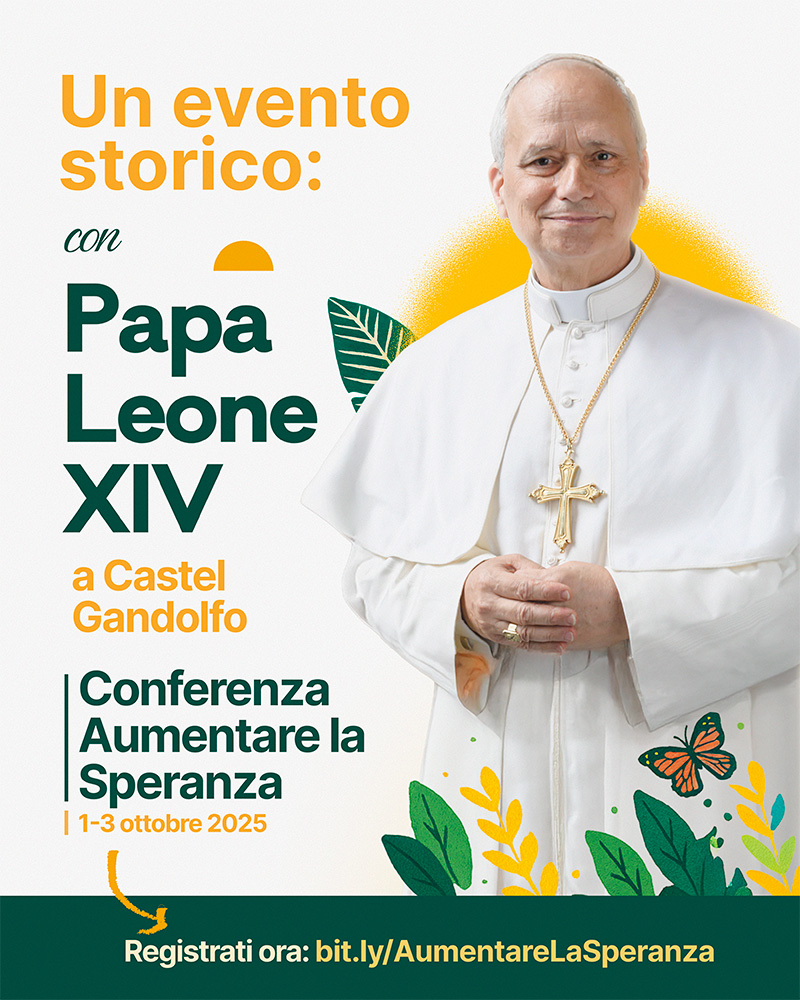
From October 1–3, 2025, Castel Gandolfo (Italy) will host the international conference “Raising Hope for Climate Justice”, a historic gathering to mark the tenth anniversary of the Laudato Si’ encyclical and to foster a global response to the climate and ecological crisis from the perspectives of faith, politics, and civil society.
The event will feature His Holiness Pope Leo XIV, alongside prominent leaders such as Brazil’s Environment Minister Marina Silva and former California Governor Arnold Schwarzenegger, along with bishops, international agency officials, indigenous leaders, climate and biodiversity experts, and civil society representatives. Over three days, the conference will include keynotes, panel discussions, spiritual moments, and cultural events that highlight both the progress made since Laudato Si’ and the urgent steps needed ahead of COP30 in Brazil.
“In a time marked by global challenges and deep wounds, our commitment for unity and peace cannot exclude a pursuit of climate justice that places human dignity and care for creation at its core.” This is the declaration of Margaret Karram, the President of the Focolare Movement, who is one of the event’s partners. She continues, “As Focolare Movement, we want to collaborate with everyone, in protecting and safeguarding our common home, and with a new responsibility we want to live closeness to the poor and solidarity among the generations for a sustainable future.”
The event will be held in person at Castel Gandolfo and streamed live, enabling thousands of people and media outlets worldwide to follow the main messages and join the global conversation.
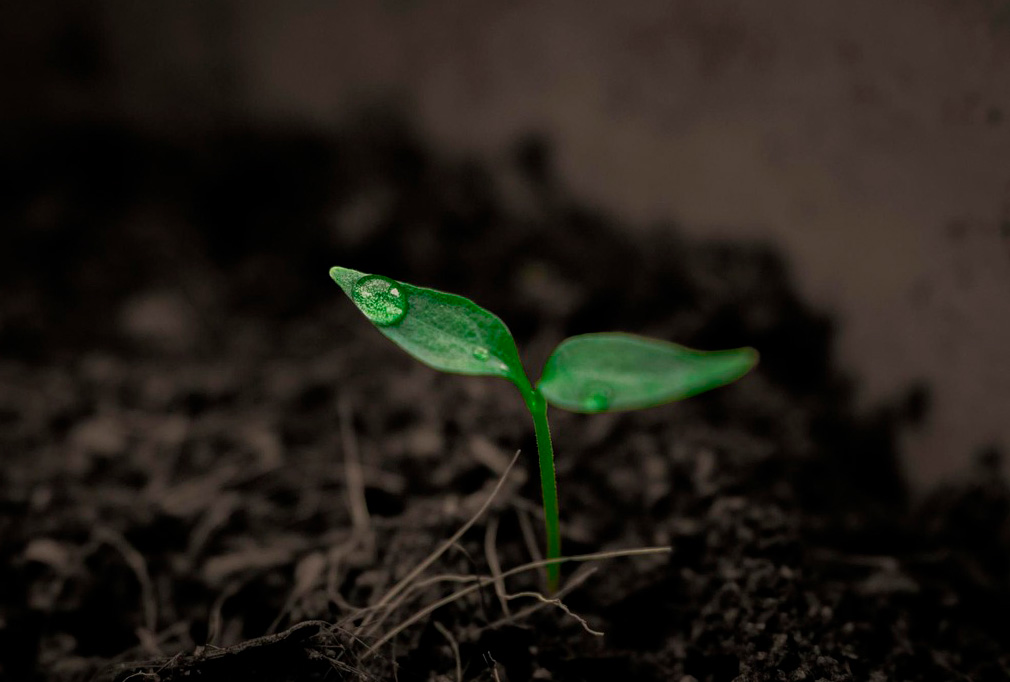
I don’t know if this has ever happened to you but sometimes, after a large forest fire, when everything is burnt, bare, covered in ash, lifeless, you can spot a small plant sprouting – right there, where everything seemed dead. When I notice this, I feel something beautiful: where life seemed to have ended, nature is stronger. It grows, triumphs, lives, even when it seems impossible. It is in those moments that I understand how wonderful it is to live on a planet capable of regenerating itself, despite its wounds.
But for how much longer will it be able to do so?
On 2nd July, the Message of the Holy Father Leo XIV for the X World Day of Prayer for the Care of Creation which will be celebrated on Monday, September 1, 2025 was published. It is entitled Seeds of Peace and Hope. What a splendid legacy Francis left us with his Encyclical Laudato Sì published ten years ago: so current, important and precious. And I find it very beautiful that Pope Leo takes up this legacy by highlighting the month dedicated to the Care of Creation (1st September-4th October), which begins with this day of prayer.
But what does this Message actually declare?
Returning to the example of the forest fire, Leo XIV reminds us that, “Seeds are buried in the earth, and there, to our wonder, life springs up, even in the most unexpected places, pointing to the promise of new beginnings”. Then he addresses us, inhabitants of this world, reminding us that “in Christ we too are seeds”. Not only that, but “seeds of Peace and Hope”.
This is a strong and clear invitation to live the ecumenical initiative of the “Season of Creation” from 1st September-4th October. It is a month of initiatives to invent, prepare and implement so as to pay every more attention to the care of our “common home”, which we all inhabit, regardless of our differences. Pope Leo says, “Together with prayer, determination and concrete actions are necessary if this “caress of God” is to become visible to our world”. Further on he says, “we seem incapable of recognizing that the destruction of nature does not affect everyone in the same way. When justice and peace are trampled underfoot, those who are most hurt are the poor, the marginalized and the excluded. (…)By working with love and perseverance, we can sow many seeds of justice and thus contribute to the growth of peace and the renewal of hope”.
Everyone is called to participate: individually or in groups, in associations, organizations, companies… why not? Each with their own ideas, their own commitment.
In his Message, Pope Leo XIV writes: “The Encyclical Laudato Sì has now guided the Catholic Church and many people of good will for ten years. May it continue to inspire us and may integral ecology be increasingly accepted as the right path to follow. In this way, seeds of hope will multiply, to be “tilled and kept” by the grace of our great and unfailing Hope, who is the risen Christ”.
And what does the Pope do? He begins himself by promoting these initiatives first. He established, for the first time in the history of the Church, a “Mass for the Care of Creation”, made official through the Decree on the Mass pro custodia creationis. Pope Leo XIV used this new form already on 9th July, 2025 during a private Eucharist that he celebrated at the Borgo Laudato Sì, during his stay at Castel Gandolfo (Rome). From now on, anyone can ask to celebrate a Mass with this intention, to be faithful stewards of what God has entrusted to us: in our daily choices, in public policies, in prayer, in worship and in the way we inhabit the world.
The title Seeds of Peace and Hope today appears as a disarming prophecy. Perhaps they are the only two words that, in this dark time for humanity, continue to make sense. They are words that allow us to start again, to sow and to believe that that fresh grass will continue to grow even where the land seems scorched and dead. Actions like these make me understand that all the Churches do not change their minds about the essential questions for the life of humanity. And above all, that they do not stop thinking about the future of the new generations.
I’m Letícia Alves and I live in the north of Brazil, in Pará.
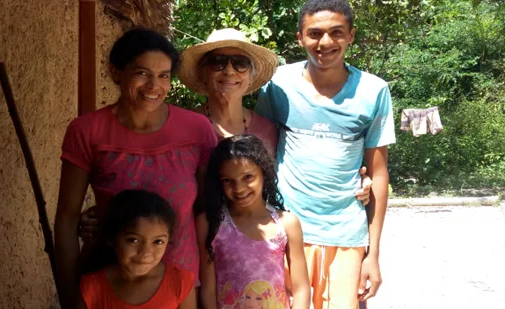
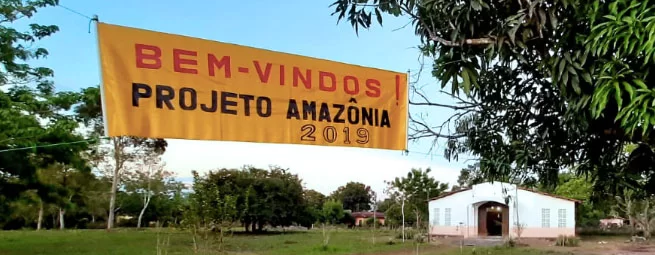
In 2019 I took part in the Amazon Project, and for 2 weeks a group of volunteers and I dedicated our holidays to living with the people of the lower Amazon, in the city of Óbidos.
Before embarking on this adventure, I wondered if I would be able to give myself completely to this experience, which was set in a reality so different from my own. During the project we visited some riverside communities living on the banks of the Amazon River, and everyone welcomed us with unrivalled love.
We provided health, legal and family support services, but the most important thing was to listen deeply and share the lives, stories and difficulties of those we met. The stories were all very diverse: the lack of drinking water, the child who had a toothbrush for the whole family, or even the son who wanted to kill his mother… The more we listened, the more we understood the meaning of our presence there.
“The urgent challenge to protect our common home includes a concern to bring the whole human family TOGETHER”
LS, 13
And among so many stories, I was able to see how much we can make a difference to people’s lives: how much just listening makes a difference, how much a bottle of drinking water makes all the difference.
The project was more than special. We were able to plant a seed of love in the midst of so much suffering and “building together” made us grow. When Jesus is present among us, everything becomes inspiring, full of light and joy.
It wasn’t something I lived for just 2 weeks and that was it, but it was an experience that really transformed my life, I felt a strong presence of God and that gave me the strength to embrace the sufferings of humanity that surround me in this daily construction of a united world.
My name is Francisco. I was born in Juruti in the Amazon, a town near Óbidos. I was surprised to learn that people from different parts of Brazil were travelling across the country to give of themselves to take care of my people and I wanted to join them.
What struck me most was the happiness among everyone, the volunteers and the local people, who even though they lived with very few material possessions, experienced the greatness of God’s love.
After experiencing the Amazonia project in Óbidos, I returned to Juruti with a new outlook and the desire to continue this mission, but in my own town. Over there, I saw the same needs that I had found in Óbidos. This desire became not just mine, but that of our entire community, which embraced the cause. Together we came up with the idea and gave birth to the Amazonia project in the community of São Pedro with the aim of listening and responding to the “cry” of those who need it most, of those who are often not heard. We chose a community on the mainland, began to monitor their needs and then went in search of professionals who could help as volunteers.
With the collaboration of several people, we brought the life of the Gospel, medical care, psychological care, medicines and dental care to that entire community. Above all, we tried to stop and listen to the difficulties and joys of those we met.
I have one certainty: in order to build a more fraternal and united world, we are called to listen to the cries of those who suffer around us and to act, with the certainty that everything done with love is not small and can change the world!
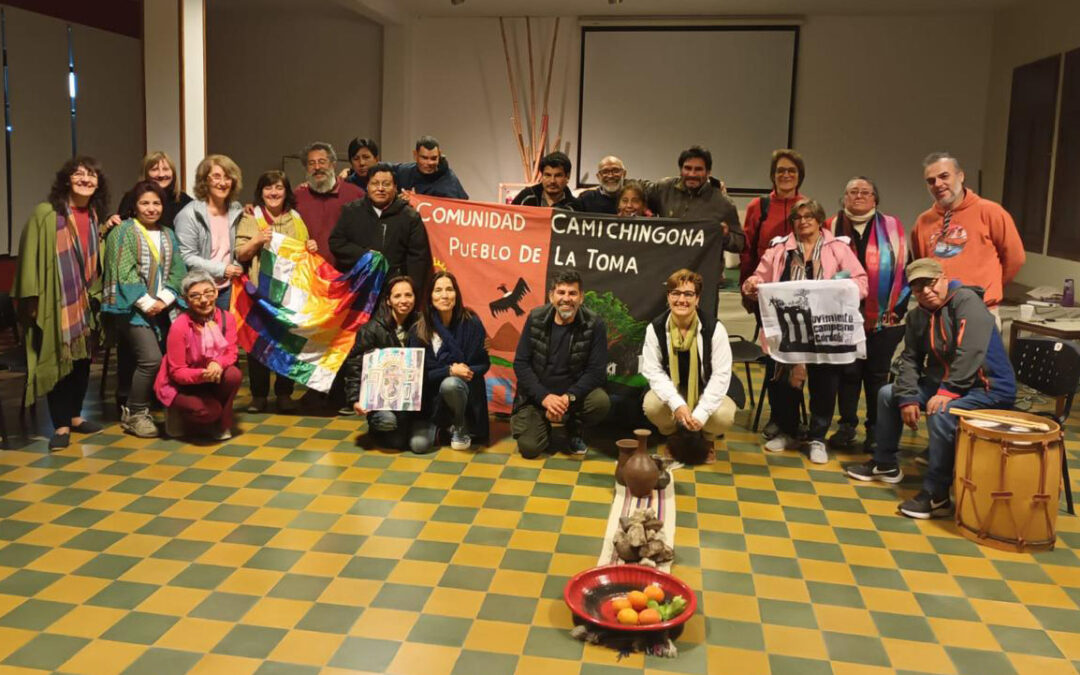
Agustin, Patricia and their two children are an Argentinian family. After following a course at Sophia ALC, the Latin-American branch of the university institute that is based in the international little town of Loppiano (Italy), they began to research their roots among the indigenous peoples, and this gave rise to a strong commitment in intercultural dialogue.
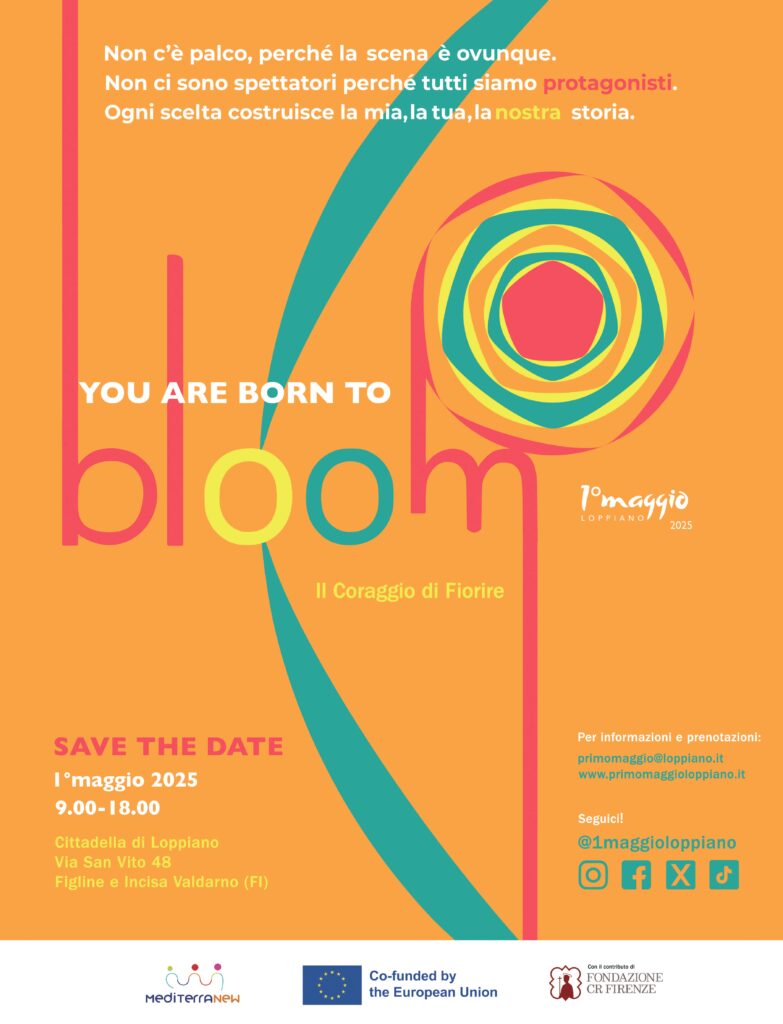
The 2025 edition of the traditional youth festival in the Focolare little town will showcase the fragility and conflicts experienced by young people today and transform them into an immersive artistic experience full of hope. There will be many workshops and a live final show to tell everyone: ‘You are born to bloom’.
‘Remember that you were born to bloom, to be happy’. This is the message that, in the Jubilee Year of Hope, the young organisers of May Day in Loppiano (Figline and Incisa Valdarno – Florence) want to give to their peers who will participate in the 2025 edition of the traditional festival that has been held since 1973 in the international town of the Focolare Movement on Labour Day.
The theme
At the heart of ‘You are born to bloom, the courage to flourish’, the title of the event, are the fragility, wounds and conflicts experienced by today’s children and young people, sublimated into an artistic, immersive and growth-oriented experience.
‘We believe that the conflict we often experience in the most difficult stages of life can become an opportunity to be reborn stronger and more aware of who we are,’ explain Emily Zeidan, from Syria, and Marco D’Ercole, from Italy, members of the international team of young organisers of the festival. As Pope Francis told us, ‘Conflict is like a labyrinth’, we must not be afraid to go through it, because ‘conflicts make us grow’. But ‘you cannot get out of the labyrinth alone; you get out with someone else who helps you’. So, on May Day in Loppiano, we want to remind everyone of the beauty of each other, even in moments of vulnerability.
The theme of May Day in Loppiano is highly topical, considering that in Italy, one in five minors suffers from a mental disorder (depression, social withdrawal, school refusal, self-harm, anxiety, eating disorders, suicidal tendencies), according to data from the Italian Society of Child and Adolescent Neuropsychiatry. Those under 35, on the other hand, experience job insecurity, are underpaid, suffer from territorial and gender inequality (‘Youth 2024: the balance sheet of a generation’, EURES), and do not feel understood by adults in their needs and experiences, particularly when it comes to fears and fragility, aspirations and dreams.
Pope Francis had great faith in us young people. He never missed an opportunity to remind us that the world needs us, our dreams, and great horizons to look towards together, in order to ‘lay the foundations of social solidarity and a culture of encounter,’ emphasise Emily and Marco. For this reason, ‘You are Born to Bloom’ will be a show created together, where the audience will not only be spectators but an integral part of the international town of the Focolare Movement. Narration: everyone who participates will be called upon to become a protagonist of the show, giving their best with others.
The programme
In the morning, participants in the May Day festival in Loppiano will have the opportunity to explore their own fragility and beauty through art, motivational and experiential workshops led by psychologists, trainers, counsellors, artists and performers.
Among these, the Gen Verde International Performing Arts Group will prepare young people to take to the stage and be part of the cast of choreographies, choirs, theatre company and band in the final show. The Gen Verde workshops are part of the project ‘M.E.D.I.T.erraNEW: Mediation, Emotions, Dialogue, Interculturality, Talents to foster youth social inclusion in the Mare Nostrum’, Erasmus Plus – Youth – cooperation partnership.
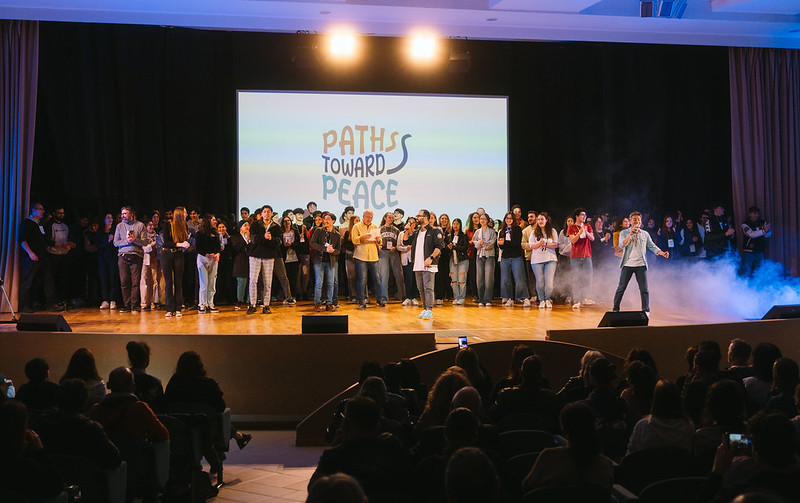
The festival will culminate in the afternoon with the collective creation of a live performance: all participants will be an active part of the story, and there will be no distance between the stage and the audience.
Among the artists who have confirmed their participation are Martinico and the band As One.
‘You are born to bloom, the courage to flourish’ is made possible thanks to the contribution of Fondazione CR Firenze.
Loppiano’s May Day is an event of the 2025 United World Week (1-7 May 2025), a global workshop and expo to raise awareness of fraternity and peace.
For information and reservations, please contact: primomaggio@loppiano.it +39 055 9051102 www.primomaggioloppiano.it