10 Jun 2016 | Non categorizzato
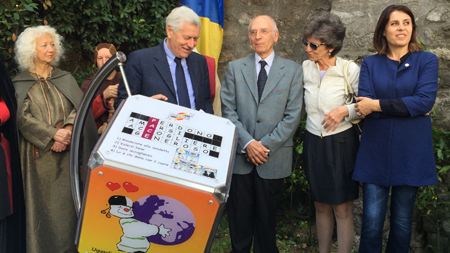
On June 4th the Porta della Verità Garden in Viterbo, Italy, was dedicated to Chiara Lubich, to show how her message of unity amongst peoples has been welcomed by the capital city of the Province of Viterbo. It is “a message of interculturalism,” one local newspaper writes in its large coverage of the event, “that when lived out is enriching because of its call for mutual respect of diversity.” The Porta della Verità Garden is a small plot of green just inside the city walls in the historic district of the city of Viterbo. The event was attended by many young students, several costumed characters in a historical parade, as well as city authorities: Mayor Leonardo Michelini and Bishop Lino Fumagalli. The Solidarity Dice project was promoted by the municipal council in 2014 and conceived and carried out by the Christian Associations of Italian Workers (ACLI) in collaboration with the L. Fantappiè Comprehensive Institute. “The idea behind this project was born through a trip to Trieste where saw the Solidarity Dice for the first time. We wanted it in our city because it is a concrete sign of solidarity. It was all achieved thanks to the collaboration from all sectors of the city administration,” explained Renzo Salvatori, president of ACLI in Viterbo. “Solidarity regards all of us,” Bishop Lino Fumagalli emphasized. “You can measure the growth of a society by the number of its works of solidarity. The sentences written on the sides of the dice warm the heart when they are implemented.” Some of the young participants recounted their own daily experiences with solidarity and explained what guided them in coming up with the sentences that were chosen for the Dice of Solidarity through an inter-mural competition with 120 entries. “The Dice of Solidarity is a project that gives meaning to the work of the school that begins inside the classrooms and continues after the final bell,” added Alessandro Ernestino from Fantappiè Institute. “The school is an important part of a community, capable of working on the environment together with the different associations like ACLI and the organizations of the administration. In his concluding remarks Mayor Leonardo Michelini said: “This day is a moment that enters into the history of the city. In the beginning the project didn’t seem to be doable, but the messages that the Dice of Solidarity transmits have universal value.” Sourcee: ViterboPost
10 Jun 2016 | Non categorizzato
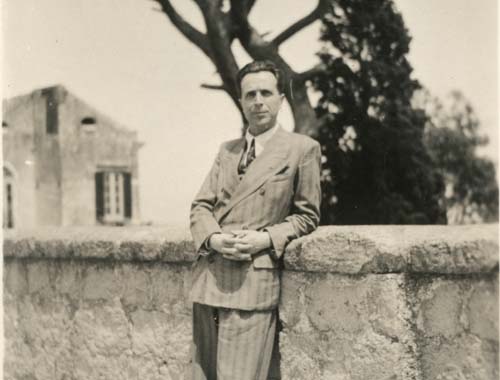
“Despite all his moving around in the world, his Roman and in some sense Vatican roots, his political patrolling and social outlook, Igino Giordani never really cut the umbilical cord with his own hometown. To grasp how much he had loved his Tivoli, it’s enough to scroll through some of his writings in which he tells of the place, or to read the novel “La città murata” (The Walled City) that’s set in Tivoli. In Memorie di un cristiano ingenuo (Memoirs of a naive Christian), he paints his hometown environment with words that betray this intense relationship and, in a sense, seem to justify his own basic choices as he assigns to them their own Tiburtine character: playful and untameable, courageous and consistent, aggressive at times but motivated by love for God and wisdom. Igino Giordani was born into a family of humble origins. He more than once expressed veneration for his parents, for the dignity with which they lived their daily lives and for the Catholic faith that marked the key stages of life. In Tivoli Giordani grew personally and also intellectually. He certainly didn’t have the opportunities that some other children with fine intelligence could had. In fact, his father geared him in the direction of manual labour as a mason worker. In the meantime, still a boy, he was fascinated by religious ceremonies and the celebration of the Mass even though they were in Latin. The little Giordani began to memorize some parts and, when he was alone even at work, instead of whistling some popular tune he would recite Latin parts of the Mass. Divine Providence made use of Sor Facchini (the contractor they worked for), who realized that Igino was not cut out for the cement bucket and trowel, but for school and book. Sor Facchini decided to finance Igino’s schooling at the Seminary of Tivoli, which at that time was the best place for shaping the intellect and spiritual life of a thirteen year-old boy. He remained there until 1912 when he should have moved to the Seminary of Anagni. But Igino decided to stay in Tivoli and attend classical high school from which he graduated in 1914. It’s likely that the passion for polished and effective argument about the intellectual basis of the Catholic faith was already engraved on Giordani’s life at an early age while listening to Jesuit Father Mancini at Saint Andrew Church in Tivoli. Giordani described the priest as a “compelling and unassailable man of the faith”. He spoke of Mancini as a man if irresistible and unattackable faith. He was a combative spreader of the Gospel; for Giordani he was a true role model. In this first phase of his upbringing we can already foresee several traits that would lead Giordani to assert himself as a debater and defender of the faith. Shortly after his graduation from high school, Italy also entered the War. Igino faced Italian public life that was in the midst of a controversial debate over war and peace, as a resolute pacifist at a time when pacifist ideas were not easy to support. It is likely that thanks to the charismatic figure of Father Mancini, the solid experience of the faith in seminary and the pluralistic political ideology that was breathed in high school, Giordani – who even in those years seemed to have grown tepid from a religious point of view – had never lost the sense of love of neighbour, which led him to dismiss all forms of violence towards all human beings. A few years later he would say so himself with shining simplicity as he expressed his distaste for battle during those years of war: “When I was on watch in the trenches during the First World War thoughts of the divine commandment tortured me: ‘Fifth: Do not kill.” He had been raised in Tivoli where he had been trained in peace. And in a song written by Giordani many years later, steeped in the devastating experience of war but also of faith and hope born from the encounter with the spirituality of unity: Contempt for man and his depreciation derive from the fact that we no longer see Christ in him; and so love is substituted by hatred, which is the spirituality of the prince of death. Alberto Lo Presti See: Igino Giordani, La divina avventura (Rome: Città Nuova, 1993), p. 141.
![Best wishes for Ramadan]()
9 Jun 2016 | Non categorizzato
 “May glory be upon you my Lord, He who is the Adored One, the One to be adored, the Eternal One, who existed from all times, who loves us, whose Mercy and Power embrace the universe (…). You are the Adored One, Oh Lord, You are the Master who loves and forgives. Your forgiveness and Your mercy are infinite, Oh Lord, You help those who are afflicted, the Consoler in every grief, the Refuge for those whose heart is broken.” (From a prayer by Ali ibn Abi Talib, cousin and son-in-law of the Islamic prophet Muhammad)
8 Jun 2016 | Non categorizzato
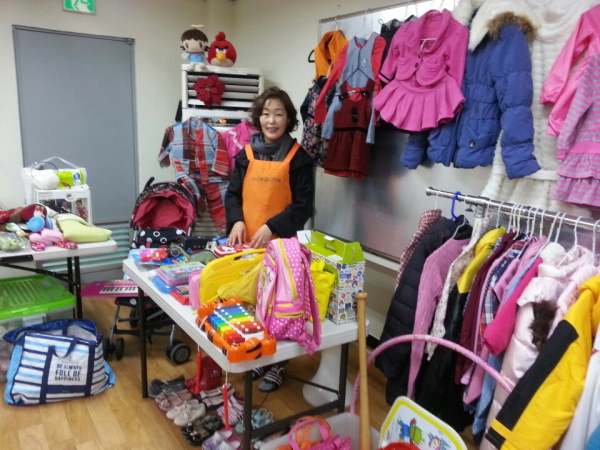
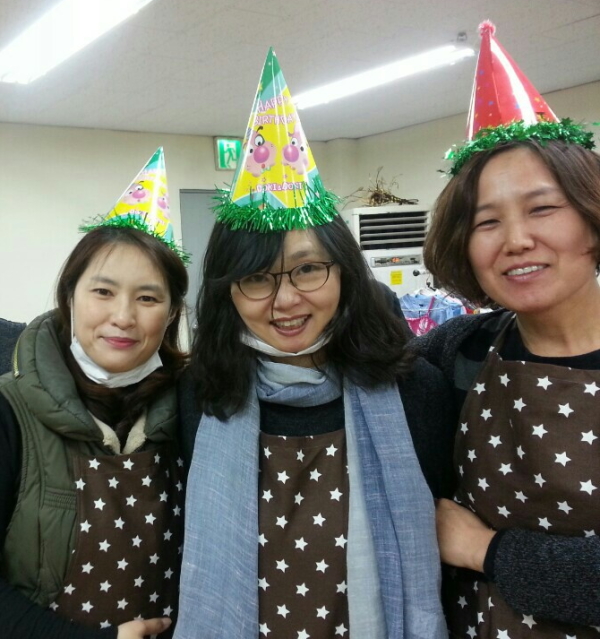 Seongnam, South Korea, more than a million inhabitants on the southeastern outskirts of Seoul, is a growing city with the presence of large companies that further the economic development of the area in a city where there is great wealth alongside abject poverty. “In Korea there is a strong immigration of women from several Asian countries: China, Vietnam, Cambodia, Japan, and more. They come here to marry or to escape from misery. Hence, the many multi-cultural families, most of them living in the poor areas of our city,” explains a Focolare group from Korea who were attending the OnCity international conference in Castelgandolfo, Italy. One of their greatest needs is integration.
 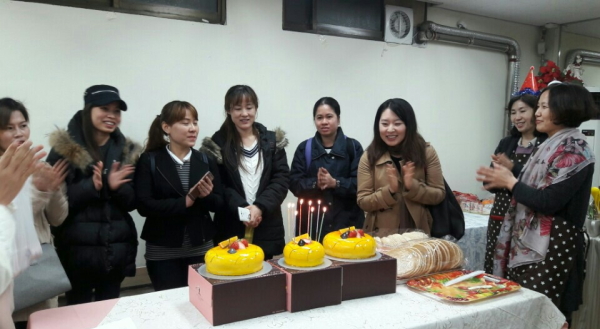 In the Multicultural Centre where some of the Focolare members work, they teach women immigrants to speak Korean, and have proposed establishing some kind of child care programme to entertain the children while their mothers learn the new language. “But at one point the government funding was removed and we couldn’t continue with our activity,” they say. “We told some friends who share our commitment in living ideals of unity and peace in our city. Each one of them gave what they could: time, skills – taking on the problems and situations of many people.” They were faced with truly painful situations: settling in a new country is not easy. For many, the Centre was a place where they could catch their breath, a place where they could share one another’s problems, especially financial problems. In 2012 we opened a small market where you could buy what you needed at a low cost. We called this small temporary project: The Mary of Nazareth Project. Many people helped us by donating clothing, toys, office supplies and linens.” What could be done with the small sum of around 353 Euros? “We decided to follow the Economy of Communion approach of distributing the profits: 1/3 for a family (a Cambodian family that our community had taken into its care until they could stand on their own); 1/3 to buy any additional things they might need; 1/3 for everyone in the group (to celebrate the birthdays of immigrants who didn’t have families with them). Finally, the Maria Market recived a donation from the government and the Centre decided to remodel the shop. But it was only reopened in 2014 after much expectation. The following year, they received a visit from the Mayor. In June 2015, with the spread of Mers in Korea, 2,900 schools were closed and 4,000 people were placed in isolation. Like many public locations the Centre also had to close. However, during the period of the shut-down, “we visited people in their homes and supported them in the little things. In the end, the Centre gave us a “Thank You” plaque. Now Maria Market is open again and always developing new ideas like mail delivery service for long distance customers. For the group running the project it continues to be “a concrete experience of answering the needs of our neediest sisters and brothers.”
![Best wishes for Ramadan]()
7 Jun 2016 | Non categorizzato
 The news summary will be made available on the Collegamento CH website a few days before the Internet transmission. On the same website one can find all the previous linkups in various languages, as full editions as well as individual news video clips. https://vimeo.com/170950751
6 Jun 2016 | Non categorizzato
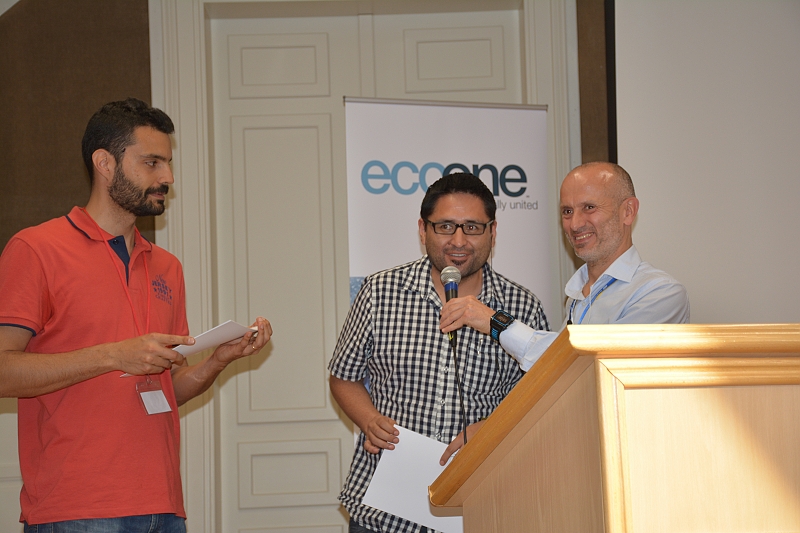
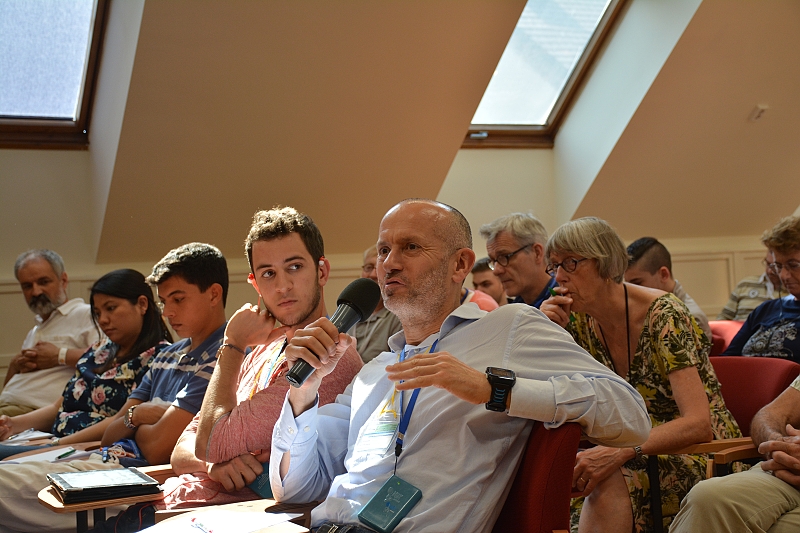 The international coordinator of EcoOne called it “a successful experiment that has addressed a word of hope: A human being who is open to being a gift could in fact be the answer to the epochal environmental challenges that humankind finds itself facing. The meeting was held in Budapest, Hungary from May 27 until May 29 at the Pázmány Péter Catholic University and was attended by 80 representatives of environmental NGOs, university faculty, civil servants, professionals in the field of environment, and high school and university students from different countries. High-level scientific presentations were accompanied by practical experiences and transdisciplinary reflection on fields such as economics and political ethics. There were several presentations: from a 15 year-old boy to an elderly man who is dedicated to caring for the environment in the Focolare town in Holland. Three Italian students presented their experience that straddled energy-saving and the culture of giving. Erasmus, a student in Budapest, a student from Rome and a Brazilian also presented their experiences. The young man from Brazil paid for the trip by making and selling knick-knacks, and receiving a contribution from his university that made an exception in his case. Five young researchers received the Piero Pasolini Prize for the quality of their presentations, thanks to the financial support of the Economy of Communion. “Several agencies of the Focolare Movement were involved in the preparation of the event: Action for a United World, Economy of Communion, New Humanity Movement, New Humanity, Young for Unity, Movement Politics & Policy for Unity., Sophia University Institute and an excellent logistical team from the Hungarian EcoOne Group,” Fiorani affirmed. Zsusa Román, the coordinator of EcoOne in Hungary opened the event with a question: “What kind of person does it take to care for the environment?” Fiorani went on to present the features and objectives of EcoOne as: “a cultural initiative at an international level, promoted by experts, researchers and professionals that work in the environmental science sector. We share a common desire to enrich our scientific knowledge with a humanistic approach to ecological and naturalistic problems. With our partners who join us in pursuing a global sharing of the world’s goods and a close interdependence among countries, EcoOne attempts to make such principles flow into society, politics and economy inasmuch as they are also related to the topic of the environment.” Auxiliary Bishop of Esztergom, Hungary, János Székely cited the importance of “sobriety and of the gift” in line with Pope Francis’s Laudato si. A lively debate followed the presentation by Professor Miguel Panão, which focused on a new anthropological notion of the human person as someone in the act of giving himself or herself to others and to nature. The roundtable was particularly appreciated in which the social challenges that are posed by the environment were discussed from a theological, climatological, economic and political point of view, underscoring how much the environmental problem requires the contribution of many disciplines, beginning with politics which guides decisions, and the economy that sets up the models of development. Fiorani concluded saying: “The meeting isn’t an arrival point, but a point of departure. Now we have to prepare for new challenges. The next meeting will be held in Asia!” Info: EcoOne
