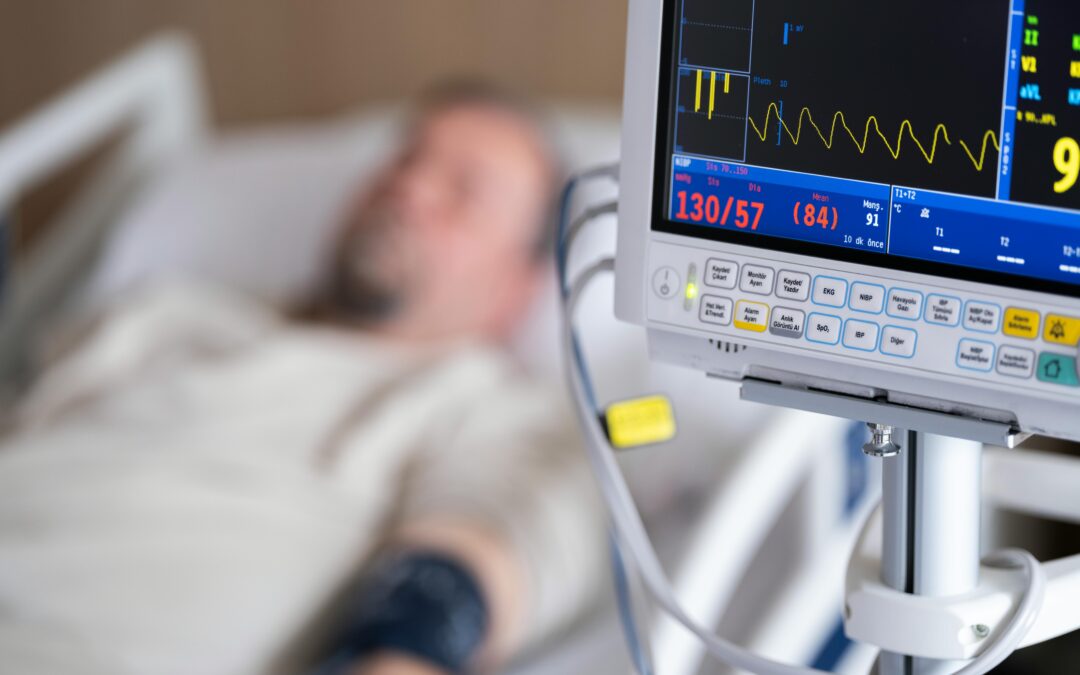
I am 62 years old, I am Irish and I have lived in Taiwan for many years. I have had pulmonary fibrosis for a long time, so when I began to feel more tired, I thought it was just a worsening of this condition. I went to the doctor not very worried. To my surprise, I was told directly and without any preparation: stage four cancer, which has already spread to the other lung and perhaps elsewhere.
My first reaction was to call my wife. She and my daughter, who lives with us in Taiwan, remained on the phone in silence. Our other daughter is in Ireland. At that moment I was not afraid for myself: my thoughts went immediately to them, to the burden that this news would place on their shoulders. At the same time I felt a deep regret for all the times I hadn’t loved fully, for the wounds I had left along the way. It seemed too late to make amends.
One day a priest came to celebrate Mass in our home. I have known the Focolare Movement since I was eleven years old, and I have always lived the offering of myself to God during the consecration. But that time I understood something new: I could place in the chalice, not only myself, but also all the people I had hurt. I could entrust them to Jesus so that He might heal what I could no longer repair. It was an immense relief. Since then, a deep serenity has accompanied me.
Eight years ago my wife had breast cancer. We have already passed through darkness. Then, as now, we chose to trust in the Father’s love. When I pray the “Our Father” and say “Thy will be done,” I feel that my whole life is already held in heaven. The future does not belong to me: it is in God’s hands. All I have to do is say yes.
I often think of Loppiano (Italy) where as a young man I felt a very strong call to follow Jesus. Over time I understood that it was an invitation to recognize him above all in suffering, in that face that the charism refers to as ” Jesus Forsaken “. Even when my wife was ill, before the cross I understood that it is not enough to remain below and look on: we must ascend with Him, enter into His abandonment and let ourselves be carried to the Father. Our home is there.
Before the diagnosis I had a very full life: I taught at the university, I accompanied students and young people, I supported families and I participated in the life of the Movement. Now my world has shrunk. I’m on leave of absence and in order to avoid infections, I go out little. But something surprising is happening: people seek me out. They write to me from every continent and pray for me. Some young people in Taiwan have created a group to pray together every week. I thought I had sown very little; now I see that love returns multiplied.
When I speak openly about my illness, many find the courage to open up about their own wounds. My weakness becomes a space for communion. It is as if, Christ, lifted up on the cross, draws hearts to himself. This illness, which humanly is a death sentence, turns out to be an opportunity to welcome others.
There are sufferings that can be shared with everyone and others that can only be expressed to God, in a deep dialogue with Him. I know moments will come when I won’t even have the strength to offer my pain. So I prepare myself in this way: by repeating my yes. “Not my will, but yours be done” (Lk. 22:42). I know I can’t face what lies ahead alone. But I also know I won’t be alone.
In these months I have understood that love is not the sole remit of those who know Jesus or call themselves Christians. In the hospital, the doctors and nurses who treat me do not share my faith, yet they love with a tenderness and attentiveness that move me. I have seen in their daily gestures – an extra phone call, a patient explanation, a discreet presence, that love is greater than labels. When I look at suffering through the eyes of love, it no longer remains trapped in fear: it is transformed, it becomes a space of hope, something mysteriously positive. It is as if every act of care, even if unconscious, is already a pathway to God, because wherever there is love, it leads to Him.
And within this immense communion – made up of my family, friends, students, young people and doctors who love perhaps without fully knowing why – I experience that everything is already held within a design of goodness. I don’t have to control it or fully understand it: I can simply dwell within it, day by day, with gratitude.
“The more you read the book, the more you become aware that everyone is called to ‘closeness’. The perception of being able to achieve it and the liberating conviction that this kind of lifestyle brings joy and builds, brick by brick, is the path towards a more unified world.”
Cardinal Pierbattista Pizzaballa, Latin Patriarch of Jerusalem, uses these words in the preface to the book by Margaret Karram, President of the Focolare Movement, entitled ‘Closeness, a path to peace. Pages of life’.
A truly autobiographical text in which the author retraces her family history and writes about herself, her origins, her childhood in Haifa (Israel), the people she met and her decision to give her life to God. But at the same time, it is a real itinerary, a guide or, as Pizzaballa further describes it, “a multidimensional journey: going within, going outside and going Above” that allows the reader to accept the author’s invitation to get involved in a meaningful way in the encounter with others.
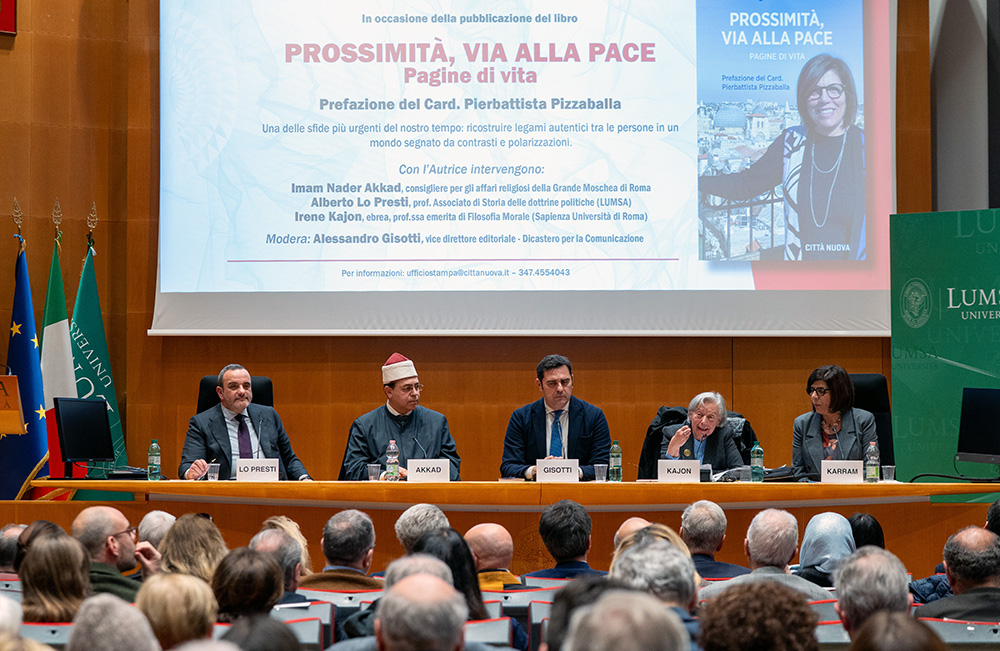
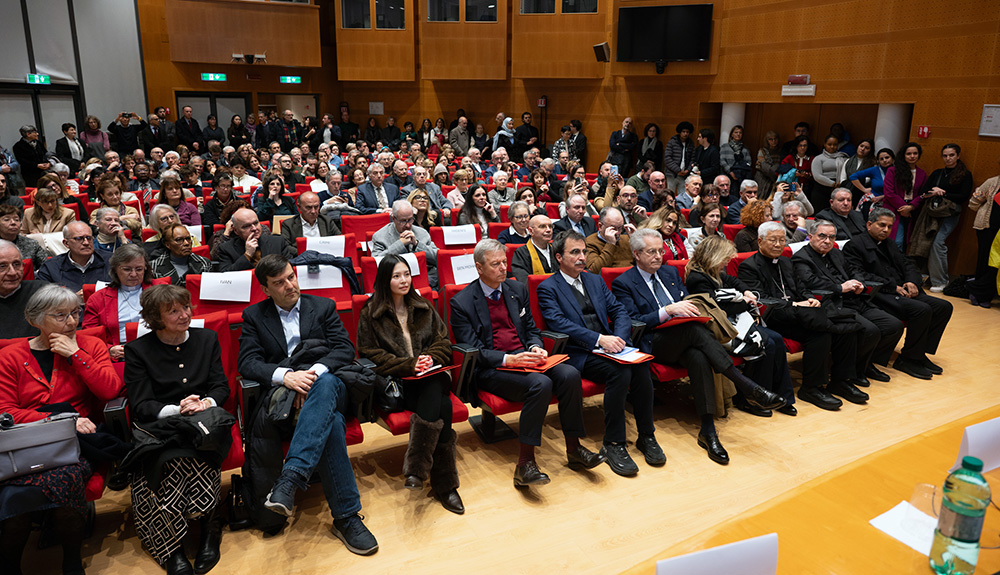
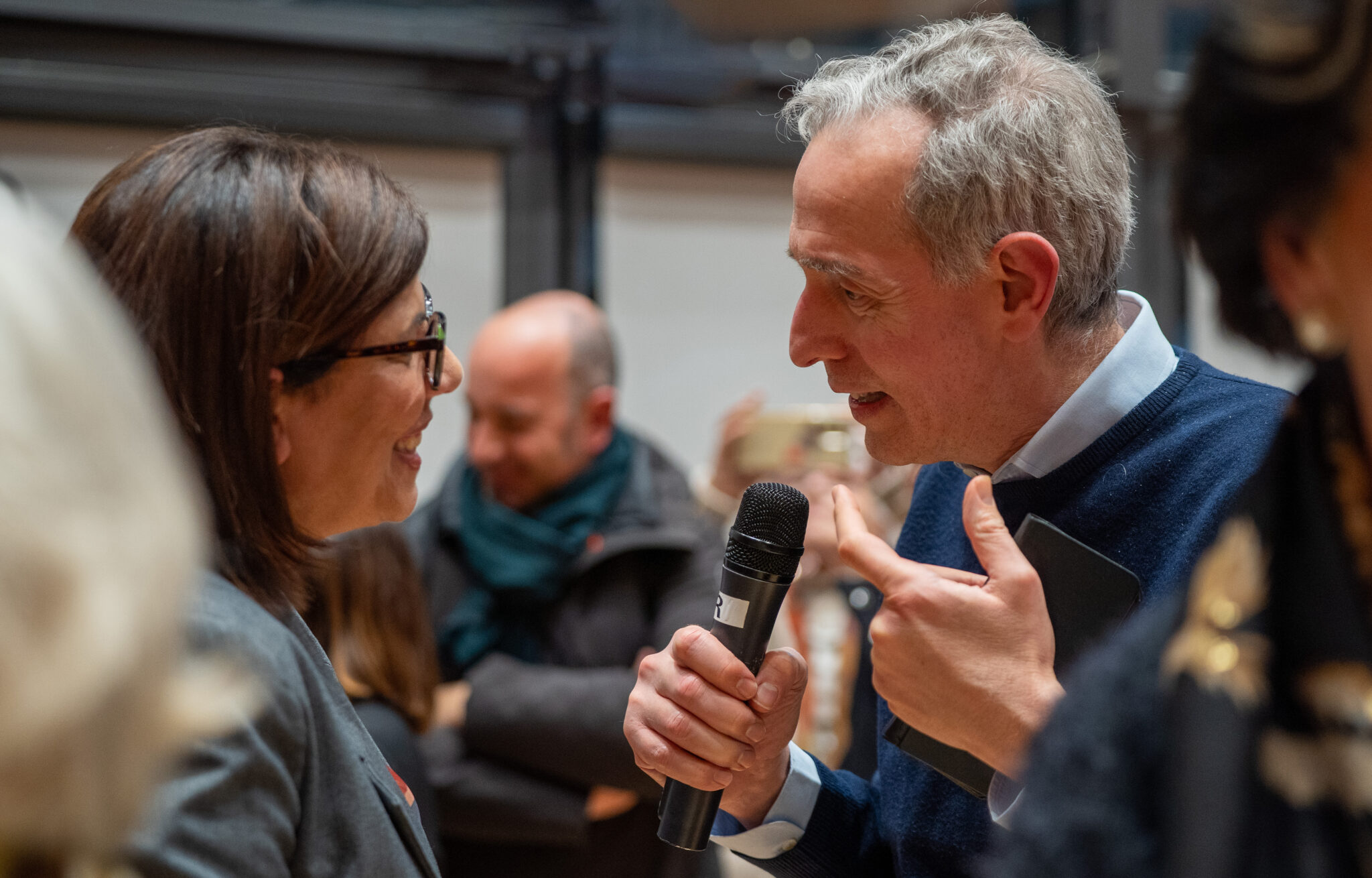
The text was presented at the Jubilee Hall of LUMSA University (Rome, Italy) on the 30th of January 2026 during an event that turned into a unique opportunity for exchange and dialogue. It focused on the theme of “closeness” and aimed to foster a tangible experience of it.
The proceedings were opened by Prof. Francesco Bonini, Rector of LUMSA, who welcomed the participants. The event was moderated by Alessandro Gisotti, Vice Director of the Editorial Department of the Dicastery for Communication of the Holy See. Alongside the author, speakers included Imam Nader Akkad, Advisor on Religious Affairs at the Great Mosque of Rome, Irene Kajon, member of the Jewish community and Professor Emeritus of Moral Philosophy at the Sapienza University of Rome, and Alberto Lo Presti, Associate Professor of History of Political Doctrines at LUMSA.
In the light of Karram’s book, the debate addressed various topics. Among the first points raised was a careful look at the value of identity, as a process and as a movement. “This is a recurring theme, especially in the first few pages,” explains Prof. Kajon, “where a reality is shown that reveals the intertwining and coexistence of many different cultures, languages and religions. In the logic of closeness, it is good that identity, an identity that is intertwined with different elements, always maintains a sense of restlessness … because this is precisely what guarantees openness to others …. What unifies identity is precisely closeness, that is, being human. It is the human family that allows us to unify the identities that are found in each person.”
Imam Nader Akkad, thinking of his Aleppo (Syria), spoke of closeness as a concept that is not at all abstract, but rather something very real that finds its only possible fulfilment in closeness to others and in fraternity. “Closeness becomes the possibility of achieving a ‘shared meaning’, and it is the concept of ‘family’ that forms the basis of society,” says Imam Akkad, “a bridge that is suspended is useless. Two banks are needed. Sometimes the banks become rigid …. Closeness shortens distances, making us understand how close we are. When I draw closer, I recognise my brother or sister, I recognise their suffering and their joys. Closeness helps us to travel through different identities … and not to feel like minorities, but like citizens, so as to build peace together.”
Referring to the concept of ‘inventive love’ as an agent of social, political and cultural transformation proposed by Chiara Lubich, foundress of the Focolare Movement, and in the light of the current crises, Prof. Lo Presti says, “When we see conflicts and divisions in the international system, it is not Chiara Lubich’s vision of a united world that is in crisis …, but rather all those beliefs, philosophies and overly modern visions that believed that humanity would achieve the most beautiful goals of its civil adventure through rationality, or by relying on scientific and technological progress, or simply by expanding markets in an indistinct globalisation, and so on …. The united world that should be the fruit of closeness, is not a victorious march, it is an obstacle course. We need people who are able to look beyond the obstacle and not give in to it. We need people who are able to have hope in their hearts, who see crises as opportunities for the future. In fact, all this means being inventive and creative.”
Therefore, an attempt to raise our gaze. An attempt that, through encounters with various people and key figures, led Margaret Karram to write this text. Karram said, “This moment of authentic dialogue makes me understand that there are many of us who carry in our hearts the hopes and concerns of our time. This book did not come from me alone. It is a multifaceted story. The time we live in is unique, it passes quickly, we are constantly connected. However, this also creates new distances, which are often invisible but very deep. For this reason, addressing the topic of closeness was not a pre-planned decision, either for me or for the Focolare Movement. The more I listened to people, to communities, young people and families, the more I saw a universal need emerging: the need to feel close to one another, not close through a screen, but close in the practicality of life.”
The event, which began as a book presentation, became a moment of sharing that opened up a vision of one’s neighbour as the first step towards the path of peace. It turned into an opportunity to come together, to listen to one another in a synodal way, to discover that in building daily relationships, small sparks of hope, can make a difference.
My name is Vida and for a few years now, I and others from the Lithuanian community have been supporting the family of Julia from Indonesia, whom I met in 2018 in Manila (Philippines) on the occasion of Genfest, the international meeting that brings together the young people of the Focolare Movement. Over this time, despite the distance, a sisterly relationship has developed between us. Her family lives in Medan and is part of the Focolare community there. We have been able to support them at various difficult moments and, it always surprised me and gave me joy that whenever they received help, they immediately thought of other people too.
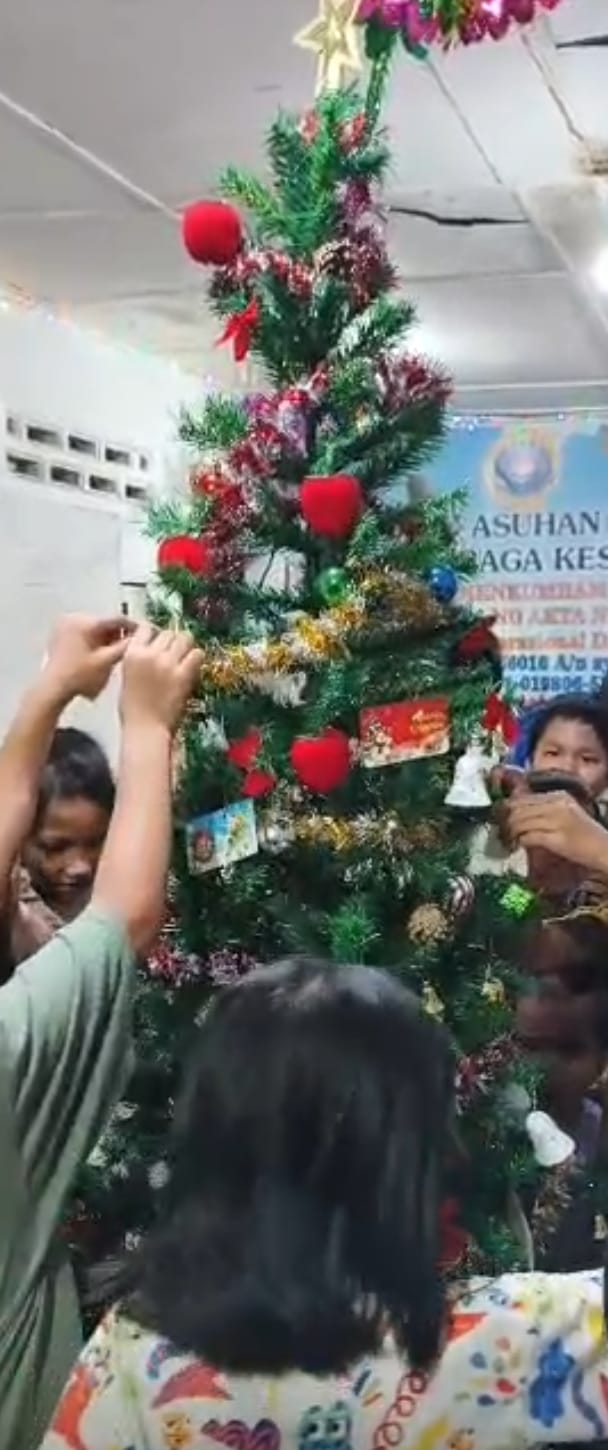
Before Christmas Julia shared with me her desire to help the children in an orphanage. They needed pillows and mattresses as the flood had destroyed those they had. Since she is a very practical person, she had already worked out the amount needed. So I wrote to the Lithuanian community on our shared website, hoping that someone would be able to donate something. “I was amazed to see that in a short time we collected an even larger amount that I immediately sent to Julia who did everything she could to make the children happy. As well as the mattresses and pillows, for the first time, they also had a Christmas tree
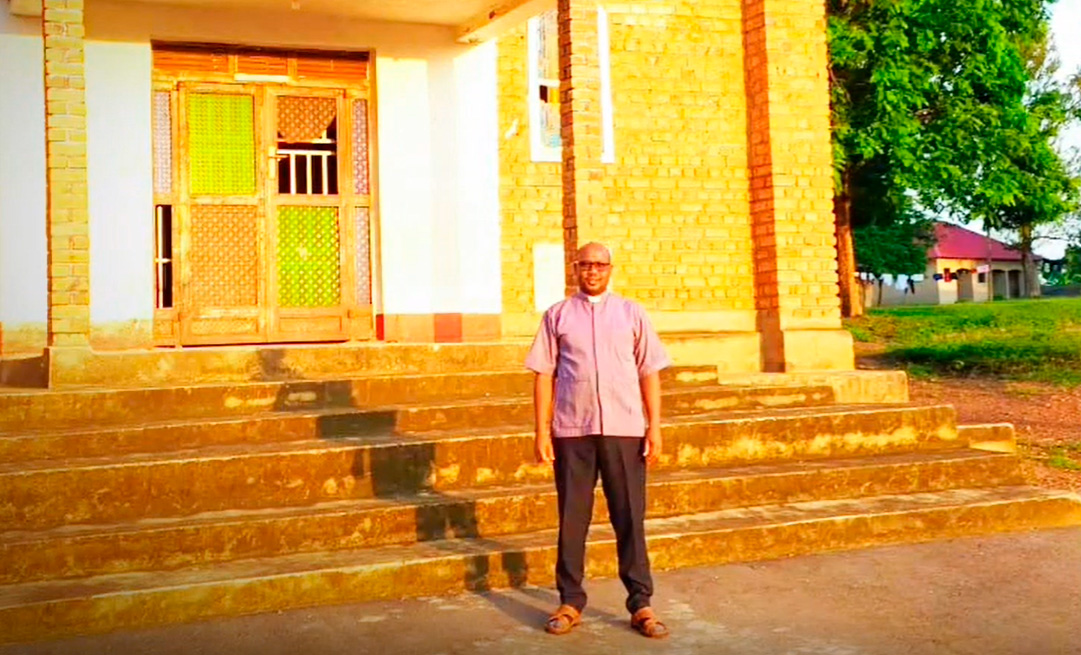
I am an Anglican priest from Uganda and I came to know the spirituality of the Focolare Movement fifteen years ago, when I was in the seminary for ministerial formation. This spirituality has shaped me in an integral way – myself, my family and my Church because it expresses in an exemplary manner, two fundamental aspects: Love and Unity. Nowhere in the Bible do we find Scripture that emphasizes division, separation, hatred, malice, tribalism, denominational divisions, or racial segregation. On the contrary, the Bible calls us to unity and love between people, even when there are differences. We are called, above all, to love our neighbour, because through loving our neighbour we love God. In this way I have learned to see Jesus in every person who is close to me (cf. Mt 25) and I experience great peace every time I share what little I have with those in need.
In one of his last prayers before the Ascension, in John 17:21, Jesus says: “that they may be one, just as I am one with you, Father”. This implies that unity should be our goal in life. Thanks to this awareness, I have had the opportunity to meet and dialogue with many people of different denominations: Catholics, Orthodox, Lutherans and also with people of other religions, Buddhists and followers of traditional religions, at all levels and in all age groups. This has given me a broader view of how to live and approach life in an integral way. I have experienced the joy of recognizing them as brothers and sisters.
I have also seen Bishops of the Anglican Church of Uganda welcome this spirituality through our experience, expression of life and witness. Currently, five bishops are friends of the Movement, including the Archbishop of the Anglican Church of Uganda. Some of them also participated in the international ecumenical conferences of Bishops organized by the Focolare Movement.
Currently we have started a communion group at Uganda Christian University, with the intention of practicing the aspect of love and unity among young people and university students; at the same time, we also transmit the value of “Ubuntu”[1], within the Together for a New Africa initiative, in which I participate as a tutor of this second round. After all this, people often ask me questions that I struggle to answer: “Why are you always happy? Don’t you ever get angry? You are always available. Don’t you have other things to do? Why are you so generous?” My answer has always been: “Do good, the reward is in Heaven”.
After the four Gospels of the New Testament, the fifth Gospel that everyone should read is that of the “you”, in the other person. We must see ourselves as a living witness, so that in our works and actions the image of God may be reflected, doing to others what we would like to be done to us. Putting into practice what the Bible teaches: to love God with all our heart, with all our mind and with all our soul, and to love our neighbour as ourselves.
Reverend Canonico Bwanika Michael Eric
[1]Ubuntu is a word of Bantu origin from sub-Saharan Africa that expresses a philosophy of life focused on compassion, respect and human interdependence, summarized in the maxim “I am because we are”, emphasizing that the individual is realized through community, sharing and collective well-being.
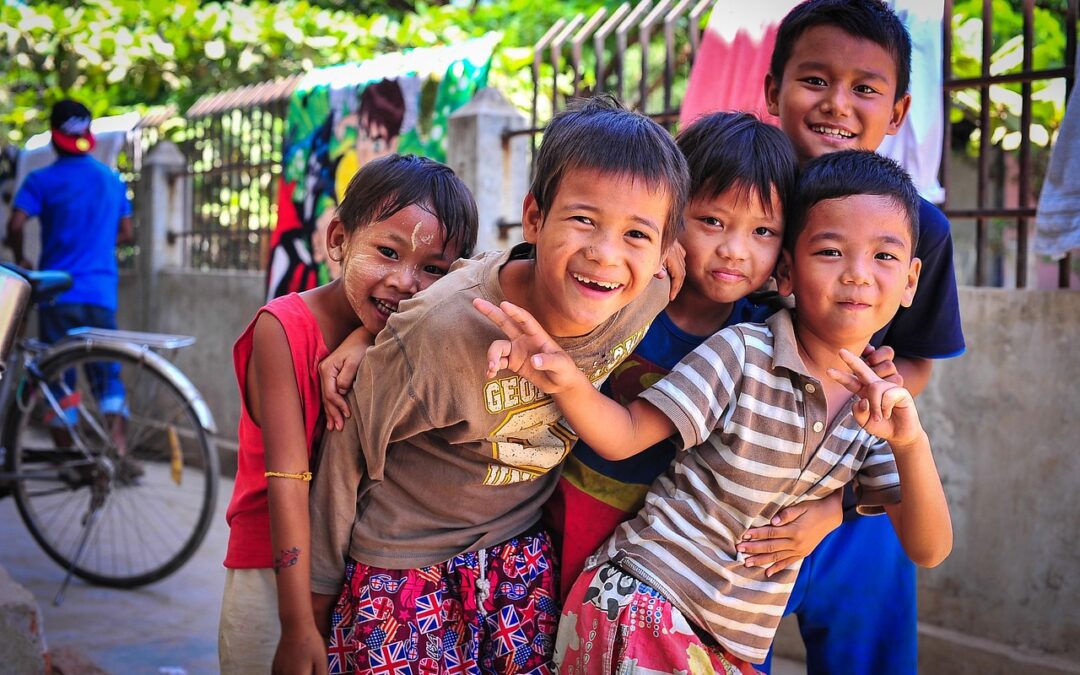
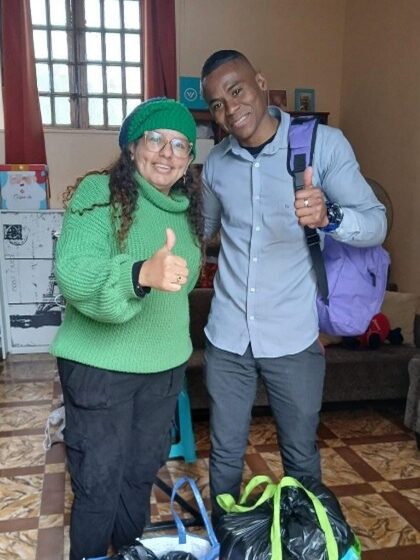
One Friday, Moisés, a migrant, arrived on the recommendation of another Venezuelan young man who was living in the same shelter and had told him to come to us, that we could help him. Moisés had arrived from Colombia a few weeks before Christmas and had only three changes of clothes, typically Caribbean, which he had brought with him on the journey. He was cold. Thanks be to God, he soon found work in a restaurant, washing dishes and helping in the kitchen. It was only a few days a week, but he receives lunch and dinner.
So we gave him winter clothes and a blanket, because he was sleeping on the floor on a thin mattress lent to him by the landlord, a man who also kindly agreed that he could pay the rent when he received his first pay check. He was truly fortunate, because shortly after arriving he had already found a job, a room and a very generous landlord. Not all migrants have the same luck. He began to cry when he saw what we were giving him and “the love of a family” (as he described it) that he was receiving.
He is a young professional, a commercial accountant. We prayed and asked God that in the future he may be able to practise his profession.
(S.R. – Peru)
True wealth
My relationship with my brother-in-law had always been difficult. First there were debts from a failed business venture, managed with inexperience and little prudence; then serious health problems that required costly treatments and operations and each time called for our intervention to find the necessary money for him at the cost of mortgaging the house and using the funds we had set aside for our two children’s education. It was not easy to go beyond the human limits in dealing with this relative, but seeing the state he was in, all that came to mind was that Jesus Forsaken whom my husband and I wanted to love. Perhaps no one would have blamed us if we had not continued to pay for the mistakes of another, yet, as Christians, we felt called to follow a different logic. When I spoke about it with my husband, he mentioned an account he had opened at the bank for emergencies: even though we would lose the interest, he would make it available to his brother. Immediately afterwards we felt more at peace and more united with each other. This is our true wealth.
(C. – South Korea)
compiled by Maria Grazia Berretta
(from Il Vangelo del Giorno, Città Nuova, year XII – no. 1, January–February 2026)
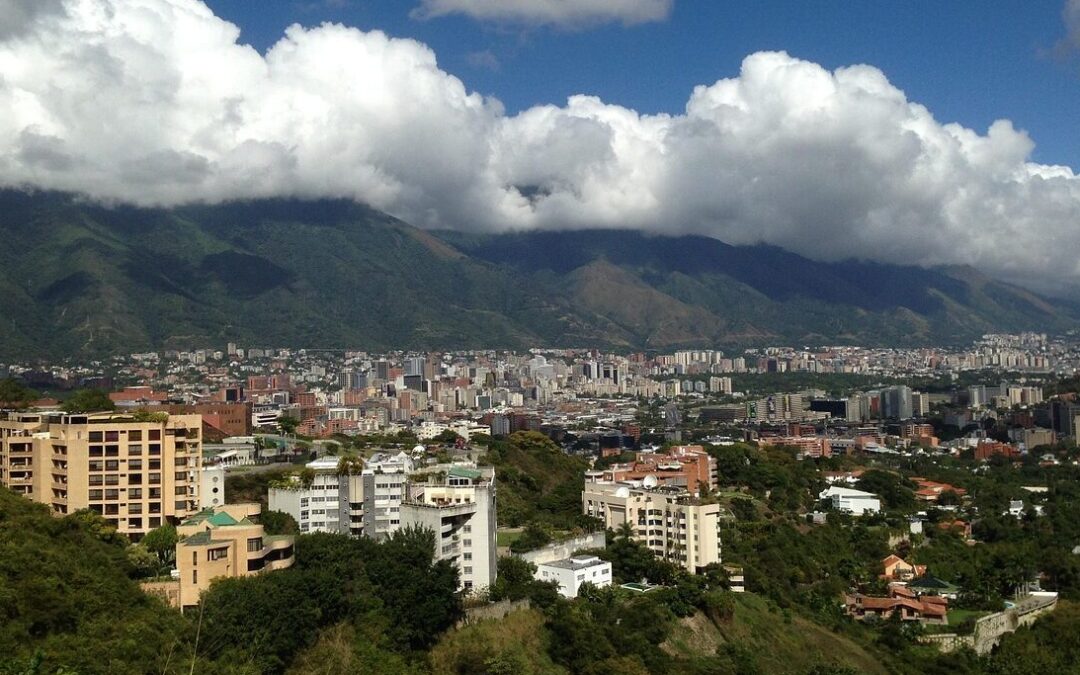
“In the midst of the darkness we are living through today in Venezuela, we remember that we are not alone. Under the roar of the bombs in 1943, Chiara Lubich discovered that there is an Ideal that nothing and no one can destroy: God loves us immensely.”
This is how the “Message of hope and unity” begins. It was shared on the evening of 5th January by the Venezuelan Gen (the young people who adhere to the spirituality of the Focolare Movement), both those who live in Venezuela and those in other parts of the world. They met online to pray and to share how each one is living this critical time for the whole population, never forgetting the choice to love everyone. There was a strong sense of the need to face together what they described as a “sacred” time: “we are not alone because we are supported by the prayer of all those who, from Venezuela and from all over the world, are asking for Peace.”
The message continues:
“Today fear wants to paralyze us, but the response is not hatred, rather unity. Chiara taught us that wheneverything collapses, the only thing that remains is Love. If we become “one”, if we look after one another and place God as our rock, fear loses its power.
Let’s not be afraid. Let’s make this moment an opportunity to:
have full trust that God is our Father and does not abandon us, even when the outlook is difficult;
become “one”: may the suffering of others be our own. Let’s help one another, let’s share the little or the much that we have and break down the walls of indifference;
be builders of peace: let our weapon be solidarity.
If we remain united, Jesus is among us and wherever He is, light ultimately overcomes darkness.