In these past few days, I was watching on television some very young athletes, mostly from Eastern Europe, performing amazing routines of artistic gymnastics. It was really magnificent to see the way they repeatedly performed somersaults and spins and other movements! What perfection! What harmony and grace! They were in perfect command of their bodies, so much so that the most difficult exercises seemed to come naturally. They are the world champions.
Several times, while I was admiring them, I felt an urgent invitation within me (perhaps from the Holy Spirit). It was as if someone were telling me: “You, too, all of you have to become world champions.” Champions in what? Champions in loving God. But do you know how much training these young gymnasts have had to do? Do you know that day after day, for hours and hours, they repeat the same exercises, without ever giving up? You, too, all of you must do the same. When? In the present moment. Always, without ever stopping. And I felt a great desire welling up in my heart to work, moment by moment, so as to become perfect.
Saint Francis de Sales says that no one is so good that through repeated acts of vice they cannot acquire that vice. And so, we may say that no one is so bad that he or she cannot become virtuous through repeated acts of virtue. So, take courage! If we continue to practice, moment by moment, we will become world champions in loving God.
(…)
What is the Word that God has spoken to our Movement? We know it – “unity.” And so, we have to become champions of unity, of unity with God, with his will in each present moment, and of unity with our neighbour, with every neighbour we meet during the day.
So let’s start training, without wasting precious minutes. What awaits us is not the gold medal, but Paradise.
Change can be frightening especially when the past has been filled with deep and rewarding experiences. However, change happens at all different stages and areas of life – study, work and in all political, social and organizational realities. We may find it especially difficult if we have had a role of responsibility that we do not want to lose.
We would like certain experiences to continue forever. But this is not reality. Remaining lost in “true and beautiful experiences” does not make us live life now, because life itself is change and that is the dynamic that makes it fascinating even when it is difficult and painful.
This was well explained by Dame Cicely Saunders, founder of the first modern hospice. She was an extraordinary woman who as a nurse, social worker and physician “invented” a new way of caring for people during the most difficult periods of their lives. According to her, real experience depends on depth rather than duration. “The hours of real relationships seem to pass in a moment, while the boring days seem to last forever. But years later, the genuine times remain forever imprinted in our hearts whereas the meaningless days fade into nothing.” (1)
Sometimes, there is a sense of awe and excitement in realising that these “true and genuine” moments – even when they are filled with pain and darkness – can be transformed into opportunities for peace and light. During times of passage in life, deep relationships with others can give us the strength to face the difficulties, trials, sufferings and stress we encounter on the way. They encourage us to start anew without fear and boldly face what lies ahead. They enable us to reach out to others and embrace the pains of humanity around us: they even enable us to bring the light and peace we know to others who do not experience it.
Dietrich Bonhoeffer said, “Time lost is when we have not loved and lived a fully human life.”(2)
What happens when these true experiences finish and seem to disappear? Does this take away the value of the experience at its very roots? Absolutely not! Memory has a great worth of its own and is the very foundation of human progress. Moreover, as philosopher, George Santayana, says, “Those who do not remember the past are condemned to repeat it.”
People before us have given their lives for our freedom and happiness. We need to return to the experiences that lie at the foundation of our personal lives and the groups to which we belong in order to have the strength to always begin again, even in times of doubt, fragility and weariness.
Cicely Saunders. Templeton Prize 1981
Dietrich Bonhoeffer. “Resistance and Surrender” Letters and Other Writings from Prison
Phot by Sasin Tipchai – Pixabay
——————————–
L’IDEA DEL MESE è attualmente prodotta dal “Centro del Dialogo con persone di convinzioni non religiose” del Movimento dei Focolari. Si tratta di un’iniziativa nata nel 2014 in Uruguay per condividere con gli amici non credenti i valori della Parola di Vita, cioè la frase della Scrittura che i membri del Movimento si impegnano a mettere in atto nella vita quotidiana. Attualmente L’IDEA DEL MESE viene tradotta in 12 lingue e distribuita in più di 25 paesi, con adattamenti del testo alle diverse sensibilità culturali. www. dialogue4unity.focolare.org1
Jesus and his disciples are making their way to Jerusalem. When he announces that it is the place where he will suffer, die and rise again, Peter rebels and expresses a general sense of dismay and incomprehension. The Master then takes him and James and John and he climbs ‘a high mountain’ from where he appears to the three bathed in a new and extraordinary light. Jesus’ face ‘shines like the sun’ and Moses and the prophet Elijah converse with him. The voice of the Father is heard coming from a bright cloud and invites them to listen to Jesus, his beloved Son. When Peter witnesses this extraordinary event, he does not want to leave, and exclaims:
«Lord, it is good for us to be here.».
Jesus invited his closest friends to have an unforgettable experience that they would always be able to remember.
Jesus invited his closest friends to have an unforgettable experience that they would always be able to remember. Perhaps we too have felt wonder and emotion when we were aware of the presence and work of God in our lives. We may have had a sense of joy, peace and light and have wished that such moments would never end. We often have such experiences when we are with other people or thanks to what they do. Indeed, mutual love attracts God’s presence because, as Jesus promised: ‘Where two or three are gathered in my name, there am I in the midst of them’ (Mt 18:20). Sometimes, during these moments of intimacy with him, God makes us see ourselves and understand events as he does. It is as if we see through his eyes.
Such experiences are given to us so we will have the strength to make the effort and face the difficulties and challenges we encounter on our journey through life. They help us be sure that God has looked upon us and called us to be part of salvation history.
In fact, once the disciples have come down from the mountain, they will go together to Jerusalem where crowds of people full of hope await them but they will also meet with pitfalls, opposition, aversion and suffering. There ‘they will be scattered and sent to the ends of the earth to be witnesses that our final dwelling is the Kingdom of God.’(i)
They will be able to start building God’s house among men and women on earth because they have been ‘at home’ with Jesus on the mountain.
«Lord, it is good for us to be here.».
At the end of this mysterious experience, Jesus speaks to the apostles with the words, ‘Arise and do not be afraid’ (Mt. 17:7). He addresses the same words to us. May we face whatever awaits us with the same courage as the disciples had.
This was what Chiara Lubich did. After a holiday period so full light that it was described as ‘the paradise of 1949’ because of extraordinary contemplation of the mysteries of faith and deep awareness of God’s presence in the small community with whom she was resting, she too did not want to return to everyday life. However, she did so with a new impetus because she realised that it was precisely because of that experience of enlightenment that she had to ‘come down from the mountain’ and set to work as an instrument of Jesus in the building of his Kingdom. This meant injecting his love and light into the very situations where it was lacking and even facing hardship and suffering.
«Lord, it is good for us to be here.».
When it seems that darkness is falling around us, let us remember the times when the Lord has enlightened us. If we have already not experienced his nearness to us, let us seek it now. Let us make the effort to ‘go up the mountain’ to meet him in our neighbourhoods, to worship him in our churches, and also to contemplate him in the beauty of nature.
Perché per noi, Lui c’è sempre: basta che camminiamo con Lui e, facendo silenzio, ci mettiamo umilmente in ascolto, come Pietro, Giovanni e Giacomo (2).
Edited by Silvano Malini and the Word of Life team
THE IDEA OF THE MONTHis currently produced by the Focolare Movement’s “Centre for Dialogue with People of Non-religious Beliefs”. It is an initiative that began in 2014 in Uruguay to share the values found in the Word of Lifeis a phrase from Scripture that members of the Movement strive to put into practice in their daily lives. Currently, THE IDEA OF THE MONTH is translated into 12 languages and distributed in more than 25 countries, with adaptations of the text according to different cultural sensitivities.
“The charism of unity is one of these graces for our time, which experiences an epoch change and invokes a simple and radical spiritual and pastoral reform, to restore the Church to the ever-new and current wellspring of Jesus’ Gospel.”[1]
[1]29th January 2020, Message of the Holy Father Francis for the opening of the international conference “A charism at the service of the Church and humanity” on the occasion of the centenary of the birth of the servant of God Chiara Lubich
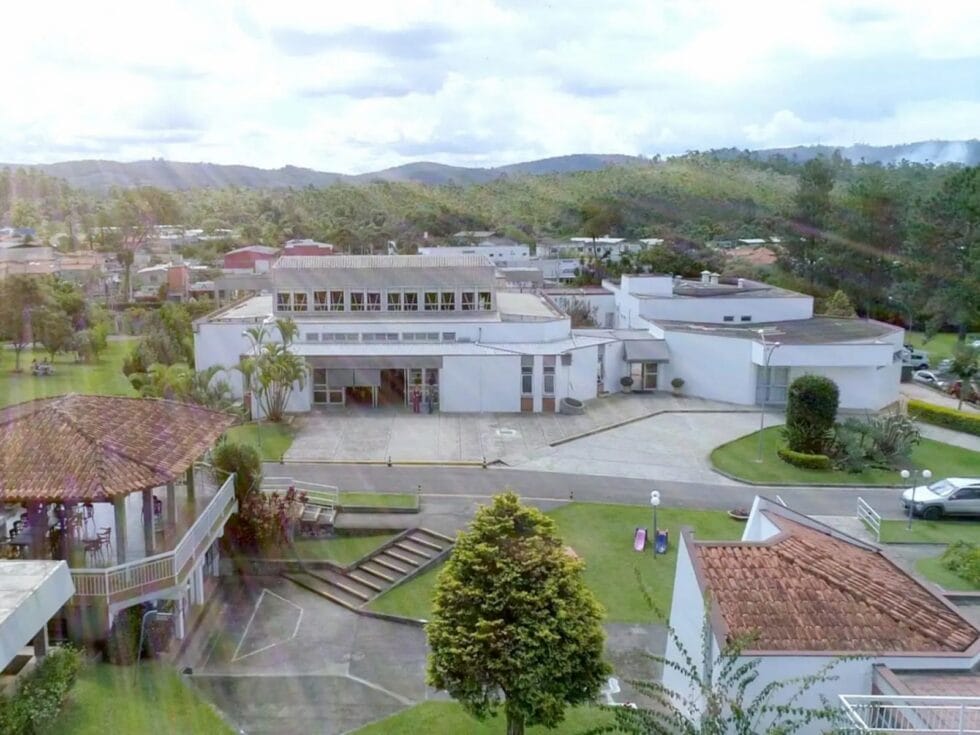
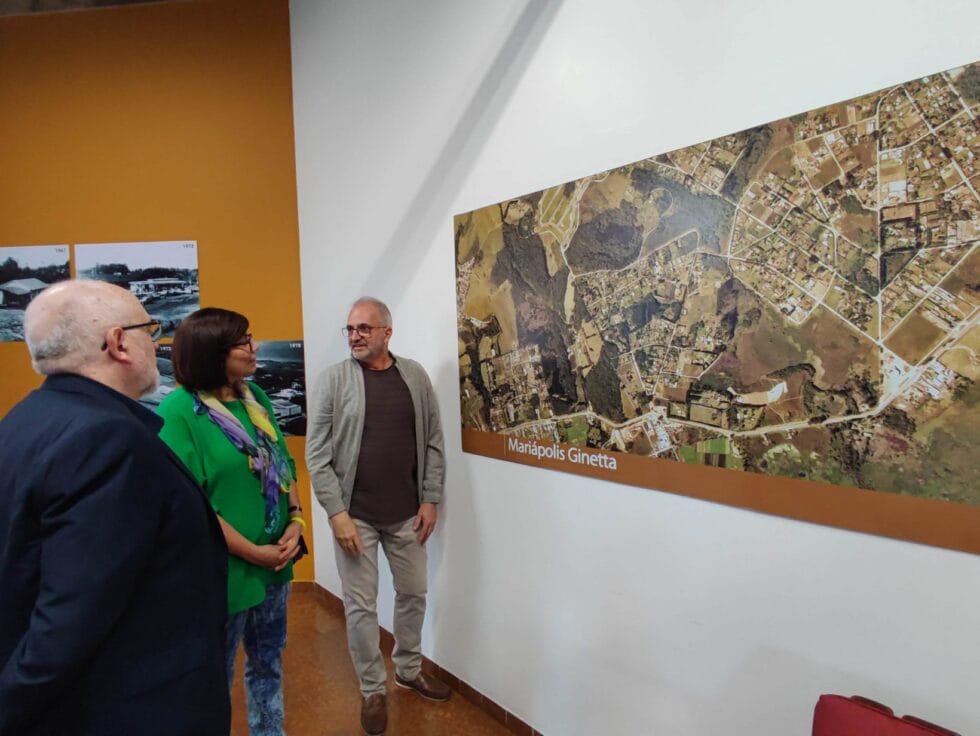
This sentence of Pope Francis appears on the web site of the “Mariapolis Ginetta“, the most developed of the three little towns of the Focolare in Brazil. It highlights the recent years’ focus: a journey towards organizational change to better witness to everyday fraternity and to meet the needs and questions of visitors and the surrounding environment.
This has taken shape through the initiation of an updating processand a more participatory and less centralized management of the different realities within it. Today, each part has its own council or management committee, composed of Mariapolis residents and professionals, working in synergy with the town council. “Co-responsibility” is a key word at Mariapolis Ginetta, alongside a forward-looking approach and the ongoing quest to update the town’s mission: “to welcome, educate, testify, and radiate.”
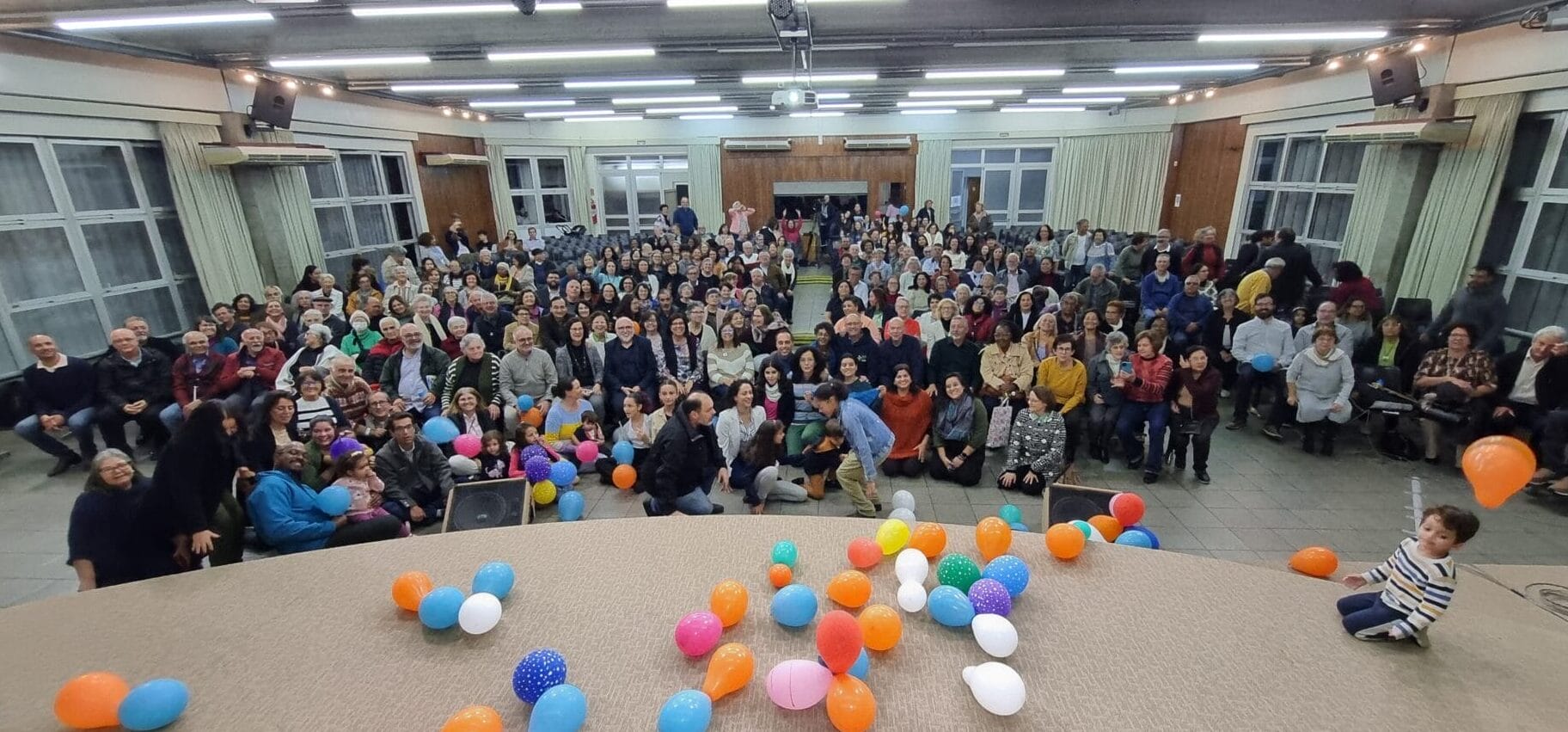
In 2022 Mariapolis Ginetta celebrated its 50th anniversary, having grown from the first group of Focolarine who came to a small house without electricity or gas, today it has a total of 454 inhabitants living on its grounds and nearby.
Over the years, tens of thousands of people have visited including families, priests, religious and occasional visitors. Many young people have spent time there learning to live fraternity in everyday life or to discern their way to follow God in the Focolare Movement.
The Mariapolis Ginetta is part of the municipality of Vargem Grande Paulista that is just an hour from the bustling megalopolis of São Paulo and the change of scene when you arrive is dramatic: greenery, houses, no skyscrapers, parks and playgrounds for children; the atmosphere of a small town, compared to a metropolis is the added value of this place. In recent years, fourteen families have moved from different cities to raise their children. A very young couple with three children say, “We moved from Sao Paulo 6 years ago to this place where people treat one another with love, where there is room to live a balanced, and person centred lifestyle”. This, together with a school for young people that started eight years ago, is signs of a renewed social vitality of the little town.
Co-responsibility and participatory management
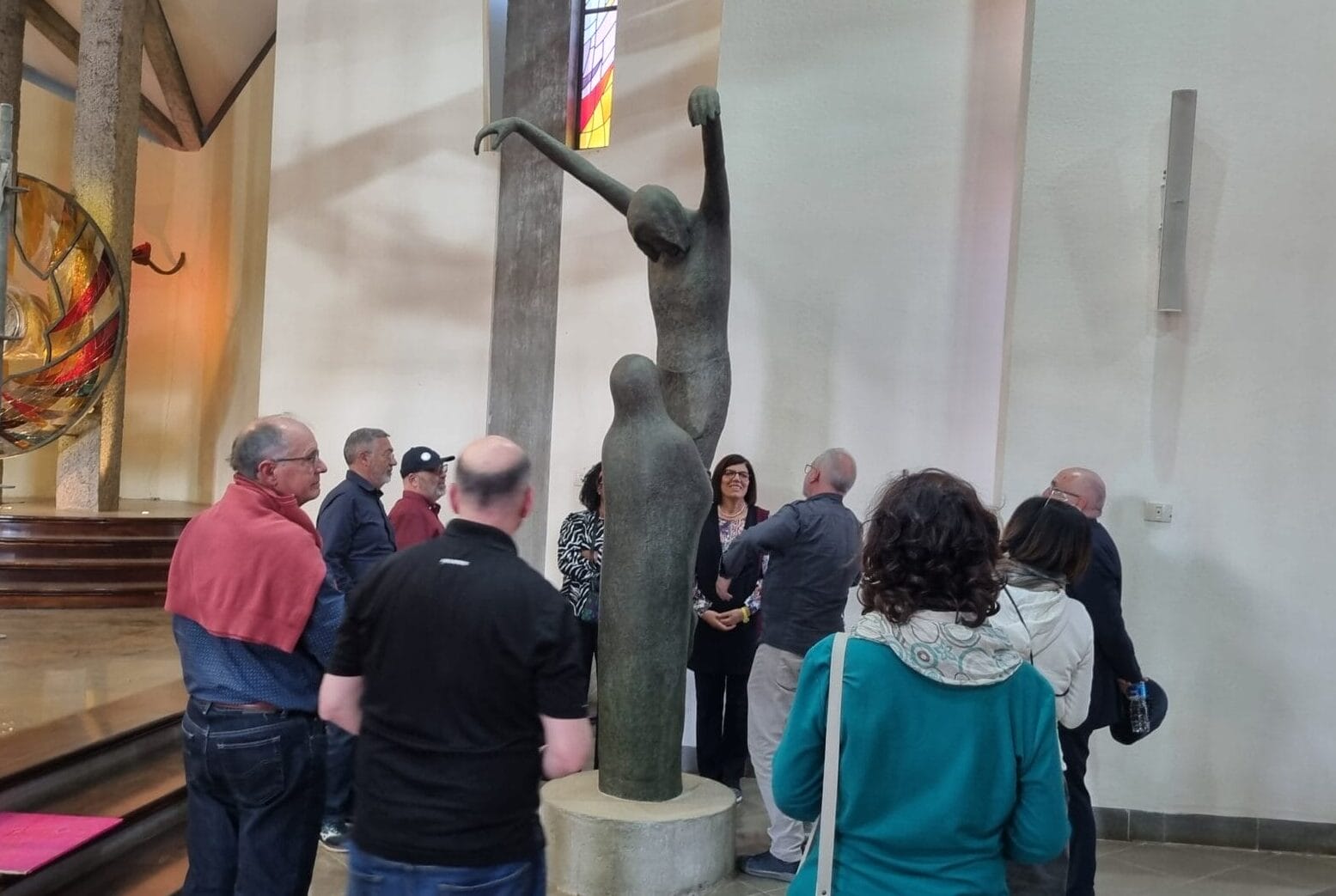
Iris Perguer and Ronaldo Marques, co-managers of Mariapolis Ginetta explain, “Today in the little town there are many of the elements of urban coexistence, there are houses, a town centre represented by the Mariapolis Centre and the church dedicated to “Jesus Eucharist”, the publishing house “Editrice Cidade Nova”, an audio-visual centre, medical clinics, various workshops, the well-known bakery and cafeteria “Espiga Dourada”, social projects at the service of the most disadvantaged population, the “Polo Spartaco”, a commercial and manufacturing area where companies operate according to the principles of the Economy of Communion, the Brazilian section of the “Sophia ALC “University Institute (Latin America and the Caribbean)”.
Margaret Karram commented, “This new mode of participatory management that you are implementingis an extraordinary opportunity to open the little town to others who want to help build it, to learn about and to have an experience of unity. I must say that after attending the Genfest a great hope was born in my heart; I had the strong impression that in these days God has knocked again on the door of Brazil, asking for a response to and support for what began for the young people there. This little town, together with Mariapolis Gloria and Mariapolis Santa Maria, now has a new opportunity and responsibility to understand how to respond; to offer a witness of evangelical life lived in a social community.” ”.
The second generation of the “Polo Spartaco” Business Park
Mariza Preto told us that the Entrepreneurial Hub has also embarked on a courageous path of development and openness.
““In 2016, a debt accumulated over the years due to unpaid bills, clearly indicated that the economic sustainability of the Park was at risk. The entrepreneurs lacked motivation and were worried because there didn’t seem to be anyone interested in starting a new business. These have been difficult years, in which many things have been attempted, including building relationships with local entrepreneurs that has led to the common events and moments of dialogue and encounter. But the turning point came in 2019 when, during an exhibition we organised at the Park, most of the exhibitors were external to our reality. In that period “Espri”, our management company, had many vacant warehouses and a growing financial fragility. It was then that the Council decided to admit companies and entrepreneurs who were not involved in the Economy of Communion but who wanted to act according to its principles. Thus, a “rebirth” took place: every company that wishes to come today undergoes a process of induction about the business life that we live here and adheres to the lines of management of an Economy of Communion company “. ”.
Thirty years after its foundation, Polo Spartaco now consists of 9 buildings housing 10 companies with a total of 90 employees.
Jésus Morán said, “The economy of communion is alive here. In addition to the charismatic aspect, you can see that of manufacturing and a generational turnover of entrepreneurs is underway. All this tells us that we have entered a new phase in which the prophecy of Chiara Lubich is alive. We thank all the pioneers, those who started and believed in it and allowed us to reach this point”. ”.
SMFocolari
It is through the SMF, “Sociedade Movimento dos Focolari” that the little town engages in various social works in the area. SMF promotes community building, access to rights and protection guarantees, especially for children, youth and women in situations of social vulnerability. The three Social Assistance Projects, in which the inhabitants of Mariapolis Ginetta are involved, operate in the field of prevention for young people in vulnerable conditions, providing support networks for their families and welcoming homeless people. This is a drop in the ocean of the need for dignity, work and justice of many people and as Sérgio Previdi, vice president of SMF explained “It is just one piece of the cultural project based on fraternity that we want to develop in our area and in our town”.
Stefania Tanesini
[1]29th January 2020, Message of the Holy Father Francis for the opening of the international conference “A charism at the service of the Church and humanity” on the occasion of the centenary of the birth of the servant of God Chiara Lubich
Video in Italian. Activate subtitles for other languages
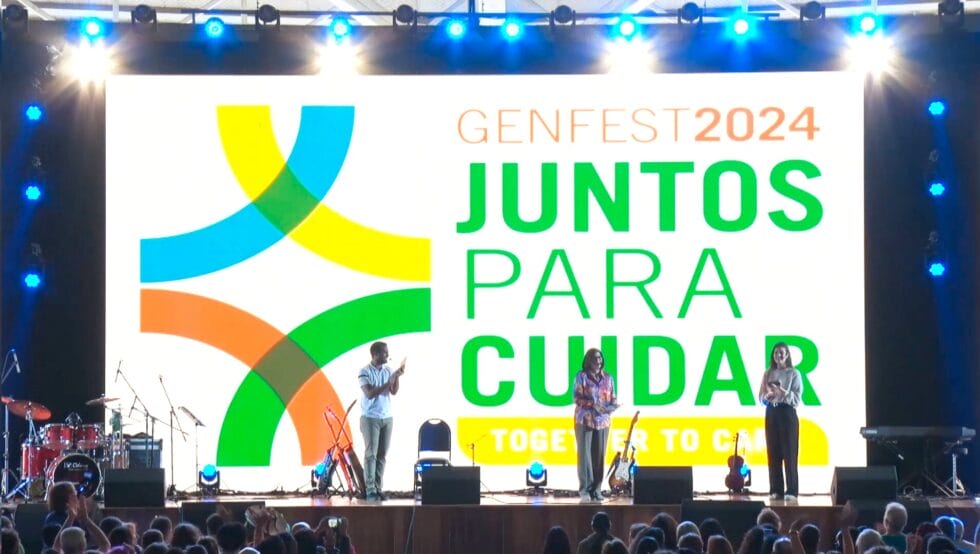
The whole Genfest experience – from ‘Phase 1’ to ‘Phase 3’ – is a tangible witness that you young people believe in, and indeed you are already working, to build a united world. These were days of extraordinary graces for all of us; we put ”care” into practice in various ways: – in Phase 1, through service to the poor, the marginalised, those who suffer most, and we have done this by living reciprocity, the typical way of living communion of the charism of the Focolare Movement; – in Phase 2, in sharing life, experiences and cultural riches; – and then, in Phase 3, we have experienced the extraordinary generativity of communities, which are also an intergenerational space for formation and projects.
Someone told me about the creativity that each community has developed and the interesting workshops in which you have participated (which you just told me about).
“From Genfest I take my community home with me,” one of you said, “it is something practical that continues. A chance to live the Genfest experience on a daily basis’.
You felt that you were protagonists in the construction of these communities, and you want to continue to “generate” ideas and projects. It has given me joy to know that some of you have said that you have rediscovered the meaning of your profession, and that you now want to live it in the name of a united world.
We have walked together during these days, with a style that Pope Francis would call ‘synodal’ and not only among you, young people, but with adults; with people from other movements and communities; with people from different Churches and Religions and people who do not identify with a religious belief. This network greatly enriched the Genfest!
The presence of some bishops who experienced Genfest together with us was also very beautiful.
Now Genfest does not end! But it continues in the United World Communities where we will remain connected both globally and locally
I am sure that when you arrive in your countries and cities, you will understand where you would like to get involved, according to your interests and your studies or your professions: in economics, intercultural dialogue, peace, health, in politics etc.
In these days you have had the experience of living these “communities” in “unity”; a reality that will continue. This will be your training ground in which you will learn and you will train to live fraternity.
When I was your age, I was very struck by an invitation Chiara Lubich made to everyone:
“If we are one, many will be one and the world will one day be able to see unity. And so? Establish cells of unity everywhere” (1) – perhaps Chiara, if she were alive today, would call these cells of unity, “United world communities” – she invited us to concentrate all our efforts in this.
That is why now, I would like to ask you something important: please, please do not miss this unique opportunity, it’s a unique opportunity that we have lived here. God has knocked on the door of the heart of each one of us, and is now calling you all to be protagonists and bearers of unity in the various spheres in which you are engaged.
Yesterday as I was leaving, someone stopped me, one of you who was here in the hall, and said I have to tell you something, please can I tell you something important. She said it was the first time she had participated in a Genfest and she didn’t know the Focolare Movement, and she said: “I want to tell you, you should do much more because this movement isn’t well known, you should do more but not as you have been doing up to now, you need to do more because this Movement, this idea of fraternity, needs to be known by many more young people.” So I asked her if she could help us and she wants to commit herself. But now I hope that all of us are committing ourselves to doing this.
Of course, as you heard before, it will not all be easy and we cannot deceive ourselves that difficulties will not come… but in this Genfest you yourselves have announced: ‘a God who is different, abandoned on the cross, you have said abandoned on the cross, all divine and all human, asking questions without answers’ and for this, a God who is close to all of us. It will be by embracing every suffering, our own or that of others, that we will find the strength to continue on this path.
So let us go forward together with a new hope, convinced more than ever that a path has now been mapped out.
And, something beautiful that the Chinese writer, Yutang Lin, says: “Hope is like a road through a field; there has never been a road, but when many people walk there, the road comes into existence”. I think that in this Genfest, this road has begun to exist, So, let’s walk, and this road will be there in front of us.
So I greet everyone, have a wonderful time to those of you who will be attending the post-Genfest and safe travels to those returning home!
Ciao to everyone.
Margaret Karram
(1) Chiara Lubich, Conversazioni in collegamento telefonico, Città Nuova, 2019, p. 64.