Greetings to everyone on behalf of the Focolare Movement worldwide, as we join in prayer for this digital pilgrimage. Together with all of you, we want to raise our voices to God to ask for an end to human trafficking and to affirm the dignity of every human being:
O Lord, our God,
You love every one of your people. You have given us the gifts of the earth so that we may all live in peace as your children.
Today, a cry is rising up to you from those who have been violated, those who have been exploited in degrading ways, those who are victims of human trafficking.
Help us, Lord, to stand by these sisters and brothers of ours. Multiply the forces of good to encourage their hope in the possibility of a new life.
Make the hearts of the indifferent sensitive. Grant that every citizen, even those who hold the fate of peoples in their hands, may grow in awareness of the need to fight this serious social scourge.
Lord, we ask you that we may be able to spread the global appeal that is being launched today, so that Your will may be done on earth as it is in Heaven.
United, let us continue to pray and act for justice. Thank you to each and every one of you for being part of this chain of hope and of love that is stretching across the world.
Margaret Karram
Video in Italian: activate subtitles and select the desired language.
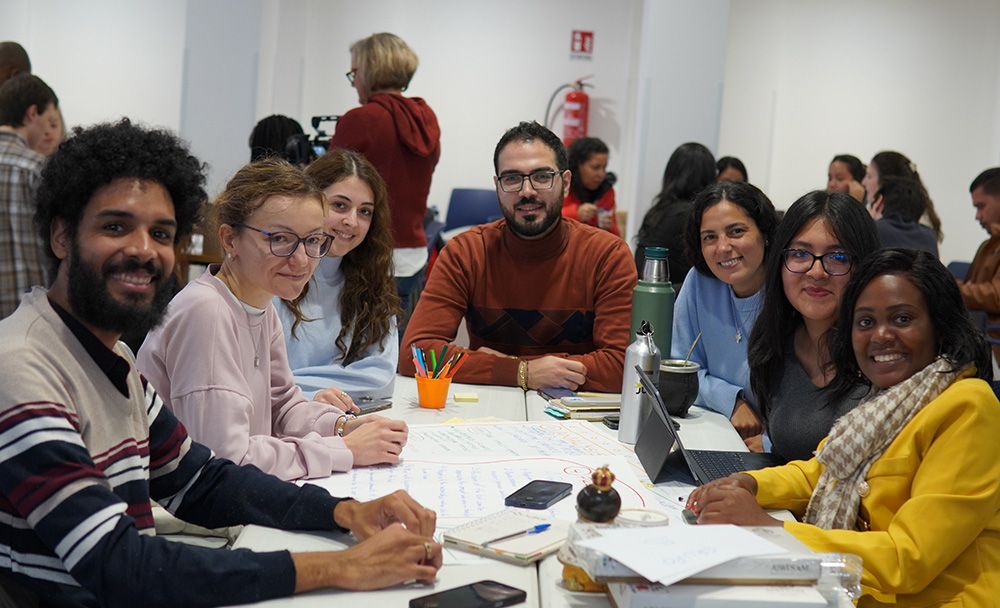
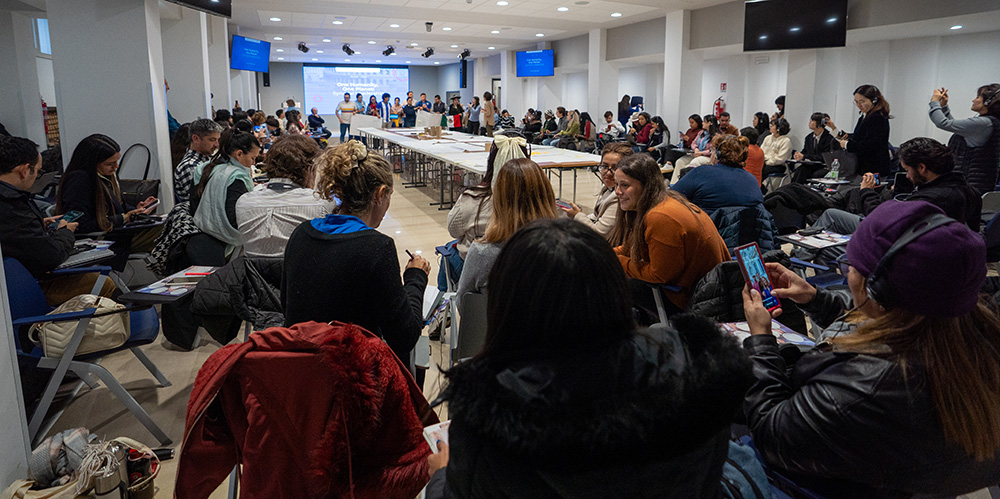
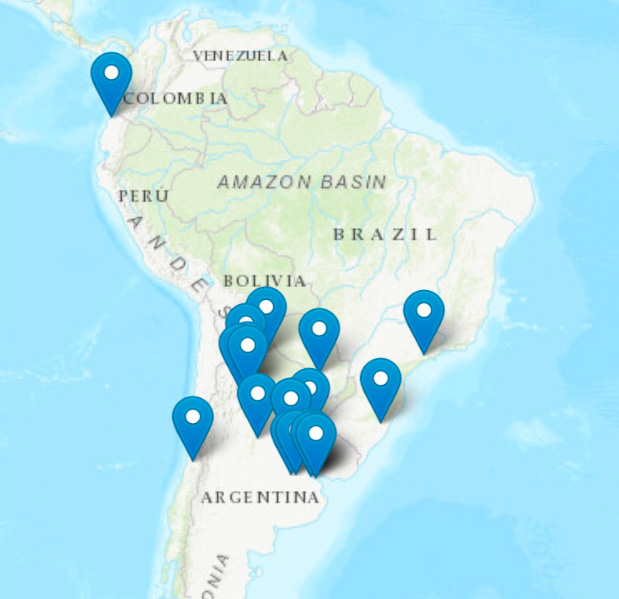
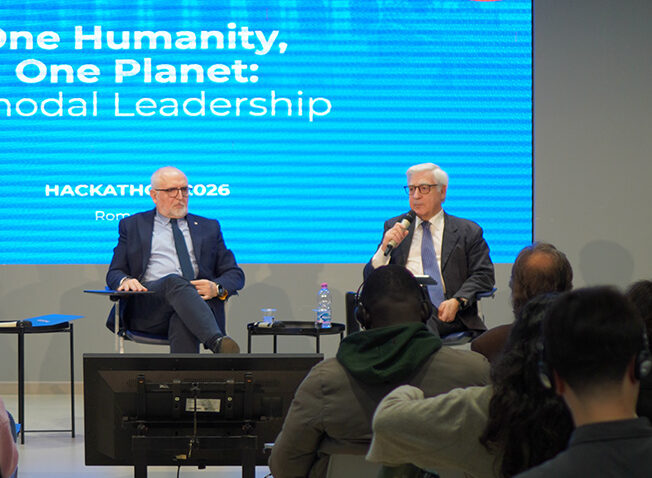
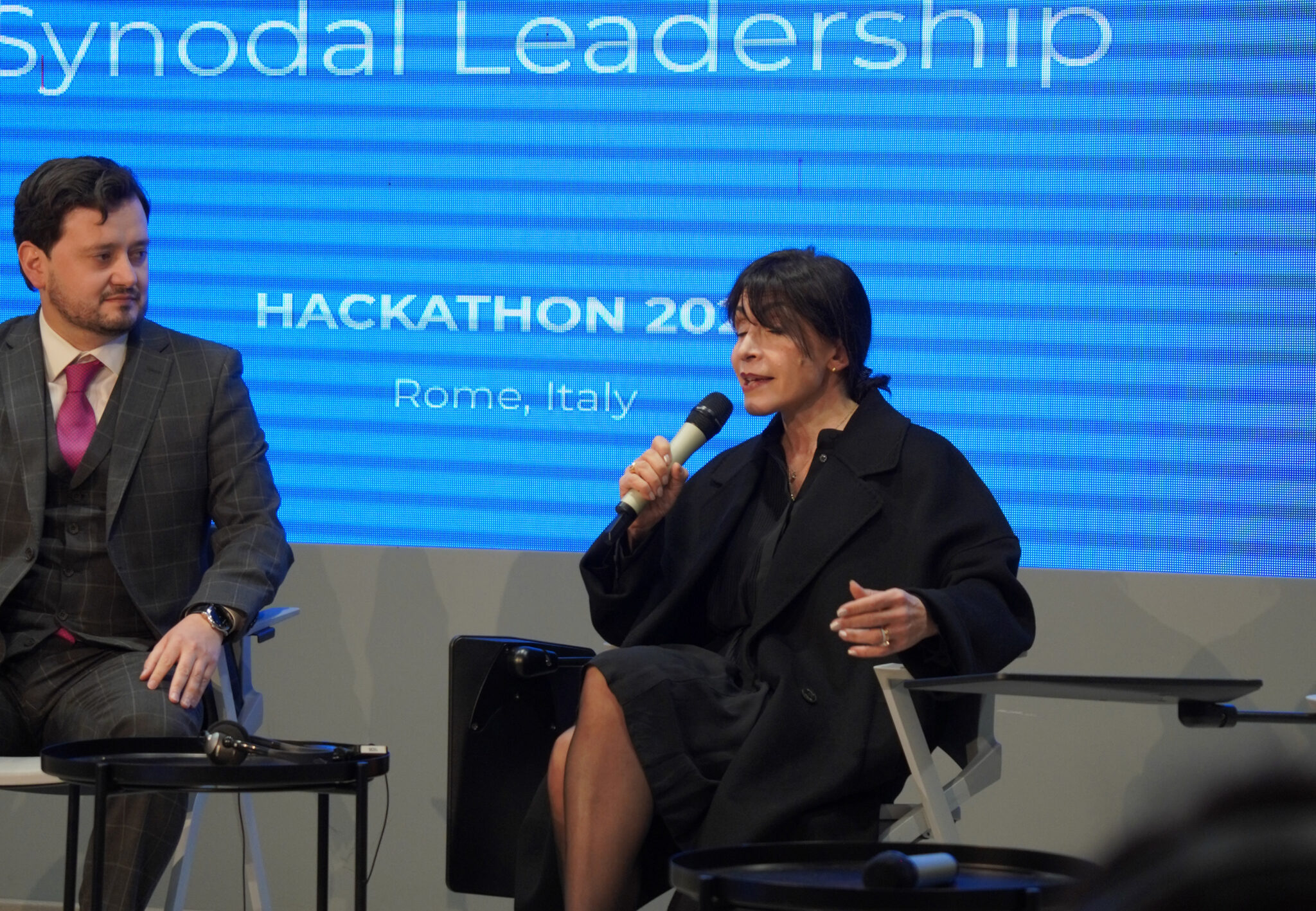
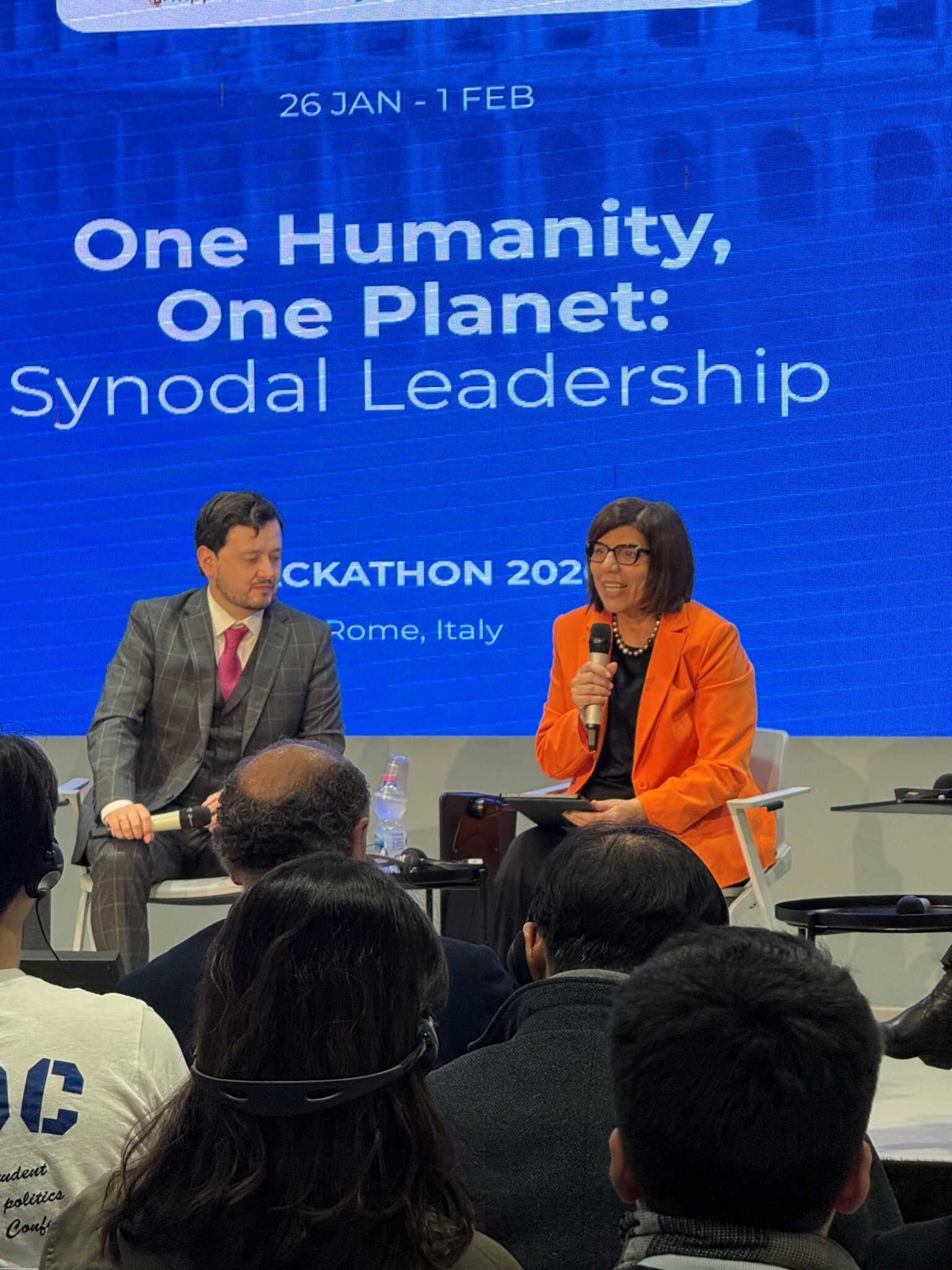
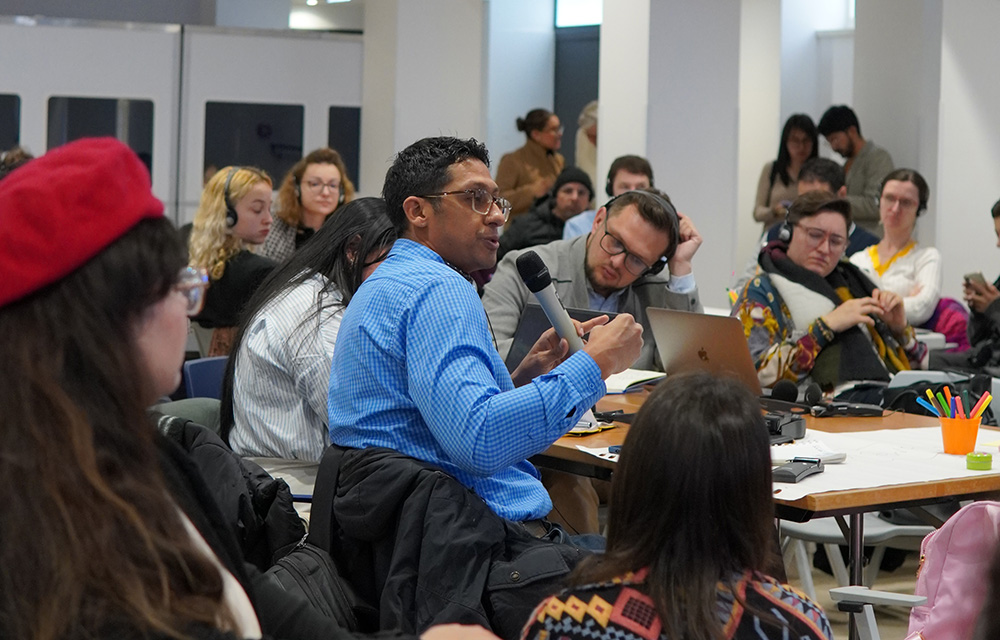
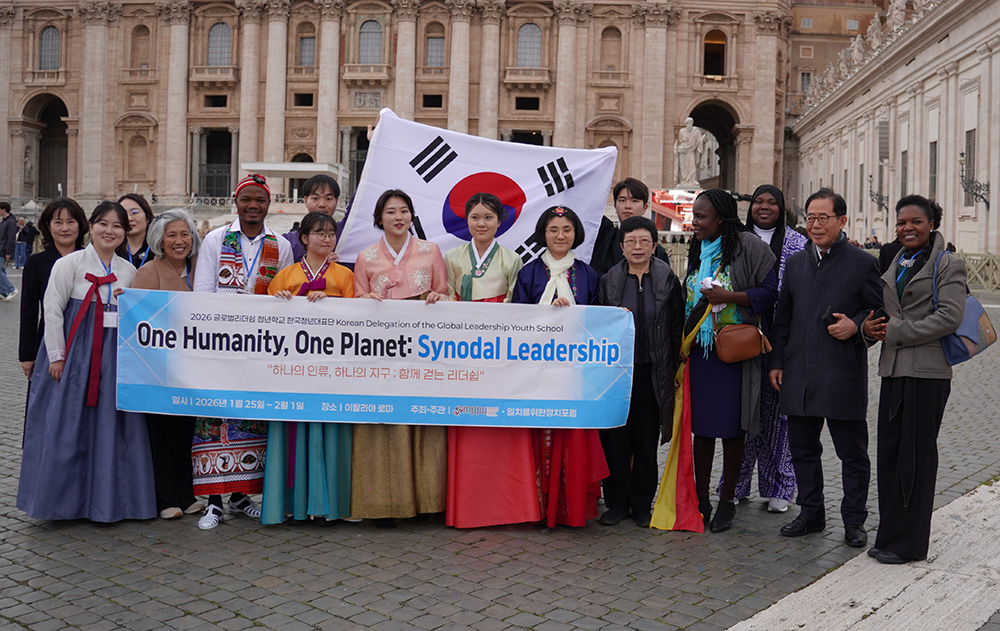
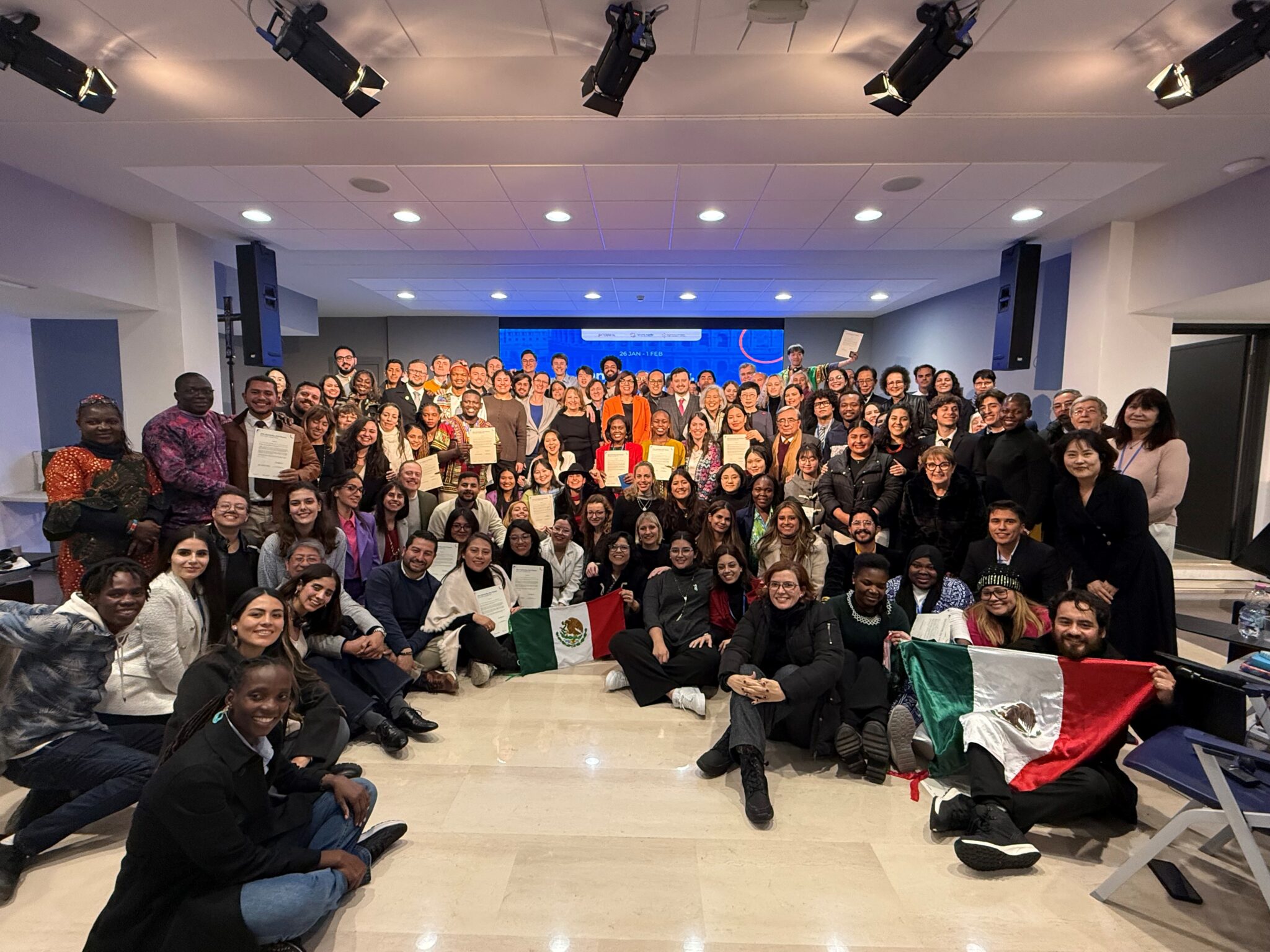
From 26th January to 1st February 2026, Rome hosted 100 young political leaders from 36 countries for the conclusion of the first year of the two-year political formation programme “One Humanity, One Planet: Synodal Leadership”—a challenge to develop a different style of governance, starting from the paradigm of fraternity.
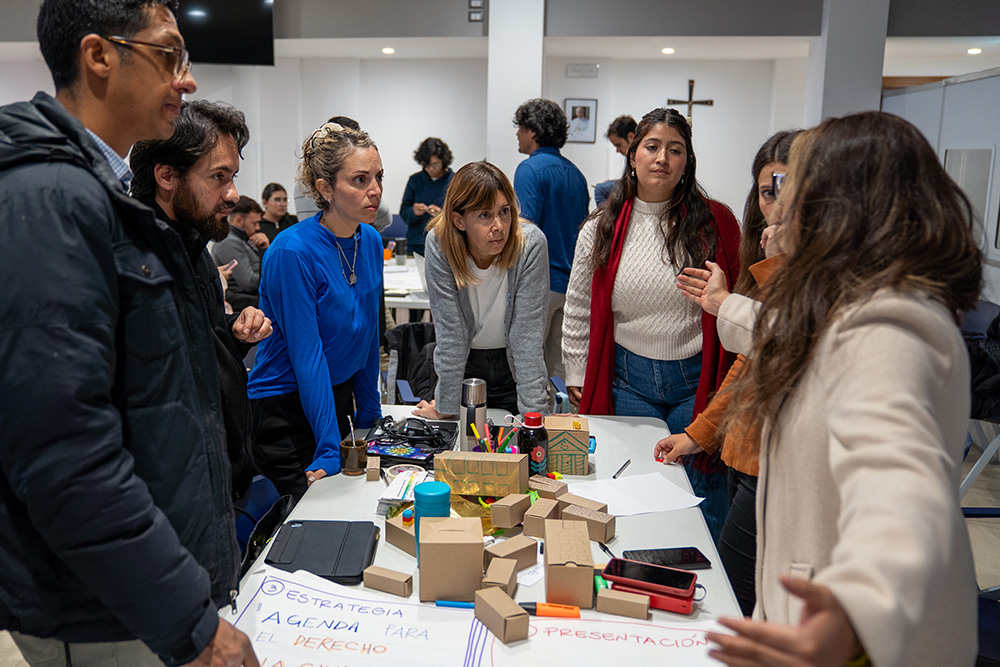
Following an online pathway of work in 16 learning communities, they came together for a political hackathon—literally a creative and collaborative marathon—focused on what most deeply wounds the global social fabric today: corruption, inequality, widespread violence, unethical digital transition, the ecological emergency, and declining civic participation. The programme, promoted by the Political Movement for Unity and the NGO, New Humanity, together with the Pontifical Commission for Latin America, aims to restore an active role in decision-making processes, from the local to the global level, to young people. Giovanna Maroccolo – Italy (Italian)
Watch the video with interviews with young people from different countries. Turn on subtitles and then choose the language you want.
The Economy of Communion (EoC) will celebrate its 35th anniversary in 2026 and has already begun inviting its entire global network to a distinctive celebration, to be held from 25th-30th May in Latin America.With the theme “A path of regeneration – 35 years of Economy of Communion”, the event will bring together participants from many countries for a unique experience of encounter, celebration and commitment.
Unlike traditional formats, the event will be structured in two complementary phases, with the aim of offering a practical experience of the culture of communion, a hallmark of the EoC since its foundation in 1991.
First phase: encounter with local experiences (25th-27th May)
In the first phase of the event, about 20 Latin American local initiatives will welcome small groups of participants.
These groups will have the opportunity to immerse themselves in communities rich in identity and traditional knowledge that are experiencing the consequences of the current economic system. These initiatives seek to put the culture of the Economy of Communion into practice, with the aim of transforming the local socio-economic context through human development and entrepreneurship.
“Our proposal is that each person becomes part of the daily life of these local initiatives and by looking at the world through this encounter, they experience the potential for regeneration and transformation that arises through communion and reciprocity,” said Isaías Hernando, coordinator of the International Commission of the Economy of Communion.
Participants should arrive in their chosen communities on 24th May.
Seconda fase: celebrazione e impegno a Buenos Aires (29 e 30 maggio)
Second phase: celebration and commitment in Buenos Aires (29th-30th May)
The programme, which will be announced shortly, will have a workshop-style format, encouraging active participation and intensive exchange. Hernando added, “The objective of this day and a half will be not only to celebrate the first 35 years of the EoC, but also to commit ourselves to put in place the next steps to respond more effectively to the challenges of the current economic system and to move ever closer to fulfilling the vocation of the Economy of Communion.”
How to participate
The global Economy of Communion has launched a website with all the information about the event, where it is already possible to register: https://www.edc-online.org/it/argentina-2026
Participation is open to everyone currently in the global EoC network, members of projects, teachers, students, researchers, entrepreneurs, social entrepreneurs, members of organisations, movements and networks with similar aims, as well as anyone interested in the proposal.
“I encourage you to work together in studying forms of participation that allow all citizens … Upon this foundation, it becomes possible to build that universal fraternity which is already taking shape among you young people, a sign of a new era.”
With these words, Pope Leo did not simply encourage the one hundred young political leaders gathered in Rome: he “recognized” their mission. He saw in them what traditional politics too often struggles to see: that the future will be born from inclusive processes, not form confrontations; from living communities, not from rigid structures; from a brotherhood that is not a naive sentiment but a concrete political category.
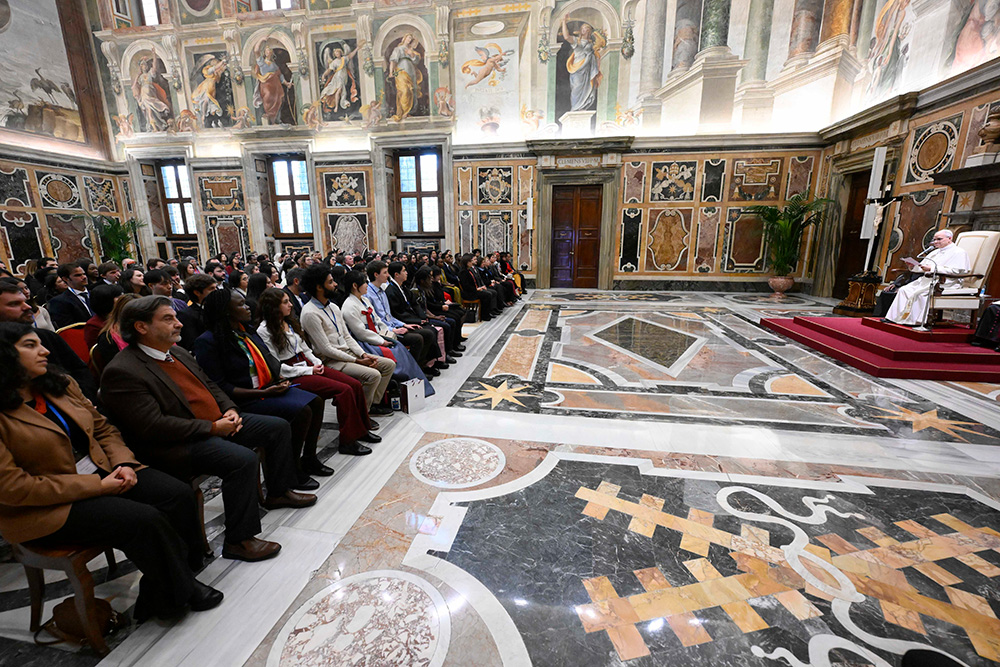
The one hundred from 36 countries participated in an audience with the Pope on 31st January. They were in Rome for the final week of the first year of the multi-year political school “One Humanity, One Planet”. Seven days that confirmed for them that fraternity is not an ideal: it is already a method, a lifestyle and a daily practice. They came from an online pathway of work in 16 learning communities, they came together for a political hackathon – literally a creative and collaborative marathon – dedicated to what most deeply wounds the global social fabric today: corruption, inequalities, widespread violence, unethical digital transition, the ecological emergency and declining civic participation. The programme, promoted by the Politics for Unity Movement and the NGO New Humanity with the Pontifical Commission for Latin America, aims to give young people an active role in decision-making processes, from local to global.
The Holy Father offered a vision that was as demanding as it was liberating. He asked the young people to look at the world through the lens of listening and collaboration between different cultures and faiths; to seek peace not as an abstract concept, but as a daily choice in the places where they live, study and work; to build policies capable of involving all citizens, men and women, within the institutions. He recalled that peace is a gift, a covenant and a promise all at once and that no society can call itself just if it continues to exclude the weak, ignore the poor and remain indifferent to refugees and victims of violence.
Jesús Morán – Pasquale FerraraEmilce CudaJavier Baquero – Margaret Karram
When she met the young people, the President of the Focolare, Margaret Karram spoke about a new political culture, based on fraternity, in the wake of what Chiara Lubich, founder of the Focolare, had taught. She encouraged them to “live” a form of leadership that places the collective “We” at the centre, that generates trust and seeks convergence in diversity. Not a method for a few, but an approach that can be exported everywhere: in institutions, in parties, in social movements and in civil society.
The testimonies of the participants powerfully confirmed this. Cristian, from Argentina, said: “It is the most important experience of universal fraternity in my life… every person, with their language, their dances and their charism, created the symphony of global harmony”. For Joanna, from Poland, resident in Italy, the experience was “a stimulus to concrete commitment”, fuelled by workshops, good practices and meetings with Italian and Korean parliamentarians. Zé Gustavo, from Brazil, spoke of an “intense and challenging experience”, capable of rekindling an adult, clear-eyed hope, born not from naivety but from the scars of lived politics. And Uziel, from Mexico, summed everything up in a simple and true phrase: “This is true globality”.
Now the school enters its second phase, involving 600 young people from the five continents to continue sharing visions, methods and actions with real impact.
For a week, Rome was a living laboratory of what politics could become again: a generative place; a training ground for fraternity; and a space where differences cease to be walls but become the raw material of the future. It was a concrete and credible testimony that another politics is not only possible, but has already begun.
Organized by the Irish Council of Churches (ICC) and the Irish Inter-Church Meeting, the significance of the gathering was underlined by the presence of leaders from the Churches in Ireland, Archbishop Eamon Martin (Roman Catholic Archbishop of Armagh), Archbishop John McDowell (Church of Ireland Archbishop of Armagh), Rev. Dr. John Kirkpatrick (Presbyterian Church in Ireland), Rev. Dr. Heather Morris (General Secretary of the Methodist Church in Ireland) and Bishop Sarah Groves (Moravian Church and President of the ICC).
Prompted specifically by the ecological crisis facing Lough Neagh, the conference opened up a vital conversation about water, justice, and our collective responsibility for the land we share.
A Vision of Integral Ecology
For representatives of the Focolare Movement in Ireland, the conference resonated deeply with the direction set by the Focolare General Assembly 2021. That Assembly called the global Movement to a “conversion to integral ecology“, a change of mindset and lifestyle that recognises the deep interconnection between human relationships, social justice and the natural world.
This vision was clearly reflected in the Newry gathering, which bridged different Christian traditions and urban-rural contexts. Fran Maher, a member of the Focolare’s Laudato Si’ group in Balbriggan, emphasized this aspect: “I was impressed with all the speakers, especially Gail Heffner when she spoke about repairing relationships.” Hilda Killian from the Dublin Archdiocese added: “It was a wonderful opportunity to meet and share with other churches. I had conversations that confirmed to me that we are more united than we think”—a timely reflection on the eve of the Week of Prayer for Christian Unity.
Expert Perspectives and Moral Urgency
Keynote speakers addressed the ecological crisis through multiple lenses: Minister Andrew Muir, MLA: Political and legislative responsibility; Hilary Marlow: Biblical and theological foundations; Jim McAdam: Scientific and agricultural research; Gail Heffner: Educational and community reconciliation.
Their contributions underlined a shared conviction: ecological damage is inseparable from social injustice. Meaningful change requires both personal conversion and structural transformation. Archbishops Martin and McDowell offered complementary reflections, emphasizing the need to listen to scientific evidence while cooperating across civic and political leadership.
Voices from the Ground
A distinctive strength of the conference was the participation of local groups already engaged in practical action. From restoring habitats and protecting waterways to environmental education, parishes and schools shared experiences rooted in their specific locales.
Participants were reminded that faith calls us to be “doers, not merely hearers.” This was made tangible through personal and communal pledges: Planting native trees and protecting pollinators; conserving water and reducing consumption; working with farmers as stewards of the land; strengthening parish-based prayer and building bridges across communities.
From Castel Gandolfo to Newry
The Newry conference stands in continuity with the Raising Hope Conference held in Castel Gandolfo last October. That international gathering emphasized hope grounded in concrete action and unity, themes that echoed strongly in the Canal Court Hotel. Both events affirm that integral ecology is not an optional extra, but a core dimension of living the charism of unity today.
Looking Ahead: Living Water
Looking to the future, participants were encouraged to support initiatives addressing the roots of the crisis, including advocacy for a Just Transition and engagement with the Fossil Fuel Non-Proliferation Treaty.
There was also a strong call to prepare for the Season of Creation 2026, which will focus on the theme “Living Water.” For the Focolare community in Ireland, this offers a concrete opportunity to deepen education and action around water as a source of life, communion and justice.
Archbishop Eamon Martin recalled the Irish saying: Ní neart go cur le chéile—there is no strength without unity. The Newry conference served as a powerful reminder that when we walk together, listening, learning and acting, even small steps can become a living current of hope.