I am 62 years old, I am Irish and I have lived in Taiwan for many years. I have had pulmonary fibrosis for a long time, so when I began to feel more tired, I thought it was just a worsening of this condition. I went to the doctor not very worried. To my surprise, I was told directly and without any preparation: stage four cancer, which has already spread to the other lung and perhaps elsewhere.
My first reaction was to call my wife. She and my daughter, who lives with us in Taiwan, remained on the phone in silence. Our other daughter is in Ireland. At that moment I was not afraid for myself: my thoughts went immediately to them, to the burden that this news would place on their shoulders. At the same time I felt a deep regret for all the times I hadn’t loved fully, for the wounds I had left along the way. It seemed too late to make amends.
One day a priest came to celebrate Mass in our home. I have known the Focolare Movement since I was eleven years old, and I have always lived the offering of myself to God during the consecration. But that time I understood something new: I could place in the chalice, not only myself, but also all the people I had hurt. I could entrust them to Jesus so that He might heal what I could no longer repair. It was an immense relief. Since then, a deep serenity has accompanied me.
Eight years ago my wife had breast cancer. We have already passed through darkness. Then, as now, we chose to trust in the Father’s love. When I pray the “Our Father” and say “Thy will be done,” I feel that my whole life is already held in heaven. The future does not belong to me: it is in God’s hands. All I have to do is say yes.
I often think of Loppiano (Italy) where as a young man I felt a very strong call to follow Jesus. Over time I understood that it was an invitation to recognize him above all in suffering, in that face that the charism refers to as ” Jesus Forsaken “. Even when my wife was ill, before the cross I understood that it is not enough to remain below and look on: we must ascend with Him, enter into His abandonment and let ourselves be carried to the Father. Our home is there.
Before the diagnosis I had a very full life: I taught at the university, I accompanied students and young people, I supported families and I participated in the life of the Movement. Now my world has shrunk. I’m on leave of absence and in order to avoid infections, I go out little. But something surprising is happening: people seek me out. They write to me from every continent and pray for me. Some young people in Taiwan have created a group to pray together every week. I thought I had sown very little; now I see that love returns multiplied.
When I speak openly about my illness, many find the courage to open up about their own wounds. My weakness becomes a space for communion. It is as if, Christ, lifted up on the cross, draws hearts to himself. This illness, which humanly is a death sentence, turns out to be an opportunity to welcome others.
There are sufferings that can be shared with everyone and others that can only be expressed to God, in a deep dialogue with Him. I know moments will come when I won’t even have the strength to offer my pain. So I prepare myself in this way: by repeating my yes. “Not my will, but yours be done” (Lk. 22:42). I know I can’t face what lies ahead alone. But I also know I won’t be alone.
In these months I have understood that love is not the sole remit of those who know Jesus or call themselves Christians. In the hospital, the doctors and nurses who treat me do not share my faith, yet they love with a tenderness and attentiveness that move me. I have seen in their daily gestures – an extra phone call, a patient explanation, a discreet presence, that love is greater than labels. When I look at suffering through the eyes of love, it no longer remains trapped in fear: it is transformed, it becomes a space of hope, something mysteriously positive. It is as if every act of care, even if unconscious, is already a pathway to God, because wherever there is love, it leads to Him.
And within this immense communion – made up of my family, friends, students, young people and doctors who love perhaps without fully knowing why – I experience that everything is already held within a design of goodness. I don’t have to control it or fully understand it: I can simply dwell within it, day by day, with gratitude.
In 2025, the Focolare Movement took additional steps to make its commitment to safeguarding both structural and verifiable, with particular attention to children and vulnerable adults. This was carried out in three areas:
consolidation of regulations
organisational strengthening
educational and cultural growth
Regarding regulations, the Movement has drawn up and approved the Safeguarding Policy of the Focolare Movement, which came into effect on the 1st of January 2026. The Policy brings together values, responsibilities and practices, connects procedures and guidelines, defines codes of conduct, criteria for safe spaces with a clear focus on people who have suffered abuse, providing for listening, accompaniment and – in specific cases – support and measures for compensation.
On an organisational level, on the 2nd of September 2025, the Safeguarding Office was established, with the task of coordinating safeguarding activities, monitoring commitments and deadlines, supervising official communication and supporting local safeguarding officers. It is supported by the Advisory and Action Board: a body composed of experts in the fields of formation, communication, law, and accompaniment of people who have suffered abuse. Its task is to assess the compliance of the actions undertaken according to the founding values of the Focolare Movement, to propose guidelines and strategic plans, and to promote collaboration with external experts and networks, ensuring constant updates on current regulations and best practices in the field of safeguarding.
View and download the 2025 Report by clicking on the image
In dialogue with the Catholic Church, in the two-year period 2024-2025, a collaboration with the Pontifical Commission for the Protection of Minors (PCPM) was developed. The Commission examined the Procedures for handling cases of abuse, making several observations; it also requested information to include an analysis of the Movement’s policies in its own2024 Annual Report. The PCPM’s recommendations have led to a process of implementation that has already been partially completed (including the publication of the Internal Regulations of the Independent Central Commissionand the reporting of dedicated resources) and, for the remaining part, is in the process of being defined or developed (additions to be made to the General Statutes of the Focolare Movement, IT tools and institutional channels for data confidentiality).
The commitment to integral formation in safeguarding was outlined in an initial document summarising the courses and initiatives planned for the two-year period 2024–2025. The information shows the work being done to make formation more widespread, strengthen local commissions and coordinators, and at the same time highlights some critical issues that need to be addressed: continuity of formation, intercultural adaptation of materials, and improved flow of communication.
All of these steps – Policy, Safeguarding Office, collaboration with the PCPM, formation and transparency in reporting – express the desire to continue with determination on the path of prevention, shared responsibility and listening to those who have suffered an abuse, in the belief that safeguarding is an integral part of the Movement’s mission and a service to the common good.
In this perspective, the words that the Pope addressed to the participants at
the meeting ‘Building communities that safeguard dignity’ also resonate for
the Focolare Movement as a guideline to follow:
“I therefore appreciate and encourage your intention to share experiences and learning processes on how to prevent all forms of abuse and how to give an account, with truth and humility, of the steps taken to protect minors. I urge you to continue this commitment so that communities may increasingly become examples of trust and dialogue, where every person is respected, listened to, and valued.
Where justice is lived with mercy, wounds are transformed into openings for grace.”[1]
Stefania Tanesini
Interview with Bishop Alí Herrera, Secretary of the Pontifical Commission for the Protection of Minors of the Catholic Church
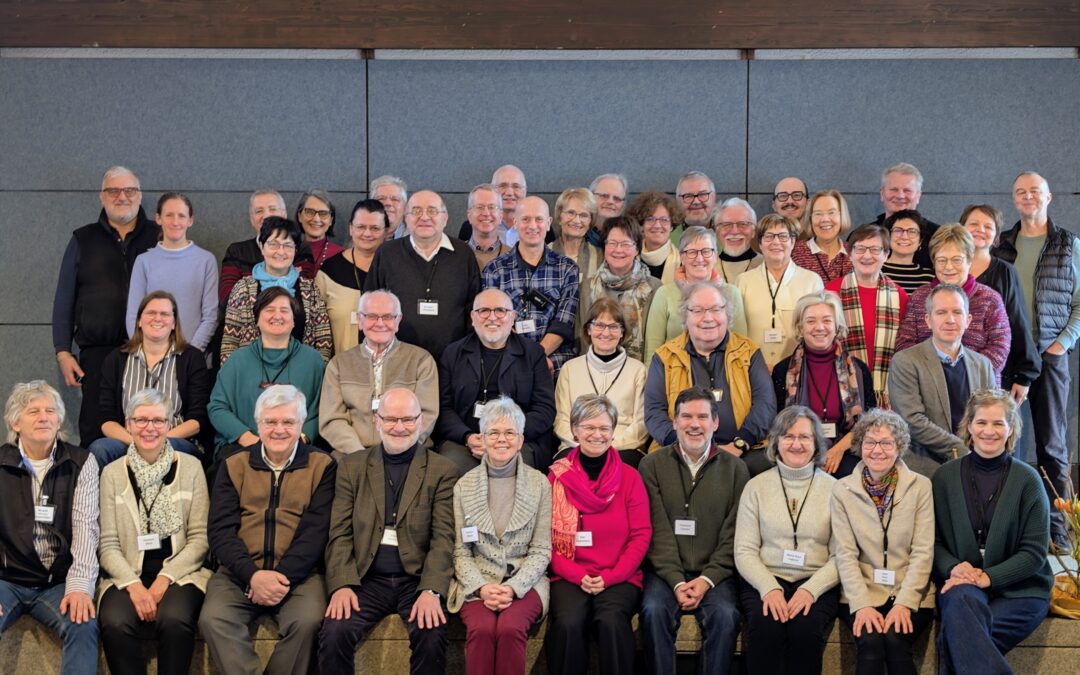
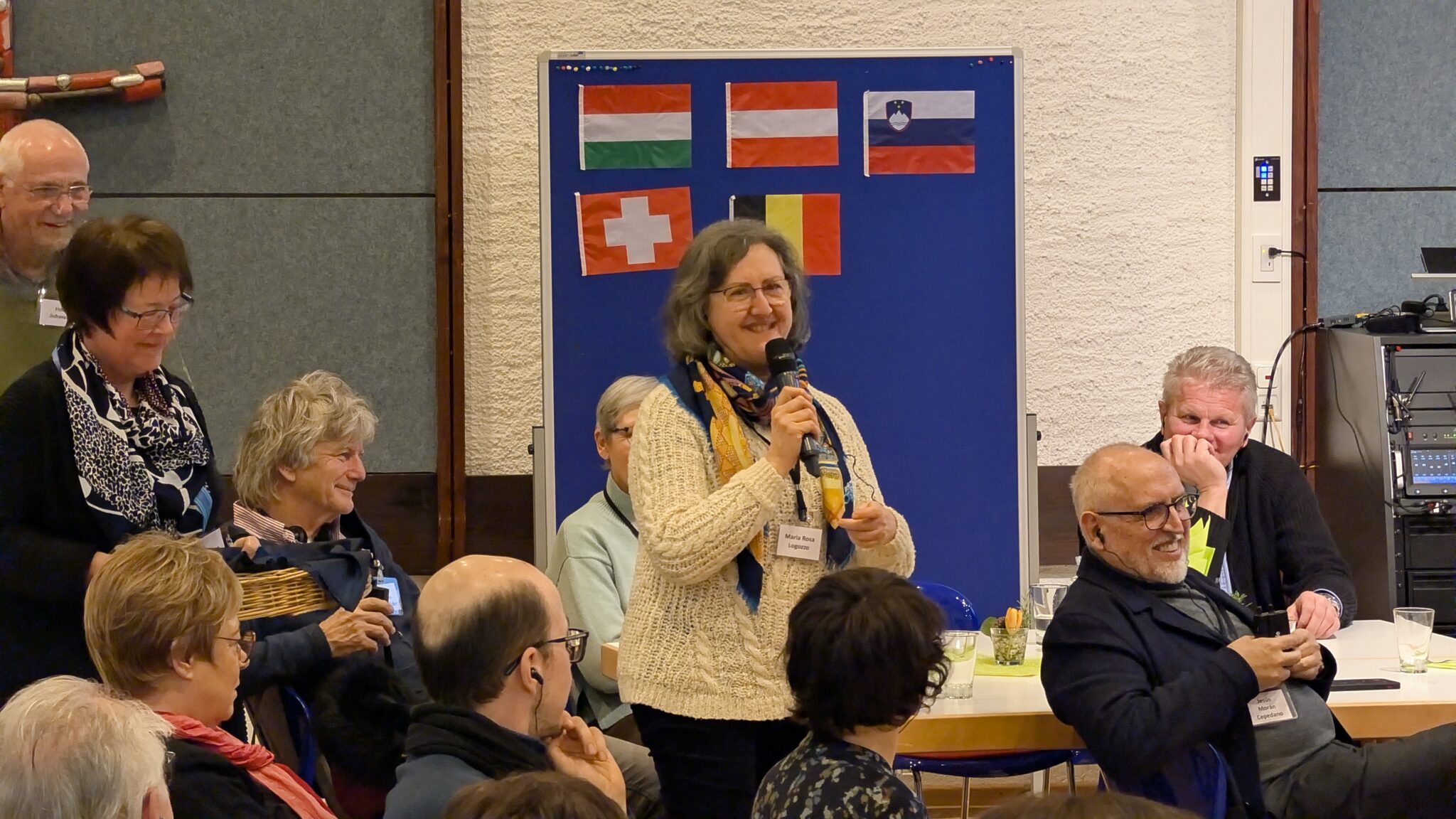
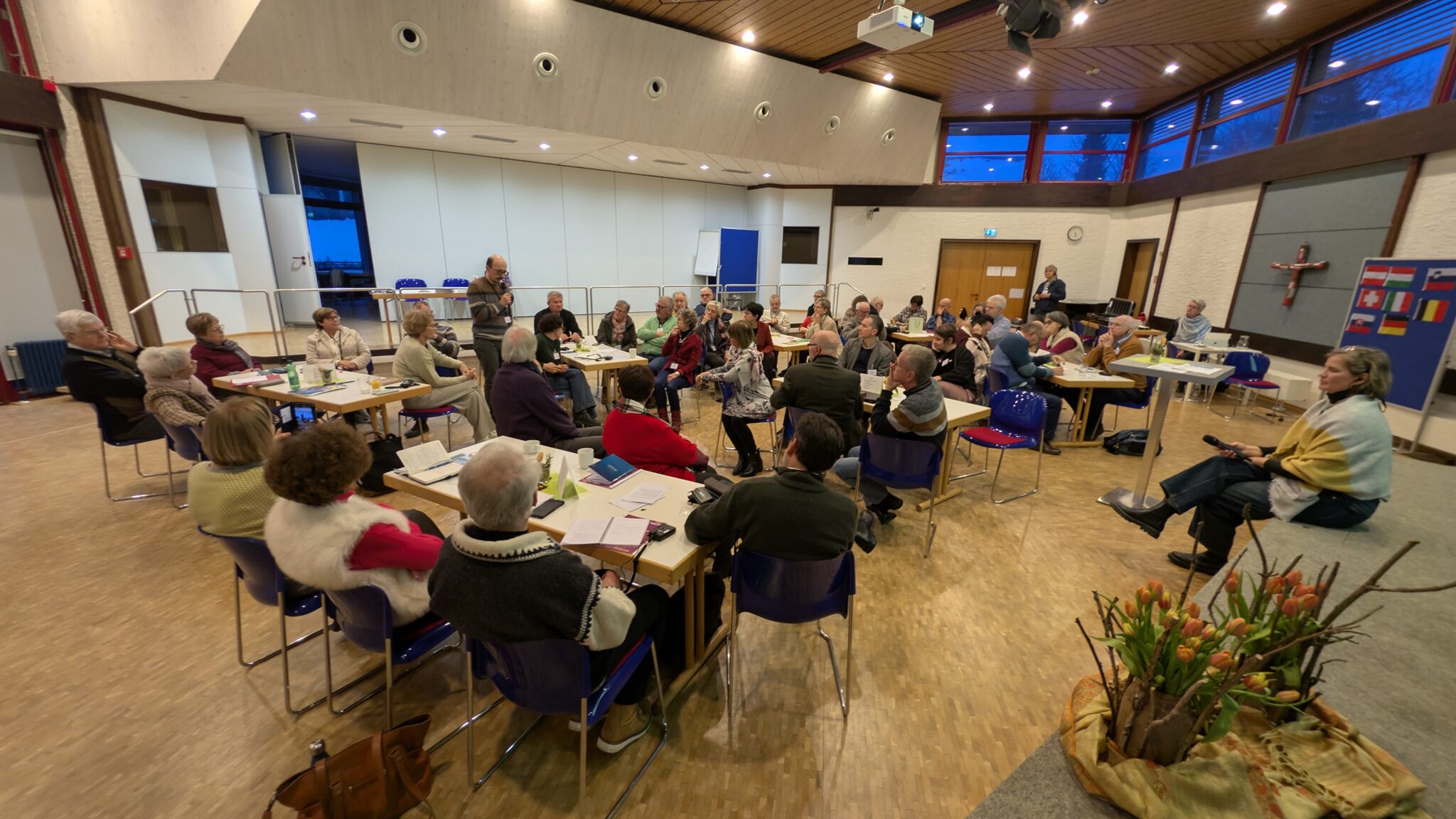
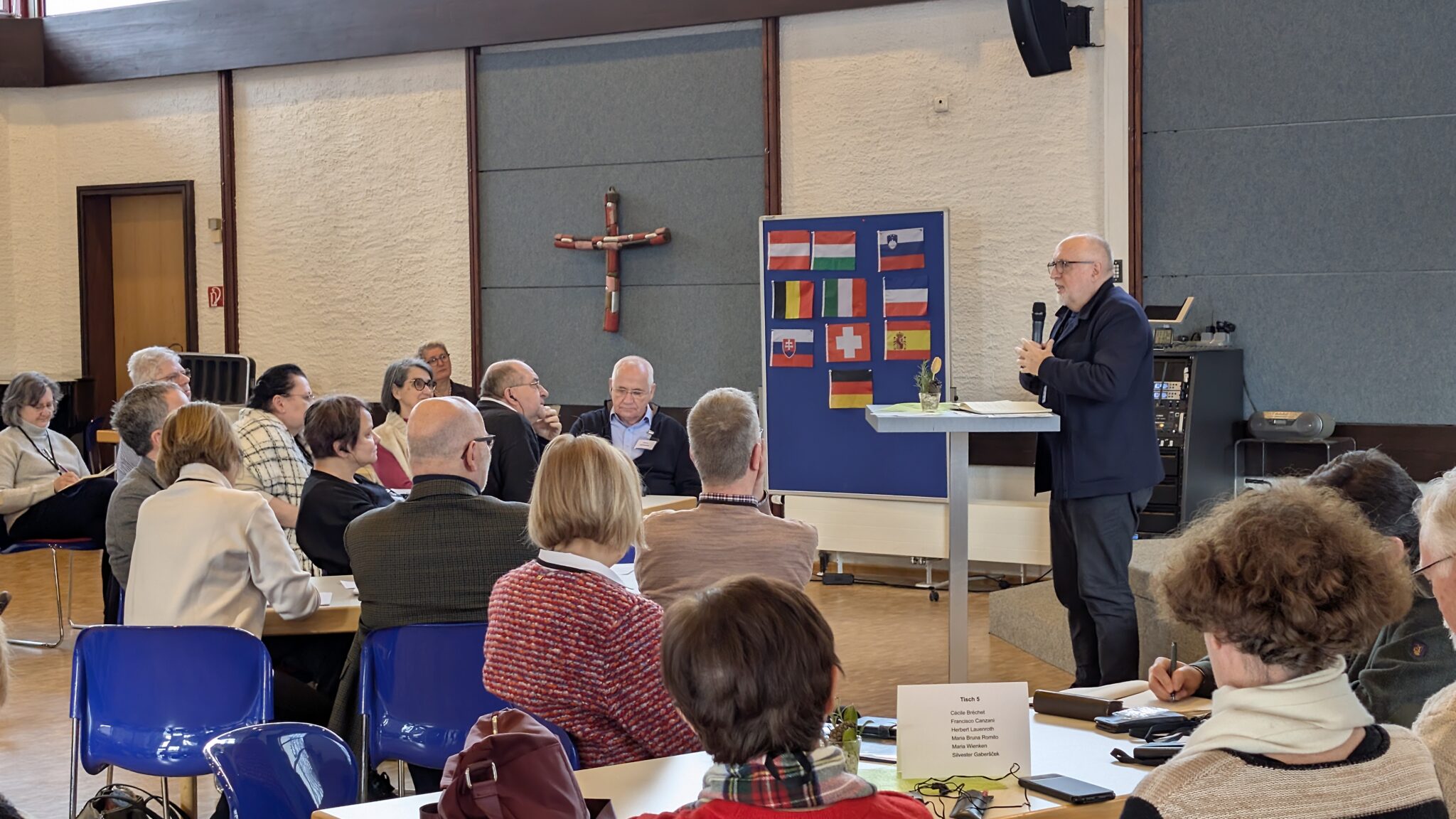
Forty-five participants from nine European countries met from 30th January-1 February in the ecumenical “little town” of the Focolare in Ottmaring, near Munich, to reflect on how to rediscover a passion for Europe and a form of dialogue capable of uniting. Focolarini and members of the Fraternity of community life that has its origins in the evangelical world, live together in the little town founded by Chiara Lubich in 1968.
Jesús Morán, Co-President of Focolare, began by emphasizing that the purpose of this European Conference was to reflect on Europe in the light of the charism of unity, from which the Ottmaring Focolare Cultura has also emerged. It is a group of Focolare members from several European countries who explore dialogue between cultures. “However, we are not meeting – Moran stressed – to draw up an operational programme: concrete actions already exist, such as the experience of Together for Europe, educational activities for young people and politicians in Brussels and Dialop, the dialogue with left-wing politicians. Nor is there any need to draft a manifesto of intent. Rather, we are here to nurture a passion for Europe, convinced that the charism of unity is a gift for Europe, just as Europe is a gift for the charism”. At the heart of the proposed method was mutual listening: “Offering hospitality to the Spirit and to each other”, allowing dialogue to be born from relationships.
Many reflections addressed the rift between Western and Eastern Europe. Peter Forst quoted a young woman from Eastern Europe who said, “We no longer love each other”. This seemed to sum up the tension that runs through the continent today and raises a pressing question: does Western Europe really listen to the voice of the East? Does it read its authors? Does it understand its wounds?
Anja Lupfer insisted on the method of creative listening: not looking for immediate answers but suspending prejudices in order to encounter others. “We’re not seeking dialogue as an objective”, she underlined, “we are seeking the other”. It was an invitation to a non-competitive understanding, capable of descending “into the depths of the other”, overcoming the illusion of a neutral cultural space. Even within the Focolare, differences emerge that call for shared narratives and a more sincere exchange.
Klemens Leutgöb recalled the enthusiasm of the 1990s after the fall of the Berlin Wall and warned that the fracture has reappeared. To overcome it, divisive issues, ranging from gender issues to nuclear energy, must be faced rather than avoided. Diversity becomes a resource only when we engage in it together. Forst added an episode: during a trip to Eastern Europe in 2023, many people spoke only of the past, accusing the West of having eroded values such as family and faith. He commented, “The present can divide but our pact of unity must be stronger. The evaluation of events may differ, but in her experience known as Paradise ’49, Chiara Lubich speaks of truth that embraces contradictions in unity saying, “When we are united and He is present, we are no longer two but one. What I say is not said by me alone but by me, Jesus and you in me. And when you speak it is not you alone, but you, Jesus and me in you.””
Francisco Canzani asked a recurring question: “If you love me, why don’t you know my pain?” Often there is not enough time or courage to really listen. Dialogue comes from concrete life, not from programmes. He concluded with a Jewish story: two brothers secretly carried wheat to each other at night, taking it from their own barns. They didn’t understand why the level of their stores always remained the same. One night they met, understood and embraced. On that very place, Solomon’s Temple would be built: a perfect image of fraternity.
A concrete example of this spirit is the “European Project” Focolare in Brussels, described by Luca Fiorani, Letizia Bakacsi and Maria Rosa Logozzo: a former pizzeria was transformed into a house of dialogue between parliamentarians, refugees, officials and young people, lived quietly, away from social media and in the simplicity of encounter. The initiative is also made possible by the structured dialogue provided for by the Treaty on the Functioning of the EU.
The multipolar dialogue group brought strong testimonies from the wounds of the East. Palko Tóth recalled the young Russian soldiers buried in Budapest: “They are our children too.” Many in Eastern Europe are disillusioned with the West. New dialogue initiatives will emerge to heal these wounds, such as the international meeting in Transylvania on relational identities.
Franz Kronreif and Luisa Sello presented Dialop, a path of dialogue between the European Left and the Catholic world, also inspired by “Paradise ’49”. The project, encouraged by Benedict XVI and Pope Francis, works on major ethical issues with the logic of “differentiated consent and qualified dissent”.
Many testimonies enriched the meeting: a Russian couple divided by opposing narratives about the war in Ukraine; a South Tyrolean couple accustomed to living with different languages and cultures; and a Slovak priest concerned about the loss of religious sense in Western Europe.
In his concluding remarks, Morán pointed to the mystery of Jesus Forsaken as a key to European identity. He also referred to the crucifix of San Damiano, “the God who comes from Europe”. Europe has universalized the Gospel but also carries historical shadows such as colonization, wars and nihilism; it is precisely there that the charism of unity was born. He said, “It is not a matter of superiority but of safeguarding what Europe can still offer the world: above all Jesus Forsaken”.
For this we need a “daily relational mystique”, made up of dialogue, living networks and cultural and political initiatives. Everything that already exists, Together for Europe, multipolar dialogue, the Focolare Cultura, the Brussels “European Project” Focolare and Dialop, is part of a single endeavour to be safeguarded and developed. “We must move forward, keep the network alive, each with our own commitment”.
Greetings to everyone on behalf of the Focolare Movement worldwide, as we join in prayer for this digital pilgrimage. Together with all of you, we want to raise our voices to God to ask for an end to human trafficking and to affirm the dignity of every human being:
O Lord, our God,
You love every one of your people. You have given us the gifts of the earth so that we may all live in peace as your children.
Today, a cry is rising up to you from those who have been violated, those who have been exploited in degrading ways, those who are victims of human trafficking.
Help us, Lord, to stand by these sisters and brothers of ours. Multiply the forces of good to encourage their hope in the possibility of a new life.
Make the hearts of the indifferent sensitive. Grant that every citizen, even those who hold the fate of peoples in their hands, may grow in awareness of the need to fight this serious social scourge.
Lord, we ask you that we may be able to spread the global appeal that is being launched today, so that Your will may be done on earth as it is in Heaven.
United, let us continue to pray and act for justice. Thank you to each and every one of you for being part of this chain of hope and of love that is stretching across the world.
Margaret Karram
Video in Italian: activate subtitles and select the desired language.
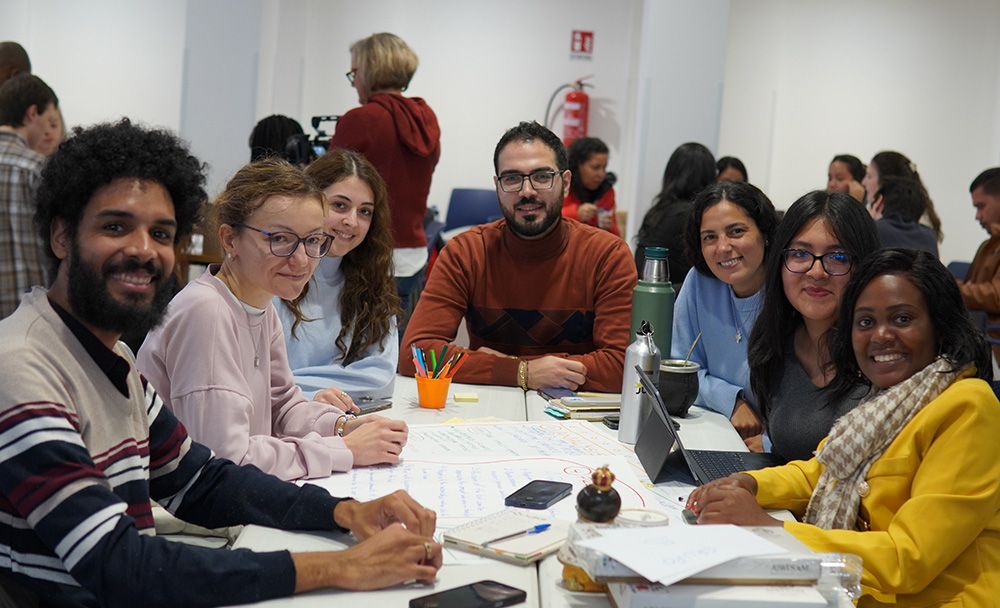
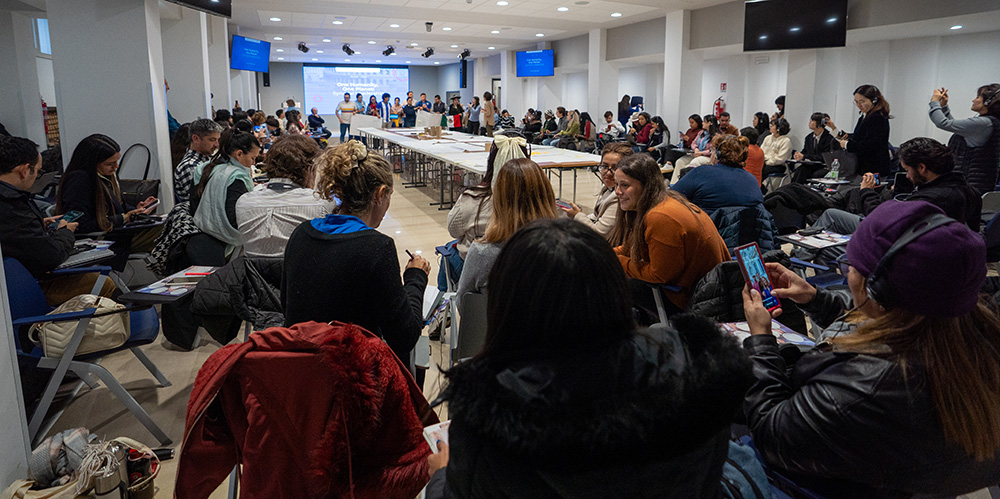
From 26th January to 1st February 2026, Rome hosted 100 young political leaders from 36 countries for the conclusion of the first year of the two-year political formation programme “One Humanity, One Planet: Synodal Leadership”—a challenge to develop a different style of governance, starting from the paradigm of fraternity.
Following an online pathway of work in 16 learning communities, they came together for a political hackathon—literally a creative and collaborative marathon—focused on what most deeply wounds the global social fabric today: corruption, inequality, widespread violence, unethical digital transition, the ecological emergency, and declining civic participation. The programme, promoted by the Political Movement for Unity and the NGO, New Humanity, together with the Pontifical Commission for Latin America, aims to restore an active role in decision-making processes, from the local to the global level, to young people. Giovanna Maroccolo – Italy (Italian)
Watch the video with interviews with young people from different countries. Turn on subtitles and then choose the language you want.