Bahía Blanca is a coastal city located at the gateway to Argentine Patagonia begins. With its 370,000 inhabitants, it is the economic, religious and cultural centre of a vast region. Just a few kilometres away, another 80,000 people live in the city of Punta Alta. Together, they have a very important petrochemical hub, a network of 7 different ports (including multipurpose, grain, fruit, fishing, gas, oil and fertilizers) and the main base of the Argentine Navy.
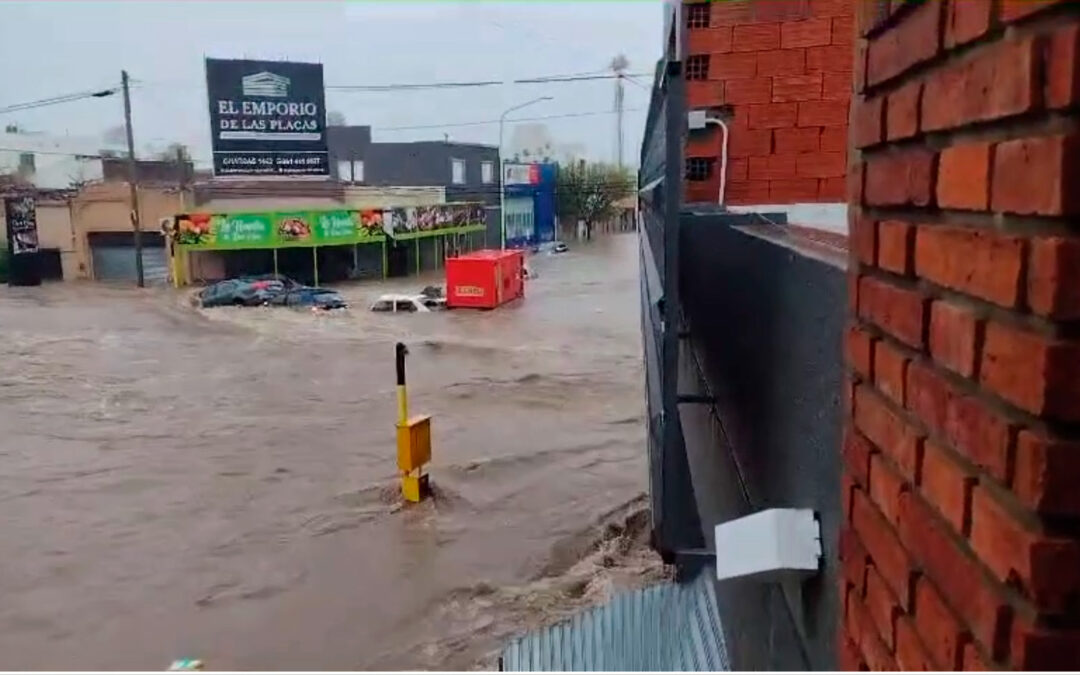
In this region, the average rainfall in a year is 650 mm, but on Friday, 7th March, 2025, 400 mm fell in just 7 hours. As this huge amount of water made its way to the sea, it gathered speed and destroyed everything in its path: bridges, canals, railways, roads, roads, vehicles, houses, shops… and people.
The population suddenly found itself in scene of unimaginable devastation, as if there had been a tsunami. A sudden power outage also cut off telephone communications, leaving everyone in the dark about the well-being of their relatives, friends, and colleagues.
However, something deep within this community awoke and all the universal laws converged into a single verb: to serve.
As soon as the water and mud allowed, thousands of people began to pour into the streets. Everyone assessed the damage in their own home, but then immediately turned their attention to their neighbours, to see if they needed help. Those who managed to get their situation under control devoted themselves entirely to helping others. We were all witnesses and protagonists of a gigantic miracle that has multiplied, with incredible creativity and strength.
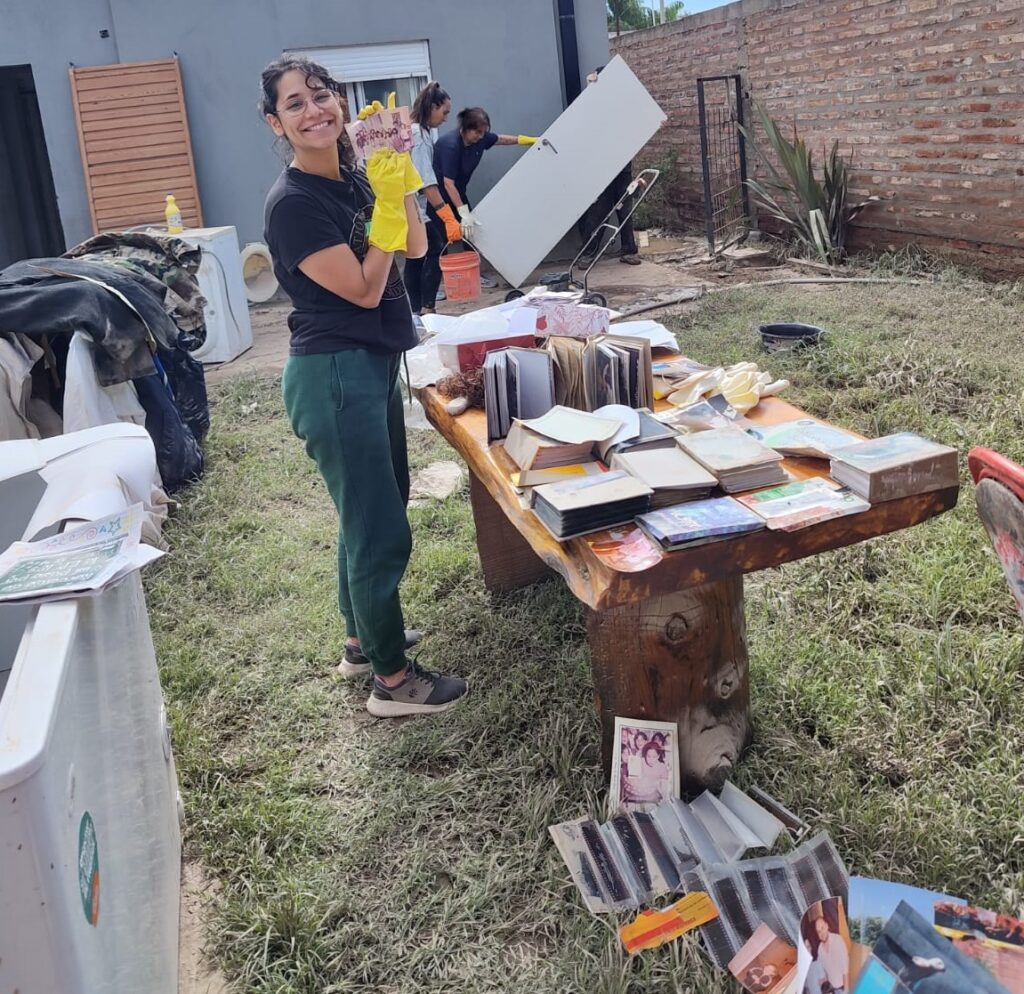
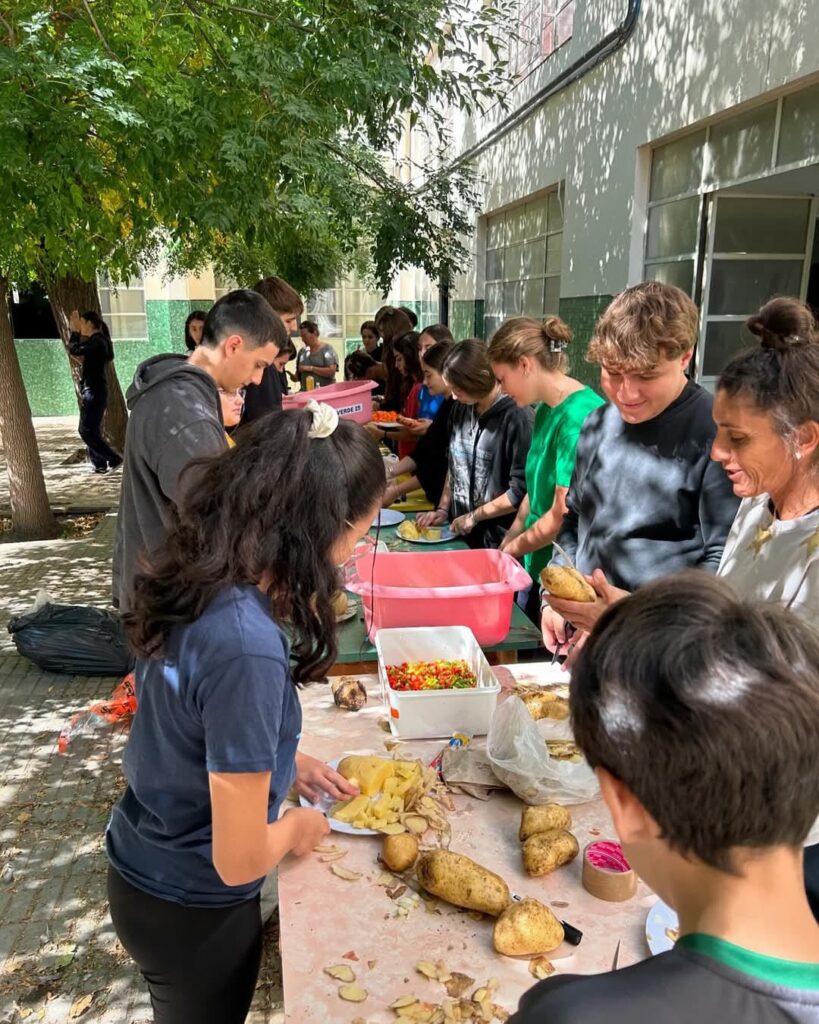
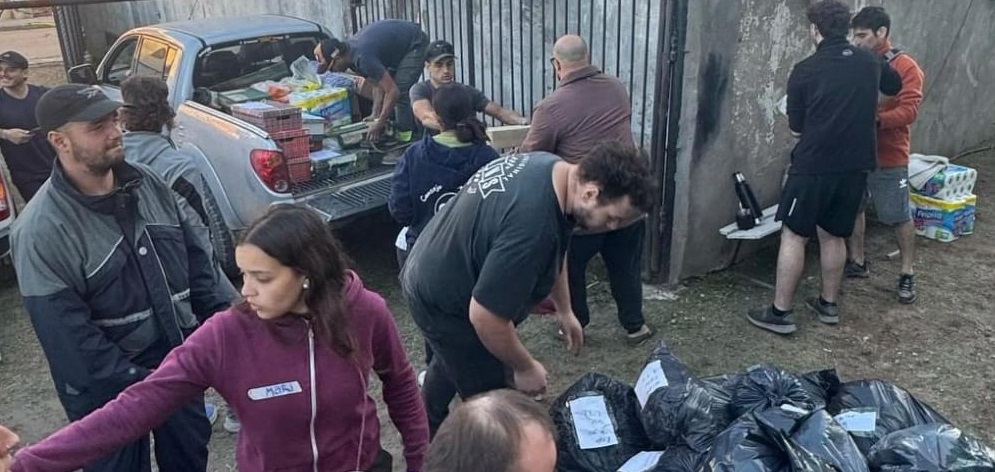
Recovering photographs of an elderly womanYoung people preparing meals for distribution in the flooded areas.Distributing donations
The only thing that mattered was what could be done with our hands: help remove water and mud from homes, clean, tidy up, look for rags, buckets of water, disinfectant, take the injured to health centres, take care of pets, accommodate people who had lost everything, offer strength, encourage, hug, share suffering. No one complained but said, “It was very difficult for me, but in comparison to what happened to others…”
While I was helping some friends, a couple approached and distributed pasties, others came with drinks. Those who had an electricity generator offered to recharge mobile phone batteries. Others provided pumps to drain flooded areas. An optician donated glasses to those who had lost theirs. A woman distributed disinfectant, a doctor made house calls, a man offered his services as a bricklayer and another as a mechanic. Everything was shared: candles, food, clothes, nappies, mattresses, drinking water, brushes and hands – countless hands.
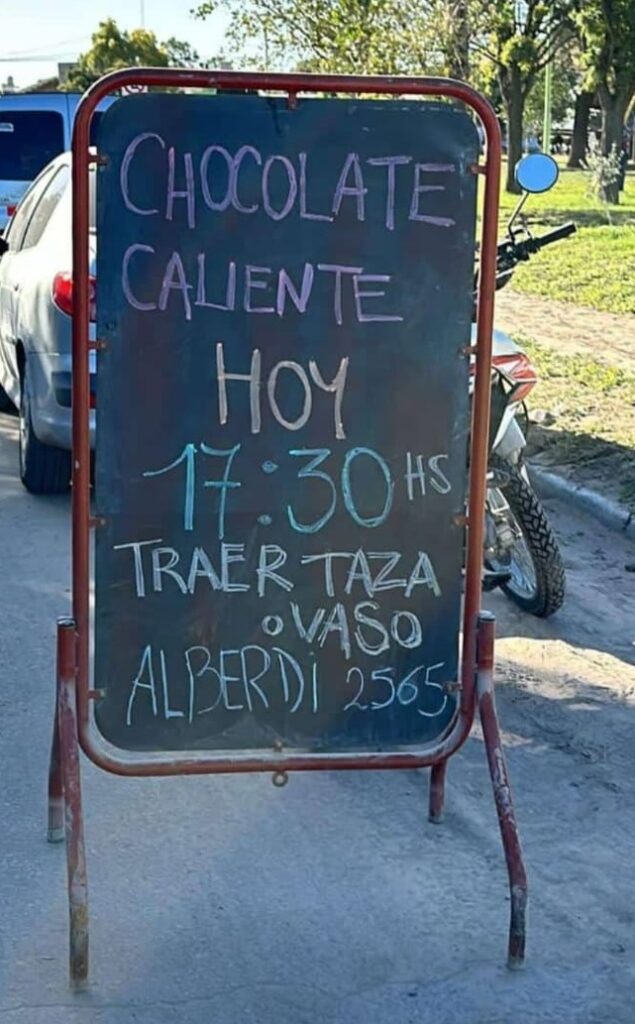
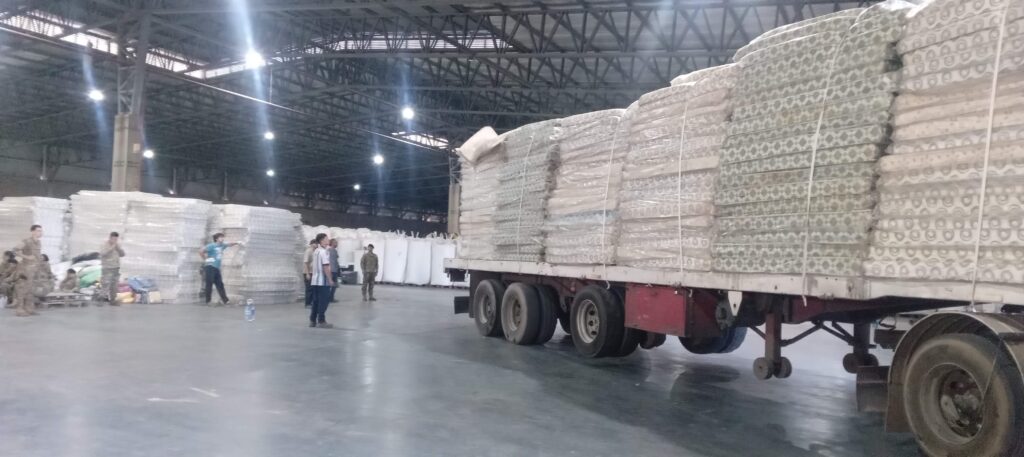
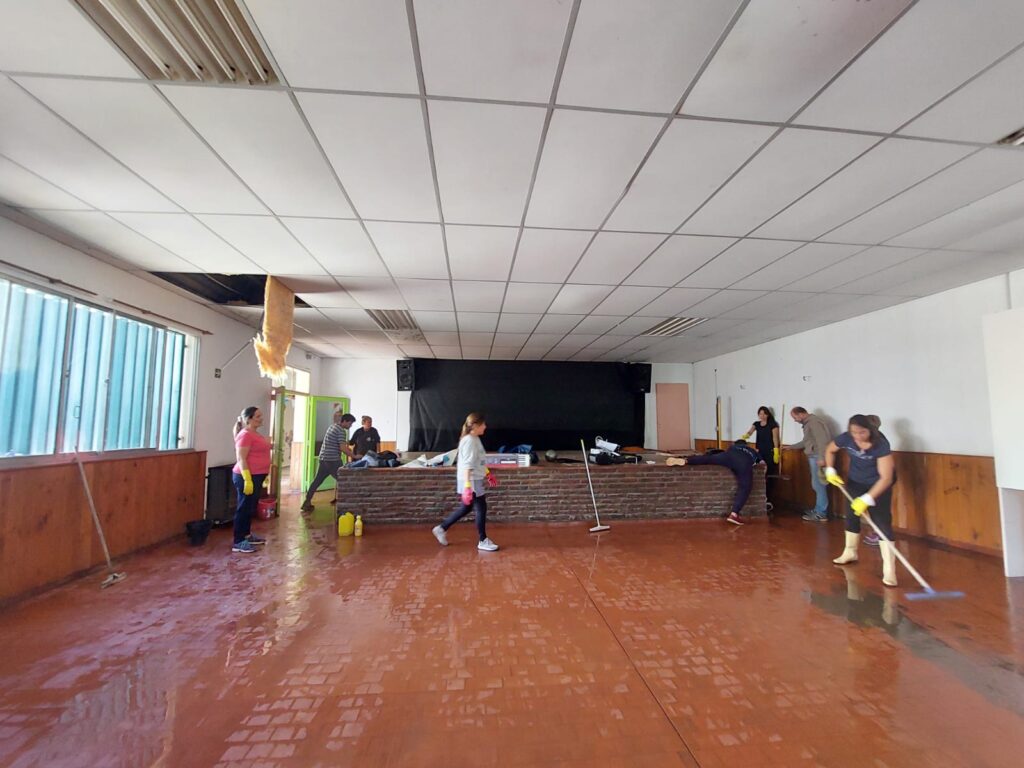
A bar offers free hot chocolateDonations of mattresses arriveVolunteers cleaning a kindergarten
And then came the solidarity of the whole country and of people from all over the world. By truck, by train, by bus, in vans… tons of donations, which needed more volunteers for loading, unloading, sorting and delivery. Volunteers kept multiplying. And also money, donated with great generosity. Parishes, clubs, schools, companies, all the existing organizations gave everything they could. Generous financial donations also arrived. Parishes, clubs, schools, businesses—every organization gave everything they could. And then, another kind of organization emerged: groups of friends. Like makeshift “patrols,” each group took charge of a section of the city where government aid would likely take longer to arrive. Even now, they continue going door to door, recording every need and ensuring that help arrives swiftly.
All the hands of these people, whether they knew it, believed it, or even imagined it, have become “divine hands”. Because they were the most tangible way God could reach those in need. Personally, I experienced deep anxiety not knowing if my siblings or friends were safe. I wanted to reach them, but it was impossible. So I decided to help wherever I could. I called it my “square metre.” Later, I finally managed to reach my loved ones, only to discover that others, strangers, had helped them where I could not.
Days later, some parts of the city are still under. The suffering and difficulties continue. The losses have been immense. Everywhere you meet people with big dark circles under their eyes and aching muscles from working almost without rest. But with their hearts wide open and a fullness in their eyes, for having given everything for others.
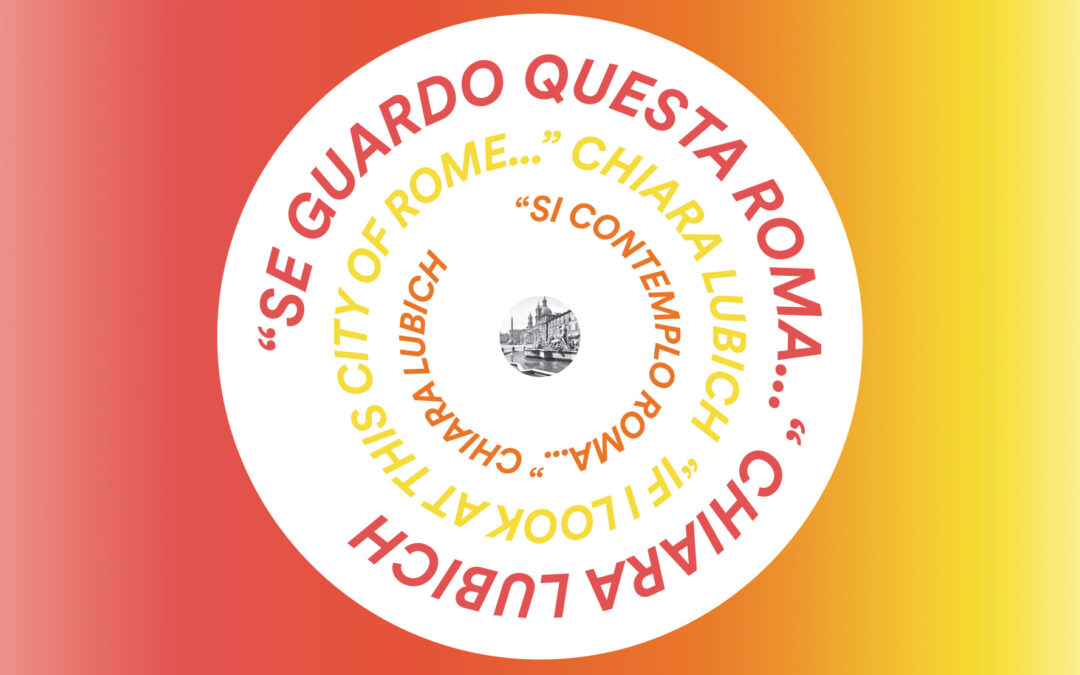
An exhibition dedicated to Chiara Lubich (1920-2008), witness and inspirer of the universal value of fraternity. A stop for those visiting Rome. At the centre of the exhibition is the theme of the “city”, as a privileged place for building fraternal relationships, open to the world. The multimedia exhibition has been produced by the Chiara Lubich Centre and the Historical Museum Foundation of Trentino.
It can be visited from Monday to Friday from 10:00 to 12:30 and from 14:00 to 17:00. On Saturdays from 10:00 to 13:00.
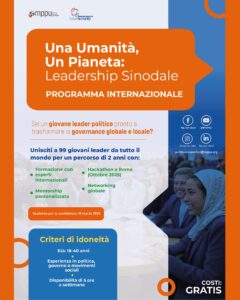
The Political Movement for Unity and the NGO New Humanity, both expressions of the Focolare Movement, supported by Porticus, are promoting a global political project entitled “One Humanity, One Planet: Synodal Leadership”. Aimed at young people aged 18-40 with experience in political representation, government leadership or social movements, the programme offers academic training, personalised mentoring and a hackathon in Rome with international experts.
Objective: to strengthen the participation of young politicians in global advocacy processes, through a collaborative journey of reflection and action between socio-political leaders, generating a global network of young leaders from different continents. The challenge is to overcome the current crises (social, environmental, political and economic) and contribute to building a leadership network for the development of international political strategies.
The program will start at the end of April 2025, the deadline for submitting applications is 31st March, it will last for two years and is fully funded (free of charge). It will include contributions from prestigious academic institutions and international NGOs. The format will be mixed, both in person and online through interactive modules with experts from around the world, including renowned political leaders and university professors. A week-long event is planned in Rome, from 6th-12th October 2025, with international guests to co-create proposals for collaborative actions at a global level to solve current social, environmental and economic challenges.
Language will not be an obstacle. Simultaneous translations will be available in Spanish, Portuguese, French, English, Italian and other languages as required.
What does the programme offer?
The initiative is a process of global collective action that integrates training, information, networking, tools and meetings. It offers experiences and methods to increase the quality of policy and improve its impact on social transformation. Participants will have access to learning spaces, collective knowledge-building and exchange with international scholars and experts, with spaces for reflection among the participants alongside dedicated discussion sessions. Each young participant will receive ongoing mentorship from an experiences political leader to refine their political, social, economic and environmental project. In the second year, participants will join a global network of 600 young leaders from different continents.
At the end of the program, participants will receive a formal diploma certifying their participation in the program.
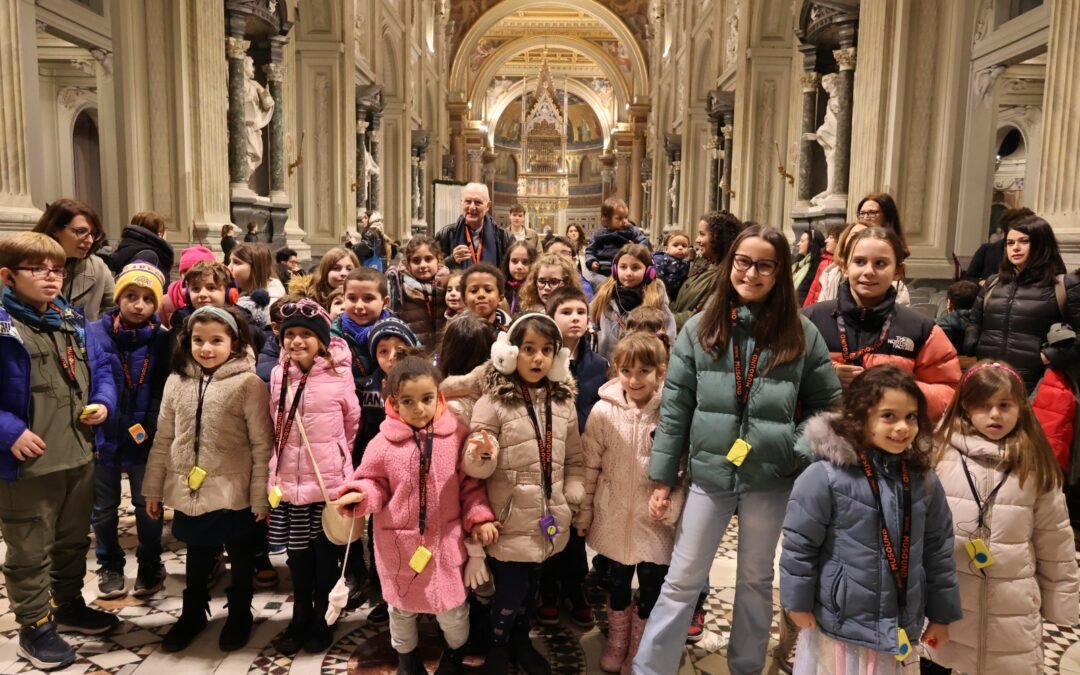
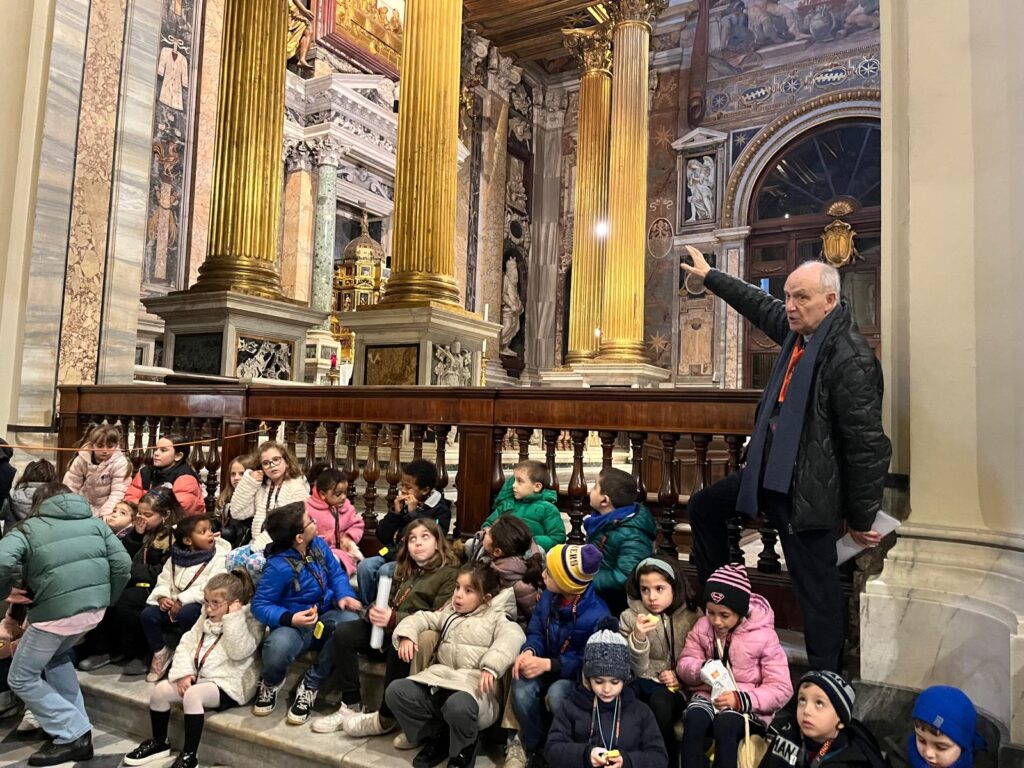
In this year dedicated to the Jubilee of Hope, the Gen 4 (the children of the Focolare Movement) in Rome decided to embark on a journey to discover more about the history of Christianity and understand how to live the Jubilee in their city that is welcoming millions of pilgrims from all over the world. The stages of their journey are the Vatican Basilicas in Rome: St. Peter’s, St. John Lateran, St. Paul’s Outside the Walls and St. Mary Major. They asked Father Fabio Ciardi, OMI, professor of spiritual theology and author of numerous books and publications, to be their guide.
First stop: St. Peter’s Basilica
In October 2024, two months before the Jubilee began, the group of 33 children with as many adults, learned about a very special reality before entering St. Peter’s Basilica. It is located next to the residence where Pope Francis lives. It is the Dispensary of St. Martha, a place where the Gospel becomes incarnate every day through the assistance given to hundreds of mothers and children. It’s an opportunity to explain to the Gen 4 how the Jubilee can be lived concretely by helping others.
Father Fabio explained, “It is a real family clinic, which began this work of care for poor children and their families in 1922. Today over 400 children, with their mothers, are assisted free of charge by about sixty volunteer doctors. They are mostly people without a residence permit, without health care”. Services include gynaecological and paediatric examinations as well as dental care for the homeless.
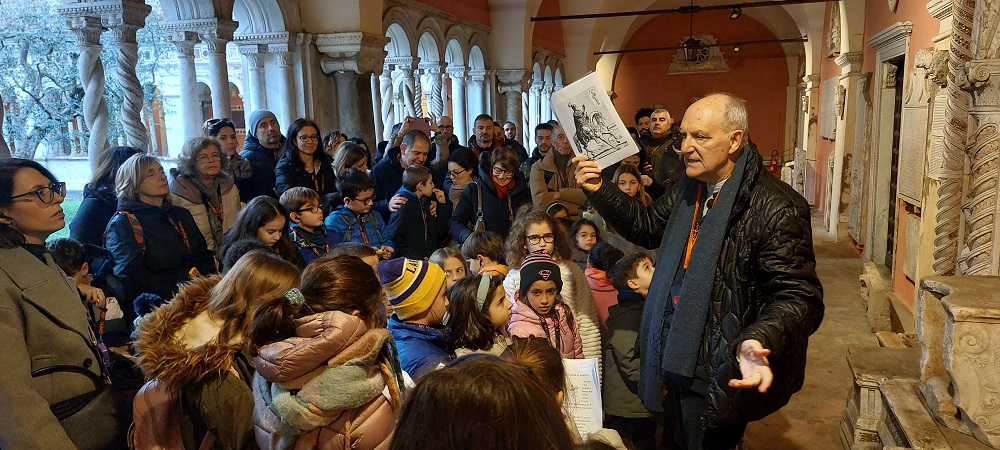
Father Fabio then linked this story with the story of Saint Peter, using some drawings. The children listened attentively to his voice through headphones: “Jesus met Simon the fisherman and invited him to follow him. ‘Come with me,’ he said, ‘I’ll make you a fisher of men.’ And he gave him a new name, he called him Peter, which means “rock”, because he wanted to build his Church on him”. And as the story continued, we moved to the Basilica to pray at the tomb of St. Peter. “Peter came to Rome. When Nero set fire to the city he blamed the Christians. Peter was killed in the circus of the emperor Caligula that Nero had renovated…and finally the tomb of Saint Peter in his Basilica”. There was an atmosphere of deep recollection among Gen 4, despite the influx of tourists on that Roman Saturday afternoon. Going towards the Holy Door you pass some masterpieces of art. In front of the Pietà, Father Fabio said, “This statue of Our Lady was very dear to Chiara Lubich. Every time she came to the Basilica she stopped here to pray to Mary”.
The stop in San Giovanni in Laterano
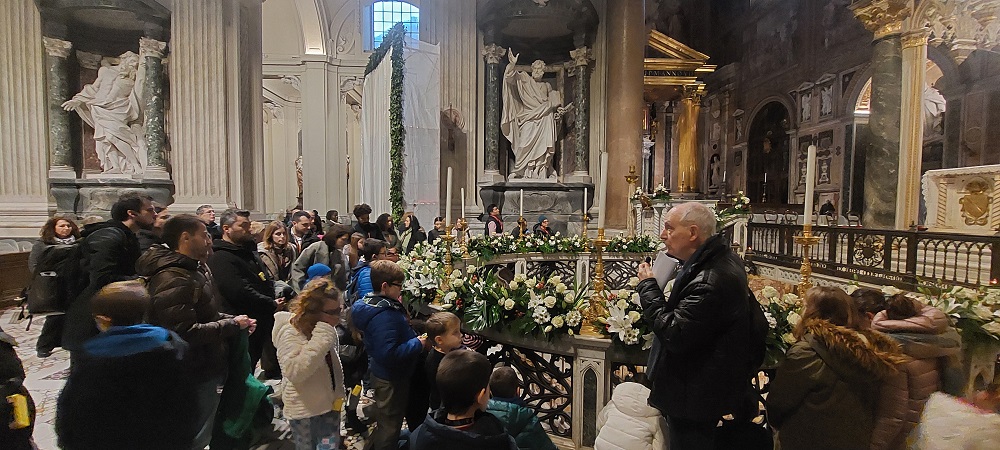
The second stage was in January 2025. This time the group was larger: 140 people including 60 children, always under the expert guidance of Father Fabio, met to discover the Basilica of St. John Lateran, full of surprises and treasures related to the history of Christianity. Attentive and curious, with headphones in their ears, for just over two hours Gen4 listened to Father Fabio’s fascinating story.
Gen4 at St. John in Lateran Gen4 at St. John in LateranGen4 at St. John in Lateran
In his blog, Father Fabio wrote, “It was wonderful to tell the story of the obelisk, it was nice to explain the meaning of the cloister, it was nice to tell the stories of St. John the Baptist and St. John the Evangelist and to let the children go and find their statues in the Basilica. It was nice to show the ancient Papal throne and the current one, on which the Pope e sits to take possession of his office. It was nice to point out the relics of the table on which Jesus celebrated the last supper and the one on which Peter celebrated here in Rome. It was good to go through the Holy Door together…It’s good to be with the children and tell them beautiful things…”
At this point, the children have built a special bond with Father Fabio. They walked beside him in the Basilica, held his hand, asked him questions to learn more. A Gen 4 asked, “What’s Heaven like?” He replied, “Imagine a busy school day. When it’s over, you go home to a beautiful, welcoming, warm house, where your parents, grandparents and friends shower you with love. You feel happy in that moment, don’t you? It’s like that in Heaven: it’s a place where you feel good, where you feel at home!” This stage also came to an end. We returned home happy and aware that for us, the Jubilee must be a time to give hope and happiness to the most disadvantaged, to our poor, to those who suffer.
The journey with other generations
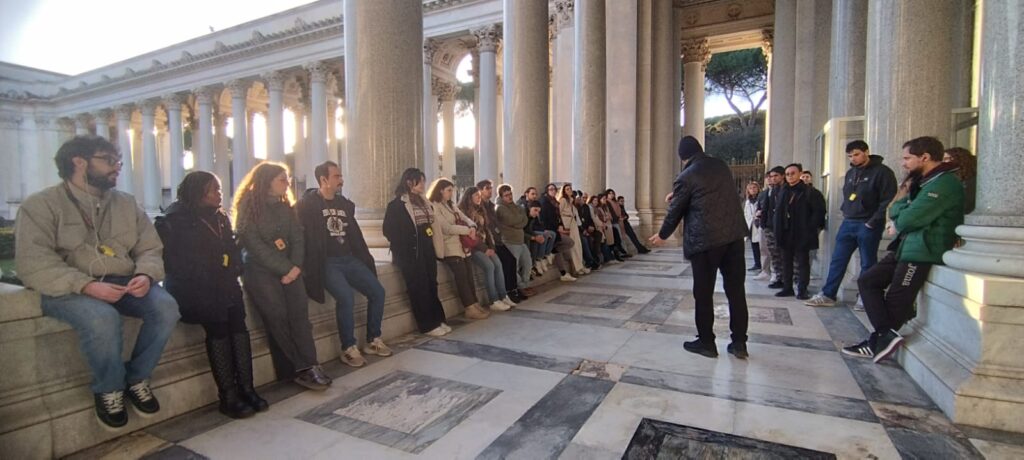
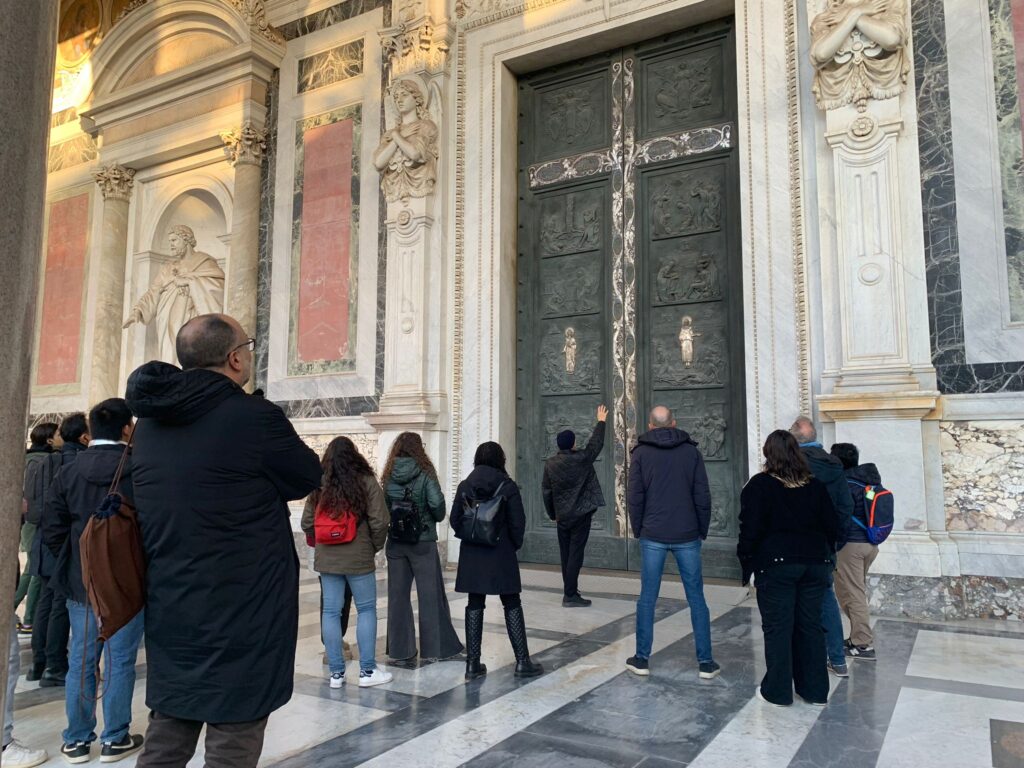
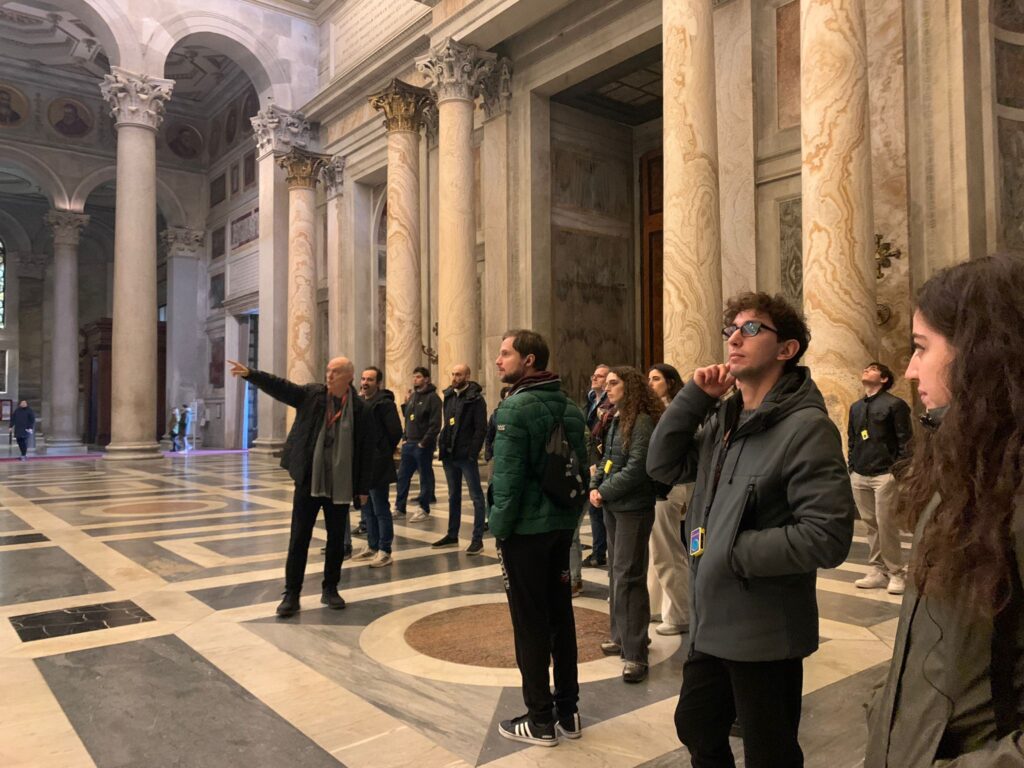
Waiting to continue this journey with the Gen 4, the Gen3 (40 teenagers), the Gen2 (30 young people) and a group of adults, fascinated by the positive experience that the children were living with Father Fabio, also wanted to follow the same journey, always guided by him.
Father Fabio wrote in his blog, “First the children, then the teens, then the young people and adults. St. John Lateran, St. Peter, St. Paul and St. Mary Major. So I keep living the Jubilee, over and over. The story of history, art and spirituality, because it is all intertwined, human and divine, past and present. These monuments live on, still speaking after hundreds of years and continue to narrate beautiful things”.
Gen 2 at St. Paul outside the WallsGen 2 at St. Paul outside the WallsGen 2 at St. Paul outside the Walls
And the young people thanked Father Fabio “for preparing our hearts for such a beautiful experience, you helped us to go through this stage of the holy year together, with meaning and joy. We really liked the atmosphere you managed to create, arousing in us the desire to visit together other places in Rome which were important for the first Christians and you gave us the desire to deepen the meaning of being pilgrims on the way to the goal of Paradise”.
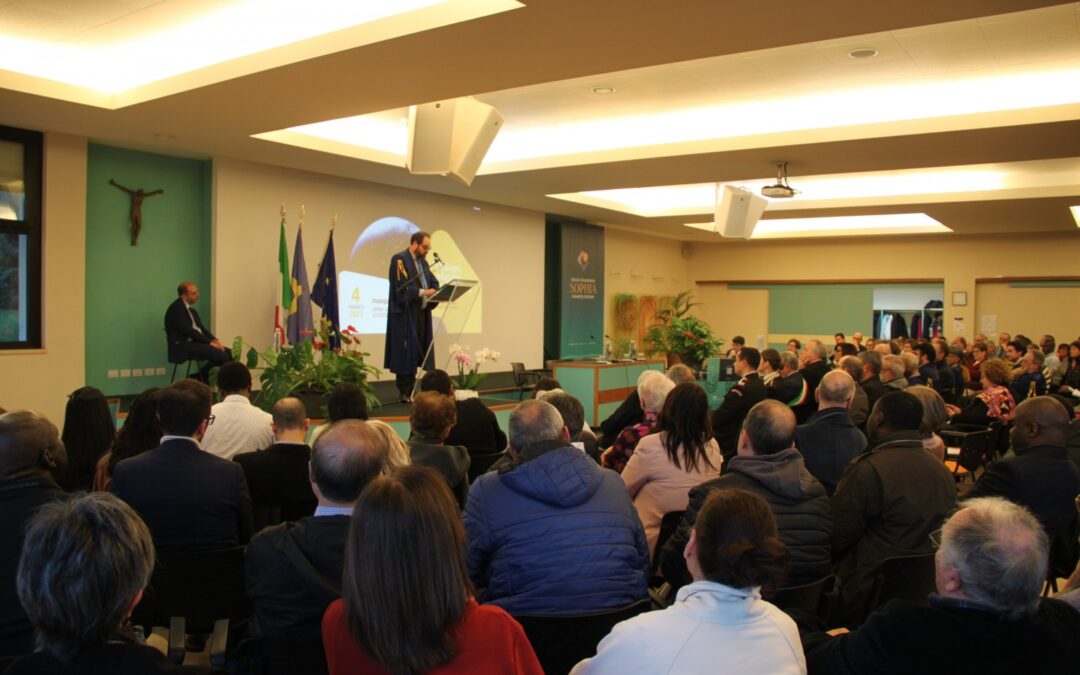
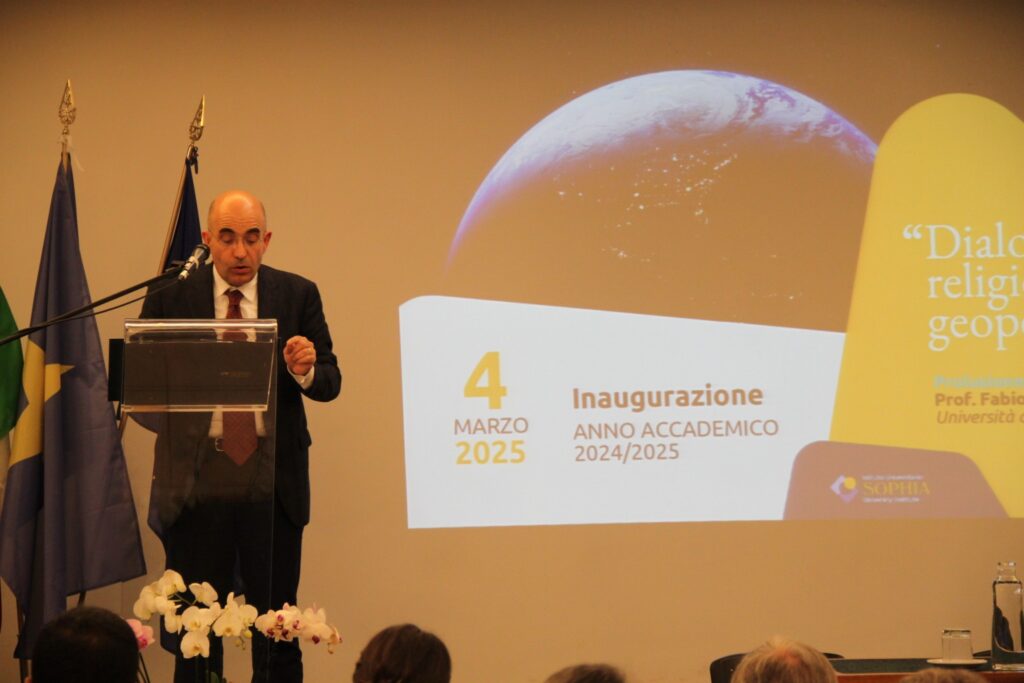
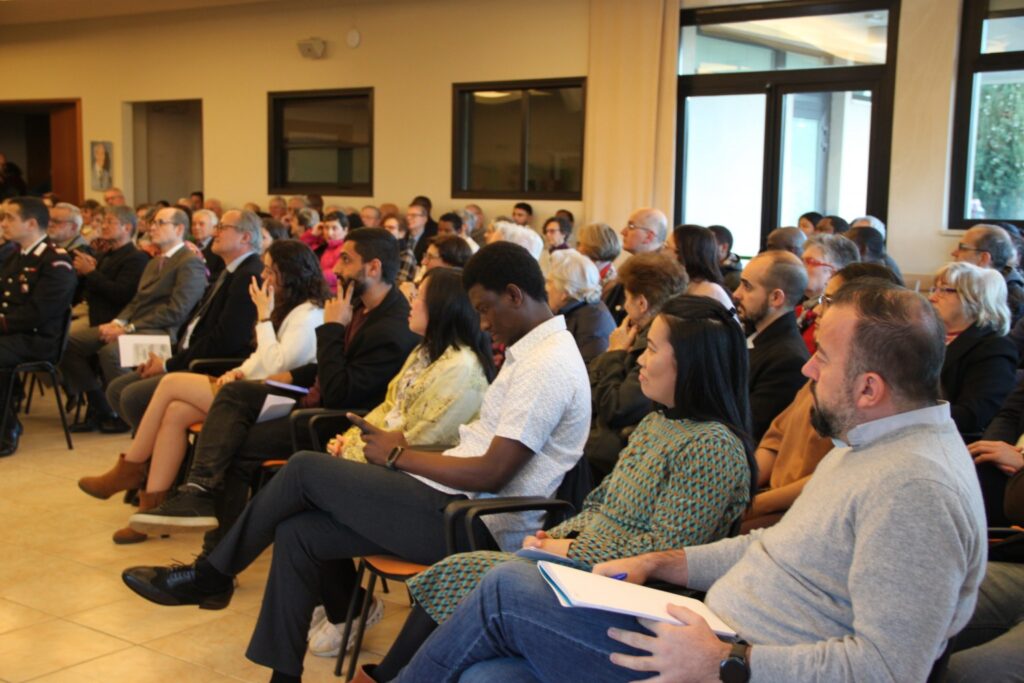
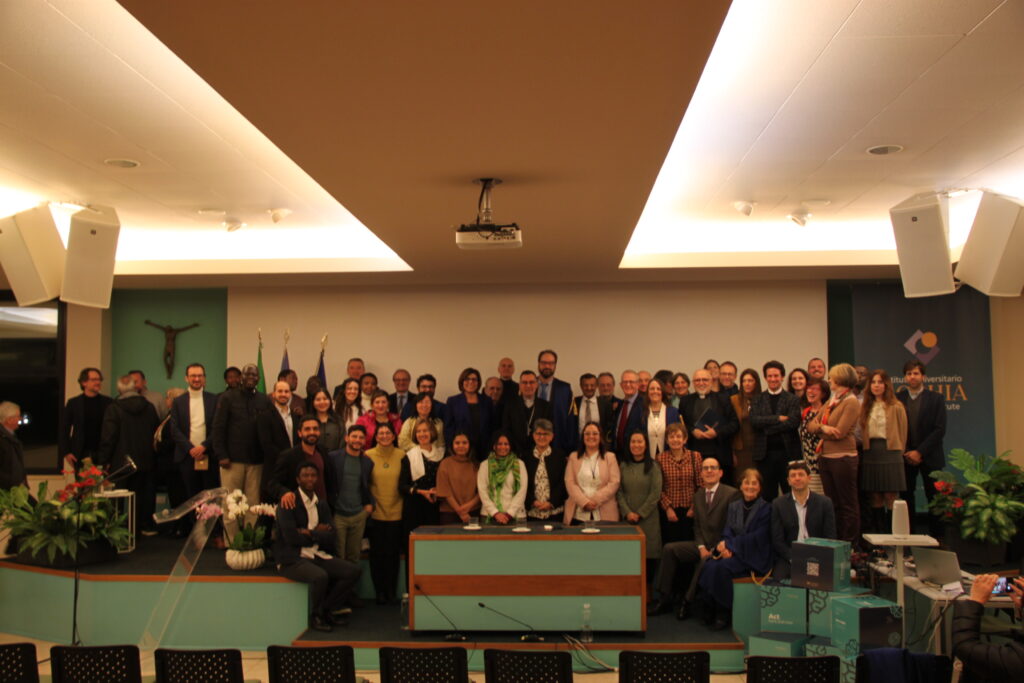
On Tuesday 4th March, the 17th academic year of the’SophiaUniversityInstitutein Loppiano (Figline and Incisa Valdarno – Florence) was inaugurated. The ceremony took place in the main hall of the Institute, in the presence of the entire academic community and a representation of the rich network of relationships and collaborations that the Sophia University Institute has been able to weave with institutions, other universities and third sector organisations in these first 17 years of its existence.
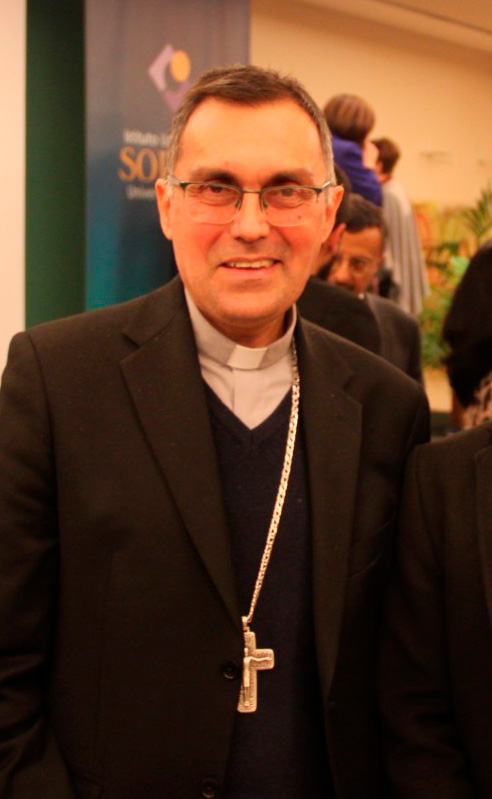
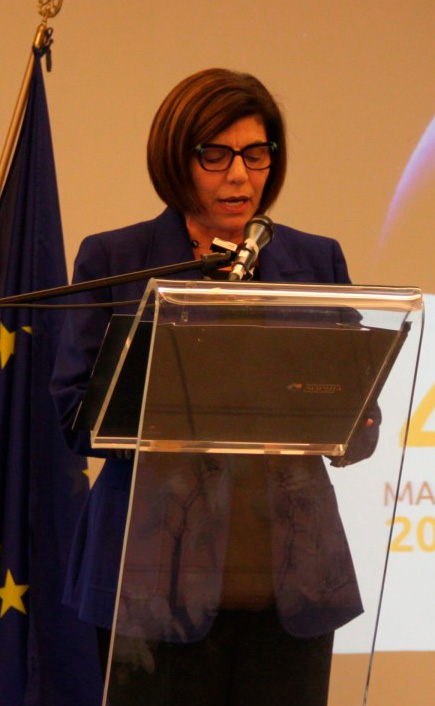
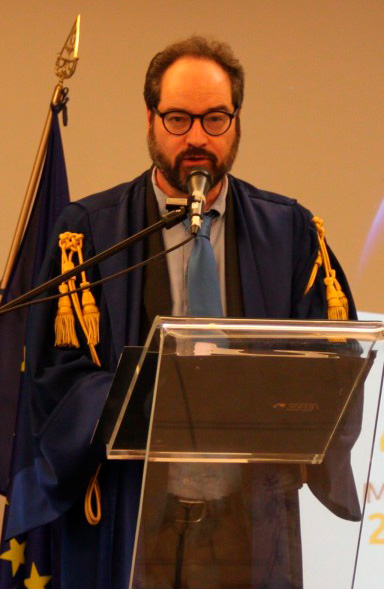
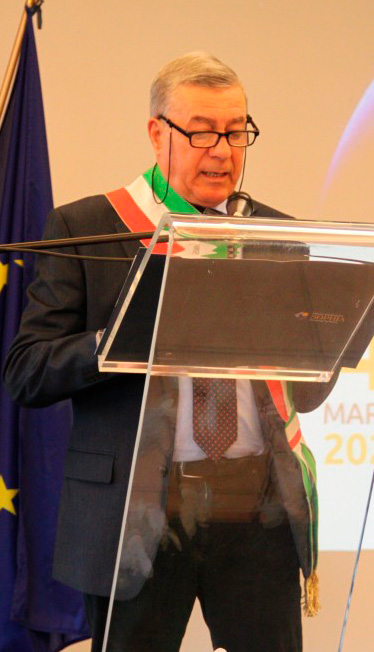
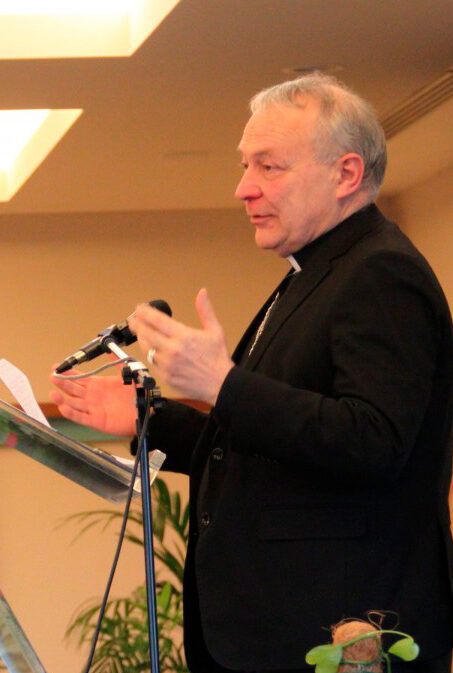
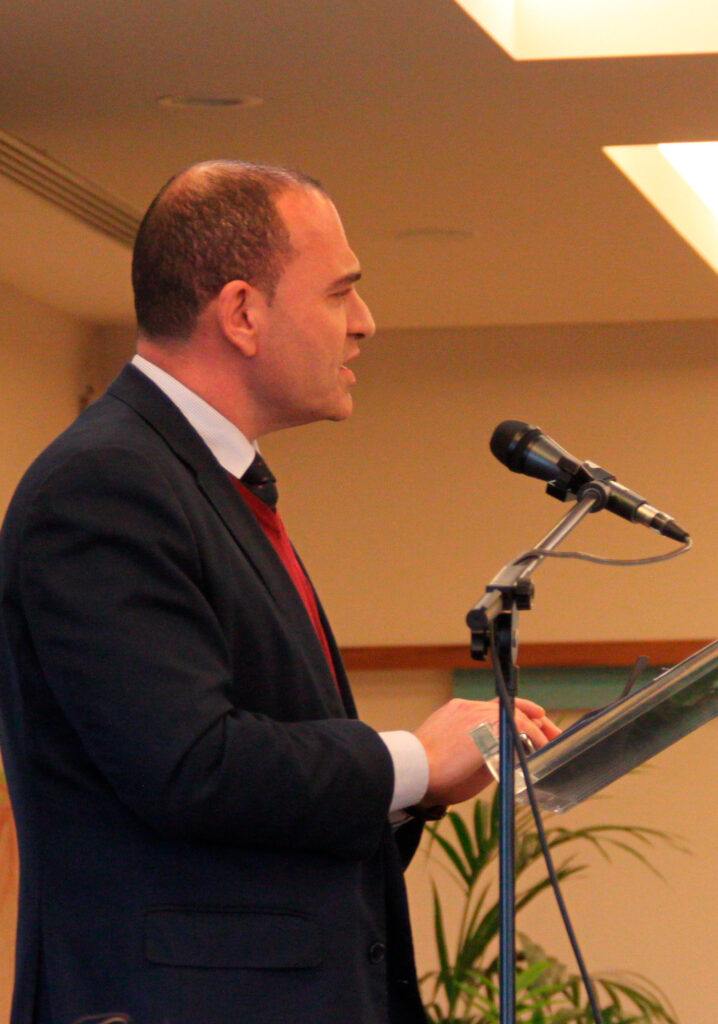
The following people took part: the Rector, Declan O’Byrne; the Chancellor of the Institute, Gherardo Gambelli, Archbishop of Florence; the Vice-Chancellor, Dr Margaret Karram, President of the Focolare Movement; the Bishop of Fiesole,Stefano Manetti; the mayor of Figline and Incisa Valdarno, Valerio Pianigiani; Paolo Cancelli, director of the Development Office of the Pontifical University Antonianum; Marco Salvatori, President of the Giorgio La Pira International Student Centre
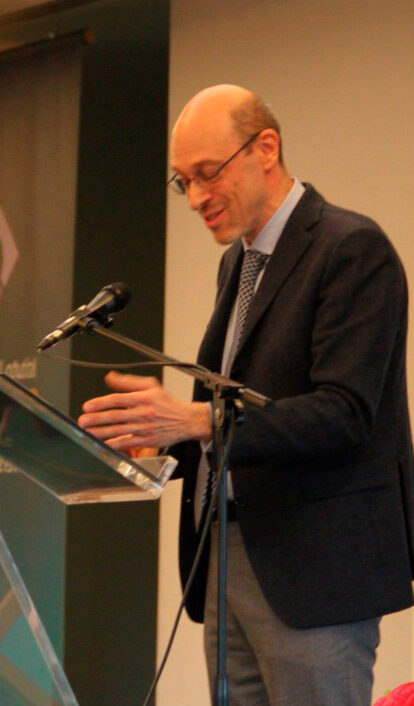
The centrepiece of the ceremony was the inaugural lecture entitled ‘Dialogue, religions, geopolitics’ given by Fabio Petito, Professor of International Relations and Director of the Freedom of Religion or Belief & Foreign Policy Initiative at the University of Sussex, as well as Scientific Coordinator of the Religions and International Relations Programme of the Ministry of Foreign Affairs and ISPI (Institute for International Political Studies). Petito emphasised that today, ‘religion seems to be part of, and sometimes at the centre of, the current scenario of instability and international crisis’. However, although this is a less visible phenomenon globally, ‘it cannot be denied that in the last quarter of a century there has been a significant increase in the efforts of representatives of religious communities to respond to violence and political tensions through initiatives of dialogue and interreligious collaboration’. Petito thus emphasised the importance that places like the Sophia University Institute can have in creatively deepening and spreading the culture of encounter and ‘making small seeds of hope and fruits of unity and human fraternity blossom’.
Professor Fabio Petito
In true Sophia style, an international academic community and a laboratory of life, education, study and research, the inaugural lecture was followed by a dialogue, moderated by the journalist and Vatican expert Andrea Gagliarducci (Eternal Word Television Network and ACI Stampa), which involved the Chancellor Arcbishop Gherardo Gambelli, on his first visit to the Institute, the Vice-Chancellor Dr Margaret Karram and six students from the university.
The dialogue, starting from the personal stories of young people from the Holy Land, the Philippines, Argentina, Kosovo, Sierra Leone and Peru, touched on topics of global importance and burning current affairs: the value of grassroots diplomacy for conflict resolution and the search for peace; the commitment to a more just and equitable economy, with the experience of Economy of Francesco; the role of young people from the Mediterranean in building a culture of encounter; the value
of reconciliation and interreligious dialogue, in particular between Christians and Muslims with the Sophian experience of Wings of Unity; the hopes of young Africans involved in the Together for a New Africa project, for change and the common good of their continent; the concerns and fragility of young people in search of a vocation and fulfilment in a globalised world.
The inauguration of the 2024-25 academic year highlighted, once again, the ability of this still small academic organisation to train young people to face the complexity of today’s world, in a trans-disciplinary perspective, and to work in synergy with specialists from various fields and institutions to promote dialogue between cultures in the concreteness of social life, giving impetus to the inner, intellectual and social growth of people in a dynamic of reciprocity.
Statements
The Grand Chancellor of the Institute, H.E. Mons. Gherardo Gambelli, Archbishop of Florence: “Among the objectives of the Institute is ‘to promote, in the concreteness of social life, dialogue between cultures, fostering the inner, intellectual, and social growth of individuals in a dynamic of reciprocity.’ Several key words emerge from this project: promotion, social life, dialogue, inner, intellectual, and social growth, reciprocity. All these terms point towards personal development, enabling individuals not only to inhabit the ‘we’ of the community they belong to with dignity but also to feel ever more inhabited by that ‘we’ to which they belong. A ‘we’ that does not seek to oppose a hypothetical ‘you’ but is instead capable, every day, of embracing all that appears with the face of the other, the different, the marginalized.”
The Vice Grand Chancellor, Dr. Margaret Karram, President of the Focolare Movement: “It is important that in an institution like ours, we emphasize dialogue and the role of religions in today’s global context, where—as we have seen in these past days—individuals and nations risk drowning in a state of confusion and despair. […] The Sophia University Institute, as a ‘home’ for a culture founded on the Gospel, is committed with and in the Church, to offer responses and guidance in the light of the Charism of unity. It is now up to us to move forward with courage and commitment, ensuring that this University Institute is increasingly recognized for its contribution to promoting a culture of unity that contributes to building peace and fraternity among individuals and peoples.”
Declan O’Byrne, Rector of the Sophia University Institute: “Together, as an academic community united by a common ideal, we continue to build Sophia as a beacon of wisdom and unity in the landscape of higher education. May our collective commitment continue to enlighten minds, inspire hearts, and transform society—one step at a time—towards that civilization of love to which we all aspire.”
Valerio Pianigiani,Mayor of Figline and Incisa Valdarno: “In the face of divisions and violence that cannot leave us indifferent, knowledge, understanding, tolerance and awareness of the world around us can serve as the antidote to brutality and divisions. A bridge that fosters understanding of the other, with the aim of working together and committing ourselves to the common good. I extend my gratitude to those who work in this Institute with passion and dedication every day, nurturing ever more aware minds here as well, in Figline and Incisa Valdarno—a community that stands firmly by the values of peace, solidarity, and dialogue.”
Stefano Manetti,Bishop of Fiesole: “The commitment to dialogue and communicate with everyone reduces distances, eliminates marginalization and becomes a sign of evangelical hope—something of which we are in great need. I therefore encourage professors and students to continue working for the benefit of the least among us through the gift of relationships, the sharing of cultural themes, and to keep being ‘angels of hope’ for all those you encounter on your path.”
Paolo Cancelli, Director of the Development Office of the Pontifical Antonianum University: “We are convinced that we must work together in the culture of dialogue as a path, in common collaboration as a way of acting, and in mutual understanding as both method and principle. […] We must place humility at the centre, the vocation to serve a process in which we hold one certainty: no one is saved alone. And it is precisely within this logic, the symphony of diversity, that the time has come to bring forth our talents, emotions and willpower to create the opportunity for a different future. A future in which fraternity and harmony can, in some way, guide us within that symphony of diversity, making the university’s mission truly authentic. I believe that at both an academic and scientific level, this is realized through inter- and trans-disciplinarity. We are facing a complex and multifaceted reality and we cannot solve challenges alone, from a single field of study. We need the idea of being together.”
Marco Salvadori, President of the Giorgio La Pira International Student Centre: “It is with great joy that I bring greetings from the Giorgio La Pira International Student Centre. The inauguration of a new academic year is always a moment of great enthusiasm and reflection. It is an opportunity to look ahead, embrace challenges and contribute to building a fairer and more sustainable world through study, commitment and dedication. What we celebrate today is not just the beginning of a new academic year, but also the chance to learn, grow together and build lasting bonds between cultures and generations. I wish all of you, especially the young students, a year full of discoveries and of personal and professional development.”