The author of this month’s verse insists upon the fundamental importance of both listening and practice. The letter, in fact, continues: ‘But whoever looks intently into the perfect law that gives freedom, and continues in it – not forgetting what they have heard, but doing it – they will be blessed in what they do.’ (James 1:25) It is precisely this commitment to know God’s Word and to live it that sets us free and gives us joy.
One could say that this month’s Bible verse is the very reason why the practice of the Word of Life has spread throughout the world. Once a week, and then once a month, Chiara Lubich used to choose a sentence from Scripture and comment on it and then groups of people met and shared the fruits that living the Word had brought about in their everyday lives. This created a united community and, in a small way, revealed the social impact that living the Word can have upon society.
‘Despite its simplicity, the initiative made a notable contribution to the rediscovery of the Word of God in the Christian world of the 20th century’ [1] by transmitting a ‘method’ for living the Gospel and sharing its effects.
Do not merely listen to the word, and so deceive yourselves. Do what it says.
The letter of James takes up Jesus’ message that refers to experiencing the presence of the Kingdom of Heaven among us: Jesus declares blessed are those who listen to his Word and keep it; he recognises as his mother and brothers those who listen to it and put it into practice; iii he compares it to the seed that, if it falls on good soil – that is, on those who listen to it with a good and noble heart and keep it – they produce fruit through their perseverance.
‘In each of his words Jesus expresses all his love for us,’ writes Chiara Lubich. ‘Let us make the Word incarnate and make it our own. If we do so, we will experience the powerful life it unleashes in us and around us. Let us fall in love with the Gospel to the point of allowing ourselves to be transformed by it and enable it to overflow onto others… We will be free from ourselves and our limitations.
Furthermore, we will see a revolution of love explode everywhere because Jesus, freed to live in us, will bring about a change in society wherever we live.’[2]
Do not merely listen to the word, and so deceive yourselves. Do what it says.
How can we put the Word into practice? Let us look around us and do everything we can, to serve others in need, through both small and not so small actions. Such gestures transform injustice in society, combat violence, foster peace and reconciliation and increase sensitivity towards respect for our planet.
This can initiate a real revolution in our lives, in our work environments and in the communities in which we live.
Love manifests itself in social and political actions that seek to build a better world. The commitment of a small Focolare community towards the most vulnerable people in society led to the opening of the Chiara Lubich Centre for the Elderly in Lamud, Peru in the Amazon area, 2,330 metres above sea level.
‘The Centre was opened in the midst of the pandemic crisis and houses 50 elderly and lonely people. The building, furniture, crockery and even food came as a gift from the neighbouring community. It was a risk, not without difficulties and obstacles, but in March 2022 the Centre celebrated its first anniversary. It hosted a party and opened its doors to the city; even political representatives took part. The two days of celebrations enlisted new volunteers, adults and children, who want to enlarge their own families by taking care of lonely grandparents.’ [3]
Edited by Patrizia Mazzola and the Word of Life Team.
[1] C. Lubich, Parole di Vita, Introduzione, a cura di Fabio Ciardi, (Opere di Chiara Lubich 5), Città Nuova, Roma 2017, p. 9
[2] Lubich, Parole di Vita, Introduzione, a cura di Fabio Ciardi, (Opere di Chiara Lubich 5), Città Nuova, Roma 2017, p. 790
IDEA OF THE MONTH,based on the Word of Life of the Focolare Movement, was born in Uruguay as part of the dialogue between people of different convictions, whose motto is “building dialogue”. The purpose of this publication is to help promote the ideal of universal fraternity. The IDEA OF THE MONTH is currently translated into 12 languages and distributed in more than 25 countries
The ecumenical family from around the world comes together to listen and care for our common home. As usual, September 1 begins the Time of Creation, a period of prayer and reflection associated with concrete actions for the care of Planet Earth. This event will conclude on Oct. 4 with the feast of St. Francis of Assisi, the patron saint of ecology beloved by many Christian denominations. The Focolare Movement participates in the initiative. From the Week of Prayer for Christian Unity this January leading up to today, we have experienced the phase of “Preparation” for the Time of Creation, which is essential for creating bonds and relationships, renewing the joy of meeting and cultivating the gifts of communion and peace as the People of God together with our common home.
Theme of 2024
The theme of this year is Hope and act with Creation. Where does this theme originate? In the letter of the apostle Paul to the Romans, the biblical image depicts the Earth as a Mother, groaning as during childbirth (Rom 8:22). St. Francis of Assisi understood this when he referred to the Earth as our sister and mother in his Canticle of Creatures.
Unfortunately, the times in which we live show that we do not relate to the Earth as a gift from our Creator, rather as a resource to be used.
Can there still be hope?
Certainly, there must be, along with an expectation for a better future. Hoping in the biblical context does not mean standing still and remaining silent, but rather groaning, crying and actively striving for new life in the midst of difficulties. Just as during childbirth-taking up the apostle Paul’s depiction-we go through a period of intense pain but a new life is being born.
Hope is a gift from God. Only through hope can we fully realize the gift of freedom, which together with responsibility enable us to make the world a better place. Only when we cooperate with Creation can the first fruits of hope be born.
Hope and act
Hoping is trusting that our action is meaningful, even if the results of this action are not immediately seen. We know how urgent it is to take bold action to contain the climate and ecological crisis, and we also know that ecological conversion is a slow process as human beings are headstrong on changing their minds, hearts and way of life. Sometimes we do not know how our actions should be. There is much we can learn from other cultures and countries about how to hope and act together with Creation.
This year the 1st of September is a Sunday, we are all invited to celebrate the beginning of the Time of Creation in our respective countries and communities.
This is a continuous tension because our nature loves itself.
Often we hear news of disasters, earthquakes, hurricanes which claim victims and leave people injured and homeless. But it’s one thing to be one of those affected and another thing to be an onlooker.
Even if we are able to offer some aid to help the others, we are not them.
Tomorrow it could be the other way round: I on my deathbed (if I am given a bed!) and the others out in the sun enjoying life.
All that Christ has commanded us goes beyond our nature as it is now.
But also the gift he gave us, the one mentioned to the Samaritan woman, is not human in nature. So it is possible to share in our brother’s pain, joy or worries because we have in us charity which s of a divine nature.
With this love, that is with Christian love, our brother can be truly comforted and tomorrow I might be comforted by him.
And in this way it is possible to live, because otherwise human life would be very hard and difficult, indeed sometimes it would appear to be impossible.
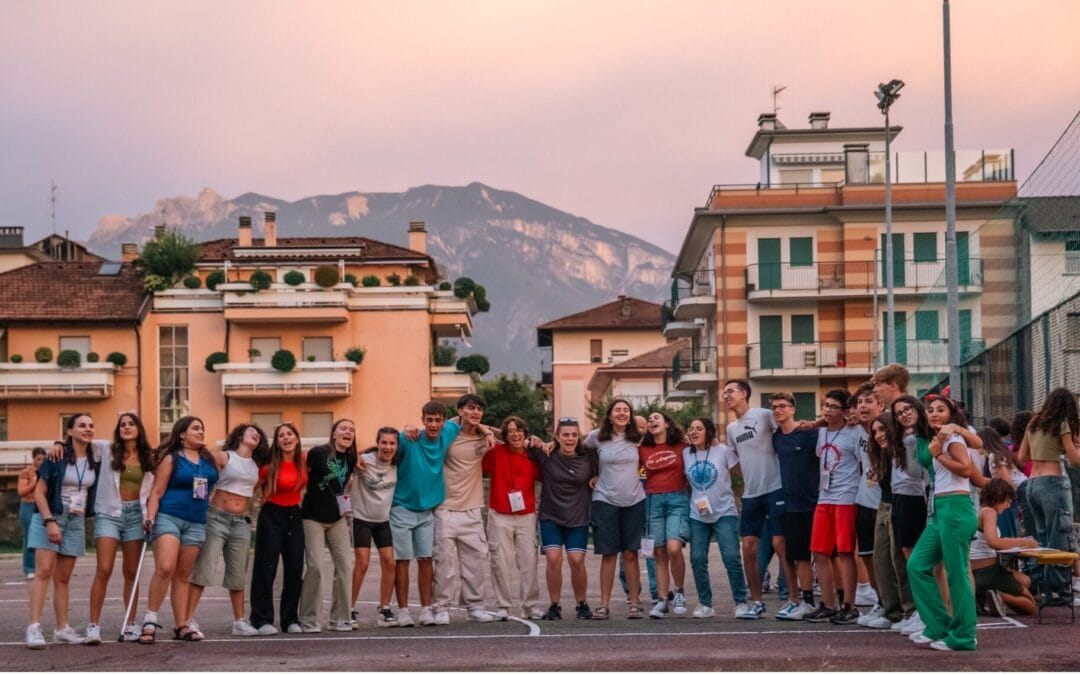
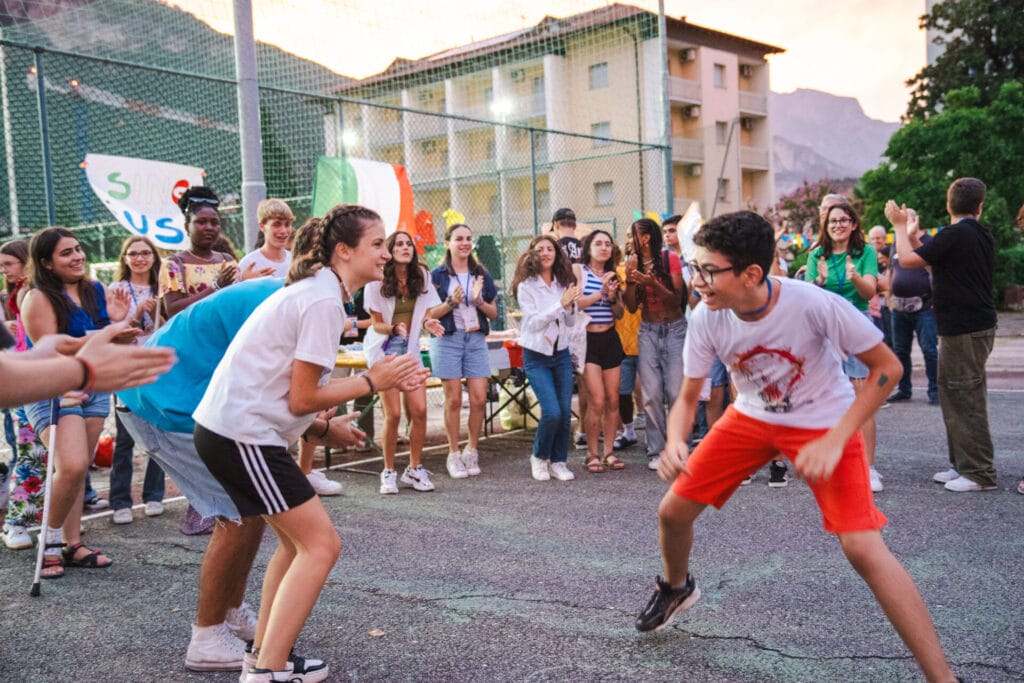
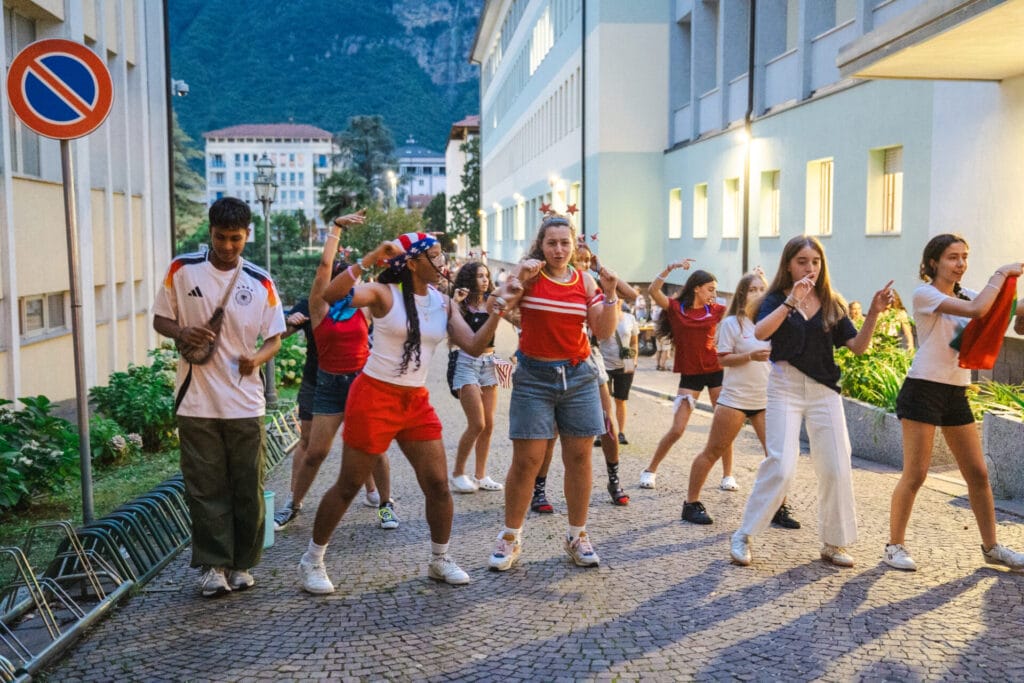
In early August in Trent, Italy, the Foco School, a Focolare Movement congress for the Gen3 boys and girls, the adolescent generation of the Movement, was held.
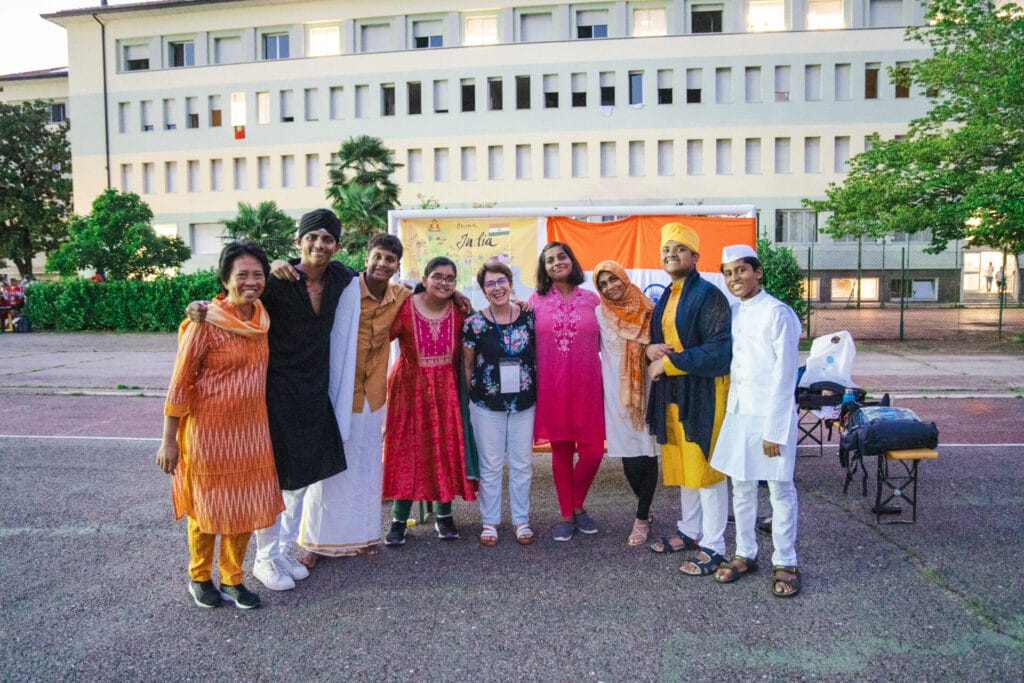
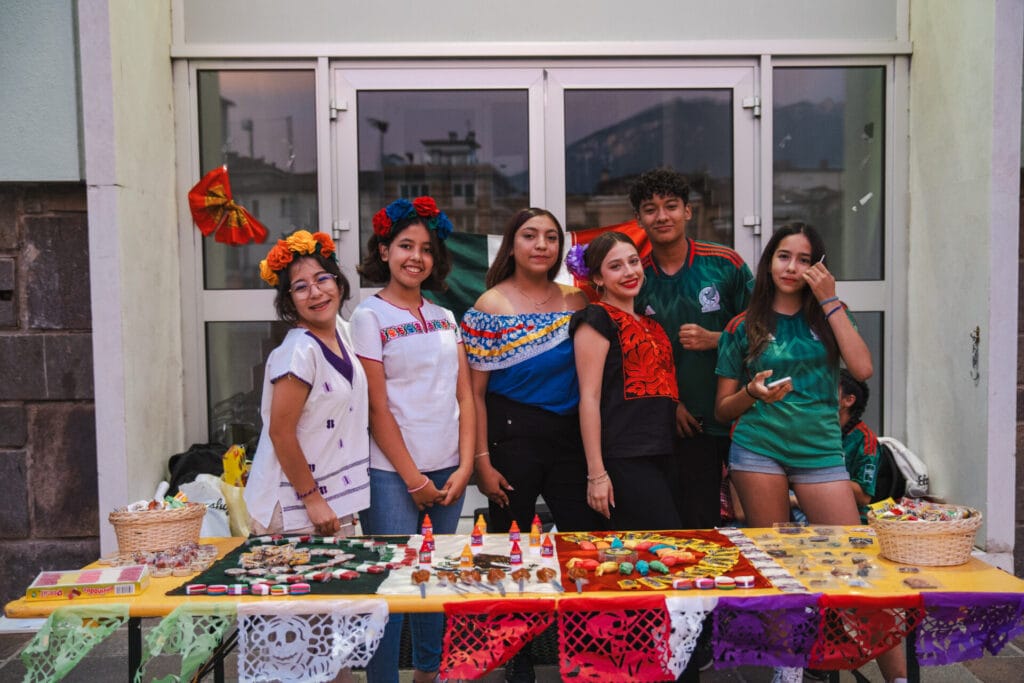
A total of 350 participants attended – ages 14 to 17 along with assistants ages 18 and older – from 19 nations with 12 different languages. A little over a week to deepen adolescent themes, experience in depth the relationship with God, discover how the Ideal of unity and universal fraternity is possible to live it and build it day by day despite the threat of wars in various parts of the world. There was also a Festival of peoples where each nation could represent itself through songs, dances, outfits, photos, and local food. A way to learn about each other’s culture and build a piece of a world that is more united and fraternal.
Here are some testimonies.
Sofia, Italy: “I decided to attend the Foco school to have a more intimate relationship with Jesus. From this school I learned the way to always love the people around me. I can better cope with moments of difficulty and pain by feeling closer to Jesus.”.
Veronika, Croatia: “I experienced a united spirit that flows from the desire for peace and community, which is based on prayer and dialogue with God. After listening to the testimonies about the violation of peace, about the struggle to keep peace in oneself, in one’s family, in one’s country, the desire to do everything to keep peace in these places was awakened in me.”.
Naomi, India: “I attended the Foco School to improve my relationship with God. At the end what I took home was how I can take comfort during times of difficulty or pain by thinking of Jesus forsaken on the Cross. But I also discovered the power of reconciliation through confession. I will always try to use my whole self to propagate the Gospel and make my city a place of love.”.
Tomás Portugal: “During the Festival of Peoples, I was proud to show our country and at the same time learn about the cultures of other countries. After this school, I miss everything I experienced there, but I also want to live what I learned there every day.”.
Emanuel, Croatia: “At Foco School, I enjoyed the Festival of Peoples. We were able to learn about different cultures and traditional dishes. I met many friends there and tried various specialties. I would gladly relive this experience 100 more times.”.
Gloria, Brazil: “I have felt changes in my relationship with God. At first I could not connect with Him and feel Him in people, but I know that after all the experiences I have heard and reflections I have experienced, I can easily feel Him in every situation. Also, I have learned to help people I don’t like, to help people with problems and to identify God in everyone.”.
Sarahi, Mexico: “I realized that even though we live in different countries and even on very distant continents, the Ideal of unity can always be lived. It was a very good experience especially to learn about other countries’ culture, food, their clothes, some words and traditions. What I took away from the school is that first of all I stopped being afraid of confession and this made my faith in God grow. Daily Mass has helped me a lot, I hope to continue going every Sunday of my own free will.”.
Sebastian, Croatia: “I liked it when we represented our countries at the Festival of Peoples: everyone showed some tradition of their country. It was a lot of fun when we played soccer in the evening and got to know each other like that. My favorite moment was the final party where we sang and had fun. My life changed after the school, now I try to live the gospel by loving the people around me.”.
Silvia, Italy: “After the school my life turned around and I began to see the world with different eyes. It was the most meaningful experience of my life and made me want to be able to resemble what Chiara Lubich always wanted from the Gen.”.
Anna, Italy: “I highly recommend Gen who have not yet attended a Foco School to do so! You will have a lot of fun, I can guarantee.”.
Jakov, Croatia: “At Foco School, I understood the importance of unity. When I arrived, everyone was welcoming, it felt like one family. Rarely have I experienced this feeling before, maybe never. Also, I understood how to love and want everyone, regardless of who they are and their background. I would like to experience more such encounters, it was an unforgettable experience.”!
Julia, Brazil: “I take home the immeasurable love of Jesus for me and for everyone, as well as the hope and the feeling of wanting a united world to become a reality. Seeing that Jesus loves each one of us and being able to feel his love at Foco School was one of the most beautiful experiences I have had and I will definitely take it with me. I found hope and faith again. Now the challenge will be to bring the love and unity I felt at school into the “real world,” at home, at school, with my friends. But it is the memories and the love of what I learned in that experience that will push me to not give up and to fight for a united world.”!
Maria Teresa, Italy: “I participated in the Foco School as I felt a desire to know more about the origins of the Focolare movement. From this School I take home the hope for a better future for our generation. My life has improved because I have realized that I have to look at it from a different perspective, make every obstacle a launching pad! Being very insecure, I am always afraid to play the violin in public. In fact, when I was proposed to play at the school I was a little unsettled. Then one day there was a talk about how each of us can give to others our own talent or quality, which Chiara Lubich calls a “pearl.” So I decided to give my pearl to others, and while I was playing with another Gen, a group of boys and girls came up to accompany us with singing, giving us support. I lived Luke’s Gospel passage (Luke 6:38) “Give and it will be given to you.”.
Elena, Italy: “At the end of this school, I take home what I understood during a day dedicated to Jesus in his pain, abandoned on the Cross. It also affected me deeply because, thanks to the testimonies of the Gen, I was able to understand how to overcome pain through love.”.
Tomás, Portugal: “I brought home the discovery of Jesus forsaken, the power of prayer, as well as confession. I will carry God’s love wherever I go, I have strengthened my faith, I have learned a lot from this school.”.
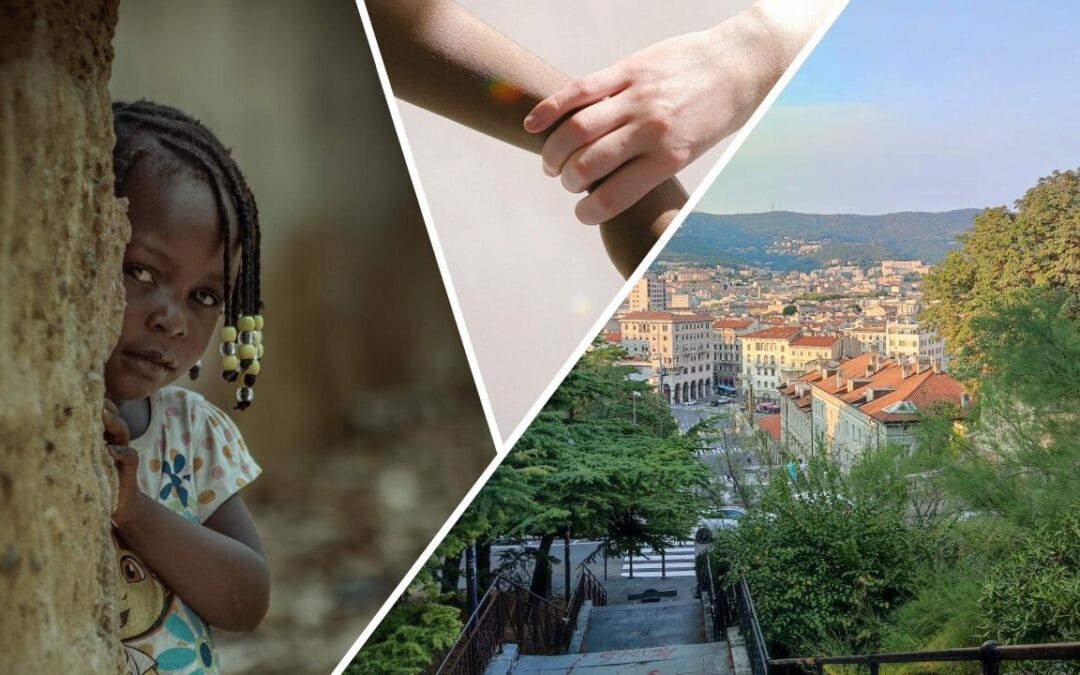
Trieste is a city located in north-eastern Italy, on the border with Slovenia. Historically, it represents a crossroads of cultures, languages and religions. Today it is one of the main entry points to Europe for migrants following the Balkan route. They come with a burden of suffering, wars and persecutions.
In Trieste, the Focolare Movement community collaborates with other institutions to welcome migrants.
Claudia, from the local community told us, “The biggest problem is the perception of the problem itself. It is not an emergency, an unmanageable invasion as it is often portrayed but it is a structural phenomenon that is the reality of our historical present. A continuous flow of incoming people who, if properly welcomed, can enrich our city and our country. If the migratory phenomenon is not understood and addressed in appropriate ways, it will inevitably generate distrust, fear, impatience, rejection”.
Last autumn, in anticipation of the cold weather, the Bishop of Trieste, Archbishop Enrico Trevisi, expressed a wish to open a shelter as a concrete response to the reception of migrants. Together with other Catholic associations and individual citizens, some Focolare members responded to the Bishop’s appeal by volunteering. Claudia said, “For us it is not just a charitable service but an opportunity to meet a brother or a sister who needs to be loved in many details: by giving a smile, offering a meal or exchanging a few words. Often these brothers and sisters tell us pieces of their story, their sorrows and their hopes. They show us photos of their children but we also have a laugh and simply spend time together. Some of us have also looked after some migrants more closely for example by accompanying them to a hospital appointment or helping them prepare a CV for a job application”.
Sandra from the Focolare community added: “We try to get to know the migrants, their stories and their needs. This gives rise to experiences that have seen us involved in helping beyond our shift at the shelter and these experiences encourage us to continue. The shifts allow us to work with the other volunteers and to discover that even though many of them are not part of any associations or involved in parish life, they were happy to respond to the Bishop’s appeal”.
Claudia said, “Relationships grow slowly and are a sign of unity for the local Church. This experience, combined with the recent Italian Catholics’ Social Week[1], which took place in Trieste and was attended by Pope Francis, will bring great life to this border city of ours”.
A guest of the diocesan shelter said, “In Trieste I met the best volunteers, people who do not stop at distributing food. Satisfying the hunger of the needy and treating the wounds of the sick are noble tasks because they are the most urgent and essential. However, human beings have other extremely important needs, for example their emotional and spiritual health, which are symptoms of the state of their soul. This is not an individual or minor issue, it is what makes the difference between actions that have a momentary impact and those that persist and permeate the entire society. The best volunteers are so because they are aware that the needy are not just recipients of charity, we are people with stories worth listening to. They know every migrant mourns their lost roots, while also harbouring a hope that crashes against the walls of the system and an incessant struggle for survival. The best volunteers are moved by this suffering humanity and are encouraged to listen to our stories, despite the language barrier. They teach Italian or learn Spanish, use technology, give up their personal time, invest their energy in the common good and dream of a community in which we can all offer the best of ourselves”.