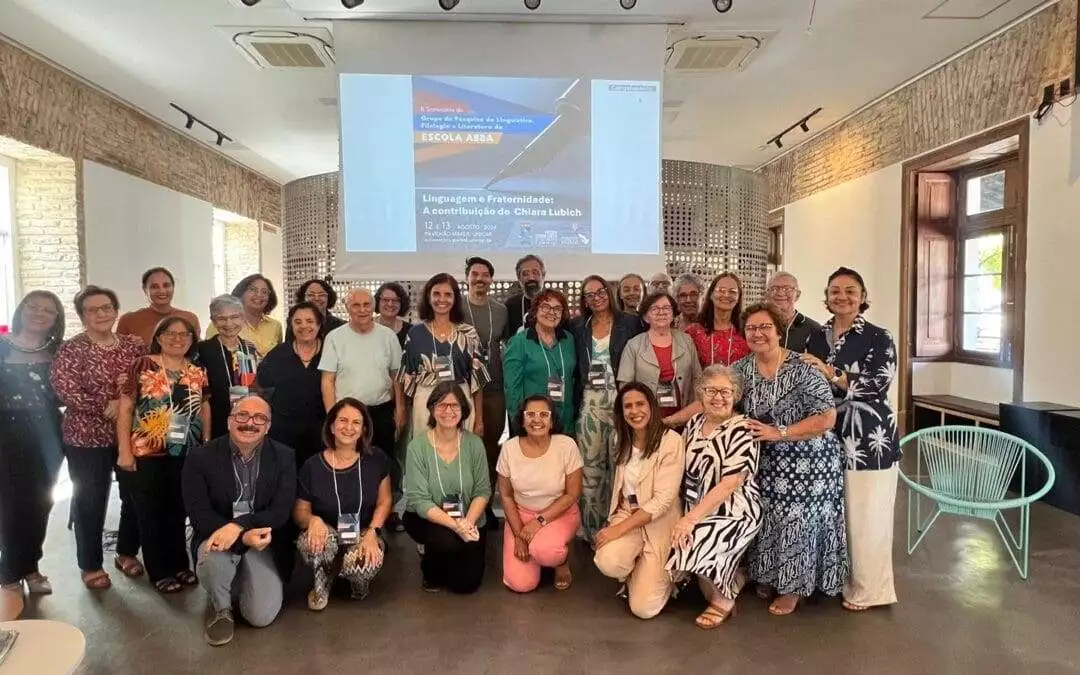
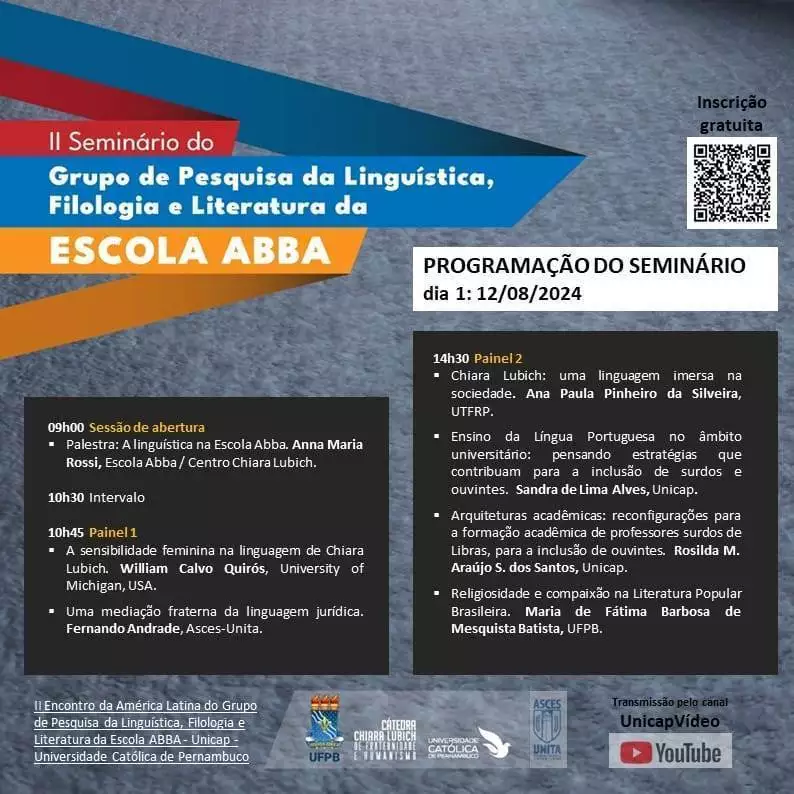
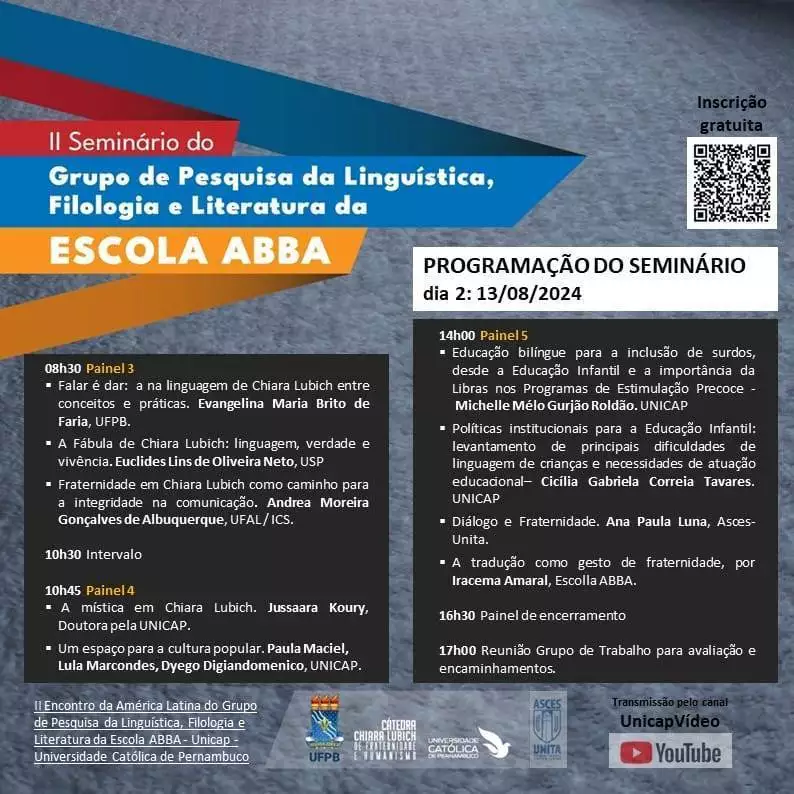
The Seminar, in its second edition after the first one held in 2017 at the Federal University of Paraiba in Joao Pessoa, presented 15 academic papers produced by researchers from six universities, around the Chiara Lubich Chair of Fraternity and Humanism at the Catholic University of Pernambuco (Unicap). The seminar comprised of two days of presentations and dialogue, introduced by a warm greeting from Vice-Rector Prof. Delmar Araújo Cardoso, and followed by live streaming to an audience of about 350 people.
The event, which was organized with the support of the Chiara Lubich Centre, was held mainly in Portuguese and was particularly appreciated for its openness to an international dimension, for the consistent and qualified contribution of the speakers, for the interdisciplinary perspective that brought together papers around the theme of language, not just in the field of linguistics, but also in the fields of law, pedagogy, communication, sociology and architecture.
What emerged, in extreme synthesis, was how a language inspired by love, of which Chiara Lubich was an effective model, can contribute to building a world of peace and fraternity.
Anna Maria Rossi
(1) The Abba School is a Centre of life and study desired and founded by Chiara Lubich in 1990. It is composed of members of the Focolare Movement, united in the name of Jesus and experts in various disciplines, whose aim is to draw out and elaborate the doctrine contained in the charism of unity.
Links to the 2nd Seminar on Linguistics, Philology and Literature:
“We are convinced that the cooperation of the Christian world is essential. The common Easter celebration in 2025 of all Christians, together with events for the anniversary of the first Council of Nicaea, can serve as a meaningful starting point to take up the challenges of humanity together and promote joint activities. We hope to organize a meeting with representatives of the Christian world, with your presence, in the place where the Nicaea council originally took place ”.
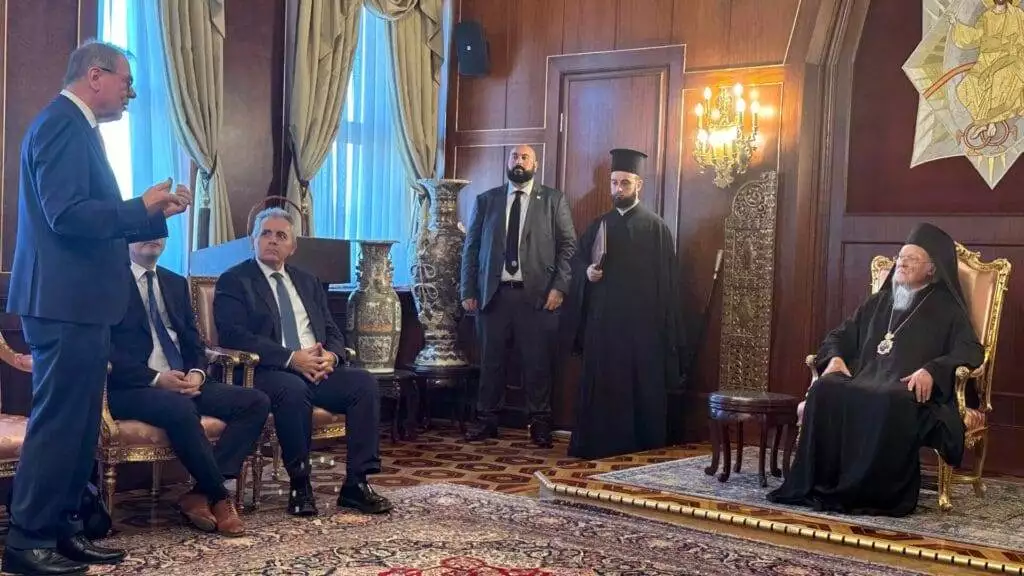
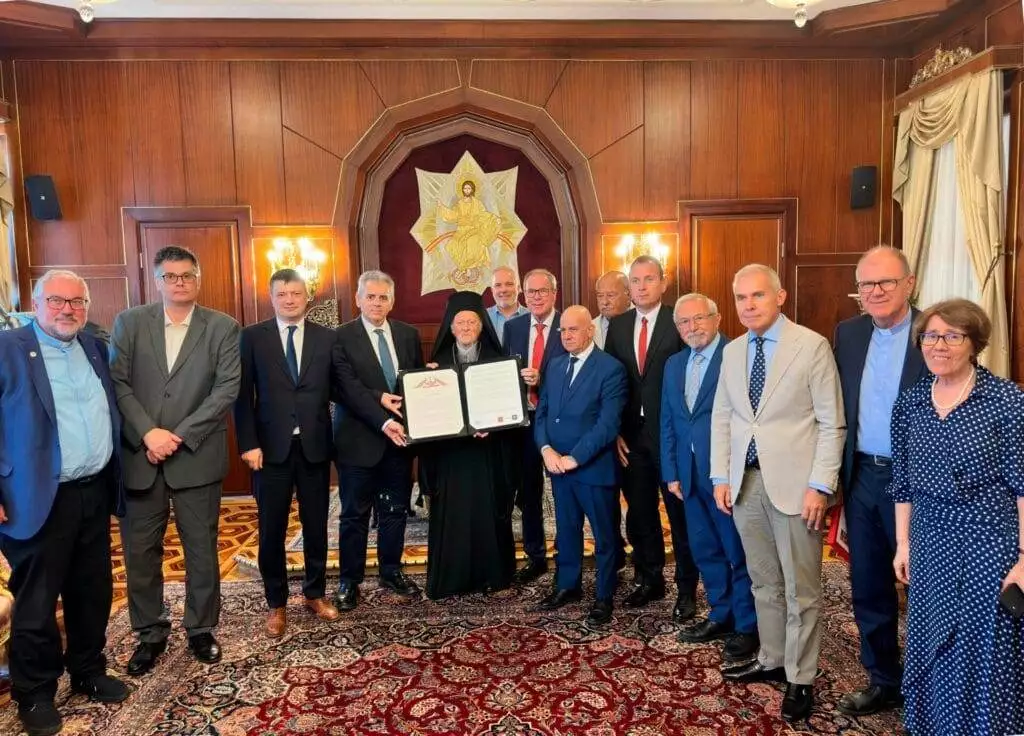
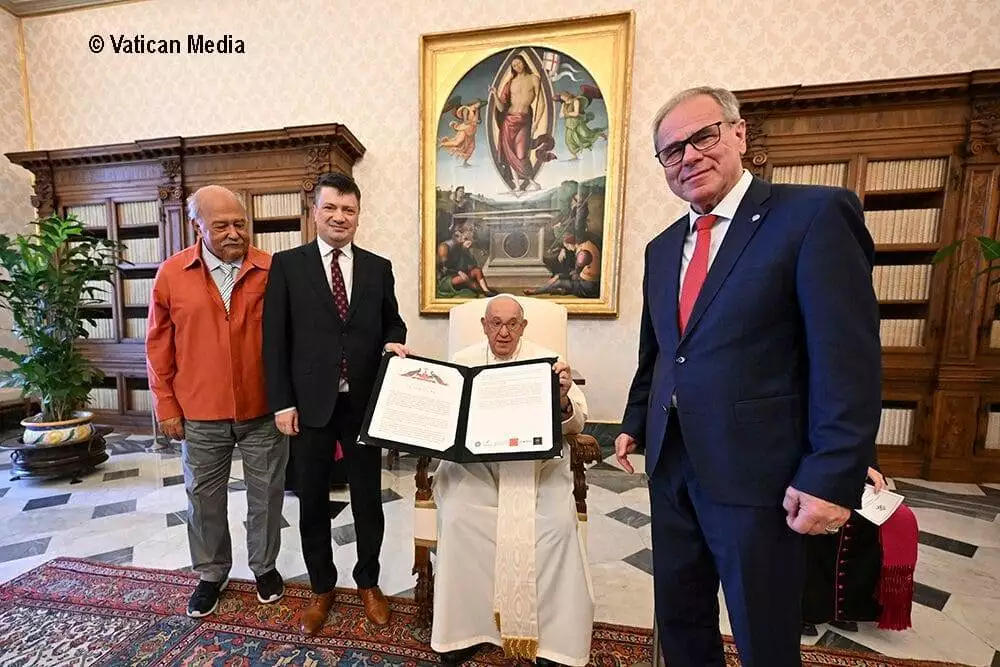
These words accompanied the ecumenical group “Pasqua Together 2025” (PT2025), that gathers groups and communities of various Christian denominations, first to Istanbul (Turkey), in audience with the Ecumenical Patriarch of Constantinople, Bartholomew I, then in the Vatican with Pope Francis, on the 14th and 19th of September respectively.
The group asked the two Christian leaders for next year’s common celebration of the Resurrection not to be an exception but to become the norm for all Christian Churches: a further step towards unity, in preparation for the upcoming Second Millennium of Redemption in 2033, which will be the 2,000th anniversary of Christ’s resurrection.
“Pasqua Together 2025” began precisely in view of the upcoming exceptional coincidence that, in 2025, the Easter date falls on the same day for the Julian and Gregorian calendars. Christians of the Western and Orthodox churches will, therefore, celebrate Easter on the same day. Moreover, the 1,700th anniversary of the Nicaea Ecumenical Council, which declared the Symbol of faith (the Creed) and addressed the theme of the Easter date, will be remembered.
The group is composed of representatives of various Christian churches and Christian political and social movements, like the Interparliamentary Assembly on Orthodoxy (I.A.O.) that was the promoter; the “Together for Europe” project, the “Jesus Christ 2033” movement and the “Centro Uno” of the Focolare Movement. The group has been following a common path for two years which has led them to signing a joint declaration that brought about the commitment to work so that all Christian churches may celebrate Easter together. Besides the Patriarch of Constantinople and Pope Francis, the document had been previously sent to the General Secretary of the World Council of Churches, Rev. Jerry Pillay and the former General Secretary of the World Evangelical Alliance, Bishop Thomas Schirrmacher. Contacts with other Christian leaders will take place soon.
Patriarch Bartholomew I announced that a joint commission made up of four Orthodox and four Roman Catholic members are already working on the programme for the celebration of the 1,700th anniversary of the first Ecumenical Council which will take place precisely in Iznick – the Turkish name of ancient Nicaea. The commission has already gone there to examine the feasibility. The mayor of the city is in favour and ready to collaborate. The invitation was naturally extended to Pope Francis, and this would be their thirteenth meeting.
The Patriarch also highlighted that the Easter date is not a question of dogma or faith, but fruit of an astronomical calculation.
Pope Francis too, in his talk reiterated that “Easter does not take place by our own initiative or by one calendar or another. Easter occurred because God “so loved the world that he gave his only Son, that whoever believes in him should not perish but have eternal life”. Let us not forget the primacy of God, his primerear, his having taken the first step. Let us not close ourselves within our own ideas, plans, calendars, or “our” Easter. Easter belongs to Christ!”
The Pope also invites to share, plan and “walk together” and he launches an invitation: that of beginning “from Jerusalem like the Apostles, who proclaimed the message of the Resurrection to the whole world”. The Pope encourages to “turn, today, to the Prince of Peace in order to pray that he gives us his peace.”
An invitation that echoes what the ecumenical Patriarch Bartholomew I had already expressed by urging the PT2025 group to promote activities defending human rights and a peaceful living together for all peoples, praying in this way: “We implore the Lord to enlighten the hearts of those in authority and to guide them on the path of justice and love, that we may heal these divisions and restore the unity that is at the heart of our faith”.
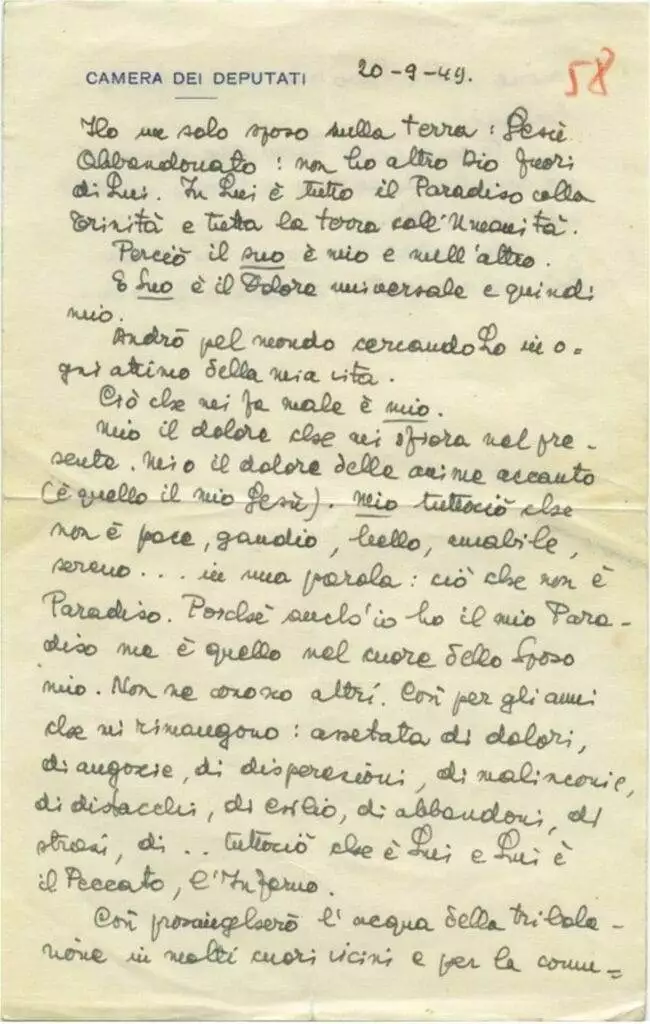
Seventy-five years have passed since the day Chiara Lubich wrote “I have only one spouse on earth”, which we have reproduced here. It’s a writing destined from the very beginning to become a true programmatic manifesto for Chiara and for those who would follow her by adopting the spirituality of unity as their own.
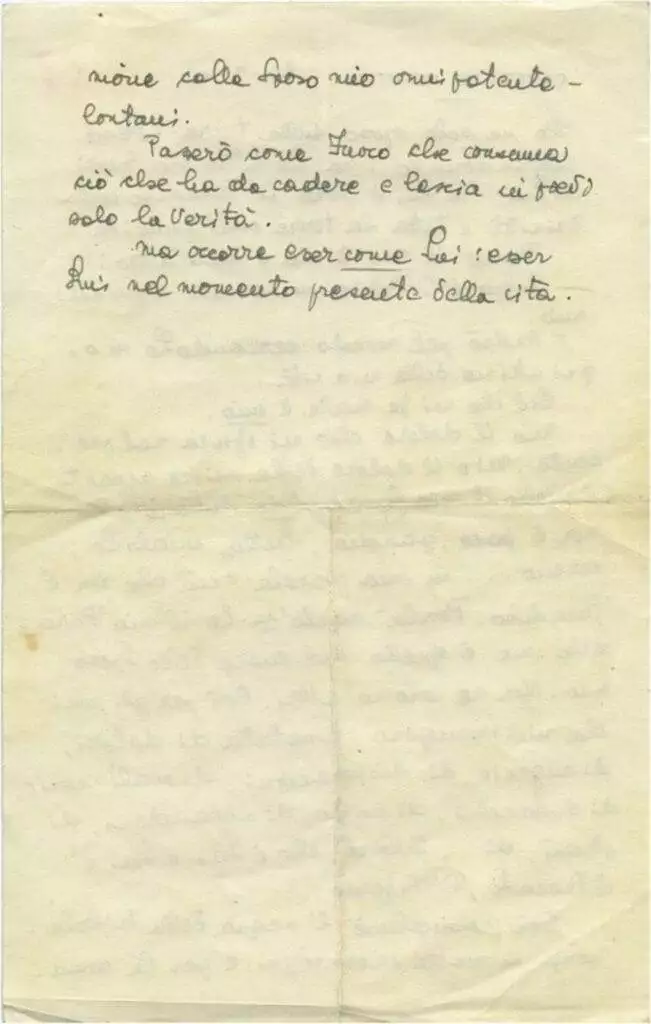
The handwritten manuscript, preserved in the Chiara Lubich Archive (in GAFM) and written on the front and back of a single sheet, records the date of its composition: 20-9-49. Published, in Italian, for the first time in 1957, in an incomplete version and with some modifications, in the magazine “Città Nuova”, it was then reprinted in other publications of Chiara Lubich’s writings, until it was finally included, in its entirety, and according to the original manuscript, in The Cry (New City, London 2001). This is a book that Chiara Lubich wanted to write personally “as a love song” dedicated precisely to Jesus Forsaken.
It began as a sort of diary page, written on the spur of the moment. Considering the unique lyrical tone that permeates it, it could be defined as a “sacred hymn”. This definition seems appropriate if one considers that the term “hymn” originates from the Greek hymnos. The word, although of uncertain etymology, has nevertheless a close relationship with the ancient Hymēn, the Greek god of marriage in whose honour it was sung. Moreover, the spousal aspect in this work is more than ever present, even if – and precisely because – we are within a strongly mystical context. It really is a “song” of love to Jesus Forsaken.
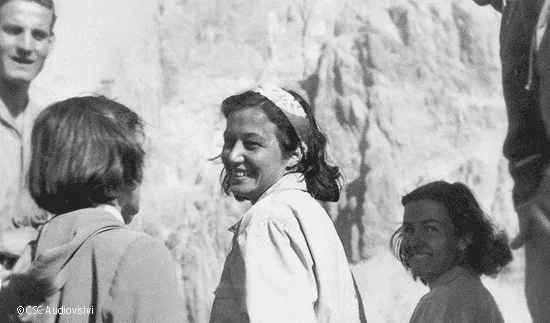
The context of the writing takes us back to the summer of 1949, when Chiara, with her first companions, and the first two men focolarini, was in the mountains – in the Primiero valley, in Trentino-Alto Adige – on holiday. Also, Igino Giordani (Foco) joined the group, for a few days. He had already met Chiara in Parliament a short time before, in September 1948, and he had been fascinated by her Charism.
It was a summer that Chiara herself described as “full of light”. Since then – going back over its stages – she did not hesitate to affirm that it was precisely in that period that she had a better understanding of “many truths of the faith, particularly who Jesus Forsaken was for humanity and for creation – he who recapitulated all things in Himself. Our experience was so powerful,” she noted, “it made us think life would always be like that: light and Heaven.” (The Cry, pages 60-61). But the time had come – urged precisely by Foco – to “come down from the mountains” to meet humanity that is suffering, and to embrace Jesus Forsaken in every expression of pain, in every “abandonment”. Like Him. Only out of love.
So, she wrote: “I have only one spouse on earth: Jesus Forsaken”.
Maria Caterina Atzori
20-9-49
I have only one Spouse on earth: Jesus forsaken. I have no God but him. In him is the whole of paradise with the Trinity and the whole of the earth with humanity.
Therefore, what is his is mine, and nothing else.
And his is universal suffering, and therefore mine.
I will go through the world seeking it in every instant of my life.
What hurts me is mine.
Mine the suffering that grazes me in the present. Mine the suffering of the souls beside me (that is my Jesus). Mine all that is not peace, not joy, not beautiful, not lovable, not serene, in a word, what is not paradise. Because I too have my paradise, but it is that in my Spouse’s heart. I know no other. So it will be for the years I have left: athirst for suffering, anguish, despair, sorrow, exile, forsakenness, torment— for all that is him, and he is sin, hell.
In this way I will dry up the waters of tribulation in many hearts nearby and, through communion with my almighty Spouse, in many faraway.
I shall pass as a fire that consumes all that must fall and leaves standing only the truth.
But it is necessary to be like him: to be him in the present moment of life.
Chiara Lubich The Cry (New City, London 2001, pages 61-62)
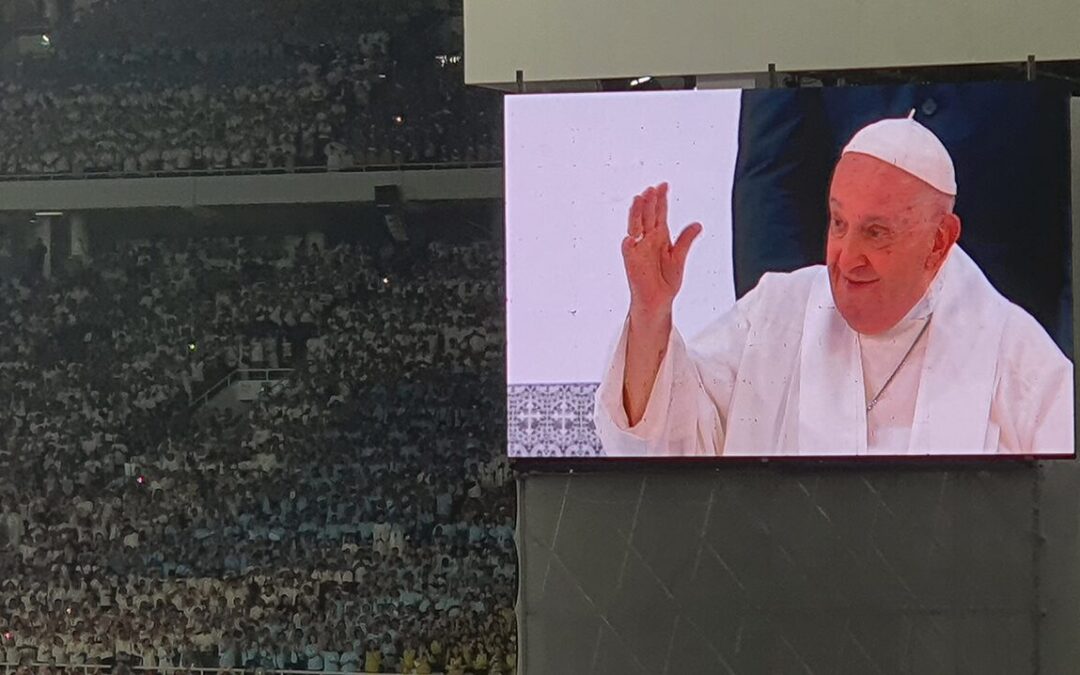
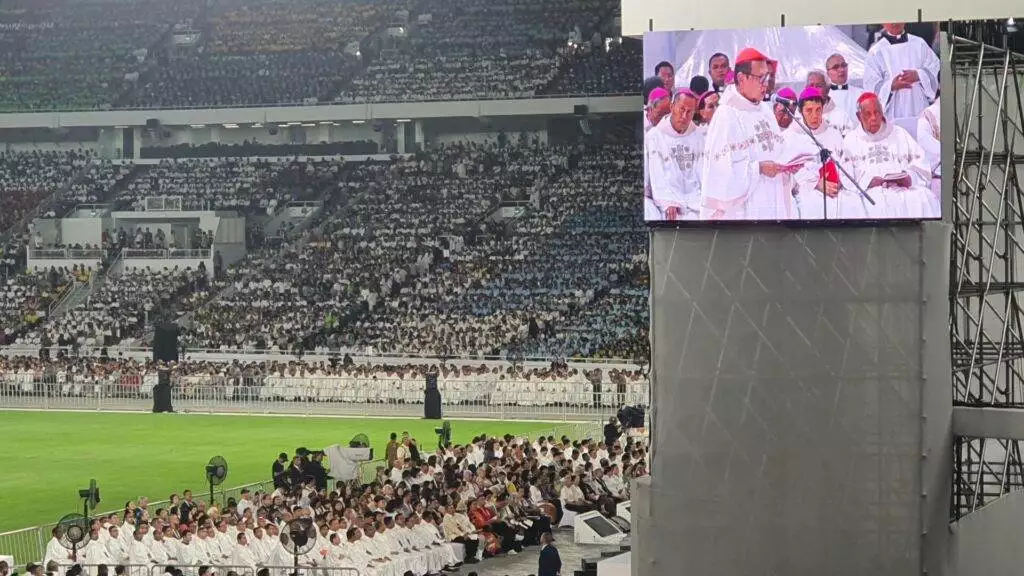
Pope Francis’ latest trip to Asia and Oceania has so far been the farthest, longest and probably the most physically demanding the Pope has ever undertaken. What does this visit mean for the local communities? We asked Paul Segarra, focolarino of the Indonesian community.
Paul, what was the significance of the Pope’s visit to your country?
“This heroic gesture of the Pope is for me an image of God’s love that knows no limits and reaches out to his most distant children, who are certainly not the least-valued in his eyes. The Holy Father took the time to look at them with love, marvel at their giftedness, share their sufferings and longings for justice and peace, then encouraged them to face their challenges together and transcend their limits. But he did not only utter words that inspired and encouraged. He also demonstrated, by example, the strength in faith, the openness to fraternity and the nearness in compassion that he invites his listeners to acquire. He did this through his planned choices and spontaneous gestures, he acted and lived from the heart”.
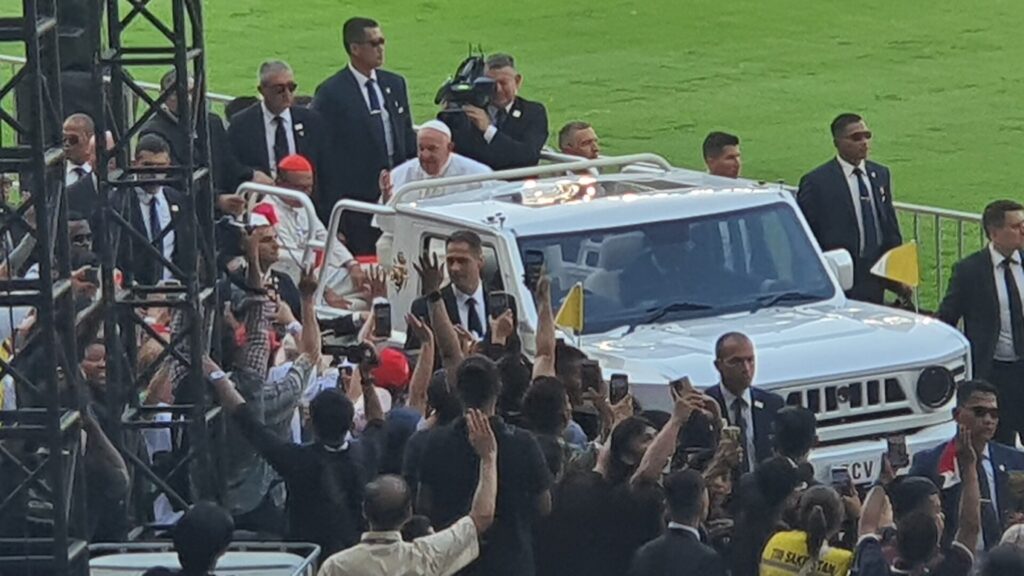
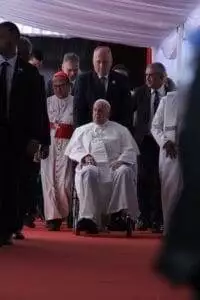
“As news of his arrival spread quickly – Paul Segarra recounts -, there were also many comments on various social platforms about his chosen means of transport: a sober white sedan, in which he preferred to sit beside his driver, instead of taking the usual presidential back-seat, I imagined because he wanted to converse with his driver face-to-face. Seeing this gesture of his, I realised with regret that I could have done the same with the driver who brought me to my accommodations in Jakarta that same evening. But thereafter, my rides became undeniably more enjoyable, as I took to the habit of getting to know my hired drivers through friendly conversation”.
Paul, how did the local Focolare community experience this event?
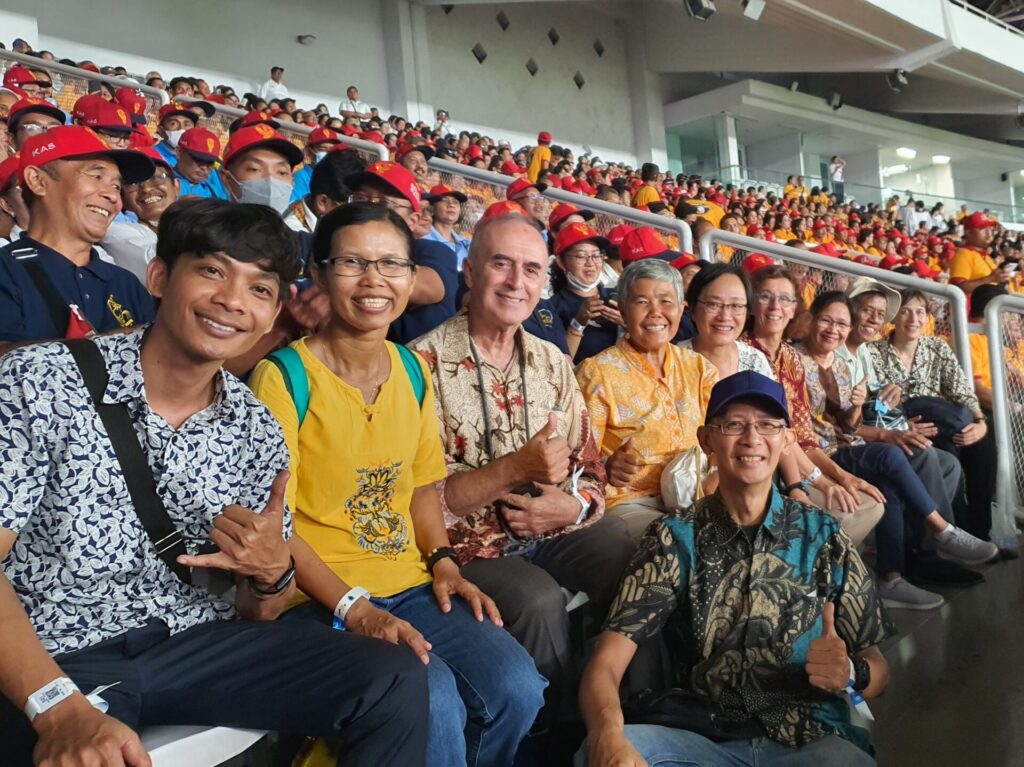
“Some members of our Focolare communities in Jakarta and Yogyakarta had the privelege of participating in some of the events that were graced by the pope’s presence. At the Jakarta Cathedral (dedicated to Our Lady of the Assumption) the Holy Father acknowledged the work of catechists, describing them as “bridges of the heart that unites all the islands”. We were moved as he drew our attention to a statue of the Virgin Mary, and gave her as a model of faith that welcomes everyone, even as she keeps watch over and protects the people of God as the Mother of Compassion”.
Pope Francis and Imam Umar signed the Joint Declaration. What future do you see for Christians and Muslims together after this signing?
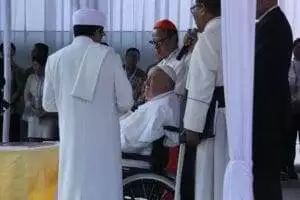
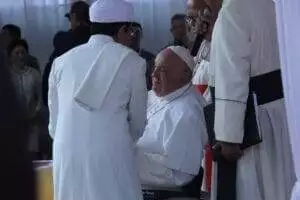
“Tomy, one of our photographers who covered the pope’s visit to the Istiqal Mosque and endured long hours of waiting under the city-heat, was visibly touched as the Holy Father finally arrived and greeted them from his car. Assuming a discreet position just outside the entrance to the underground, pedestrian tunnel that physically connects the Great Mosque to the Cathedral across the street, he managed to capture the moment Pope Francis and High Imam Umar signed the Declaration of Fraternity in front of a small crowd of bishops, imams and other religious figures, and said he had high hopes that this visit would create true harmony between all people of faith. And what is faith, if not seeing, acting and living from the heart?
We have probably experienced how, at times, even though there are ideas and beliefs that lie deeply in our hearts and consciences, it is difficult to put them into action. It may help us to live an inspirational thought each day and know that other people all over the world are doing the same. We will not feel alone but part of a worldwide network. This was the intention that led to the development of the Idea of the Month: it was initiated by a few people in Uruguay who were passionate about dialogue and the ideal of unity.
This practice led to groups developing all over the world for people who want to reflect upon the Idea of the Month and share experiences of living it. Infact, in many places, these monthly meetings have become the norm. Could this become just a habit? Could the Idea become simply an all-encompassing good precept that is disseminated online like so many others on virtual groups? Certainly this is the biggest risk for initiatives of this kind. However, it is important that we do not settle for empty words and repeated platitudes. The English have the proverb: ‘Actions speak louder than words’. In the Netherlands, there is the saying: ‘Talk does not fill holes’. These expressions do not come about simply by chance. We can,however remember there is a word that guards against the risk of this happening and that word is ‘consistency’.
In the book entitled The Book Of Joy, the dialogue between the Dalai Lama and Desmond Tutu [1] highlights some points that can help us to live with consistency. First of all, we can listen to our consciences. Each person can assess what is their heart’s desire because this will almost certainly be linked to those human values that give a sense of happiness. We can also ask ourselves if what we want is just for ourselves or will it benefit others too? Will it serve a small number or many people? Now or in the future? When we have thought about these matters, we can formulate an intention for the day, with practical commitments even if they are small. For example, “Today I want to greet everyone; today I will be less judgmental; today I will be more patient…”
But how do you find the courage to follow your conscience? You need to speak to wise people about your ideas and try them out whilst remaining open to the possibility of being wrong. When you finally reach a mature decision, you can begin to put it into practice together but then regularly take time to reassess, renew and strengthen goals. You should not let setbacks, lack of cooperation or established but unhelpful habits put you off track and lose sight of what you hope to achieve.
This was seen in the actions of Piero Taiti when he began to know the Focolare Movement. He was truly a man of dialogue. This was seen in the many journeys he made to the little town of Fontem in Africa and in the personal relationship he built with the ‘focolarini’ for whom he held great respect. He saw that they were people whose actions came before their words and who worked with open minds alongside people, like him, who did not share their faith. He later found that his friendship with Chiara Lubich was a point of deep encounter and sharing of profoundly human values. Until the end of his life, Piero’s actions demonstrated and transmitted the power of this encounter in all areas of his life – as a family man, husband, doctor, politician and trusted friend of so many who recognised his moral calibre.
Not words, but actions. This gives energy to a person and makes them happy within. Living this way, we serve our neighbours.
[1]The Book of Joy: Lasting Happiness in a Changing World, Tenzin Gyatso, the 14th Dalai Lama, and Archbishop Desmond Tutu with Douglas Abram published in 2016 by Cornerstone Publishers
THE IDEA OF THE MONTH,THE IDEA OF THE MONTH is currently produced by the Focolare Movement’s ‘Centre for Dialogue with People of Non-religious Beliefs’. It is an initiative born in 2014 in Uruguay to share with non-believing friends the values of the Word of Life, i.e. the phrase from Scripture that members of the Movement strive to put into practice in their daily lives. Currently THE IDEA OF THE MONTH is translated into 12 languages and distributed in more than 25 countries, with adaptations of the text to different cultural sensitivities. www. dialogue4unity.focolare.org