In the growing tensions in the Middle East powder keg, under the falling bombs and missiles into the ‘martyred’ Ukraine, amidst the great number of the conflicts that lacerate and starve the peoples of Africa, while ‘the winds of war and the fires of violence continue to upset entire peoples and nations’, Pope Francis calls to the ‘weapons’ of fasting and prayer – those which the Church indicates as powerful – millions of believers from all continents to implore from God the gift of peace in a world on the brink of abyss.
As he had already done for the conflicts in Syria, the Democratic Republic of Congo and South Sudan, Lebanon, Afghanistan, Ukraine and the Holy Land from 2013 to 2023, Pope Francis called for a new day of prayer and abstention from food to invoke the gift of peace for Monday 7 October 2024, also announcing his visit on Sunday 6 October 2024 to the Basilica of Santa Maria Maggiore in Rome to pray the Rosary and pray to Our Lady, asking for the participation of all members of the Synod.
‘We cannot but call once again on the rulers and those who have the grave responsibility for decisions,’ wrote Card. Pierbattista Pizzaballa, Patriarch of Jerusalem of the Latins in a letter to his diocese adhering to the Pope’s appeal – to a commitment to justice and respect for everyone’s right to freedom, dignity and peace’. The Patriarch went on to reiterate the importance of everyone’s commitment to building peace in their own hearts and in community contexts, supporting ‘those in need, helping those who are working to alleviate the suffering of those affected by this war and promoting every action of peace, reconciliation and encounter. But we also need to pray, to bring to God our pain and our desire for peace. We need to convert, to do penance, to implore forgiveness’.
On Oct. 4, the day of St. Francis of Assisi, ends the period of the Season of Creation, a period in which it is proposed to deepen dialogue with God through prayer, associated with concrete actions for the care of the planet. The Focolare Movement has always supported the initiative by participating and organizing events in various parts of the world. Here are some initiatives from the Season of creation 2024.
In Leonessa, at the center Italy, a nature walk was held. The event, entitled Breaths of Nature: together for our planet, was attended by young and old alike. The group of participants departed from the Capuchin friars’ monastery, led by the friars themselves together with the forest police, the Italian Alpine Club and Prof. Andrea Conte, astrophysicist and Italian coordinator of EcoOne, the Focolare Movement’s Ecology network. The excursion culminated at a spring, where Prof. Conte led an evocative meditation on the journey of a carbon atom in the environment. Conte then showed how to turn ordinary waste into tools for scientific experiments, demonstrating how science can be fun and affordable for everyone.
Following this, topics such as environmental awareness, the effects of climate change and the importance of education for sustainability were discussed in depth at the town’s Auditorium. Prof. Luca Fiorani, from the EcoOne International Commission, offered an in-depth analysis of Pope Francis’ encyclical Laudato Si’, the concept of integral ecology and relational sustainability. The large attendance and the attention shown by those in attendance is proof of a growing interest in environmental issues and a growing awareness of the importance of taking action to protect our planet.
In Oceania, this is the fourth year that the Focolare community has contributed to ecumenical prayer for the Season of Creation. “We have been praying and witnessing through various actions of caring for our common home,” they recount. ”This prayer service is our effort to give hope to our vast area that stretches 7,000 km from Perth, Western Australia, to Suva, Fiji, the largest island nation in the heart of the Pacific. This was followed by a reflection by Jacqui Remond, co-founder of the Laudato Si’ Movement and professor at the Australian Catholic University, who spoke about the need to change hearts for ecological conversion.
Archbishop Peter Loy Chong of the Archdiocese of Suva in Fiji could not join them because he was welcoming Pope Francis in Papua New Guinea. But he sent a message emphasizing in particular the importance of the word “Tagi,” which means “the cry of the peoples of Oceania.” It is the cry of the small Pacific islands in the face of climate change, which has not yet affected the world. Or rather: the world has not yet listened deeply to the voices and particularly the cry of the people of Oceania.
Various experiences followed such as the creation of an Aboriginal reconciliation garden at the Mariapolis Center in St Paul. Horticulture students and their teachers who use the center for their classes were invited here. They are all migrants and were very interested in learning about the important indigenous food plants.
Young people from Sydney, Canberra and Melbourne, on the other hand, joined with an Aboriginal elder for a walk in the countryside where they learned how to relate to and care for creation.
In Mexico, a course was held on ecological conversion and spirituality, an open dialogue for the care of the Common Home. It was an initiative of the Evangelii Gaudium Mexico Center, Sophia ALC University together with the Focolare Movement. Five online sessions – one each week during the Season of Creation – by Prof. Lucas Cerviño, focolarino theologian and missiologist. 87 participated from different Latin American countries, from Mexico to Argentina. Here are some of the themes addressed: the ecological crisis and conversion; metamorphosis of the sacred and spirituality; God is love as a fabric of life in love; listening to the cry of the earth and the poor as love for Jesus forsaken and crucified; unity looked at as cosmic fraternity to care for the Common Home; Mary as Queen of Creation and the presence of Mary’s mystical body.
Finally, in Italy, in the city of Padua, the “Path of the 5Cs of Laudato Sì” was inaugurated thanks to the network Nuovi Stili di Vita made up of civil, religious, and lay associations-including the Focolare Movement-that care about promoting lifestyles that are moderate and respectful of nature, sustainable economy, and that stimulate communities with initiatives and proposals to achieve the common good together.
The 5Cs path was installed at a flowerbed where in 2011 the five Ecumenical Churches, (Catholic, Orthodox, Lutheran, Methodist and Evangelical), celebrated the Day for the Custody of Creation by planting five beech trees together. It was preceded by a short concert by a young singer-songwriter from Vicenza who communicated to us the sensitivity and dreams of today’s youth toward a future of hope.
The 5Cs highlight five terms taken from Pope Francis’ encyclical: custody, conversion, community, care, change. The event was lived with intensity and was a spur for resolutions of concrete commitment to achieve a better, more just and equitable world, in harmony with the Earth we inhabit.
Jesus is on his way to Jerusalem and, for the third time, he tries to prepare his disciples for the dramatic event of his passion and death but those who have followed him most closely are very ones who seem unable to understand what is about to happen.
Infact, conflict arises among the apostles themselves: James and John ask to occupy places of honour ‘in his glory’ [1] and the other ten become indignant and start to complain. In short, the group is divided..
Then Jesus patiently calls them and repeats what he has proclaimed. His words are so new that they create a sense of shock.
Whoever wants to become great among you must be your servant, and whoever wants to be first must be slave of all.
In this phrase from Mark’s gospel, the image of the servant-slave reaches a crescendo. Jesus leads us from having an attitude of simple availability within the limited and affirming groups to which we may belong to being totally dedicated to everyone, with no exception.
This is a completely alternative and countercultural proposal when compared to the usual human understanding of authority and governance which possibly fascinated the apostles themselves and impacts upon us too.
Perhaps this is the secret of Christian love?
‘One word in the Gospel that is not emphasized enough by Christians is “serve”. It may seem old-fashioned to us, unworthy of the dignity of human beings who both give and receive. Yet it is central to the Gospel which is all about love. And to love means to serve. Jesus did not come to command but to serve. To serve, to serve one another is the heart of Christianity, and whoever lives this with simplicity – and everyone can do so – has done all that is necessary. Doing so ensures that people do not remain alone because since love is the essence of Christian life, it spreads like fire.’ [2]
Whoever wants to become great among you must be your servant, and whoever wants to be first must be slave of all.
The encounter with Jesus in his Word opens our eyes, just as it did for the blind man, Bartimaeus, whose story is found immediately after this Word of Life. [3]Jesus frees us from our narrow vision and allows us to contemplate the horizons of God himself, of his plan for ‘new heavens and a new earth.’ [4]
Jesus washed the feet of others [5] and by his example overturned the often rigid practice in society, and even in religious environments, of relegating the task of practical service to a certain class of people.
Christians, therefore, should imitate Jesus’ example and learn from him a new style of life in society. This means being a ‘true neighbour’ to each person we encounter, whatever their social or cultural condition may be.
As John Anziani, a Methodist pastor of the Waldensian Church, suggests, ‘By agreeing to place our trust and our hope in the Lord, who is the servant of many, the Word of God asks us to act in our world and in the midst of all its contradictions, as people who work for peace and justice, as bridgebuilders who facilitate reconciliation among nations.’ [6]
This is also how Igino Giordani, writer, journalist, politician and family man, lived during a time marked by dictatorship. To describe his experience, he wrote: ‘Politics is – in the most dignified Christian sense – a “servant” and must not become a “master”: nor should it abuse, dominate or dictate. Its function and dignity is to be of service to society, to be charity in action, to be the highest form of love for one’s homeland.’[7]
Through the witness of his life, Jesus proposes to us a conscious and free choice. Rather than living closed in on ourselves and our own interests, we are asked to ‘live the life of the other person,’ feeling what they feel, carrying their burdens and sharing their joys.
We all have small or large responsibilities and spheres of authority. These may be in the field of politics or in other areas of society such as within our families, schools or faith communities. Let’s take advantage of our ‘places of honour’ to put ourselves at the service of the common good, creating just and compassionate human relationships with everyone.
[1] Cf. Mc 10,37. [2] C. Lubich, Servire, in «Città Nuova» 17 (1973/12), p. 13. [3] Cf. Mc 10, 46-52. [4] Cf. Is 65, 17 e 66, 22, ripreso in 2 Pt 3,13. [5] Cf. Gv 13,14 [6] https://www.chiesavaldese.org/marco-1043-44/ [7] P. Mazzola (a cura di), Perle di Igino Giordani, Effatà editrice Torino 2019, p. 112.
“Service” is a word that may seem old-fashioned in certain contexts. Servitude is certainly unworthy of human beings when it is imposed or endured because of poverty or discrimination. Instead, the “spirit of service,” especially when it is reciprocal in a community of any kind, is a witness to changing social relationships that break down old patterns of behaviour and new power structures. Indeed, service lived with humility characterizes protagonists of real progress. Nitin Nohria, former dean of Harvard Business School, says that in the future, being a good leader will require learning about humility. He believes this “future” has already begun. According to him, humility will have to become a key word in the profiles of the next generation of aspiring managers andhe does not lack experience in this field. He says this because he realizes that the current trend of being increasingly competitive is producing results completely opposite to expectations. It is creating people who are psychologically fragile, needy, narcissistic and obsessed with appearance (1). After all, great women and men are recognized through their small actions, just as ancient Eastern wisdom reminds us: “The largest tree is born from a small shoot. The tallest tower is born from a mound of earth. A journey of a thousand miles begins with a single step.” (2) Living this way requires a conscious and free choice: it demands that we do not liveclosed in on ourselves and our own interests, but that we“live the other”,and feel whatever they feel, carry their burdens and share their joys. We all have responsibilities, bothlarge or small, and areas of authority. They may be in the political or social fields or within our family, school or community. Let us take advantage of our “places of honour” to put ourselves at the service of the common good, building just and supportive human relationships. This is also how Igino Giordani, writer, journalist, politician and family man, lived during a time marked by dictatorship. To describe his experience, he wrote: ‘Politics is – in the most dignified Christian sense – a “servant” and must not become a “master”: nor should it abuse, dominate or dictate. Its function and dignity is to be of service to society, to be charity (3) in action, to be the highest form of love for one’s homeland. It was probably the personal relationship that Chiara Lubich had with this man who was rooted in his time but also saw beyond its barriers and walls that led her to remind usmore than once that true politics is “the Love of Loves,” because it is the means of the most authentic and disinterested service to humanity in fraternity.
(1) Michele Genisio “Umiltà” (in press) (2) Daodejing,64 (3) Giordani uses the word charity not in the ‘welfare’ sense, as it is usually understood, but in the Christian sense, which indicates the highest form of love.
——————
THE IDEA OF THE MONTH iscurrentlyproduced by the Focolare Movement’s “Centre for Dialogue with People of NonreligiousBeliefs”. It is an initiative that began in 2014 in Uruguay to share with non-believing friends the values of the Word of Life, i.e. the phrase from Scripture that members of the Movement strive to put into practice in their daily lives. Currently, THE IDEA OF THE MONTH is translated into 12 languages and distributed in more than 25 countries, with adaptations of the text according to different cultural sensitivities. https://dialogue4unity.focolare.org/en/
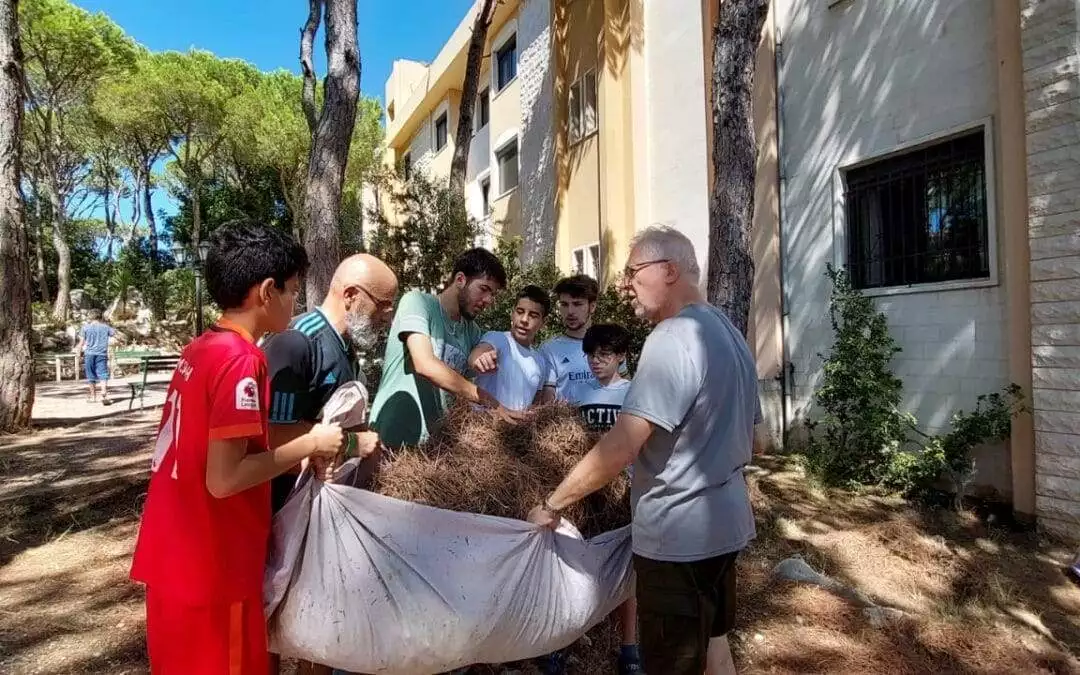
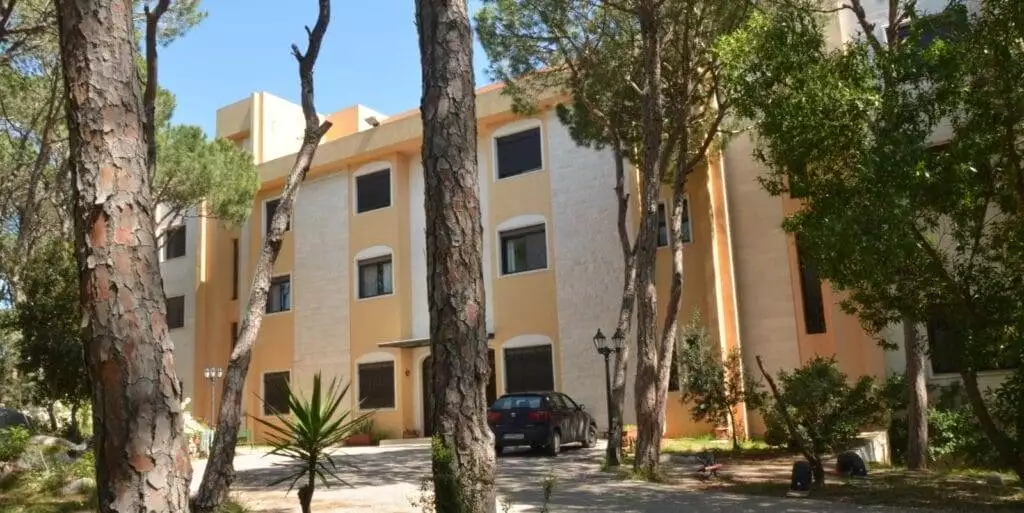
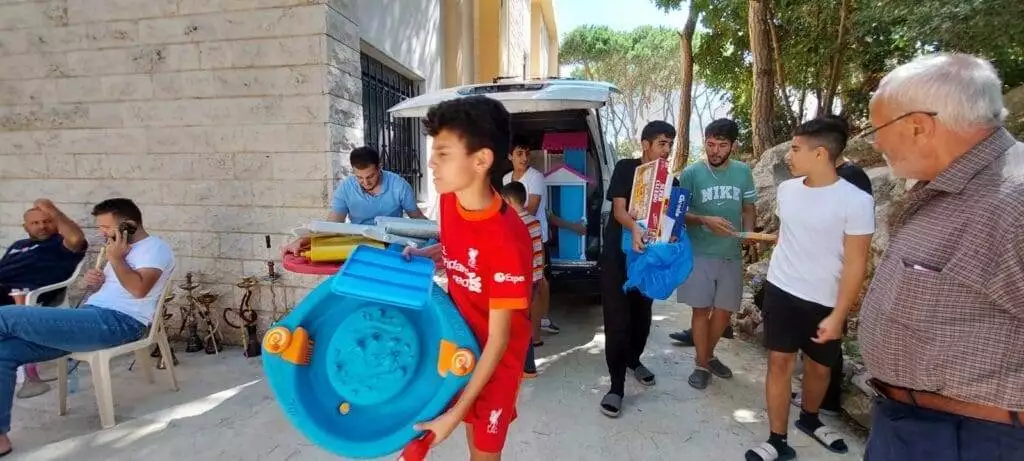
The “La Sorgente” Mariapolis Centre is located in Ain Aar, in a mountainous area, 20 kilometres north of Beirut. Just as it was in 2006, the year of the 34-day military conflict between Israel and Hezbollah, people fleeing the bombs that are devastating the South of the country are arriving here, in this predominantly Christian and asking for hospitality. “It is normal to knock on the door of the Mariapolis Centre and find it wide open,” says R. of the Lebanese community of Focolare. “How could we not welcome them? What would have become of the ideal of brotherhood that we cherish and which should be our hallmark?” A similar experience occurred in 2006. Then too, Lebanon experienced large-scale movements of families and the Focolare welcomed more than a hundred friends, entire extended families in its Mariapolis Centre. “We met in those conditions and became like brothers and sisters, sharing joys and sorrows, hopes and difficulties, needs and prayer. In a simple and sincere relationship, woven into everyday life, a true experience of brotherhood started and grew, without filters or prejudices”.
No one expected the situation to deteriorate so quickly. “The Lebanese were preparing to return to school, optimistic about this new year”, says R. “Yet an unexpected storm erupted, relentless, threatening and deadly”, with “terrible consequences for a population thirsting for peace, justice and paths of dialogue”. In a few days, or rather hours, military actions hit ordinary neighbourhoods and the people found themselves living “a real nightmare”. According to the Ministry of Public Health, as of 25th September, almost 600 people have been killed in Lebanon, including more than 50 children and 94 women, and about 1,700 others have been injured since 23rd September. Mass displacement continues, reaching around 201,000 internally displaced persons (IDPs), according to data from the International Organization for Migration (IOM).
Since Sunday, the “La Sorgente” Mariapolis Centre has also been filled with guests “arrived with their fears, the trauma experienced in their targeted villages and neighbourhoods”. They drove 120 kilometres, taking between 5 to 8 hours. The roads are crowded with cars fleeing the South. They leave the villages before reaching the big cities of Tyre and Sidon. Around them, they see the destruction of the recent bombings. There are currently 128 guests at the Mariapolis Centre in Ain Aar. Some come from the South, others from the popular suburbs of Beirut hit by the latest attacks. It is not easy: “Their presence raises questions in the Christian community of the region”, say the focolarini. “One wonders: are there members of Hezbollah among them who could threaten peace in the region? But the sense of solidarity is stronger than suspicion. “R. adds: “Where could they seek shelter this time too? Where could they go and know that they would be welcomed without reservation?” For the community of the focolare, a new adventure begins. The welcome is coordinated with local, religious and civil authorities.
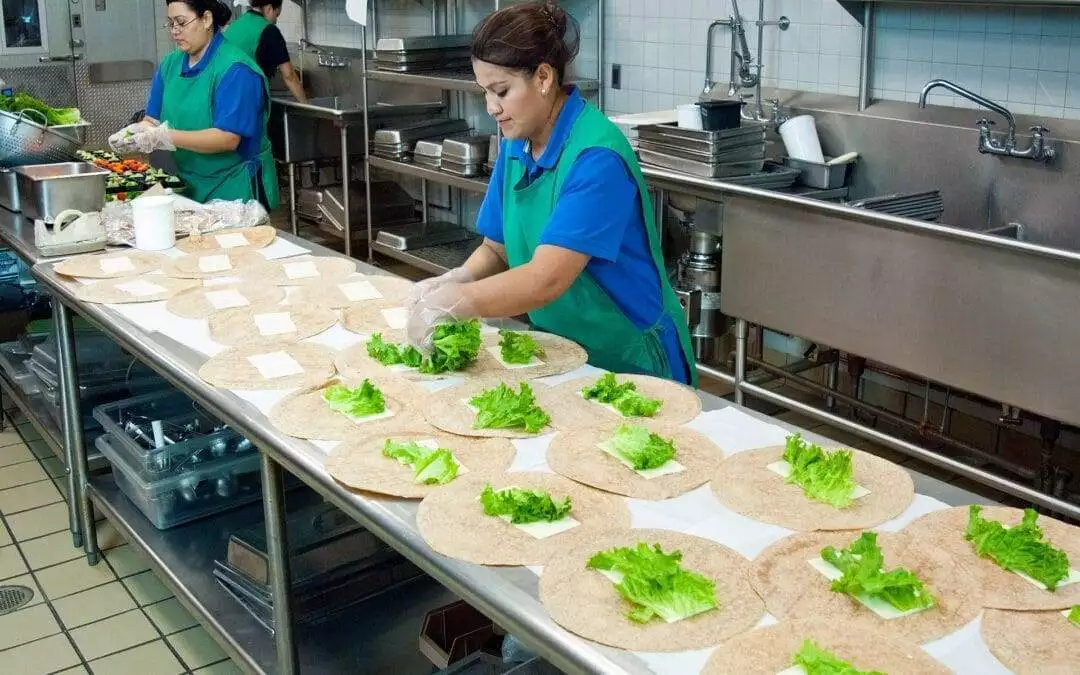
A “contest” of solidarity is taking place throughout the country. From the parish priest, to the faithful of the parish, to the volunteers. There are those who take care of the children by organising activities and football matches for them. Those who take care of the necessary help for the reception. “People arrive shocked, worried about their future, with the apocalyptic sight of destroyed houses, burned fields, but also news of acquaintances, relatives, neighbours, friends or students who were killed in the attacks and they will never see them again. Together we unite in living the present moment, with the faith that has allowed us to endure adversity for centuries”.
The “La Sorgente” Centre aims to be, along with many other places scattered throughout the country, true “oases of peace”. “The hope, the deepest wish is that we can soon return home. So much blood spilled must make the desert of hearts bloom. We hope that this ordeal we are experiencing will open a breach in the conscience of the powerful and of everyone, showing that war is a defeat for all, as Pope Francis repeats. But above all we believe and hope that from this crucible of pain a message of possible brotherhood for the entire Region can emerge from Lebanon “.
Maria Chiara Biagioni Source: AgenSir Photo: Focolare Lebanon