
Alba Sgariglia: the mystical experience of Paradise ‘49
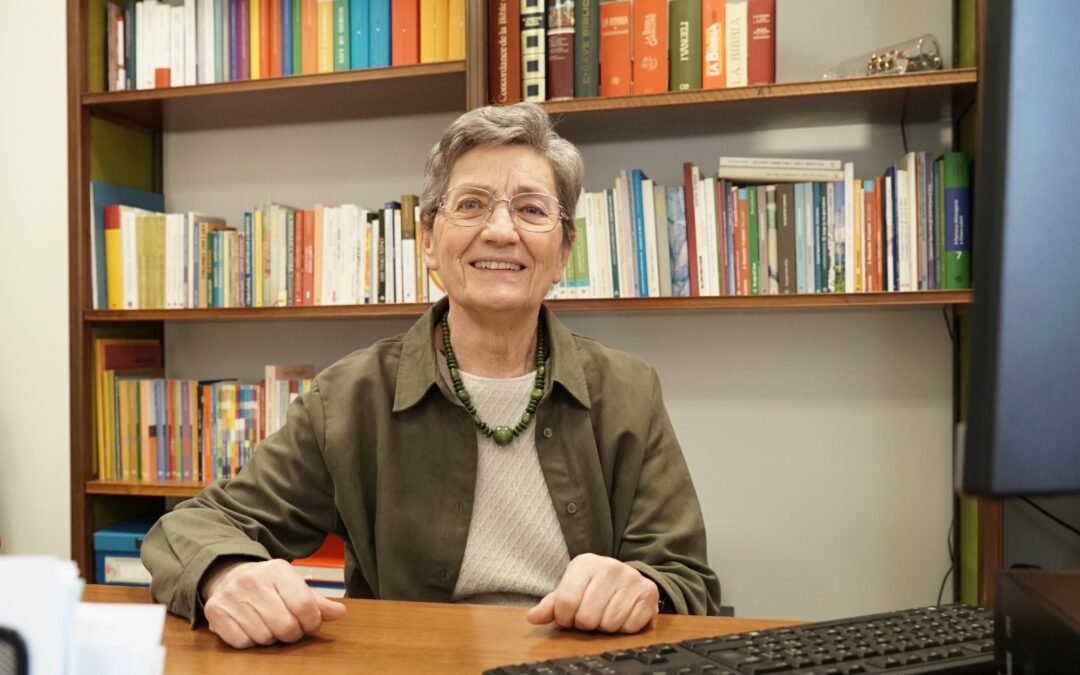
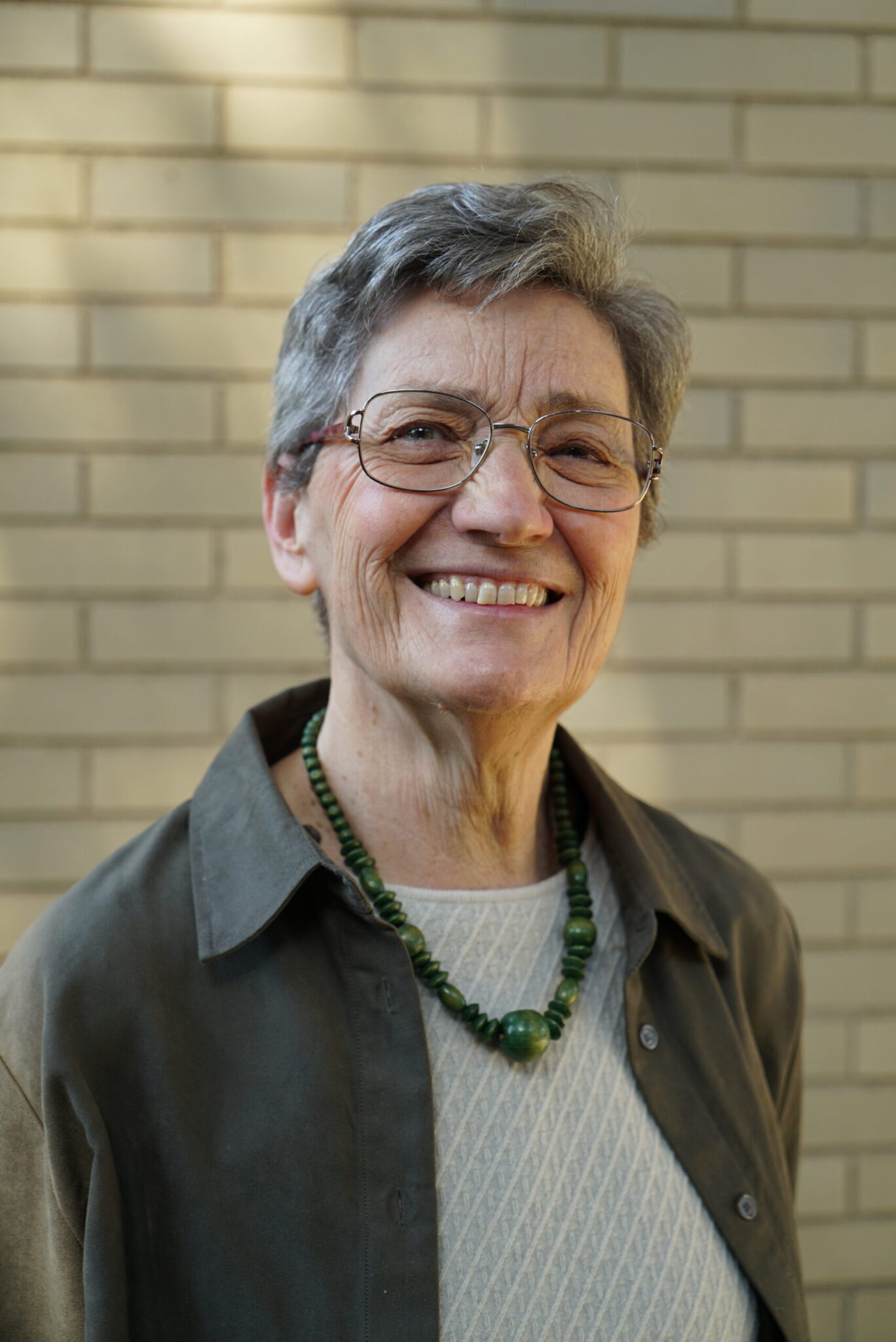
Alba Sgariglia has degrees in philosophy and theology. Since 1975, the year before she entered the focolare, she began working at the Study Centre of the Focolare Movement alongside the foundress, Chiara Lubich.
What did your work at the Study Centre consist of?
I used to go to the library in Florence to photocopy passages from the Greek Fathers, which we would then translate at home, searching through countless pages for those brief phrases that could serve Chiara Lubich to confirm her inspirations. At the time I was working with Marisa Cerini, who told me: for us, building unity means that we should enter into the thought of the Greek Fathers and from there try to understand the light of the charism that Chiara has received. In the following years I also taught religion in secondary schools in Rome. I then joined the governing body of the Movement to oversee the cultural aspect and subsequently I became part of the Abba School, which Chiara founded in 1991 to study the notes from the so-called period of Paradise ’49. Finally, in 2014, Maria Voce Emmaus, then President of the Focolare Movement, entrusted me with the Chiara Lubich Centre, which was established to preserve, study and promote the life and work of Chiara.
What does this newly published book represent?
Paradise ‘49 is a text published posthumously, since it was written, compiled and edited by Chiara Lubich during her lifetime. She wished to describe the mystical experience she had lived between 1949 and 1951, accompanying it with footnotes that would facilitate its comprehension, so as to provide the group of scholars at the Abba School with a text that was accessible and could be used for research. The text contains a mystical experience that Chiara always said she could not keep to herself. Then, urged on by many people, she realized that the text could be understood and used by others in the Movement as well.
For example, in the early 2000s, she herself explained the essence of this experience to the young people of the Movement. Then little by little, she realized that the experience recounted in the text could also be shared with people of other religions. Over the years we have held symposia with Hindus, Buddhists and Muslims, to whom Chiara offered some passages from Paradise ’49. We have also discussed the text with people with no religious affiliation, who have given reflections far deeper than we could ever have imagined, emphasizing that it is a text of great value. There are many founders of charisms who have received this possibility of understanding the work they were carrying out, through so-called “intellectual visions” in which one perceives with the intellect what God is allowing one to see.
But since it is a mystical language, isn’t it difficult for most people to understand?
Mystical language is a unique literary genre; it is neither poetry, nor theatre, nor literature, nor theology. For example, one sometimes encounters difficulties on a theological level, because the mystic seeks words they cannot find, trying to express the inexpressible: a difficult task, so much so that often Chiara herself, whilst we were re-reading these passages, would ask us: “But how could I have written these sentences? What do they mean? Why did I write this?”
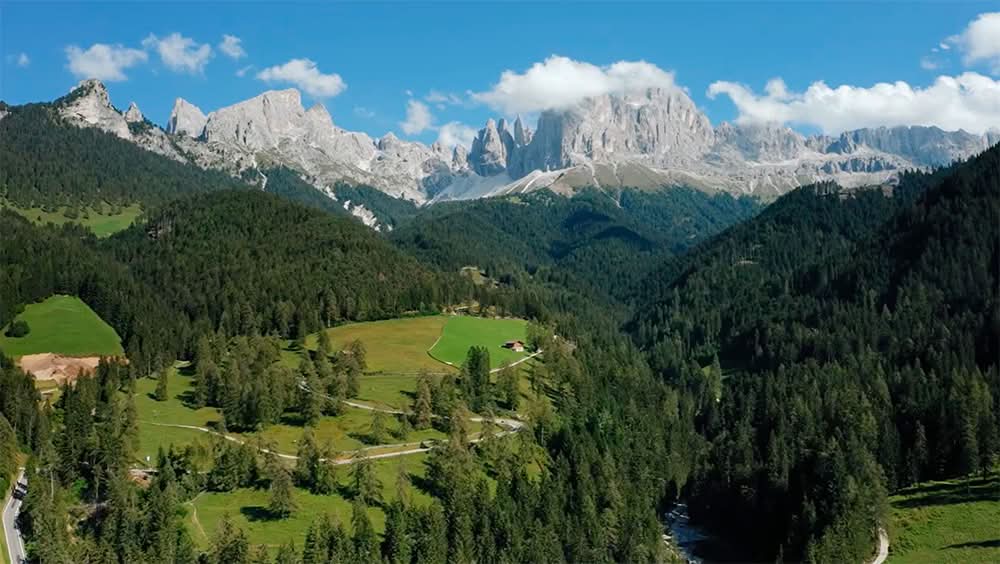
This confirms that, in such situations, the founders seek to express what they “see” using the cultural categories and concepts at their disposal, which are sometimes inadequate. For example, in Paradise ’49 there are references to The Divine Comedy because Chiara was familiar with it, or to philosophers such as Kant, whom she had studied. The external setting can also have an influence: Chiara and her first companions began this experience in the mountains of Trent, in Tonadico: it is a natural setting that speaks for itself through its beauty. This, too, helped her to express things she was perceiving for the first time in her life.
Over these 18 years since Chiara’s death, you have published books that shed light on the context of the Paradise ’49 experience…
We have continued to examine the text in depth across various disciplines, using the method Chiara had left us, which is to study everything with “Jesus in our midst”. I believe that three key aspects can be identified in this volume: the first is an educational aspect, as it teaches how to live out the charism of unity and offers a vital key to understanding it; the second aspect can be described as artistic and literary, as the text encompasses many literary genres: diaries, letters, writings and notes; finally, there is the doctrinal aspect, as the text undoubtedly has a theological focus. It is, in fact, a mystical experience that helps us to understand, on the one hand, the truths of Heaven: God, the Trinity, the Word, Mary, creation, hell and paradise; and, on the other hand, the incarnation of the charism in a movement that would have been founded in the following years, that is, after 1949–51. Every time one reads these mystical texts, one understands new things. This is what happens to me too: every time I read these pages, I understand new things, both intellectually and spiritually.
When reading the text, doesn’t Chiara seem to be a bit presumptuous in certain passages?
We need to understand why Chiara says those things in that way. We could say that it is as if God, in order to express concepts that cannot be conveyed through a human being, identifies with that person, seeing things through their eyes. This is why Chiara finds herself writing: “Today I am universal fatherhood.” But she herself asks: “What does that mean?” In that moment, she identifies with that reality, so that she can express it. In the footnotes, she herself comments on and explains her amazement and her joy at seeing that other founders had experienced more or less the same thing.
What advice would you give to someone reading this text?
I would say: take this book and read it whenever and however you like, at any time. You can discuss passages that are unclear or more complex with others, or with an expert. But I suggest that you don’t let yourself be influenced by anyone, because this text speaks directly to the individual. Let’s open it at random and read whatever page we come across. We will understand what we need at that moment, because the text, despite a few difficulties, really touches us deeply. It’s a mystical experience, that can, in a certain way, be “shared”. This is the novelty, as Chiara herself explained to us. She always made sure that everyone could participate in her experience, and this book gives us that opportunity.
Giulio Meazzini
Interview originally published in Città Nuova
Photo: © Francesco Frascella
Training for political and social action
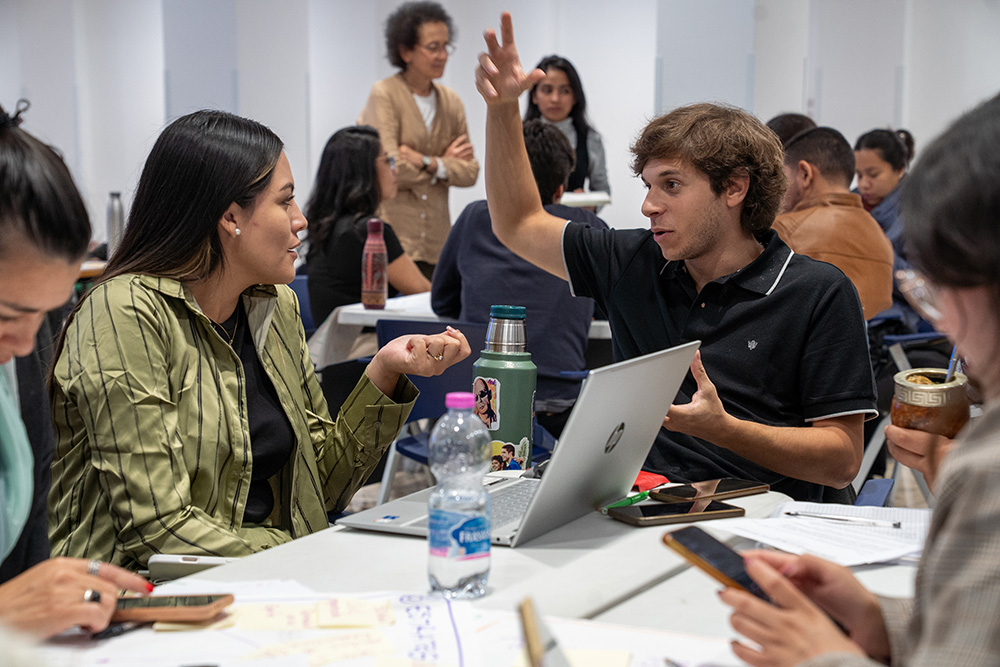
Following the profound experience shared with young people during the 2026 Hackathon, the second phase of the “One Humanity, One Planet: Synodal Leadership” programme is now getting underway. It offers a six-month virtual training course that combines in-depth study and dialogue based on participants’ diverse backgrounds, the exchange of projects and experiences, and the development of initiatives with local impact and global reach.
It is aimed at people aged between 18 and 40 who have experience in political representation, public administration, social movements, political parties and advocacy; who are committed to social and political transformation or interested in strengthening their capacity for dialogue, cooperation and collective action; and who are willing to contribute both practically and intellectually throughout the programme.
Lasting six months, delivered 100% online, completely free of charge with an estimated commitment of three hours per week, the programme aims to reach 500 young people this year.
“We are living in a historical moment marked by deep geopolitical tensions, socio-environmental crises, increasing social fragmentation, and high levels of polarization,” say the organisers in their introduction. “These challenges call upon us: they reveal the limits of traditional governance models and the urgent need for new forms of leadership capable of generating dialogue and activating processes of collective action to promote peace and unity. In this context, we have chosen a synodal style of leadership: a leadership based on listening, participation, shared responsibility, and the construction of shared solutions. If you believe that politics can be a space to regenerate relationships, promote the common good, and care for humanity and the planet, this call is for you. We invite you to become part of an international space for training and cocreation of political initiatives together with other young leaders from different regions of the world, in order to rethink governance in the face of today’s challenges”.
The deadline for applications is Friday 19 June 2026.
For more information and to apply for the programme, open the following PDF
Edited by Carlos Mana
Photo: © Joaquín Masera – CSC Audiovisivi
Economy of Communion: a path of regeneration
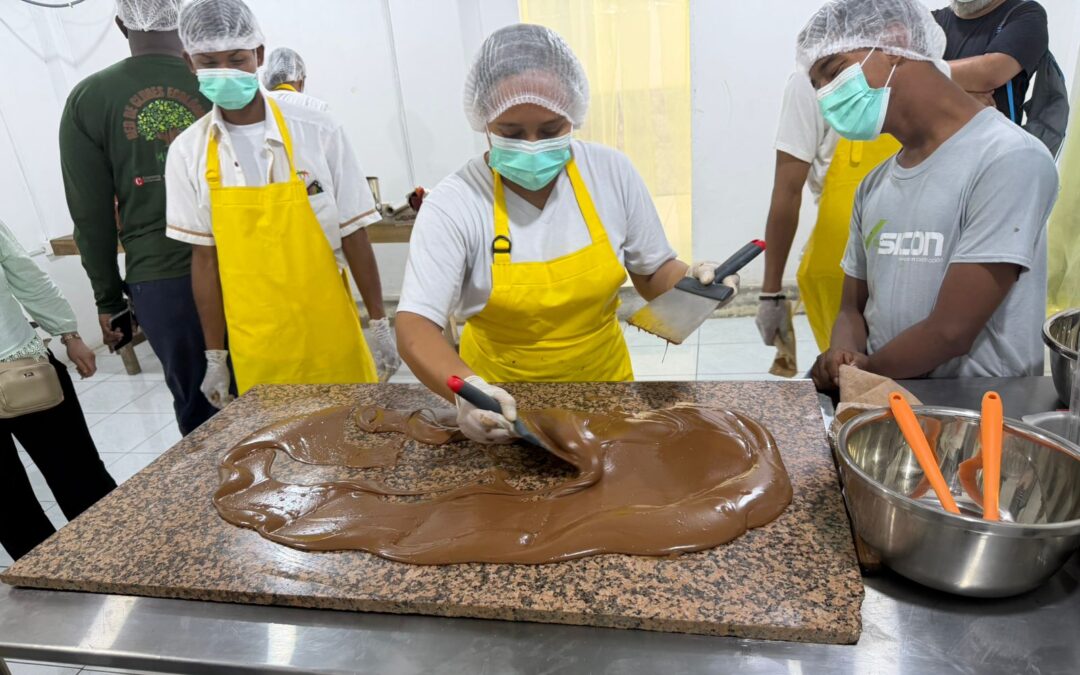
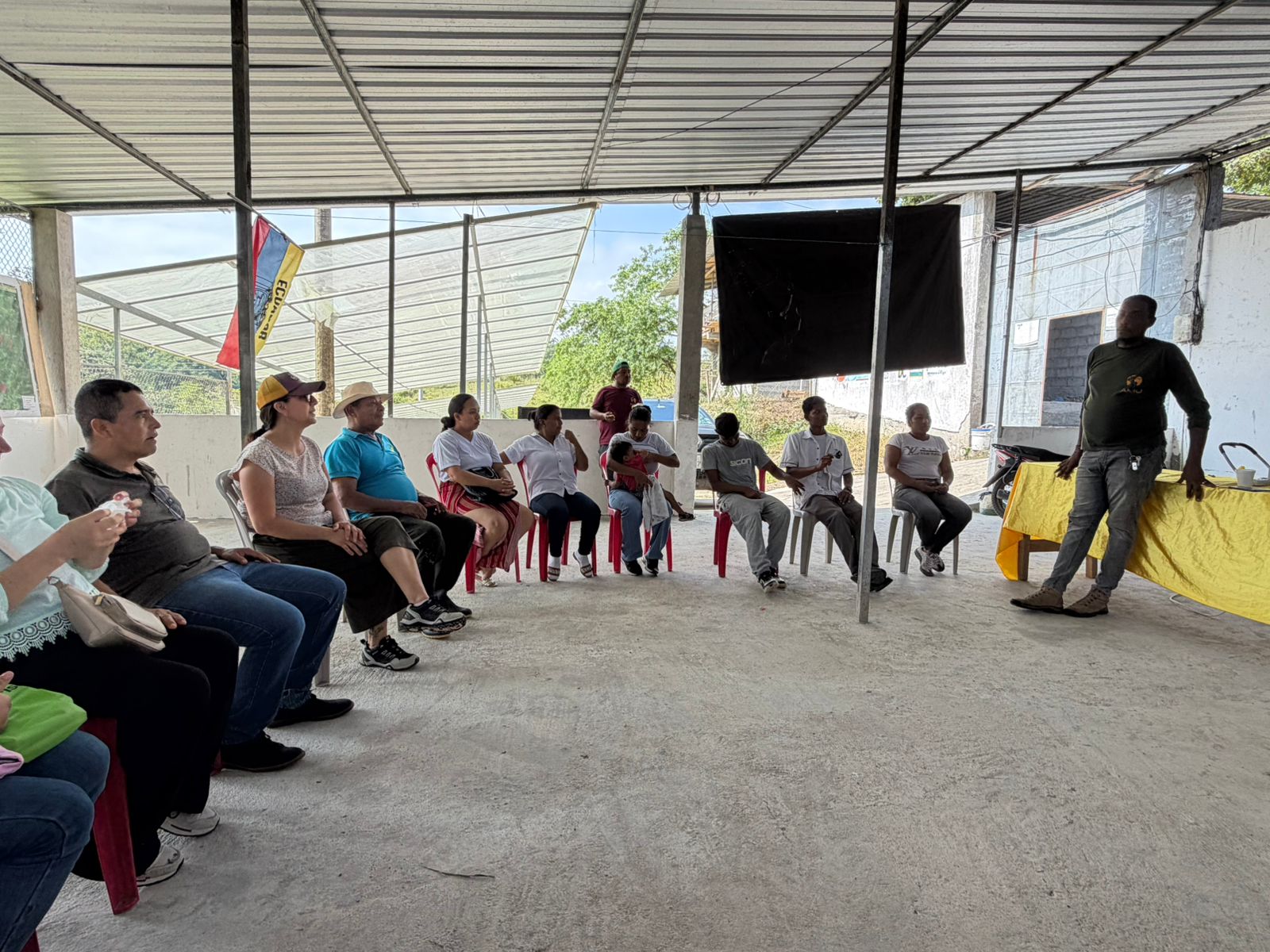
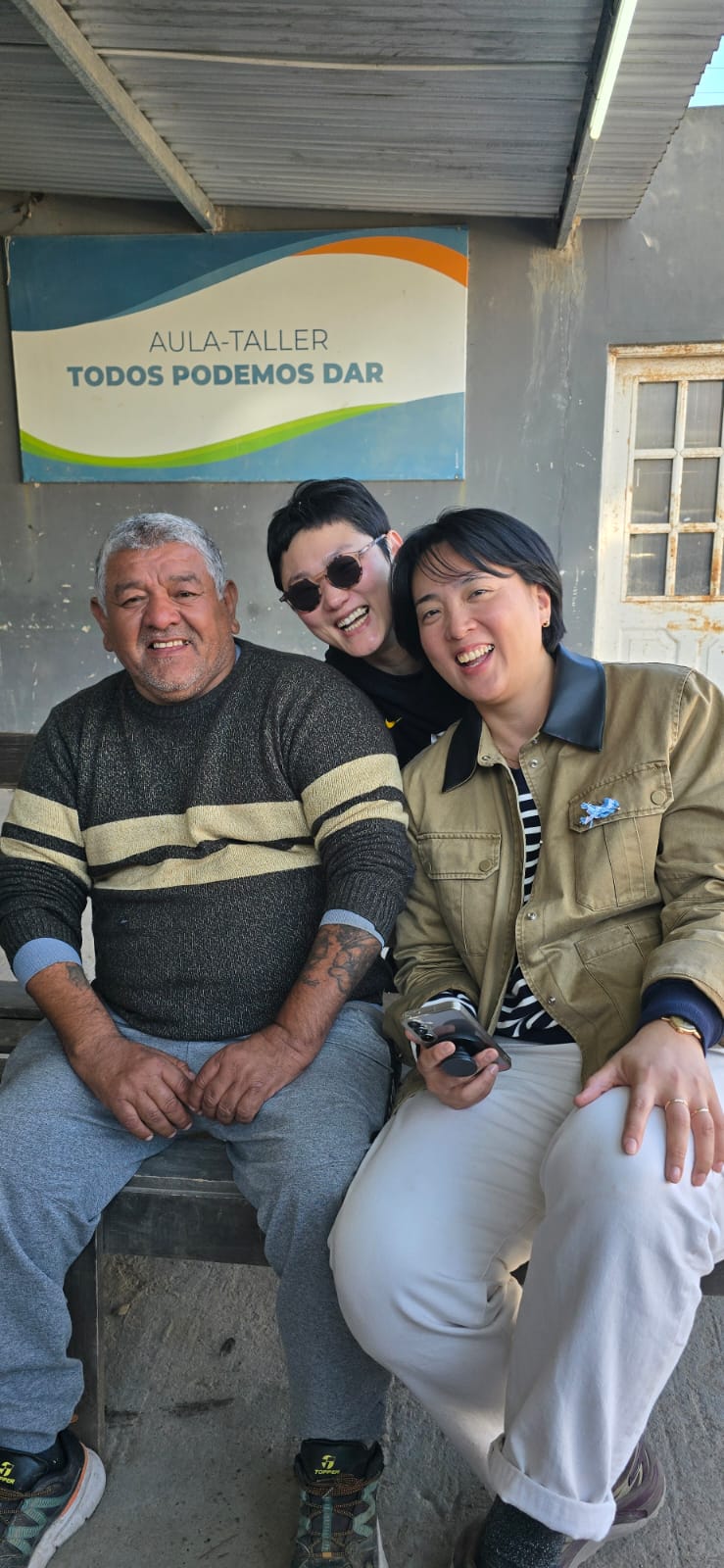
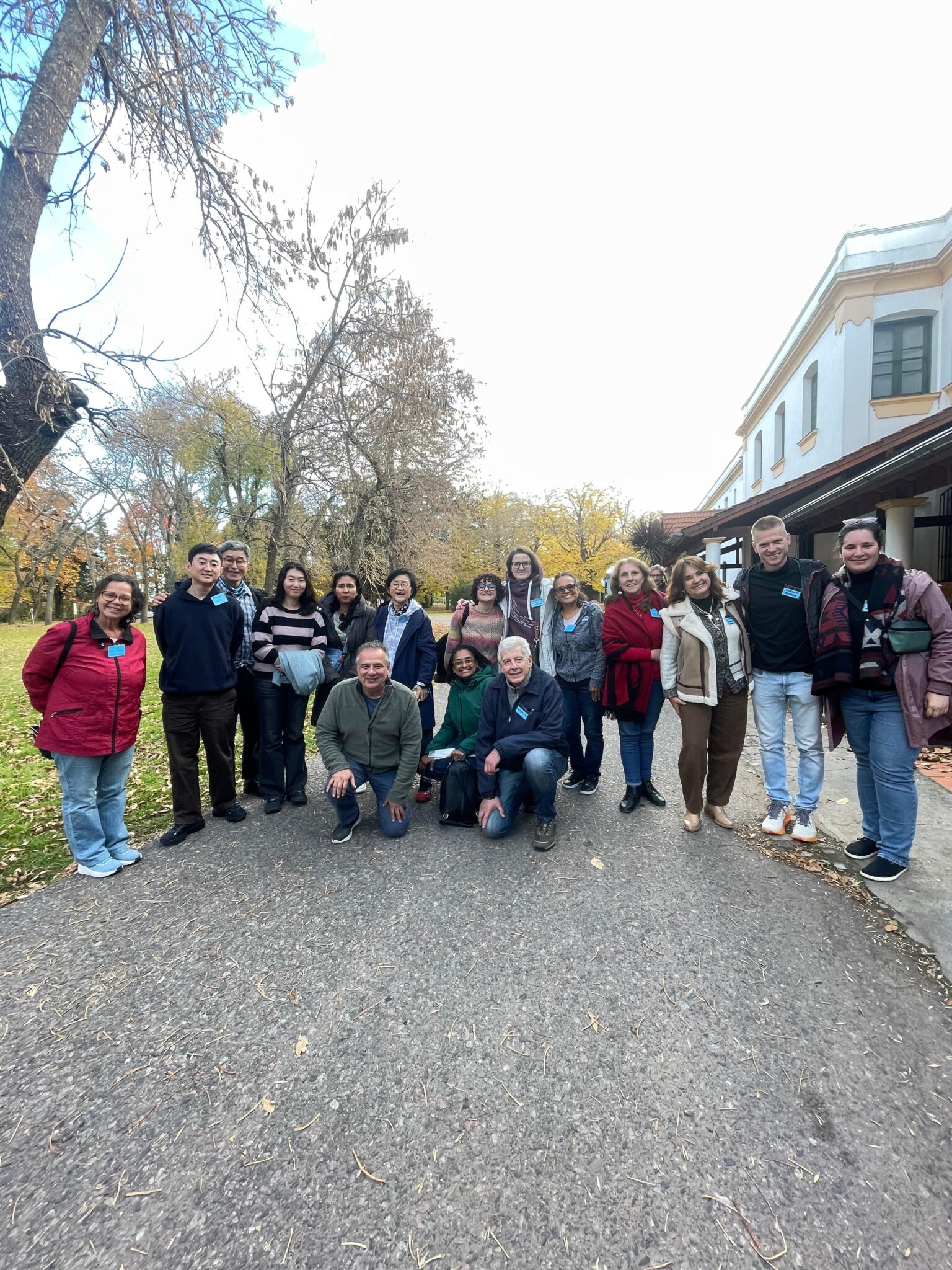
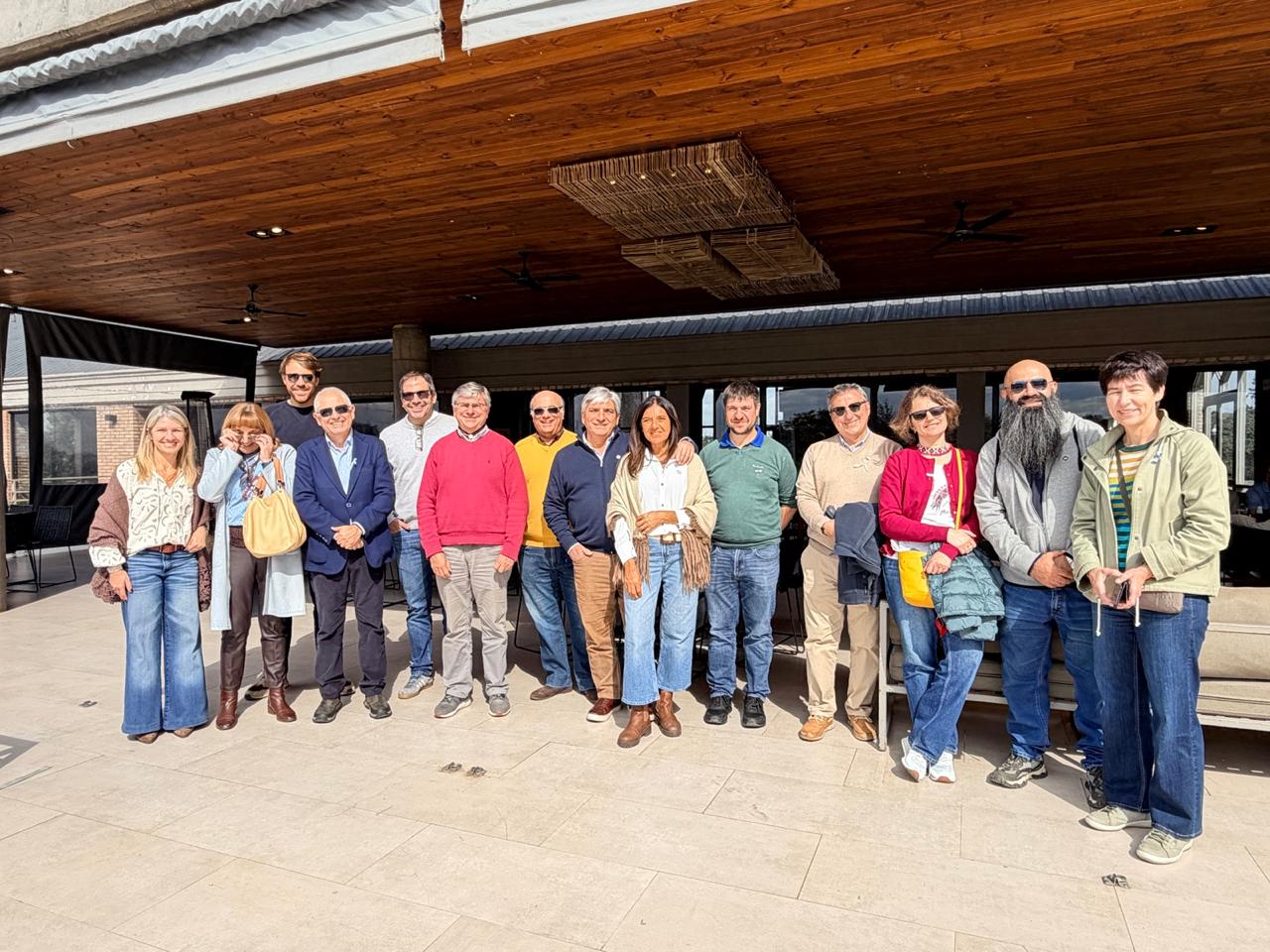
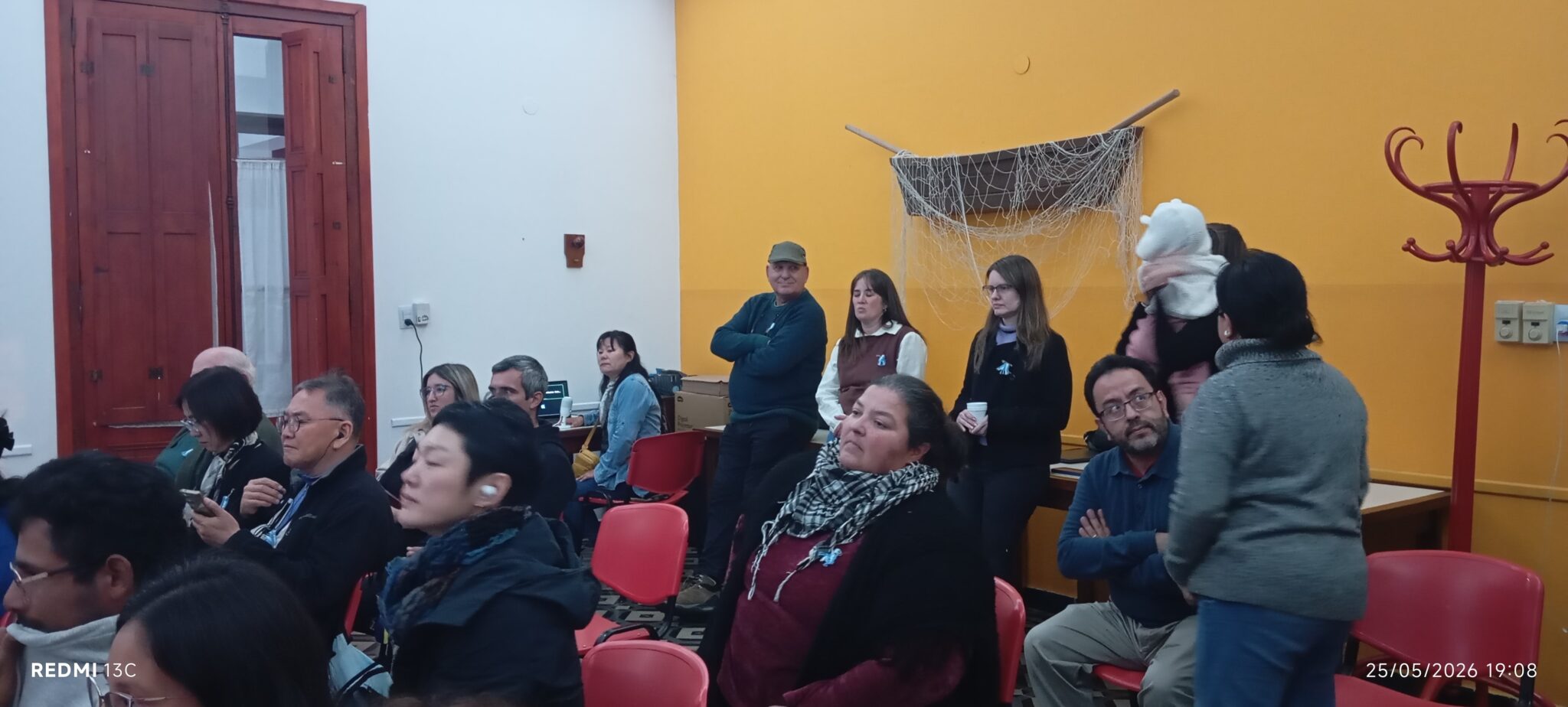
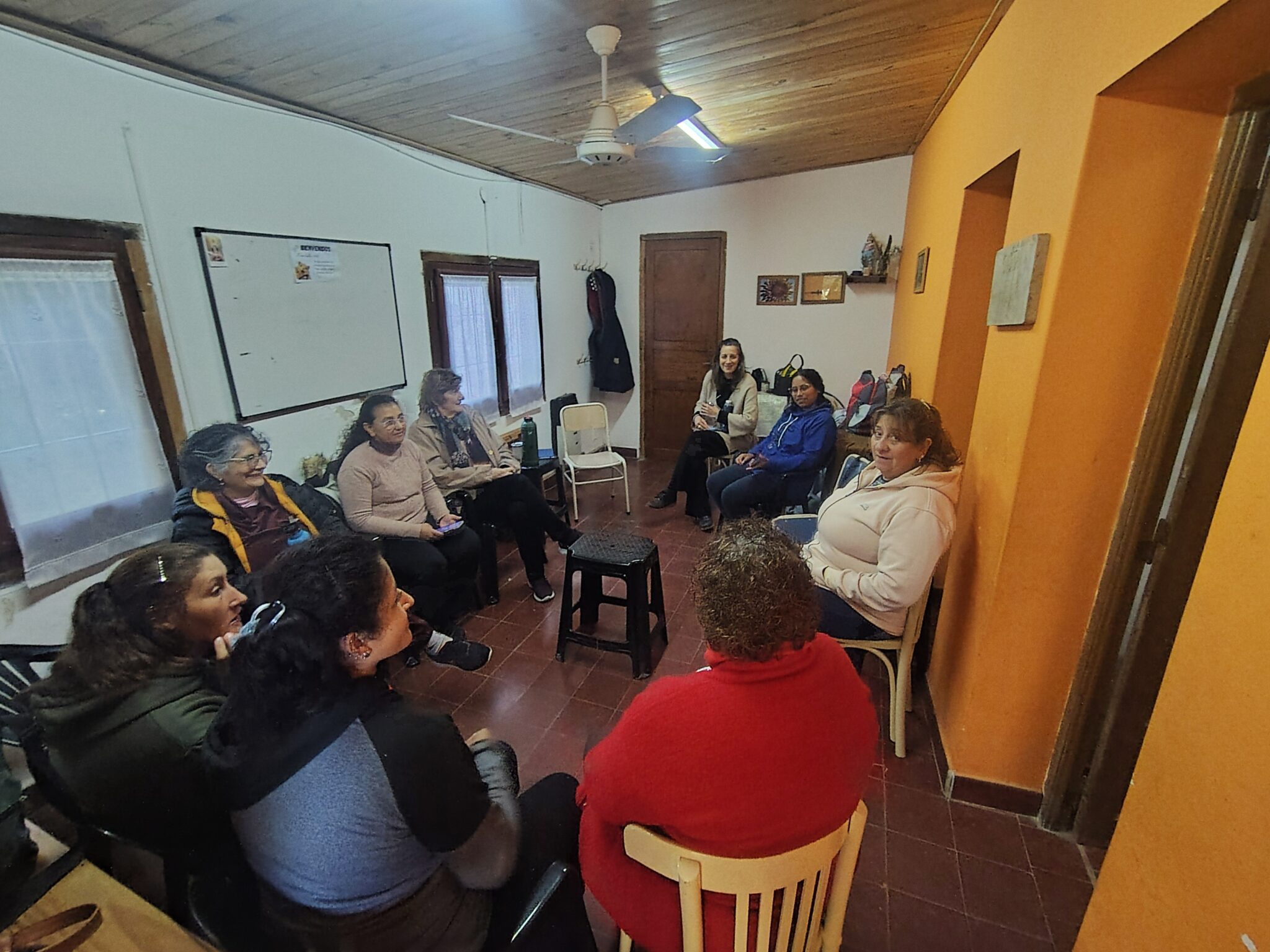
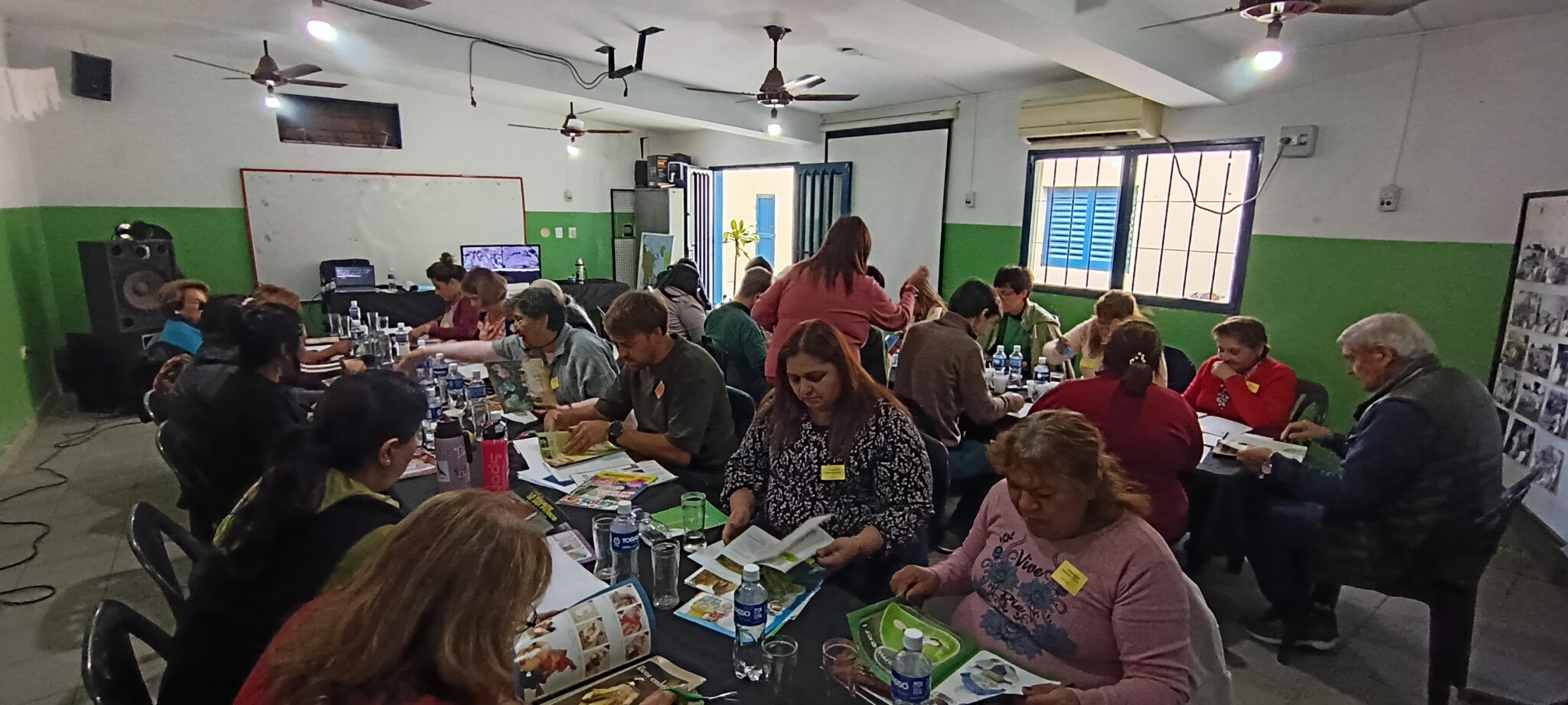
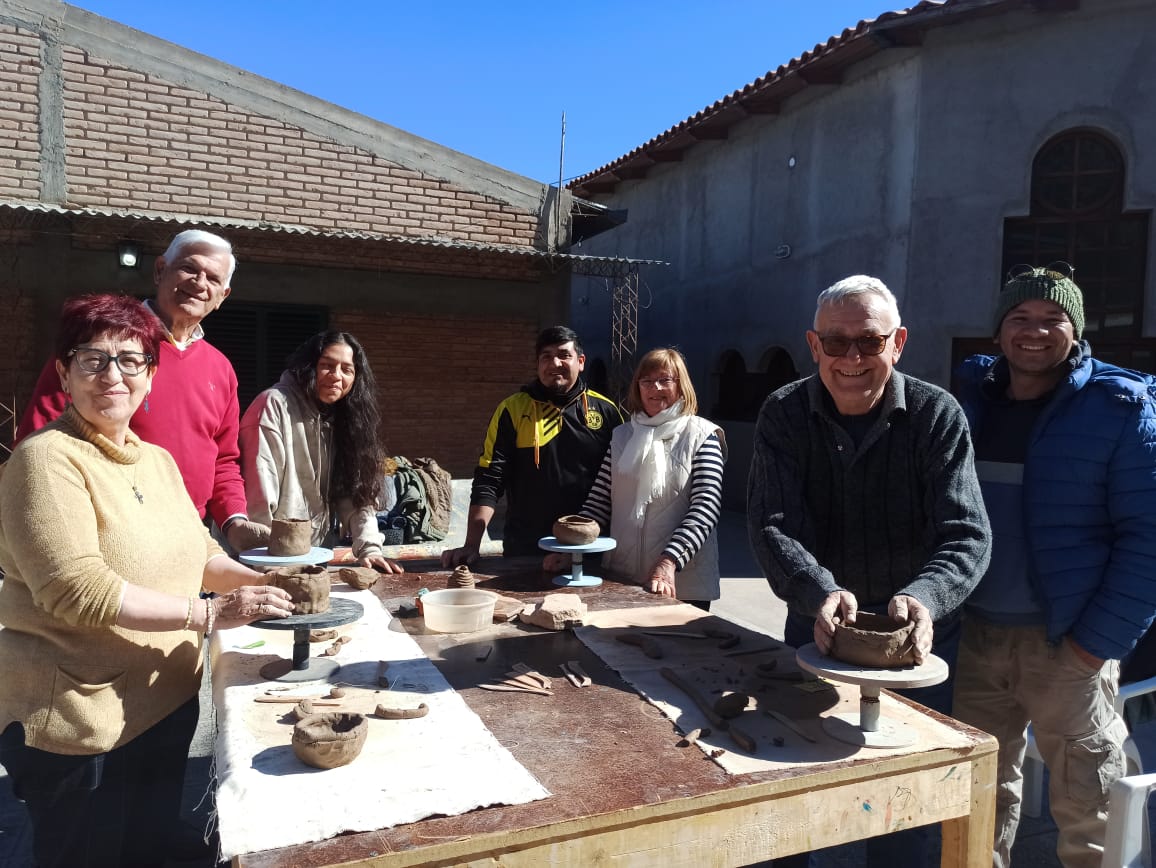
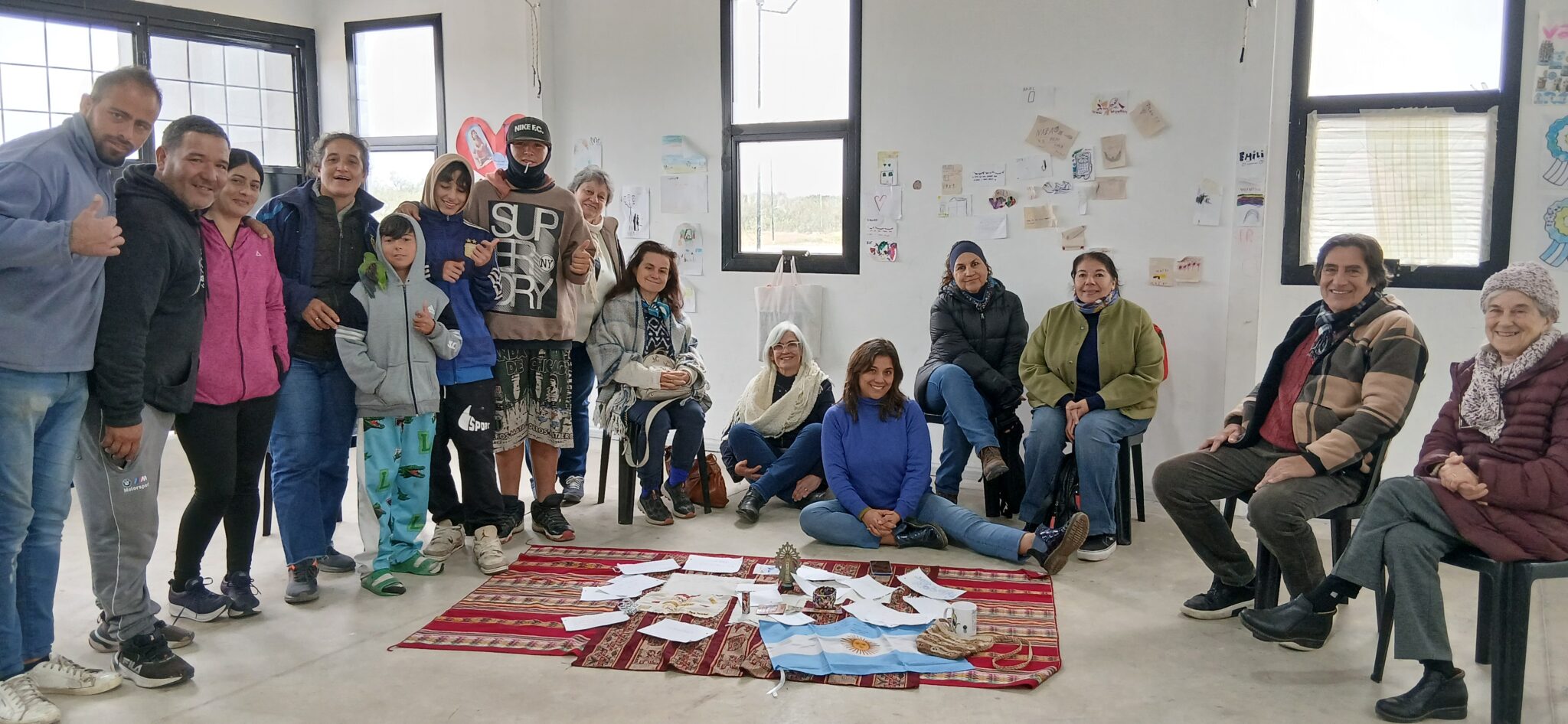
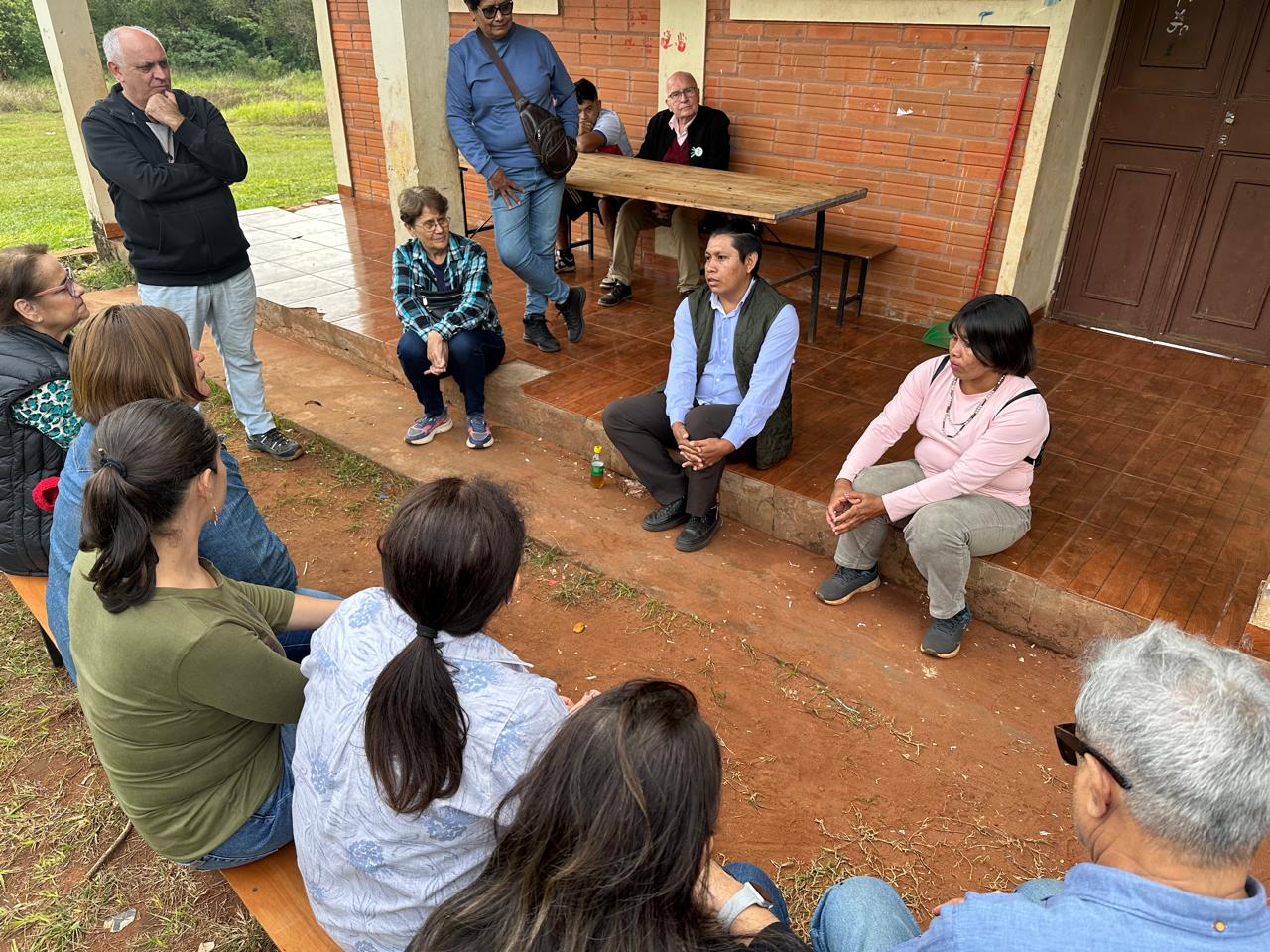
Five hundred people from 43 countries, representing every continent, have gathered in different parts of Latin America, for this important event dedicated to the Economy of Communion, 35 years after its birth.This “path of regeneration”, as it has been defined, began on 25th May 2026 and is a kind of “journey” of the Economy of Communion through various regions that will end on 29th-30th May in Buenos Aires. The first stage involves participants immersing themselves in different social projects around the Southern Cone. The key word of this experience is “encounter”: encounter between different worlds, lives, situations and different forms of wealth. A “meeting again” that generates relationships and communities.
Isaías Hernando, from Spain, a member of the International Commission of the Economy of Communion explained, “The Economy of Communion is lived by bringing together people from different sectors, entrepreneurs and academics, those who live in situations of poverty or vulnerability and indigenous populations. In some way it aims to offer a preview of what a different economy can really be like. This is precisely the spirit of the first phase of the event: it is not just a matter of visiting symbolic places, but of entering into situations where this experience is already visible. Not simply showing it but engaging in dialogue and a deep encounter between people from different cultures and those who live in situations of fragility. It is an experience that highlights the vocation of the Economy of Communion – to build fraternal communities “.
Why do we talk about “regeneration”? Anouk Grevin, from France, Coordinator of the International Commission of the Economy of Communion told us: “The idea of regeneration comes from the desire to care for the wounds of the economy and of our earth. Wounds regenerate from within – the skin rebuilds itself around the wound. Of course, there can be help from the outside, but everything begins there. This is the meaning we wanted to express in thinking about the regeneration process.”
It is a project in which the protagonists are those who live in the very places where wounds exist, who dwell within serious wounds.
Anouk added, “It is a journey in which all of us have recognized ourselves as part of this fraternal and global community. We do not bring answers, we do not bring resources, we bring an experience of communion that is intended in itself to be generative”.
A characteristic of the Economy of Communion is that it requires the involvement of all the actors together: entrepreneurs, scholars, ordinary citizens, employees, micro-entrepreneurs and people who live in difficult situations. Anouk further stated, “It is not just an entrepreneurial project or a business model, but a community of people building a new economy together, precisely in places that are often not associated with the dominant economy, and that are already generating something new”.
The work is ongoing. There has been a vast range of experiences since the birth of the Economy of Communion and it is hoped that the days in Buenos Aires will open up new perspectives, as Hernando desires: “I believe that the intuition that Chiara Lubich had in 1991, when she launched the Economy of Communion in Brazil, had a strong prophetic character, in the sense that living this experience and making it real, means in some way anticipating the future. In this sense, I think that at this moment of history, the Economy of Communion is called to highlight that prophecy, somehow making it real and incarnate albeit on a small scale”.
by Carlos Mana
Photo: Courtesy of EdC
WORK ON VARIOUS SOCIAL PROJECTS
The 40th anniversary of the Mariapolis Centre in Trent: Generating Social Beauty
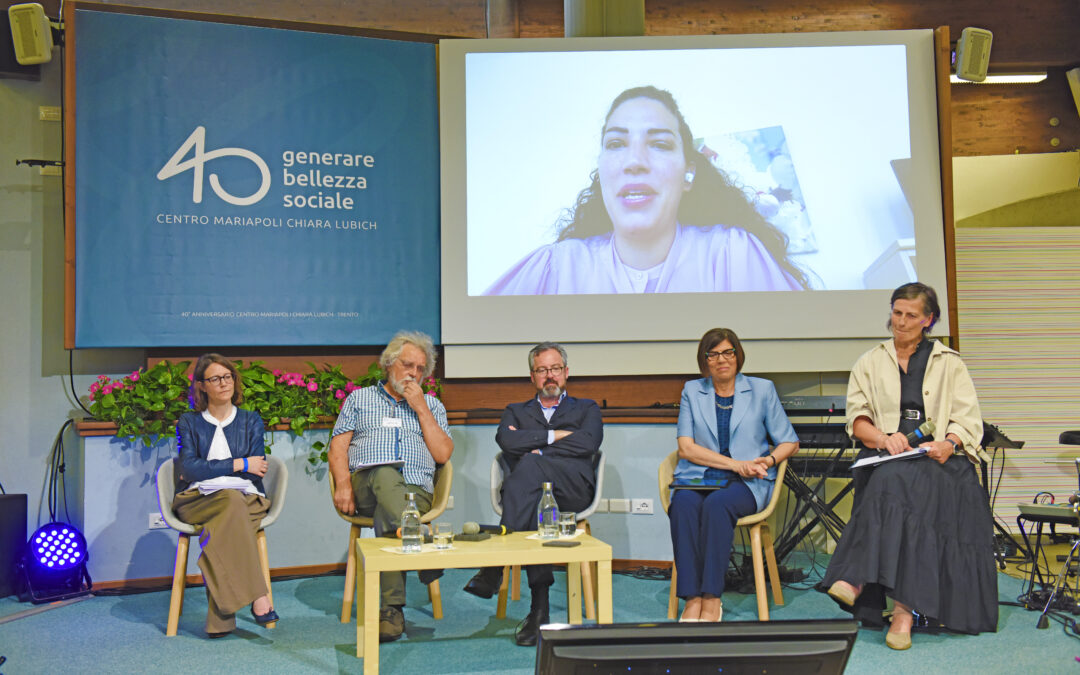
There are places that do more than simply welcome people. They bring them into relationship with one another, generating authentic connections, trust and community. This is where the “social beauty” is born: from the quality of the encounters we are able to build. “Generating Social Beauty” was the title of the events marking the 40th anniversary of the Chiara Lubich Mariapolis Centre in Trent. It was not a traditional celebration, but a live, open and participatory workshop.
This vision took shape in 4 challenges, in four events open to the city and the region.
A two-day workshop with the Gen Verde Performing Arts Group, an artistic workshop with about thirty young people from 14 to 20 years old, a concrete experience of community expressed through music and performance. It was an engaging, lively and colourful event where young people were able to experience alongside the artists how the performing arts can become a space for learning teamwork, creativity and listening.
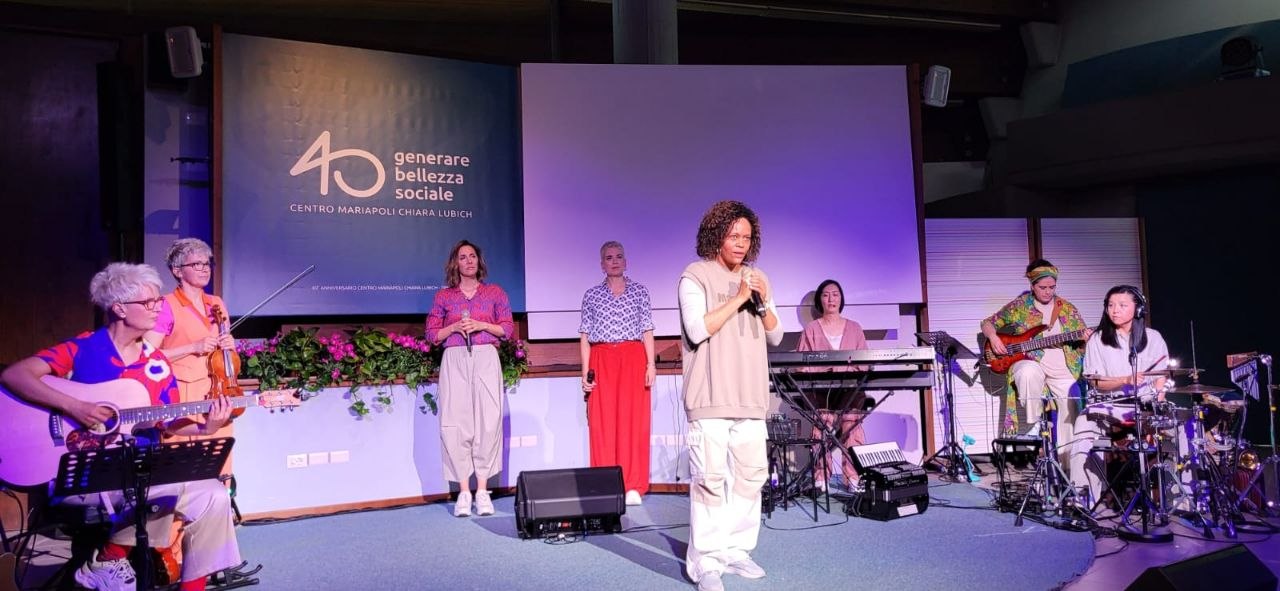
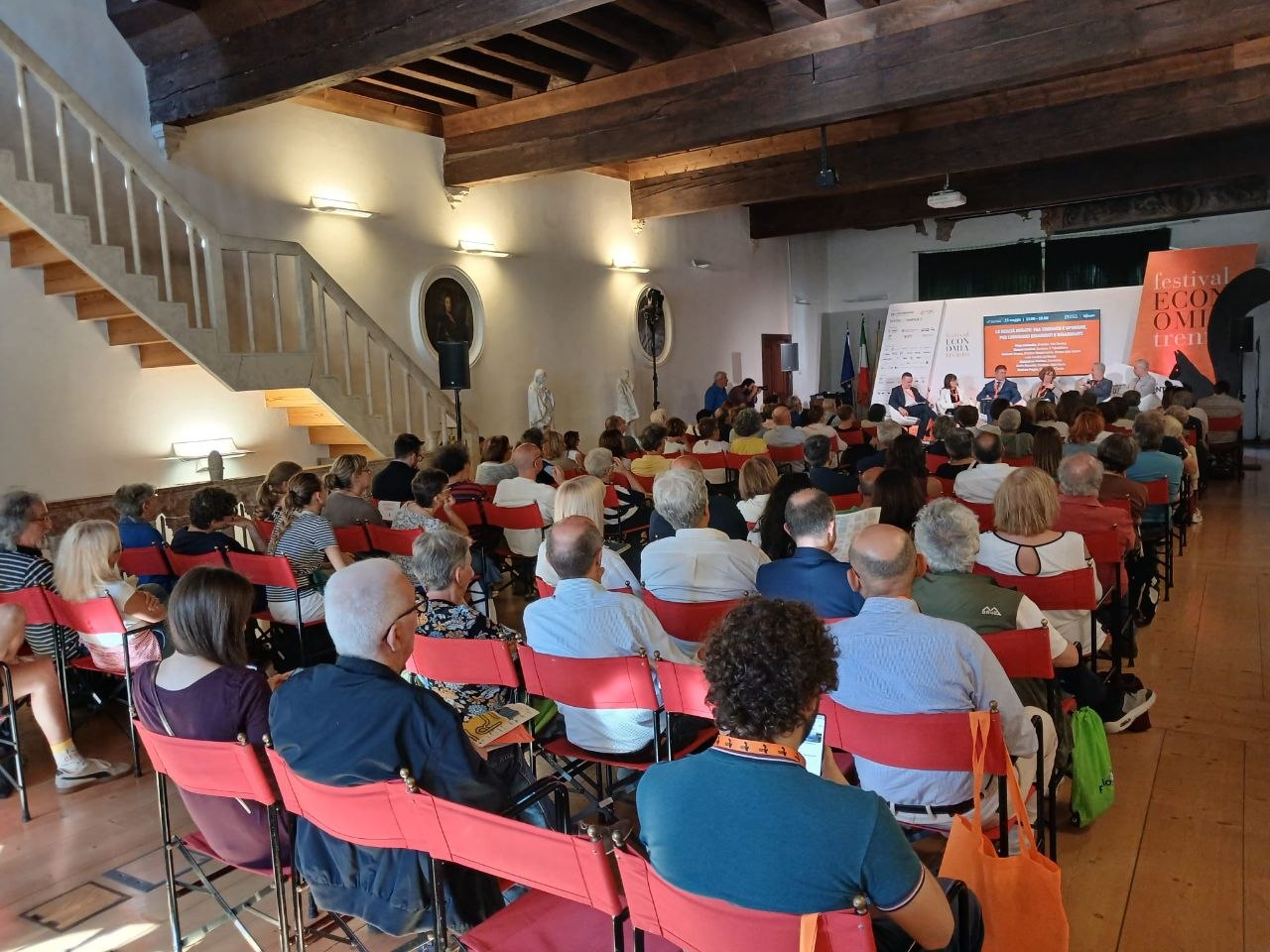
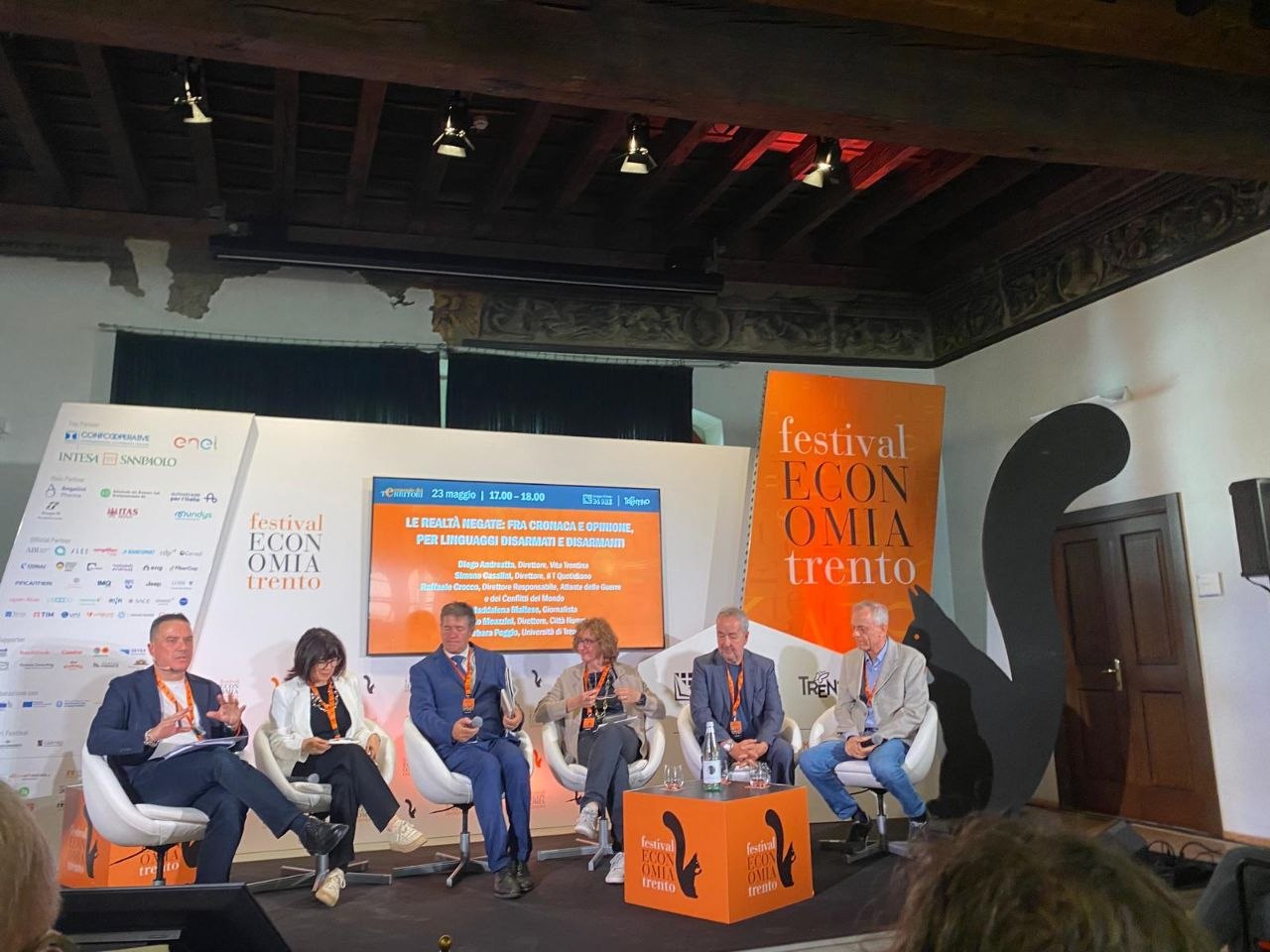
Pictured: Gen Verde; the conference organised by New Humanity as part of the Festival of the Economy (photo: © Paolo Crepaz)
A conference, promoted by New Humanity, NGO of Focolare, was included in the program of the “Festival of the Economy” entitled “Denied realities: between news and opinion, towards disarmed and disarming languages”. Five experts in the world of communication engaged in dialogue on the most complex issues of our time and the way they are narrated (the event is available in Italian on the website www.festivaleconomia2026.it/)
An Open Day in which the Mariapolis Centre opened up to the city, not only as a physical place, but as an experience of encounter. It was a day of welcome and dialogue with the civil and religious realities of the area. Elena Granata, Professor of Urban Planning at the Politecnico di Milano and vice president of the School of Civil Economy, began with an insightful reading of the reality of our cities entitled “Generating Beauty for Everyone”.
This was followed by a round table featuring valuable and thought provoking contributions from various civil and ecclesial realities working to build a city and a community that is more united and enriched by diversity. Speakers included: Franco Ianeselli, Mayor of Trent, Annalisa Pasini, delegate of Witness and Social Commitment of the Diocese of Trent, Sara Alouani, journalist with Il T Quotidiano and Claudio Bassetti President of CNCA – National Coordination of Welcoming communities of Trentino – South Tyrol. Margaret Karram, President of the Focolare Movement, who wanted to begin her new mandate in Trent, the city of Chiara Lubich, also offered her contribution. She said, “From here, let’s look to the future. Because of its position, history and sensitivity, Trent is called to dialogue, it cannot renounce this vocation. Trent can still speak to the world today by living a fraternity that becomes culture, style and practice”.
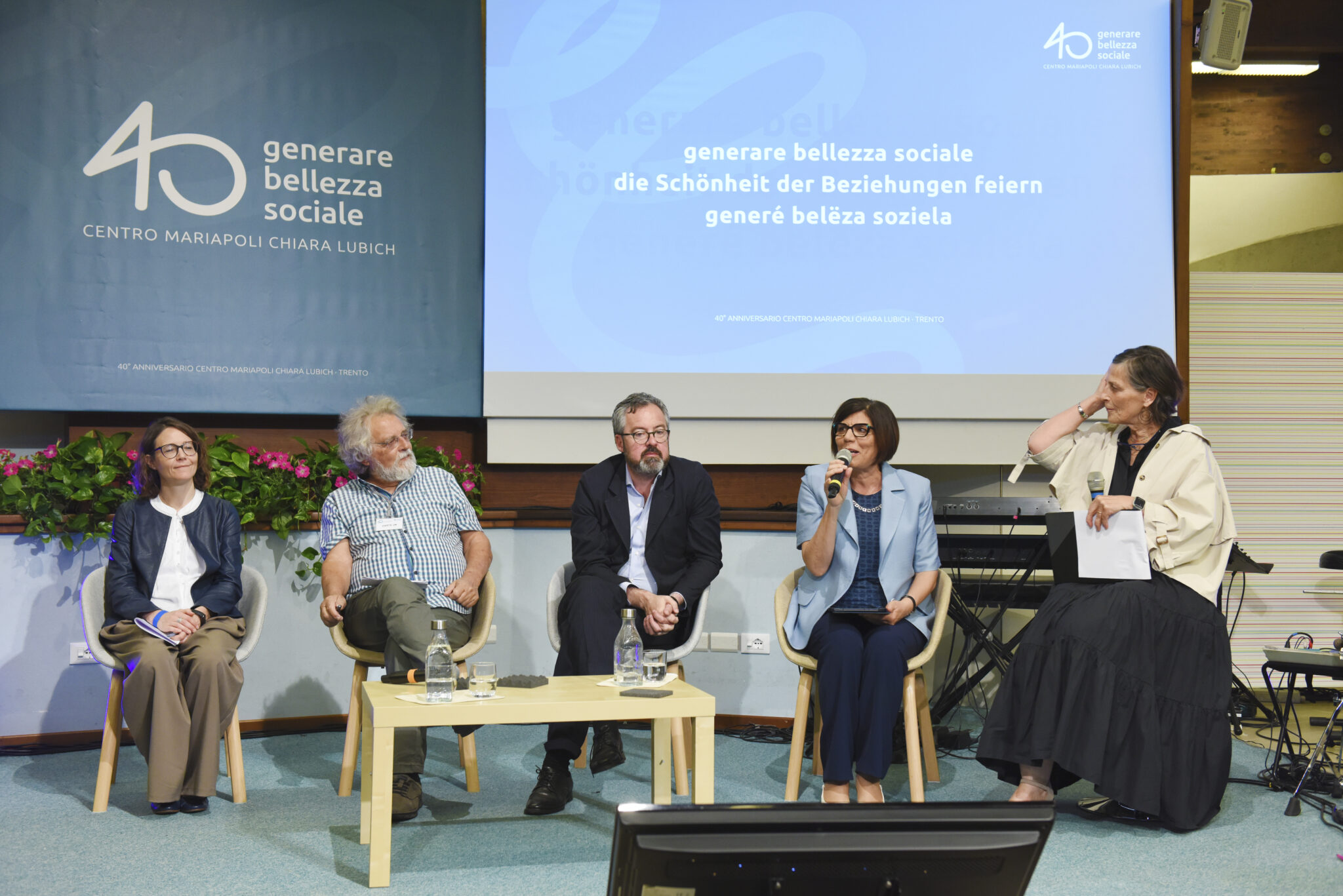
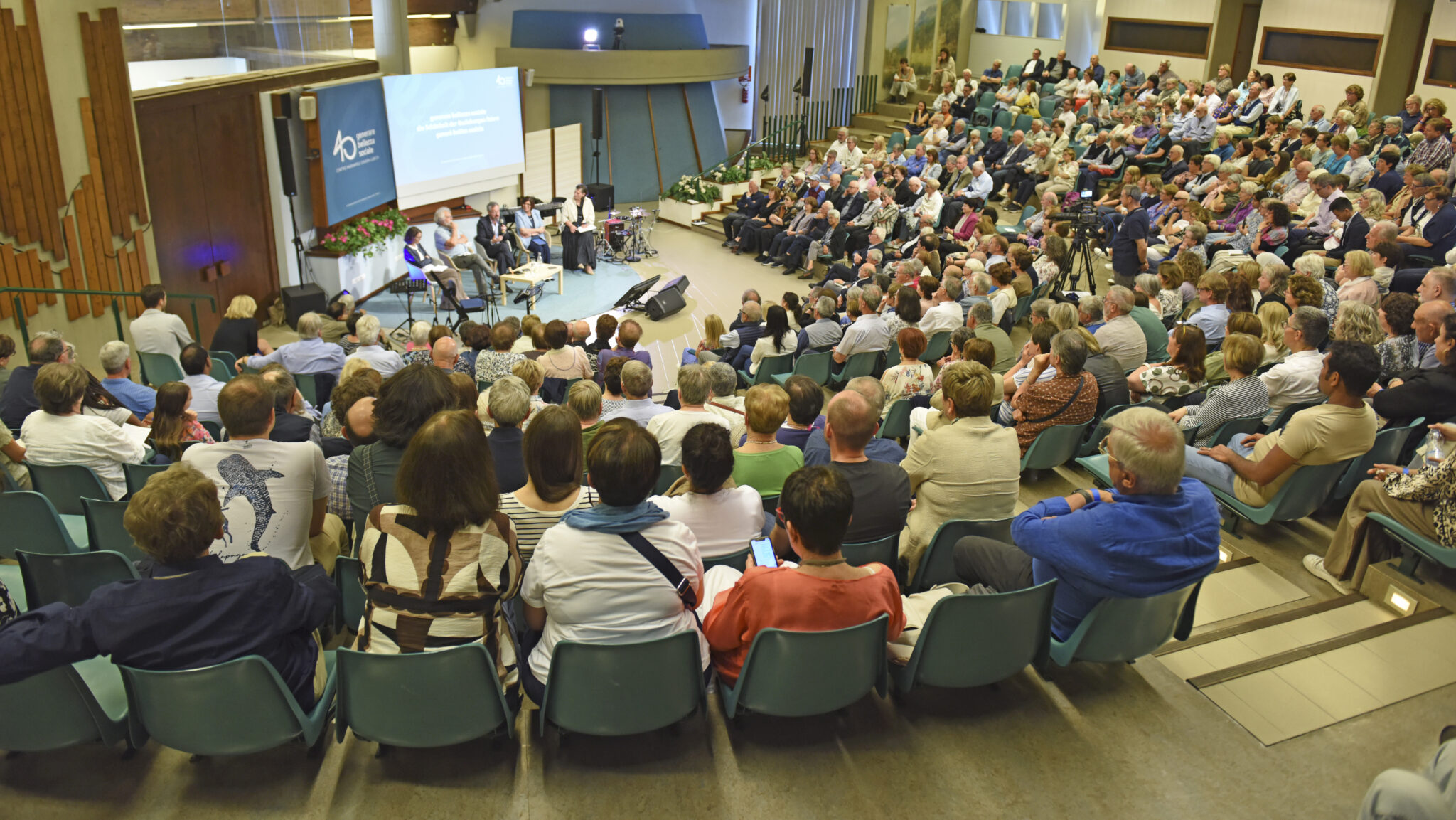
Photo: © Domenico Salmaso
Displays and experiences in various places in the Mariapolis Centre were the backdrop for the day. In the afternoon and evening the stage was taken over by the dynamic artistic energy of the Gen Verde Performing Group.
Over 1,000 people participated in the events of the 40th anniversary. For everyone, it was an opportunity to place the value of relationships, of “closeness” back at the centre, a dialogue not aimed at itself, as Margaret Karram pointed out, but “at building universal fraternity, not an optional extra but a necessity: it means participating in the life of others.”
Paolo Crepaz
Together for Europe at the Parliament in Brussels
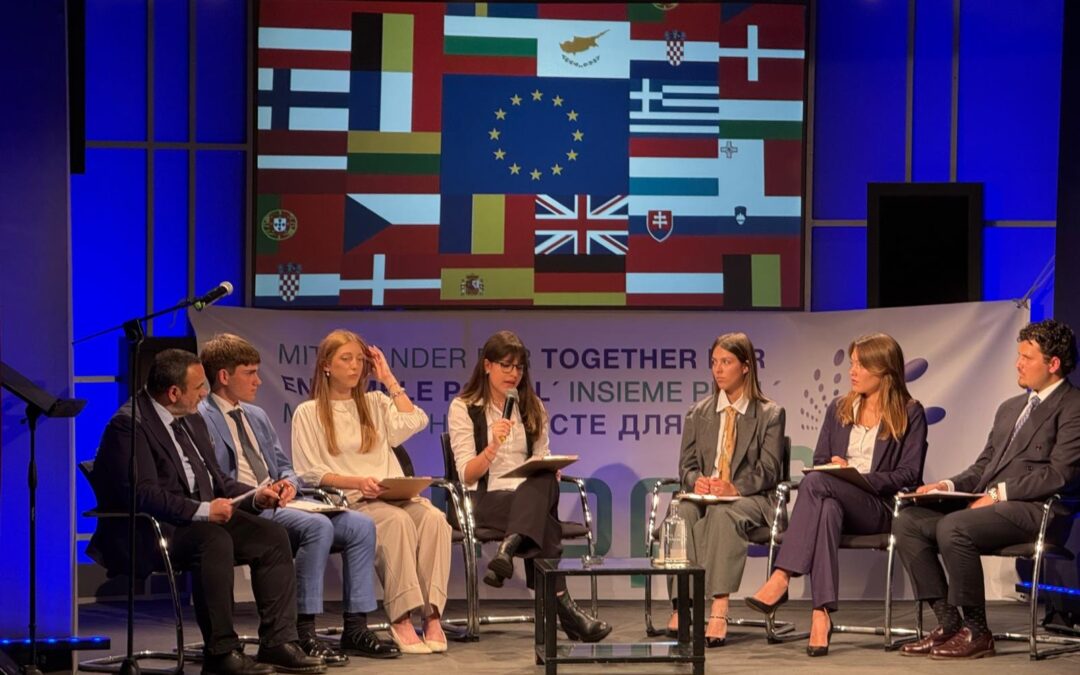
The European Quarter in Brussels is a maze of offices, headquarters and agencies operating in the European Union, whose acronyms sometimes seem like tongue-twisters. Officials and executives, with a serious and professional air, wander around its streets. Walking through them, you hear different languages and encounter unusual customs. Yet, this variety does not give an impression of confusion, because everything is supported by a great sense of order. This calmness was briefly interrupted from 11th-13th May, when a group of about 100 enthusiastic young people moved through the institutions of the European Union, bringing their commitment and passion into it. They were not a school group on a field trip, far from it! They were the young people of Together for Europe, prepared and inspired, who experience Europe not as a goal to be achieved, but as their secure starting point for engaging with the whole world.
With them were several MEPs and other public figures: Andrea Wechsler, Antonella Sberna, Leoluca Orlando, Eduard Heger, Jeff Fountain, Giuseppe Lupo, Miriam Lexmann, Gerhard Pross and Nicole Grochowin. These are distinguished names: should we mention the nations to which they belong? Maybe there’s no need: they were Europeans – adding that they were Italians, Slovaks, Germans, Dutch, Austrians and so on, does little to explain the reasons that led them to meet with young people.
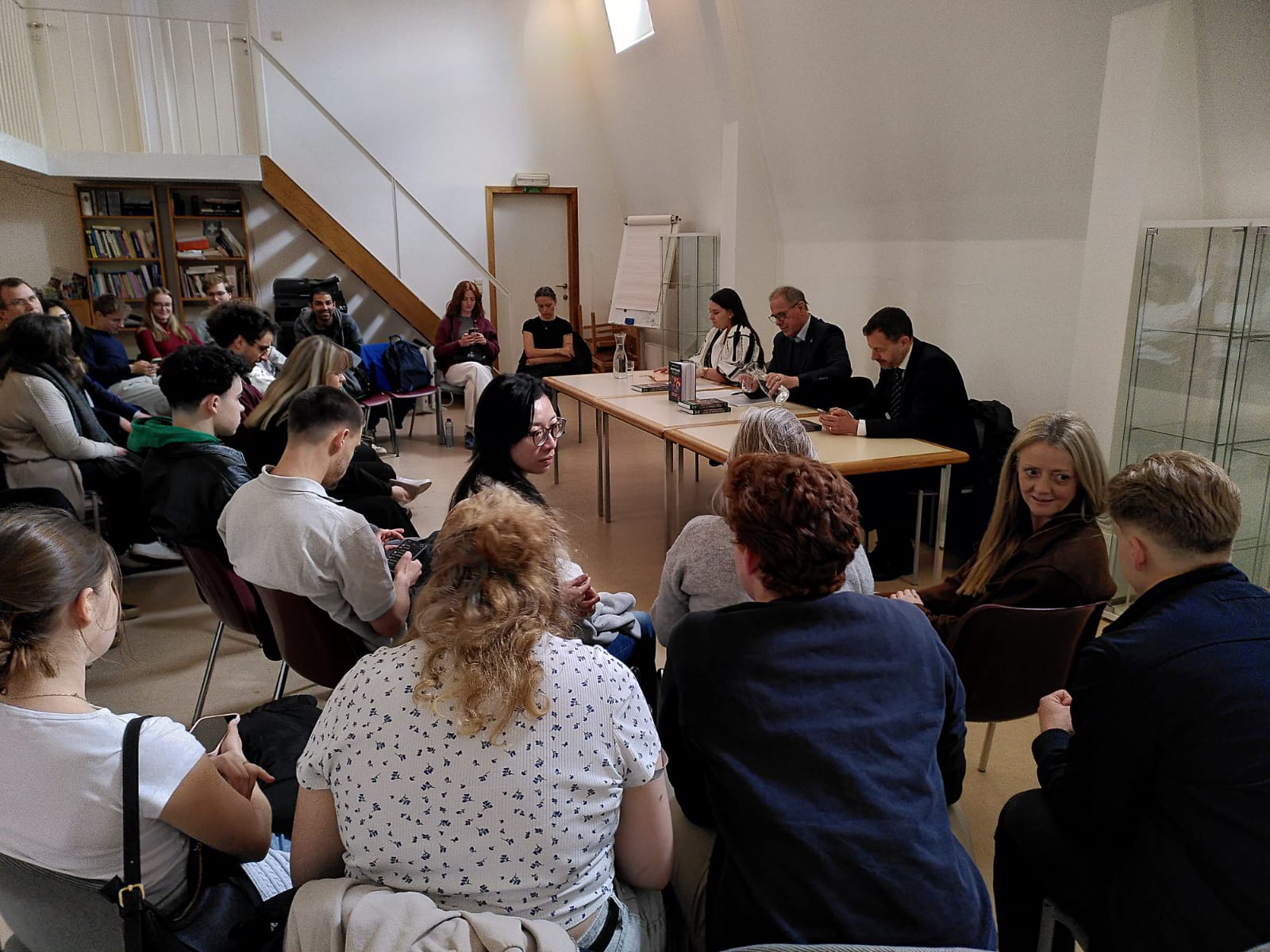
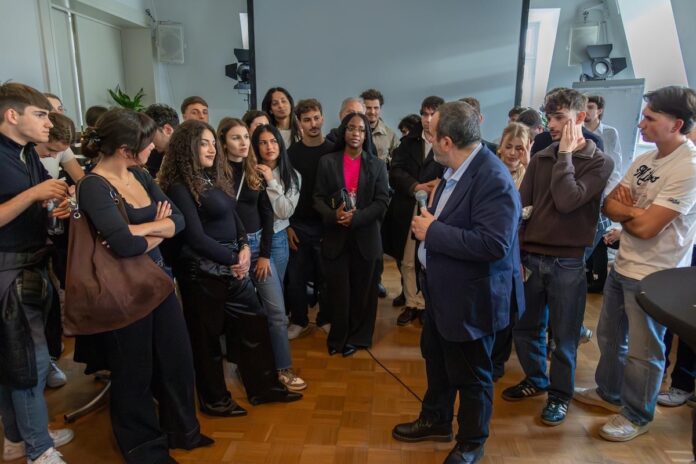
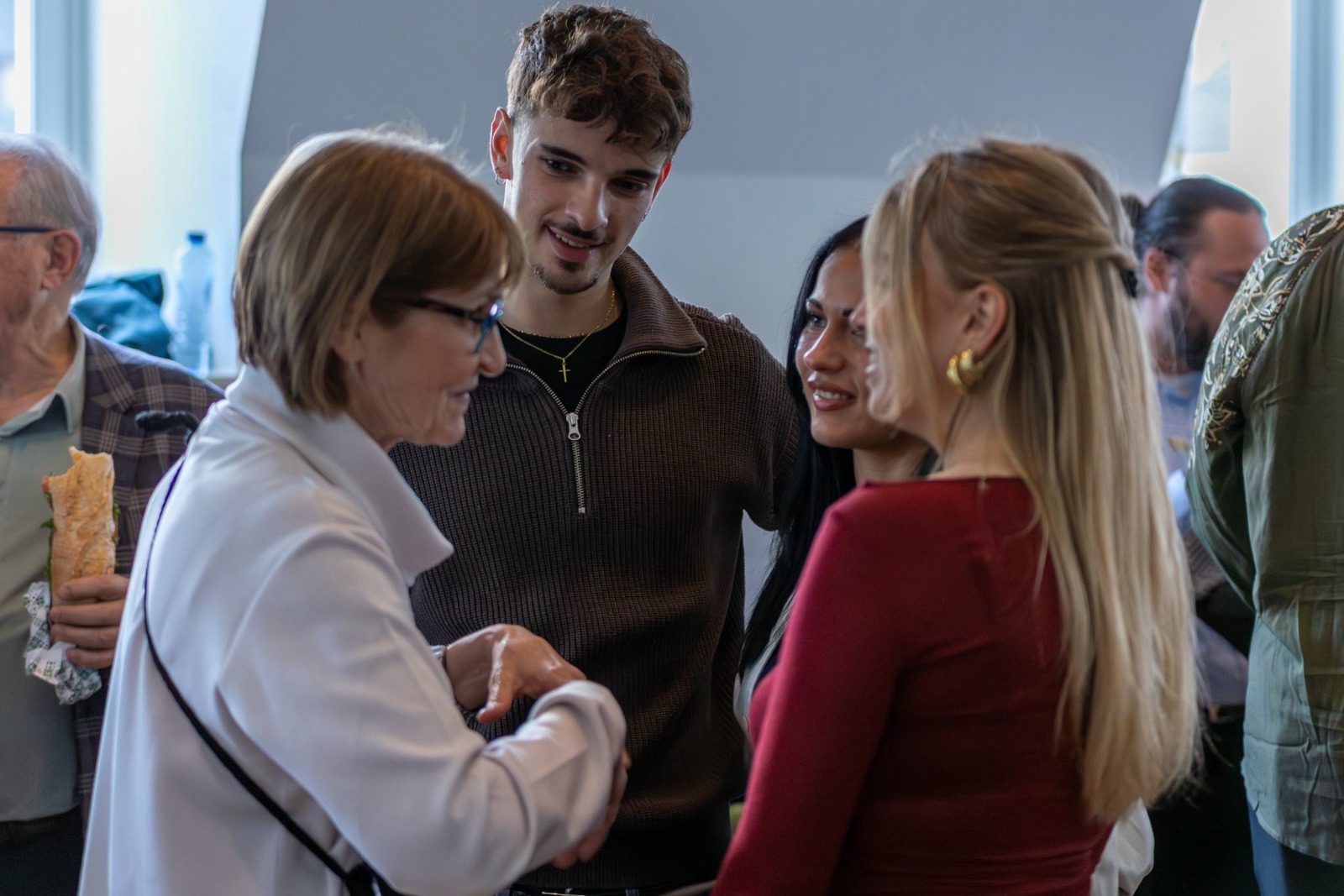
These reasons stem from the current crisis situation, in which it seems there is no longer room for unity between peoples and nations. No one can guarantee peace anymore. In such a context, Together for Europe wanted to show that unity is not an option, but rather the very thread running through the historical development of the peoples of Europe. And if today that thread seems buried under the rubble of ongoing conflicts, Together for Europe sets itself the task of bringing it back to light, offering its experience of collaboration among Christians as a way to rebuild the European structure on the foundations of unity. All together: members of different Churches, citizens of different countries and, above all, people of different generations. Young people, adults and the elderly all inhabit this fractured present and only by coming together can its contradictions be resolved. The challenge, therefore, is also intergenerational. This is why the young people of Together for Europe wanted to present an “Intergenerational Pact” to the MEPs and personalities, in which they set out their shared commitment to work for a Europe that is a kiln of peace and solidarity.
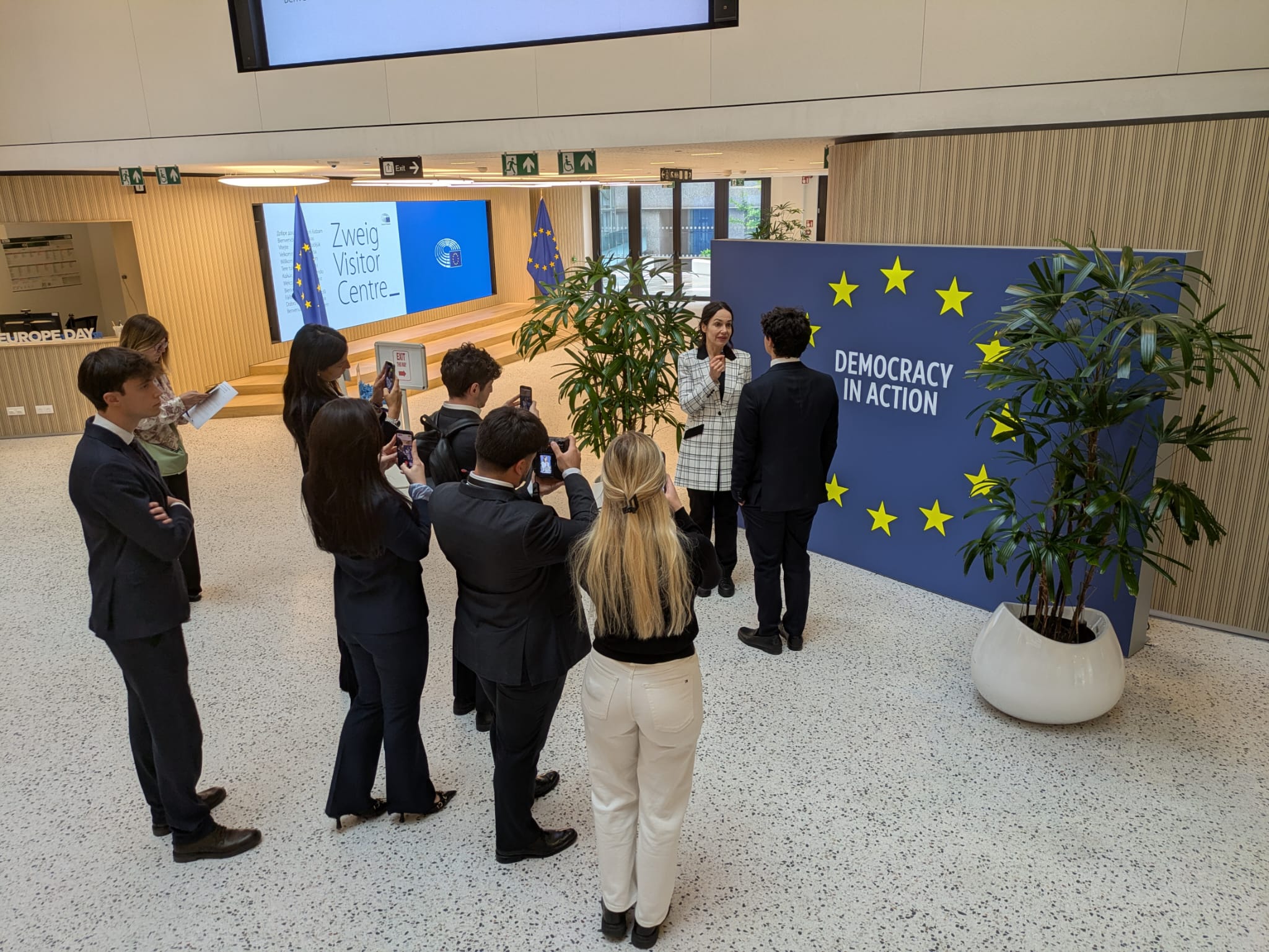
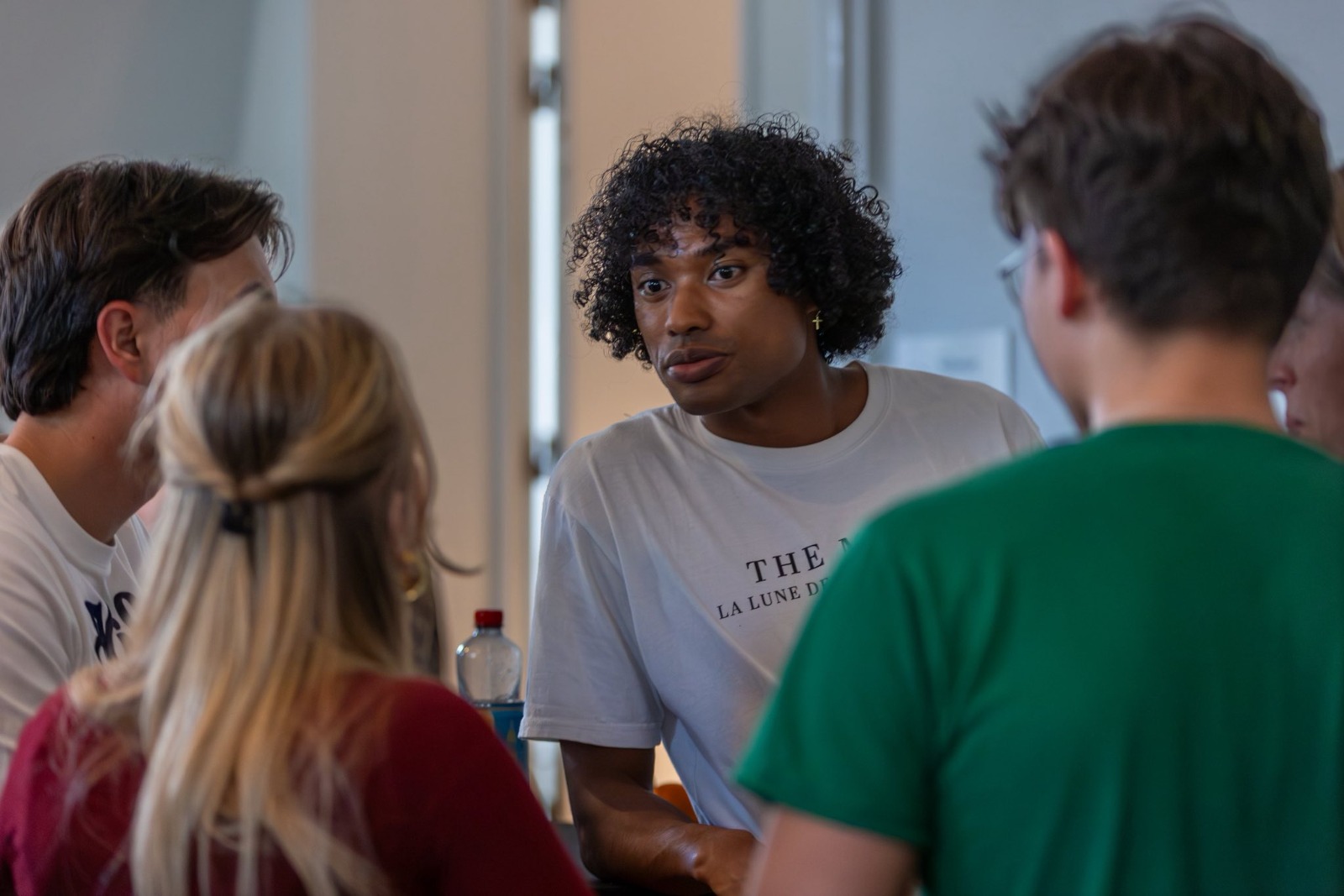
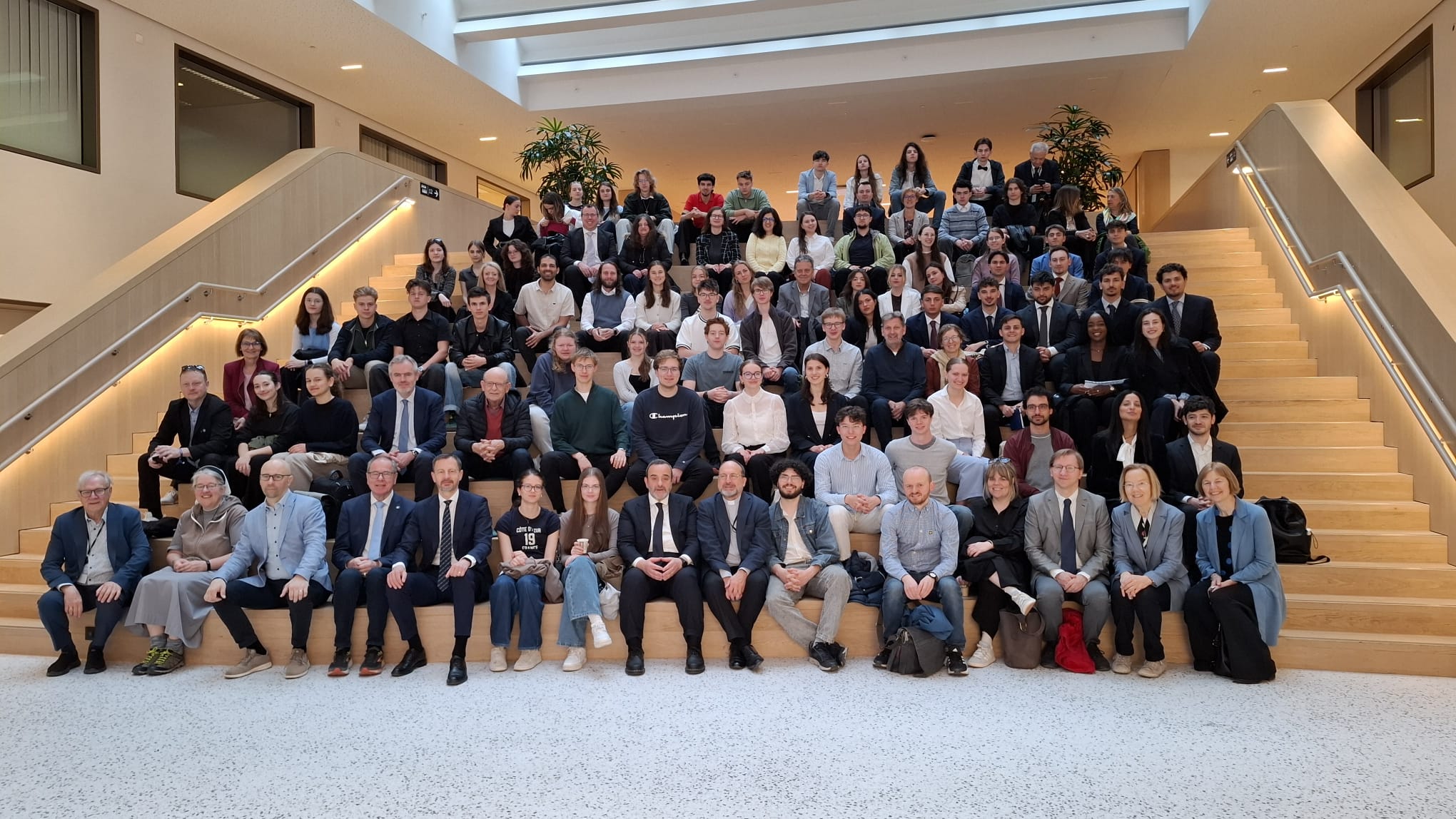
Where did the 100 young participants come from? As well as Europeans (here too, it matters little that they were Finnish, Swedish, Dutch, German, Belgian, Scottish, Slovak, Austrian, Hungarian, Romanian and Italian) there were Americans, Colombians, South Africans, Chinese, Canadians, Brazilians and Mexicans. Because Europe does not exist for itself alone, since its vocation is to unfold on a global level, offering its heritage of values shaped by Christianity, lived through ecumenical dialogue and amplified by the clear-sighted projects of the young people of Together for Europe.
Alberto Lopresti
Photo: © Together for Europe