![Word of Life June 2015]()
28 May 2015 | Non categorizzato, Word of
 Audio of the June Word of Life
We can become slaves to what we do, getting all ‘hot and bothered’. Jesus invites us to focus on the only thing that matters: living his word as we live for him. This makes our work a creative act of love. There is much affection in repeating this name: “Martha, Martha”! The house in Bethany, near Jerusalem, was a place Jesus would stop and rest with his disciples. In the city, he was drawn into debates; he found antagonism and rejection. In Bethany, instead, he felt welcome and found peace. Martha was enterprising and active. She showed it later when her brother died and she engaged Jesus in a lengthy conversation, questioning him energetically. She was a strong woman who showed great faith. When “Jesus said to her, ‘I am the resurrection and the life… Do you believe this?’ She said to him, ‘Yes, Lord, I believe’” (Jn 11:25–27). She answered without any hesitation. At this point she was extremely busy, organizing a special welcome for the master and his disciples. She was the mistress of the house (as her name suggests: Martha means “mistress”), and so she felt responsible. She was probably preparing the evening meal for her important guest. Her sister Mary had left her all alone to do the work. Contrary to the traditions of the East, Mary did not go to the kitchen but remained with the men to listen to Jesus, sitting at his feet, just like the perfect disciple. This gave rise to the rather resentful comment by Martha: “Lord, do you not care that my sister has left me to do all the work by myself? Tell her then to help me” (Lk 10:40). And Jesus’ affectionate, yet firm reply was:
“Martha, Martha, you are worried and distracted by many things; there is need of only one thing.”
Was Jesus not happy with the enterprising and generous service of Martha? Didn’t he appreciate her concrete and practical way of welcoming him, and wouldn’t he be happy to eat the food that was being prepared? Shortly after this episode, in his parables he will praise the administrators, businesspeople and employees who know how to use their talents creatively and do business with their goods (see Lk 12:42; 19:12–26). He even praises shrewdness (see Lk 16:1–8). He could not but rejoice at seeing a woman so full of initiative and capable of giving a warm and abundant welcome. What Jesus calls attention to is the state she was in, how bothered and worried she was about her work. Martha is agitated, “distracted by her many tasks” (Lk 10:40); she has lost her calm. It is no longer she who controls her work, but it is her work that has taken control and tyrannizes her. She is no longer free; she has become a slave to what she does. Doesn’t it happen also to us at times that we get lost in the thousands of things to do? We are drawn to and distracted by the internet, by messaging, by useless posts. Even when we have serious commitments to occupy us, they can make us forget to be attentive to others, to listen to people right next to us. Above all, the danger is that we lose sight of why and who we are working for. Our work and other concerns become ends in themselves. Or else we are overcome by anxiety and agitation when we face difficult situations and problems with our family, money matters, career, school and the future of our children —to such an extent that we forget the words of Jesus: “Therefore do not worry, saying, ‘What will we eat?’ or ‘What will we drink?’ or ‘What will we wear?’ For it is the Gentiles who strive for all these things; and indeed your heavenly Father knows that you need all these things” (Mt 6:31–32). We too deserve Jesus’ criticism:
“Martha, Martha, you are worried and distracted by many things; there is need of only one thing.”
What is the only thing needed? To hear and live the words of Jesus. Before these words and before he who speaks them, we cannot put anything at all. The true way of welcoming the Lord, of making him feel at home, is to welcome what he says. This is what Mary did: forgetting everything else, she put herself at his feet and did not miss a single word. If we do that we will be guided not by our desire to be noticed or to have the first place, but only by pleasing him, by being at the service of his kingdom. Like Martha, we too are called to do “many things” for the good of others. Jesus has taught us that the Father is happy when we bear “much fruit” (see John 15:8) and that we will even do greater things than he did (see Jn 14:12). He looks therefore at our dedication, our passion in doing the work he has given us to do, our imagination, courage and resourcefulness. He wants us to do many things without getting bothered and agitated, but keeping the peace that comes from knowing we are doing God’s will. The only thing that matters therefore is to become Jesus’ disciples, letting him live in us, being attentive to what he suggests with his gentle voice that prompts us moment by moment. In this way he will be the one who guides us in every act. In doing “many things” we will not be distracted and side-tracked, because by following Jesus’ words we will be moved by love alone. In all we do, we will always do only one thing: love.
Fabio Ciardi *
*Fr Fabio Ciardi, OMI is a theologian and close collaborator of Chiara Lubich Read more on this topic: Lubich, Chiara. Here and Now: Reflections on Living the Present Moment. New City Press, Hyde Park, New York, 2005. Lubich, Chiara. “A divine balance,” Essential Writings. New City Press, Hyde Park, New York, 2007. Pg. 123. Next month: Word of Life for July 2015 “Take courage; I have conquered the world!” (Jn 16:33).
23 May 2015 | Chiara Lubich, Cultura, Focolari nel Mondo, Non categorizzato, Spiritualità
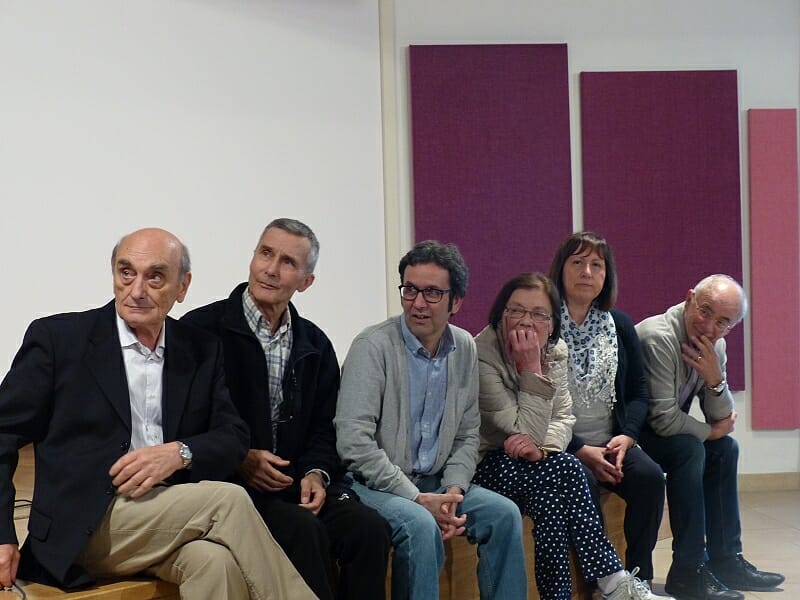
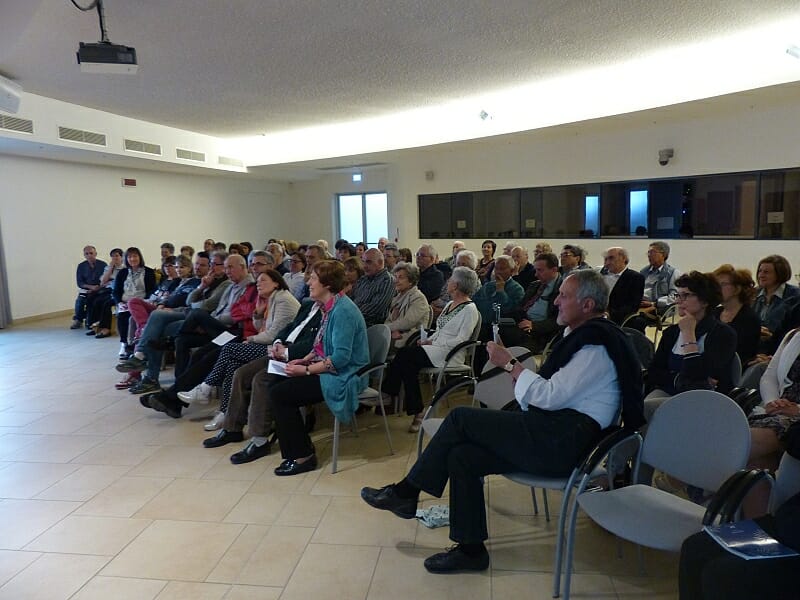 It was the evening of 7 May 1995 at the international Centre in Loppiano (Italy). A group of people of various beliefs and cultural backgrounds were having a lively discussion at dinner. They had spent the entire day together to see whether they, as Catholics and agnostics, could overcome ideological limits, dislikes and century-old prejudices and get to understand, accept and appreciate one another. These gatherings of people who spoke different languages and professed various beliefs had started already in 1978 when Chiara Lubich, founder of the Focolare Movement, set up the “Centre for Dialogue with People who hold No Religious Affiliations” within the scope of a more extensive experience initiated by the Focolare. The 7 May 2015 meeting in Loppiano was taken as an opportunity to take stock of this reality and a challenge to certify, face to face, if mutual esteem is really possible. Over the years, in fact, all have even become “friends,” and getting together and discussing with one another was considered not only stimulating but also very pleasant. At that dinner, however, someone was missing, one who perhaps was the most active in the group: Ugo Radica. This really special focolarino had decided to pursue an idea without notifying anybody and had gone to station himself close to the house of Chiara Lubich, founder of the Movement, who was supposed to arrive in Loppiano that evening. His patience was rewarded in the end when Chiara’s car finally came into view. Ugo approached the car, and Chiara, quite surprised, lowered the window to ask: «What are you doing here, Ugo? He firmly said: “I’m here with a group of friends of different beliefs. Why don’t you come to see us tomorrow? I think it would be very important for them to have an exchange of ideas with you personally.” Chiara accepted though unsure and a bit doubtful. She requested that the group prepare some questions for her to answer. Ugo thus returned to the group full of enthusiasm.
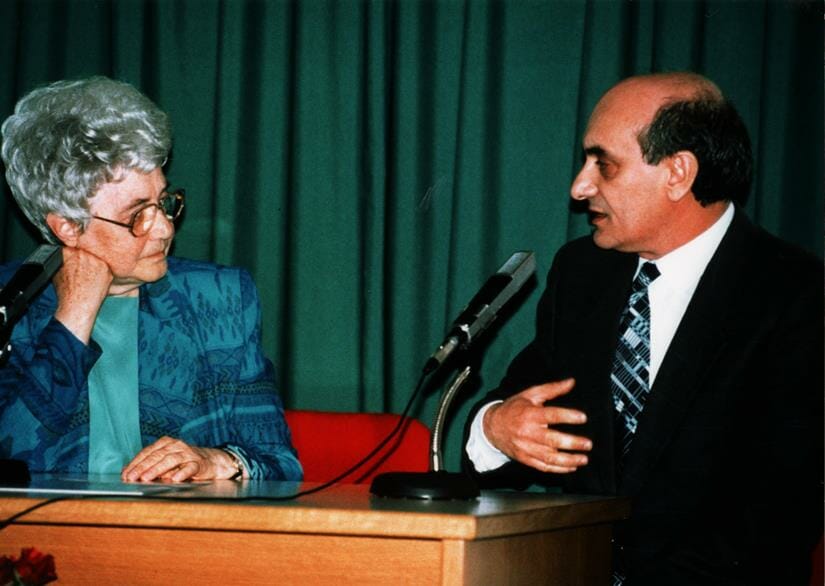
Chiara Lubich meets with the group in Loppiano, 7 May 1995
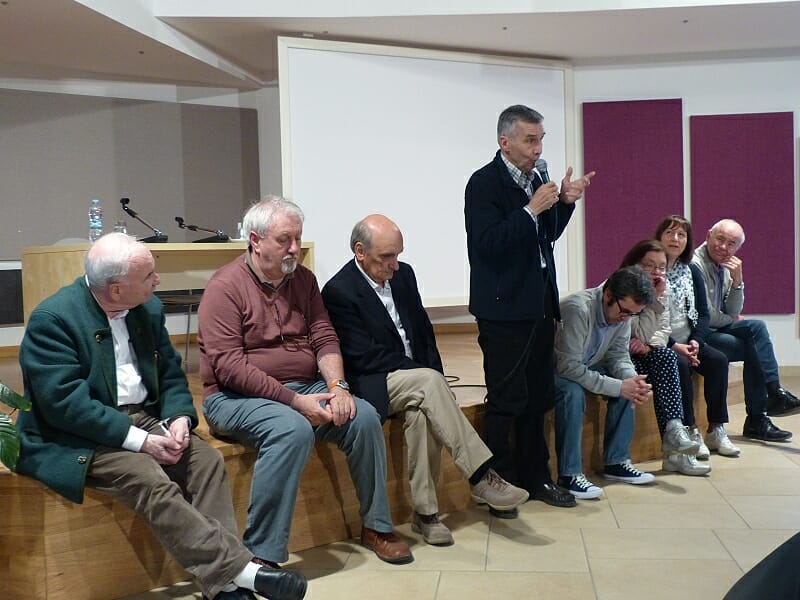 That evening, Tito, one of the friends who had turned up by chance at the last minute, phoned his wife, a genuine Catholic, and a long-time member of the Movement, to proudly announce to her that he had spoken to Chiara personally, while she in all those years still had not seen or had a glimpse of her even from afar. Twenty years later, on 7 May 2015 there was again a celebration in Loppiano. A nostalgic commemoration? Absolutely not. Armando, Morena, Tito, Dolores, Piero, Luciana, Roberto, Silvano and many more followed one another onstage to recall those moments, not only to assess the 20 years that have passed, but to also organize the next events. They are convinced, more than ever, of the importance of this type of dialogue. And unlike the moments of encounters between believers, one never knows how these “fourth dialogue” meetings can turn out. But precisely this fact is a warranty of authenticity, since each inevitably has to be fully and personally involved, ready to offer one’s ideas but also accept those of others through an intricate but fruitful exchange. This dialogue which has continued through the years, not without difficulties, has become international, and has reached many countries. Its diffusion and urgency was strongly felt as a pressing responsibility by those who attended the 2015 gathering. This lifestyle has to be actualised firstly among the members of the Movement, to be offered in turn, to all of humanity.
22 May 2015 | Non categorizzato
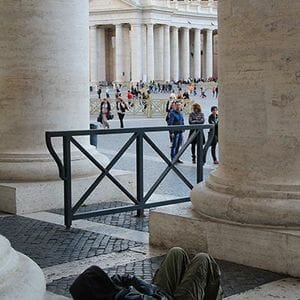
“Our community house is very near St Peter’s Square, in Rome. It was almost nine o’clock in the evening. Our mother superior had just stepped out for a look at the colonnade of Bernini by night with a few compatriots. My cell phone rang, and it was she. “There’s a man here, about 35 years old, who says he was robbed on the metro and lost his ID, money, and cell phone.” I went downstairs to see what could be done. Luciano, as the man called himself, told me he had arrived in Rome that same afternoon, after a twenty-seven hour bus ride. He had managed to scrape together 1,300 euros, thinking it would be enough until he could find work in Italy. I asked him if he wanted to call someone, and he gave me the phone number of his mother in his country of origin. I dialed the number and passed him the cell phone. It was getting late. I called a sister who works at the Charity organization at Termini Train Station to find out if she knew of a place where the man could spend the night, but she told me without ID it wasn’t possible. He decided to sleep outside and to go the next day to the embassy in order to return as soon as possible to his homeland. I asked him if he wanted something to eat or drink, but he was too stressed to eat. He said he still had the sandwiches he had brought for the trip. I offered to accompany him to Pius XIII Square, where many homeless people gather, to entrust him to them (there were others from his country there). Before we reached them, we met B., a homeless woman who sleeps in corners of the apartment buildings. Sometimes we bring her something to eat. I told her about Luciano, without saying, however, that times being as they were, I wasn’t sure if I should believe him. And if it were a scam? But the conviction that he was a neighbour to be loved concretely was stronger. The woman told him, “Go to the dumpster and gather a lot of cardboard, because it’s very cold at night. You can sleep here nearby; no one will harm you.” We left his luggage and went to search for cardboard, which was certainly not easy to find: in that area there are many who sleep on the pavement beneath the walls. In the meantime my superior came to meet us. With the cardboard we returned to B. and left Luciano in her care. Above all, we entrusted him to the Blessed Mother Mary and the Guardian Angels. That night I couldn’t sleep. It was very cold and humid outside. In the morning, I took him at least some warm milk and coffee. He said that because of the cold and discomfort, and the noise of traffic, he hadn’t slept at all. I went back home for Mass. The readings spoke about fasting, which means not only to abstain from food but to “share your food with the hungry and to provide the poor wanderer with shelter, and when you see the naked, to clothe them…” (Is 58: 1-9). I couldn’t go on reading it; I couldn’t answer the priest; I had a lump in my throat and tears running down my cheeks. I, who find it difficult to cry, had understood what the “gift of tears”, which Pope Francis recently spoke of, truly meant. At the end of Mass, I told my superior, “We have to see this through to the end.” Fearing a scam, she was hesitant at first, but then she agreed. Luciano was still there. He had remembered that in the inside pocket of his backpack he had his identity card. We loaded one of his bags in our shopping cart, and the other we helped him to carry. At the bus terminus we discovered that there was a bus leaving for his country that same day. We bought him the ticket. The clerk advised us to wait for the bus to depart because, he pointed out, this type of person often goes to the cash register to return the ticket and be reimbursed. We had to return home, but first we bought him breakfast. There were still two hours until departure, but we continued to trust. I embraced him and left him my cell phone number, a little money for the trip, and a bit of his country’s currency for the train home. That afternoon, someone who had heard about this story gave us a gift in the same amount we had spent. The next day, we received a grateful text message from Luciano. “Thanks for the ticket and everything. I’ve arrived home safe and sound.”

16 May 2015 | Non categorizzato
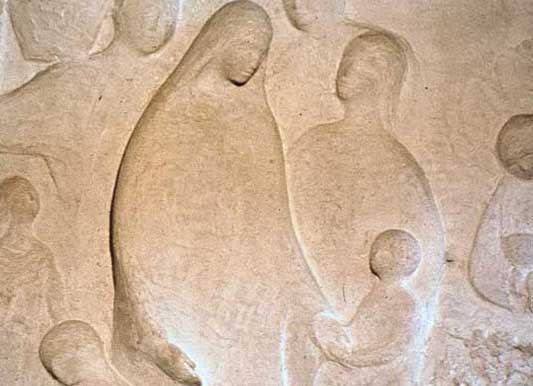
Audio mp3 in Italian “But God loved us with so much love that he was generous with his mercy: when we were dead through our sins, he brought us to life with Christ” (Eph. 2:4-5). “The commentary on this Word of Life, underlines two characteristics of God’s love. One is that God in His love took the initiative to love us even though we were anything but lovable (“dead through our sins”). The second is that God’s love did not only reach the point of forgiving our sins, but since His love is infinite, He brought us to share in His own life (“he brought us to life in Christ”). These words and thoughts take us back to the very beginnings of the Focolare, when God enkindled in our hearts the spark of our great ideal. In the light of this splendid Word of Life, I realize that the spark or the fire was nothing less than our sharing in Love itself, who is God. In the midst of the dreariness and desolation which surrounded us due to the war, did we find others taking the initiative to love us? Through a special gift of God, wasn’t it in fact we who were the ones lighting the flame of love in many hearts around us, urged on by the desire to see this flame ablaze in everyone? Did we choose to love those who appeared the most likeable or rather were we more attracted to the poorest of all in whom we could better recognize the countenance of Christ, and to sinners who most needed His mercy? Yes, by a divine miracle, (the kind of miracle that occurs each time a charism of the Holy Spirit pours forth in the world), our own little hearts could witness to being rich in mercy. As we know, loving our neighbours did not simply mean to make ourselves one with them to the point of bringing them to God. It meant to draw them into our revolution of love, our very ideal. We considered everyone to be a candidate for unity and so everyone could and did participate in the dynamic divine life that God had brought about at a given point in the Church’s history. That is how it was then, and so it should be today. Certainly times have changed, but it shouldn’t be difficult to admit that if the world at that time seemed like a desert because of the destruction of the war, the world today, even though the reasons may be different, shouldn’t seem to be any less of a desert. Many factors have contributed toward the levelling out of our modern society; we live in very ambiguous times. In the past society was fundamentally Christian and a clear distinction could be made between good and evil. That is not the case today. In the name of a freedom which is not true freedom, good and evil, observance and non-observance of the commandments are all put on the same level. We are living in a new kind of desert, where what has been bombed are not homes, churches, and other buildings, but moral laws, and as a result, individual consciences too. What can be done about this? Are we without weapons in our battle to bring the forgiveness and love of Christ to a world which takes so little account of the reality of sin? No, we are not without weapons. This desecrated world has a countenance for us: Jesus Forsaken, in whom the sacred and the divine are completely hidden. In every negative situation we can see a reflection of Him, God who is abandoned by God. It is in His name and in our love for Him that we will find the strength to love what today appears so despicable. With the fire of love aflame in our hearts, and like our God who always takes the initiative, we will reach out to those we meet along our way. God in us will reawaken and enlighten consciences, instil contrition, bring back hope, enflame with enthusiasm, giving a desire to many, dead as they are, to be brought to life in Christ. So, places three objectives before us: to keep the fire burning in our hearts; to be the first to love; and not to limit our love, but to love boundlessly. In this way we will bring many people to live our ideal, which is to live Christ. Only by living on this level can we be in line with what the Scriptures ask of us this month”. (…) (Chiara Lubich, Rocca di Papa, on January 3, 1985) Source: Chiara Lubich Center
13 May 2015 | Non categorizzato
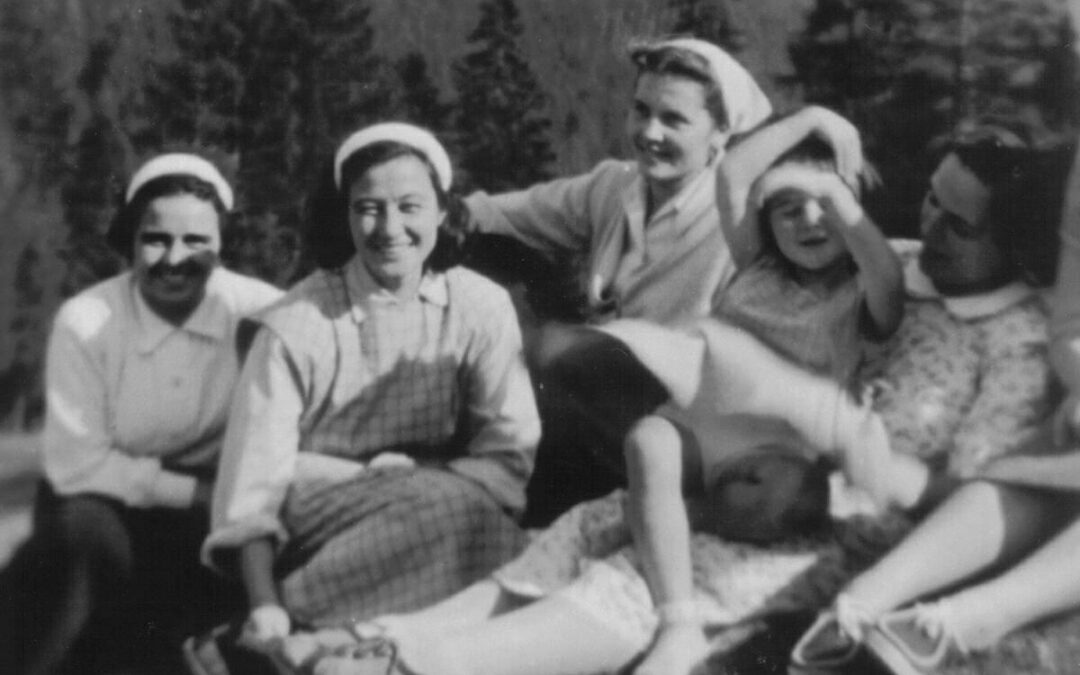
“When it comes to Mary the universal Church bursts into song. In midst of greyness and boredom, her name appears, the atmosphere clears and endless lights are lit. She is the sun in which God placed his dwelling.” This is how Giordani writes of the Mother of God, singing along with the Church as he places himself amongst the many artists, theologians and holy people who have competed in portraying the virtues of the Virgin Mary: her beauty, the greatness of her role in the economy of the Salvation. His book, Maria modello perfetto, (Città Nuova, Rome, 2012) marks the conclusion of a journey: the progression of Giordani’s understanding of the mystery of Mary and of his attitude towards her. He had often written of her in articles and in the many pages of his books. He had already dedicated a previous book to her in 1944: Maria di Nazareth. But up to then, the theme was always contemplation, praise and invocation. In Maria modello perfetto there is a difference, which reveals the maturation accomplished in Giordani. There is the same contemplation, but above all imitation of Mary. The intellectual and life relationship of Giordani with the Mother of Jesus enters into a deeper dimension following his encounter with Chiara Lubich, in 1948, and with the Movement that was begun by her, popularly known as the Focolare Movement, but whose real name is Work of Mary. Right from the start, the experience of Chiara Lubich and of those who had entered into communion with her centred on the Word, especially Jesus’s prayer for unity: that spirituality had a strong “Marian stamp” that became clearer and developed further through successive stages. Some of these included: total willingness to germinate the presence of Mary in one’s personal and communitarian spiritual life; to repeat inasmuch as that is possible, the life of Mary, following her path – the Via Mariae (the Way of Mary) – as it emerges from the Gospel and Tradition; and a very distinctive choice of her as one’s Mother. This reality is what lies behind Giordani’s discourse on Mary. He offers it enriched by his cultural, theological and literary background, and with that characteristic zeal that made him a singular and enthusiastic witness of love towards the Mother of God. “Mary incarnates strength because she incarnates love: and love is stronger than death. Only in this does the desperation of the world melt away as new life is given, on this Calvary where we are all assembled by universal guilt (. . .) Poetry, science, wisdom and love become condensed in Mary, who is the refuge in desolation, loadstar in the storm and beauty in the horror. She marks out the way that leads to the Son, so that, through her, He comes more lovingly to us. We’re never alone: the Mother is there. We only need to enkindle her name in the desert night. (. . .) Every saint, every attentive Christian, is on a cross like Christ, but with the Mother beside him. In the most horrendous moment, he sees her imploring eyes, feels the unity with her, and trustingly places his soul in the hands of the Father.” The “Imitation of Mary” is presented as a valid goal for women and men, for consecrated virgins, priests and lay people, and it can have social as well as spiritual applications. “This is Mary’s hour,” Giordani writes, this hour when she wishes to live again in souls that mystically “become” her and are able to generate Jesus again in the midst of today’s people who are more and more in need of Him. Giordani sees her especially in the abysmal depths of her Desolation where she becomes the Mother of the Redeemed, the soul of those who know how to welcome her in. He sees her beginning to appear as a viable path of holiness for each one of us. Tommaso Sorgi www.iginogiordani.info
9 May 2015 | Non categorizzato
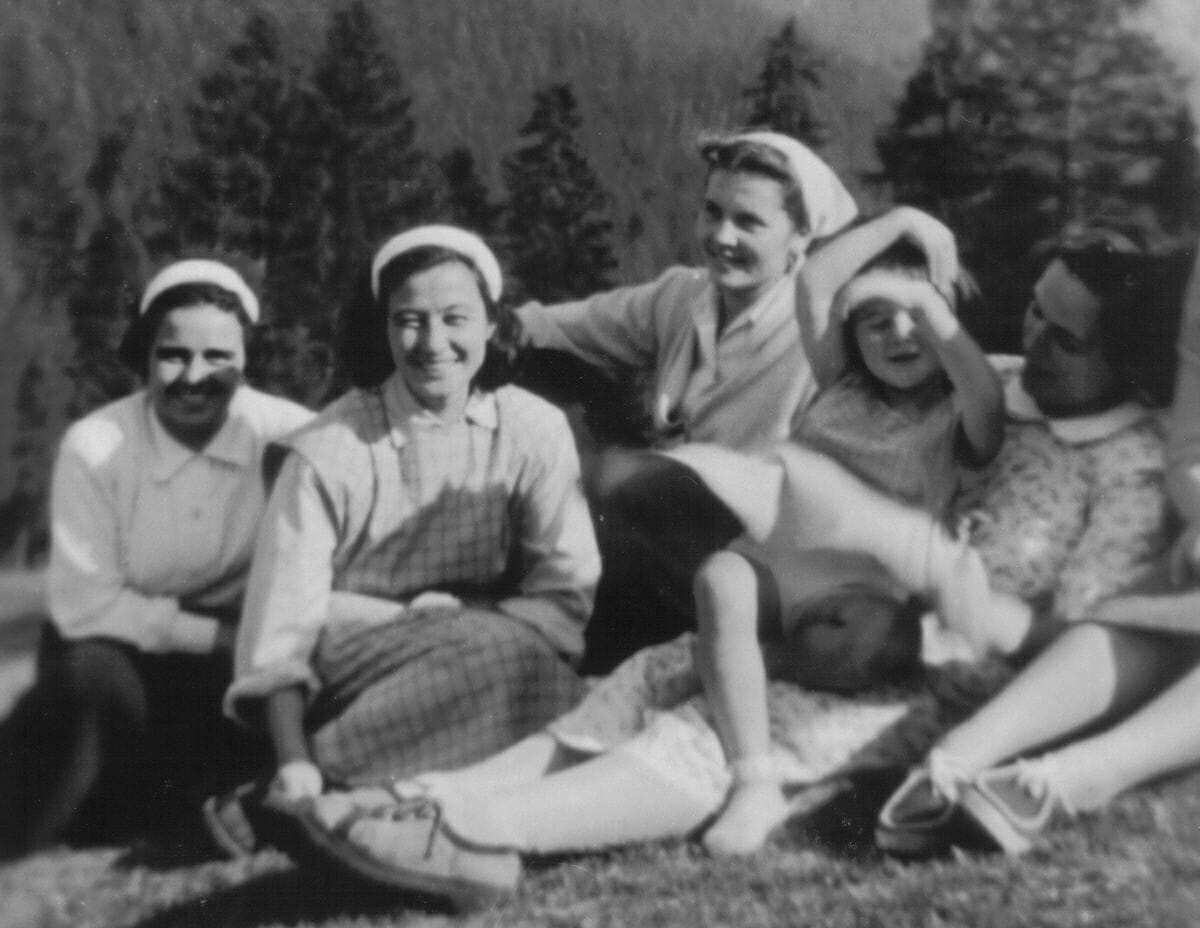 “The adventure of unity:” this is how Chiara Lubich and her first companions were fond of describing their choice of God as the Ideal that led them to live for the unity of the human family. Graziella De Luca was with Chiara right from the start of the Focolare Movement. It would be impossible to describe in few words the very fruitful life she lived in spreading the spirituality of unity in many so many places and hearts. “I have come to set the world on fire, and I wish it were already burning! (Lk 12:49). Chiara had suggested this Gospel sentence to her as a goal, also because of her keen apostolic spirit that led her in great simplicity to share with parliamentarians and simple workers, the great discovery that changed her life, the encounter with God’s love. Born in Trent, Italy, on March 12, 1925, Graziella De Luca died on May 9, 2015 at 15:35, as the focolarine gathered around her were praying the Veni Creator Spiritus, writes Focolare president, Maria Voce informing the global community of Graziella’s death. She continued: “Let us thank God for her abundantly fruitful life. Let us pray for her, in the joy of imagining her already in the Bosom of the Father, with Our Lady and all those who are dear to us. Let us trustfully entrust the Work of Mary to her as it “reaches out,” certain that she will help us to set the world on fire with love”. Live streaming of the funeral: live.focolare.org/graziella
