The ecumenical conference Called to hope – Key players of dialogue, will take place from the 26th to the 29th of March 2025 at the Mariapolis Centre of Castel Gandolfo (Italy). It is promoted by “Centro Uno”, the Focolare Movement’s international secretariat for Christian unity. There will be more than 250 faithful of 20 Christian Churches participating in person, coming from over 40 countries of 4 continents, including the Philippines, Serbia, Bulgaria, Slovakia, Ireland, Venezuela, United States. There will be 15 translations, and the conference will also be broadcast via streaming.
Thursday, the 27th of March, the group will go to Rome to visit the Basilica of St. Paul Outside the Walls (at 4:00pm). An ecumenical prayer of reconciliation and for peace open to all is planned.
The conference programme will also focus on the three anniversaries that occur this year: in the context of the Jubilee Year “Pilgrims of Hope” of the Catholic Church, we will commemorate the 1,700th anniversary of the Council of Nicaea, the coincidence of the date of the celebration of Easter for all Churches, and the 60th anniversary of the abolition of mutual excommunications between the Church of Rome and the Church of Constantinople.
Among the ecumenical personalities present who will speak: Msgr. Andrea Palmieri, Undersecretary of the Vatican Dicastery for Promoting Christian Unity, Msgr. Derio Olivero, President of the Episcopal Commission for ecumenism and dialogue of the Italian Bishops’ Conference, Prof. Dr. Martin Illert, representative of the World Council of Churches (WCC), Archbishop Khajag Barsamian representative of the Armenian Apostolic Church to the Holy See, Dr. Natasha Klukach, Director of Research and Operations of the Global Christian Forum, Dr. William Wilson, President of the Pentecostal World Fellowship (via video message), Dr. Elisabeth Newman of the Baptist World Alliance, Dr. Margaret Karram and Dr. Jesús Morán, President and Co-president of the Focolare Movement.
Why is it urgent to work for ecumenism?
In this time of divisions and great challenges – wars, the increase in refugees around the world, unequal distribution of wealth, almost irreversible damage to the earth’s ecosystem – as Christians, we are called together to bear witness to the hope of the Gospel and to be protagonists of dialogue and unity, committing ourselves to live together for peace, to build fraternity, to spread hope. Christian unity is instrumental in bringing peace wherever it is lacking.
Bahía Blanca is a coastal city located at the gateway to Argentine Patagonia begins. With its 370,000 inhabitants, it is the economic, religious and cultural centre of a vast region. Just a few kilometres away, another 80,000 people live in the city of Punta Alta. Together, they have a very important petrochemical hub, a network of 7 different ports (including multipurpose, grain, fruit, fishing, gas, oil and fertilizers) and the main base of the Argentine Navy.
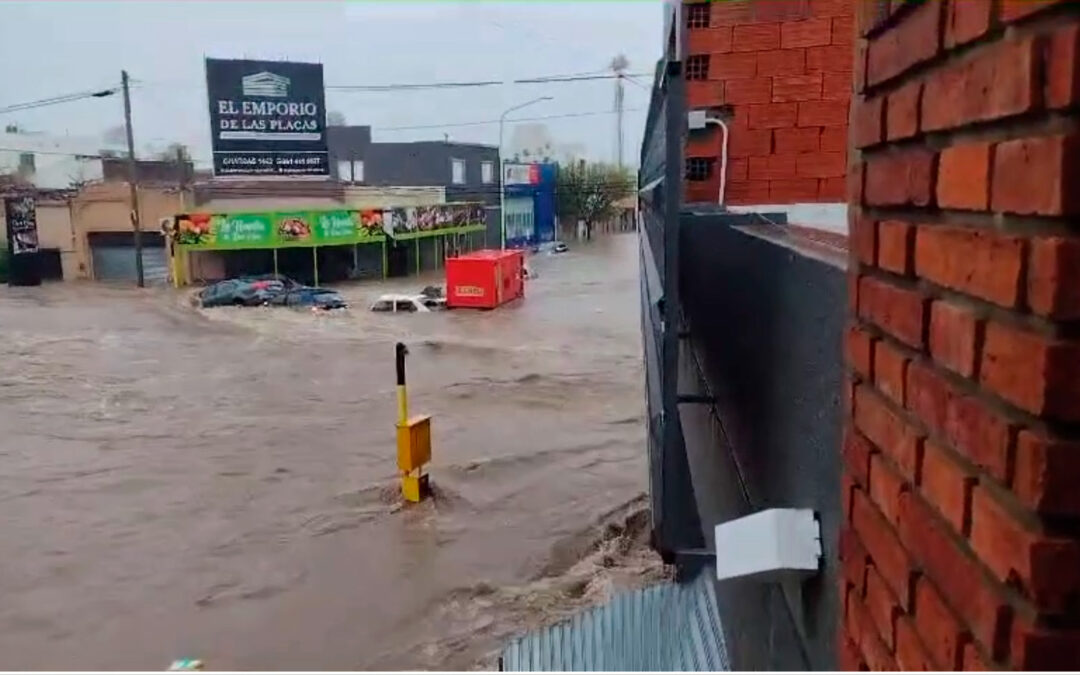
In this region, the average rainfall in a year is 650 mm, but on Friday, 7th March, 2025, 400 mm fell in just 7 hours. As this huge amount of water made its way to the sea, it gathered speed and destroyed everything in its path: bridges, canals, railways, roads, roads, vehicles, houses, shops… and people.
The population suddenly found itself in scene of unimaginable devastation, as if there had been a tsunami. A sudden power outage also cut off telephone communications, leaving everyone in the dark about the well-being of their relatives, friends, and colleagues.
However, something deep within this community awoke and all the universal laws converged into a single verb: to serve.
As soon as the water and mud allowed, thousands of people began to pour into the streets. Everyone assessed the damage in their own home, but then immediately turned their attention to their neighbours, to see if they needed help. Those who managed to get their situation under control devoted themselves entirely to helping others. We were all witnesses and protagonists of a gigantic miracle that has multiplied, with incredible creativity and strength.
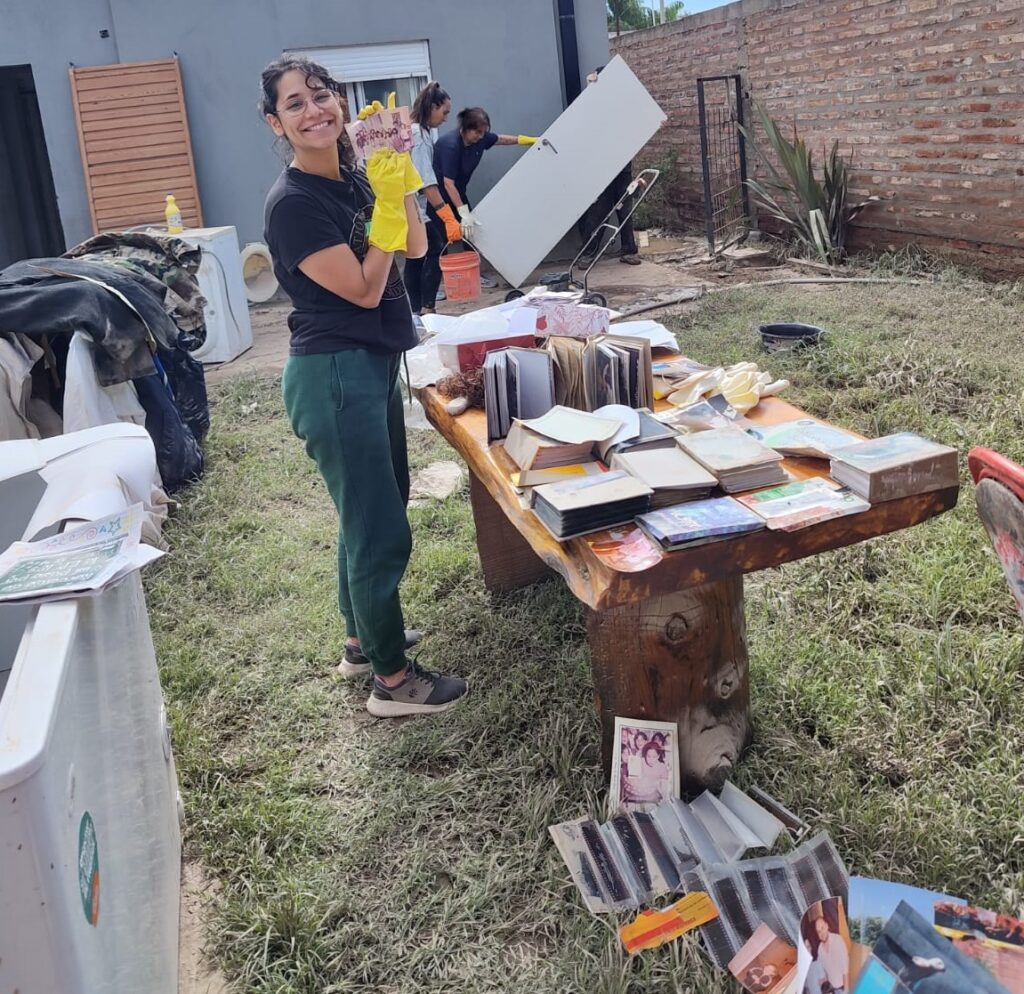
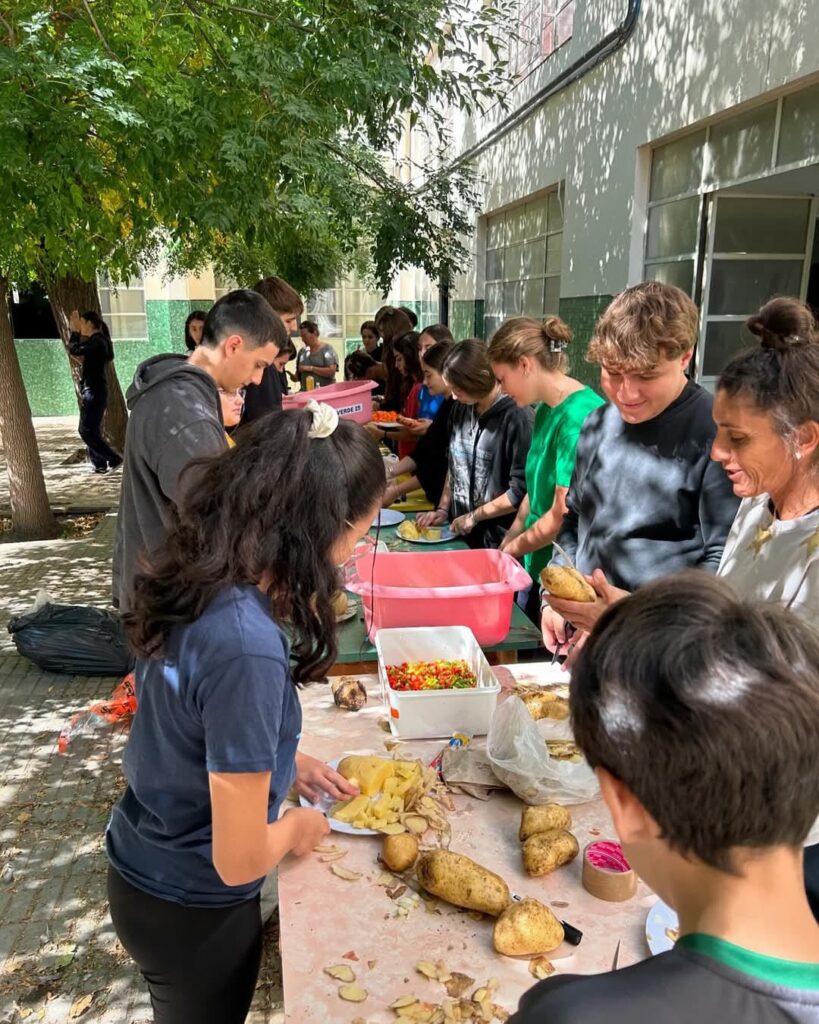
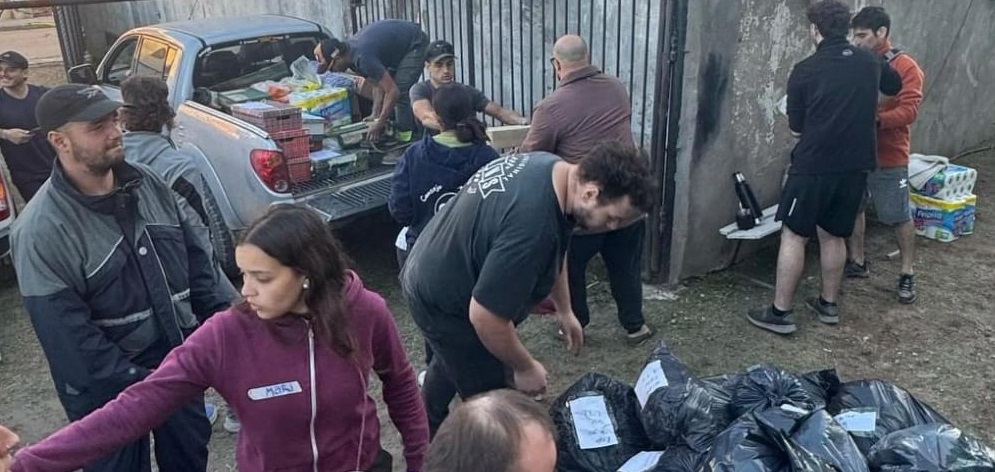
Recovering photographs of an elderly womanYoung people preparing meals for distribution in the flooded areas.Distributing donations
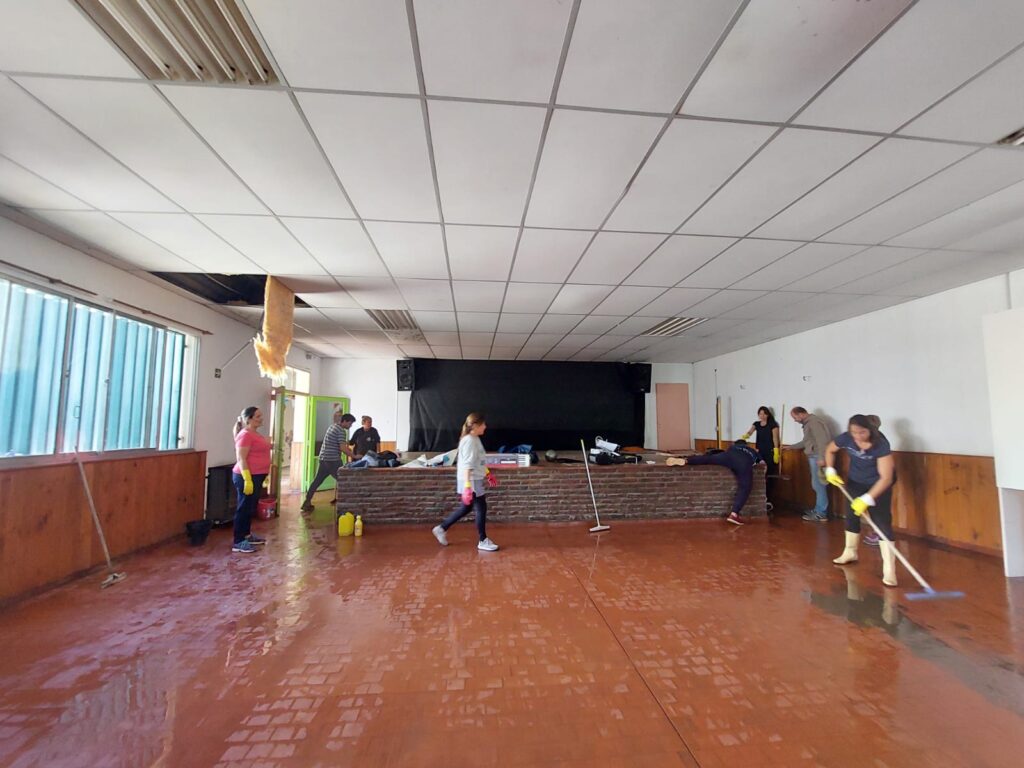
The only thing that mattered was what could be done with our hands: help remove water and mud from homes, clean, tidy up, look for rags, buckets of water, disinfectant, take the injured to health centres, take care of pets, accommodate people who had lost everything, offer strength, encourage, hug, share suffering. No one complained but said, “It was very difficult for me, but in comparison to what happened to others…”
While I was helping some friends, a couple approached and distributed pasties, others came with drinks. Those who had an electricity generator offered to recharge mobile phone batteries. Others provided pumps to drain flooded areas. An optician donated glasses to those who had lost theirs. A woman distributed disinfectant, a doctor made house calls, a man offered his services as a bricklayer and another as a mechanic. Everything was shared: candles, food, clothes, nappies, mattresses, drinking water, brushes and hands – countless hands.
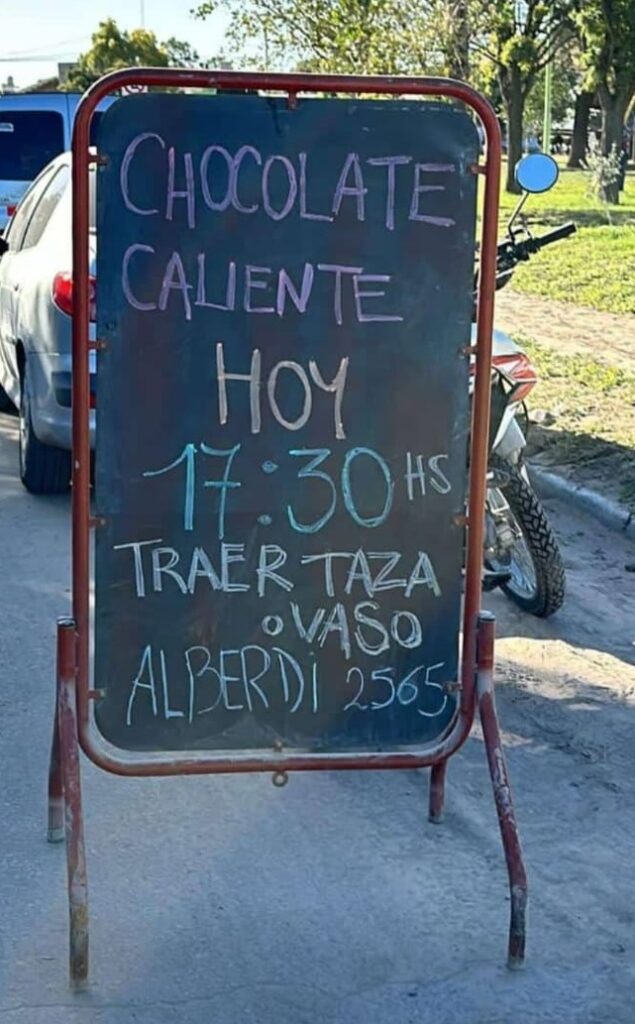
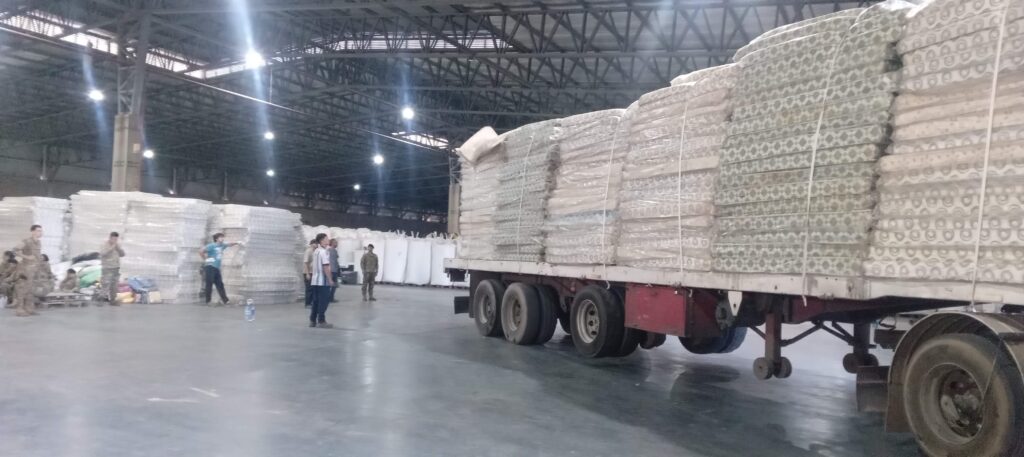
A bar offers free hot chocolateDonations of mattresses arriveVolunteers cleaning a kindergarten
And then came the solidarity of the whole country and of people from all over the world. By truck, by train, by bus, in vans… tons of donations, which needed more volunteers for loading, unloading, sorting and delivery. Volunteers kept multiplying. And also money, donated with great generosity. Parishes, clubs, schools, companies, all the existing organizations gave everything they could. Generous financial donations also arrived. Parishes, clubs, schools, businesses—every organization gave everything they could. And then, another kind of organization emerged: groups of friends. Like makeshift “patrols,” each group took charge of a section of the city where government aid would likely take longer to arrive. Even now, they continue going door to door, recording every need and ensuring that help arrives swiftly.
All the hands of these people, whether they knew it, believed it, or even imagined it, have become “divine hands”. Because they were the most tangible way God could reach those in need. Personally, I experienced deep anxiety not knowing if my siblings or friends were safe. I wanted to reach them, but it was impossible. So I decided to help wherever I could. I called it my “square metre.” Later, I finally managed to reach my loved ones, only to discover that others, strangers, had helped them where I could not.
Days later, some parts of the city are still under. The suffering and difficulties continue. The losses have been immense. Everywhere you meet people with big dark circles under their eyes and aching muscles from working almost without rest. But with their hearts wide open and a fullness in their eyes, for having given everything for others.
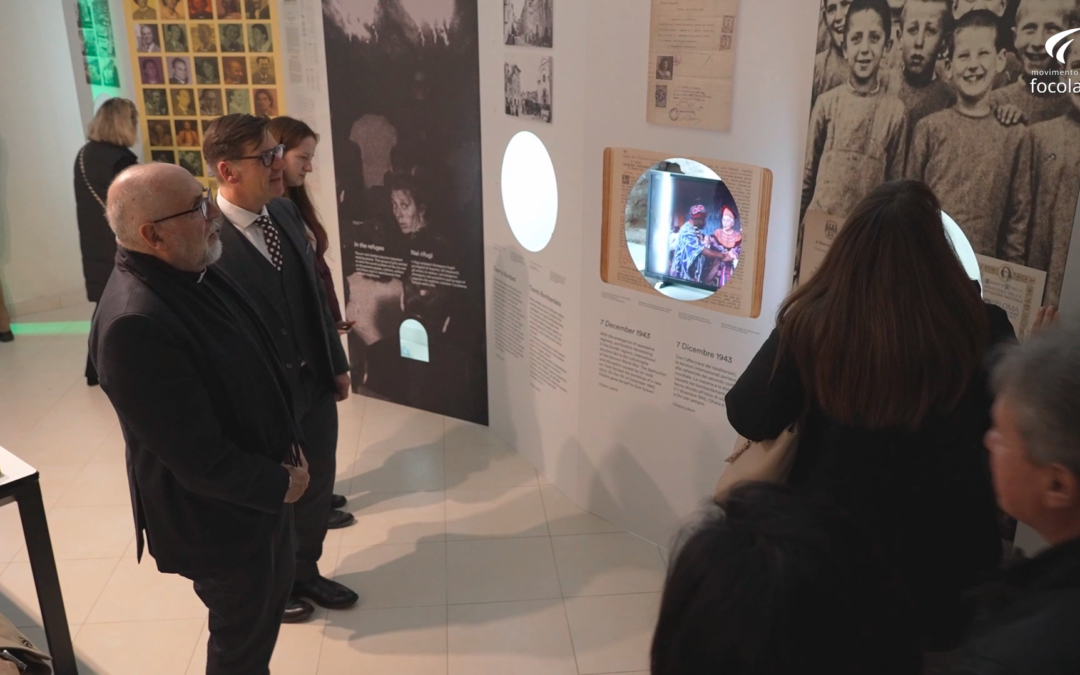
An exhibition dedicated to Chiara Lubich (1920-2008), witness and inspirer of the universal value of fraternity. A stop for those visiting Rome. At the centre of the exhibition is the theme of the “city”, as a privileged place for building fraternal relationships, open to the world. The multimedia exhibition has been produced by the Chiara Lubich Centre and the Historical Museum Foundation of Trentino.
It can be visited from Monday to Friday from 10:00 to 12:30 and from 14:00 to 17:00. On Saturdays from 10:00 to 13:00.
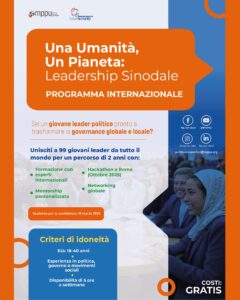
The Political Movement for Unity and the NGO New Humanity, both expressions of the Focolare Movement, supported by Porticus, are promoting a global political project entitled “One Humanity, One Planet: Synodal Leadership”. Aimed at young people aged 18-40 with experience in political representation, government leadership or social movements, the programme offers academic training, personalised mentoring and a hackathon in Rome with international experts.
Objective: to strengthen the participation of young politicians in global advocacy processes, through a collaborative journey of reflection and action between socio-political leaders, generating a global network of young leaders from different continents. The challenge is to overcome the current crises (social, environmental, political and economic) and contribute to building a leadership network for the development of international political strategies.
The program will start at the end of April 2025, the deadline for submitting applications is 31st March, it will last for two years and is fully funded (free of charge). It will include contributions from prestigious academic institutions and international NGOs. The format will be mixed, both in person and online through interactive modules with experts from around the world, including renowned political leaders and university professors. A week-long event is planned in Rome, from 6th-12th October 2025, with international guests to co-create proposals for collaborative actions at a global level to solve current social, environmental and economic challenges.
Language will not be an obstacle. Simultaneous translations will be available in Spanish, Portuguese, French, English, Italian and other languages as required.
What does the programme offer?
The initiative is a process of global collective action that integrates training, information, networking, tools and meetings. It offers experiences and methods to increase the quality of policy and improve its impact on social transformation. Participants will have access to learning spaces, collective knowledge-building and exchange with international scholars and experts, with spaces for reflection among the participants alongside dedicated discussion sessions. Each young participant will receive ongoing mentorship from an experiences political leader to refine their political, social, economic and environmental project. In the second year, participants will join a global network of 600 young leaders from different continents.
At the end of the program, participants will receive a formal diploma certifying their participation in the program.