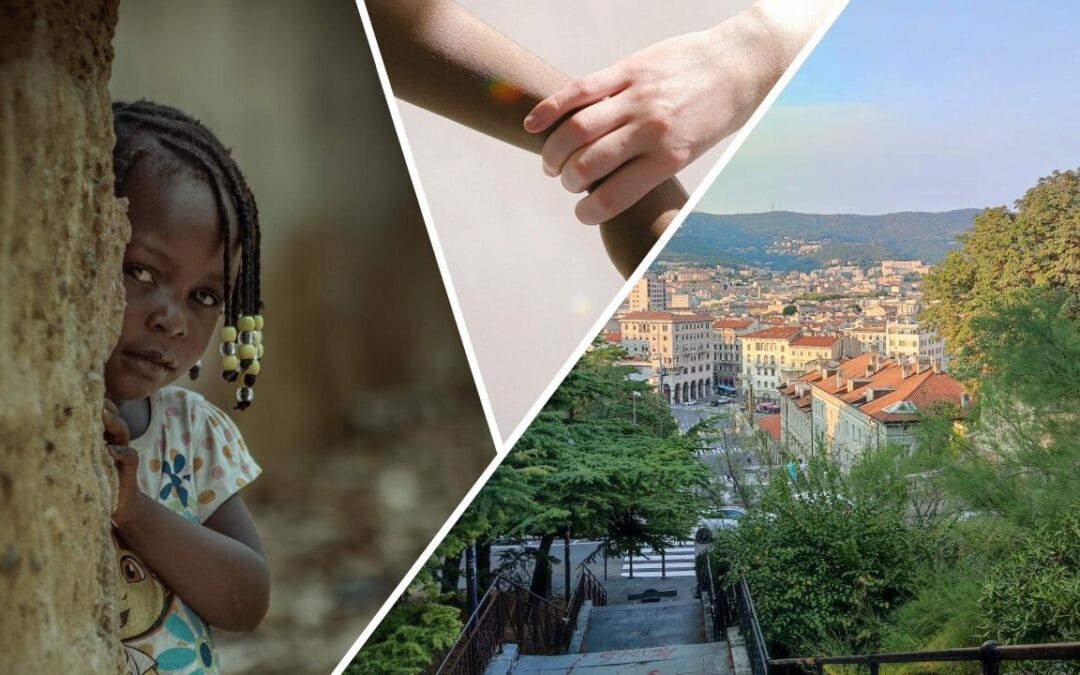
Trieste is a city located in north-eastern Italy, on the border with Slovenia. Historically, it represents a crossroads of cultures, languages and religions. Today it is one of the main entry points to Europe for migrants following the Balkan route. They come with a burden of suffering, wars and persecutions.
In Trieste, the Focolare Movement community collaborates with other institutions to welcome migrants.
Claudia, from the local community told us, “The biggest problem is the perception of the problem itself. It is not an emergency, an unmanageable invasion as it is often portrayed but it is a structural phenomenon that is the reality of our historical present. A continuous flow of incoming people who, if properly welcomed, can enrich our city and our country. If the migratory phenomenon is not understood and addressed in appropriate ways, it will inevitably generate distrust, fear, impatience, rejection”.
Last autumn, in anticipation of the cold weather, the Bishop of Trieste, Archbishop Enrico Trevisi, expressed a wish to open a shelter as a concrete response to the reception of migrants. Together with other Catholic associations and individual citizens, some Focolare members responded to the Bishop’s appeal by volunteering. Claudia said, “For us it is not just a charitable service but an opportunity to meet a brother or a sister who needs to be loved in many details: by giving a smile, offering a meal or exchanging a few words. Often these brothers and sisters tell us pieces of their story, their sorrows and their hopes. They show us photos of their children but we also have a laugh and simply spend time together. Some of us have also looked after some migrants more closely for example by accompanying them to a hospital appointment or helping them prepare a CV for a job application”.
Sandra from the Focolare community added: “We try to get to know the migrants, their stories and their needs. This gives rise to experiences that have seen us involved in helping beyond our shift at the shelter and these experiences encourage us to continue. The shifts allow us to work with the other volunteers and to discover that even though many of them are not part of any associations or involved in parish life, they were happy to respond to the Bishop’s appeal”.
Claudia said, “Relationships grow slowly and are a sign of unity for the local Church. This experience, combined with the recent Italian Catholics’ Social Week[1], which took place in Trieste and was attended by Pope Francis, will bring great life to this border city of ours”.
A guest of the diocesan shelter said, “In Trieste I met the best volunteers, people who do not stop at distributing food. Satisfying the hunger of the needy and treating the wounds of the sick are noble tasks because they are the most urgent and essential. However, human beings have other extremely important needs, for example their emotional and spiritual health, which are symptoms of the state of their soul. This is not an individual or minor issue, it is what makes the difference between actions that have a momentary impact and those that persist and permeate the entire society. The best volunteers are so because they are aware that the needy are not just recipients of charity, we are people with stories worth listening to. They know every migrant mourns their lost roots, while also harbouring a hope that crashes against the walls of the system and an incessant struggle for survival. The best volunteers are moved by this suffering humanity and are encouraged to listen to our stories, despite the language barrier. They teach Italian or learn Spanish, use technology, give up their personal time, invest their energy in the common good and dream of a community in which we can all offer the best of ourselves”.
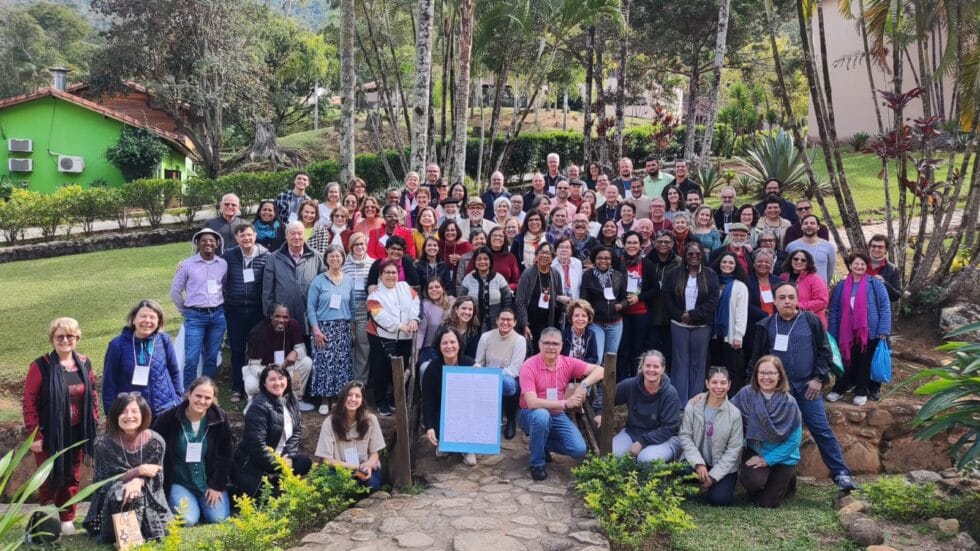
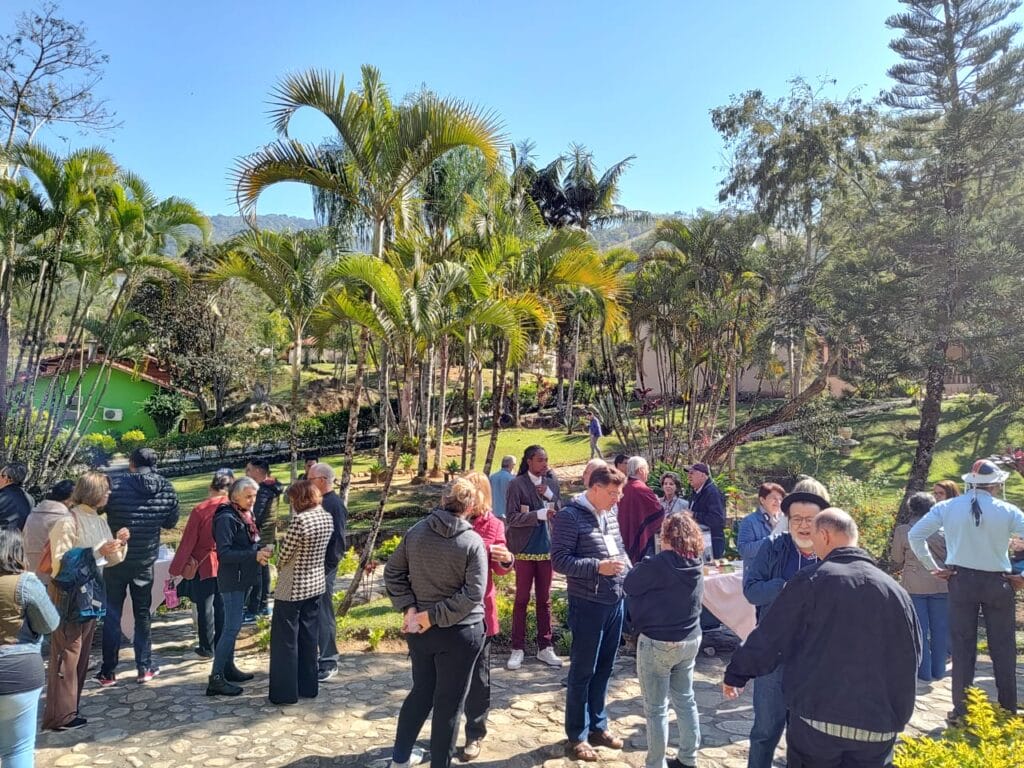
The Pedrinhas (SP, Brazil) headquarters of the Fazenda da Esperança welcomes young people and adults who are going through different stages of recovery from drug addiction and various forms of addiction and social distress. There could not have been a better place to host the conference of UNIRedes, the platform of NGOs, social and humanitarian projects and cultural agencies inspired by Chiara Lubich’s spirituality of unity in Latin America. In attendance were 140 people from 37 of the 74 partner organisations of UNIRedes, active in 12 countries of Latin America and the Caribbean.
The aim of the conference was to present the work of these years to Margaret Karram and Jesús Morán, who were present at the meeting; to define the next steps common to all the partner organisations and to strengthen the link with the Focolare Movement in order to share the experience gained beyond the Latin American continent.
UNIRedes: a network of networks
Maria Celeste Mancuso, Argentinian, international co-responsible of the New Humanity Movement, explains that UNIRedes is not only a solidarity super-project: “It is also a space that generates a cultural reflection to identify the anthropological and epistemological categories necessary to generate a new culture of care for the person and societies in Latin America”. This is why cultural agencies inspired by the charism of unity such as the Sophia University Institute (Loppiano, Italy), its local branch, Sophia Latin America and the Caribbean (ALC), and the ASCES UNITA University Centre in Caruaru (PE) are also fully part of it.
Virginia Osorio, Uruguayan, one of the initiators of the project, explains its origins: “The constant political and economic changes in our countries made our organisations increasingly fragile and isolated. With UNIRedes we found a place where we could strengthen each other and share our sufferings and hopes. Our most recent project was for Genfest: hundreds of young people volunteered with many of our organisations, experiencing first-hand fraternity and closeness to the poorest”.
The common root: “dying for one’s people”
The first root of UNIRedes is not based on geopolitical or economic analyses: we need to go back to the early 1970s when the Gen, the young people of the Focolare, like many of their peers in many countries, wanted to change the world and bring equality, justice, and dignity.
Chiara Lubich, who met with them frequently, supported and confirmed the need to make a peaceful social revolution, especially in Latin America, a continent she saw as having this special vocation. She told the young people of the Focolare that: “Each one must feel that we must die, yes, for humanity, but we must find our local Jesus Forsaken to die for our own people”[1].
“That’s how many people went to the peripheries of the cities, to the slums, wherever poverty took away people’s dignity,” says Gilvan David, a Brazilian from the Latin American articulation group of UNIRedes. “The first NGOs were established, and in the meantime we were trying to structure ourselves, but it was not enough: ‘You come to us,’ the poor told us, ‘but then go away and leave us alone’. To respond to this cry, we started to network with local public policies and at the same time, several priests who lived the spirituality of unity also founded social projects: Frei Hans with the Fazenda da Esperança, Father Renato Chiera with the Casa do Menor and others”.
One “single” Latin America
“Then the first groups of organisations were created,” continues Gilvan David, ‘Sumá Fraternidad’, which brought together projects from a number of Spanish-speaking countries; the civil association ‘Promocion Integral de la Persona’ (PIP) in Mexico; and the Brazilian social organisations continued to grow, finding their own identity and space for service. These were not easy years, but we started various paths in different territories in Latin America to support their social commitment, which then merged into UNIRedes. We met several times, but the founding meeting was in 2014, also attended by Emmaus Maria Voce and Giancarlo Faletti, then President and Co-President of the Focolare Movement. Emmaus on that occasion said: ‘You give the Movement a new visibilitỳ, a new meaning to its action, you are a testimony for those who look at you from the outside; you give complete visibility to the Charism through concrete actions’. I would say that it was then that we recognised ourselves as a unique reality for the whole of Latin America: we found ourselves embraced by the Charism of unity”.
There were many substantial contributions that built this conference, along with the presentation of the different partner organisations.
Juan Esteban Belderrain: from inequality to hope
The Argentinean political scientist Juan Esteban Balderrain analysed the wound of inequality of which Latin America holds the world record. “It is a matter of building a vision of this continent that starts from hope and this is possible because if we look at the deepest root of the problem of inequality, we find that we have lost the reference to that God who is love and who helps us understand that we are brothers and sisters of one another and with nature, which is also an expression of his Love. Referring to the 20th century, Paul VI said that it was a blessed time because it demanded holiness from everyone. I think these words also apply to ours.”
Padre Vilson Groh: the “open-eye mysticism”
For over 40 years, Father Vilson has lived in the “morro”, a slum in Florianopolis (Santa Catarina, Brazil), carrying out social projects especially for young people. He spoke of the “open-eye mysticism”: “We must take our organisations to the dark cellars of our peripheries; be a hope there. Genfest brought the perspective of “togetherness”, which Pope Francis promotes. This requires a patient, resilient journey; it demands being steadfast in the pursuit of the common good. Unity is superior to conflict, the Pope always says, and unity is plurality. Let us bring diversity into our organisations: the charism of unity is a door for the wounded Christ to open spaces”.
Vera Araujo: Latin America builder of fraternity
The Brazilian sociologist’s talk focused on a positive vision that recognises the Latin American cultural and human heritage and offers it as a gift to the world.
“UNIRedes originates in Chiara Lubich’s charism and can be transformed into an incredible opportunity for the rest of the world: unity seen not only as a religious value, but also as a force capable of effectively composing the human family, realising an interaction between the multiplicity of people, preserving distinctions in the context of social realities. Here the charism of unity offers a solution that is not easy, but rather a sense, a meaning, a Person: Christ Forsaken on the cross.
‘To love well‘, says Chiara, ‘we must not see in the difficulties and injustices of the world only social evils to be remedied, but discover in them the face of Christ who does not disdain to hide beneath every human misery’[2].
Susana Nuin Núñez: the path of peoples and social movements
The Uruguayan sociologist described the journey and the social, political, economic richness of the continent’s peoples and certain social movements. “These networks with their most varied physiognomies, with their developments in social practices or in the academic world, act in a complementary manner, generating an unquestionable socio-cultural fabric with a multifaceted community character that Latin America is the bearer of”. She then underlines the peculiarity of UNIRedes, which for over ten years has been a social subject that heals, revolutionises, transforms and influences from the Gospel and the word of unity.
Margaret Karram and Jesús Morán: UNIRedes is part of the Focolare Movement
“Those who want to live the Gospel in this region are always in crisis because they see inequalities constantly,” Jesús points out. “Unity cannot fail to take on this reality. How do we achieve unity on this continent, without taking into account those discarded by society? What you do as UNIRedes should inform the whole Movement in this region; its work for unity is not credible if it is not also done through social works. Of course, we will not solve social problems. The only thing we can do is to make people convert to love. If we touch hearts, someone will grasp the spirit and in freedom will understand how to live the Gospel”.
Margaret encouraged UNIRedes to move forward: “Now you have to figure out how to make your life and example reach everyone in the world. Quoting a conversation of Chiara Lubich from 1956, she reiterated that in its social commitment the Movement must not forget that the key to solving the problems that the Charism of Unity offers lies in the novelty of reciprocity rather than in justice. It promotes sharing, the putting in common among everyone the little or the much that is available to create a greater Common Good which, in addition to solving social problems, produces the human and spiritual fulfilment that only happens in fellowship among all. Finally Margaret launches a proposal: “Add a new article in your Charter of Principles and Commitments: a solemn pact of fraternity to be proposed to those who want to be part of UNIRedes: we are here to witness to mutual love and only if we have this love will the world believe”.
“UNIRedes speaks to us of hope,” concludes M. Celeste Mancuso. “It is a transversal and synodal proposal of an organisational network that can inspire similar models for those existential peripheries in other parts of our vast world. In this way we can think of building global networks of fraternity that promote the common good”.
Stefania Tanesini
[1] Chiara Lubich at the “Gen School”, Rocca di Papa (Rome, Italy), 15 May 1977
[2] Chiara Lubich, Towards a civilisation of unity. Keynote address at the Congress “A culture of peace for the unity of peoples”, Castelgandolfo, (Rome) 11-12 June 1988.
One day a co-worker of our center had received a gift of a pair of new sports shoes size 43. But who could have possibly needed them? That same day we learn that a 14-year-old boy we know really needed those shoes and that size! He is the son of a friend who was in the hospital at that time. Her other daughter had also visited our center that day and we had learned that they needed clothes and medicine. She made us understand that she is in need of a cell phone to keep in touch with her mother in the hospital. And…we had received one (a phone) a few days earlier! It is impressive to see how there is always “Someone” who provides us with just those ad hoc things which we can then donate!
A bed in two minutes
We were at the final goodbyes of a Sunday spent “as a family” (so to speak because we were surrounded by hundreds of people) with activities to raise funds for our youth. A Venezuelan friend among the first people I met years ago had introduced me to an 18-year-old young man – Jesús. He had told me some of what he had experienced having left Venezuela alone at the age of 16. Two years of adventures, enough to make an action film, with many moments of suspense. For 15 days he had been in Peru. Talking with him I discovered that he was sleeping on a mat on the floor! Diligently he had planned with his first paycheck (he had in fact found a job in Peru immediately) to solve the problem of documents and then think about the bed. At that time I had no solutions, but we promised to stay in touch. Shortly after saying goodbye to him I met one of our co-workers who, without knowing anything about Jesus’ needs, asked me, “So what do we do with that bed?” “But how? Do you still have it?” I was surprised. “Yes!” he said to me. I immediately called back Jesús who was leaving the Center. He joined us immediately, and upon hearing that there was already a bed for him, very strong was the light I saw in his eyes. It had not been two minutes since I had told him that I would try to find a solution!
Free ultrasound scans
Many of the migrants who arrive at our center need medical care and sometimes even diagnostic tests. Recently, another blessing from Heaven occurred: a medical center near us offered us the possibility of performing ultrasound scans for free. They want to give this opportunity to those who do not have the possibility of paying for these examinations. Truly a gift for so many of our patients.
At this crossroads of countries where the Iguaçu and Parana rivers meet, there is the busiest border in Latin America; the area is characterised by great cultural diversity and the centuries-old presence of indigenous peoples, such as the great Guaraní people. Tourism is the major economic resource of this region where people mainly come to visit the Iguaçu Falls, which are the largest in the world, with a width of 7.65 km and are considered one of the seven natural wonders of the planet.
In her welcome message, Tamara Cardoso André, President of the Human Rights and People’s Memory Centre of Foz do Iguaçu (CDHMP-FI), explains that in this place they want to give a different meaning to national borders: “We want our triple frontier to become more and more a place of integration, a land that everyone feels is theirs, as the original peoples who know no barriers understand it.”
Foz do Iguaçu, last stage
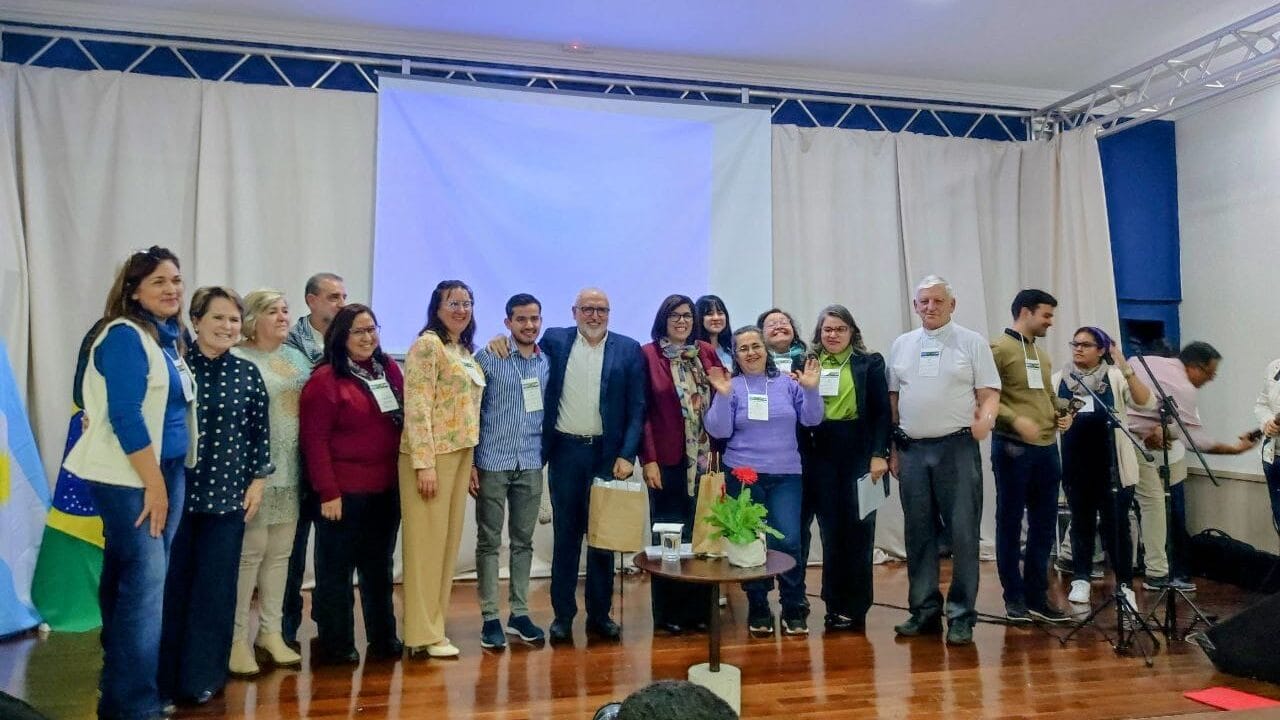
This is where Margaret Karram and Jesús Morán’s journey – president and co-president of the Focolare Movement – in Brazil comes to an end. They have travelled it from North to South: from the Brazilian Amazon, passing through Fortaleza, Aparecida, Mariapolis Ginetta in Vargem Grande Paulista, the Fazenda da Esperança in Pedrinhas and Guaratinguetà (SP), up to Foz do Iguaçu. Here the “extended” family of the tri-national Focolare community celebrates its young history and recounts the contribution of unity that it offers to this place: the embrace of three peoples that the spirituality of unity brings together into one, overcoming national borders, while each one maintains its own distinct cultural identity. Also present for the occasion are Card. Adalberto Martinez, Archbishop of Asuncion (Paraguay), local Bishop Sérgio de Deus Borges, Bishop Mario Spaki, Bishop of Paranavaí, and Bishop Anuar Battisti, Bishop Emeritus of Maringá. Also present was a group from the Islamic community of Foz, with whom there have been long-standing relations of fraternal friendship.
Peoples with common roots
Arami Ojeda Aveiro, a student of Cultural Mediation at the Federal University of Latin American Integration (UNILA) illustrates the historical journey of these peoples and the serious wounds that have accumulated over the centuries. The conflict between Paraguay on the one hand, and Argentina, Brazil and Uruguay on the other (1864-1870) was one of the bloodiest in South America in terms of human lives, with social and political consequences for the entire region. However, there are also many cultural factors in common, such as music, gastronomy, popular traditions derived from the same indigenous cultural root, such as the Yerba Mate Guaranì, a typical drink of the three peoples.
The Guaranì culture is one of the richest and most representative of South America; it is a living testimony of the resilience and adaptability of a people that has been able to preserve its identity over the centuries with a unique cosmogony, where the connection with nature and respect for traditions are fundamental and can be a great wealth for all humanity.
“This is why,” concludes Arami Ojeda Aveiro, “the Triple Frontier region is not just a geographical border, but a multicultural and cooperative space that strengthens the whole area”.
The “tri-national” community of the Focolare Movement
Among all the Focolare communities in the world, this one has a unique character: “It would be impossible to feel that we are one family if we only looked at our national histories,” says a young woman from Argentina. Monica, from Paraguay, one of the pioneers of the community together with Fatima Langbeck, from Brazil, recounts that it all began with a daily prayer of hers: “Lord, open the way for us so that we can establish a more solid presence of the Focolare and that Your charism of unity may flourish among us. Since 2013 we are one community and we want to write another history for this land, which witnesses that fraternity is stronger than prejudices and secular wounds. We are united by Chiara Lubich’s word of unity, when she said that true sociality goes beyond integration, because it is mutual love in action, as proclaimed in the Gospel. Our specificities and differences make us more attentive to one another, and the wounds of our national histories have taught us to forgive one another’.
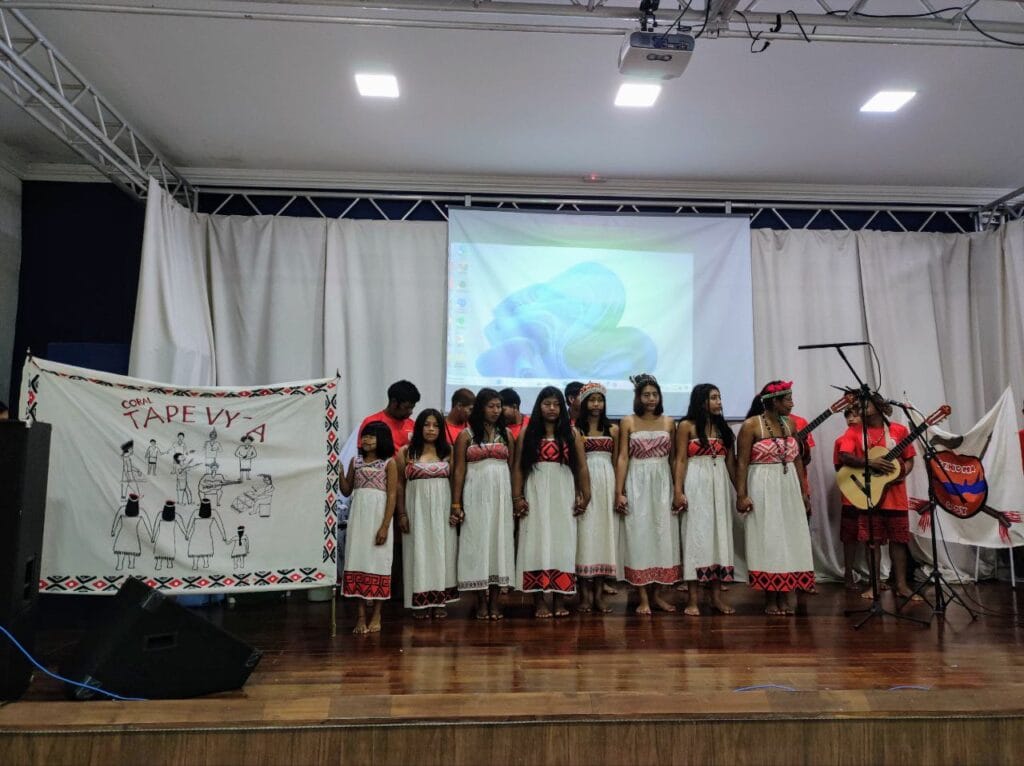
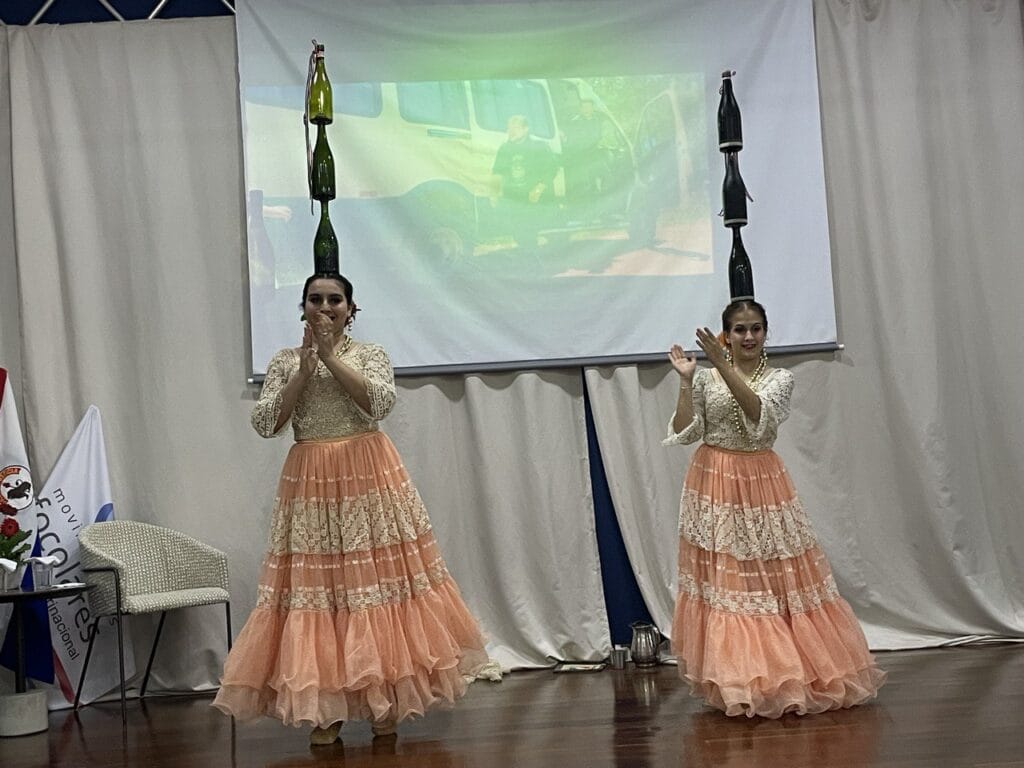
The artistic contributions speak of the vitality and relevance of the cultural roots of the peoples who inhabit this area. There are the songs of the Argentinian community coming from the “litoral“, from the coast; then “El Sapukai”, the very rhythmic Paraguayan dance that is danced with (up to) three bottles on one’s head; the representation of the Guaraní people intone a song in their own language praising the “great mother”, the forest, which must be protected, produces good fruit and gives life to all creatures.
Father Valdir Antônio Riboldi, a priest from the diocese of Foz, who got to know the focolares in 1976, continues the story by writing: “The focolares of Curitiba in Brazil and Asuncion in Paraguay began to promote events involving people from the three neighbouring countries, an experience we called the ‘Tri-national Focolare’. Ecclesial life here is also moving in the direction of communion, promoting joint initiatives between the different dioceses’.
It is clear that the life of this region and of the local Focolare community does not only speak to Latin America, but to the whole world. And it says that it is possible to walk together, being different: it is the spirituality of unity that comes into contact with the deepest part of the identity of people and peoples, making the common humanity and fraternity flourish.
A few words from Margaret Karram and Jesús Morán
“I felt embraced not by one, but by three peoples,” Margaret Karram said. “Throughout my life I have dreamed of living in a world without borders. Here I have felt that my deepest wish has come true, that is why I feel part of you. You are the confirmation that only love removes all obstacles and eliminates borders”.
“I have lived in Latin America for 27 years,” continued Jesús Morán, “but I have never come to this area. You have experienced so much pain: the Guaraní people have been dispossessed of their land and dispersed. What you are doing today is important even if it is small: we cannot rewrite history, but we can move forward and heal the wounds, accepting the cry of Jesus forsaken. Wounds are healed by creating inter-regional relationships also with the original peoples because they are in fact the only truly ‘tri-national’ people. They too have received the light of Christ; let us not forget the work of evangelisation and human promotion that the Jesuits did in this region with “the Reductions” from the 1600s to the 1700s. Today we are connected to this history, to all that the Church does, and we know that unity is the answer in this world that needs a soul and limbs to achieve true globalisation at the height of human dignity”.
At the end, Margaret shared what she had experienced this month: “This trip has increased faith, hope and charity in me. In Amazonia, at the edge of the world, ‘faith’ emerged powerfully: I met people who strongly believe that everything is possible, even the most difficult things. They dream and they achieve! I wish I had even a pinch of their faith, as the Gospel says: “If you have faith the size of a mustard seed, you will say to this mountain, ‘Move from here to there’, and it will move, and nothing will be impossible for you” (Mt 17:20). From there I take this faith that moves mountains and the courage to dream great things. Then, the word of the Genfest can only be ‘hope’: we lived this experience together: the whole Movement was committed with young people and for young people. It was also an ecumenical and interreligious event that gave a lot of hope.
And lastly, ‘charity’, which I have seen here among you today and which we have touched with our own hands in the many social organisations we have come into contact with this month: the Fazenda da Esperança; the many movements and new ecclesial communities we met with in Fortaleza; the UniRedes meeting that brings together all the social organisations and cultural agencies of Latin America that are inspired by the charism of unity (which we will write about separately). All this says ‘charity’, because every social reality stems from loving one’s neighbour, from wanting to give one’s life for one’s people.
From this frontier starts a hope for all the Focolare communities in the world and beyond. Last December I suggested the “Mediterranean of fraternity” project, where we could gather all the actions already underway and those that will emerge, to build peace in that region that suffers so much from war. A “fraternity for Latin America” project could also start from here and be extended to all its countries, let us entrust it to Mary!”.
A long journey to celebrate 70 years since the creation of the General Council of Christians in Hong Kong, where just a little over 10% of the 7.5 million inhabitants profess to be Christians.
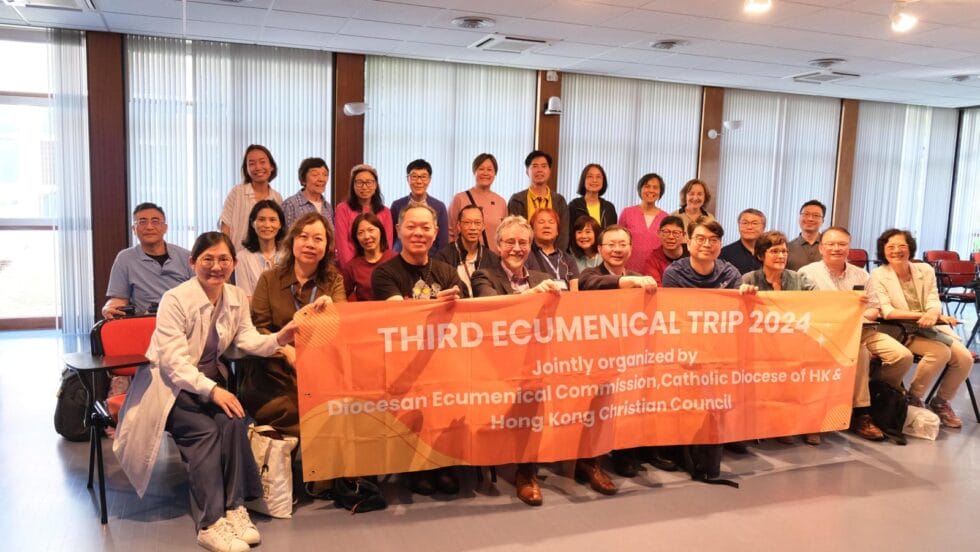
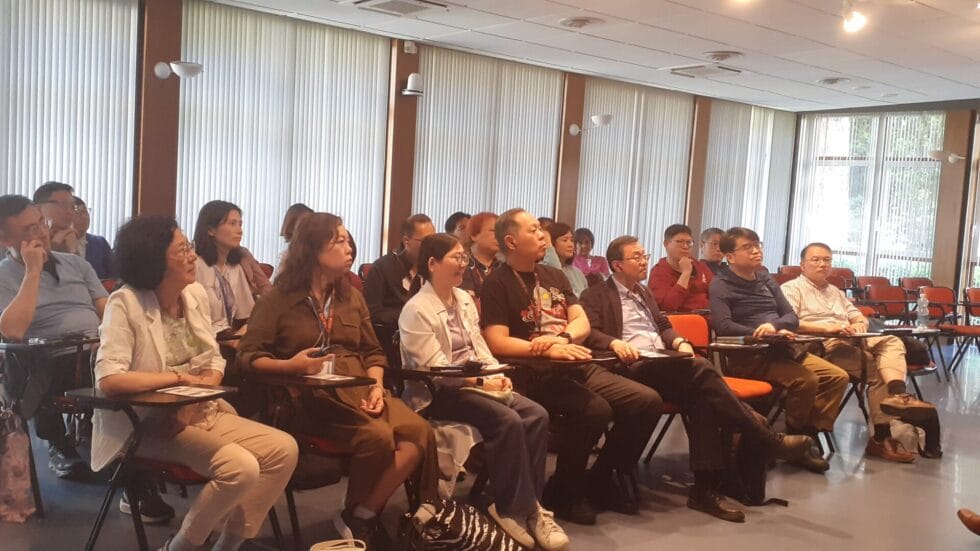
A delegation of 24 people from different Christian traditions: Catholic, Anglican, Lutheran, Methodist, and Pentecostal, embarked on an ecumenical pilgrimage making stops in Germany, Switzerland, and Italy, visiting cities such as Wittenberg, Augsburg, Ottmaring, Geneva, Trent, and finally Rome to review the past without prejudice and establish a new relationship among all members.“An opportunity to learn more about each other’s Church. There was so much sharing, so much love for each other, and we felt like brothers and sisters in Christ, His one Church!” ”, Theresa Kung affirms.
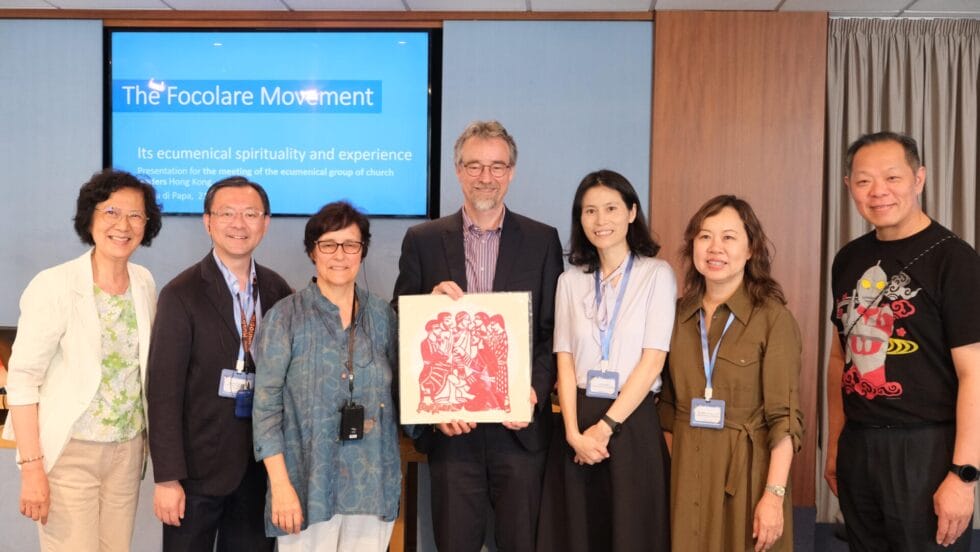
Welcomed at the Ecumenical Citadel in Ottmaring (Germany), at the Mariapolis “Chiara Lubich” Center in Trent (Italy) and at the International Center of the Focolare Movement in Rocca di Papa (Italy), the group got to know the charism of unity that animates the Focolare Movement and appreciate the work of dialogue between various Churches that has been taking place for years within the Movement, a “dialogue of life” in the sense that, as Rev. Hoi Hung Lin of Tsung Tsin Mission had this to say:“Respect other people’s differences in values, prioritize dialogue and always seek to establish fraternal relationships among people, among ethnic groups and in different cultural situations”.
In Rome, the group was received at the Dicastery for the Promotion of Christian Unity in an exchange meeting on their work worldwide.
As their last event, they were received by Pope Francis in a private audience on May 22, 2024. After greetings and introductions by Cardinal Stephen Chow SJ, Catholic Bishop of Hong Kong, and Rev. Ray Wong, President of the Hong Kong Christian Council, the Holy Father addressed those present, stressing the importance of “working together, because we all believe in Jesus Christ; praying together, praying for unity.” The Pope also recalled the Christian friendship that comes from common Baptism. “We have the same Baptism and that makes us Christians. Enemies, we have many outside. We are friends! Enemies, outside; here, friends.”[1].