One afternoon I went to visit my mother to bring her a few things, as I usually do. It was hot and she was still having her nap, so I left everything in the utility room so as not to wake her. When I was about to leave, I noticed that the grass along the pavement (in our town this task is handled by the municipality) had been cut and a bit of a mess had been left. I immediately thought that when she woke up, she would see the pavement in that state and start sweeping it, even though she shouldn’t do that because it gives her back pain. So I went back to get a brush, because I know and started sweeping. This simple, small experience gave me the same joy I used to feel when I was a Gen 3, a teenager in the Focolare Movement, even though many years have passed.
(D. C. – Argentina)
While Shopping
Yesterday I was at the supermarket. While I was looking at some products on a shelf, I noticed a man staring at me insistently. Since I didn’t recognize him, I went on with my shopping, and so did he. A little later, though, as I was leaving, he was waiting for me and greeted me: “Don’t you remember me?” Since his face didn’t look familiar, I asked him to give me a clue. “I’m Stefan,” he replied, “years ago you helped me a lot with a document you prepared for me. Look, I still have it!” He opened his wallet, beaming and showed me an ID card that used to be issued to foreigners years ago. I looked at the date and saw it was from 1993, but still in perfect condition. Stefan said: “It’s been thirty-two years, but I’ve never forgotten how much you did for me and what that document meant to me at the time, so I’ve always kept it in your memory. Thank you!” Then he added: “You look just the same as back then.” He didn’t notice the wrinkles; he remembered the love. And love remains.
(A.P. – Italy)
Compiled by Maria Grazia Berretta (From Il Vangelo del Giorno, Città Nuova, Year X – No. 1, September–October 2025)
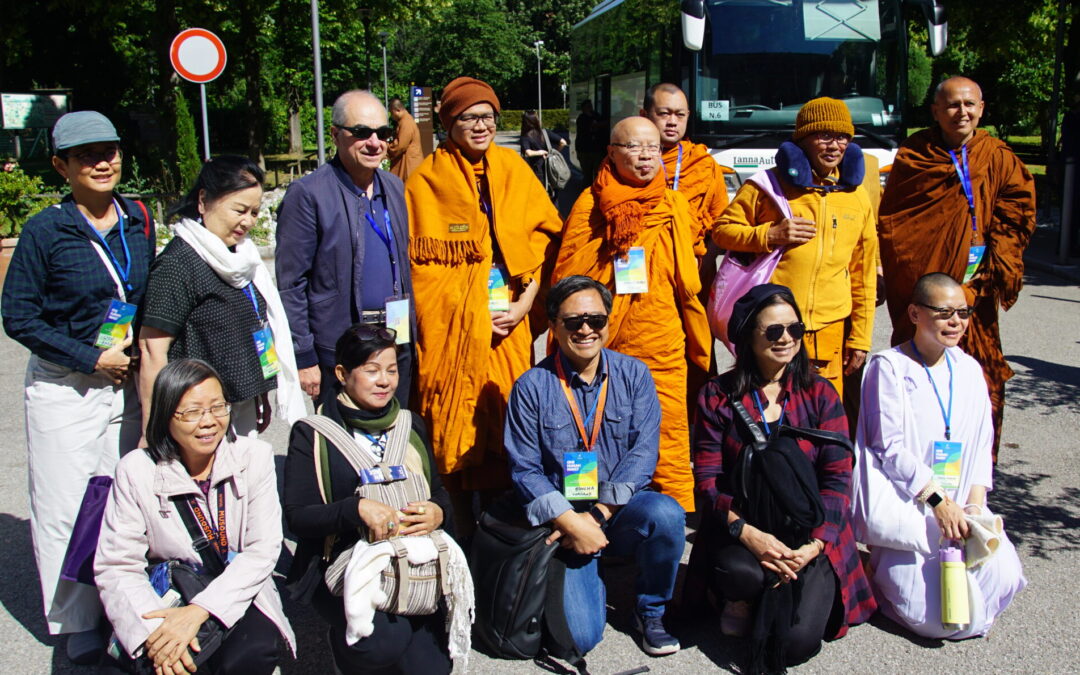
To commemorate the 60th anniversary of Nostra Aetate, we would like to share a short excerpt from the interview with a Theravada Buddhist monk from Thailand, Prha Pittaya, during the conference entitled “One Human Family” promoted by the Centre for Interreligious Dialogue of the Focolare Movement, which took place from 31 May to 4 June 2024 in Castel Gandolfo and in Assisi (Italy).
Turn on English subtitles – The original is in Thai.
The Evangelii Gaudium Centre’s (CEG) fourth course on Synodality will soon begin. What’s new this year?
We are in a new phase of the synodal process. After the first 3 years which culminated with the Assembly of October 2024, we have now entered what is called the implementation phase. On 15th March, 2025, Pope Francis approved the start of a process to accompany the implementation phase, led by the General Secretariat of the Synod. This process involves everyone, from dioceses to lay associations, ecclesial movements and new communities.
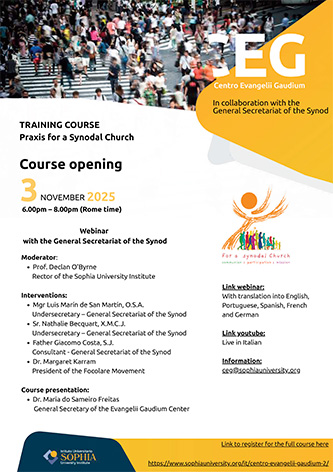
Click on the image to download the poster
This is why we decided to launch a new course, entitled Practices for a Synodal Church as a concrete contribution to the implementation of the synodal process. We are convinced that the practice of synodality is much more than an attempt to make the Church more participatory – it is a new paradigm for ecclesial life. Moreover, we believe that this is not just a religious matter. Our societies are changing radically and, we all see this, truth, core values and mutual commitment are giving way to the law of the jungle. On the other hand, at local and regional levels, new ideas are emerging that reveal parallels with the synodal process in civil society. We believe that the synodal process in which the Church is engaged could offer a valuable contribution in this historical moment for the whole of society.
This year we want to explore these aspects, offering aa closer look at the ongoing process, seeking to discover new pathways and tools to embody synodality in the realities in which we live, as we are invited to do by the Final Document of the Synod and the subsequent document of the Secretariat last July, Pathways for the Implementation Phase of the Synod. We are certain that this is a journey in which the true protagonist is the Holy Spirit and that above all we must open ourselves to Him and let Him guide history, our personal history and that of the Church and humanity.
The theme of “Synodality” was central during the years of Francis’ pontificate. How are we continuing on this path with Pope Leo XIV?
Maria do Sameiro Freitas
On 8th May, in his first message to the people of God, on the day of his election, Pope Leo drew up a programme: “To all of you, brothers and sisters in Rome, in Italy, throughout the world: we want to be a synodal Church, a Church that moves forward, a Church that always seeks peace, that always seeks charity, that always seeks to be close above all to those who are suffering.”
And in several other circumstances, in particular on 26th June, to the members of the Ordinary Council of the General Secretariat of the Synod, he reiterated: And the legacy that he (Pope Francis) left us seems to me to be above all this: that synodality is a style, an attitude that helps us to be Church, promoting authentic experiences of participation and communion.
It seems clear that his approach follows that of his predecessor, in the conviction that synodality is intrinsic to the Church. The upcoming Jubilee of Synodal Teams and Participatory Bodies that will take place from 24th-26th October in the Vatican is another significant occasion. Over 2,000 participants are expected, to whom the Pope will address a message on the afternoon of the 24th. It will be a further decisive step forward, journeying together throughout the world.
How the course will be structured? What is its target audience?
The Course will once again be online, in Italian with simultaneous translation into three languages: English, Portuguese and Spanish. With regard to content, it will draw on the Final Document of the Synod and the Pathways for its Implementation, trying to discover new paths for a synodal practice and how to apply them in each participant’s own context.
It will also offer practical tools for carrying out the synodal process, such as methods of facilitation, accountability, evaluation and verification.
Good practices already underway will be highlighted, and shared at international level. All this with the firm conviction that the synodal process is not a technique but an experience of openness to our brothers and sisters, a space for the presence of Jesus among his people (cf. Mt 18:20) which in the light of this presence, enables us to listen to the Spirit.
Each session will include the opportunity for students to share good practices, reflections or suggestions.
The Course will end with a workshop in April where the participants will be able put into practice what they have learned during the year.
The opening session on 3rd November will feature a special lecture by the General Secretariat of the Synod and a contribution from Margaret Karram, President of the Focolare Movement who participated in both Synodal Assemblies. The opening event is open to all.
Participants include people of all vocations, many lay people and also priests, religious and consecrated persons, engaged in both ecclesial and civil contexts. Several are students from previous years but we also have many new registrations from different countries.
In light of previous years, what are your hopes?
We hope that this Course will contribute to the implementation of the synodal process in the various environments where the participants live and work.
In previous years we have seen that several students have become involved at diocesan, parish and association levels, putting into practice what they have learned; others have become multipliers of ideas in universities and schools.
We have a wide range of participants from different countries, from the Philippines to Canada, from South Africa to Sweden. The exchange of good practices may inspire new ideas and decisive stimuli to advance the synodal process, for the good of the Church and society alike.
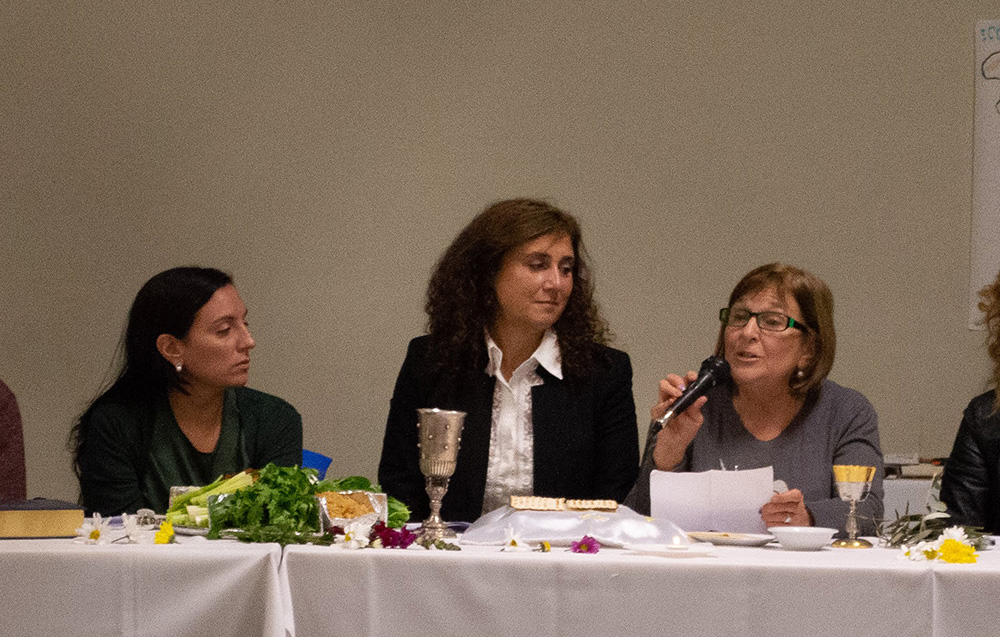
60 years after Nostra Aetate, we share the story of a unique friendship: Silvina, Nancy and Cecilia. Three women. Silvina is a rabbi in a Jewish community in Buenos Aires, Nancy is a Muslim who runs a center for interfaith dialogue, and Cecilia is a Christian and member of the Focolare Movement. A relationship that is built upon concrete actions and a desire to go beyond any possible barrier.
The document provides a concise overview of the general guidelines for the Focolare Movement’s educational endeavours. In essence, it outlines the first mapping of the many and varied educational experiences designed not only for members of the Movement, but also for schools and to cultural and training agencies promoted by the Focolare in diverse contexts worldwide.
To download the document, click on the image.
It is therefore addressed to all those engaged in education within the various branches and training initiatives of the Focolare Movement, in their own Churches or Christian communities, in their own religions and in society at large.
While acknowledging that reflection and implementation on it are still at an early stage, the document also reaches out to people working in other institutions and organisations involved in education and formation, as a stimulus for dialogue and mutual enrichment.
In several motions of the 2021 General Assembly, the desire was expressed to focus more deeply on the pedagogy that flows from the charism of unity and to foster synergies both within and beyond the Movement in this area. On the eve of the 2026 Assembly, this first document is now being made available online rather than in print to highlight its nature as a work in progress: an open document, to be enriched and updated over time.
The first section identifies the intended audience, the guiding principles, objectives and the key participants in the educational process. This is followed by a summary of the content and methodology and finally a compilation of the agencies and educational programmes offered by the Focolare Movement.