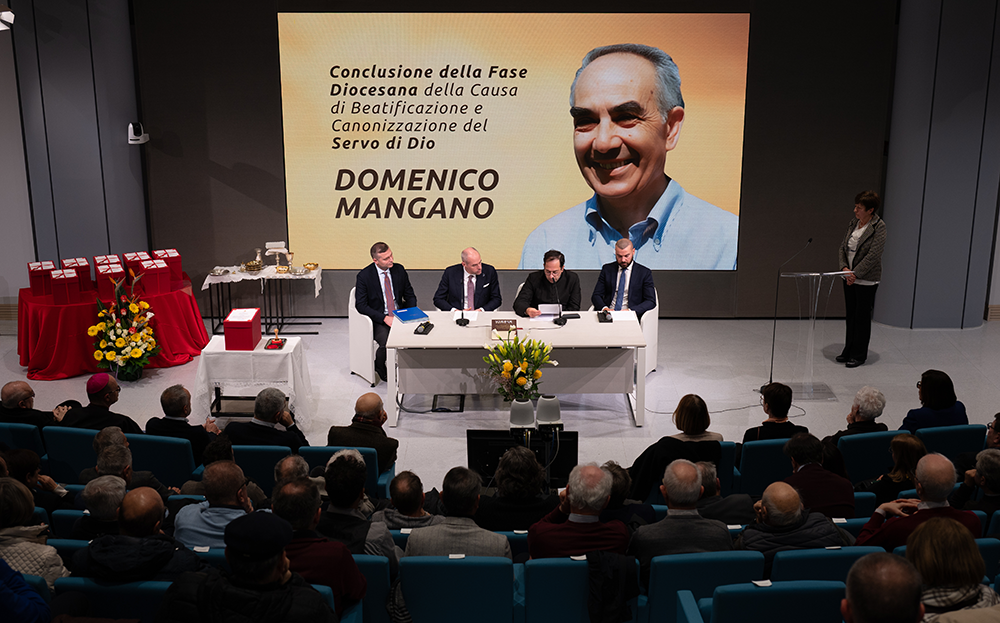
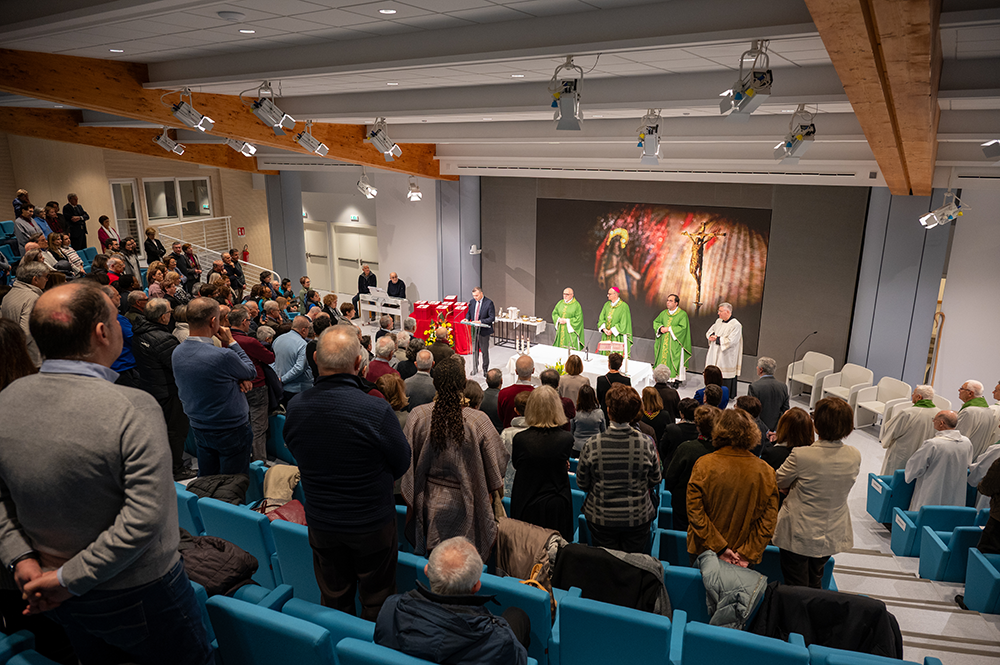
In the homily of the Eucharistic Celebration celebrated on Saturday, 17th January on the occasion of the closing of the Diocesan Inquiry launched in Albano for the cause of Beatification and Canonization of Domenico Mangano, a Volunteer of God of the Focolare Movement, Mons. Stefano Russo, Bishop of the Diocese of Velletri-Segni and Frascati, near Rome said, “The Lord continues to call through His word (…) As happened to John the Baptist who, enlightened by the love of God, recognized the Son of God and pointed him out to others (…) something similar happens at the start of a path of canonization of a person when someone points out the presence of holiness, a consequence of an encounter with Christ. This was the case for Domenico. A community said: “We met him, we shared many experiences with him, participating together in a holy journey, we saw his actions illuminated by the Lord especially from the moment he met the charism of unity”.
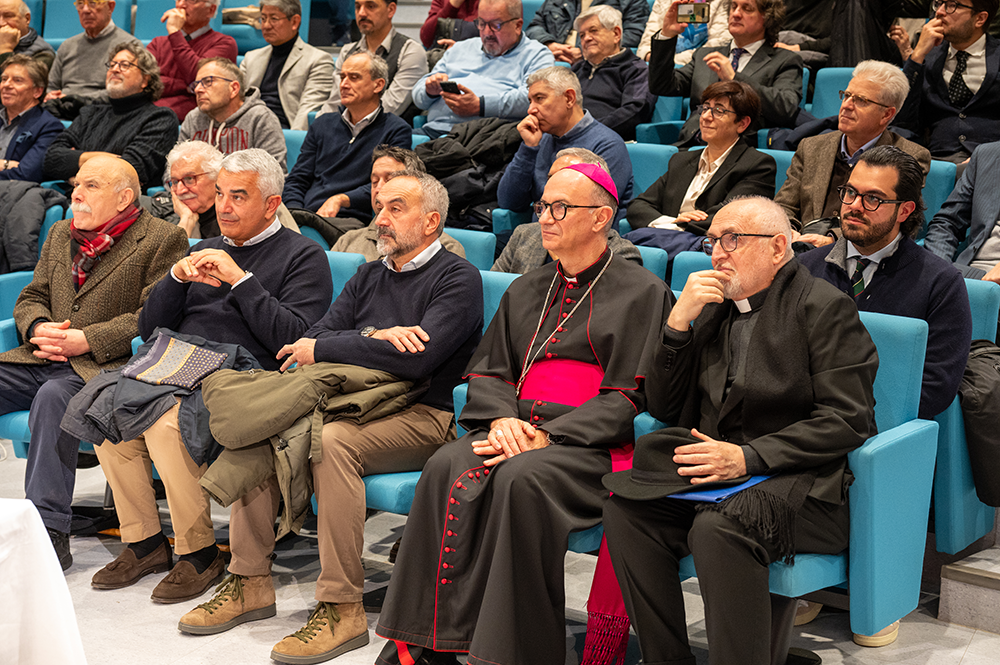
The family of Domenico Mangano, his friends and members of the Focolare Movement were present in the Auditorium of the International Centre of the Focolare Movement while a live-stream connection allowed many people from different parts of the world to follow the event.
Who was Domenico?
Margaret Karram, President of the Focolare Movement, described Domenico’s life as, “a life marked by availability, attentiveness to others and a concrete love, lived without fanfare but with fidelity. Like the Good Samaritan, Domenico knew how to stop, to draw close and to transform an encounter with another person into a gift”.
Jesús Morán, Co-President of the Focolare Movement, said, “A Christian layman who took faith seriously in real life. A husband, father, worker, citizen deeply rooted in his community, he didn’t live the Gospel as a private matter, but as a light capable of illuminating public choices, social responsibilities and commitment to the common good. His spirituality was deeply incarnated: rooted in faith, which does not distance people from the world but is always attentive to history, to people’s problems and to the needs of society.”
Domenico felt the Gospel call to serve the community by promoting respect, dignity, social co-responsibility and a culture of participation, so that every citizen could feel that they were a living part of society. He was a man of dialogue by inner choice and Christian responsibility. For him, politics was never a place of conquest, but a space of service, a concrete form of social charity, lived with moral seriousness, clarity of judgment and a deep sense of justice. He constantly tried to unite Heaven and earth by translating the message of the Gospel into social life.
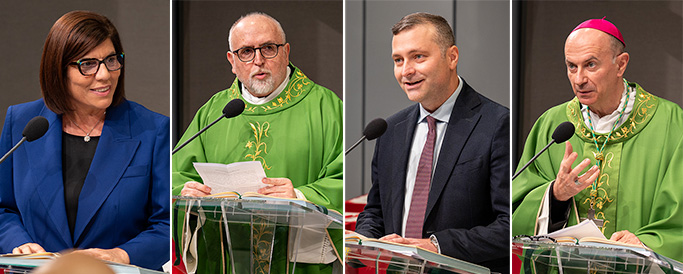
Margaret Karram, President of the Focolare Movement; Jesús Morán, Co-President of the Focolare Movement; Dr Waldery Hilgeman, Postulator of the Cause; and Monsignor Stefano Russo, Bishop of Velletri-Segni and Frascati.
Along this journey, the lifeblood flowed from the spirituality of unity and from his commitment to the “Volunteers of God” whom Chiara Lubich, Foundress of the Focolare Movement, defined as “the first Christians of the twentieth century who live to render the presence of Jesus visible wherever they are.”
Through his commitment to a lifestyle based on the Gospel, a deep spiritual dimension matured in him: he gradually learned to let God be at the centre, to guide his life and his choices and, with Him, to place the people, the community and the common good at the heart of everything. This was the source of his inner freedom, serenity and of his ability to love concretely.
Fr Andrea De Matteis, Judicial Vicar of the Diocese of Albano, Episcopal Delegate for this Cause, recalled that many have described Domenico as “a mystic of the ordinary: prayer, family, work and civil commitment formed a single reality in him. He lived a mysticism of presence, recognizable in the simplest gestures: in listening, in a discreet word or in a smile. A contemplative heart immersed in the world, a man who sought to please God in the practicalities of daily life. In his disarming simplicity, he bore witness to how it is possible to make the ordinary extraordinary, normality exceptional and to draw the divine into the fragile human condition of each person.”
Domenico also experienced the trial of illness with demanding faith, experiencing it as a time of entrusting and offering. Along that painful path, he once again recognized the presence of God who calls, transforms and leads to fulfillment.
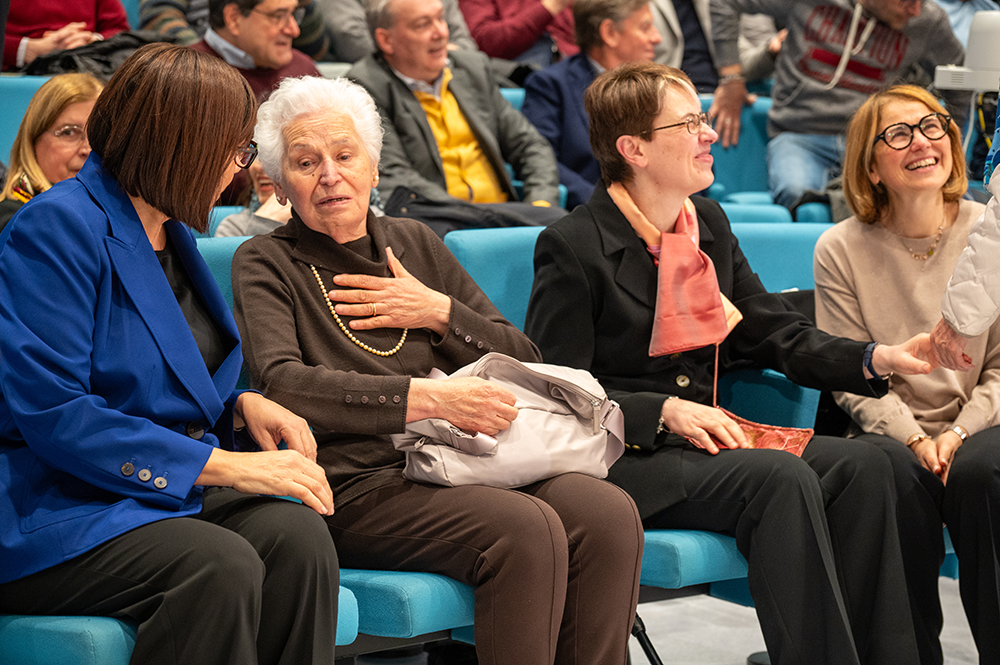
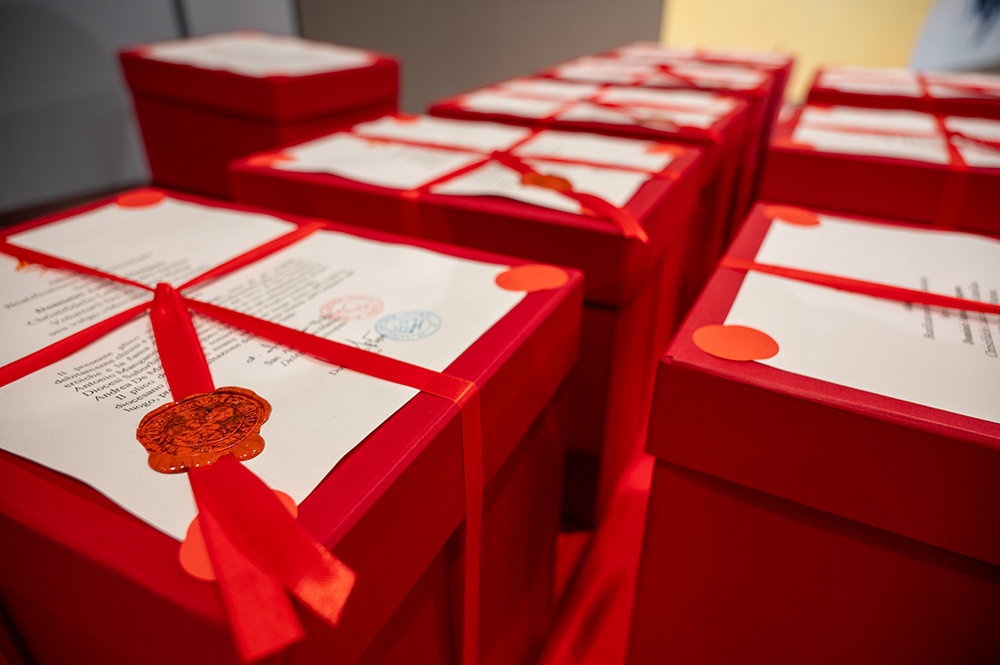
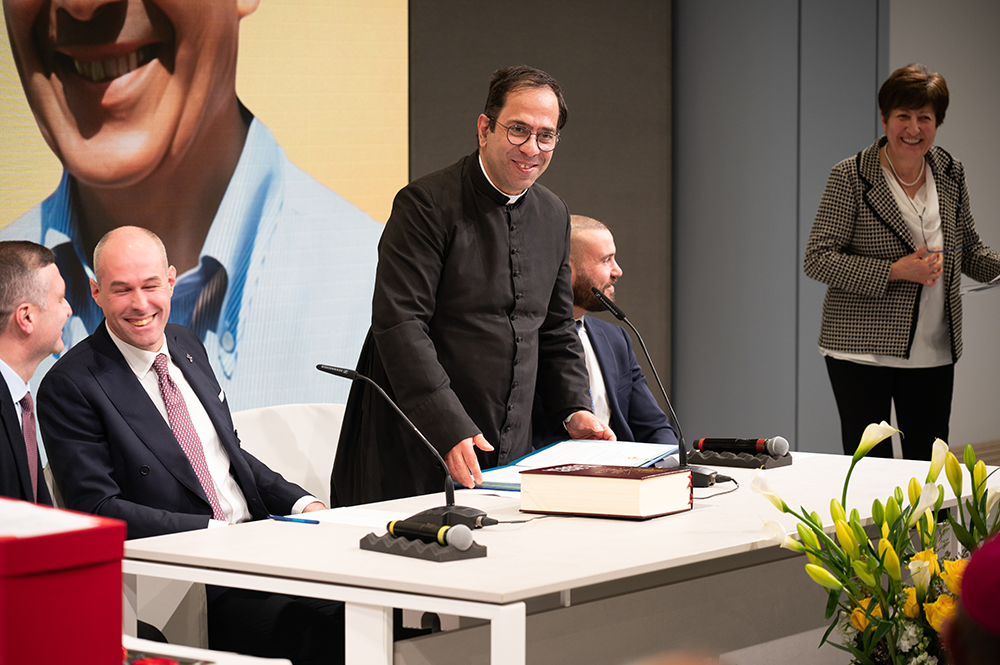
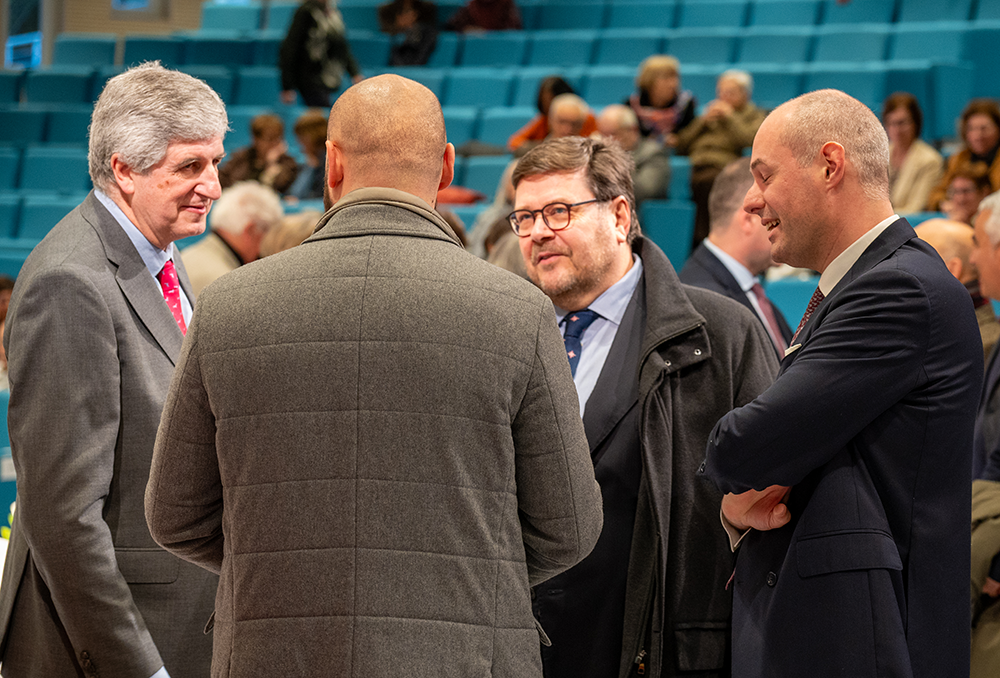
In the photos: 1- The boxes containing the documents of the Cause – 2 – from left, Dr Waldery Hilgeman, Postulator, and then the members of the Diocesan Tribunal of the Cause: Prof. Marco Capri, Notary, Don Andrea De Matteis, Judicial Vicar of the Diocese of Albano and Episcopal Delegate, and Prof. Emanuele Spedicato, Promoter of Justice – 3 – on the left, Juan Ignacio Larrañaga, central coordinator of the Volunteers of God; in the centre, Dr Paolo Mottironi, central manager of the Volunteers of God at the time the Cause began.
The solemn conclusion of the diocesan phase for Domenico – which for a long time has involved the dedicated service of the Bishops of Albano, at first Mons. Marcello Semeraro then Mons. Vincenzo Viva, alongside the Tribunal, various collaborators and many witnesses – was an event of profound ecclesial significance.
With this official act it was declared before God and the ecclesial community, that the patient and passionate work of listening, gathering and evaluating evidence, was carried out by many with integrity, truth and fidelity to the norms of the Church and a deep awareness of the gift entrusted to them.
In Domenico Mangano we see how holiness can flourish in ordinary life, in the choices made with love and truth wherever the Lord places us, when a person allows themselves to be emptied of self in order to be filled by God.
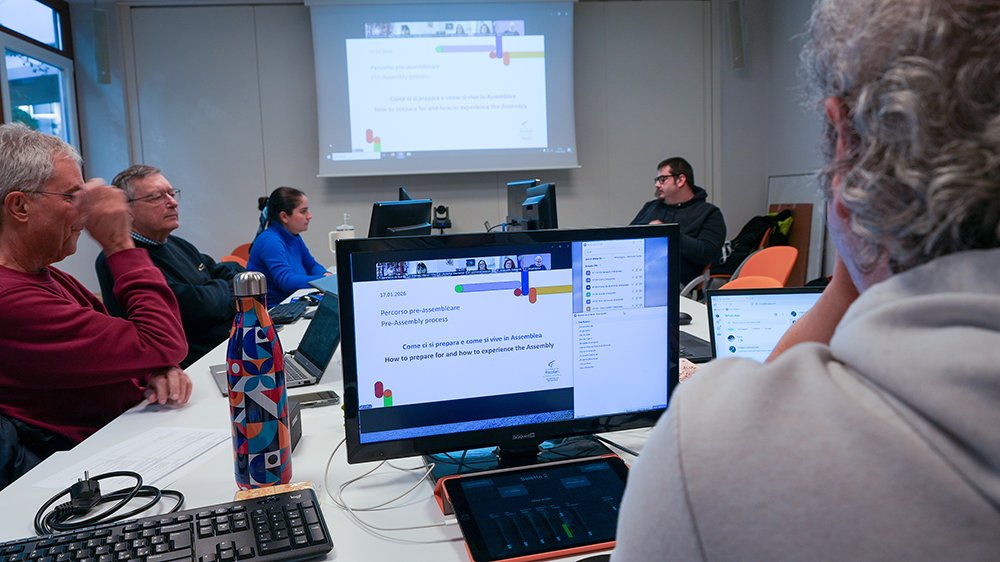
The ‘Pre-Assembly Process’ is currently underway in preparation for the General Assembly of the Focolare Movement, which will begin on the 1st of March 2026 in Castel Gandolfo (Italy) with the participation of representatives chosen from different geographical areas, branches and movements; the members by right (those who are part of the current government, the General Council and Zone Delegates in the geographical areas), and those invited by the President.
We interviewed Prof. Vincenzo Di Pilato, professor of Fundamental Theology and a member of the Preparatory Commission for the 2026 General Assembly, about the preparation process and his personal experience.
Activate subtitles and select the desired language.
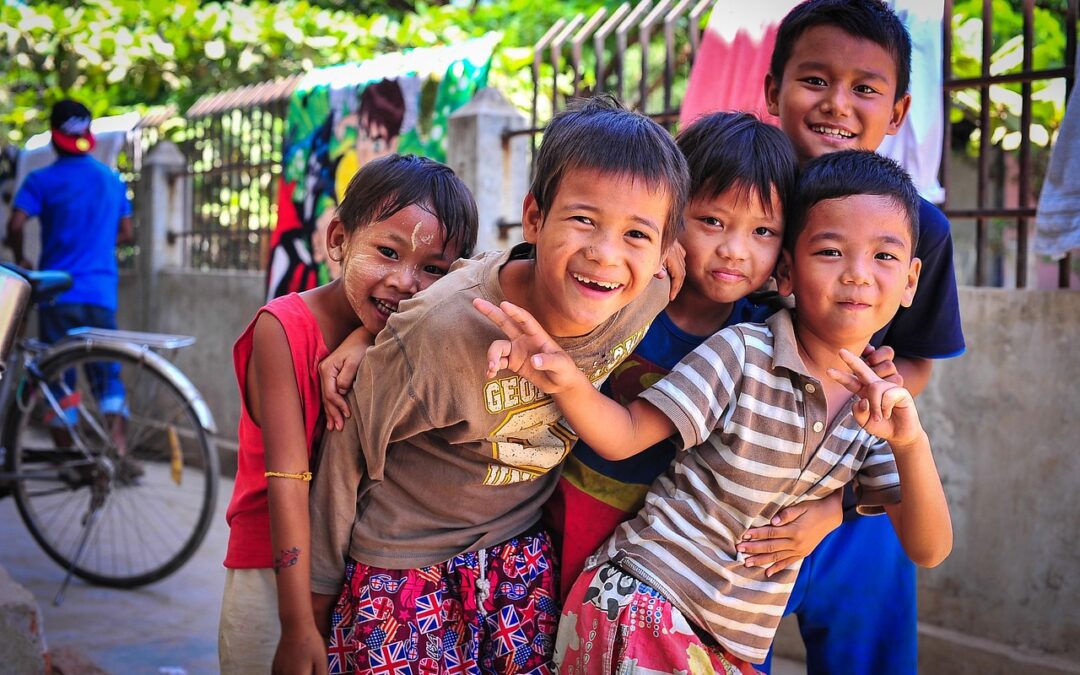
My name is Vida and for a few years now, I and others from the Lithuanian community have been supporting the family of Julia from Indonesia, whom I met in 2018 in Manila (Philippines) on the occasion of Genfest, the international meeting that brings together the young people of the Focolare Movement. Over this time, despite the distance, a sisterly relationship has developed between us. Her family lives in Medan and is part of the Focolare community there. We have been able to support them at various difficult moments and, it always surprised me and gave me joy that whenever they received help, they immediately thought of other people too.
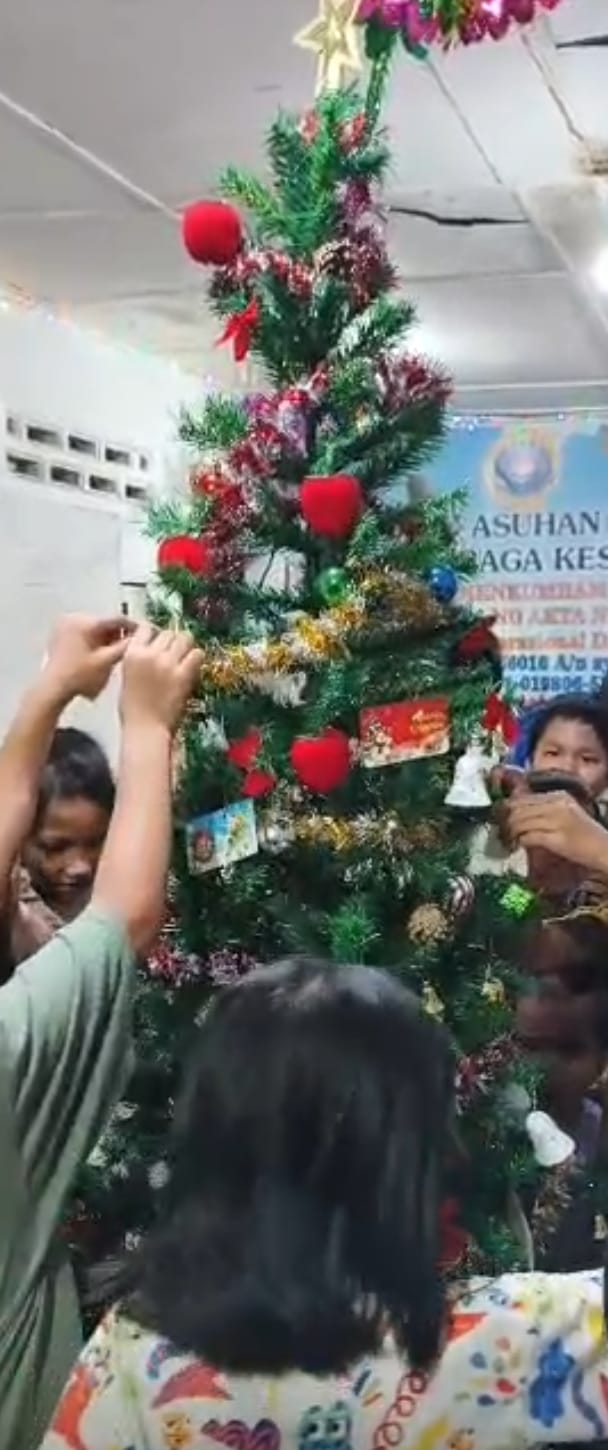
Before Christmas Julia shared with me her desire to help the children in an orphanage. They needed pillows and mattresses as the flood had destroyed those they had. Since she is a very practical person, she had already worked out the amount needed. So I wrote to the Lithuanian community on our shared website, hoping that someone would be able to donate something. “I was amazed to see that in a short time we collected an even larger amount that I immediately sent to Julia who did everything she could to make the children happy. As well as the mattresses and pillows, for the first time, they also had a Christmas tree
The concluding residential week of the first year of the two-year political action training programme will be held from 26th January-1st February 2026. The programme is promoted by the New Humanity NGO of the Focolare Movement in collaboration with the Pontifical Commission for Latin America
L’evento, con la metodologia dell’Hackathon, vedrà la partecipazione di 100 giovani leader dei cinque continenti, impegnati nei propri Paesi in ambito politico e sociale, di diverse culture e convinzioni politiche. Dopo mesi di intenso lavoro online, i giovani si ritroveranno a Roma in presenza per tradurre il percorso di apprendimento, che hanno condiviso da remoto, in proposte di incidenza politica: la sfida che dovranno affrontare è quella di ideare processi e strumenti idonei ad affrontare i punti di crisi che emergono nell’esercizio del potere politico, nelle relazioni e nelle istituzioni politiche.
Great attention will be paid to the participatory dimension of public policies, leading to the definition of shared pathways that will be assessed and presented during an evening open to the public, to young people and interested politicians.
“Oggi ci troviamo di fronte a problemi gravissimi – spiega Javier Baquero, giovane politico colombiano, presidente Movimento politico per l’unità/Mppu internazionale -. Ciò che va coltivata è una cultura politica che guardi all’umanità che è una e al pianeta come casa comune. A nostro parere, c’è un diverso paradigma che dobbiamo esplorare e sperimentare insieme, imparando a comporre le nostre diverse visioni a partire da alcuni valori universali”.
Argia Albanese, President of MPPU Italy agreed, “A meaningful response to the needs of our peoples cannot rely solely on the reform of institutions or from a purely managerial approach, which often seems devoid of democratic content. Our starting point must continue to be the social and community bond rooted in universal fraternity and sisterhood.”
The week concludes the interdisciplinary training focused on integral ecology, civil economy, collaborative governance and generative communication, which began in May 2025 with the support of experts from various academic institutions: Rotterdam School of Management (Netherlands), Universidade de Coimbra (Portugal), Universidad Nacional de La Plata (Argentina), Georgetown University (Washington DC), University of the Philippines, Universidade de Ribeirão Preto (Brazil), Escuela Superior de Administración Pública Bogotá (Colombia), University of Dschang (Cameroon), Sophia University Institute (Italy).
The week in Rome includes:
Two Hackathon days, in which the participants, divided into language groups, will seek solutions to collective problems.
Dialogues with experts and policy makers to connect reflection and proposals within a broad international framework.
A public meeting to present the Hackathon outcomes and to engage with politicians active at various levels and from different perspectives.
Visits and workshop activities in Rome at research and social engagement centres (which support migrants, women’s rights, climate justice, unemployment and disarmament).
Workshops to set up the global network for the second year and its governance.
There will be a much-anticipated audience with Pope Leo XIV in St. Peter’s Square on Saturday, 31st January. Representatives of the MPPU Centres who will come to Rome for the occasion will also participate and will have the opportunity to evaluate the results of the experience with the participants and to plan the next steps.
It is an intensive workshop designed to develop solutions to collective problems. The idea comes from the world of digital innovation, applying the logic of “doing together and doing it quickly” to the civic sphere.
By integrating political, administrative, economic, communication, social and technological skills, the process unfolds in several phases: analysis of problems and needs, definition of priorities and stakeholders, development of operational proposals and tools for public action.
Within the framework of the themes explored throughout the year, participants will address challenges such as corruption, oligarchic governance, media monopolies, polarization, crisis of representation and electoral abstention.
In the time available, with the support of the coaches, each group will move from problem identification to strategic proposal, building problem maps, analysing available data and designing implementable ideas. At the end, the groups will present their solutions: prototypes of intervention plans, political initiatives and cultural impact projects, participatory models and communication methods and strategies.
The added value lies not only in the ideas developed, but also in the method, which demonstrated how solutions to public problems can be co-designed with creativity and rigour, enhancing and integrating different perspectives, in the search for effective solutions to increase the quality and values of a way of living politics at the service of the unity of the human family.
Universal brotherhood, even apart from Christianity, has not been absent from the minds of great and exceptional persons. Mahatma Gandhi said: “The Golden Rule is to be friends of the world and to consider as ‘one’ the whole human family. Whoever distinguishes between the faithful of his own religion and those of another misinforms the members of his own and opens the way to the rejection of religion and its values.” [1] (…)
However, the One who brought universal brotherhood on earth, as an essential gift to humanity, was Jesus, who prayed for unity before he died: “Father, that they may all be one” (Jn 17:21). In revealing to us that God is our Father and consequently that we are all brothers and sisters, he introduced the idea of humanity as one family, the idea of the “human family” made possible by universal brotherhood in action. Consequently, he destroyed the walls that separate those who are “the same” from those who are “different,” friends from enemies, walls that isolate one city from another. And he loosened the bonds that imprison people in so many ways, from the thousands of forms of suppression and slavery, from every unjust relationship. In this way he brought about an authentic existential, cultural and political revolution. Thus the idea of fraternity began to make way in history. We could trace back its presence in the evolution of thought throughout the centuries, finding it at the basis of many fundamental political ideas, at times clearly, at times more veiled. This fraternity was often lived, although in a limited manner, each time, for example, a people joined together to fight for their freedom, or when social groups struggled to defend the weak, or whenever people of different convictions rose above mistrust in order to affirm a particular human right.
Chiara Lubich
[1] “In buona compagnia”, a cura di Claudio Mantovano, Roma, 2001, p. 11.