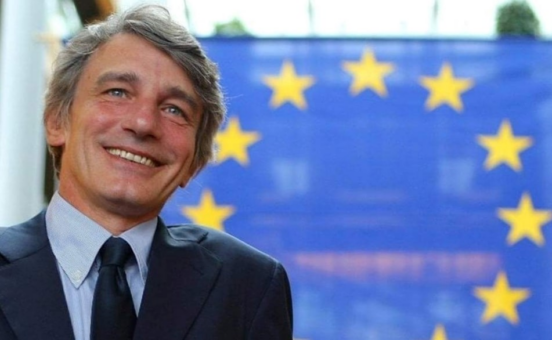
A passage from Chiara Lubich’s speech in Rome, in 2000, during the XV World Youth Day, attended by over two million young people from all over the world. (Tor Vergata – Rome, 19 August 2000). https://youtu.be/My3XSN8RNcE
Msgr. Piero Coda, theologian, Secretary of the International Theological Commission, former Dean of Sophia University Institute, received an honorary degree from the Catholic University of Córdoba in Argentina. A week of events marked the beginning of March 2024 at the Catholic University of Córdoba(UCC) in Argentina. These included: the Córdoba 2024 Itinerary Seminar, Jesuit University and Trinitarian Anthropology, and the conferral of an honorary doctorate on Msgr. Piero Coda, theologian, Secretary of the International Theological Commission, and former Dean of the Sophia University Institute. Other related events made known the thought and contribution of Msgr. Coda, which is not limited to anthropology and theology, but reaches out to the Church in its synodal journey and that of ecumenical and interreligious dialogue. The Trinitarian Anthropology Seminar was held from March 4 to 6. The study group, which has been active for 11 years, consists of 14 people, women and men, Franciscans, Jesuits, priests, religious, focolarini and lay people from different church movements. Sonia Vargas Andrade, of the Faculty of Theology, San Pablo of the Bolivian Catholic University, said: “We met to reflect on the path that a Latin American theologian should follow in dialogue with European theology, particularly Trinitarian Anthropology, taking into account what is typically ours, namely the plurality”. The seminar concluded by highlighting that the distinctive element of Trinitarian Theology – the subject of the group’s study – is precisely unity in plurality: “the other’s thinking is as good as my own, I have to think from the other and in the other”, added Vargas Andrade. Msgr. Piero Coda shared his first-hand experience and his view of the first session of the synodal assembly, in which he participated as a member of the Theological Commission of the General Secretariat of the Synod of Bishops. Coda defined the first session as a pause to learn how to meet, listen to each other and dialogue in the Spirit. And he added: “The journey has just begun. Patience and perseverance must go hand in hand with wisdom and prudence, but also with enthusiasm and the courage to take risks”. Dr. Tommaso Bertolasi, professor at Sophia University Institute in Loppiano (FI), closed the discussion by addressing the theme “youth and synodality,” stressing that young people experience the absent God: “God is experienced as the absent one, the one who is not there”. Therefore, it is necessary to consider the experience of Jesus’ abandonment on the cross. “It is right there, in death and resurrection, that God enters every human experience: from that moment on, there is no more distance from God, because God is in the absence of God”. From this thesis he deduced several implications for the church in general, especially for youth ministry. March 6 was the day of the conferral of the honorary doctorate to Msgr. Piero Coda. On this occasion, Cardinal Ángel Rossi S.J., Archbishop of Córdoba, called Piero Coda a “pilgrim of truth, who lived his life in the spirit of exodus and this has led him to leave his own ‘land’ in order to put his thought and theological insights in permanent dialogue with different cultures, with those who do not profess an explicit faith or with other disciplines”. Father Gonzalo Zarazaga S.J., Director of the UCC Doctoral Program in Theology, in presenting Coda’s contribution, said that “Piero Coda’s Trinitarian Ontology opens us to the intimacy of the Triune God and invites us to participate in his love in fullness”.Rabbi Silvina Chemen, through a video message, expressed her affection, admiration and gratitude to Piero Coda for his work in strengthening interreligious ties with the Focolare Movement In his words of gratitude, Msgr. Piero Coda said he considered the recognition he received as an appreciation of the style of understanding and implementation of philosophical and theological work, which is proving to be highly relevant in the process of synodal and missionary reform in which the Church is engaged under the leadership of Pope Francis. He added, “It’s about learning from each other, listening together to what the Spirit is saying to the churches: in exchanging the gifts of each other’s experiences of inculturation of faith and mission, of which our communities and cultures are bearers”. His lectio magistralis was entitled. “Inhabiting the reciprocity of the Father and the Son in the Holy Spirit to revive the meaning and destiny of history”.
María Laura Hernández Photo: courtesy of UCC and Guillermo Blanco
Thanks to the donations of many people, it has been possible to implement interventions to alleviate the suffering of populations affected by natural disasters or wars. The Focolare Emergency Committee has provided an update on the fundraising efforts for places affected by conflicts, epidemics and environmental disasters such as floods or earthquakes that may severely affect entire populations with immediate and long-term effects. To address these serious situations, the Emergency Committee was established to launch fundraising initiatives to assist the affected populations through programs supported by members of the Focolare or Focolare-affiliated organizations worldwide, operating independently or in partnership with others. Recently, the Emergency Committee presented its 2023 Report, revealing that, from 2016 to the end of 2023, a total of €5,361,505 has been raised for emergencies in Syria, Turkey, Ukraine, Italy, Pakistan and the Philippines. In Syria, the “Seeds of Hope” project, which began in September 2018, provided socio-medical assistance to families, access to essential medicines, healthcare services and basic surgery for patients with chronic diseases as well as educational support for children and adolescents. So far, 23,170 people have benefited from the program. 6,273 people were assisted in various ways following the earthquake in Syria and Turkey, which took place in February 2023. This included financial assistance to 405 families, distribution of detergents to 490 families and of food and clothing to 712 families, along with psychological support for the elderly, adults and young people and medical assistance. In addition, Work Empowerment initiatives (enhancing individual employment efforts with microcredit incentives) were provided to 16 families and 32 people along with housing interventions for 138 families. A community livestock project was also set up to supply milk and generate income for families in a Turkish village inhabited by Afghan refugees. In Ukraine, the emergency situation continues to evolve as the conflict persists and the multiple needs of the population increase. Since the beginning of the war, basic health care has been provided for about 12,000 people and extraordinary economic support has been extended to over 2,000 families. Several projects to welcome and accommodate displaced families and children from Ukraine have taken place in Italy. Furthermore, a school-camp was established in Austria for 30 children from a primary school in Kiev and a protected day centre for children and mothers was inaugurated. Another emergency this year was the flooding that affected various regions of the world. During the floods in Pakistan, construction materials were provided for the restoration of 20 destroyed homes and support was given to 1,150 people. During the 2023 floods in the Emilia-Romagna region of Italy, assistance was provided to 16 families for the purchase or repair of damaged material possessions and renovations were carried out in the homes of 7 families. In addition, a work camp and the renovation of an educational farm were realized. The Emergency Committee of the Focolare Movement manages these projects through AMU (Action for a United World) and AFN (Action for New Families), two NGOs born in the Focolare Movement that operate in the social sphere. Fundraising efforts for emergencies in Ukraine and following the earthquake in Syria and Turkey are ongoing.
Today, 14 March, the day we remember Chiara Lubich’s departure for Heaven, we publish some of her words, pronounced during the meeting of the “Movement for Unity in Politics” in Bern (Switzerland) on 4 September 2004. A reflection on the kind of ‘love’ necessary for universal fraternity to be possible. Brotherhood can be achieved only through a special kind of love. It’s a love that is directed to everyone, just as God the Father sends sun and rain on the good and on the bad. It is not a love that is directed only to relatives and friends, and a few other people. It is directed to everyone, and this already requires effort. If we left here having resolved to love everyone we meet, and, if we are Christians, seeing Christ in them, because he will say: “You did it to me,” “You did it to me.” I think that would already be a great step forward because the Christian revolution would spread out from here. Then this love we need to build fraternity, is not only tolerance, although it is tolerant; it’s not only solidarity, although it is solidarity too. It’s something different because it’s the very love of God. We Christians say it is the love poured into our hearts by the Holy Spirit. This love takes the initiative without waiting to be loved; it makes the first move, taking an interest in others (without bothering them, of course). It takes the initiative and does not wait to be loved. Usually people wait to be loved before loving. Instead it is a love which is first… and this brings a revolution. In fact, our Movement has reached the ends of the earth, not because of what we did, but due to a charism from God. If we leave here determined to love everyone, always being the first to love, without waiting…. Well, this is already Gospel life. Do you understand what the Gospel is? This is Gospel. Then it’s not a sentimental or platonic love; it’s not a fleeting love, but a concrete love, which makes itself one with the person who is being loved. If someone is ill, we feel ill with him or her; if people are happy, we are happy with them; if they have achieved something, we feel their achievement is ours too. It’s a love in which… as St. Paul says, we make ourselves all things to all people, all things to all people, we make ourselves poor, or ill with others. Sharing, that’s the kind of love it is, a concrete love. So it’s a love that is directed to everyone, a love that takes the initiative, and a love that must be concrete. Then we should love others as ourselves, as the Gospel says. Therefore, my friend, Eli, who I see there in the hall, is me, because I must love her as myself, like Chiara, as I love myself. Likewise, with Clara: I must love her as myself. I must love this lady as myself; and this lady, as myself, because this is Gospel. This too is a big thing: whenever do people love others as themselves? In a way we almost transfer ourselves into the others in order to love them as ourselves. It’s also a love which, if lived by several people, becomes reciprocal. Because I love Marius and Marius loves me; I love Clara and Clara loves me. This reciprocal love is the pearl of the Gospel. Jesus said, “I give you a new commandment: love one another as I have loved you” (Jn 13:34). He said this commandment is his and new, so it sums up the Gospel, it’s the basis of fraternity. … What can we do to be brothers and sisters if not love one another, as he loved us, he who even gave his life for us? We should keep these things in mind. Mindful of what this love is like, to answer the gentleman who asked the question, how should we see our relationship with others? We should see it in terms of dialogue. I must see the other person as someone with whom I should dialogue, but in order to dialogue, I need to know that person; I need to enter into their world. I must not assert myself, but try to understand the other person and let them say what they want to say. … We need to enter into the heart and mind of the other person and allow the other person to be open, let the other person speak. They should feel that we are empty of ourselves and able to understand them. What happens then (in our experience) is that other people understand they are loved and they listen willingly to what we have to say. The Pope says something very beautiful about dialogue. That we need to share our truth, what we think, but it must be “a respectful announcement”, which means an announcement that respects the opinion of the other person, which has no intention of proselytizing, and does not want to impose on anyone. This is the dialogue that should be carried out. It’s the basis of our life, of universal brotherhood.
The 40th Ecumenical Conference of Bishops friends of the Focolare Movement which took place in the historic city of Augsburg in Germany, ended on Friday, 1st March. There were 60 participants from 26 nations, representing 29 Christian Churches. “Dare to be One. A call from Jesus to live the future, now” was the title and even more the essence of the meeting.1518 -In Augsburg (Germany), the Roman Cardinal Caetano, a famous Thomist theologian and the Augustinian monk Martin Luther, professor of Sacred Scripture at the University of Wittenberg (Germany) had a discussion about Luther’s 95 theses on indulgences. There was no convergence. They couldn’t agree. In fear for his life Luther fled during the night. 1530 -The Diet of the Holy Roman Empire led Emperor Charles V to Augsburg, intending to reunite the divided Protestants and Catholics. For the occasion, Philip Melanchthon, a theologian friend of Luther, prepared the Augsburg Confession, a confession of faith intended to bring everyone together. The attempt failed. 1555 – During a further Diet in Augsburg, a Religious Peace was signed which ensured coexistence between Catholics and Lutherans. Each Prince of the Empire established which confession would be followed in his territory, a decision summed up in the Latin expression cuius regio eius religio (whose realm, their religion) 1650 – After the bloody Thirty Years’ War, which also affected Augsburg, freedom of religious expression and the equality of Protestants and Catholics in all public offices were sanctioned. The Festival of Peace was born and is still celebrated every 8th August. It was in Augsburg, a place soaked in history, that, at the invitation of the local Catholic Bishop Bertram Meier, the 40th Ecumenical Conference of Bishops friends of the Focolare Movement took place from 27th February to 1st March. Sixty Bishops from 26 nations participated, belonging to all the great families of Churches: Orthodox, Eastern Orthodox Churches, Anglicans, Methodists, Evangelicals, Reformed, Catholics of the Latin, Armenian and Byzantine rites. It was the highest number and most universal representation of participants so far, something that stood out for the Mayor of the city, Eva Weber, when she received the Bishops in the City Hall. From the very beginning, the relationship between these Bishops, including two women Bishops of Churches born from the Reformation, was striking. Every Church was welcomed as it is. A simple spirit of fraternity permeated the days, without disregarding the still existing wounds and points of disagreement. Everything was underpinned by that pact of mutual love that has characterized these Conferences from the beginning and that the Bishops solemnly renewed this year too, promising to share each other’s joys and crosses. This gave rise to what some of the participants described as an original kind of ecumenical synodality. “Dare to Be One. A call from Jesus to live the future, now” was the bold motto of the conference and, even more, of the journey in which the President and Co-President of the Focolare, Margaret Karram and Jesús Morán also participated. There were three main themes, each illustrated by experiences: receptive ecumenism as an ecumenical methodology that leads to learning from each other; the common call to witness the Gospel in a divided world in search of peace; Jesus crucified and forsaken as a way to face the night of the world and respond to it in a generative way. One more date: 31st October, 1999. 25 years have passed since the Lutheran World Federation and the Catholic Church signed the “Joint Declaration on the Doctrine of Justification” in Augsburg, recognizing that, on this key point of dissent in the 16th century, there is no longer reason for separation. An Ecumenical Prayer Service commemorated the historic event in the place where the signature took place: the evangelical church of Sant’Anna. The next day a round table explored its impact. The Rev. Ismael Noko, then Secretary General of the Lutheran World Federation, illustrated the humble and tenacious path that made the signing possible and saw the subsequent accession of three other World Communions (Methodist, Reformed and Anglican). Dr. Ernst Öffner, then Regional Evangelical Bishop of Augsburg, told how he had worked with the Catholic Bishop at the time, to involve the local people and that whole city had celebrated. Catholic Bishop Bertram Meier talked about the challenges and opportunities of the journey that we now face. The current threats to peace and justice were very present throughout the conference. In this regard, the video message on the situation in the Holy Land from Card. Pizzaballa was very important. Against this background, two realities gave particular hope: the development of the ecumenical network “Together for Europe” which involves about 300 Movements and communities of various Churches, and the visit to the Ecumenical little town of Ottmaring (Germany) where for 56 years Catholics and Lutherans of different Movements have given a testimony of unity in diversity, a path that is not always easy and in which new developments have been born from every crisis. For the future, the aim is to develop the local networks, to connect everyone through regular online events and through newsletters, in view of a future international meeting in two or three years.
NetOne, an international association of media and film professionals and communications operators and information technology, together with New Humanity, a Non-Governmental Organisation (NGO), realities founded on the spirit and values that animate the Focolare Movement, in collaboration with the Mission of the Holy See to the United Nations, launched the initiative “AI: A Pathway to Global Peace and Integral Human Development”, a reflection on the ethics of artificial intelligence and its implications. On Wednesday, Feb. 21, NetOnetogether with the NGO New Humanity in collaboration with the Holy See Mission to the United Nations, co-organized the initiative “AI: A Pathway to Global Peace and Integral Human Development,” which took place in New York, UNHQ, Conference Room 6, from 1:15 to 2:45 p.m. and was followed online from different parts of the world. The Opening remarks by His Excellency ArchbishopGabriele Caccia, Permanent Observer of the Holy See to the United Nations, set the tone for the reflections, We stand at the precipice of a technological revolution unlike any other in human history. The emergence of AI is reshaping our world in profound and unprecedented ways. From revolutionizing industries to transforming the way we live, work, and interact, AI has become a driving force of change in the 21st century”. In recent years, digital progress has brought significant opportunities and challenges, with serious implications in all areas of society. In this era of rapid technological change, Artificial Intelligence (AI) has emerged as one of the most powerful tools with the potential to transform societies, advance peace and achieve sustainable development. However, its ethical implications remain a subject of intense debate. Maddalena Maltese, journalist and representative of the NGO New Humanity, moderator of the event’s panel discussion, recalled that “on January 1, Pope Francis, in his message for the International Day of Peace, raised urgent questions about AI: “What will be the consequences, in the medium and long term, of these new digital technologies? And what impact will they have on individual lives and societies, as well as on international stability and peace?” She also highlighted that Secretary-General Antonio Guterres, discussing priorities for 2024, stressed that AI will affect all of humanity, reiterating the need for a universal approach to address it. The panel discussion with multi-stakeholder dialogue on the ethical challenges posed by AI and strategies discussed the interplay between technical, ethical, political, legal and economic considerations. Father Philip Larrey, professor of philosophy at Boston College, former dean of philosophy at the Pontifical Lateran University, and president of Humanity 2.0. laid out a number of pressing issues starting with the theme of peace. “ChatGPT or Gemini could write a perfect peace plan, looking at the situations we are living, but would we be willing to follow its directions?” Fr. Larrey said, emphasizing the human factor as decisive in the decisions to be made, even when it comes to lethal weapons. Another central theme of his talk was the empathy that machines can demonstrate and are sometimes preferred over the human element. “Humans understand meanings. Machines don’t, as much as machines are getting very, very good at simulating what we consider meaningful,” the Boston College professor insisted, warning of the increasingly difficult challenge of discerning what belongs to humans and what belongs to technology, with machines that in the future may even be programmed to feel feelings. Laura Gherlone, a researcher in semiotics at the National Council of Scientific and Technical Research in Argentina and a professor at the Catholic University of Argentina and a member of NetOne’s International Commission, spoke about Artificial Intelligence and, more generally, digital technologies in light of the thinking of digital decolonization. She argued that: “today, post-colonial contexts are at a crossroads: either falling behind or catching up. They are obliged, in other words, to dramatically accelerate certain processes that today embody a techno-centric, supposedly universal, model of knowledge: digitization and the implementation of AI systems are among these processes.” She states that this process ” almost always comes at a very high cost, on at least three levels: at the economic and technical-structural level, at the social level and lastly, the accelerated and forced adoption of technological progress as a path towards a universal model of knowledge. She suggests: “the The ethical debate on AI could be greatly enriched through decolonial reflection, integrating, for example, the work of those collective movements committed to rethinking and redesigning technical architectures “from the South”, that is, theoretical-methodological and practical solutions that are often sidelined because they are far from profit logics”. Closing the event were two best practices from civil society. Marianne Najm, a communications engineer based in Beirut, spoke on the ethics of AI and the concept of the digital oath for engineers and anyone active in the digital world. The project started in 2019 inspired by the Hippocratic Oath, the oath that most doctors take at the end of their academic journey. Just as the Hippocratic oath aims to awaken the human obligation of doctors, similarly the digital oath aims to awaken the human obligation of digital actors by directing their work toward ethically human-centered design. Marcelle Momha, Cameroonian living in the United States, policy analyst and researcher specialized in artificial intelligence, emerging technologies and cybersecurity, had prepared an intervention on the AI 2030 community, which due to timing was not possible to illustrate, but her paper is available on this link bellow. “AI 2030 is a vibrant community of business leaders, data scientists, technical builders, and pioneering researchers dedicated to harnessing the transformative power of AI to benefit humanity while minimizing its potential negative impact.” She explained in his theme. In his message for the World Day World Peace, the Holy Father remembers that “technological developments do not lead to an improvement of the quality of life all humanity, but on the contrary aggravate the inequalities and conflicts, can never be considered a real progress.” As organizations of civil society, we want to accompany the efforts of the United Nations and all those institutions that are working for an ethical commitment in the field of technology that sustains digital developments as a contribution to the promotion of human principles of peace and fraternity. To review the live stream, you go to link: https://webtv.un.org/en/asset/k1h/ To see the speeches again and for more information, go to: https://www.net-one.org/ia-una-via-per-la-pace-globale-e-lo-sviluppo-umano-integrale/
From February 2 to 8, 2024, a week of mobilization and prayer against human trafficking. In Rome (Italy) the meeting of 50 young people from all continents including some boys and girls of the Focolare Movement. Human trafficking is the process by which people are coerced or lured by false prospects, recruited, relocated and forced to work and live in exploitative or abusive conditions. It is a phenomenon, as the recent United Nations Reports warn, that is constantly and dramatically evolving. . From Feb. 2-8, 2024, the Week of Prayer Against Human Trafficking took place. Established by Pope Francis in 2015, the week always includes Feb. 8, the feast of St. Bakhita, a Sudanese nun who as a young girl was enslaved, sold and abused, was a victim of trafficking and a universal symbol of the fight against this scourge of humanity. This year’s theme was Walking for Dignity. Listening, Dreaming and Acting. Thousands of people around the world gathered to reflect, pray and share their experience of engaging against this global phenomenon. In Rome, Italy, many young people from different countries-Kenya, Japan, the United States, Thailand, Albania, Canada, Mexico, France and Italy-participated in conferences, flash mobs, moments of prayer on the theme, the Angelus and the audience with Pope Francis held during the week. Among them were also some Gen2, young people of the Focolare Movement. Prisque Dipinda, from the Democratic Republic of Congo recounts, “The most significant event for me was the vigil of prayer in the Church of Santa Maria in Trastevere, in the heart of Rome. It was an important moment before God, the emotion in sharing it together with other young people who carry the challenge of human trafficking in their hearts. But also a responsibility to be part of the protagonists against this phenomenon. I think for the young people who attended it also served to become aware that so many in the world suffer, for various reasons: economic, political, religious. It was an opportunity to reflect and start together to design something against suffering.” Among the Gen2s present were Michel Haroun, a French-Lebanese and Miriana Dante, an Italian. “I have never had a particular commitment against human trafficking,” says Michel. “I have some experience in serving migrants who arrive in my city or at the borders between states. For example, a few years ago I was in Trieste (Italy), the arrival point of the Balkan route through which migrants from so many parts of the world devastated by conflict arrive in Italy. But I was not sufficiently aware of the fact that refugees, before arriving in Europe-but it is also valid for Latin America, the United States or other parts of the world-suffer violence and abuse in an organized manner. These days lived in Rome together with other young people from different continents, languages, cultures, belonging to various Christian churches, were a rich experience of personal relationships that I hope will last, because eventually we will face (though we are already facing) the world together, as part of the same generation.” “I was emotional getting to know the story of St. Bakhita,” said Miriana, “She had been a slave, she was sold. She later faced with courage all that she had experienced in the past, launching messages against human trafficking. I wondered where she got all that strength from. It did me a lot of good to have met so many of my peers who are committed to these issues. Not adults with long experience behind them, but young people my own age from all over the world who have dreams and hopes for a better future. We did not feel the cultural difference, because we were bound together by the unity among us through our common goal: to fight against human trafficking.”
The Focolare Movement is publishing the report on its activities on safeguarding and on its data concerning abuse cases in 2023. An interview with Catherine Belzung, professor of Neuroscience and coordinator of the UNESCO Chair on Childhood Maltreatment. On 1st March, the second annual report of the Focolare Movement concerning its activities and data relating to cases of sexual abuse of minors and vulnerable adults as well as abuse of conscience, spiritual abuse and abuse of authority was published. We asked Catherine Belzung to give an evaluation of the document. Catherine is a university professor of Neuroscience in France, she is a senior member of the University Institute of France (2014) and president of the multidisciplinary research centre iBrain. Since 2022, she has been coordinator of the UNESCO Chair on Childhood Maltreatment, made up of a partnership of universities and institutions from 16 countries. She is also co-chair of the International Centre for Dialogue with Contemporary Culture of the Focolare Movement. Q: Since 2023, the Focolare Movement has decided to publish an annual report on child sexual abuse and also on abuse of conscience, spiritual abuse and abuse of authority. From your international perspective, what do you think of this decision? How do you consider this second report?A: I believe this report represents a real step forward. In fact, the last report was criticised, mainly because the places and dates of sexual abuse were not mentioned. The new report covers cases disclosed in the last 10 years and adds these clarifications: it is stated that sexual abuses were carried out on all continents (about 20 countries), with a peak of cases between 1990 and 1999, as well as during the decade before 90 and after 2000. The offences sometimes are repeated over several decades, suggesting that these are multiple repeat offenders whose abuses have continued. Some offences happened and were dealt with around 2020, indicating that people abused were able to report abuse almost in real time, which is progress. All communicated sexual abuses were carried out by men. The opposite is true for abuses of authority, which in 77% of cases were committed by women, which is in proportion with the higher number of women among those belonging to this Movement. The report also contains a detailed and clear section on the measures implemented during the year, particularly regarding formation. It remains to be understood what the root causes of these abuses are. Beyond preventive measures and sanctions, further work should be done to identify the systemic causes that could explain these figures, in order to put in place a strategy that would prevent them. Q: In this second report, the people who abuse are identified according to precise criteria set out in the Communication Policy recently published by the Focolare Movement. What do you think of this decision? A: This is an ethical conflict. On the one hand, it is a matter of believing the experience of the people abused and taking the complaints they make seriously, as well as quickly putting measures in place so as to protect them. On the other hand, it is a question of respecting the presumed innocence of the alleged abusers, of not defaming them when no final criminal conviction has been pronounced. The issue is complex and finding a satisfactory solution will no doubt require a lot of listening and dialogue. Q: The UNESCO Chair on child abuse that you coordinate came about because you came into contact personally with a case of child abuse of which you knew both one of the people abused and the person who abused. It was a case that happened in the Catholic Church in France. In this case, the social or religious community is defined as a ‘secondary victim’. What does this mean? What are the wounds that people carry, how can they be healed at a social and community level? A: Yes, in fact, this chair was set up as a result of being in contact with a person who had been abused. A contact that left a deep mark on me: I was profoundly affected by this suffering, and my desire to do something came from this. First and foremost, abuse affects the person who has been abused, who often suffers lasting psychological consequences. Sometimes, the opening up about the facts can bring out a great vulnerability in this person, which requires specific accompaniment. In turn, this also affects the person’s relatives, such as their spouse, their children, but also their parents who feel responsible for having entrusted their child to an institution that did not protect them. The devastating effects also have an impact on the entire community, as members are often unaware that within it a repeat offender was concealed, a person with whom they may have had a bond of closeness, of friendship. We may ask ourselves: why didn’t I notice anything? Another aspect concerns the bond with the institution that may have protected the abuser, sometimes in good faith, producing in people a sense of betrayal and distrust. Finally, the community may also become divided, depending on their divergent analyses, between those who take refuge in denial, and those who want to fight to prevent these things from happening again. Rectifying all of this requires a wide range of measures: it is essential to take on the responsibility of accompanying the people who have been abused and their families, but it is also necessary to restore trust in the institution that has shown its weaknesses and where there is a sincere willingness to learn from its past mistakes. It’s the actions that matter in making this happen: the institution must promote transparency by communicating very precise information, put in place clear procedures, create places for listening, establish reparation procedures and, for communities, spaces for dialogue where even opposing opinions can be exchanged. Q: The Focolare Movement is a worldwide organisation, including people from different cultures and religions who are subject to different legal systems and adopt different lifestyles. How is it possible to implement anti-abuse practices in such a multicultural and diverse environment? A: The consequences of child sexual abuse exist in all cultures, they are universal. In addition to the ongoing psychological and social impact, those who have been abused may have biological ongoing effects, such as increased stress hormones, altering the expression of certain genes and brain morphology and brain functioning. These dysfunctions continue to be present throughout the survivor’s life and may be passed on to the next generation. So it cannot be said that there are cultural variations in the severity of the consequences on those who have been abused or that there are cultures where these people suffer less: always and everywhere, it’s devastating. It is therefore necessary to put in place measures for prevention, but also for reparation all over the world. One can see that awareness of the seriousness of these situations is increasing: for example, in the Catholic Church, national enquiry commissions have been set up in many countries in Europe, North America, Latin America, but also in Australia, India and South Africa. Although suffering does not vary, what may vary is that people resist in denouncing the facts and their ability to put in place protective and remedial measures. This may be related to the fact that in some cultures talking about sexuality is taboo. The first step is to make people aware of the consequences of abuse: there are already programmes promoted by various associations that take into account the way sexuality is considered in different cultures. For example, proposing that those who listen to the suffering of people who have been abused and belong to the same culture can understand them better. This can make people want to do something about it. Prevention can also be targeted directly at children, through education about their rights: again, there are programmes, for example, based on songs. Another thing that varies is the ability of countries and institutions to take measures of protection and reparation. A respectful and non-stigmatising dialogue with those who commit abuse is the way forward: this will enable everyone to understand the seriousness of the abuse, but also to find culturally specific ways to enable people to speak up, to implement processes of reparation and to educate members of the community. Q: Both within the Focolare Movement and also in other contexts there are those who express the conviction that the time has come to move forward; that is, that it is not necessary to continue talking only about abuses, but to focus on the ‘mission’ of the Movement and on what beautiful and positive things are being generated in the world by the living out of this charism today. What is your opinion on this? A: What do we mean by ‘mission’? Is it not to advance towards universal fraternity, towards a culture that puts the suffering of the weakest first, a culture of dialogue, openness, humility? It seems to me that the fight against all kinds of abuses is precisely a way of implementing this desire, putting those who suffer in the first place. Helping to heal the wounds of those who have been abused is a way of going towards universal fraternity. This also implies accompanying the people who have abused in order to prevent reoffending. Acknowledging one’s mistakes, one’s vulnerability, in order to create solutions, taking into account the opinions of experts in this field is precisely a way to build a culture of dialogue. Fighting with determination against abuse and accompanying those who have been abused are right at the heart of this ‘mission’. Therefore we don’t need to choose between the fight against abuse and ‘mission’, because this fight is a central element of ‘mission’. In today’s context, this is a priority which is painful but necessary.
Christian love is a “Love” that has a specific, tangible form, which is experienced through actions, from the smallest to the largest. It means giving our lives for those around us in the image of the One who was the first to give His life for us, loving us with an immense love.
Failed Exam
When our daughter came home in tears following an unsuccessful exam for which she had worked very hard, my husband and I made a conscious decision to turn dinner into a celebration, perhaps even more so than if the exam had gone well. Our other children embraced the idea with enthusiasm. However, the most emotional moment occurred when we parents, began to openly share some of our own life failures and how we had managed to overcome them. As others at the table joined in with their “confessions”, the meal became an occasion for profound communion and mutual growth. Our daughter found solace in this unexpected turn of events and said, “Maybe this failure wasn’t just for me, but for our whole family. I never realized that setbacks could be a part of our collective growth and understanding of life. I appreciate this perspective immensely.” When we shared this experience with relations and friends, many were inspired to replicate it with their own children, using any pretext to foster similar conversations. Ultimately, a consensus emerged that trying to understand each other’s vulnerabilities within families is essential for cultivating love and shared growth. (W.R. – Netherlands)
Love that goes and returns
In my spare time and whenever needed, I willingly take on the role of babysitting for the two lovely girls of a Senegalese couple. The parents are always grateful and often say, “We would be lost without you!” Sometimes I proactively offer my assistance, not waiting for their request. Recently, I messaged the dad, notifying him of my availability for Sunday morning. He rang me almost immediately and said, “Lorenza, you have to tell me how you know what we need in advance! Your message came at exactly the right time.” I replied, “It is God who moves hearts, Tacko; we must thank Him for creating this bond of sisterhood and brotherhood.” Thanks to this family like bond between us, once when I had to leave for a trip at 1 a.m., I asked Tacko for a lift to the station, which was an opportunity for him to reciprocate the love. He not only obliged but stayed with me until the rest of the group arrived, showing genuine care. A few days ago, Tacko and his wife came to our home to share some rice and chicken cooked in their typical way. “Now we know your tastes; you’re a bit African too!” (Lorenza – Italy)
Grasp the inspiration
The opportunity to be a builder of peace through respectful dialogue with people of different cultures or faiths came up during a meeting at my workplace. The air was thick with tension and voices rang out accusingly. How could I facilitate reconciliation when talking seemed impossible and maybe even counterproductive? In the face of this challenge, I tried to listen carefully to those expressing themselves, maintaining a calm and understanding demeanour even when they were using loud and confrontational tones. It wasn’t easy and it was very exhausting. During the break, the colleague who had been the most vociferous approached me and offered a sincere apology for his behaviour. Without uttering a word, I embraced him, allowing him to continue sharing: “Yesterday, my wife received news of an incurable disease. I feel hopeless.” I urged him to consult with a doctor friend and he thanked me for the idea. I assured him of my ongoing support. When we returned to the meeting room, the atmosphere had changed. I realized that in every present moment it is important to grasp the inspiration that God gives us about how to act. (E.J. – USA)
compiled by Maria Grazia Berretta (taken from Il Vangelo del Giorno, Città Nuova, year X– no.1 January-February 2024)
On February 20, 2024, the presentation of the Focolare Movement’s ” Communion in Action Report,” an overview of the activities and initiatives promoted around the world in the year 2022, was held in Rome. Central theme: dialogue.“By continually living the ‘spirituality of unity’ or ‘of communion,’ I can effectively contribute to making my Church ‘a home and a school of communion’; to advancing, with the faithful of other Churches or Ecclesial Communities, the unity of the Church; by making, with people of other religions and cultures, ever wider spaces of universal fraternity.”[1] With these words, Chiara Lubich, founder of the Focolare Movement, reflected on the importance of acting every day as “apostles of dialogue,” thus generating new forms of relating to the other, listening and welcoming the reality of others in their specific character. A dimension to which each of us seems to be called and which is capable of becoming concrete and living experience, not only to be able to “quantify” in numerical terms, but which, in order to bear fruit, must be put in common. This is the focus of the Focolare Movement’s second “Communion in Action Report,” the mission statement presented on the 20th of February 2024 at the General Curia of the Society of Jesus in Rome. The document, translated into five languages (Italian, English, French, Spanish and Portuguese), is an overview of the activities and initiatives promoted by the Focolare in the year 2022, a narrative not only of the spontaneous sharing of goods, but of experiences and initiatives lived worldwide, which are inspired by and for the dialogues, and which are being specifically illustrated in this publication: the dialogue between Ecclesial Movements and New Communities in the Catholic Church; the one between the various Christian Churches; the dialogue between different religions, with different cultures, with Institutions, and in engagement with the many global challenges. Among the speakers at the presentation press conference, in the presence of Margaret Karram and Jesús Morán, President and Co-President of the Focolare Movement, were Monsignor Juan Fernando Usma Gómez, Head of the Western Section of the Dicastery for the Promotion of Christian Unity, Dr. Giuseppe Notarstefano, National President of Italian Catholic Action, Dr. Rita Moussallem, head of the Focolare’s Center for Interreligious Dialogue, and Giancarlo Crisanti, Focolare’s general administrator. Participating via internet were Monsignor Athenagoras Fasiolo, Bishop of Terme and auxiliary of the Holy Orthodox Archdiocese of Italy, and Prof. Stefano Zamagni, economist and professor of Political Economy at the University of Bologna. The session, which was moderated by journalist Alessandro de Carolis, was a true exchange of reflections and emphasized how terms such as budget and communion which seem to be poles apart, accounting not only for numbers but also for life. “The social budget has been a great opportunity for us,” said Dr. Notarstefano, national president of Catholic Action, among the first ecclesial realities to draw up a mission statement, “and has encouraged us in this urgent pastoral conversion to which we are called by the Pope. It was also a way to begin to reflect on how to communicate this associative life better, (…) to look at ourselves, with transparency, to give an account to the outside, but to communicate it better, to put it in common.”. According to Msgr. Usma Gómez, in light of the current scenario that seems increasingly fragmented, in talking about the path of unity among the Churches, taking stock as Christians “means looking at God’s plans, our plans, and the plans of the world. (…) God’s plans would be to preserve the unity of the spirit by the bond of peace,” he continued, “but we see that in the world, war is the plan that is taking hold. It is possible to develop communion in differences, (…) but this reconciled diversity calls us to make peace, the heart of Ecumenism is the heart of peace.”. An encouragement, then, to promote paths of fraternity in a network, in a synodal style and specifically, in light of the chosen theme, to do so through a “method” that can bring closer especially those who are mostly unbelievers. “Taking stock of the communion of a Movement that is so open, so able to bring others to understand that dialogue does not take away, but adds, enriches, is very important,” , said Monsignor Athenagoras Fasiolo bishop of Terme and auxiliary of the Holy Orthodox Archdiocese of Italy, who, in addition to emphasizing the Focolare’s great commitment to the path of unity among the various Churches, reflected on the prophetic role that different faiths can play in the world, without falling into the trap of ideologies: “if as faiths we manage to be prophecy then we manage to awaken what is best in the human heart.”. And it is precisely “life and prophecy” that are the two tracks on which the Focolare Movement has proceeded in these 80 years of history also on the path of interreligious dialogue, as Dr. Rita Mussallem stated in the hall; a path that has led the reality founded by Lubich, to come into contact, in so many countries, with people of various religions, creating in the appreciation of diversity and reciprocity, a common ground where they can relate with the spirituality of unity, get to know each other and “give,” said Moussalem, “the willingness to learn from each other, the sharing of sorrows, challenges, hopes and also the shared commitment to work for peace, for good, for fraternity. In a world torn apart by polarizations where religions are too often instrumentalized, in talking about the concept of peace, “authentic dialogue,” she continued, “is a very helpful remedy (…) because it makes you discover and see the humanity of the other, it disarms you. The “person” is thus the beating heart of a circular path that has given rise, over time, to the many activities to which this text bears witness. “When we speak of a ‘budget,'” said Giancarlo Crisanti, “one expects a lot of numbers, but in the Communion in Action Report ‘ there is much more narrative and the the numbers don’t include the people who make these activities possible .” “The Budget,” said Crisanti, “highlights how this communion of goods is able to realize initiatives, projects, works that go in the direction of dialogue (…), that help the world to dialogue a little more.”. Referring to the intuition of the Economy of Communion, Professor Stefano Zamagni stated that it is also “a method for attacking the root causes of war situations” and, insisting on the ‘application, to the concept of justice, of the concept of equity, he affirmed how it is evident that the publication of this “Communion in Action” today, cannot be only a way of accounting, but the opportunity to be grasped in order to be truly “apostles,” messengers of good news. In this time “evil attracts more than good, whereas the beautiful attracts more than the ugly, and knowledge attracts more than ignorance,” asserted Zamagni, inviting each one to “to say what is good and say it well”: “we must make sure that we make known, obviously with humility, the gratuitousness with which good is done. (…) this notion of a Communion in Action Report,’ means that one tells what has been done, but with a view to the future”.
Maria Grazia Berretta
Communion in Action Report in pdf Presentation – Communion in Action Report 2022- Video in italian https://www.youtube.com/watch?v=3jizpECFoss [1] Chiara Lubich, ‘’Apostles of Dialogue’, Castel Gandolfo (Italy), 22.1.2004 in World Conference Call.
A priest from Gaeta, Italy, who, being a parish priest, not only spent himself for his parishioners, but involved them in service to their city. Fr Cosimino Fronzuto was an Italian priest who was born in Gaeta in 1939. He died at the age of 49 in 1989 after an intense life spent serving his neighbor, the needy and the society of his town. He lived near the sea, but disliked swimming and was afraid to go deep. One day, as a child, wanting to overcome this difficulty, he dived in and, to show that he had touched the bottom, he placed his hand in the sand, picking up, to his amazement, a small iron crucifix, which he then carried with him all his life. In 1963 he was ordained a priest and began service as vice-rector of the local diocesan seminary. He came in contact with the spirituality of unity and joined the Focolare Movement. In 1967 he was appointed parish priest of St. Paul the Apostle Parish in Gaeta, a position he held until the last days of his life. In those years the Parish Movement, an expression of the Focolare Movement in the local Church, flourished and generated a lot of fruits especially among the young people, who today are engaged in the city as priests, in the family, in political life and in various civil and professional spheres, in the different realities of the Focolare Movement and who continue to be very active in parish life as well. During the pastoral ministry he exercised in the parish, with his style full of love and attention to all, especially to the least ones (single mothers, ex-convicts, drug addicts, evictees, runaways), he set up the community by simply, but strongly and decisively, aiming only to live the Gospel in all situations and in the most diverse realities. Thus he did not lack opportunities to take a stand even against so many social realities that were far from a truly human and Christian dimension. He wrote in his diary, “We observed that during catechesis there were children who were quite unkept, undernourished, I also remembered that in that same family the older children had received neither Confirmation nor Communion, nothing at all. We were around the middle of March, and I thought, if we don’t get them now, we won’t get them again. So I went to that house and realized (it was about 12:30 p.m.) that pasta was simply being cooked and that there would be nothing else for everyone to eat. I noticed that although the head of the family was a small businessman, even the glass was missing from the door that hung over the balcony, and in this room, where the glass was missing, about ten children were sleeping. Immediately I began to talk about catechism, but I also tried to pay attention and look around. Then in the evening, after adoration, I spoke to the community about this situation. As I too became aware of it, I collected all the data: economic instability, seizure notices, children’s health problems. Then the morning was spent thinking only of this family, to see according to different aspects how things were, sharing the work, securing the food and, at the same time, keeping hold of the grown-ups so that they would receive real catechesis.One evening I realized that I had to make a proposal to everyone. Within myself I had decided, but what is the worth of my decision as a parish priest? It could possibly be valuable, but I wanted the decision to come from God, thus, a decision made in unity with the community which gave me the assurance that it was God Himself working. So I proposed to make available to this family approximately two million (liras) we had in the parish to solve the situation until they were able to go back to work again. I can say that from the very first moment everyone was supportive. That was the beginning, then this situation had several developments. Yesterday, I attended a condominium meeting in which they had decided to take away from the father the work that he had started and had not finished. I did everything so that he would complete it and could also have some money.The journey is still going to be very long, it’s more than a month that we have been beside him, close to him, and he says, “My desire to live is coming back, my desire to live is coming back.” But the intervention has not been operated by me alone, the intervention has been a bit of a collective one, many people are continuously bringing things that are needed, however, we are not so much concerned about the lack of things, but we are concerned about not making people lack love, because they have been people who have obviously been unloved, they have in fact been trampled in certain rights(…)”.On Sunday, Jan. 21, 2024, the Archbishop of Gaeta, Msgr. Luigi Vari in a cathedral packed with civil and religious dignitaries and the faithful, began the cause of beatification of Don Cosimino Fronzuto.
From the Focolare of Montevideo in Uruguay, the daily experience of integral ecology through the transformation of food remains into fertilizer.Millions of tons of waste are produced around the world every day. What becomes of this waste? Some is recycled and has new life. Some ends up in landfills or in waste-to-energy plants to produce energy. Yet before throwing away our food waste, have we ever wondered about other options? This is what some members of the Focolare community in Uruguay asked themselves and so they got involved in composting. Maria Florencia is a focolarina from Montevideo in Uruguay where she teaches integral ecology. She said, “I try to live ecology in my daily life. However, I realized that something can always be improved and that something important was missing in how we handled food waste at home: we weren’t making compost. I realized that to undertake composting would require a collective effort and so I tried to involve all the inhabitants of the house”. Soil organisms use plant and animal waste or organic matter derivatives as food. As they break down these wastes, excess nutrients (nitrogen, phosphorus, and sulphur) are released into the soil in forms that can be used by plants. Furthermore, the waste products generated by microorganisms contribute to the formation of soil organic matter. Composting is therefore a process of decomposition of organic materials that has a high content of useful substances to improve soil characteristics without causing damage to the environment. 30 kgs of compost can be obtained from every 100 kgs of waste and organic materials. Alternatively, vermicompost, an organic product created through the bio-oxidation of organic matter with the assistance of earthworms, is also a sustainable option. Maria Florencia explained, “Equipped with a composter and some Californian worms, I got down to work. Now we have natural fertilizer for our garden plants and all my housemates are happy about this action for the environment. We can also share the compost with our friends, who are interested in the initiative. And it didn’t end there. Since I am a microbiologist I wasn’t satisfied with the information in the usual manuals. I started to do research and to learn more and then I decided to share my experience by writing an article for the Focolare magazine, Ciudad Nueva, in which I encouraged people to try this for themselves”. Both compost and vermicompost enhance soil fertility without resorting to chemical fertilizers. Soil stability improves, water and gas permeability increases as does water retention capacity through the formation of aggregates. It is therefore a valuable natural fertilizer. In this way, leftover food is transformed from garbage into a precious resource that helps nature and reduces levels of environmental pollution.
The Chiara Lubich Centre, in collaboration with the Italian Ministry of Education and Merit, the Fondazione Museo Storico del Trentino and New Humanity, declares the fourth edition of the national competition “One city is not enough – Chiara Lubich, citizen of the world” open. Participants invited to submit entries by 22 April 2024. An opportunity for reflection and in-depth study in the area of values underlying human relations, acceptance of diversity, development of new technologies and study. This is the objective of the National Competition entitled “One city is not enough. Chiara Lubich, citizen of the world”. Promoted by the Chiara Lubich Centre in collaboration with the Ministry of Education and Merit, the Fondazione Museo Storico del Trentino and New Humanity of the Focolare Movement, the competition is now in its fourth year and once again aims to underline the value of the Chiara Lubich’s message (born in Trent 1920 – died in Rocca di Papa 2008), founder of the Focolare Movement. Considered one of the most important personalities of spirituality and thought of the 20th century, the promoter of a culture of unity and fraternity among peoples, Chiara Lubich anticipated many of the themes that are attracting worldwide attention today. For this reason, the competition dedicated to her, seeks to be a path for the new generations, one to be followed with creativity and commitment, to deepen their understanding of her thought and her life experience. The competition, which has attracted numerous participants in previous years, is open to all primary and secondary school students in Italy, including those attending Italian institutes abroad, who can participate in the initiative with complete expressive autonomy, either as individuals, as a group or as a class. Participants will be able to submit a written, graphic, plastic or multimedia piece of work, choosing one of the thematic areas described in the invitation for entries, their proposals should try to highlight the consonance between Chiara Lubich’s thought and action, since the second half of the 20th century, and the goals brought to the world’s attention by the UN 2030 Agenda for Sustainable Development. Entries must be submitted by 22 April 2024 according to the indications, and awards will be presented to the winners at an official ceremony to be held on 17 May 2024, from 10.30 a.m. to 12.30 p.m. in the Auditorium at the headquarters of the International Centre of the Focolare Movement. For more information, to download the invitation for entries and details about the entry requirements and procedures, please visit the Ministry of Education’s webpage (https://www.miur.gov.it/web/guest/-/concorso-nazionale-una-citta-non-basta-chiara-lubich-cittadina-del-mondo-quarta-edizione-anno-scolastico-2023-2024) or www.chiaralubich.org
“Join the Dots Together.” This was the title of the initiative involving forty (40) organizations and the Focolare community to combat the climate crisis. Doing something together for climate justice and working collaboratively to have a greater impact on this serious and urgent issue. These were the goals of the event held in January 2024 in Belfast, Northern Ireland, organized by the Focolare Movement community together with the Belfast Jesuit Center, the Ulster University Chaplaincy, Redemptorist Youth Ministry, and the Diocese of Down and Connor. The initiative was attended by sixty people representing forty organizations. It was held at the University of Ulster and was entitled “Join the Dots Together,” meeting to work side by side on the climate emergency. Dr. Lorna Gold, president of the global “Laudato Sì Movement,” – born after Pope Francis’ encyclical of the same name on caring for the Common Home-in her speech addressed thorny issues including the slow progress of the elimination of combustible fossil fuels while at the same time instilling a sense of joyful hope in all present. Reflecting on the COP28 (28th United Nations Climate Change Conference) document, she pointed out that it was important to have confirmed that the primary causes of climate change are fossil fuels. “The genie is out of the bottle now and there is no going back,” she stated. She then spoke about the importance of the Fossil Fuels Non-Proliferation Treaty. The use of the term “nonproliferation,” usually linked to weapons of mass destruction, is in fact related to the risks the world faces from the continued use of fossil fuels. In addition, Lorna Gold was keen to highlight the importance of faith groups as major stakeholders in the planet with billions of dollars invested in global markets, and owners of 12% of the world’s land. “People of faith,” she reiterated, “are in a key position to change the narrative and rewrite the future.”. It is no coincidence that Lorna Gold has just been named CEO of FaithInvest, an organization that focuses on mobilizing all faiths to put their resources, particularly their financial investments, to help move the economy towards a more sustainable one. The event was a powerful testimony for civil society and religious groups in Northern Ireland, with people from the interreligious forum, the Baha’i community, the Gaelic Athletic Association foundation, the Mothers’ Union and Trocaire (Caritas in Ireland), as well as several nonreligious groups such as Keep Northern Ireland Beautiful in attendance. “It is very unusual to find this sort of gathering of groups united for a common cause,” said Lorna Gold, “perhaps it is precisely the climate issue on which we all agree.”. Some testimonies from participants. Georgia Allen and Glen MacAuley, young people of Fridays for Future NI every Friday in 2023 went on strike in front of Belfast City Hall and felt it was important to attend the meeting. “It was positive and interesting, with an inspiring speaker,” said Allen. “It was a call to action, to do something concrete together. At the end they wanted to take a picture with Lorna Gold as a symbol of participation in the climate strike with her! John Barry, professor of Green Economics and Policy at Queen’s University, said, “In this time of climate and ecological emergency we must all come together recognizing that it is already late and worse than people think, but not without hope. Faith communities have an important role to play, so it was good to see such an interfaith gathering of people of faith willing to roll up their sleeves and start repairing our broken world.”. Edwin Graham of the Interreligious Forum commented, “Joining the Dots… Together-an extraordinary initiative that brought together many people from a multitude of organizations and groups that care about the environment. The diversity of those in attendance was impressive, from high-level leaders in faith communities to small organizations made up of dedicated activists.”. Nicolas Hanrahan of Trocaire noted: “It was great to see so many people doing a great job of taking care of our common home. (…) I look forward to the next one!” These sentiments were echoed by Sister Nuala of St. John’s parish: “Today was beyond all our expectations, everyone not only enjoyed it, but found it extremely helpful.”. Finally Finbarr Keavney of the Newcastle Laudato Sì group, “What an exciting and hopeful morning. It is so nice to meet many lovely people of different faiths, all bound together by a desire for climate justice.”. Lorna Gold finally reiterated that connecting the dots and formulating plans to work collaboratively on climate justice is the key: “We can plant the seeds of a new future, but the only way to do it is together.”.
Three years on, the Association – Città per la Fraternità (City for Fraternity),is issuing a new call for entries for the Chiara Lubich Award for Fraternity, which aims to promote actions for peace and fraternity around the world. fraternità in tutto il mondo. Reaching its 11th edition this year is the Chiara Lubich Award for Fraternity, born of the inspiration of the Associazione Città per la Fraternità and dedicated to the Founder of the Focolare Movement. The Association, Città per la Fraternità, based in Castel Gandolfo (Rome) joins with all agents promoting peace and fraternity to spread in the world, today more than ever , the harmonious coexistence between people and the environment in all corners of the earth. It is meant to be an experience of dialogue, confrontation and networking among municipalities and other Local Authorities that intend to promote, as part of the larger and more complex political administrative work, a permanent laboratory of positive experiences to be disseminated, emphasizing peace, human rights, social justice to better focus on fraternity as a politcal paradigm. The contest is aimed primarily at Local Authorities (Provinces, Regions, etc.) of any part of the world and size. Submissions from Local Authorites, Organisations or individuals who would point out other territorial Administrations in all continents are also welcome. The prize, an original artistic sculpture depicting fraternity, will be awarded by evaluting the implementation of a project or initiative that, throughout its life cycle, represents the declination of one or more aspects of the principle of fraternity applied to public policy, carried out in synergy between government, local communities and organized civil society. The works in question should therefore highlight those activities capable of stimulating citizens to engage for the common good, participate in the life of the civic community, and foster the growth of a culture of active and inclusive citizenship. Participants can submit their projects no later than February 29, 2024: written, hypertext and/or multimedia or audiovisual entries. In addition to awarding the winner, the jury may give one or more special awards and/or honorable mentions to other projects that have particularly distinguished themselves as experiences of universal fraternity in the local community. To know how to proceed and get more information, you can download the notice through the following link or visit the webpage Associazione Città per la Fraternità (cittaperlafraternita.org).
A webinar scheduled for Thursday 8th February, 2024, will offer insights and reflections on the Council of Nicaea and its still vibrant legacy for Christians today. In 2025, 1700 years will have passed since the first Ecumenical Council of Nicea (325 AD): a unique example of how people from different cultures were able to make shared decisions in difficult times. It was there that the foundations of Christian belief were laid: a precious heritage, to which the life and faith of the Churches have given witness over the centuries, influencing the path of human civilization. At Nicaea the method of calculating the date of Christian Easter was also decided: the Sunday following the first full moon after the beginning of spring. Later, the use of different calendars led to Easter being celebrated on different days in the East and West, so that only occasionally the date coincides (for example this year 2024 there are 15 days of difference). In 2025, all Churches will celebrate Easter on the same date. But today this anniversary assumes broader significance. We live in an age of conflict and distress. A time that needs new hope. A time that must rediscover the prophecy of a culture of Resurrection. On Thursday, 8th February, 2024, a webinar entitled: “From Nicaea walking together towards unity. The beginning of a new beginning” will take place. The webinar aims to highlight how, for the Church, the Council of Nicaea was the powerful beginning of this common witness, like a new Pentecost that illuminates all aspects of life and empowers the pursuit of universal fraternity. It implicitly calls for all the Churches, in East and West, to make a further effort to agree on a common date of Easter, which would give rise to a new beginning of shared testimony before the world. Offering a shared witness to the unity and mutual recognition of distinct and rich traditions of the one faith, would be a decisive contribution to the arduous and intense search for peace and to the challenging reconciliation between a happy global coexistence of humanity and the right to identity proper to each people. The webinar, prepared by scholars from different Churches, aims to disseminate, in a language accessible to all, the enormous legacy of the First Ecumenical Council of the Church: a legacy that, when embraced and lived out, has the strength to make a difference in the challenging times in which we live. The webinar opening will be opened by H.H. Ecumenical Patriarch Bartholomew, H.E. Cardinal Kurt Koch, President of the Dicastery for Christian Unity, Dr. Jerry Pillay, Secretary General of the World Council of Churches and Dr. Thomas Schirrmacher, Secretary General of the World Evangelical Alliance. There will then be inputs from representatives of various Churches. The webinar will take place from 13:30-16:30 CET. Simultaneous translation in Arabic, English, French, German, Italian and Spanish will be available. To receive the link, complete this form Download the full programme 20240208-WEBINAR-EN
On 26th January, the Prefect of the Dicastery for Promoting Integral Human Development, Cardinal Michael Czerny, went to Aachen, Germany, to receive the 2024 Klaus Hemmerle Prize. Since 2004, the Focolare Movement has presented the Klaus Hemmerle Award every two years, to people who, like the former Bishop of Aachen, have actively contributed to building bridges in the Church and in society. The 11th Award ceremony was held on Friday, 26th January, 2024, in the Cathedral of Aachen (Germany). This year, which marked the 30th anniversary of the death of Klaus Hemmerle (1929-1994), the recipient was Cardinal Michael Czerny, Prefect of the Dicastery for Promoting Integral Human Development. Prof. Dr. Johannes Wallacher, Rector of the University of Philosophy in Munich, presented the award. In his speech, he underlined Card. Czerny’s contributions to theological development and his dedication to implementing the Social Doctrine of the Church in socio-political contexts throughout various phases of his life. Wallacher also spoke of the “vision of global fraternity as a sign of the times and a central key to finding answers to the needs of our times”, a vision to which Czerny is committed and is an inspiring model. In its decision, the jury emphasized Card. Czerny’s tireless advocacy for human dignity and rights, his call to “accept differences and to learn from other cultures” in order to foster “a more just world”, a commitment praised by the Apostolic Nuncio to Germany, His Excellency Msgr. Nikola Eterović. Mons Helmut Dieser, the current Bishop of Aachen said, “The fraternity of all people is the guiding theme of Pope Francis” and he referred to Cardinal Czerny as, “a supporter and a pioneer of this theme”. Margaret Karram, President of the Focolare Movement, sent a message to congratulate Card. Czerny in which she highlighted his significant efforts in building a culture of unity and dialogue, recognizing him as an ally in the effort to mediate conflicts and to promote mutual solidarity. In his speech of acceptance, Cardinal Czerny focused on the social magisterium of Pope Francis for a socio-ecological transformation. He referred to key texts of the Doctrine, which he considers cutting-edge today and he agreed with the Pope, who in his encyclical “All Brothers”, called for a culture of encounter to replace the “throwaway culture”. Czerny said, “We must shift our attention from profit to prosperity, from economic growth to sustainability and from materiality to human dignity” and he stressed the importance of “rethinking the concept of progress and of restoring a sense of community”, a path that leads from the “I” to the “we”. In conclusion, he thanked those present for their “crucial role in shaping new rationales that can protect our fragile environment and empower our fragmented communities.” He said that receiving this award was an encouragement for him to “continue to focus all the existing forces of good in the sense of a holistic development, for the service and benefit of the entire human family”.
On Jan. 18, 2024, some young people from various countries from the International Center of the Focolare Movement, accompanied by their leaders, visited the Youth Office of the Dicastery for Laity, Family and Life to present the upcoming Genfest. A very enriching meeting was held on January 18 by some young people of various nationalities from the International Center of the Focolare Movement at the Youth Office of the Dicastery for the Laity, Family and Life. They were welcomed by Father João Chagas, head of the Office, Gleison De Paula Souza, secretary of the Dicastery, and the whole team. The objective of this meeting was to present the upcoming Genfest, the world event promoted by the youth of the Focolare Movement, which will be held in July 2024 in Brazil and will also involve other Latin American countries in the first phase. “During this meeting we had the opportunity to share our most important personal experiences in view of Genfest 2024,” Mariane (Brazil) tells us. Moreover,” she continues, “I perceived that we were in a welcoming environment that reflected the diversity and interculturality that also characterizes us at the International Focolare Center. “It was my first time attending a meeting at the Vatican,” says Sole, representing the youths of Asia. “Previously I thought the Church was serious and authoritative. Instead, I was struck by this desire to listen to the voices of young people.” The young people, after introductions and initial moments of exchange, were able to discuss various topics with those present. “The members of the Office, together with Fr. Chagas, told us about the work done for World Youth Day (WYD) held in 2023 in Lisbon (Portugal),” says Maria José (Venezuela), “and invited us to tell what the experience was like for those of us who were able to participate. Finally, we talked about our work for Genfest in its different phases. What struck me most was feeling the family atmosphere. They expressed their great confidence in the project we are pursuing. We are aware that there are challenges, but this is also a richness that invites us to move forward.” “Juntos para cuidar” (Together to care) is the theme chosen for the upcoming Genfest, and it was precisely the concept of “togetherness,” of “synodality,” that became a point of great reflection during this meeting. “During this dialogue,” David (Venezuela) recounts, “Secretary Gleison De Paula Souza mentioned the Gospel of Mark (cf. Mk. 10:46-52), in which the blind Bartimaeus is mentioned. He used this biblical passage to talk about synodality, about going to those who are rejected to welcome them and make them feel loved. I had the feeling that God was saying, ‘This is the path we must follow. Moreover, I think that, every day, we can meet people who are inspired by the Holy Spirit and, as a Church, we have to be open to listen to everything that comes from outside as well. This is synodality for me.” In her experience, however, Masha (Russia) who belongs to the Russian Orthodox Church, synodality is walking together in diversity without fear: “It is going out to meet the other, finding a common language, the one that comes directly from each person’s heart; it is going out to meet a brother or sister of a different denomination, a non-believer, but without effort. Only with the desire to witness and go. There will be no future if we do not make this journey together.” At the conclusion of this moment, Father João Chagas, head of the Office expressed his joy for this moment of such a participatory and lively exchange, a moment that enriched him personally. We share in the following video some impressions about it and his best wishes for the upcoming Genfest.
Maria Grazia Berretta
Watch the video (activate English subtitles) https://youtu.be/ul4JF7f8Zg8
From Mexico City the story of a meeting between Christians of various Churches in which the local Focolare community also participated “Silence is essential in the journey of Christian unity. Indeed, it is fundamental to prayer, from which ecumenism begins and without which it is sterile.”[1] Pope Francis expressed himself in this way on September 30, 2023, in St. Peter’s Square, surrounded by Christian brothers and sisters of various denominations who had come for the ecumenical vigil that preceded the Synod. And this is the spirit that also animates the Week of Prayer for Christian Unity from January 18-25, 2024, celebrated around the world, invoking unity among all Churches and ecclesial communities. But unity is not to be sought only this week; it is a commitment to be lived throughout the year. This is well known by the friends of the Focolare Movement community in Mexico City who, a few months ago, organized a day of dialogue among Christians of various Churches linked to the World Day of Prayer for the Care of Creation in collaboration with the Integral Ecology Commission of the Archdiocese of Mexico City. After an initial time of prayer in the beautiful chapel of the Archdiocesan Minor Seminary, participants went on an ecological walk led by some women from different indigenous communities. Indeed, these communities have a deep relationship with Creation, which they manifest with symbols, songs and prayers in their languages. Particularly, it became evident how water is an essential element for the life of all living beings without distinction. And the symbol of flowing water – an ecological, life-giving and synodal image – was echoed when, thirsty after the walk, the leaders of the Churches present – Anglican bishops of Mexico and priests of the Orthodox Church of America – took earthenware jugs to serve drinks to each of those present, also in small earthenware cups. The concluding fraternal agape was a time of exchange and closeness, sharing of dreams and possible future plans. Among those present were the Anglican Primate of Mexico, the Catholic Bishop of Mexico City, an Anglican deaconess, some members of the Antiochian Orthodox Church, Catholic priests from the diocesan offices for Ecumenism, Youth Ministry and Care of Creation a group from the Community of Sant’Egidio, some members of the Commission for Integral Development of the Catholic Bishops’ Conference of Mexico, the Mexican Institute of Social Doctrine, and the Pastoral Care of Indigenous People. It was a moment of great unity in which everyone could see that it is worthwhile to spare no effort to help generate a dialogue of life in Mexico and everywhere.
On the 24th of January 1944, Chiara Lubich discovered what was to become a key pillar for the spirituality of unity: Jesus experiences the highest measure of love, when on the cross he was abandoned by his Father.On the 80th anniversary of that day, we want to share what Chiara said on the meaning of “Jesus Forsaken”. https://youtu.be/QGjFSA2jsN0
The Focolare Movement has just published its second “Communion in Action Report” or “Mission Report”. It focuses on the theme of Dialogue. To learn more about it, we interviewed Ruperto Battiston and Geneviève Sanze, Counsellors for the Economy and Work aspect of the Movement.
A year ago, in January 2023, at the “Focolare Meeting Point” in Rome, the first “Communion in Action Report” or “Mission Report” of the Focolare Movement was presented. It gave an overview of the worldwide activities and initiatives carried out by the Movement in the biennium 2020-2021. This year, the Movement is presenting a new Report for the year 2022, this time centred on the theme of dialogue. The document has emerged as a fascinating account, not only of the spontaneous sharing of goods but also of experiences and needs, inspired by a lifestyle based on evangelical love. Ruperto Battiston and Geneviève Sanze, Counsellors at the International Centre of the Movement for the aspect of Economy and Work, shared their thoughts with us.
Ruperto, what are the objectives of this document? Is there continuity with the previous one?
These mission reports exist to involve everyone and share information about the concrete achievements resulting from the communion of goods among all the members of the Focolare Movement and the contributions that we receive from individuals or institutions. It is primarily addressed to all the members of the Movement, with gratitude for the fruits that the life and work of many people around the world continue to generate; and with gratitude to God for what He has done and continues to do. It is also addressed to those who would like to know more about us and actively collaborate for a more fraternal and peaceful world. This is why we chose the standard, and in this case perhaps somewhat unusual, name of ‘Communion in Action Report’ because we feel it best expresses our experience of walking together towards a united world. This is our second Mission Report’. It refers to the activities supported by the part of the communion of goods which is shared internationally and to the financial data of the Focolare Movement’s International Centre for the year 2022. This Report follows that of 2021, which highlighted the various activities that the communities of the Focolare Movement carry out worldwide in all fields and aspects. For 2022, we focused on a more thematic document, taking the specific perspective of Dialogue and trying to offer a glimpse of what we seek to bring to society on the path towards fraternity, towards that unity in which diversities can be enriched and give rise to harmonious collaborations.
Therefore, this Report serves as an open and hands-on tool of communion to which everyone can add a page, a story or a suggestion, “In Dialogue” with humanity and with our planet.
Geneviève, how does the theme of dialogue, the heart of this text, fit into this informative tool?
It is interesting to reiterate what it says in the introduction: “Being in dialogue is the characteristic of every person and every project which is under the auspices of the Focolare Movement and which is inspired by its spirituality of communion. Not just doing, therefore, but a lifestyle which is supported and substantiated by listening, welcoming, compassion, charity and mercy, as summarized in the cardinal principle of every culture and religion: the so-called Golden Rule ‘do unto others as you would have them do unto you.'” This Mission Report aims to show how, together with many others throughout the world, we have contributed to healing the wounds of divisions and polarizations and to progressing along the path of evangelical fraternity. We express dialogue in five major areas: in the Catholic Church, among Christian Churches, in the field of interreligious dialogue, with people without a religious reference and in different cultural contexts. For us, these areas are the main ways to reach fraternity. Chiara Lubich defined dialogues as ‘highways to a united world’. It was not easy to gather and choose from the numerous initiatives, small and large but all important because they are seeds of the future and bearers of a concrete change in relationships between people, improving the atmosphere of the world. We were amazed by the quantity of initiatives and the widespread flourishing of this life, which may not make noise but which supports the world and builds new relationships between people. Being “In Dialogue” with others values diversity, highlights the characteristics of each one, requires deep mutual listening, and builds peace. Dialogue is more relevant than ever. To read the Mission Report in English, click here.
An audience with Pope Francis on Wednesday 10 January followed by three days of reflection at the Conference on Integral Ecology at the Sophia University Institute in Loppiano. Two fundamental stages on the path of dialogue between Catholics and Marxists on important issues, beginning with peace.
Foto Giulio Meazzini
Even though they were just small signs, they are so significant as to consider Dialop’s path as a sort of well-respected special observer on the part of the Catholic Church. The initiative – which began in 2014 – to foster dialogue between Christians and Marxists – experienced a significant moment on Wednesday, 10 January with a private audience with Pope Francis. It was meant to be a ten-minute greeting which would already have been a valuable achievement but Bergoglio spent 40 minutes with the delegation (eight Catholics and seven Marxists). ‘In a world divided by war and polarisation,’ the Pope began, ‘don’t back down, don’t give up, don’t stop dreaming of a better world’, because ‘it has been precisely the great dreams of freedom and equality that have produced breakthroughs and progress’. And he recommended “three attitudes”. First, ‘Have the courage to break the mould to open up, in dialogue, to new paths. Let us cultivate a spirit of encounter and listening with an open heart, excluding noone at a political, social and religious level’. Then, ‘Care for the weak. A civilisation can be ‘measured’ by how it treats its most vulnerable citizens. Politics that is truly at the service of people cannot allow itself to be dictated by finance and market mechanisms’. Finally, ‘Legality. What we have said so far implies a commitment to fight the scourge of corruption, abuse of power and illegality’. And in the final greeting: ‘I wish you wisdom and courage’.
Foto Paolo Lòriga (2)
Another significant sign was the presence of Card. José Tolentino de Mendonça, Prefect of the Dicastery for Culture and Education, at the opening of the Conference on Integral Ecology, held at the Sophia University Institute from 11 to 13 January. The event was part of the DialogUE Project, funded by the European Union, and had as the main theme ‘For a social and ecological transformation’. Cardinal Tolentino’s speech focused on ‘Integral Ecology in Pope Francis’. The three-day conference at the Sophia Institute, with more than 40 talks by academics and researchers from various disciplines, brought together economic and political, philosophical and theological, scientific and humanistic aspects from different cultural visions in an exemplary exercise in dialogue. Re-reading Pope Francis’ document ‘Laudato si’ made it possible to highlight, and this is what emerged from the reflection, “the all too weak countermeasures to the climate crisis undertaken so far and the clear failure of important economic-political efforts to avoid global climate collapse”. “There is an urgent need to act quickly”, this appeal was reiterated, but it is indispensable to “start by being aware of a handicap in man’s vision even before the ecological one”. A further indication of the importance attributed to the Dialop experience lies in the presence of the Secretary General of the Commission of the Bishops’ Conferences of the European Union, Spanish priest Manuel Barrios Prieto, on each of the 3 days of the conference. He spoke at the concluding phase of the conference. Great attention, therefore, was paid to Dialop’s commitment to formulating a transversal social ethical programme as the fruit of dialogue between the Social Thought of the Catholic Church and Marxist Social Critique – ethics enlightened by the vision of integral ecology proposed by Pope Bergoglio. Ten years ago, neither Walter Baier, a Marxist politician and current president of the European Left, nor Franz Kronreif, an architect and member of the Focolare Movement, both from Austria, who both initiated Dialop would ever have imagined the results of this 2024 stage. ‘The meeting with Pope Francis,’ Baier remarked, ‘opens a new chapter between the Left in Europe and the Catholic Church. And what has matured at Sophia marks the development of that dialogue because it showed how rich the knowledge we are able to mobilise is’. A particular perspective has also opened up for Kronreif: ‘Based on the path we have been able to take and the experience we are gaining, we can expand to other dialogues or integrate other subjects into our dialogue to safeguard the people, nature, justice and peace’.
Over 10 years ago, Walter Baier and Franz Kronreif embarked on a journey between Marxists and Catholics in Vienna with the aim – bold then and bold now – of working out a shared social ethic on the basis of a cross-party project of dialogue, called Dialop, which was launched in 2014. Baier, a politician, is currently president of the European Left, Kronreif is an architect and a member of the Focolare Movement.What were the results of the conference held in the past few days for Dialop’s journey?Baier: ‘It is difficult for me to give an answer in this moment because we still have to evaluate things between us. I have read Pope Francis’ address to us several times and each time I’ve discovered something new. This means that we have to let this speech sink in and think about it carefully. Certainly, however, the meeting with the Pope opens a new chapter between the Left in Europe and the Catholic Church. The Pope spoke about the very things that move us too, namely the preferential option for the poor, the defence of Mother Earth, the rights of migrants, the right to life’. Kronreif: “What impressed me most was that the Pope really wanted this meeting with a representation from Dialop. Right from the start we saw that he felt very comfortable with our group, half Catholic, half Marxist. He spoke very freely and also built relationships by accepting questions. He urged us to continue the dialogue, because dialogue is fundamental today. He also emphasised the fight against corruption. And then he invited us to dream of a better future, because with dreams we can manage to break the mould’. Baier: ‘What happened at the Sophia University Institute in Loppiano is also very important. I think it is a new stage in the dialogue. It shows how rich the knowledge we can mobilise is. The precondition for this is that we managed to create a space in which all participants were able to express themselves. On the Marxist side, every contribution was unorthodox. If we had said these things decades ago in our socialist or communist parties, we would have been ousted’. Can you give an example?Baier: ‘How we were able to act as Marxists with the leadership of the Catholic Church is unprecedented. And then the self-criticism we began to do about our contradictions. This is only possible with the kind of dialogue we have created at Sophia. And I stress that in this experience of dialogue, the other side is able to bring out the best part of us’. What prospects have opened up with this stage at the start of 2024?Baier: ‘For me, as a politician, it is important that we succeed in mobilising society and public opinion on topics of justice, integral ecology, and above all peace. Although we should have no illusions. It is not so much a matter of speeches as a confrontation with strong powers. This requires democratic decisions and we need majorities on these issues. I think we must develop our dialogue in this direction’. Kronreif: ‘The perspective that emerged is that we have found that in our dialogue we manage to create an experience of true encounter that can be extended to other dialogues or integrate other subjects into our dialogue. By now we have such a deep-rooted and lived method and experience that we are more open to integrating other components. And it may turn out to be a useful democratic method to deal with and address certain issues in parliaments, society and public opinion, where a very wide split and radicalisation into extreme positions now prevails’.
From January 18-25, 2024, all churches in the northern hemisphere will celebrate, the Week of Prayer for Christian Unity. In the southern hemisphere it will take place on the Feast of Pentecost. This year the motto chosen is from the Gospel of Luke: “You shall love the Lord your God … and your neighbor as yourself” (Luke 10:27). Locally, in each country, city, diocese, and church community, moments of prayer, conferences, round tables, and ecumenical meetings have been organized. In Rome, Pope Francis will conclude the week on Thursday, Jan. 25, together with representatives of various Christian churches with the recitation of Vespers in the Basilica of St. Paul Outside the Walls. On this occasion we offer a short video documentary on the meeting of people from the Focolare Movement belonging to various Churches held on October 13 and 14, 2023. It was attended by 150 people belonging to the Movement from 15 Christian Churches: Orthodox and Eastern Orthodox Churches, Anglican Church, Lutheran and Reformed Churches, Pentecostal Church and Catholic Church. It was a meeting among people who have been living the spirituality of unity for years and have responded to God’s call in the various vocations of the Movement. It was a moment of deep communion in an exchange of testimonies of life in their own Church and in the Movement, each with different forms and expressions bringing into play talents, culture, knowledge, within the horizon of a constant commitment to unity at all levels. A meeting marked by a great joy of coming together with strong bonds of unity, as in a family in which differences are valued as richness that can be known and shared to become a gift for all. https://youtu.be/Ab7gLDEeL2I
From Dec. 26-30, 2023, at the International Mariapolis Center in Castel Gandolfo, Rome, was held the congress “Giving Roots of Joy. The call to be disciples-missionaries and the spirituality of communion.” It was a moment of encounter among seminarians, deacons and young priests that focused on meditation, reflection and sharing with the international participation of some groups connected via internet from Congo, Argentina and Romania. Antonio Carozza, a seminarian from Sulmona, Italy, tells us about it.How can we become roots of joy? This is the question Pope Francis asked us on the eve of WYD in Portugal, and which he also posed to us in the meeting for seminarians, deacons and young priests held in Castelgandolfo (Rome) from Dec. 26-30, 2023, with the intention of deepening the contribution of the Focolare Movement’s spirituality of communion, to the Church’s synodality and missionary spirit. I am experiencing for the third year in a row this appointment of the Christmas season and for the third time I was surprised by the beauty of coming together; coming from different places we found each other, met and recognized each other. It is always an exciting experience to reconfirm the beauty of our spirituality centered on unity and fraternity among all, so that it is not just a slogan but an experience, an embodied life experience. A moment experienced with particular emotion was the meeting with Margaret Karram, President of the Focolare Movement, who wanted to listen to our reactions on the theme she proposed this year, “Called and Sent”; we felt welcomed and listened to in our different experiences. In particular, Margaret shared with us how she felt about the outbreak of violence in the Holy Land. Strong was her invitation to witness to God’s love by making us neighbors through true words that flow from a deep inner life and the authenticity of a life lived because only those who have experienced love can love, only those who have experienced failure and forgiveness can become credible witnesses. The same love and passion emerged from the words of Jesús Morán, Co-President of the Focolare Movement. We understood how we cannot be fathers if we do not first learn to be sons; Christmas reminds us precisely of this fact, our whole life is called to be Christmas. In fact, Jesús reminded us how in pastoral commitment, to which we are all called in various capacities, we need to give birth to Jesus, and to do this we must first become like Mary. Pastoral work can only be Marian. Another highlight was the talk by H.E. Bishop Brendan Leahy, Bishop of Limerick in Ireland, who shared with us his experience of participating in the Synod, making us understand how Synod means first of all conversion. In fact, the Synod invites us to pursue a process of conversion made of mutual listening and a renewed listening to the Gospel and the Magisterium of the Church. A special moment of grace was the participation in the General Audience of Pope Francis, who urged us to be custodians of our hearts. We heard echoed Chiara Lubich’s words, “if the heart is set on God alone, everything else falls.” With many new insights and with hearts filled with joy, we returned to our parishes and seminaries where, as disciples-missionaries, we are called to make ourselves roots of joy for others every day with the spirit that Chiara herself left us: to “make unity around us, in the environment where we are” in order to be one, to be Jesus, because his love makes us enter deeply into the hearts of others.
Father Adolfo Raggio, 95 years old, is a priest who is a “citizen of the world”. He says that when he met the spirituality of unity, which he likes to call “the Ideal,” his life changed. From a parish in a small town in Liguria, northern Italy, the roads of God led him to different countries, where in each place he gave life to people and communities who live the spirit of the Focolare Movement., In this video, he shares his journey, which still today keeps him active in serving his brothers.Watch the video (activate English subtitles) https://www.youtube.com/watch?v=9N66bxl2KoU
Interview: Carlos ManaVoice: Giuseppe VetriFilming and editing: Javier García
The Prefecture of Nanterre (France) issued an appeal for witnesses On Tuesday, 2 January, the Police Prefecture of Nanterre (France) issued an appeal for witnesses following the accusation of sexual abuse within the Focolare Movement in France by former focolarino Jean-Michel Merlin. The document states that the Prefecture is looking for ‘anyone who can provide information relevant to the investigation or who wishes to denounce facts of which he may have been a victim’. Jean-Michel Merlin,” the appeal explains, “has been accused of sexual abuse of children and adults committed over a number of years within the Focolare Movement. Many of the victims have come forward and denounced the acts committed against them. The Focolare expresses its complete availability to facilitate the work of the judicial authorities and to make this appeal known. They offer their support to the victims and their commitment to continue implementing measures to protect and safeguard children and individuals, so that the Movement can increasingly be a safe place for everyone. Anyone with information of interest to the investigation or who wishes to report incidents of which they have been a victim, in France or elsewhere, is invited to contact the French judicial authorities via the following address: appelatemoin-btpf92@interieur.gouv.fr
Today, January 1st, we celebrate the World Day of Peace. On this occasion, we offer a writing of Igino Giordani (1894-1980) where he recalls how living in peace can make every day Christmas.Since Christmas is considered by most as one of the grand feasts,more sumptuous than sacred, it would be important to reflect on some of the theme aspects of this event, due to which the history of the world was cut into two sections, pre- and post-. (…)
There is an abysmal contrast between the birth of a powerful figure, as the ancient world dreamt of and the obscure birth of Jesus, ignored by many; it is a contrast which in itself characterises the infinite originality of a Christ-king born of a poor woman in a stable. (…)
The start of his revolutiondoes not foresee arrogance, but humility, to draw the sons of God to heaven, starting from those who ate and slept on the ground: the slaves, the jobless, the foreigners, and the scum.
Liberty and love were born with that infant: his liberty is liberty of love. This is the immense discovery. Universal love that he taught aims to disperse a system of coexistence made up mostly of political power, abuse of authority, idle usury, despise for work, degradation of woman, and corrosive envy. (…)
Life, in peace, would allow us to make every day, Christmas.And this is the revolution of Christ:to make us be reborn continually against the curse of death. And so the utmost commandment is to love man, which is like loving God. Love the other to the point of giving one’s life for him.
(Igino Giordani,Christmas as a revolution, New City, Rome 1974, n.24, p.18)
Following Pope Francis’ Encyclicals on care of our common home, Laudato Sì and Laudate Deum, a community in in Formia (Italy), has promoting greater energy efficiency and developed renewable forms of energy.“In some places, cooperatives are being developed to exploit renewable sources of energy which ensure local self-sufficiency and even the sale of surplus energy. This simple example shows that, while the existing world order proves powerless to assume its responsibilities, local individuals and groups can make a real difference.” (179). These are the words of Pope Francis in the encyclical Laudato Sì on caring for our common home, published in 2015. After the publication of this letter and in the light of the new apostolic exhortation Laudate Deum (4th October 2023), many communities around the world felt inspired to do something concrete for the care of the environment, to change their lifestyles and to take action against climate change. The Focolare community in Formia felt this responsibility and decided to instigate a positive change in the care of people and of the environment. At the beginning of 2023, after a short organisational process, with a varied group of entities, they started a Renewable Energy Community around a Parish in their Municipality. The purpose was to produce, consume, sell and share electricity. Their inspiration was the desire to implement what Pope Francis proposed in Laudato Sì. Referring to local communities, the Pope affirmed that they can make a real difference, “as they are able to instil, a greater sense of responsibility, a strong sense of community, a readiness to protect others, a spirit of creativity and a deep love for the land. They are also concerned about what they will eventually leave to their children and grandchildren” (179). Hence the idea of developing renewable and low-polluting forms of energy by promoting greater energy efficiency. And even more: on one hand there is a desire to give more attention to solving the environmental crisis while on the other, an effort is being made to address the difficulties that some citizens have in paying energy bills. The energy community involves a variety of partners: from the parish to families, from educational institutions to commercial activities. Bringing different entities together risks the occurrence of misunderstandings or different visions. This is why, from the outset, efforts were made to involve everyone and explain the objectives of the project so that everyone was aware of the path to be followed. For this reason there have been several meetings to understand the motivations, overcome doubts and difficulties. The local community then participated in a public tender for funds. The subsidies were specifically intended for Renewable Energy Communities. The contributions they received allowed them to launch the project.
A Christmas that speaks of strength, courage and warmth, in a “family” which is as big as the world
All one! A goal to be reached.
One day heaven opened up, because the Word became flesh. Then He grew, taught, performed miracles, brought together His disciples, founded the Church and, before dying on the Cross, said to the Father: “May they all be one.”
He did not address His words to human beings: perhaps they would not have understood. He turned to the Father, because God is the bond of this unity, and he obtained this grace that enabled us all to be completely one.
We know that we are brothers and sisters, we know that a link binds us, but we do not act as brothers and sisters. We pass by each other without looking at one another, without loving each other. If that is the case, in what does our fraternity consist?
God (…) wants us to open our eyes and look at one another and help one another and love one another.
The fault is ours; we have forgotten what is essential. Our vision is clouded by material goods, activities, affections, personal ideas and egoism. We don’t let go of anything so as to give priority to God.God exists; yes, God does exist, but he is one of the many things in our lives. We think of him only in those moments when we need him.
As Christians, we should live in a different way. We must put God in His rightful place in our lives and put aside everything else.
And He will teach us how we should live, and He will repeat his words to us: “Love one another.”
Then many things will change. My family will become the whole of humanity, as Jesus said: “My mother and my brothers are those who hear the Word of God.” And passing through the streets of this world, we will realize that people are not just people, but they are children of God. All one!! Let’s make the world become a single family, where the rule of every rule will be Love.
Chiara Lubich (from Città Nuova – no.24 – 25 December1972)
A dream of peace and fraternity to be realised for all the people on earth is in the words of Margaret Karram, President of the Focolare Movement, her wish of hope for this Christmas and the New Year about to begin.
An afternoon of hope and joy with the boys of the juvenile detention centre in Rome (Italy) Casal del Marmo, northwest suburb of Rome, Italy. The district is famous for the presence of a juvenile detention centre that houses boys from various parts of Italy, many of whom are foreigners. On the occasion of the Street Mission “Live for something great”, organized by several Associations and Communities including the Focolare Movement, Gen Rosso visited the institute to find about forty boys waiting for them. However, the first unexpected reaction was quite cold. Most of them speak Arabic. But Lito, a young friend of Gen Rosso, an excellent DJ, is Egyptian and speaks their language. He began to translate. They didn’t expect this. The atmosphere began to thaw with the help of the music. Time flew: rhythm, songs, applause and deep reflection. Tearful eyes, sincere smiles. The simplicity of a different kind of afternoon within those walls. Gen Rosso managed to convey a message of hope, also drawing on some interventions by Pope Francis. “Even if you make mistakes, you can always get up and start over, for no one has the right to rob you of hope”. These are the words of the Pope when in 2019 he met young people on his apostolic journey to Bulgaria and North Macedonia. He began by saying, “Dreams help us to keep alive the certainty of knowing that another world is possible (…). The most beautiful dreams can be achieved with hope, patience and commitment…” These words resonated in the juvenile institution. Then came the time to dream with open eyes. Helanio took over. He took the microphone: “We know that some of you sing…” Three young rappers jumped up. They spoke briefly to Ygor on percussion and Juan Francisco on guitar and a beat began, an improvised rhythm. The three boys, then became four and alternated with improvised verses in Arabic, French, Italian and again in Arabic. The audience went wild and clapped their hands to the beat. Then together, Gen Rosso and the rappers for the grand finale. Everyone was involved: prison guards, detainees, management. The visitors who organized the initiative also joined in the dancing: New Horizons, Focolare, Emmanuel Community, Fazenda de Esperanza Community, Shalom, Casa Do Menor, Belem Mission, the Easter Morning Sentinels, Lumen Community, Anspaz Community, in synergy with the Diocese of Rome. Hope exists and so do the talents of these young people. Dr. Maria Vittoria Menenti, Director of the Institute took the mike and thanked the youth of the juvenile institution and Gen Rosso, with the hope that such an event can happen again. The time flew. We had to leave. Farewells with handshakes, hugs, pats on the back, big smiles. Come back soon! Leaving, many were thinking of Gospel phrase, “Where two or three are gathered in my name, I will be among them” (Mt. 18:20) – when you try to love each other, the presence of God makes wonderful things happen. Even more so when you experience it in a place like this, full of suffering, anger, despair, but also and above all hope. The boys went back to their cells. Gen Rosso began a new journey. Everyone carried something profound with them: all strongly recharged by the same inexhaustible source of joy and hope.
To remain “at the crossroads of today” with the same confident and generous attitude as Mary. This is what Card. Kevin Farrell, Prefect of the Dicastery for the Laity, Family and Life, in his homily delivered in the Basilica of St. Mary Major (Rome) during the Mass of Thanksgiving on Dec. 7, 2023, on the occasion of the 80th anniversary of the birth of the Focolare Movement.Dearly beloved, on this day when the focolarino charism began 80 years ago, here in the house of Mary, close to the manger and to the mystery of her divine motherhood, we thank the Lord for the gift of Chiara Lubich and the great family that came to life around her. I repeat to you the words of the Angel Gabriel to Mary, “Do not fear!” You too “have found grace with God!” With these words His Eminence Card. Kevin Joseph Farrel, prefect of the Dicastery for the Laity, Family and Life, encouraged the Focolare Movement as he presided over the Holy Mass that took place, at the Basilica of St. Mary Major, in Rome, Dec. 7, 2023. Eighty years after Chiara Lubich’s “Yes” to God, Card. Farrell, during the liturgy with which the Church celebrates the Solemnity of the Immaculate Conception, invited those present to recall their encounter with the charism, “certain,” he said, “that all of you have embraced the focolarino ideal as a great gift of grace, as a favor from God,” spurring each one to continue faithfully to carry it into the world. To read the full homily (Our translation)
On the morning of 7 December 2023, Pope Francis received in audience Margaret Karram and Jesús Morán, President and Co-President of the Focolare Movement, together with the members of the Focolare Council and those responsible for the different geographical areas, on the occasion of the 80th anniversary of its foundation. Here is the speech that the Pope addressed to them during the audience.Dear brothers and sisters, welcome! I greet Cardinal Farrell, your president Dr. Margaret Karram, the co-president Jesús Morán, the members of the General Council, the delegates of the geographical areas, and all of you. I am grateful that you came while celebrating the eightieth anniversary of the founding of the Focolare Movement, also known as the Opera di Maria. Thank you! It coincides with the day on which the Servant of God Chiara Lubich decided to consecrate herself fully to the Lord. From an inspiration she received in an entirely ordinary context of life – while she was going shopping for her family – a radical act of self-giving to God arose, as a response to her call that she had felt, sweet and strong, in her heart. It was 7 December 1943, in Trent, at the height of the war; on the very eve of the Solemnity of the Immaculate Conception, Mary’s “yes” became Chiara’s “yes”, generating a wave of spirituality that spread throughout the world, to tell everyone that it is beautiful to live the Gospel with one simple word: unity. But unity also means harmony: harmonic unity. In these eighty years, you have made this message resound amid the young, communities, families, persons of consecrated life, priests and bishops; and also in various social environments: from the world of school to that of the economy, from the world of art and culture to that of information and the media; and in particular, in the spheres of ecumenism and interreligious dialogue. You have thus been an active instrument of a great flowering of works, of initiatives, of projects and above all of “rebirths”, of conversions, of vocations, of lives given to Christ and to our brothers and sisters. For all this today we want to give thanks to God. In February 2021, speaking at your General Assembly, I emphasized three important attitudes for your progress: living your charism with dynamic fidelity, welcoming moments of crisis as opportunities to mature, embodying spirituality with consistency and realism (Address, 6 February 2021). Living spirituality. I want to remember these today to encourage you to live them and promote them along three lines: ecclesial maturity, fidelity to the charism, and commitment to peace.Ecclesial maturity. I invite you to work so that the dream of a fully synodal and missionary Church may be increasingly realized. Start out from your communities, fostering in them a style of participation and co-responsibility, also at the level of governance. Let the “focolari”, the hearths, increase within them and spread around them a climate of mutual listening and family warmth, in which we respect and care for one another, with particular attention to those who are weaker and those most in need of support. To this end, it will be helpful for you to pursue avenues of mutual participation and consultation at all levels, paying special attention to communication and sincere dialogue. With regard to the second line, fidelity to the charism, I remind you of some of your Founder’s words: “Leave to those who follow you only the Gospel. If you do this, the ideal of unity will remain […]. What remains and will always remain is the Gospel, which does not suffer the wear of time” (C. Lubich, in La Parola di Dio, Rome 2011, 112-113). Please, sow unity by bringing the Gospel, without ever losing sight of the work of incarnation that God continues to wish to accomplish in us and around us through his Spirit, so that Jesus may be good news for everyone, no one excluded, and “that all may be one” (Jn 17:21). And so, we come to the third line, commitment to peace, so important today. Indeed, after two millennia of Christianity, the longing for unity continues to assume the form, in many parts of the world, of an agonizing cry that demands a response. Chiara heard this during the tragedy of the Second World War, and decided to give all her life so that the “legacy of Jesus” might be realized. Today, unfortunately, the world is still riven by many conflicts, and continues to need artisans of fraternity and peace between men and between nations. Chiara said, “To be love and to spread it is the general purpose of the Opera di Maria” (Eve of Pentecost, Saint Peter’s Square, 30 May 1998). Being love and spreading it: this is the main purpose. And we know that only from love is the fruit of peace born. Therefore, I ask you to be witnesses and builders of the peace that Christ achieved with his cross, defeating enmity. Think that, from the end of the Second World War until now, the wars have not ended. And we are unaware of the tragedy of war. I will confide in you, when I went to Redipuglia in 2014 for the centenary of the First World War, and I saw that cemetery, I wept, I wept. So much destruction! And every 2 November I go to celebrate in a cemetery, also last time, the Commonwealth Cemetery, and I see the age of the soldiers_ 22, 24, 18, 30… all shattered lives. Because of war. And war does not end. And in war, everyone loses, everyone. Only the arms manufacturers gain. And if weapons were not made for a year, world hunger could be brought to an end. This is terrible. We must think about this tragedy. Before concluding, I would like to make one final invitation, appropriate in this time of Advent: that of vigilance. The snare of spiritual worldliness is always lurking. Therefore, you too need to know how to react decisively, consistently and realistically. Let us remember that inconsistency between what we say we are and what we truly are is the worst anti-witness. Inconsistency. Please, take care. And the remedy is always to return to the Gospel, the root of our faith and our history: the Gospel of humility, of selfless service, of simplicity. And I always like to remember that you are very close to the secret of God, the four secrets of God. God does not understand four things: he does not know how many congregations of religious sisters there are; what Jesuits think; how much money Salesians have; and what the Focolarini laugh about! Dear brothers and sisters, as we have already recalled, you are the Opera di Maria; she has accompanied you throughout these eighty years and you know well that she will never stop doing so. May the Virgin of Nazareth therefore be the source of your consolation and your strength, so that you may be apostles of unity in the service of the Church and of humanity. Thank you for what you are and for what you do! Continue your journey confidently. I bless you from my heart. And please, do not forget to pray for me. Thank you.
On 7th December 1943 in Trent (Italy) Chiara Lubich pronounced her yes to God. A yes that, over time, has multiplied, generating a large family, the Focolare Movement, made up of people from different continents, ages, cultures and vocations. Chiara’s “yes” was not a vow, it was a “flight”. A flight as daring as that of Charles Lindbergh when, for the first time, he flew non-stop over the Atlantic! “Have you found your vocation?” the priest had asked her as he saw her radiant expression as she came back from the shrine of Loreto that guards the house of Nazareth. “Yes,” she answered simply. “Are you getting married?” “No.” “Are you entering a convent?” “No.” “‘Are you going to remain a virgin in the world? “No.” The bewildered priest had no other alternative to propose. It was a fourth way, the one Chiara Lubich perceived. What was it? She didn’t exactly understand it herself; it was a new way to be followed, both boldly and courageously. A few years passed. Chiara heard a voice inside saying to her: “Give yourself totally to me”. How? Where? It doesn’t matter, you just have to answer that voice. The very thought of giving herself completely to God filled her with joy. “The priest challenged her, ‘If you follow this way, you will not have a family of your own, you will not have children, you will remain alone in life…’. Alone? As long as there is a tabernacle on earth,’ Chiara said to herself, ‘I will never be alone. Didn’t Jesus promise a hundred mothers, a hundred brothers and sisters, a hundred children to those who leave everything to follow him? But in that moment Chiara was not thinking about what she would leave or what she would receive in return. She only knew that she wanted to marry God. Nothing less! Athough this young girl was only 23 years old, the priest considered that she would be able take such a daring “flight”: she was really determined, she knew what she wanted. He gave her an appointment in the chapel. But he recommended that she should spend the night in prayer, almost like ‘keeping watch’, as was the custom at the time. In her little room, Chiara took the family crucifix, kissed it and began to speak to Jesus. Shortly afterwards, her breath condensed on the figure of Jesus and she fell asleep. Early the next morning she put on her best dress. The poor people – Chiara was also poor – always have a dress for a special occasion. Outside a storm was raging, almost as if someone wanted to hold her back from such a challenging step. She went out into the wind and rain, in a decisive way. In the little church she was enveloped by silence. There was Mass, communion, her whole, total, ‘yes’ forever. She shed a tear, because she was aware that a bridge was collapsing behind her, she would never be able to go back. But the whole of her life lay ahead. She had married God and could expect everything from him. This was on the 7th December 1943. 80 years have now passed. Chiara Lubich did not remain alone. Her Spouse had her travel with him, opening up Paradise to her and allowing her to share in its beauty, as she herself would later express: “My most sweet Spouse, Heaven is so very beautiful and You, as a divine Lover, after a mystical wedding …, show me Your possessions that are also mine! (…) My God, but why? Why so much for me? Why so much Light and so much Love? Chiara did not remain alone. A large family was born around her, made up of men and women from all continents, all vocations, many cultures and religions. Her yes was fruitful, because God never lets himself be outdone in generosity. After 80 years, that ‘yes’ has multiplied and still resounds today, in a thousand ways. Storms rage, the future seems uncertain, the ‘flight’ can resemble a leap in the dark, fear paralyses… Yet that voice continues to be heard in so many people, at times faintly, at times loudly: ‘Give yourself to me, give yourself to me…’. How? Each one discovers it slowly, but it calls for an immediate and generous yes. It can be a hesitant and shy yes or a decisive yes, a small tiny yes or a great big yes…. As long as it is a yes that is sincere and authentic. In this way God continues to make himself present in the world and to build its history that will blossom into the Kingdom of heaven.
On 7th December, Pope Francis will receive in audience the President of the Focolare Movement, Margaret Karram, together with those who are responsible for the Movement in the world. At 6pm, there will be a Eucharistic celebration in the Basilica of St, Mary Major in Rome, presided over by H.E. Cardinal Kevin Joseph Farrell, Prefect of the Dicastery for the Laity, Family and Life. 7th December 1943 marks the official birth of the Focolare Movement, the day on which Chiara Lubich consecrated herself to God forever. 80 years ago, a small community was born, which amidst the destruction of the Second World War wanted to rebuild peace and unity among all, and which would soon spread throughout the world, becoming part of the reality of New Charisms of the Church. At the heart of the Focolare’s spirituality and action is the Gospel and in particular Jesus’ prayer: “That all may be one” (Jn 17:21). Today the Movement is present in 182 countries, a sign of the universality and urgency of unity and fraternity in these fragmented and tragic times. It also includes Christians of various Churches, believers of numerous Religions and people without a precise religious affiliation. On 7th December next, Pope Francis will receive in audience Margaret Karram, President of the Focolare Movement, Jesús Morán, Co-President and the group of those who are responsible for the Movement. “To be received by the Holy Father on 7th December 2023, exactly eighty years after Chiara Lubich’s first ‘yes’ to God, is an extraordinary and surprising gift for us,” explains the President. “We want to bring to the Pope the love and affection of the thousands of people around the world who live the Charism of unity and renew our service to the Church in this synodal journey, in collaboration with so many others who want to contribute to peace and love to alleviate the wounds of humanity”. At 6 p.m. on the same day, in the Basilica of St. Mary Major, there will be a Mass of thanksgiving for these 80 years of Focolare life presided over by Cardinal Kevin Joseph Farrell, Prefect of the Dicastery for the Laity, Family and Life, together with several other cardinals, bishops and priests. Margaret Karram goes on to explain, ” This day will be the conclusion of a pilgrimage that we wanted to make to some sacred and significant places in Assisi, Loreto and Rome so as to give thanks, to ask for forgiveness and to start again with courage and hope. Focolare communities around the world will also live this anniversary with the same spirit and aims, so as to be “witnesses of proximity with fraternal love that overcomes every barrier and reaches every human situation”¹.
Stefania Tanesini
[1] Talk of Pope Francis to the General Assembly of the Focolare Movement – 6 February 2021
The worldwide action “They Dislodged Jesus” to remember the true meaning of Christmas. Azur Company’s Christmas novelties: puzzles that tell the story of Jesus’ birth and the joy at Christmas for children around the world. Christmas is approaching, and as always, the Gen4 — Focolare boys and girls ages four to ten — are in the forefront of reminding everyone of the true meaning of this celebration, bringing Jesus back to the center of Christmas. In all communities around the world, the production of the small statues of Baby Jesus has begun, which, close to Christmas, the Gen4 will offer in the streets, squares, shopping centers to remind everyone of the birth of Jesus, the “birthday boy”! Any donations received will go to help many children in countries forgotten by the media, but facing serious difficulties, such as the humanitarian crisis in Venezuela or for places where children suffer from ongoing wars or other needs also identified locally. This action, entitled “They Dislodged Jesus,” was born in 1997 and has a very precise meaning: not to be conditioned by consumerism, but to bring back to the center of Christmas the positive values, of peace, solidarity, universal fraternity. The idea had stemmed from a reflection by Chiara Lubich who was in Switzerland in the run-up to Christmas. Walking through the brightly-lit streets of a large city, she had been struck by the lights, the pretty decorations, the lots of richness, but most of all by the absence of reference to the primary meaning of Christmas. And so she wrote: “This rich world has ‘grabbed’ Christmas and all its entailments, and has dislodged Jesus! (…) It is banking on Christmas for the best profit of the year. But it doesn’t think about Jesus.” So, since 1997, thousands of Gen4 around the world have accepted Chiara Lubich’s invitation to bring Jesus back to the center of Christmas. This year’s event has the theme “Let’s bring the joy of Jesus to everyone!”:. And alongside this annual custom, the Gen4 International Center in collaboration with the Azur company produced two Christmas items to bring a message of beauty and peace. These are two puzzles: “the Christmas of the Children of the World” and “the beautiful story of Christmas.” The first is the classic puzzle to be put together, consisting of 96 tiles. The second, on the other hand, consists of six puzzle cards, six drawings that tell the story of Jesus’ birth from the arrival in Bethlehem to the coming of the Magi. On the back you can write Christmas greetings, then you can unravel the puzzle and put it in the enclosed envelope and give it as a gift. But the six puzzles can also be used to retell and relive this beautiful story with the little ones, aided also by a leaflet with the text of the story. The puzzles bear the title in 5 languages (Italian, English, Spanish, French, Portuguese (Brazilian)). If you need any info on the action They dislodged Jesus you can contact the Gen4 Center, while for the two puzzles you can visit the Azur site.
On 25th November 2023, Margaret Karram, President of the Focolare Movement, was appointed Member of the Dicastery for the Laity, Family and Life. Pope Francis has appointed 11 new Members of the Dicastery for the Laity, Family and Life, for a five-year period. They include the President of the Work of Mary (Focolare Movement), Margaret Karram. She is one of the men and women, single and married, engaged in different fields of activity and from different parts of the world who will represent and enrich the universal face of the Church, alongside those already in office. The other new members are: Archbishop Josep Ángel Saiz Meneses of Seville, Spain; the Reverend Andrea D’Auria, F.S.C.B., director of the International Centre of Communion and Liberation; the Reverend Luis Felipe Navarro Marfá, Magnificent Rector of the Pontifical University of the Holy Cross in Rome, Italy; the Distinguished Benoît and Véronique Rabourdin, international heads of Amour et Verité della Communauté de l’Emmanuel; Joseph Teyu Chou and Clare Jiayann Yeh, respectively lecturer in the Department of Public Financeof the National Chengchi University in Taipei, Taiwan and founder and director of the Marriage and Family Pastoral Centerof the Chinese Regional Bishops’ Conference; Professor Ana María Celis Brunet, president of the Consejo Nacional para la Prevención de abusos y acompañamento de víctimas,of the Episcopal Conference of Chile; Professor Maria Luisa Di Pietro, director of the Centre for Research and Study on Reproductive Health of the Catholic University of the Sacred Heart in Rome, Italy; Professor Carmen Peña García, lecturer in marriage law at the Facultad de Derecho Canónico dell’Universidad Pontificia Comillas in Madrid, Spain. The new members, whose appointment was published on 25th November 2023 in the Bulletin of the Holy See Press Office, join those previously appointed and all those still in office. The updated list can be consulted on the website of the Dicastery for Laity, Family and Life on the “Members and Consultors”page.
Penetrate the hearts and behaviour of modern day children, teenagers and young adults and accompany them in their journey of learning and development – this is at the basis of the podcast “EDU FOR UNITY, released on 27th November, 2023 on the Spotify channel of the Focolare Movement. How important is it today to understand the best way to approach each other? And with regard to children, teenagers and young adults, how can we adults, parents, teachers and educators be more attentive to them, how can we best support and accompany them in their journey of education and development? These are the questions that, over the next few weeks, will be tackled by the podcast, “EDU FOR UNITY”, which starts on 27th November, 2023. The idea came from the “EduxEdu, Be Educated to Educate” team, which coordinates the international training program for educators promoted by the Focolare Movement, in partnership with the Sophia University Institute in Loppiano and the Lumsa (Libera Università degli Studi Maria Ss. Assunta) University of Rome. A few days after the publication of the Guidelines for Training in the Protection of Minors and Vulnerable Persons (SCVA) drawn up by the Focolare Movement and in the light of the many challenges that the world places before us, Edu For Unity proposes, as in a journey, to indicate the destination through a new educational culture of childhood and adolescence in which the direction of the compass changes: today’s children and young people are not the object of education, but are active subjects immersed in society with their specificity, their fragility, their strengths, their talents. Each stage of this journey will indicate the path to be traced, with the help of an international team of experts in sociology, psychology, pedagogy and theology. To learn more about it, we interviewed Roberta Formisano, one of the authors of this project. Where did the idea for this podcast come from and to whom is it directed? This podcast stems from the desire to pay more attention to the whole world of youth, teenagers, children and young adults who, especially in recent years, have been forced into isolation and confinement due to Covid. This has led an increase in fears and insecurities for many of them and many of these fears come precisely from the difficulty experienced in building relationships. The situation has therefore raised further questions about how to get in touch with them, how to educate them, how to find new strategies to get closer to them so as to be able to accompany them on their journey. The podcast came from an idea of the EduxEdu team and is aimed at parents, teachers, educators and leaders of groups in parishes or ecclesial movements, all those who accompany children, teenagers and young adults in the formation aspects of their lives, whether spiritual, cultural or even sports, of any kind. What topics have you chosen and how will they be organized? The podcast was created with the aim of offering relatively short inputs on the theme of the fragility of children, teenagers and young adults. The thematic path that has been chosen starts from listening, the topic of this first season, and then goes on to delve deeper into friendship, conflict, emotions, limits and coherence. According to our team of experts, these are the six keywords in which it is possible to decline “fragility” and they will be the themes of the six seasons of this podcast. Each episode opens with a conversation between a presenter (who for this first season will be the Argentinian journalist Anita Martinez) and an expert who can guide us on the subject. In each episode, we have tried to include experiences so that the various issues that arise in everyday life are answered not only from the theoretical point of view that an expert can provide but demonstrate an impact in everyday life. Each season ends with a relevant thought from Chiara Lubich, founder of the Focolare Movement. The title of the podcast highlights the word “unity”. In what sense is it used? The title EDU FOR UNITY can be explained by referring to the educating community, that is, the awareness that beyond the essential skills to be able to understand the fragilities of children and teenagers, listen to them and make them our own, it is only together, united, as a community that “listens”, can we can hope to be effective. What were the biggest challenges? The major challenges included continually remembering our target audience and that the underlying objective was to “take care” of children, teenagers and young adults. Another challenge was to bring together the various aspects which distinguish the people who collaborated, each with their own professional, cultural, academic background. We were invited to get involved without leaning on the expertise of those who “teach”, but with great simplicity, trying to be concise and using simple language to be able to reach everyone. The experts worked together for a long time to produce these first four episodes. It was also a collaboration between the various schools of thought and study on the subject: sociological, educational and psychological. Even at a technical and recording level, it was a huge challenge, because we involved people from many countries around the world and, up to now, the podcast has been recorded and translated in Italian and Spanish. In addition, there was great cooperation between generations and this brought various voices together, including those of the youngest. What do you hope those who listen to this podcast will gain from it? We hope that listening to this podcast will provide a space that each person can take, not only in order to be of help to and to accompany the young, but to reflect and work on themselves. That everyone can really find suggestions to put into practice in daily life. We would like everyone to say to themselves: “This is not just a lesson. Do I really do this every day? How can I go about implementing it?” We hope that it will be useful to create a vision of a better society, one that is not only focused on itself, closed in and indifferent; that helps adults to hear the voice of children, teenagers and young adults and to accompany them in their path of formation and development.
The city of Timisoara, Romania, recently hosted the annual meeting of Together for Europe (IpE) on the theme “Called to Unity.” This meeting brought together 51 movements representing more than 300 Christian realities and communities within IpE’s vast network.Creating living spaces in the cracks In the complex sociopolitical context that Europe is currently experiencing, leaders of Together for Europe (IpE) gathered from November 16-18, 2023 in Timisoara, Romania, to address an important question, “What is the role of christian communities in Europe today?” This question has gained relevance in the face of global issues such as various ongoing conflicts, migration dynamics, and the climate crisis. Herbert Lauenroth, historian and member of IpE’s Steering Committee, emphasized the crisis affecting all Churches and highlighted the weight of the moment: “Where is Europe today, Together for Europe? What kind of Europe, what kind of ‘Togetherness’ are we moving toward?” Against a backdrop of growing uncertainty, participants discussed what “Together for Europe” means, trying to discern the direction and future prospects. From the first sessions, it was evident that the choice of Timisoara as the venue for the meeting added an extra layer of significance. The European Capital of Culture 2023 is a testimony to the harmonious coexistence of different christian denominations, where diverse communities meet and thrive in unity. Gerhard Proß, IpE moderator and head of the CVJM (Christlicher Verein junger Menschen) in Esslingen, Germany, offered a perspective from the christian faith: “God creates space in the cracks,” he said, “Jesus himself entered the deepest of cracks in this world.” He went on to explain that the image of Christ, with his arms outstretched between heaven and earth, symbolizes a deep entrance into the cracks between God and humanity, between individuals, groups, denominations and nations. Jesus went down into the deepest: “There he created a space of life.” Words that resonated deeply, provoking reflections on how, in the face of contemporary challenges, Christian communities can create spaces of life in the midst of division, tension and uncertainty. Cultivating unityThe attendees participated in dialogue sessions, engaged together in intellectual discourse, experiential workshops and prayer times. Six workshops explored topics such as social integration, youth perspectives, ethics and non-violence, promoting a deeper understanding of diversity within the Christian community. One highlight was a visit to the Orthodox Cathedral Museum, followed by Vespers in the city’s Orthodox Cathedral, attended by dignitaries and religious leaders from the different churches present. These moments of common prayer fostered a harmonious atmosphere in which unity and diversity coexisted. Plenary talks and activities were punctuated by music and prayer, creating a thread throughout the conference. During one of their songs, the Ecumenical Youth Choir invited everyone to embrace different ways of praying, “We know that we all pray in our own way. Let us open ourselves to experience each other’s prayer during these days in Timisoara.” Particularly powerful was the moment of prayer for peace in which conflicts around the world were named, with a focus on Ukraine and the Middle East. All participants pledged their commitment to unity, making a pact of mutual love. A moment that was meant to symbolize the cornerstone on which a fraternal Europe is founded. Linking values to policiesAs part of the EU-funded DialogUE project, the annual “Together for Europe” meeting also addressed issues aimed at developing advice and recommendations for EU social policies. Professor Philip McDonagh, a former Irish diplomat and director of Dublin University’s “Center for Religion, Human Values and International Relations,” stressed the importance of Article 17 of the Treaty on the Functioning of the European Union (TFEU). This article promotes open and transparent dialogue on major social issues facing Europe through high-level meetings and seminars for dialogue and work between european institutions and Churches, as well as non-denominational and philosophical organizations. The professor emphasized the contribution of Churches in public debate, drawing on their philosophical foundations, values of compassion, care, solidarity, and respect for pluralism. He hoped that Churches would work to bridge the gap between high-level values and everyday policies, offering a much-needed perspective on issues such as peace, inclusion, and integration. Calling for a multilateral approach, he stressed the need for Europe to be perceived positively by the global community and highlighted the responsibility to consider the perspectives of the Global South. Hope in unityMargaret Karram, president of the Focolare Movement, was present along with Co-President Jesús Morán and spoke, offering words of hope: “I would like to have with all of you this conviction: everything is possible!” Her words encouraged an optimistic outlook, the recognition of shared humanity, and the creation of networks of fraternity. Karram encouraged the Together for Europe network to embrace Gospel-born charisms, engage in dialogue and open spaces to pursue tangible responses to contemporary challenges. Bishop Josef-Csaba Pál of Timisoara expressed gratitude for these days: “A small seed of this fraternity, unity, and love has been sown in us, in our Churches, but also in society. The Together for Europe network is one of those wonderful initiatives where God has allowed good things to grow over the years. Let us continue to work together with all people of good will!” Looking ahead, it was announced that the next annual meeting of Together for Europe will be held in Graz-Seckau, Austria, from October 31 to November 2, 2024. Christian denominations present: Greek Orthodox, Romanian, Armenian and Russian Orthodox, Greek, Roman and Old Catholic, Protestant, Lutheran, Reformed, Anglican and Free Churches.
Effective today, November 20, 2023, the new Guidelines for Training in the Protection of Minors and Persons in Vulnerable Situations developed by the Focolare Movement are available. Margarita Gómez and Étienne Kenfack, Counselors of the Movement’s International Center on the aspect of Physical Life and Nature, offer us some clarifications. Illustrating the characteristics necessary to make a concrete commitment to the protection of the life and dignity of every person: this is what distinguishes the new Guidelines for Training in the Protection of Minors and Vulnerable Persons (SCVA) in the Focolare Movement, released today, November 20, 2023, International Children’s and Adolescents’ Day. A work that has seen the direct collaboration of 40 specialists and people involved in this field from all continents and that aims exclusively to provide the necessary elements so that in every country where the Focolare Movement operates, an adequate training strategy can be developed that is oriented towards prevention and eradicating any kind of abuse, both within the Movement and in the environments where its members are found (work, neighborhood, school). As early as 2013, the Movement had been engaged in training for the protection of minors, with widespread work in all the countries where it operates and a six-hour course that contained the basic principles. This training effort as of December 2022 had reached 17,000 people, and although the training was open to all, it was mainly carried out by people who had responsibility or direct contact in activities with minors. Following the report on the serious cases of sexual abuse recorded in France, published one year after the GCPS consulting survey, a strong need arose to offer targeted training to all members of the Focolare Movement of every age, vocation, nation, role. For this reason, the Guidelines are a universal tool, leaving ample room for appropriate inculturation and specific implementation in the particular context of origin. “The training is aimed at everyone, and by ‘everyone’ we mean not only the members of the Movement but also the people who work in our facilities-said Étienne Kenfack. The Guidelines, on the other hand, are aimed at the Movement leaders in the different geographical areas and their teams who will be responsible for implementing them.” The Guidelines will come into effect on January 1, 2024, for a period of 20 months ad experimentum. A period of comparison in order to gather all the changes and transformations that will be needed for the future. “The document – continues Margarita Gómez – rests on a key resource for us, and that is communion: therefore, we will work in a network, there will be an international commission and local teams that will carry out the project; there will be moments of exchange, with online links to help us resolve doubts, to share good practices. It is no coincidence that we have decided to title our training program ‘All responsible for all.’ I hope that these Guidelines will find great acceptance in our communities and that in a few months we may have given a significant boost to training in this area.”
Maria Grazia Berretta
Watch the video (activate English subtitles) https://youtu.be/OsZW-DC_E7U
On 10th-11th November 2023 a seminar entitled “Expressing God. Chiara Lubich and the mystical tradition of women from the Middle Ages to the twentieth century. A journey of many voices” took place in Bologna (Italy) Father Gianni Festa, OP, reflects on its outcomes and prospects. The seminar featured a polyphony of voices spanning centuries. Protagonists of the female mystical tradition and their writings were the focus of a seminar that, on 10th -11th November 2023 in Bologna (Italy), brought together scholars from diverse disciplines including theologians, linguists, historians, literature experts and archivists. The seminar offered insights and reflections starting from the texts of the mystics, in particular from the 1900s. Diverse female figures, each unique yet connected by commonalities in the way they “spoke and wrote about God”, traits that reveal the path of the Holy Spirit and its unfolding through a plurality of voices, different but in great harmony. We talked about it with Father Gianni Festa, OP, Professor at the Theological Faculty of Emilia-Romagna and member of the Dominican Historical Institute.
Anna Maria Rossi, Padre Gianni Festa
Father Festa, together with the Chiara Lubich Center and the Sophia University Institute, the Theological Faculty of Emilia Romagna organized this seminar. You worked very hard to make it happen. What is your impression at the end of the proceedings? What were the most interesting aspects that emerged? The first interesting aspect which is indisputable, is that this Conference placed Chiara Lubich, her theology and her spirituality in a much broader context than that in which it has been interpreted up to now. Connecting her with the tradition of female writing, both medieval and contemporary, has given new light to aspects of her theological and spiritual teachings. The second thing is the opening of research towards contemporary female mysticism, which is little studied, apart from the most well-known personalities, whom we also included, such as Etty Hillesum, Simon Weil and Adrienne von Speyr. But the mystical writing of women in the ‘900s is not as popular or studied as much as that of the middle ages or early modernity. This led to difficulties in finding speakers. The third important aspect was the collaboration between academic institutions fostering dialogue and cooperation on themes of theological research. This communal effort was really important and positive. The presentations highlighted some of the unique characteristics of the personalities presented but also the common aspects that emerge from their texts and that unite the various mystics despite different eras and contexts. How do you think these experiences can become a testimony of life and a testimony of God? How can they still speak to people today? What has always struck me when studying, in particular in my case, the Middle Ages, was the absolute tenacity of women in resisting regression to a condition of minority or marginalization, despite prejudices and preclusions. The mystics have consistently sought to affirm their relationship with God, to articulate and manifest it. Communicating it, “expressing God” and the distinctive way women do this, has a very important and timely impact which resonates with Pope Francis’s teaching. The female magisterium should coexist with the male magisterium, not in opposition but because they are the two lungs of the Church. I believe this is a crucial aspect. Chiara Lubich: according to you, in the panorama of female mystical thought, what are the most characteristic and original aspects of her “expressing God” and what emerged from her works of mystical experience? I knew little about Lubich, but also after listening to the presentations, I think that two characteristics of her writing and teachings are very clear, almost unequivocal: first of all the profound roots of Chiara’s writings within a robust tradition. This is undeniable. Chiara Lubich is not naive in her statements, in her reasoning and in her writings. I sensed this spiritual and theological, culture which can be felt in her writings. Secondly, and perhaps because I am Dominican and therefore also linked to figures such as Catherine of Siena, I was very struck by the ecclesiological and communion aspect of her spirituality. This is an element that I have also observed in contact with the Focolare Movement itself, communion, unity, ecclesial dimension; a departure from the excessive individuality in favour of sharing that has been present since the first experiences of Lubich. What study and research perspectives can this seminar open up? Undoubtedly it is a step towards greater openness, an expansion of studies on nineteenth and twentieth-century women’s writing. Therefore, it will be necessary to equip ourselves on the linguistic and theological fronts, to be able to study these figures that are too marginalised, too forgotten and unknown. Furthermore, I believe that, with regard to the Chiara Lubich’s teachings, it would be important to better explore certain writings of hers from an exegetical, theological and spiritual perspective, such as the text that was consistently discussed during the seminar, “Paradise ‘49”.
“Expressing God: Chiara Lubich and the female mystical tradition” is the title of a conference that will take place from 10th-11th November 2023 in Bologna (Italy). A seminar dedicated to what it means to “express God in a female way” will take place on Friday 10th and Saturday 11th November in the Salone Bolognini of the San Domenico Convent in Bologna. Its title is, “Expressing God. Chiara Lubich and the female mystical tradition from the Middle Ages to the twentieth century. A journey with many voices”. The organizers are the Theology Faculty of Emilia-Romagna (Fter), the Chiara Lubich Centre and the Sophia University Institute. The seminar aims to offer insights and reflections on the question of mystical language with particular attention to the mysticism of the twentieth century and with an attentive ear to the language of women. One of the organizers, Father Gianni Festa, a Dominican professor at the Fter, has said that it will be a real journey, “in a page of the history of female mysticism that has not been greatly explored”. How can language express the intimacy of an experience with God? How did the mystics, starting from the medieval tradition up to the 1900s, ensure that words could preserve such an experience and recount it to the world? These are all questions that will be examined in the context of this seminar starting from historical, literary and linguistic analyses that testify, as Father Festa told us, “that to express God in a female way means to express Him in a different way and that is why it is absolutely necessary to understand the feminine language which expresses God and which tells of mystical experience”. The speakers of the seminar will explore this theme, starting from the twentieth-century figure of Chiara Lubich, founder of the Focolare Movement. Father Festa said, “The experience of Lubich will be connected on a diachronic level to important figures of the medieval mystical tradition such as doctors of the Church like Catherine of Siena and Teresa of Avila, but above all to other experiences and mystical writings of the twentieth century, some of which are well known, such as those of Etty Hillesum and Madeleine Delbrêl while others are less so, such as Sister Maria, the great mystical friend of Don Primo Mazzolari. The question of mystical language and the theology underlying female mysticism will be explored and the individual paths of this experience will be identified”. For more information, contact the FTER secretariat or consult the Chiara Lubich Centre website. To participate in the event, you can register for the two days in the specific “Events” section on the FTER website.
Together for the sake of the planet: this is the impetus behind the Green Care Programme, an event organised on the initiative of Multipolar Dialogue that took place in Belgium from 25 to 29 October 2023 Ecology, a topic of growing global interest, has increasingly attracted the interest of many. Pope Francis emphasizes the urgent need to address environmental issues through his encyclical “Laudato Si’. Despite these calls, the stark reality remains: there have been too few tangible improvements. What is missing in our collective efforts and what more can we do to protect our planet? To seek answers to these questions and find ways to act collectively, a diverse group of 50 people from over 13 different countries convened at the Centrum Eenheid, in Rotselaar, Belgium, from October 25th to 29th 2023 for a transformative four-day event. Their mission: to engage in dialogue, acquire knowledge, and exchange experiences in the pursuit of better care for our planet. Organized by Multipolar Dialogue, an initiative that brings together citizens from East and West Europe in a methodology based on the practice of a “pact of love” on which can be built a space of trust, the event offered a rich mixture of lectures, talks, dialogues, and best practices, creating a dynamic space for sharing experiences and knowledge. Attendees engaged in thought-provoking dialogues on a range of topics, such as, sustainable development, biodiversity, integral ecology and noise reduction. In addition to these dialogues, participants had the opportunity to share their experiences, such as initiatives like school and community gardens, “Greening Africa Together“, “Grüne Dach Impulse”, while they also took part in workshop in workshops. Moreover, the event was graced by the presence of esteemed experts whose insights elevated the dialogues and provided attendees with a comprehensive understanding of the challenges and solutions. Dr. Helmut Maurer, an authority on environmental matters, shared invaluable perspectives during an interview focused on the implementation of the Green Deal, shedding light on the practical steps needed to address environmental issues. Lorna Gold, the Chair of the Laudato Si Movement and CEO at FaithInvest, brought her wealth of experience to the event, inspiring participants with her wisdom and vision. A multi-project endeavor This event was not just a standalone gathering but a crucial component of the broader initiative “Project DialogUE“. The overarching goal of this initiative is to actively engage with citizens, giving them a platform to voice their concerns and ideas. As part of this mission, the event had a distinct purpose: to facilitate meaningful dialogues and craft proposals that could be presented to the European Union. In pursuit of this objective, participants had the unique opportunity to visit EU institutions, gaining deeper insights into the processes and avenues through which their proposals and requests could be channeled. “Project DialogUE” aligns with the commitment of the Focolare movement to listen to the cry of the earth and respond to its needs. This commitment is encapsulated in the EcoPlan – the Focolare Movement statement for Integral Ecology – that was also presented during the event, outlining a path towards a more sustainable and integral ecological conscious future. Connecting for changeBeyond the invaluable knowledge gained and the experiences shared, these four days left a profound impact on the participants. They felt more than just attendees; they became part of a global community with a shared concern for our planet’s well-being. The sense of connection, dialogue, and collective purpose was palpable, as individuals from diverse backgrounds and countries came together to answer the cry of the earth. As Anna Waibel, a driving force behind the School Gardens project in Austria, expressed, “For me it was really awesome to see that my school is not the only place that tries to change something, but that others also want to do so. I noticed that nothing works without community and acting together.” Anny Hesius, the Multipolar Dialogue coordinator from Belgium, aptly summarized the collective sentiment, saying, “The proposal was to offer each other to listen and exchange knowledge and it has made us more aware, stronger, more co-responsible and more decisive. We have become a true family. Protagonists of peace and justice, of love toward the inhabitants of the earth and our common home” In these four days, participants not only expanded their ecological knowledge but also found a sense of purpose and community, leaving with a renewed determination to collaborate and bring about meaningful change on a global scale.
A journey of knowledge and discovery to be made together on a daily basis and in a great spirit of acceptance, while coping with the many challenges that the world presents. We talked about this with Antonio Salimbeni and Rita Moussallem, the leaders of the Center for Interreligious Dialogue (CDI). In the world landscape that is undergoing a profound transformation toward an increasingly multicultural and multi-religious society, the Focolare Movement promotes dialogue among religions, so that the religious pluralism of humanity may not be the cause of divisions and wars, but contribute to fraternity and peace. Antonio Salimbeni and Rita Moussallem, leaders of the Center for Interreligious Dialogue (CDI), answer some questions. In light of what is affecting the world today, particularly the new conflicts that are being added to existing ones, what contribution can interfaith dialogue make to building one big human family? In the face of the heartbreaking and shocking events of recent weeks, we feel dismay and deep sorrow as well as a sense of bewilderment. Religion is often instrumentalized by political powers. We realize how ideologies, religious nationalism and any form of polarization always lead to conflict. Dialogue can help purify our approach, deepen our knowledge of the other, and focus our engagement on the essence of our religions, which is our relationship with God, Love and Mercy. Dialogue can raise the level of our relationships to a deep spiritual dimension and push us to live the deepest human values, to work together to spread Goodness and fraternity. How does the Focolare Movement pursue its commitment in this area? The Focolare Movement, founded on a profound spirituality centered on unity and fraternity among all, discovered its vocation to interreligious dialogue more than five decades ago. Since then, it has established – including through its Center for Interreligious Dialogue (CDI) and its centers present in various countries – intense and fraternal relationships with thousands of faithful and numerous institutions, associations, movements and organizations of the most diverse religions in the conviction that friendship among people of different faiths is a vital potential for building universal brotherhood. It is a dialogue among brothers. A dialogue sustained by listening, sharing and collaboration. It is a dialogue that makes us discover diversity, whatever it may be, as a gift. Whoever is close to me,” said Chiara Lubich, founder of the Movement, “was created as a gift for me, and I was created as a gift for whoever is close to me: her formula for a fraternal world. What are the next scheduled appointments? What are the issues to be addressed and the goals? An idea has been maturing for the past few months, which is to organize an interfaith conference for fraternity next June 2024. This becomes even more urgent and necessary in light of the growing crisis that intensifies divisions in humanity. It is an event that aims to contribute to reconciliation efforts with innovative actions at the global level and to walk the path of dialogue and fraternity by strengthening relations and cooperation among people of different faiths. The conference will kick off on May 29 and end on June 5, 2024. It will consist of several moments that will have as a common denominator the theme of peace among people and with creation. There will be two open days, one in Castel Gandolfo in collaboration with FaithInvest organization and one in Assisi together with the Laudato Si Movement, to celebrate the importance and commitment of different faiths in the custody of our common home. In this urgent endeavor we are partnering with Consulus, a global innovation consulting firm with its presence in the Americas, Europe and Asia, as our global knowledge partner.
From the spirituality of unity to the generative pastoral care of the Church; from the encounter between young people and Jesus to the leading role of the Holy Spirit in the Synod on Synodality. These are some of the themes that Jesús Morán, Co-President of the Focolare Movement, addressed during an interview with the Slovak television station TVLUX on 6 October 2023. The images were kindly released to us by TVLUX.In recent days Jesús Morán, a Spanish priest who is the co-president of the Focolare Movement, visited Slovakia. In Nitra he met with several bishops who are formators and more than 80 seminarians. And now we want to welcome him here to our program. When we say Focolare Movement what is it? What does it mean? The Focolare Movement is a movement of the Catholic Church centred on the charism of unity. The great theologian, Von Balthasar said that every charism in the Church is like looking at the whole Gospel from one point of view. The charism of unity is the whole Gospel from the perspective of Jesus’ testament, “May they all be one.” So, the focus, everything the Movement does in the ecclesial field and also in the civil and social fields, has to do with unity. We seek unity – unity according to the Gospel – Unity, which is a communitarian way of living. In fact, the spirituality of unity can be said to be a spirituality of communion, which is why we emphasize very much mutual love and our encounter with each brother and sister. It means to overcome divisions at a broader social level. It means promoting things like universal brotherhood, but the focus is this prayer of Jesus. That’s why we always say that we want to live on earth, as much as possible, as in the Trinity, in the communion of love which is the Trinity. The founder of your movement was Chiara Lubich, who is very well known here in Slovakia. It was decided in the past that the person who is at the head, let’s say, of the movement should always be a woman, the president should always be a woman, that’s why you are the co-president. Why is this the case? It is because of the official name of the Movement in the Church, because we are the Focolare Movement or the Work of Mary. In the Statutes approved by the Church, it speaks about the Work of Mary, so we very much emphasize this Marian profile of the Church, which is a maternal profile, it’s a generative profile, which reveals a welcoming Church, and, of course, the Marian profile is best expressed by women. This is the idea. We need to think that we are speaking of a Marian Church it is Mary who is the form of the Church. Vatican II said this very clearly: Mary is the mother of the Church. So, in that sense, we want to be a reflection of her. The presidency of a woman, in addition to valuing women, which is a sign of the times, especially wants to emphasize this Marian profile. This Marian profile that is so necessary today. It is certainly necessary because of what Pope Francis is emphasizing: a Church that is closer to the people, an outgoing Church, a Church that is less clerical, less masculine. And all of this has to do with the female presidency of the Focolare Movement. Above all, it is linked to Mary. You came to Slovakia not only to meet with Focolare members, but also with our bishops, priests, and seminarians. This meeting was in Nitra, what was your experience in meeting our priests? Actually I was with the bishop of Nitra and with a bishop from another diocese. They had both participated in the meeting with seminarians from 5 dioceses. I want to say that they were very welcoming. Then in the hall I saw people whose life was to follow Jesus, I really saw so much purity, so much purity in the seminarians, and there was also great seriousness. Some people, after the meeting and after the dinner, wanted to know more about what I had said. They stopped to talk to me and I saw in their questions a need, an urgency They want to be priests for the times we are living now. Being a priest today who before everything else lives the Gospel in an authentic way. I was very, very edified. You spoke especially about generative pastoral care, what is it? Generative pastoral care is a concept that is coming to light, quite prominently, in recent times. Especially in the West because we are witnessing, you could say, a numerical decline of the Church. Before, the churches were full, people were receiving the sacraments. There were many baptisms and first communions. Now this has decreased dramatically. So the question is, what is happening? It seems that the methods we have been using successfully for so many years or centuries are no longer working. Do we then need to rethink pastoral care? Generative pastoral care is not a new pastoral care, it means going to the origin of pastoral care, and the origin of pastoral care is Jesus. How did Jesus evangelize? To say thing simply… because He is the living Gospel, He did this through very deep personal encounters. In other words, if we look at the Gospels, every time Jesus encounters someone something significant happens for that person. “We see it with Nicodemus, with Zacchaeus, with Matthew, with the centurion, with the Samaritan woman, with the woman suffering from a haemorrhage, with the Canaanite woman. Something always happens, Jesus generates something in the other person. We have to change from what is known as a rule-regulated pastoral care, as we had in the past, which was of a quantitative kind: how many baptisms, how many people were baptized, how many people got married this year in this parish? We have to change to a ministry of pastoral care that focuses on quality, quality, not so much quantity. So what’s happening? Is there Christian life in our parishes? We are looking for fruitfulness rather than results, this is generative pastoral care. So there is a lot of emphasis on meeting with the other, to meet the other you don’t have to wait for them to come and ask you for a sacrament, you have to go and meet the other. So generative pastoral care changes the idea of the pastor, but it changes the idea of Christians, because at the end of the day, it’s not a matter of, … What we need are generative apostles, no doubt, but above all what’s needed is a welcoming community, so that what happened with Jesus has to happen with us too, people visit a community and something happens. They are impressed by something. In short this is what we talked about with the seminarians. Could it be that young people today are looking for life and what they need is for us to bring them this life, which is life with Jesus? Absolutely. I think that… I have always thought that Jesus never approached people with doctrine. He always sought a personal encounter first, and then he taught. However, even though we see Jesus teaching, He spent a lot of time in personal encounters. I think young people today are looking for life. Doctrine must be based on life and on this encounter with Him. In this way they can accept it. Otherwise, they are left with a Christianity that is more like a moral teaching, but that is not what Christianity is. Christianity is an encounter with Christ. These young people you met in Nitra are the future priests of our Church. How can they be the priests we need in these times, priests who do not fall into the clericalism that Pope Francis talks so much about? I think a priest in some way has to be more than just a shepherd (which is a word Pope Francis also uses when he speaks in Italian, as he uses it in Spanish too) the priest, the pastor, the shepherd, has to love. First love, then shepherd, because if you put yourself in the position of pastor, you put yourself in the position of superiority, as if you had to teach. Instead, the pastor today must love the parishioners first, must love all the faithful. Doing this makes him a pastor. In this way he is truly a pastor, and he can have authority over others. This is fundamental. Then as I said before, he shouldn’t look so much for results but for fruitfulness. And another thing: Today the priest or pastor has to be well aware that he does not proclaim himself, but he proclaims Christ, so he has to be deeply rooted in Christ, deeply in Christ. A pastor who is alone, who does not live within a Christian community, who does not live mutual love with others, will find it difficult to communicate a love such as Jesus proclaimed in life. You said something earlier and it occurred to me that this happens not only to priests, but also to Christians who are living their faith deeply, but sometimes forget that it is not they who save people, but it is Jesus. That’s right. This is important. That’s why I give a lot of importance to community. St. Paul, in his first letter to the Corinthians, warns against personalism and says when some of you say I am of Apollos, some say I am of Paul, some say I am of Peter… No, we are all of Christ, but Christ lives in the community, in the parish community. In the community he is present in the Eucharist, which is a mystery of communion. So this is fundamental. Often we have made the mistake of proclaiming ourselves, our own ideas, instead of letting Christ speak. Slovakia is considered a conservative country, now that there is the Synod taking place in Rome, in the Vatican. There are different groups that want to move forward and others that want to stay in the past. How do we keep all that is good, but also move forward with what is new and good? I was very struck by what Pope Francis said the day before yesterday in the first session of the Synod. He was very insistent that the protagonist of the Synod is the Holy Spirit. And the Holy Spirit goes beyond these ideas that are human. A Christian as a Christian is neither conservative nor progressive, he or she is a new person, he or she is a new creature. We read this in these days in St. Paul’s Letter to the Galatians. It is the Holy Spirit who makes us new creatures with our mentality, with our mentality, with what we are, so I think we have to overcome these dualities that are not good for the Church. The Holy Spirit is always the generator of newness. Because it is he, he who is the origin of all charisms, of all newness in the history of the Church. At the same time, everything that the Holy Spirit promotes in the Church comes from the Father. Therefore, he is also anchored in the source. That tells us that we need a greater presence of the Holy Spirit in the Church, that’s the only way to overcome these dualities that are not good for us. Thank you very much. And many thanks to Fr. Jesús for participating in our program. Thank you for welcoming me. Thank you very much to you as well and see you soon, goodbye. Watch the video (activate English subtitles) https://youtu.be/Y_t77_gM76E?si=urxlZvFkloXOBPfP
The conference “European Solidarity Corps and Civil Service in Europe” which took place on 24th October 2023 in Brussels (Belgium) expressed a commitment of politicians, institutions, ecclesial movements, organisations of civil society and, at the forefront, young people. Jesús Morán, Co-President of the Focolare Movement, was present at the meeting and shares his impressions. On Tuesday 24th October Brussels was unexpectedly sunny, in contrast with what we experienced on the afternoon of the 23rd, when we arrived in the Belgian capital and were greeted by heavy rain. For the inhabitants of Brussels, who are citizens of several European countries, the sight of a bright sun was a surprise in the middle of autumn. For us it was a good sign of what we would live that morning in the impressive European Parliament building. The meeting held in a seminar room for 30 people began at 9.15 a.m. It was promoted by three very different associations: the European Movement, the Caterinati Association and the Focolare Movement, within the framework of the European Solidarity Corps (ESC), which is an initiative of the European Commission which brings together parliamentarians of all political sectors, thanks to its value-based and constructive background. The event was also a tribute to and in remembrance of David Sassoli – President of the European Parliament who died on 11th January 2022. I was participating for the second time in an event like this. The first one was before the pandemic and was held at the European Parliament in Rome. Providentially just as we were starting the session, the European Parliament’s Committee on Culture approved almost unanimously the report on the activities of the European Solidarity Corps (ESC) for the period 2021-2027. The Focolare Movement was represented not only by myself, as co-president, but also by members of the Political Movement for Unity, New Humanity (represented by three young people) and the ‘Focolare for Europe’, which is based in the city of Brussels and interacts with many people from the European institutions. It also welcomes immigrants and promotes activities in favour of dialogue and the sharing of ideals. I will not speak about the details of the event, which you can read in the various press releases that have been issued in recent days. Instead, I would like to emphasize the enormous importance of these events which are seemingly minor and for few people. They can instead mark a change of direction in international relations and in the dynamics of the social structuring of nations and peoples. These events can offer Europe a different image, one that is more in line with the idea of the founding fathers of the Union than with what we are used to seeing, especially today. They can offer Europe an image that is more consistent with its true identity, founded on values that have undoubtedly Greco-Latin and Christian roots, such as solidarity, openness, tolerance, communion, democracy, transcendency, freedom, fraternity and peace. It is also extremely significant that in initiatives like the ESC young people as are protagonists. They are the ones who will bring about the paradigm shift we are all hoping for. The more than 300,000 young people who have participated in the programme of solidarity of the Commission over the years demonstrate that these are the aims for which they are willing to use all of their intellectual and moral energies. Young people will not draw back if we offer them high goals and we make their journey easier. At this tragic time in the world, hope comes from them and from their desire for change. Young people, who have solidarity in their DNA, can stop the drift of misunderstanding, polarisation, hatred and violence that is plaguing the world. With initiatives like this, these young people create culture – high culture – because they not only work for the most worthwhile causes, but they also build new relationships, share experiences and traditions, and are enriched by their diversity. At the end of the meeting there was a special joy in all the participants, something that isn’t a foregone conclusion, especially among parliamentarians, who are used to endless confrontations and sometimes ruthless power struggles. As we left Brussels, travelling towards the airport, we felt that the sun will melt the mist in our hearts if we are a little more generous and give value to what is really worthwhile. That alone makes everything more beautiful, even this magnificent city.
The phrase “Render to Caesar what is Caesar’s and to God what is God’s” (Mt 22:21) contains an imminent request to live out our faith radically and this is what loving really means: to do the will of God who gives us everything and to do it wholeheartedly; recognizing His voice amid the deafening noise of the world and choosing it as the best way forward in everyday life.With the poor in the peripheries Moved by the situation of squalor and poverty of many families in our area and stimulated by the Word of God, a group of us submitted a proposal to the religious and civil authorities and took action to dedicate ourselves to children in particular in the peripheries. First, some mothers who lived in huts offered to help us for families even poorer than themselves. Our service started by registering and weighing children from zero to five years old, educating mothers on alternative feeding (low cost and high nutritional value), vaccinations, breastfeeding and education. It was only a first step to dealing with more serious problems: unemployment, alcoholism, abandonment, hunger, lack of housing, drugs, poverty. Every weekend, we go with our families to help those who live in the huts to offer them, in cooperation with other Christians, better living conditions. Our communion of goods contributes to improving the quality of life of these children so that they don’t just survive but can have a dignified life. (M.N. – Brazil) An unexpected job Some time ago, a couple with five children came to live in our town. The father was out of work and had to move house for health reasons. His profession was compatible with my husband’s and we had been promised an important job, so we decided to hire him in our company. However, a few months later, the work we were expecting didn’t come through and we began to worry about the future. At that time, the Word of the Gospel that we were trying to live invited us to pray because, the commentary said, there are two temptations: “The presumption of managing on our own and the fear of not making it. Whereas Jesus assures us that the heavenly Father will ensure that we have the strength of the Spirit if we watch and ask Him with faith.” So we turned to Him with faith, entrusting him with the new situation, sure that he would look after it. The next day, my husband unexpectedly received an important job. Since then, we have always had work and the newcomer continues to work with us. (M.R. – Switzerland) The loan During the first trimester of school, I had shared my scholarship with another student who could not afford a canteen card because he came from a very poor family. At the beginning of the second trimester, he told me that his parents needed money urgently and he asked me to lend him a certain amount. I had set that sum aside for books and food, but out of friendship I decided to oblige him. Then I didn’t see him around for a few days, while previously he always came to talk to me. I started to worry and even get angry. Then, suddenly, the Gospel came to my aid with the thought that it is right to help a neighbour who is worse off than me. When I calmed down, I went to visit him at his house. As soon as we met, he told me that he hadn’t shown up again because he was ashamed of not yet having the money to pay me back and he didn’t know what to do. I reassured him, saying that he could pay me back whenever it was possible and that otherwise it would be fine anyway: the most important thing was that we should remain friends. (J.B. – Africa)
compiled by Maria Grazia Berretta
(taken from “The Gospel of the Day”, Città Nuova, year IX – no.1 September-October 2023)
Conference in memory of David Sassoli. Brussels – 24th October 2023 – European Parliament (Entrance Spinelli building, rue Wiertz 60) room ASP 3H1 from 9:00 a.m. to 1:00 p.m. The event will be broadcast live in Rome, in the Open Space Experience Europe – David Sassoli (conference room on floor -1, Piazza Venezia, 6) From Brussels, beyond violence and wars, a concrete proposal of solidarity and peace starting from volunteeringIn memory of President David Sassoli, three important European associations, the European Movement, the Focolare Movement and the Roman Group of the International Association of the followers of St Catherine together with the former President of the European Parliament’s Culture Committee Silvia Costa, set up a joint initiative on 24th October on the “European Solidarity Corps and Civil Service” at the European Parliament’s headquarters in Brussels, in video-link with the Space Europe David Sassoli in Rome. The link to access the live streaming will also be available on the Interactio platformand on the websites of the promoters. With the tragic reappearance of war events at the borders of Europe and terrorist actions also in Paris and these days in Brussels, building bridges of dialogue and solidarity in Europe and third countries by investing in the new generations is even more necessary and strategic. We are convinced that the practice of volunteering or civil service experiences must become a constitutive element of the European citizenship. Because taking care of the other, of creation and civil coexistence promotes fraternity and social cohesion but also makes the political project of the United States of Europe grow from below – say the promoters The European Solidarity Corps (ESC), the EU-funded volunteering programme for young Europeans between the ages of 18 and 30, is the active protagonist of this journey. These are projects of solidarity, cooperation, education for peace but also the reception and integration of refugees and migrants, assistance of disabled and elderly people, protection of the environment, safeguarding the artistic and cultural heritage, which constitute an important experience for personal growth and for the acquisition of a more convinced European identity. One example is The Room: Community Drama in Ireland, in response to the social exclusion of Newbridge asylum seekers in County Kildare. Or the project “Mare d’Inverno”, in Italy, with the aim of recovering a natural coastal area near the urban centers of Trani and Barletta, to name but a few. It can be held in Europe as in partner countries, including Israel and Palestine. The conference, hosted by Patrizia Toia and Brando Benifei together with the Socialists and Democrats Group, will also be attended by MEPs from the EPP, Renew, Green and Conservatives and Reformists (ECR) and, for the European Commission, Sophia Eriksson Waterschoot, Director of the Department of Youth, Education and ERASMUS+ of the Directorate General for Education and Youth (EAC), together with representatives of the European Volunteer Centre, the European Youth Forum, the Director of the Universal Civil Service Office of the Youth Department and managers of the National Youth Agency of the Italian Government. The event will be opened, representing the promoters, by Pier Virgilio DASTOLI, President of the European Movement Italy, Jesús Morán co-President of the Focolare Movement and Aldo Bernabei President of the Roman Group of the International Association of the followers of St Catherine. An intervention by the Apostolic Nuncio to the European Union, Noël Treanor, is expected and the Secretary-General of COMECE, Manuel Barrios, will also be present. On behalf of the young people involved in the European Solidarity Corps, the voices of Fabiola, Alexander, Maria Stella: European citizens who live firsthand the option of peace and solidarity in their daily and professional choices. They will bring their testimonies by challenging the terrain of politics with the power of ideality. Here you find the Initiative and the Programme
“In our everyday relationships, we try to live experiences of brotherhood, build unity and establish bonds of reciprocity. But what is the origin of that spark of light that pushes us to risk and reach out to others? Chiara Lubich suggests an answer through an episode from her life.” Now let’s pass on to the second aspect: outreach. The subject is very vast. We’ll limit ourselves to certain ideas given in some of the letters of the early days of the Movement. Reading just a few of these pages about this aspect, we can understand that: “The first inspiring spark was love.” Yes, it was love. A spark was enkindled, it spread light all around and burst into flames, setting the world on fire. Love reaches out; love in and of itself bears witness. Even when you speak your words should be backed up by the witness of your love. First, you have to love, expressed in concrete experiences, and then share your experiences. This is how the first Christians acted. One episode has always remained deeply impressed on my heart. I think this is very beautiful. In it lies the secret of our outreach, the required point of departure. “As I was walking along the streets of Einsiedeln, I saw many people of various religious orders passing by” – because there’s a beautiful shrine there. (Among these), I was especially impressed by the little Sisters of Charles de Foucauld. They rode by on their bicycles, wearing peasant scarves and they looked so full of life. The lively expression on their faces reminded me of their founder, Foucauld, who, they say, cried out the Gospel with his whole life. In fact, those Sisters seemed to say: ‘Blessed are the poor in spirit, blessed are they who mourn’. Not the beatitudes that the world would like to hear, but the scandal of the Gospel. At that moment, I too felt a great desire to give my witness, also externally. But the answer didn’t come to me. At a certain point I met up with one of my companions, Natalia, and I told her: ‘You know, I saw how those Sisters had an effect on me. Their apostolate wasn’t with words, but by the way they dressed… and I wished we could do the same. But how can people know God through looking at us? Oh, yes, I know! ‘By this everyone will know that you are my disciples, if you have love for one another’ (Jn 13:35).” Therefore, mutual love was our uniform.

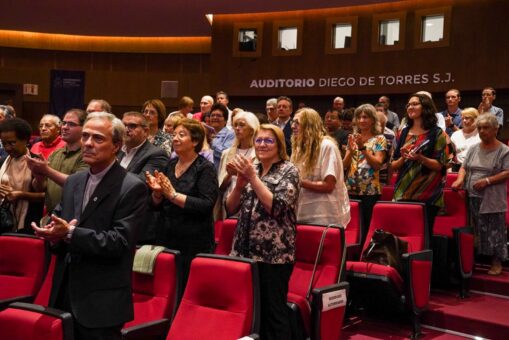
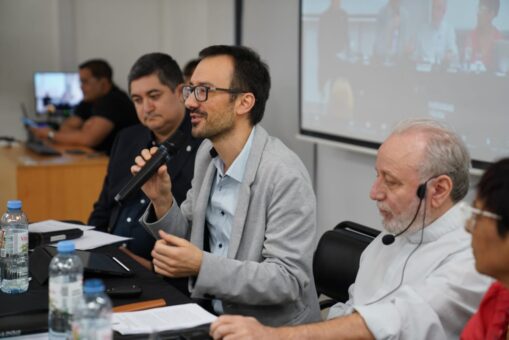 Church in its synodal journey and that of ecumenical and interreligious dialogue. The Trinitarian Anthropology Seminar was held from March 4 to 6. The study group, which has been active for 11 years, consists of 14 people, women and men, Franciscans, Jesuits, priests, religious, focolarini and lay people from different church movements. Sonia Vargas Andrade, of the Faculty of Theology, San Pablo of the Bolivian Catholic University, said: “We met to reflect on the path that a Latin American theologian should follow in dialogue with European theology, particularly Trinitarian Anthropology, taking into account what is typically ours, namely the plurality”. The seminar concluded by highlighting that the distinctive element of Trinitarian Theology – the subject of the group’s study – is precisely unity in plurality: “the other’s thinking is as good as my own, I have to think from the other and in the other”, added Vargas Andrade. Msgr. Piero Coda shared his first-hand experience and his view of the first session of the synodal assembly, in which he participated as a member of the Theological Commission of the General Secretariat of the
 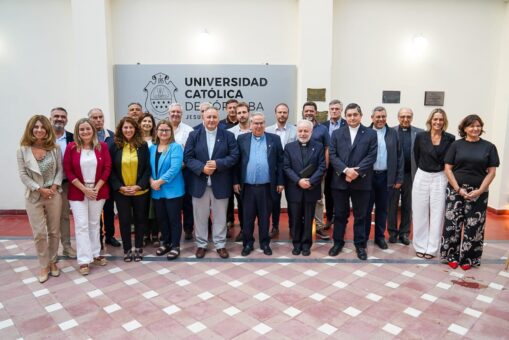 Dr. Tommaso Bertolasi, professor at Sophia University Institute in Loppiano (FI), closed the discussion by addressing the theme “youth and synodality,” stressing that young people experience the absent God: “God is experienced as the absent one, the one who is not there”. Therefore, it is necessary to consider the experience of Jesus’ abandonment on the cross. “It is right there, in death and resurrection, that God enters every human experience: from that moment on, there is no more distance from God, because God is in the absence of God”. From this thesis he deduced several implications for the church in general, especially for youth ministry.
 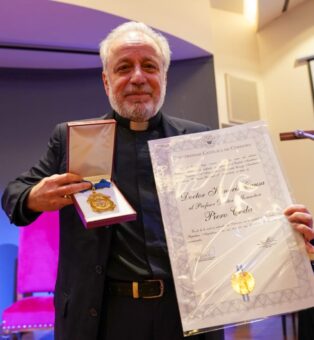 March 6 was the day of the conferral of the honorary doctorate to Msgr. Piero Coda. On this occasion, Cardinal Ángel Rossi S.J., Archbishop of Córdoba, called Piero Coda a “pilgrim of truth, who lived his life in the spirit of exodus and this has led him to leave his own ‘land’ in order to put his thought and theological insights in permanent dialogue with different cultures, with those who do not profess an explicit faith or with other disciplines”. Father Gonzalo Zarazaga S.J., Director of the UCC Doctoral Program in Theology, in presenting Coda’s contribution, said that “Piero Coda’s Trinitarian Ontology opens us to the intimacy of the Triune God and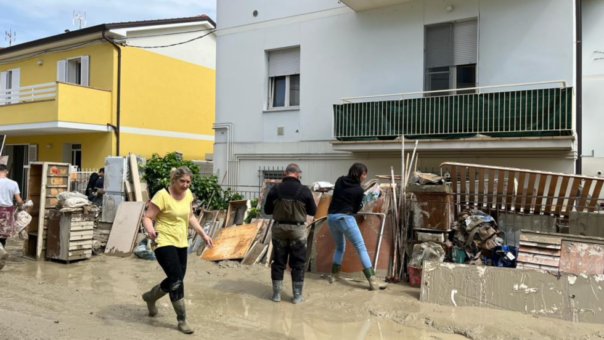
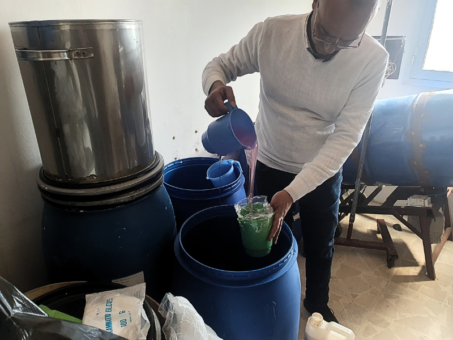 Recently, the Emergency Committee presented its 2023 Report, revealing that, from 2016 to the end of 2023, a total of €5,361,505 has been raised for emergencies in Syria, Turkey, Ukraine, Italy, Pakistan and the Philippines. In Syria, the “Seeds of Hope” project, which began in September 2018, provided socio-medical assistance to families, access to essential medicines, healthcare services and basic surgery for patients with chronic diseases as well as educational support for children and adolescents. So far, 23,170 people have benefited from the program. 6,273 people were assisted in various ways following the earthquake in Syria and Turkey, which took place in February 2023. This included financial assistance to 405 families, distribution of detergents to 490 families and of food and clothing to 712 families, along with psychological support for the elderly, adults and young people and medical assistance. In addition, Work Empowerment initiatives (enhancing individual employment efforts with microcredit incentives) were provided to 16 families and 32 people along with housing interventions for 138 families. A community livestock project was also set up to supply milk and generate income for families in a Turkish village inhabited by Afghan refugees.
  In Ukraine, the emergency situation continues to evolve as the conflict persists and the multiple needs of the population increase. Since the beginning of the war, basic health care has been provided for about 12,000 people and extraordinary economic support has been extended to over 2,000 families. Several projects to welcome and accommodate displaced families and children from Ukraine have taken place in Italy. Furthermore, a school-camp was established in Austria for 30 children from a primary school in Kiev and a protected day centre for children and mothers was inaugurated.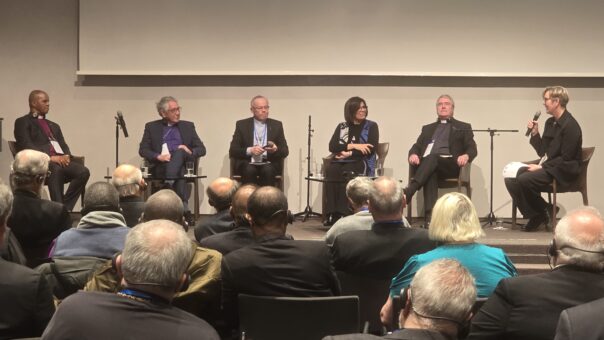
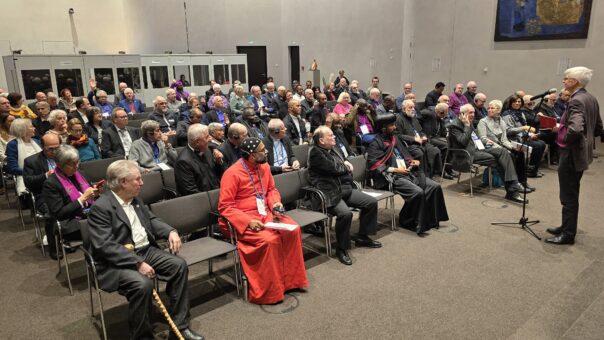 It was in Augsburg, a place soaked in history, that, at the invitation of the local Catholic Bishop Bertram Meier, the 40th Ecumenical Conference of Bishops friends of the Focolare Movement took place from 27th February to 1st March. Sixty Bishops from 26 nations participated, belonging to all the great families of Churches: Orthodox, Eastern Orthodox Churches, Anglicans, Methodists, Evangelicals, Reformed, Catholics of the Latin, Armenian and Byzantine rites. It was the highest number and most universal representation of participants so far, something that stood out for the Mayor of the city, Eva Weber, when she received the Bishops in the City Hall. From the very beginning, the relationship between these Bishops, including two women Bishops of Churches born from the Reformation, was striking. Every Church was welcomed as it is. A simple spirit of fraternity permeated the days, without disregarding the still existing wounds and points of disagreement. Everything was underpinned by that pact of mutual love that has characterized these Conferences from the beginning and that the Bishops solemnly renewed this year too, promising to share each other’s joys and crosses. This gave rise to what some of the participants described as an original kind of ecumenical synodality.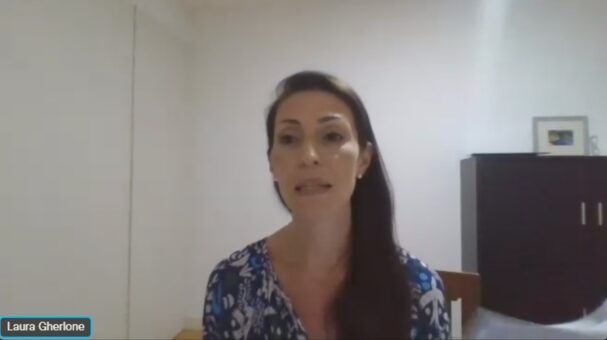
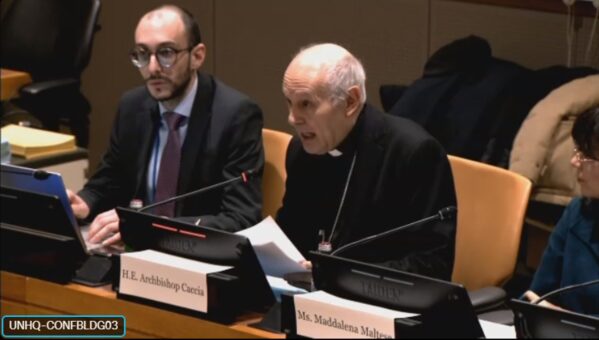 The Opening remarks by His Excellency Archbishop Gabriele Caccia, Permanent Observer of the Holy See to the United Nations, set the tone for the reflections, We stand at the precipice of a technological revolution unlike any other in human history. The emergence of AI is reshaping our world in profound and unprecedented ways. From revolutionizing industries to transforming the way we live, work, and interact, AI has become a driving force of change in the 21st century”. In recent years, digital progress has brought significant opportunities and challenges, with serious implications in all areas of society. In this era of rapid technological change, Artificial Intelligence (AI) has emerged as one of the most powerful tools with the potential to transform societies, advance peace and achieve sustainable development. However, its ethical implications remain a subject of intense debate.
 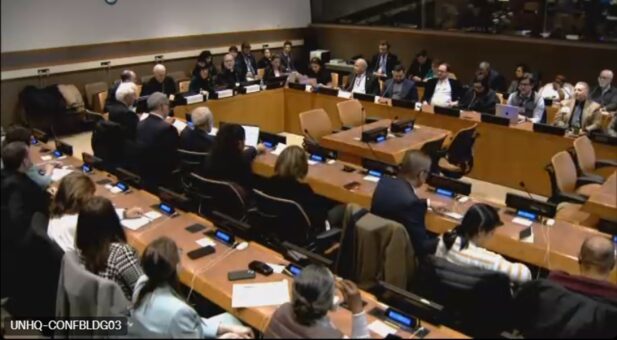 Maddalena Maltese, journalist and representative of the NGO New Humanity, moderator of the event’s panel discussion, recalled that “on January 1, Pope Francis, in his message for the International Day of Peace, raised urgent questions about AI: “What will be the consequences, in the medium and long term, of these new digital technologies? And what impact will they have on individual lives and societies, as well as on international stability and peace?” She also highlighted that Secretary-General Antonio Guterres, discussing priorities for 2024, stressed that AI will affect all of humanity, reiterating the need for a universal approach to address it. The panel discussion with multi-stakeholder dialogue on the ethical challenges posed by AI and strategies discussed the interplay between technical, ethical, political, legal and economic considerations.
 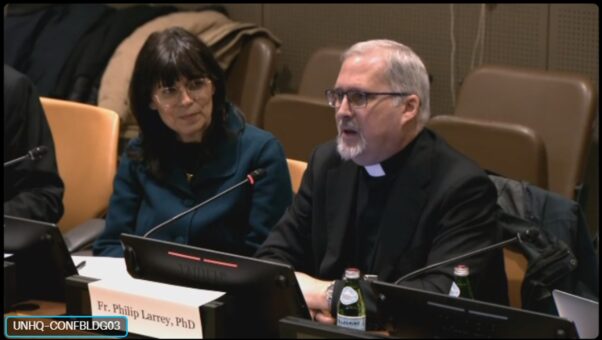 Father Philip Larrey, professor of philosophy at Boston College, former dean of philosophy at the Pontifical Lateran University, and president of Humanity 2.0. laid out a number of pressing issues starting with the theme of peace. “ChatGPT or Gemini could write a perfect peace plan, looking at the situations we are living, but would we be willing to follow its directions?” Fr. Larrey said, emphasizing the human factor as decisive in the decisions to be made, even when it comes to lethal weapons. Another central theme of his talk was the empathy that machines can demonstrate and are sometimes preferred over the human element. “Humans understand meanings. Machines don’t, as much as machines are getting very, very good at simulating what we consider meaningful,” the Boston College professor insisted, warning of the increasingly difficult challenge of discerning what belongs to humans and what belongs to technology, with machines that in the future may even be programmed to feel feelings.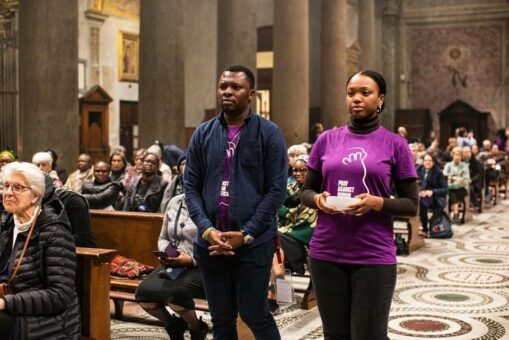
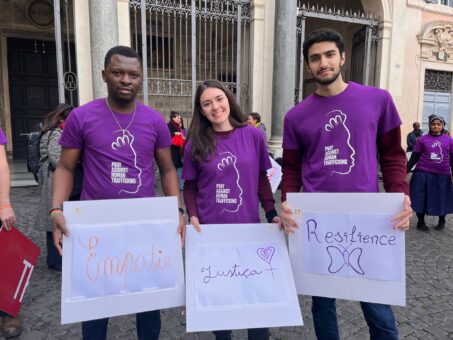 From Feb. 2-8, 2024, the Week of Prayer Against Human Trafficking took place. Established by Pope Francis in 2015, the week always includes Feb. 8, the feast of St. Bakhita, a Sudanese nun who as a young girl was enslaved, sold and abused, was a victim of trafficking and a universal symbol of the fight against this scourge of humanity. This year’s theme was Walking for Dignity. Listening, Dreaming and Acting. Thousands of people around the world gathered to reflect, pray and share their experience of engaging against this global phenomenon. In Rome, Italy, many young people from different countries-Kenya, Japan, the United States, Thailand, Albania, Canada, Mexico, France and Italy-participated in conferences, flash mobs, moments of prayer on the theme, the Angelus and the audience with Pope Francis held during the week. Among them were also some Gen2, young people of the Focolare Movement. Prisque Dipinda, from the Democratic Republic of Congo recounts, “The most significant event for me was the vigil of prayer in the Church of Santa Maria in Trastevere, in the heart of Rome. It was an important moment before
 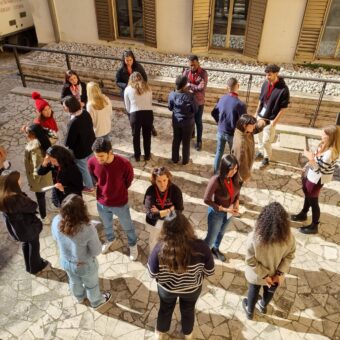 God, the emotion in sharing it together with other young people who carry the challenge of human trafficking in their hearts. But also a responsibility to be part of the protagonists against this phenomenon. I think for the young people who attended it also served to become aware that so many in the world suffer, for various reasons: economic, political, religious. It was an opportunity to reflect and start together to design something against suffering.” Among the Gen2s present were Michel Haroun, a French-Lebanese and Miriana Dante, an Italian. “I have never had a particular commitment against human trafficking,” says Michel. “I have some experience in serving migrants who arrive in my city or at the borders between states. For example, a few years ago I was in Trieste (Italy), the arrival point of the Balkan route through which migrants from so many parts of the world devastated by conflict arrive in Italy. But I was not sufficiently aware of the fact that refugees, before arriving in Europe-but it is also valid for Latin America, the United States or other parts of the world-suffer violence and abuse in an organized manner.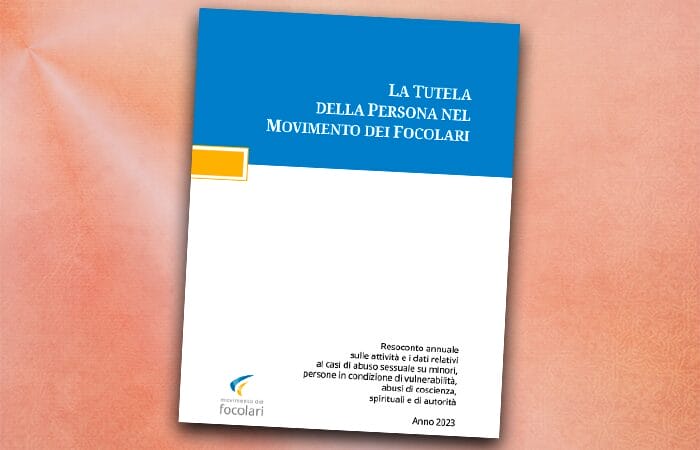
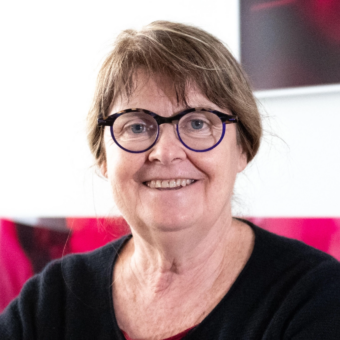 A: I believe this report represents a real step forward. In fact, the last report was criticised, mainly because the places and dates of sexual abuse were not mentioned. The new report covers cases disclosed in the last 10 years and adds these clarifications: it is stated that sexual abuses were carried out on all continents (about 20 countries), with a peak of cases between 1990 and 1999, as well as during the decade before 90 and after 2000. The offences sometimes are repeated over several decades, suggesting that these are multiple repeat offenders whose abuses have continued. Some offences happened and were dealt with around 2020, indicating that people abused were able to report abuse almost in real time, which is progress. All communicated sexual abuses were carried out by men. The opposite is true for abuses of authority, which in 77% of cases were committed by women, which is in proportion with the higher number of women among those belonging to this Movement. The report also contains a detailed and clear section on the measures implemented during the year, particularly regarding formation. It remains to be understood what the root causes of these abuses are. Beyond preventive measures and sanctions, further work should be done to identify the systemic causes that could explain these figures, in order to put in place a strategy that would prevent them. Q: In this second report, the people who abuse are identified according to precise criteria set out in the Communication Policy recently published by the Focolare Movement. What do you think of this decision? A: This is an ethical conflict. On the one hand, it is a matter of believing the experience of the people abused and taking the complaints they make seriously, as well as quickly putting measures in place so as to protect them. On the other hand, it is a question of respecting the presumed innocence of the alleged abusers, of not defaming them when no final criminal conviction has been pronounced. The issue is complex and finding a satisfactory solution will no doubt require a lot of listening and dialogue. Q: The UNESCO Chair on child abuse that you coordinate came about because you came into contact personally with a case of child abuse of which you knew both one of the people abused and the person who abused. It was a case that happened in the Catholic Church in France. In this case, the social or religious community is defined as a ‘secondary victim’. What does this mean? What are the wounds that people carry, how can they be healed at a social and community level? A: Yes, in fact, this chair was set up as a result of being in contact with a person who had been abused. A contact that left a deep mark on me: I was profoundly affected by this suffering, and my desire to do something came from this. First and foremost, abuse affects the person who has been abused, who often suffers lasting psychological consequences. Sometimes, the opening up about the facts can bring out a great vulnerability in this person, which requires specific accompaniment. In turn, this also affects the person’s relatives, such as their spouse, their children, but also their parents who feel responsible for having entrusted their child to an institution that did not protect them. The devastating effects also have an impact on the entire community, as members are often unaware that within it a repeat offender was concealed, a person with whom they may have had a bond of closeness, of friendship. We may ask ourselves: why didn’t I notice anything? Another aspect concerns the bond with the institution that may have protected the abuser, sometimes in good faith, producing in people a sense of betrayal and distrust. Finally, the community may also become divided, depending on their divergent analyses, between those who take refuge in denial, and those who want to fight to prevent these things from happening again. Rectifying all of this requires a wide range of measures: it is essential to take on the responsibility of accompanying the people who have been abused and their families, but it is also necessary to restore trust in the institution that has shown its weaknesses and where there is a sincere willingness to learn from its past mistakes. It’s the actions that matter in making this happen: the institution must promote transparency by communicating very precise information, put in place clear procedures, create places for listening, establish reparation procedures and, for communities, spaces for dialogue where even opposing opinions can be exchanged. Q: The Focolare Movement is a worldwide organisation, including people from different cultures and religions who are subject to different legal systems and adopt different lifestyles. How is it possible to implement anti-abuse practices in such a multicultural and diverse environment? A: The consequences of child sexual abuse exist in all cultures, they are universal. In addition to the ongoing psychological and social impact, those who have been abused may have biological ongoing effects, such as increased stress hormones, altering the expression of certain genes and brain morphology and brain functioning. These dysfunctions continue to be present throughout the survivor’s life and may be passed on to the next generation. So it cannot be said that there are cultural variations in the severity of the consequences on those who have been abused or that there are cultures where these people suffer less: always and everywhere, it’s devastating. It is therefore necessary to put in place measures for prevention, but also for reparation all over the world. One can see that awareness of the seriousness of these situations is increasing: for example, in the Catholic Church, national enquiry commissions have been set up in many countries in Europe, North America, Latin America, but also in Australia, India and South Africa. Although suffering does not vary, what may vary is that people resist in denouncing the facts and their ability to put in place protective and remedial measures. This may be related to the fact that in some cultures talking about sexuality is taboo. The first step is to make people aware of the consequences of abuse: there are already programmes promoted by various associations that take into account the way sexuality is considered in different cultures. For example, proposing that those who listen to the suffering of people who have been abused and belong to the same culture can understand them better. This can make people want to do something about it. Prevention can also be targeted directly at children, through education about their rights: again, there are programmes, for example, based on songs. Another thing that varies is the ability of countries and institutions to take measures of protection and reparation. A respectful and non-stigmatising dialogue with those who commit abuse is the way forward: this will enable everyone to understand the seriousness of the abuse, but also to find culturally specific ways to enable people to speak up, to implement processes of reparation and to educate members of the community. Q: Both within the Focolare Movement and also in other contexts there are those who express the conviction that the time has come to move forward; that is, that it is not necessary to continue talking only about abuses, but to focus on the ‘mission’ of the Movement and on what beautiful and positive things are being generated in the world by the living out of this charism today. What is your opinion on this? A: What do we mean by ‘mission’? Is it not to advance towards universal fraternity, towards a culture that puts the suffering of the weakest first, a culture of dialogue, openness, humility? It seems to me that the fight against all kinds of abuses is precisely a way of implementing this desire, putting those who suffer in the first place. Helping to heal the wounds of those who have been abused is a way of going towards universal fraternity. This also implies accompanying the people who have abused in order to prevent reoffending. Acknowledging one’s mistakes, one’s vulnerability, in order to create solutions, taking into account the opinions of experts in this field is precisely a way to build a culture of dialogue. Fighting with determination against abuse and accompanying those who have been abused are right at the heart of this ‘mission’. Therefore we don’t need to choose between the fight against abuse and ‘mission’, because this fight is a central element of ‘mission’. In today’s context, this is a priority which is painful but necessary.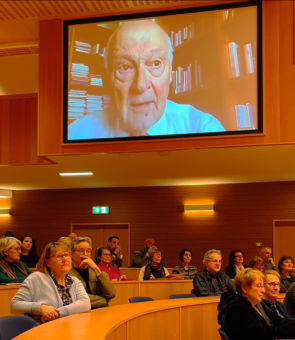
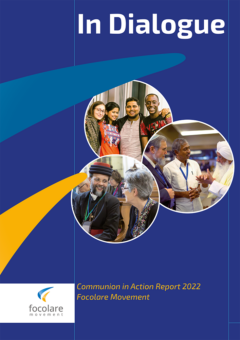
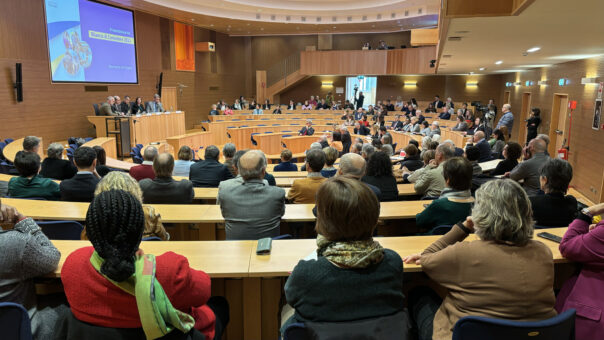 the 20th of February 2024 at the General Curia of the Society of Jesus in Rome. The document, translated into five languages (Italian, English, French, Spanish and Portuguese), is an overview of the activities and initiatives promoted by the Focolare in the year 2022, a narrative not only of the spontaneous sharing of goods, but of experiences and initiatives lived worldwide, which are inspired by and for the dialogues, and which are being specifically illustrated in this publication: the dialogue between Ecclesial Movements and New Communities in the Catholic Church; the one between the various Christian Churches; the dialogue between different religions, with different cultures, with Institutions, and in engagement with the many global challenges. Among the speakers at the presentation press conference, in the presence of Margaret Karram and Jesús Morán, President and Co-President of the Focolare Movement, were Monsignor Juan Fernando Usma Gómez, Head of the Western Section of the Dicastery for the Promotion of Christian Unity, Dr. Giuseppe Notarstefano, National President of Italian Catholic Action, Dr. Rita Moussallem, head of the Focolare’s Center for Interreligious Dialogue, and Giancarlo Crisanti, Focolare’s general administrator. Participating via internet were Monsignor Athenagoras Fasiolo, Bishop of Terme and auxiliary of the Holy Orthodox Archdiocese of Italy, and Prof. Stefano Zamagni, economist and professor of Political Economy at the University of Bologna. The session, which was moderated by journalist Alessandro de Carolis, was a true exchange of reflections and emphasized how terms such as budget and communion which seem to be poles apart, accounting not only for numbers but also for life.
 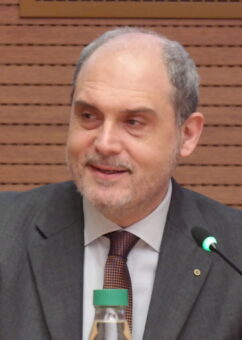 “The social budget has been a great opportunity for us,” said Dr. Notarstefano, national president of Catholic Action, among the first ecclesial realities to draw up a mission statement, “and has encouraged us in this urgent pastoral conversion to which we are called by the Pope. It was also a way to begin to reflect on how to communicate this associative life better, (…) to look at ourselves, with transparency, to give an account to the outside, but to communicate it better, to put it in common.”.
 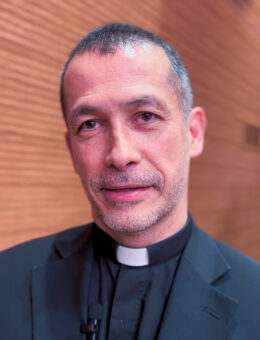 According to Msgr. Usma Gómez, in light of the current scenario that seems increasingly fragmented, in talking about the path of unity among the Churches, taking stock as Christians “means looking at God’s plans, our plans, and the plans of the world. (…) God’s plans would be to preserve the unity of the spirit by the bond of peace,” he continued, “but we see that in the world, war is the plan that is taking hold. It is possible to develop communion in differences, (…) but this reconciled diversity calls us to make peace, the heart of Ecumenism is the heart of peace.”.
 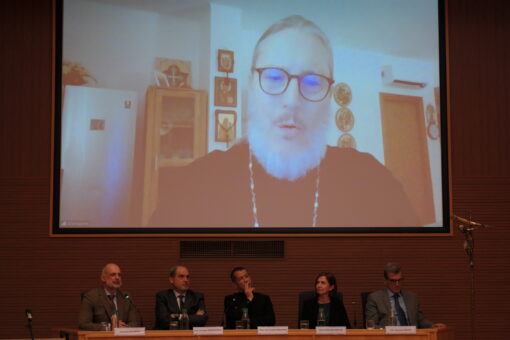 An encouragement, then, to promote paths of fraternity in a network, in a synodal style and specifically, in light of the chosen theme, to do so through a “method” that can bring closer especially those who are mostly unbelievers. “Taking stock of the communion of a Movement that is so open, so able to bring others to understand that dialogue does not take away, but adds, enriches, is very important,” , said Monsignor Athenagoras Fasiolo bishop of Terme and auxiliary of the Holy Orthodox Archdiocese of Italy, who, in addition to emphasizing the Focolare’s great commitment to the path of unity among the various Churches, reflected on the prophetic role that different faiths can play in the world, without falling into the trap of ideologies: “if as faiths we manage to be prophecy then we manage to awaken what is best in the human heart.”.
 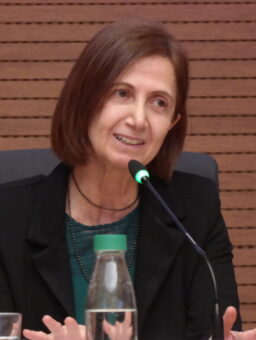 And it is precisely “life and prophecy” that are the two tracks on which the Focolare Movement has proceeded in these 80 years of history also on the path of interreligious dialogue, as Dr. Rita Mussallem stated in the hall; a path that has led the reality founded by Lubich, to come into contact, in so many countries, with people of various religions, creating in the appreciation of diversity and reciprocity, a common ground where they can relate with the spirituality of unity, get to know each other and “give,” said Moussalem, “the willingness to learn from each other, the sharing of sorrows, challenges, hopes and also the shared commitment to work for peace, for good, for fraternity. In a world torn apart by polarizations where religions are too often instrumentalized, in talking about the concept of peace, “authentic dialogue,” she continued, “is a very helpful remedy (…) because it makes you discover and see the humanity of the other, it disarms you.
 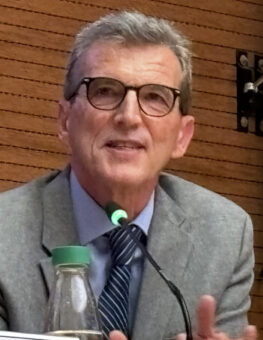 The “person” is thus the beating heart of a circular path that has given rise, over time, to the many activities to which this text bears witness. “When we speak of a ‘budget,'” said Giancarlo Crisanti, “one expects a lot of numbers, but in the Communion in Action Report ‘ there is much more narrative and the the numbers don’t include the people who make these activities possible .” “The Budget,” said Crisanti, “highlights how this communion of goods is able to realize initiatives, projects, works that go in the direction of dialogue (…), that help the world to dialogue a little more.”.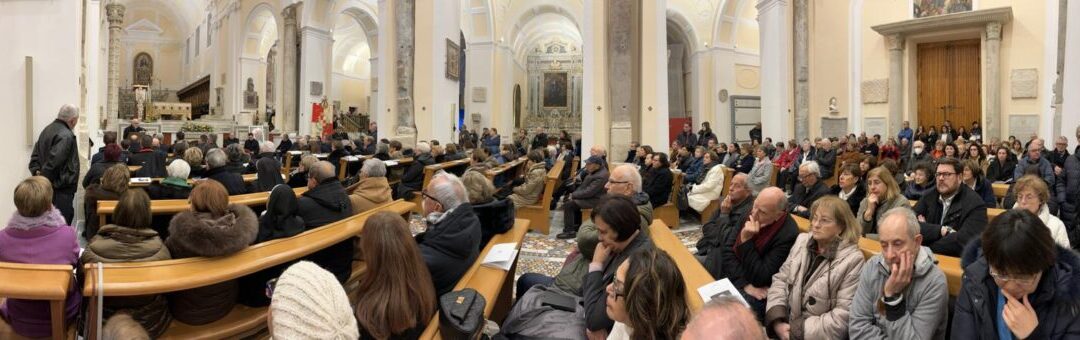
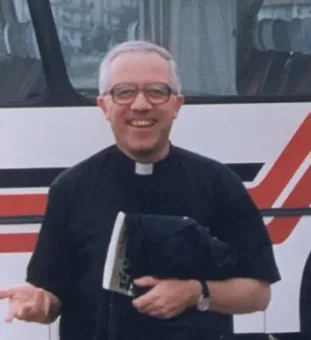 Fr Cosimino Fronzuto was an Italian priest who was born in Gaeta in 1939. He died at the age of 49 in 1989 after an intense life spent serving his neighbor, the needy and the society of his town. He lived near the sea, but disliked swimming and was afraid to go deep. One day, as a child, wanting to overcome this difficulty, he dived in and, to show that he had touched the bottom, he placed his hand in the sand, picking up, to his amazement, a small iron crucifix, which he then carried with him all his life. In 1963 he was ordained a priest and began service as vice-rector of the local diocesan seminary. He came in contact with the spirituality of unity and joined the Focolare Movement. In 1967 he was appointed parish priest of St. Paul the Apostle Parish in Gaeta, a position he held until the last days of his life. In those years the Parish Movement, an expression of the Focolare Movement in the local Church, flourished and generated a lot of fruits especially among the young people, who today are engaged in the city as priests, in the family, in political life and in various civil and professional spheres, in the different realities of the Focolare Movement and who continue to be very active in parish life as well. During the pastoral ministry he exercised in the parish, with his style full of love and attention to all, especially to the least ones (single mothers, ex-convicts, drug addicts, evictees, runaways), he set up the community by simply, but strongly and decisively, aiming only to live the Gospel in all situations and in the most diverse realities. Thus he did not lack opportunities to take a stand even against so many social realities that were far from a truly human and Christian dimension.
 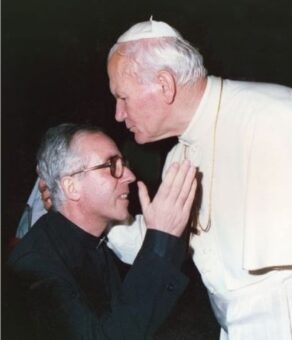 He wrote in his diary, “We observed that during catechesis there were children who were quite unkept, undernourished, I also remembered that in that same family the older children had received neither Confirmation nor Communion, nothing at all. We were around the middle of March, and I thought, if we don’t get them now, we won’t get them again. So I went to that house and realized (it was about 12:30 p.m.) that pasta was simply being cooked and that there would be nothing else for everyone to eat. I noticed that although the head of the family was a small businessman, even the glass was missing from the door that hung over the balcony, and in this room, where the glass was missing, about ten children were sleeping. Immediately I began to talk about catechism, but I also tried to pay attention and look around. Then in the evening, after adoration, I spoke to the community about this situation. As I too became aware of it, I collected all the data: economic instability, seizure notices, children’s health problems. Then the morning was spent thinking only of this family, to see according to different aspects how things were, sharing the work, securing the food and, at the same time, keeping hold of the grown-ups so that they would receive real catechesis. One evening I realized that I had to make a proposal to everyone. Within myself I had decided, but what is the worth of my decision as a parish priest? It could possibly be valuable, but I wanted the decision to come from God, thus, a decision made in unity with the community which gave me the assurance that it was God Himself working. So I proposed to make available to this family approximately two million (liras) we had in the parish to solve the situation until they were able to go back to work again. I can say that from the very first moment everyone was supportive. That was the beginning, then this situation had several developments. Yesterday, I attended a condominium meeting in which they had decided to take away from the father the work that he had started and had not finished. I did everything so that he would complete it and could also have some money. The journey is still going to be very long, it’s more than a month that we have been beside him, close to him, and he says, “My desire to live is coming back, my desire to live is coming back.” But the intervention has not been operated by me alone, the intervention has been a bit of a collective one, many people are continuously bringing things that are needed, however, we are not so much concerned about the lack of things, but we are concerned about not making people lack love, because they have been people who have obviously been unloved, they have in fact been trampled in certain rights(…)”.
 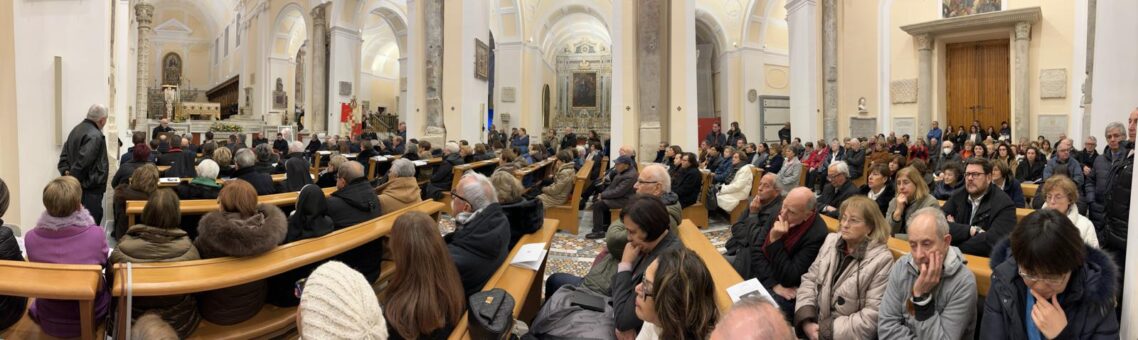 On Sunday, Jan. 21, 2024, the Archbishop of Gaeta, Msgr. Luigi Vari in a cathedral packed with civil and religious dignitaries and the faithful, began the cause of beatification of Don Cosimino Fronzuto.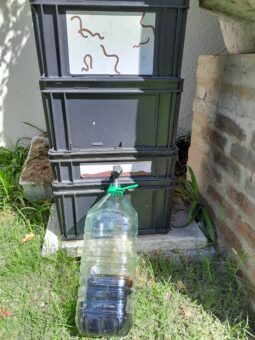
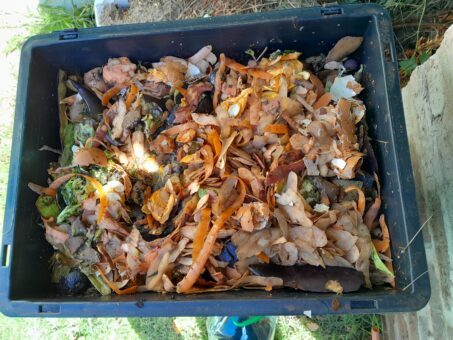 Millions of tons of waste are produced around the world every day. What becomes of this waste? Some is recycled and has new life. Some ends up in landfills or in waste-to-energy plants to produce energy. Yet before throwing away our food waste, have we ever wondered about other options? This is what some members of the Focolare community in Uruguay asked themselves and so they got involved in composting. Maria Florencia is a focolarina from Montevideo in Uruguay where she teaches integral ecology. She said, “I try to live ecology in my daily life. However, I realized that something can always be improved and that something important was missing in how we handled food waste at home: we weren’t making compost. I realized that to undertake composting would require a collective effort and so I tried to involve all the inhabitants of the house”. Soil organisms use plant and animal waste or organic matter derivatives as food. As they break down these wastes, excess nutrients (nitrogen, phosphorus, and sulphur) are released into the soil in forms that can be used by plants. Furthermore, the waste products generated by microorganisms contribute to the formation of
 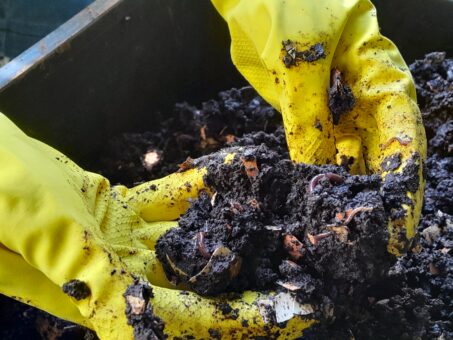 soil organic matter. Composting is therefore a process of decomposition of organic materials that has a high content of useful substances to improve soil characteristics without causing damage to the environment. 30 kgs of compost can be obtained from every 100 kgs of waste and organic materials. Alternatively, vermicompost, an organic product created through the bio-oxidation of organic matter with the assistance of earthworms, is also a sustainable option.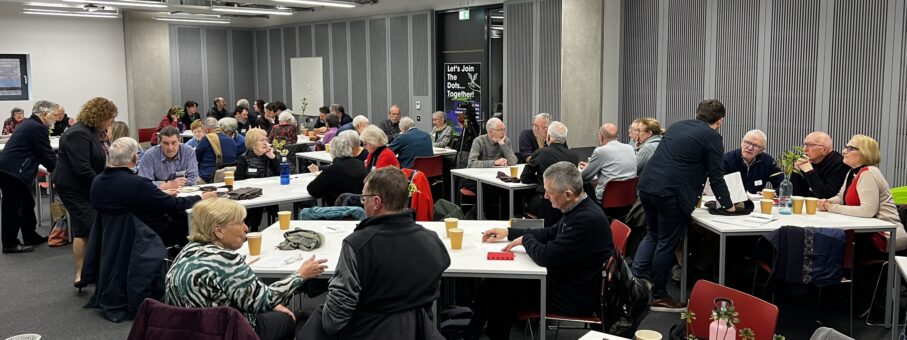
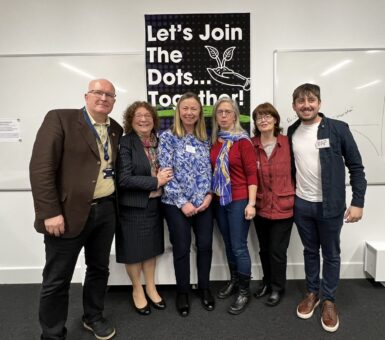 Dr. Lorna Gold, president of the global “Laudato Sì Movement,” – born after Pope Francis’ encyclical of the same name on caring for the Common Home-in her speech addressed thorny issues including the slow progress of the elimination of combustible fossil fuels while at the same time instilling a sense of joyful hope in all present. Reflecting on the COP28 (28th United Nations Climate Change Conference) document, she pointed out that it was important to have confirmed that the primary causes of climate change are fossil fuels. “The genie is out of the bottle now and there is no going back,” she stated. She then spoke about the importance of the Fossil Fuels Non-Proliferation Treaty. The use of the term “nonproliferation,” usually linked to weapons of mass destruction, is in fact related to the risks the world faces from the continued use of fossil fuels. In addition, Lorna Gold was keen to highlight the importance of faith groups as major stakeholders in the planet with billions of dollars invested in global markets, and owners of 12% of the world’s land. “People of faith,” she reiterated, “are in a key position to change the narrative and rewrite the future.”. It is no coincidence that Lorna Gold has just been named CEO of FaithInvest, an organization that focuses on mobilizing all faiths to put their resources, particularly their financial investments, to help move the economy towards a more sustainable one. The event was a powerful testimony for civil society and religious groups in Northern Ireland, with people from the interreligious forum, the Baha’i community, the Gaelic Athletic Association foundation, the Mothers’ Union and Trocaire (Caritas in Ireland), as well as several nonreligious groups such as Keep Northern Ireland Beautiful in attendance. “It is very unusual to find this sort of gathering of groups united for a common cause,” said Lorna Gold, “perhaps it is precisely the climate issue on which we all agree.”. Some testimonies from participants. Georgia Allen and Glen MacAuley, young people of Fridays for Future NI every Friday in 2023 went on strike in front of Belfast City Hall and felt it was important to attend the meeting. “It was positive and interesting, with an inspiring speaker,” said Allen. “It was a call to action, to do something concrete together. At the end they wanted to take a picture with Lorna Gold as a symbol of participation in the climate strike with her! John Barry, professor of Green Economics and Policy at Queen’s University, said, “In this time of climate and ecological emergency we must all come together recognizing that it is already late and worse than people think, but not without hope. Faith communities have an important role to play, so it was good to see such an interfaith gathering of people of faith willing to roll up their sleeves and start repairing our broken world.”.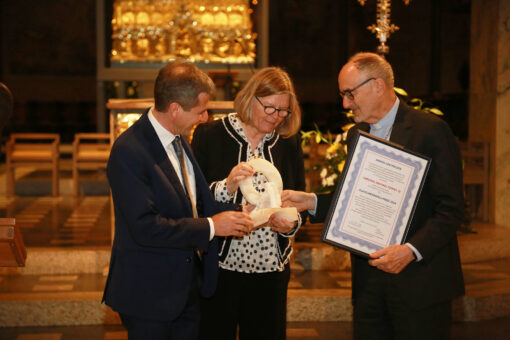
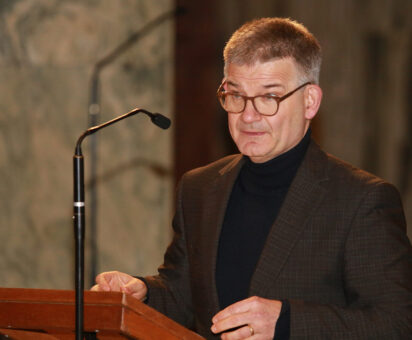 Prof. Dr. Johannes Wallacher, Rector of the University of Philosophy in Munich, presented the award. In his speech, he underlined Card. Czerny’s contributions to theological development and his dedication to implementing the Social Doctrine of the Church in socio-political contexts throughout various phases of his life. Wallacher also spoke of the “vision of global fraternity as a sign of the times and a central key to finding answers to the needs of our times”, a vision to which Czerny is committed and is an inspiring model.
 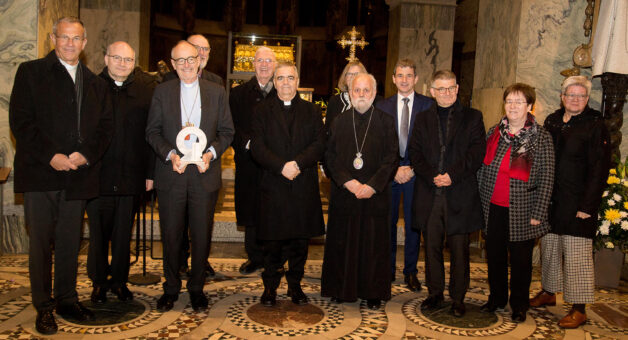 In its decision, the jury emphasized Card. Czerny’s tireless advocacy for human dignity and rights, his call to “accept differences and to learn from other cultures” in order to foster “a more just world”, a commitment praised by the Apostolic Nuncio to Germany, His Excellency Msgr. Nikola Eterović. Mons Helmut Dieser, the current Bishop of Aachen said, “The fraternity of all people is the guiding theme of Pope Francis” and he referred to Cardinal Czerny as, “a supporter and a pioneer of this theme”. Margaret Karram, President of the Focolare Movement, sent a message to congratulate Card. Czerny in which she highlighted his significant efforts in building a culture of unity and dialogue, recognizing him as an ally in the effort to mediate conflicts and to promote mutual solidarity.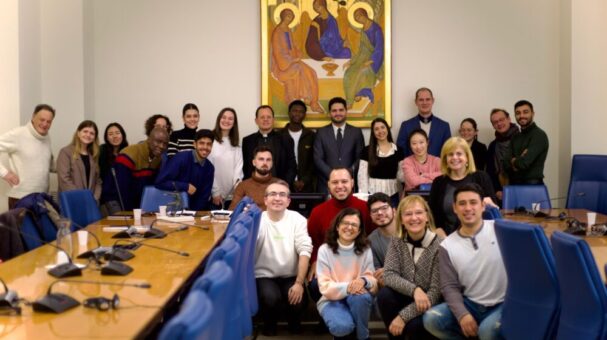
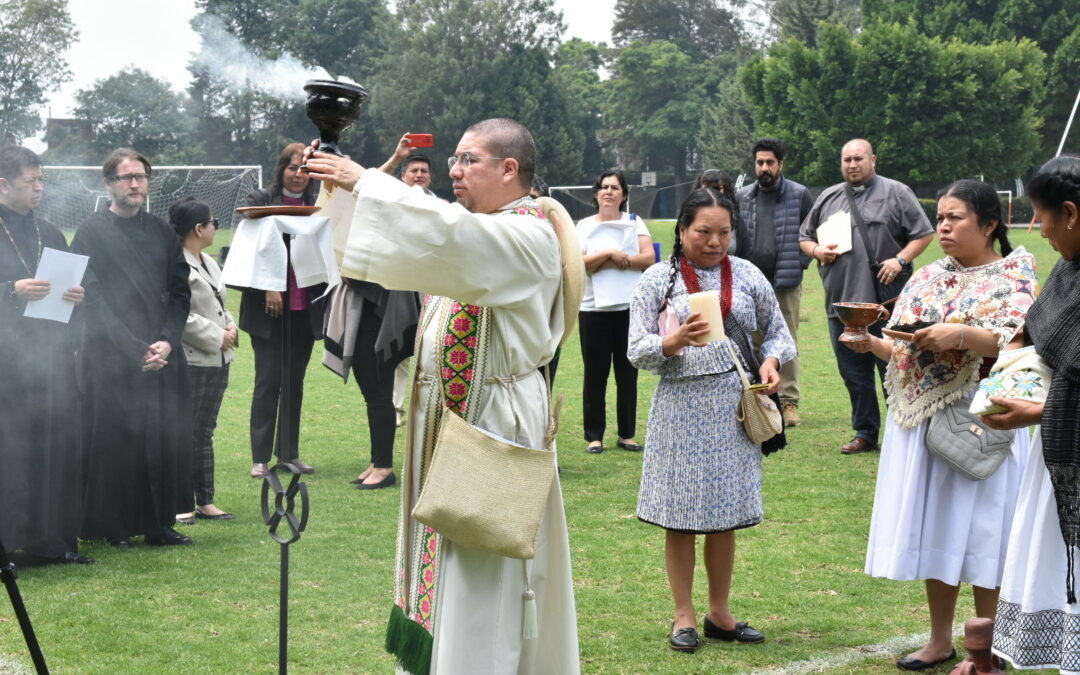
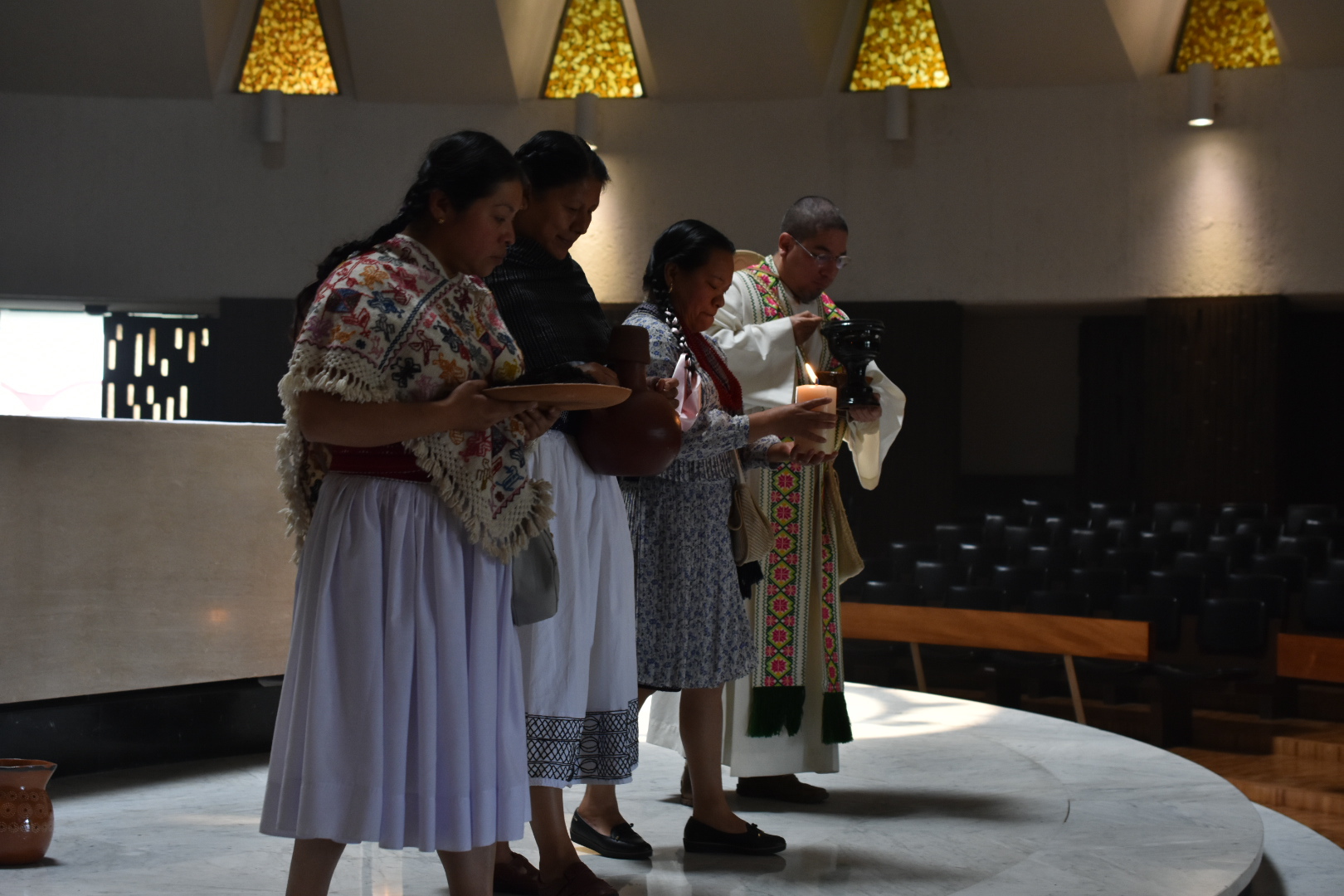 This is well known by the friends of the Focolare Movement community in Mexico City who, a few months ago, organized a day of dialogue among Christians of various Churches linked to the World Day of Prayer for the Care of Creation in collaboration with the Integral Ecology Commission of the Archdiocese of Mexico City. After an initial time of prayer in the beautiful chapel of the Archdiocesan Minor Seminary, participants went on an ecological walk led by some women from different indigenous communities. Indeed, these communities have a deep relationship with Creation, which they manifest with symbols, songs and prayers in their languages. Particularly, it became evident how water is an essential element for the life of all living beings without distinction. And the symbol of flowing water – an ecological, life-giving and synodal image – was echoed when, thirsty after the walk, the leaders of the Churches present – Anglican bishops of Mexico and priests of the Orthodox Church of America – took earthenware jugs to serve drinks to each of those present, also in small earthenware cups.
 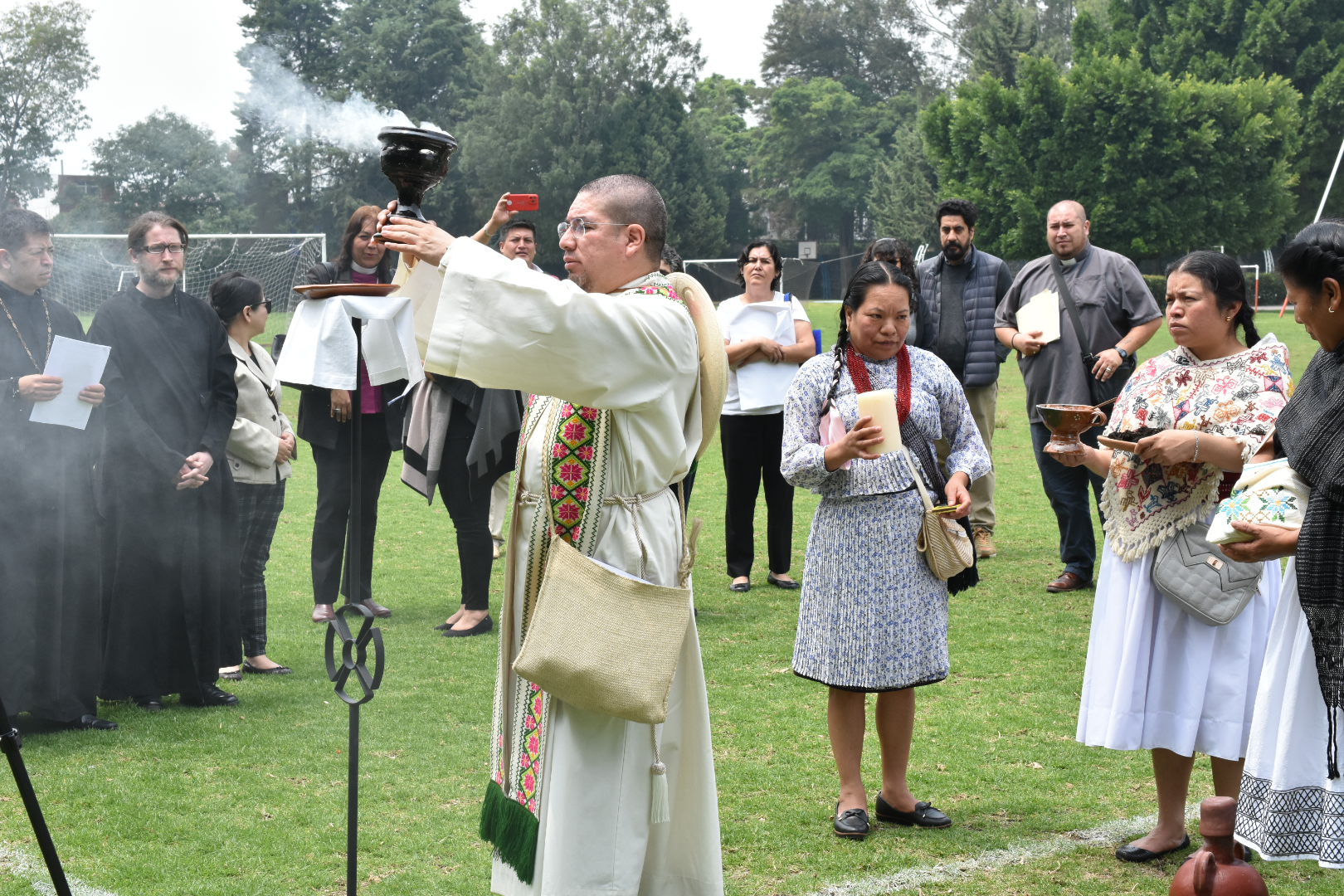 The concluding fraternal agape was a time of exchange and closeness, sharing of dreams and possible future plans. Among those present were the Anglican Primate of Mexico, the Catholic Bishop of Mexico City, an Anglican deaconess, some members of the Antiochian Orthodox Church, Catholic priests from the diocesan offices for Ecumenism, Youth Ministry and Care of Creation a group from the Community of Sant’Egidio, some members of the Commission for Integral Development of the Catholic Bishops’ Conference of Mexico, the Mexican Institute of Social Doctrine, and the Pastoral Care of Indigenous People. It was a moment of great unity in which everyone could see that it is worthwhile to spare no effort to help generate a dialogue of life in Mexico and everywhere.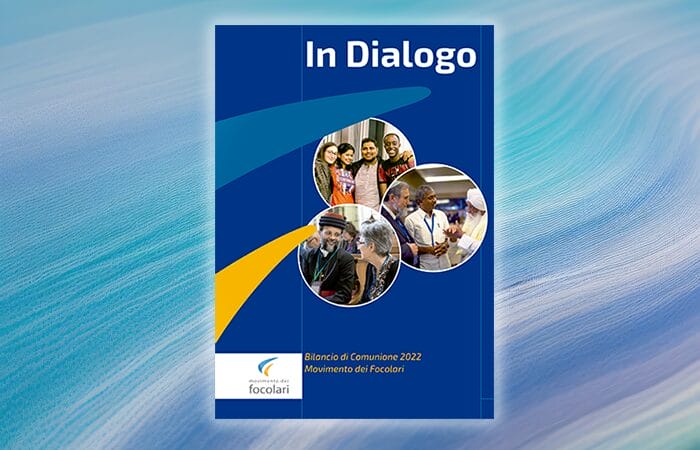
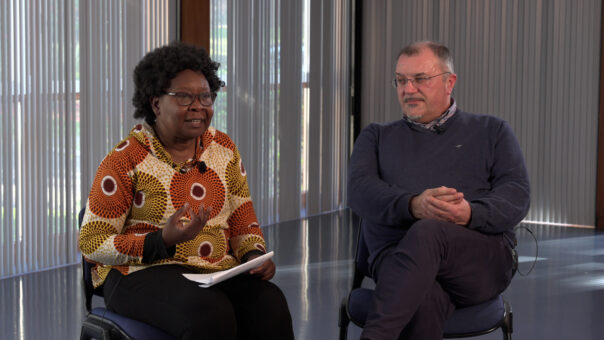 all the members of the Movement, with gratitude for the fruits that the life and work of many people around the world continue to generate; and with gratitude to God for what He has done and continues to do. It is also addressed to those who would like to know more about us and actively collaborate for a more fraternal and peaceful world. This is why we chose the standard, and in this case perhaps somewhat unusual, name of ‘Communion in Action Report’ because we feel it best expresses our experience of walking together towards a united world. This is our second Mission Report’. It refers to the activities supported by the part of the communion of goods which is shared internationally and to the financial data of the Focolare Movement’s International Centre for the year 2022. This Report follows that of 2021, which highlighted the various activities that the communities of the Focolare Movement carry out worldwide in all fields and aspects. For 2022, we focused on a more thematic document, taking the specific perspective of Dialogue and trying to offer a glimpse of what we seek to bring to society on the path towards fraternity, towards that unity in which diversities can be enriched and give rise to harmonious collaborations.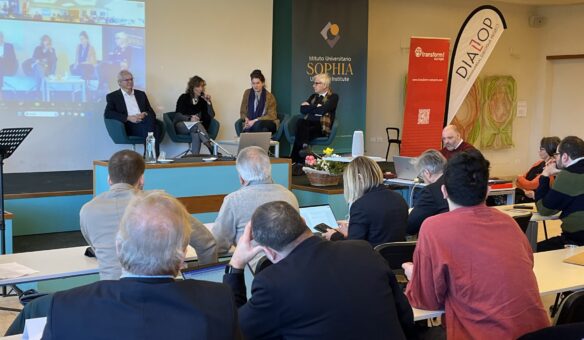
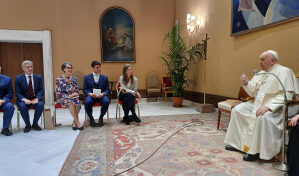
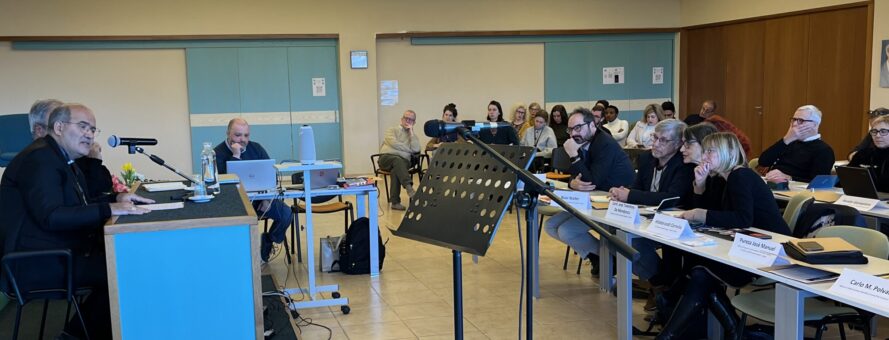
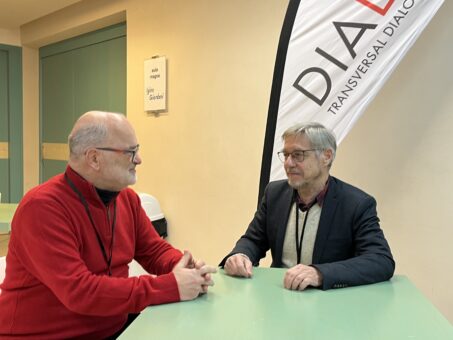
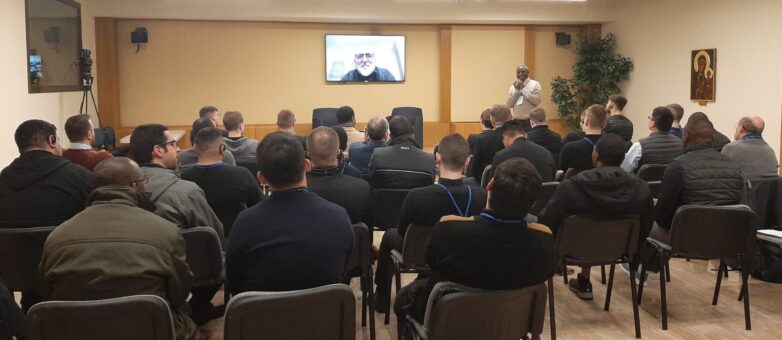
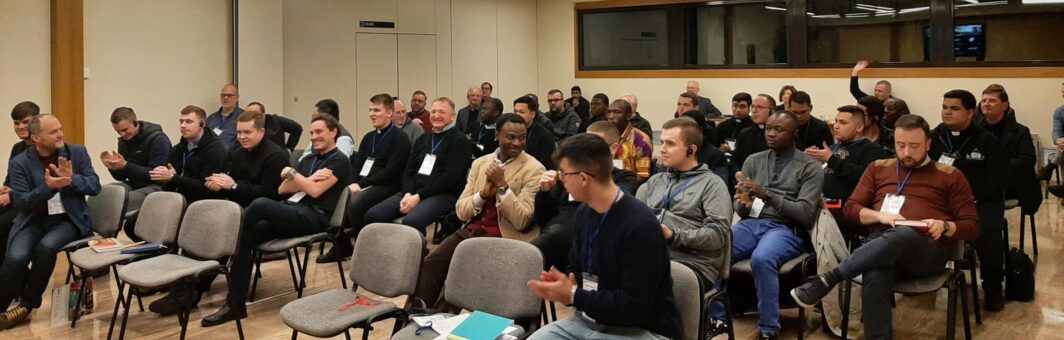 How can we become roots of joy? This is the question Pope Francis asked us on the eve of WYD in Portugal, and which he also posed to us in the meeting for seminarians, deacons and young priests held in Castelgandolfo (Rome) from Dec. 26-30, 2023, with the intention of deepening the contribution of the Focolare Movement’s spirituality of communion, to the Church’s synodality and missionary spirit. I am experiencing for the third year in a row this appointment of the Christmas season and for the third time I was surprised by the beauty of coming together; coming from different places we found each other, met and recognized each other. It is always an exciting experience to reconfirm the beauty of our spirituality centered on unity and fraternity among all, so that it is not just a slogan but an experience, an embodied life experience.
 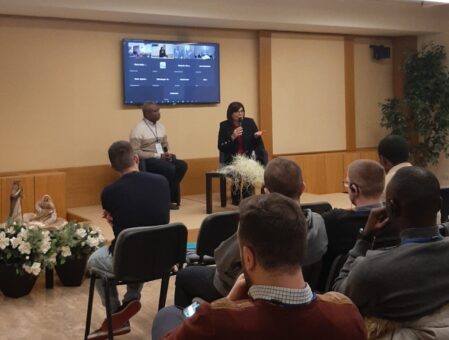 A moment experienced with particular emotion was the meeting with Margaret Karram, President of the Focolare Movement, who wanted to listen to our reactions on the theme she proposed this year, “Called and Sent”; we felt welcomed and listened to in our different experiences. In particular, Margaret shared with us how she felt about the outbreak of violence in the Holy Land. Strong was her invitation to witness to God’s love by making us neighbors through true words that flow from a deep inner life and the authenticity of a life lived because only those who have experienced love can love, only those who have experienced failure and forgiveness can become credible witnesses.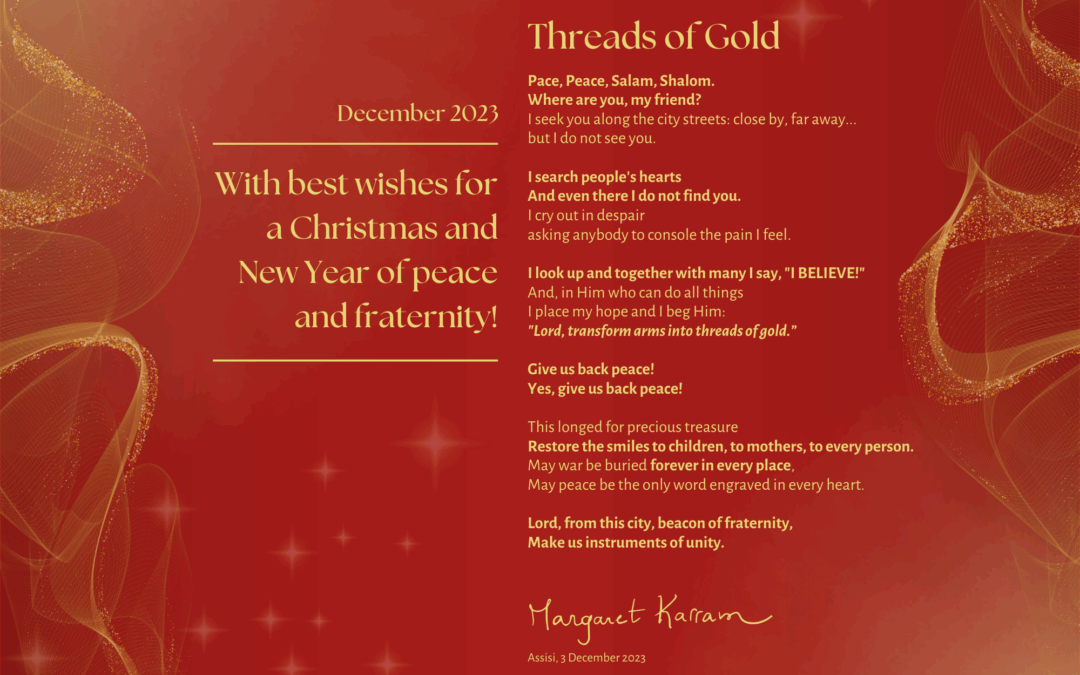
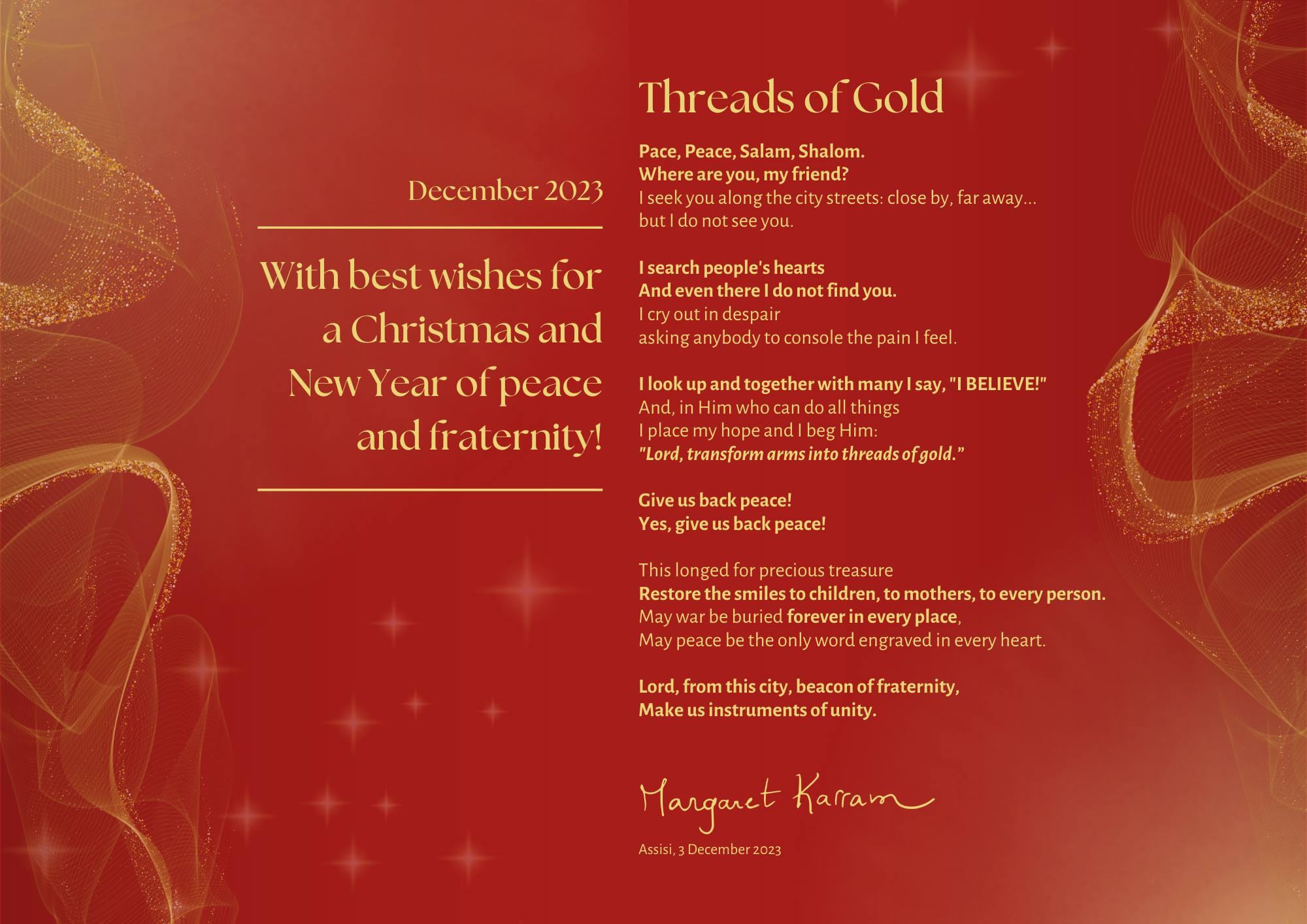
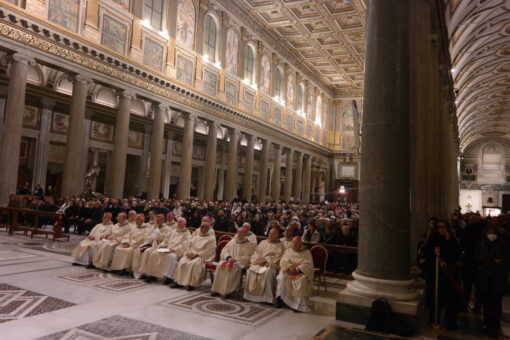
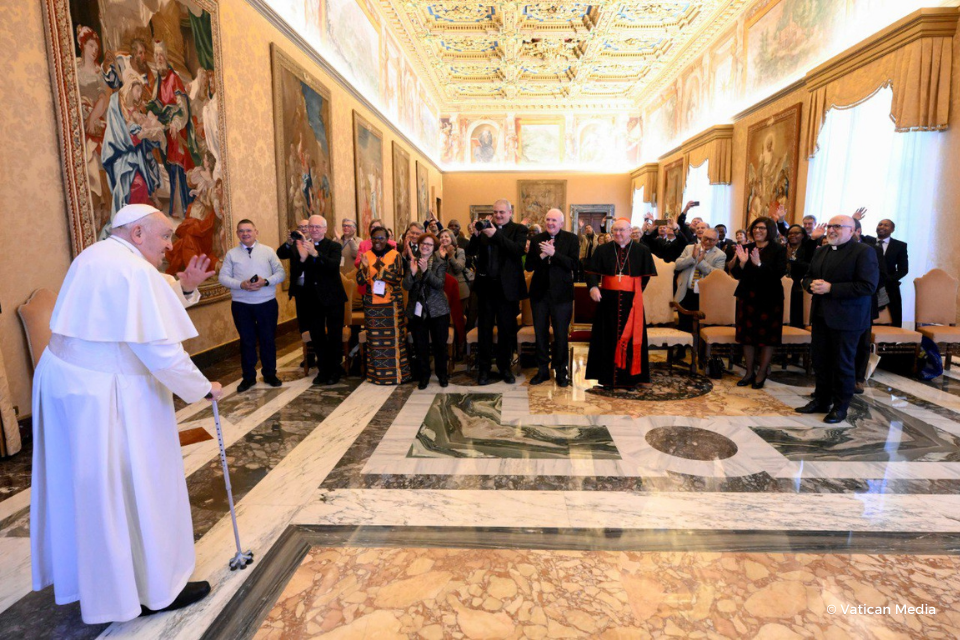
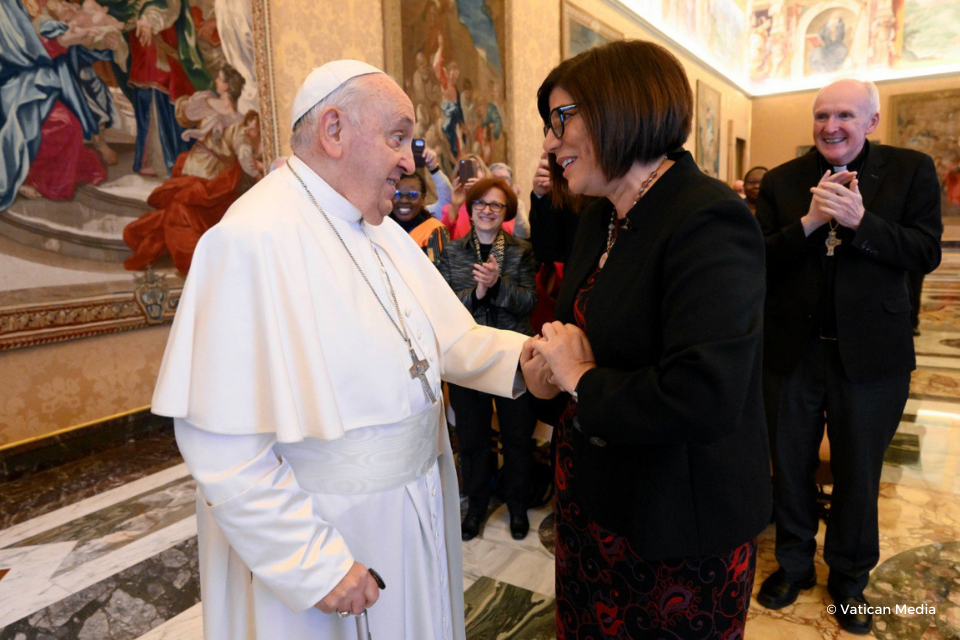 the eightieth anniversary of the founding of the Focolare Movement, also known as the Opera di Maria. Thank you! It coincides with the day on which the Servant of God Chiara Lubich decided to consecrate herself fully to the Lord. From an inspiration she received in an entirely ordinary context of life – while she was going shopping for her family – a radical act of self-giving to God arose, as a response to her call that she had felt, sweet and strong, in her heart. It was 7 December 1943, in Trent, at the height of the war; on the very eve of the Solemnity of the Immaculate Conception, Mary’s “yes” became Chiara’s “yes”, generating a wave of spirituality that spread throughout the world, to tell everyone that it is beautiful to live the Gospel with one simple word: unity. But unity also means harmony: harmonic unity. In these eighty years, you have made this message resound amid the young, communities, families, persons of
 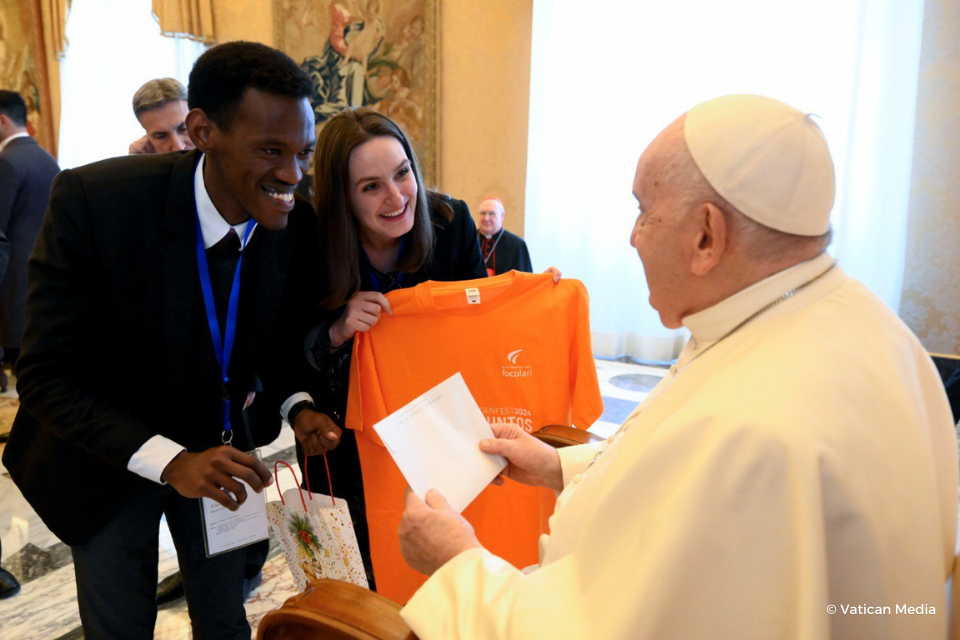 consecrated life, priests and bishops; and also in various social environments: from the world of school to that of the economy, from the world of art and culture to that of information and the media; and in particular, in the spheres of ecumenism and interreligious dialogue. You have thus been an active instrument of a great flowering of works, of initiatives, of projects and above all of “rebirths”, of conversions, of vocations, of lives given to Christ and to our brothers and sisters. For all this today we want to give thanks to God. In February 2021, speaking at your General Assembly, I emphasized three important attitudes for your progress: living your charism with dynamic fidelity, welcoming moments of crisis as opportunities to mature, embodying spirituality with consistency and realism (
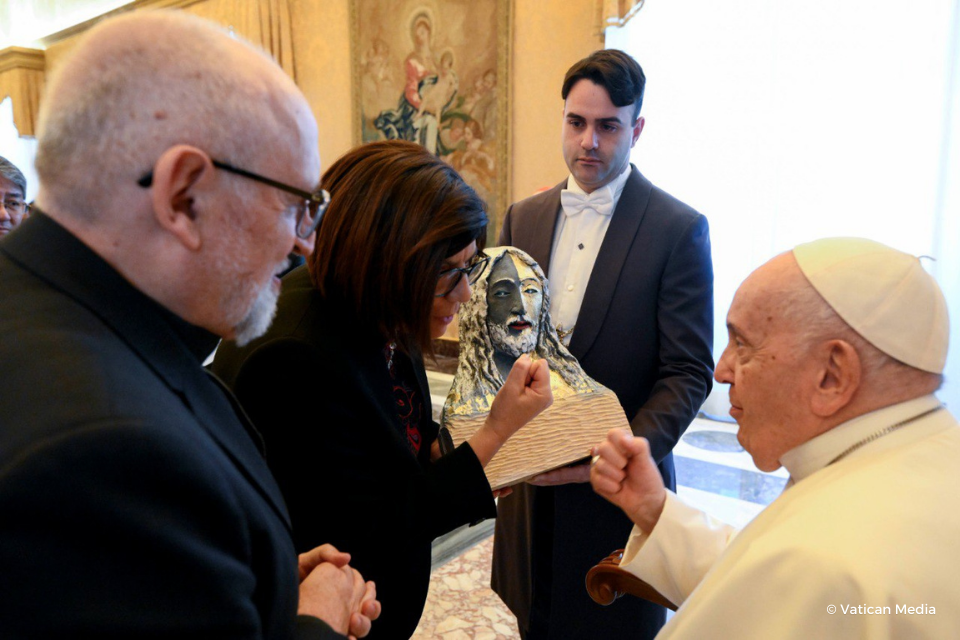 increasingly realized. Start out from your communities, fostering in them a style of participation and co-responsibility, also at the level of governance. Let the “focolari”, the hearths, increase within them and spread around them a climate of mutual listening and family warmth, in which we respect and care for one another, with particular attention to those who are weaker and those most in need of support. To this end, it will be helpful for you to pursue avenues of mutual participation and consultation at all levels, paying special attention to communication and sincere dialogue. With regard to the second line, fidelity to the charism, I remind you of some of your Founder’s words: “Leave to those who follow you only the Gospel. If you do this, the ideal of unity will remain […]. What remains and will always remain is the Gospel, which does not suffer the wear of time” (C. Lubich, in La Parola di Dio, Rome 2011, 112-113). Please, sow unity by bringing the Gospel, without ever losing sight of the work of incarnation that God continues to wish to accomplish in us and around us through his Spirit, so that Jesus may be good news for everyone, no one excluded, and “that all may be one” (Jn 17:21).
 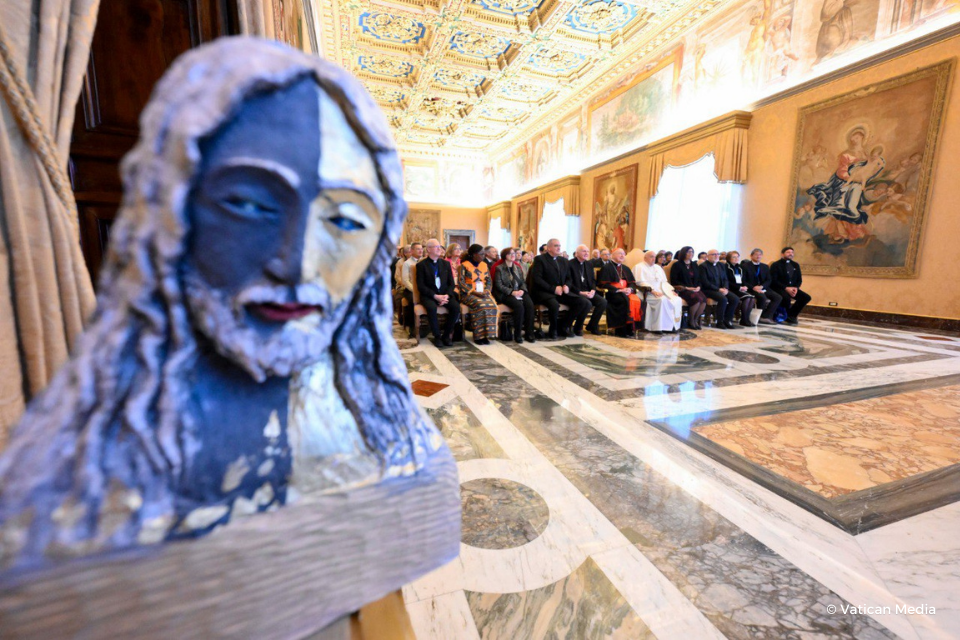 And so, we come to the third line, commitment to peace, so important today. Indeed, after two millennia of Christianity, the longing for unity continues to assume the form, in many parts of the world, of an agonizing cry that demands a response. Chiara heard this during the tragedy of the Second World War, and decided to give all her life so that the “legacy of Jesus” might be realized. Today, unfortunately, the world is still riven by many conflicts, and continues to need artisans of fraternity and peace between men and between nations. Chiara said, “To be love and to spread it is the general purpose of the Opera di Maria” (Eve of Pentecost, Saint Peter’s Square, 30 May 1998). Being love and spreading it: this is the main purpose. And we know that only from love is the fruit of peace born. Therefore, I ask you to be witnesses and builders of the peace that Christ achieved with his cross, defeating enmity. Think that, from the end of the Second World War until now, the wars have not ended. And we are unaware of the tragedy of war. I will confide in you,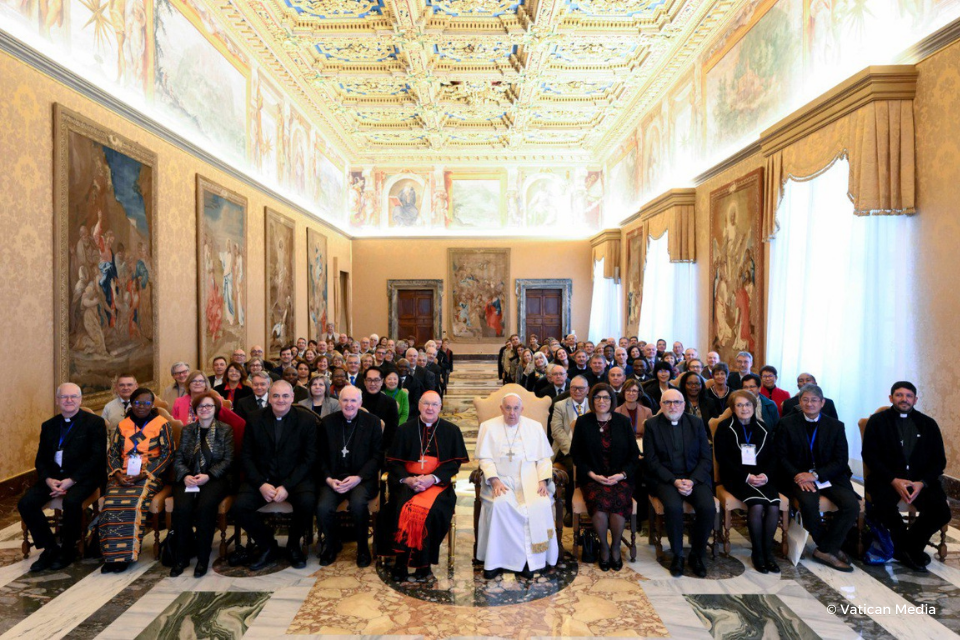
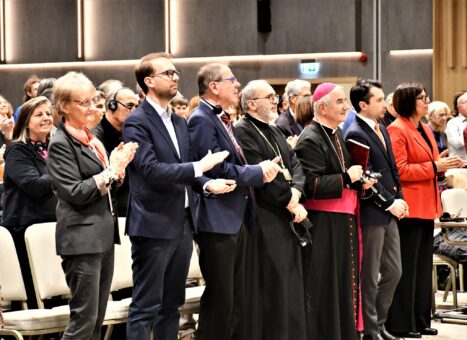
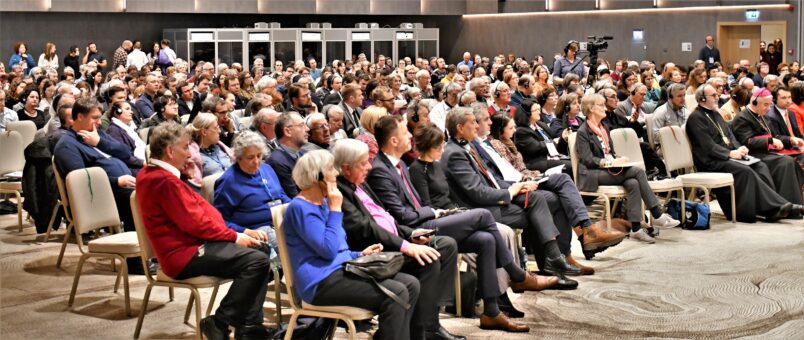 Herbert Lauenroth, historian and member of IpE’s Steering Committee, emphasized the crisis affecting all Churches and highlighted the weight of the moment: “Where is Europe today, Together for Europe? What kind of Europe, what kind of ‘Togetherness’ are we moving toward?” Against a backdrop of growing uncertainty, participants discussed what “Together for Europe” means, trying to discern the direction and future prospects. From the first sessions, it was evident that the choice of Timisoara as the venue for the meeting added an extra layer of significance. The European Capital of Culture 2023 is a testimony to the harmonious coexistence of different christian denominations, where diverse communities meet and thrive in unity. Gerhard Proß, IpE moderator and head of the CVJM (Christlicher Verein junger Menschen) in Esslingen, Germany, offered a perspective from the christian faith: “God creates space in the cracks,” he said, “Jesus himself entered the deepest of cracks in this world.” He went on to explain that the image of Christ, with his arms outstretched between heaven and earth, symbolizes a deep entrance into the cracks between God and humanity, between individuals, groups, denominations and nations. Jesus went down into the deepest: “There he created a space of life.” Words that resonated deeply, provoking reflections on how, in the face of contemporary challenges, Christian communities can create spaces of life in the midst of division, tension and uncertainty. Cultivating unity
 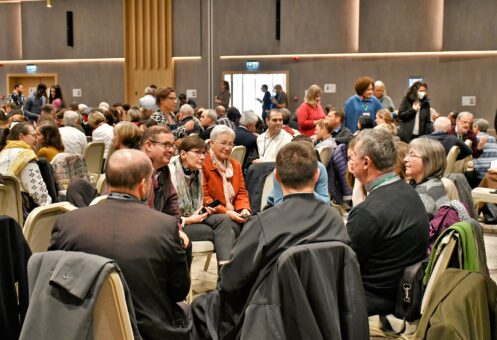 The attendees participated in dialogue sessions, engaged together in intellectual discourse, experiential workshops and prayer times. Six workshops explored topics such as social integration, youth perspectives, ethics and non-violence, promoting a deeper understanding of diversity within the Christian community. One highlight was a visit to the Orthodox Cathedral Museum, followed by Vespers in the city’s Orthodox Cathedral, attended by dignitaries and religious leaders from the different churches present. These
 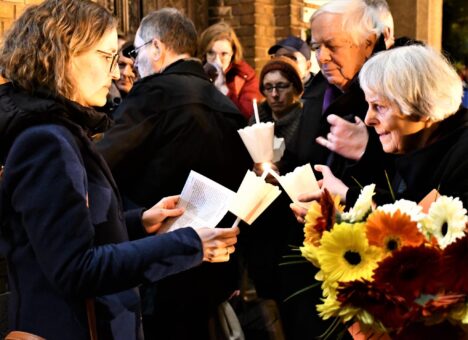 moments of common prayer fostered a harmonious atmosphere in which unity and diversity coexisted. Plenary talks and activities were punctuated by music and prayer, creating a thread throughout the conference. During one of their songs, the Ecumenical Youth Choir invited everyone to embrace different ways of praying, “We know that we all pray in our own way. Let us open ourselves to experience each other’s prayer during these days in Timisoara.” Particularly powerful was the moment of prayer for peace in which conflicts around the world were named, with a focus on Ukraine and the Middle East. All participants pledged their commitment to unity, making a pact of mutual love. A moment that was meant to symbolize the cornerstone on which a fraternal Europe is founded. Linking values to policies
 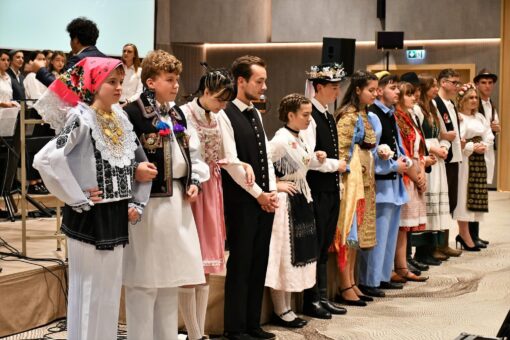 As part of the EU-funded
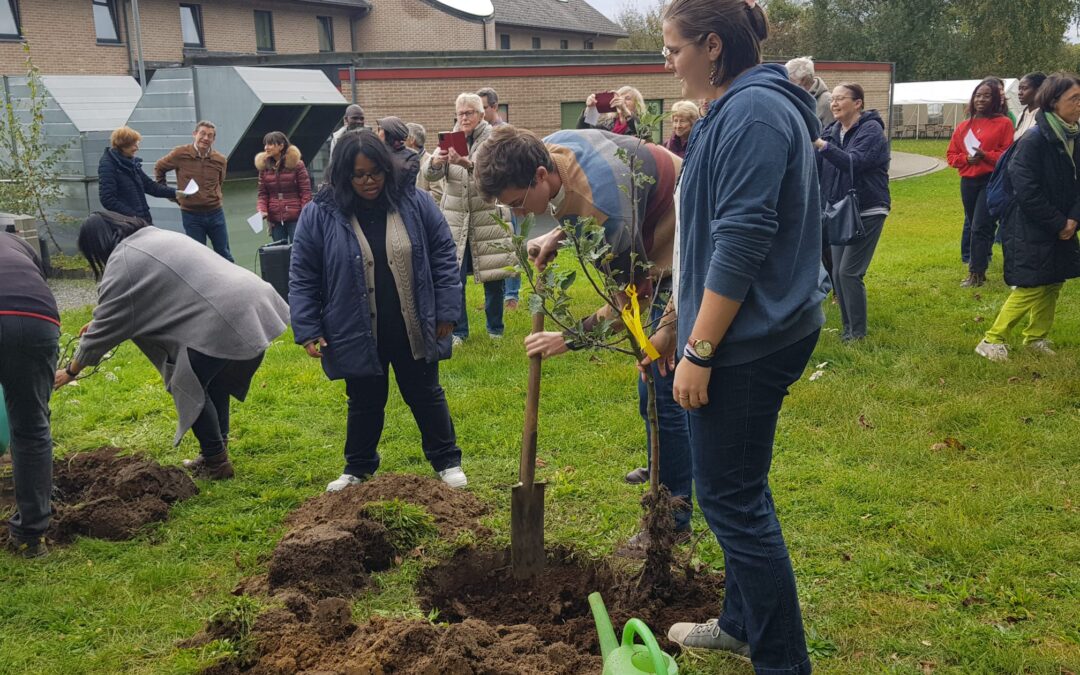
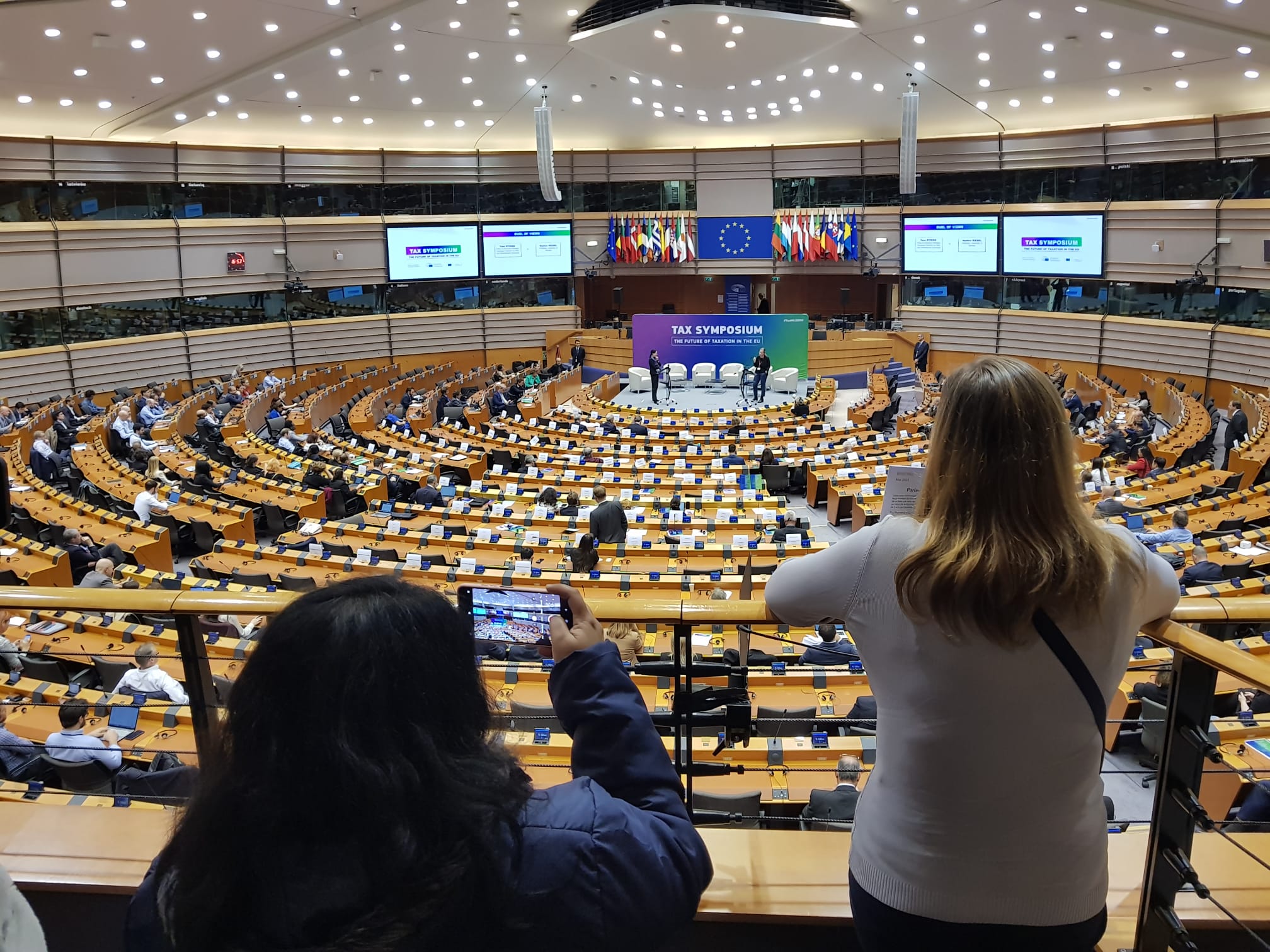 Organized by Multipolar Dialogue, an initiative that brings together citizens from East and West Europe in a methodology based on the practice of a “pact of love” on which can be built a space of trust, the event offered a rich mixture of lectures, talks, dialogues, and best practices, creating a dynamic space for sharing experiences and knowledge. Attendees engaged in thought-provoking dialogues on a range of topics, such as, sustainable development, biodiversity, integral ecology and noise reduction. In addition to these dialogues, participants had the opportunity to share their experiences, such as initiatives like school and community gardens, “
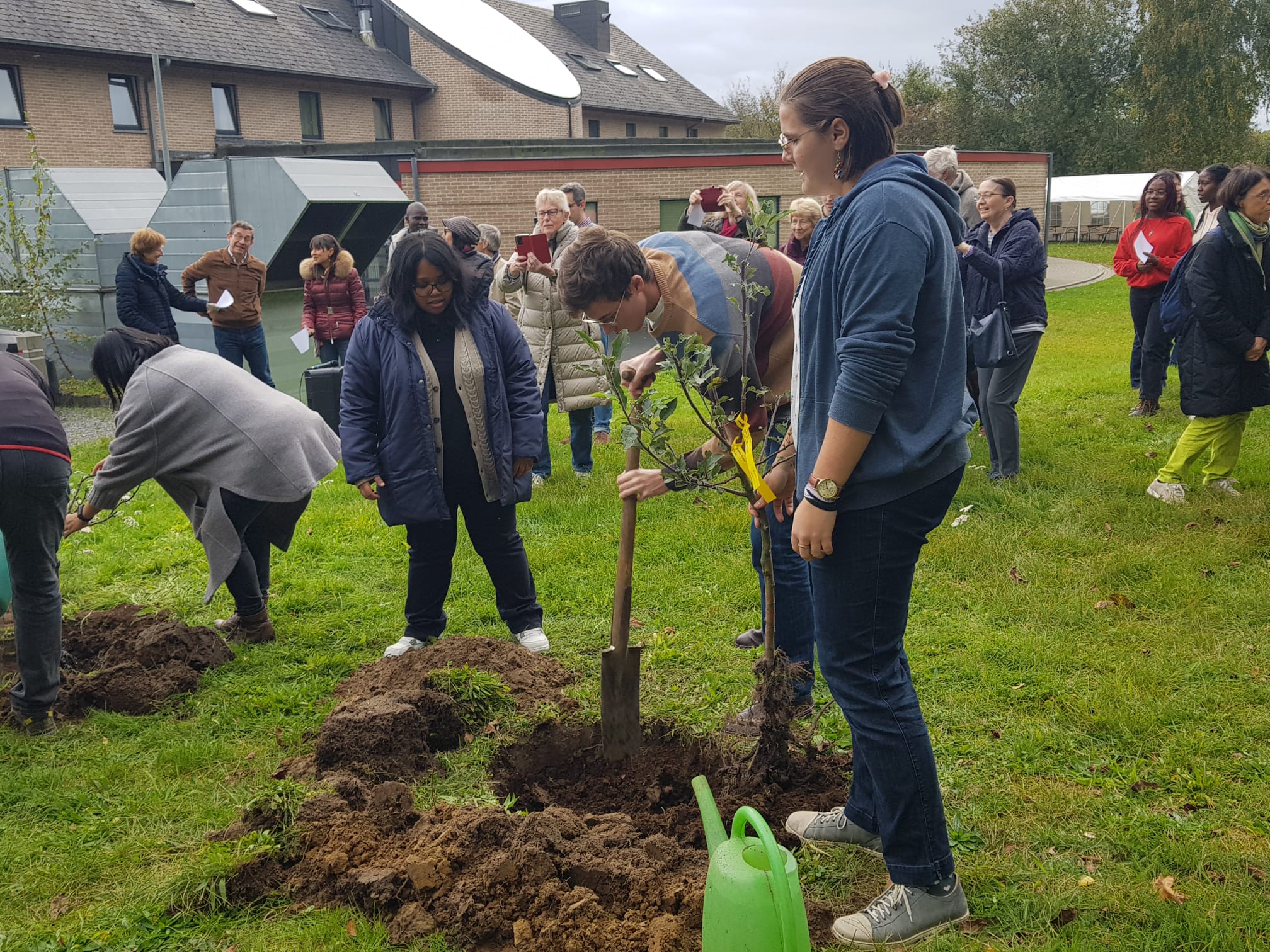 Beyond the invaluable knowledge gained and the experiences shared, these four days left a profound impact on the participants. They felt more than just attendees; they became part of a global community with a shared concern for our planet’s well-being. The sense of connection, dialogue, and collective purpose was palpable, as individuals from diverse backgrounds and countries came together to answer the cry of the earth. As Anna Waibel, a driving force behind the School Gardens project in Austria, expressed, “For me it was really awesome to see that my school is not the only place that tries to change something, but that others also want to do so. I noticed that nothing works without community and acting together.” Anny Hesius, the Multipolar Dialogue coordinator from Belgium, aptly summarized the collective sentiment, saying, “The proposal was to offer each other to listen and exchange knowledge and it has made us more aware, stronger, more co-responsible and more decisive. We have become a true family. Protagonists of peace and justice, of love toward the inhabitants of the earth and our common home” In these four days, participants not only expanded their ecological knowledge but also found a sense of purpose and community, leaving with a renewed determination to collaborate and bring about meaningful change on a global scale.