Make space for hope
Make space for hope

Make space for hope
Begin again with trust

I am a volunteer of the Focolare Movement. Last summer, during a mountain trip with Anna and Toni, friends from our New Families group, it came up that for many years I had worked as a flight attendant for the Italian national airline. They immediately asked me if I knew a neighbour of theirs who had worked for the same company. As soon as I heard his name, I remembered him at once, even though 30 years had passed. They told me that his situation was very sad. Abandoned by his family and suffering from serious illnesses, he was living alone in a large, run-down house that was in urgent need of repairs. I went to visit him and I realized that I needed to lend a hand.
So, together with Toni and Anna, my wife Rita and others, we drew up an action plan. We began by fixing a French window with broken glass, thanks to the help of a carpenter friend. Then we installed a new door leading to the cellar and fixed the bathroom door that had been chewed by the dog. Next we fixed a sliding door that was letting in rain and we also worked on the terrace from which water was leaking into the house. We hired a cleaner, fixed the electrical system with the help of one of our volunteers who is an electrician and who, with the help of Toni also fixed the heating system. My wife added a subtle touch by decorating the courtyard with pots of cyclamens. In short, Cesare, that’s his name, now lives in more humane conditions and feels happy because he is surrounded by people who care for him. He had to go into hospital over the Christmas holidays and we visited regularly.
It’s a joy to know that through those simple gestures, he has regained his faith in humanity.
Compiled by Carlos Mana
Photo © Pexels-Ksenia Chernaya
Don’t be indifferent to poverty
Be transformed by God’s presence
Pleading for Peace
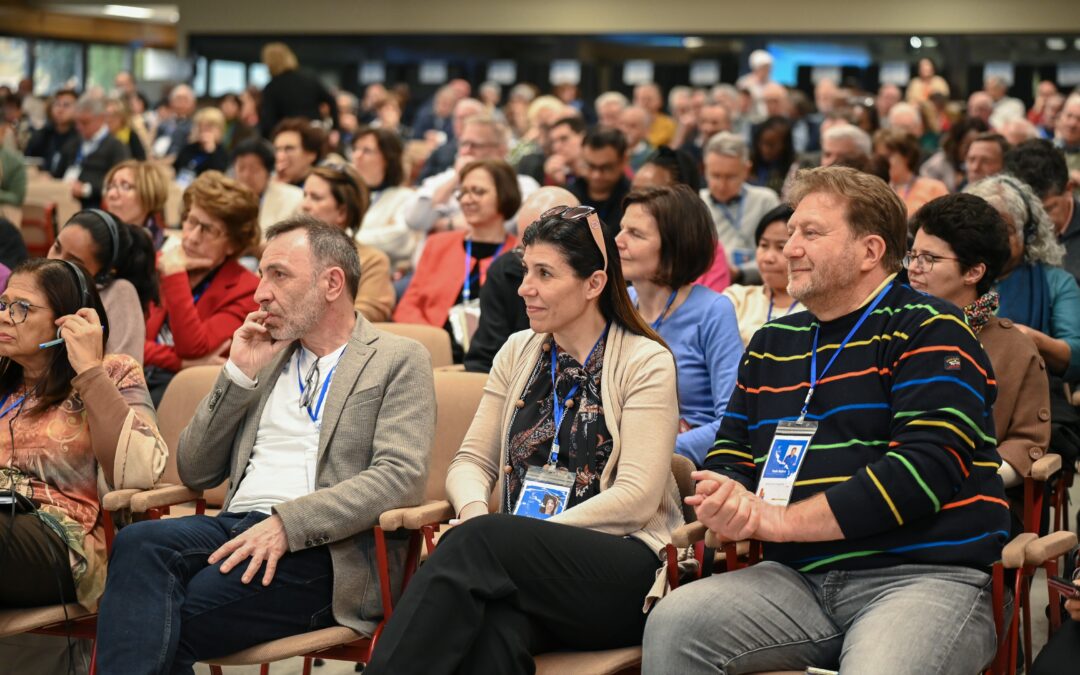
Silence, prayer, reflection: today, the 2nd of March, the 3-day spiritual retreat of the General Assembly of the Focolare Movement began. Moments of ‘one-to-one’ with God and moments of communion alternate during these days in which the news that arrives, especially from the many war fronts, is increasingly tragic. Here, where the whole Movement is represented, the world news is close at hand, bringing people, places, communities and nations that are suffering into our presence.
For this reason, we invite all those who belong to the Movement throughout the world to pray, through various personal and collective initiatives, to call on Heaven for the gift of peace.
The programme of the General Assembly
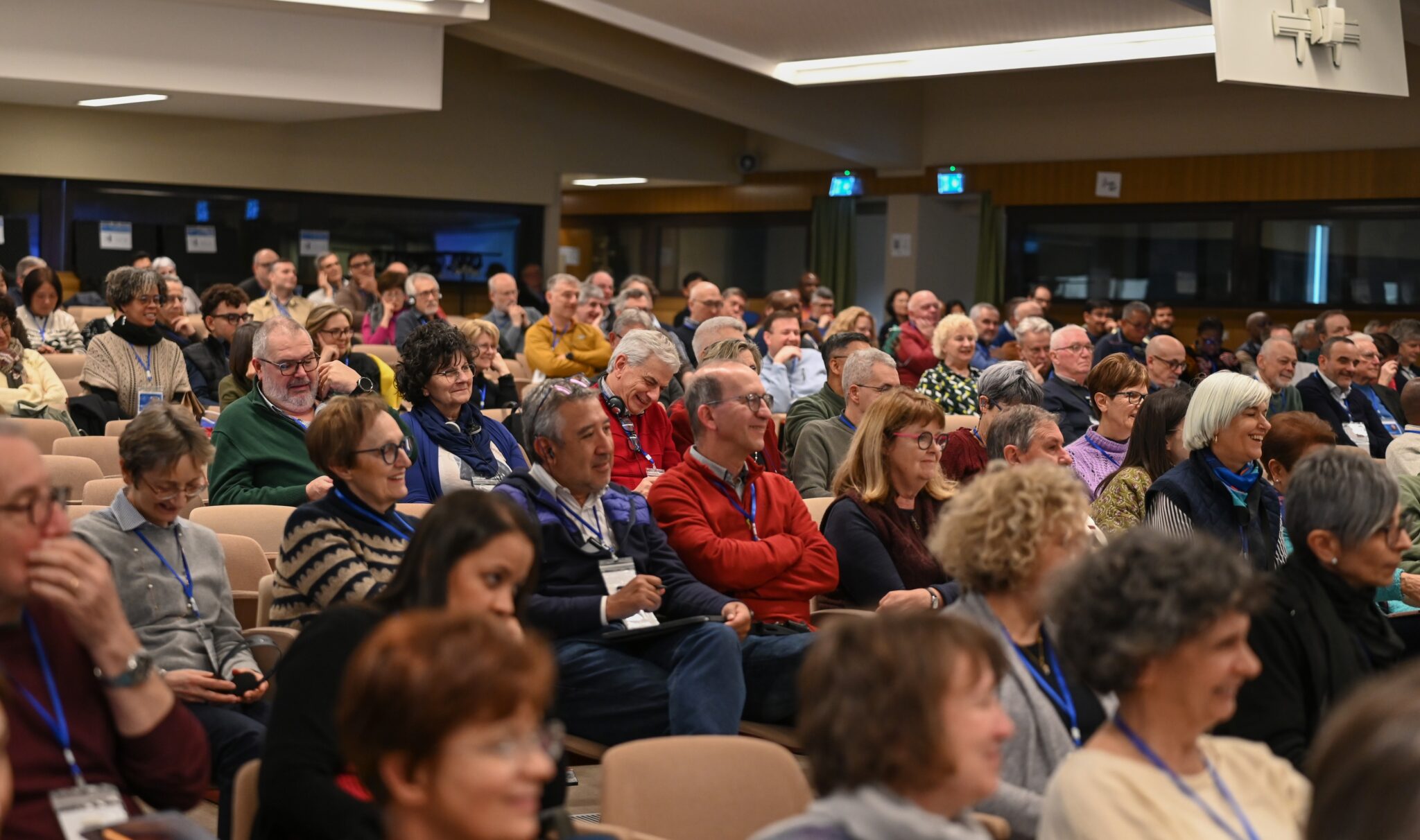
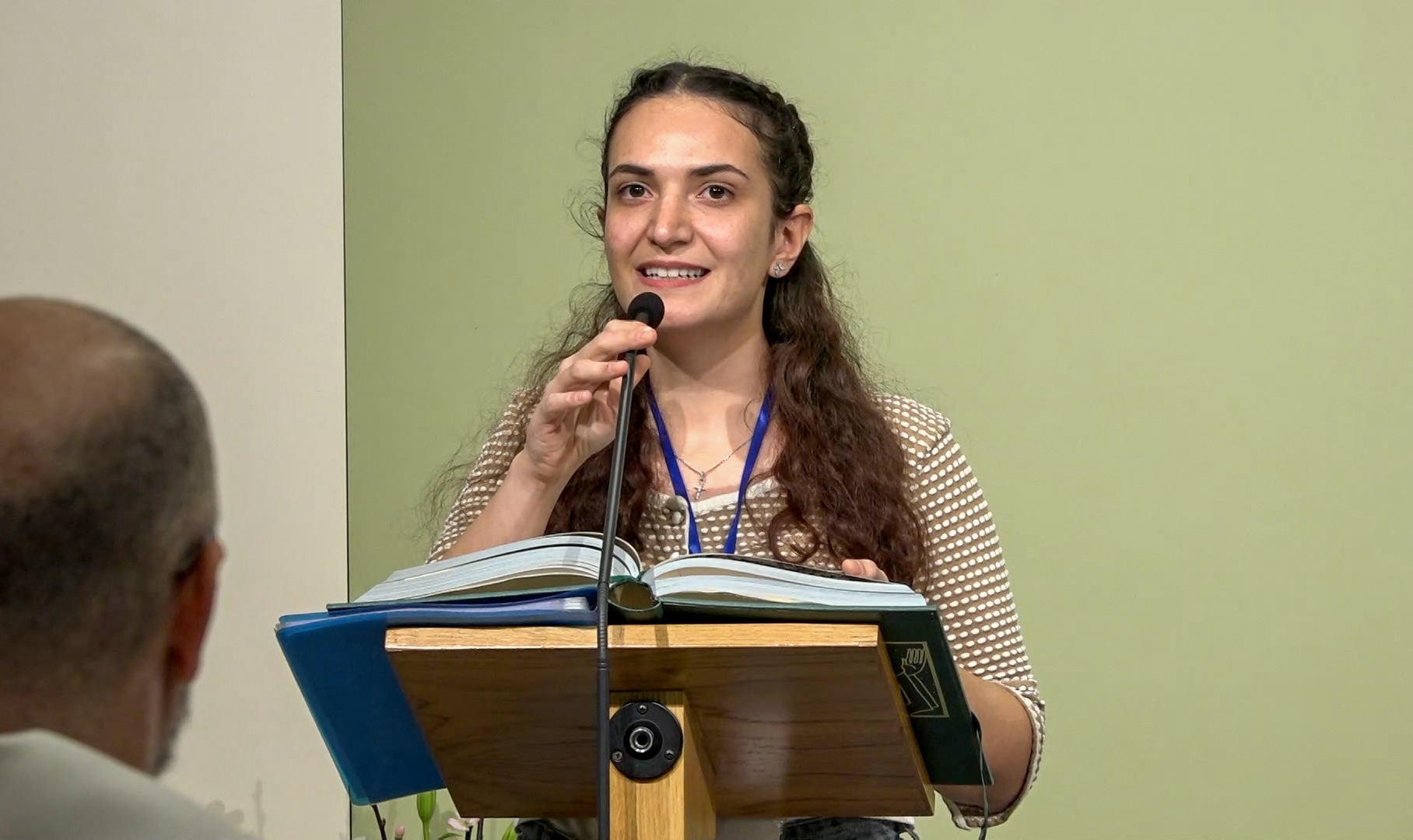
The President’s report on the 2021-2026 5-year term will be presented on the 5th of March, and working sessions on selected topics will be held from the 6th to the 11th of March. Work will be carried out in groups using a method of dialogue and discernment called ‘Conversation in the Spirit’. Plenary sessions and votes on the outcomes are also planned.
The elections for the new Central Government – President, Co-President and Councillors – will be held from the 12th to the 15th of March. From the 16th to the 20th of March, the programme includes discussions and votes on proposed amendments to the General Statutes and Regulations. The Assembly will conclude in Rome on the 21st of March: everyone in the Assembly will be received in audience by Pope Leo XIV.
At the conclusion of the various stages of the Assembly, we will send you brief updates. The next one will be on the 5th of March, at the conclusion of the retreat days.
Stefania Tanesini
with the Multimedia Communication and Linguistic Services team
Photo: Time-out for peace during the Assembly © Javier García-CSC Audiovisivi
Start again!
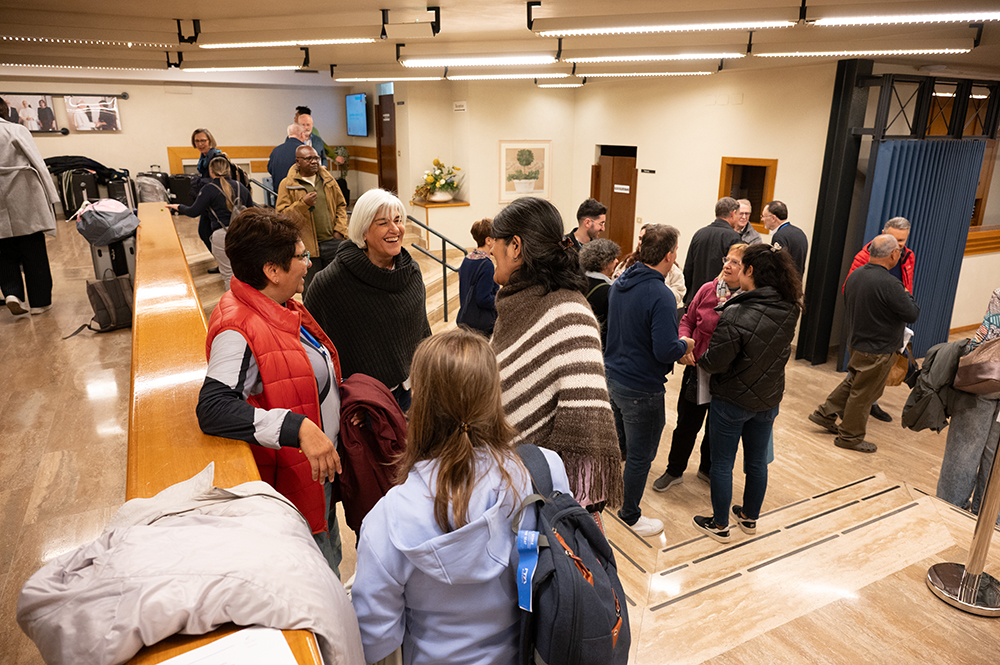
“I hereby officially declare open the Ordinary General Assembly of the Work of Mary, convened in accordance with the methods established by the General Statutes.” These were the words with which Margaret Karram, President of the Focolare Movement, opened the proceedings today, 1 March 2026. There are 320 participants at the Assembly. Representatives of eight Christian Churches and of various religions and cultures are present. Unfortunately, some participants have not yet arrived due to the escalation of the conflict in the Middle East and the resulting flight ban. Thoughts and prayers of the entire Assembly immediately went out to this region of the world.
The President continued her opening address saying, “After a long period of preparation, it seems to me that I don’t see only you here present today, but all our communities around the world: from the Gen 4 to bishops, adherents, young people, and all those who are currently offering their sufferings for many different reasons.”
“I arrived here this morning,” she confided, “with immense joy in my heart and, at the same time, I feel in my soul a sense of trepidation for the sacred and important moments we are about to begin. These will certainly be challenging days, but above all, my deepest wish is that this time will become a profound experience of God for all of us.”
The meditation, led by Sergio Rondinara, member of the Abbà School, focused on how to read and interpret the “Premise to every other rule” in the light of Chiara Lubich’s experience. This is the premise that precedes and introduces the General Statutes and also guides the various norms contained therein. These words are also the premise and rule for the proceedings of the Assembly: “Mutual and constant love, which makes unity possible and brings the presence of Jesus among all, is, for those who are part of the Work of Mary, the basis for their life under every aspect: it is the norm of norms, the premise to every other rule.”
Throughout the whole of today, the necessary formalities for conducting the Assembly are scheduled. We began with the appointment of two moderators, chosen from among the participants, and of the Electoral Commission who are called upon to oversee the proper operation of all the aspects of the election. This was followed by the approval of the regulations and of the programme of the Assembly.
Stefania Tanesini
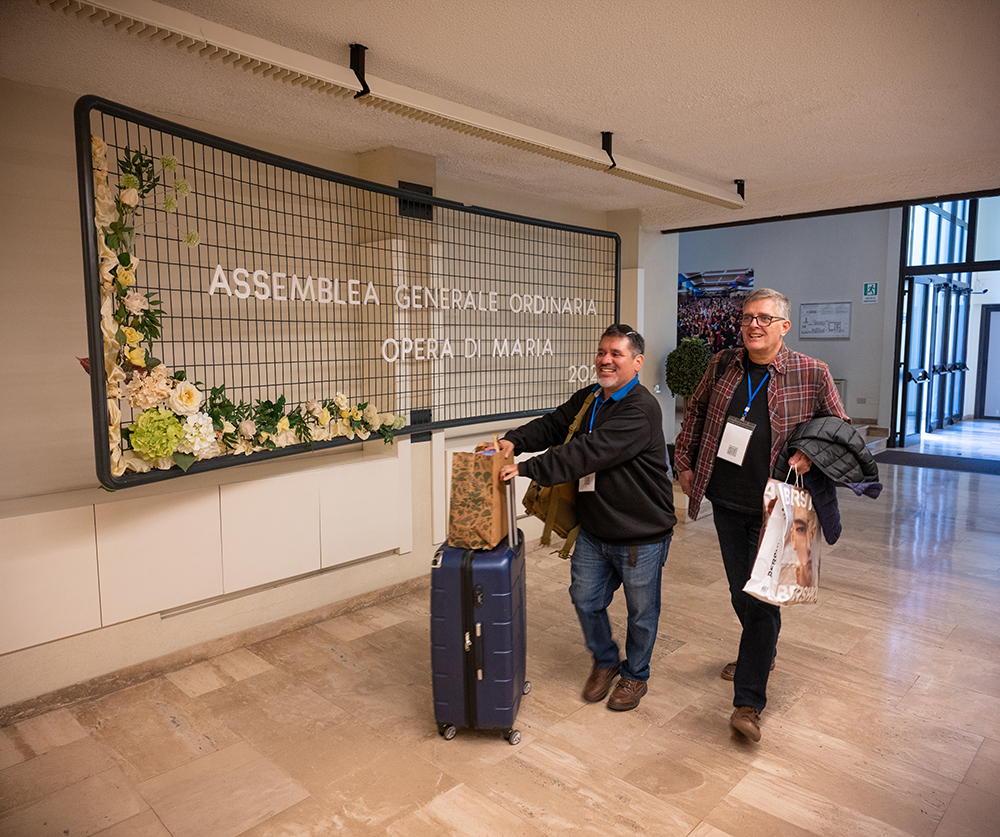
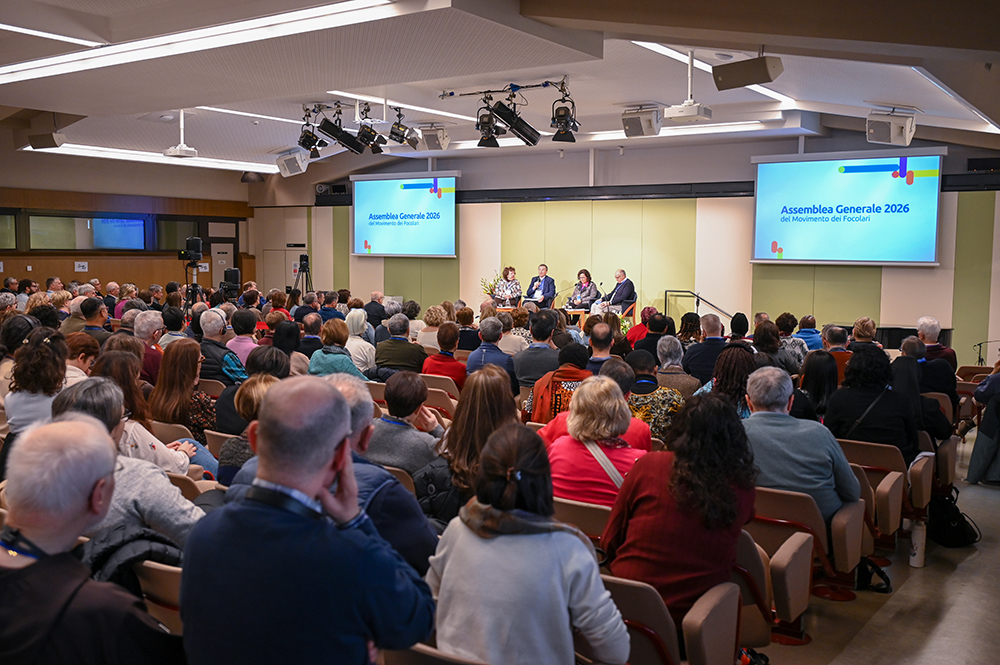
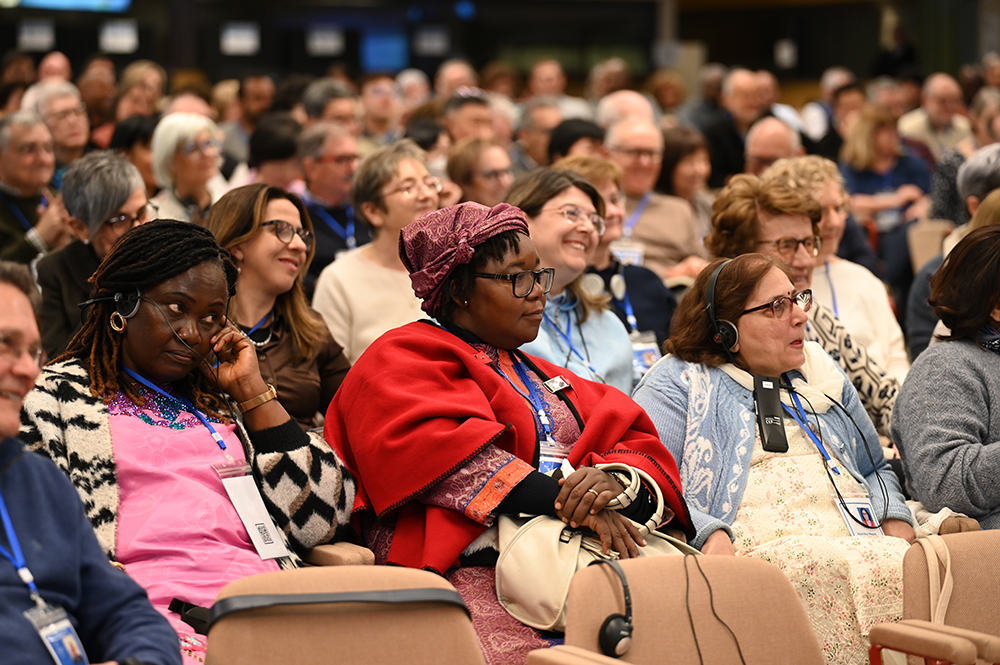
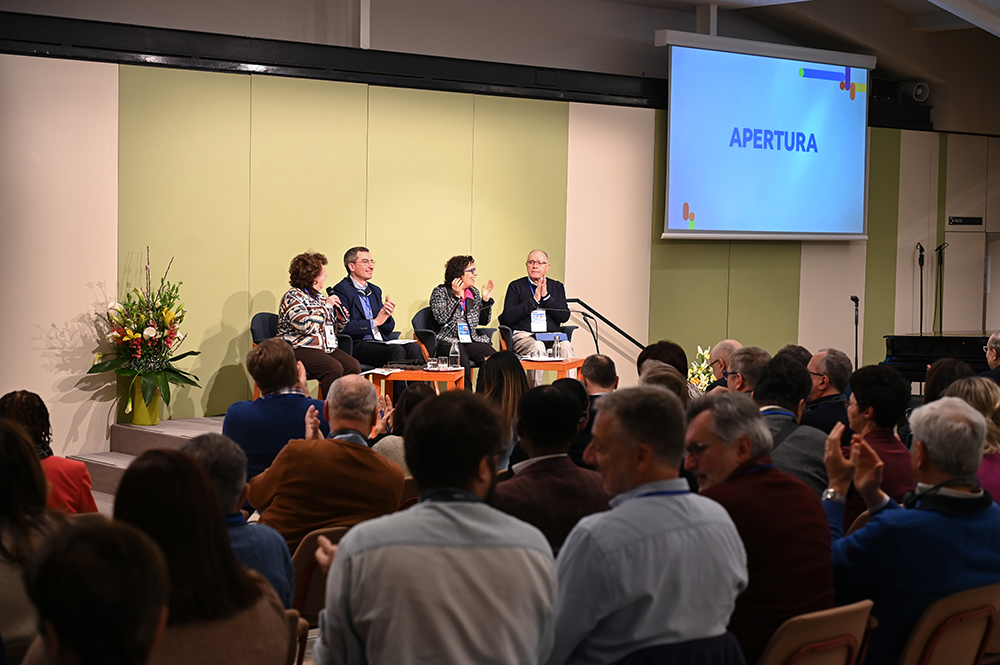
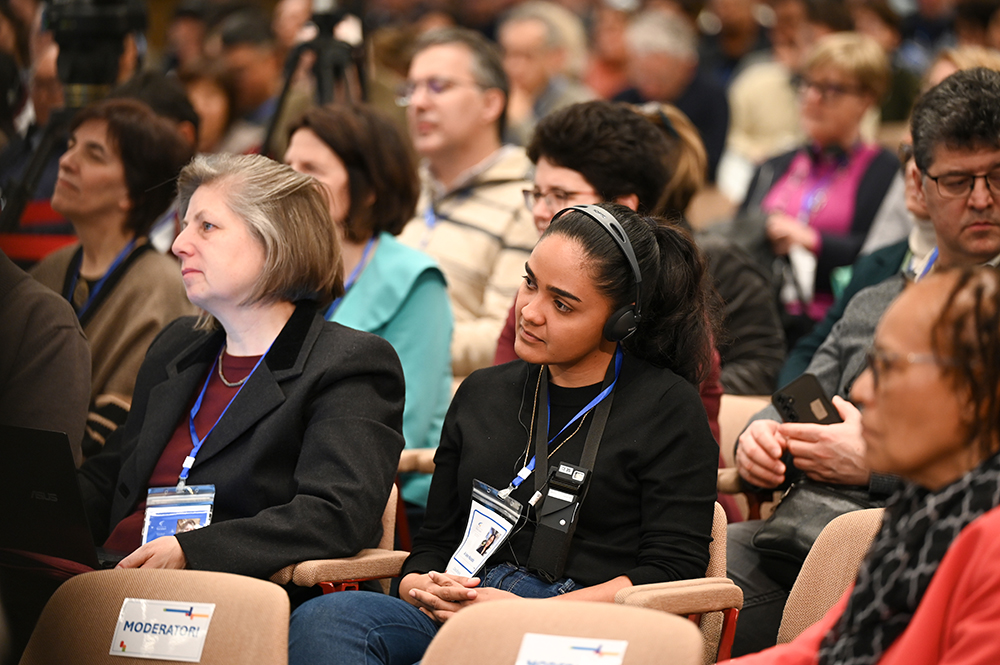
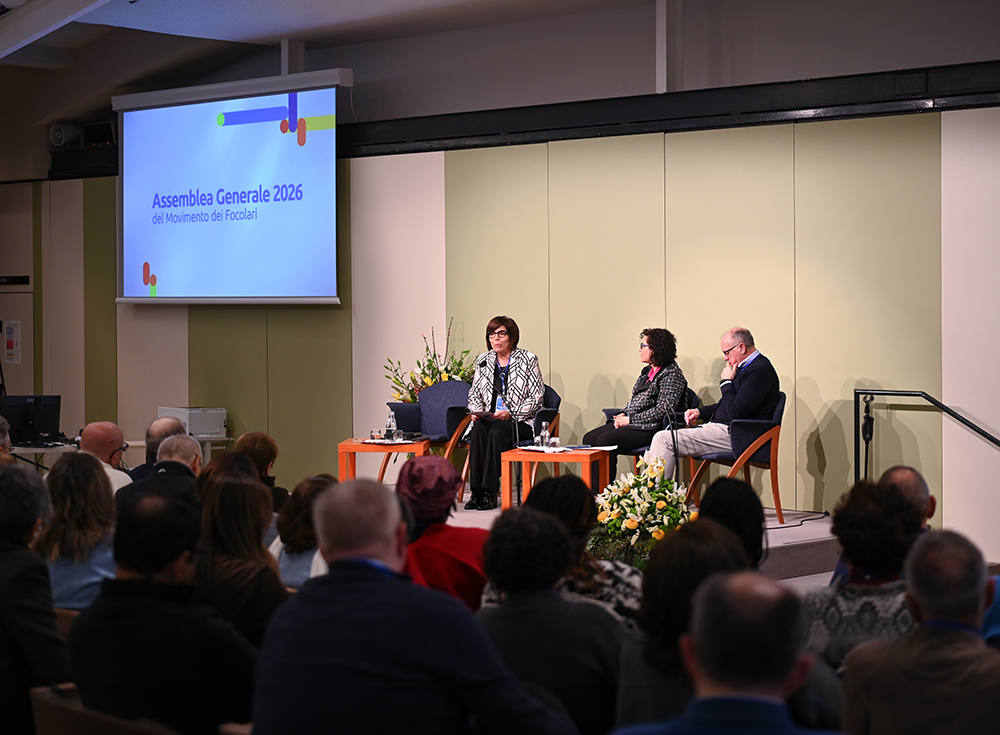
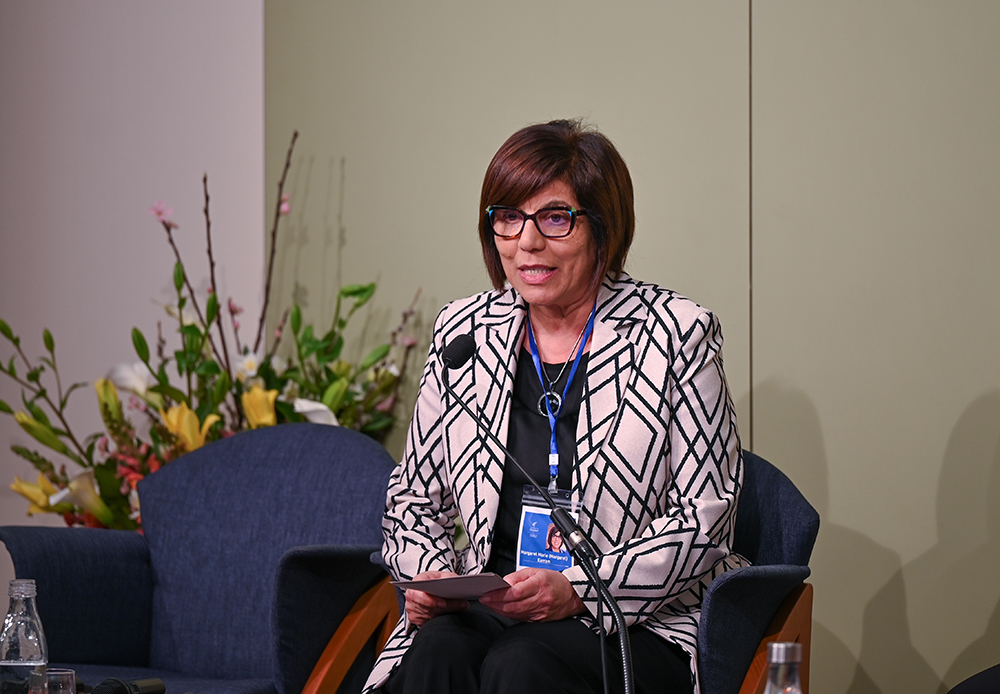
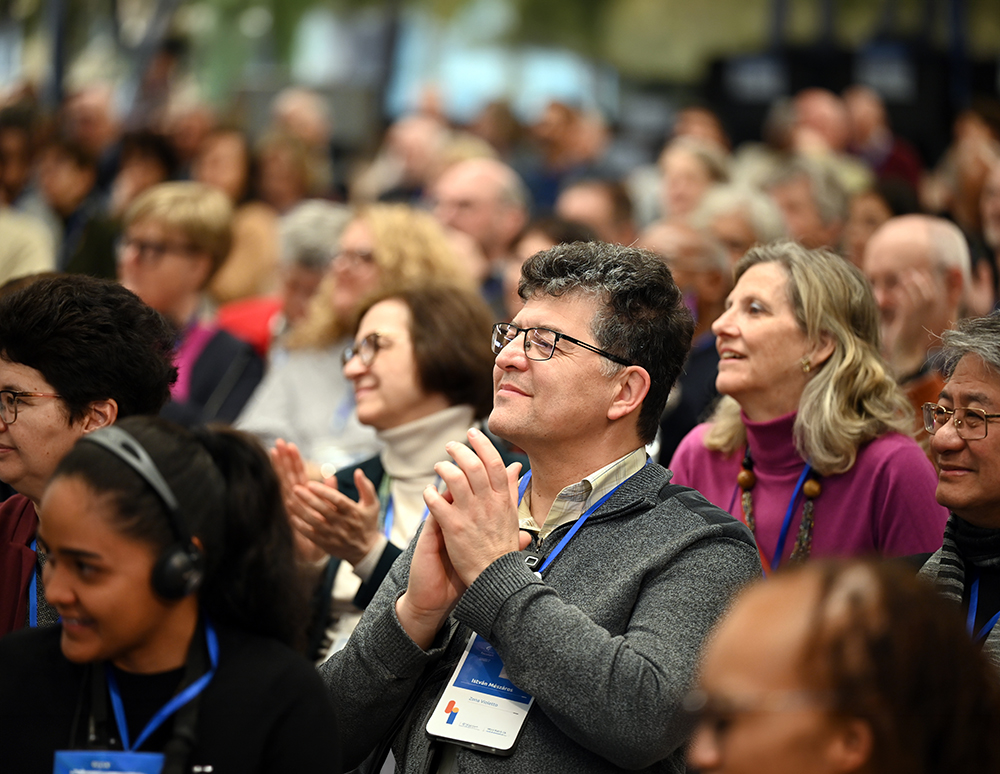
Photo: © Javier García-CSC Audiovisivi
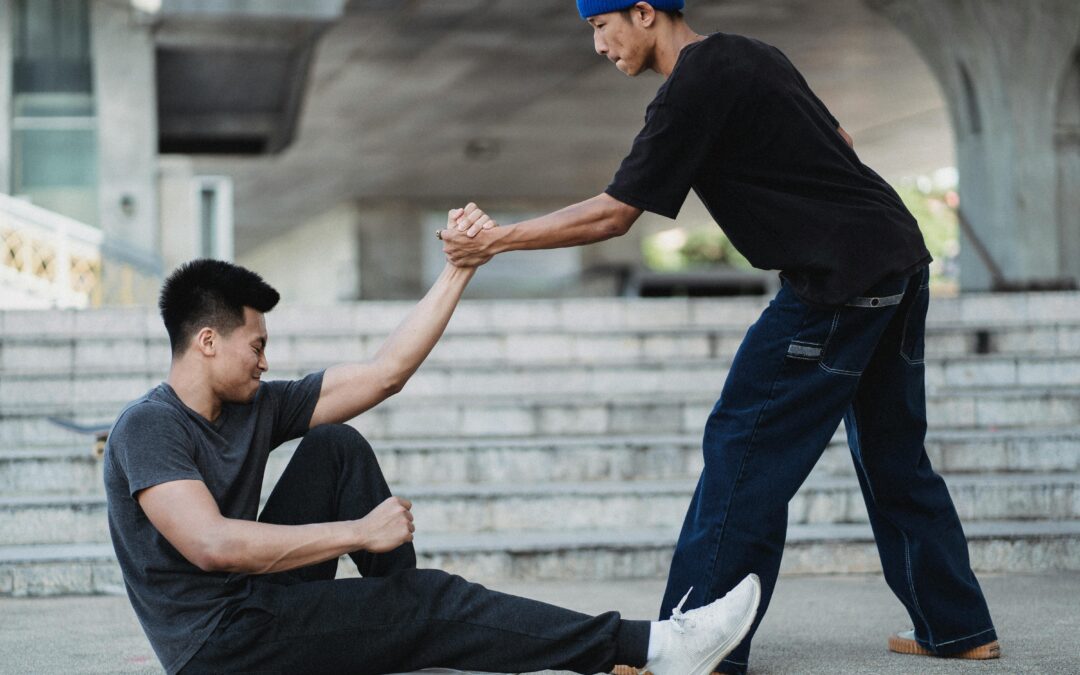
There is a proverb that says, “Only those who fall can get up again”. This is seen very clearly in the tenderness and courage of young children as they begin to develop their skills. How much willpower they show as they take their first uncertain steps, getting up again and again with determination, until they gain confidence and begin to move with increasing assurance… the journey of life!
As we grow up and face various challenges and problems, getting back up each time becomes more difficult. Life’s trials weigh us down and sometimes we are held back and lose confidence when we encounter people who are different from us or do not think in the same way as we do. Willpower and even a sincere desire to be consistent with our values are not always enough. In these difficult moments, being able to count on a helping hand can give us the impetus to start again without fear. It can create a sense of silence in the depths of our consciences and allows us to be “renewed and whole” within.
Chiara Lubich wrote: “Is there anyone who does not go through trials and challenges? They take the form of failure, poverty, depression, doubt and temptation […] The materialistic and individualistic society that surrounds us is frightening, with its wars, violence and injustice…“. Chiara’s own life was a witness to this. It is precisely in those moments of darkness and struggle that it is important to find the strength to ”start again,“ and confidently say, ”you can still hope for everything.”We need to begin with ourselves[1].
This is what Emilia from Terra Santa managed to do. She works as a manager in a government office where there are a number of Jews, Christians, Muslims and Druze. After October 7, 2023, she understood that love was the only possible response to the great pain everyone was feeling and she began to love everyone around her with a great sense of commitment. In particular, she listened to others so that she could welcome them into her heart. She listened with an attitude of love and humility and understood whatever others people were saying, whether they were Arab or Jewish. As a result, a large number of her colleagues have become so open with each other that they can talk freely about the situation. In turn, this has encouraged other workers to express their fears and struggles and the group has remained peaceful and united[2].
There are many stories of wounded communities that do not give up and that find strength each day in the reciprocal sharing of all they have, believing that hatred cannot have the last word.
Even if we will not be the ones to see the fruits of our commitment, every time we get back up, we contribute to forming “new people” because, as Bonhoeffer said from prison shortly before his death, “For those who are responsible, the ultimate question is not how I can heroically get through this affair, but what the life of the coming generation will be like.”
Photo © Pexels-Allan Mas
[1] Gen Rosso song “Start again”
[2] Experience shared at “One Human Family” Conference, Castel Gandolfo, June 2024
Jesus climbed a high mountain with Peter, James and John and, from there, the disciples saw the glory of their Master and heard the voice of the Father who recognised him as his son.
This was an extraordinary experience; being face to face with God allowed his creatures to know him in his splendour. The disciples were afraid and fell to the ground, but Jesus touched them and said,
Get up and do not be afraid.
The verb ‘to get up’ is the same one often used in the Gospel in reference to the Resurrection, just as ‘do not be afraid’ are the first words that the Risen Lord addressed to the women at the empty tomb after having greeted them[1]. Jesus’ strong and clear words on this occasion are a decisive invitation to enter into a new life which the disciples were able to experience through the touch of his hand.
We too are sometimes held back by our fears and weighed down by life’s trials and situations that seem to have no solution. When this happens, we cannot rely solely on our own strength if we want to rediscover the enthusiasm and momentum of witnessing to our faith. Instead, we should depend on the grace of God who always goes before us.
“Who does not go through trials in life? They take the form of failure, poverty, depression, doubt or temptation … Furthermore, the materialistic and individualistic society that surrounds us, with its wars, violence and injustices is also frightening… Faced with these situations, doubt can creep in and we may ask ourselves, ‘Where has God’s love gone?’ … Jesus truly entered into every painful situation and took all our trials upon himself … He is Love, and it is love that drives out all fear. Every time we are assailed by fear or suffocated by pain, we can recognise the true reality hidden within it: it is Jesus who is present … Let us allow him to enter our lives. And then let us continue to live as God wants us to do by focusing upon loving our neighbour.
We will discover that Jesus is always Love. We will then be able to say to him, just as the disciples did, ‘You are truly the Son of God.’ (Mt 14,33) [2].
Get up and do not be afraid.
Those who have experienced God in their lives have been captivated by his presence, touched and healed by his Word. Sometimes, the witness of a Christian community accompanies us on this divine adventure and gives us the
courage to get up again, to step outside ourselves and resume our journey with Jesus and with our brothers and sisters.
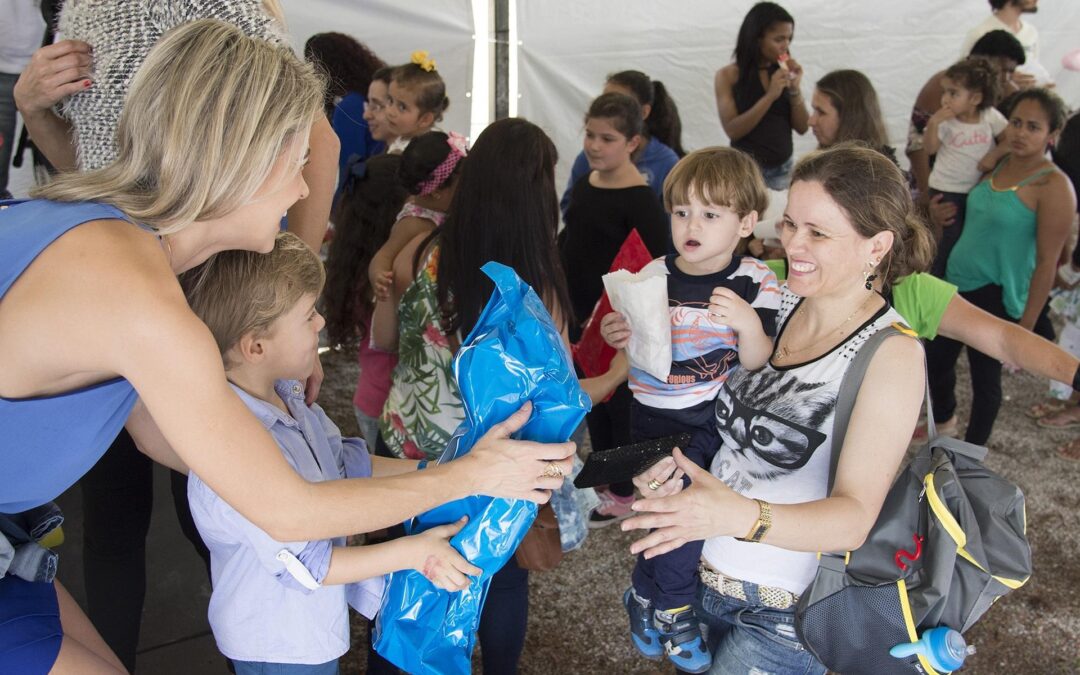
“At the end of last year, my country went through a very difficult time. My city was hit by a wave of chaos and fear. I was deeply concerned for my family, my friends and myself. In the midst of so much uncertainty, I tried to remain steadfast in my hope in God and to stay strong despite everything that was happening. Before these events, the young people with whom I am committed to living the Gospel had planned some projects to support families in need by preparing food parcels and organising various initiatives.
But the situation forced us to temporarily suspend all activities. After a few days, we managed to get together and, at that meeting, we found strength and courage in one another. We decided not to let fear overwhelm us, but to put our trust in Jesus and continue on the path we had begun. Thanks to the faith we shared among us, we were able to help more than forty families who were in real need of support. In the midst of those difficulties, we felt that, thanks to God’s love and our unity, we could really make a difference.”
Get up and do not be afraid.
After climbing the mountain with Jesus to meet God and hear his voice, we can also descend with him, to “return to the plain, where we meet so many brothers and sisters weighed down by fatigue, illness, injustice, ignorance, poverty both material and spiritual.” [3].
Even as a Christian community, we may suffer and feel lost, but this Word urges us to set out together, to bring to everyone “the fruits of that experience with God by sharing the graces we have received.” [4].
Edited by Letizia Magri & the Word of Life Team
[1] Mt 28, 10; cf, 28, 5.
[2] Lubich Word of Life, Aug 2002 2002,
[3] Cfr. Pope Francis, Angelus 16 March 2014
[4] Ibidem.
Photo © Willian_2000-Pixabay
Don’t be discouraged by failure
According to Article 1 of the Regulations of the General Assembly of the Focolare Movement, participants will live this event in profound communion, so as to help unity grow in the entire Movement and guide it toward the fulfilment of its aims. The Assembly is in fact one of the most important moments for the Focolare Movement and takes place every five years, as established by the Decree of the Dicastery for the Laity, the Family and Life (2021).
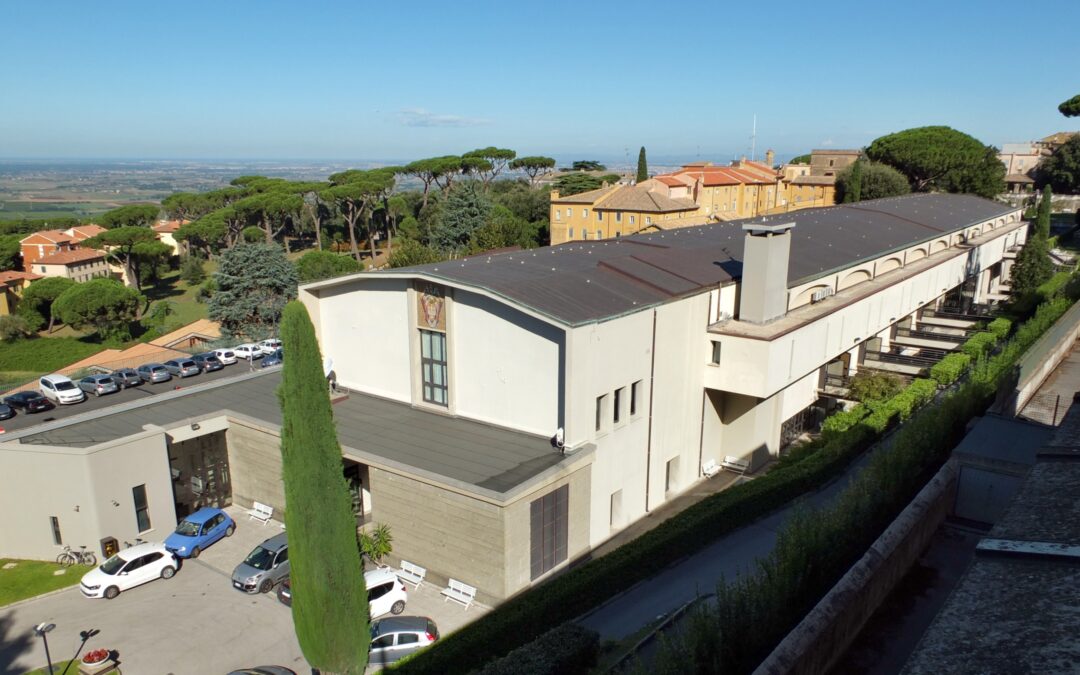
It will be held at the Mariapolis Centre in Castel Gandolfo (Rome, Italy), where 320 participants – including about 50 observers – from different countries, cultures and ecclesial and religious contexts are arriving. They are brought together by their adherence to the spirit and values of the Movement founded by Chiara Lubich (1920–2008) and recognised by the Catholic Church as a private, universal association of pontifical right.
The programme
The Assembly will begin with three days of spiritual retreat. On the 5th of March, the current President, Margaret Karram, will present her end-of-term report, accompanied by some reflections from the Co-President, Jesús Morán. The following days the programme will alternate between plenary sessions and work in 30 groups, dedicated to studying in depth the topics raised by the Focolare communities around the world.
The subjects that will guide the work will focus on the question of how to implement the charism, or rather how to create relationships of fraternity and unity, in the current global context through a commitment to peace and social justice, dialogue in a polarised world, the responsible use of technology, dialogue as a key instrument between Christian Churches and with people of various faiths and convictions, integral ecology, and participatory governance. One of the topics will also be the transmission of the charism of the Focolare Movement to future generations. There will also be sessions for discussion on the proposed amendments to the General Statutes and to the Regulations of the various branches of the Movement.
Thursday, the 12th of March, will be dedicated to the election of the President and the Co-President, positions which, according to the General Statutes of the Focolare Movement, must be confirmed by the Holy See. Then, on the 15th of March, the General Assembly will proceed with the election of the general councillors, thus completing the composition of the new governing body of the Movement.
Towards the General Assembly: a worldwide journey
In preparation for this Assembly, communities of the Focolare Movement in 150 countries took part in an extensive process of listening and synodal discernment, offering ideas and priorities for the future. This resulted in hundreds of contributions on key issues as well as challenges that the Movement is facing internally and in the global context. Local communities also expressed their preferences for candidates for the governing body of the Movement.
Stefania Tanesini
Photo Mariapolis Centre in Castel Gandolfo: © CSC Audiovisivi
Want the good of others
Thursday, February 5, 10:00 p.m.
Christine Schneider-Heinz and Michael Heinz from Eggenburg, Lower Austria, received a short message from the Focolare community in Kiev: it expressed an urgent need for winter clothes for people in Ukraine. The couple have long been committed to helping refugees from different countries, organizing accommodation in their town and helping with initial needs. They immediately knew who to ask for help.
Friday, February 6 – even before morning coffee
The first messages and requests were sent out. The first went to a friend who works in the nearby shoe factory and who already had organised donations of shoe several times. By 10 am he confirmed 100 pairs of winter shoes, including transport to Eggenburg.
Friday 6 February – 11:30 am
A message was posted in their WhatsApp Status and sent to their friends in the vicinity: “bring warm clothes and shoes for people in Ukraine to the presbytery of the Catholic parish this evening, between 18:00-20:00”.
Friday, February 6 – 6:00 pm
Christine and Michael had already gone through their wardrobes and went to the presbytery with the first bags, equipped with labels in English and Ukrainian to pack and label everything.
What awaited them was incredible: an overwhelming display of solidarity and readiness to help. The Mayor had shared the appeal on the municipal app, the parish through the parish app and many people had spread the message through their Status and networks.
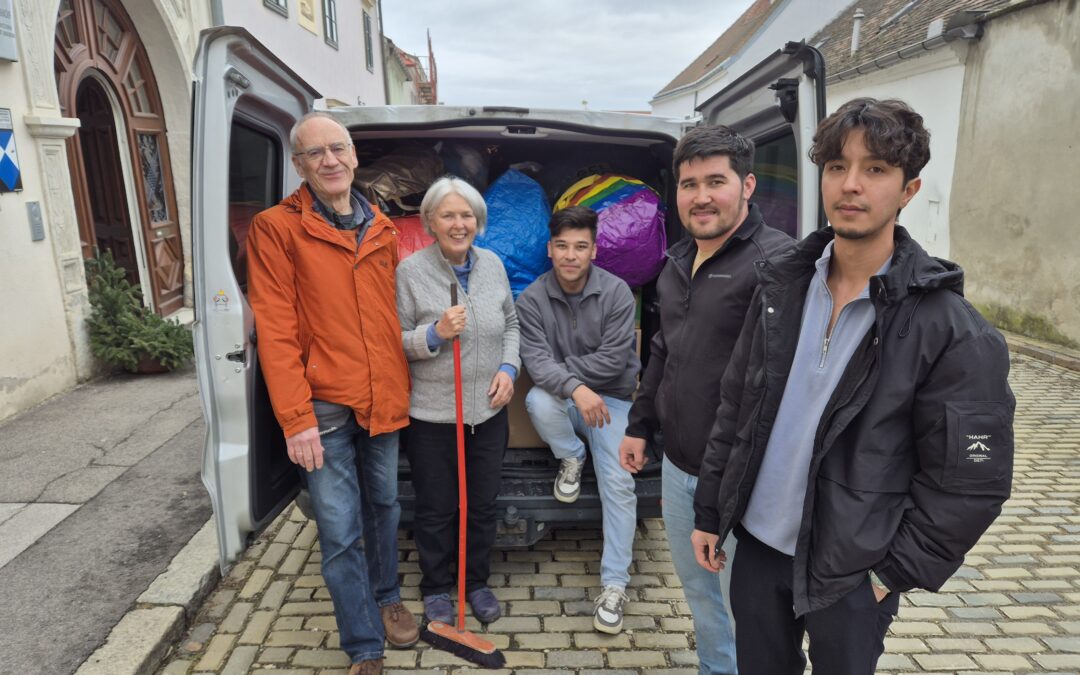
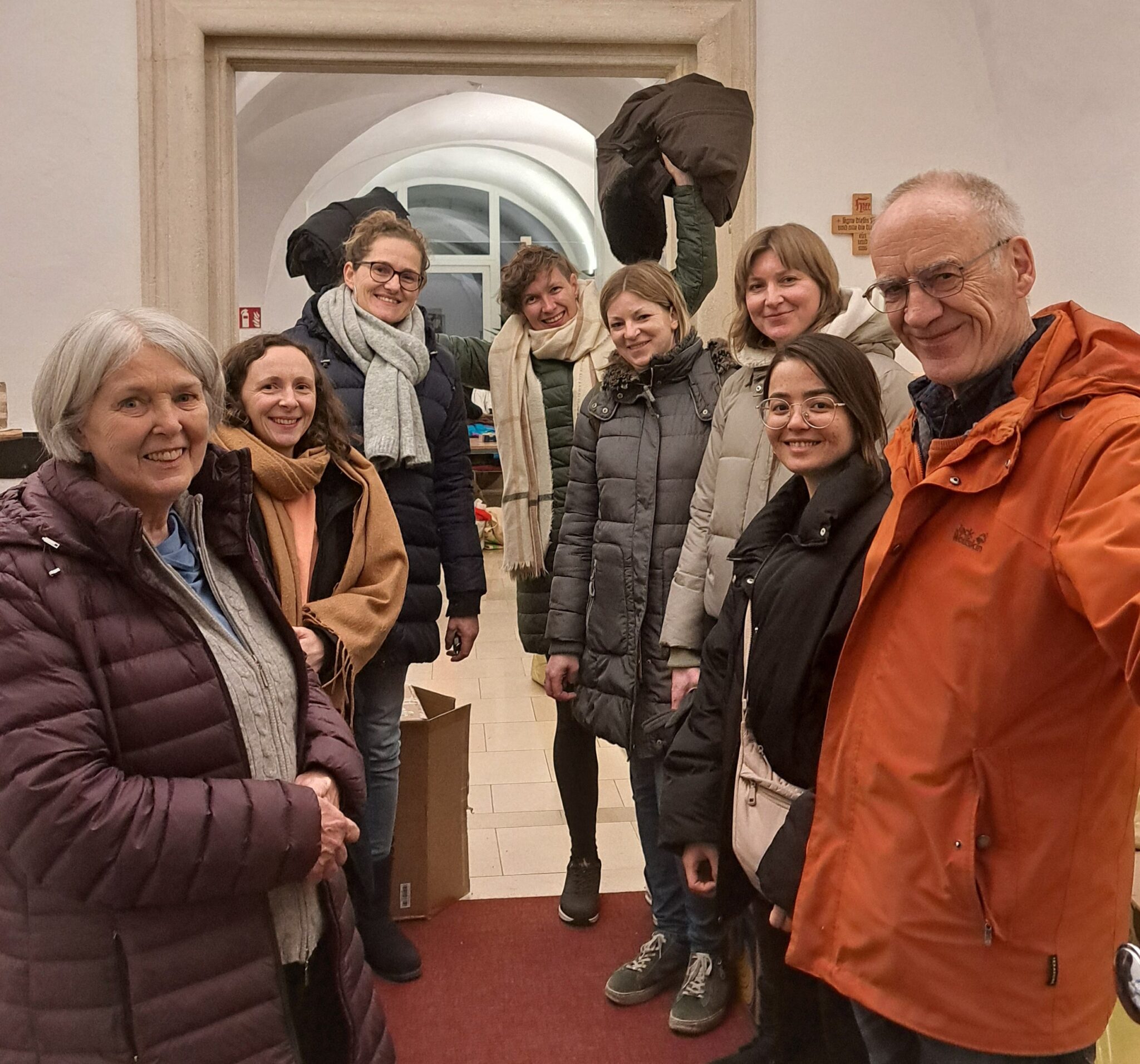
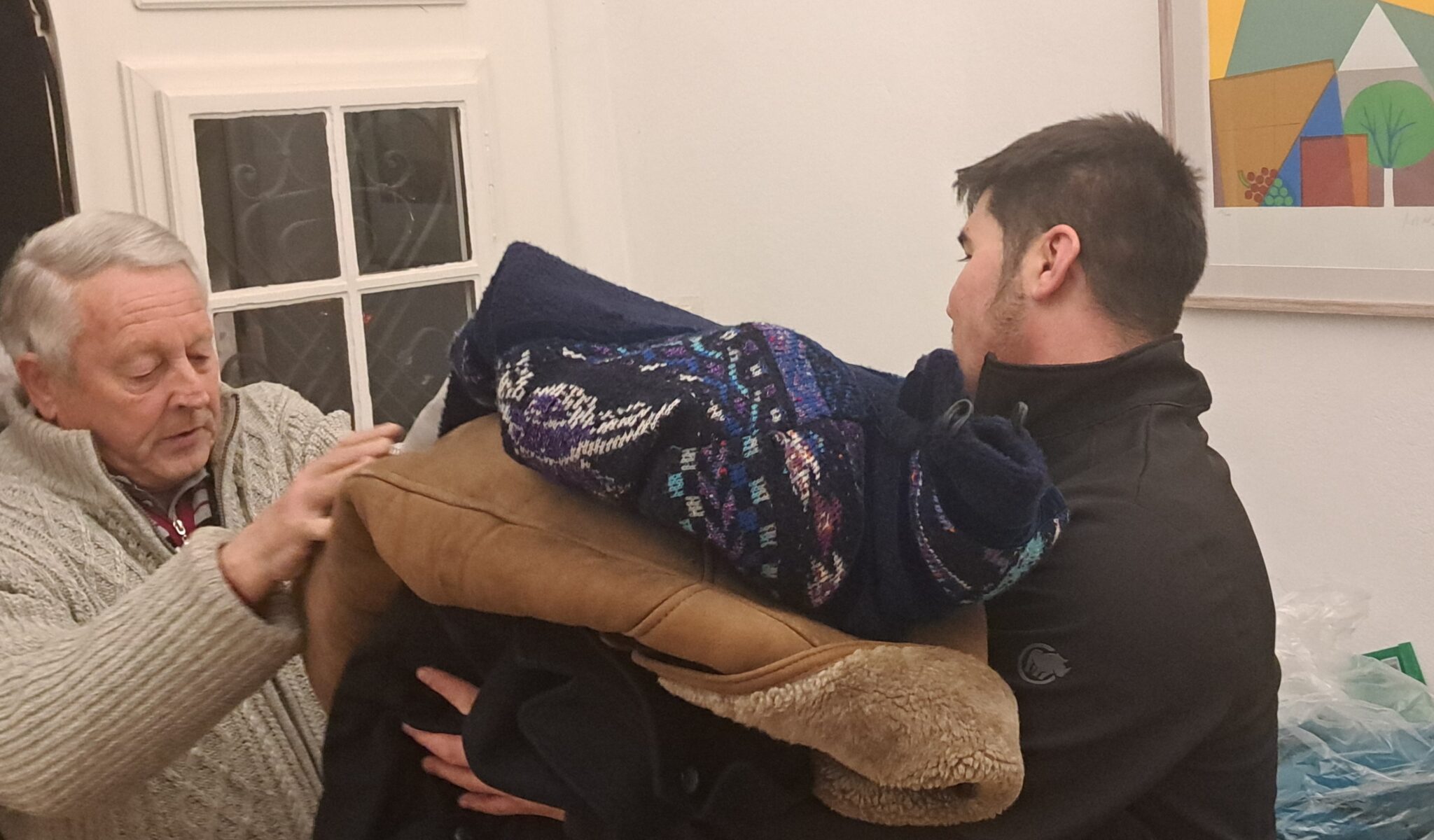
People arrived with single jackets, with full boxes, bags and cartons. Some brought items while others accepted them, sorted them, packed and labelled them. Young people from Kharkiv and Afghanistan, women from Kiev and Eggenburg worked side by side.
Some families returning directly from their ski holiday spontaneously brought their ski equipment and thermal clothing. A man took off his expensive down jacket, left it there and went home in his shirt sleeves. People who didn’t know each other stayed to help and everyone was happy to contribute. By 22:30 two minibuses were already loaded.
Saturday, February 7, early morning
The first two minibuses left for Vienna, where the material was delivered to the collection point. Meanwhile, the work of sorting, labelling and packing continued at the Eggenburg presbytery. At 14:00 a third minibus left for Vienna.
Donations came from all over and a variety of people participated: the current Mayor and two former Mayors, the pastoral assistant and a German teacher, an Afghan pizza chef and other shopkeepers, parents with their children and pensioners.
There was a deep sense of warmth between everyone: some people embraced while others shyly left their bags at the door and slipped away.
Someone wrote:
“Something like this makes you hope that humanity can still change course. You could feel the willingness to help when we heard the news from a bombed and freezing Kiev. Then someone started to help and suddenly a little miracle happened”.
Saturday 7 February @ 5 p.m.
Over a ton of donations was sorted, packed, labelled, loaded and delivered to the collection point for Ukraine. 27 hours had passed since the appeal was received. The entrance to the presbytery was empty once more and back to normal. Was it a dream? No. But perhaps Eggenburg truly experienced a little miracle.
By Christine Schneider-Heinz
https://fokolar-bewegung.at/nachrichten/die-magie-des-augenblicks
Photo: © Sepp Schachinger, Michael Heinz
Cast your cares on God!
Humility!
Pray for peace
Give a smile
Avoid gossip
Train yourself in living the present moment
‘See, I am making all things new.’
(…) We cannot know when and how this will happen and it’s a waste of time trying to find out. It is certain, however, that it will come about. It is not a dream nor a utopia nor a sentimental desire. No, it is a certainty repeatedly upheld by God in the Bible. It will be God’s response to the untiring efforts of his children to build up his kingdom. It will be the crown given to them for their fidelity in living his Word. It will be the full unfolding of the power of the Holy Spirit, which Jesus introduced into history through his death and resurrection.
From the very moment Jesus came on earth, in spite of tribulations of all kinds, this renewal has already begun, it’s already under way. From now on, all those who allow Jesus to live in them – and he lives in us if we put his words into practice – will experience the miracle of his grace that makes all things new. His grace transforms suffering into peace and inner serenity. It overcomes our weakness, hatred, selfishness, pride, greed and every sort of evil. It enables us to pass from the slavery to our passions and fears to the joyful freedom of the children of God. Furthermore, God’s grace is not limited to transforming the individual person, but through each one of us, it transforms society as a whole.
(…)
In fact, God wants to renew all things: our personal life, friendships, conjugal love, the family. He wants to renew life in society under every aspect: work, education, culture, entertainment, health, economics and politics. In short, God wants to transform every sector of life on earth.
But God needs us in order to do this. He needs people who allow his Word to live in them, people who are his living Word, people who are another Jesus in their own particular environments. And since the Word that summarizes Jesus’ teaching, the full expression of God’s law, is love, let’s try to put it into practice. Let’s love our neighbors just as we love ourselves, without watering down the Word of God, without minimizing its power.
We will become aware of a continuous renewal, above all in our own hearts, and before long around us as well.
Chiara Lubich
Photo: © Kaike Rocha by Pexels
Welcome God’s will
Love conquers everything
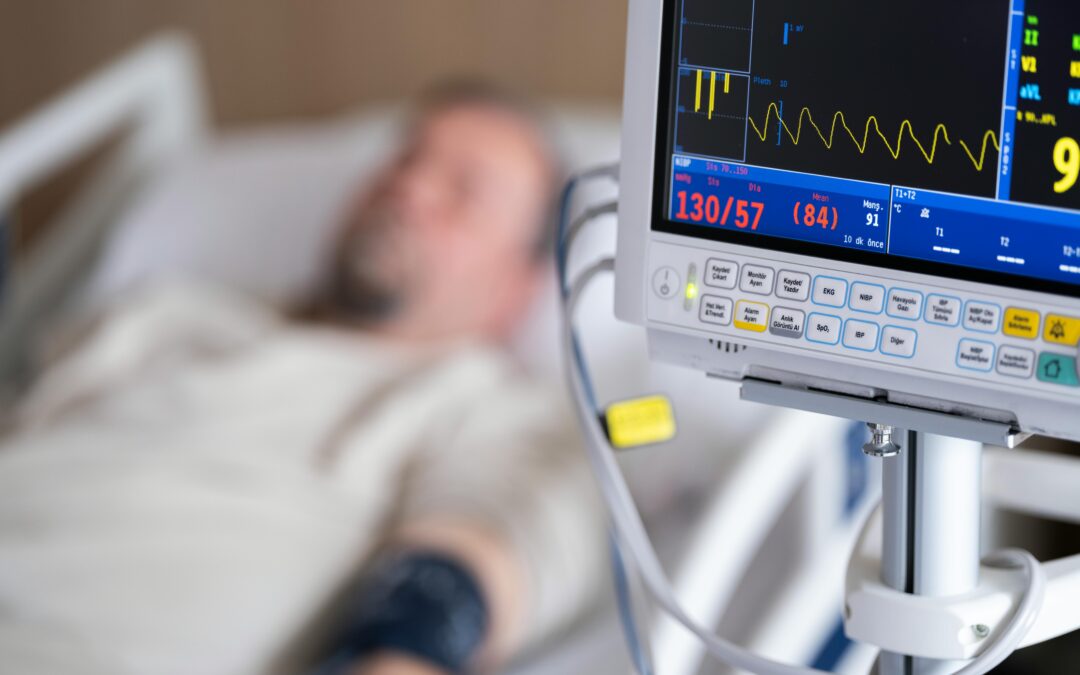
I am 62 years old, I am Irish and I have lived in Taiwan for many years. I have had pulmonary fibrosis for a long time, so when I began to feel more tired, I thought it was just a worsening of this condition. I went to the doctor not very worried. To my surprise, I was told directly and without any preparation: stage four cancer, which has already spread to the other lung and perhaps elsewhere.
My first reaction was to call my wife. She and my daughter, who lives with us in Taiwan, remained on the phone in silence. Our other daughter is in Ireland. At that moment I was not afraid for myself: my thoughts went immediately to them, to the burden that this news would place on their shoulders. At the same time I felt a deep regret for all the times I hadn’t loved fully, for the wounds I had left along the way. It seemed too late to make amends.
One day a priest came to celebrate Mass in our home. I have known the Focolare Movement since I was eleven years old, and I have always lived the offering of myself to God during the consecration. But that time I understood something new: I could place in the chalice, not only myself, but also all the people I had hurt. I could entrust them to Jesus so that He might heal what I could no longer repair. It was an immense relief. Since then, a deep serenity has accompanied me.
Eight years ago my wife had breast cancer. We have already passed through darkness. Then, as now, we chose to trust in the Father’s love. When I pray the “Our Father” and say “Thy will be done,” I feel that my whole life is already held in heaven. The future does not belong to me: it is in God’s hands. All I have to do is say yes.
I often think of Loppiano (Italy) where as a young man I felt a very strong call to follow Jesus. Over time I understood that it was an invitation to recognize him above all in suffering, in that face that the charism refers to as ” Jesus Forsaken “. Even when my wife was ill, before the cross I understood that it is not enough to remain below and look on: we must ascend with Him, enter into His abandonment and let ourselves be carried to the Father. Our home is there.
Before the diagnosis I had a very full life: I taught at the university, I accompanied students and young people, I supported families and I participated in the life of the Movement. Now my world has shrunk. I’m on leave of absence and in order to avoid infections, I go out little. But something surprising is happening: people seek me out. They write to me from every continent and pray for me. Some young people in Taiwan have created a group to pray together every week. I thought I had sown very little; now I see that love returns multiplied.
When I speak openly about my illness, many find the courage to open up about their own wounds. My weakness becomes a space for communion. It is as if, Christ, lifted up on the cross, draws hearts to himself. This illness, which humanly is a death sentence, turns out to be an opportunity to welcome others.
There are sufferings that can be shared with everyone and others that can only be expressed to God, in a deep dialogue with Him. I know moments will come when I won’t even have the strength to offer my pain. So I prepare myself in this way: by repeating my yes. “Not my will, but yours be done” (Lk. 22:42). I know I can’t face what lies ahead alone. But I also know I won’t be alone.
In these months I have understood that love is not the sole remit of those who know Jesus or call themselves Christians. In the hospital, the doctors and nurses who treat me do not share my faith, yet they love with a tenderness and attentiveness that move me. I have seen in their daily gestures – an extra phone call, a patient explanation, a discreet presence, that love is greater than labels. When I look at suffering through the eyes of love, it no longer remains trapped in fear: it is transformed, it becomes a space of hope, something mysteriously positive. It is as if every act of care, even if unconscious, is already a pathway to God, because wherever there is love, it leads to Him.
And within this immense communion – made up of my family, friends, students, young people and doctors who love perhaps without fully knowing why – I experience that everything is already held within a design of goodness. I don’t have to control it or fully understand it: I can simply dwell within it, day by day, with gratitude.
Compiled by Carlos Mana
Photo © Engin Akyurt-Pexels
Creativity in loving others!

In 2025, the Focolare Movement took additional steps to make its commitment to safeguarding both structural and verifiable, with particular attention to children and vulnerable adults. This was carried out in three areas:
Regarding regulations, the Movement has drawn up and approved the Safeguarding Policy of the Focolare Movement, which came into effect on the 1st of January 2026. The Policy brings together values, responsibilities and practices, connects procedures and guidelines, defines codes of conduct, criteria for safe spaces with a clear focus on people who have suffered abuse, providing for listening, accompaniment and – in specific cases – support and measures for compensation.
On an organisational level, on the 2nd of September 2025, the Safeguarding Office was established, with the task of coordinating safeguarding activities, monitoring commitments and deadlines, supervising official communication and supporting local safeguarding officers. It is supported by the Advisory and Action Board: a body composed of experts in the fields of formation, communication, law, and accompaniment of people who have suffered abuse. Its task is to assess the compliance of the actions undertaken according to the founding values of the Focolare Movement, to propose guidelines and strategic plans, and to promote collaboration with external experts and networks, ensuring constant updates on current regulations and best practices in the field of safeguarding.
In dialogue with the Catholic Church, in the two-year period 2024-2025, a collaboration with the Pontifical Commission for the Protection of Minors (PCPM) was developed. The Commission examined the Procedures for handling cases of abuse, making several observations; it also requested information to include an analysis of the Movement’s policies in its own 2024 Annual Report. The PCPM’s recommendations have led to a process of implementation that has already been partially completed (including the publication of the Internal Regulations of the Independent Central Commission and the reporting of dedicated resources) and, for the remaining part, is in the process of being defined or developed (additions to be made to the General Statutes of the Focolare Movement, IT tools and institutional channels for data confidentiality).
The commitment to integral formation in safeguarding was outlined in an initial document summarising the courses and initiatives planned for the two-year period 2024–2025. The information shows the work being done to make formation more widespread, strengthen local commissions and coordinators, and at the same time highlights some critical issues that need to be addressed: continuity of formation, intercultural adaptation of materials, and improved flow of communication.
All of these steps – Policy, Safeguarding Office, collaboration with the PCPM, formation and transparency in reporting – express the desire to continue with determination on the path of prevention, shared responsibility and listening to those who have suffered an abuse, in the belief that safeguarding is an integral part of the Movement’s mission and a service to the common good.
In this perspective, the words that the Pope addressed to the participants at
the meeting ‘Building communities that safeguard dignity’ also resonate for
the Focolare Movement as a guideline to follow:
“I therefore appreciate and encourage your intention to share experiences and learning processes on how to prevent all forms of abuse and how to give an account, with truth and humility, of the steps taken to protect minors. I urge you to continue this commitment so that communities may increasingly become examples of trust and dialogue, where every person is respected, listened to, and valued.
Where justice is lived with mercy, wounds are transformed into openings for grace.”[1]
Stefania Tanesini
Interview with Bishop Alí Herrera, Secretary of the Pontifical Commission for the Protection of Minors of the Catholic Church
[1] Message of Pope Leo XIV to the participants at the meeting “Building Communities that Safeguard Dignity”, promoted by the Pontifical Commission for the Protection of Minors, Rome, 15 November 2025.
Every obstacle a launch pad!
Trust in God
Closeness creates a real sense of family
Look after Creation
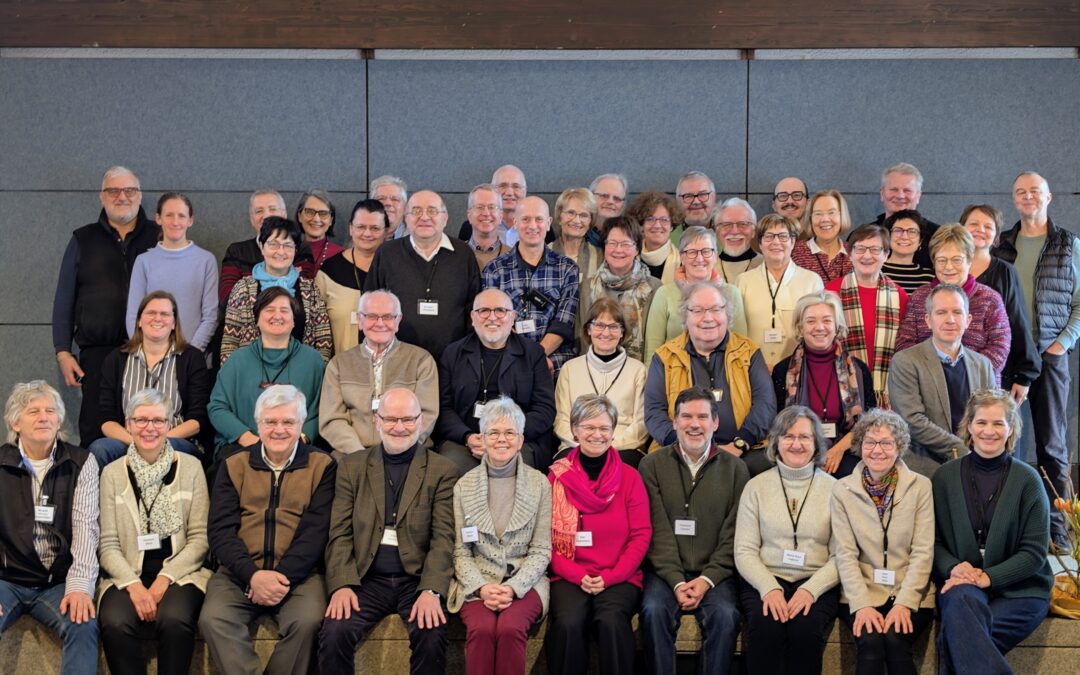
Forty-five participants from nine European countries met from 30th January-1 February in the ecumenical “little town” of the Focolare in Ottmaring, near Munich, to reflect on how to rediscover a passion for Europe and a form of dialogue capable of uniting. Focolarini and members of the Fraternity of community life that has its origins in the evangelical world, live together in the little town founded by Chiara Lubich in 1968.
Jesús Morán, Co-President of Focolare, began by emphasizing that the purpose of this European Conference was to reflect on Europe in the light of the charism of unity, from which the Ottmaring Focolare Cultura has also emerged. It is a group of Focolare members from several European countries who explore dialogue between cultures. “However, we are not meeting – Moran stressed – to draw up an operational programme: concrete actions already exist, such as the experience of Together for Europe, educational activities for young people and politicians in Brussels and Dialop, the dialogue with left-wing politicians. Nor is there any need to draft a manifesto of intent. Rather, we are here to nurture a passion for Europe, convinced that the charism of unity is a gift for Europe, just as Europe is a gift for the charism”. At the heart of the proposed method was mutual listening: “Offering hospitality to the Spirit and to each other”, allowing dialogue to be born from relationships.
Many reflections addressed the rift between Western and Eastern Europe. Peter Forst quoted a young woman from Eastern Europe who said, “We no longer love each other”. This seemed to sum up the tension that runs through the continent today and raises a pressing question: does Western Europe really listen to the voice of the East? Does it read its authors? Does it understand its wounds?
Anja Lupfer insisted on the method of creative listening: not looking for immediate answers but suspending prejudices in order to encounter others. “We’re not seeking dialogue as an objective”, she underlined, “we are seeking the other”. It was an invitation to a non-competitive understanding, capable of descending “into the depths of the other”, overcoming the illusion of a neutral cultural space. Even within the Focolare, differences emerge that call for shared narratives and a more sincere exchange.
Klemens Leutgöb recalled the enthusiasm of the 1990s after the fall of the Berlin Wall and warned that the fracture has reappeared. To overcome it, divisive issues, ranging from gender issues to nuclear energy, must be faced rather than avoided. Diversity becomes a resource only when we engage in it together. Forst added an episode: during a trip to Eastern Europe in 2023, many people spoke only of the past, accusing the West of having eroded values such as family and faith. He commented, “The present can divide but our pact of unity must be stronger. The evaluation of events may differ, but in her experience known as Paradise ’49, Chiara Lubich speaks of truth that embraces contradictions in unity saying, “When we are united and He is present, we are no longer two but one. What I say is not said by me alone but by me, Jesus and you in me. And when you speak it is not you alone, but you, Jesus and me in you.””
Francisco Canzani asked a recurring question: “If you love me, why don’t you know my pain?” Often there is not enough time or courage to really listen. Dialogue comes from concrete life, not from programmes. He concluded with a Jewish story: two brothers secretly carried wheat to each other at night, taking it from their own barns. They didn’t understand why the level of their stores always remained the same. One night they met, understood and embraced. On that very place, Solomon’s Temple would be built: a perfect image of fraternity.
A concrete example of this spirit is the “European Project” Focolare in Brussels, described by Luca Fiorani, Letizia Bakacsi and Maria Rosa Logozzo: a former pizzeria was transformed into a house of dialogue between parliamentarians, refugees, officials and young people, lived quietly, away from social media and in the simplicity of encounter. The initiative is also made possible by the structured dialogue provided for by the Treaty on the Functioning of the EU.
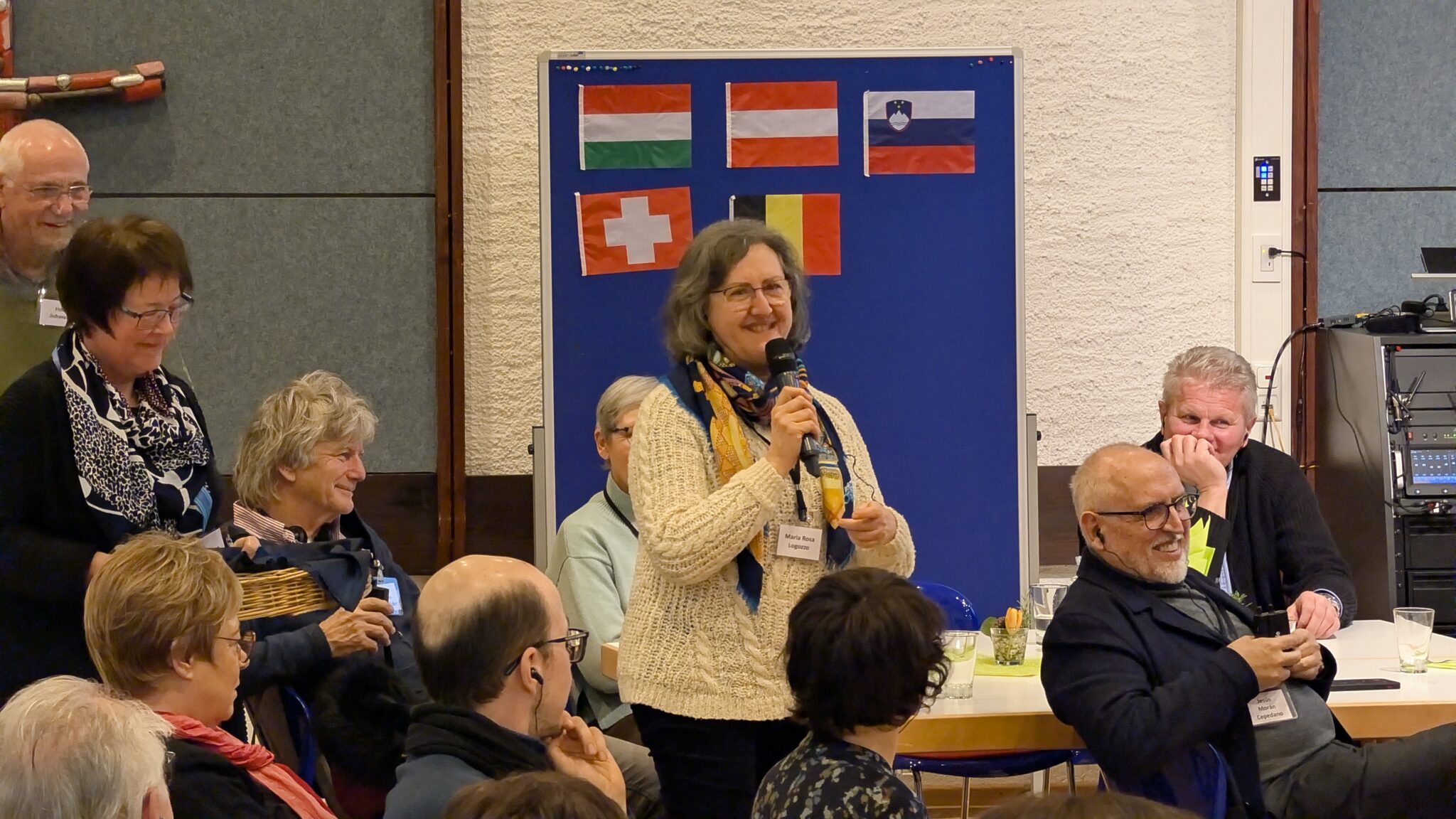
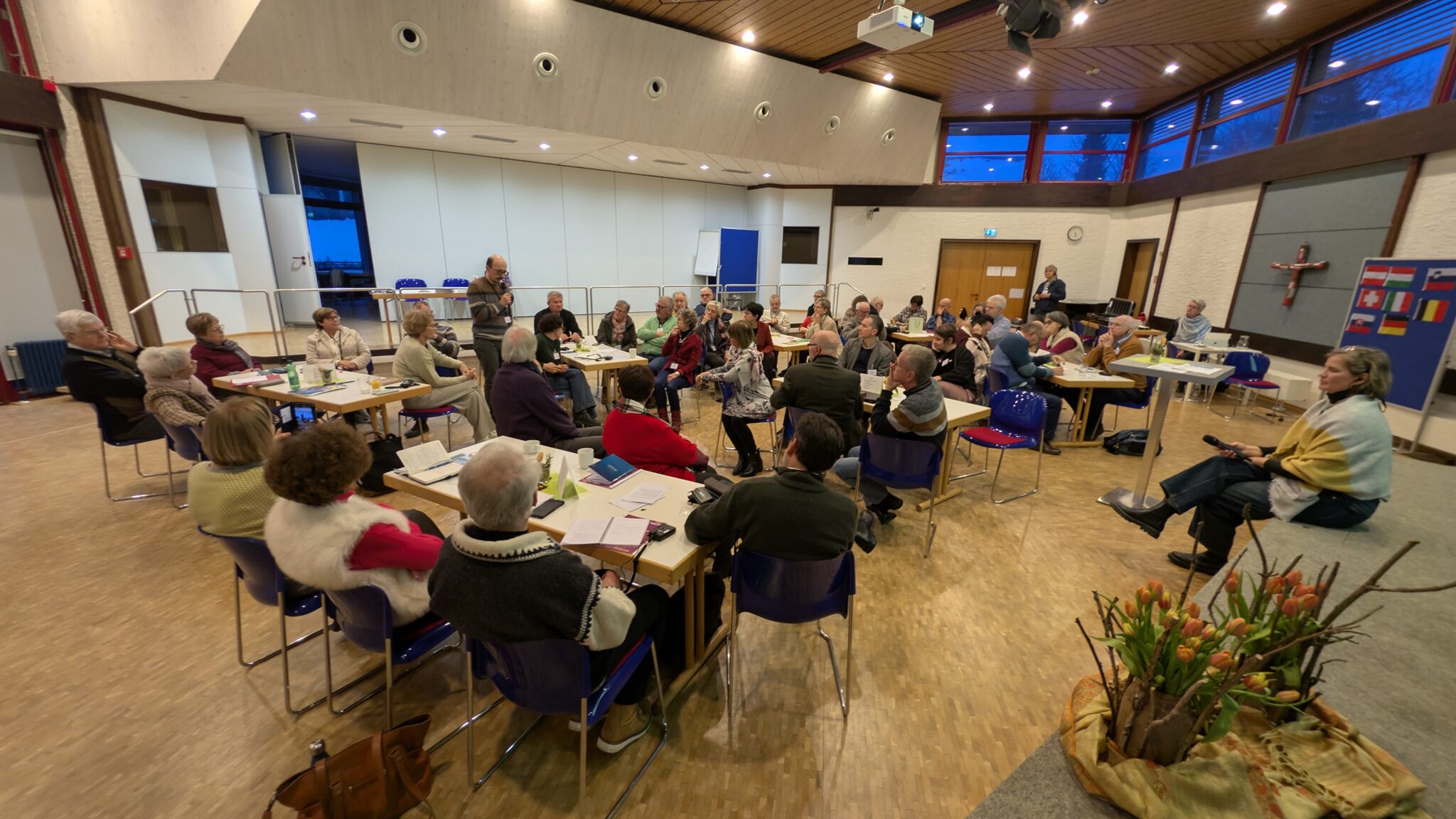
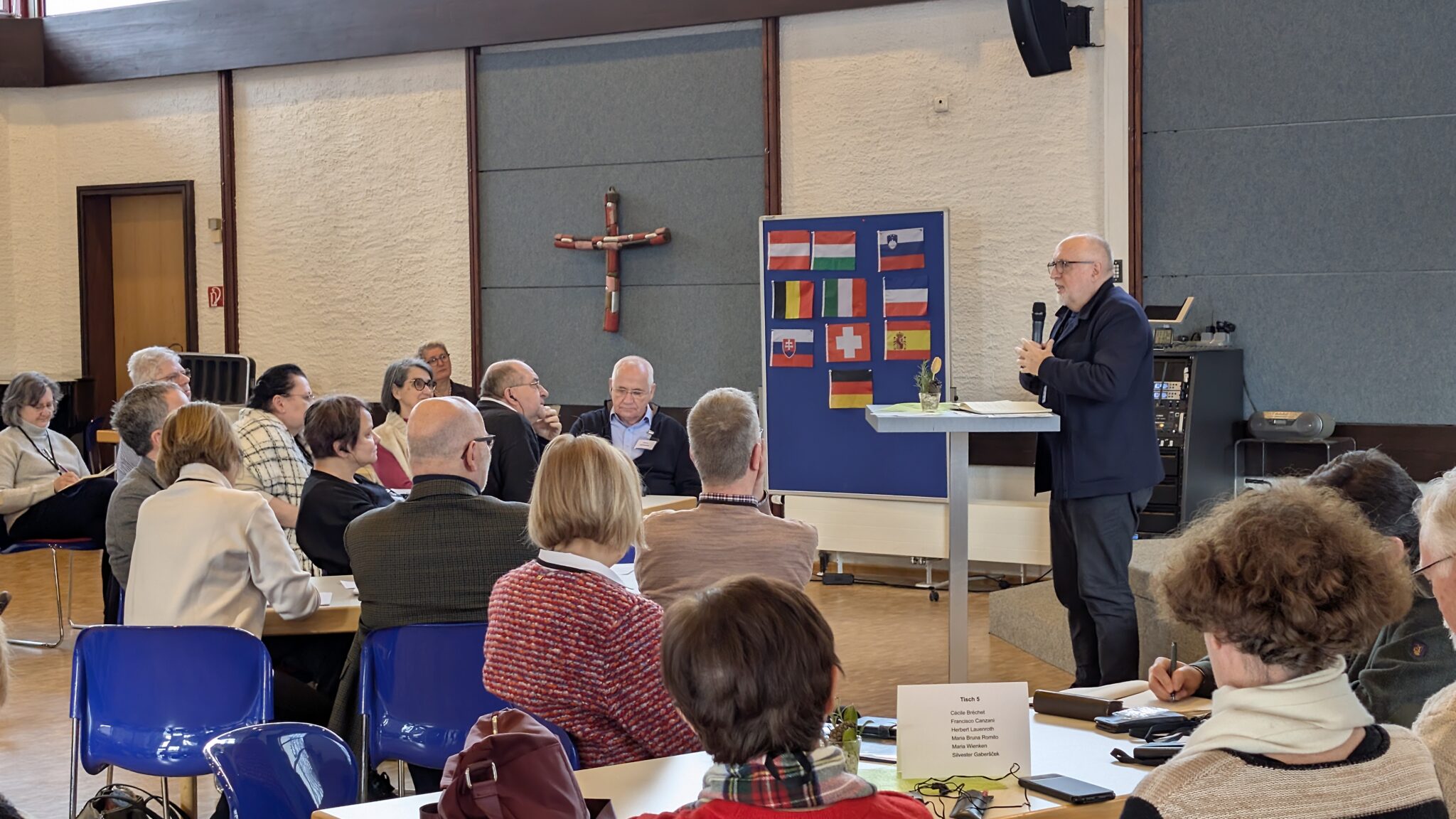
The multipolar dialogue group brought strong testimonies from the wounds of the East. Palko Tóth recalled the young Russian soldiers buried in Budapest: “They are our children too.” Many in Eastern Europe are disillusioned with the West. New dialogue initiatives will emerge to heal these wounds, such as the international meeting in Transylvania on relational identities.
Franz Kronreif and Luisa Sello presented Dialop, a path of dialogue between the European Left and the Catholic world, also inspired by “Paradise ’49”. The project, encouraged by Benedict XVI and Pope Francis, works on major ethical issues with the logic of “differentiated consent and qualified dissent”.
Many testimonies enriched the meeting: a Russian couple divided by opposing narratives about the war in Ukraine; a South Tyrolean couple accustomed to living with different languages and cultures; and a Slovak priest concerned about the loss of religious sense in Western Europe.
In his concluding remarks, Morán pointed to the mystery of Jesus Forsaken as a key to European identity. He also referred to the crucifix of San Damiano, “the God who comes from Europe”. Europe has universalized the Gospel but also carries historical shadows such as colonization, wars and nihilism; it is precisely there that the charism of unity was born. He said, “It is not a matter of superiority but of safeguarding what Europe can still offer the world: above all Jesus Forsaken”.
For this we need a “daily relational mystique”, made up of dialogue, living networks and cultural and political initiatives. Everything that already exists, Together for Europe, multipolar dialogue, the Focolare Cultura, the Brussels “European Project” Focolare and Dialop, is part of a single endeavour to be safeguarded and developed. “We must move forward, keep the network alive, each with our own commitment”.
Aurelio Molè
Photo: © Magdalena Weber
Take care of relationships
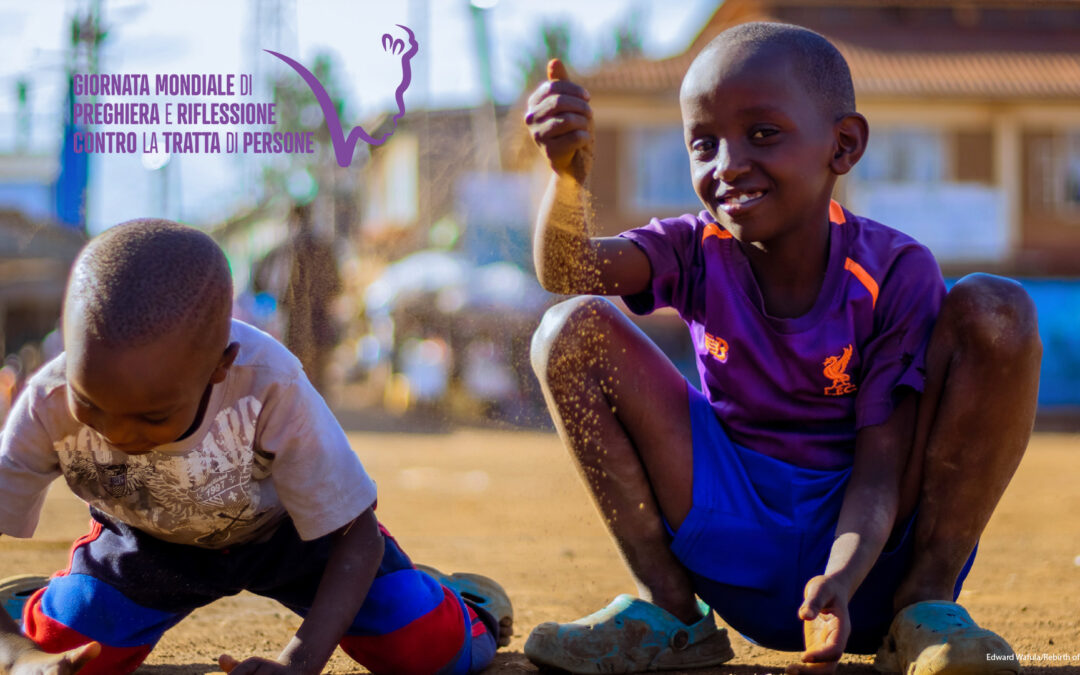
Dear friends,
Greetings to everyone on behalf of the Focolare Movement worldwide, as we join in prayer for this digital pilgrimage. Together with all of you, we want to raise our voices to God to ask for an end to human trafficking and to affirm the dignity of every human being:
O Lord, our God,
You love every one of your people. You have given us the gifts of the earth so that we may all live in peace as your children.
Today, a cry is rising up to you from those who have been violated, those who have been exploited in degrading ways, those who are victims of human trafficking.
Help us, Lord, to stand by these sisters and brothers of ours. Multiply the forces of good to encourage their hope in the possibility of a new life.
Make the hearts of the indifferent sensitive. Grant that every citizen, even those who hold the fate of peoples in their hands, may grow in awareness of the need to fight this serious social scourge.
Lord, we ask you that we may be able to spread the global appeal that is being launched today, so that Your will may be done on earth as it is in Heaven.
United, let us continue to pray and act for justice.
Thank you to each and every one of you for being part of this chain of hope and of love that is stretching across the world.
Margaret Karram
Video in Italian: activate subtitles and select the desired language.
To review the Digital Pilgrimage: https://www.youtube.com/live/tY-8zUHMrlg
Website: https://preghieracontrotratta.org/?lang=en
Thank God for his gifts
Love everyone
Base your choices on love
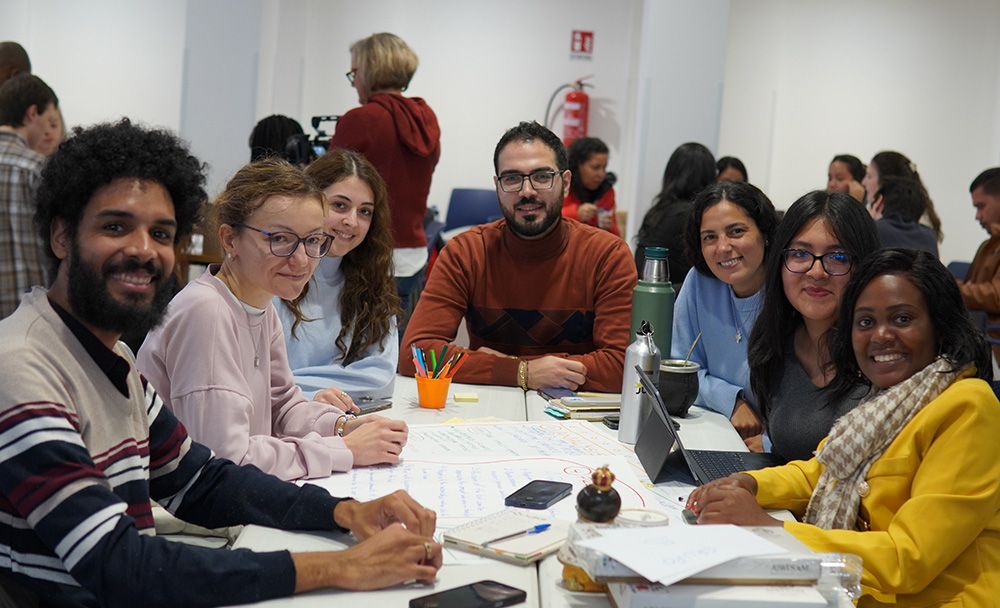
From 26th January to 1st February 2026, Rome hosted 100 young political leaders from 36 countries for the conclusion of the first year of the two-year political formation programme “One Humanity, One Planet: Synodal Leadership”—a challenge to develop a different style of governance, starting from the paradigm of fraternity.
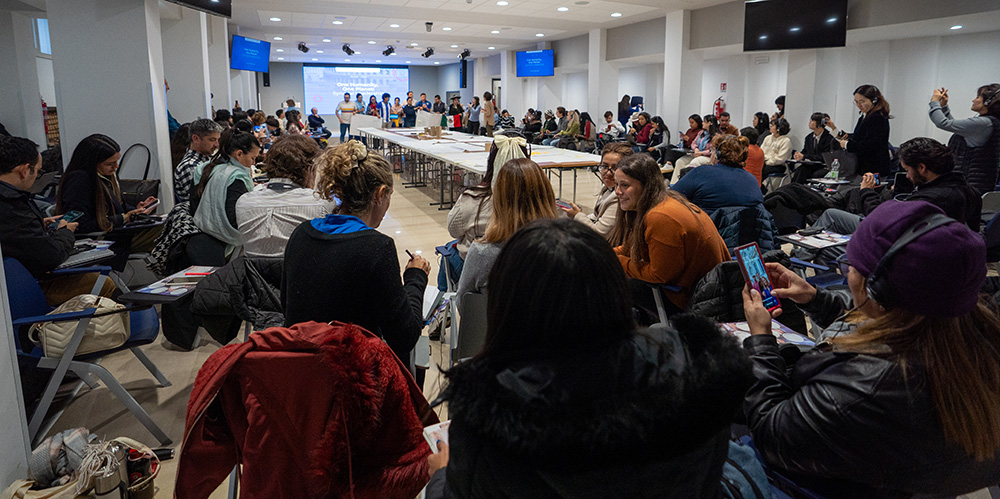
Following an online pathway of work in 16 learning communities, they came together for a political hackathon—literally a creative and collaborative marathon—focused on what most deeply wounds the global social fabric today: corruption, inequality, widespread violence, unethical digital transition, the ecological emergency, and declining civic participation. The programme, promoted by the Political Movement for Unity and the NGO, New Humanity, together with the Pontifical Commission for Latin America, aims to restore an active role in decision-making processes, from the local to the global level, to young people. Giovanna Maroccolo – Italy (Italian)
Watch the video with interviews with young people from different countries. Turn on subtitles and then choose the language you want.
Cover photo: ©WARFREESERVICE Agency
Go towards those who are lonely
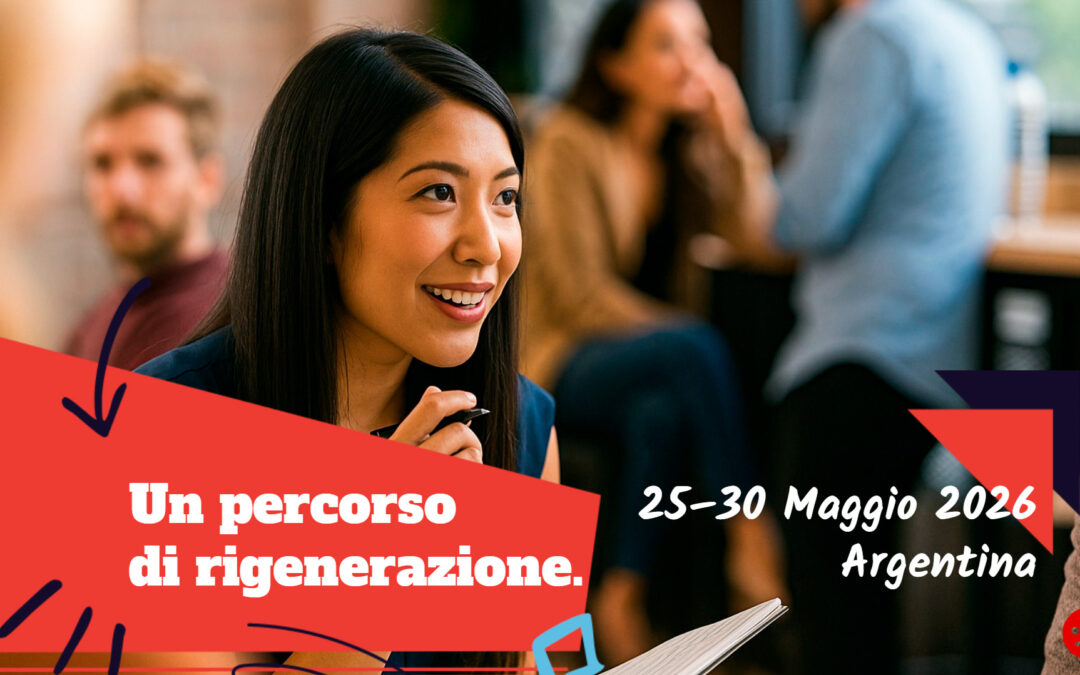
The Economy of Communion (EoC) will celebrate its 35th anniversary in 2026 and has already begun inviting its entire global network to a distinctive celebration, to be held from 25th-30th May in Latin America.With the theme “A path of regeneration – 35 years of Economy of Communion”, the event will bring together participants from many countries for a unique experience of encounter, celebration and commitment.
Unlike traditional formats, the event will be structured in two complementary phases, with the aim of offering a practical experience of the culture of communion, a hallmark of the EoC since its foundation in 1991.
First phase: encounter with local experiences (25th-27th May)
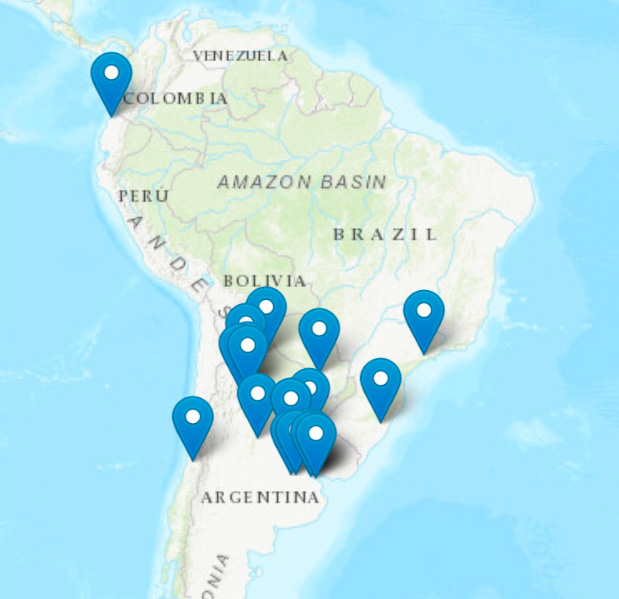
In the first phase of the event, about 20 Latin American local initiatives will welcome small groups of participants.
These groups will have the opportunity to immerse themselves in communities rich in identity and traditional knowledge that are experiencing the consequences of the current economic system. These initiatives seek to put the culture of the Economy of Communion into practice, with the aim of transforming the local socio-economic context through human development and entrepreneurship.
“Our proposal is that each person becomes part of the daily life of these local initiatives and by looking at the world through this encounter, they experience the potential for regeneration and transformation that arises through communion and reciprocity,” said Isaías Hernando, coordinator of the International Commission of the Economy of Communion.
Participants should arrive in their chosen communities on 24th May.
Seconda fase: celebrazione e impegno a Buenos Aires (29 e 30 maggio)
Second phase: celebration and commitment in Buenos Aires (29th-30th May)
The programme, which will be announced shortly, will have a workshop-style format, encouraging active participation and intensive exchange. Hernando added, “The objective of this day and a half will be not only to celebrate the first 35 years of the EoC, but also to commit ourselves to put in place the next steps to respond more effectively to the challenges of the current economic system and to move ever closer to fulfilling the vocation of the Economy of Communion.”
How to participate
The global Economy of Communion has launched a website with all the information about the event, where it is already possible to register: https://www.edc-online.org/it/argentina-2026
Participation is open to everyone currently in the global EoC network, members of projects, teachers, students, researchers, entrepreneurs, social entrepreneurs, members of organisations, movements and networks with similar aims, as well as anyone interested in the proposal.
Cibele Lana
(Rivista Cidade Nova – Brasile)
Put mutual love into action
Give with joy
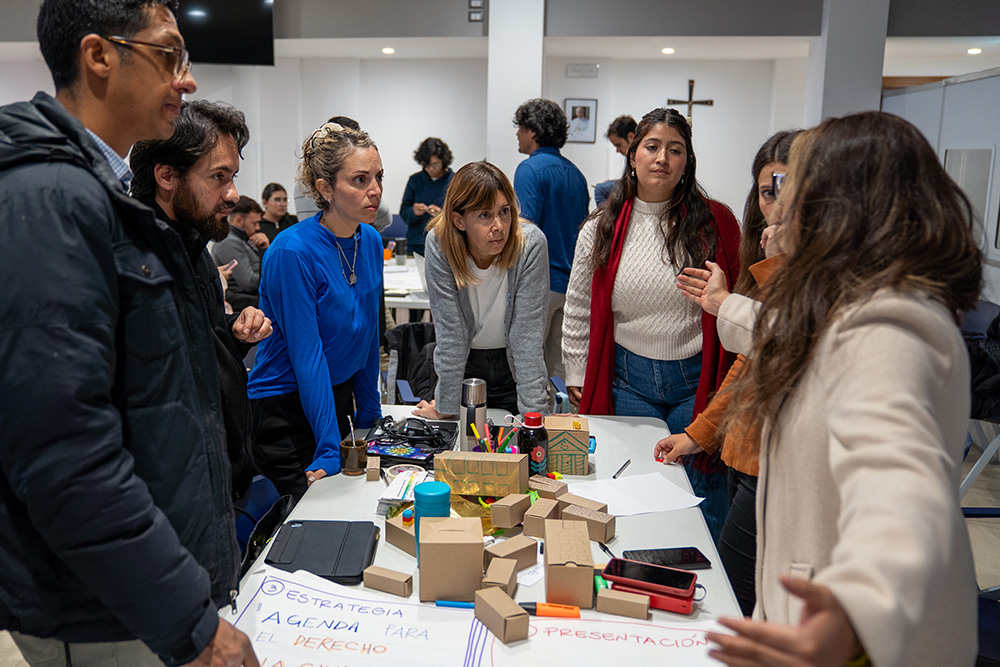
“I encourage you to work together in studying forms of participation that allow all citizens … Upon this foundation, it becomes possible to build that universal fraternity which is already taking shape among you young people, a sign of a new era.”
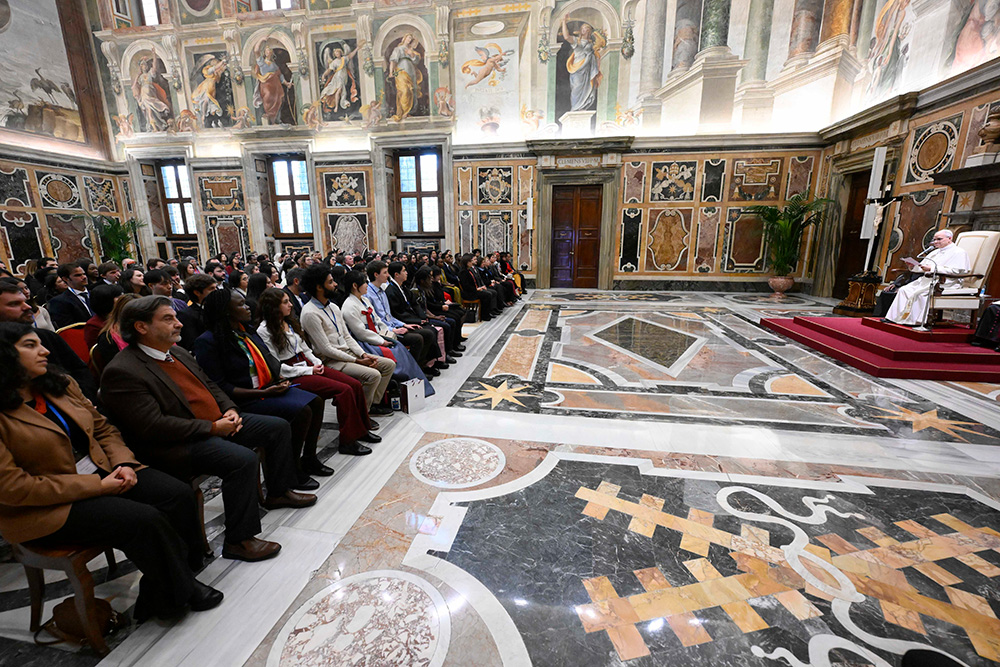
With these words, Pope Leo did not simply encourage the one hundred young political leaders gathered in Rome: he “recognized” their mission. He saw in them what traditional politics too often struggles to see: that the future will be born from inclusive processes, not form confrontations; from living communities, not from rigid structures; from a brotherhood that is not a naive sentiment but a concrete political category.
The one hundred from 36 countries participated in an audience with the Pope on 31st January. They were in Rome for the final week of the first year of the multi-year political school “One Humanity, One Planet”. Seven days that confirmed for them that fraternity is not an ideal: it is already a method, a lifestyle and a daily practice. They came from an online pathway of work in 16 learning communities, they came together for a political hackathon – literally a creative and collaborative marathon – dedicated to what most deeply wounds the global social fabric today: corruption, inequalities, widespread violence, unethical digital transition, the ecological emergency and declining civic participation. The programme, promoted by the Politics for Unity Movement and the NGO New Humanity with the Pontifical Commission for Latin America, aims to give young people an active role in decision-making processes, from local to global.
The Holy Father offered a vision that was as demanding as it was liberating. He asked the young people to look at the world through the lens of listening and collaboration between different cultures and faiths; to seek peace not as an abstract concept, but as a daily choice in the places where they live, study and work; to build policies capable of involving all citizens, men and women, within the institutions. He recalled that peace is a gift, a covenant and a promise all at once and that no society can call itself just if it continues to exclude the weak, ignore the poor and remain indifferent to refugees and victims of violence.
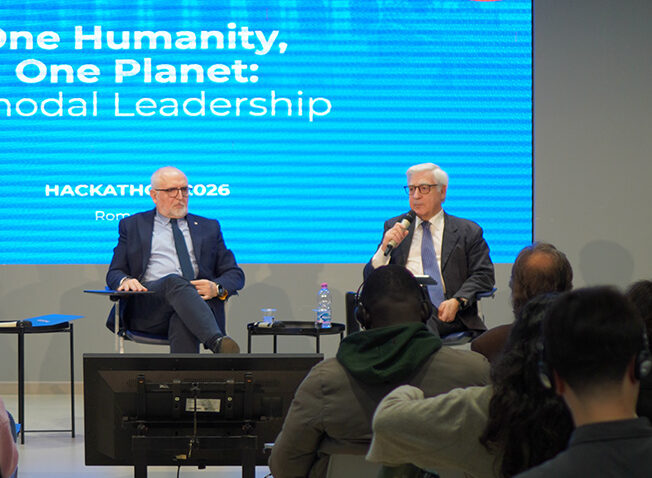
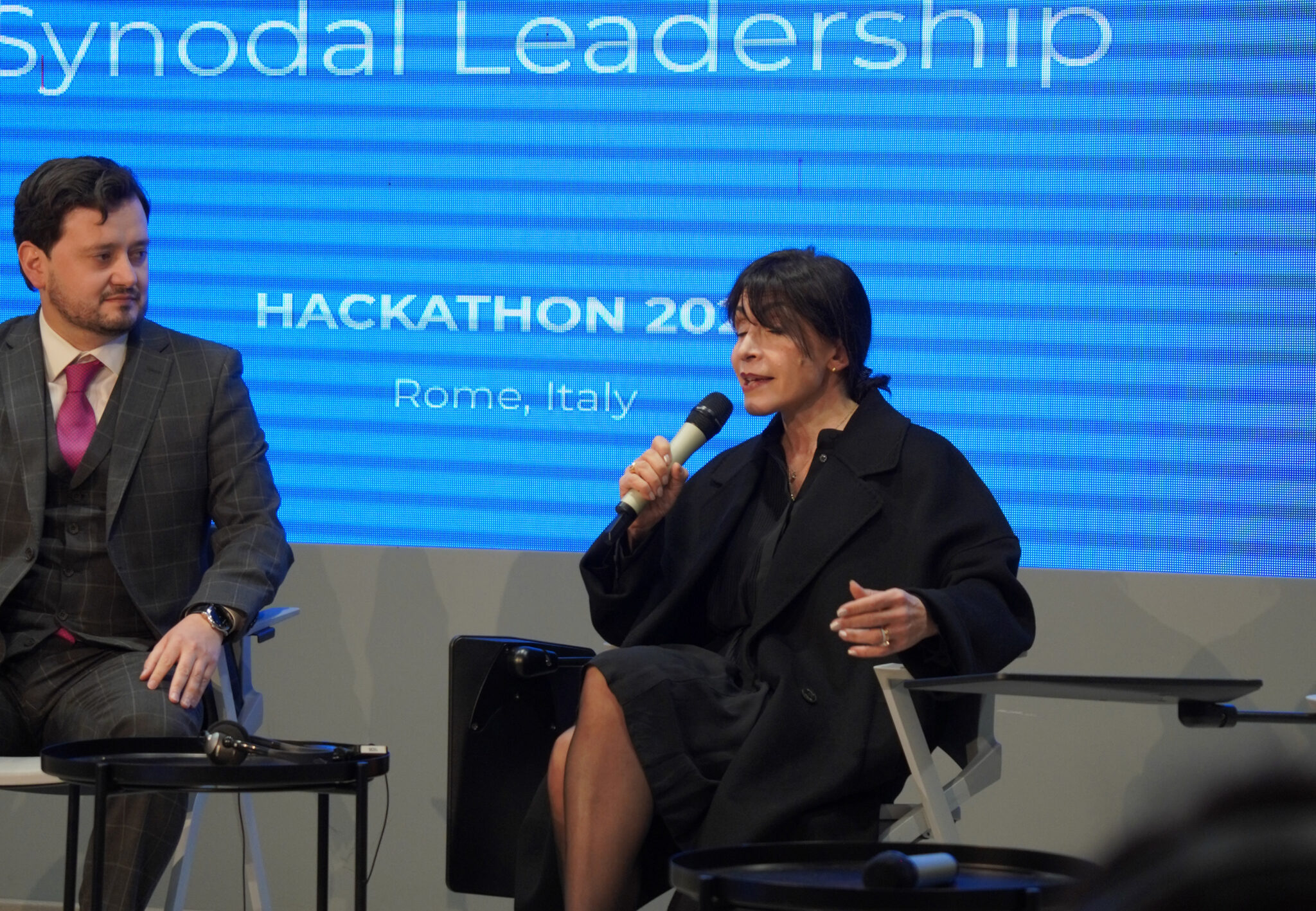
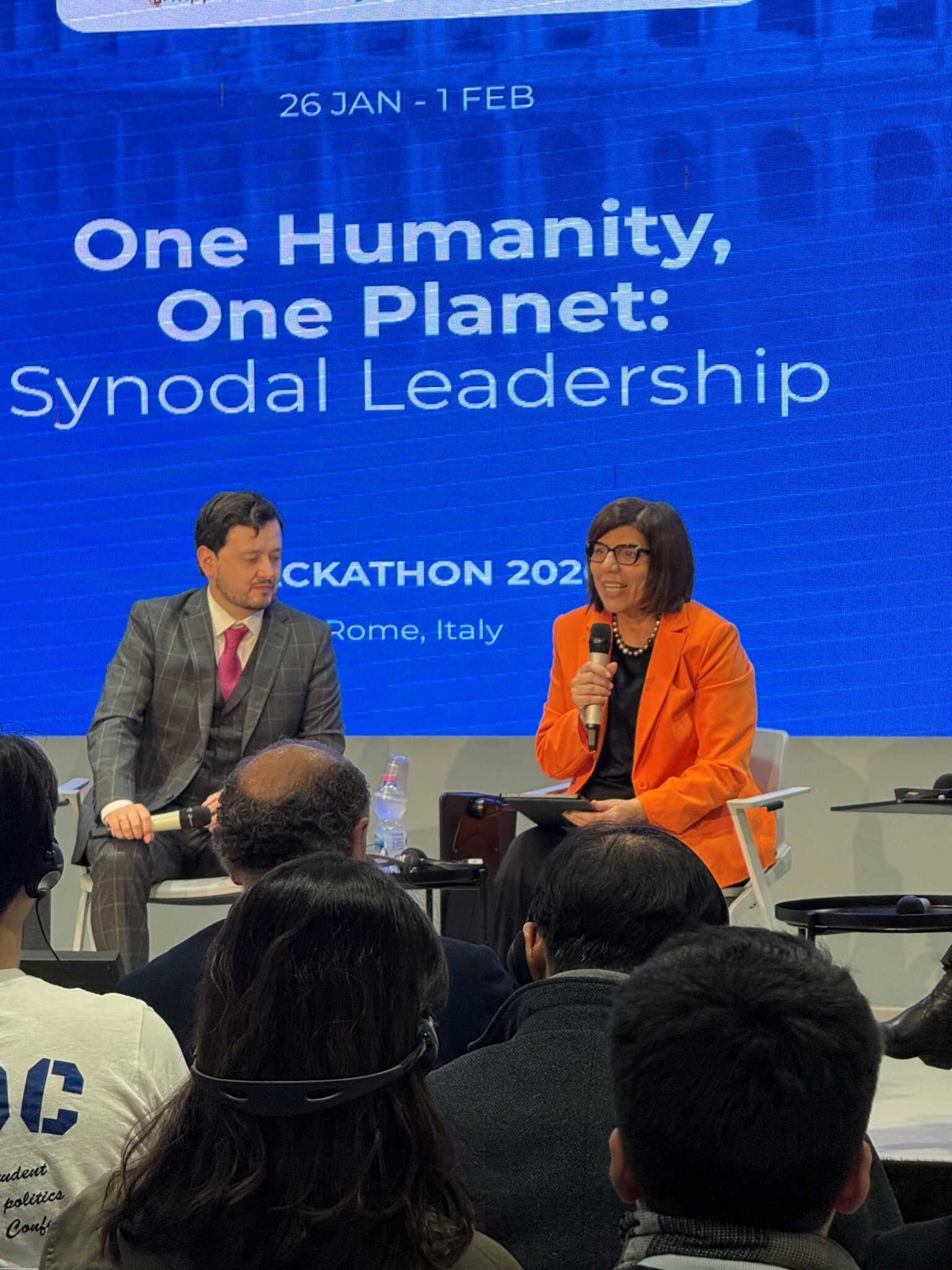
Some of the presentations during the Hackathon – © Agenzia WARFREESERVICE (3)
When she met the young people, the President of the Focolare, Margaret Karram spoke about a new political culture, based on fraternity, in the wake of what Chiara Lubich, founder of the Focolare, had taught. She encouraged them to “live” a form of leadership that places the collective “We” at the centre, that generates trust and seeks convergence in diversity. Not a method for a few, but an approach that can be exported everywhere: in institutions, in parties, in social movements and in civil society.
The testimonies of the participants powerfully confirmed this. Cristian, from Argentina, said: “It is the most important experience of universal fraternity in my life… every person, with their language, their dances and their charism, created the symphony of global harmony”. For Joanna, from Poland, resident in Italy, the experience was “a stimulus to concrete commitment”, fuelled by workshops, good practices and meetings with Italian and Korean parliamentarians. Zé Gustavo, from Brazil, spoke of an “intense and challenging experience”, capable of rekindling an adult, clear-eyed hope, born not from naivety but from the scars of lived politics. And Uziel, from Mexico, summed everything up in a simple and true phrase: “This is true globality”.
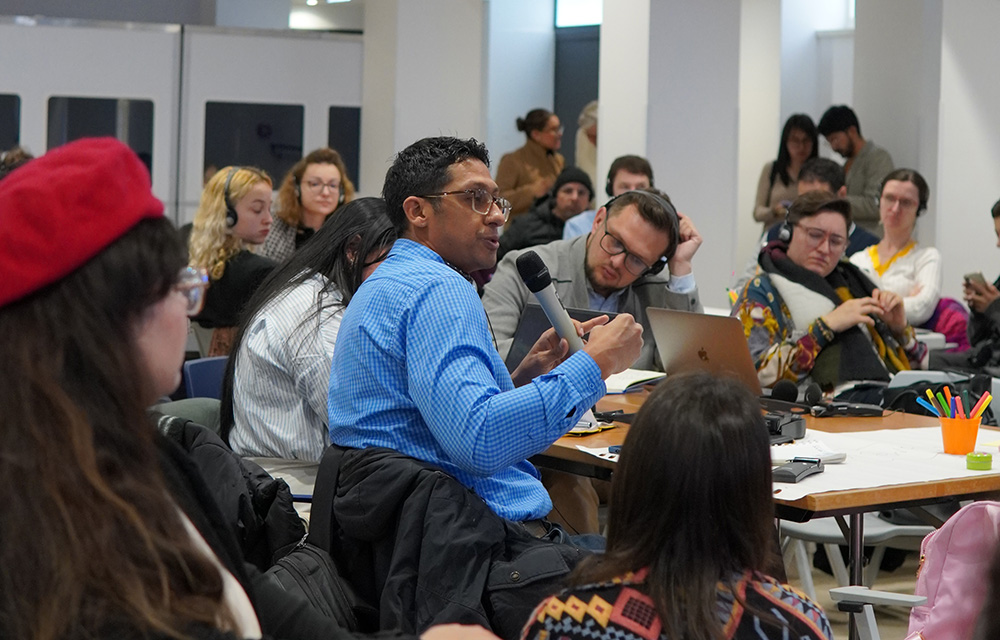
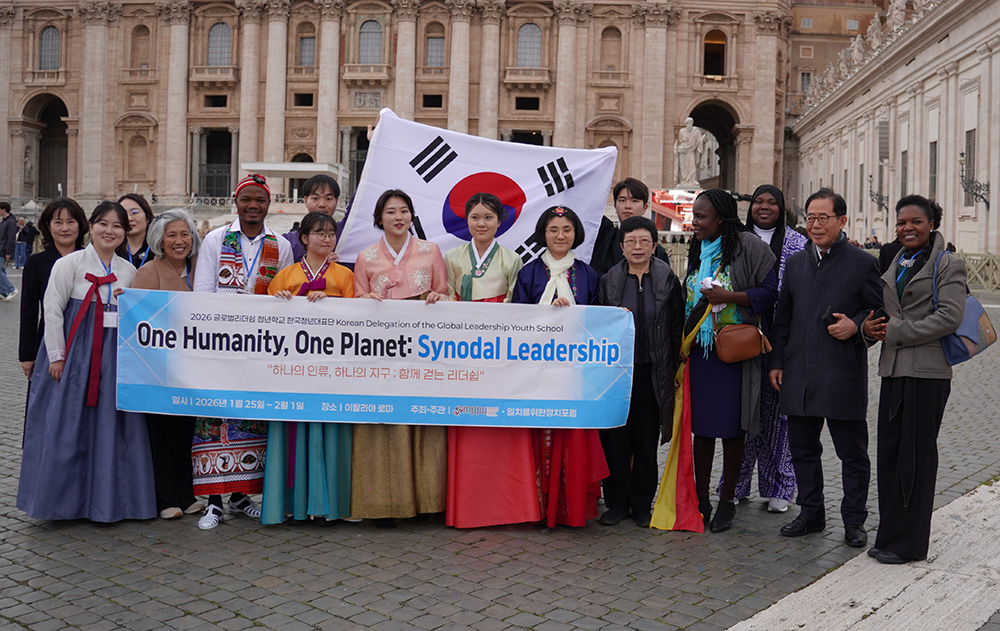
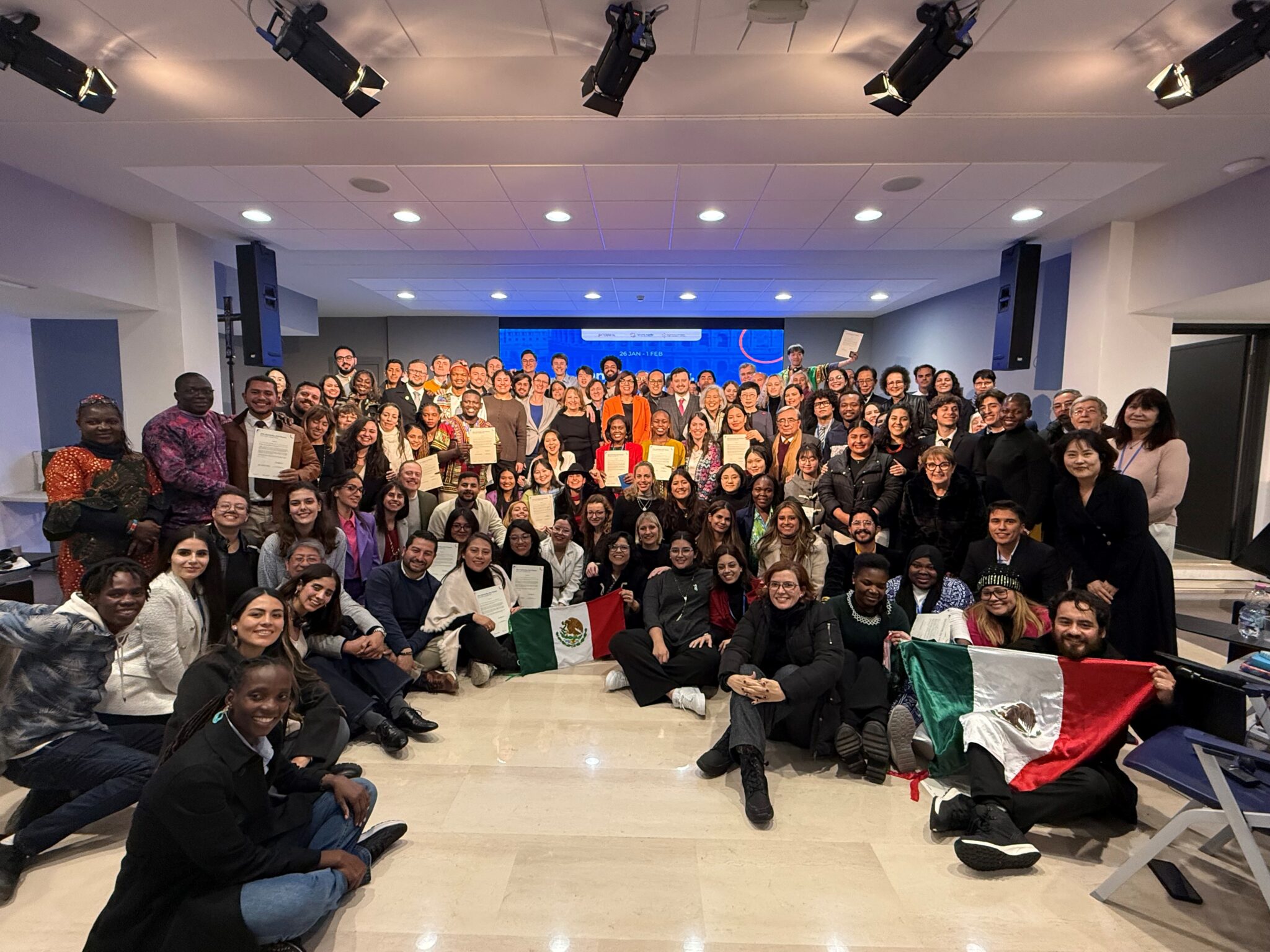
The young participants at various moments – © Agenzia WARFREESERVICE (3)
Now the school enters its second phase, involving 600 young people from the five continents to continue sharing visions, methods and actions with real impact.
For a week, Rome was a living laboratory of what politics could become again: a generative place; a training ground for fraternity; and a space where differences cease to be walls but become the raw material of the future. It was a concrete and credible testimony that another politics is not only possible, but has already begun.
Stefania Tanesini
Cover photo: © Joaquín Masera – CSC Audiovisivi
Be compassionate
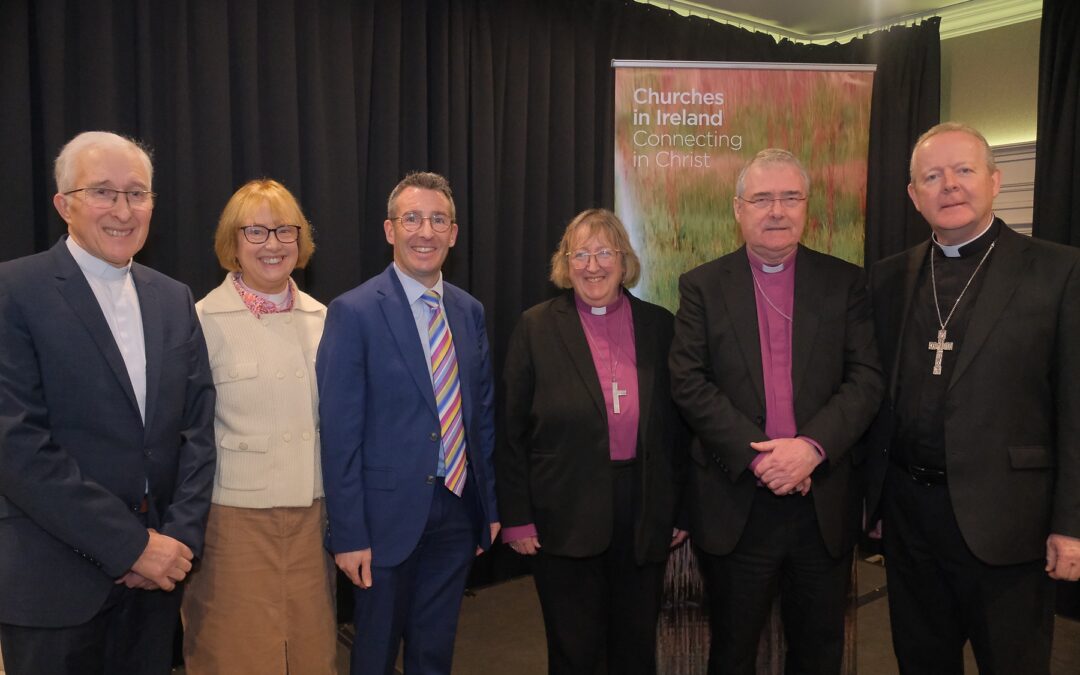
Organized by the Irish Council of Churches (ICC) and the Irish Inter-Church Meeting, the significance of the gathering was underlined by the presence of leaders from the Churches in Ireland, Archbishop Eamon Martin (Roman Catholic Archbishop of Armagh), Archbishop John McDowell (Church of Ireland Archbishop of Armagh), Rev. Dr. John Kirkpatrick (Presbyterian Church in Ireland), Rev. Dr. Heather Morris (General Secretary of the Methodist Church in Ireland) and Bishop Sarah Groves (Moravian Church and President of the ICC).
Prompted specifically by the ecological crisis facing Lough Neagh, the conference opened up a vital conversation about water, justice, and our collective responsibility for the land we share.
A Vision of Integral Ecology
For representatives of the Focolare Movement in Ireland, the conference resonated deeply with the direction set by the Focolare General Assembly 2021. That Assembly called the global Movement to a “conversion to integral ecology“, a change of mindset and lifestyle that recognises the deep interconnection between human relationships, social justice and the natural world.
This vision was clearly reflected in the Newry gathering, which bridged different Christian traditions and urban-rural contexts. Fran Maher, a member of the Focolare’s Laudato Si’ group in Balbriggan, emphasized this aspect: “I was impressed with all the speakers, especially Gail Heffner when she spoke about repairing relationships.” Hilda Killian from the Dublin Archdiocese added: “It was a wonderful opportunity to meet and share with other churches. I had conversations that confirmed to me that we are more united than we think”—a timely reflection on the eve of the Week of Prayer for Christian Unity.
Expert Perspectives and Moral Urgency
Keynote speakers addressed the ecological crisis through multiple lenses: Minister Andrew Muir, MLA: Political and legislative responsibility; Hilary Marlow: Biblical and theological foundations; Jim McAdam: Scientific and agricultural research; Gail Heffner: Educational and community reconciliation.
Their contributions underlined a shared conviction: ecological damage is inseparable from social injustice. Meaningful change requires both personal conversion and structural transformation. Archbishops Martin and McDowell offered complementary reflections, emphasizing the need to listen to scientific evidence while cooperating across civic and political leadership.
Voices from the Ground
A distinctive strength of the conference was the participation of local groups already engaged in practical action. From restoring habitats and protecting waterways to environmental education, parishes and schools shared experiences rooted in their specific locales.
Participants were reminded that faith calls us to be “doers, not merely hearers.” This was made tangible through personal and communal pledges: Planting native trees and protecting pollinators; conserving water and reducing consumption; working with farmers as stewards of the land; strengthening parish-based prayer and building bridges across communities.
From Castel Gandolfo to Newry
The Newry conference stands in continuity with the Raising Hope Conference held in Castel Gandolfo last October. That international gathering emphasized hope grounded in concrete action and unity, themes that echoed strongly in the Canal Court Hotel. Both events affirm that integral ecology is not an optional extra, but a core dimension of living the charism of unity today.
Looking Ahead: Living Water
Looking to the future, participants were encouraged to support initiatives addressing the roots of the crisis, including advocacy for a Just Transition and engagement with the Fossil Fuel Non-Proliferation Treaty.
There was also a strong call to prepare for the Season of Creation 2026, which will focus on the theme “Living Water.” For the Focolare community in Ireland, this offers a concrete opportunity to deepen education and action around water as a source of life, communion and justice.
Archbishop Eamon Martin recalled the Irish saying: Ní neart go cur le chéile—there is no strength without unity. The Newry conference served as a powerful reminder that when we walk together, listening, learning and acting, even small steps can become a living current of hope.
Juanita Majury
Photo: ©Catholic Communications Office – ©Church of Ireland Communication Office
Persevere in trials
Observe God’s laws
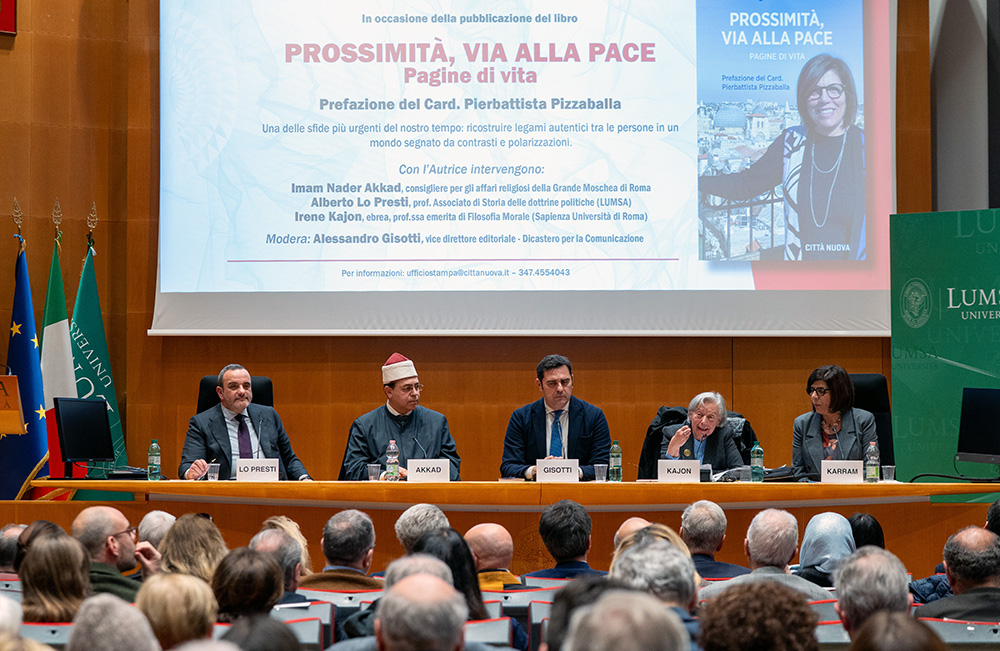
“The more you read the book, the more you become aware that everyone is called to ‘closeness’. The perception of being able to achieve it and the liberating conviction that this kind of lifestyle brings joy and builds, brick by brick, is the path towards a more unified world.”
Cardinal Pierbattista Pizzaballa, Latin Patriarch of Jerusalem, uses these words in the preface to the book by Margaret Karram, President of the Focolare Movement, entitled ‘Closeness, a path to peace. Pages of life’.
A truly autobiographical text in which the author retraces her family history and writes about herself, her origins, her childhood in Haifa (Israel), the people she met and her decision to give her life to God. But at the same time, it is a real itinerary, a guide or, as Pizzaballa further describes it, “a multidimensional journey: going within, going outside and going Above” that allows the reader to accept the author’s invitation to get involved in a meaningful way in the encounter with others.
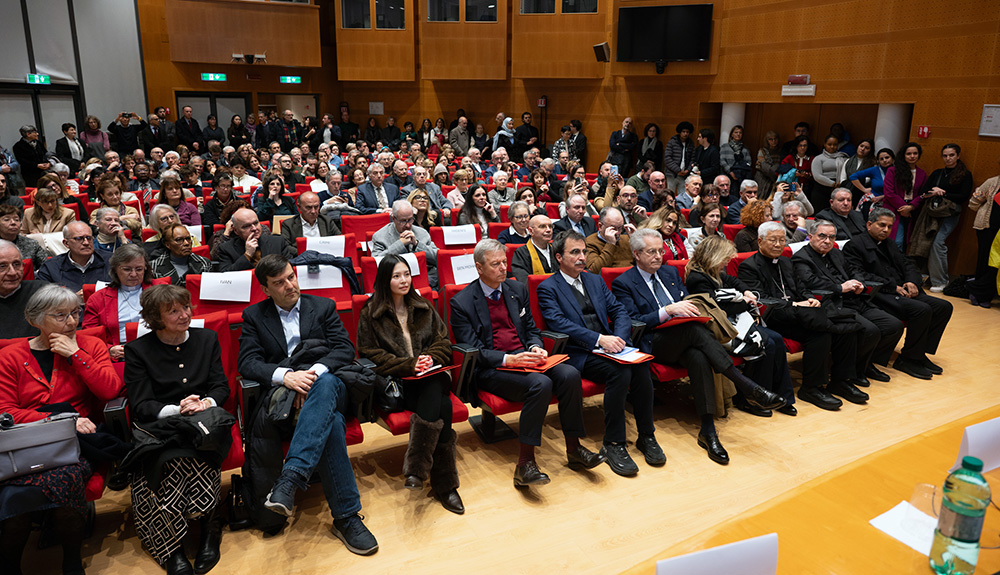
The text was presented at the Jubilee Hall of LUMSA University (Rome, Italy) on the 30th of January 2026 during an event that turned into a unique opportunity for exchange and dialogue. It focused on the theme of “closeness” and aimed to foster a tangible experience of it.
The proceedings were opened by Prof. Francesco Bonini, Rector of LUMSA, who welcomed the participants. The event was moderated by Alessandro Gisotti, Vice Director of the Editorial Department of the Dicastery for Communication of the Holy See. Alongside the author, speakers included Imam Nader Akkad, Advisor on Religious Affairs at the Great Mosque of Rome, Irene Kajon, member of the Jewish community and Professor Emeritus of Moral Philosophy at the Sapienza University of Rome, and Alberto Lo Presti, Associate Professor of History of Political Doctrines at LUMSA.
In the light of Karram’s book, the debate addressed various topics. Among the first points raised was a careful look at the value of identity, as a process and as a movement. “This is a recurring theme, especially in the first few pages,” explains Prof. Kajon, “where a reality is shown that reveals the intertwining and coexistence of many different cultures, languages and religions. In the logic of closeness, it is good that identity, an identity that is intertwined with different elements, always maintains a sense of restlessness … because this is precisely what guarantees openness to others …. What unifies identity is precisely closeness, that is, being human. It is the human family that allows us to unify the identities that are found in each person.”
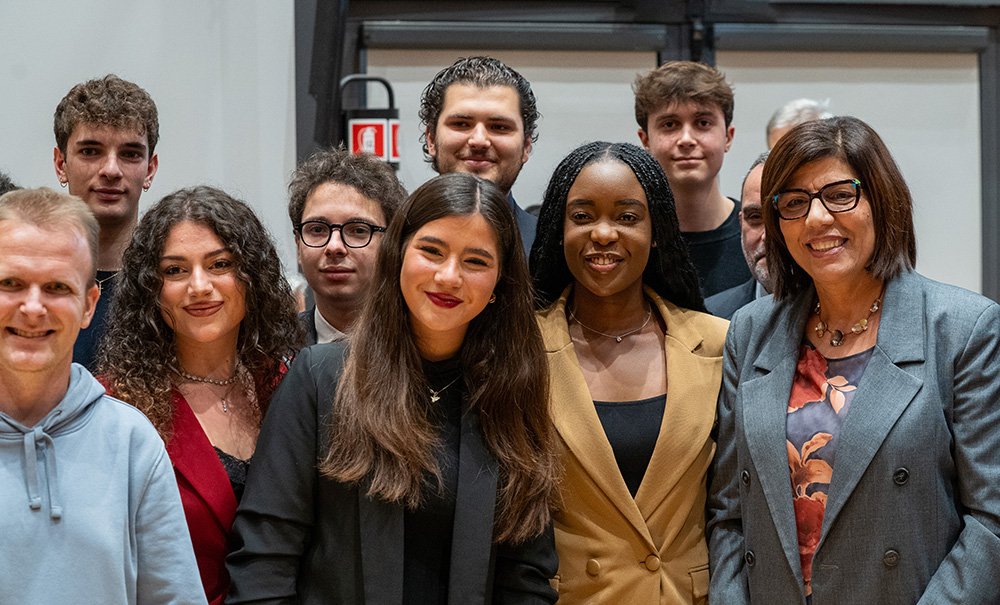
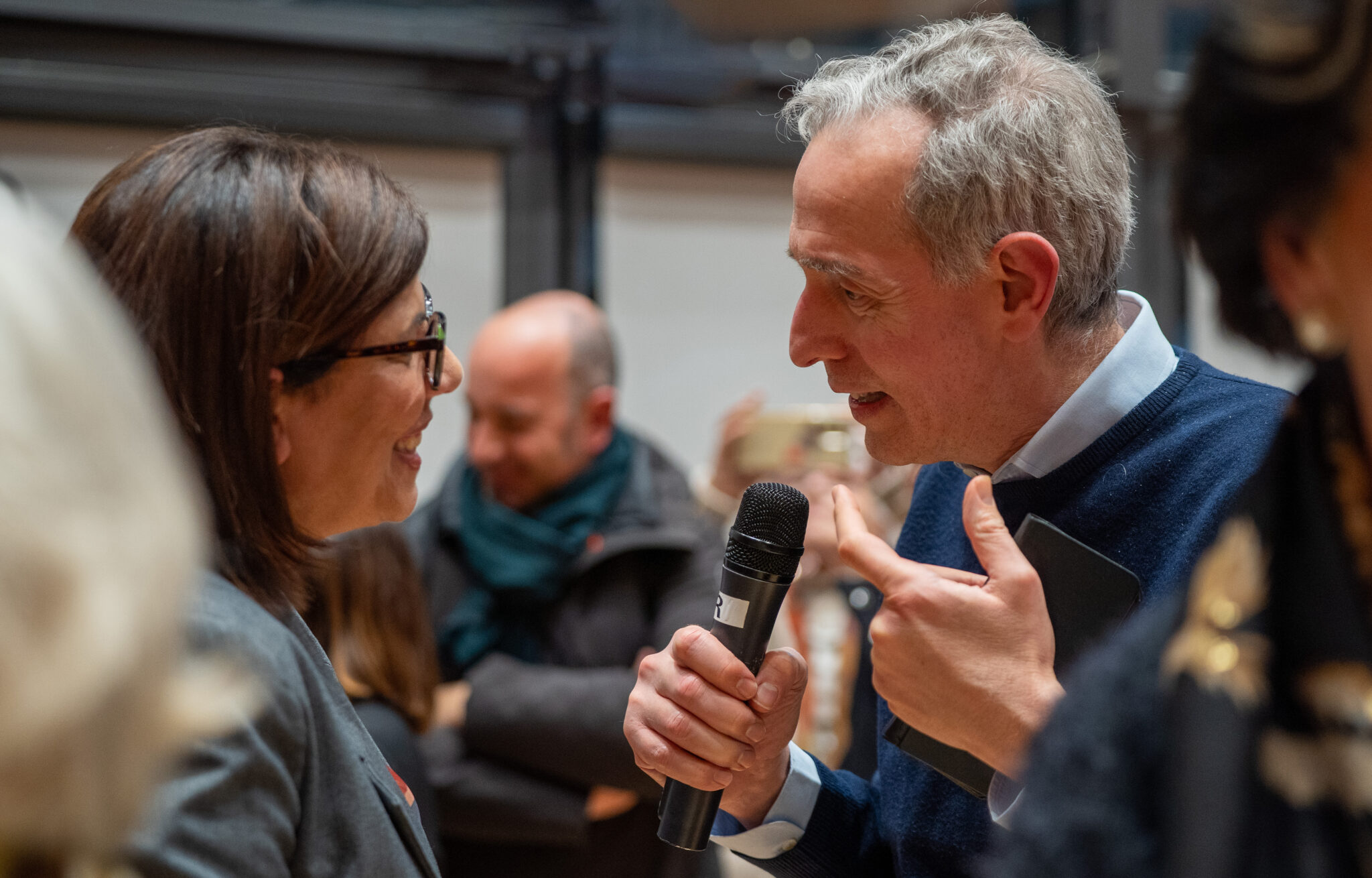
Imam Nader Akkad, thinking of his Aleppo (Syria), spoke of closeness as a concept that is not at all abstract, but rather something very real that finds its only possible fulfilment in closeness to others and in fraternity. “Closeness becomes the possibility of achieving a ‘shared meaning’, and it is the concept of ‘family’ that forms the basis of society,” says Imam Akkad, “a bridge that is suspended is useless. Two banks are needed. Sometimes the banks become rigid …. Closeness shortens distances, making us understand how close we are. When I draw closer, I recognise my brother or sister, I recognise their suffering and their joys. Closeness helps us to travel through different identities … and not to feel like minorities, but like citizens, so as to build peace together.”
Referring to the concept of ‘inventive love’ as an agent of social, political and cultural transformation proposed by Chiara Lubich, foundress of the Focolare Movement, and in the light of the current crises, Prof. Lo Presti says, “When we see conflicts and divisions in the international system, it is not Chiara Lubich’s vision of a united world that is in crisis …, but rather all those beliefs, philosophies and overly modern visions that believed that humanity would achieve the most beautiful goals of its civil adventure through rationality, or by relying on scientific and technological progress, or simply by expanding markets in an indistinct globalisation, and so on …. The united world that should be the fruit of closeness, is not a victorious march, it is an obstacle course. We need people who are able to look beyond the obstacle and not give in to it. We need people who are able to have hope in their hearts, who see crises as opportunities for the future. In fact, all this means being inventive and creative.”
Therefore, an attempt to raise our gaze. An attempt that, through encounters with various people and key figures, led Margaret Karram to write this text. Karram said, “This moment of authentic dialogue makes me understand that there are many of us who carry in our hearts the hopes and concerns of our time. This book did not come from me alone. It is a multifaceted story. The time we live in is unique, it passes quickly, we are constantly connected. However, this also creates new distances, which are often invisible but very deep. For this reason, addressing the topic of closeness was not a pre-planned decision, either for me or for the Focolare Movement. The more I listened to people, to communities, young people and families, the more I saw a universal need emerging: the need to feel close to one another, not close through a screen, but close in the practicality of life.”
The event, which began as a book presentation, became a moment of sharing that opened up a vision of one’s neighbour as the first step towards the path of peace. It turned into an opportunity to come together, to listen to one another in a synodal way, to discover that in building daily relationships, small sparks of hope, can make a difference.
Maria Grazia Berretta
To relive the event (video only in Italian) https://youtu.be/eGvxpf29BlU
Photo © J. Garcia, J. Masera – CSC Audiovisivi
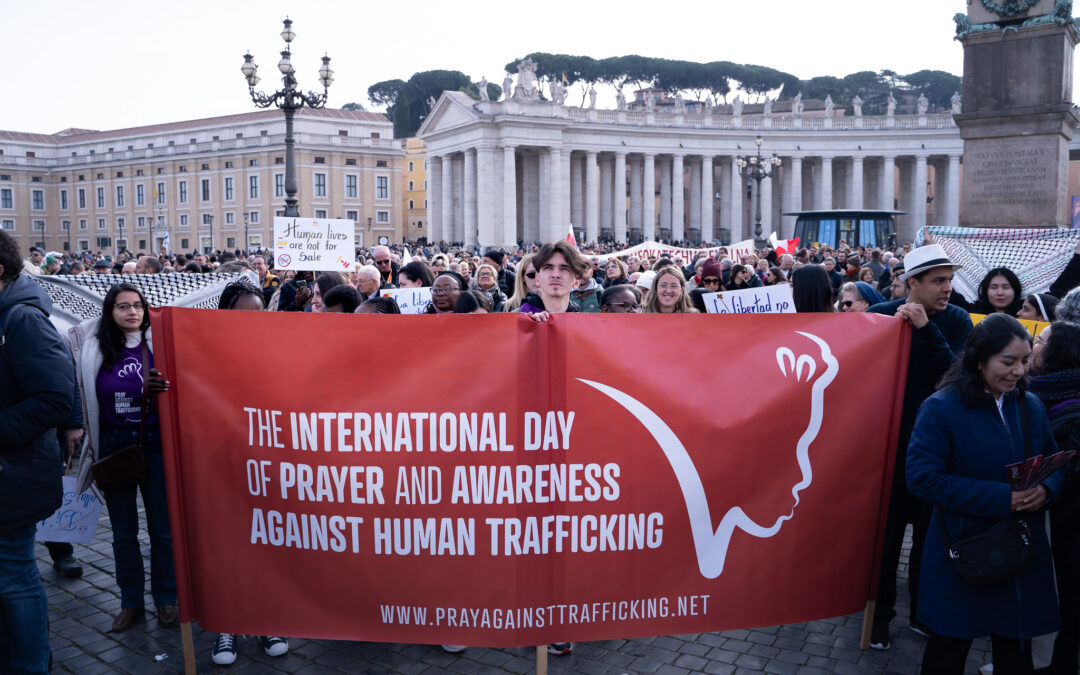
“Peace begins with Dignity. A Global Call to End Human Trafficking” is the theme of the 12th International Day of Prayer and Awareness against Human Trafficking, celebrated each year on 8 February, on the occasion of the Feast of Saint Josephine Bakhita. A Sudanese woman and religious sister, enslaved from the age of seven, Saint Bakhita has become over time a universal symbol of the Church’s commitment against human trafficking.
Established by Pope Francis in 2015, the World Day is coordinated by the international anti-trafficking network Talitha Kum, led by Religious Sisters, and is promoted by the International Union of Superiors General (UISG) and the Union of Superiors General (USG), in collaboration with several Vatican dicasteries and many other organisations around the world, including the Focolare Movement.
According to the United Nations, an estimated 27 million people worldwide are victims of human trafficking, predominantly women, children, migrants, and people forced to flee their homes. This is a complex and dramatic phenomenon that takes multiple forms—from sexual exploitation to forced labour, from domestic servitude to forced marriage—and which, while remaining largely hidden and underreported, is increasingly finding new forms of exploitation online.
Each year on 8 February, thousands of people around the world join the International Day of Prayer and Awareness through events, moments of prayer, and awareness-raising initiatives in communities, parishes, and associations.
On Friday, 6 February, the Online Pilgrimage against Human Trafficking will connect all continents in a global prayer journey, from Oceania to Asia, from the Middle East to Africa, from Europe to the Americas. A message from the Holy Father is expected at the central moment of the event.
The pilgrimage will be live-streamed from 11:00 a.m. to 2:00 p.m. (CET) in five languages (English, Spanish, Portuguese, French, and Italian) on www.prayagainsttrafficking.net. preghieracontrotratta.org
On Sunday, 8 February, the final event will take place in St Peter’s Square with the Angelus prayer with Pope Leo XIV, followed by a Eucharistic celebration presided over by Cardinal Vincent Nichols at St. Peter’s Basilica.
“Human trafficking remains a deep global wound, violating human dignity and disrupting the peace of our societies, especially in a world torn by conflict, war, and forced displacement. By placing the theme of peace and human dignity at the heart of this year’s World Day, we call all people of goodwill to move beyond awareness and unite in concrete action to end this crime. Our commitment is to walk closely with victims and survivors, to listen to their voices, and to advocate for systemic change that addresses the root causes of trafficking and builds a world rooted in peace, justice, and dignity for all.” said Sister Abby Avelino, Coordinator of the Day and of the International anti-trafficking network, Talitha Kum.
The organizers also invite everyone to take part in the mobilization through social media by sharing a post on 8 February using the official hashtag #PrayAgainstTrafficking.
Alessandra Tarquini
See everyone with new eyes
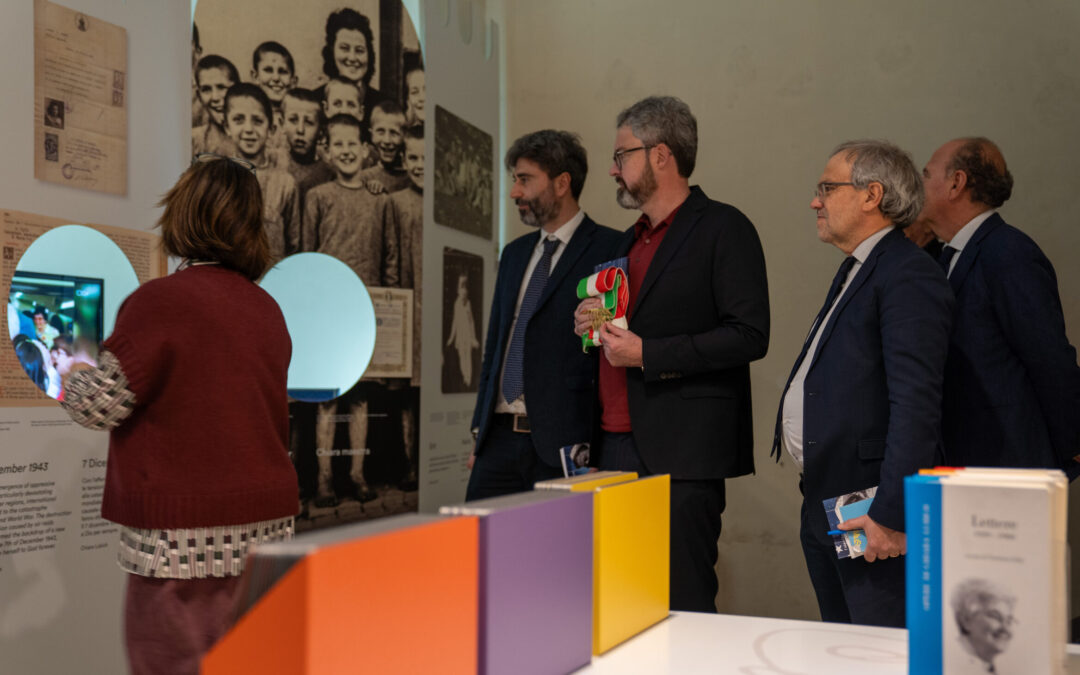
A moment of sharing and exchange that traced the path of the Foundress of Focolare from Trent, her birthplace, to the Castelli Romani and to Rome, highing the fruits produced in regions and in communities.
The following took part in the event: Franco Ianeselli, Mayor of Trento; Mirko Di Bernardo, Mayor of Grottaferrata (Rome); Massimiliano Calcagni, mayor of Rocca di Papa (Rome); Francesco Rutelli, former mayor of Rome, who in 2000 presented the honorary citizenship of the capital to Chiara Lubich; Mario Bruno, former Mayor of Alghero and co-director of the Focolare’s New Humanity Movement; Giuseppe Ferrandi, Director of the Historical Museum Foundation of Trent.
The exhibition, on display at the Focolare Meeting Point (3 Via del Carmine, Rome) and created by the Chiara Lubich Centre and the Historical Museum Foundation of Trent, will remain open throughout 2026.
Watch the video with interviews with the mayors present. Original in Italian. For other languages, activate the subtitles and then choose the language.