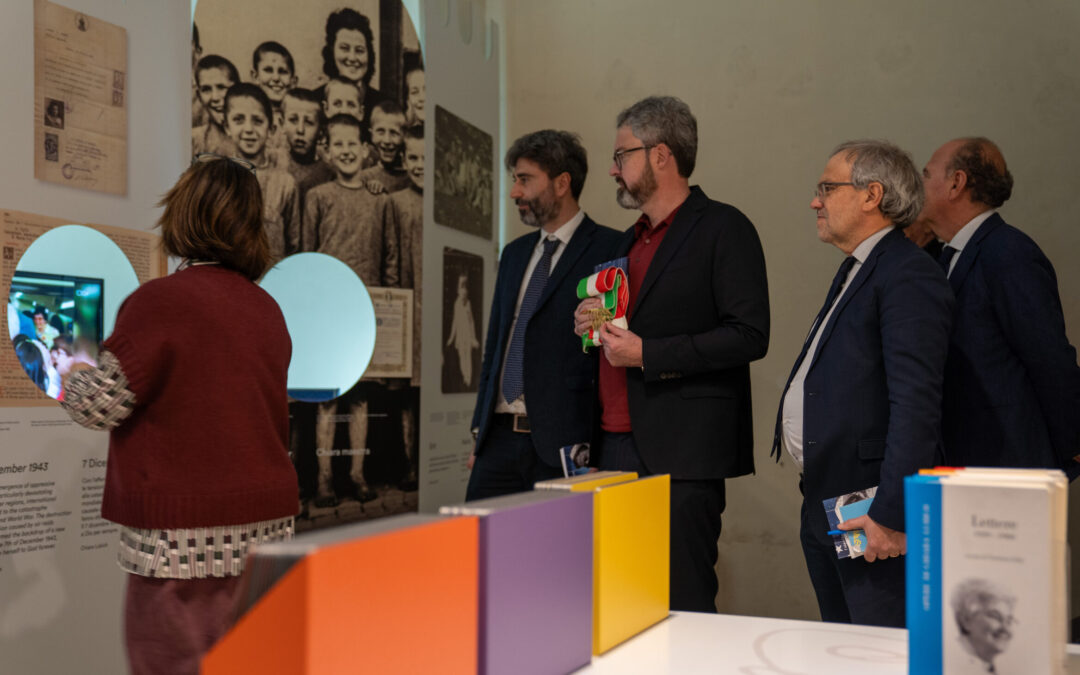
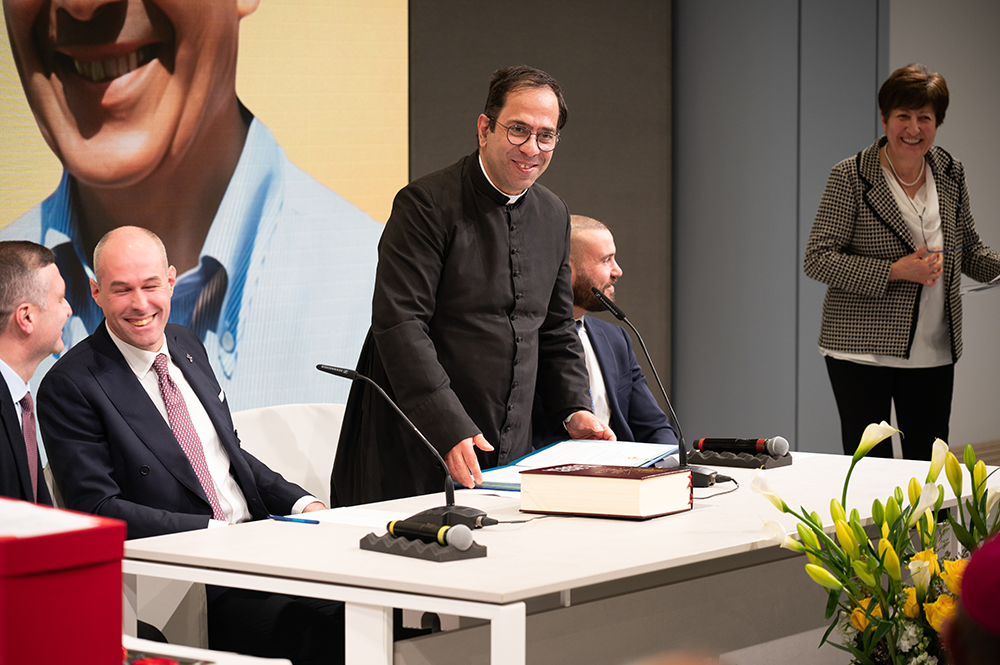
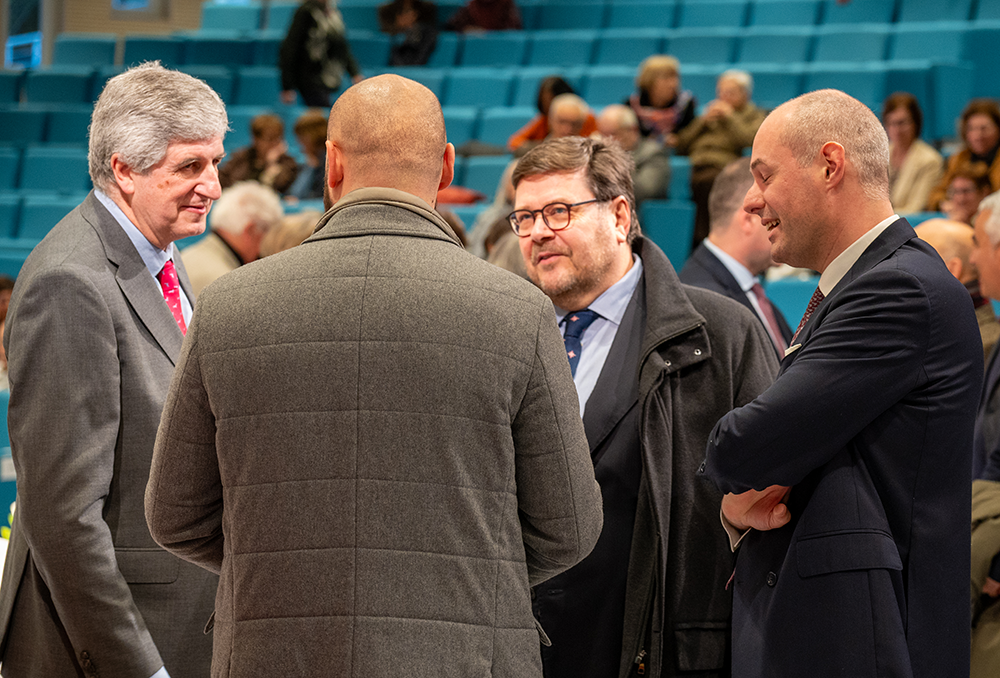
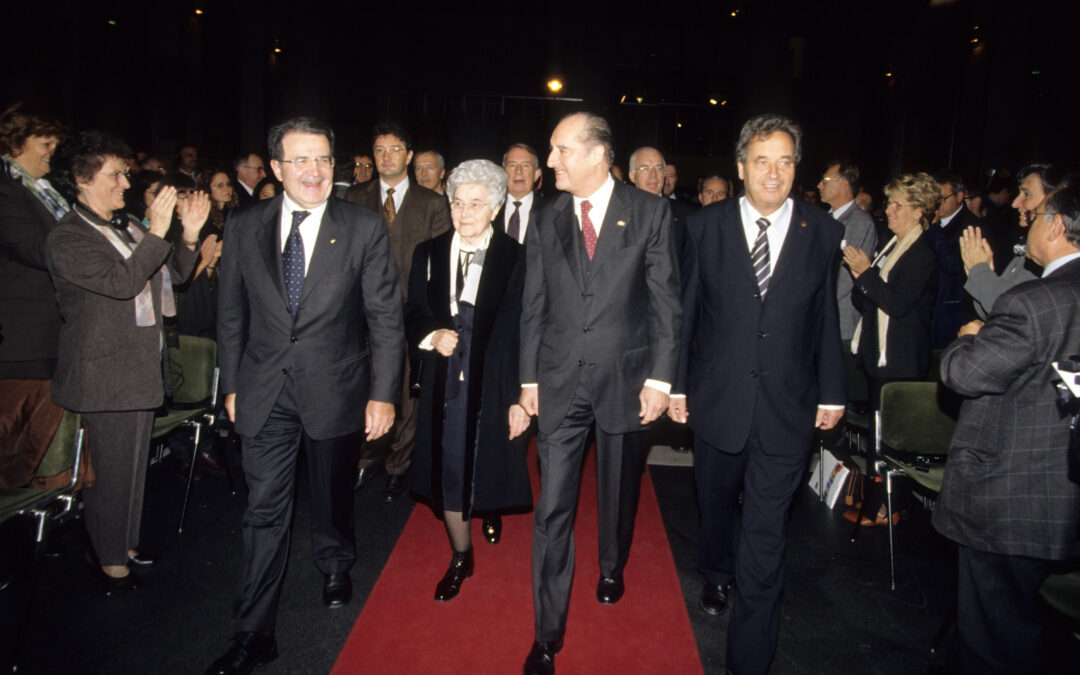
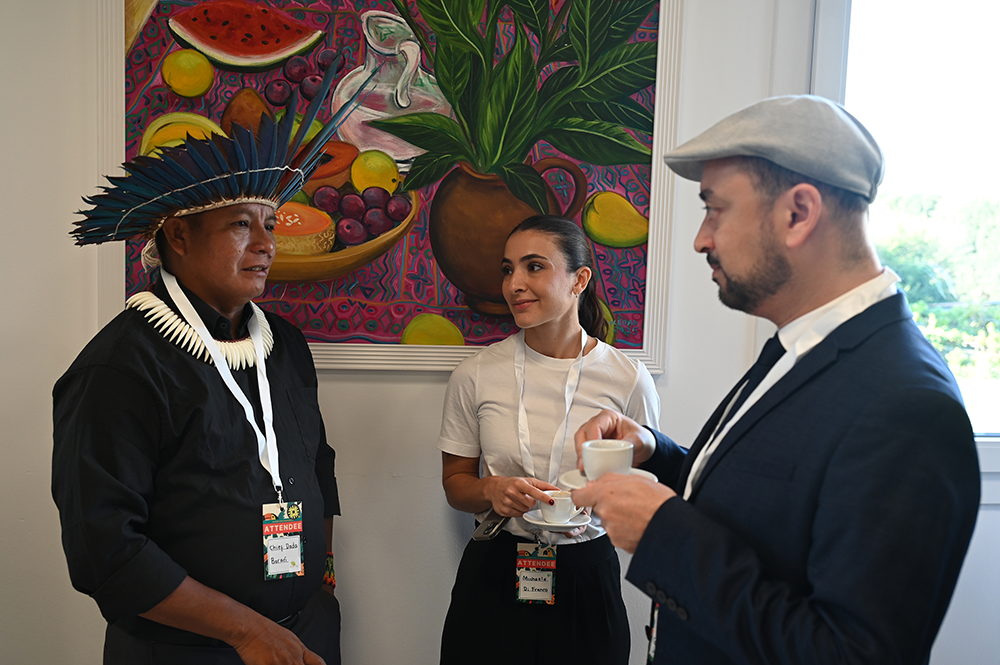
A moment of sharing and exchange that traced the path of the Foundress of Focolare from Trent, her birthplace, to the Castelli Romani and to Rome, highing the fruits produced in regions and in communities.
The following took part in the event: Franco Ianeselli, Mayor of Trento; Mirko Di Bernardo, Mayor of Grottaferrata (Rome); Massimiliano Calcagni, mayor of Rocca di Papa (Rome); Francesco Rutelli, former mayor of Rome, who in 2000 presented the honorary citizenship of the capital to Chiara Lubich; Mario Bruno, former Mayor of Alghero and co-director of the Focolare’s New Humanity Movement; Giuseppe Ferrandi, Director of the Historical Museum Foundation of Trent. The exhibition, on display at the Focolare Meeting Point (3 Via del Carmine, Rome) and created by the Chiara Lubich Centre and the Historical Museum Foundation of Trent, will remain open throughout 2026.
Watch the video with interviews with the mayors present. Original in Italian. For other languages, activate the subtitles and then choose the language.
This word of life is taken from the book of Revelation, the text that concludes the collection of writings that are found in the New Testament. As the name implies, it unveils and reveals: in fact, the aim of the author was to help the reader understand the significance of the last things that will occur at the end of time: the return of Christ to earth, the definitive defeat of evil and the rising up of a new heaven and a new earth.
It is not an easy text to understand. It dates back to the years 81-96 AD when Christians were facing fierce persecution and there was an atmosphere of fear in their communities. They had begun to wonder what would become of them and the message that had been entrusted to them? Some were asking why did God not intervene?
This was the situation when the author was sent into exile by the Romans to the island of Patmos. While he was there, he began to have a series of visions and was commanded to write them down.
Behold, I am making everything new!
The book of Revelation sought to bring hope to persecuted communities: despite the difficulties and violence they were experiencing at the time and the uncertainty of the future, it conveyed the message that good will ultimately triumph and God will make all things new.
Today too, when we watch the news or read the headlines, we see so much tragedy and distress in the world that we risk becoming desensitised to it all… But there is a Father who weeps with us; there is a Father who sheds tears of infinite compassion for his children. We have a Father who waits in order to console us, because he knows our sufferings and has prepared a different future for us. This is the great vision of Christian hope, which stretches over all the days of our life, every day of our existence, and seeks to raise us up once more [1].
Behold, I am making everything new!
We cannot know when and how this will happen and there is no point in searching for the answers. What is certain, however, is that it will happen.
“The final pages of the Bible show us the ultimate panorama towards which a believer is travelling: the Jerusalem of Heaven, the heavenly Jerusalem. It is described as an immense ‘tent’ where God will welcome all people and dwell with them forever (Rev 21:3). This is our hope. What will God do when we are finally with him? He will show us infinite tenderness, like a Father who welcomes his children who have long struggled and suffered. Behold, the tent of God is with all men and women! … He will wipe away every tear from their eyes, and there shall be no more death, nor mourning, nor weeping, nor pain, for the former things have passed away… Behold, I am making all things new!’ (Rev 21:3-5). 21,3-5). The God of newness [2].
Behold, I am making everything new!
How can we live this month’s Word of Life?
«It assures us that we are on our way to a new world that we are preparing and building right now. Therefore, this is not a mere invitation to disengage and escape from the world of the present. God wants to renew all things: our personal lives, friendships, married love, families; he wants to renew social life, the world of work, school, culture, leisure, health, the economy and politics… in a word, all areas of human activity. But to do this, he needs us. He needs people who let his Word live in them, who are his living Word and are like Jesus wherever they are» [3].
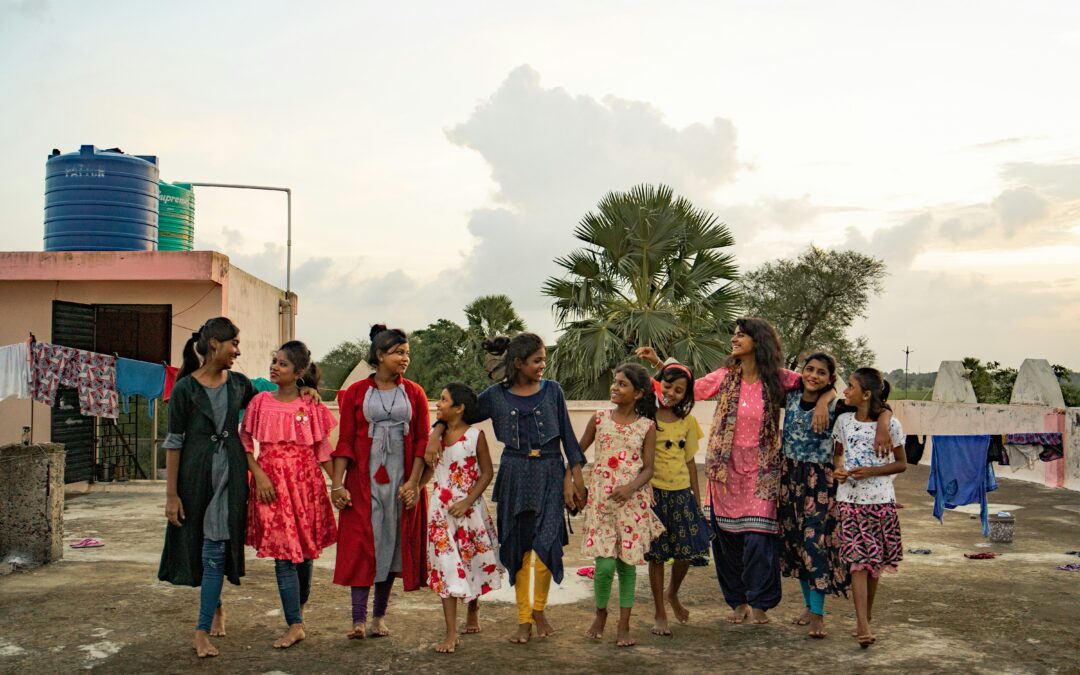
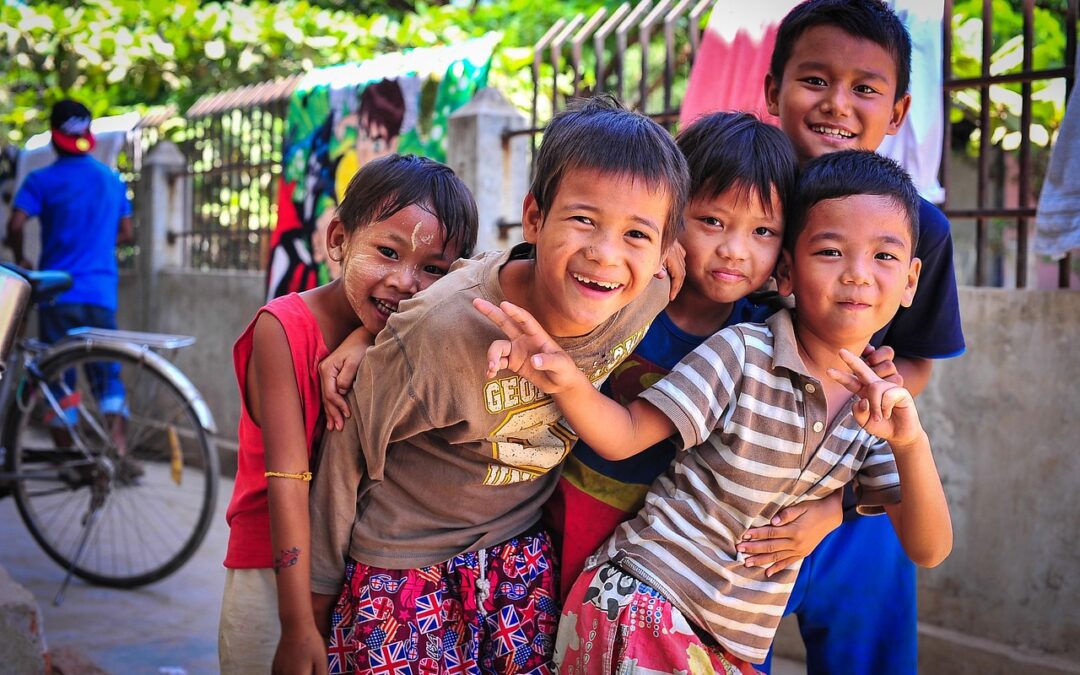
A young Christian woman called Alice understood that following God’s call meant that she needed to change many aspects of her behaviour and allow God to act more fully in her life and so renew it from within. She received the ‘immense gift,’ of the opportunity to spend some time in India. There, she began to understand real joy and she felt immersed in God’s grace, even during difficult times. She spent time in prayer, community life, and volunteer service. She was deeply touched by the children she met in the orphanage because even though they had nothing, they were incredibly enthusiastic and taught her a lot about life. Alice’s time in India was not just a trip, but a pilgrimage, a journey of ‘ups and downs’, where she had to ‘empty her rucksack’ but found enrichment and freedom.
Edited by Augusto Parody Reyes the Word of Life team
[1]Cf., Pope Francis, General Audience 23 Aug 2017 [2] Ibid. [3] Cfr. C. Lubich, Parole di Vita, Word of Life
Since ancient times, men and women have nurtured the desire to know what the future will bring and have used magical rituals or the interpretation of natural signs in order to do so. Great works produced by different cultures and religions in the past reveal this need. It often arises during periods of great suffering for a people or nation.
But is it really useful to know what will happen? What do we gain by knowing in advance what we will experience or how we will cope? None of the legendary traditions reveal this completely, and more often than not, symbolism hides the very concrete search for and expectation of a better tomorrow that gives meaning to today’s suffering.
We could say that we are not concerned about the future when things are going well, however, when they are going badly, we are sustained and encouraged by the hope that tomorrow will be better. It is then that many of us feel a deep need to await a new, different world, not only for ourselves but for everyone.
Today’s world expresses a “cry” that emerges from all of humanity. Even if we are not directly affected, we only need to watch the news or leaf through the newspapers to become aware of tragedies of all kinds. How do we react? Are we so accustomed to this negativity that we are immune and simply try to survive or, on the contrary, do we think deeply about the future and act accordingly? The world we imagine and desire certainly does not yet exist but, as George Orwell reminded us, it is possible that it will be. But what does this mean? What can we do? We find an answer in the thoughts of Albert Camus: “True generosity towards the future consists in giving everything to the present.” [1]
The future, therefore, is not just something to await but can be prepared and, in a sense, anticipated even now. It depends on our attitude and our daily actions. We do not know when we will see the fruit of change: it is like a silent seed that grows without us noticing and, over time, becomes a plant capable of nourishing, protecting and generating life around it.
We cannot imagine the consequences but they will certainly be new and creative. The future is unpredictable but it will develop according to relationships that have been transformed, feelings shared and solidarity that has become action.
We need courage to be a driving force for change and renewal in society; we need to allow ourselves to be challenged by people who suffer, who are aloneor need our help or advice. Even though we will encounter difficulties and inner struggles, there will also be moments of joy and real fulfillment.
Recently, an event was held in Florence to raise awareness and involve participants in a network of fraternity. There were opportunities to reflect and share experiences on how to build a future of peace in various areas such as economics, trade unions, industrial reconversion and ecology. This is an initiative that we want to spread rapidly to other cities and countries.
Take courage! We are builders and not spectators and our goal is to create a future of fraternity, harmony and peace.
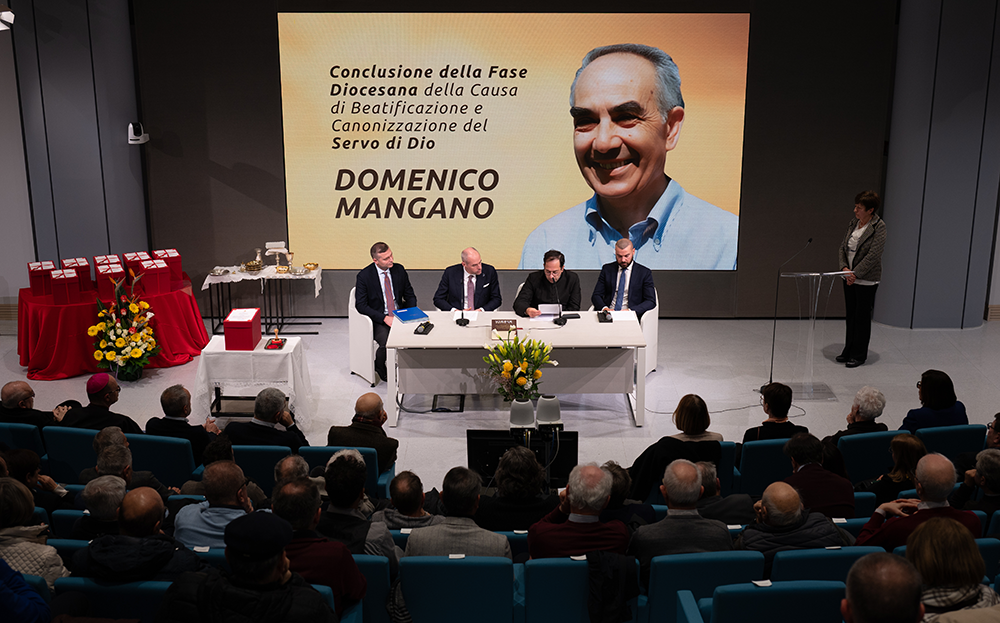
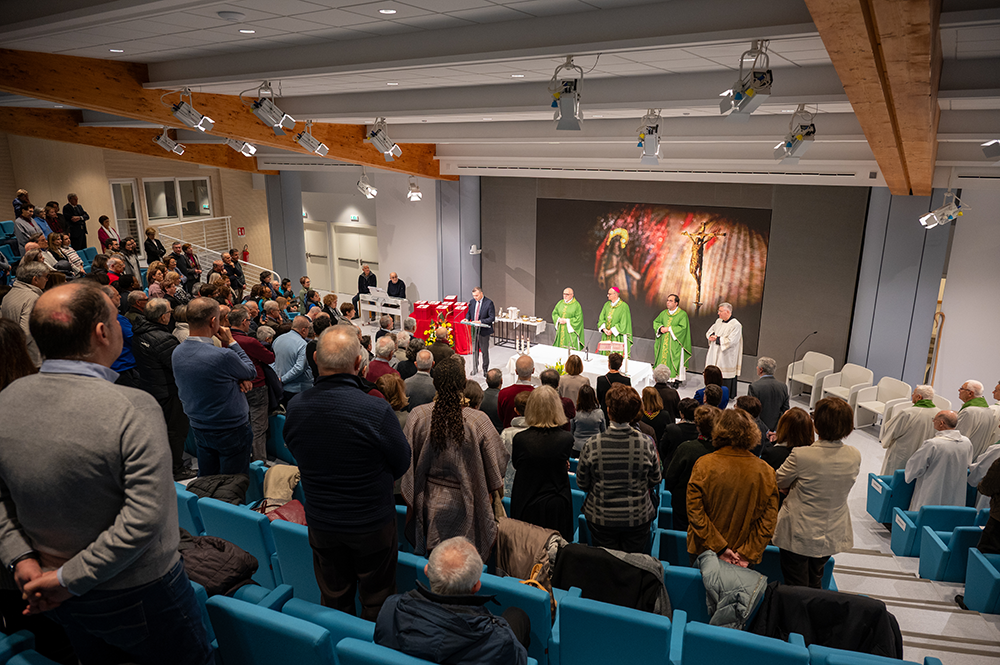
In the homily of the Eucharistic Celebration celebrated on Saturday, 17th January on the occasion of the closing of the Diocesan Inquiry launched in Albano for the cause of Beatification and Canonization of Domenico Mangano, a Volunteer of God of the Focolare Movement, Mons. Stefano Russo, Bishop of the Diocese of Velletri-Segni and Frascati, near Rome said, “The Lord continues to call through His word (…) As happened to John the Baptist who, enlightened by the love of God, recognized the Son of God and pointed him out to others (…) something similar happens at the start of a path of canonization of a person when someone points out the presence of holiness, a consequence of an encounter with Christ. This was the case for Domenico. A community said: “We met him, we shared many experiences with him, participating together in a holy journey, we saw his actions illuminated by the Lord especially from the moment he met the charism of unity”.
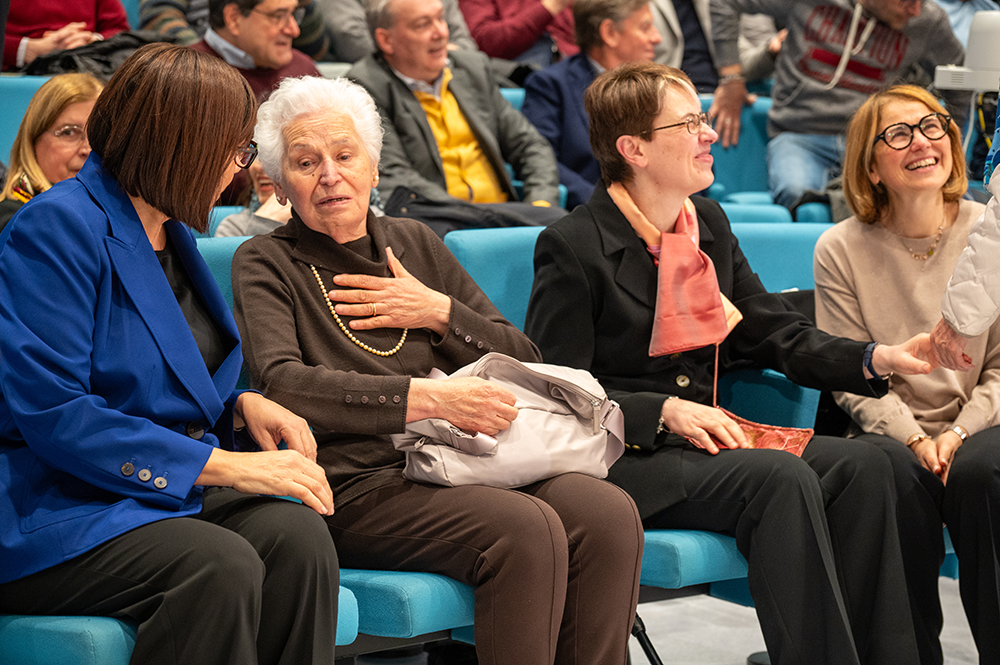
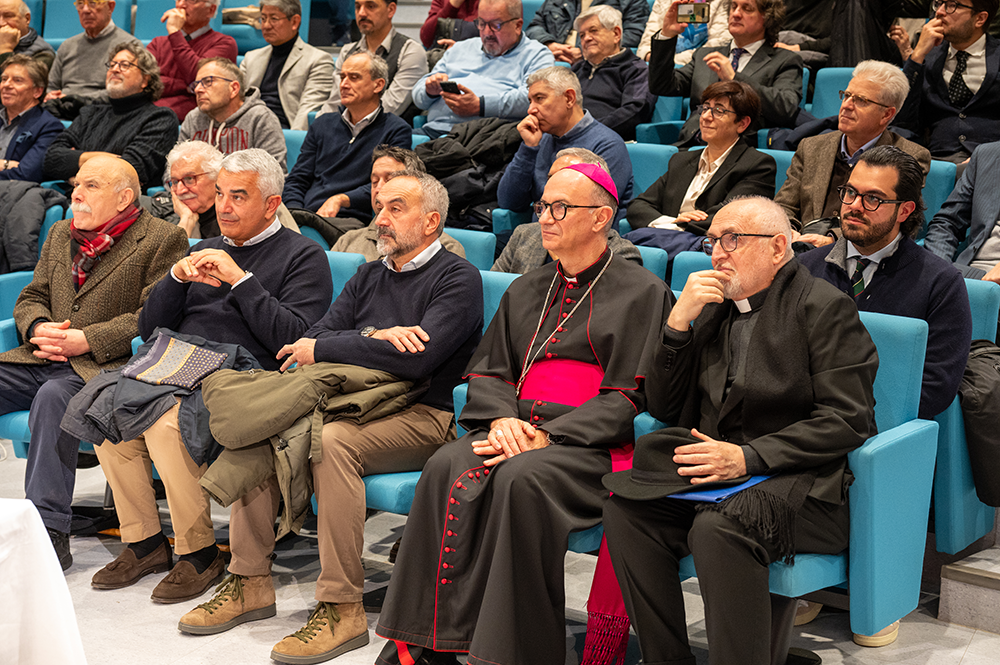
The family of Domenico Mangano, his friends and members of the Focolare Movement were present in the Auditorium of the International Centre of the Focolare Movement while a live-stream connection allowed many people from different parts of the world to follow the event.
Who was Domenico?
Margaret Karram, President of the Focolare Movement, described Domenico’s life as, “a life marked by availability, attentiveness to others and a concrete love, lived without fanfare but with fidelity. Like the Good Samaritan, Domenico knew how to stop, to draw close and to transform an encounter with another person into a gift”.
Jesús Morán, Co-President of the Focolare Movement, said, “A Christian layman who took faith seriously in real life. A husband, father, worker, citizen deeply rooted in his community, he didn’t live the Gospel as a private matter, but as a light capable of illuminating public choices, social responsibilities and commitment to the common good. His spirituality was deeply incarnated: rooted in faith, which does not distance people from the world but is always attentive to history, to people’s problems and to the needs of society.”
Domenico felt the Gospel call to serve the community by promoting respect, dignity, social co-responsibility and a culture of participation, so that every citizen could feel that they were a living part of society. He was a man of dialogue by inner choice and Christian responsibility. For him, politics was never a place of conquest, but a space of service, a concrete form of social charity, lived with moral seriousness, clarity of judgment and a deep sense of justice. He constantly tried to unite Heaven and earth by translating the message of the Gospel into social life.
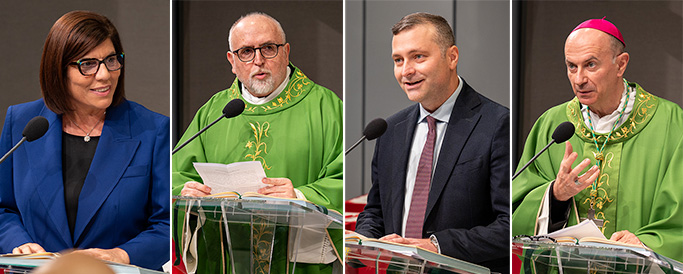
Margaret Karram, President of the Focolare Movement; Jesús Morán, Co-President of the Focolare Movement; Dr Waldery Hilgeman, Postulator of the Cause; and Monsignor Stefano Russo, Bishop of Velletri-Segni and Frascati.
Along this journey, the lifeblood flowed from the spirituality of unity and from his commitment to the “Volunteers of God” whom Chiara Lubich, Foundress of the Focolare Movement, defined as “the first Christians of the twentieth century who live to render the presence of Jesus visible wherever they are.”
Through his commitment to a lifestyle based on the Gospel, a deep spiritual dimension matured in him: he gradually learned to let God be at the centre, to guide his life and his choices and, with Him, to place the people, the community and the common good at the heart of everything. This was the source of his inner freedom, serenity and of his ability to love concretely.
Fr Andrea De Matteis, Judicial Vicar of the Diocese of Albano, Episcopal Delegate for this Cause, recalled that many have described Domenico as “a mystic of the ordinary: prayer, family, work and civil commitment formed a single reality in him. He lived a mysticism of presence, recognizable in the simplest gestures: in listening, in a discreet word or in a smile. A contemplative heart immersed in the world, a man who sought to please God in the practicalities of daily life. In his disarming simplicity, he bore witness to how it is possible to make the ordinary extraordinary, normality exceptional and to draw the divine into the fragile human condition of each person.”
Domenico also experienced the trial of illness with demanding faith, experiencing it as a time of entrusting and offering. Along that painful path, he once again recognized the presence of God who calls, transforms and leads to fulfillment.
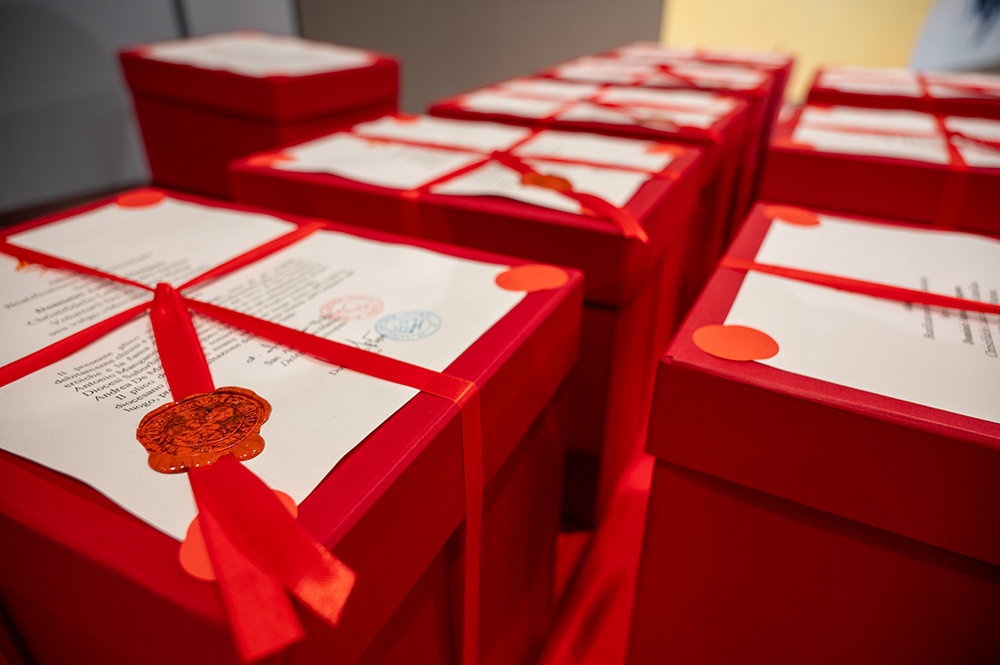
In the photos: 1- The boxes containing the documents of the Cause – 2 – from left, Dr Waldery Hilgeman, Postulator, and then the members of the Diocesan Tribunal of the Cause: Prof. Marco Capri, Notary, Don Andrea De Matteis, Judicial Vicar of the Diocese of Albano and Episcopal Delegate, and Prof. Emanuele Spedicato, Promoter of Justice – 3 – on the left, Juan Ignacio Larrañaga, central coordinator of the Volunteers of God; in the centre, Dr Paolo Mottironi, central manager of the Volunteers of God at the time the Cause began.
The solemn conclusion of the diocesan phase for Domenico – which for a long time has involved the dedicated service of the Bishops of Albano, at first Mons. Marcello Semeraro then Mons. Vincenzo Viva, alongside the Tribunal, various collaborators and many witnesses – was an event of profound ecclesial significance.
With this official act it was declared before God and the ecclesial community, that the patient and passionate work of listening, gathering and evaluating evidence, was carried out by many with integrity, truth and fidelity to the norms of the Church and a deep awareness of the gift entrusted to them.
In Domenico Mangano we see how holiness can flourish in ordinary life, in the choices made with love and truth wherever the Lord places us, when a person allows themselves to be emptied of self in order to be filled by God.
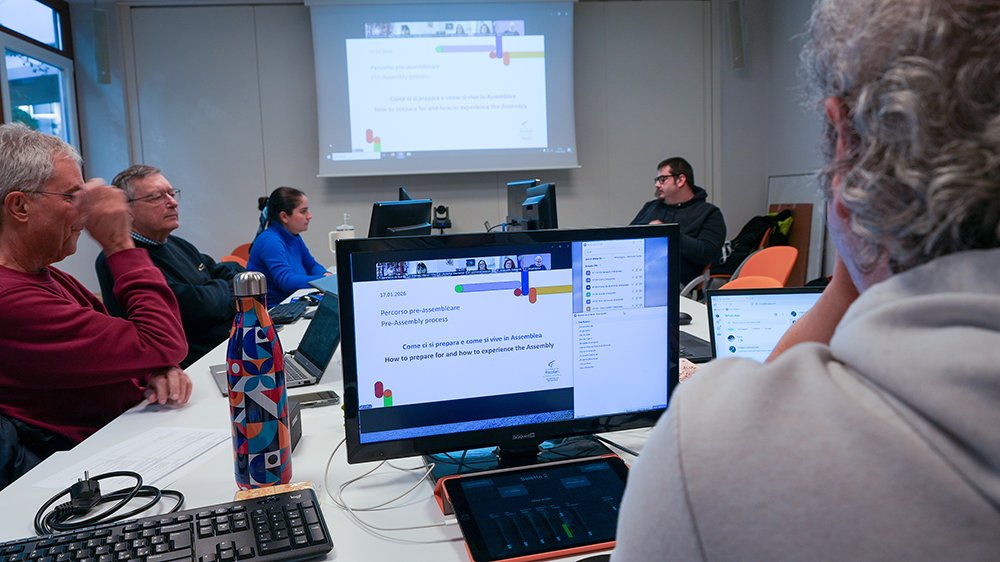
The ‘Pre-Assembly Process’ is currently underway in preparation for the General Assembly of the Focolare Movement, which will begin on the 1st of March 2026 in Castel Gandolfo (Italy) with the participation of representatives chosen from different geographical areas, branches and movements; the members by right (those who are part of the current government, the General Council and Zone Delegates in the geographical areas), and those invited by the President.
We interviewed Prof. Vincenzo Di Pilato, professor of Fundamental Theology and a member of the Preparatory Commission for the 2026 General Assembly, about the preparation process and his personal experience.
Activate subtitles and select the desired language.
My name is Vida and for a few years now, I and others from the Lithuanian community have been supporting the family of Julia from Indonesia, whom I met in 2018 in Manila (Philippines) on the occasion of Genfest, the international meeting that brings together the young people of the Focolare Movement. Over this time, despite the distance, a sisterly relationship has developed between us. Her family lives in Medan and is part of the Focolare community there. We have been able to support them at various difficult moments and, it always surprised me and gave me joy that whenever they received help, they immediately thought of other people too.
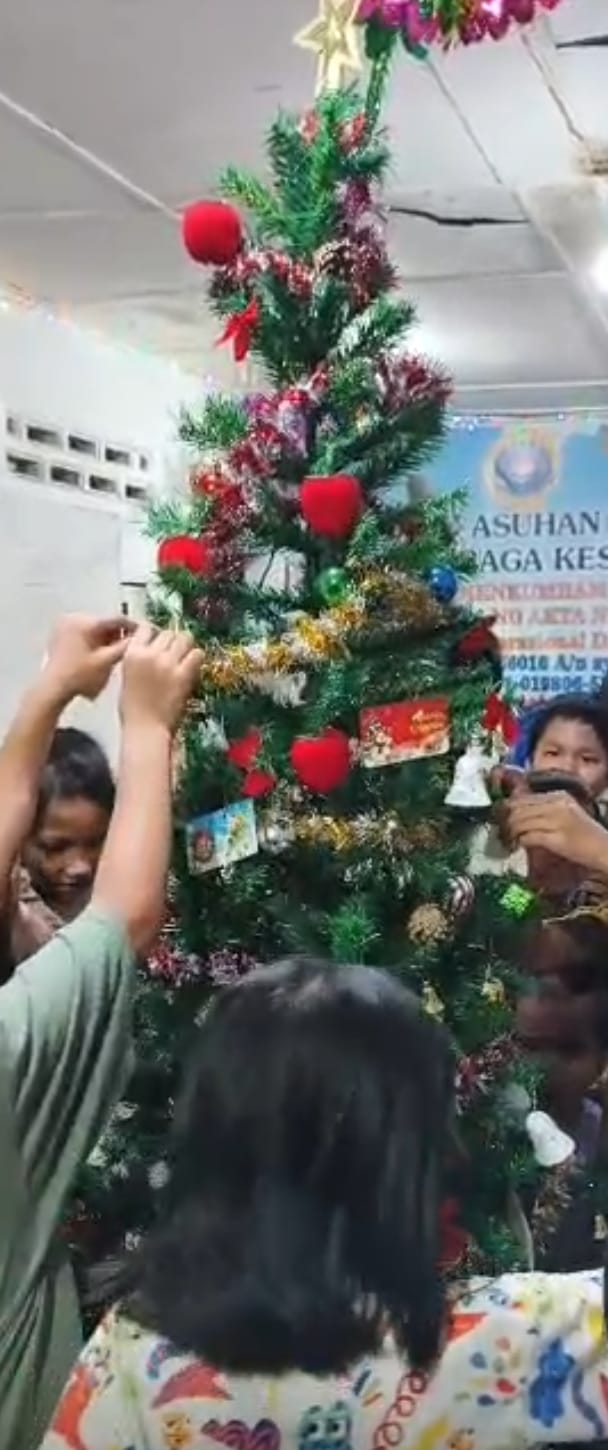
Before Christmas Julia shared with me her desire to help the children in an orphanage. They needed pillows and mattresses as the flood had destroyed those they had. Since she is a very practical person, she had already worked out the amount needed. So I wrote to the Lithuanian community on our shared website, hoping that someone would be able to donate something. “I was amazed to see that in a short time we collected an even larger amount that I immediately sent to Julia who did everything she could to make the children happy. As well as the mattresses and pillows, for the first time, they also had a Christmas tree
The concluding residential week of the first year of the two-year political action training programme will be held from 26th January-1st February 2026. The programme is promoted by the New Humanity NGO of the Focolare Movement in collaboration with the Pontifical Commission for Latin America
L’evento, con la metodologia dell’Hackathon, vedrà la partecipazione di 100 giovani leader dei cinque continenti, impegnati nei propri Paesi in ambito politico e sociale, di diverse culture e convinzioni politiche. Dopo mesi di intenso lavoro online, i giovani si ritroveranno a Roma in presenza per tradurre il percorso di apprendimento, che hanno condiviso da remoto, in proposte di incidenza politica: la sfida che dovranno affrontare è quella di ideare processi e strumenti idonei ad affrontare i punti di crisi che emergono nell’esercizio del potere politico, nelle relazioni e nelle istituzioni politiche.
Great attention will be paid to the participatory dimension of public policies, leading to the definition of shared pathways that will be assessed and presented during an evening open to the public, to young people and interested politicians.
“Oggi ci troviamo di fronte a problemi gravissimi – spiega Javier Baquero, giovane politico colombiano, presidente Movimento politico per l’unità/Mppu internazionale -. Ciò che va coltivata è una cultura politica che guardi all’umanità che è una e al pianeta come casa comune. A nostro parere, c’è un diverso paradigma che dobbiamo esplorare e sperimentare insieme, imparando a comporre le nostre diverse visioni a partire da alcuni valori universali”.
Argia Albanese, President of MPPU Italy agreed, “A meaningful response to the needs of our peoples cannot rely solely on the reform of institutions or from a purely managerial approach, which often seems devoid of democratic content. Our starting point must continue to be the social and community bond rooted in universal fraternity and sisterhood.”
The week concludes the interdisciplinary training focused on integral ecology, civil economy, collaborative governance and generative communication, which began in May 2025 with the support of experts from various academic institutions: Rotterdam School of Management (Netherlands), Universidade de Coimbra (Portugal), Universidad Nacional de La Plata (Argentina), Georgetown University (Washington DC), University of the Philippines, Universidade de Ribeirão Preto (Brazil), Escuela Superior de Administración Pública Bogotá (Colombia), University of Dschang (Cameroon), Sophia University Institute (Italy).
The week in Rome includes:
Two Hackathon days, in which the participants, divided into language groups, will seek solutions to collective problems.
Dialogues with experts and policy makers to connect reflection and proposals within a broad international framework.
A public meeting to present the Hackathon outcomes and to engage with politicians active at various levels and from different perspectives.
Visits and workshop activities in Rome at research and social engagement centres (which support migrants, women’s rights, climate justice, unemployment and disarmament).
Workshops to set up the global network for the second year and its governance.
There will be a much-anticipated audience with Pope Leo XIV in St. Peter’s Square on Saturday, 31st January. Representatives of the MPPU Centres who will come to Rome for the occasion will also participate and will have the opportunity to evaluate the results of the experience with the participants and to plan the next steps.
It is an intensive workshop designed to develop solutions to collective problems. The idea comes from the world of digital innovation, applying the logic of “doing together and doing it quickly” to the civic sphere.
By integrating political, administrative, economic, communication, social and technological skills, the process unfolds in several phases: analysis of problems and needs, definition of priorities and stakeholders, development of operational proposals and tools for public action.
Within the framework of the themes explored throughout the year, participants will address challenges such as corruption, oligarchic governance, media monopolies, polarization, crisis of representation and electoral abstention.
In the time available, with the support of the coaches, each group will move from problem identification to strategic proposal, building problem maps, analysing available data and designing implementable ideas. At the end, the groups will present their solutions: prototypes of intervention plans, political initiatives and cultural impact projects, participatory models and communication methods and strategies.
The added value lies not only in the ideas developed, but also in the method, which demonstrated how solutions to public problems can be co-designed with creativity and rigour, enhancing and integrating different perspectives, in the search for effective solutions to increase the quality and values of a way of living politics at the service of the unity of the human family.
Universal brotherhood, even apart from Christianity, has not been absent from the minds of great and exceptional persons. Mahatma Gandhi said: “The Golden Rule is to be friends of the world and to consider as ‘one’ the whole human family. Whoever distinguishes between the faithful of his own religion and those of another misinforms the members of his own and opens the way to the rejection of religion and its values.” [1] (…)
However, the One who brought universal brotherhood on earth, as an essential gift to humanity, was Jesus, who prayed for unity before he died: “Father, that they may all be one” (Jn 17:21). In revealing to us that God is our Father and consequently that we are all brothers and sisters, he introduced the idea of humanity as one family, the idea of the “human family” made possible by universal brotherhood in action. Consequently, he destroyed the walls that separate those who are “the same” from those who are “different,” friends from enemies, walls that isolate one city from another. And he loosened the bonds that imprison people in so many ways, from the thousands of forms of suppression and slavery, from every unjust relationship. In this way he brought about an authentic existential, cultural and political revolution. Thus the idea of fraternity began to make way in history. We could trace back its presence in the evolution of thought throughout the centuries, finding it at the basis of many fundamental political ideas, at times clearly, at times more veiled. This fraternity was often lived, although in a limited manner, each time, for example, a people joined together to fight for their freedom, or when social groups struggled to defend the weak, or whenever people of different convictions rose above mistrust in order to affirm a particular human right.
Chiara Lubich
[1] “In buona compagnia”, a cura di Claudio Mantovano, Roma, 2001, p. 11.
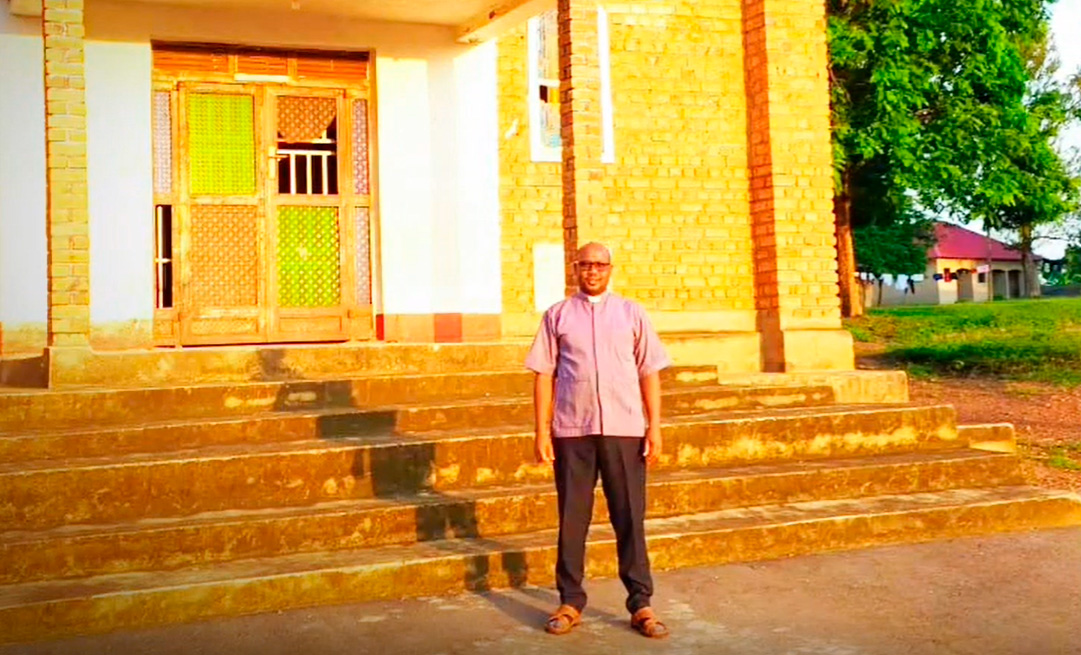
I am an Anglican priest from Uganda and I came to know the spirituality of the Focolare Movement fifteen years ago, when I was in the seminary for ministerial formation. This spirituality has shaped me in an integral way – myself, my family and my Church because it expresses in an exemplary manner, two fundamental aspects: Love and Unity. Nowhere in the Bible do we find Scripture that emphasizes division, separation, hatred, malice, tribalism, denominational divisions, or racial segregation. On the contrary, the Bible calls us to unity and love between people, even when there are differences. We are called, above all, to love our neighbour, because through loving our neighbour we love God. In this way I have learned to see Jesus in every person who is close to me (cf. Mt 25) and I experience great peace every time I share what little I have with those in need.
In one of his last prayers before the Ascension, in John 17:21, Jesus says: “that they may be one, just as I am one with you, Father”. This implies that unity should be our goal in life. Thanks to this awareness, I have had the opportunity to meet and dialogue with many people of different denominations: Catholics, Orthodox, Lutherans and also with people of other religions, Buddhists and followers of traditional religions, at all levels and in all age groups. This has given me a broader view of how to live and approach life in an integral way. I have experienced the joy of recognizing them as brothers and sisters.
I have also seen Bishops of the Anglican Church of Uganda welcome this spirituality through our experience, expression of life and witness. Currently, five bishops are friends of the Movement, including the Archbishop of the Anglican Church of Uganda. Some of them also participated in the international ecumenical conferences of Bishops organized by the Focolare Movement.
Currently we have started a communion group at Uganda Christian University, with the intention of practicing the aspect of love and unity among young people and university students; at the same time, we also transmit the value of “Ubuntu”[1], within the Together for a New Africa initiative, in which I participate as a tutor of this second round. After all this, people often ask me questions that I struggle to answer: “Why are you always happy? Don’t you ever get angry? You are always available. Don’t you have other things to do? Why are you so generous?” My answer has always been: “Do good, the reward is in Heaven”.
After the four Gospels of the New Testament, the fifth Gospel that everyone should read is that of the “you”, in the other person. We must see ourselves as a living witness, so that in our works and actions the image of God may be reflected, doing to others what we would like to be done to us. Putting into practice what the Bible teaches: to love God with all our heart, with all our mind and with all our soul, and to love our neighbour as ourselves.
Reverend Canonico Bwanika Michael Eric
[1]Ubuntu is a word of Bantu origin from sub-Saharan Africa that expresses a philosophy of life focused on compassion, respect and human interdependence, summarized in the maxim “I am because we are”, emphasizing that the individual is realized through community, sharing and collective well-being.
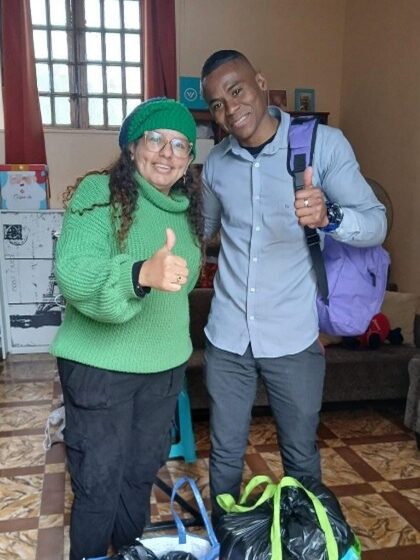
One Friday, Moisés, a migrant, arrived on the recommendation of another Venezuelan young man who was living in the same shelter and had told him to come to us, that we could help him. Moisés had arrived from Colombia a few weeks before Christmas and had only three changes of clothes, typically Caribbean, which he had brought with him on the journey. He was cold. Thanks be to God, he soon found work in a restaurant, washing dishes and helping in the kitchen. It was only a few days a week, but he receives lunch and dinner.
So we gave him winter clothes and a blanket, because he was sleeping on the floor on a thin mattress lent to him by the landlord, a man who also kindly agreed that he could pay the rent when he received his first pay check. He was truly fortunate, because shortly after arriving he had already found a job, a room and a very generous landlord. Not all migrants have the same luck. He began to cry when he saw what we were giving him and “the love of a family” (as he described it) that he was receiving.
He is a young professional, a commercial accountant. We prayed and asked God that in the future he may be able to practise his profession.
(S.R. – Peru)
True wealth
My relationship with my brother-in-law had always been difficult. First there were debts from a failed business venture, managed with inexperience and little prudence; then serious health problems that required costly treatments and operations and each time called for our intervention to find the necessary money for him at the cost of mortgaging the house and using the funds we had set aside for our two children’s education. It was not easy to go beyond the human limits in dealing with this relative, but seeing the state he was in, all that came to mind was that Jesus Forsaken whom my husband and I wanted to love. Perhaps no one would have blamed us if we had not continued to pay for the mistakes of another, yet, as Christians, we felt called to follow a different logic. When I spoke about it with my husband, he mentioned an account he had opened at the bank for emergencies: even though we would lose the interest, he would make it available to his brother. Immediately afterwards we felt more at peace and more united with each other. This is our true wealth.
(C. – South Korea)
compiled by Maria Grazia Berretta
(from Il Vangelo del Giorno, Città Nuova, year XII – no. 1, January–February 2026)
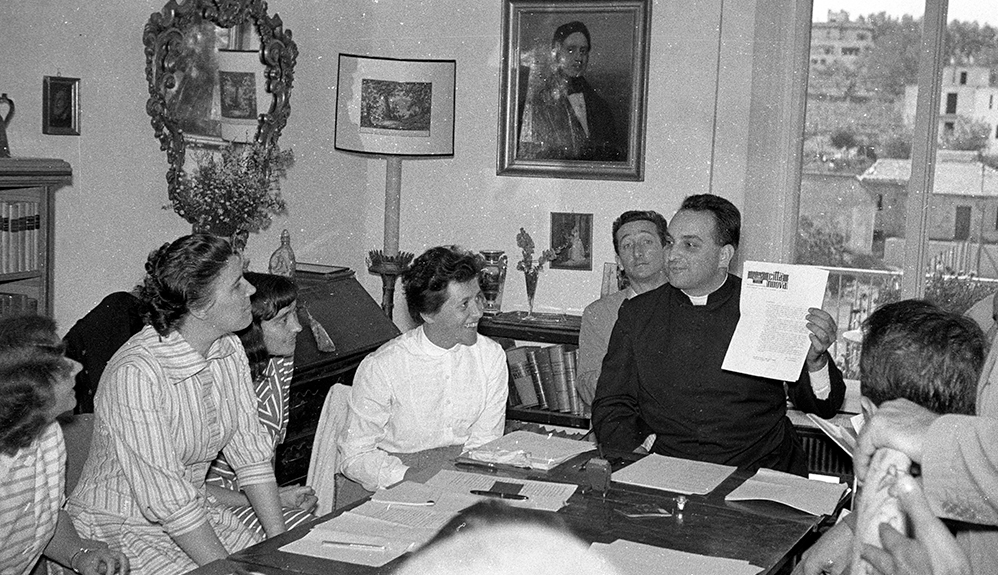
2026 will mark the 70th anniversary of the founding of the Città Nuova magazine. It was the 14th of July 1956 when, in Fiera di Primiero in northern Italy, during a summer meeting of the Focolare Movement called Mariapolis, the foundress and first president of the Focolare Movement, Chiara Lubich, had the idea of creating a “newsletter” so that all the participants could keep in contact.
Since then, thousands of publications have followed, and Città Nuova has always been committed to looking at the facts, reading and exploring current events from the perspective of universal fraternity. It is committed to dialogue on uncomfortable issues, to be close to the most fragile and the forgotten, to build bridges, to be present in the wounds of humanity, to highlight seeds of peace and hope, with a global horizon that looks towards a united world.
As the Movement spread throughout the world, editions were launched in different countries. Today there are 32 editions in 21 languages, both in print and online.
Margaret Karram, President of the Focolare Movement, addressed a video message on the 7th of January 2026 in which she stated that “today, faced with the terrible threats of our time – wars, polarisation of all kinds, environmental crises, an economy often based on exploitation, ethical challenges posed by artificial intelligence – Città Nuova still and always chooses dialogue:
it chooses peace as a difficult but essential pursuit,
it chooses to believe that every encounter, every thought, every word can contribute to changing the direction of the world.”
Here is the complete video message. Activate the subtitles and choose the language you desire.
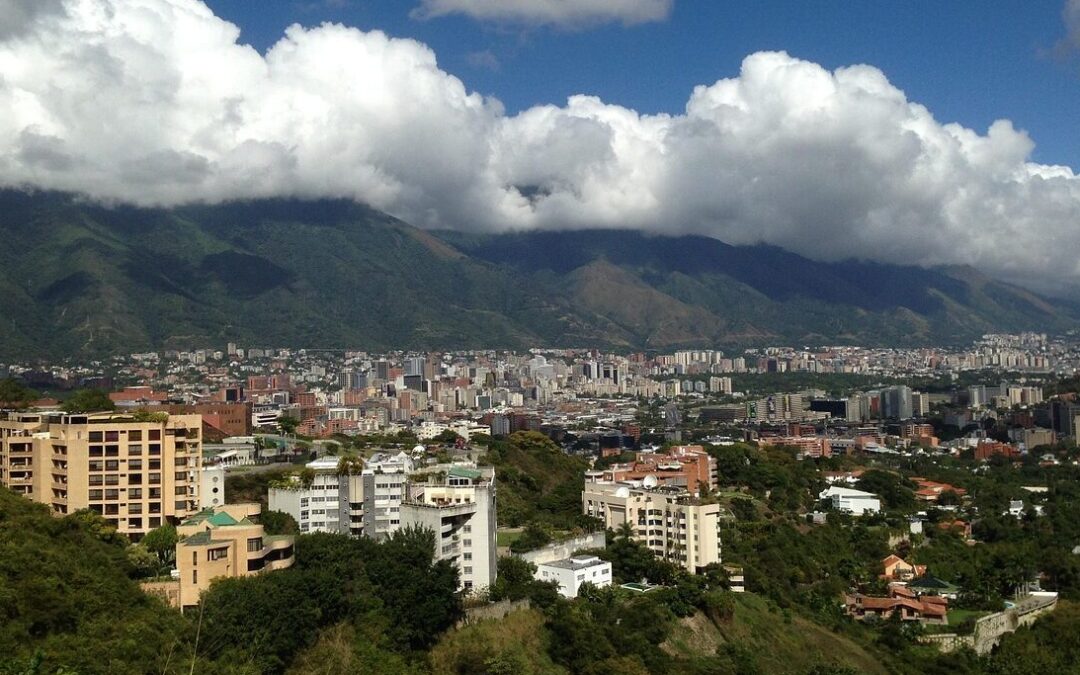
“In the midst of the darkness we are living through today in Venezuela, we remember that we are not alone. Under the roar of the bombs in 1943, Chiara Lubich discovered that there is an Ideal that nothing and no one can destroy: God loves us immensely.”
This is how the “Message of hope and unity” begins. It was shared on the evening of 5th January by the Venezuelan Gen (the young people who adhere to the spirituality of the Focolare Movement), both those who live in Venezuela and those in other parts of the world. They met online to pray and to share how each one is living this critical time for the whole population, never forgetting the choice to love everyone. There was a strong sense of the need to face together what they described as a “sacred” time: “we are not alone because we are supported by the prayer of all those who, from Venezuela and from all over the world, are asking for Peace.”
The message continues:
“Today fear wants to paralyze us, but the response is not hatred, rather unity. Chiara taught us that wheneverything collapses, the only thing that remains is Love. If we become “one”, if we look after one another and place God as our rock, fear loses its power.
Let’s not be afraid. Let’s make this moment an opportunity to:
have full trust that God is our Father and does not abandon us, even when the outlook is difficult;
become “one”: may the suffering of others be our own. Let’s help one another, let’s share the little or the much that we have and break down the walls of indifference;
be builders of peace: let our weapon be solidarity.
If we remain united, Jesus is among us and wherever He is, light ultimately overcomes darkness.
“A New Life” is the story of Hasan Mohammad, an economic migrant who arrived in Sicily (Italy) from Bangladesh. Thanks to the Formation & Communion (Fo.Co.) Cooperative, he found a home, a job and a new family. The “widespread reception” system is not limited to the integration of migrants but aims at reciprocity, where the encounter between different people becomes growth for everyone. Discover how solidarity can transform lives and geographical areas.
In the Muisne district, Esmeraldas, the ‘Sunrise’ project, set up by the Focolare Movement with the support of AMU (Action for a United World) and the Economy of Communion, brings together more than 500 young people in ecology clubs located in towns and villages along the coast. These clubs are not only concerned with ecology, but also with the integral development of the person as a response to the many risks to which they are exposed.
During the Week of Prayer for Christian Unity,[1] we are invited to focus on the theme found in Paul’s letter to the Ephesians. This epistle is one of his socalled prison letters, and in it, he exhorts all those who listen to his message to be credible witnesses to their faith through the unity among them.
This unity is based on one faith, one spirit and one hope and it is the only means of witnessing to Christ’s followers as his “body.”
There is one body and one Spirit, just as you were called to one hope when you were called.
So, Paul calls us back to hope. But what is hope and why are we invited to live it? It is not only a seed that develops but also a gift that we can protect, cultivate and bring to fruition for the good of all. ‘Christian hope sets us upon a narrow mountain ridge that is like a frontier where our vocation asks that we choose to be faithful to God’s faithfulness to us every day and every hour.’ [2].
Our vocation, the call to be Christian, is not just an individual matter between each person and God; it is a ‘convocation’, being called together. It is the call to unity among those who are committed to living the Gospel. In Chiara Lubich’s talks and writings, we often find explicit references to unity as an integral part of her spirituality. It is the fruit of Jesus’ presence among us and this presence is the source of profound happiness.
‘If unity is so important for Christians, then failing to achieve it must be contrary to their vocation. We sin against unity every time we give in to the continual temptation of individualism, which pushes us to do things alone, guided by our own judgement, interests, or personal prestige, and to ignore or even despise others, their needs, and their rights. [3]
There is one body and one Spirit, just as you were called to one hope when you were called.
In Guatemala, there is great collaboration and dialogue between members of different Christian Churches. Ramiro writes, “People from different Churches worked together to organise the Week of Prayer for Christian Unity. The programme included an arts festival that young people helped to initiate and various celebrations in different churches. This was so successful that the Catholic Bishops’ Conference asked us to continue this initiative in preparation for a gathering with Catholic bishops and believers from many Churches who were travelling from across the Americas for a conference commemorating the 1700th anniversary of the Council of Nicaea. It’s not only during these special activities but whenever we come together I feel we always experience a strong sense of unity among us all and the fruits that it brings: fraternity, joy, and peace.”
Edited by Patricia Mazzola & the Word of Life Team
[1] Celebrated 18-25 Jan in the northern hemisphere & at the time of Pentecost in the southern hemisphere. For 2026, the prayers and reflections have been prepared by the faithful of the Armenian Apostolic Church, along with their brothers and sisters of the Armenian Catholic and Evangelical Churches
The world today lacks unity. To give just a few examples, we see this in the divisions that sometimes exist within families, among neighbours and between Churches and communities. It seems that polarisation prevails over understanding. This is a consequence of the growth of individualism that drives people to decide and act on their own behalf in a way that benefits their interests and personal prestige. This gives little value to the needs and rights of others.
And yet, it is possible to experience unity. It is a journey that always begins by taking small steps and with a “yes” that we say within: yes to welcoming, yes to forgiving, yes to living for others. It is not about grand projects but about small but faithful actions that, over time, transform a life, a community or an entire environment. And when that happens, we realise that fraternity ceases to be an ideal and becomes a visible reality and hope for all.
Martin Buber considers unity to be relationship. He states that it is the space of encounter, that exists between You and I, a sacred place where differences do not disappear but are mutually recognised. For him, unity arises when two realities allow themselves to be touched and shaped by the other and not when one imposes itself. This “between” can be understood as a space that welcomes diversity and, precisely for this reason, becomes a source of communion. Hence, for Buber, “All true life is encounter” (Ich und Du, 1923).
Therefore, in other people – whether friends, family members or just someone we meet along the way – we can discover the great ‘opportunity of relationship’. Other people ‘save us’ and enable us to go beyond our fears when we feel overwhelmed by a difficult situation. Living for unity means walking together despite our differences, transforming them into treasures rather than obstacles. It is an invitation to move from simple coexistence to encounter, where reciprocity enables what belongs to each person to become new because the relationship means it is shared. Unity, understood in this way, is not the sum of the two nor is it fragility that causes us to lean on others: it is strength that generates the hope that there is still a tomorrow. Diversity is no longer disunity, but mutual richness. It is feeling that what happens to others also resonates in me. ‘Union does not consist in equality, but in harmony,’ Rabindranath Tagore reminds us.
This month, may we experience the joy, light, life, peace and hope that come from unity that is lived
THE IDEA OF THE MONTH is currently produced by the Focolare Movement’s “Centre for Dialogue with People of Non religious Beliefs”. It is an initiative that began in 2014 in Uruguay to share with non-believing friends the values of the Word of Life, i.e. the phrase from Scripture that members of the Movement strive to put into practice in their daily lives. Currently, THE IDEA OF THE MONTH is translated into 12 languages and distributed in more than 25 countries, with adaptations of the text according to different cultural sensitivities. dialogue4unity.focolare.org