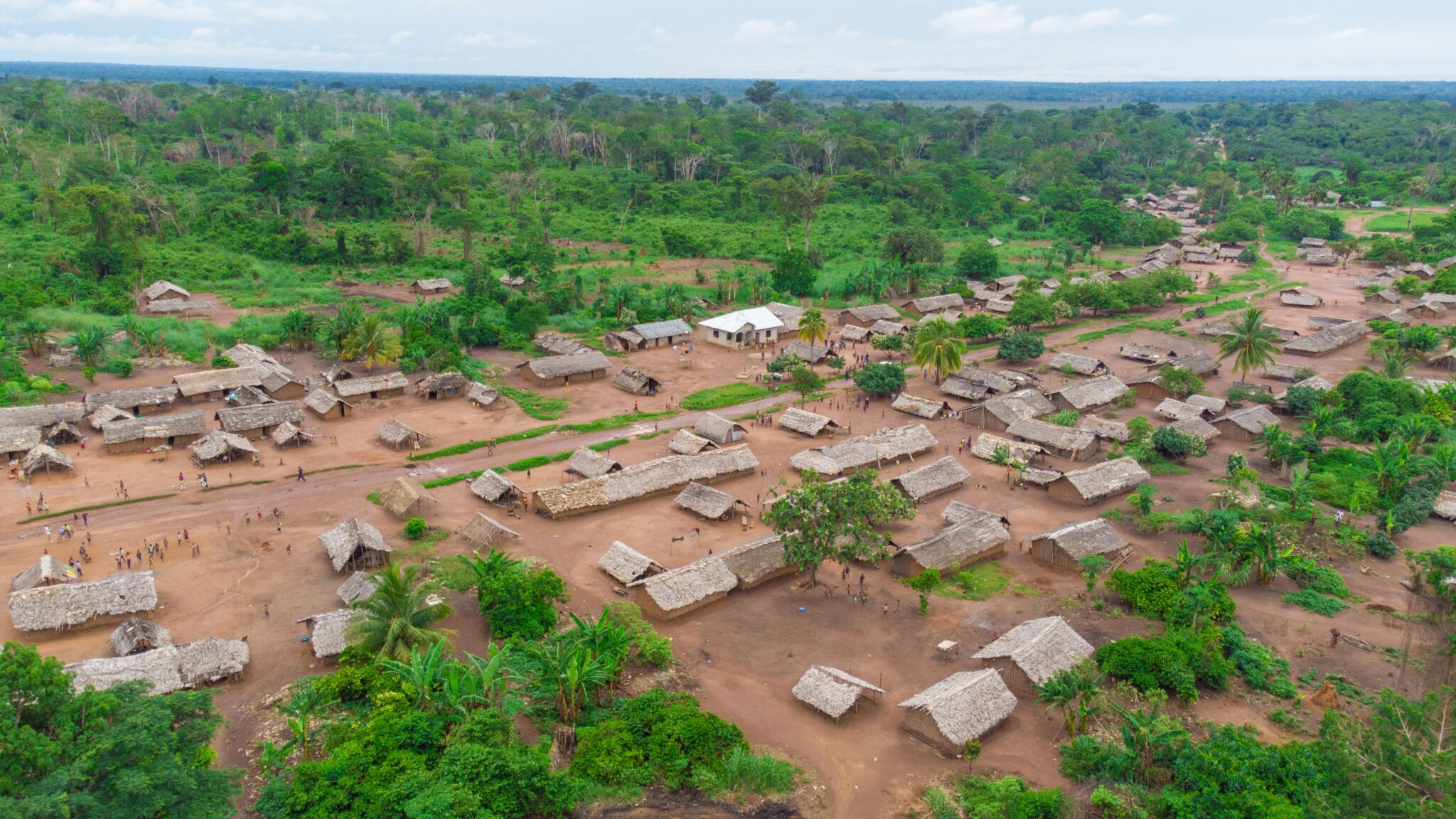
Kalera is a small village in Upper Katanga in the Democratic Republic of Congo, the birthplace of Abbot Jean Baptiste Ilunga Binsela, a priest and animator of the Laudato Sì Movement.
The region is extraordinarily rich in minerals such as cobalt and coltan, resources that power technologies and economies around the world. Yet, Jean Baptiste grew up in a very different reality. His village had no electricity, little sanitation facilities, limited access to water and other services and no local schools or adequate roads. Over the years, the community has endured repeated flooding.
Jean Baptiste left Kalera to continue his studies and become a priest. Then he returned to the village where, in 2023, something began to change.
Through his formation as an animator of the Laudato Sì Movement, Jean Baptiste deepened his understanding of the central messages of the encyclical:
Everything is interconnected: faith and creation, poverty and energy, human dignity and the economy, the minerals beneath the earth and the lives of the people who live above them.
This ecological conversion led Jean Baptiste to ask a difficult question: how could a community surrounded by resources that help power the world, remain without energy itself?
His response reminds us that conversion cannot simply remain a personal spiritual experience.
Living Water is meant to flow: it flows when contemplation becomes compassion, when faith helps us see the connections between the Earth and the people who depend on it and when that awareness leads us to action.
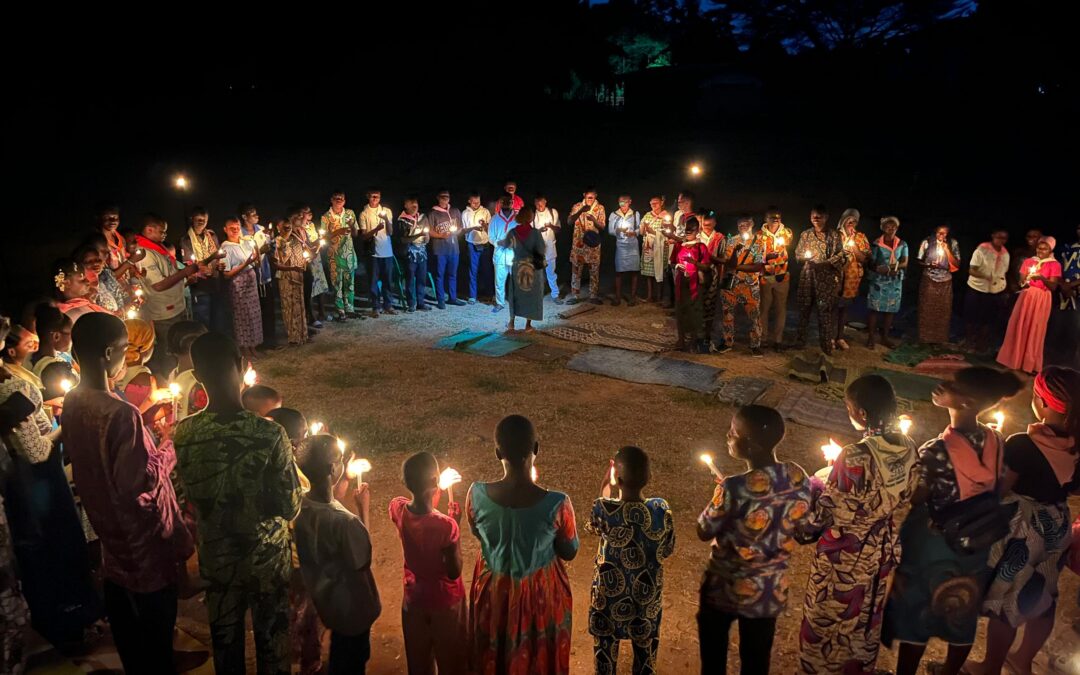
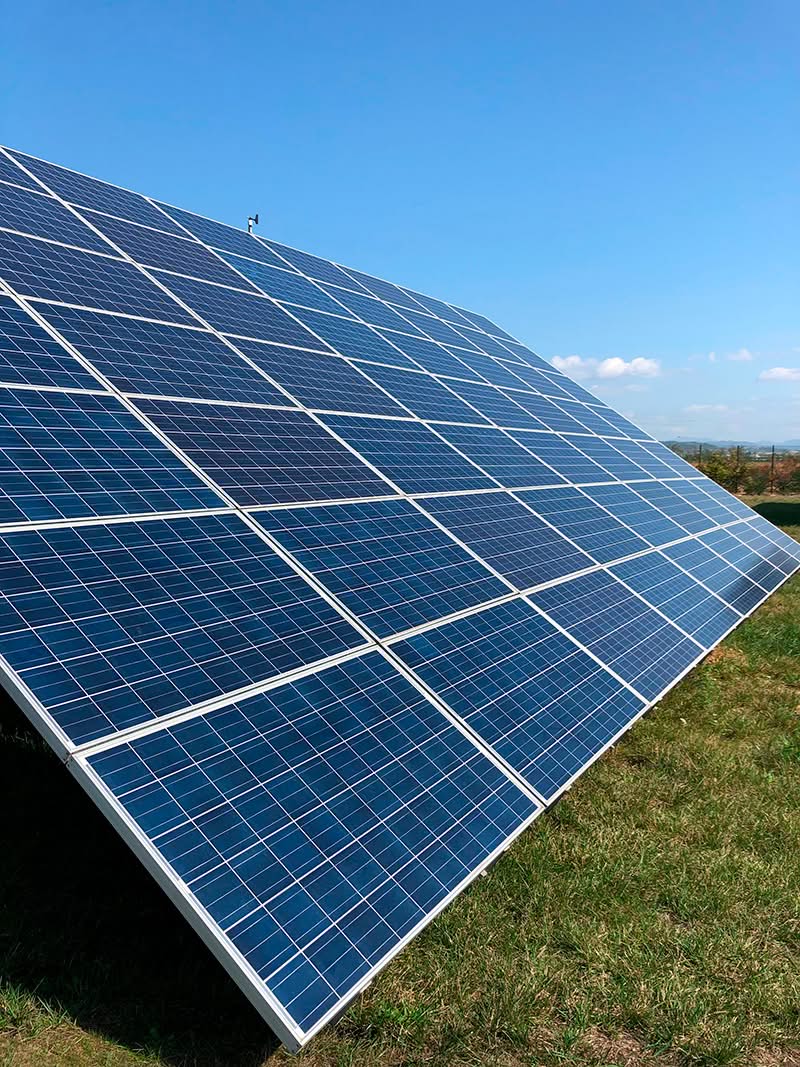
In Kalera, that flow took the form of renewable energy. Jean Baptiste started working towards achieving a fossil fuel free village. The installation of solar energy gradually opened up new possibilities. Children can now study after sunset. Families can charge their phones and stay connected. The local health centre can refrigerate medicines. The Chapel of Sant’Annarita has electricity, strengthening the pastoral life of the community.
For the people of Kalera these changes seemed almost miraculous. Jean Baptiste says they even began comparing their village to Capernaum, remembered in the Gospel as a place of healing and transformation.
Solar energy brought light. But something deeper also began to flow: hope.
When inner conversion extends outwards, in fact, it can nourish relationships, restore dignity, strengthen communities and open up new possibilities in places that have been forgotten.
The story of Jean Baptiste is one small stream flowing into in a much larger river. Around the world, many communities are finding their own way to immerse themselves in Living Water, helping to increase a river that brings healing, unity and hope to our common home in this Season of Creation 2026.
The Focolare Movement is a partner of the Laudato SìMovement. The Season of Creation began in 1989 on the initiative of the Orthodox Ecumenical Patriarch Dimitrios I, who established the Day of Prayer for Creation on 1st September. In 2007, the Third European Ecumenical Assembly extended this celebration into a month-long period ending on 4th October, the feast of St. Francis of Assisi. Finally, in 2015, Pope Francis officially added the observance to the calendar of the Roman Catholic Church, consolidating its global ecumenical character. In 2026, several Churches included the new feast, the “Feast of Creation in Christ” (Creation Sunday) in their liturgical calendar. Pope Leo XIV has approved a “Mass for the Care of Creation” for 1st September, the beginning of the Season of Creation.
Ahead of the 11th World Day of Prayer for the Care of Creation celebrated on 1st September, Pope Leo XIV has written a message entitled “They shall beat their swords into ploughshares and their spears into pruning hooks” (Is 2,4).
It is a text to be read again and again and meditated on, starting from the title that takes up one of the most famous images of the Bible. Isaiah imagines that an object made for war is transformed into an agricultural tool. What was once used to destroy becomes a tool for producing and sustaining life. It is a beautiful image of peace and one that is closely connected to the present day. Today, fragile relationships and armed conflicts continue to destroy the environment and threaten the lives of millions of people.
Pope Leo highlights the deep link between peace, care for Creation and human dignity, inviting us to direct resources towards life and sustainability. The Pope writes. “But today, we too often witness the very opposite, as violence and war. War also leaves behind social and ecological destruction that endures for generations. Moreover, the interaction between armed conflicts and environmental degradation often creates a vicious cycle, which destroys ecosystems, contaminates essential resources, such as air and water, and undermines food security. This fuels poverty, inequality, and new social tensions that can contribute to the emergence of further conflicts.”
Creation is “nature”, everything that surrounds us! And human beings are not merely observers, but part of it. Isaiah’s hope therefore becomes for us today a call to “transform what is evil into life“. This conversion that cannot be separated from returning not only to our hearts, but to the One who heals them: the Lord. For where the individual is renewed, new possibilities open up.
The Pope says, “What has been used for destruction can be redirected towards life, towards the care of the poor, the nourishment of the hungry and the safeguarding of creation.. This is the path of an authentic ecological conversion, where the effects of our encounter with Jesus Christ become evident in our relationships with the world around us. Peace, then, begins in the heart and flows outwards to our relationships, communities and the broader world.”
Every year, 1st September also marks the beginning of the Season of Creation, the ecumenical journey of prayer and commitment to the care of our Common House which concludes on 4th October, the feast of Saint Francis of Assisi. During this time, the Church, together with other Christian communities, is invited to renew its commitment to Creation, letting itself be guided by prayer, conversion and concrete gestures of care. This year’s theme, “Living Water,” explores Ezekiel 47:9 and 12 as a powerful biblical vision of hope and ecological healing. The image of living water flowing from God’s sanctuary symbolizes divine healing that regenerates.
The commitment of the Focolare communities around the world
The Season of Creation is also expressed through concrete actions. Among the many initiatives in different parts of the world, we highlight two from Latin America: Brazil and Uruguay.
In Brazil, the Decarbonize project is transforming schools into places where young people can learn about, understand and respond concretely to the environmental challenges of our time.
Students and teachers are involved in a programme of education on climate change, sustainability and environmental justice, developing not only knowledge, but also the ability to participate and take responsibility in their own communities.
The initiative grew out of the international “Decarbonize” program of the Global Education Centre, carried out in collaboration with the University of Alberta, Canada. The programme focuses on youth leadership, climate justice, the fight against environmental racism and political participation, in line with the 2030 Agenda, the Sustainable Development Goals, the Earth Charterand human rights.
The young people do not simply listen or study: they carry out research, share what they have discovered and participate in public life.
The experience became even more meaningful when students had the opportunity to participate in institutional events such as COP conferences, the Brazilian National Congress and state legislative assemblies.
Decarbonize therefore shows that educating for sustainability also means giving young people a voice, the tools and confidence, to become active citizens and protagonists in caring for our common home.
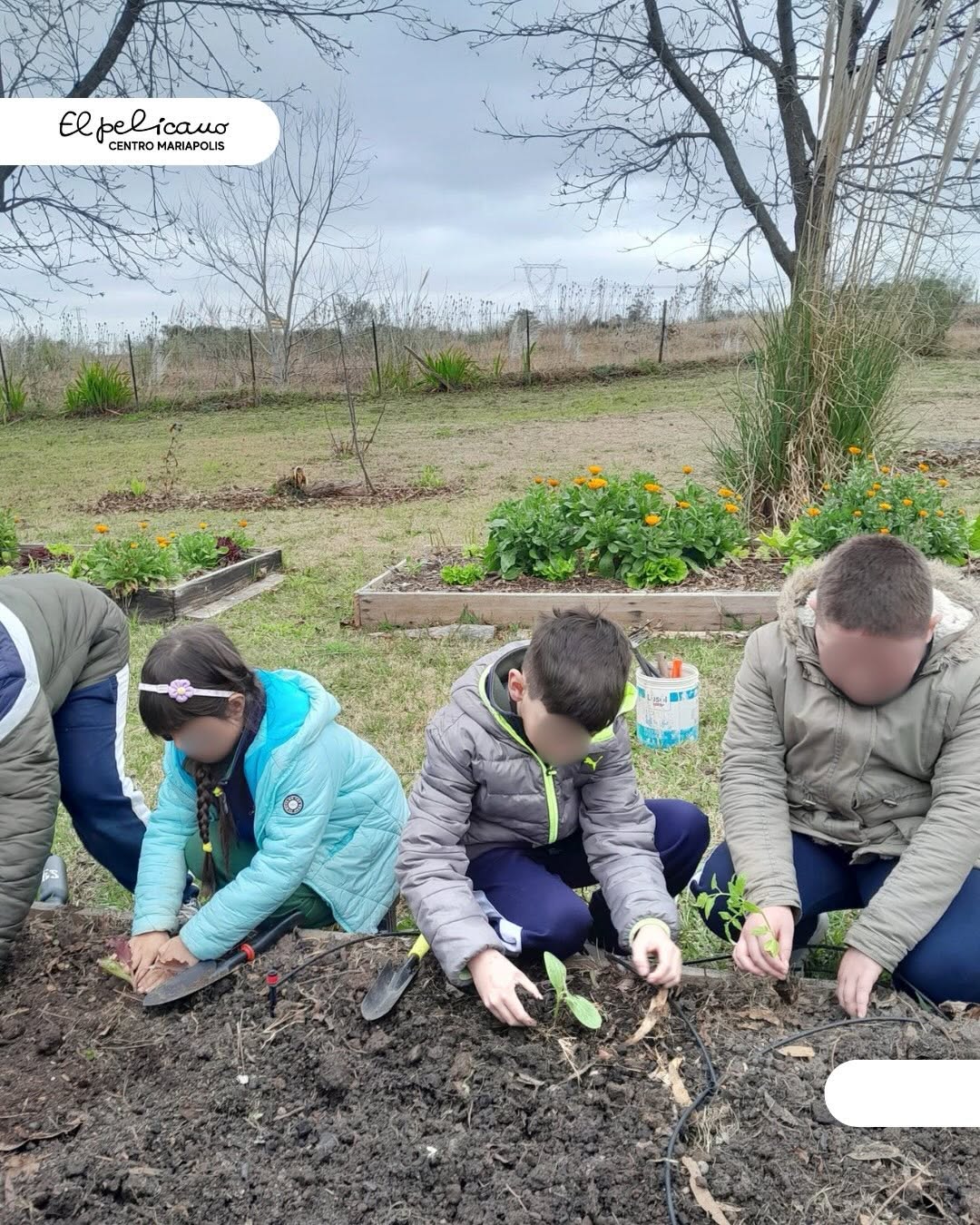
In Uruguay, a few kilometers from Montevideo, the experience of the El Pelícano Mariapolis Centre offers a practical and engaging way to educate people about integral ecology. The centre, born out of the experience of the Focolare Movement, is surrounded by nature and offers children a space where the natural world becomes a place of learning and discovery. Through outdoor educational activities, children can come into contact with the environment, observing it, getting to know it and learning to respect it.
In 2022, thisexperience took a further step forward thanks to the project “El Pelícano: Centro de Recursos Ecologico para la Educación en la Infancia” (The Pelican: Ecological Resource Center for Early Childhood Education), supported through the New HumanitySeed FundingProgram.
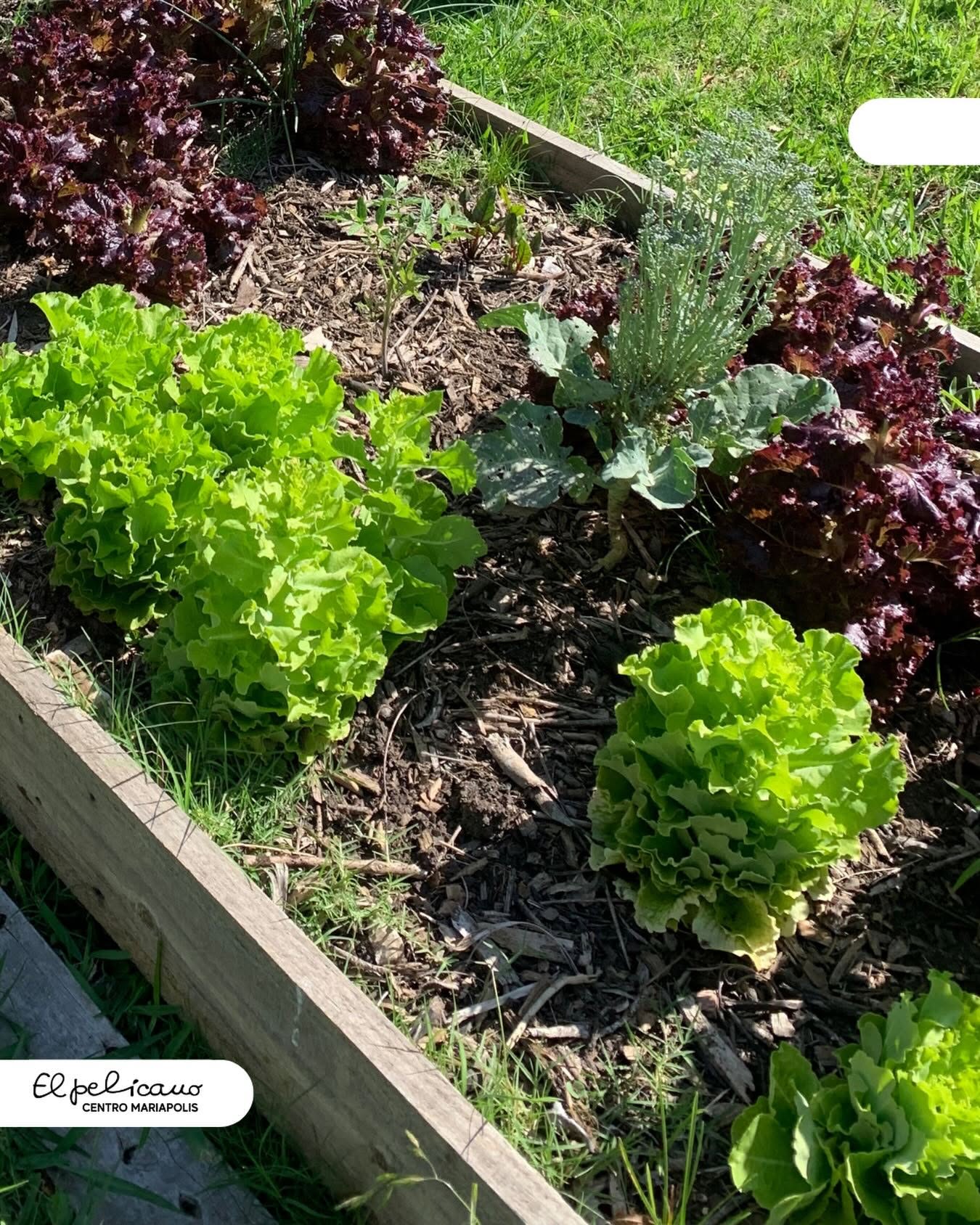
The aim is to transform El Pelícano into a resource centre for the environmental education of children. Workshops, nature excursions, an organic vegetable garden and recycling activities become opportunities to learn through doing. A child who cultivates a vegetable garden, observes a plant, walks in the woods or learns to give new life to a waste material is not only acquiring a notion: they are building a relationship with nature.
And the experience doesn’t stop with the children. Through them, the project also aims to involve families, so that what is experienced and learned can continue in daily life.
The “El Pelicano” therefore offers us a valuable experience: ecology can be taught from early childhood through beauty, practical experience and participation, helping new generations to feel part of our Common Home and responsible for its care.
The third and final day of the Raising Hope Conference unfolded with new keynote addresses, moments of reflection, prayer, music, and a defining moment: participants’ contributions and commitments, presented as key pillars for climate justice action.
On the website raisinghope.earth/action/ conference participants, both in person and online, were invited to share their own commitments: How will you respond to the cry of the earth and the cry of the poor? These People-Determined Contributions (PDCs) are a bold global civil society initiative to present the pledges of individuals and grassroots communities towards ecological transformation.
Raising Hope water will reach COP30
The moving opening ceremony led by Pope Leo XIV last Wednesday, 1 October—when he blessed a block of ice from Greenland—reached its culmination this afternoon as participants collected the melted water to take to their homes and communities.
Dr. Lorna Gold, Executive Director of the Laudato Si’ Movement, expressed with emotion: “A block of ice blessed by the Pope has gone viral these days. Now this blessed water will become something very powerful, because it will be carried to COP30 in Brazil.”
Each participant was able to take a bowl containing some of this blessed water—partly from the glacial ice, mixed with water from rivers across the world that had been offered by representatives at the start of the conference. This was not just a gift, but a sign of the urgency of the climate crisis, marked by the hope carried through the Pope’s blessing.
Returning to the heart and raising our voices
Another highlight of the closing day came when Dr. Lorna Gold presented some of the commitments made by participants. Among the most significant were the power of collaboration, the importance of alliances, the call to return to the heart, and the promotion of the Laudato Si’ Animator Program developed by the LSM.
She emphasized the importance of implementation: “We cannot wait for others to act. We must implement the changes that are within our hands,” Dr. Lorna affirmed. She encouraged participants to raise their voices together in Belém, Brazil (next COP), where a new alliance for the non-proliferation of fossil fuels will also be launched.
Giving thanks for 10 years of the LSM
A deeply moving moment came as participants gave thanks for the ten-year history of the Laudato Si’ Movement, founded in January 2015. Dr. Lorna Gold recalled meeting co-founder Tomás Insua in that same year and being struck by his passion and energy to spread the values of the encyclical.
“The most extraordinary thing about our movement is joy,” she declared, urging everyone to “bring this joy to COP30.” She recalled Pope Francis’s words inviting us to “sing along the way,” because “our concern must not take away our joy or our hope.”
Yeb Saño, Chair of the Board of the Laudato Si’ Movement, urged participants to engrave into memory what had been lived during the conference so that “all these reasons push us out of bed every morning.” “We have a lot of work ahead, but Pope Leo is on our side. It’s not about rushing forward, but about moving together.”
Laudato Si’ for courageous communities
The morning opened with a keynote by Kumi Naidoo, Chair of the Fossil Fuel Non-Proliferation Treaty, who described himself as a “prisoner of hope.” He stressed that we must care for our environment because “there are no jobs or humans on a dead planet.”
“Catholic communities, through Laudato Si’, have shown courage,” Naidoo said, encouraging all to act with wisdom and faith, with a sense of urgency. “Hope is not love; hope is resilience, hope is a mission.”
The resilience of peoples
The next panel, titled “Faith and Shared Mission for a Resilient Planet,” was moderated by Josianne Gauthier, Secretary General of CIDSE (Coopération Internationale pour le Développement et la Solidarité). Key topics included financing for developing countries and resilience as the driving force to move forward.
Dr. Maina Vakafua Talia, Minister of the Interior, Climate Change and Environment of Tuvalu, noted that while her native language has no word for resilience, her people have learned to “move from vulnerability to strength” after enduring multiple climate catastrophes. She also emphasized the importance of spirituality in building a resilient future.
Dr. Svitlana Romanko, founder and director of Razom We Stand, spoke of her country, Ukraine, and how fossil fuel dependency as a consequence of war has devastated its people. She stressed that resilience is what keeps them standing today, together with renewable energy and green economies, proving that living on clean energy is possible.
Mons. Robert Vitillo, from the Dicastery for Promoting Integral Human Development and the Laudato Si’ Action Platform, contributed with a reflection from the Gospel: “We are taught about solidarity, and we must shift perspective to translate it into action in our commitments.”
Listening to the peripheries
In the afternoon, the final panel was moderated by Bianca Pitt, founder of the Women’s Environment Network and co-founder of SHE Changes Climate. It revolved around what our hearts tell us about the experience of these past days.
Catherine Coleman Flowers, MacArthur Fellow and advocate for environmental health, member of the boards of the Natural Resources Defense Council, shared how people on the margins are the ones who suffer the most and are least heard.
Bishop Ricardo Hoepers, Secretary General of the National Conference of Bishops of Brazil, reflected on his country’s diversity and how it is necessary to step out of our comfort zones to broaden our horizons: “My dream for Brazil is to unite Laudato Si’ and Fratelli Tutti; and for nature and human beings to hold the same importance: nature is the space God has given us to live as brothers and sisters.”
And Margaret Karram, President of the Focolare Movement, stated: “I am convinced that the only way to bring about lasting change is to embrace love as the guiding principle of our ecological action. In Laudato Si’, the word love appears seventy times! A powerful indication of a path on which everyone and all of us are invited to walk. An invitation to journey from an authentic human fraternity — such as we have experienced in these days — toward a cosmic fraternity .”
Before concluding, participants joined in a final session of prayer and reflection, led by members of Trócaire. After presenting a video summary of the three-day journey, all were invited to recall the most significant moments and to solemnly commit to continuing the path, advocating for our common home.
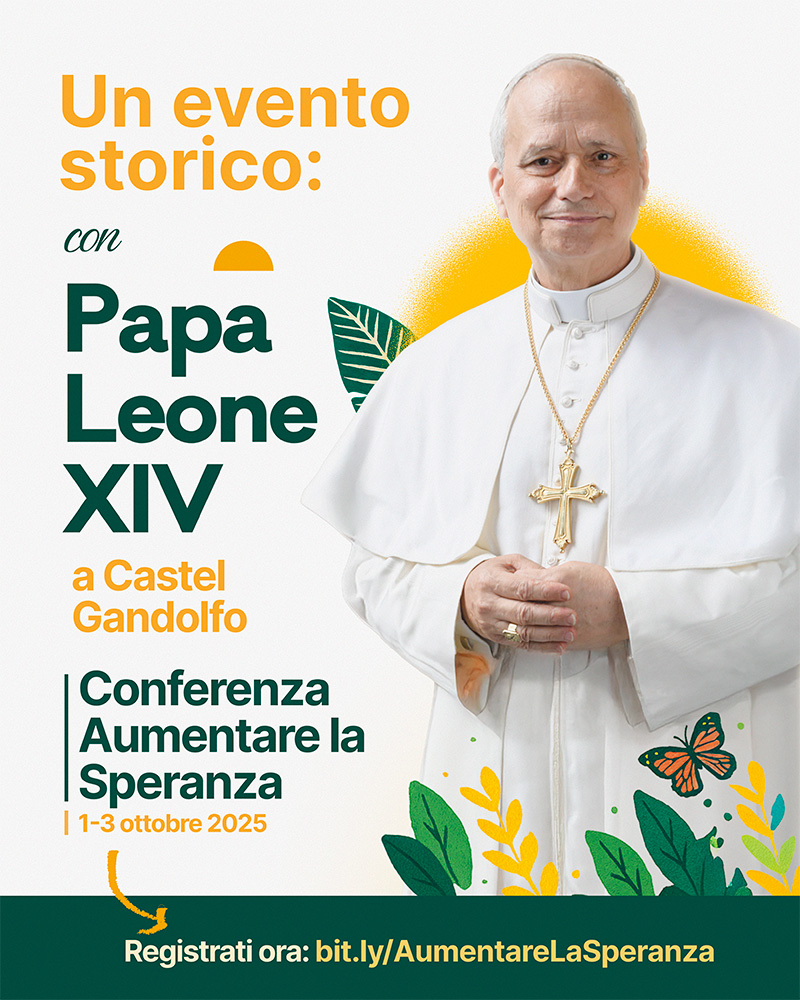
From October 1–3, 2025, Castel Gandolfo (Italy) will host the international conference “Raising Hope for Climate Justice”, a historic gathering to mark the tenth anniversary of the Laudato Si’ encyclical and to foster a global response to the climate and ecological crisis from the perspectives of faith, politics, and civil society.
The event will feature His Holiness Pope Leo XIV, alongside prominent leaders such as Brazil’s Environment Minister Marina Silva and former California Governor Arnold Schwarzenegger, along with bishops, international agency officials, indigenous leaders, climate and biodiversity experts, and civil society representatives. Over three days, the conference will include keynotes, panel discussions, spiritual moments, and cultural events that highlight both the progress made since Laudato Si’ and the urgent steps needed ahead of COP30 in Brazil.
“In a time marked by global challenges and deep wounds, our commitment for unity and peace cannot exclude a pursuit of climate justice that places human dignity and care for creation at its core.” This is the declaration of Margaret Karram, the President of the Focolare Movement, who is one of the event’s partners. She continues, “As Focolare Movement, we want to collaborate with everyone, in protecting and safeguarding our common home, and with a new responsibility we want to live closeness to the poor and solidarity among the generations for a sustainable future.”
The event will be held in person at Castel Gandolfo and streamed live, enabling thousands of people and media outlets worldwide to follow the main messages and join the global conversation.
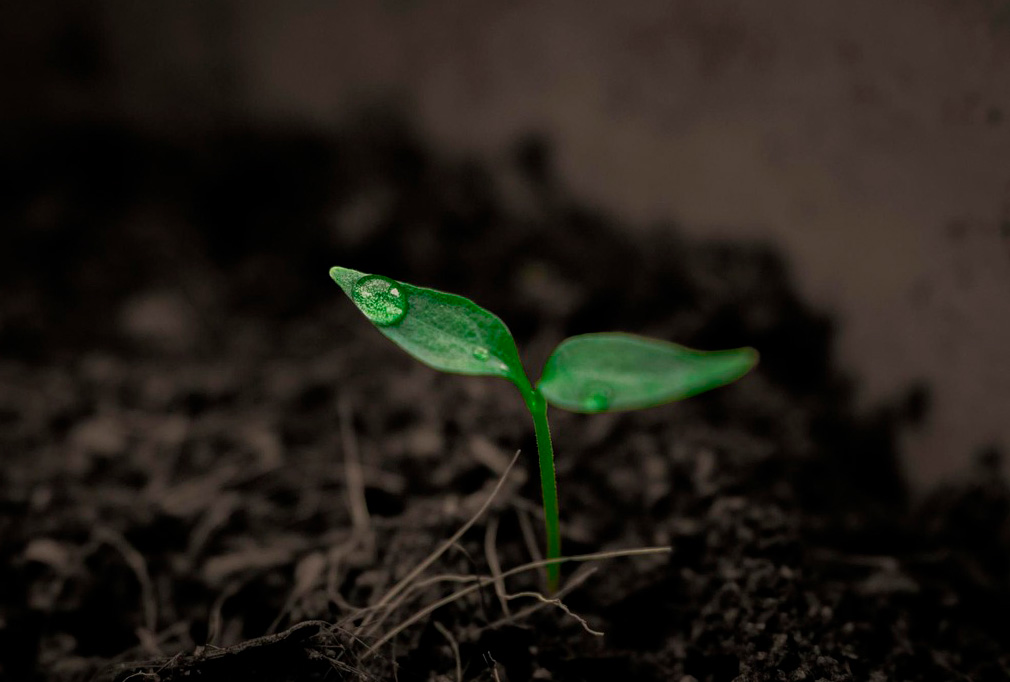
I don’t know if this has ever happened to you but sometimes, after a large forest fire, when everything is burnt, bare, covered in ash, lifeless, you can spot a small plant sprouting – right there, where everything seemed dead. When I notice this, I feel something beautiful: where life seemed to have ended, nature is stronger. It grows, triumphs, lives, even when it seems impossible. It is in those moments that I understand how wonderful it is to live on a planet capable of regenerating itself, despite its wounds.
But for how much longer will it be able to do so?
On 2nd July, the Message of the Holy Father Leo XIV for the X World Day of Prayer for the Care of Creation which will be celebrated on Monday, September 1, 2025 was published. It is entitled Seeds of Peace and Hope. What a splendid legacy Francis left us with his Encyclical Laudato Sì published ten years ago: so current, important and precious. And I find it very beautiful that Pope Leo takes up this legacy by highlighting the month dedicated to the Care of Creation (1st September-4th October), which begins with this day of prayer.
But what does this Message actually declare?
Returning to the example of the forest fire, Leo XIV reminds us that, “Seeds are buried in the earth, and there, to our wonder, life springs up, even in the most unexpected places, pointing to the promise of new beginnings”. Then he addresses us, inhabitants of this world, reminding us that “in Christ we too are seeds”. Not only that, but “seeds of Peace and Hope”.
This is a strong and clear invitation to live the ecumenical initiative of the “Season of Creation” from 1st September-4th October. It is a month of initiatives to invent, prepare and implement so as to pay every more attention to the care of our “common home”, which we all inhabit, regardless of our differences. Pope Leo says, “Together with prayer, determination and concrete actions are necessary if this “caress of God” is to become visible to our world”. Further on he says, “we seem incapable of recognizing that the destruction of nature does not affect everyone in the same way. When justice and peace are trampled underfoot, those who are most hurt are the poor, the marginalized and the excluded. (…)By working with love and perseverance, we can sow many seeds of justice and thus contribute to the growth of peace and the renewal of hope”.
Everyone is called to participate: individually or in groups, in associations, organizations, companies… why not? Each with their own ideas, their own commitment.
In his Message, Pope Leo XIV writes: “The Encyclical Laudato Sì has now guided the Catholic Church and many people of good will for ten years. May it continue to inspire us and may integral ecology be increasingly accepted as the right path to follow. In this way, seeds of hope will multiply, to be “tilled and kept” by the grace of our great and unfailing Hope, who is the risen Christ”.
And what does the Pope do? He begins himself by promoting these initiatives first. He established, for the first time in the history of the Church, a “Mass for the Care of Creation”, made official through the Decree on the Mass pro custodia creationis. Pope Leo XIV used this new form already on 9th July, 2025 during a private Eucharist that he celebrated at the Borgo Laudato Sì, during his stay at Castel Gandolfo (Rome). From now on, anyone can ask to celebrate a Mass with this intention, to be faithful stewards of what God has entrusted to us: in our daily choices, in public policies, in prayer, in worship and in the way we inhabit the world.
The title Seeds of Peace and Hope today appears as a disarming prophecy. Perhaps they are the only two words that, in this dark time for humanity, continue to make sense. They are words that allow us to start again, to sow and to believe that that fresh grass will continue to grow even where the land seems scorched and dead. Actions like these make me understand that all the Churches do not change their minds about the essential questions for the life of humanity. And above all, that they do not stop thinking about the future of the new generations.