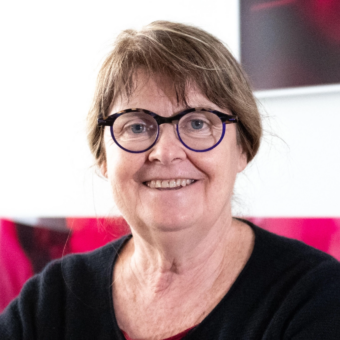
The Focolare Movement is publishing the report on its activities on safeguarding and on its data concerning abuse cases in 2023. An interview with Catherine Belzung, professor of Neuroscience and coordinator of the UNESCO Chair on Childhood Maltreatment. On 1st March, the second annual report of the Focolare Movement concerning its activities and data relating to cases of sexual abuse of minors and vulnerable adults as well as abuse of conscience, spiritual abuse and abuse of authority was published. We asked Catherine Belzung to give an evaluation of the document. Catherine is a university professor of Neuroscience in France, she is a senior member of the University Institute of France (2014) and president of the multidisciplinary research centre iBrain. Since 2022, she has been coordinator of the UNESCO Chair on Childhood Maltreatment, made up of a partnership of universities and institutions from 16 countries. She is also co-chair of the International Centre for Dialogue with Contemporary Culture of the Focolare Movement. Q: Since 2023, the Focolare Movement has decided to publish an annual report on child sexual abuse and also on abuse of conscience, spiritual abuse and abuse of authority. From your international perspective, what do you think of this decision? How do you consider this second report?A: I believe this report represents a real step forward. In fact, the last report was criticised, mainly because the places and dates of sexual abuse were not mentioned. The new report covers cases disclosed in the last 10 years and adds these clarifications: it is stated that sexual abuses were carried out on all continents (about 20 countries), with a peak of cases between 1990 and 1999, as well as during the decade before 90 and after 2000. The offences sometimes are repeated over several decades, suggesting that these are multiple repeat offenders whose abuses have continued. Some offences happened and were dealt with around 2020, indicating that people abused were able to report abuse almost in real time, which is progress. All communicated sexual abuses were carried out by men. The opposite is true for abuses of authority, which in 77% of cases were committed by women, which is in proportion with the higher number of women among those belonging to this Movement. The report also contains a detailed and clear section on the measures implemented during the year, particularly regarding formation. It remains to be understood what the root causes of these abuses are. Beyond preventive measures and sanctions, further work should be done to identify the systemic causes that could explain these figures, in order to put in place a strategy that would prevent them. Q: In this second report, the people who abuse are identified according to precise criteria set out in the Communication Policy recently published by the Focolare Movement. What do you think of this decision? A: This is an ethical conflict. On the one hand, it is a matter of believing the experience of the people abused and taking the complaints they make seriously, as well as quickly putting measures in place so as to protect them. On the other hand, it is a question of respecting the presumed innocence of the alleged abusers, of not defaming them when no final criminal conviction has been pronounced. The issue is complex and finding a satisfactory solution will no doubt require a lot of listening and dialogue. Q: The UNESCO Chair on child abuse that you coordinate came about because you came into contact personally with a case of child abuse of which you knew both one of the people abused and the person who abused. It was a case that happened in the Catholic Church in France. In this case, the social or religious community is defined as a ‘secondary victim’. What does this mean? What are the wounds that people carry, how can they be healed at a social and community level? A: Yes, in fact, this chair was set up as a result of being in contact with a person who had been abused. A contact that left a deep mark on me: I was profoundly affected by this suffering, and my desire to do something came from this. First and foremost, abuse affects the person who has been abused, who often suffers lasting psychological consequences. Sometimes, the opening up about the facts can bring out a great vulnerability in this person, which requires specific accompaniment. In turn, this also affects the person’s relatives, such as their spouse, their children, but also their parents who feel responsible for having entrusted their child to an institution that did not protect them. The devastating effects also have an impact on the entire community, as members are often unaware that within it a repeat offender was concealed, a person with whom they may have had a bond of closeness, of friendship. We may ask ourselves: why didn’t I notice anything? Another aspect concerns the bond with the institution that may have protected the abuser, sometimes in good faith, producing in people a sense of betrayal and distrust. Finally, the community may also become divided, depending on their divergent analyses, between those who take refuge in denial, and those who want to fight to prevent these things from happening again. Rectifying all of this requires a wide range of measures: it is essential to take on the responsibility of accompanying the people who have been abused and their families, but it is also necessary to restore trust in the institution that has shown its weaknesses and where there is a sincere willingness to learn from its past mistakes. It’s the actions that matter in making this happen: the institution must promote transparency by communicating very precise information, put in place clear procedures, create places for listening, establish reparation procedures and, for communities, spaces for dialogue where even opposing opinions can be exchanged. Q: The Focolare Movement is a worldwide organisation, including people from different cultures and religions who are subject to different legal systems and adopt different lifestyles. How is it possible to implement anti-abuse practices in such a multicultural and diverse environment? A: The consequences of child sexual abuse exist in all cultures, they are universal. In addition to the ongoing psychological and social impact, those who have been abused may have biological ongoing effects, such as increased stress hormones, altering the expression of certain genes and brain morphology and brain functioning. These dysfunctions continue to be present throughout the survivor’s life and may be passed on to the next generation. So it cannot be said that there are cultural variations in the severity of the consequences on those who have been abused or that there are cultures where these people suffer less: always and everywhere, it’s devastating. It is therefore necessary to put in place measures for prevention, but also for reparation all over the world. One can see that awareness of the seriousness of these situations is increasing: for example, in the Catholic Church, national enquiry commissions have been set up in many countries in Europe, North America, Latin America, but also in Australia, India and South Africa. Although suffering does not vary, what may vary is that people resist in denouncing the facts and their ability to put in place protective and remedial measures. This may be related to the fact that in some cultures talking about sexuality is taboo. The first step is to make people aware of the consequences of abuse: there are already programmes promoted by various associations that take into account the way sexuality is considered in different cultures. For example, proposing that those who listen to the suffering of people who have been abused and belong to the same culture can understand them better. This can make people want to do something about it. Prevention can also be targeted directly at children, through education about their rights: again, there are programmes, for example, based on songs. Another thing that varies is the ability of countries and institutions to take measures of protection and reparation. A respectful and non-stigmatising dialogue with those who commit abuse is the way forward: this will enable everyone to understand the seriousness of the abuse, but also to find culturally specific ways to enable people to speak up, to implement processes of reparation and to educate members of the community. Q: Both within the Focolare Movement and also in other contexts there are those who express the conviction that the time has come to move forward; that is, that it is not necessary to continue talking only about abuses, but to focus on the ‘mission’ of the Movement and on what beautiful and positive things are being generated in the world by the living out of this charism today. What is your opinion on this? A: What do we mean by ‘mission’? Is it not to advance towards universal fraternity, towards a culture that puts the suffering of the weakest first, a culture of dialogue, openness, humility? It seems to me that the fight against all kinds of abuses is precisely a way of implementing this desire, putting those who suffer in the first place. Helping to heal the wounds of those who have been abused is a way of going towards universal fraternity. This also implies accompanying the people who have abused in order to prevent reoffending. Acknowledging one’s mistakes, one’s vulnerability, in order to create solutions, taking into account the opinions of experts in this field is precisely a way to build a culture of dialogue. Fighting with determination against abuse and accompanying those who have been abused are right at the heart of this ‘mission’. Therefore we don’t need to choose between the fight against abuse and ‘mission’, because this fight is a central element of ‘mission’. In today’s context, this is a priority which is painful but necessary.
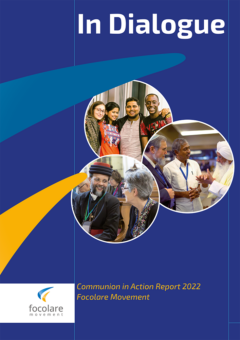
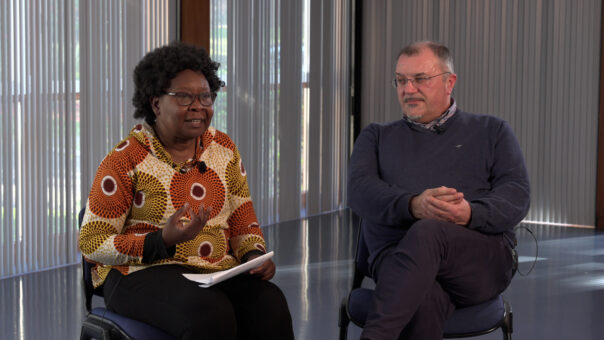
The Focolare Movement has just published its second “Communion in Action Report” or “Mission Report”. It focuses on the theme of Dialogue. To learn more about it, we interviewed Ruperto Battiston and Geneviève Sanze, Counsellors for the Economy and Work aspect of the Movement.
A year ago, in January 2023, at the “Focolare Meeting Point” in Rome, the first “Communion in Action Report” or “Mission Report” of the Focolare Movement was presented. It gave an overview of the worldwide activities and initiatives carried out by the Movement in the biennium 2020-2021. This year, the Movement is presenting a new Report for the year 2022, this time centred on the theme of dialogue. The document has emerged as a fascinating account, not only of the spontaneous sharing of goods but also of experiences and needs, inspired by a lifestyle based on evangelical love. Ruperto Battiston and Geneviève Sanze, Counsellors at the International Centre of the Movement for the aspect of Economy and Work, shared their thoughts with us.
Ruperto, what are the objectives of this document? Is there continuity with the previous one?
These mission reports exist to involve everyone and share information about the concrete achievements resulting from the communion of goods among all the members of the Focolare Movement and the contributions that we receive from individuals or institutions. It is primarily addressed to all the members of the Movement, with gratitude for the fruits that the life and work of many people around the world continue to generate; and with gratitude to God for what He has done and continues to do. It is also addressed to those who would like to know more about us and actively collaborate for a more fraternal and peaceful world. This is why we chose the standard, and in this case perhaps somewhat unusual, name of ‘Communion in Action Report’ because we feel it best expresses our experience of walking together towards a united world. This is our second Mission Report’. It refers to the activities supported by the part of the communion of goods which is shared internationally and to the financial data of the Focolare Movement’s International Centre for the year 2022. This Report follows that of 2021, which highlighted the various activities that the communities of the Focolare Movement carry out worldwide in all fields and aspects. For 2022, we focused on a more thematic document, taking the specific perspective of Dialogue and trying to offer a glimpse of what we seek to bring to society on the path towards fraternity, towards that unity in which diversities can be enriched and give rise to harmonious collaborations.
Therefore, this Report serves as an open and hands-on tool of communion to which everyone can add a page, a story or a suggestion, “In Dialogue” with humanity and with our planet.
Geneviève, how does the theme of dialogue, the heart of this text, fit into this informative tool?
It is interesting to reiterate what it says in the introduction: “Being in dialogue is the characteristic of every person and every project which is under the auspices of the Focolare Movement and which is inspired by its spirituality of communion. Not just doing, therefore, but a lifestyle which is supported and substantiated by listening, welcoming, compassion, charity and mercy, as summarized in the cardinal principle of every culture and religion: the so-called Golden Rule ‘do unto others as you would have them do unto you.'” This Mission Report aims to show how, together with many others throughout the world, we have contributed to healing the wounds of divisions and polarizations and to progressing along the path of evangelical fraternity. We express dialogue in five major areas: in the Catholic Church, among Christian Churches, in the field of interreligious dialogue, with people without a religious reference and in different cultural contexts. For us, these areas are the main ways to reach fraternity. Chiara Lubich defined dialogues as ‘highways to a united world’. It was not easy to gather and choose from the numerous initiatives, small and large but all important because they are seeds of the future and bearers of a concrete change in relationships between people, improving the atmosphere of the world. We were amazed by the quantity of initiatives and the widespread flourishing of this life, which may not make noise but which supports the world and builds new relationships between people. Being “In Dialogue” with others values diversity, highlights the characteristics of each one, requires deep mutual listening, and builds peace. Dialogue is more relevant than ever. To read the Mission Report in English, click here.
On 25th November 2023, Margaret Karram, President of the Focolare Movement, was appointed Member of the Dicastery for the Laity, Family and Life. Pope Francis has appointed 11 new Members of the Dicastery for the Laity, Family and Life, for a five-year period. They include the President of the Work of Mary (Focolare Movement), Margaret Karram. She is one of the men and women, single and married, engaged in different fields of activity and from different parts of the world who will represent and enrich the universal face of the Church, alongside those already in office. The other new members are: Archbishop Josep Ángel Saiz Meneses of Seville, Spain; the Reverend Andrea D’Auria, F.S.C.B., director of the International Centre of Communion and Liberation; the Reverend Luis Felipe Navarro Marfá, Magnificent Rector of the Pontifical University of the Holy Cross in Rome, Italy; the Distinguished Benoît and Véronique Rabourdin, international heads of Amour et Verité della Communauté de l’Emmanuel; Joseph Teyu Chou and Clare Jiayann Yeh, respectively lecturer in the Department of Public Financeof the National Chengchi University in Taipei, Taiwan and founder and director of the Marriage and Family Pastoral Centerof the Chinese Regional Bishops’ Conference; Professor Ana María Celis Brunet, president of the Consejo Nacional para la Prevención de abusos y acompañamento de víctimas,of the Episcopal Conference of Chile; Professor Maria Luisa Di Pietro, director of the Centre for Research and Study on Reproductive Health of the Catholic University of the Sacred Heart in Rome, Italy; Professor Carmen Peña García, lecturer in marriage law at the Facultad de Derecho Canónico dell’Universidad Pontificia Comillas in Madrid, Spain. The new members, whose appointment was published on 25th November 2023 in the Bulletin of the Holy See Press Office, join those previously appointed and all those still in office. The updated list can be consulted on the website of the Dicastery for Laity, Family and Life on the “Members and Consultors”page.
Effective today, November 20, 2023, the new Guidelines for Training in the Protection of Minors and Persons in Vulnerable Situations developed by the Focolare Movement are available. Margarita Gómez and Étienne Kenfack, Counselors of the Movement’s International Center on the aspect of Physical Life and Nature, offer us some clarifications. Illustrating the characteristics necessary to make a concrete commitment to the protection of the life and dignity of every person: this is what distinguishes the new Guidelines for Training in the Protection of Minors and Vulnerable Persons (SCVA) in the Focolare Movement, released today, November 20, 2023, International Children’s and Adolescents’ Day. A work that has seen the direct collaboration of 40 specialists and people involved in this field from all continents and that aims exclusively to provide the necessary elements so that in every country where the Focolare Movement operates, an adequate training strategy can be developed that is oriented towards prevention and eradicating any kind of abuse, both within the Movement and in the environments where its members are found (work, neighborhood, school). As early as 2013, the Movement had been engaged in training for the protection of minors, with widespread work in all the countries where it operates and a six-hour course that contained the basic principles. This training effort as of December 2022 had reached 17,000 people, and although the training was open to all, it was mainly carried out by people who had responsibility or direct contact in activities with minors. Following the report on the serious cases of sexual abuse recorded in France, published one year after the GCPS consulting survey, a strong need arose to offer targeted training to all members of the Focolare Movement of every age, vocation, nation, role. For this reason, the Guidelines are a universal tool, leaving ample room for appropriate inculturation and specific implementation in the particular context of origin. “The training is aimed at everyone, and by ‘everyone’ we mean not only the members of the Movement but also the people who work in our facilities-said Étienne Kenfack. The Guidelines, on the other hand, are aimed at the Movement leaders in the different geographical areas and their teams who will be responsible for implementing them.” The Guidelines will come into effect on January 1, 2024, for a period of 20 months ad experimentum. A period of comparison in order to gather all the changes and transformations that will be needed for the future. “The document – continues Margarita Gómez – rests on a key resource for us, and that is communion: therefore, we will work in a network, there will be an international commission and local teams that will carry out the project; there will be moments of exchange, with online links to help us resolve doubts, to share good practices. It is no coincidence that we have decided to title our training program ‘All responsible for all.’ I hope that these Guidelines will find great acceptance in our communities and that in a few months we may have given a significant boost to training in this area.”
Maria Grazia Berretta
Watch the video (activate English subtitles) https://youtu.be/OsZW-DC_E7U
After the disastrous attack on Israel, the horrifying violence that was unleashed, the wave of fear that rocked the two peoples, the anguish for the hostages and the apprehension for the fate of the people of Gaza, we want to send you news from the Focolare communities in the Holy Land and news of a worldwide call to prayer and fasting for peace on 17th October“We have left our homes and all the Christians are taking refuge in the churches” This short message is the latest news we received this morning from some members of the Focolare community in Gaza. According to Father Gabriel Romanelli, parish priest of the Holy Family Catholic parish in Gaza, there are 1017 Christians still living in the strip and among them are several adherents of the Focolare Movement, with whom even sporadic communication is increasingly difficult. And in spite of this, a message, from one of them has been circulating over the past few days, thanking everyone for their closeness and prayers for the small community in Gaza. “You have given me the strength not to give in to evil,” he writes, “not to doubt God’s mercy and to believe that good exists. In the midst of every darkness there is a hidden light. If we are unable to pray, you pray; we offer and our work together is complete. We want the world to know that we want peace, that violence only begets violence and that our trust in God is great. But should God call us to Himself, be assured that from Heaven we will continue to pray with you and to implore Him more strongly to have compassion on His people and on you. Peace, security, unity and universal fraternity, this is what we want and this is the will of God and it’s ours too”.Margaret Karram gave us news about fraternity in the midst of hatred Saying this takes courage today when horror and violence fill the entire media coverage, but this is not the only news. There are also stories that make less noise, but which cannot be silenced, such as the worldwide network of prayer that is underway everywhere on earth, regardless of religious belief or affiliation, together with actions and words of fraternity. Margaret Karram, President of the Focolare Movement shared this at the daily briefing in the Vatican Press Office, at the ongoing Synod of the Catholic Church, in which she is participating as a special guest. She told us, ‘Jewish friends I know in Israel have called me, a Palestinian Arab, saying that they are worried about the people living in Gaza. For me, this is something very beautiful. Everyone knows the negative stories between these two peoples, but so many people, so many organisations are working to build bridges but this doesn’t make the news. They only talk about hatred, division, terrorism. We are left with images of these two peoples that do not correspond to reality. We must not forget that even today so many people are working to build bridges. It is a seed being sown, even in this difficult time’.From our Jewish friends: creating a community of prayer To confirm this, a Jewish friend wrote to us from the Tel Aviv district: “If you are in contact with the friends of the Focolare in Gaza, assure them of my love and my closeness. I hope they are all safe. These days I am at home with my family, the schools are closed and we are staying close to the shelters. The chats are filled with a constant stream of appeals and offers of help for the families who have fled, for the soldiers and their families. There are also requests for help with funerals, to honour the dead as they should be honoured. It seems that all the young men have been called up to fight and we are worried for our friends and relatives. We fear what lies ahead. I try to keep my children from being afraid, but our terror is insignificant compared to what has happened to our brothers and sisters in the South. I am thinking of my Arab friends in Israel who are running to the shelters like us. I try to pray at the same hour as my Muslim friend, so that we can be a community of prayer even though so many things divide us. Your closeness and your prayers mean so much to us, more than what I can express. What can we do? At a press conference, Margaret Karram confided to us the pain and anguish she feels for her people on both sides: ‘I asked myself what am I doing here? Should I not be doing something else right now to promote peace? But then I said to myself: here too I can join Pope Francis’ invitation and pray with everyone. With these brothers and sisters from all over the world, we can ask God for the gift of peace. I believe in the power of prayer’. Margaret went on to speak about the action ‘NO MORE WAR!!! BUILD PEACE!” that the children and young people of the Focolare Movement launched together with the association “Living Peace”. They are summoning their peers to pray for peace at 12 noon, every day and in every time zone. They are also proposing to fill the day with actions that build peace in the hearts of each person and wherever they are. They are inviting them to send messages of support to children and young people in the Holy Land and are encouraging them to ask the leaders of their countries to do all they can to achieve peace. The Focolare Movement is also joining the appeal of the Latin Patriarch of Jerusalem, Cardinal Pizzaballa, for a day of fasting and prayer for peace on 17th October: ” We could organize moments of prayer with Eucharistic adoration and the rosary to the Blessed Virgin. Probably in many parts of our dioceses, circumstances will not allow for large gatherings. However In parishes, in religious communities, in families, it will be possible to organise simple moments of prayer together”.

 A: I believe this report represents a real step forward. In fact, the last report was criticised, mainly because the places and dates of sexual abuse were not mentioned. The new report covers cases disclosed in the last 10 years and adds these clarifications: it is stated that sexual abuses were carried out on all continents (about 20 countries), with a peak of cases between 1990 and 1999, as well as during the decade before 90 and after 2000. The offences sometimes are repeated over several decades, suggesting that these are multiple repeat offenders whose abuses have continued. Some offences happened and were dealt with around 2020, indicating that people abused were able to report abuse almost in real time, which is progress. All communicated sexual abuses were carried out by men. The opposite is true for abuses of authority, which in 77% of cases were committed by women, which is in proportion with the higher number of women among those belonging to this Movement. The report also contains a detailed and clear section on the measures implemented during the year, particularly regarding formation. It remains to be understood what the root causes of these abuses are. Beyond preventive measures and sanctions, further work should be done to identify the systemic causes that could explain these figures, in order to put in place a strategy that would prevent them. Q: In this second report, the people who abuse are identified according to precise criteria set out in the Communication Policy recently published by the Focolare Movement. What do you think of this decision? A: This is an ethical conflict. On the one hand, it is a matter of believing the experience of the people abused and taking the complaints they make seriously, as well as quickly putting measures in place so as to protect them. On the other hand, it is a question of respecting the presumed innocence of the alleged abusers, of not defaming them when no final criminal conviction has been pronounced. The issue is complex and finding a satisfactory solution will no doubt require a lot of listening and dialogue. Q: The UNESCO Chair on child abuse that you coordinate came about because you came into contact personally with a case of child abuse of which you knew both one of the people abused and the person who abused. It was a case that happened in the Catholic Church in France. In this case, the social or religious community is defined as a ‘secondary victim’. What does this mean? What are the wounds that people carry, how can they be healed at a social and community level? A: Yes, in fact, this chair was set up as a result of being in contact with a person who had been abused. A contact that left a deep mark on me: I was profoundly affected by this suffering, and my desire to do something came from this. First and foremost, abuse affects the person who has been abused, who often suffers lasting psychological consequences. Sometimes, the opening up about the facts can bring out a great vulnerability in this person, which requires specific accompaniment. In turn, this also affects the person’s relatives, such as their spouse, their children, but also their parents who feel responsible for having entrusted their child to an institution that did not protect them. The devastating effects also have an impact on the entire community, as members are often unaware that within it a repeat offender was concealed, a person with whom they may have had a bond of closeness, of friendship. We may ask ourselves: why didn’t I notice anything? Another aspect concerns the bond with the institution that may have protected the abuser, sometimes in good faith, producing in people a sense of betrayal and distrust. Finally, the community may also become divided, depending on their divergent analyses, between those who take refuge in denial, and those who want to fight to prevent these things from happening again. Rectifying all of this requires a wide range of measures: it is essential to take on the responsibility of accompanying the people who have been abused and their families, but it is also necessary to restore trust in the institution that has shown its weaknesses and where there is a sincere willingness to learn from its past mistakes. It’s the actions that matter in making this happen: the institution must promote transparency by communicating very precise information, put in place clear procedures, create places for listening, establish reparation procedures and, for communities, spaces for dialogue where even opposing opinions can be exchanged. Q: The Focolare Movement is a worldwide organisation, including people from different cultures and religions who are subject to different legal systems and adopt different lifestyles. How is it possible to implement anti-abuse practices in such a multicultural and diverse environment? A: The consequences of child sexual abuse exist in all cultures, they are universal. In addition to the ongoing psychological and social impact, those who have been abused may have biological ongoing effects, such as increased stress hormones, altering the expression of certain genes and brain morphology and brain functioning. These dysfunctions continue to be present throughout the survivor’s life and may be passed on to the next generation. So it cannot be said that there are cultural variations in the severity of the consequences on those who have been abused or that there are cultures where these people suffer less: always and everywhere, it’s devastating. It is therefore necessary to put in place measures for prevention, but also for reparation all over the world. One can see that awareness of the seriousness of these situations is increasing: for example, in the Catholic Church, national enquiry commissions have been set up in many countries in Europe, North America, Latin America, but also in Australia, India and South Africa. Although suffering does not vary, what may vary is that people resist in denouncing the facts and their ability to put in place protective and remedial measures. This may be related to the fact that in some cultures talking about sexuality is taboo. The first step is to make people aware of the consequences of abuse: there are already programmes promoted by various associations that take into account the way sexuality is considered in different cultures. For example, proposing that those who listen to the suffering of people who have been abused and belong to the same culture can understand them better. This can make people want to do something about it. Prevention can also be targeted directly at children, through education about their rights: again, there are programmes, for example, based on songs. Another thing that varies is the ability of countries and institutions to take measures of protection and reparation. A respectful and non-stigmatising dialogue with those who commit abuse is the way forward: this will enable everyone to understand the seriousness of the abuse, but also to find culturally specific ways to enable people to speak up, to implement processes of reparation and to educate members of the community. Q: Both within the Focolare Movement and also in other contexts there are those who express the conviction that the time has come to move forward; that is, that it is not necessary to continue talking only about abuses, but to focus on the ‘mission’ of the Movement and on what beautiful and positive things are being generated in the world by the living out of this charism today. What is your opinion on this? A: What do we mean by ‘mission’? Is it not to advance towards universal fraternity, towards a culture that puts the suffering of the weakest first, a culture of dialogue, openness, humility? It seems to me that the fight against all kinds of abuses is precisely a way of implementing this desire, putting those who suffer in the first place. Helping to heal the wounds of those who have been abused is a way of going towards universal fraternity. This also implies accompanying the people who have abused in order to prevent reoffending. Acknowledging one’s mistakes, one’s vulnerability, in order to create solutions, taking into account the opinions of experts in this field is precisely a way to build a culture of dialogue. Fighting with determination against abuse and accompanying those who have been abused are right at the heart of this ‘mission’. Therefore we don’t need to choose between the fight against abuse and ‘mission’, because this fight is a central element of ‘mission’. In today’s context, this is a priority which is painful but necessary.
 all the members of the Movement, with gratitude for the fruits that the life and work of many people around the world continue to generate; and with gratitude to God for what He has done and continues to do. It is also addressed to those who would like to know more about us and actively collaborate for a more fraternal and peaceful world. This is why we chose the standard, and in this case perhaps somewhat unusual, name of ‘Communion in Action Report’ because we feel it best expresses our experience of walking together towards a united world. This is our second Mission Report’. It refers to the activities supported by the part of the communion of goods which is shared internationally and to the financial data of the Focolare Movement’s International Centre for the year 2022. This Report follows that of 2021, which highlighted the various activities that the communities of the Focolare Movement carry out worldwide in all fields and aspects. For 2022, we focused on a more thematic document, taking the specific perspective of Dialogue and trying to offer a glimpse of what we seek to bring to society on the path towards fraternity, towards that unity in which diversities can be enriched and give rise to harmonious collaborations.