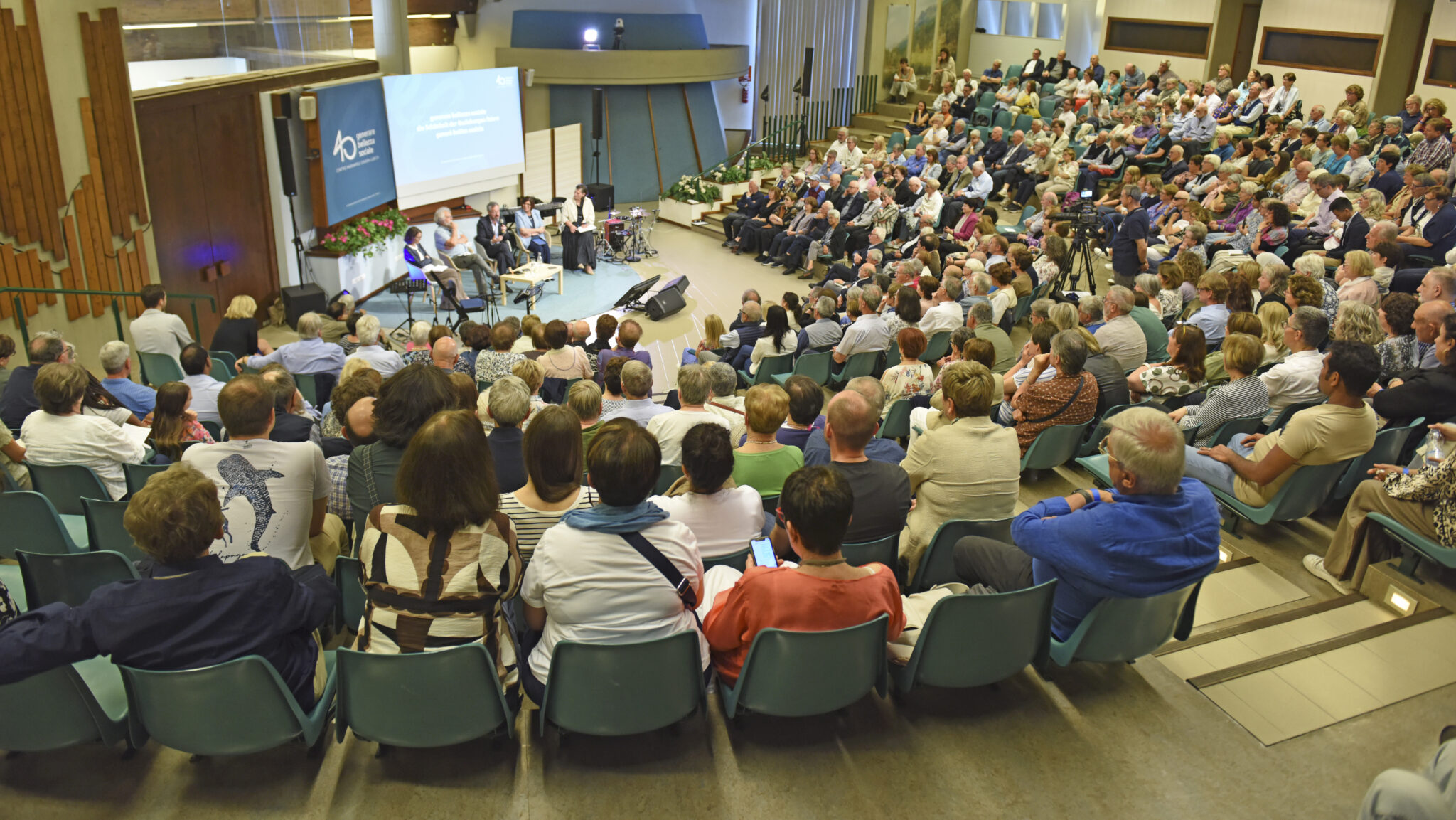
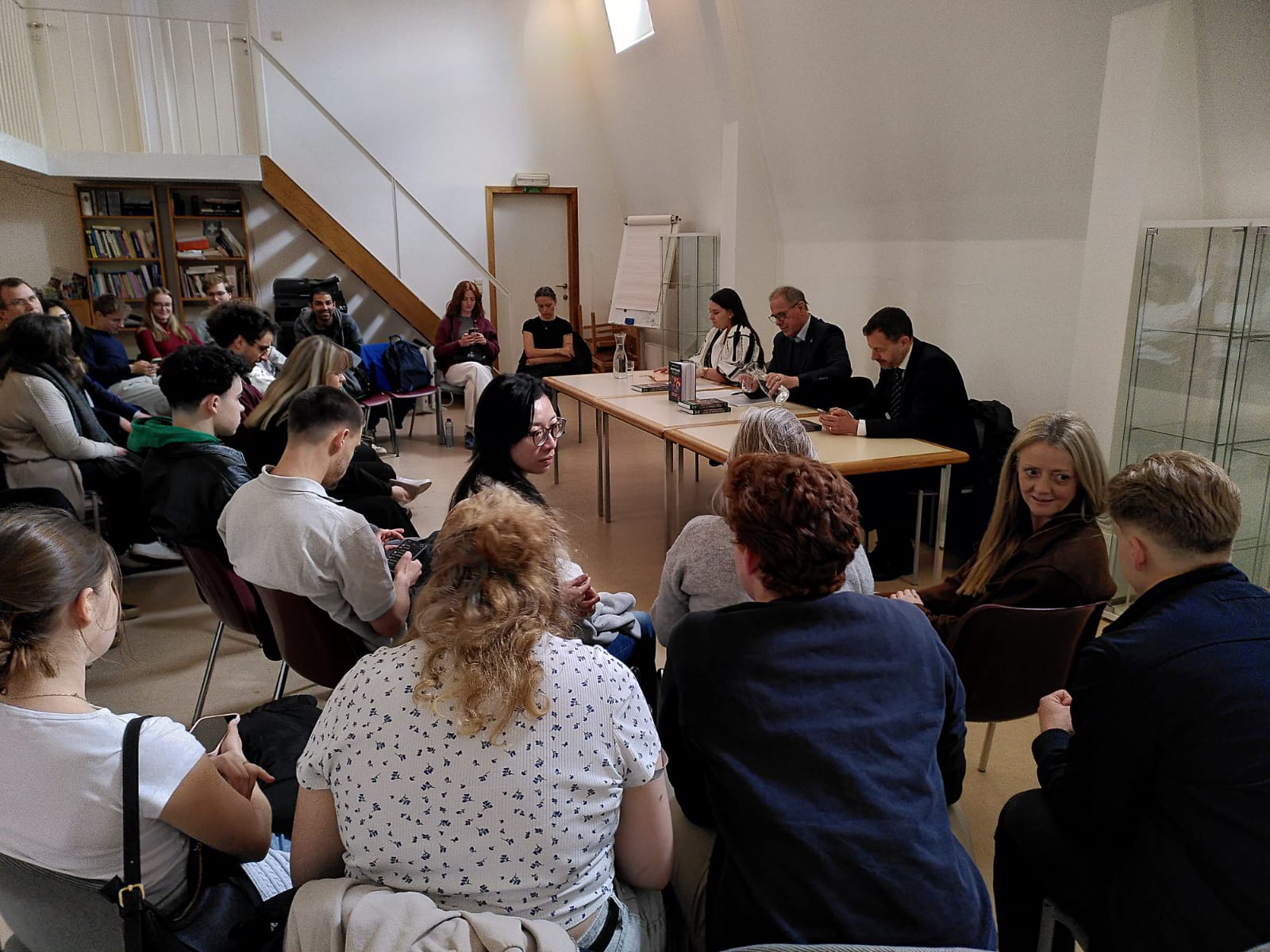
There are places that do more than simply welcome people. They bring them into relationship with one another, generating authentic connections, trust and community. This is where the “social beauty” is born: from the quality of the encounters we are able to build. “Generating Social Beauty” was the title of the events marking the 40th anniversary of the Chiara Lubich Mariapolis Centre in Trent. It was not a traditional celebration, but a live, open and participatory workshop.
This vision took shape in 4 challenges, in four events open to the city and the region.
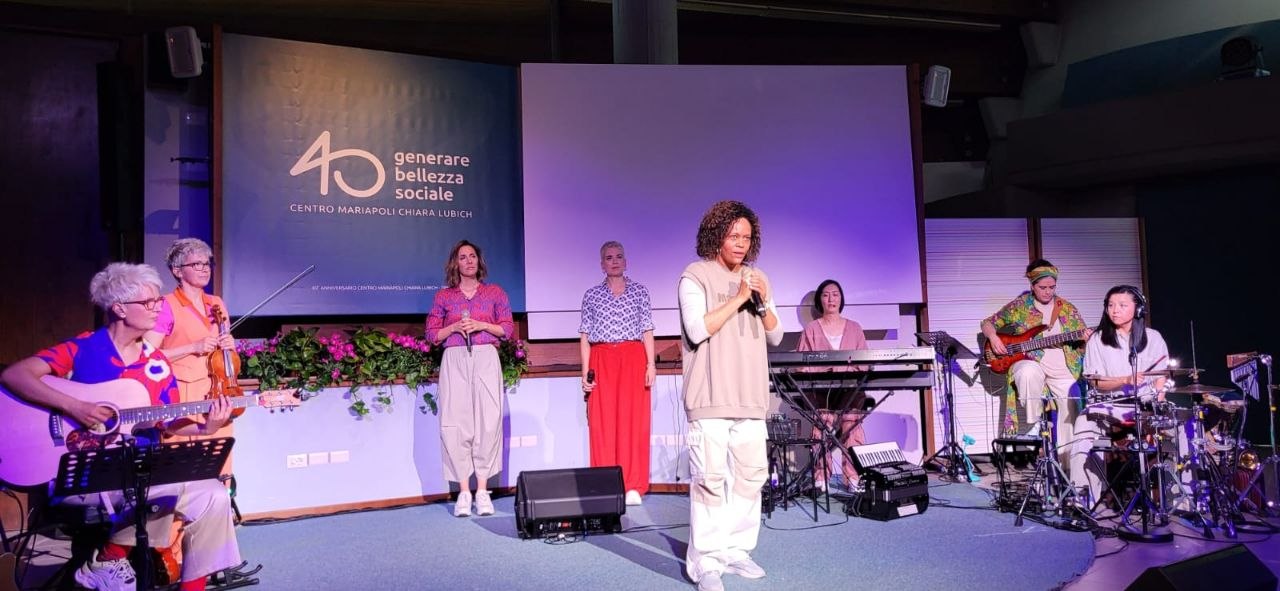
A two-day workshop with the Gen Verde Performing Arts Group, an artistic workshop with about thirty young people from 14 to 20 years old, a concrete experience of community expressed through music and performance. It was an engaging, lively and colourful event where young people were able to experience alongside the artists how the performing arts can become a space for learning teamwork, creativity and listening.
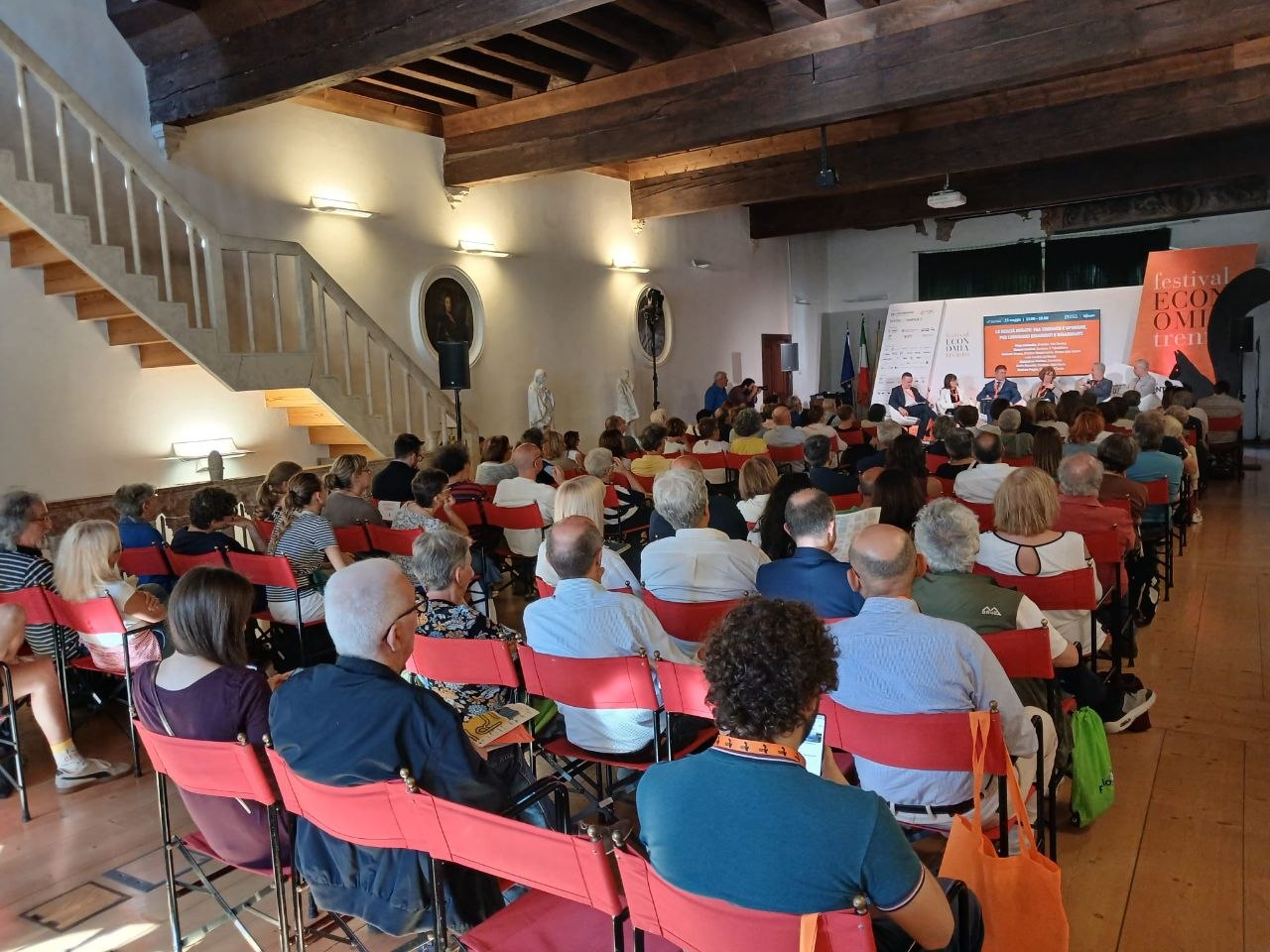
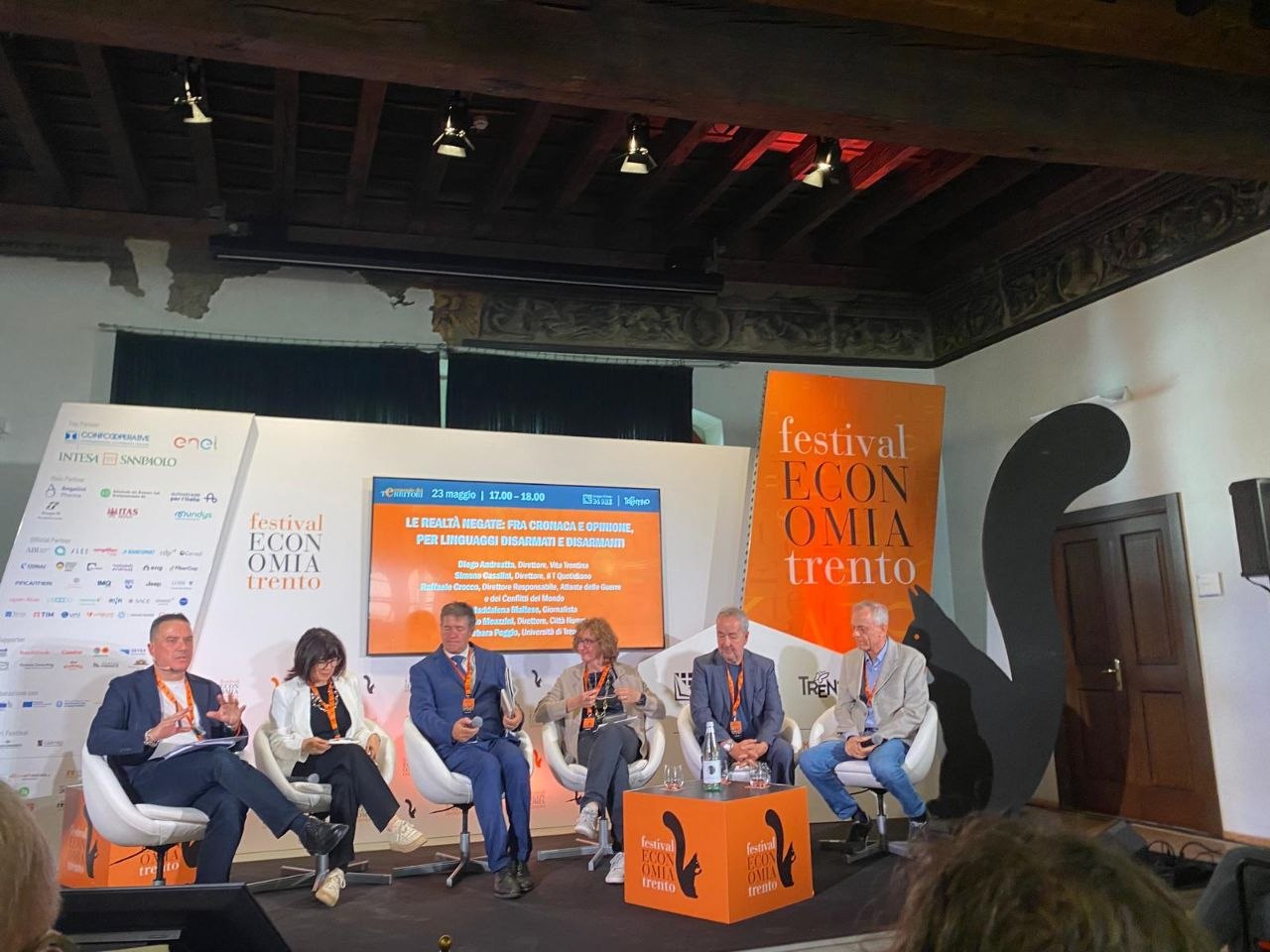
A conference, promoted by New Humanity, NGO of Focolare, was included in the program of the “Festival of the Economy” entitled “Denied realities: between news and opinion, towards disarmed and disarming languages”. Five experts in the world of communication engaged in dialogue on the most complex issues of our time and the way they are narrated (the event is available in Italian on the website www.festivaleconomia2026.it/)
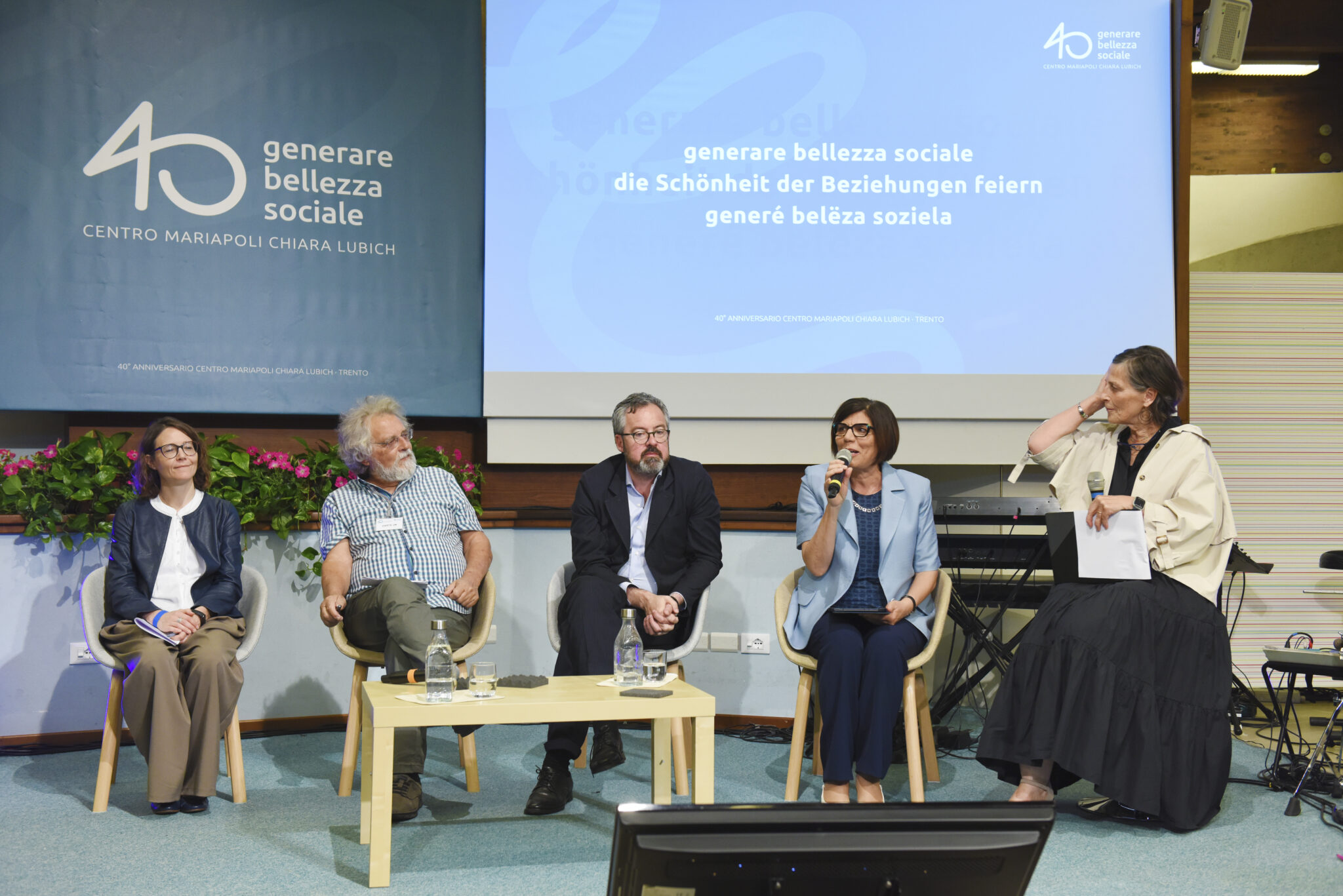
An Open Day in which the Mariapolis Centre opened up to the city, not only as a physical place, but as an experience of encounter. It was a day of welcome and dialogue with the civil and religious realities of the area. Elena Granata, Professor of Urban Planning at the Politecnico di Milano and vice president of the School of Civil Economy, began with an insightful reading of the reality of our cities entitled “Generating Beauty for Everyone”.
This was followed by a round table featuring valuable and thought provoking contributions from various civil and ecclesial realities working to build a city and a community that is more united and enriched by diversity. Speakers included: Franco Ianeselli, Mayor of Trent, Annalisa Pasini, delegate of Witness and Social Commitment of the Diocese of Trent, Sara Alouani, journalist with Il T Quotidiano and Claudio Bassetti President of CNCA – National Coordination of Welcoming communities of Trentino – South Tyrol. Margaret Karram, President of the Focolare Movement, who wanted to begin her new mandate in Trent, the city of Chiara Lubich, also offered her contribution. She said, “From here, let’s look to the future. Because of its position, history and sensitivity, Trent is called to dialogue, it cannot renounce this vocation. Trent can still speak to the world today by living a fraternity that becomes culture, style and practice”.
Displays and experiences in various places in the Mariapolis Centre were the backdrop for the day. In the afternoon and evening the stage was taken over by the dynamic artistic energy of the Gen Verde Performing Group.
Over 1,000 people participated in the events of the 40th anniversary. For everyone, it was an opportunity to place the value of relationships, of “closeness” back at the centre, a dialogue not aimed at itself, as Margaret Karram pointed out, but “at building universal fraternity, not an optional extra but a necessity: it means participating in the life of others.”
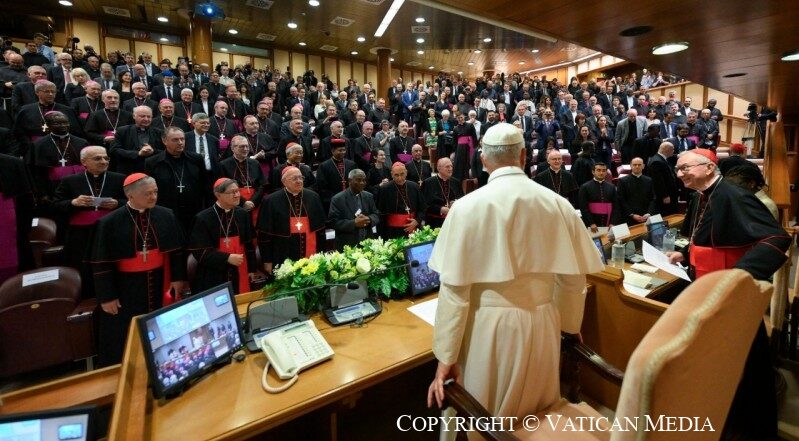
It was a morning that marked a significant moment in the history of the Church. On 25th May 2026 in the Synod Hall in the Vatican, Pope Leo XIV presented his first encyclical Magnifica Humanitas, on safeguarding the human person in the time of Artificial Intelligence. It was the first time that a Pope was present in the Hall where his magisterial document was being presented to the public.
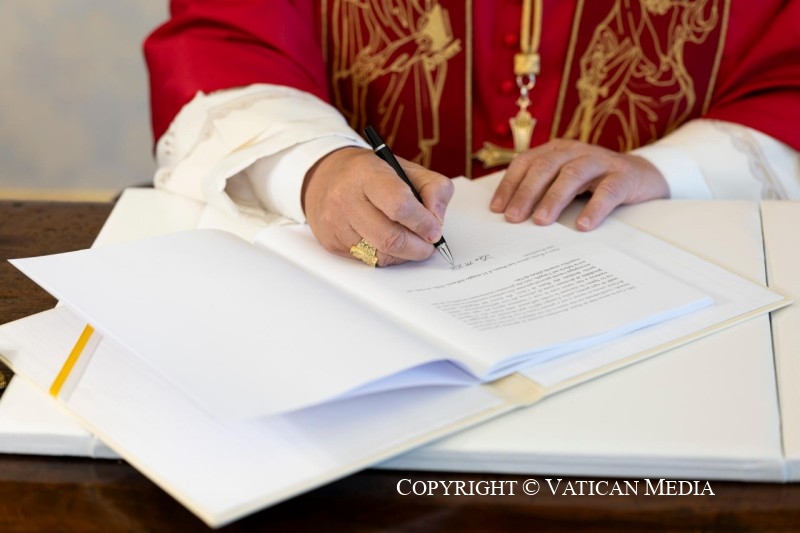
The encyclical was signed on 15th May, the 135th anniversary of the promulgation of the encyclical letter Rerum Novarum by Pope Leo XIII, who recognized in the industrial transformations of his time a profoundly human and social issue. This encyclical defends the human person in today’s time of Artificial Intelligence (AI) and calls for new urgent reflections on the role and future of technological progress.
After the interventions of experts and theologians, the Pontiff spoke. He focused on the “gravity of the moment” we are living through, which is a cause for concern in the Church which is called to “interpret new things in the light of the Gospel and the dignity of the person”. He explained that the document was born “from listening” to scientists and engineers who “work with sincere enthusiasm on technologies capable of alleviating immense suffering; listening to political leaders and public officials who have persistently sought just regulations; listening to parents and teachers deeply concerned about the future of the young generations”. He used strong words: “Artificial Intelligence must be disarmed. The expression is strong, I know”, Leo admitted, “but it was chosen deliberately because this moment needs words capable of attracting attention, awakening consciences and indicating ways forward for humanity”.
The Pontiff recalled that for some time “the Church has worked in favour of nuclear disarmament, as a service to peace and to the dignity of the human family”. Likewise, “Artificial Intelligence today also needs to be disarmed, because like nuclear energy, it must be at the service of all and of the common good. (…) Decisions about technology must never be separated from conscience and responsibility”. “But when technology weakens our critical sense, it is peace itself that is at risk. Disarming, however, is not enough. We must build.” Together.
The encyclical
“Magnifica Humanitas is the culmination of 10 year’s work of the Holy See,” said Msgr. Paul Desmond Tighe, secretary of the Dicastery for Culture and Education during the press briefing. In 2016 a French priest began to study some topics related to communication and technology. “In San Francisco (USA) he met some experts who wanted to inform the Holy See about technological developments that could influence the future of the world, Tighe continued, “For these scientists it was important to have the perspective of wise voices, so they sought collaboration with the Holy See”, leading to a synergy based on mutual listening
Christopher Olah, Co-founder of Anthropic (USA), one of the world’s leading artificial intelligence companies, also spoke at the Vatican presentation: “We need an every larger part of the world, religious communities, civil society, scholars and governments, to do what His Holiness has done here: to take all this seriously, to carefully observe events as they unfold and help guide them in a better direction. Today is only the beginning of a long collaboration between those of us who are building this technology and those who can see what we ourselves cannot see from the inside”.
Divided into five chapters, plus an introduction and a conclusion, Magnifica Humanitas starts from a central thesis: technology is not an “antagonistic force with respect to humanity”, nor is it “in itself an evil”. The Pontiff affirms that “injustices do not arise only from the wrong choices made by individuals, but also from structures, mechanisms and from economic and cultural structures that produce inequality”. This also applies to new technologies.
Leo’s concern focuses on the power that when concentrated in a few hands, “tends to become opaque and to escape public control”, bringing with it the risk of distorted development “which generates new dependencies, exclusions, manipulations and inequalities”. Here attention is directed toward those who control platforms, infrastructures and digital data.
Pope Leo XIV reiterated once again that there is no such thing as a “just war”. He called for the use of Artificial Intelligence in warfare to be subjected to the strictest ethical constraints because “there is no algorithm that can make war morally acceptable”.
We need “a politics that does not abdicate its responsibility”. The truth must be expresses through an “ecology of communication” opposed to fake news. The Pope indicated some elements: transparency in the content-selection algorithms, protection of personal data, serious journalism based on argument and verification, a new awareness in the “correct and critical” use of AI and the integration of knowledge.
In concluding the letter, the Pontiff invited the faithful to inhabit new technologies in the light of the Gospel, following “a sober and demanding path of Christian life”, so that even in the time of AI everyone can give witness to “the beauty of a magnificent humanity inhabited by God”.
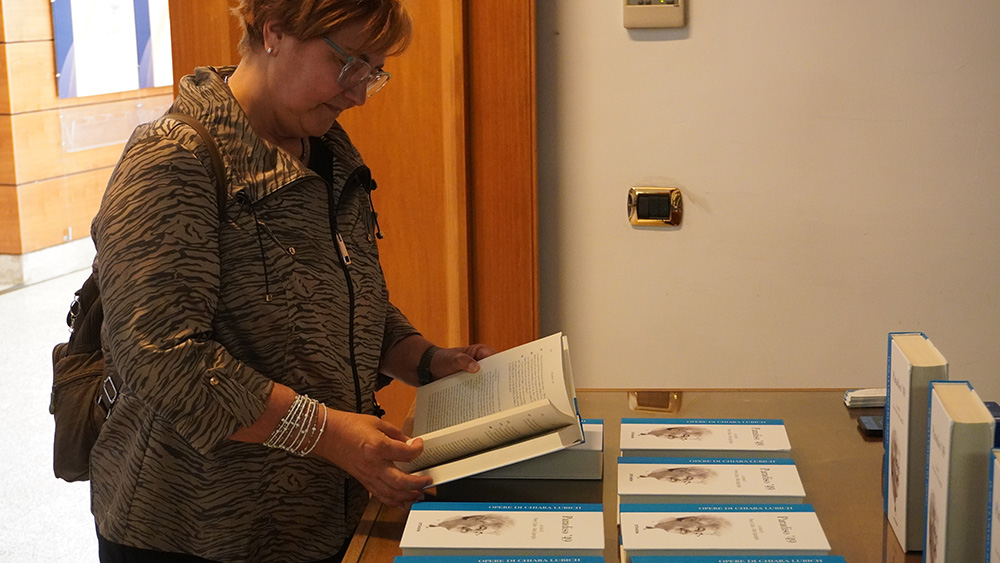
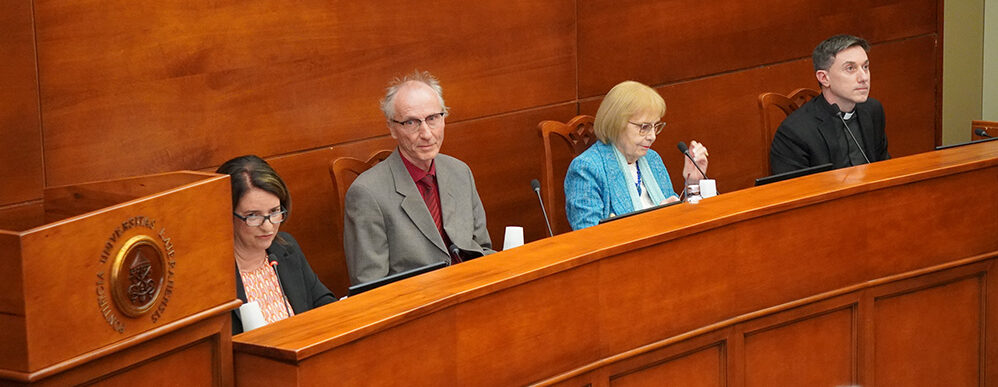
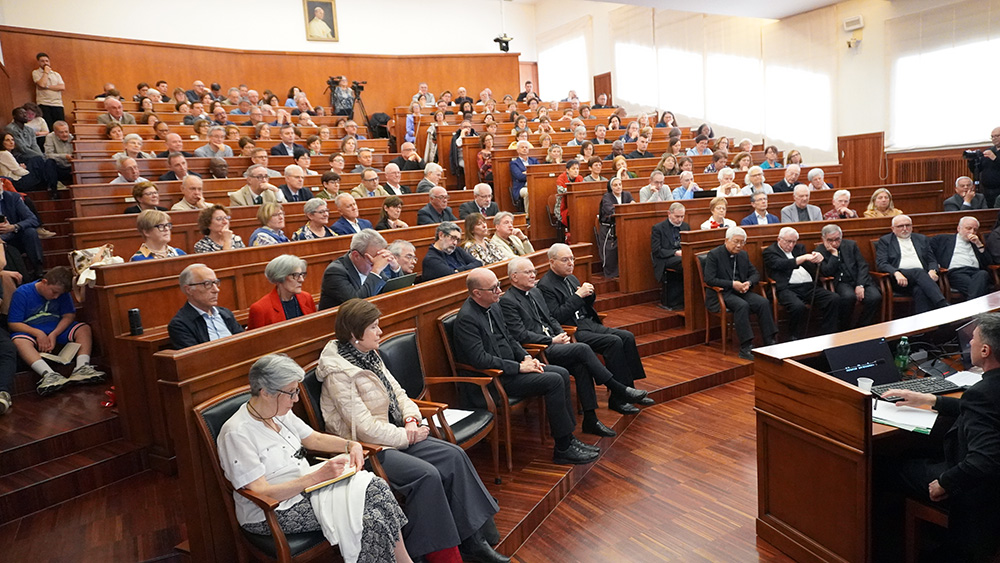
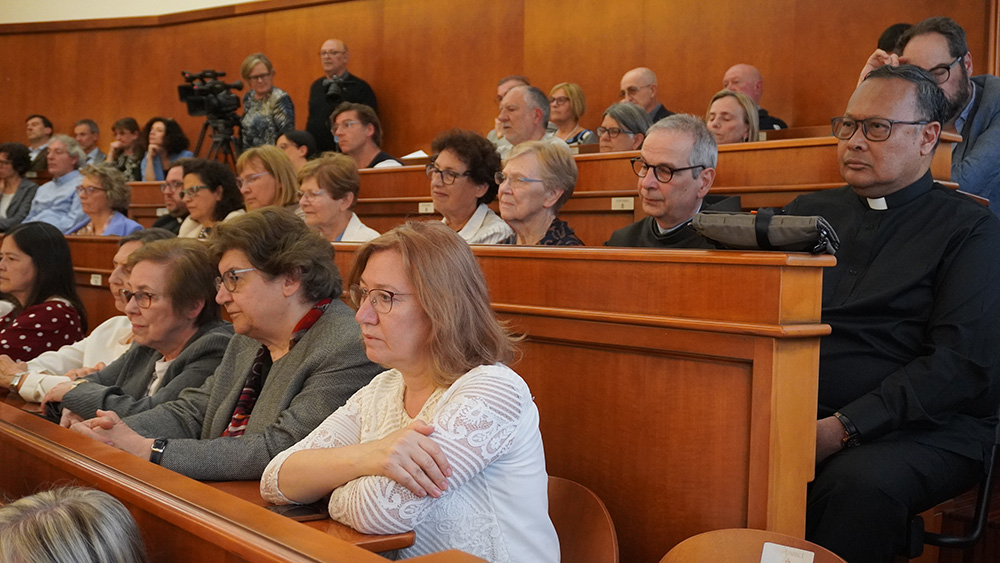
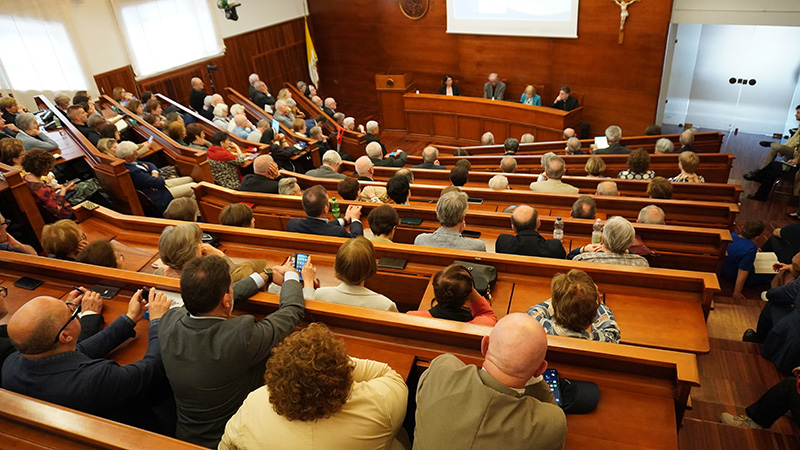
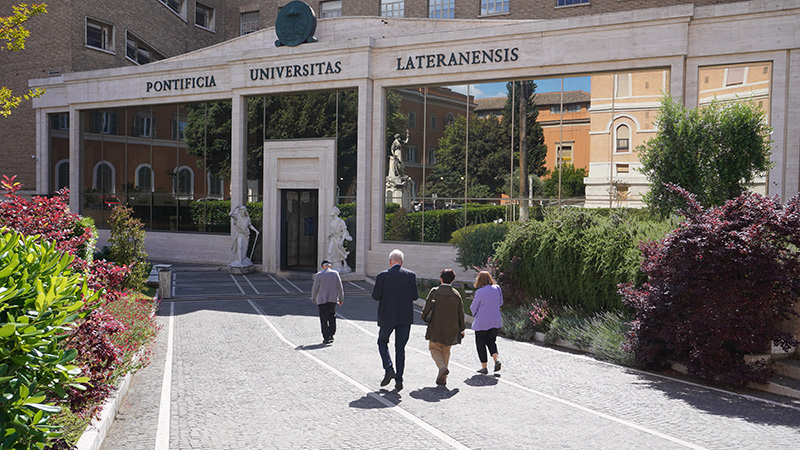
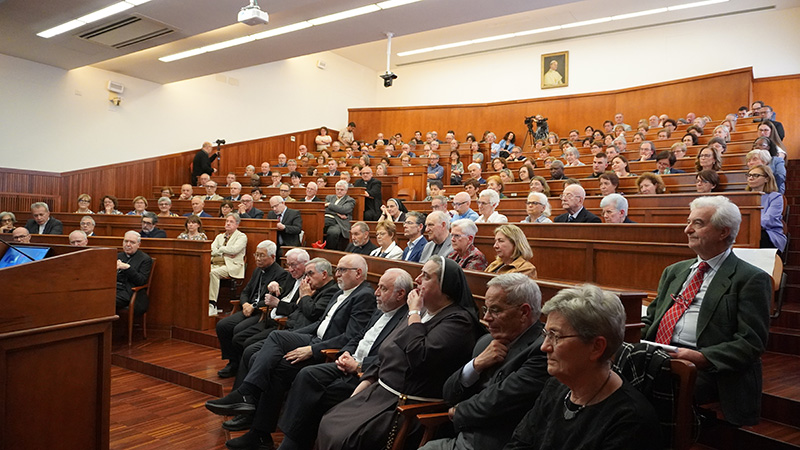
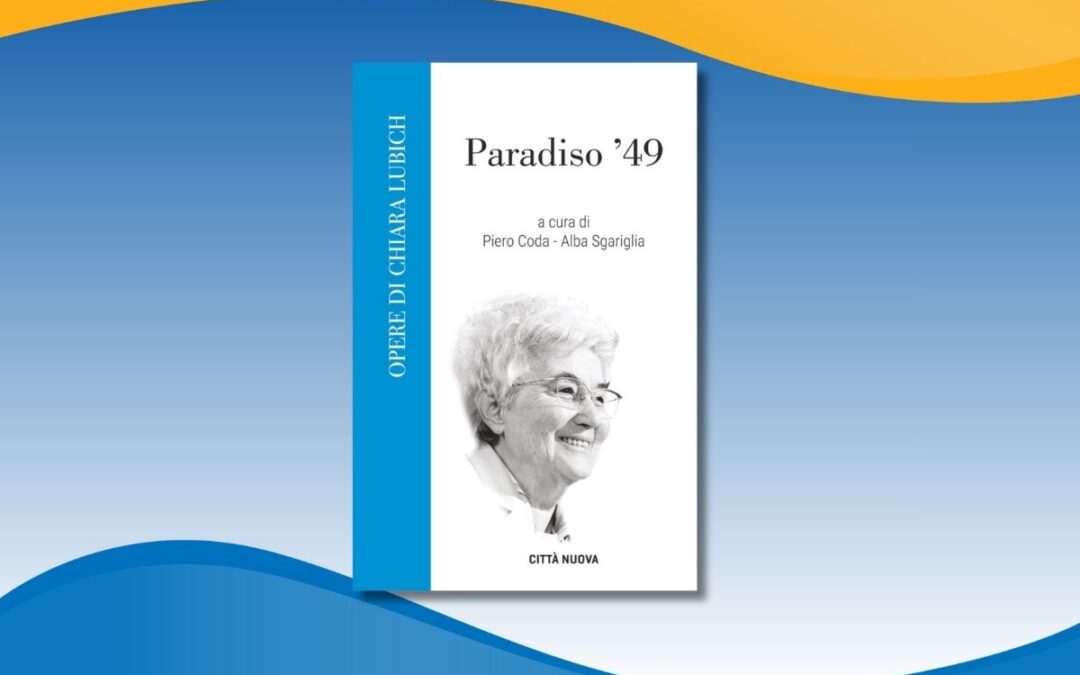
A full lecture hall, attentive, almost suspended in silence. This was the atmosphere in the Paul VI Hall of the Pontifical Lateran University (Rome, Italy) on Friday 22nd May, when Chiara Lubich’s Paradise ’49 was presented to the public for the first time.
It wasn’t simply a book launch. The widespread impression, heard in the corridors and in conversations among those present, was that this was a historical moment: for the first time, a text kept mostly private until now, was being openly offered to ecclesial and cultural debate, in a hall filled to capacity.
Welcoming those present, Anna Maria Rossi, speaking on behalf of the Chiara Lubich Centre – promoter of the series of Works by Chiara Lubich – immediately clarified the meaning of the event, recalling the extensive editorial process that led to the publication of the volume. “It is not an isolated text – she explained – but part of a broader journey, which tells the story of the emergence of a charism in the Church”.
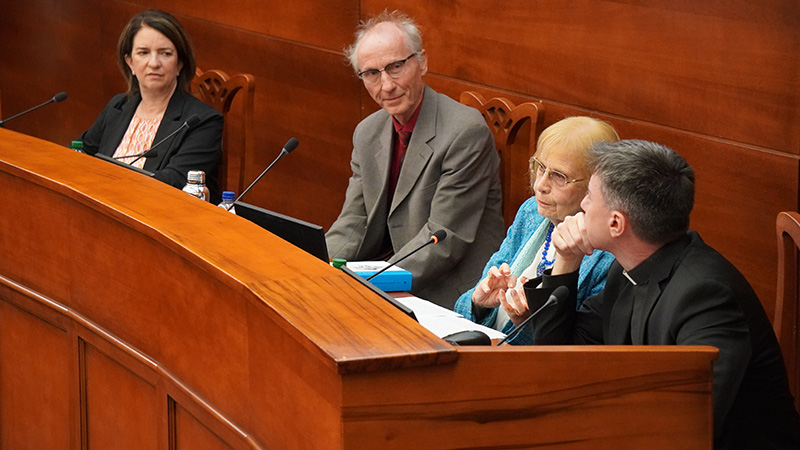
The contents were introduced by speakers from different ecclesial and academic backgrounds. Alessandro Clemenzia, Dean of the Theological Faculty of Central Italy and an expert in Chiara Lubich’s spirituality, offered an important key to the book’s interpretation: “It is not a question of understanding what Chiara wrote, but what God wishes to say about himself through this experience”. A perspective that helped reveal the depth of the text without reducing it to a simple document.
Stefan Tobler, a Swiss evangelical theologian also involved in the reflection on the Charism of Unity, drew attention to the figure of the author: a woman who, through these pages, “offers the most intimate aspects of her relationship with God” sharing her experience in an authentic way.
Particularly anticipated was the contribution of Angela Ales Bello, philosopher and phenomenology expert, the only speaker external to the Focolare Movement. She clearly pointed out that mysticism is not something “strange” or esoteric, but “an illumination of reality lived in faith”. She also highlighted an original feature of Paradise ’49: an experience that involves not only the person, but also the community, almost a “we” that becomes a subject.
Brendan Leahy, Bishop of Limerick (Ireland) and, like Clemenzia and Tobler, also a member of the interdisciplinary study centre of the Focolare Movement known as the “Abba School”, intervened remotely. He highlighted the ecclesial significance of the text. Paradise ’49, he said, is not a systematic treatise, but can “inspire new perspectives” and help us understand the Church as a living and relational communion.
Throughout the meeting, alongside the great enthusiasm, there was also a certain caution: how can such an intense text be received without simplifying or misunderstanding it? The answer emerged several times, almost like a guiding thread: Paradise ’49 cannot be understood only by reading it but by letting oneself become involved in it.
Perhaps this was the deepest meaning of the day. With this publication, the Focolare Movement has taken a step towards greater openness: what was born as a lived experience is now being offered to everyone, not as an object to be analyzed, but as a proposal for life.
“Let us give thanks together to the Lord for the great spiritual family that has been born from the charism of Chiara Lubich.” These were the words of Pope Leo XIV to the participants at the General Assembly of the Work of Mary – Focolare Movement, on the 21st of March 2026. As the Pope recalls, Chiara Lubich is widely known for her work as a foundress as well as for her ’spirituality of communion’, thanks in part to her numerous publications. Less well known is the mystical experience that lies at the origin of her Movement and from which she has constantly drawn inspiration. The publication of Paradise ’49 is part of the extensive publishing project of her “Works”. This is being undertaken by the Chiara Lubich Centre and published by Città Nuova, and it is the sixth volume in the series. This book now lifts a veil that had previously been kept reserved, which was the understandable wish of the Author herself. It was over that intense contemplative period that stretched from the 16th of July 1949 to the end of 1951, and it is known precisely as “Paradise ’49”.
Before focusing on the book, let us take a look at the event itself, of which the book is a narrative. On the 16th of July 1949, after attending Mass, Chiara wanted to turn to Jesus and call him by name, but she could not. What she had just experienced had transformed her into Jesus; she could not therefore call herself, and from her lips came the words that Jesus used in his prayer: “Abba, Father”. Later, she wrote: “I seemed to understand that the one who had put upon my lips the word “Father” was the Holy Spirit.” It is not merely a word, it is reality: “in that moment I found myself within the bosom of the Father. … I had, therefore, entered into the Bosom of the Father, which appeared to the eyes of my soul (but it was as if I saw it with my physical eyes) as an abyss that was immense, cosmic. And it was all gold and flames above, below, to the right and to the left.” From the very first moment, the event takes on mystical overtones, comparable to similar experiences lived by other mystics. Yet it also reveals a distinctive feature, stemming above all from its unitive, “collective”, ecclesial dimension.
Before attending Mass, Chiara had made a “pact of unity” with Igino Giordani, a well-known writer, Member of Parliament and father of a family. Together they had asked that it be Jesus, who came through the Eucharist in one of them, to “bring about” unity with Jesus in the other, both of them totally open and receptive to his action, as into an “empty chalice”. And that is what happened: upon her and upon him, having become an “emptiness of love”, only Jesus came and remained. The two had become one Christ. It was a repetition of the Apostle Paul’s experience: “It is no longer I who live, but it is Christ who lives in me” (Galatians 2:20): the two souls had become one soul, that of Christ. It is this one soul that entered the bosom of the Father. The mystical experience that took place did not concern just one person but, first two, then an entire group to whom Chiara communicates what she is experiencing, constantly involving new people in the same experience: “I had the impression of seeing in the Bosom of the Father a small company: it was us.” In the bosom of the Father, life is lived as a single Soul (the capital letter is a constant feature of Chiara’s narrative).
Highlights from the presentation at the Pontifical Lateran University
When, shortly afterwards, the phenomenon of the “mystical marriage” occurs—common to many mystics—it is no longer one person who is “married”, but the entire group that has become a single Soul. From that moment begins what Chiara calls “travelling Paradise”, a sort of honeymoon in which the Spouse shows her the realities of Heaven that now belong to her as well. And here we venture into the contents of what she calls “lights”, “revelations”, “understandings”, the experience and insight of the Revelation, of such intensity that she becomes identified with what she “sees”, almost as if she were coming to know the mysteries of the faith from within. These are insights regarding the Movement that is coming into being, guidelines for a pedagogy of the spirituality of communion, indications that translate into prayer and daily life: “on earth, as it is in Heaven”.
The text is not easy to read, both because of its mystical language—filled with paradoxes, metaphors and contradictions—and, above all, because of the richness of its content. The Author composed this work over a long period of years, practically until the end of her life, selecting and organizing the papers from that period of enlightenment. We are faced with a variety of literary genres: letters, intimate pages in the style of a spiritual diary, notes in preparation for talks, newspaper articles and commentaries on the “Word of Life”, autobiographical and speculative reflections, and even a fable. However, although varied, the experience unfolds as if along a golden thread that follows a divine pedagogy, “a revelation of mysteries as light and sweet as Paradise, as logical and progressive as life”. The publication reproduces the complete text, just as she wished to present it, with her own comments added during the slow process of rereading.
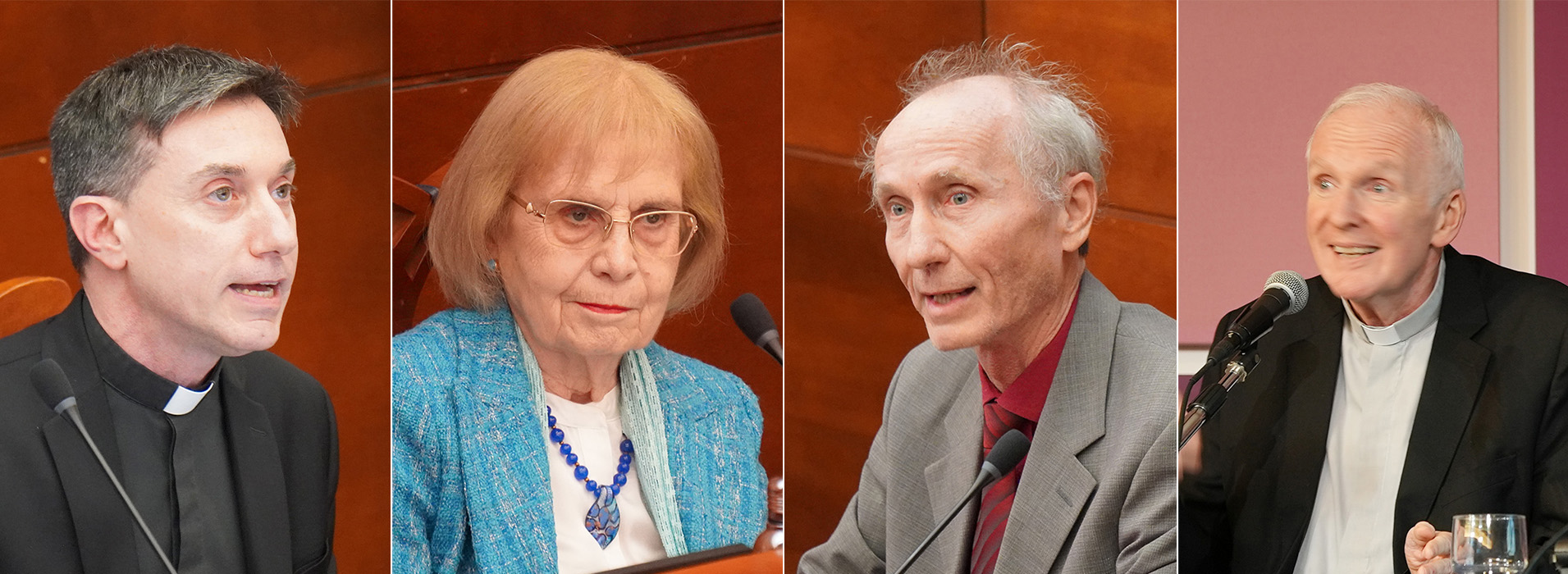
The speakers at the presentation: Alessandro Clemenzia, Dean of the Faculty of Theology of Central Italy; Angela Ales Bello, Professor Emerita of Contemporary Philosophy – Pontifical Lateran University; Stefan Tobler, theologian and Director of the Institute for Ecumenical Research at the “Lucian Blaga” University of Sibiu (Romania); Brendan Leahy, theologian and Bishop of Limerick (Ireland)
There are two introductions, one of a historical nature, by Alba Sgariglia[1], which traces the history and complex composition of the text, and the other of a theological nature, by Piero Coda[2], which highlights the nature of the experience and how it fits into the historical journey of the Church, whilst also revealing its novelty. The book is enriched by a glossary, bibliography, and scriptural and subject indexes.
This is a fundamental text for understanding the charism of Chiara Lubich, which extends beyond her Movement. It is a work destined to form part of the Church’s mystical and doctrinal heritage, capable of speaking to every person, “a legacy to be shared and brought to fruition”, as Piero Coda writes.
How should one read this book? “All these papers I have written,” the Author noted as early as the 25th of July 1949, “are worth nothing if the soul who reads them does not love, is not in God. They have value if it is God who reads them in that soul.” It is a fundamental principle for understanding any work: to place oneself on its same level. To understand Paradise ’49 properly, it is essential to listen sincerely to the experience of its Author and almost to enter with her into that “Paradise” to which the book bears witness. Chiara Lubich was convinced of this. When, on the 22nd of November 2003, she began reading her work again, together with a small circle of scholars whom she had gathered around her, called the “Abba School”, she noted in her text: “This time we are reading it with the aim of converting ourselves, translating it into life. We must ensure that the Abba School becomes Paradise. In fact, only in this way can the contents of these volumes be understood….”
[1] Alba Sgariglia is the director of the Chiara Lubich Centre, a researcher at the Focolare Movement’s Centre for Studies, and a member of the Abbà School in the field of theology and Mariology.
[2] Piero Coda is Secretary General of the International Theological Commission and a professor of Trinitarian Ontology at the “Sophia” University Institute. He was a former President of the Italian Theological Association from 2004 to 2011.
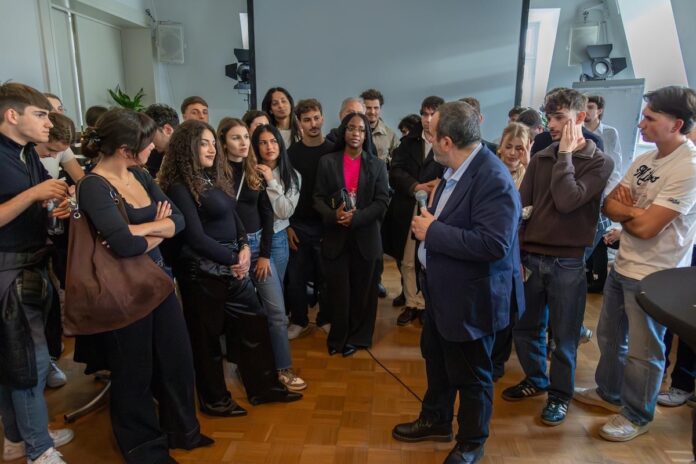
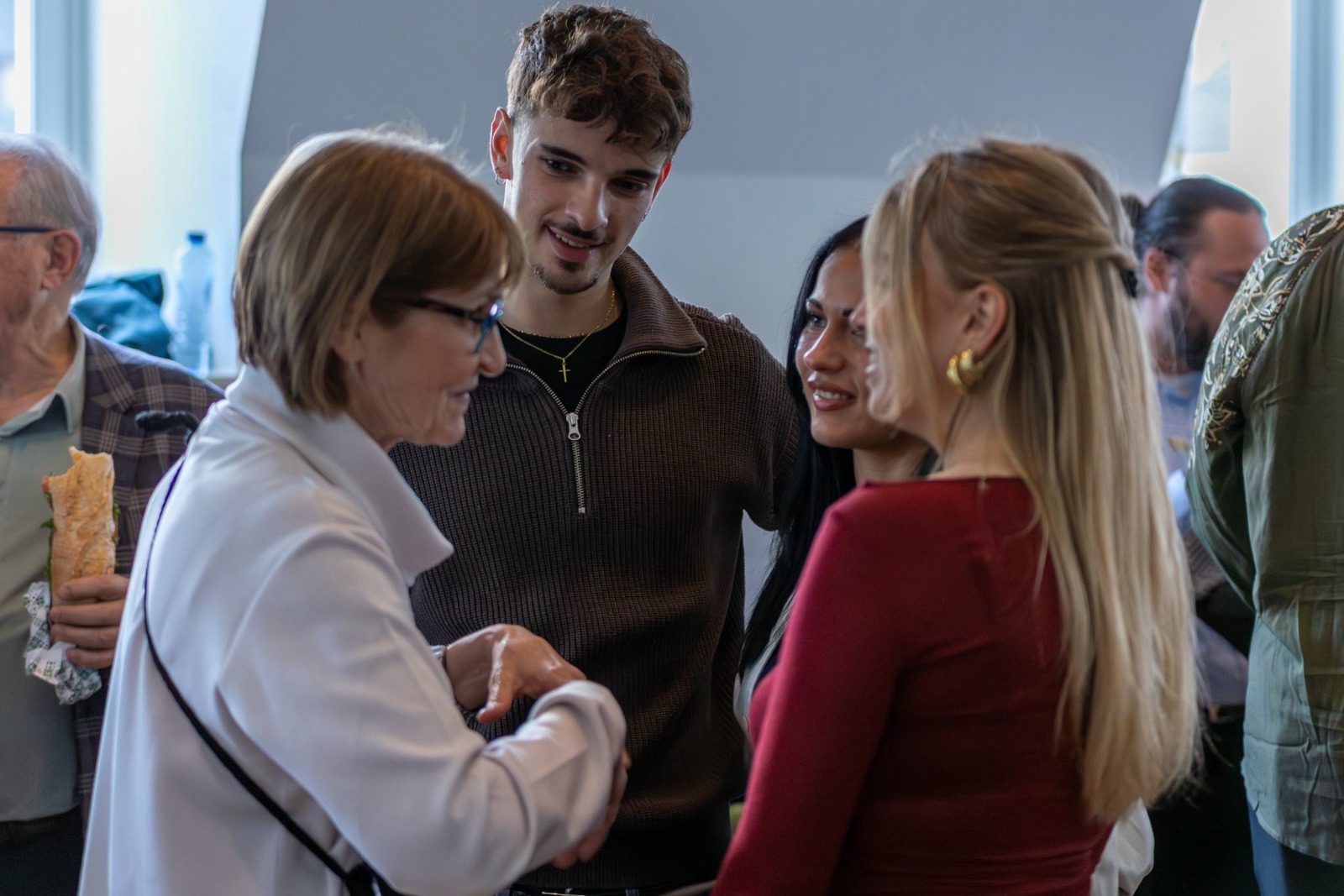
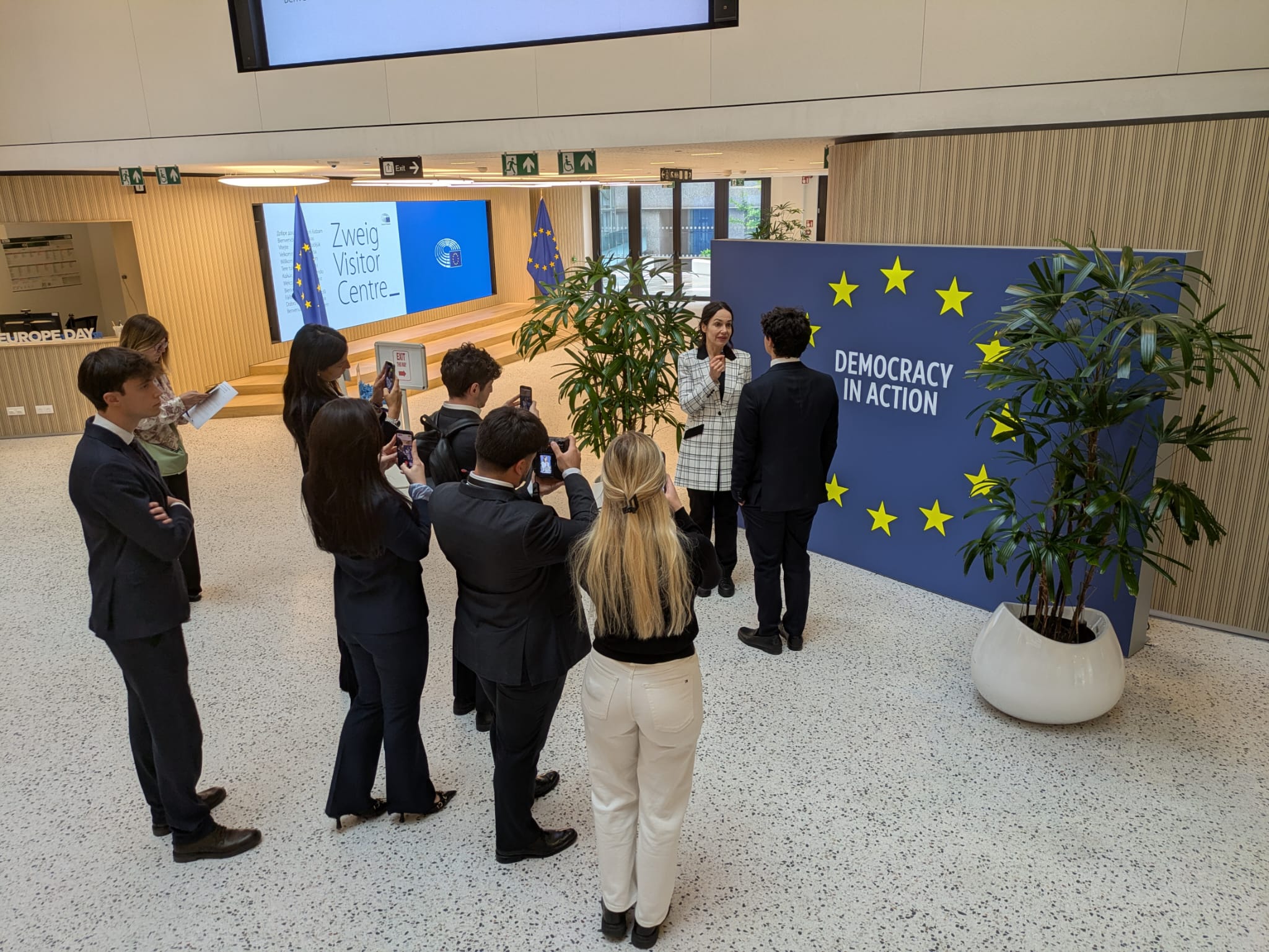
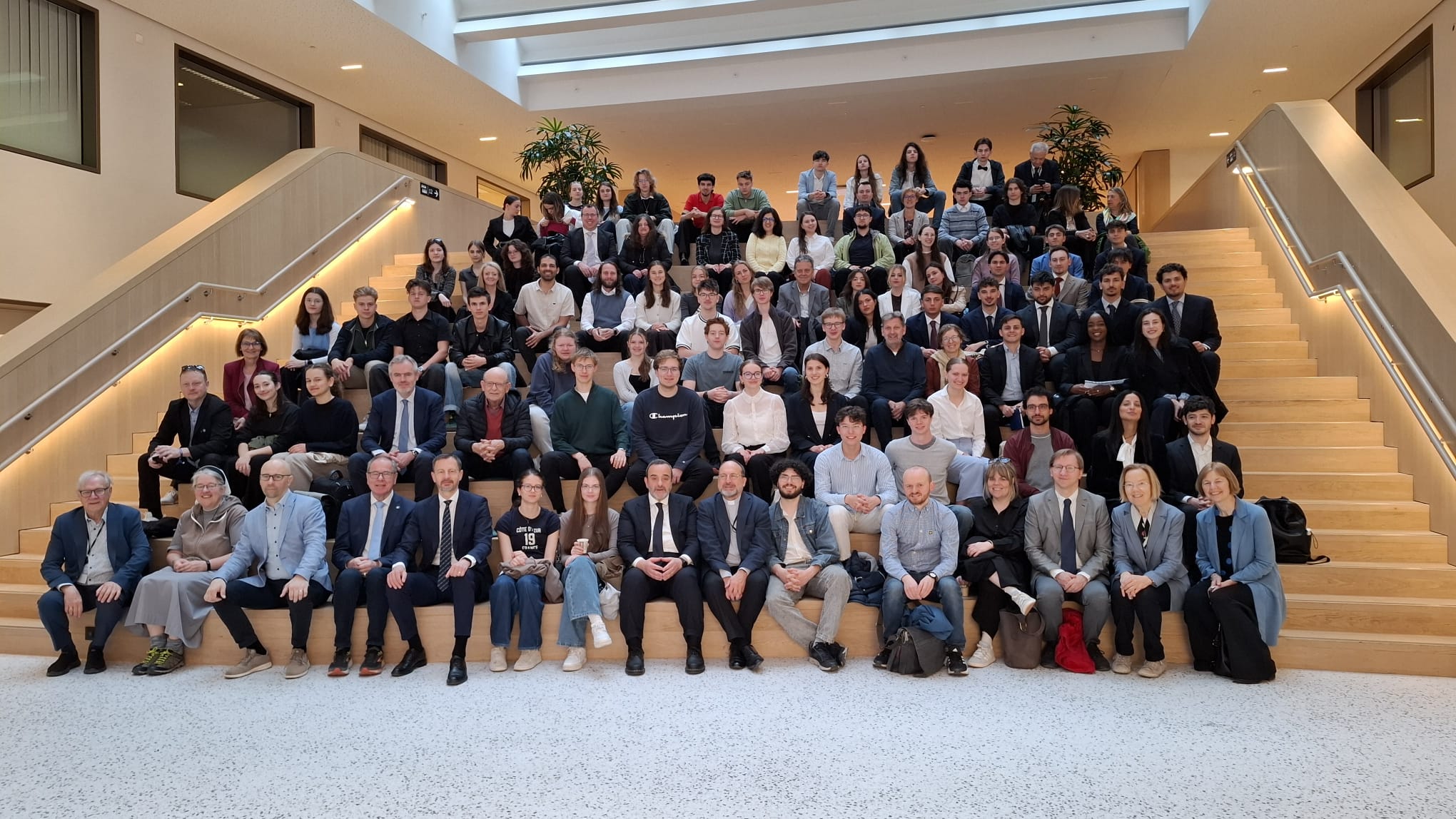
The European Quarter in Brussels is a maze of offices, headquarters and agencies operating in the European Union, whose acronyms sometimes seem like tongue-twisters. Officials and executives, with a serious and professional air, wander around its streets. Walking through them, you hear different languages and encounter unusual customs. Yet, this variety does not give an impression of confusion, because everything is supported by a great sense of order. This calmness was briefly interrupted from 11th-13th May, when a group of about 100 enthusiastic young people moved through the institutions of the European Union, bringing their commitment and passion into it. They were not a school group on a field trip, far from it! They were the young people of Together for Europe, prepared and inspired, who experience Europe not as a goal to be achieved, but as their secure starting point for engaging with the whole world.
With them were several MEPs and other public figures: Andrea Wechsler, Antonella Sberna, Leoluca Orlando, Eduard Heger, Jeff Fountain, Giuseppe Lupo, Miriam Lexmann, Gerhard Pross and Nicole Grochowin. These are distinguished names: should we mention the nations to which they belong? Maybe there’s no need: they were Europeans – adding that they were Italians, Slovaks, Germans, Dutch, Austrians and so on, does little to explain the reasons that led them to meet with young people.
These reasons stem from the current crisis situation, in which it seems there is no longer room for unity between peoples and nations. No one can guarantee peace anymore. In such a context, Together for Europe wanted to show that unity is not an option, but rather the very thread running through the historical development of the peoples of Europe. And if today that thread seems buried under the rubble of ongoing conflicts, Together for Europe sets itself the task of bringing it back to light, offering its experience of collaboration among Christians as a way to rebuild the European structure on the foundations of unity. All together: members of different Churches, citizens of different countries and, above all, people of different generations. Young people, adults and the elderly all inhabit this fractured present and only by coming together can its contradictions be resolved. The challenge, therefore, is also intergenerational. This is why the young people of Together for Europe wanted to present an “Intergenerational Pact” to the MEPs and personalities, in which they set out their shared commitment to work for a Europe that is a kiln of peace and solidarity.
Where did the 100 young participants come from? As well as Europeans (here too, it matters little that they were Finnish, Swedish, Dutch, German, Belgian, Scottish, Slovak, Austrian, Hungarian, Romanian and Italian) there were Americans, Colombians, South Africans, Chinese, Canadians, Brazilians and Mexicans. Because Europe does not exist for itself alone, since its vocation is to unfold on a global level, offering its heritage of values shaped by Christianity, lived through ecumenical dialogue and amplified by the clear-sighted projects of the young people of Together for Europe.
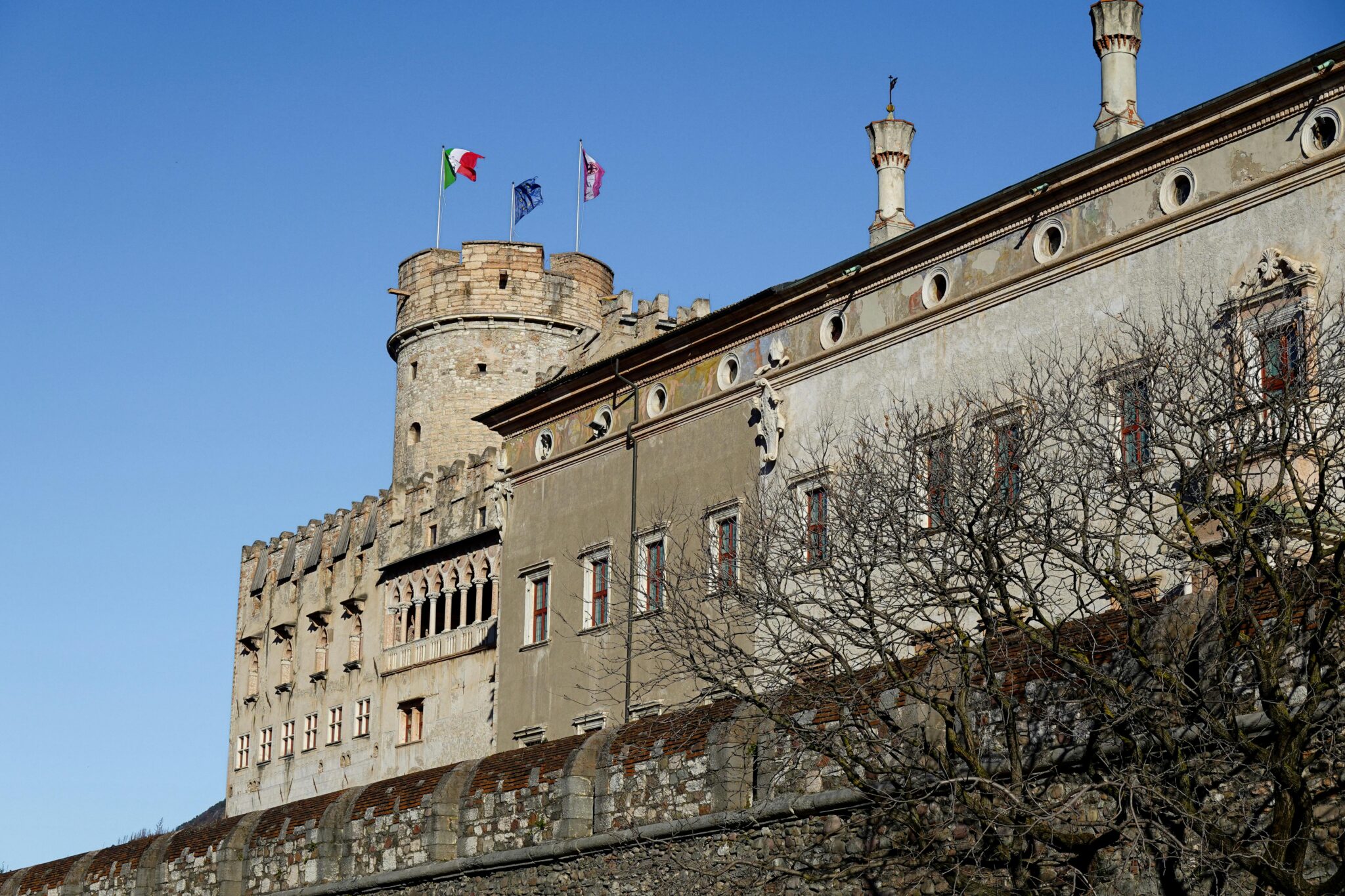
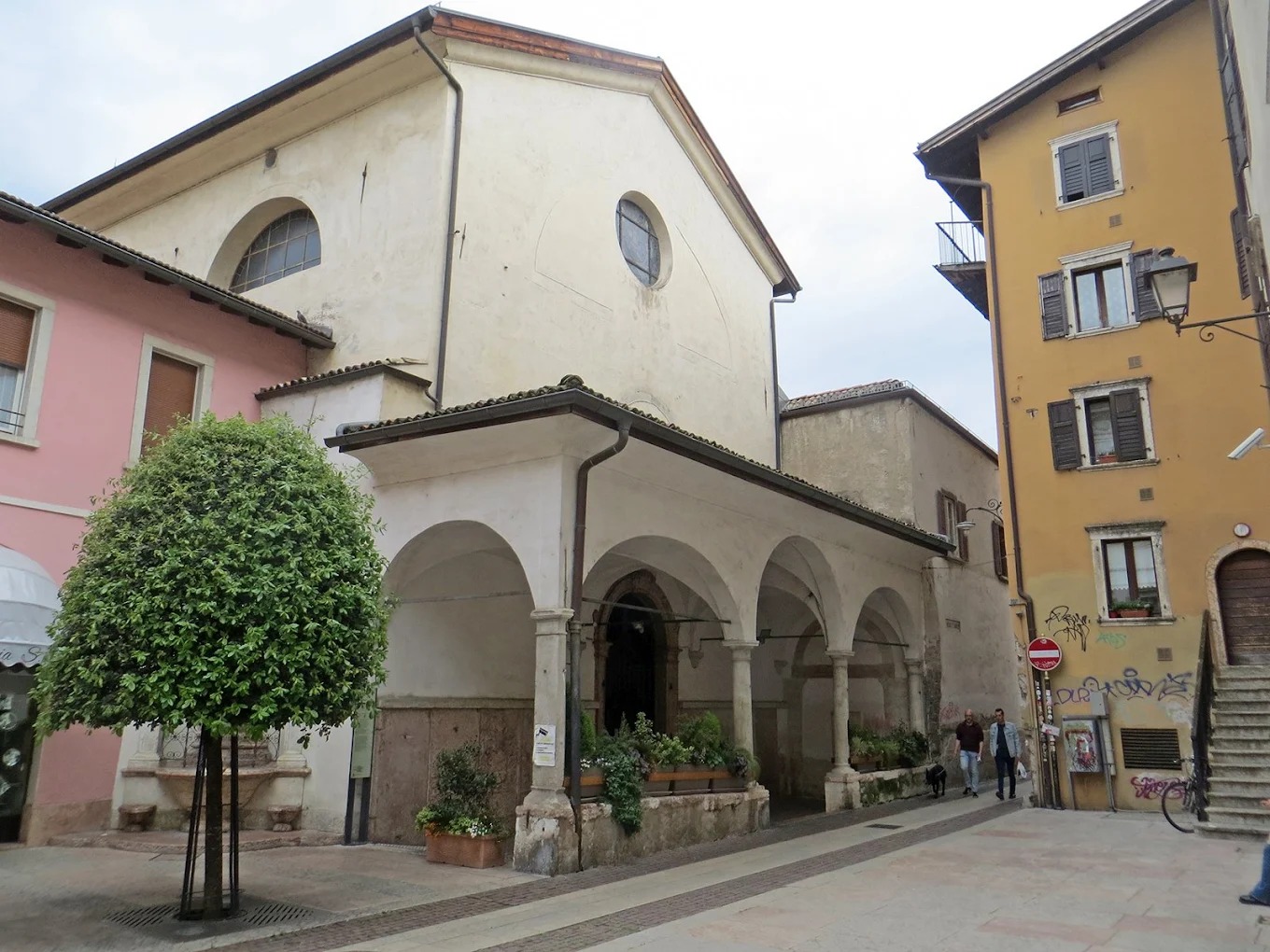
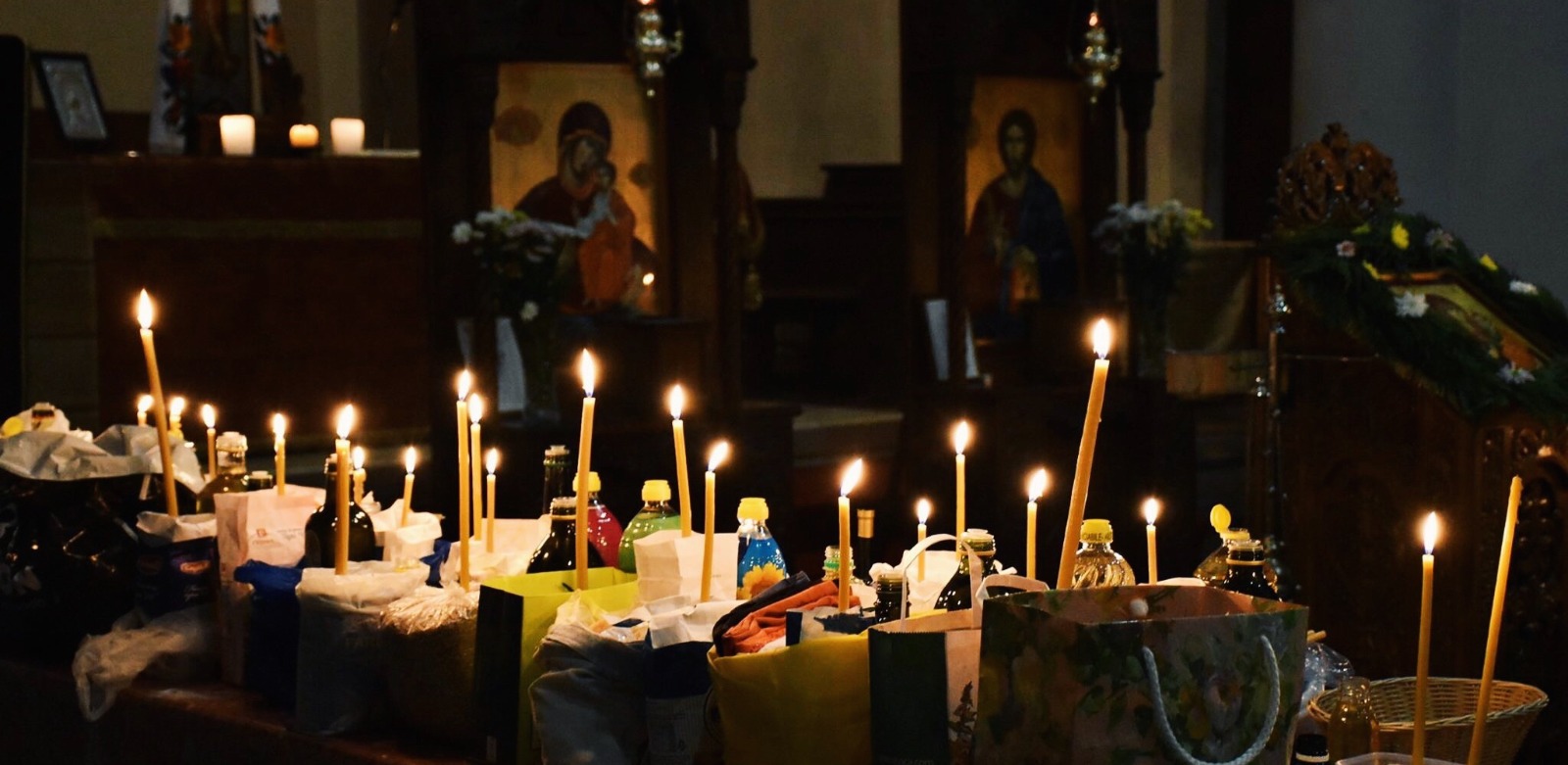
My name is Sarra Marta Lupășteanu, I am nineteen years old and I was born in Trent (Italy).Every time I say this sentence I realize how much my story weaves together places, cultures and beliefs that often do not meet easily.I am an Italian-Romanian girl and above all I am Orthodox, daughter of Father Ioan, priest of the Romanian church here in the city, and of Presbytera Delia Rodica. Our church is located in Via San Marco, in the heart of the historic center: a small Romanian world nestled between the Castle of Buonconsiglio, streets and houses that tell of centuries of Trentine Catholicism.
Growing up here has meant living naturally with the awareness of being a minority. Not a closed or isolated minority, but a different presence, which often requires explanation. When my classmates asked me why at Easter we follow a different calendar or why there are so many icons in our church, I understood that my daily life and theirs did not completely coincide. Yet, I have never felt divided: Catholics and Orthodox believe in the same God, only with different traditions, rites and sensitivities. This is the source of a reflection that stays in my heart: we need dialogue between communities but also good will, because understanding does not come by itself, we must want it.
I study Philosophy at the University of Trento and this choice has increased my ability to observe and understand what I experience. Entering a university environment, where identities mix and sometimes clash, made me reflect even more on what it means to belong to a denomination perceived as “other” compared to that of the majority.
Castillo del Buen ConsejoChiesa di San Marco
Sometimes I feel as if I am walking on a bridge: on one side, my Orthodox community, with its roots, its songs and traditions that I have absorbed since childhood; on the other, the Trentino society in which I was born, studied and grew up and which, for the last two years, has become my official homeland after obtaining Italian citizenship. I speak Romanian, I know the traditions of my country of origin and my family has taught me to preserve them, but I am also a girl deeply connected to Trent, to its rhythms and its customs. When I enter our church in Via San Marco I feel enveloped by a familiarity that no other place gives me: the golden icons, the voices of the choir during the Liturgy, the community that greets my father calling him “Părinte“. Yet, this difference never made me feel like a stranger. On the contrary, it taught me to look at the world from multiple points of view. In a city with a strong Catholic tradition, the presence of other Christian denominations shows that faith can be plural without losing its truth.
Today, as a young girl building her own future, I know that my identity comes from the meeting of two dimensions, it is a lens through which I read myself and the world. It is the awareness that roots do not prevent you from growing elsewhere. I am a “bridge” and now I am no longer afraid of being suspended: it is right there, between two shores, that I have learned to dwell. And in this space I have discovered my most authentic freedom: to be able to carry both worlds with me without having to choose, allowing them to dialogue, complete one another and make me whole: rooted and still journeying, with my heart open to the future.
by Sarra Marta Lupășteanu Article published in the magazine of the Parishes of Saints Peter and Paul and St. Martin in Trent December 2025 Foto: Chiesa romena di Trento – e Magda Ehlers by Pexels
From the rubble of war to the wonder of snow: this was the journey of a group of children from Gaza, welcomed to the Veneto region of Italy, thanks to the Padua Embrace Children and Civil Protection association. For many of them, marked by deep wounds in both body and soul, the day spent in Val Saisera, in Northeast Italy, was a rare moment of lightheartedness.
The day, organized by the Associazione Famiglie Nuove del Friuli Venezia Giulia (New Families Association of Friuli Venezia Giulia), was attended by about forty people, mostly women and children. It was a simple event, yet full of meaning: playing in the snow, laughter, tobogganing and a spirit of togetherness that allowed the memories of the war to fade into the background at least for a few hours. On that Sunday in January, the long-awaited snow came almost as a sign of welcome, as if to respond to the children’s desire to be able to see it for the first time.
Many of these children arrived in Italy in 2025 thanks to a humanitarian corridor activated to provide urgent medical care. They included young amputees, children injured by explosions, or suffering from illnesses impossible to treat in a land devastated by conflict. Their families have painful stories: mourning, forced separations and arduous absences. Yet, alongside the suffering emerges an extraordinary capacity for resilience. Nothing captured the spirit of the day quite like the nine-year-old girl who, despite having lost both legs, was all smiles and laughter on the toboggan, eventually finding the strength to join the other girls in a dance.
Imam Kamel Layachi, imam of the Muslim communities of Veneto, who encouraged collaboration between Muslim and Catholic communities was a focal point for the various groups involved. Parishes, associations and volunteers joined forces to offer not only assistance, but also opportunities for integration. The children are already attending school and the mothers are taking Italian courses, in view of a stay that could become longer and open up to employment opportunities.
At the same time, the health needs are urgent, in particular for prosthetic limbs not covered by the National Health Service. For this reason, fund raising initiatives have been launched, with the aim of restoring autonomy and dignity to those who have lost a limb.
The day on the snow ended in Tarvisio (Italy). Welcomed by a group of New Families from the region, by the volunteers of the Friulclown association, by Don Giuseppe Marano, the parish priest of Valbruna and by the tea and biscuits offered by the Alpini – the group moved indoors for lunch (prepared by the Muslim community of the city of Udine) in the parish hall. A shared lunch and a moment of common prayer brought things to a clos. It was a simple but powerful gesture, which united different cultures and faiths under the sign of fraternity. The words of Palestinian families tell better than anything else the meaning of the experience: gratitude, emotion, relief. One mother wrote, “You have allowed happiness to touch our hearts again”.
The Italian volunteers also received much in return: in the eyes of those children they saw pain and joy, fragility and strength and the awareness that, even with small gestures, it is possible to rebuild fragments of humanity. In a world marked by conflict, that day on the snow represented a small, but authentic, space of peace.
From a story by Friuli (Italy) New Families Photo: FN Friuli
Azione Famiglie Nuove (New Families’ Action) is an international non-profit organization of the Focolare Movement that works for the free and integral development of every person, community and nation, starting with the most fragile and disadvantaged in the world. Since 2005 it has also been officially authorised by the Italian Presidency of the Council of Ministers for International Adoptions. Two couples from Vicenza (Italy), Redi and Giacomo and Annalisa and Sergio, are part of this project. Recently they were able to fulfil a long held desire: to meet reunite with some Bolivian families they had met during an AFN Conference in Castel Gandolfo (Rome). From that meeting a simple and authentic bond was born, which no one imagined would continue until it transformed, years later, into a new meeting on the other side of the world.
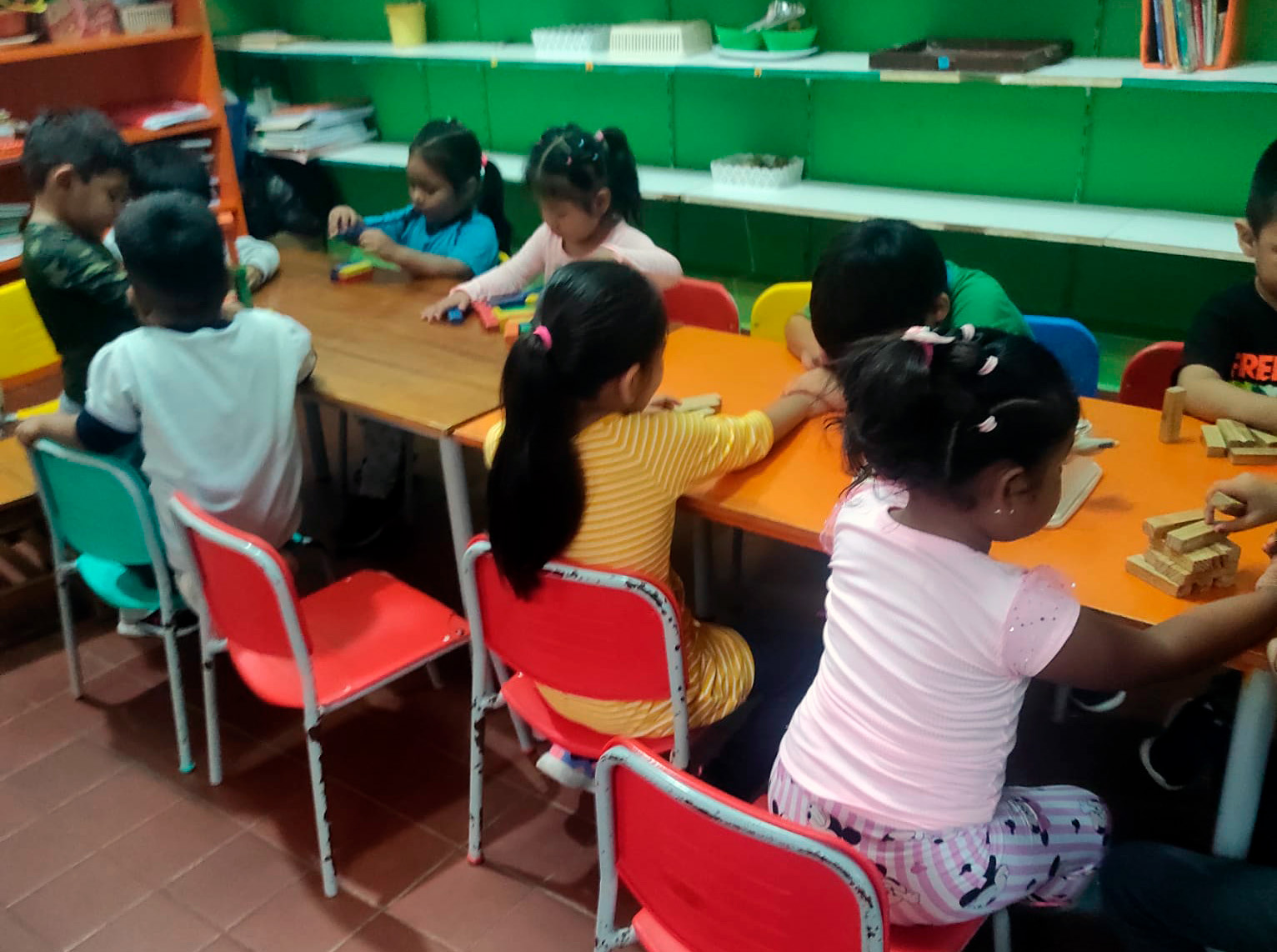
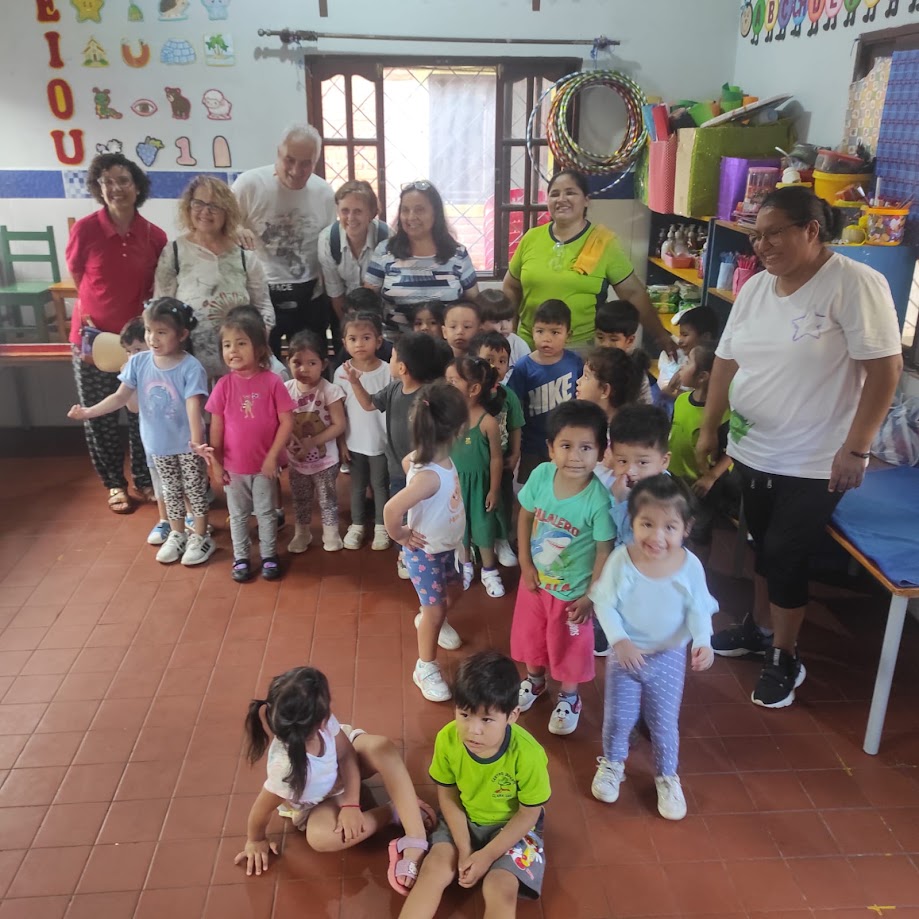
While there, the two Italian couples were also able to visit the AFN project in Bolivia: the “Clara Luz“ children’s centre in Santa Cruz and the “Rincón de Luz“ social centre in Cochabamba. In Santa Cruz, in the La Guardia district, the “Clara Luz” centre welcomes young children and preschoolers every day. “The classrooms are simple, but well cared for and welcoming,” they explained. “Here children find a safe educational environment, while older siblings receive school support”. Around them, a wider programme involves families: home gardens, small livestock projects and training courses that help build autonomy and dignity. The “Clara Luz” centre also hosts young volunteers from the “Milonga Project“.
Centre “Clara Luz” (Santa Cruz, Bolivia)
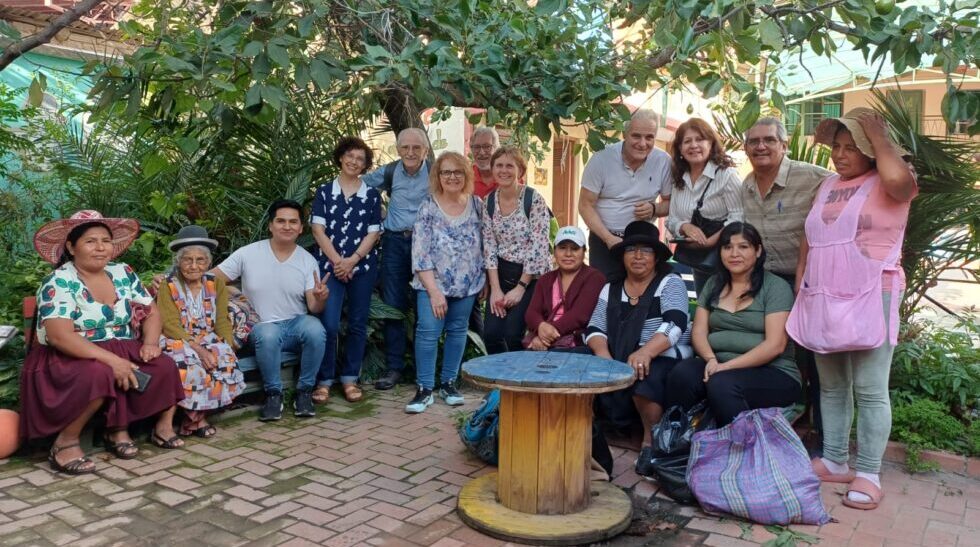
In Cochabamba, the “Rincón de Luz” centre is a point of reference for the community. “It is a place that welcomes and supports families in their daily lives,” said the two visiting couples. “Food parcels are distributed every week, while workshops and educational activities for children and parents take place throughout the year.”
During the visit, they were very touched by the meeting with Reina, who shared the origins of the project and how, having returned to Bolivia after a period of formation as a family in Loppiano (FI, Italy), she had felt a strong desire to put the ideal of Chiara Lubich, into concrete action. Involving her entire family, children, daughter-in-law, husband, she began to welcome by welcoming a dozen children into her own home. From there, step by step, the project has grown and developed to reach about 150 children, though there is a lot of need for support.
Many local families live in situations of great vulnerability: poverty, loneliness, bereavement and hardship. Particularly striking was the story of a grandmother who caring for her invalid husband and her orphaned granddaughter: “Every day she walks many kilometres searching for food and whenever she can, she comes to the centre for find help”.
Center “Rincón de Luz”(Cochabamba, Bolivia)
Among the people met was Silvio, one of the first children welcomed by the project. Today he is an active part of the “Rincón de Luz” community: he accompanies families with such sensitivity, distributes aid and puts his time at the service of others. You can feel that this place has truly become his home. The trip proved to be a very strong experience, allowing them to “touch” not only poverty, but also the dignity and reciprocity between the people of the community. “We thought we were bringing something – they said – but we received far more in return”.
From this experience came the desire to continue this friendship at a distance: “We have realized that what is really needed is a constant drop and we are already imagining new initiatives to involve others, a solidarity dinner, moments of sharing to make the project known, all ways to expand the family experience between families, where the geographical distance I lessened and gives way to a deep and authentic friendship”.
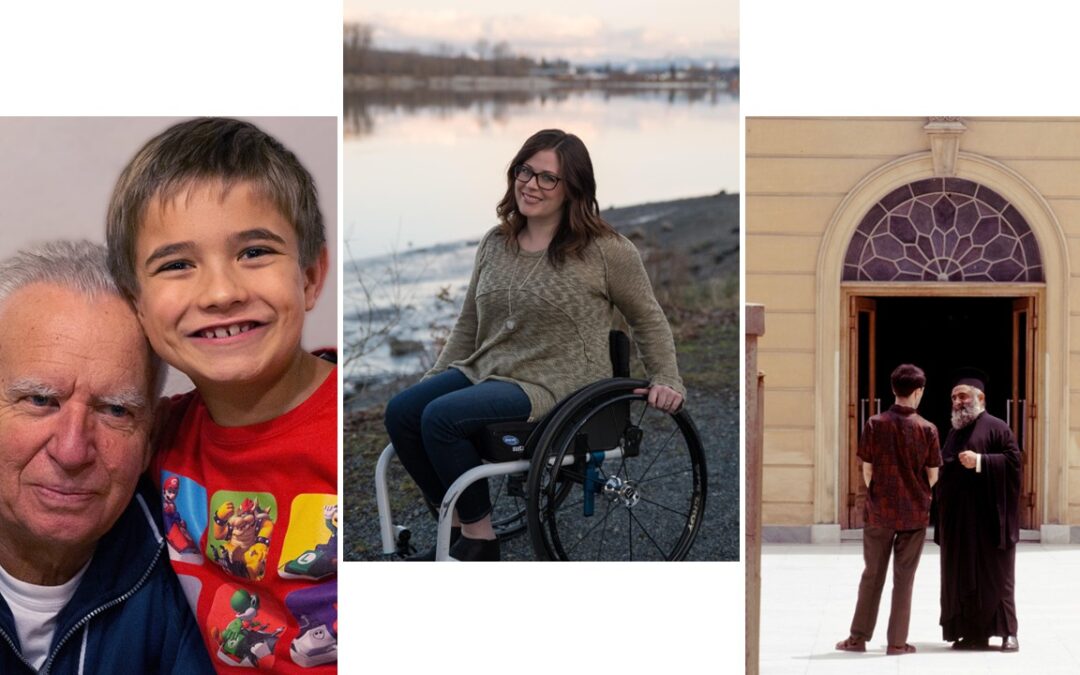
I was doing some work around the house when I cut my left hand deeply. As I tried to stop the flow of blood before my parents accompanied me to the hospital casualty department, our six year old grandson Emanuel, who was spending that day with us, watched closely as I hurriedly bandaged my hand: “Does it hurt a lot, Granddad?” I reassured him and to help me, he gave me a sweet! Shortly after: “Would you like another sweet, Granddad? It’ll do you good.” After the wound was stitched, bandaged and with a splint on my left thumb (fortunately the tendon was unharmed), when I got back home he came running to me: “Granddad, how are you doing now? Maybe a coffee would help”. “Thank you, Emanuel, after lunch: now let’s go to eat”. My wife had made his favourite sausages. After eating his, he took another one from the serving plate, cut it up and without saying anything put it on my plate. Observing these gestures made with moving simplicity, I recalled that Jesus indicated children as a model for us.
(Giovanni C. – Italy)
A providential holiday
“Beyond Us”, an association that supports people with disabilities, among its many activities organizes a holiday in San Bernardino. The President, whom I have known for years, said to me: “Why don’t you send Benedetta with us?” The idea was appealing, but would the place be suitable for wheelchair users like my daughter? After a visit it seemed that it would In addition, our friend Daniela kindly offered to accompany her and there would also be a nurse there. Benedetta was enthusiastic. I couldn’t believe it. Before leaving, we attended a dinner to meet the other holidaymakers. The atmosphere was cheerful. On 3rd August, Benedetta and Daniela left in our car for getting around locally. I really hoped my friend would not get too tired… I trusted and entrust everything to Jesus. The first news from both of them was reassuring. When they returned I hardly recognized my daughter: she was relaxed and overjoyed especially because she had been able to attend Mass every day, celebrated right there in her and Daniela’s room. God always surpasses us in generosity!
(M.B. – Switzerland)
When you lose your self-sufficiency
The month just past has been a month of “passion,” in the most physical sense of the word. An extraordinary month, in which physical pain was cradled by the tenderness of brothers. My eagerness to recover quickly—that sin of pride which wants always to feel self-sufficient—betrayed me. There were complications after the operation, my knee swelled up, and the doctor was firm: rest and ice. In that bag of ice I found a strange form of prayer. I found myself “small”, dependent on my brother for a glass of water or a lift in the car. But it was precisely in this fragility that I rediscovered the treasure of the priestly community in which I live. I understood that fraternity is not just eating together, but having the trust o say, “I need you”
Dependence on others is not a defeat, but the guarantee of our humanity. Today as a retired priest, I cultivate a few square meters of the world in my garden. And as long as I have a voice (and a crutch to support me), my garden will always be open to those looking for hope.
(Don Peppino G. – Italy)
Curated by Maria Grazia Berretta
taken from the Gospel of the Day, Città Nuova, year XII – no.3 – May-June 2026)
“It is very touching that the children of Rome thought of the IRAP (Audio Phonetic Rehabilitation Institute). This sum is precious, above all because it is a gesture that comes from the hearts of children.
During this past term at IRAP, we have tried to be “sparks of life” in the midst of the death that surrounds us. For us, this gift is itself a spark of life: it makes us feel that we are not alone and that, behind this gesture, there are concrete efforts, the faces of joyful children, hands joined together… All this is a seed of life and fraternity that touches us deeply. Thank you.
We are certainly living through difficult times but we continue to hold fast to hope and to choose life every day. This means going against the current of what is happening in Lebanon today. It calls for constant efforts, which we must make again and again, because nothing can ever be taken for granted.
Today in Lebanon, the word “peace”, seems to be losing its meaning. Many people don’t believe in it anymore and sometimes neither do we. At one point, even the Time Out, the daily moment of prayer for peace shared around the world, seemed pointless to me. How could I expect others to believe it, if I myself no longer did?
It became necessary to go deeper in order to rediscover the true meaning of peace: first of all inner peace, which is a challenge in a context of war, violence and hostility. Not allowing yourself to slip into hatred of the enemy, overcoming anger in the face of injustice, ripping out from your soul everything that can corrupt it… it’s a continuous struggle.
At Easter, Jesus’ greeting to the apostles, “Peace be with you”, resounded in a new way in my soul and I rediscovered that he is our true peace.
Active commitment to others is a way out: it frees us from isolation and makes us stronger. ”
IRAP (Institut de Rééducation Audio-Phonétique)
compiled by Maria Grazia Berretta
The Middle East emergency is ongoing. Every contribution helps bring relief to the many families affected by the scourge of war: many have lost their homes, others seek refuge in centres that continue to open their doors despite increasingly limited resources.
The latest volume which contains what Chiara Lubich wrote about her mystical experience: Paradise ’49, is now in the bookshops. In many ways this is a unique text, one that will surely provoke lively reflection. Above all because, for the first time, it places before the wider public, without omissions or selections, the deepest source of the Christian adventure that made Chiara one of the leading figures of the second half of the last century and beyond. It hands on to us a legacy that still remains largely to be explored and developed.
Yes, the deepest source: not the fruit of her imagination, however brilliant, or merely an original inspiration granted to her. It is something more and something different. It is something, as the philosopher Jean-Luc Marion wrote, that comes d’ailleurs, from that “elsewhere” which in Jesus has been given to us once and for all “from within” and “beneath” the history we live, with all its magnificent and astonishing expressions and surprises and with its dramatic and disturbing trials.
Throughout the centuries, this ever new proposition of Jesus, as promised by him: “Behold, I am with you always, even to the end of the world”, is a well-known tenet of the history of the Church. Each time it is unforeseeable and surprising, because it is the work of the Spirit, who “is like the wind that blows where it wills and you hear its sound, but you do not know where it comes from or where it goes.” Yet it is something that can still be recognized and appreciated.
Paradise ’49, once again and in an unprecedented form, is a simple and faithful witness to all this. Here lies its first value. We cannot but be deeply grateful to Chiara who in the end, not without first carefully assuring herself that all was in harmony with the faith of the Church, chose to offer this gift. She considered it something precious and recognized her responsibility toward it, as a gift given by God not only for herself but for everyone. From this comes a second value of these pages: the role they are destined to have for the Focolare Movement. Its charismatic identity was forged precisely through the events witnessed in these pages, so that it might be “the new wineskin” called to preserve and generously pour out the “new wine” of the Spirit that was communicated there, in service of the Gospel’s journey through history.
Finally, there is a third and perhaps decisive value of this writing: making accessible to us today the decisive resource represented by the event of Jesus. It has been said that Christianity has yet to flower fully. . And at this challenging turning point in history, in the fraternal dialogue that the disciples of Jesus are called to live with all who seek truth and serve justice: no, we haven’t said everything yet.
I have learnt to laugh at myself; I can be quite ridiculous at times when I feel vulnerable. I am keenly aware of the humour people display at the point of death or in the face of tragedy. I learnt this from the founder of Logotherapy, Viktor Frankl.
What annoys me?
When people fail to understand things that are quite obvious.
The motto of my life?
It is a phrase by Pope Paul VI: “Blessed are these troubled and paradoxical times, which almost compel us to holiness.” It can also be read in a secular sense, that is: these are times that compel us to be people of integrity.
My strength?
I would say it is linked to this motto: I manage to remain calm in moments of crisis. I have a kind of “tragic optimism”.
My weakness?
I’m a bit lazy and I also tend to prejudge situations and people, but I try to be aware of this and convert myself.
What is particularly close to my heart in my new role?
Making institutional relationships more human. Being realistic. And then, not to distance myself from the dynamic of dialogue with anyone, no matter what. Unity with Margaret.
My favourite place?
The simple and poor neighbourhoods of Latin American cities where you can just chat with people, perhaps over a cup of mate [a traditional South American drink]!
Where do I draw my strength from?
I am a down-to-earth, religious, Latin American person. Whenever I can, or when I have a problem to sort out, I go on a pilgrimage to Marian shrines, and I also like to have images of my “patron saints”. In short, I draw strength from prayer and from spending time with friends. I would like to always have time for them.
A good night’s sleep is also good for me! Everything seems possible in the morning.
What worries me?
That our charism is not understood in all its fullness, and so I worry whether we will be able to free it from the sin of “domination” and inauthenticity that has tainted our relationships.
Roberto Almada, born in 1956 in Rosario, Argentina, is the new Co-President of the Focolare Movement. He studied medicine and is a specialist in psychiatry. He also holds a doctorate in philosophy and is co-founder of the School of Logotherapy in Uruguay and Paraguay. He got to know the Focolare Movement in 1976. He has lived in Focolare communities for many years, including in Uruguay, Paraguay, Argentina and at the International Centre in Rocca di Papa. Roberto Almada is the author of the book “Il burnout del buon samaritano” [The Burnout of the Good Samaritan].
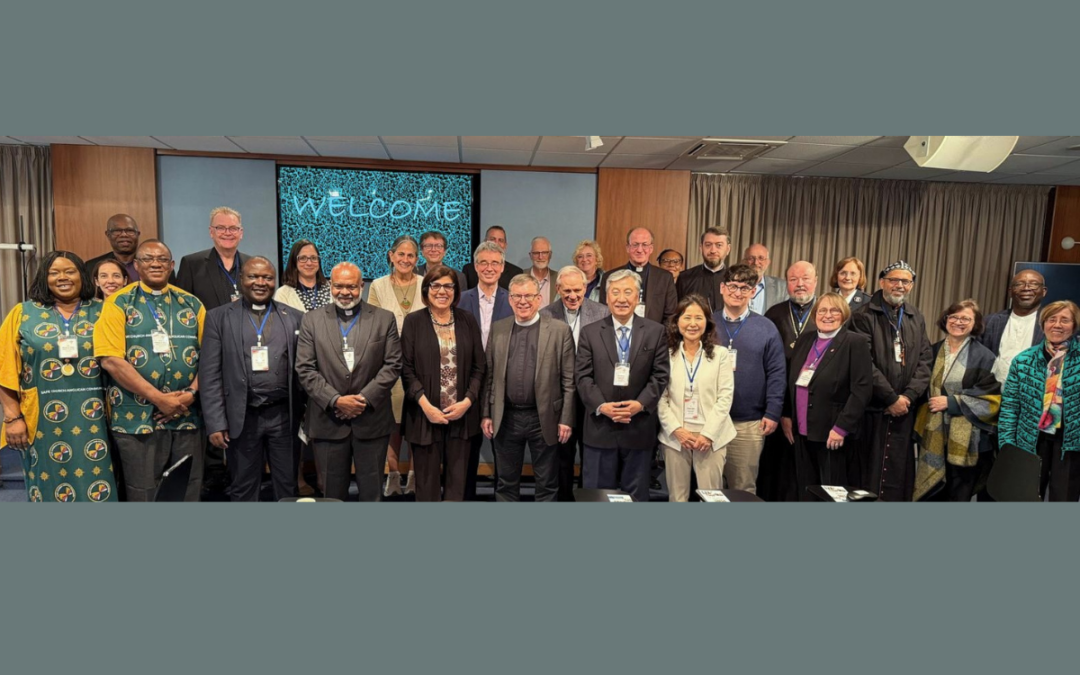
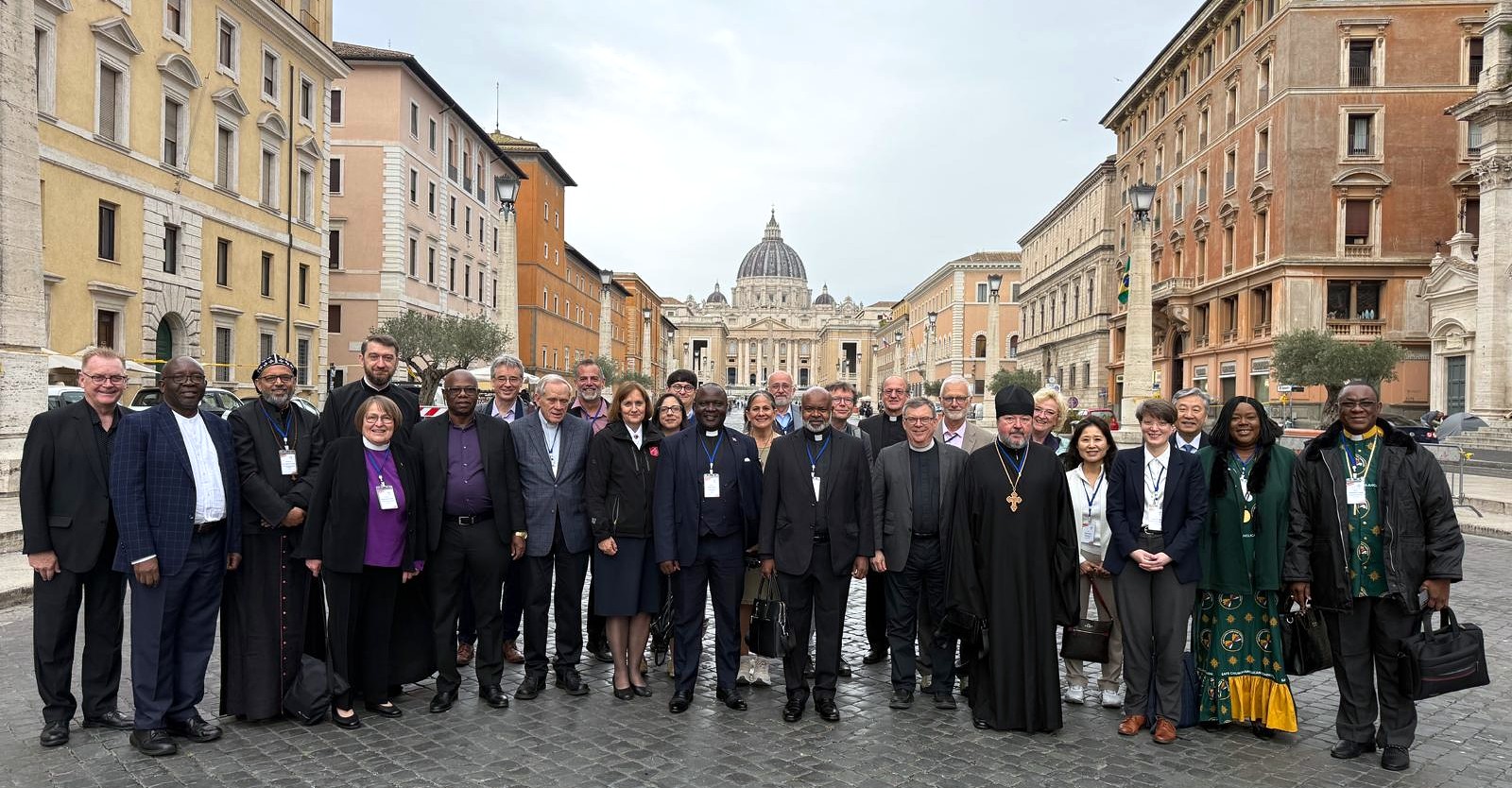
On 22 April, around thirty leaders from global Christian Churches and organisations visited the International Centre of the Focolare Movement in Rocca di Papa. The visit formed part of the programme of the annual meeting of the International Committee of the Global Christian Forum (GCF), which had taken place in Rome in these days, and provided a meaningful opportunity for mutual understanding and ecumenical dialogue.
The encounter offered an opportunity to explore more deeply the history, charism and commitment of the Focolare Movement to Christian unity. Following an introductory presentation, an intense and engaged dialogue unfolded, characterised by numerous questions and reflections. At the conclusion of the meeting, Margaret Karram, Presidente of the Focolare Movement, offered a brief greeting and shared personal testimony, which deeply resonated with those present.
Members of the Committee expressed their gratitude for the warm welcome and for the light that emerged from the encounter. Commissioner Jane Paone of the International Salvation Army commented: “For me it was a very ‘vibrational’ experience: I was touched by the joy and the hospitality.” Dr Hanns Lessing, representative of the World Communion of Reformed Churches, shared: “I was touched by how the Gospel commandment,“’Love your neighbour as yourself’, can today be understood as an invitation to love the other ecclesial community as one’s own.” Prof. Dirk Lange of the Lutheran World Federation highlighted the deep connection between the stories shared and the identity of the Global Christian Forum: “The faith stories of Chiara Lubich and Margaret Karram brought us to the very heart of the GCF: building relationships through self-giving, in the trust that God always provides. God’s love is at the centre, and mutual love unites.”
Participants at the annual meeting of the International Committee of the Global Christian Forum
Founded in 1998 at the initiative of the World Council of Churches, during the term of the then General Secretary Dr Konrad Raiser, the Global Christian Forum is a unique ecumenical space that brings together all the major currents of world Christianity, including Pentecostal and Free Churches. Its distinctive charism lies in the sharing of personal faith stories as a privileged path for building relationships, overcoming historical divisions and promoting unity in diversity. As Dr David Wells of the Pentecostal World Fellowship emphasised in recent days: “The GCF fosters a dialogue that does not begin with doctrinal or political positions, but with people.”
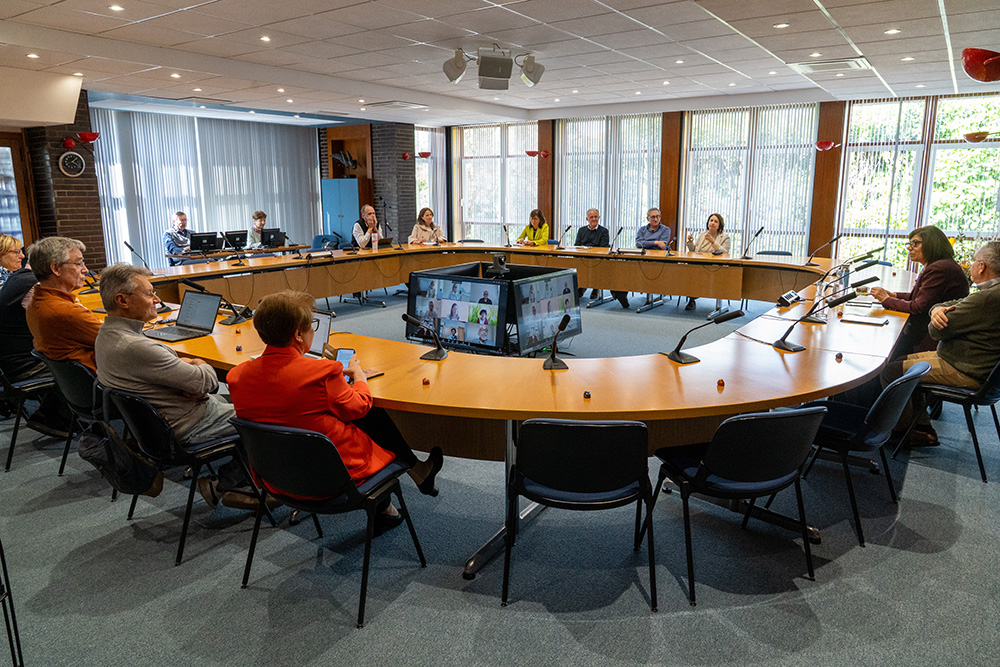
The International Committee, composed of around thirty church leaders – including the Focolare Movement from 2026 onwards – reflected on future challenges in a world marked by growing polarisation, a reality that also affects the Churches themselves. A central question emerged: how can we be reconcilers today?
It became clear to all that the GCF occupies a unique place within the ecumenical landscape. As David Wells added, using a powerful metaphor: “The GCF is like a fertiliser: it works beneath the surface. It is not always immediately visible, but in time its fruits emerge, oriented towards visible unity.”
A strong sense of harmony thus emerged between the goal and the dialogical approach of the Global Christian Forum and the charism and the dialogue of life of the Focolare Movement, opening hopeful perspectives for future collaboration on the journey towards the unity of the Church and of the whole human family.
On Easter day, the Risen Lord appeared first to Mary Magdalen in the morning and then to his disciples that same evening. When they saw him, they reacted with great joy and were enriched by the true peace that only the Lord could give.[1] “Peace be with you” (v. 21). Joy and peace are fruits of the Spirit. [2] In fact, Jesus immediately said, “Receive the Holy Spirit.” (v. 22).
As the Father has sent me, so I send you. Having said this, he breathed on them and said, ‘Receive the Holy Spirit.’
The Holy Spirit not only enabled the disciples to carry out the same mission given to Jesus by the Father but also “re-created” them and renewed their humanity. The Risen Lord breathed on them and this gesture is the same as the action of the Creator who breathed into the nostrils of the man formed from the dust of the ground. [3] Just as creation is the continuous work of the Father’s love that sustains the entire universe, so the new creation wrought by the Risen One through the Holy Spirit continually sustains humanity on its journey toward the Kingdom.
This month’s Word of Life reminds us that we have the opportunity to become like Jesus. This is true for each of us individually, but even more so as a community. Jesus spoke to his disciples in the plural. In fact, it’s only together that all the different members form the mystical body of Jesus.
As the Father has sent me, so I send you. Having said this, he breathed on them and said, ‘Receive the Holy Spirit.’
Having been made children in the Son, we have the same vocation as Jesus. We have come from the Father, and will return to him. We are called to repeat his actions and words in the world and are accompanied by the grace of the Holy Spirit. If we open ourselves to this gift, we too can affirm with Paul: “It is no longer I who live, but Christ who lives in me.” [4].
This Word, therefore, invites us to deepen our relationship with the Holy Spirit, both in prayer and in everyday life, “listening to that voice” and remembering that, “Without the Holy Spirit, God is distant, Christ remains in the past, the Gospel is a dead letter, the Church is a mere organization and its mission is propaganda.
But in the Holy Spirit, the cosmos is lifted up and groans in the gestation of the Kingdom, the risen Christ is present, the Gospel is the power of life, the Church means Trinitarian communion and Pentecost is its mission.” [5].
As the Father has sent me, so I send you. Having said this, he breathed on them and said, ‘Receive the Holy Spirit.’
Andrea was a teenager in crisis. He had doubts about the meaning of life, fear of the future, the fragility he experienced seemed insurmountable and he often felt discouraged and unhappy. Someone suggested that he talk to Chiara Lubich. Shortly before actually meeting her, Andrea heard Chiara whisper the words “Holy Spirit” and realized that she was praying.
During the conversation, he felt deeply understood and completely accepted. He found peace again not because his problems had suddenly disappeared but because now there was someone with whom he could share them.
Years later, he confided “I not only received concrete help from Chiara but I also learned how to live – that is to be close to those who suffer and to have a sensitive and understanding attitude, without judging – just as Jesus would do.”
Only the Holy Spirit can make this happen, if we welcome him and allow him to work in us.
Prepared by Claudio Cianfaglioni & the Word of Life Team
“We should have the courage to reach out to one another, the courage to come together.
This is not simply a motto for the United World Week, but a choice we all make every day. And if we do so, it becomes a path to peace.”
Margaret Karram and Roberto Almada, President and Co-President of the Focolare Movement, through a brief chat, encourage us to approach dialogue with determination and to choose it in a practical way in our daily lives.
Activate subtitles and select the desired language.
Actions, initiatives, activities and world events to generate a network capable of living and testifying that universal brotherhood is really possible. This is the driving force behind United World Week (UWW). Supported by the United World Project together with the Focolare Movement and Youth for a United World (Y4UW), this global action takes place every year from 1st -7th May, crossing continents, oceans and becomes a concrete opportunity to transform values such as unity and peace into shared experiences.
People of different cultures, ages and backgrounds, each in their own city and community, embrace this invitation with the aim of creating authentic meeting spaces, networking energies, ideas and testimonies capable of generating real change.
This year’s edition proposes a strong and timely theme: #ChooseToDialogue. In a world marked by conflicts and growing divisions, it becomes even more urgent and meaningful to rediscover the value of encounter, listening and mutual understanding. Choosing “Dialogue” with courage today means opposing the logic of conflict and opening paths of peace; overcoming distances and transforming differences into opportunities for unity. The proposal for this UWW? A daily journey that invites you to experience this choice in various areas:
• May 1st – Interculturality & Dialogue
• May 2 – Art & Social Engagement
• 3 May – Health, Sport and Ecology
• May 4 – Economy and Work + Education and Research
• May 5 – Communication and Media
• May 6 – Active Citizenship and Politics
• May 7 – Peace & Human Rights
Various methods and proposals are available to make this happen, from the Time-out, an invitation to a shared moment of silence and prayer that unites everyone in asking for the gift of peace, to the Inspiration Box, a resource full of ideas and suggestions to be put into practice during the week.
Don’t miss:
Peace Got Talent – Living Peace, the broadcast of Living Peace International from 14:00 (GMT+1, Rome time) on Saturday, 2nd May on YouTube (@ unitedworldproject and @livingpeaceinternational), offering inspiration through the talents and messages of unity and peace shared by young people worldwide.
Run4Unity: the global relay for peace. At noon in each time zone, young people “pass the baton” to the next country, creating a worldwide wave of unity that circles the planet. Many countries are already organising their stages as part of this global race, such as Brazil, Venezuela, Paraguay, Argentina, Uganda, Burundi, New Caledonia, Italy and Croatia, among others.
– May Day Loppiano (Italy). From 1st-3rd May, the Focolare international town near Florence will host the 1st May event in Loppiano, the Festival of Fraternity dedicated to young people. ROOTS, discovering what unites us, is the title of the event: three days of meetings, stories, reflections, workshops, exhibitions, educational and sports activities focussed on the theme of roots and cultural diversity. An invitation to go deep, to rediscover one’s cultural and spiritual origins as a starting point for encountering others.
– Also in Portugal, at the Focolare’s little town “Rainbow” in Abrigada (Alenquer), 1st May will be an occasion for celebration and commitment to building a better world. Promoted by Youth for a United World, the event, with moments of sharing and workshops, will bring together people from all over the country and guests from different continents who believe that brotherhood is not just a dream but a reality that is built day after day, with concrete gestures of solidarity, dialogue and hope. The title of the event: “Connect. Do you have the courage to build bridges?”
How to organize events, share stories and join United World Week 2026?
From 16 to 18 April 2026, the Steering Committee of the “Together for Europe” (TfE) met for its annual retreat, this time at the Schoenstatt Centre in Vienna, Austria, on the Kahlenberg. Twenty-six participants, representing eight of the Christian movements that make up the network, reviewed the past year and set out objectives for future projects.
A key aspect of this year’s meeting was the change in membership of the Steering Committee. This transition has been prepared over the last two years in an atmosphere of listening to the Spirit, with a view to ensuring both continuity and fresh impetus.
Margaret Karram, President of the Focolare Movement, expressed her heartfelt thanks in a letter to the outgoing members for their tremendous commitment over the past decades in shaping TfE. The following members bid farewell to the group: Gerhard Pross (YMCA Esslingen), co-founder of TfE and its long-standing moderator, together with Thomas Römer and Walter Kriechbaum (both from the YMCA Munich, who have been involved with TfE since its inception).
Diego Goller (IT) and Ilona Toth (HU), representatives of the President of the Focolare Movement on the Steering Committee, welcomed their successors: Liz Taite (GB), who has extensive experience in ecumenism, and Alberto Lo Presti (IT). The role of General Secretary will be taken on by Maria Wienken (DE), supported by Elisabeth Danner (A), both members of the Focolare Movement. The handover was solemnly celebrated during an evening prayer and sealed by the “Pact of Mutual Love”. Gerhard Pross highlighted the greatness of TfE’s mission and its rich fruits, which have marked important milestones in the history of the Church, as described in the book “Sternstunden der Einheit” (Highlights of Unity).
The role of TfE moderator will now be filled by a group comprising three members of the current Committee: Sister Nicole Grochowina (Christusbruderschaft Selbitz Community), Fr Raffael Rieger (Schönstatt Movement) and Matthias Bühlmann (Vineyard). “This change marks not only the end of an era, but also the beginning of a new phase of collaboration at European level,” commented one of the participants.
Another member added: ‘The days spent on the Kahlenberg have shown that our diversity is our strength. With this new team, we are sending a clear signal of continuity and new horizons.’ Another participant emphasised: ‘TfE is writing a story of hope in these seemingly hopeless times. That is why it is more important than ever to walk together today.’
Agenda and outlook
Another key focus of the discussions was the work of the National Committees, which are taking on an increasing responsibility for establishing TfE in their respective countries.
The following key upcoming events were also discussed:
9-13 May 2026: To mark Europe Day, 120 young Europeans will visit the European Parliament. Inspired by the Christian unity they have experienced at TfE, the young people have drawn up an “Intergenerational Pact” which they will present to MEPs.
29-31 October 2026: The next ‘Friends’ Gathering’ will take place at the Vineyard Centre in Würzburg, Germany.
4-6 May 2028 (date to be confirmed): Major event in Castel Gandolfo and Rome, Italy.
The 2026 meeting of the Steering Committee thus marked an important milestone for the future direction of the network, which remains committed to unity and fraternity across the continent.