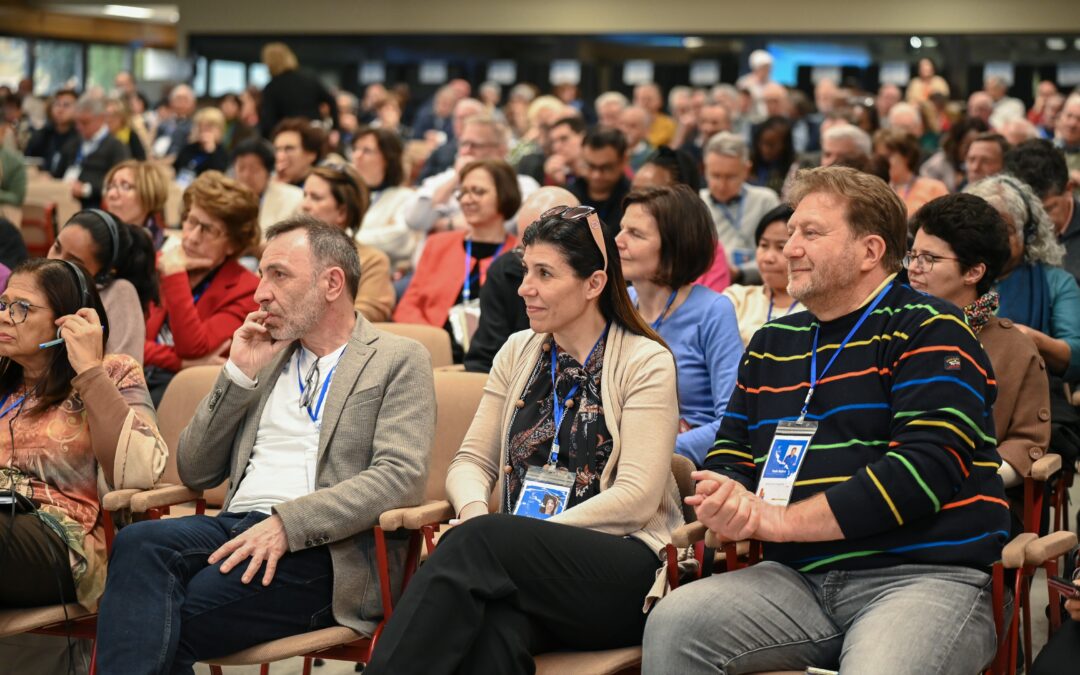
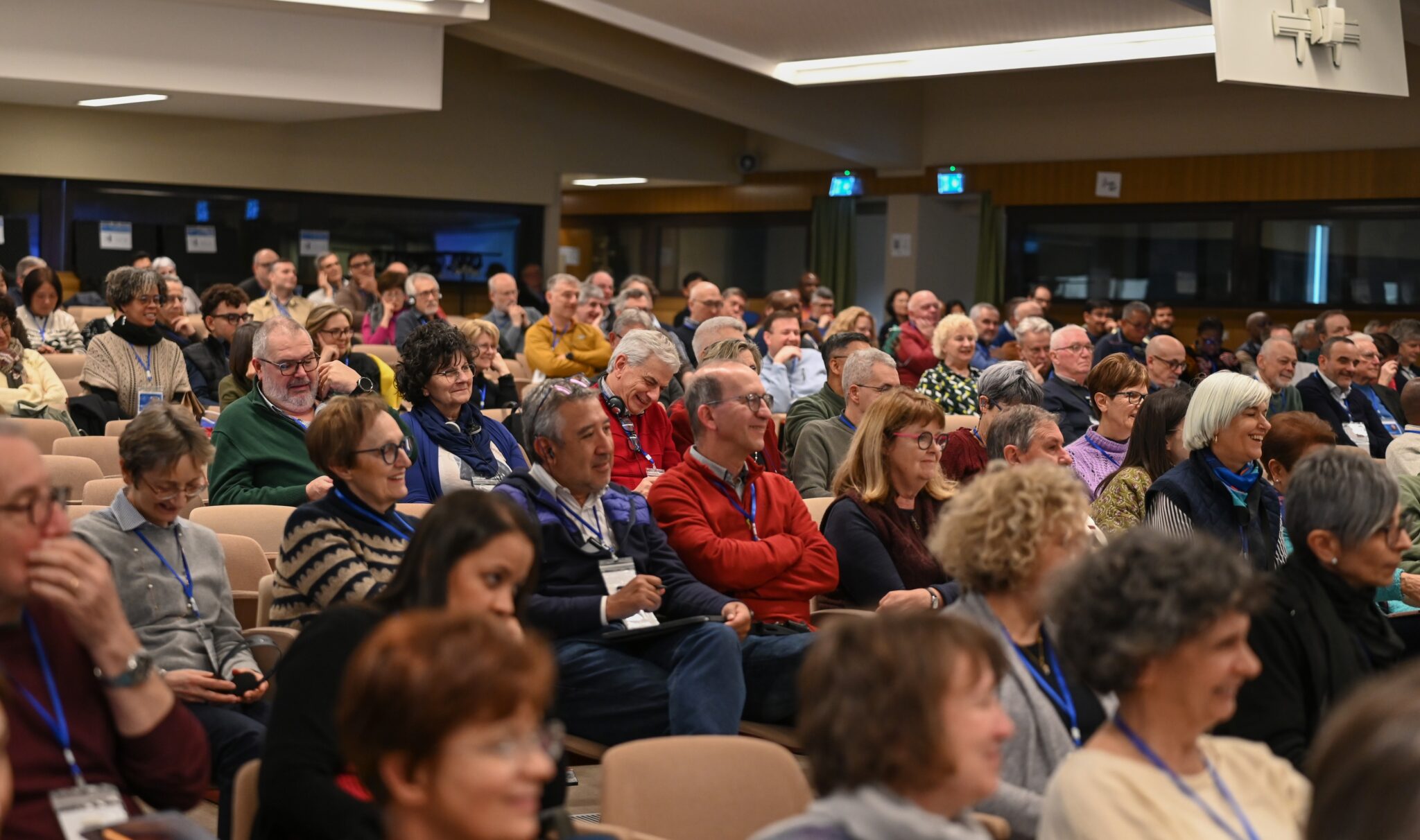
Silence, prayer, reflection: today, the 2nd of March, the 3-day spiritual retreat of the General Assembly of the Focolare Movement began. Moments of ‘one-to-one’ with God and moments of communion alternate during these days in which the news that arrives, especially from the many war fronts, is increasingly tragic. Here, where the whole Movement is represented, the world news is close at hand, bringing people, places, communities and nations that are suffering into our presence.
For this reason, we invite all those who belong to the Movement throughout the world to pray, through various personal and collective initiatives, to call on Heaven for the gift of peace.
The programme of the General Assembly
The President’s report on the 2021-2026 5-year term will be presented on the 5th of March, and working sessions on selected topics will be held from the 6th to the 11th of March. Work will be carried out in groups using a method of dialogue and discernment called ‘Conversation in the Spirit’. Plenary sessions and votes on the outcomes are also planned.
The elections for the new Central Government – President, Co-President and Councillors – will be held from the 12th to the 15th of March. From the 16th to the 20th of March, the programme includes discussions and votes on proposed amendments to the General Statutes and Regulations. The Assembly will conclude in Rome on the 21st of March: everyone in the Assembly will be received in audience by Pope Leo XIV.
At the conclusion of the various stages of the Assembly, we will send you brief updates. The next one will be on the 5th of March, at the conclusion of the retreat days.
Stefania Tanesini with the Multimedia Communication and Linguistic Services team
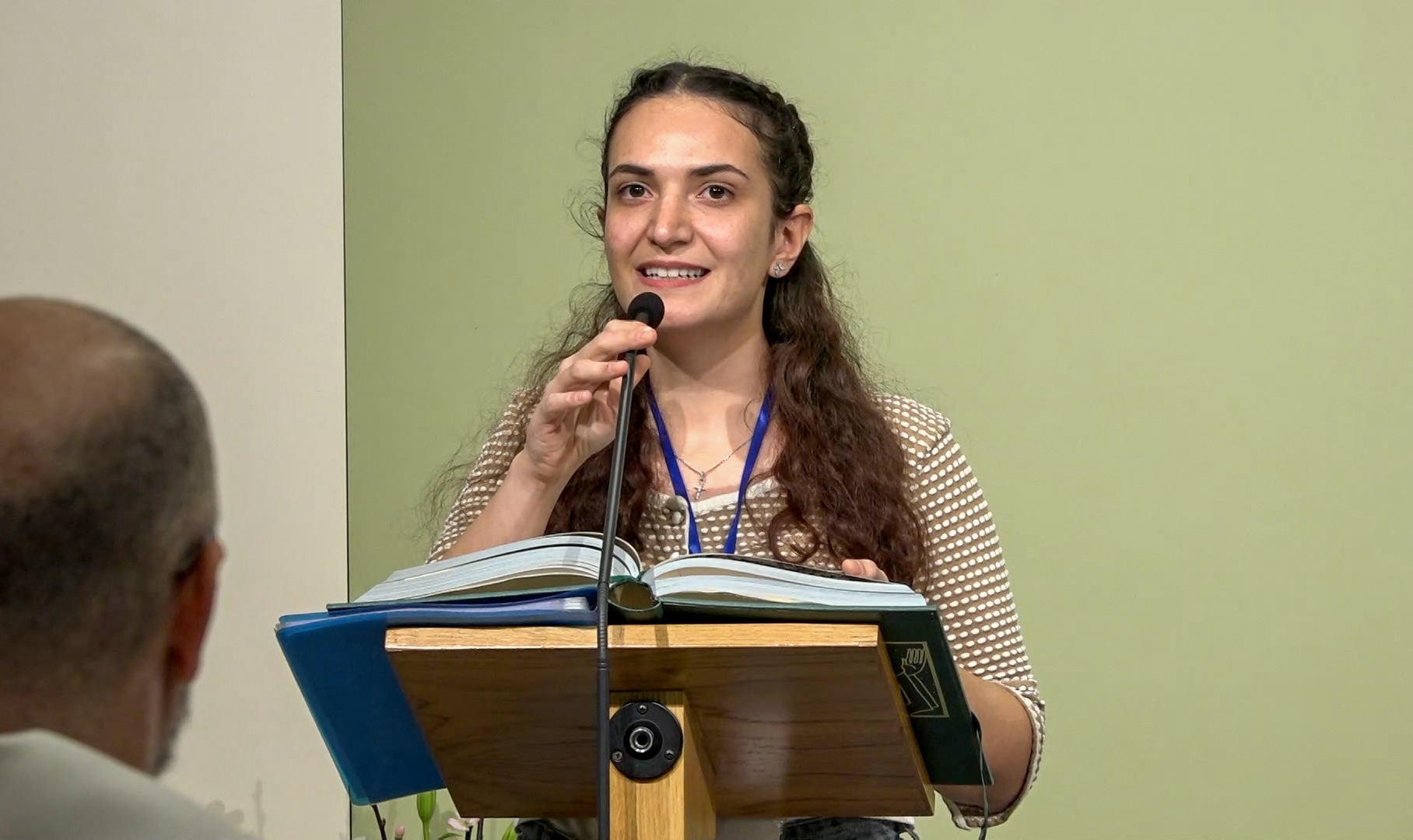
“I hereby officially declare open the Ordinary General Assembly of the Work of Mary, convened in accordance with the methods established by the General Statutes.” These were the words with which Margaret Karram, President of the Focolare Movement, opened the proceedings today, 1 March 2026. There are 320 participants at the Assembly. Representatives of eight Christian Churches and of various religions and cultures are present. Unfortunately, some participants have not yet arrived due to the escalation of the conflict in the Middle East and the resulting flight ban. Thoughts and prayers of the entire Assembly immediately went out to this region of the world.
The President continued her opening address saying, “After a long period of preparation, it seems to me that I don’t see only you here present today, but all our communities around the world: from the Gen 4 to bishops, adherents, young people, and all those who are currently offering their sufferings for many different reasons.”
“I arrived here this morning,” she confided, “with immense joy in my heart and, at the same time, I feel in my soul a sense of trepidation for the sacred and important moments we are about to begin. These will certainly be challenging days, but above all, my deepest wish is that this time will become a profound experience of God for all of us.”
The meditation, led by Sergio Rondinara, member of the Abbà School, focused on how to read and interpret the “Premise to every other rule” in the light of Chiara Lubich’s experience. This is the premise that precedes and introduces the General Statutes and also guides the various norms contained therein. These words are also the premise and rule for the proceedings of the Assembly: “Mutual and constant love, which makes unity possible and brings the presence of Jesus among all, is, for those who are part of the Work of Mary, the basis for their life under every aspect: it is the norm of norms, the premise to every other rule.”
Throughout the whole of today, the necessary formalities for conducting the Assembly are scheduled. We began with the appointment of two moderators, chosen from among the participants, and of the Electoral Commission who are called upon to oversee the proper operation of all the aspects of the election. This was followed by the approval of the regulations and of the programme of the Assembly.
According to Article 1 of the Regulations of the General Assembly of the Focolare Movement, participants will live this event in profound communion, so as to help unity grow in the entire Movement and guide it toward the fulfilment of its aims. The Assembly is in fact one of the most important moments for the Focolare Movement and takes place every five years, as established by the Decree of the Dicastery for the Laity, the Family and Life (2021).
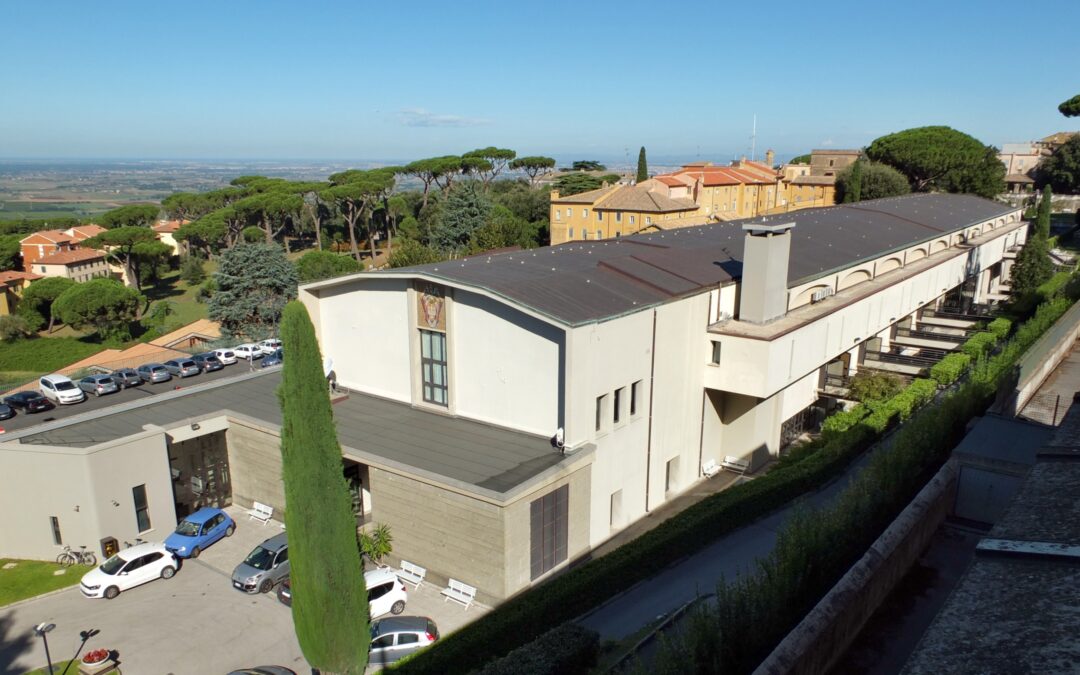
It will be held at the Mariapolis Centre in Castel Gandolfo (Rome, Italy), where 320 participants – including about 50 observers – from different countries, cultures and ecclesial and religious contexts are arriving. They are brought together by their adherence to the spirit and values of the Movement founded by Chiara Lubich (1920–2008) and recognised by the Catholic Church as a private, universal association of pontifical right.
The programme
The Assembly will begin with three days of spiritual retreat. On the 5th of March, the current President, Margaret Karram, will present her end-of-term report, accompanied by some reflections from the Co-President, Jesús Morán. The following days the programme will alternate between plenary sessions and work in 30 groups, dedicated to studying in depth the topics raised by the Focolare communities around the world.
The subjects that will guide the work will focus on the question of how to implement the charism, or rather how to create relationships of fraternity and unity, in the current global context through a commitment to peace and social justice, dialogue in a polarised world, the responsible use of technology, dialogue as a key instrument between Christian Churches and with people of various faiths and convictions, integral ecology, and participatory governance. One of the topics will also be the transmission of the charism of the Focolare Movement to future generations. There will also be sessions for discussion on the proposed amendments to the General Statutes and to the Regulations of the various branches of the Movement.
Thursday, the 12th of March, will be dedicated to the election of the President and the Co-President, positions which, according to the General Statutes of the Focolare Movement, must be confirmed by the Holy See. Then, on the 15th of March, the General Assembly will proceed with the election of the general councillors, thus completing the composition of the new governing body of the Movement.
Towards the General Assembly: a worldwide journey
In preparation for this Assembly, communities of the Focolare Movement in 150 countries took part in an extensive process of listening and synodal discernment, offering ideas and priorities for the future. This resulted in hundreds of contributions on key issues as well as challenges that the Movement is facing internally and in the global context. Local communities also expressed their preferences for candidates for the governing body of the Movement.
(…) We cannot know when and how this will happen and it’s a waste of time trying to find out. It is certain, however, that it will come about. It is not a dream nor a utopia nor a sentimental desire. No, it is a certainty repeatedly upheld by God in the Bible. It will be God’s response to the untiring efforts of his children to build up his kingdom. It will be the crown given to them for their fidelity in living his Word. It will be the full unfolding of the power of the Holy Spirit, which Jesus introduced into history through his death and resurrection.
From the very moment Jesus came on earth, in spite of tribulations of all kinds, this renewal has already begun, it’s already under way. From now on, all those who allow Jesus to live in them – and he lives in us if we put his words into practice – will experience the miracle of his grace that makes all things new. His grace transforms suffering into peace and inner serenity. It overcomes our weakness, hatred, selfishness, pride, greed and every sort of evil. It enables us to pass from the slavery to our passions and fears to the joyful freedom of the children of God. Furthermore, God’s grace is not limited to transforming the individual person, but through each one of us, it transforms society as a whole.
(…)
In fact, God wants to renew all things: our personal life, friendships, conjugal love, the family. He wants to renew life in society under every aspect: work, education, culture, entertainment, health, economics and politics. In short, God wants to transform every sector of life on earth.
But God needs us in order to do this. He needs people who allow his Word to live in them, people who are his living Word, people who are another Jesus in their own particular environments. And since the Word that summarizes Jesus’ teaching, the full expression of God’s law, is love, let’s try to put it into practice. Let’s love our neighbors just as we love ourselves, without watering down the Word of God, without minimizing its power.
We will become aware of a continuous renewal, above all in our own hearts, and before long around us as well.
In 2025, the Focolare Movement took additional steps to make its commitment to safeguarding both structural and verifiable, with particular attention to children and vulnerable adults. This was carried out in three areas:
consolidation of regulations
organisational strengthening
educational and cultural growth
Regarding regulations, the Movement has drawn up and approved the Safeguarding Policy of the Focolare Movement, which came into effect on the 1st of January 2026. The Policy brings together values, responsibilities and practices, connects procedures and guidelines, defines codes of conduct, criteria for safe spaces with a clear focus on people who have suffered abuse, providing for listening, accompaniment and – in specific cases – support and measures for compensation.
On an organisational level, on the 2nd of September 2025, the Safeguarding Office was established, with the task of coordinating safeguarding activities, monitoring commitments and deadlines, supervising official communication and supporting local safeguarding officers. It is supported by the Advisory and Action Board: a body composed of experts in the fields of formation, communication, law, and accompaniment of people who have suffered abuse. Its task is to assess the compliance of the actions undertaken according to the founding values of the Focolare Movement, to propose guidelines and strategic plans, and to promote collaboration with external experts and networks, ensuring constant updates on current regulations and best practices in the field of safeguarding.
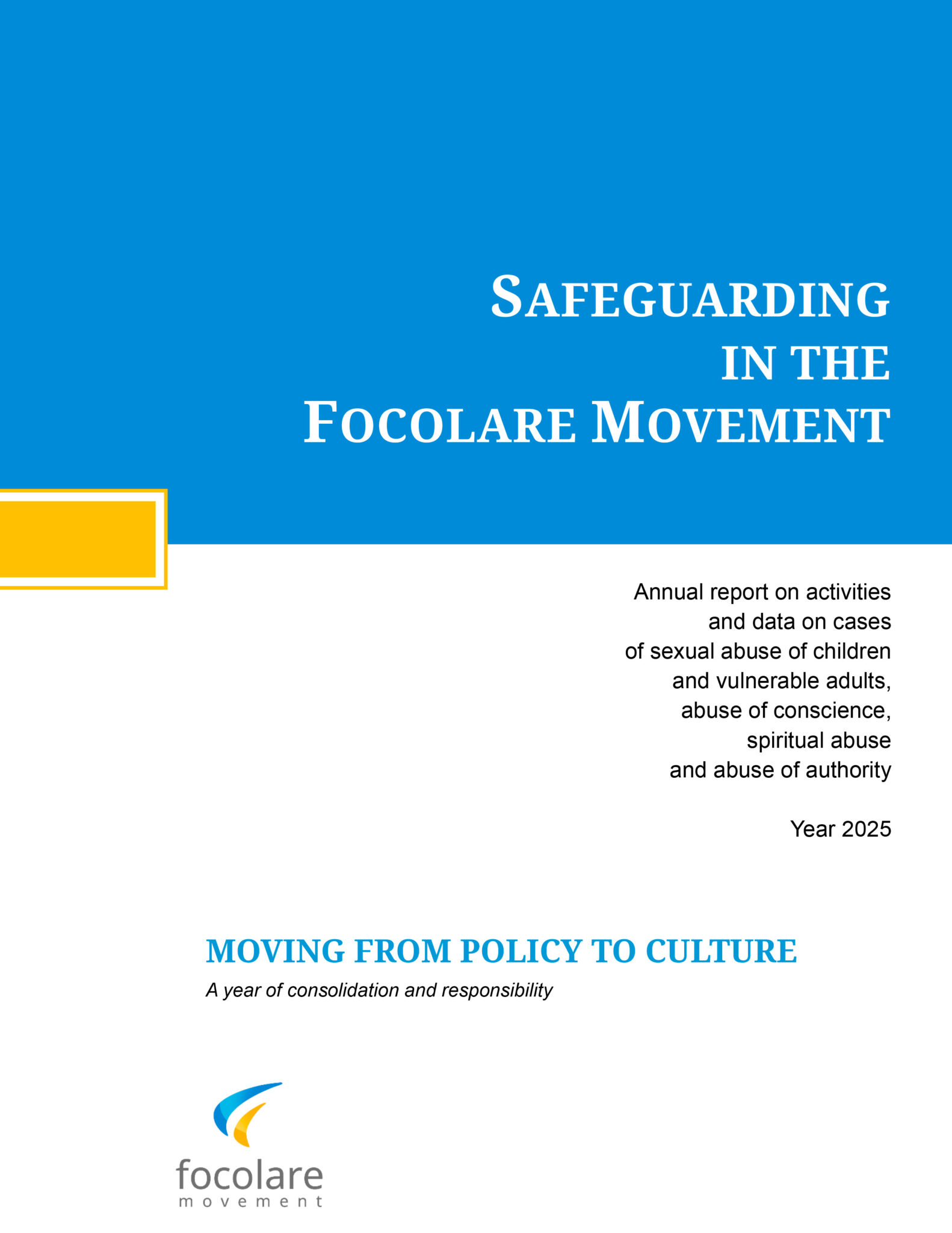
View and download the 2025 Report by clicking on the image
In dialogue with the Catholic Church, in the two-year period 2024-2025, a collaboration with the Pontifical Commission for the Protection of Minors (PCPM) was developed. The Commission examined the Procedures for handling cases of abuse, making several observations; it also requested information to include an analysis of the Movement’s policies in its own2024 Annual Report. The PCPM’s recommendations have led to a process of implementation that has already been partially completed (including the publication of the Internal Regulations of the Independent Central Commissionand the reporting of dedicated resources) and, for the remaining part, is in the process of being defined or developed (additions to be made to the General Statutes of the Focolare Movement, IT tools and institutional channels for data confidentiality).
The commitment to integral formation in safeguarding was outlined in an initial document summarising the courses and initiatives planned for the two-year period 2024–2025. The information shows the work being done to make formation more widespread, strengthen local commissions and coordinators, and at the same time highlights some critical issues that need to be addressed: continuity of formation, intercultural adaptation of materials, and improved flow of communication.
All of these steps – Policy, Safeguarding Office, collaboration with the PCPM, formation and transparency in reporting – express the desire to continue with determination on the path of prevention, shared responsibility and listening to those who have suffered an abuse, in the belief that safeguarding is an integral part of the Movement’s mission and a service to the common good.
In this perspective, the words that the Pope addressed to the participants at
the meeting ‘Building communities that safeguard dignity’ also resonate for
the Focolare Movement as a guideline to follow:
“I therefore appreciate and encourage your intention to share experiences and learning processes on how to prevent all forms of abuse and how to give an account, with truth and humility, of the steps taken to protect minors. I urge you to continue this commitment so that communities may increasingly become examples of trust and dialogue, where every person is respected, listened to, and valued.
Where justice is lived with mercy, wounds are transformed into openings for grace.”[1]
Stefania Tanesini
Interview with Bishop Alí Herrera, Secretary of the Pontifical Commission for the Protection of Minors of the Catholic Church