Jesus had come down from the mountain where he had spent the night in prayer and then had chosen his apostles. When he reached a flat place, he began to preach to them, beginning with the proclamation of the Beatitudes.
Luke’s and Matthew’s gospels differ: in Luke’s text there are only four Beatitudes and they concern the poor, the hungry, the suffering and the afflicted, with the addition of as many admonitions against the rich, the satiated and the arrogant [1]. Jesus revealed God’s special love for the poor when he was in the synagogue at Nazareth [2] and, filled with the Spirit of the Lord, he proclaimed that his mission was to bring glad tidings to the poor, deliverance to the captives and freedom to the oppressed.
Jesus went on to exhort the disciples to love even their enemies;[3] a message that finds its ultimate inspiration in the behaviour of the heavenly Father: ‘Be merciful, as your Father is merciful’ (Lk 6:36).
This statement is also the starting point for what follows: ‘Do not judge and you will not be judged; do not condemn and you will not be condemned; forgive and you will be forgiven’ (Lk 6:37). Jesus then goes on to reprimand the listeners by using a deliberately disproportionate image:
Why do you look at the speck of sawdust in your brother’s eye and pay no attention to the plank in your own eye?’
Jesus truly knows our heart. How often in everyday life do we have the sad experience of finding it easy to harshly criticise other people for their errors and weaknesses without taking into account that in doing so, we attribute to ourselves a prerogative that belongs to God alone? The fact is that in order to ‘remove the plank’ from our own eye, we need that humility that comes from the realisation that we are sinners continually in need of God’s forgiveness. Only people who have the courage to notice their own ‘plank’ and what they personally need in order to change for the better, will be able to understand without judging or exaggerating, the frailties and weaknesses in themselves and in other people.
Nonetheless, Jesus does not invite us to close our eyes to what is happening around us and just let things run their course. He wants his followers to help each other as they progress along the path to a new life. The apostle Paul also frequently reminds us to show concern for and correct those who are idle and disruptive, to encourage the disheartened, to help the weak and to be patient with everyone [4]. Only love is capable of serving others this way.
Why do you look at the speck of sawdust in your brother’s eye and pay no attention to the plank in your own eye?’
How can we put this word of life into practice?
In addition to what has already been said, during this Lenten season we can ask Jesus to teach us to see others as he sees them, as God sees them. And God sees with the eyes of the heart because he always gazes upon us with love. To help each other even more, we could restore a practice that was decisive for the first group of Focolare girls in Trent.
Chiara Lubich once told a group of Muslim friends, ’At the beginning, it was not always easy to love in a radical way. Even among us, dust could settle on our relationships and unity could weaken. This happened, for example, when we became aware of the faults, the imperfections of others and we judged them and so our mutual love diminished. One day, we decided that we should try to counter this situation. We made an agreement among ourselves and called it a ‘pact of mercy’. We decided that every morning we would see the people we met – at home, at school, at work, etc. as new – new – not calling to mind their faults at all but covering everything with love. It was a strong and challenging commitment, made by all of us together, that helped us to always be the first to love, in imitation of the merciful God, who forgives and forgets.” [5]
Edited by Augusto Parody Reyes and the Word of Life Team
It seems obvious that we are made to relate to other people: in fact, we could even say that our lives are intertwined by the relationships we make. However, we sometimes we risk spoiling the latter with our harsh or superficial judgements.
Throughout history, various images have become part of everyday language. Thus, in ancient tradition we find a well-known expression that says: ‘Why do you look at the speck in your brother’s eye and not notice the plank in your own?’[1] Equally proverbial is the image of the two saddlebags: one in front of our eyes, filled with the faults of other people which we easily see, and the other on our backs, holding our own faults which we then struggle to recognise.[2] There is also a Chinese proverb that says, ‘Man is blind to his own faults but has eagle eyes for those of others.’
This does not mean that we should indiscriminately accept what other people do and just let events run their course. Faced with injustice, violence or oppression, we cannot close our eyes. We must commit ourselves to change and start by looking at ourselves and listening sincerely to our own consciences to discover what we need to improve. Only then can we ask ourselves how we can concretely help others by sometimes offering advice and correction.
Each one of us needs ‘another point of view’ that offers a perspective different from our own, enriching our ‘truth’ and helping us to avoid self-referentiality and those errors of judgement that are part of our human nature.
The word “mercy” may seem old fashioned but it is rich with meaning relevant to today: we can be merciful first towards ourselves and then towards others too. In fact, only if we are able to accept and forgive our own limitations will we be able to welcome the weaknesses and mistakes of others. Indeed, when we realise that unconsciously we may be feeling superior and in a position to judge other people, it is vital that we are willing to take ‘the first step’ towards the other person to avoid damaging the relationship.
Chiara Lubich told a group of Muslims about her experience when she and her companions lived in a small house in Trent as they began their adventures at the start of the Movement. Not everything was simple and there were misunderstandings. “It was not always easy to love in aradical way […] “Dust” could settle on our relationships and unity could diminish. This happened, for example, when we became aware of the faults and imperfections of others and judged them, so our mutual love grew cold. One day, we decided we should try to counter this situation and we decided to make a pact among ourselves and called it a ‘pact of mercy’. We decided that every morning we would see the people we met – at home, at school, at work, etc. – as new without calling to mind their faults but covering everything with love.” [3] his is a ‘method’ worth putting into practice in groups at work, in the family and in communities of all kinds.
THE IDEA OF THE MONTH is currently produced by the Focolare Movement’s “Centre for Dialogue with People of Non-religious Beliefs”. It is an initiative that began in 2014 in Uruguay to share with non-believing friends the values of the Word of Life, i.e. the phrase from Scripture that members of the Movement strive to put into practice in their daily lives. Currently, THE IDEA OF THE MONTH is translated into 12 languages and distributed in more than 25 countries, with adaptations of the text according to different cultural sensitivities.dialogue4unity.focolare.org
[3] C. Lubich, L’amore al prossimo, Conversazione con gli amici musulmani, Castel Gandolfo, 1° novembre 2002. Cf. C. Lubich, L’Amore reciproco, Città Nuova, Roma 2013, pp. 89-90.
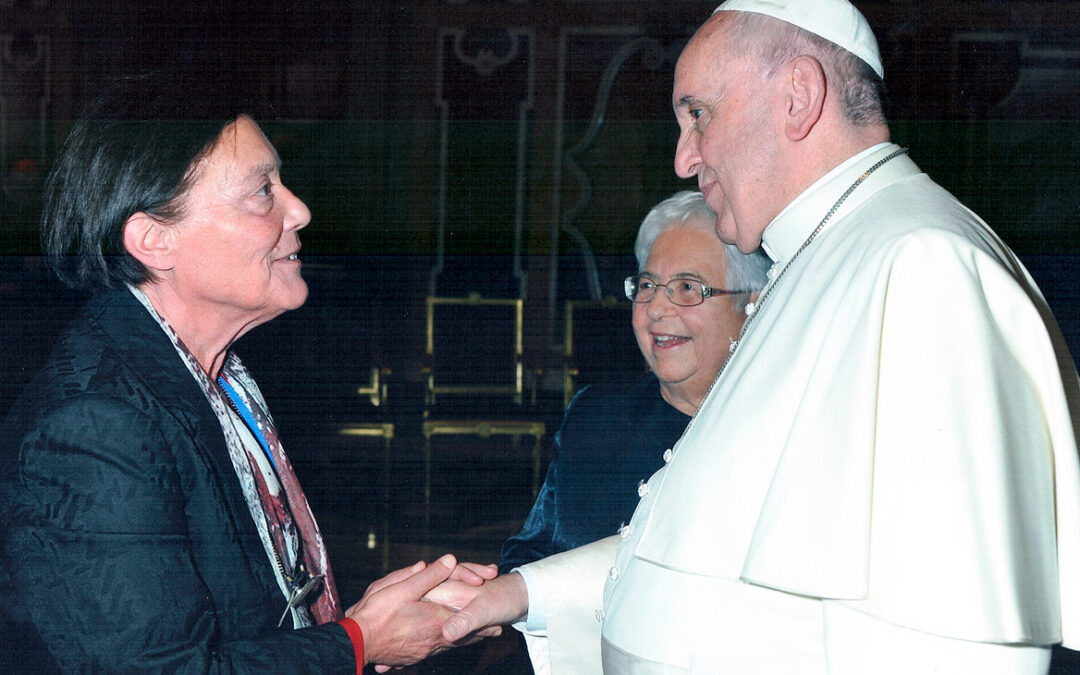
Dear Pope Francis, you may not remember, but we met on 26th September, 2014, when you received a delegation from the Focolare Movement in a private audience. I was part of it, Luciana Scalacci from Abbadia San Salvatore, representing the non-religious cultures that also have a home in the Focolare. I am one of those people who, as Jesus Moran once told me, “helped Chiara Lubich to open new horizons for the charism of unity”. I am a non-believer who has received a great deal from the Movement.
On that extraordinary day, I had the privilege of exchanging a few words with you that I will never forget and that I recall here:
Luciana: “Your Holiness, when you took office as Bishop of Rome, I wrote you a letter, even though I knew that you probably wouldn’t read it with all the letters you receive, but it was important for me to send you my affection and my best wishes, because Your Holiness, I do not recognize myself in any religious faith, but for more than 20 years I have been part of the Focolare Movement, it gave me back the hope that it is still possible to build a united world.”
Pope: “Pray for me, but you are not a believer, you do not pray, so keep me in your thoughts, a lot, think of me, I need it”.
Luciana: “But Holiness, in my own way I do pray for you.”
Pope: “A secular prayer and you keep me very much in your thoughts, I need it”.
Luciana: “Holiness, stay healthy, with courage, with strength! The Catholic Church and the whole world need you. The Catholic Church needs you. ”
Pope: “Keep me in your thoughts and pray for me in a secular way”.
Now, dear Pope Francis, you are in a hospital bed and I am too. Both of us are facing the fragility of our humanity. I want to assure you that I continue to think about you and pray for you in a secular way. You pray for me in a Christian way.
The President of the Focolare Movement, Margaret Karram, sent a message to Pope Francis assuring him of her affectionate closeness and fervent prayer.
She wrote, “May Mary envelop you with her maternal love and all the tenderness that you have always recommended that we should have for the good of every person next to us and every nation.”
She added, “I send you the embrace of everyone in the worldwide Focolare Movement who is praying and constantly offering up everything for you.We are infinitely grateful for your life completely given to God and given for the good of humanity.”
Margaret, why did you choose “closeness” as the theme of the year for the Focolare Movement in 2025?
I asked myself what kind of world are we living in? And it seems to me that at this moment in time there is so much loneliness and so much indifference. And there is an escalation of violence, of wars that bring so much pain all over the world. Also, I’ve been thinking about the technology that has connected us in ways we never knew before, but at the same time it makes us more and more individualistic. In a world like this, I think closeness can be an antidote; an aid to overcoming these obstacles and curing these “ills” that make us distant from one another.
Where can we start?
I have been asking myself this question for months. It seems to me that we need to re-learn how to approach people, re-learn how to look at and treat everyone as brothers and sisters. I felt that first of all, I had to examine my own attitude. Are the people I approach everyday brothers, are they sisters to me? Or am I indifferent towards them or even consider them enemies? I asked myself many questions. I have found that sometimes I want to avoid a person, because maybe they will bother me or annoy me or want to say difficult things to me. Because of all this, my reflection on closeness that I presented to those responsible for the Focolare Movement in mid-November was entitled, “Who are you for me?”
Could you tell us some of the main ideas you developed under this title?
Gladly. I’ll mention four thoughts. The first closeness that our soul experiences is its contact with God. He himself connects with our neighbours also through us. The desire to love the other person is like a movement from God in me directed to God in the other.
A second thought: Closeness is dynamic. It requires that we be completely open, that is, welcoming people without reservation, entering into their way of seeing things. We are not mass-produced! Each of us is unique, with a different character, mindset, culture, life and history. Recognizing and respecting this, calls for stepping outside of our mental and personal patterns.
You were talking about a third aspect …
Yes. The third aspect I want to emphasize is that closeness does not necessarily coincide with being near, with being similar, with belonging to the same culture. The parable of the Good Samaritan (Luke 10:25-37) expresses this very well. I was struck by the attitude of the Samaritan: The man who had fallen among the robbers was a person unknown to him, he was even from another people. He was a person who was distant both in culture and tradition. However, the Samaritan made himself a neighbour. This is the key point for me. Everyone has their own dignity, above and beyond the people and culture they come from, or their character. The Samaritan did not approach just to see if this person was hurt and then turn away or, at the most call for help. He made himself a neighbour and took care of the person. The fourth aspect …
… would be …
… is to let ourselves be wounded. If closeness is to bear fruit, each of us must not be afraid and must allow ourselves to be wounded by the other.
And that means, allowing ourselves to be challenged, being open to questions to which we have no answers; being willing to show that we are vulnerable; presenting ourselves as perhaps weak and incapable. The effect of an attitude like this can be surprising. Just think that a nine-year-old boy wrote to me that for him, closeness means “lifting up the other person’s heart.” Is this not a wonderful effect of closeness? Lifting up the heart of the other.
What would change within the Focolare Movement if we live closeness well?
If we really live it well so many things will change. I wish, hope, and pray that they will. But I also want to point out that many people in the Focolare Movement are already living closeness. There are so many initiatives, many projects for peace and for helping the poor. We have even opened focolares to give assistance and welcome to immigrants or to care for the environment.
And what should change?
The quality of relationships between people. Sometimes it is easier to treat people outside the Movement well and it is more difficult among us who are part of the same family. We are in danger of living relationships of “good manners” with each other: We do not hurt each other; however, I wonder, is this an authentic relationship?
So, I hope that, beyond the projects, closeness becomes a daily way of life; that we ask ourselves several times during the day: Am I living this closeness? How am I living it? An important expression of closeness is forgiveness. To be merciful to others—and to ourselves.
What message does it contain for society?
Closeness is not only a religious or spiritual attitude, but also a civil and social one. It is possible to live it in any environment. In education for example or medicine, even in politics, where it is perhaps more difficult. If we live it well, we can have a positive influence on relationships wherever we are.
What about the Church?
The church exists because, with the coming of Jesus, God became close. So, the Church, the Churches are called to witness a lived closeness. Recently we had the Synod in the Catholic Church. I was able to attend the two sessions at the Vatican. There we were more than 300 people, each from a different culture. What did we do? An exercise in synodality, an exercise in listening, in getting to know one another deeply, in welcoming the other’s thinking, their challenges and pains. These are all characteristics of closeness.
The title of the Synod was “Walking Together.” This walking involved so many people all over the world. The logo of the Synod expressed the desire to broaden the tent of the Church so that no one feels excluded. It seems to me that this is the true sense of closeness, that no one is excluded; that everyone feels welcomed, whether it is those who attend the church, those who do not feel that they belong to it or those who have even drifted away for various reasons.
I would like to mention for a moment the limits of closeness. How can we live it well?
This is an important question. Are there limits to closeness? As a first answer I would say there should be no limits.
However?
We cannot be sure that what is closeness and solidarity for us or for me, is necessarily closeness and solidarity for the other person. And in a relationship, we can never lack respect for each other’s freedom and conscience. These two things are essential in every relationship. That is why it is important that when we approach a person, we will always do it in a delicate way, and not as something imposed. It is the other person who decides how much and what kind of closeness he or she wants.
We have a lot to learn, don’t we?
Absolutely. We have made quite a few mistakes. In thinking we are loving the other person, instead we have hurt them. In the rush to communicate our spirituality, we have built relationships in which the other person has not always felt free. Sometimes it seems to me that with the good intention of loving a person, we crushed them. We did not have enough delicacy and respect for the other’s conscience, the other’s freedom, the other’s time. And this has led to certain forms of paternalism and even abuse.
Certainly, this is a very painful situation that we are facing, and where the people we have hurt have a unique, a really unique importance. Because on our own we cannot fully understand what has happened. It is the one who has been hurt who helps us understand the mistakes we have made and to take the necessary steps so that these things don’t happen again.
A final wish?
I hope that this theme can bring us back to the essence of what Jesus himself gave us in the Gospel. He gave us so many examples of what it means to live closeness.
There is a thought of Chiara Lubich that resonated very strongly with me in thinking about this theme. She says, “There are those who do things ‘out of love,’ there are those who do things trying to ‘be Love.’ Love places us in God, and God is Love. But the Love that is God, is light, and with light we can see whether our way of approaching and serving our neighbour is in line with the Heart of God, as our neighbour would desire it, as they would dream it to be, if it wasn’t us next to them, but Jesus.”
Thank you, Margaret, from the bottom of my heart, for your passion for a closeness that is lived with decision and respect.
The Holy Year has its spiritual roots in the Jewish tradition, where every 50 years a “jubilee” was celebrated, bringing freedom to slaves and prisoners. In the Catholic Church Pope Boniface VIII proclaimed the first Holy Year in 1300. Since then, an “indulgence” has accompanied the Holy Year, which the faithful can obtain, under certain conditions, by passing through a “Holy Door”.
However, Lutherans like me generally don’t feel comfortable with the word “indulgence,” as it brings us back to the Reformation period and the scandal of the sale of indulgences in the Catholic Church. This practice was banned by the Council of Trent and therefore no longer exists. However, I have noticed that the term “indulgence” is still loaded with misunderstandings among believers of all denominations. One of the most widespread misconceptions is that indulgences can forgive someone’s sins but according to the teaching of the Catholic Church, this is not the case. The forgiveness of sins takes place, as it does in the Lutheran Church, through confession, penance and absolution by a pastor who acts in the name of Jesus.
From my point of view, indulgences instead touch a psychological dimension of sin, the part that often remains in our memory (even after absolution), perhaps a wound or a feeling of fear or sadness… In any case, there is still psychological work to be done. That is why, in the passage through the “Holy Door”, I see an invitation to open a door in my heart to compassion and reconciliation, to let go of whatever blocks me on the path to true freedom and authentic peace. It is a conscious decision, a process that is set in motion. The fundamental thing, from the Christian point of view, is that the success of this process does not depend on me, but on the hands of the One who holds the world in His hands. Only His grace can finally heal the wounds in my life or reconcile humanity.
“In the passage through the ‘Holy Door’, I see an invitation to open a door in my heart to compassion and reconciliation, to let go of whatever blocks me on the path to true freedom and authentic peace”.
For me, therefore, passing though through this door symbolizes the decision to follow Jesus (once again) and choose the path of true life. As He says in the Gospel of John (Jn. 10: 9): “I am the gate. Whoever enters through me will be saved”! To my great joy, the Bull of Indiction “Hope does not disappoint”, in which Pope Francis announces the 2025 Holy Year, has a clear ecumenical dimension. It starts from God’s grace, in which all human beings partake and defines the Holy Year as “an invitation to all Churches and Ecclesial Communities to persevere on the path to visible unity and in the quest of finding ways to respond fully to the prayer of Jesus: ‘that they may all be one`” (Jn 17:21).[1]
Therefore the theme of “hope” for the Holy Year 2025 has a positive resonance for all Christians. The Lutheran World Federation has chosen “Sharing Hope” as its motto for the year 2025. And the World Council of Churches, which represents the majority of Protestant and Orthodox Churches, anticipates an “Ecumenical Year” along the “path of justice, reconciliation and unity”. If goodwill leads to concrete actions, then the 2025 Holy Year could open doors for ecumenism, which could bring separated Christians closer. As Pope Francis wrote, ” Let us even now be drawn to this hope! Through our witness, may hope spread to all those who anxiously seek it.” [2]
Corinna Mühlstedt
[1] Pope Francis, Spes non confundit, Bull of Indiction of the Ordinary Jubilee of the Year 2025, 9 May 2024, 17. [2] Papa Francesco, ibidem, 25.
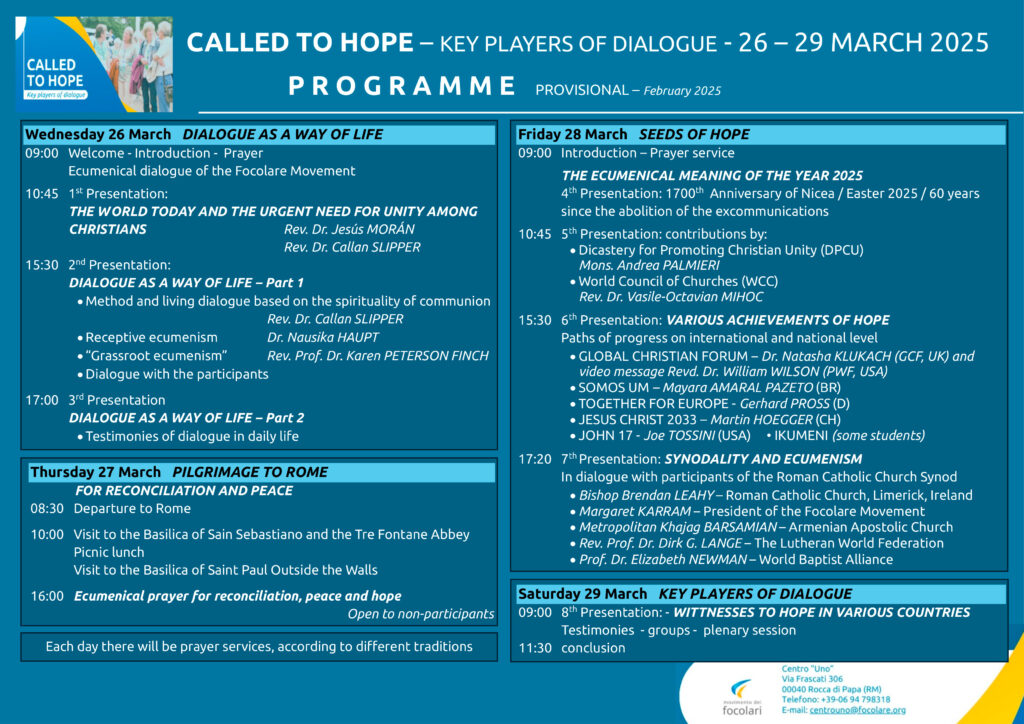
The Focolare Movement is organizing an international ecumenical conference entitled: “Called to hope – key players of dialogue” to which all are invited. It will take place from 26th-29th March 2025. As Christians, in a time of divisions and great challenges, we are called together to witness the hope of the Gospel and to be protagonists of dialogue and unity, committing ourselves to live for peace, to build fraternity, to spread hope. Through round tables, interviews and testimonies we aim to offer method and spirituality to dialogue together with good practices and ecumenical initiatives already underway Link to the invitation
I meet regularly with the synod team in my Parish. At a local assembly, seven people are elected for one year to work on the implementation of the synodal process. We meet in the evenings, sometimes carrying with us the weight of our fatigue and personal worries, even if we try to set them aside in order to put ourselves at the service of the community.
At one meeting, using the excuse that it was the “Week of Sweetness”, I brought a bar of nougat for each one. We were all happy as children, we relaxed and the atmosphere changed. I realized that communion is built with small gestures.
(C.P. – Argentina)
They chose peace
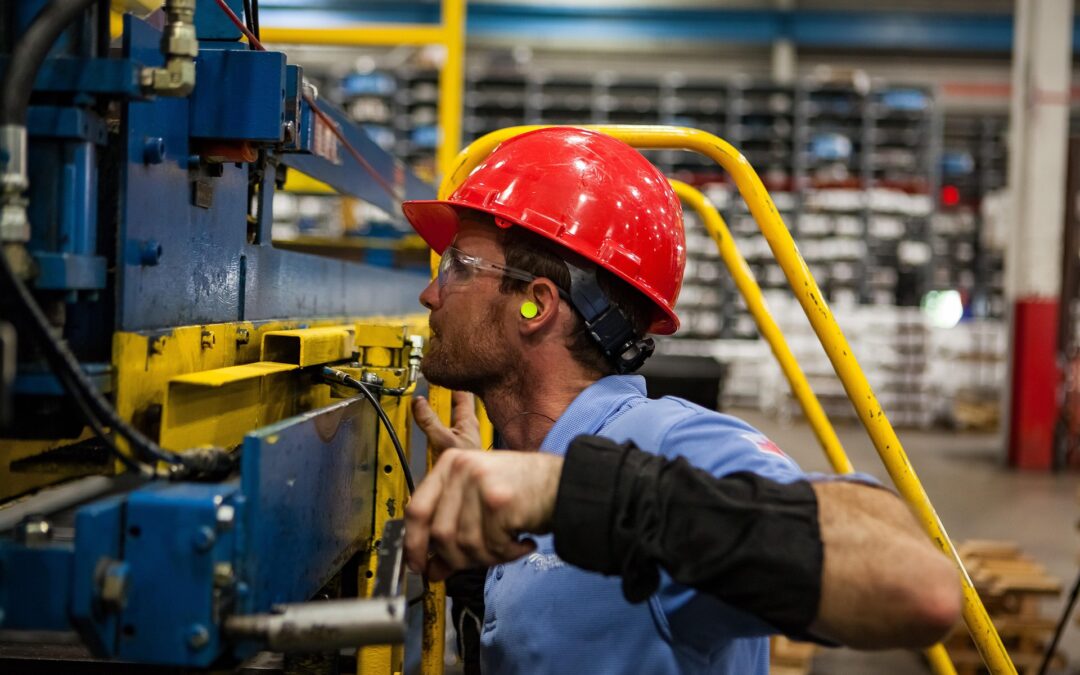
Marc and Maria Antonia, both in their fifties, were surprised to inherit a small industrial machinery company from Marc’s godfather—an uncle who had loved him dearly. They thought long and hard about what to do but eventually decided to keep the company rather than sell it, partly to preserve the jobs of the six employees and partly with the hope of running their own business, involving their son, who had studied materials engineering.
Despite their enthusiasm, dedication, and effort, they faced tough times. The business was struggling. A year after taking over, they had to lay off two workers and return machinery they couldn’t fully pay for. They also had debts with banks and family members.
In the evenings, exhausted, they started wondering if they had made the wrong decision. But they didn’t give up; they pushed forward, looking for new clients. Slowly, the company stabilized, stopped losing money, and they began repaying their debts. However, they were left with very little to live on.
They endured another difficult period until a new client approached them with a large, ongoing order that could finally give them financial stability. They were thrilled—until they realized that their production would be for the arms industry, specifically cannon parts. They were shaken. Could they just turn a blind eye? After all, if they didn’t take the job, someone else would.
They had many conversations, including one with Pedro, and spent several sleepless nights. But they knew they did not want to contribute, even indirectly, to violent death. They refused the order.
After this difficult decision, incredibly the company got other jobs and managed to keep going, despite the difficulties.
We are raising funds to travel from our country, the Philippines, to Rome to participate in the Youth Jubilee. Recently two elderly ladies came to us bringing us some coins from their piggy bank. One of them handed us the coins and said, “These were collected over the course of a year on the small altar I have in my house.” this humble but profound gift, a result of faith and sacrifice, left us stunned.
Already well-publicised and being experienced around the world by many Catholics is the Jubilee Year which this 2025 has ‘Pilgrims of Hope’ as its theme. Millions of people will visit Rome or the various jubilee churches in dioceses around the world, and experience the grace of God’s mercy by praying for forgiveness, resolving to convert one’s life and passing through the holy door, which symbolically reminds us that Christ is “the door”. Why “Pilgrims of hope”? Because we are called to hope.
Less well-known is the fact that 2025 marks two other important anniversaries of great ecumenical significance – the 1700th anniversary of the Council of Nicaea and the 60th anniversary of the abolition of the mutual excommunications between the Church of Rome and the Church of Constantinople.
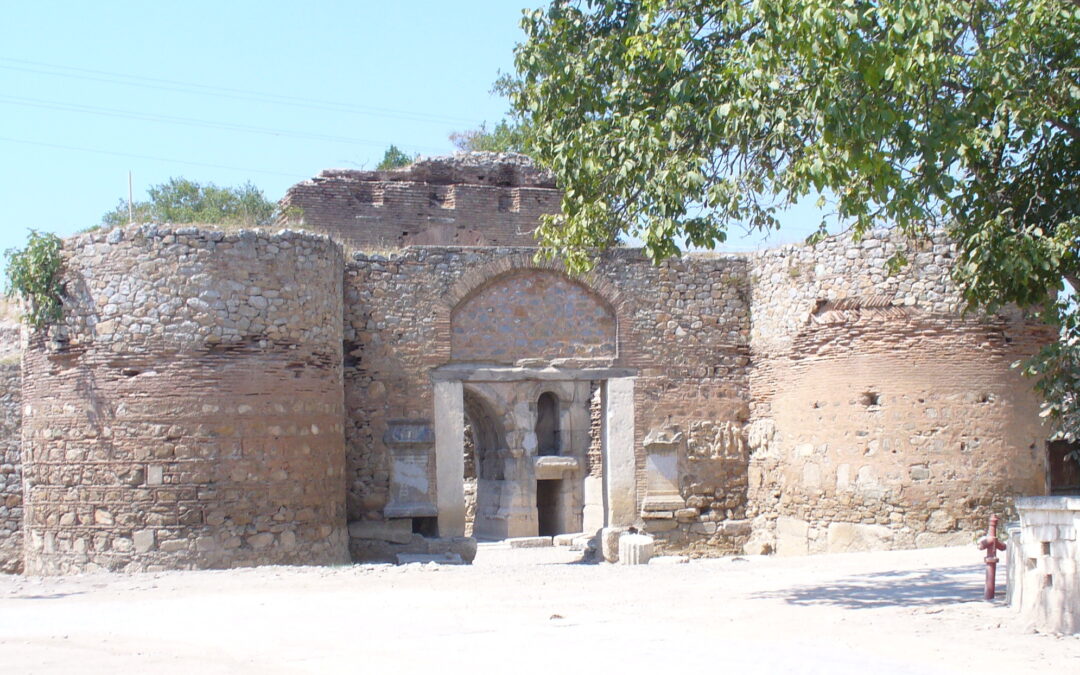
Why is it so important to celebrate an ecclesial meeting that took place 1700 years ago? And why have Pope Francis, Ecumenical Patriarch of Constantinople Bartholomew I and other leaders of various Churches chosen to travel to Nicaea in Turkey on 24 May 2025 for a joint commemoration? Every Sunday, Christians from all the different Churches profess the same faith affirmed at that Council. It was precisely at Nicaea, therefore, that the basis of our faith was sealed, God – One and Triune, Jesus Christ – true Man and true God. Knowing that the churches have this basis in common means that praying for unity is both a prayer to achieve it and a celebration of thanksgiving for the unity already exists.
The Council of Nicaea had also set a date for celebrating Easter but, because of the change of calendar in the West that Pope Gregory XIII introduced, the date of this feast often did not coincide for the Eastern and Western Churches. This year, by a lucky coincidence, the dates do coincide. Easter will fall on 20 April 2025 for everyone. Many Christians around the world, including Pope Francis and Patriarch Bartholomew, are promoting the creation of a common calendar that will allow this feast to always coincide with the centre of the Christian faith.
The Focolare Movement is taking the opportunity to celebrate these anniversaries with an international ecumenical conference entitled “Called to hope – key players of dialogue”. In these times of division and great challenges, we are called as Christians to give witness together to the hope that the Gospel brings and to be key players of dialogue and unity, committed to living for peace, building fraternity and spreading hope. Round tables, interviews and testimonies are intended to offer method and spirituality to the dialogue together with examples of good practice and ecumenical pathways that already exist.
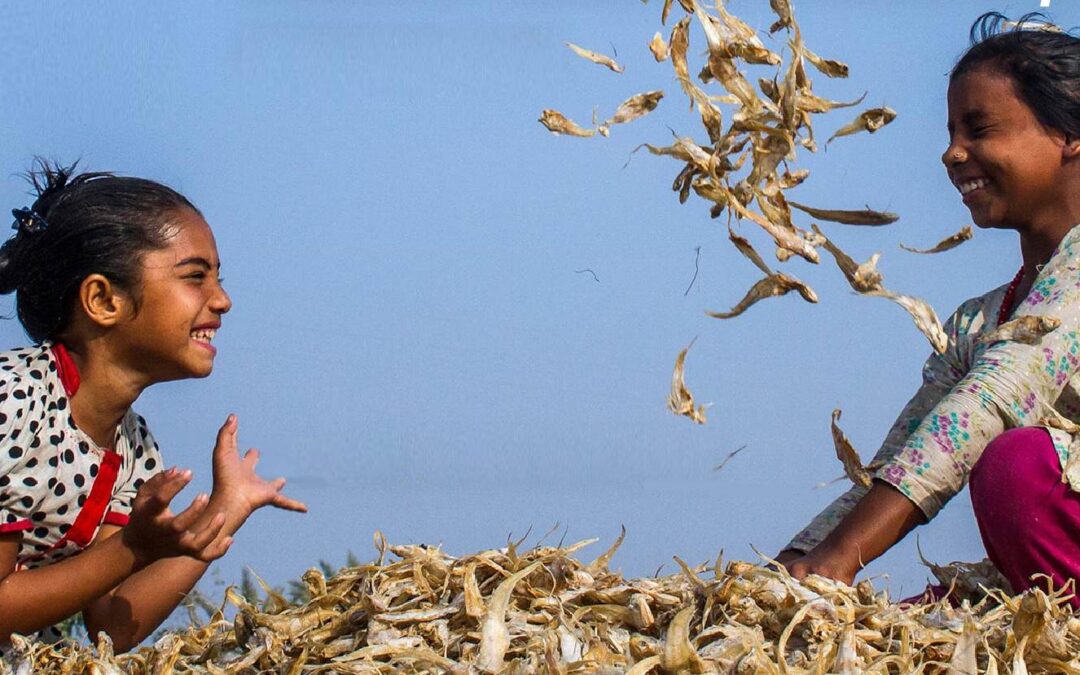
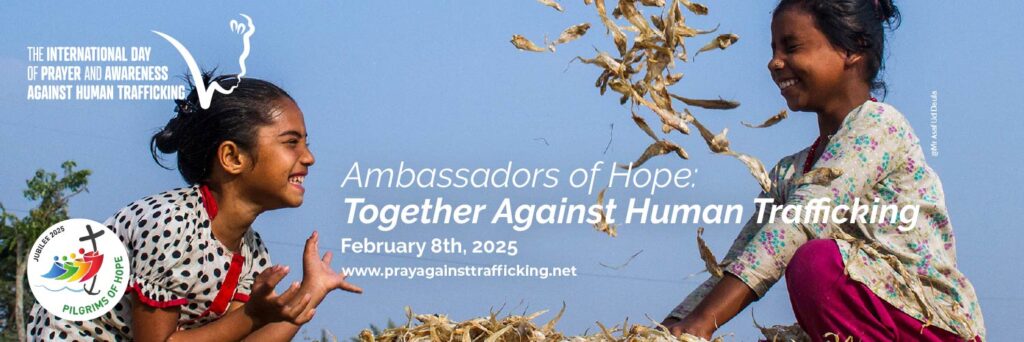
This February we celebrate the XI International Day of Prayer and Awareness against Human Trafficking which falls annually on 8 February – the feast of St Josephine Bakhita, the Sudanese nun who had the dramatic experience of being trafficked as a child.
This year the event is inspired by Pope Francis‘ invitation to be pilgrims of peace and apostles of hope and is part of the events linked to the Jubilee 2025. The theme is: Ambassadors of Hope: Together against Human Trafficking.
Celebrated all over the world, the World Day of Prayer and Awareness against Human Trafficking was introduced by Pope Francis in 2015. Coordinated by Talitha Kum, it draws on a network of organisations – including the Focolare Movement – with the aim of praying together, reflecting collectively on the realities of human trafficking and supporting victims, survivors and vulnerable populations. In a particular way, this initiative aims to promote and help women, children, migrants, refugees and young people.
This year, during the week of 4 to 10 February, various events will take place to raise awareness of the issue. More than 100 representatives of the various partner organisations – young people from all over the world, supporters and activists, survivors, refugees, migrants and public figures from the world of art and cinema – will gather in Rome to promote an appeal for hope, peace, love and unity of the Catholic Church with the aim of healing the wounds of the world. Among other events, Gen Verde will participate in the event ‘Invoking Hope and Promoting Healing Events’ on 6 February at 4-7pm (Italian time) at the Pontifical University of the Holy Cross.
But the central event will be the online pilgrimage scheduled for 7 February from 11.30 a.m. to 4.30 p.m. (Italian time): a marathon of prayer and reflection across all continents and available in five languages.
Recently, the Dicastery for the Doctrine of the Faith published the Declaration ‘Dignitas Infinita’ referring to serious violations of human dignity, such as human trafficking described as ‘an ignoble activity, a disgrace for our societies that call themselves civilised’. Likewise, it stresses the importance of combating phenomena such as the ‘trade in human organs and tissues, sexual exploitation of children and young girls, slave labour, including prostitution, drug and arms trafficking, terrorism and organised international crime’. It also mentions the repercussions of this crime against humanity. “Trafficking defaces the victim’s humanity, offending their freedom and dignity”.
It is currently estimated that 50 million people globally are affected by modern day slavery. Those who suffer the consequences most are women and children. The Jubilee year and the theme of hope highlight the importance of promoting this value through concrete actions such as the global fight against the despicable reality of human trafficking. We are therefore called to action, to be ambassadors of hope, because the human dignity and fraternity that we all uphold are in grave danger.
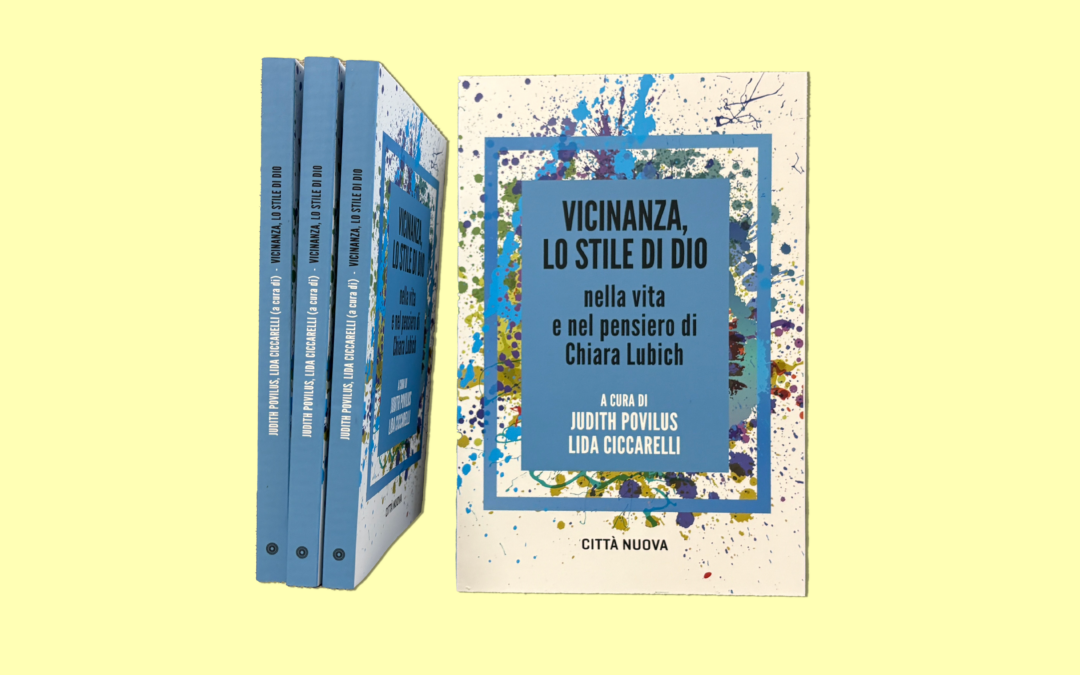
Chiara Lubich, founder of the Focolare Movement, repeatedly spoke in her speeches about closeness as God’s way of being near to humanity. As reflected in the title of this book, Closeness is the style of God which, through His life, Jesus revealed to us. It is also the main way to bring God to men and women today. To gain a deeper understanding of the book’s content, we interviewed the authors: Judith Povilus and Lida Ciccarelli.
Lida, Judith, what is the book about?
Lida: “It is a collection of Chiara Lubich’s ideas on the theme of love for others from the perspective of proximity. This is a topic dear to Pope Francis, who has often urged people to take care of the world around them and to be close to our brothers and sisters in the style of God: closeness.”
Judith: “For the English edition, we wondered how to translate the title. The solution could be the answer to your question: Learning Closeness from God—learning from God how to be close, recognizing how He has drawn near to us, so that we, in turn, may be close to those around us.”
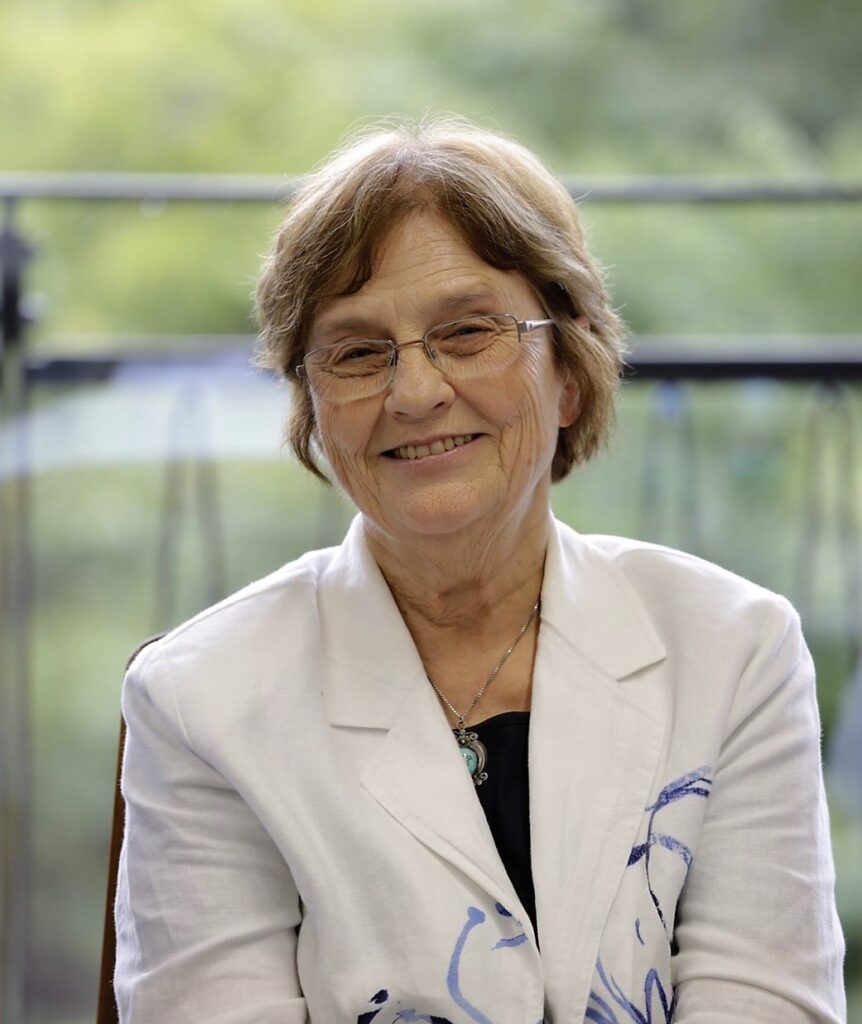
Judith Povilus, PhD in Fundamental Theology, is Emeritus Professor of Logic and Foundations of Mathematics at Sophia University Institute (Loppiano, Florence). She is the author of: The Presence of Jesus Among His Own in Today’s Theology (1977); Jesus in Our Midst in the Writings of Chiara Lubich (1981); Numbers and Light: On the Sapiential Meaning of Mathematics (2013); and co-editor of Unity: A Glimpse from Chiara Lubich’s ‘Paradise ’49’ (2021). (2021).
How can we bring God into today’s world, where there is so much loneliness, indifference, war, and division?
Lida: “If we look around us, there are reasons to be pessimistic. Yet, as Christians, we are always called to witness God’s love. For me, the way forward is the path of Jesus: society back then was no better than today’s, yet Jesus always brought the life of heaven. We must do the same, where there is no love, let us bring love; where there is loneliness, let us become companions in life; where there is division, let us be instruments of reconciliation and unity.”
Who is the ‘neighbour’ to whom we bring God?
Judith: “The encyclical Fratelli tutti recalls the Parable of the Good Samaritan, where the Scribe asks Jesus, ‘Who is my neighbour?’ Jesus turns the question around, showing that everyone is a candidate to be my neighbour. There are no limits—it is up to me to draw near to others. Being a neighbour is a transformative act. Your question is beautiful: finding God is what every human being most deeply longs for, even if they are unaware of it. Let us allow God to live in us, so that through our love, He may touch hearts.”
Cultural, social, and political differences often lead to fragmentation and polarization, increasing fear of others. Chiara Lubich’s ideal of unity challenges this trend.
Lida: “That’s absolutely true. Chiara was countercultural. She embedded in us a simple yet revolutionary idea: we are all brothers and sisters because we are all children of the Father in heaven. It is a simple idea, yet it makes us free and breaks down walls of division. If we put it into practice, it changes our lives. The other person, whether young or old, whether they share my views or not, whether rich or poor, a foreigner or someone from my own country, should be seen with new eyes. Everyone is a child of the Father and everyone, absolutely everyone, is loved by the Father just as I am.”
Lida Ciccarelli, with degrees in Philosophy and Moral Theology, is a professor of Church History and Spiritual Theology at the Mystici Corporis International Institute (Loppiano, Italy). A former member of the Spirituality Commission at the General Secretariat of the Synod, she is currently a Postulator at the Dicastery for the Causes of Saints.
Proximity is a key concept both in Christian Churches and in other religious traditions. Is it the path to universal fraternity?
Lida: “That’s exactly what we experienced recently with a group of young Shiite Muslims, students of Dr. Mohammad Ali Shomali, Director of the International Institute for Islamic Studies in Qum, Iran. They came to Sophia University, in the little town of Loppiano, for a short course on Christianity. We did not so much speak about fraternity—we lived it.”
Judith “I was responsible for several lessons on the spirituality of unity. While speaking about God as Love, I told them the Parable of the Prodigal Son. I asked: ‘Is anyone here a father? Can you understand the depth of this mercy-filled love?’ Seven of them were young fathers. During a break, they joyfully and emotionally showed me photos of their children. In this atmosphere, their spontaneous questions about spirituality allowed them to understand the charism of unity more deeply. With joy, we discovered common ground or clarified aspects of Christianity that had previously been unclear. I realized that closeness, with all its human nuances and the willingness to share in the life of others, is truly the path to sharing the gift of the charism, which is for everyone, non-Christians too. Together, we can be builders of a more fraternal world.”
What advice would you give to readers? How should they view others?
Lida: “If the reader is already familiar with Chiara’s writings, I would suggest approaching them as if for the first time. Then, pause whenever something strikes you and listen to Wisdom knocking at the door of your heart.”
Judith: “Yes, indeed, Chiara’s writings in the anthology section are profound, diverse in genre and content. They cannot be read all at once. Personally, every time I meditate on one writing or another, I discover new insights or new steps to take.”
Lida: “So, in conclusion, how should we view other people? As Jesus looked at the rich young man: ‘He looked at him and loved him.’ What must that gaze have been like? A gaze of love, freely given, that reaches deep within and says: You are important to me, I love you just as you are.”
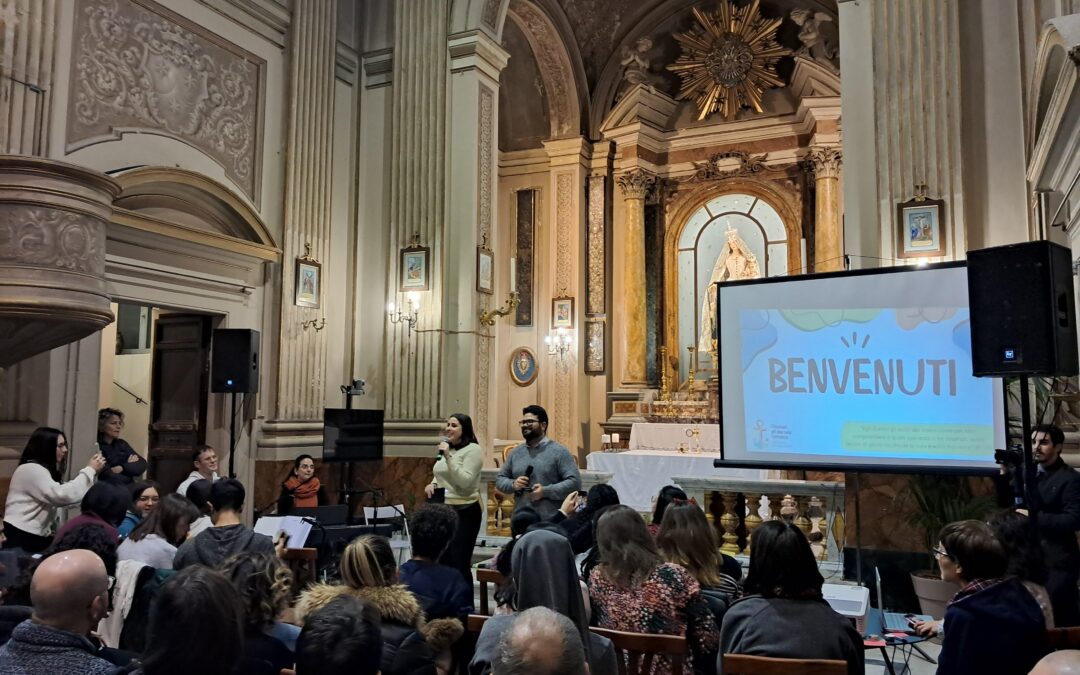
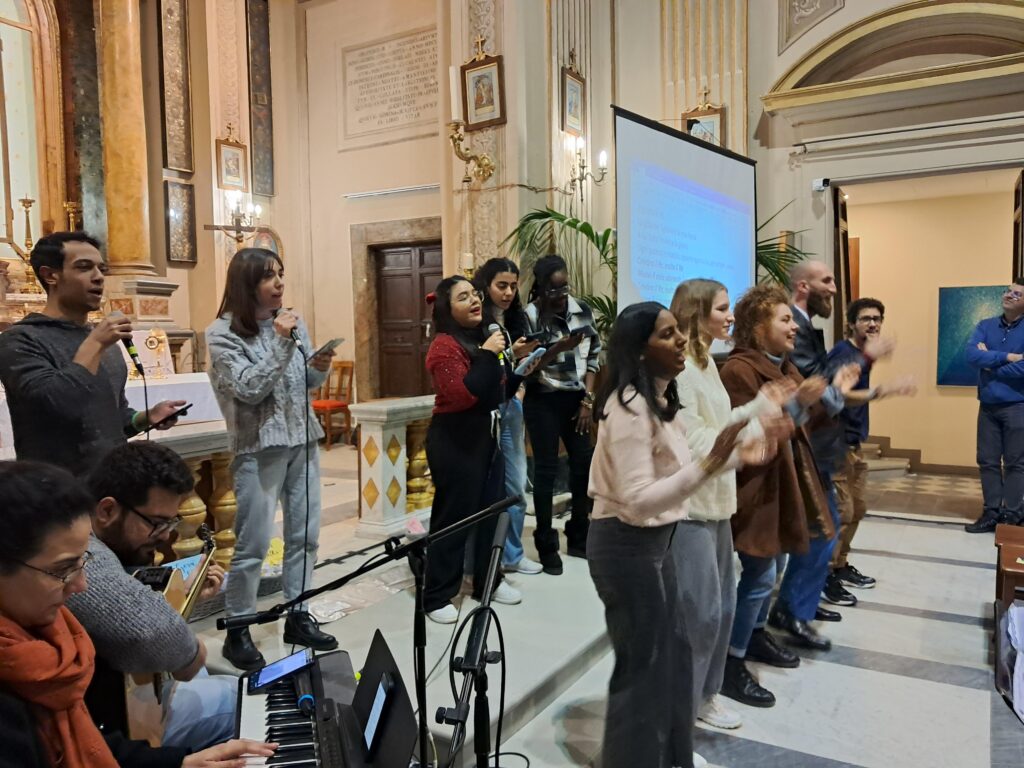
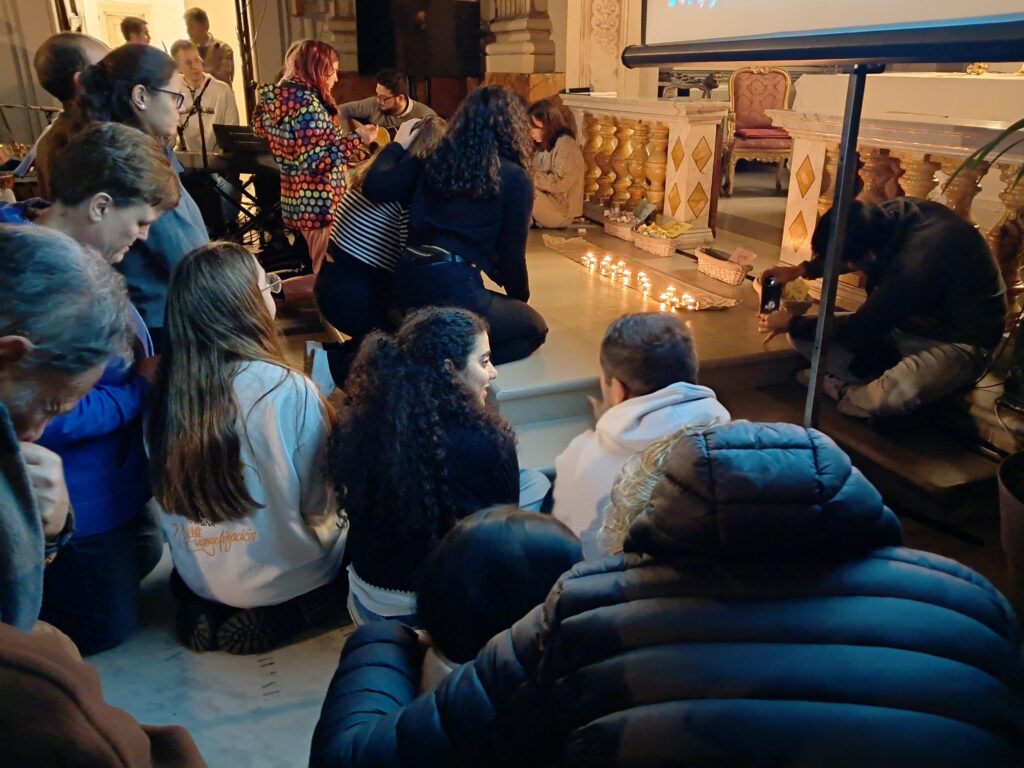
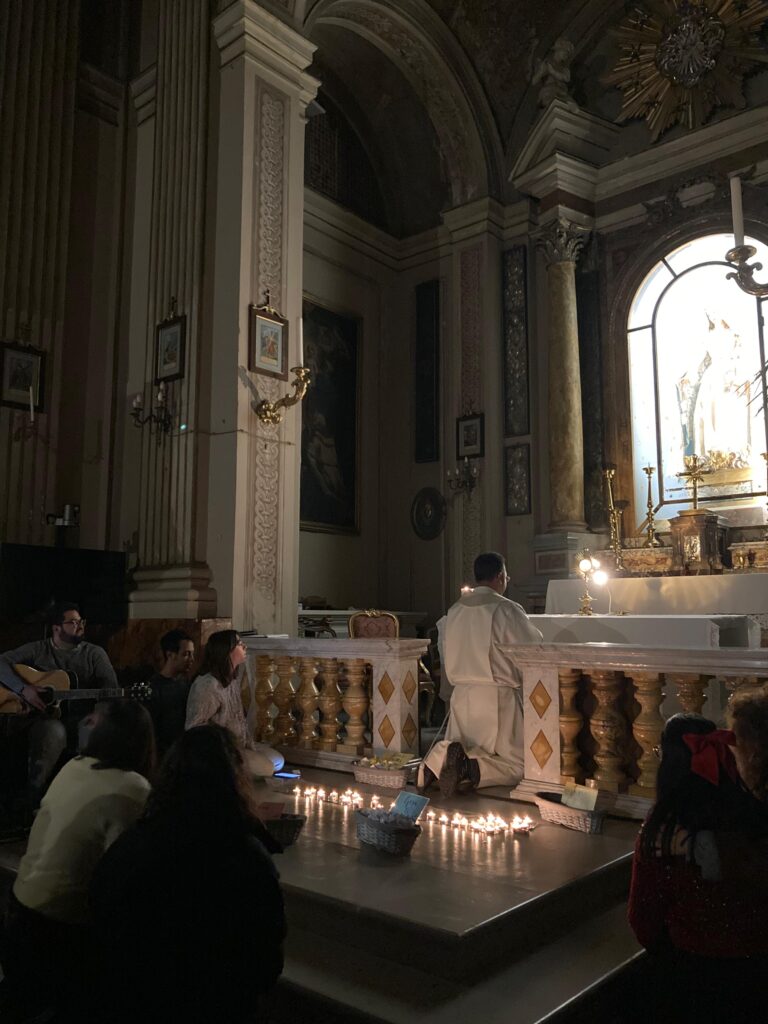
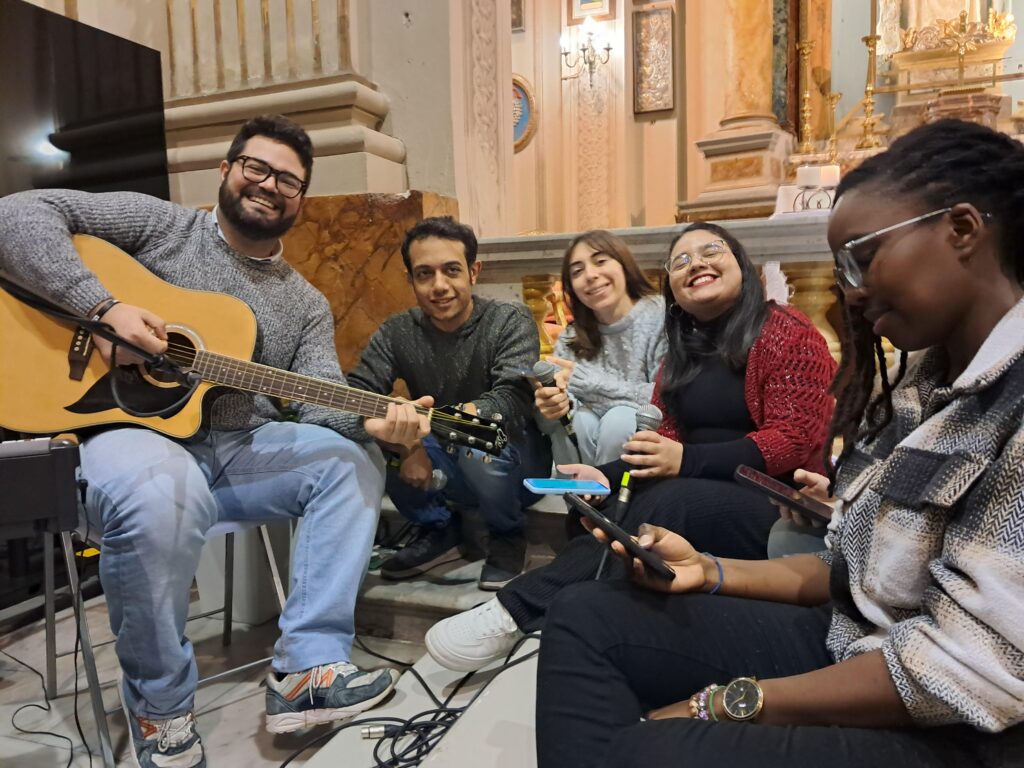
On 23 January, we experienced the first appointment of ‘Called to one hope – Youth on the way’. A journey to immerse ourselves in the heart of the Jubilee through the riches of the Charisms.
Animating this first evening were the young people of Nuovi Orizzonti and the Focolare Movement, who with songs, moments of knowledge, profound testimonies and prayer filled hearts with courage, love and hope.
Together we ‘walked’ and shared hope. Thank you all for making this an unforgettable evening.
Sometimes we are faced with situations where it is difficult to make a judgment or take a clear position. Wetry to understand the deeper meaning of whatever we are facing and comprehendits significance andvaried perspectives. We need a light to guide us. Just as underground miners move forward one meter at a time with the help of a simple lantern, we too have a light that can illuminate our steps, one by one. We know what this is: love for each other is a powerful light that guides us and helps with the difficult task of informing our personal consciences as we journey through life. We need to be able to be aware of the complexity of views and opinions held by people around us or those we meet sometimes by chance. It is important to always maintain a sense of honesty and to be aware of the limitation of our own point of view. Openness of mind and heart, the fruit of true love, creates a capacity for a dialogue that listens, that looks for the good in the other person and is open to the possibility of creating something together. Timothy Radcliffe, one of the theologians present at the last Synod of Bishops of the Catholic Church, referred to this personal need we may experience. He told members of the Synod that: ” The bravest thing we can do is to be honest with each other about our doubts and questions, those for which we have no clear answers. Then we will approach each other as fellow seekers, beggars of truth (1)”. In a conversation with members of the Focolare, Margaret Karram commented on this reflection: ‘Thinking about it, I realised that many times I did not have the courage to really say what I thought: perhaps because I was afraid of not being understood or because I didn’t want to be different from the majority. I realised that being “beggars of truth” means having that attitude of closeness towards one another, in which we seek the good of the other.”(2). This is Antía’s, experience. She is a member of “Mosaico”, a performing arts group that began in Spain in 2017. It is composed of young Spaniards from different backgrounds and cultures who use their art and workshops to offer their experience of fraternity to others. Antia tells us: ‘It connects with my values – a fraternal world, in which everyone (very young, inexperienced, vulnerable…) gives their contribution to the project. “Mosaico” makes me believe that a more united world is not a utopia, despite the difficulties and hard work involved. I grew up working in a team where dialogue was too honest at times and I often gave up on my own ideas which I believed to be the best. I see that in this project “good” is built piece by piece together, by us all ” (3).
1. Timothy Radcliffe, Meditation to Synod of Bishops, 2.10.2023 2. Margaret Karram, President of Focolare Movement, 3.02.2024 3. Mosaic GRLP
THE IDEA OF THE MONTH is currently produced by the Focolare Movement’s “Centre for Dialogue with People of Non religious Beliefs“. It is an initiative that began in 2014 in Uruguay to share with non-believing friends the values of the Word of Life, i.e. the phrase from Scripture that members of the Movement strive to put into practice in their daily lives. Currently, THE IDEA OF THE MONTH is translated into 12 languages and distributed in more than 25 countries, with adaptations of the text according to different cultural sensitivities.
This month’s Word of Life is taken from a series of final recommendations that the Apostle Paul makes to the community of the Thessalonians: ‘Do not quench the Spirit, do not treat prophecies with contempt but test them all; hold on to what is good. Abstain from every kind of evil.” [1] Prophecy, discernment, dialogue and listening. These were Paul’s instructions to the community that had recently embarked on a journey of faith.
Among the various gifts of the Spirit, Paul highly esteemed that of prophecy.[2] A prophet is not someone who foresees the future but rather a person who has the gift of seeing and understanding personal and collective history from God’s perspective.
However, all gifts are guided by the greatest gift of all and that is charity and fraternal love.[3] Augustine of Hippo states that only charity enables us to discern the attitude we should take in the face of a range of different situations.[4]
Test everything but hold on to what is good.
We should consider not only the personal gifts we may have, but also bear in mind the potential and variety of views and opinions offered to us by the people around us or with whom we work or even meet by chance. It is important to always maintain a sense of honesty and to be aware of the limitations of our own point of view.
This word of life could be a motto to adopt in every situation of dialogue and even opposing views. Our hearts and minds are broadened when we listen to other people: although we may not accept everything they say, we may find something good in their ideas. When love impels us to create a space within ourselves in order to listen to other people, we have the possibility of building something together.
Test everything but hold on to what is good.
Cardinal elect Timothy Radcliffe, one of the theologians present at the Synod of Bishops of the Catholic Church, said that ‘the bravest thing we can do at this synod is to be honest with each other about our doubts and questions, those for which we have no clear answers. Then we will approach each other as fellow seekers, as beggars searching for the truth.” [5]
In a conversation with members of the Focolare, Margaret Karram commented on this reflection: ‘Thinking about it, I realised that many times I did not have the courage to really say what I thought: perhaps because I was afraid of not being understood or because I didn’t want to be different from the majority. I realised that being “beggars of truth” means having that attitude of closeness towards one another, in which we all want what God wants, and where together, we all seek what is good.’[6]
Test everything but hold on to what is good.
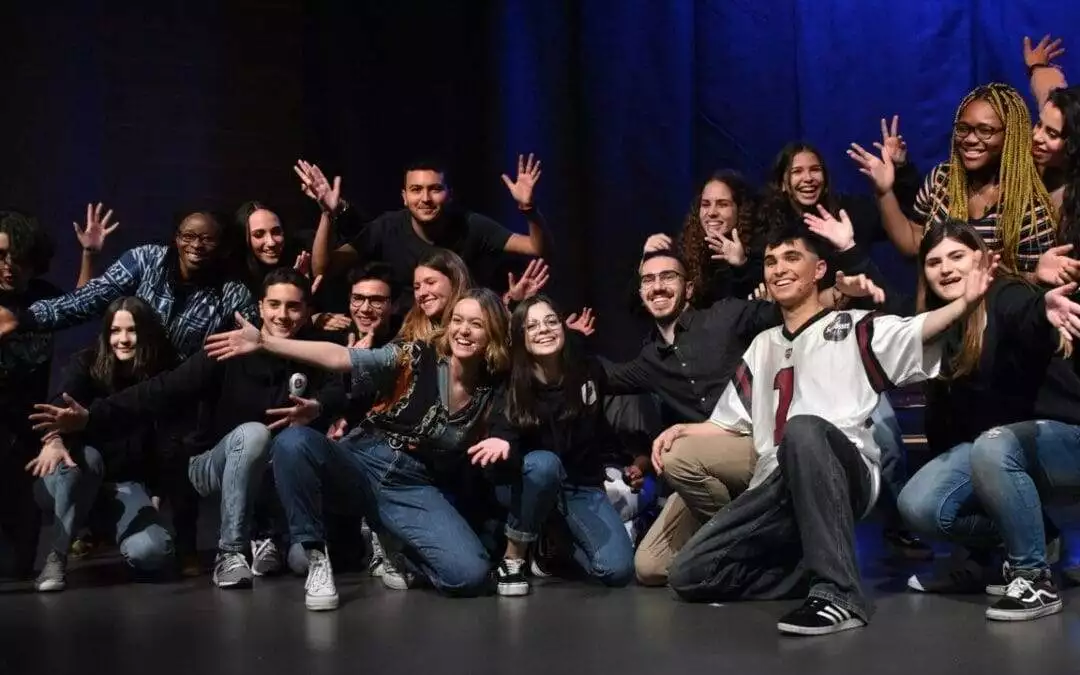
This is Antía’s, experience. She is a member of “Mosaico”, a performing arts group that began in Spain in 2017. It is a local project that has developed from the Gen Rosso music group. It is composed of young Spaniards who use their art and workshops to offer their experience of fraternity to others.
Antía tells us: ‘It connects with my values – a fraternal world, in which everyone (very young, inexperienced, vulnerable…) gives their contribution to the project. “Mosaico” makes me believe that a more united world is not a utopia, despite the difficulties and hard work involved. I grew up working in a team where dialogue was too honest at times and I often gave up on my own ideas which I believed to be the best. I see that in this project “good” is built piece by piece together, by us all.”[7]
Edited by Patricia Mazzola & the Word of Life Team
[1] Ts 5, 19-22. [2] Cf. Giovanni Paolo II, Udienza Generale, 24.06.1992, n.7. [3] Cf. 1 Cor 13. [4] Cf. Agostino di Ippona, Ep. Jo. 7, 8. [5] Padre Timothy Radcliffe, Meditazione n. 3, Amicizia, Sinodo dei Vescovi, Sacrofano, 2.10.2023. [6] Margaret Karram in conversation with focolarini, 3.02.2024 [7]Mosaic GRLP
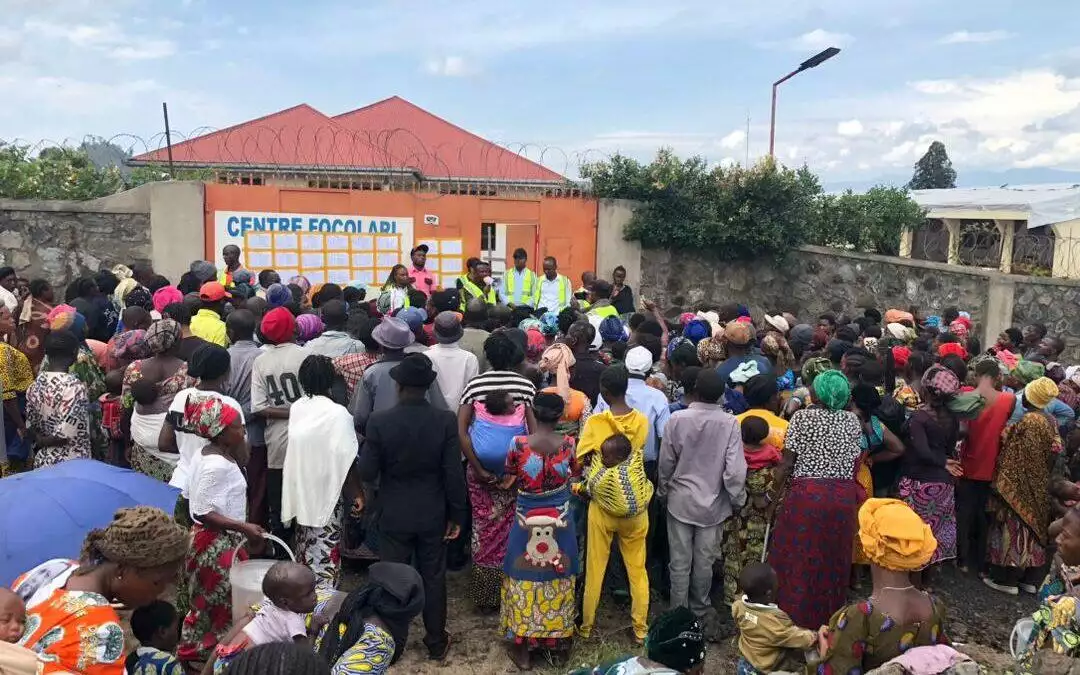
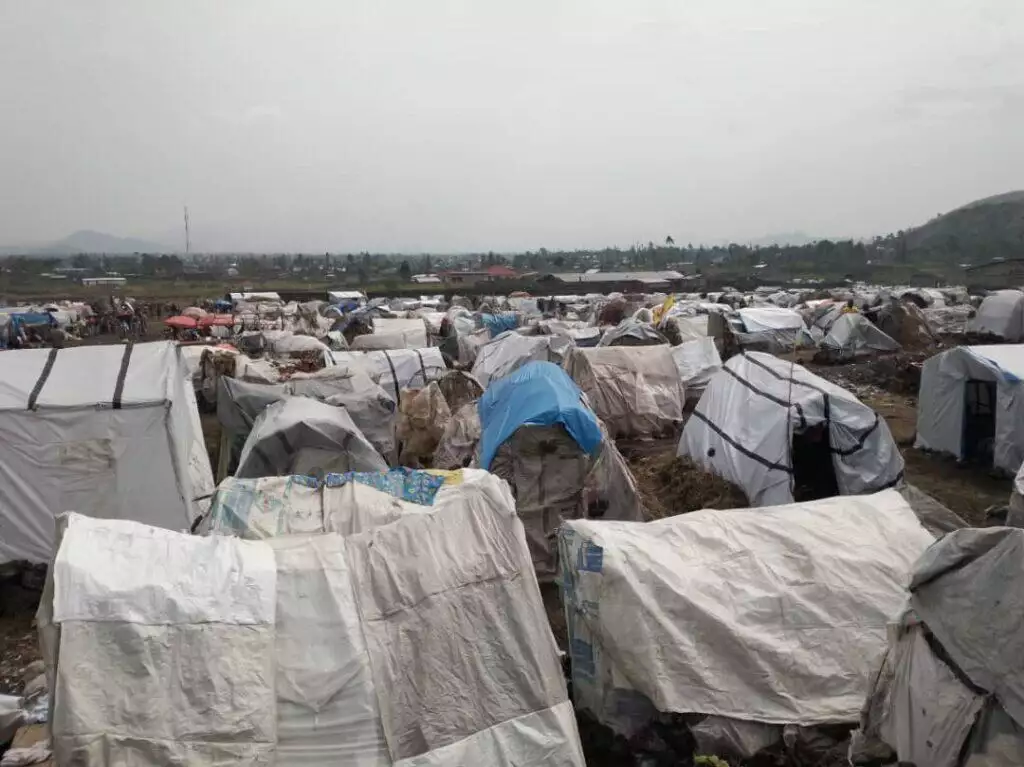
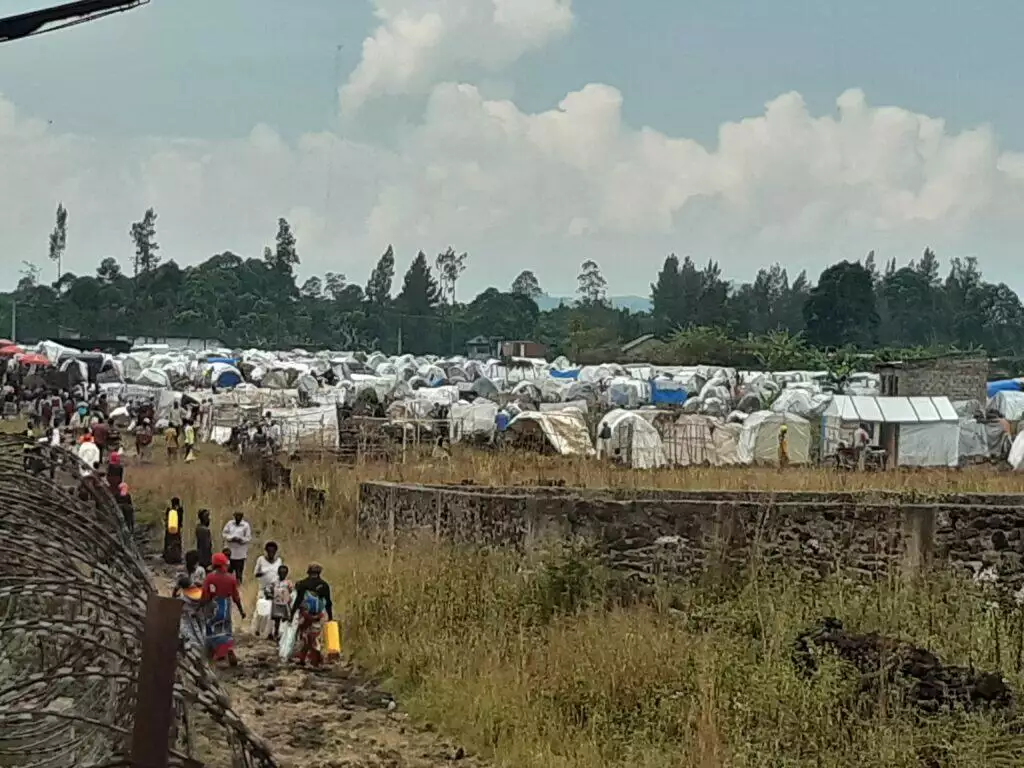
The city of Goma, capital of the North Kivu region (Democratic Republic of Congo), was attacked and is now controlled by the armed rebel group M23. Conflicts between Congolese government forces and the M23 militia intensified after the killing of General Peter Cirimwami, governor of North Kivu province on the 25th of January 2025.
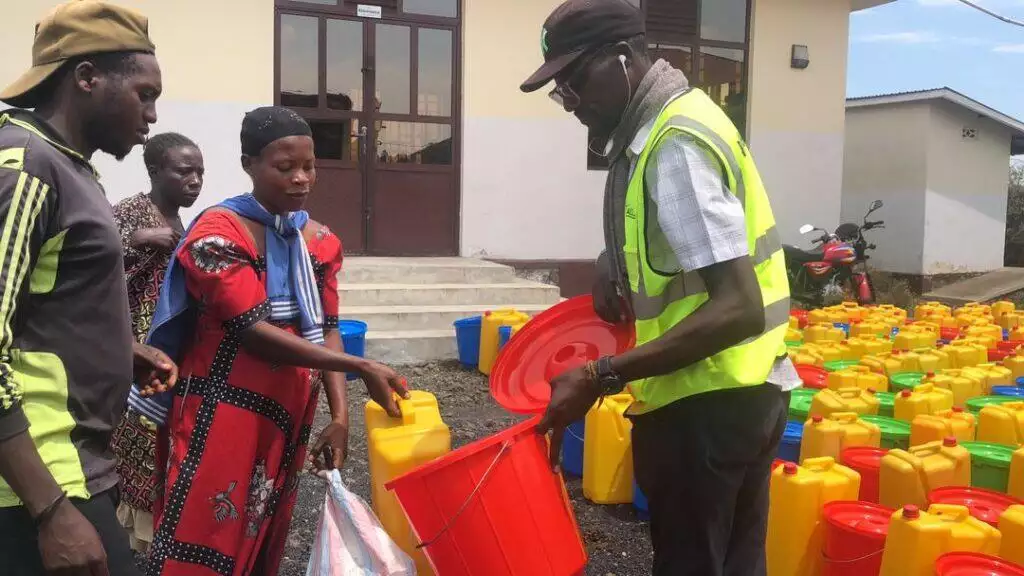
The Focolare Movement has been present in Goma since 1982 with a very active community which provides aid to people in need and has numerous initiatives serving the poor and refugees. A women’s focolare opened in 2019. Since 2020, a Social Centre has been built to provide basic necessities and shelter, thanks to the help of various organisations and people of goodwill. At the same time, career guidance and training courses have been set up to offer dignity and the means of survival to refugees, with particular attention to single women with children. Many people have thus been helped and, among them, are those who have recently arrived at a refugee camp near the “Louis Quintard Centre / Focolare”. Since 2023, thanks to the support of AMU, a micro-credit support project has been set up and, since the riots intensified last February, AMU has also supported the local community of the Movement to carry out emergency actions there, in particular by providing drinking water and hygiene kits to the many displaced people in the city’s refugee camps.
Tension in the region is very high and there is a growing apprehension about what may happen in the coming days with the possibility of an escalation of the conflict. This could have tragic consequences for a city and a population that are already living in difficult situations due to conflicts that have been ongoing for more than thirty years.
That is why we want to invite everyone to strengthen their prayers by joining in the “Time out”, a minute’s silence and prayer for peace that we offer every day at 12 noon local time, as well as to support all actions for peace and to encourage diplomatic actions that seek an end to all conflicts that are still taking place in the world.
Azione per un Mondo Unito ETS (AMU) IBAN: IT 58 S 05018 03200 000011204344 at Banca Popolare Etica Codice SWIFT/BIC: ETICIT22XXX
Azione per Famiglie Nuove ETS | Banca Etica – filiale 1 di Roma – Agenzia n. 0 | Codice IBAN: IT 92 J 05018 03200 000016978561 | BIC/SWIFT: ETICIT22XXX
Causale: Emergenza Goma
Tax benefits are available for such donations in many EU countries and in other countries around the world, according to different local regulations.Italian contributors will be able to obtain deductions and allowances from income, according to the rules for non-profit organisations
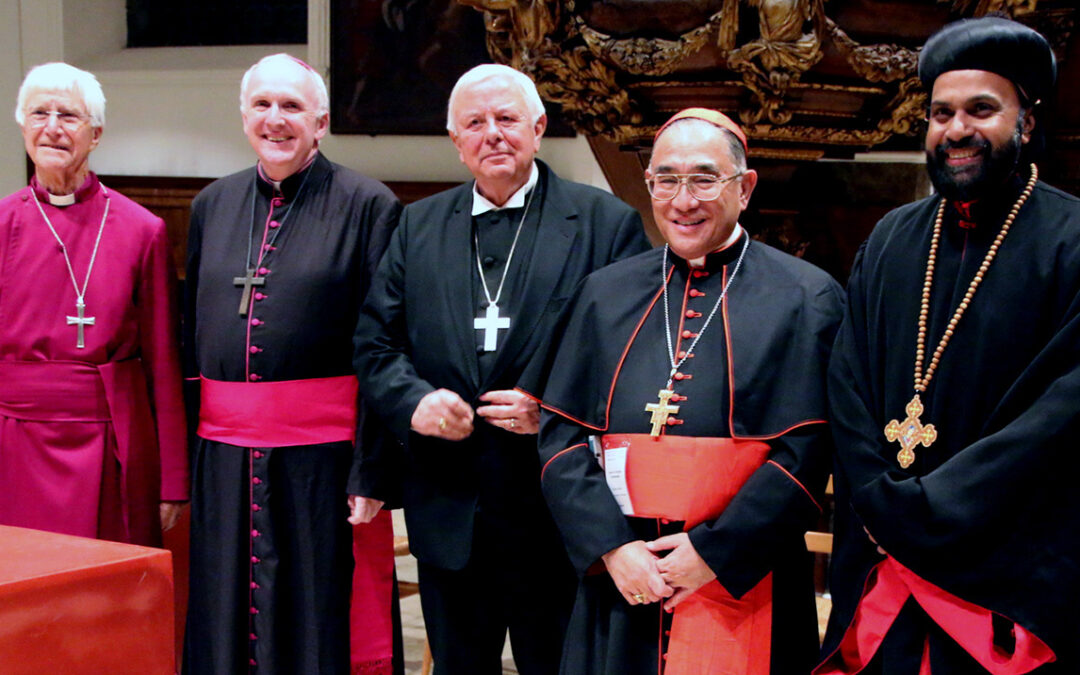
In November 2018, during a gathering of Bishops from various Churches who are friends of the Focolare Movement, which took place near Stockholm, Sweden, Bishop Krause was interviewed by Irish journalist Susan Gately. She asked him what “ecumenism” truly meant to him. As we conclude the celebration of the Week of Prayer for Christian Unity in the northern hemisphere, we are publishing an excerpt of Bishop Krause’s response that highlights his character, openness and passion for the ecumenical journey.
“Called to Hope – Protagonists of Dialogue” is the title of the Ecumenical Conference that will take place from March 26–29, 2025, in Castel Gandolfo (Rome, Italy). To register or learn more, download the flyer.
Enable subtitles and select your preferred language.
On the 24th of January 1944, Chiara Lubich discovered what would become a key point in the spirituality of unity: Jesus who experienced the abandonment of the Father on the cross, the utmost expression of suffering, the greatest expression of love.
Jesus Forsaken was precisely the focus of an artistic moment during Genfest 2024, the international appointment of the young people of the Focolare Movement. Here, we offer you a few extracts of it.
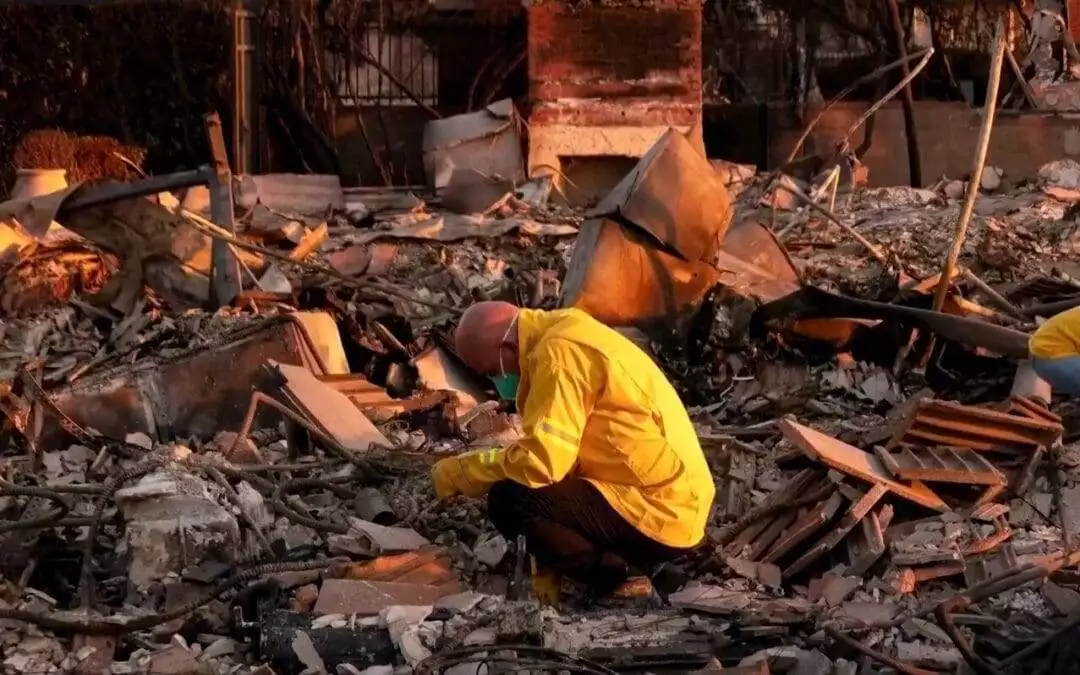
For several days, dramatic images of wildfires devastating an immense area and destroying everything from animals to vegetation have circulated around the world,. Thousands of buildings have been reduced to ashes and so far, 25 people have lost their lives. Many families have lost everything and 26 people remain missing. It is heart breaking to see these images of suffering still today. And the emergency is not over yet. We contacted the Focolare community there to find out how they are coping with this situation.
Carlos Santos, from the Focolare community in Los Angeles, told us, “The wildfires in various parts of our region are causing great anxiety because due to strong winds it’s impossible to fully extinguish the flames. The forecast is that they will continue for several more days. Many people have been evacuated and many have lost everything. However, we are also witnessing an enormous response from people who have brought food, clothing, money and other donations to those affected by the wildfires. The response has been so overwhelming that in some places TV stations have been used to ask people to stop donating because there is no more space for the items being delivered. Indeed, Providence has arrived in abundance and beyond what is needed.
The fires have not reached the homes of any members of the local Focolare community. However, some have had to move because they live in areas at risk of wildfires.
The Women’s Focolare, hosted a family for three days until authorities confirmed it was safe for them to return home. Our Men’s Focolare is also available to welcome anyone in need of shelter. This has brought more peace of mind to the community, as several areas in Los Angeles County could face evacuation orders if the winds change direction and move the fires toward them. Through their work, some focolarini have directly witnessed the suffering of many people and families who have lost everything. We want to accompany these people, offer comfort, and help them find stable solutions.” Carlos concluded thanking everyone for the many messages of solidarity and prayers during this time of great suffering.
You can read about the “miracle of the tabernacle” at Corpus Christi Church in the Pacific Palisades community of California on this link from the Focolare Media website, the communication platform for the Focolare Movement in North America,.
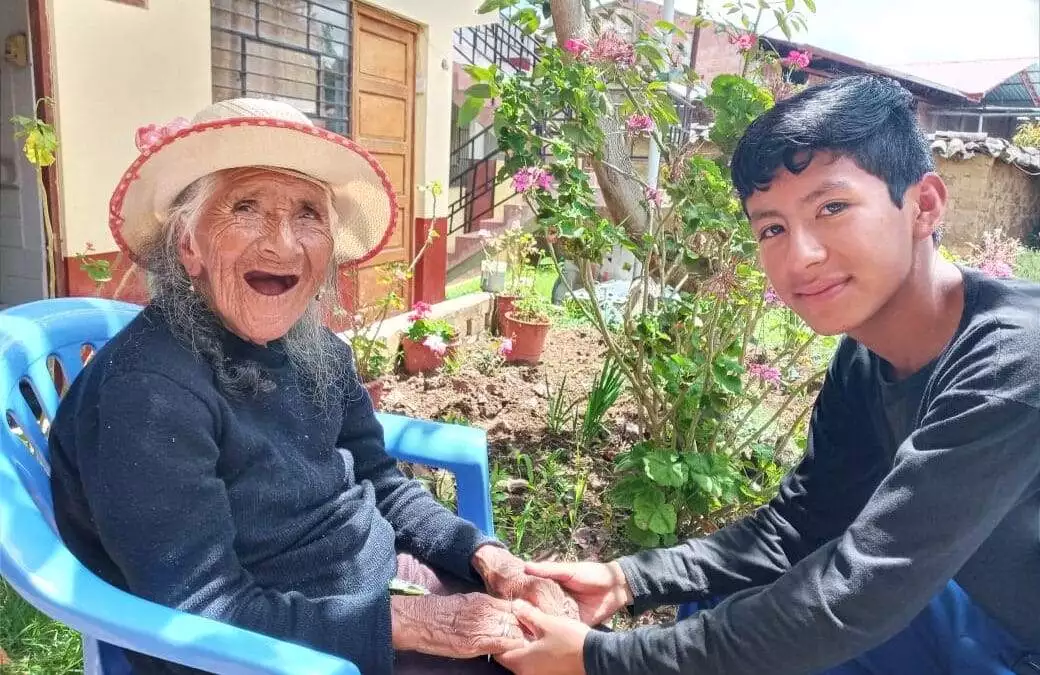
“Let’s start from the least, from those who are rejected and abandoned by society.” This is how the “Chiara Lubich” Hogar Centre for the elderly began in the Peruvian Amazon. A place where, thanks to the generosity of a family, together with the Focolare community, they welcome elderly people who are abandoned, who need help, who need to be cared for, who need a hot meal or simply who need the warmth of a family.
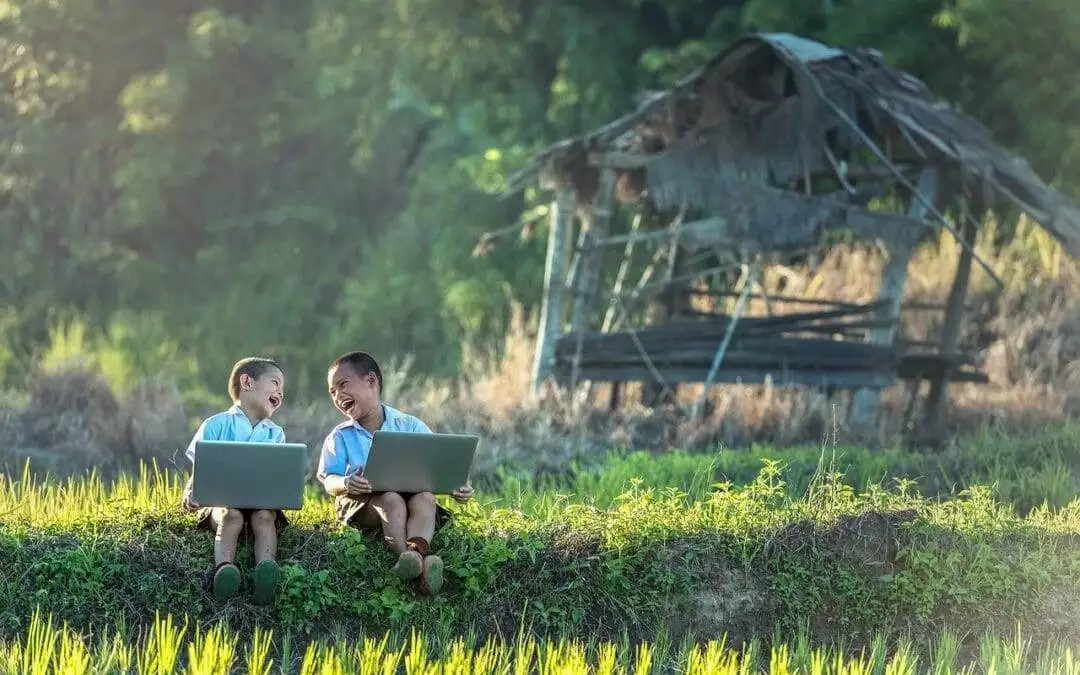
When people of different cultures and religious beliefs are in dialogue, a question that often comes to the fore is: “Can we always hope? And in what?” It’s a question that resonates most intensely not only in times of difficulty and painful suffering or defeat but also when we feel disappointed and deluded by the ideals and values we have held dear and which have fascinated us in the past. It is precisely during these times of doubt that we are prompted to reconsider the values and beliefs that lie at the very basis of our hopes. These values give us the strength to face our doubts and reveal the greatness of human nature: men and women are capable of falling down and rising up again, they can acknowledge that they all have their weaknesses but without succumbing to uselessly dreaming of finding miraculous solutions. Believing is much more than hoping for a solution to our problems; rather, it is the drive within that allows us to keep going. It is in those difficult moments that life mysteriously can become a real gift. Believing is like a commitment that gives meaning to life always. Unlike accepting a contract that you sign once and then never look at again, believing transforms and permeates every daily choice. One method that may help us to do so is to avoid thinking about dramatic and extreme situations which can only make us afraid and block us, but to face the small difficulties of each day, sharing them with our friends. In this way, if we do not lose heart, we will discover many new opportunities to believe and to give hope to those around us. The strength of friendship seeks the good of the other. It is easier to feel strong and courageous when everything is going well but it is when we are aware of our vulnerabilities that we can build something that will remain after us. We become aware of this through the conviction we gain when we have shared life with someone who believed beyond everything, who struggled and suffered, and whose love brought them close to everyone. When these people conclude their lives on this earth, they leave such an imprint and their memory is so vivid that -mysteriously- whether we are religious or non religious, their example makes us say, “I believe, I believe. Let us continue together!”
THE IDEA OF THE MONTH is currently produced by the Focolare Movement’s “Centre for Dialogue with People of Non religious Beliefs”. It is an initiative that began in 2014 in Uruguay to share with non-believing friends the values of the Word of Life, i.e. the phrase from Scripture that members of the Movement strive to put into practice in their daily lives. Currently, THE IDEA OF THE MONTH is translated into 12 languages and distributed in more than 25 countries, with adaptations of the text according to different cultural sensitivities. dialogue4unity.focolare.org
Martha, Lazarus’ sister, heard that Jesus was on his way, she was filled with hope and ran to meet him. John’s gospel indicates that Jesus loved her, Lazarus and their sister, Mary, very much[1]. Although Martha was sorrowful, she showed her great trust in the Lord and was convinced that had he been present, her brother would not have died but, nevertheless, any request she made to God would be granted. Jesus affirmed, ‘Your brother will rise again.’ (Jn 11:23)
“Do you believe this?”
After clarifying that he was referring to Lazarus’ return to physical life there and then and not to the life that awaits the believer after death, Jesus asked Martha if she had complete faith. Not only was he about to perform one of his miracles – which the evangelist John calls ‘signs’ – but he wanted to give resurrection and new life to her and all believers. Jesus proclaimed, ‘I am the resurrection and the life’ (Jn 11:25) and the faith he asked of Martha lay in a personal relationship with him and active and dynamic adherence. Believing is not like accepting a contract that you sign once and then never look at again, but it is something that transforms and permeates your daily life.
“Do you believe this?”
Jesus invites us to live a new life here and now. He invites us to experience it every day, knowing that, just as we rediscovered at Christmas, he himself brought this life to us by first seeking for us and coming to dwell among us.
How do we answer his question? Let us look to Lazarus’ sister, Martha.
In dialogue with Jesus, she made a full profession of faith. The original text in Greek expresses this with great force. The ‘I believe’ that she pronounced means ‘I have come to believe’, ‘I firmly believe’ that ‘you are the Christ, the Son of God who is to come into the world’ [2], with all the consequences that this brings. It is a conviction that has matured over time and has been tested by the different events she faced during her life.
The Lord also addresses this question to us. He asks us to trust firmly in him and adhere to his way of life, founded on generous and practical love for all. Our faith will mature through perseverance, and it will grow stronger, as each day we see the truth of Jesus’ words when put into practice. Furthermore, this will make a positive impact upon our daily actions towards others. In the meantime, we can make our own the prayer that the apostles made to Jesus: ‘Increase our faith’ (Lk 17:6).
“Do you believe this?”
Patricia, from South America said, ‘One of my daughters had lost her job because the government had closed the public agency where she worked. The same thing had happened to her colleagues. As a form of protest, they had set up an encampment in front of the office. I tried to help them by participating in some of their activities, bringing them food or simply stopping to talk to them.
On Maundy Thursday, a group of priests who were supporting them in their plight decided to hold a ceremony during which there was space to listen, a reading from the Gospel and the act of washing feet was performed, in memory of what Jesus did before his crucifixion. The majority of those present were not religious people. Nevertheless, it was a moment of deep union, fraternity and hope. They felt warmly welcomed and were moved, as they thanked those priests who accompanied them in their uncertainty and suffering.’
This word of Jesus has been chosen as the guide for the Week of Prayer for Christian Unity 2025. Let us pray and work so that our common belief may be the driving force in the search for fraternity with all: this is God’s proposal and desire for all humanity, but it requires us to play our part too. Prayer and action will be effective if they arise from this trust in God and we live accordingly.
Edited by Silvano Malini and the Word of Life Team.
Peace, welcome, courage, justice, dialogue, hope, solidarity, togetherness, fraternity, unity: words that express our planetary, strong, concrete commitment that begins with small daily gestures, so that there may be an end to weapons and an end to all conflicts, in every corner of the world.
“Please, first of all, sow the seeds of the Gospel which is the Good News, so as to be credible in a time torn apart by discord and conflict, where peace now seems an unattainable dream.” A strong invitation that Pope Francis addressed to some family focolares in a long letter. On the 27th of October 2024 at the Mariapolis Centre in Castel Gandolfo (Italy), Margaret Karram, President of the Focolare Movement, while meeting with the young focolare families, read to them the message received from the Pope. It was a beautiful surprise which was written specifically for them. The family focolares are characterised by both spouses being married focolarini. In the world today there are 130 young focolare families in addition to the many families who are living the spirituality of unity that is a typical feature of the Focolare Movement.
The meeting in October at Castel Gandolfo was the last part of a formation course in six stages carried out in different regions of the world: Poland, the Philippines, Lebanon, Guatemala, Portugal. The last one was attended by 55 families coming from different countries.
In his long letter, the Pope explains that he has been informed of “the important work within the Movement in favour of families who have embarked on a unique path of formation”. And he thanks the President “for letting me be part of this exciting experience of faith that is being lived by many couples of various nationalities and religious expressions. I am particularly pleased to know that you are joyfully carrying out your apostolate in various human and social contexts, and with great passion you are striving to create harmony and understanding”.
Pope Francis then asked Margaret Karram to bring his spiritual closeness to the families, encouraging each one to become an instrument of love, demonstrating the richness of sincere and loving fraternity. He thus turned his thoughts to families in crisis “who have lost the courage to cherish the beauty of the Sacrament they have received”, and to help young people” not to be afraid of marriage and its vulnerability”.
Also significant is the date on which the Pope wanted to write the letter: 26 July 2024, the commemoration of Saints Joachim and Anna, the parents of the Virgin Mary. A gesture that didn’t happen by chance for those to whom the letter is addressed: the families.
“Dear families, as you return to your homes,” the Pope continues, “revive the domestic hearth with constant prayer, lend your ear to the voice of the Holy Spirit who guides, enlightens and sustains the journey of life, open to those who knock at your door so as to be heard and comforted, always offer the wine of joy and share the good bread of communion. May the Holy Family of Nazareth be a source of inspiration and hope in times of trial, so that you may be builders of unity everywhere in the service of the Church and humanity.”
Margaret Karram, as she finished reading the letter, said: “I have read it many times and truly, like you, I was moved. I said: this shows an immense love of the Pope for you, especially for you.”
A precious gift extended to all the families in the world, as a guiding star for each one’s journey.
…We must be convinced that for the civilization of love to become a reality, we have to storm the world with a current of love. Otherwise, everything will remain like a dream, destined to die. … Love! Teaching to love! The person who truly knows how to love, is the person who knows that he or she is sincerely loved. This is a human observation, but it is no less valid in the supernatural field. To know that we are loved! By whom? By the One who is Love. We must open the eyes of as many brothers and sisters as possible so that they might see and discover the treasure they possess, often without realizing it. They are not alone on this earth. There is Love. They have a Father who does not abandon his sons and daughters to their own destiny. He wants to accompany them, watch over them, help them. He is a Father who does not load burdens that are too heavy onto others’ shoulders. He is the first to carry them. In our case, he does not leave the renewal of society only to human initiative. But He is the first to be concerned with it. People should know this and turn to him, aware of the fact that nothing is impossible for him. We must believe, therefore, that we are loved by God so that we can throw ourselves with greater faith into the adventure of love, and work together with him for a New Humanity. Then we must focus our interests on the human person and share with them misfortunes and successes, spiritual goods and material goods. And, to love well, we must not see the difficulties, corruption and sufferings of the world merely as social evils to be resolved. Rather, we must recognize in these the countenance of Christ, who did not disdain to hide himself beneath all human poverty. Because of him – especially for those of us who are Christian – our greatest energies are channeled for the good of others. But since the love we are talking about is certainly not only philanthropy, or friendship or purely human solidarity, but is primarily a gift from Above, we must place ourselves in the best possible attitude to receive it, by nourishing ourselves on and living on the Word of God. … Every person in their large or small world of daily activities – in the family, office, factory, trade union, immersed as they may be in local and general problems, in public institutions, all the way to the United Nations – can truly be a builder of peace, a witness to love, an instrument of unity.
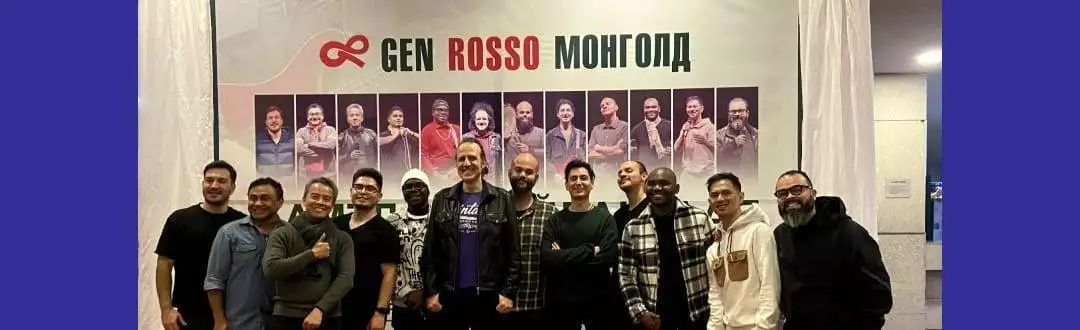
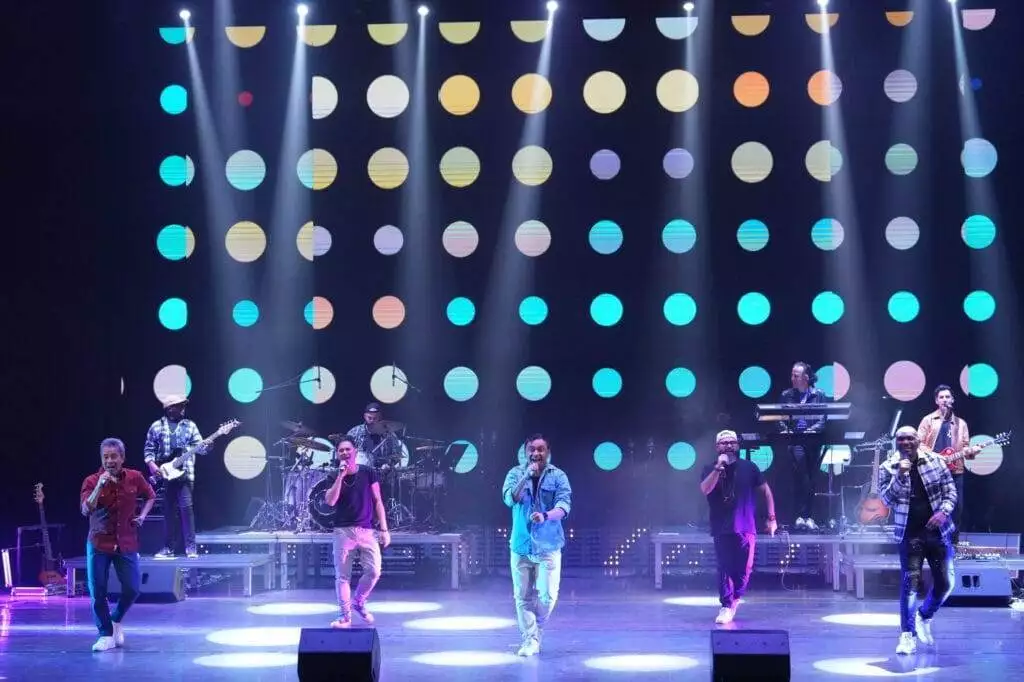
Nearly 9,000 kilometres away from their home in Loppiano, Italy, the international band, “Gen Rosso”, visited Mongolia for the first time. Mongolia, an Asian nation nestled between Russia and China, is home to a small but vibrant Catholic Church led by the Apostolic Prefect, Cardinal Giorgio Marengo. With approximately 1,500 baptized Catholics among a population of 3.5 million, this visit marked a significant step in the community’s preparation for the Catholic Church’s Jubilee in 2025. Cardinal Marengo said, “A young Church, made up of young people, needs a youthful language to connect with people. I grew up with Gen Rosso’s songs. When someone suggested inviting you to Mongolia, I thought it was an excellent opportunity for missionary outreach in Gen Rosso’s style. Your art and lyrics have broad horizons, making it an ideal approach for a place like Mongolia, where the Church is in its early stages. This seemed like a golden opportunity.”
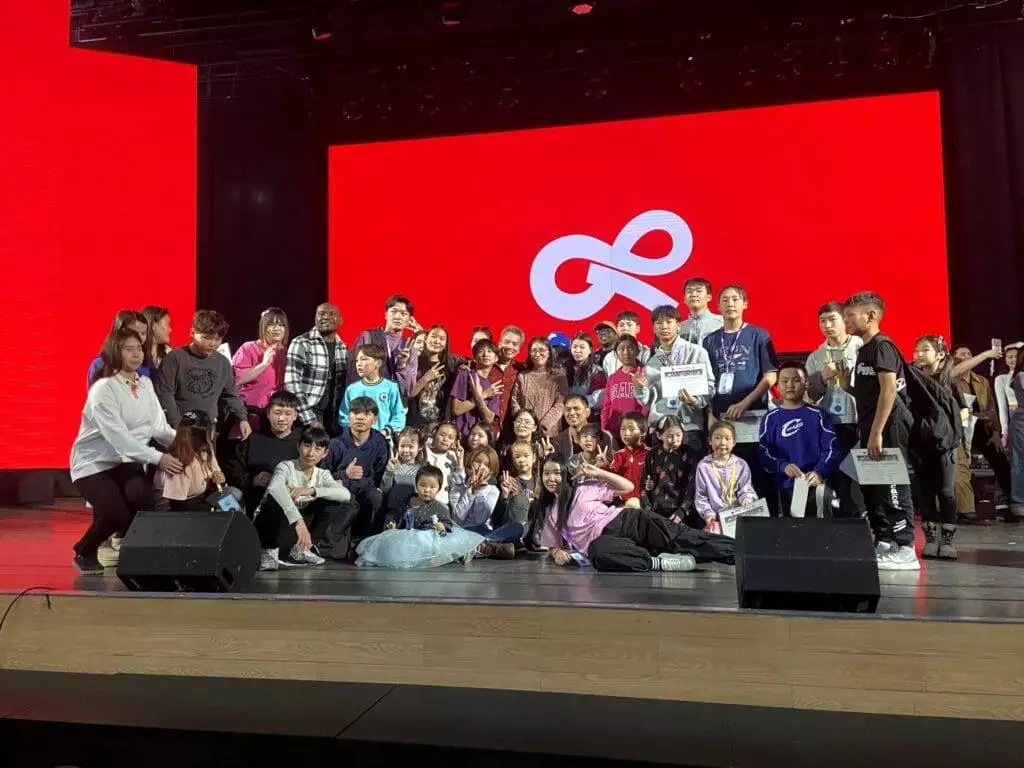
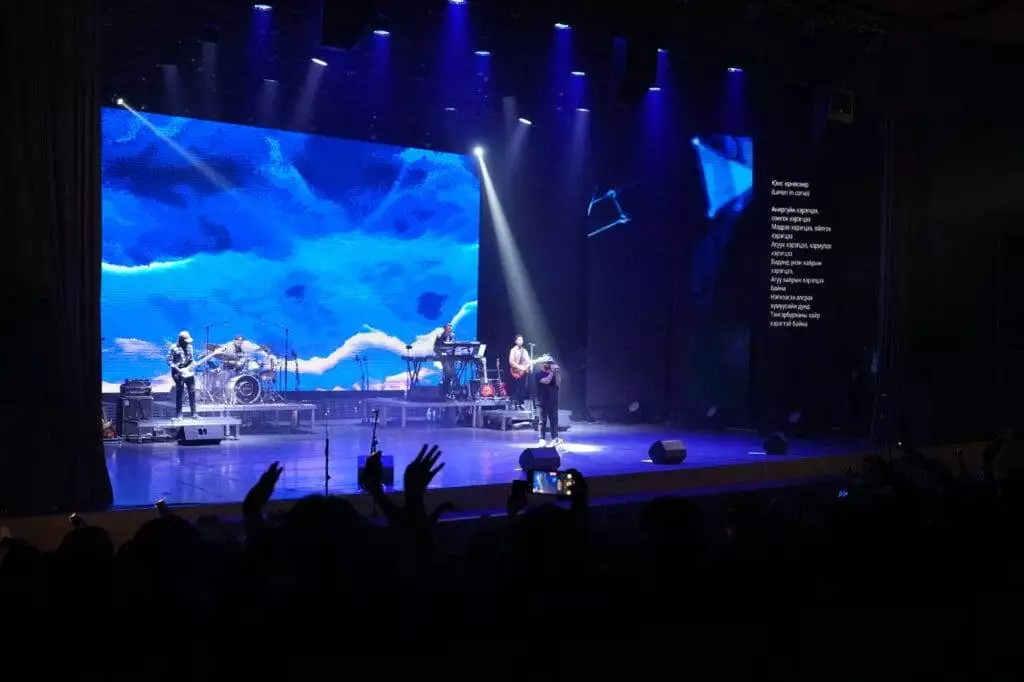
From 23rd November-2nd December, Gen Rosso engaged with hundreds of people, mostly young people, through various workshops in artistic disciplines like hip-hop dance, Broadway-style performance, party dance and choral singing. The workshops culminated in a concert held on 1st December in Ulaanbaatar, the capital.
The band recounted, “We envisioned a ‘participatory’ concert to which the young people we met during our stay in Mongolia could also contribute. Our goal? To encourage cultural exchange among young people and prepare them to help animate the 1st December concert. We sang mainly in English, with some songs in Italian and included at least one verse of the song, ‘Hopes of Peace’ in Mongolian. Our aim was to foster a culture of peace and fraternity rooted in sharing and unity.”
Other highlights included visits to an orphanage, encounters with homeless people and meetings with nomadic families. “It was deeply moving to spend time with them, to sing together with the children, to give hope to these people and learn about their cultures and traditions,” said Emanuele Chirco and Adelson Oliveira of Gen Rosso. The Band also met with local young artists to promote a culture of peace and fraternity through music and art. Gen Rosso, founded in 1966 in Loppiano from an inspiration of Chiara Lubich, the founder of the Focolare Movement, continues to spread these values through their music. Before leaving, they were warmly received by Italy’s Ambassador to Mongolia, Dr. Giovanna Piccarreta.
This journey marked a significant milestone for Mongolia’s Catholic community. When Pope John Paul II established the Prefecture in 2002, the Church in Mongolia had just over a hundred faithful and a small number of religious and priests. Cardinal Giorgio Marengo, a Consolata Missionary, arrived in 2003 and has witnessed the steady growth of the community. In 2023, Pope Francis made a historic visit to Mongolia, bringing a message of hope.
At the end of the tour Cardinal Marengo said, “It has been a wonderful experience of friendship with Gen Rosso; we felt united by the common denominator of Jesus. We immediately felt a connection. I was also struck by the brotherly care with which the Band members related to one another. I was certain that when they went on stage, they would deliver an experience of beauty and depth that would inspire reflection.”
Lorenzo Russo
For more information and upcoming events featuring Gen Rosso, visit:www.genrosso.com
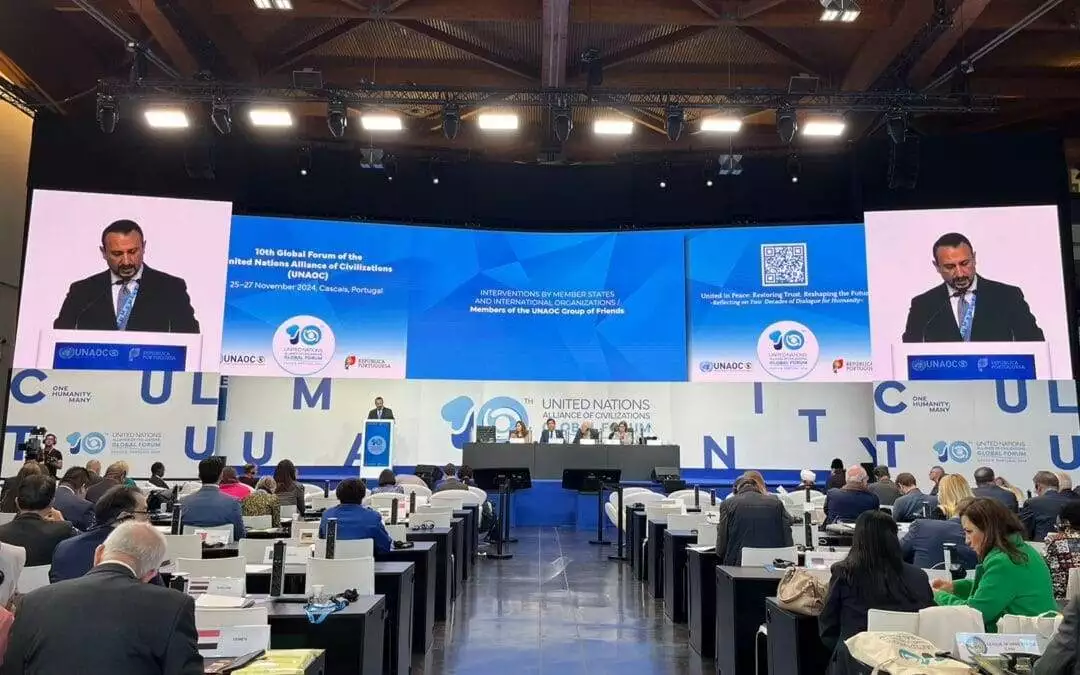
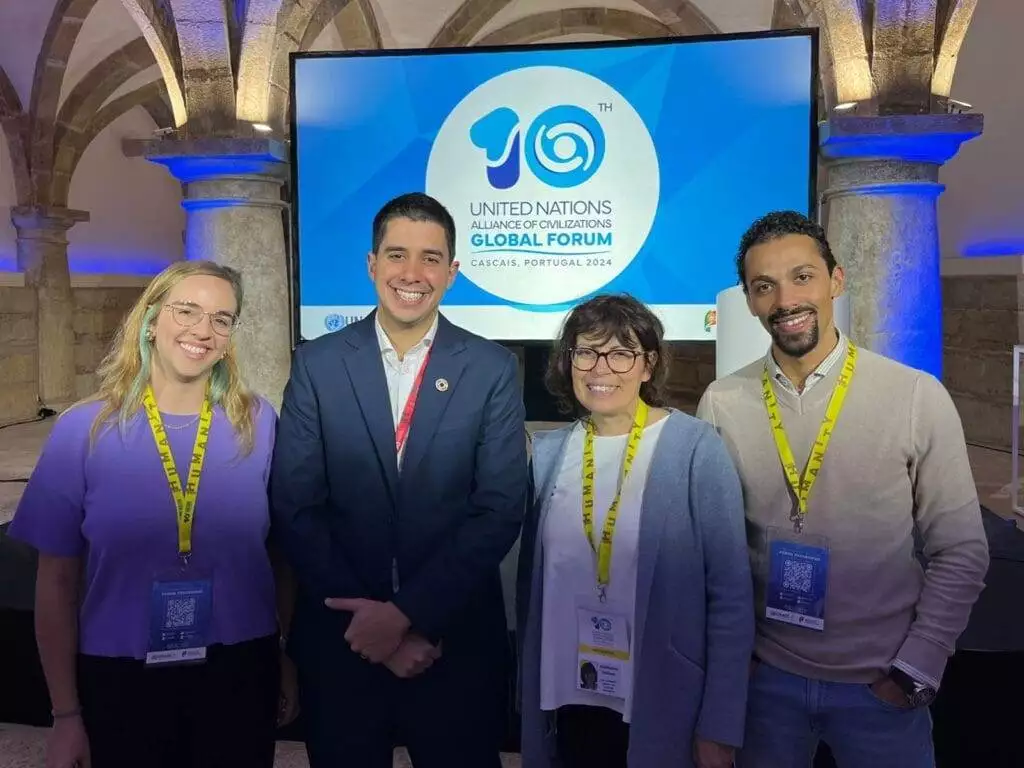
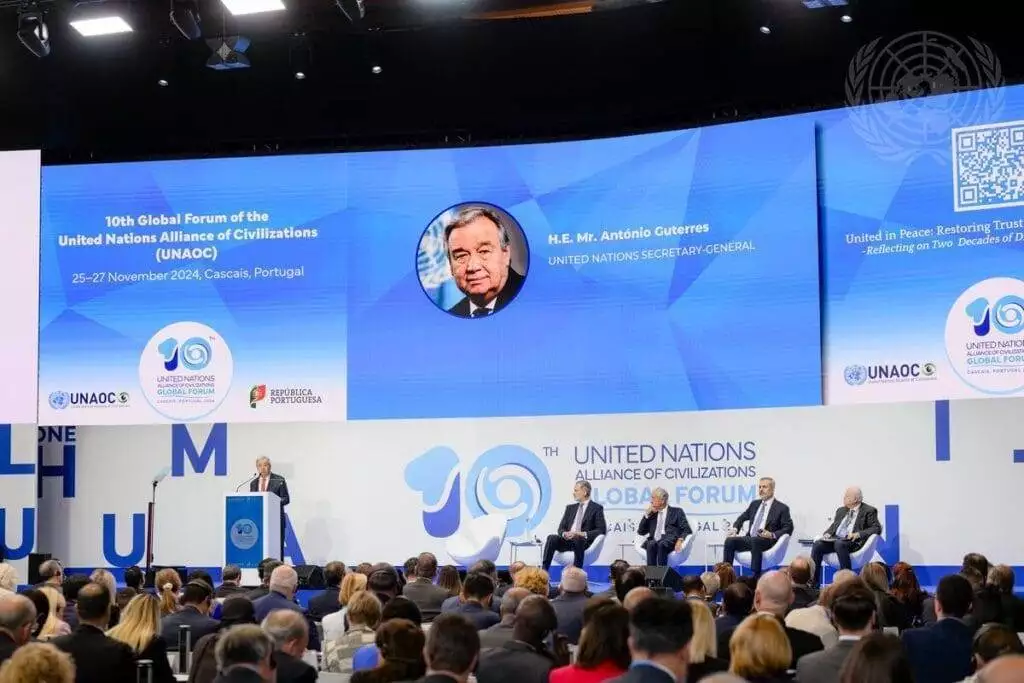
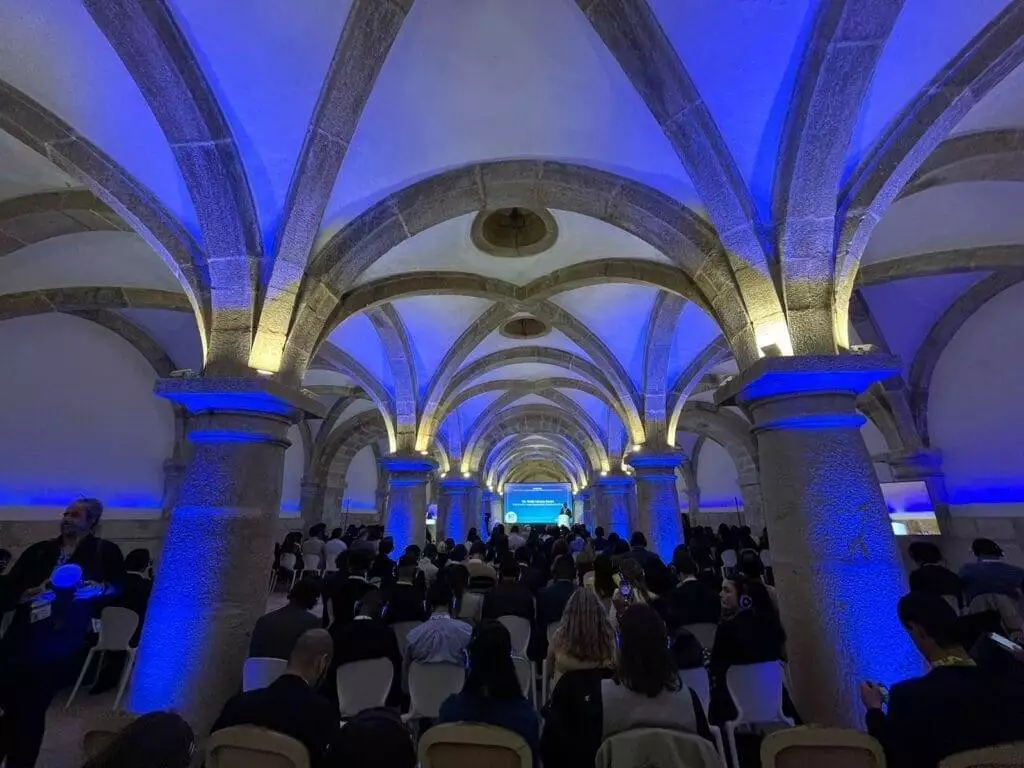
In a world marked by war, crises, and polarization, dialogue and cooperation remain the only paths to peace. With this conviction, New Humanity NGO joined the United Nations Alliance of Civilizations (UNAOC) Global Forum that convened its Group of Friends at Cascais, Portugal, from November 25th to 27th. Under the theme “United in Peace: Restoring Trust, Reshaping the Future — Reflecting on Two Decades of Dialogue for Humanity,” the event brought together diverse stakeholders—including religious leaders, academics, youth, media, and civil society representatives. High-profile attendees included António Guterres, UN Secretary-General, Marcelo Rebelo de Sousa, President of Portugal, the king Felipe from Spain, several current foreign ministers and previous prime ministers of European countries.
New Humanity NGO of the Focolare Movement and member of UNAOC’s Multifaith Advisory Council highlighted the organization’s commitment to fostering a just and united society, where faiths are spaces of encounter and collaboration. Rooted in decades of grassroots initiatives, New Humanity bridges local action with international diplomacy to tackle global challenges and promote peace. This participation underscored the importance of multilateral efforts to restore trust and reshape a future of harmony and collaboration among international institutions, religious organizations and the private sector.
Our commitment
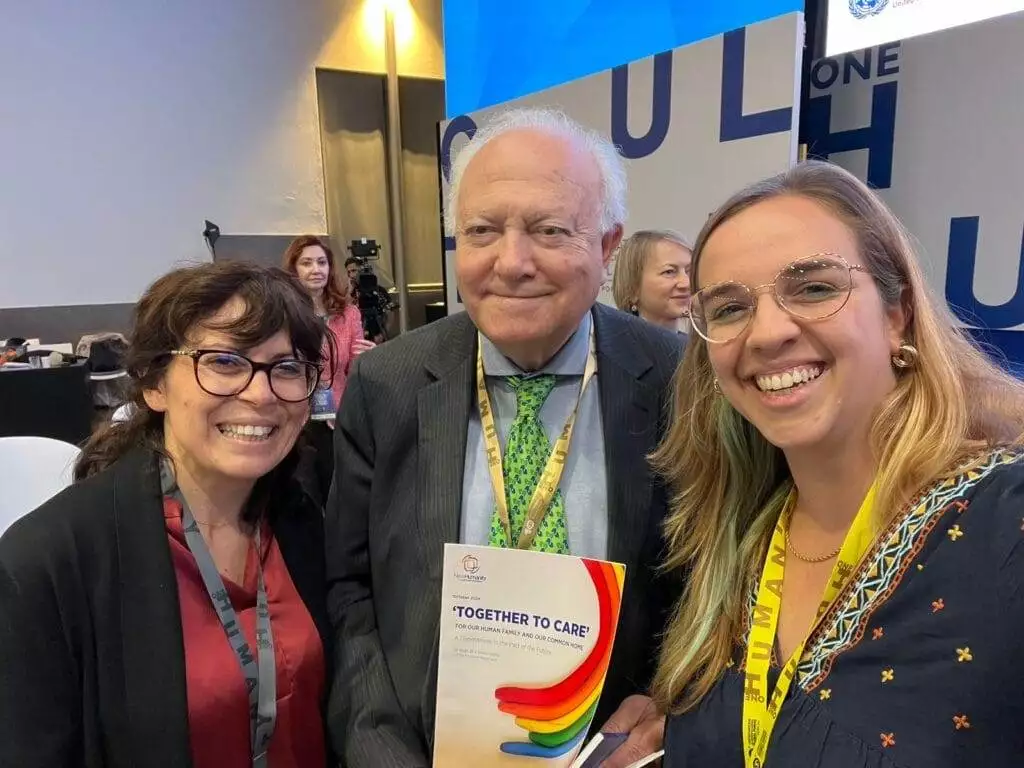
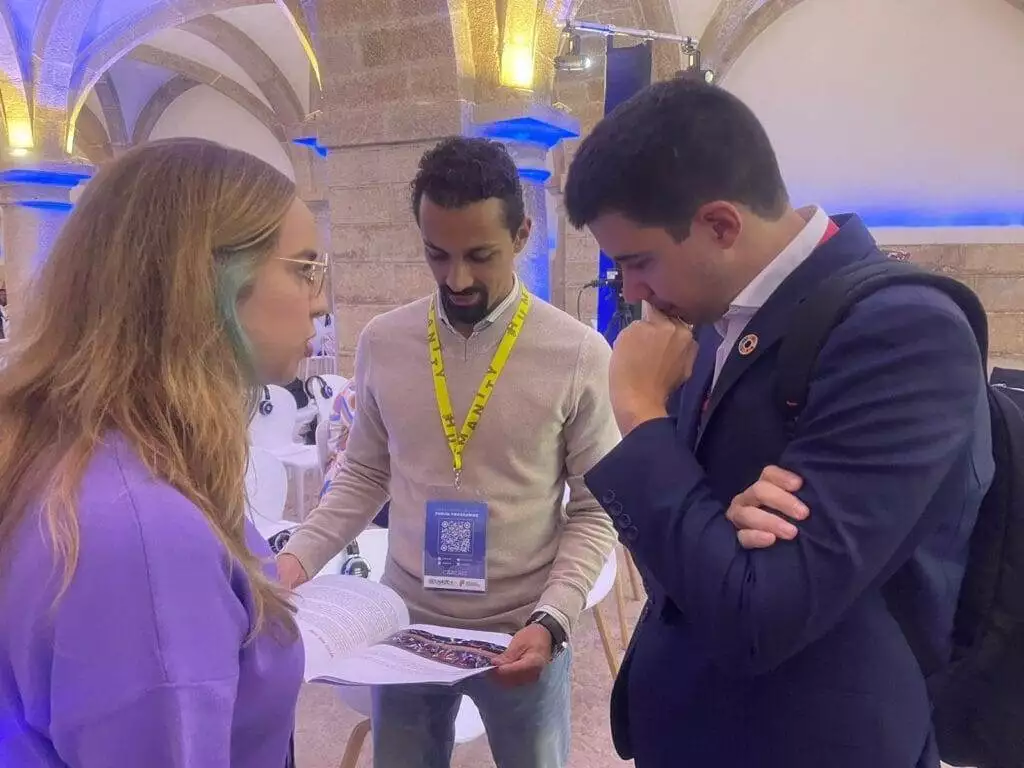
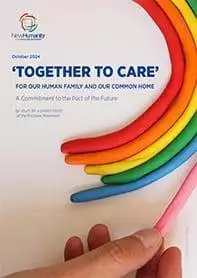
During the Global Forum, Ana Clara Giovani and André Correia, youth representatives of the Focolare Movement, along with Maddalena Maltese, the main representative of the New Humanity NGO in New York, presented the document “Together to Care – For Our Human Family and Our Common Home.” This document represents a commitment by the Youth for a United World (Y4UW) to the Pact for the Future, approved by the United Nations last September.
At Genfest 2024, a gathering of 4,000 youth from around the globe held in Brazil, eight hubs of innovation were launched to foster the unity of the human family and care for our common home. These eight United World Communities have consolidated and developed proposals and projects inspired by the spirituality of unity of the Focolare Movement, in alignment with the principles of the United Nations Declaration on Human Rights and the UN’s Pact for the Future. These initiatives focus on areas such as sustainable development, climate action, the promotion of peace and human rights, intercultural dialogue, social cohesion, and youth empowerment.
These projects and proposals form the core of the document presented in Cascais. It opens with a letter to UN Secretary-General António Guterres, acknowledging his tireless efforts to champion peace and sustainable development. Among the key proposals are the establishment of a High-Level Youth Forum to integrate youth perspectives into global decision-making, and preparations for the UN’s 80th anniversary and COP 30, showcasing youth-led solutions for urban sustainability and climate justice.
Presented to Miguel Ángel Moratinos, High Representative for UNAOC, and Felipe Paullier, High Representative for Youth Affairs, the document received enthusiastic support. Both leaders recognized New Humanity’s long-standing contributions and expressed interest in further analyzing the proposals. This engagement underscored the pivotal role of youth in shaping policies for a just and sustainable future, strengthening the connection between grassroots actions and international diplomacy.
To expand the reach and effectiveness of this work, United World Ambassadors, a youth network, will play a pivotal role in connecting grassroots initiatives to international frameworks like the United Nations, ensuring that local actions resonate globally.
New Humanity remains committed to bridging grassroots initiatives with high-level organizations, advancing its mission to promote fraternity, dialogue, and sustainable development. The connections established during the UNAOC Global Forum will be instrumental in strengthening the impact of our projects and amplifying the voices of youth worldwide.
Ana Clara Giovani and Maddalena Maltese
To download the document, in English, click on the image