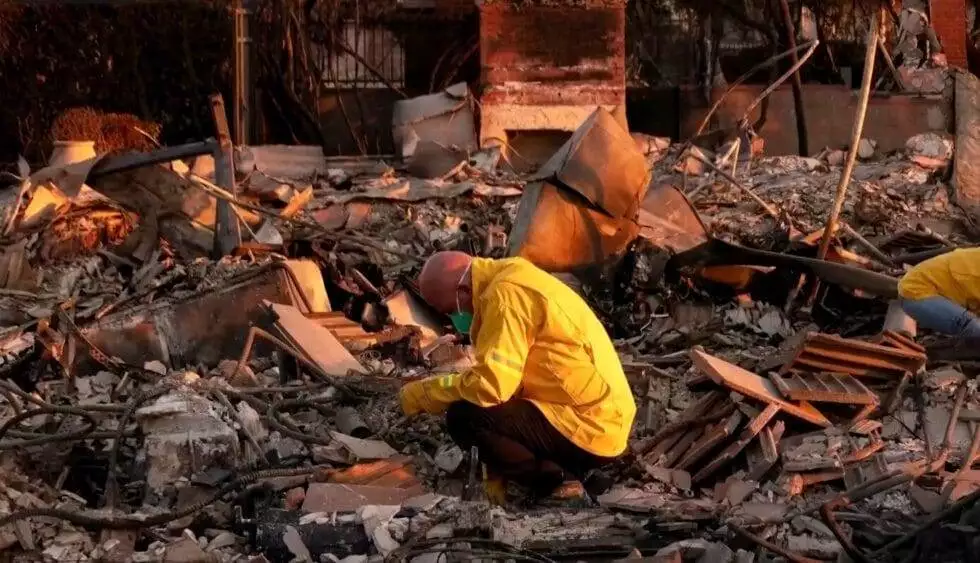
For several days, dramatic images of wildfires devastating an immense area and destroying everything from animals to vegetation have circulated around the world,. Thousands of buildings have been reduced to ashes and so far, 25 people have lost their lives. Many families have lost everything and 26 people remain missing. It is heart breaking to see these images of suffering still today. And the emergency is not over yet. We contacted the Focolare community there to find out how they are coping with this situation.
Carlos Santos, from the Focolare community in Los Angeles, told us, “The wildfires in various parts of our region are causing great anxiety because due to strong winds it’s impossible to fully extinguish the flames. The forecast is that they will continue for several more days. Many people have been evacuated and many have lost everything. However, we are also witnessing an enormous response from people who have brought food, clothing, money and other donations to those affected by the wildfires. The response has been so overwhelming that in some places TV stations have been used to ask people to stop donating because there is no more space for the items being delivered. Indeed, Providence has arrived in abundance and beyond what is needed.
The fires have not reached the homes of any members of the local Focolare community. However, some have had to move because they live in areas at risk of wildfires.
The Women’s Focolare, hosted a family for three days until authorities confirmed it was safe for them to return home. Our Men’s Focolare is also available to welcome anyone in need of shelter. This has brought more peace of mind to the community, as several areas in Los Angeles County could face evacuation orders if the winds change direction and move the fires toward them. Through their work, some focolarini have directly witnessed the suffering of many people and families who have lost everything. We want to accompany these people, offer comfort, and help them find stable solutions.” Carlos concluded thanking everyone for the many messages of solidarity and prayers during this time of great suffering.
You can read about the “miracle of the tabernacle” at Corpus Christi Church in the Pacific Palisades community of California on this link from the Focolare Media website, the communication platform for the Focolare Movement in North America,.
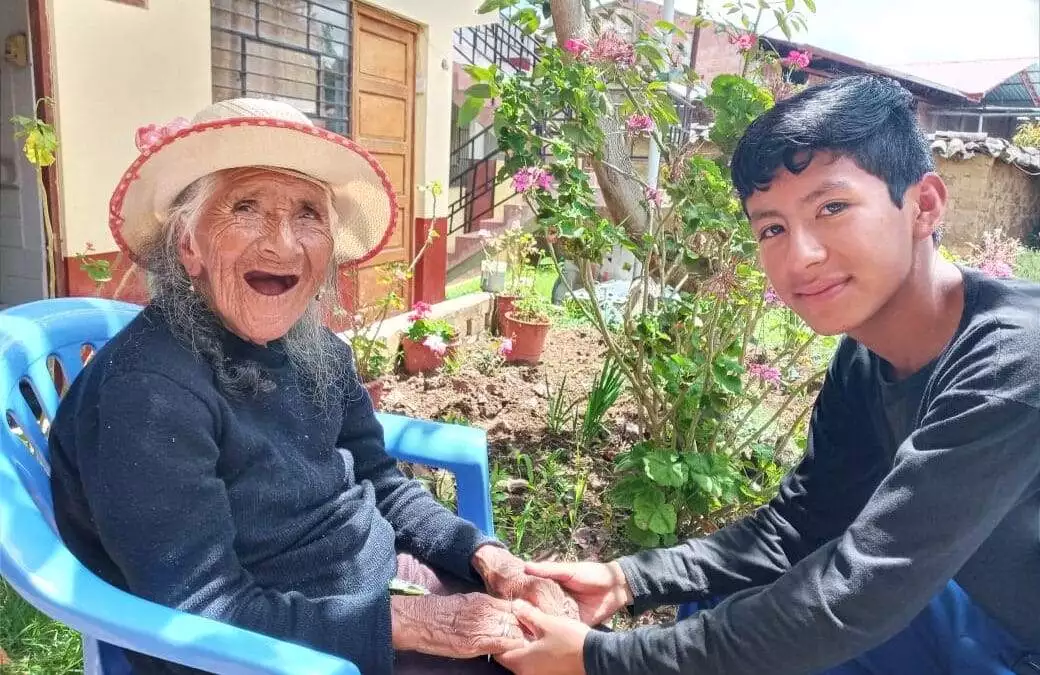
“Let’s start from the least, from those who are rejected and abandoned by society.” This is how the “Chiara Lubich” Hogar Centre for the elderly began in the Peruvian Amazon. A place where, thanks to the generosity of a family, together with the Focolare community, they welcome elderly people who are abandoned, who need help, who need to be cared for, who need a hot meal or simply who need the warmth of a family.
When people of different cultures and religious beliefs are in dialogue, a question that often comes to the fore is: “Can we always hope? And in what?” It’s a question that resonates most intensely not only in times of difficulty and painful suffering or defeat but also when we feel disappointed and deluded by the ideals and values we have held dear and which have fascinated us in the past. It is precisely during these times of doubt that we are prompted to reconsider the values and beliefs that lie at the very basis of our hopes. These values give us the strength to face our doubts and reveal the greatness of human nature: men and women are capable of falling down and rising up again, they can acknowledge that they all have their weaknesses but without succumbing to uselessly dreaming of finding miraculous solutions. Believing is much more than hoping for a solution to our problems; rather, it is the drive within that allows us to keep going. It is in those difficult moments that life mysteriously can become a real gift. Believing is like a commitment that gives meaning to life always. Unlike accepting a contract that you sign once and then never look at again, believing transforms and permeates every daily choice. One method that may help us to do so is to avoid thinking about dramatic and extreme situations which can only make us afraid and block us, but to face the small difficulties of each day, sharing them with our friends. In this way, if we do not lose heart, we will discover many new opportunities to believe and to give hope to those around us. The strength of friendship seeks the good of the other. It is easier to feel strong and courageous when everything is going well but it is when we are aware of our vulnerabilities that we can build something that will remain after us. We become aware of this through the conviction we gain when we have shared life with someone who believed beyond everything, who struggled and suffered, and whose love brought them close to everyone. When these people conclude their lives on this earth, they leave such an imprint and their memory is so vivid that -mysteriously- whether we are religious or non religious, their example makes us say, “I believe, I believe. Let us continue together!”
THE IDEA OF THE MONTH is currently produced by the Focolare Movement’s “Centre for Dialogue with People of Non religious Beliefs”. It is an initiative that began in 2014 in Uruguay to share with non-believing friends the values of the Word of Life, i.e. the phrase from Scripture that members of the Movement strive to put into practice in their daily lives. Currently, THE IDEA OF THE MONTH is translated into 12 languages and distributed in more than 25 countries, with adaptations of the text according to different cultural sensitivities. dialogue4unity.focolare.org
Martha, Lazarus’ sister, heard that Jesus was on his way, she was filled with hope and ran to meet him. John’s gospel indicates that Jesus loved her, Lazarus and their sister, Mary, very much[1]. Although Martha was sorrowful, she showed her great trust in the Lord and was convinced that had he been present, her brother would not have died but, nevertheless, any request she made to God would be granted. Jesus affirmed, ‘Your brother will rise again.’ (Jn 11:23)
“Do you believe this?”
After clarifying that he was referring to Lazarus’ return to physical life there and then and not to the life that awaits the believer after death, Jesus asked Martha if she had complete faith. Not only was he about to perform one of his miracles – which the evangelist John calls ‘signs’ – but he wanted to give resurrection and new life to her and all believers. Jesus proclaimed, ‘I am the resurrection and the life’ (Jn 11:25) and the faith he asked of Martha lay in a personal relationship with him and active and dynamic adherence. Believing is not like accepting a contract that you sign once and then never look at again, but it is something that transforms and permeates your daily life.
“Do you believe this?”
Jesus invites us to live a new life here and now. He invites us to experience it every day, knowing that, just as we rediscovered at Christmas, he himself brought this life to us by first seeking for us and coming to dwell among us.
How do we answer his question? Let us look to Lazarus’ sister, Martha.
In dialogue with Jesus, she made a full profession of faith. The original text in Greek expresses this with great force. The ‘I believe’ that she pronounced means ‘I have come to believe’, ‘I firmly believe’ that ‘you are the Christ, the Son of God who is to come into the world’ [2], with all the consequences that this brings. It is a conviction that has matured over time and has been tested by the different events she faced during her life.
The Lord also addresses this question to us. He asks us to trust firmly in him and adhere to his way of life, founded on generous and practical love for all. Our faith will mature through perseverance, and it will grow stronger, as each day we see the truth of Jesus’ words when put into practice. Furthermore, this will make a positive impact upon our daily actions towards others. In the meantime, we can make our own the prayer that the apostles made to Jesus: ‘Increase our faith’ (Lk 17:6).
“Do you believe this?”
Patricia, from South America said, ‘One of my daughters had lost her job because the government had closed the public agency where she worked. The same thing had happened to her colleagues. As a form of protest, they had set up an encampment in front of the office. I tried to help them by participating in some of their activities, bringing them food or simply stopping to talk to them.
On Maundy Thursday, a group of priests who were supporting them in their plight decided to hold a ceremony during which there was space to listen, a reading from the Gospel and the act of washing feet was performed, in memory of what Jesus did before his crucifixion. The majority of those present were not religious people. Nevertheless, it was a moment of deep union, fraternity and hope. They felt warmly welcomed and were moved, as they thanked those priests who accompanied them in their uncertainty and suffering.’
This word of Jesus has been chosen as the guide for the Week of Prayer for Christian Unity 2025. Let us pray and work so that our common belief may be the driving force in the search for fraternity with all: this is God’s proposal and desire for all humanity, but it requires us to play our part too. Prayer and action will be effective if they arise from this trust in God and we live accordingly.
Edited by Silvano Malini and the Word of Life Team.
Peace, welcome, courage, justice, dialogue, hope, solidarity, togetherness, fraternity, unity: words that express our planetary, strong, concrete commitment that begins with small daily gestures, so that there may be an end to weapons and an end to all conflicts, in every corner of the world.
“Please, first of all, sow the seeds of the Gospel which is the Good News, so as to be credible in a time torn apart by discord and conflict, where peace now seems an unattainable dream.” A strong invitation that Pope Francis addressed to some family focolares in a long letter. On the 27th of October 2024 at the Mariapolis Centre in Castel Gandolfo (Italy), Margaret Karram, President of the Focolare Movement, while meeting with the young focolare families, read to them the message received from the Pope. It was a beautiful surprise which was written specifically for them. The family focolares are characterised by both spouses being married focolarini. In the world today there are 130 young focolare families in addition to the many families who are living the spirituality of unity that is a typical feature of the Focolare Movement.
The meeting in October at Castel Gandolfo was the last part of a formation course in six stages carried out in different regions of the world: Poland, the Philippines, Lebanon, Guatemala, Portugal. The last one was attended by 55 families coming from different countries.
In his long letter, the Pope explains that he has been informed of “the important work within the Movement in favour of families who have embarked on a unique path of formation”. And he thanks the President “for letting me be part of this exciting experience of faith that is being lived by many couples of various nationalities and religious expressions. I am particularly pleased to know that you are joyfully carrying out your apostolate in various human and social contexts, and with great passion you are striving to create harmony and understanding”.
Pope Francis then asked Margaret Karram to bring his spiritual closeness to the families, encouraging each one to become an instrument of love, demonstrating the richness of sincere and loving fraternity. He thus turned his thoughts to families in crisis “who have lost the courage to cherish the beauty of the Sacrament they have received”, and to help young people” not to be afraid of marriage and its vulnerability”.
Also significant is the date on which the Pope wanted to write the letter: 26 July 2024, the commemoration of Saints Joachim and Anna, the parents of the Virgin Mary. A gesture that didn’t happen by chance for those to whom the letter is addressed: the families.
“Dear families, as you return to your homes,” the Pope continues, “revive the domestic hearth with constant prayer, lend your ear to the voice of the Holy Spirit who guides, enlightens and sustains the journey of life, open to those who knock at your door so as to be heard and comforted, always offer the wine of joy and share the good bread of communion. May the Holy Family of Nazareth be a source of inspiration and hope in times of trial, so that you may be builders of unity everywhere in the service of the Church and humanity.”
Margaret Karram, as she finished reading the letter, said: “I have read it many times and truly, like you, I was moved. I said: this shows an immense love of the Pope for you, especially for you.”
A precious gift extended to all the families in the world, as a guiding star for each one’s journey.
…We must be convinced that for the civilization of love to become a reality, we have to storm the world with a current of love. Otherwise, everything will remain like a dream, destined to die. … Love! Teaching to love! The person who truly knows how to love, is the person who knows that he or she is sincerely loved. This is a human observation, but it is no less valid in the supernatural field. To know that we are loved! By whom? By the One who is Love. We must open the eyes of as many brothers and sisters as possible so that they might see and discover the treasure they possess, often without realizing it. They are not alone on this earth. There is Love. They have a Father who does not abandon his sons and daughters to their own destiny. He wants to accompany them, watch over them, help them. He is a Father who does not load burdens that are too heavy onto others’ shoulders. He is the first to carry them. In our case, he does not leave the renewal of society only to human initiative. But He is the first to be concerned with it. People should know this and turn to him, aware of the fact that nothing is impossible for him. We must believe, therefore, that we are loved by God so that we can throw ourselves with greater faith into the adventure of love, and work together with him for a New Humanity. Then we must focus our interests on the human person and share with them misfortunes and successes, spiritual goods and material goods. And, to love well, we must not see the difficulties, corruption and sufferings of the world merely as social evils to be resolved. Rather, we must recognize in these the countenance of Christ, who did not disdain to hide himself beneath all human poverty. Because of him – especially for those of us who are Christian – our greatest energies are channeled for the good of others. But since the love we are talking about is certainly not only philanthropy, or friendship or purely human solidarity, but is primarily a gift from Above, we must place ourselves in the best possible attitude to receive it, by nourishing ourselves on and living on the Word of God. … Every person in their large or small world of daily activities – in the family, office, factory, trade union, immersed as they may be in local and general problems, in public institutions, all the way to the United Nations – can truly be a builder of peace, a witness to love, an instrument of unity.
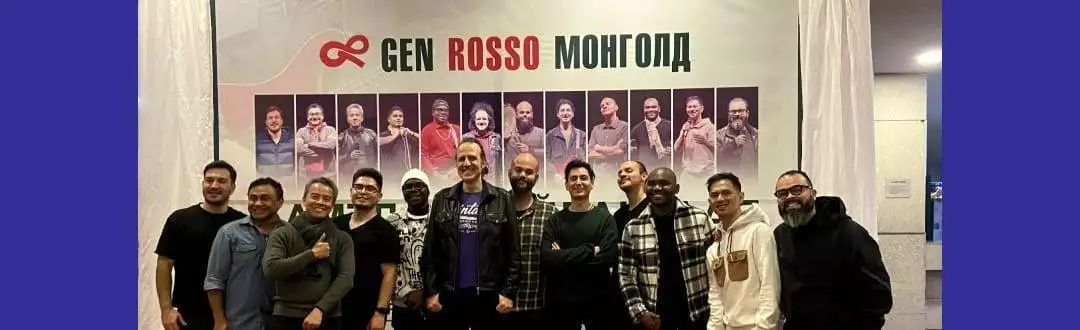
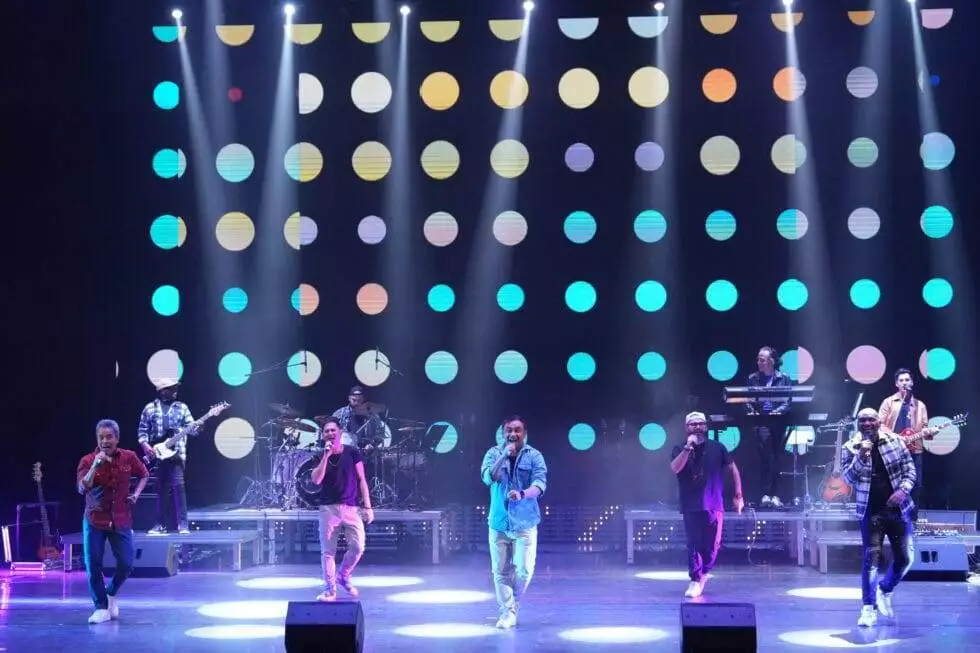
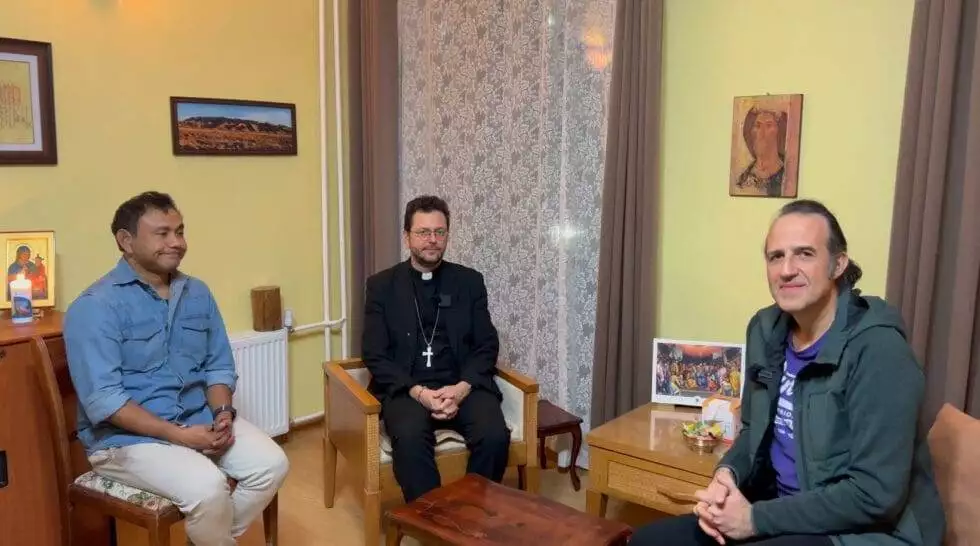
Nearly 9,000 kilometres away from their home in Loppiano, Italy, the international band, “Gen Rosso”, visited Mongolia for the first time. Mongolia, an Asian nation nestled between Russia and China, is home to a small but vibrant Catholic Church led by the Apostolic Prefect, Cardinal Giorgio Marengo. With approximately 1,500 baptized Catholics among a population of 3.5 million, this visit marked a significant step in the community’s preparation for the Catholic Church’s Jubilee in 2025. Cardinal Marengo said, “A young Church, made up of young people, needs a youthful language to connect with people. I grew up with Gen Rosso’s songs. When someone suggested inviting you to Mongolia, I thought it was an excellent opportunity for missionary outreach in Gen Rosso’s style. Your art and lyrics have broad horizons, making it an ideal approach for a place like Mongolia, where the Church is in its early stages. This seemed like a golden opportunity.”
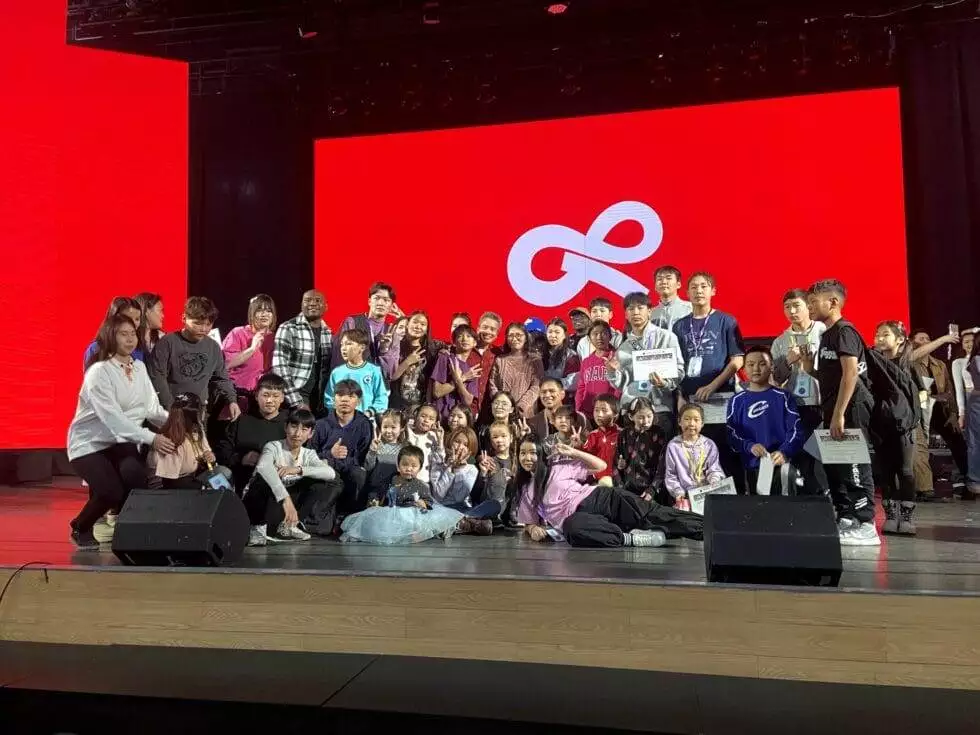
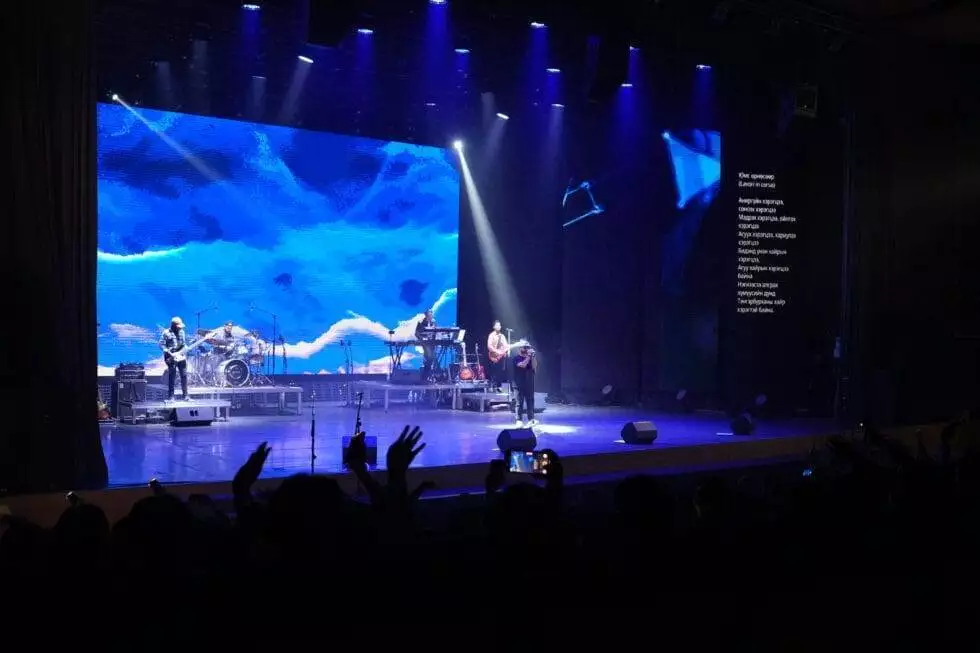
From 23rd November-2nd December, Gen Rosso engaged with hundreds of people, mostly young people, through various workshops in artistic disciplines like hip-hop dance, Broadway-style performance, party dance and choral singing. The workshops culminated in a concert held on 1st December in Ulaanbaatar, the capital.
The band recounted, “We envisioned a ‘participatory’ concert to which the young people we met during our stay in Mongolia could also contribute. Our goal? To encourage cultural exchange among young people and prepare them to help animate the 1st December concert. We sang mainly in English, with some songs in Italian and included at least one verse of the song, ‘Hopes of Peace’ in Mongolian. Our aim was to foster a culture of peace and fraternity rooted in sharing and unity.”
Other highlights included visits to an orphanage, encounters with homeless people and meetings with nomadic families. “It was deeply moving to spend time with them, to sing together with the children, to give hope to these people and learn about their cultures and traditions,” said Emanuele Chirco and Adelson Oliveira of Gen Rosso. The Band also met with local young artists to promote a culture of peace and fraternity through music and art. Gen Rosso, founded in 1966 in Loppiano from an inspiration of Chiara Lubich, the founder of the Focolare Movement, continues to spread these values through their music. Before leaving, they were warmly received by Italy’s Ambassador to Mongolia, Dr. Giovanna Piccarreta.
This journey marked a significant milestone for Mongolia’s Catholic community. When Pope John Paul II established the Prefecture in 2002, the Church in Mongolia had just over a hundred faithful and a small number of religious and priests. Cardinal Giorgio Marengo, a Consolata Missionary, arrived in 2003 and has witnessed the steady growth of the community. In 2023, Pope Francis made a historic visit to Mongolia, bringing a message of hope.
At the end of the tour Cardinal Marengo said, “It has been a wonderful experience of friendship with Gen Rosso; we felt united by the common denominator of Jesus. We immediately felt a connection. I was also struck by the brotherly care with which the Band members related to one another. I was certain that when they went on stage, they would deliver an experience of beauty and depth that would inspire reflection.”
Lorenzo Russo
For more information and upcoming events featuring Gen Rosso, visit:www.genrosso.com
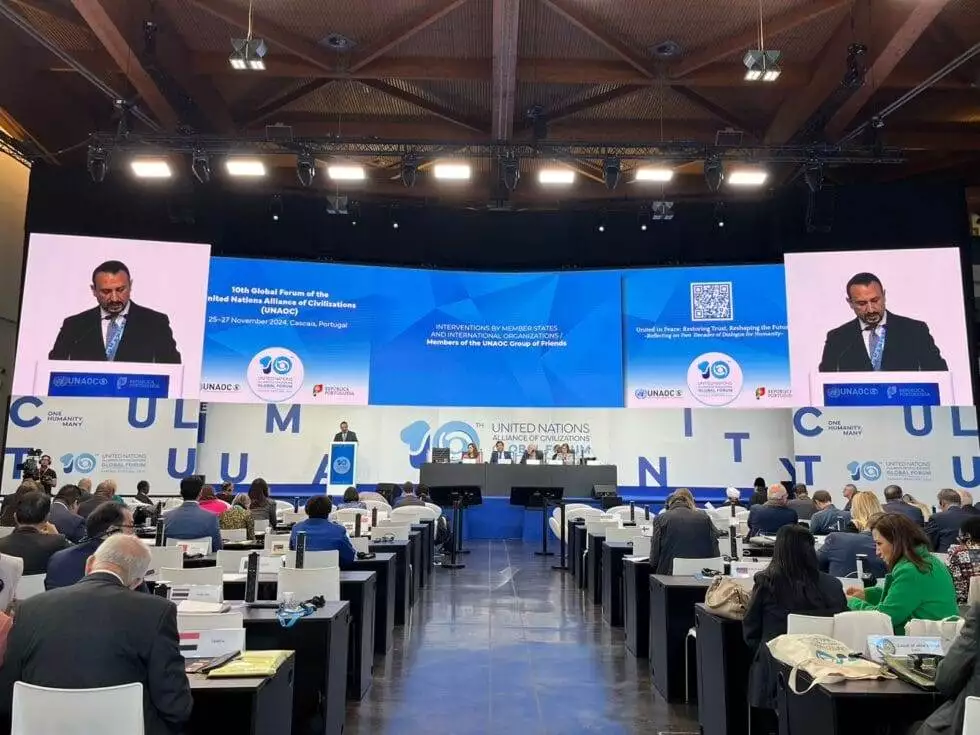
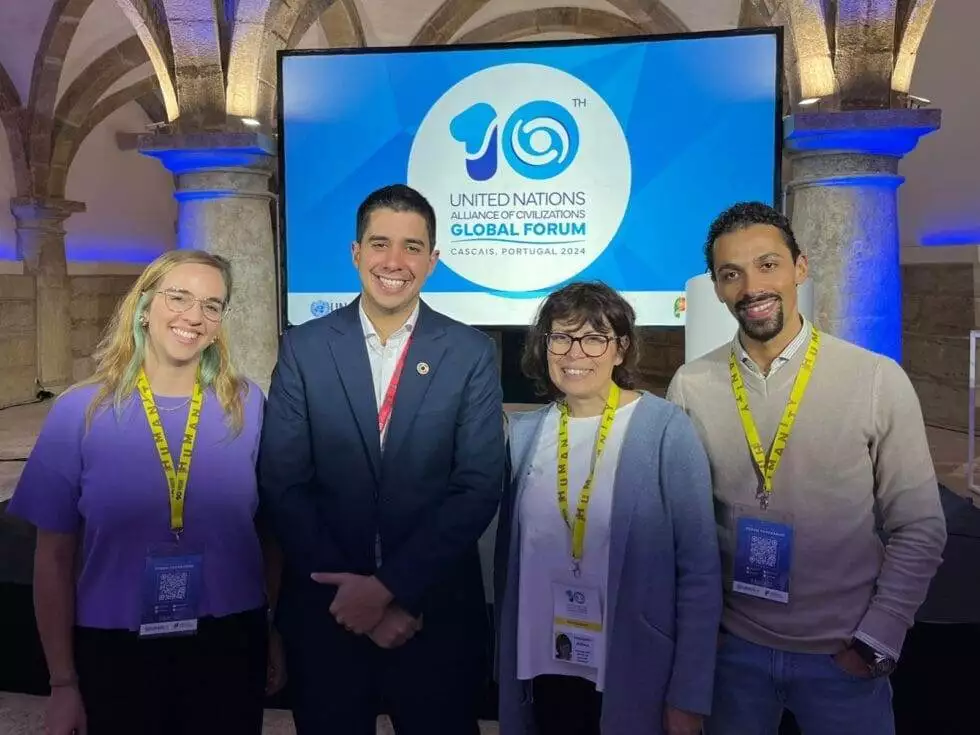
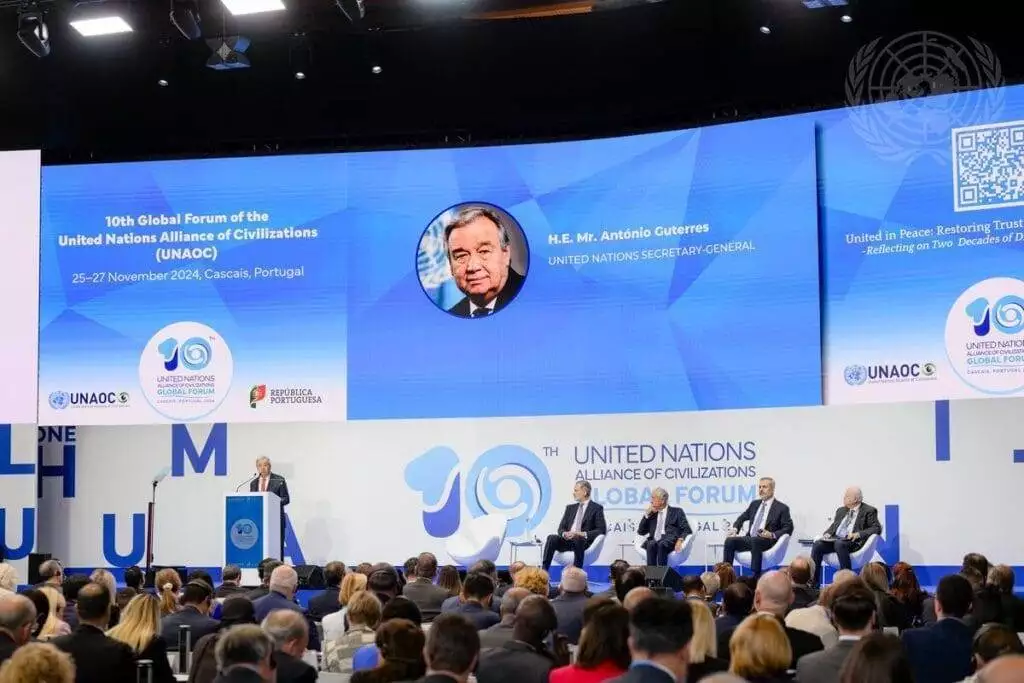
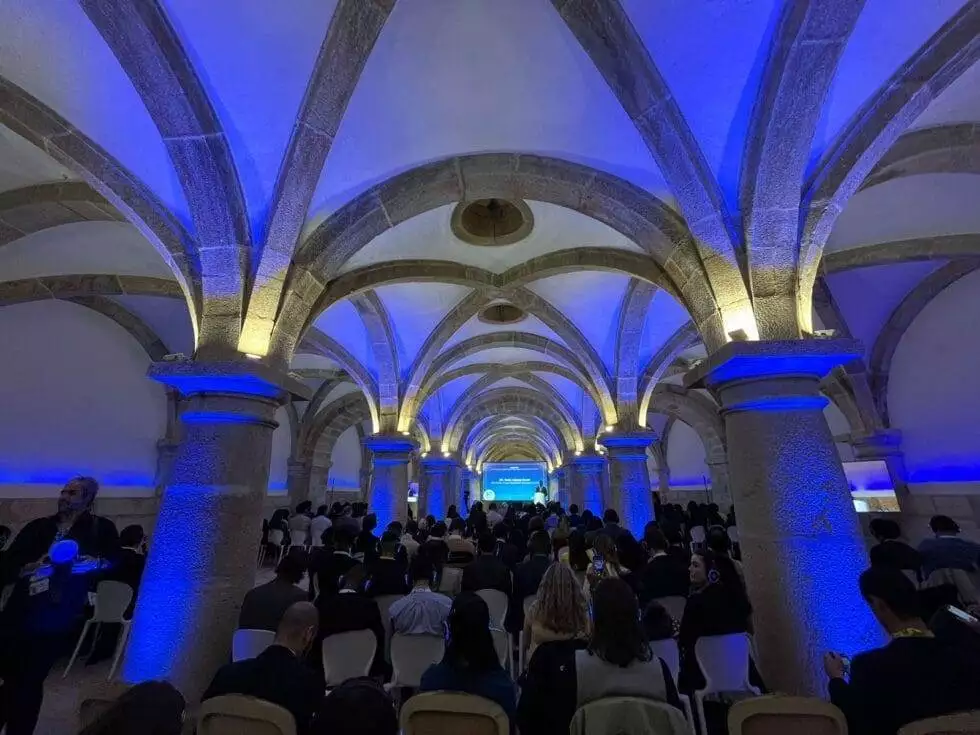
In a world marked by war, crises, and polarization, dialogue and cooperation remain the only paths to peace. With this conviction, New Humanity NGO joined the United Nations Alliance of Civilizations (UNAOC) Global Forum that convened its Group of Friends at Cascais, Portugal, from November 25th to 27th. Under the theme “United in Peace: Restoring Trust, Reshaping the Future — Reflecting on Two Decades of Dialogue for Humanity,” the event brought together diverse stakeholders—including religious leaders, academics, youth, media, and civil society representatives. High-profile attendees included António Guterres, UN Secretary-General, Marcelo Rebelo de Sousa, President of Portugal, the king Felipe from Spain, several current foreign ministers and previous prime ministers of European countries.
New Humanity NGO of the Focolare Movement and member of UNAOC’s Multifaith Advisory Council highlighted the organization’s commitment to fostering a just and united society, where faiths are spaces of encounter and collaboration. Rooted in decades of grassroots initiatives, New Humanity bridges local action with international diplomacy to tackle global challenges and promote peace. This participation underscored the importance of multilateral efforts to restore trust and reshape a future of harmony and collaboration among international institutions, religious organizations and the private sector.
Our commitment
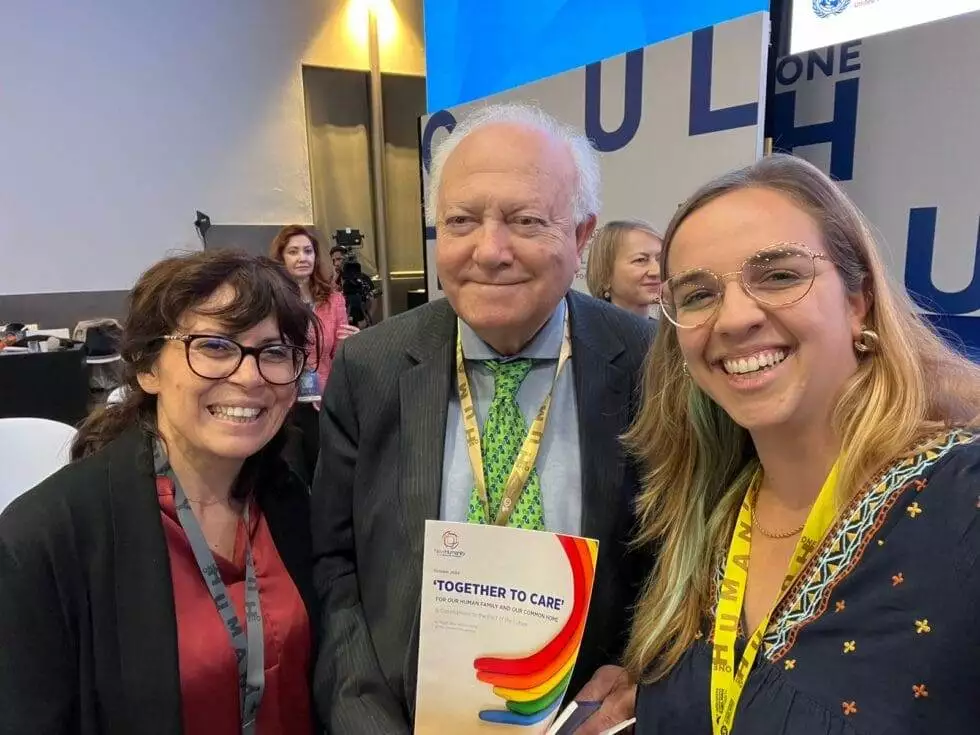
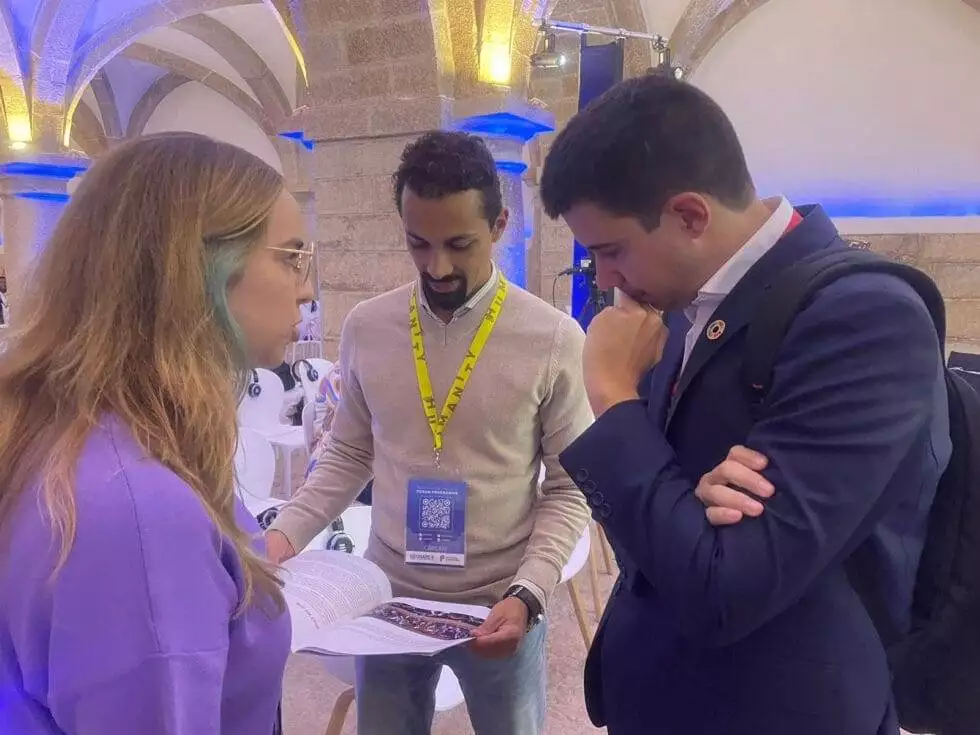
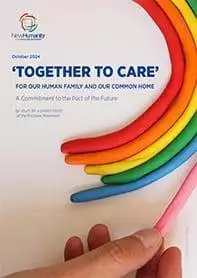
During the Global Forum, Ana Clara Giovani and André Correia, youth representatives of the Focolare Movement, along with Maddalena Maltese, the main representative of the New Humanity NGO in New York, presented the document “Together to Care – For Our Human Family and Our Common Home.” This document represents a commitment by the Youth for a United World (Y4UW) to the Pact for the Future, approved by the United Nations last September.
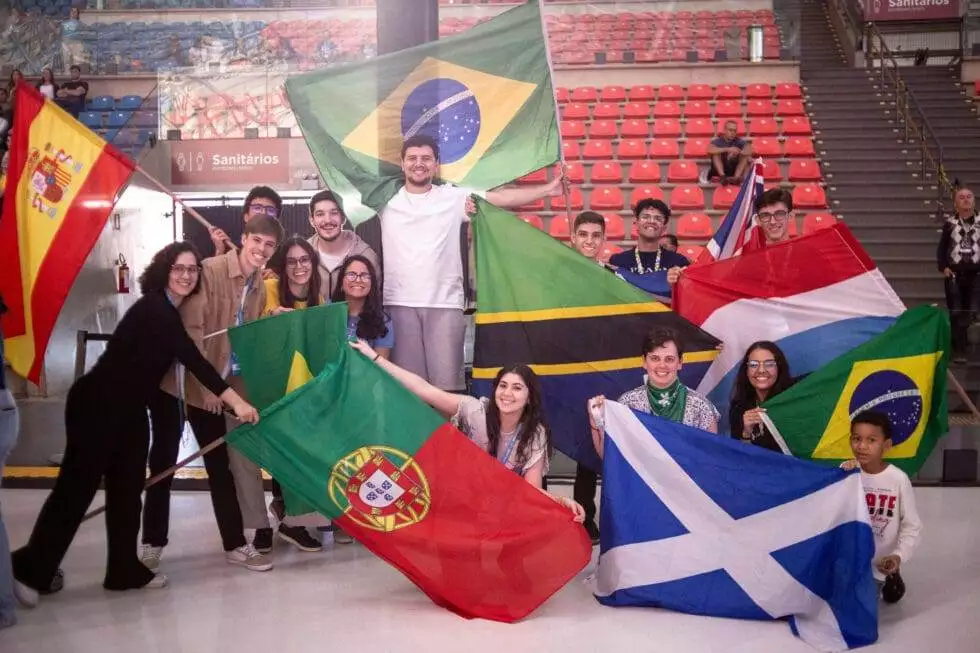
At Genfest 2024, a gathering of 4,000 youth from around the globe held in Brazil, eight hubs of innovation were launched to foster the unity of the human family and care for our common home. These eight United World Communities have consolidated and developed proposals and projects inspired by the spirituality of unity of the Focolare Movement, in alignment with the principles of the United Nations Declaration on Human Rights and the UN’s Pact for the Future. These initiatives focus on areas such as sustainable development, climate action, the promotion of peace and human rights, intercultural dialogue, social cohesion, and youth empowerment.
These projects and proposals form the core of the document presented in Cascais. It opens with a letter to UN Secretary-General António Guterres, acknowledging his tireless efforts to champion peace and sustainable development. Among the key proposals are the establishment of a High-Level Youth Forum to integrate youth perspectives into global decision-making, and preparations for the UN’s 80th anniversary and COP 30, showcasing youth-led solutions for urban sustainability and climate justice.
Presented to Miguel Ángel Moratinos, High Representative for UNAOC, and Felipe Paullier, High Representative for Youth Affairs, the document received enthusiastic support. Both leaders recognized New Humanity’s long-standing contributions and expressed interest in further analyzing the proposals. This engagement underscored the pivotal role of youth in shaping policies for a just and sustainable future, strengthening the connection between grassroots actions and international diplomacy.
To expand the reach and effectiveness of this work, United World Ambassadors, a youth network, will play a pivotal role in connecting grassroots initiatives to international frameworks like the United Nations, ensuring that local actions resonate globally.
New Humanity remains committed to bridging grassroots initiatives with high-level organizations, advancing its mission to promote fraternity, dialogue, and sustainable development. The connections established during the UNAOC Global Forum will be instrumental in strengthening the impact of our projects and amplifying the voices of youth worldwide.
Ana Clara Giovani and Maddalena Maltese
To download the document, in English, click on the image
(…) Looking back today, we can understand what we can learn from December 7th, the day the Movement began decades ago. It affirms that a charism of the Holy Spirit, a new light, came down on earth during those days, a light which, in the mind of God, was destined to quench the burning thirst of this world with the water of wisdom, to warm it with divine love and thus give life to a new people nourished by the Gospel. This is what it tells us, above all.
And because God acts concretely, he immediately provided the first brick for the building that would serve his purposes, the building that is our Movement. He decided to call me, a girl like many others, and this led to my consecration to him, my “yes” to God, soon followed by the “yes” of many other young women and men.
That day speaks of light, then, and of the total gift of ourselves to God, so as to be instruments in his hands to achieve his goals.
“Light” and “giving oneself to God” are two realities that were extremely useful at that time when there was general confusion, reciprocal hatred, war. It was a time of darkness, when God seemed to be absent from the world, absent with his love, his peace, his joy, his guidance. It was a time when no one seemed interested in him.
“Light” and “giving oneself to God” are two realities that heaven wants to repeat to us today, too, when many wars continue to rage on our planet. (…)
“Light” means the Word, the Gospel, which is still too little known and, above all, too little lived. (…)
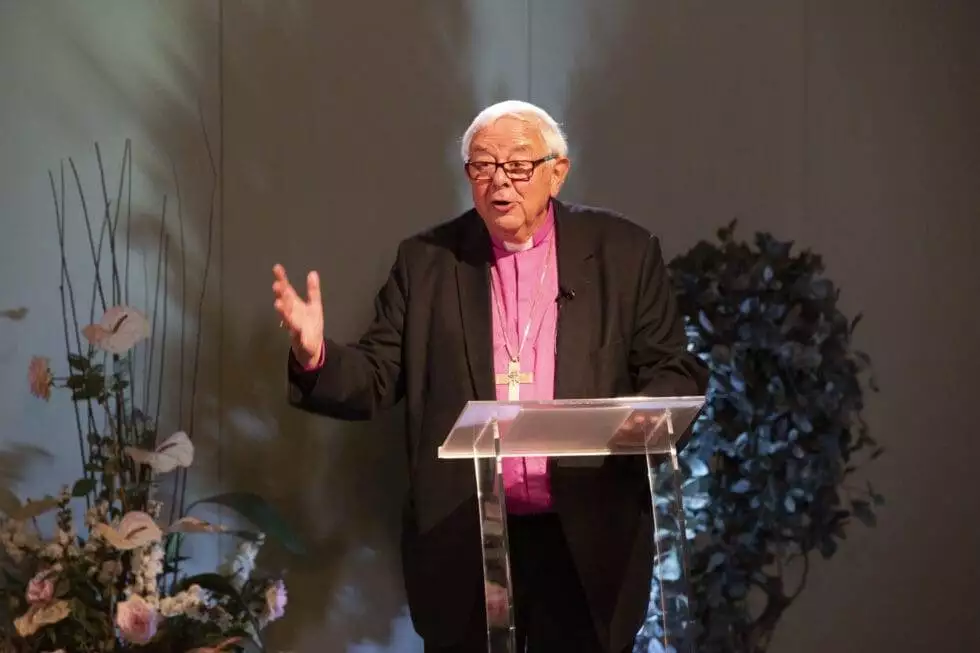
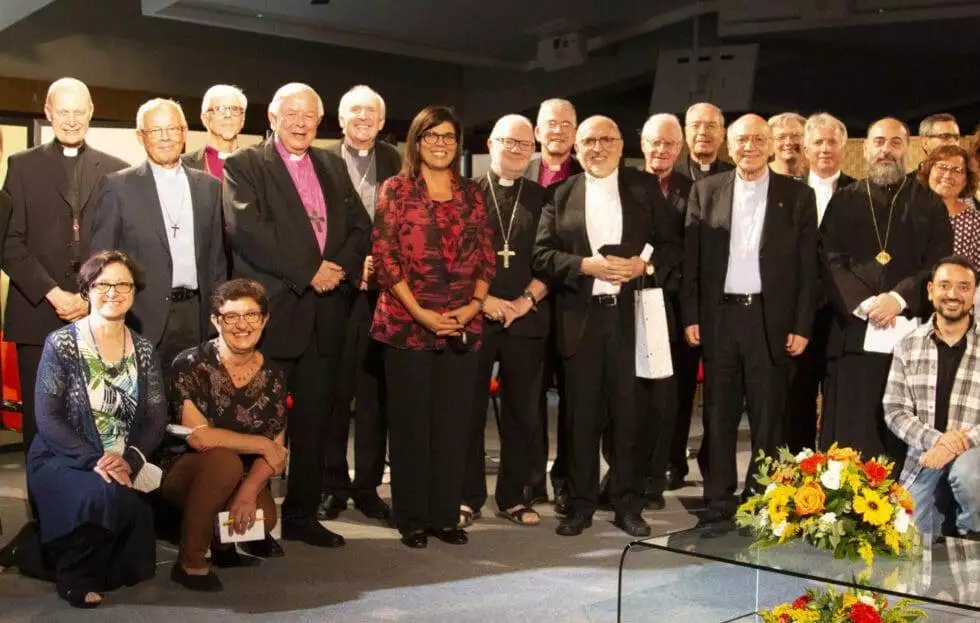
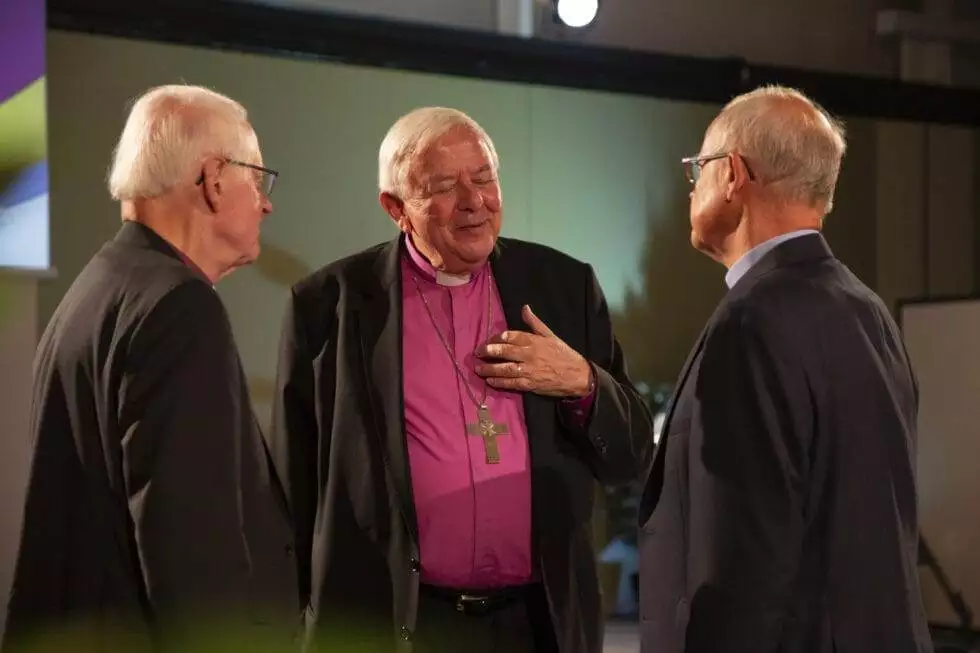
The news of Bishop Christian Krause’s death reached me just as I was beginning a Zoom conference call with Bishops from various churches who are friends of the Focolare Movement, with whom he has been a faithful traveling companion for many years. We knew his health had been deteriorating and we had been praying for him, so it was spontaneous to recite the ‘Our Father’ together, thanking God for his prophetic and encouraging presence among us. He was a man with a big heart and broad horizons.
“Colourful Bishops”
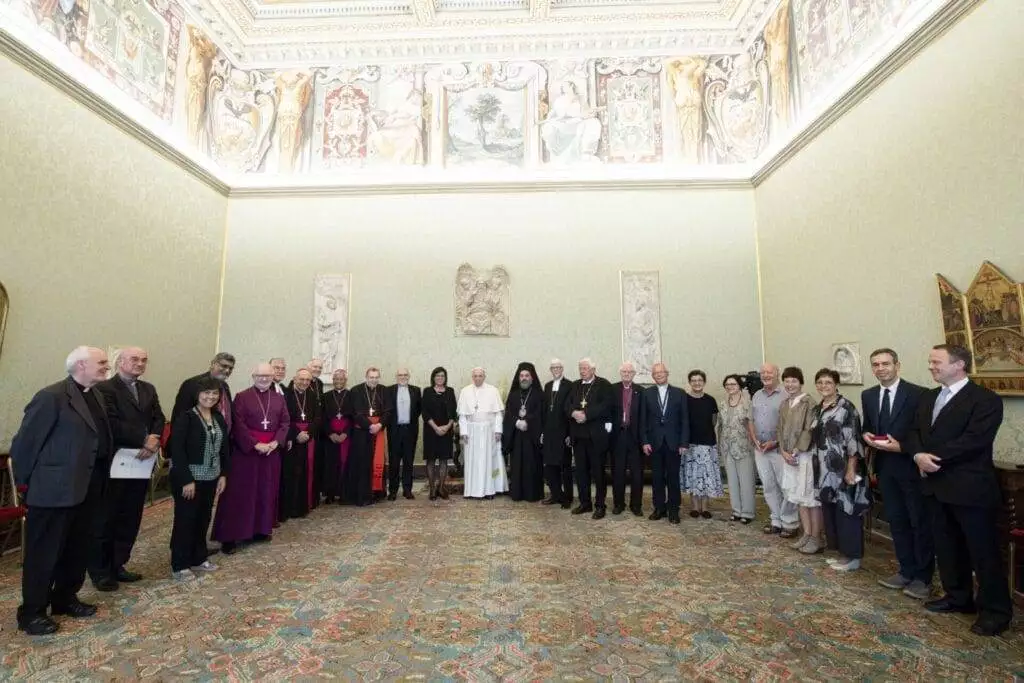
There would be a lot to say about Bishop Christian. As I write, I have before me a photograph of Cardinal Vlk of Prague (Czech Republic), Cardinal Kriengsak of Bangkok (Thailand), Dr. Mor Theophilose Kuriakose of the Malankara Syrian Orthodox Church (India), myself (a Catholic) and Bishop Christian walking towards the city centre of Lund (Sweden), dressed in our ecclesiastical robes, heading for a ceremony at the Cathedral to mark the 500th anniversary of the Protestant Reformation. This ecumenical event, hosted by the Lutheran World Federation (LWF) and attended by Pope Francis, was the first time that Catholics and Lutherans commemorated the Reformation together on a global level.
The photo reminds me of the fondness with which Bishop Christian called the Bishops of various Churches associated with the Focolare Movement “colourful bishops”. He was deeply passionate about the experience of unity in variety and diversity, inspired by a charism and by a spirituality of unity and supported by the Focolare, a predominantly lay movement. Our colourful vestments symbolized the deeper richness of the gifts exchanged during the dialogue of life undertaken by Bishops from various churches since 1982—a dialogue initiated by Bishop Klaus Hemmerle and Chiara Lubich, with the blessing of Pope John Paul II.
An Historic Day
Although Bishop Christian became acquainted with the Focolare in the 1980s through Bishop Hemmerle, his meeting with Chiara Lubich on 31st October, 1999 was a special moment for him. It took place in the context of what was undoubtedly a key moment in his life: the signing, on behalf of the LWF, of the Joint Declaration on the Doctrine of Justification with the Roman Catholic Church, on 31st October 1999 in Augsburg, Germany. Over the years, Bishop Krause has often shared with us the significance of that event, emphasizing its importance as a document signed on the brink of the 21st century. He often recalled how, on that very occasion, a group of founders and leaders of Evangelical and Catholic Movements and Communities gathered in the Focolare little town of Ottmaring to launch the ‘Together for Europe’ project. That day’s meeting with Chiara Lubich opened a path for him into an ecumenical experience whose prophetic possibilities and implications he perhaps understood more deeply than many of us.
Broad Horizons
When I became a bishop in 2013, I came into much closer contact with Bishop Christian within the framework of the Bishops of various churches who are friends of the Focolare Movement. After Lund, several of us met for monthly online teleconferences. Meeting with Christian was always a great way to broaden your horizons, because he liked to see things in the bigger picture. His sense of humour was evident in the sparkle in his eyes and his kind smile.
Bishop Christian Krause was passionate about the Church, about the unity of the Church and the need to move forward. For him, life was not about standing still. If we want to improve the future, we must be ready to disrupt the present! In the case of the Bishop Friends of the Focolare, Bishop Christian urged us to widen the circle and to commit ourselves to promoting circles of living dialogue with the Bishops of various Churches in the Global South. He was so pleased that in September 2021, in the midst of Covid, we were able to organize an online meeting for 180 bishops from 70 Churches from all over the world. It was a wonderful three-day meeting.
Glimpses of Hope
I recently visited Bishop Christian in the nursing home where he had moved in the last weeks of his life. Our conversation was one I will remember for a long time. He spoke to me of his gratitude for having encountered the charism of the Focolare, of the support and friendship he had experienced. Raised in the tradition of “awakening” (pietistic), his encounter with the Movement was in line with his personal conviction of the need for piety, for spirituality.
He did not hide the pain he felt at times, seeing how the world seems to have lost the visionary dynamic of hope from the 1960s, when global mission and the horizons of peace seemed within reach. Equally painful for him was the fact that it was still not possible to receive communion in the Catholic Church.
He told me about an event in the ‘90s when Chiara Lubich was not well. During a meeting, Cardinal Miloslav Vlk invited him to come with him and make a short phone call to Chiara. It was to be a short phone call and so to keep it that way, Bishop Christian simply asked Chiara: “Do you have a word for us?” Chiara did not hesitate to answer: “Always Go Forward!” Christian was very impressed.
“Always Go Forward” was the stimulus that Bishop Christian always brought us. Speaking to me about his preparation for death, he showed his strong faith with which he knew how to look to the future, including death, with hope. He shared with me the prayer taken from a famous poem by Dietrich Bonhoeffer that inspired him in that last period: “By gracious powers so wonderfully sheltered, And confidently waiting, come what may, We know that God is with us night and morning, And never fails to greet us each new day”.
Bishop Brendan Leahy Bishop of Limerick, Ireland
Bishop emeritus Christian Krause was born on 6th January 1940 in Dallgow-Döberitz, Brandenburg (Germany). He studied theology in Germany (Marburg, Heidelberg and Göttingen) and in the United States (Chicago). He was ordained a Pastor of the Evangelical Lutheran Church of Hanover in 1969. He worked as an assistant at the then Department of Theology of the Lutheran World Federation in Geneva (Switzerland) from 1969 to 1970 and at the headquarters of the Christian Service for Refugees of Tanganyika in Dar es Salaam, Tanzania, from 1970 to 1972. From 1972 to 1985 he was responsible for international ecumenical affairs, serving as Executive Secretary (Oberkirchenrat) to the United Evangelical Lutheran Church of Germany and the German National Committee of the LWF in Hanover, Germany. From 1985 to 1994 he was General Secretary of the German Evangelical Kirchentag (Lay Movement of the Protestant Church). He was Bishop of the Evangelical Lutheran Church of Brunswick, Germany, from 1994 to 2002. From 1997 to 2003 he was President of the Lutheran World Federation (LWF). He died on 28th November in Wolfenbüttel, Germany, at the age of 84. Bishop Christian leaves behind his wife Gertrud Krause and four children.
This sentence is taken from the story of the Annunciation. The angel Gabriel appears to Mary of Nazareth and makes known God’s plans for her: she will conceive and give birth to a son, Jesus, who ‘will be great and will be called the Son of the Most High.’ [1] The episode is in continuity with other events in the Old Testament whereby barren or very old women gave birth to children who were to play an important role in salvation history. Here, Mary, while wishing to fully and freely adhere to the call to become the mother of the Messiah, wonders how this will happen because she is a virgin. Gabriel assures her that it will not come about through the work of man: ‘The Holy Spirit will come upon you and the power of the Most High will overshadow you.’ [2] And he adds: ‘For nothing will be impossible with God.’ [3]
Such reassurance, which means that no declaration or promise made by God will remain unfulfilled – because nothing is impossible to him – can also be expressed in this way: nothing is impossible with God. In fact, the nuance of the Greek text ‘with, or near, or together with God’ highlights his closeness to men and women. In fact, when human beings are together with God and freely adhere to him, nothing is impossible.
«For nothing will be impossible with God».
How can we put this word of life into practice? We can do so by being confident in the belief that God can act even within and beyond our limitations and weaknesses and during the darkest periods of our lives.
This was the experience of Dietrich Bonhoeffer. Whilst in prison before being tortured, he wrote: ‘We must immerse ourselves again and again in the living, speaking, acting, suffering and dying of Jesus in order to recognise what God promises and fulfils. It is certain […] that for us nothing impossible exists anymore, because nothing impossible exists for God; […] it is certain that we must not expect anything and yet we can ask everything; it is certain that in suffering our joy is hidden and in death our life… To all this God has said ‘yes’ and ‘amen’ in Christ. This ‘yes’ and this ‘amen’ are the solid ground on which we stand.’ [4].
«For nothing will be impossible with God».
In trying to overcome the apparent ‘impossibility’ of short-comings and in striving to reach the ‘possibility’ of a sound and consistent life, the community dimension plays a decisive role. This developed when, as a group, the disciples lived Jesus’ new commandment and allowed the power of the risen Lord to dwell within them, both collectively and individually. In 1948, Chiara Lubich wrote to a group of young members of religious communities: ‘Let’s go ahead, not relying on our own strength which is petty and weak but with the omnipotence of unity. I have seen and touched with my own hands that God among us does the impossible: he performs miracles! If we are faithful to our task […] the world will see unity and with it the fullness of the Kingdom of God.’[5]
Years ago, when I was in Africa, I often met young people who wanted to live as Christians and who told me of the many difficulties, they faced each day in trying to be faithful to the commitments of faith and the teachings of the Gospel. We would talk about this for hours and, in the end, we always came to the same conclusion: ‘It is impossible if we are alone but not if we are together.’ Jesus himself guarantees this when he promises: ‘Where two or three are gathered in my name (in my love), there am I in the midst of them.’ [6] And with him all things are possible.
Edited by Augusto Parody Reyes & the Word of Life team
[1]Lc 1, 32. [2] Ibid, 35. [3] Ibid, 37. [4] D. Bonhoeffer, German Lutheran Pastor, protagonist in resistance against Nazism [5] C. Lubich, “Letters of the Early Times”. viCf Mt. 18:20. [6] Cf. Mt 18, 20.
We may feel frightened when life presents us with challenging and unexpected choices but, nonetheless, it is then that our values and the desire to live with integrity clearly emerge.
It’s not always easy. When the answer to a situation requires our free and personal choice, we may feel that we are taking a difficult gamble, almost a leap in the dark, and we need the strength to go beyond our own limits.
Where can we find the strength to do this? For some people it comes from faith in the supernatural and belief in a personal God who loves us and accompanies us. For everyone it can come from the closeness of friends, of “travel companions” who support us, trust us and who we feel are near as we journey through life. They bring out the best in us and help us overcome the apparent “impossibility” of our insufficiencies to achieve the “possible” of a coherent way of life.
This happens as a consequence of relationships that are reciprocal and impacts upon us as members of a community. As Chiara Lubich said in 1948, using language typical of the time: “Let’s go ahead! Not with our strength, petty and weak as it may be, but with the omnipotence of unity. If we remain faithful to our commitment […] the world will see unity.”[1]
Going beyond our limits opens us to new opportunities and experiences that might otherwise seem out of our reach, allowing us to believe and witness that nothing we hope for is impossible.
But is it possible to believe “that everything is possible” in the face of the absurdity of Evil? This is the great question that humanity continues toask today as it has always done in the past.The absence of response unites everyone, believers and non-believers, as they search for the answeron a journey that can only be undertaken together. Because if “Evil” remains a mystery, the force of “Good” is equally powerful. There is no answer, but a way of understanding.
Edith Bruck recalled this in a recent interview.ii She was deported to Auschwitz at the age of 13 but still today, in her nineties, is a real witness of peace. When the war ended, she and her sister were faced with a dramatic dilemma. “Five Hungarian fascists who had supported the Nazis begged us to help them return home secretly and we did so by helping them on their journey. We shared bread and chocolate with them. It was one of the most intense moments I had ever experienced spiritually. I was treating someone who could have killed my father as a friend.” The decision was not easy and she argued a lot with her sister, but they did it because they thought that perhaps, this way, these people would never mistreat a Jew again. [2]
THE IDEA OF THE MONTH is currently produced by the Focolare Movement’s “Centre for Dialogue with People of Non religious Beliefs”. It is an initiative that began in 2014 in Uruguay to share with non-believing friends the values of the Word of Life, i.e. the phrase from Scripture that members of the Movement strive to put into practice in their daily lives. Currently, THE IDEA OF THE MONTH is translated into 12 languages and distributed in more than 25 countries, with adaptations of the text according to different cultural sensitivities. dialogue4unity.focolare.org
“The competition has been and remains a unique way to introduce Chiara Lubich, founder of the Focolare Movement, to younger generations and to an audience that engages with her work on a cultural level,” says Giuliano Ruzzier, a teacher and collaborator of the Chiara Lubich Centre.
Promoted by the Ministry of Education and Merit, New Humanity and the Historical Museum Foundation of Trentino, this year’s theme is peace. Participants are encouraged to explore the meaning of peace in light of Chiara Lubich’s contributions. Ruzzier explains, “From her extensive legacy, particularly where she explicitly addressed this theme, we have identified four perspectives from which to reflect on peace.”
These perspectives include constructive dialogue among people of different religions and cultures, overcoming economic disparities, fostering personal commitment to fraternity through relationships of proximity and spreading a culture of peace. Prof. Giuseppe Ruzzier continues, “Chiara Lubich viewed humanity as a whole. She is well-known for her call to ‘love others’ countries as our own. Her emphasis on everyday relationships is particularly distinctive. As she said, our days can be filled with practical, humble, intelligent acts of service, expressions of our love. Every little gesture has an effect on society.”
The contest is open to primary, middle and high school students. “As in past years, we especially hope for broad participation from Italian schools abroad, given the clear international scope of this year’s theme.”
When asked how he would encourage his colleagues to promote this initiative, Ruzzier replies: “This contest offers students the chance to reflect independently and creatively on a highly relevant and important topic like peace. It also provides an opportunity to engage with the significant thoughts of a woman who profoundly shaped and experienced the 20th century and expressed herself in many ways.”
This morning, while shopping at the supermarket, I passed by a large trolley where a shop assistant was piling up boxes. I noticed two of them were on the ground.
Fearing that I had inadvertently dropped them, I apologised, picked up the boxes and placed them on the trolley.
The shop assistant thanked me and said not to worry, then called after me: ‘Kindness is rare!’. Another person who was passing by just at that moment confirmed: “That’s very true!” whereupon the shop assistant, by way of explanation, told her what had happened.
As for me, I was happy, not least because this little episode reminded me of a phrase I had heard some time ago which had struck me. It spoke about “sowing kindness”. It felt like a ‘caress’ from God.
G.S. – Italy (*)
Healing relationships
I have a brother, a Catholic Christian, who married a German woman from the Evangelical Church. When they settled in Italy, the relationship between my mother and sister-in-law was not easy, even though she was not against their children being educated in the Catholic Church. As for me, I tried to be a ‘mediator’ between her and my mother. My sister-in-law also suffered because of this misunderstanding, which was however healed shortly before our mother died. For some time now, I have been sharing the ‘Thought for the Day’ with her via Whatsapp which helps us to live Gospel-based love on a daily basis. One day the thought invited us to ‘be merciful’, with this short commentary sentence: “Mercy is a love that knows how to welcome every neighbour, especially the poorest and neediest. A love that does not measure, is abundant, universal, concrete”. Her response was immediate: ‘If I have made you feel bad in certain circumstances over the past years, please forgive me”. Astonished, I replied in turn: “I too apologise”. And she: “I don’t remember any incident for which need to apologise…’.
C. – Italy (*)
Called and sent
Someone very dear to me asked me to write something about my experience as a teacher for an acquaintance of hers from another country who was doing a project on values education.
I realised that it was an opportunity to transform into a testimony and ‘proclamation’ what, in some ways, has been my personal response to the ‘call’ to live according to the teachings of the Gospel as a teacher and as a mother.
The piece took many hours of writing, deleting, correcting, rewriting, remembering aspects that I could add, deleting others that seemed irrelevant and, above all, filtering each word with love. I tried to put myself in the place of the person I was writing for, because even though I did not know her, I could love Jesus in her.
I sent it to my friend, aware that it might not be exactly what she needed, and so was ready to change everything.
To my surprise, she replied: “I have already sent your letter. I really liked it”. No doubt it was not the writing itself that was liked, but the work that God had done in me which could be a little light for others by being shared.
And, of course, the other things I had to do in those days were easily taken care of, as there had been some changes in the rota that left me with more free time.
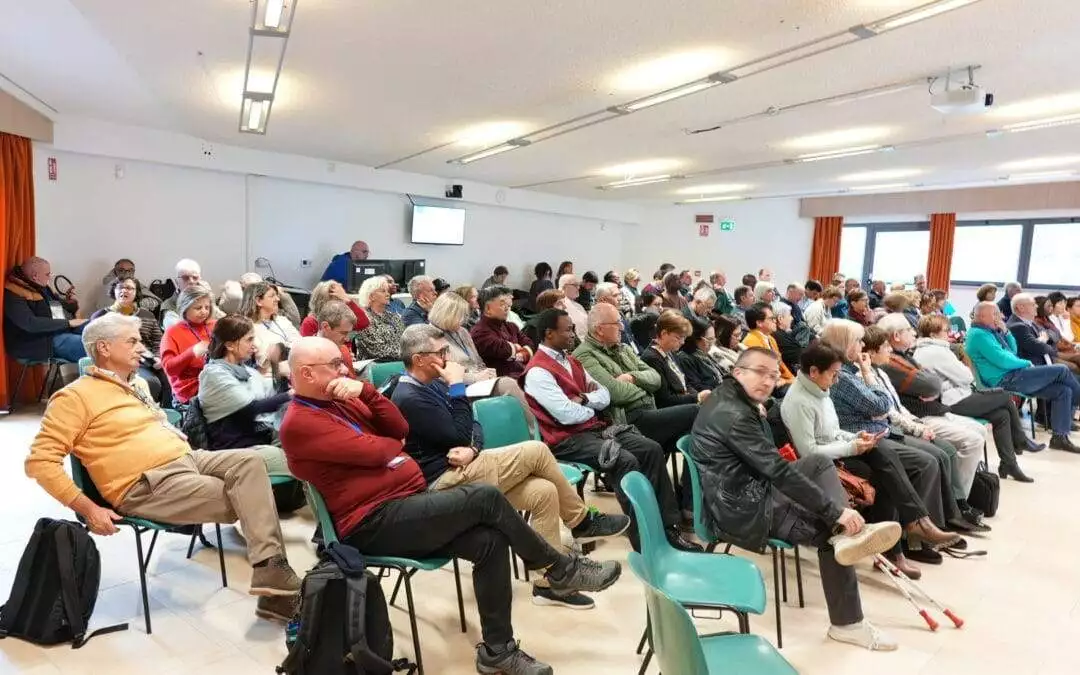
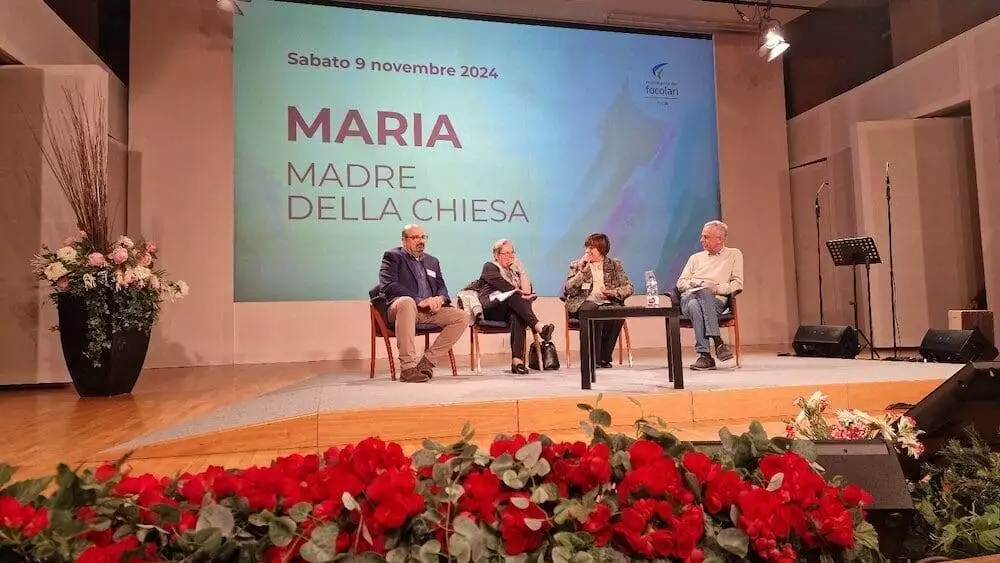
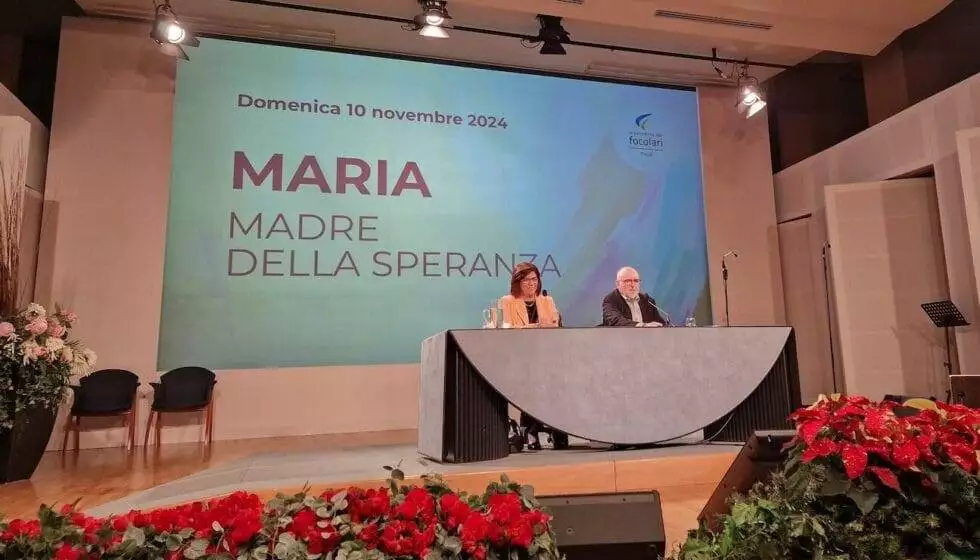
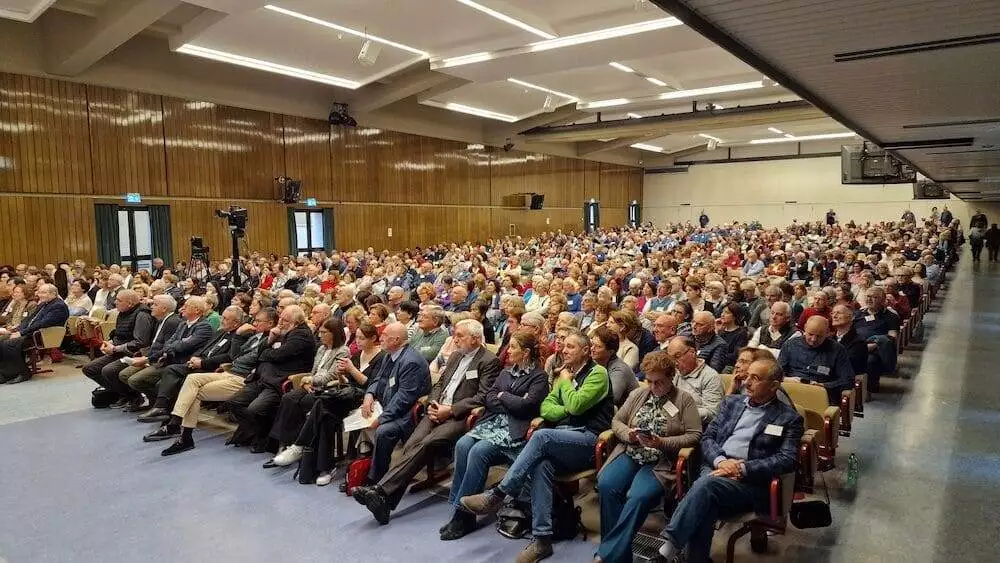
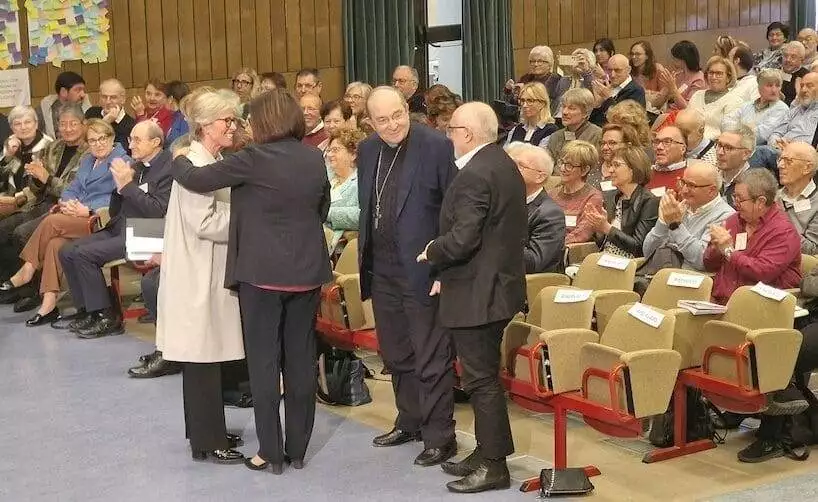
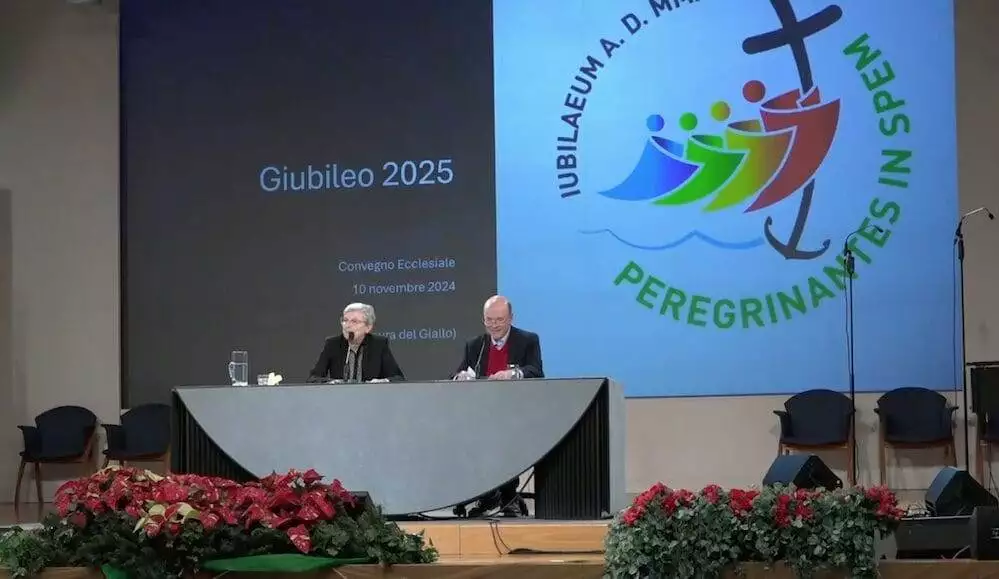
Experiencing the Church in its community dimension through the synodal method. This was one of the messages that emerged from the ecclesial convention organized by the Focolare Movement of Italy and Albania that was held in early November at the Mariapolis Center of Castel Gandolfo in Italy. An event that was attended by about a thousand people, of different ages and vocations, who adhere to the spirituality of the Focolare Movement, but also representatives of other associations.
Cristiana Formosa and Gabriele Bardo, Focolare leaders in Italy and Albania highlighted the path taken so far together with other groups of the Italian Church. It all stemmed from “a deep dialogue that grew over time, between priests and laity; a working together, people from all the branches of the Work of Mary (or. The Focolare Movement); a growing appreciation of all those who work in various capacities in the local church and in diocesan and national bodies. […] We feel that in recent years this sensitivity has grown a lot within the Movement, and both at the national and local levels there is much more collaboration with other Movements and Church Associations.”.
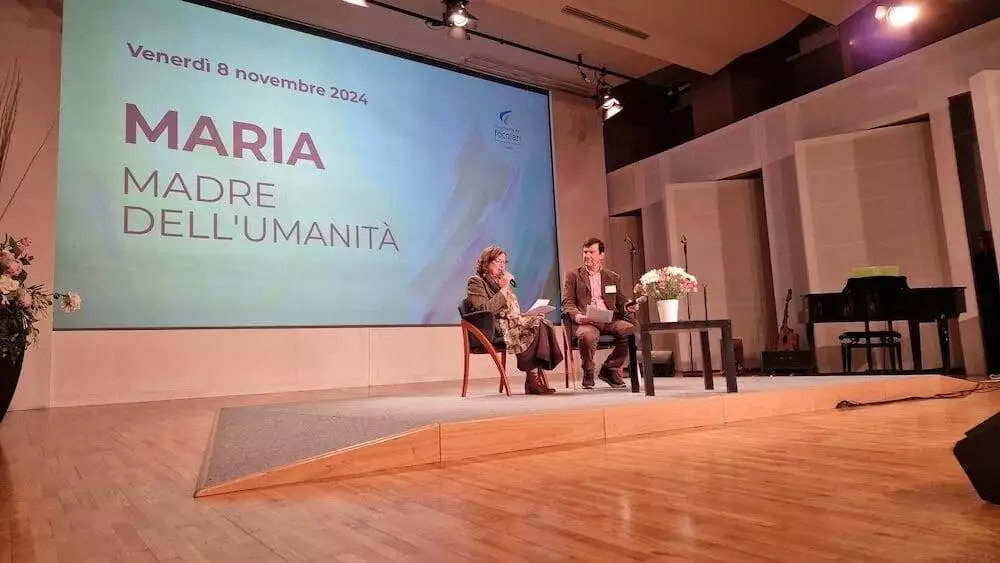
On the first day, Prof. Vincenzo Di Pilato, professor of Fundamental Theology and Academic Coordinator of the Centro Evangelii Gaudium emphasized (text) the figure of Mary as Mother of God and Mother of humanity, highlighting the Trinitarian root of the incarnation and Mary’s social dimension.
This was followed by Card. Giuseppe Petrocchi who deepened the reality of being church today, emphasizing how one needs to have a value compass to understand how to move, what church to be and how to be church. One must study and love the sociocultural context of the area in which one acts as well as being attentive to signs of the times: what the Lord is asking of us today.
Space then was given to various experiences on educational projects aimed at marginalized people, on the new generations, universal fraternity, the option for the “poor” for an inclusive synodality.
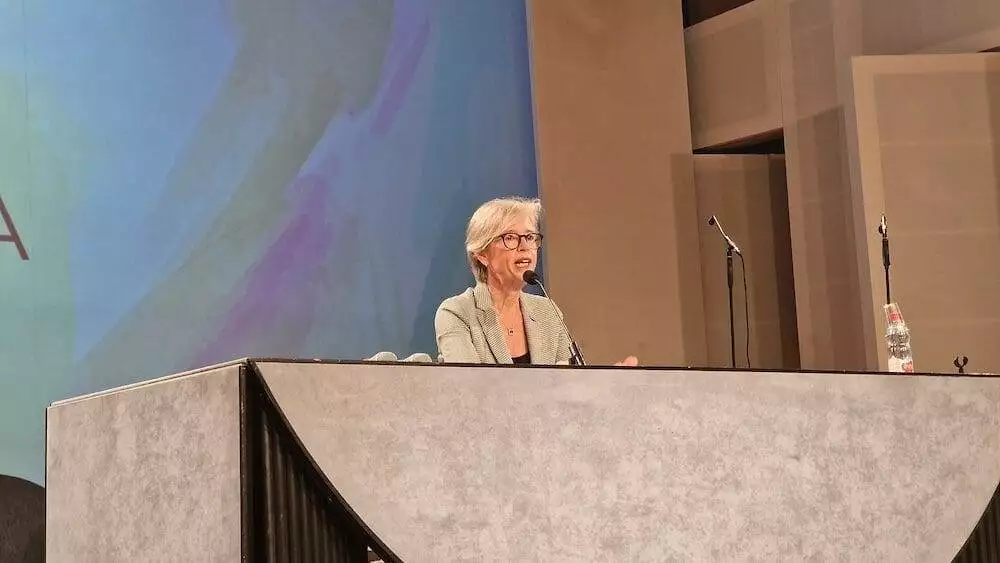
The second day was enriched with the presence of Dr. Linda Ghisoni, Under secretary of the Dicastery for the Laity, Family, Life, who brought greetings and encouragement from the Prefect of the Dicastery Card. Kevin Joseph Farrell. Dr. Ghisoni delivered a meditative reflection entitled “Marian dimension: a Church with a synodal face”. By retracing Mary’s life, she affirmed that we too must “trust God who is faithful. It’s up to us, far from all self-driven triumphalism, to be present in the face of the toughest situations in our society, in our family, in our movement. We should not be ashamed if we seem to belong to a group of failures, if we have people among us who are weaklings, and we should welcome the call to an ever-new generativity, proclaiming with closeness, care, listening, with intelligence, attention and dialogue, that God is faithful, is close, is merciful.”.
And she recalled the words that Cardinal Farrell addressed to the Focolare Movement on the 80th anniversary of its birth: “The ideal that Chiara (Lubich) transmitted to you remains ever relevant, even in today’s secularized world which is so different from that of when the Movement began. Your charism contains in itself a great life giving energy, but as the Holy Father often says: ‘it is not a museum piece… it needs to come into contact with reality, with people, with their anxieties and problems. And so, in this fruitful encounter with life, the charism grows, is renewed, and also reality is transformed, is transfigured through the spiritual force that such a charism brings with it.’”
With Marina Castellitto and Carlo Fusco the topic on the universal call to holiness was explored further through the figures of some Focolare members for whom the cause of beatification has been initiated.
This was followed by the experience of the Social Week of Italian Catholics held in Trent in July 2024. “Those days were an experience of listening and deepening the here and now of our time: questioning us about our being a community of believers in the larger ecclesial community and therefore politics as a history and network of human relationships,” stated Argia Albanese president of the Political Movement for Unity (Mppu) Italy.
The day continued with the experience of the National Council of Lay Aggregations (CNAL) in the presence of secretary Dr. Maddalena Pievaioli. The Council is the place where they live their relationship with the Italian Episcopate in a unified form, offering the richness of their associations and actively welcoming its programs and pastoral indications. The wish is that we can increasingly spread this reality within the Associations.
We concluded with the sharing of some best practices such as the Evangelii Gaudium Center, the experiences of the Diocesan Movement of Pesaro and Fermo, and insights on ecumenical and interreligious dialogue, dialogue with people of nonreligious beliefs, and dialogue with the world of culture.
Present on the last day were Margaret Karram and Jesús Morán, President and Co-President of the Focolare Movement. Margaret talked about her recent experience at the synod as one of nine specially invited guests. “The Synod, with its 368 participants, including bishops and laity, of whom 16 were fraternal delegates from other Christian Churches, offered us a perfect example of the universal dimension of this hope,” Margaret said. “We came from 129 nations and each of us was a bearer of our own experience of peace, of war, of poverty, of prosperity, of migration, of joys and sorrows of all kinds. So I would say that the first message, perhaps the most important, is the deeply missionary dimension of the Synod. […] And the first lesson we learned is: walk together, witness together, we need each other. The second lesson was the spiritual practice of discernment that requires: inner freedom, humility, mutual trust, openness to newness.” (…) Our responsibility is “to become bearers of synodality in every sphere: the ecclesial one in primis (first place), Just think of how many of us, and here you will be many! are engaged in our own local Church. But, we members of the Work of Mary, we cannot limit ourselves only to this sphere, we are a lay Movement and this lay characteristic is essential, it comes from the Charism and we cannot lose it. The Synod has stressed on many occasions that we must ‘widen our tent’ to include really everyone, especially those who feel outside.”
Jesús Morán gave a meditation-reflection on being a Church of Hope today. “Hope,” he said, ”makes us overcome fear. Hope must be united with faith and love, the three sisters of the theological life. Hope is a communal virtue; it frees us from the isolation of anguish and launches us toward ‘us’; an ‘us’ that becomes concrete love for our brother.”.
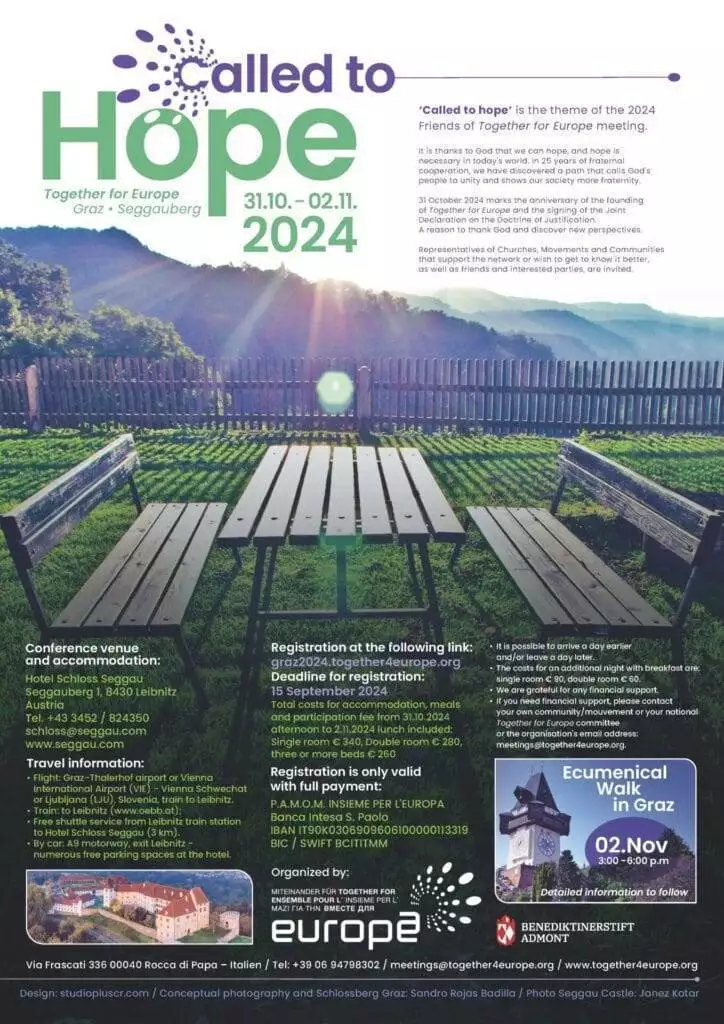
“To give a soul to Europe” is the aim of Together for Europe, a Christian network made up of over 300 Movements, Organizations and Communities from Western and Eastern Europe. It shines out as a sign of hope, especially in times of conflict and crisis.
On 31st October, Together for Europe (TfE) celebrated its 25th anniversary. This date also marked the historic 1999 Catholic-Lutheran Joint Declaration on the Doctrine of Justification in Augsburg, Germany, which healed a division of over 500 years between the two churches. In the years that followed, dialogue between them, based on mutual forgiveness, deepened, culminating in the historic Pact of Reciprocal Love in December 2001 at the Lutheran Church in Munich, attended by over 600 people.
The early promoters of TfE include Chiara Lubich, founder of the Focolare Movement, Andrea Riccardi,founder of the Community of Sant’Egidio and other founders of Italian Catholic and German Evangelical-Lutheran Movements and Communities, united by a commitment to journey together.
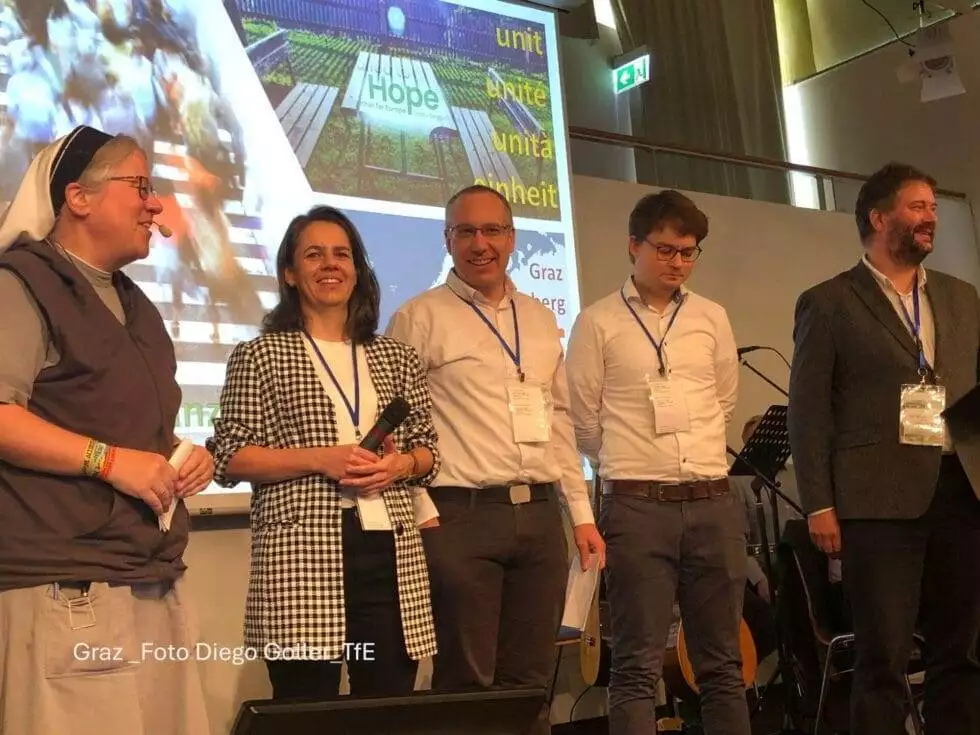
This year, from 31st October- 2nd November, more than 200 TfE representatives gathered in Graz-Seckau for the annual event, entitled “Called to Hope.” Participants represented 52 Movements, Communities and Organisations from 19 European countries and included Orthodox, Catholic, Protestant, Reformed and Free Church Christians, along with spiritual leaders, laypeople, civil authorities and political figures.
Among them were Bishop Wilhelm Krautwaschl of the host diocese, Bishop József Pál of the Diocese of Timișoara (Romania), Jesús Morán, Co-President of the Focolare Movement, Reinhardt Schink of the Evangelical Alliance in Germany, Markus Marosch of the Round Table (Austria), Márk Aurél Erszegi from the Hungarian Ministry of Foreign Affairs and former Prime Ministers Alojz Peterle of Slovenia and Eduard Heger of Slovakia. A delegation from the Interparliamentary Assembly on Orthodoxy, including Secretary-General Maximos Charakopoulos (Greece) and Advisor Kostantinos Mygdalis, also participated.
In his opening speech, Gerhard Pross (Esslingen YMCA), moderator of TfE and a witness of its beginnings, highlighted the many moments of grace experienced over the past 25 years. Bishop Christian Krause, who in 1999 was President of the Lutheran World Federation and co-signed the Joint Declaration, sent a message emphasizing the significance of this shared journey.
One participant shared, “Given the current situation in Europe, I arrived here discouraged and depressed. But these days have filled me with courage and hope.” A Ukrainian lady echoed this sentiment: “To be ambassadors of reconciliation, that is what I take away from this gathering. I live in a country at war, where reconciliation is not yet up for discussion. But I feel we can be ambassadors, because ambassadors are by definition diplomats who offer and prepare rather than imposing. This is the mission I feel called to bring where I live. I will try to do so, striving to be, as Jesús Morán said, ‘an artisan of a new culture.’”
In his address, Jesús Morán emphasized, “Change does not happen overnight. What we need are artisans and farmers of a new culture who work, sow and hope with patience. The ‘togetherness’ we speak of is not a simple union. Unlike union, unity regards participants as individuals. Its goal is community… Unity transforms those involved, because it reaches their essence without undermining their individuality. Unity is more than shared commitment; it is being united as one in commitment. While diversity in union can lead to conflict, in unity it becomes a source of richness. Ultimately, unity transcends participants and is received as a gift.”
During the gathering, participants solemnly renewed the Pact of Reciprocal Love, the foundation of their shared commitment, praying in four languages: “Jesus, we want to love one another as You have loved us.”
The event concluded with the idea of hosting a major event in 2027 to send a powerful message of unity and hope to Europe.
As a participant from the Netherlands reflected: “I am sure that work, life, love and suffering will bring good to Europe. It is very important to be ambassadors of reconciliation… Artisans are essential, to plant seeds of hope.”