Love even when it’s hard
Love even when it’s hard

Love even when it’s hard
Here I am!
Be recollected

Universal brotherhood, even apart from Christianity, has not been absent from the minds of great and exceptional persons. Mahatma Gandhi said: “The Golden Rule is to be friends of the world and to consider as ‘one’ the whole human family. Whoever distinguishes between the faithful of his own religion and those of another misinforms the members of his own and opens the way to the rejection of religion and its values.” [1] (…)
However, the One who brought universal brotherhood on earth, as an essential gift to humanity, was Jesus, who prayed for unity before he died: “Father, that they may all be one” (Jn 17:21). In revealing to us that God is our Father and consequently that we are all brothers and sisters, he introduced the idea of humanity as one family, the idea of the “human family” made possible by universal brotherhood in action. Consequently, he destroyed the walls that separate those who are “the same” from those who are “different,” friends from enemies, walls that isolate one city from another. And he loosened the bonds that imprison people in so many ways, from the thousands of forms of suppression and slavery, from every unjust relationship. In this way he brought about an authentic existential, cultural and political revolution. Thus the idea of fraternity began to make way in history. We could trace back its presence in the evolution of thought throughout the centuries, finding it at the basis of many fundamental political ideas, at times clearly, at times more veiled. This fraternity was often lived, although in a limited manner, each time, for example, a people joined together to fight for their freedom, or when social groups struggled to defend the weak, or whenever people of different convictions rose above mistrust in order to affirm a particular human right.
Chiara Lubich
[1] “In buona compagnia”, a cura di Claudio Mantovano, Roma, 2001, p. 11.
Photo © Horacio Conde-CSC Audiovisivi
Give witness to God who is Love
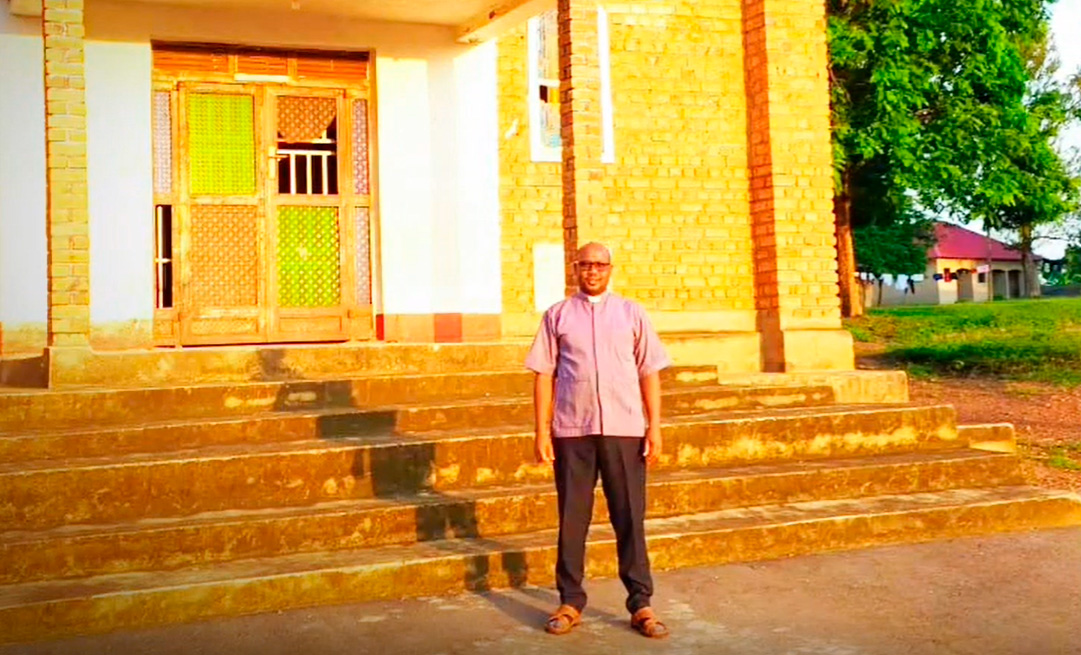
I am an Anglican priest from Uganda and I came to know the spirituality of the Focolare Movement fifteen years ago, when I was in the seminary for ministerial formation. This spirituality has shaped me in an integral way – myself, my family and my Church because it expresses in an exemplary manner, two fundamental aspects: Love and Unity. Nowhere in the Bible do we find Scripture that emphasizes division, separation, hatred, malice, tribalism, denominational divisions, or racial segregation. On the contrary, the Bible calls us to unity and love between people, even when there are differences.
We are called, above all, to love our neighbour, because through loving our neighbour we love God. In this way I have learned to see Jesus in every person who is close to me (cf. Mt 25) and I experience great peace every time I share what little I have with those in need.

In one of his last prayers before the Ascension, in John 17:21, Jesus says: “that they may be one, just as I am one with you, Father”. This implies that unity should be our goal in life. Thanks to this awareness, I have had the opportunity to meet and dialogue with many people of different denominations: Catholics, Orthodox, Lutherans and also with people of other religions, Buddhists and followers of traditional religions, at all levels and in all age groups. This has given me a broader view of how to live and approach life in an integral way. I have experienced the joy of recognizing them as brothers and sisters.
I have also seen Bishops of the Anglican Church of Uganda welcome this spirituality through our experience, expression of life and witness. Currently, five bishops are friends of the Movement, including the Archbishop of the Anglican Church of Uganda. Some of them also participated in the international ecumenical conferences of Bishops organized by the Focolare Movement.
Currently we have started a communion group at Uganda Christian University, with the intention of practicing the aspect of love and unity among young people and university students; at the same time, we also transmit the value of “Ubuntu”[1], within the Together for a New Africa initiative, in which I participate as a tutor of this second round. After all this, people often ask me questions that I struggle to answer: “Why are you always happy? Don’t you ever get angry? You are always available. Don’t you have other things to do? Why are you so generous?” My answer has always been: “Do good, the reward is in Heaven”.
After the four Gospels of the New Testament, the fifth Gospel that everyone should read is that of the “you”, in the other person. We must see ourselves as a living witness, so that in our works and actions the image of God may be reflected, doing to others what we would like to be done to us. Putting into practice what the Bible teaches: to love God with all our heart, with all our mind and with all our soul, and to love our neighbour as ourselves.
Reverend Canonico Bwanika Michael Eric
[1] Ubuntu is a word of Bantu origin from sub-Saharan Africa that expresses a philosophy of life focused on compassion, respect and human interdependence, summarized in the maxim “I am because we are”, emphasizing that the individual is realized through community, sharing and collective well-being.
Be joyfully open to others
Live today with trust
Love is what counts
Pray for unity

The love of a family
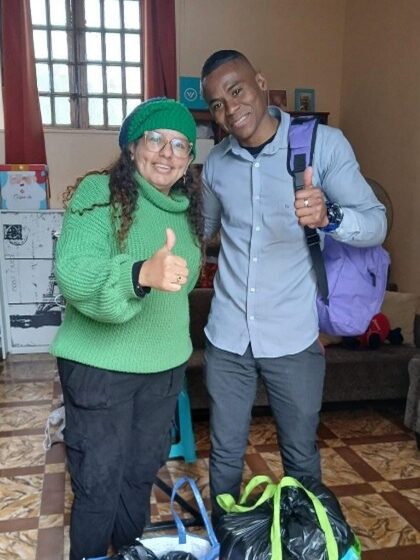
One Friday, Moisés, a migrant, arrived on the recommendation of another Venezuelan young man who was living in the same shelter and had told him to come to us, that we could help him. Moisés had arrived from Colombia a few weeks before Christmas and had only three changes of clothes, typically Caribbean, which he had brought with him on the journey. He was cold. Thanks be to God, he soon found work in a restaurant, washing dishes and helping in the kitchen. It was only a few days a week, but he receives lunch and dinner.
So we gave him winter clothes and a blanket, because he was sleeping on the floor on a thin mattress lent to him by the landlord, a man who also kindly agreed that he could pay the rent when he received his first pay check. He was truly fortunate, because shortly after arriving he had already found a job, a room and a very generous landlord. Not all migrants have the same luck. He began to cry when he saw what we were giving him and “the love of a family” (as he described it) that he was receiving.
He is a young professional, a commercial accountant. We prayed and asked God that in the future he may be able to practise his profession.
(S.R. – Peru)
True wealth
My relationship with my brother-in-law had always been difficult. First there were debts from a failed business venture, managed with inexperience and little prudence; then serious health problems that required costly treatments and operations and each time called for our intervention to find the necessary money for him at the cost of mortgaging the house and using the funds we had set aside for our two children’s education. It was not easy to go beyond the human limits in dealing with this relative, but seeing the state he was in, all that came to mind was that Jesus Forsaken whom my husband and I wanted to love. Perhaps no one would have blamed us if we had not continued to pay for the mistakes of another, yet, as Christians, we felt called to follow a different logic. When I spoke about it with my husband, he mentioned an account he had opened at the bank for emergencies: even though we would lose the interest, he would make it available to his brother. Immediately afterwards we felt more at peace and more united with each other. This is our true wealth.
(C. – South Korea)
compiled by Maria Grazia Berretta
(from Il Vangelo del Giorno, Città Nuova, year XII – no. 1, January–February 2026)
Photo: © Taylor Nicole – Unsplash / © Silvano Ruggero
Don’t give in to individualism
Small gestures for a united world!
Be committed to values
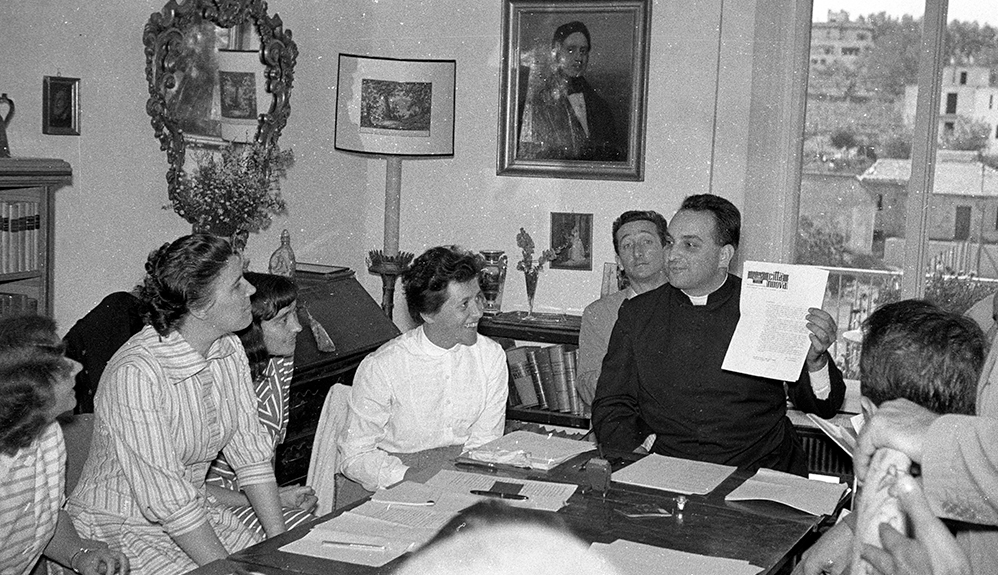
2026 will mark the 70th anniversary of the founding of the Città Nuova magazine. It was the 14th of July 1956 when, in Fiera di Primiero in northern Italy, during a summer meeting of the Focolare Movement called Mariapolis, the foundress and first president of the Focolare Movement, Chiara Lubich, had the idea of creating a “newsletter” so that all the participants could keep in contact.
Since then, thousands of publications have followed, and Città Nuova has always been committed to looking at the facts, reading and exploring current events from the perspective of universal fraternity. It is committed to dialogue on uncomfortable issues, to be close to the most fragile and the forgotten, to build bridges, to be present in the wounds of humanity, to highlight seeds of peace and hope, with a global horizon that looks towards a united world.
As the Movement spread throughout the world, editions were launched in different countries. Today there are 32 editions in 21 languages, both in print and online.
Margaret Karram, President of the Focolare Movement, addressed a video message on the 7th of January 2026 in which she stated that “today, faced with the terrible threats of our time – wars, polarisation of all kinds, environmental crises, an economy often based on exploitation, ethical challenges posed by artificial intelligence – Città Nuova still and always chooses dialogue:
Here is the complete video message. Activate the subtitles and choose the language you desire.
Cover photo: The first issue of Città Nuova is published, 14 July 1956. © CSC Audiovisual Archive
Be faithful
Guard hope
Give voice the poor
Be in solidarity with all
Communicate Joy!

“In the midst of the darkness we are living through today in Venezuela, we remember that we are not alone. Under the roar of the bombs in 1943, Chiara Lubich discovered that there is an Ideal that nothing and no one can destroy: God loves us immensely.”
This is how the “Message of hope and unity” begins. It was shared on the evening of 5th January by the Venezuelan Gen (the young people who adhere to the spirituality of the Focolare Movement), both those who live in Venezuela and those in other parts of the world. They met online to pray and to share how each one is living this critical time for the whole population, never forgetting the choice to love everyone. There was a strong sense of the need to face together what they described as a “sacred” time: “we are not alone because we are supported by the prayer of all those who, from Venezuela and from all over the world, are asking for Peace.”
The message continues:
“Today fear wants to paralyze us, but the response is not hatred, rather unity. Chiara taught us that when everything collapses, the only thing that remains is Love. If we become “one”, if we look after one another and place God as our rock, fear loses its power.
Let’s not be afraid. Let’s make this moment an opportunity to:
If we remain united, Jesus is among us and wherever He is, light ultimately overcomes darkness.
Courage and trust!”
Edited by the Editorial Staff
Photo: View of the city of Caracas (Venezuela) © Pixabay
Share the suffering of those nearby
Don’t be indifferent towards others
Silence your pride

“A New Life” is the story of Hasan Mohammad, an economic migrant who arrived in Sicily (Italy) from Bangladesh. Thanks to the Formation & Communion (Fo.Co.) Cooperative, he found a home, a job and a new family. The “widespread reception” system is not limited to the integration of migrants but aims at reciprocity, where the encounter between different people becomes growth for everyone. Discover how solidarity can transform lives and geographical areas.
Be enlightened by The Light
Approach everyone with sincerity
Closeness draws us to union with God
Be courageous in building peace

In the Muisne district, Esmeraldas, the ‘Sunrise’ project, set up by the Focolare Movement with the support of AMU (Action for a United World) and the Economy of Communion, brings together more than 500 young people in ecology clubs located in towns and villages along the coast. These clubs are not only concerned with ecology, but also with the integral development of the person as a response to the many risks to which they are exposed.
See everyone kindly
Live for an “unarmed and disarming” peace

During the Week of Prayer for Christian Unity,[1] we are invited to focus on the theme found in Paul’s letter to the Ephesians. This epistle is one of his socalled prison letters, and in it, he exhorts all those who listen to his message to be credible witnesses to their faith through the unity among them.
This unity is based on one faith, one spirit and one hope and it is the only means of witnessing to Christ’s followers as his “body.”
There is one body and one Spirit, just as you were called to one hope when you were called.
So, Paul calls us back to hope. But what is hope and why are we invited to live it? It is not only a seed that develops but also a gift that we can protect, cultivate and bring to fruition for the good of all. ‘Christian hope sets us upon a narrow mountain ridge that is like a frontier where our vocation asks that we choose to be faithful to God’s faithfulness to us every day and every hour.’ [2].
Our vocation, the call to be Christian, is not just an individual matter between each person and God; it is a ‘convocation’, being called together. It is the call to unity among those who are committed to living the Gospel. In Chiara Lubich’s talks and writings, we often find explicit references to unity as an integral part of her spirituality. It is the fruit of Jesus’ presence among us and this presence is the source of profound happiness.
‘If unity is so important for Christians, then failing to achieve it must be contrary to their vocation. We sin against unity every time we give in to the continual temptation of individualism, which pushes us to do things alone, guided by our own judgement, interests, or personal prestige, and to ignore or even despise others, their needs, and their rights. [3]
There is one body and one Spirit, just as you were called to one hope when you were called.
In Guatemala, there is great collaboration and dialogue between members of different Christian Churches.
Ramiro writes, “People from different Churches worked together to organise the Week of Prayer for Christian Unity. The programme included an arts festival that young people helped to initiate and various celebrations in different churches. This was so successful that the Catholic Bishops’ Conference asked us to continue this initiative in preparation for a gathering with Catholic bishops and believers from many Churches who were travelling from across the Americas for a conference commemorating the 1700th anniversary of the Council of Nicaea. It’s not only during these special activities but whenever we come together I feel we always experience a strong sense of unity among us all and the fruits that it brings: fraternity, joy, and peace.”
Edited by Patricia Mazzola & the Word of Life Team
[1] Celebrated 18-25 Jan in the northern hemisphere & at the time of Pentecost in the southern hemisphere. For 2026, the prayers and reflections have been prepared by the faithful of the Armenian Apostolic Church, along with their brothers and sisters of the Armenian Catholic and Evangelical Churches
[2] Madeleine Delbrêl, https://www.pasomv.it/files/bocc/madalein_del_brel_noi_spes.pdf .
[3] C. Lubich, Word of Life, July 1985
© Photo: RÜŞTÜ BOZKUŞ – Pixabay – Lago di Iznik – Turchia
The world today lacks unity. To give just a few examples, we see this in the divisions that sometimes exist within families, among neighbours and between Churches and communities. It seems that polarisation prevails over understanding. This is a consequence of the growth of individualism that drives people to decide and act on their own behalf in a way that benefits their interests and personal prestige. This gives little value to the needs and rights of others.
And yet, it is possible to experience unity. It is a journey that always begins by taking small steps and with a “yes” that we say within: yes to welcoming, yes to forgiving, yes to living for others. It is not about grand projects but about small but faithful actions that, over time, transform a life, a community or an entire environment. And when that happens, we realise that fraternity ceases to be an ideal and becomes a visible reality and hope for all.
Martin Buber considers unity to be relationship. He states that it is the space of encounter, that exists between You and I, a sacred place where differences do not disappear but are mutually recognised. For him, unity arises when two realities allow themselves to be touched and shaped by the other and not when one imposes itself. This “between” can be understood as a space that welcomes diversity and, precisely for this reason, becomes a source of communion. Hence, for Buber, “All true life is encounter” (Ich und Du, 1923).
Therefore, in other people – whether friends, family members or just someone we meet along the way – we can discover the great ‘opportunity of relationship’. Other people ‘save us’ and enable us to go beyond our fears when we feel overwhelmed by a difficult situation.
Living for unity means walking together despite our differences, transforming them into treasures rather than obstacles. It is an invitation to move from simple coexistence to encounter, where reciprocity enables what belongs to each person to become new because the relationship means it is shared. Unity, understood in this way, is not the sum of the two nor is it fragility that causes us to lean on others: it is strength that generates the hope that there is still a tomorrow. Diversity is no longer disunity, but mutual richness. It is feeling that what happens to others also resonates in me. ‘Union does not consist in equality, but in harmony,’ Rabindranath Tagore reminds us.
This month, may we experience the joy, light, life, peace and hope that come from unity that is lived
If we are one, we see things differently.
Photo: © JGC-CSC Audiovisivi
THE IDEA OF THE MONTH is currently produced by the Focolare Movement’s “Centre for Dialogue with People of Non religious Beliefs”. It is an initiative that began in 2014 in Uruguay to share with non-believing friends the values of the Word of Life, i.e. the phrase from Scripture that members of the Movement strive to put into practice in their daily lives. Currently, THE IDEA OF THE MONTH is translated into 12 languages and distributed in more than 25 countries, with adaptations of the text according to different cultural sensitivities. dialogue4unity.focolare.org
Today too we can start again!
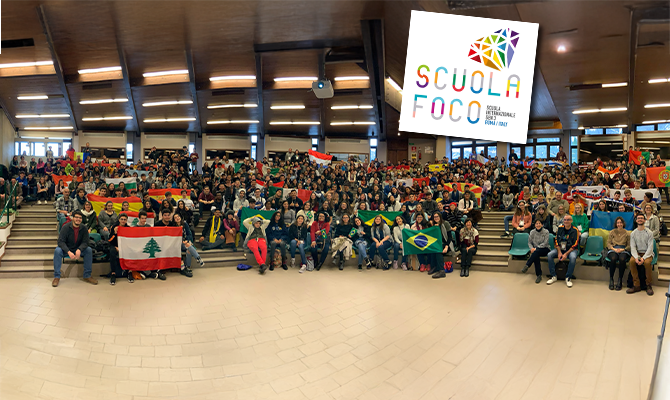
Sofia from Italy told us, “At the “School of Fire”, I was able to build a stronger connection with God and I began to see faith from a different point of view”. José from Panama, “For me it was an extraordinary experience, living every moment together with everyone, I experienced the promise of Jesus who is present among us when we love one another and that, even in diversity, we can live unity and bring it to others”.
These are two of the testimonies of boys and girls who, over the years, have participated in the “School of Fire”, the annual meeting for teenagers of the Focolare Movement. This year it will take place from 30th December 2025 to 7th January 2026 at the Mariapolis Centre in Castel Gandolfo (Rome). There will be 250 participants from 15 countries: South Korea, Lebanon, Jordan, Austria, Great Britain, Portugal, Italy, Nigeria, Burundi, Ivory Coast, USA, Panama, Dominican Republic, Costa Rica and Brazil.
Over time, this type of experience has proved to be a dynamic and exciting encounter that has provided an ideal space for the young people to build real relationships with Jesus; a unique opportunity to be in contact with peers who share the same interests and who ask the same questions despite coming from very distant realities, with different linguistic, cultural and experiential backgrounds. This dimension, the possibility of being able to understand the way others see reality, the commitment to live the Charism of unity proposed by the Movement together, supports and encourages the participants, encouraging them to seriously work to achieve the ‘testament’ of Jesus, ‘May all be one ‘(Jn. 17:21).
The “School of Fire” took place for the first time in 2020, on the occasion of the Centenary of the birth of Chiara Lubich, founder of Focolare, who always encouraged the “Gen 3” (the teenagers of the Movement) to live out that evangelical love that has radically changed the lives of many. In her speech in Washington in the year 2000, referring to the origins of the Movement, Chiara explained, “From the beginning, we said that we were students at the “School of Fire”, to underline the power of that Teacher who, because of our mutual love, was present among us and was teaching those who would bring this new current of life to the whole world”.
The exchange of testimonies on actions of solidarity often gives rise to other ideas and initiatives among the young people. The participants from Croatia said, “We wanted the “School of Fire” to be more than just a memory and, encouraged by what we had heard, when we heard that in Bosnia and Erzagovina, countries close to ours, many people were suffering due to a terrible flood, we decided to help. What did we do? We held a charity concert in Krizevci to raise funds for those affected. We were interviewed by the local radio where we were able to explain the initiative and invite people to participate in the concert. It was a great success. To our great joy, the city’s music school and the music group Klapa Leggero joined the initiative. During the concert we were also able to sell some paintings that the Mayor of Krizevci had given us for the purpose of raising funds for the people affected by the flood.”
In the Czech Republic, for some years the young adults of the Focolare have been helping people in need, carrying out all kinds of work in homes and gardens. Encouraged by the testimonies of proximity heard at the “School of Fire”, the Czech youth wanted to do something similar. They said, “We found out that in our country there are some abandoned rectories that are being repaired through a project called ‘living rectories’ and so we offered to repair the one in Křivoklát that can now be used by families, children and young people from several communities”. 70 boys and girls aged 12 to 18 took part in the project, together with some parents and other adults. “We knocked down walls, repaired walls, painted windows and tidied the garden. In Křivoklát there is a beautiful castle and, to involve the people who live around it, we invited people to a conference and a high-level charity concert performed by our friends from the Prague Cello Quartet”. In the end, there was no shortage of surprises: thanks to the Mayor, the young people were able to spend the night right inside the castle!
This year the “School of Fire” is part of the celebration of the conclusion of the Jubilee and it aims to rekindle hope in the hearts of many. In addition, it will start the year in which the young generations of the Focolare Movement celebrate the 60th anniversary of the Gen Movement, an acronym for New Generation. 2026 will be the year in which we look at what has been achieved: the lives of many children, teens and young people who have generated closeness and change in them and around them, a concrete way to work together with many others to build a more united and peaceful world.
Ana Tano, Paola Pepe, Fiorella Tassini
Make the world smile!
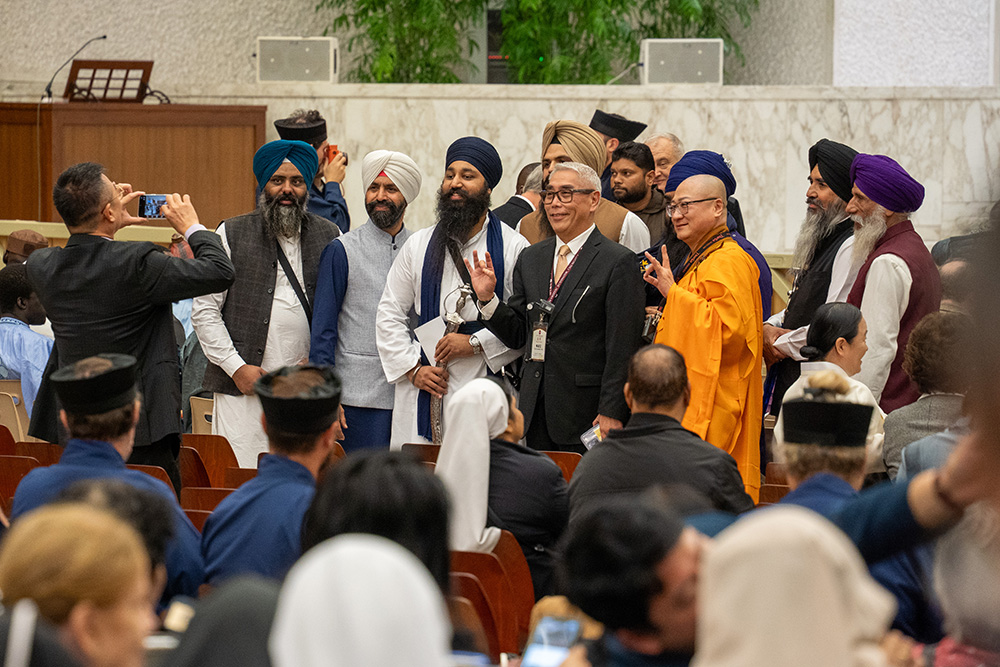
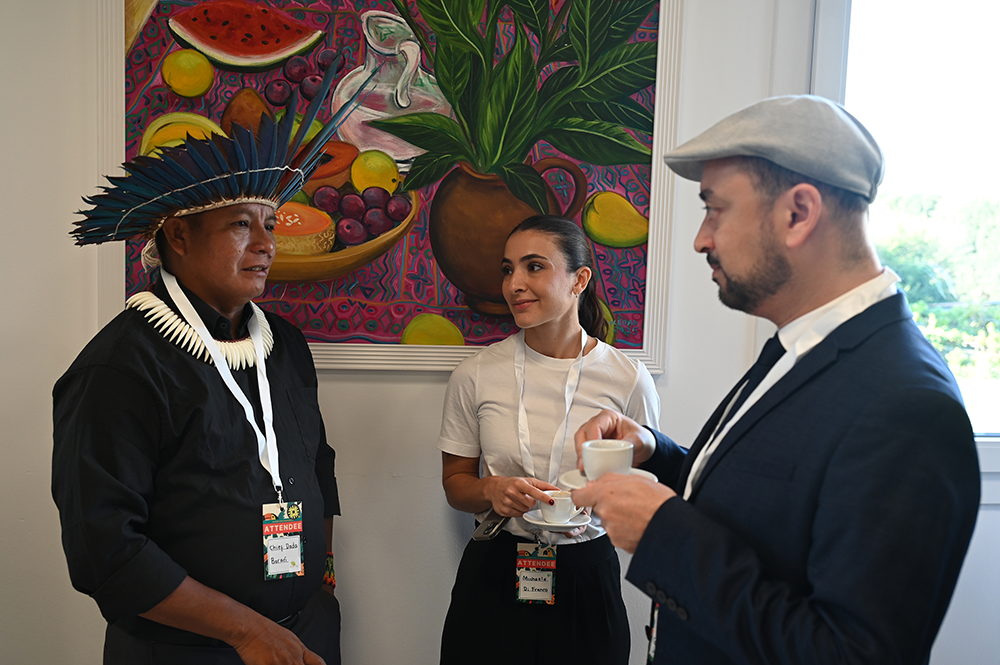
On 28 October 2025, a commemorative event entitled “Walking Together in Hope” was held in the Vatican, in the Paul VI Hall, on the occasion of the 60th anniversary of the Conciliar Declaration Nostra Aetate on the Church’s relationships with all the other religions.
A moment to celebrate six decades of friendship and collaboration between followers of various world religions through testimonies of faith, dialogue and cultural events, and to gather the fruits of this journey. Here are some reflections that were shared immediately after the event.
Find time to be recollected
Take a sense of family everywhere
Bring joy!

Assisi is not only the city of Saint Francis; it has become the beating heart and the home of all those who wish to seriously live out the values of integral ecology. Inspired by the Canticle of the Creatures, the poem written by Saint Francis, a project was born here that is changing the way we relate to the planet: ASSISI Terra Laudato Sì (ATLS). Inaugurated on 22nd April 2024, ATLS is not a place made of bricks, but a true “ecosystem” where we can meet, recharge our spiritual batteries and put our commitment to our common home into practice.
This significant project is founded on the four inseparable dimensions of integral ecology identified by Pope Francis: care for nature, justice for the poor, engagement in society and inner peace. It is a contemporary response to the call we feel to “go and repair our common home.”
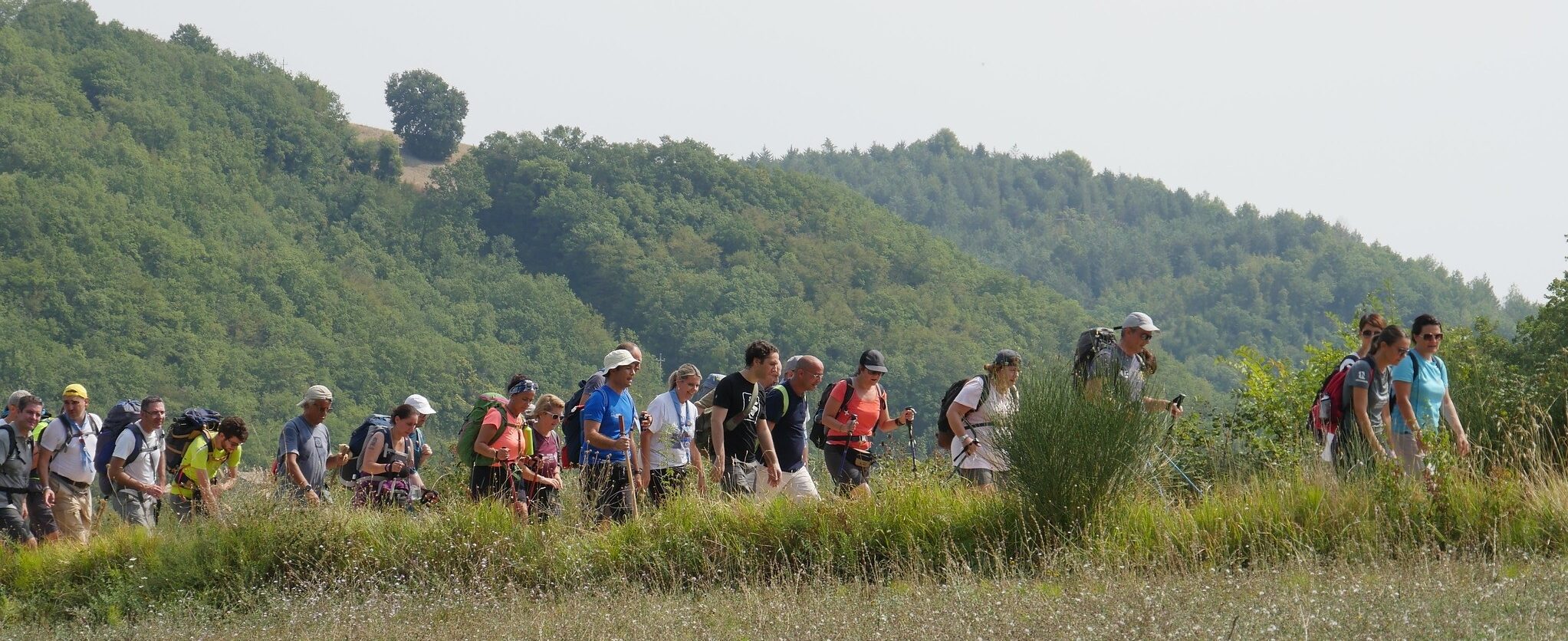
The Ecosystem of Volunteering: Laudato Sì and Focolare in Action
ASSISI Terra Laudato Sì offers an intensive programme of Laudato Sì Retreats and, above all, a Volunteer Programme that enables people to live an immersive experience by offering their time to others. The activities are animated by a shared desire and a strong spirit of “synodal” exchange among the various partners.
An example of this collaboration comes from the Focolare Movement, confirming an important charismatic partnership. Cristina Calvo, an Argentinian focolarina, volunteered for 40 days, actively participating in the methodology and content of ATLS. Hosted at the Sanctuary of San Damiano, along with friars, visitors and school and parish groups, she shared not only liturgical moments but also the contemporary relevance of the lives of Saint Francis and Saint Clare, highlighting their prophetic connection with the Encyclical Laudato Sì.
Cristina described this opportunity as an “immense gift from God,” a concrete demonstration that gentle collaboration and modest hospitality are a winning formula for a lived experience in favour of Creation.
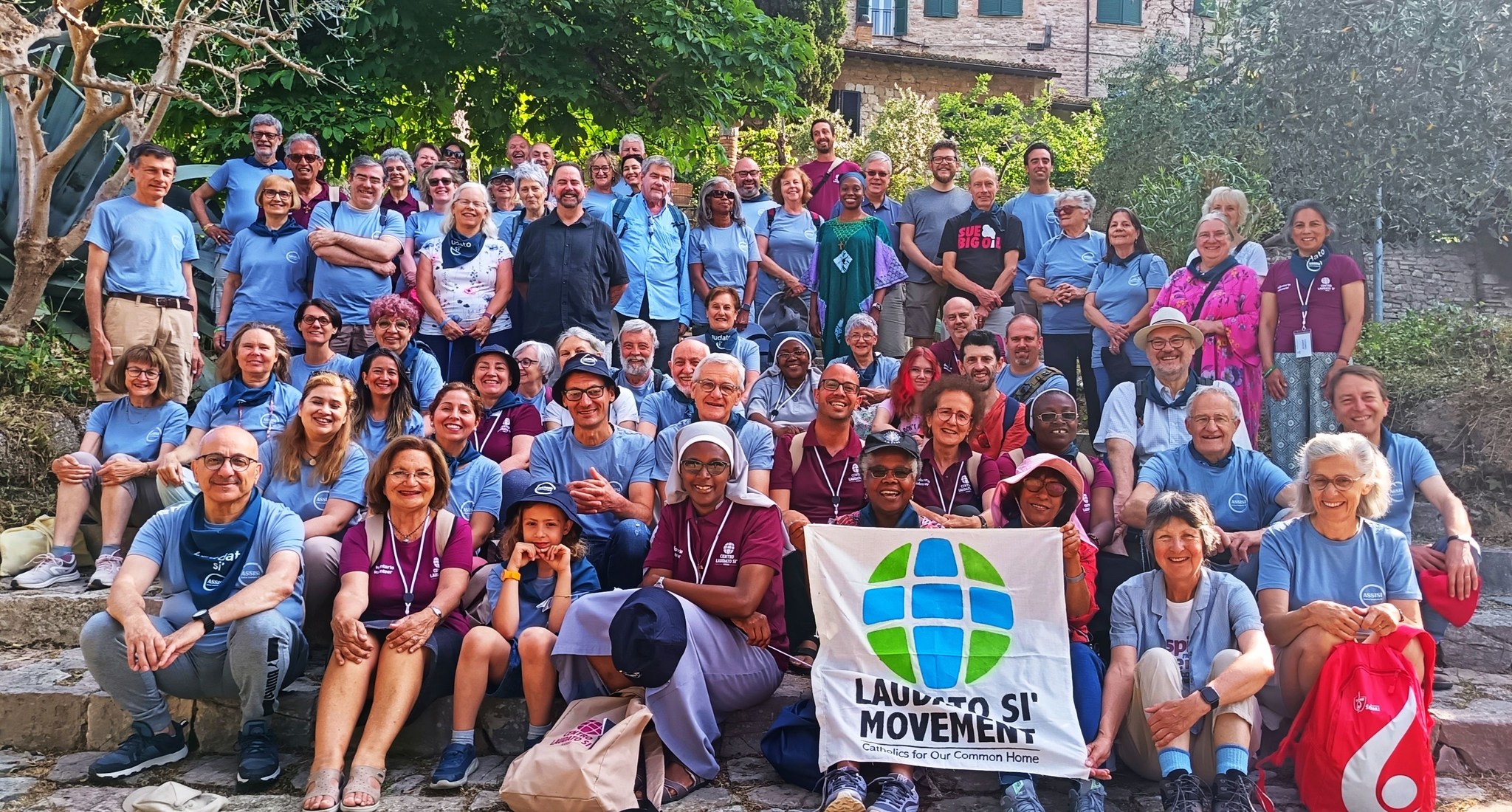
If you too feel a strong call to contribute and wish to live the values of integral ecology in a unique spiritual setting, the invitation is simple: “Come and see!” You can register right away for a Retreat or to become a Volunteer on the website AssisiLaudatoSi.org.
By Carlos Mana
Be careful not to focus too much on yourself!
Meeting You is a celebration!
Remember the gifts you have received
Don’t be afraid of change!

In a time, which is still marked by divisions of every kind, may the joy of serving, sharing and reciprocity be renewed in all of us this Christmas, through real gestures, especially towards those who suffer. We want to commit ourselves to live a Christmas characterised by fraternity and closeness, by sowing hope for the future.
Here I am!
Let yourself be surprised!
Serve