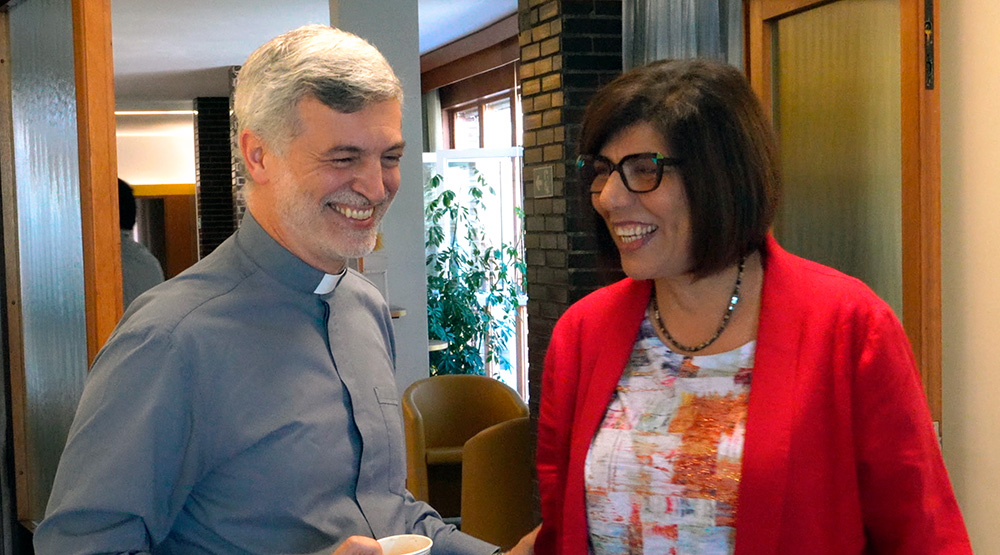
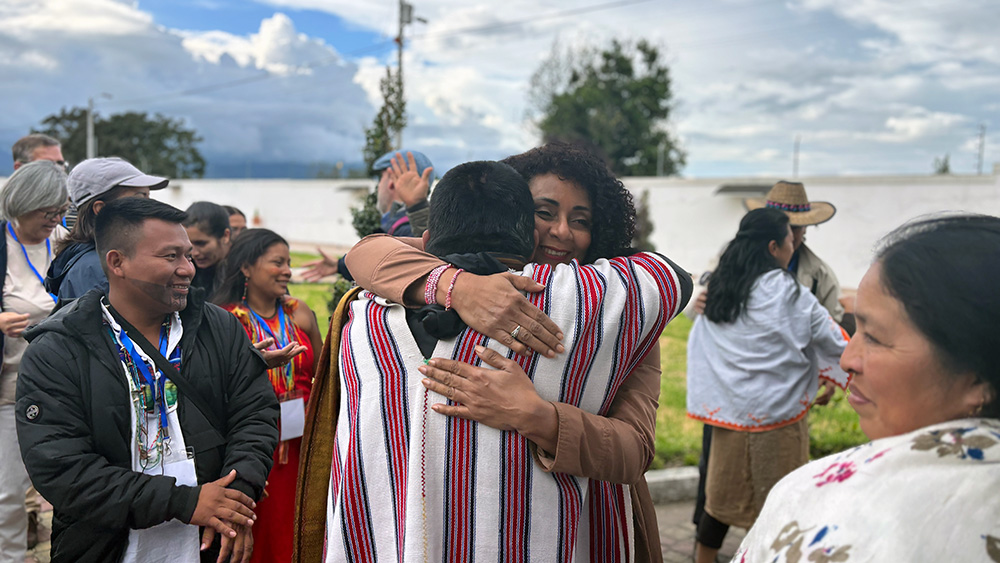
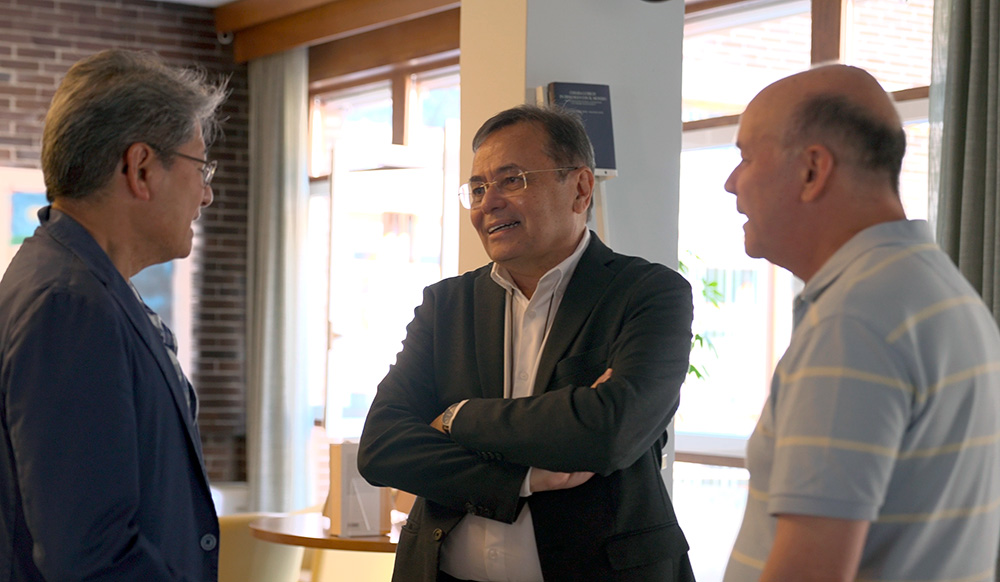
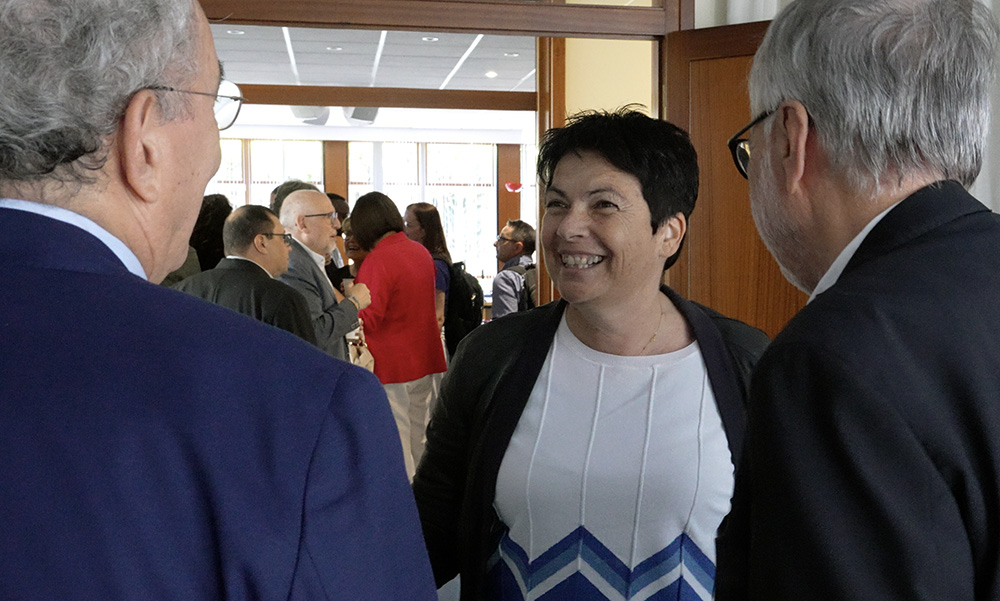
The annual meeting of the Moderators of Lay Associations, Ecclesial Movements and New Communities took place in the Vatican from the 4th to 6th of June 2025. This event, held on the eve of the Jubilee of the Movements, gathered the various ecclesial realities in St. Peter’s Square with Pope Leo XIV. The Focolare Movement was represented. At a time when the world is deeply divided and even polarised, the participants shared a common desire to unite their charisms and contribute to the Church’s journey toward greater unity. Below are some interviews with presidents and founders of movements or communities who highlight the urgent need to feel part of one family going along this journey. They also express their gratitude that they can work together to increase a sense of hope in the world.
The annual meeting of the Moderators of Lay Associations, Ecclesial Movements and New Communities took place in the Vatican from the 4th to 6th of June 2025. This event, held on the eve of the Jubilee of the Movements, gathered the various ecclesial realities in St. Peter’s Square with Pope Leo XIV. The Focolare Movement was represented. At a time when the world is deeply divided and even polarised, the participants shared a common desire to unite their charisms and contribute to the Church’s journey toward greater unity. Below are some interviews with presidents and founders of movements or communities who highlight the urgent need to feel part of one family going along this journey. They also express their gratitude that they can work together to increase a sense of hope in the world.
Shepherds in the Ancient East used to count sheep when they returned from the pasture and were always ready to set out in search if one was missing. They would even brave the desert and the night, in order to find those sheep that had gone astray.
This parable is a story of loss and finding again that clearly demonstrates the shepherd’s love for the flock. He notices that one of the sheep is missing, searches for it, finds it and carries it on his shoulders because it is weak, frightened, perhaps wounded and unable to follow the shepherd unaided. He brings the sheep back to safety and, finally, full of joy, invites his neighbours to celebrate together.
Rejoice with me, for I have found my lost sheep.
Three actions – getting lost, finding and celebrating – are the recurring themes in this story.
Getting lost. The good news is that the Lord goes out to find those who are lost. We often lose the way in the various situations we encounter or in which we live or even take refuge. These may include experiences of abandonment, marginalization, poverty, misunderstanding or disunity. They are like the desert where the path ahead is unclear. The shepherd searches for us even in these places, and although we may lose sight of him, he will always find us.
Finding. Let us try to imagine the scene of the shepherd’s frantic search in the desert. It is an image that is striking in its expressive power. We can understand the joy felt by both the shepherd and the sheep when they find one another: this encounter restores that sense of security to the sheep because it has escaped danger. Thus, the ‘finding’ is an act of divine mercy.
Celebration. The shepherd gathers his friends together to celebrate because he wants to share his joy, just as the main character does in the other two parables that follow this one: that of the lost coin and that of the merciful father[1]. Jesus wants us to understand the importance of sharing joy with everyone and immunizes us against the temptation to judge each other. We have all been ‘found again’.
Rejoice with me, for I have found my lost sheep.
This Word of Life is an invitation to be grateful for the mercy God has for us all personally. Rejoicing and celebrating together present us with an image of unity, where there is no opposition between ‘righteous’ and ‘sinners,’ but we share in each other’s joy.
Chiara Lubich writes, ‘It is an invitation to understand the heart of God and to believe in his love. We are inclined to calculate and measure and sometimes we believe that even God’s love may grow weary… but God’s logic is not like ours. God is always waiting for us: indeed, we bring him immense joy every time – even though it be an infinite number of times that we return to him.’ [2].
Rejoice with me, for I have found my lost sheep.
Sometimes we can be those shepherds, those caretakers, for one another and lovingly search for those who have drifted away from us, from our friendship or from our community. We can look out for the marginalized, the lost, the people driven to the peripheries by the trials of life.
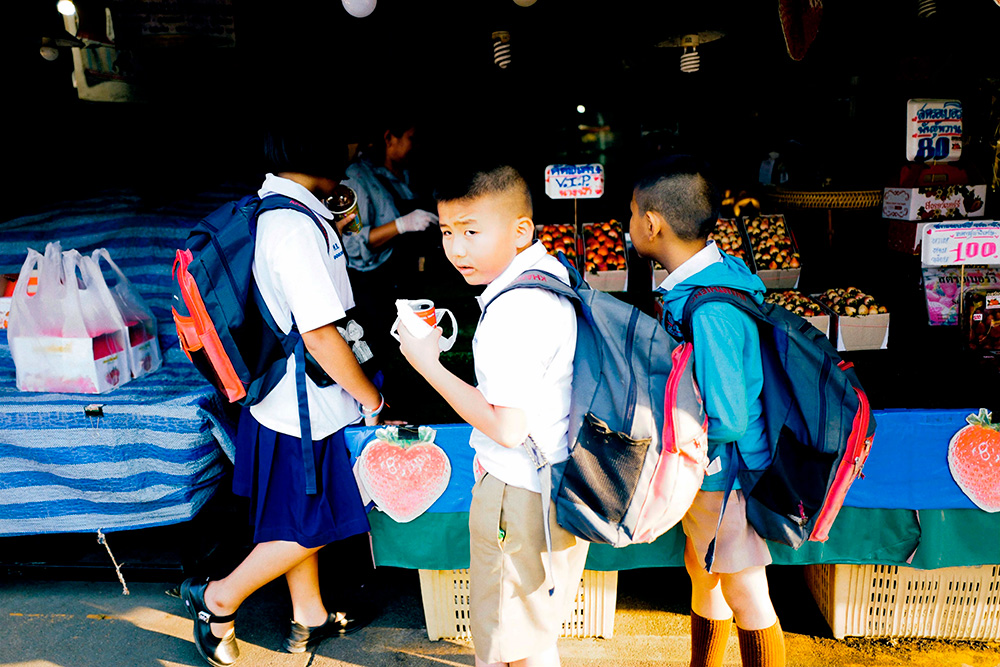
A teacher told us ‘Some pupils didn’t come to classes regularly. When I was free, I used to go to the market near the school because I hoped to see them there because I knew some of them worked there to earn money. One day I finally found them. They were amazed that I had gone to look for them personally and were struck by the fact that they were really important to the whole school community. So they started to come to school regularly and it truly was a celebration for everyone.’
A teacher recounts, “A group of pupils often tended to skip lessons. When I was free, I used to go to the market near the school hoping to see them because I had heard that several of them worked there to earn money. One day, I finally found them: they were amazed that I, personally, had gone looking for them. They were really struck by what I had done and this helped them understand how important they were to the whole school community. They began attending school regularly and this brought a sense of joy to everyone.”
This experience expresses the inalienable value of every human being. It speaks to us of unconditional acceptance, of never ceasing to hope and of the joy that everyone experiences when someone is reintegrated into a community because this restores their dignity and acknowledges their unique value as a person.
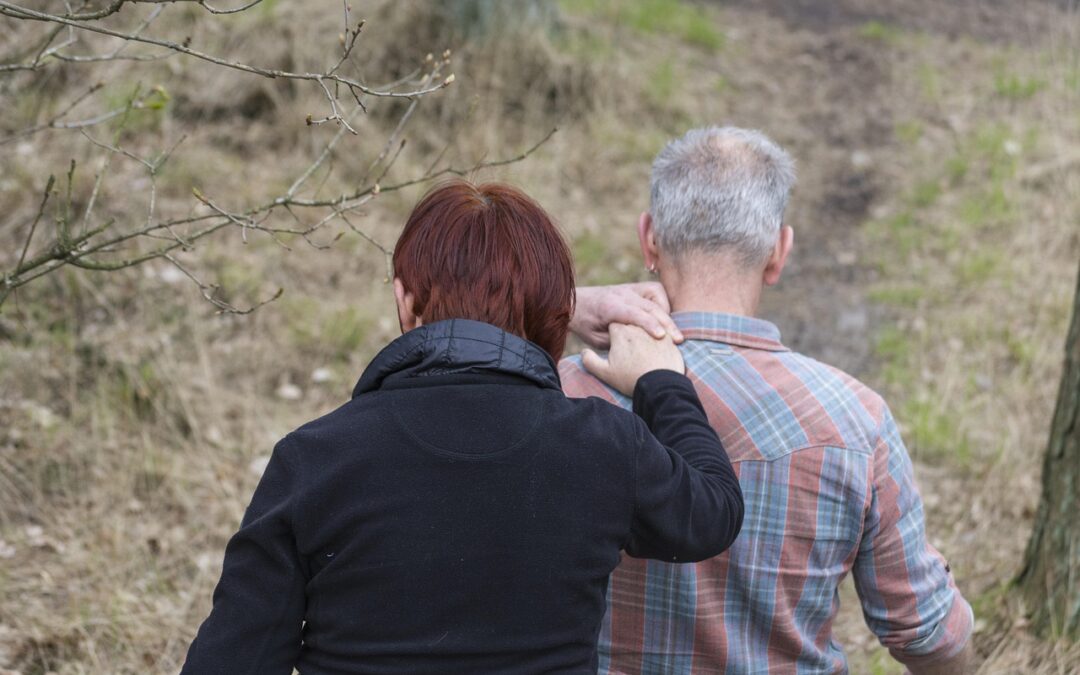
There are times when we cannot all “walk” through life at the same pace. Our own frailty, or that of others, may prevent us from always moving forward along side those who accompany us. On our journey. There are many different reasons why this may happen such as tiredness, confusion or suffering… But it is precisely in these moments that a profoundly human and radically communitarian form of love can emerge: this love is attentive to other people and knows how to stop and look towards those who can no longer keep up. It is seen in behaviour that demonstrates closeness and faithfulness. It protects, gathers up and accompanies just as a parent does with their child. It is patient, understanding, respectful and trusting. It is seen in the way we carry each other’s burdens, not as a duty, but on account of our freely committing to a love that seeks to maintain unity in the community, family and society even if this means moving slowly.
This type of love – the kind that cares, that seeks, that includes other people – makes no distinction between good and bad or between “worthy” and “unworthy.” It reminds us that at some point in our lives, we may all find ourselves “lost “and that the collective joy of being “found”again is stronger than any judgment or separation.
This Idea is an invitation to see the other person not for what he or she has done, but for the fact that they are unique and worthy of being loved. It invites us to make an ethical choice to care, to avoid leaving anyone behind or abandoned and to restore bonds wherever they are broken. It also encourages us to celebrate all our efforts to increase the presence of human values wherever we are.
Martin Buber, a Jewish philosopher, regarded deep relationships as a source of truth, and said that authenticity is not found in what we do alone, but in the respectful and gratuitous encounter with other people.
THE IDEA OF THE MONTH is currently produced by the Focolare Movement’s “Centre for Dialogue with People of Non religious Beliefs”. It is an initiative that began in 2014 in Uruguay to share with non-believing friends the values of the Word of Life, i.e. the phrase from Scripture that members of the Movement strive to put into practice in their daily lives. Currently, THE IDEA OF THE MONTH is translated into 12 languages and distributed in more than 25 countries, with adaptations of the text according to different cultural sensitivities. www. dialogue4unity.focolare.org
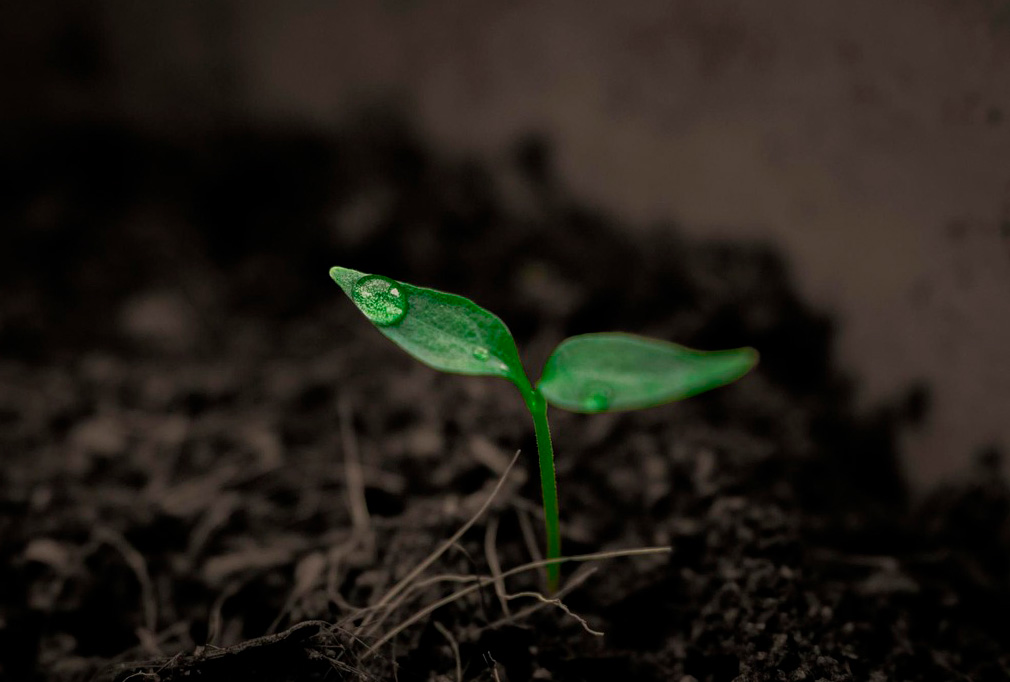
I don’t know if this has ever happened to you but sometimes, after a large forest fire, when everything is burnt, bare, covered in ash, lifeless, you can spot a small plant sprouting – right there, where everything seemed dead. When I notice this, I feel something beautiful: where life seemed to have ended, nature is stronger. It grows, triumphs, lives, even when it seems impossible. It is in those moments that I understand how wonderful it is to live on a planet capable of regenerating itself, despite its wounds.
But for how much longer will it be able to do so?
On 2nd July, the Message of the Holy Father Leo XIV for the X World Day of Prayer for the Care of Creation which will be celebrated on Monday, September 1, 2025 was published. It is entitled Seeds of Peace and Hope. What a splendid legacy Francis left us with his Encyclical Laudato Sì published ten years ago: so current, important and precious. And I find it very beautiful that Pope Leo takes up this legacy by highlighting the month dedicated to the Care of Creation (1st September-4th October), which begins with this day of prayer.
But what does this Message actually declare?
Returning to the example of the forest fire, Leo XIV reminds us that, “Seeds are buried in the earth, and there, to our wonder, life springs up, even in the most unexpected places, pointing to the promise of new beginnings”. Then he addresses us, inhabitants of this world, reminding us that “in Christ we too are seeds”. Not only that, but “seeds of Peace and Hope”.
This is a strong and clear invitation to live the ecumenical initiative of the “Season of Creation” from 1st September-4th October. It is a month of initiatives to invent, prepare and implement so as to pay every more attention to the care of our “common home”, which we all inhabit, regardless of our differences. Pope Leo says, “Together with prayer, determination and concrete actions are necessary if this “caress of God” is to become visible to our world”. Further on he says, “we seem incapable of recognizing that the destruction of nature does not affect everyone in the same way. When justice and peace are trampled underfoot, those who are most hurt are the poor, the marginalized and the excluded. (…)By working with love and perseverance, we can sow many seeds of justice and thus contribute to the growth of peace and the renewal of hope”.
Everyone is called to participate: individually or in groups, in associations, organizations, companies… why not? Each with their own ideas, their own commitment.
In his Message, Pope Leo XIV writes: “The Encyclical Laudato Sì has now guided the Catholic Church and many people of good will for ten years. May it continue to inspire us and may integral ecology be increasingly accepted as the right path to follow. In this way, seeds of hope will multiply, to be “tilled and kept” by the grace of our great and unfailing Hope, who is the risen Christ”.
And what does the Pope do? He begins himself by promoting these initiatives first. He established, for the first time in the history of the Church, a “Mass for the Care of Creation”, made official through the Decree on the Mass pro custodia creationis. Pope Leo XIV used this new form already on 9th July, 2025 during a private Eucharist that he celebrated at the Borgo Laudato Sì, during his stay at Castel Gandolfo (Rome). From now on, anyone can ask to celebrate a Mass with this intention, to be faithful stewards of what God has entrusted to us: in our daily choices, in public policies, in prayer, in worship and in the way we inhabit the world.
The title Seeds of Peace and Hope today appears as a disarming prophecy. Perhaps they are the only two words that, in this dark time for humanity, continue to make sense. They are words that allow us to start again, to sow and to believe that that fresh grass will continue to grow even where the land seems scorched and dead. Actions like these make me understand that all the Churches do not change their minds about the essential questions for the life of humanity. And above all, that they do not stop thinking about the future of the new generations.
The annual meeting of the Moderators of Lay Associations, Ecclesial Movements and New Communities took place in the Vatican from the 4th to 6th of June 2025. This event, held on the eve of the Jubilee of the Movements, gathered the various ecclesial realities in St. Peter’s Square with Pope Leo XIV. The Focolare Movement was represented. At a time when the world is deeply divided and even polarised, the participants shared a common desire to unite their charisms and contribute to the Church’s journey toward greater unity. Below are some interviews with presidents and founders of movements or communities who highlight the urgent need to feel part of one family going along this journey. They also express their gratitude that they can work together to increase a sense of hope in the world.
Let’s listen to Chiara Amirante, foundress of the New Horizons Community.
The annual meeting of the Moderators of Lay Associations, Ecclesial Movements and New Communities took place in the Vatican from the 4th to 6th of June 2025. This event, held on the eve of the Jubilee of the Movements, gathered the various ecclesial realities in St. Peter’s Square with Pope Leo XIV. The Focolare Movement was represented. At a time when the world is deeply divided and even polarised, the participants shared a common desire to unite their charisms and contribute to the Church’s journey toward greater unity. Below are some interviews with presidents and founders of movements or communities who highlight the urgent need to feel part of one family going along this journey. They also express their gratitude that they can work together to increase a sense of hope in the world.
Let’s listen to Andrea Riccardi, founder of the Saint Egidio Community.
Gen Rosso, one of the Focolare Movement’s international bands, has announced the release of a new album entitled “The Best Spirituals”. This collection marks a significant moment in their career, bringing together live versions of some of the most famous songs from the band’s spiritual repertoire, recorded during tours from 2020-2025. The album stands out both for the selection of songs and for the new arrangements and reinterpretations which give a contemporary voice to timeless melodies.
Each track has been carefully reinterpreted to engage today’s listeners while preserving the heart of the “Spirituals” tradition. The live recordings capture the energy of the stage, the emotion of the moment and the deep connection between the artists and the audience, inviting listeners into an experience of hope and closeness.
“Seeing these songs continue to live and generate life even today is something wonderful and very important, a legacy that must be valued and preserved over time,” says Band. This desire to keep the tradition alive is reflected in Gen Rosso’s concerts, where audiences are encouraged to sing along and participate, transforming each performance into a shared celebration of joy. “The Best Spirituals” is not just an album; it is an invitation to rediscover time and time again, the beauty and relevance of these powerful messages. With rich harmonies, vibrant arrangements, and renewed rhythms, Gen Rosso continues to further its passion for music, paying tribute to a musical and cultural heritage that transcends time and generations.
The release of this album is an unmissable opportunity for fans of Gen Rosso music and for anyone who believes in the power of art as a force for unity and change.
Gen Rosso invites everyone to join them on this particular musical journey, rediscovering together the timeless value of the “Spirituals” and letting themselves be carried away by the emotions that only music and history together will be able to evoke. The album is available from 11 August on all digital platforms.
My mother-in-law was dissatisfied with the work carried out by the worker her son had organised for her. When we pointed out that she was never happy with anything, she reacted strongly. Later, at dinner, she was still sulking, and when I tried to downplay the incident, she flew off the handle, reproaching me for things I really didn’t feel guilty about at all.
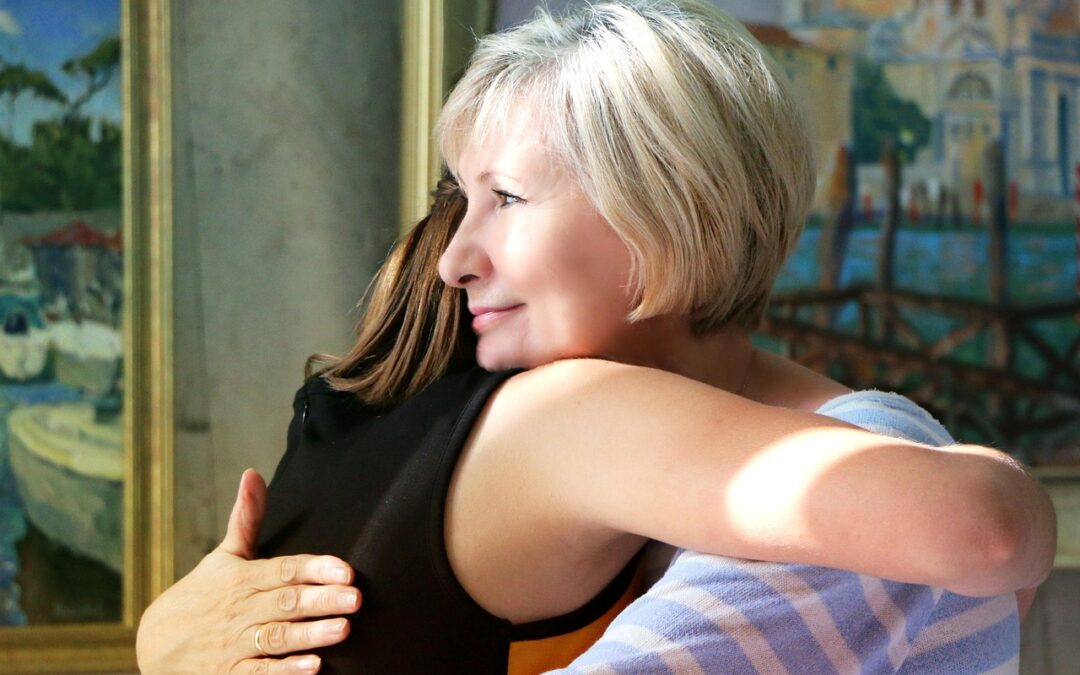
She even got up from the table and went to take refuge in her room. Ah, if only everyone had stayed at home! But inside me, the voice of charity which covers faults and weaknesses like a cloak, prompted me to go to her. I found her in tears. When I asked for forgiveness, she also blamed her son. I felt I had no choice but to leave. I felt I had done enough… but then the same voice as before suggested I try again. After clearing the table, I went back to her to convince her that I was truly sorry, and I hugged her as I would have hugged my own mother. I only left her once the tension had eased and I saw her doze off. I thanked God, and the next day my greeting with a smile removed all trace of embarrassment from my mother-in-law’s face.
Maria Luisa – Italy
In hospital
I was admitted to the hospital in Ribeirão Preto for a nose operation. It wasn’t the first time, because I have a rare disease and need frequent treatment. That’s why I don’t like hospitals, and I was really scared but I did everything out of love for Jesus.
For example, I drank milk with cream which I don’t like at all; on the day of the operation, I put on the hospital clothes without complaining; I didn’t eat lunch so I could have the anaesthetic; I waited with love for four hours because there was a delay with my operation and tried to love the other children who had also been admitted to hospital. After the operation, I waited several more hours for the doctor to call me for a check-up.
I was already hungry, tired and nervous, so I knocked over a chair and grumbled. But I immediately remembered what I had promised Jesus and repented. Shortly afterwards, the door opened. It was the doctor calling me.
Paulinha, 7 years old – Brazil
Reciprocity
One morning, I heard the doorbell ring: the person at the door introduced herself as B., the tenant who was living in the flat below me and has Alzheimer’s. She asked me to let her in because she had accidentally locked herself out of her flat while her husband was away. I opened the door and invited her to stay with me for a while until he returned home.
I could see she was sad and confused (sometimes she is aware of her condition). So as not to make her feel bad, I pointed out that this kind of unexpected thing can happen to anyone, through carelessness. We chatted for a while until she remembered that she was locked out and became anxious again.
Since I didn’t feel like leaving her in that state, even though I’m in a wheelchair, I went with her by lift to the floor below to calm her down.
But first, B. also showed herself to be a neighbour to me by taking the trouble to place a mat in front of my front door so that it wouldn’t close. In that way I was able to keep her company until her husband arrived.
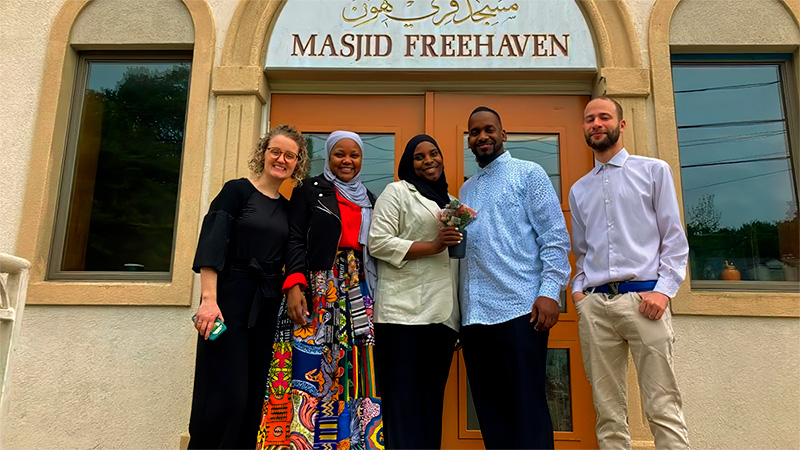
For more than thirteen years, we have been involved in real dialogue with a group of Turkish Muslim families living in our city, Ljubljana (Slovenia). It all started quite by chance. I worked as a dentist and one of the first Turkish families to arrive in Slovenia became my patients. From that first meeting, a deep bond grew, which over time extended to other families in the same community. After the failed coup in Turkey in 2016, many people were accused of belonging to a hostile movement and were forced to flee, finding refuge in our country. Since then, the number of families with which we started interacting grew rapidly, reaching around 50 people in just a few months. We soon realized that it was not a simple cultural exchange but that this bond developed into a relationship of real mutual help: we helped them to learn our language, to handle administrative paperwork, to enrol their children in school and with all the support required for the needs of daily life. In short, a friendship that has gradually become a deep dialogue, including about values and spirituality.
Over time, we had the opportunity to introduce them to the Focolare Movement and its ideal of a united world. This led to discovering of many common points between the Focolare charism and their spirituality.
One of the most significant aspects of this journey was taking part in each other’s religious celebrations. We attended iftar dinners during Ramadan, while Muslim families showed interest in the Christian celebrations. For four consecutive years, we celebrated Christmas together. The Muslim families were initially surprised by the spiritual depth of this occasion as, influenced by Western media, they had seen it mainly as a consumer event.
Video in original language – Turn on subtitles and pick the language you want
From this desire to further deepen this dialogue, the Pop the Bubbles project was born in collaboration with the Association for Intercultural Dialogue and Social Academy, where I work. The aim was to overcome prejudices and barriers between communities, encouraging meeting between Turkish and Slovenian families. The project involved a group of families for a whole year, during which we worked together to identify common values between the two cultures. At the end of this journey, six fundamental values emerged: family, active citizenship, intercultural dialogue, democracy, freedom and inclusion. To conclude the project, we organized two residential camps, one of three days and one of five, in which 73 people participated. In addition to cultural exchange meetings, the project also led to concrete solidarity initiatives, such as helping Ukrainian refugees. This has shown that working together towards a common goal can strengthen the bonds between different communities. In addition, in recent years, I started working in an NGO (Social Academy) that cares for young people and some Turkish families asked me to help look after their teenage children as well, passing on to them those common values we had discovered together. This step was very significant, because it demonstrated the trust that had been built between our communities.
At the same time, an innovative project was born: the creation of an application to promote dialogue between people with opposite opinions – hardtopics.eu. The app works by connecting two people who have responded in a divergent way to a questionnaire on polarizing issues. The system pairs them and invites them to a discussion in a prepared environment, with the aim of overcoming social polarization and promoting a culture of dialogue. This app will soon be used in high schools and universities in Ljubljana. The enthusiasm shown by young people during the testing phase confirmed the value of this initiative.
I believe it is essential to create networks of interreligious dialogue at European level. The journey we have undertaken shows that with patience and dedication it is possible to build authentic relationships based on trust, respect and the shared values.
The Emergency Coordination of the Focolare Movement has launched an appeal for Gaza and the Middle East, to help people in those countries suffering from conflict, through Action for a United World ETS (AMU) and Action for New Families ETS (AFN).
Azione per un Mondo Unito ETS (AMU) IBAN: IT 58 S 05018 03200 000011204344 at Banca Popolare Etica Codice SWIFT/BIC: ETICIT22XXX
Azione per Famiglie Nuove ETS | Banca Etica – filiale 1 di Roma – Agenzia n. 0 | Codice IBAN: IT 92 J 05018 03200 000016978561 | BIC/SWIFT: ETICIT22XXX
Reason for payment: Gaza and Middle East Emergency
Tax benefits are available for such donations in many EU countries and in other countries around the world, according to different local regulations.Italian contributors will be able to obtain deductions and allowances from income, according to the rules for non-profit organisations
In October 2024, the Together WE connect project began in Bethlehem. It is a training initiative of the Focolare Movement for young people and teenagers with the aim of building a better future by strengthening a wounded social fabric. The three-year programme began with five schools in the Bethlehem and East Jerusalem district, reaching about 300 students aged 13-15 years old.
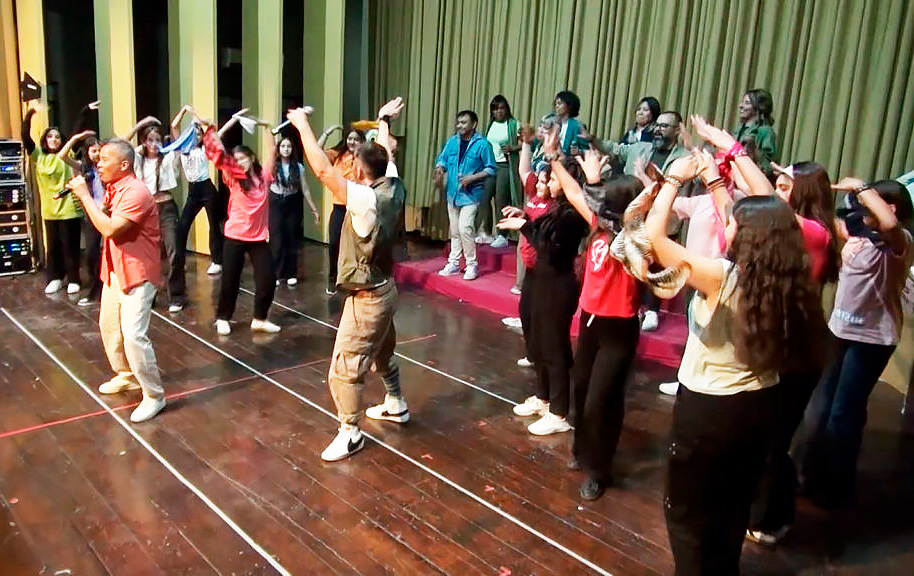
The programme included training sessions and activities using interactive methods designed to engage and stimulate young people in ways that speak to them, such as theatre, music, photography and sports workshops. In the first year, the programme focused on three themes: self-awareness, self-esteem and personal development. Then it tackled conflict management and openness to others through group work. The final theme was intergenerational dialogue. Each topic was linked to an action of the “Dice of Peace” so that each topic addressed led to concrete practice by creating new relationships.
The international music groups, Gen Rosso and Gen Verde made an important contribution through art, music, dance and theatre.
During the first week of May 2025, an event was held to celebrate these months of work. Before this event, Gen Verde and Gen Rosso held three days of workshops with a hundred of these young people. The participants commented afterwards, “It was an extraordinary experience and we are grateful to God, and to all those who have collaborated, for its fruits”.
How did the project begin?
From the Holy Land they told us: “For some time, we wanted to give our contribution in a way that would truly impact society, by promoting activities which had continuity. Some time ago the Patriarch of Jerusalem, Card. Pierbattista Pizzaballa, had said: “we must really work so that in schools, in institutions, in the media and in places of worship the name of God, of brother and companion of life resonate”. This encouraged us to focus on schools, on young people. We are all aware of the situation in which we find ourselves, in which humanity finds itself today. How many difficulties, how much suffering: we wanted to offer our contribution so that young people can have a different perspective from the one they see every day”.
This is how the Together WE connect project was born. Its goal is to awaken hope, nourish faith and promote a spirituality rooted in the Gospel among the younger generations and to form the women and men of the future, who can be promoters of reconciliation and dialogue, young leaders of a new culture of cooperation, fraternity, sharing and active citizenship – a culture of care and encounter.
Here are some impressions from the students: “I thank you with all my heart because what we did makes us feel important, and that our existence and our opinions matter”. “The first thing we learned were values: love, humility, forgiveness and helping each other. In class we felt like one family, we understood each other better and helped each other more. I also realized how I can be a light for others and I understood that “Focolare” is not just a word but a way of life”. “I really liked the “Together We connect” activity, there were new people, it was nice and I grew stronger in myself”. “I got to know myself and others better through this project.” “I learned methods for resolving conflict, listening and dialogue”. “I am personally very sensitive, and this project made me love life more”. “It was a useful and fun project, for example the dialogue between the generations, when I did it with my grandmother I learned things I didn’t know before”.