Jesus is on his way to Jerusalem and, for the third time, he tries to prepare his disciples for the dramatic event of his passion and death but those who have followed him most closely are very ones who seem unable to understand what is about to happen.
Infact, conflict arises among the apostles themselves: James and John ask to occupy places of honour ‘in his glory’ [1] and the other ten become indignant and start to complain. In short, the group is divided..
Then Jesus patiently calls them and repeats what he has proclaimed. His words are so new that they create a sense of shock.
Whoever wants to become great among you must be your servant, and whoever wants to be first must be slave of all.
In this phrase from Mark’s gospel, the image of the servant-slave reaches a crescendo. Jesus leads us from having an attitude of simple availability within the limited and affirming groups to which we may belong to being totally dedicated to everyone, with no exception.
This is a completely alternative and countercultural proposal when compared to the usual human understanding of authority and governance which possibly fascinated the apostles themselves and impacts upon us too.
Perhaps this is the secret of Christian love?
‘One word in the Gospel that is not emphasized enough by Christians is “serve”. It may seem old-fashioned to us, unworthy of the dignity of human beings who both give and receive. Yet it is central to the Gospel which is all about love. And to love means to serve. Jesus did not come to command but to serve. To serve, to serve one another is the heart of Christianity, and whoever lives this with simplicity – and everyone can do so – has done all that is necessary. Doing so ensures that people do not remain alone because since love is the essence of Christian life, it spreads like fire.’ [2]
Whoever wants to become great among you must be your servant, and whoever wants to be first must be slave of all.
The encounter with Jesus in his Word opens our eyes, just as it did for the blind man, Bartimaeus, whose story is found immediately after this Word of Life. [3]Jesus frees us from our narrow vision and allows us to contemplate the horizons of God himself, of his plan for ‘new heavens and a new earth.’ [4]
Jesus washed the feet of others [5] and by his example overturned the often rigid practice in society, and even in religious environments, of relegating the task of practical service to a certain class of people.
Christians, therefore, should imitate Jesus’ example and learn from him a new style of life in society. This means being a ‘true neighbour’ to each person we encounter, whatever their social or cultural condition may be.
As John Anziani, a Methodist pastor of the Waldensian Church, suggests, ‘By agreeing to place our trust and our hope in the Lord, who is the servant of many, the Word of God asks us to act in our world and in the midst of all its contradictions, as people who work for peace and justice, as bridgebuilders who facilitate reconciliation among nations.’ [6]
This is also how Igino Giordani, writer, journalist, politician and family man, lived during a time marked by dictatorship. To describe his experience, he wrote: ‘Politics is – in the most dignified Christian sense – a “servant” and must not become a “master”: nor should it abuse, dominate or dictate. Its function and dignity is to be of service to society, to be charity in action, to be the highest form of love for one’s homeland.’[7]
Through the witness of his life, Jesus proposes to us a conscious and free choice. Rather than living closed in on ourselves and our own interests, we are asked to ‘live the life of the other person,’ feeling what they feel, carrying their burdens and sharing their joys.
We all have small or large responsibilities and spheres of authority. These may be in the field of politics or in other areas of society such as within our families, schools or faith communities. Let’s take advantage of our ‘places of honour’ to put ourselves at the service of the common good, creating just and compassionate human relationships with everyone.
[1] Cf. Mc 10,37. [2] C. Lubich, Servire, in «Città Nuova» 17 (1973/12), p. 13. [3] Cf. Mc 10, 46-52. [4] Cf. Is 65, 17 e 66, 22, ripreso in 2 Pt 3,13. [5] Cf. Gv 13,14 [6] https://www.chiesavaldese.org/marco-1043-44/ [7] P. Mazzola (a cura di), Perle di Igino Giordani, Effatà editrice Torino 2019, p. 112.
“Service” is a word that may seem old-fashioned in certain contexts. Servitude is certainly unworthy of human beings when it is imposed or endured because of poverty or discrimination. Instead, the “spirit of service,” especially when it is reciprocal in a community of any kind, is a witness to changing social relationships that break down old patterns of behaviour and new power structures. Indeed, service lived with humility characterizes protagonists of real progress. Nitin Nohria, former dean of Harvard Business School, says that in the future, being a good leader will require learning about humility. He believes this “future” has already begun. According to him, humility will have to become a key word in the profiles of the next generation of aspiring managers andhe does not lack experience in this field. He says this because he realizes that the current trend of being increasingly competitive is producing results completely opposite to expectations. It is creating people who are psychologically fragile, needy, narcissistic and obsessed with appearance (1). After all, great women and men are recognized through their small actions, just as ancient Eastern wisdom reminds us: “The largest tree is born from a small shoot. The tallest tower is born from a mound of earth. A journey of a thousand miles begins with a single step.” (2) Living this way requires a conscious and free choice: it demands that we do not liveclosed in on ourselves and our own interests, but that we“live the other”,and feel whatever they feel, carry their burdens and share their joys. We all have responsibilities, bothlarge or small, and areas of authority. They may be in the political or social fields or within our family, school or community. Let us take advantage of our “places of honour” to put ourselves at the service of the common good, building just and supportive human relationships. This is also how Igino Giordani, writer, journalist, politician and family man, lived during a time marked by dictatorship. To describe his experience, he wrote: ‘Politics is – in the most dignified Christian sense – a “servant” and must not become a “master”: nor should it abuse, dominate or dictate. Its function and dignity is to be of service to society, to be charity (3) in action, to be the highest form of love for one’s homeland. It was probably the personal relationship that Chiara Lubich had with this man who was rooted in his time but also saw beyond its barriers and walls that led her to remind usmore than once that true politics is “the Love of Loves,” because it is the means of the most authentic and disinterested service to humanity in fraternity.
(1) Michele Genisio “Umiltà” (in press) (2) Daodejing,64 (3) Giordani uses the word charity not in the ‘welfare’ sense, as it is usually understood, but in the Christian sense, which indicates the highest form of love.
——————
THE IDEA OF THE MONTH iscurrentlyproduced by the Focolare Movement’s “Centre for Dialogue with People of NonreligiousBeliefs”. It is an initiative that began in 2014 in Uruguay to share with non-believing friends the values of the Word of Life, i.e. the phrase from Scripture that members of the Movement strive to put into practice in their daily lives. Currently, THE IDEA OF THE MONTH is translated into 12 languages and distributed in more than 25 countries, with adaptations of the text according to different cultural sensitivities. https://dialogue4unity.focolare.org/en/
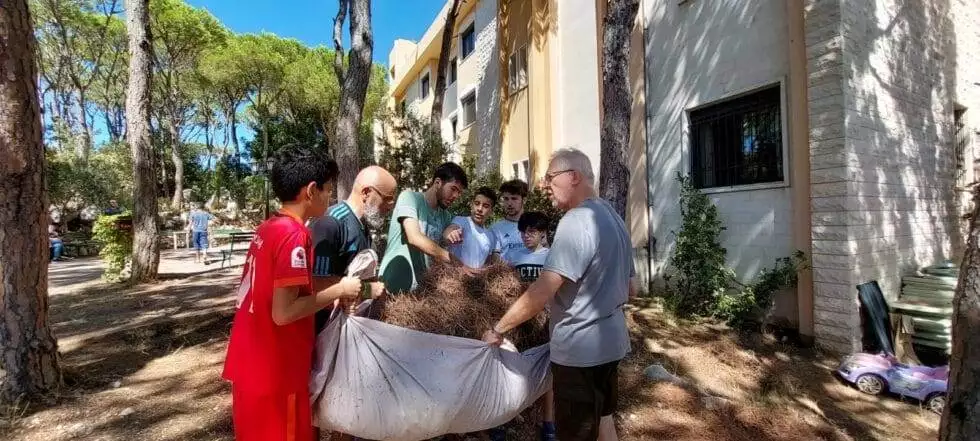
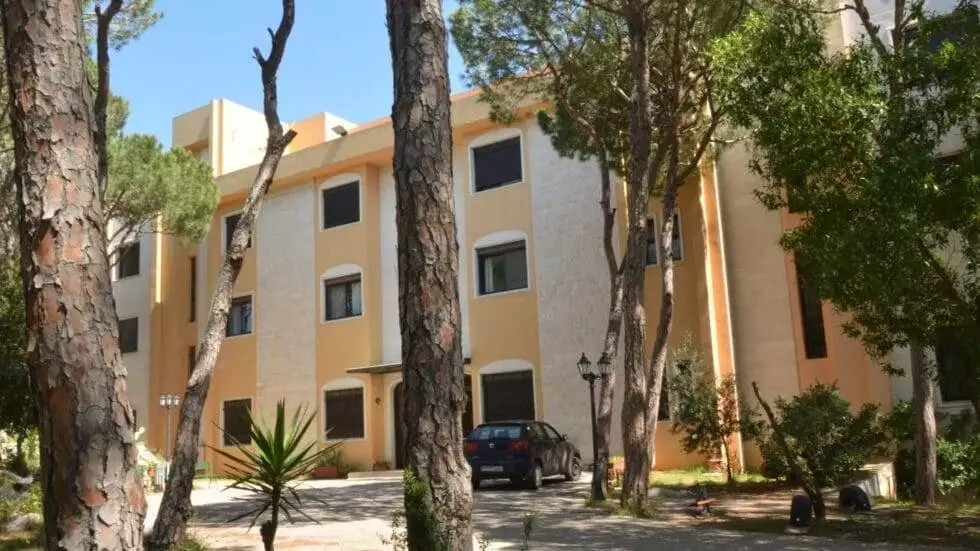
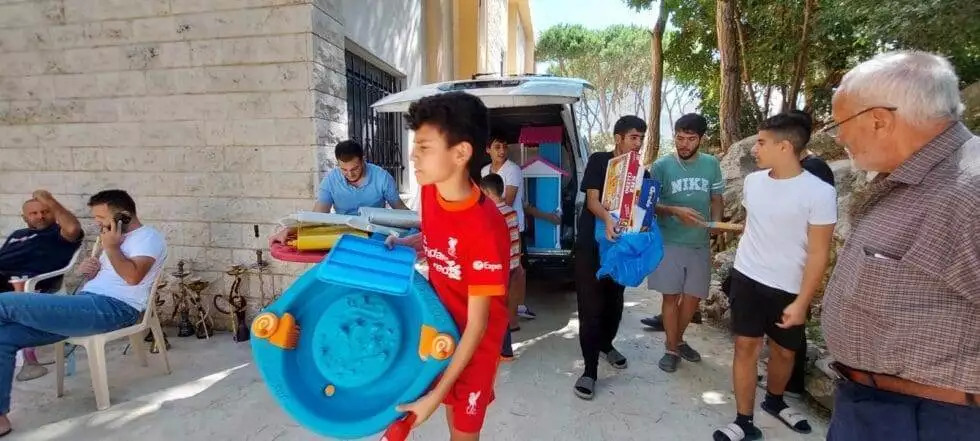
The “La Sorgente” Mariapolis Centre is located in Ain Aar, in a mountainous area, 20 kilometres north of Beirut. Just as it was in 2006, the year of the 34-day military conflict between Israel and Hezbollah, people fleeing the bombs that are devastating the South of the country are arriving here, in this predominantly Christian and asking for hospitality. “It is normal to knock on the door of the Mariapolis Centre and find it wide open,” says R. of the Lebanese community of Focolare. “How could we not welcome them? What would have become of the ideal of brotherhood that we cherish and which should be our hallmark?” A similar experience occurred in 2006. Then too, Lebanon experienced large-scale movements of families and the Focolare welcomed more than a hundred friends, entire extended families in its Mariapolis Centre. “We met in those conditions and became like brothers and sisters, sharing joys and sorrows, hopes and difficulties, needs and prayer. In a simple and sincere relationship, woven into everyday life, a true experience of brotherhood started and grew, without filters or prejudices”.
No one expected the situation to deteriorate so quickly. “The Lebanese were preparing to return to school, optimistic about this new year”, says R. “Yet an unexpected storm erupted, relentless, threatening and deadly”, with “terrible consequences for a population thirsting for peace, justice and paths of dialogue”. In a few days, or rather hours, military actions hit ordinary neighbourhoods and the people found themselves living “a real nightmare”. According to the Ministry of Public Health, as of 25th September, almost 600 people have been killed in Lebanon, including more than 50 children and 94 women, and about 1,700 others have been injured since 23rd September. Mass displacement continues, reaching around 201,000 internally displaced persons (IDPs), according to data from the International Organization for Migration (IOM).
Since Sunday, the “La Sorgente” Mariapolis Centre has also been filled with guests “arrived with their fears, the trauma experienced in their targeted villages and neighbourhoods”. They drove 120 kilometres, taking between 5 to 8 hours. The roads are crowded with cars fleeing the South. They leave the villages before reaching the big cities of Tyre and Sidon. Around them, they see the destruction of the recent bombings. There are currently 128 guests at the Mariapolis Centre in Ain Aar. Some come from the South, others from the popular suburbs of Beirut hit by the latest attacks. It is not easy: “Their presence raises questions in the Christian community of the region”, say the focolarini. “One wonders: are there members of Hezbollah among them who could threaten peace in the region? But the sense of solidarity is stronger than suspicion. “R. adds: “Where could they seek shelter this time too? Where could they go and know that they would be welcomed without reservation?” For the community of the focolare, a new adventure begins. The welcome is coordinated with local, religious and civil authorities.
A “contest” of solidarity is taking place throughout the country. From the parish priest, to the faithful of the parish, to the volunteers. There are those who take care of the children by organising activities and football matches for them. Those who take care of the necessary help for the reception. “People arrive shocked, worried about their future, with the apocalyptic sight of destroyed houses, burned fields, but also news of acquaintances, relatives, neighbours, friends or students who were killed in the attacks and they will never see them again. Together we unite in living the present moment, with the faith that has allowed us to endure adversity for centuries”.
The “La Sorgente” Centre aims to be, along with many other places scattered throughout the country, true “oases of peace”. “The hope, the deepest wish is that we can soon return home. So much blood spilled must make the desert of hearts bloom. We hope that this ordeal we are experiencing will open a breach in the conscience of the powerful and of everyone, showing that war is a defeat for all, as Pope Francis repeats. But above all we believe and hope that from this crucible of pain a message of possible brotherhood for the entire Region can emerge from Lebanon “.
Maria Chiara Biagioni Source: AgenSir Photo: Focolare Lebanon
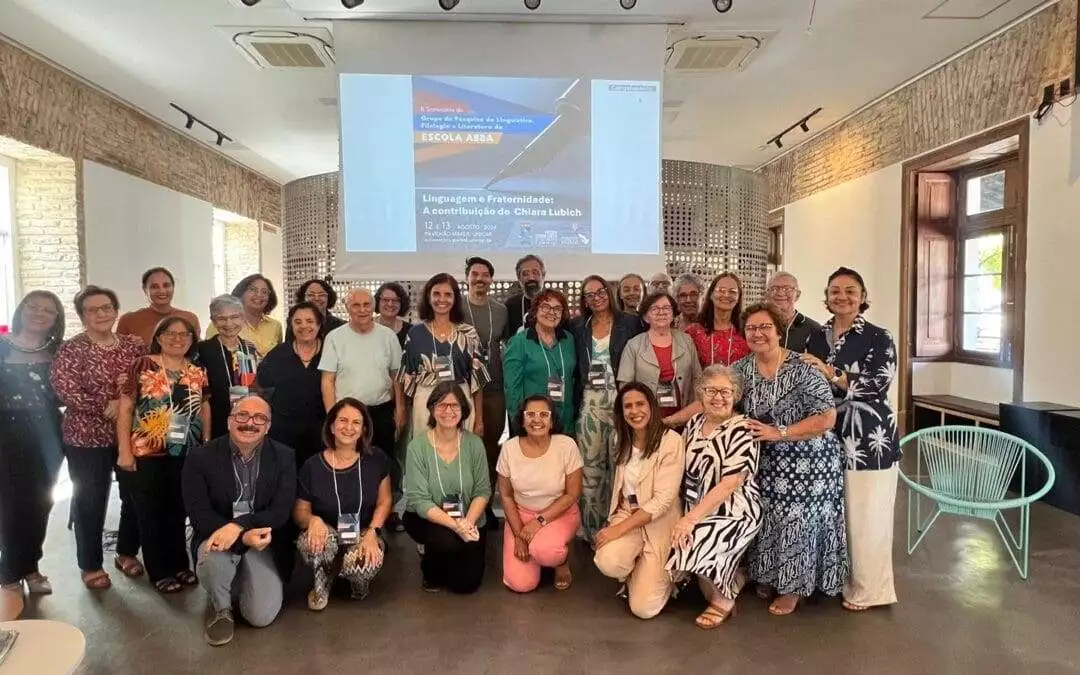
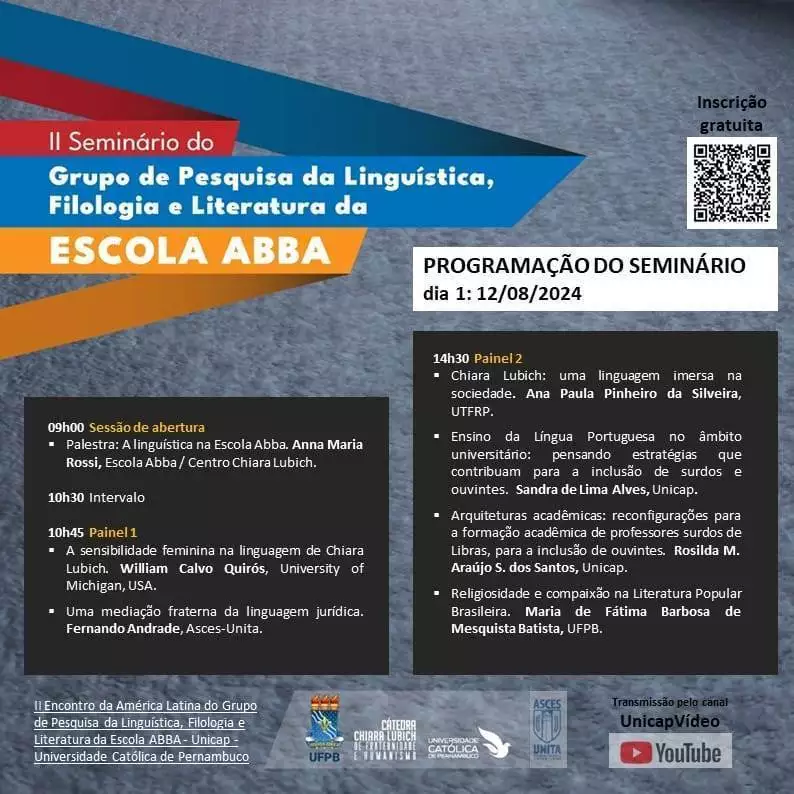
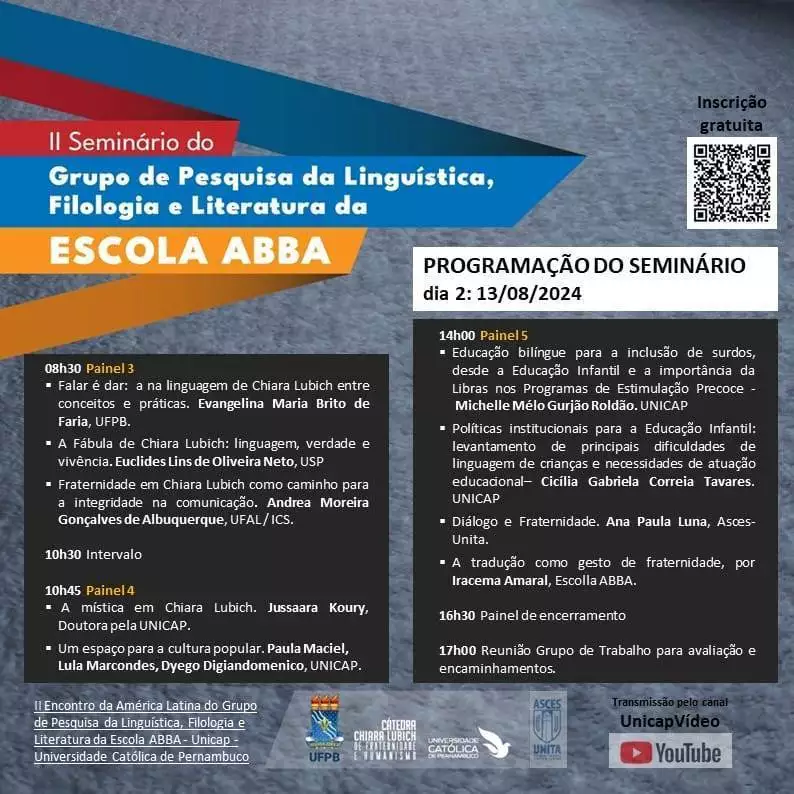
The Seminar, in its second edition after the first one held in 2017 at the Federal University of Paraiba in Joao Pessoa, presented 15 academic papers produced by researchers from six universities, around the Chiara Lubich Chair of Fraternity and Humanism at the Catholic University of Pernambuco (Unicap). The seminar comprised of two days of presentations and dialogue, introduced by a warm greeting from Vice-Rector Prof. Delmar Araújo Cardoso, and followed by live streaming to an audience of about 350 people.
The event, which was organized with the support of the Chiara Lubich Centre, was held mainly in Portuguese and was particularly appreciated for its openness to an international dimension, for the consistent and qualified contribution of the speakers, for the interdisciplinary perspective that brought together papers around the theme of language, not just in the field of linguistics, but also in the fields of law, pedagogy, communication, sociology and architecture.
What emerged, in extreme synthesis, was how a language inspired by love, of which Chiara Lubich was an effective model, can contribute to building a world of peace and fraternity.
Anna Maria Rossi
(1) The Abba School is a Centre of life and study desired and founded by Chiara Lubich in 1990. It is composed of members of the Focolare Movement, united in the name of Jesus and experts in various disciplines, whose aim is to draw out and elaborate the doctrine contained in the charism of unity.
Links to the 2nd Seminar on Linguistics, Philology and Literature:
“We are convinced that the cooperation of the Christian world is essential. The common Easter celebration in 2025 of all Christians, together with events for the anniversary of the first Council of Nicaea, can serve as a meaningful starting point to take up the challenges of humanity together and promote joint activities. We hope to organize a meeting with representatives of the Christian world, with your presence, in the place where the Nicaea council originally took place ”.
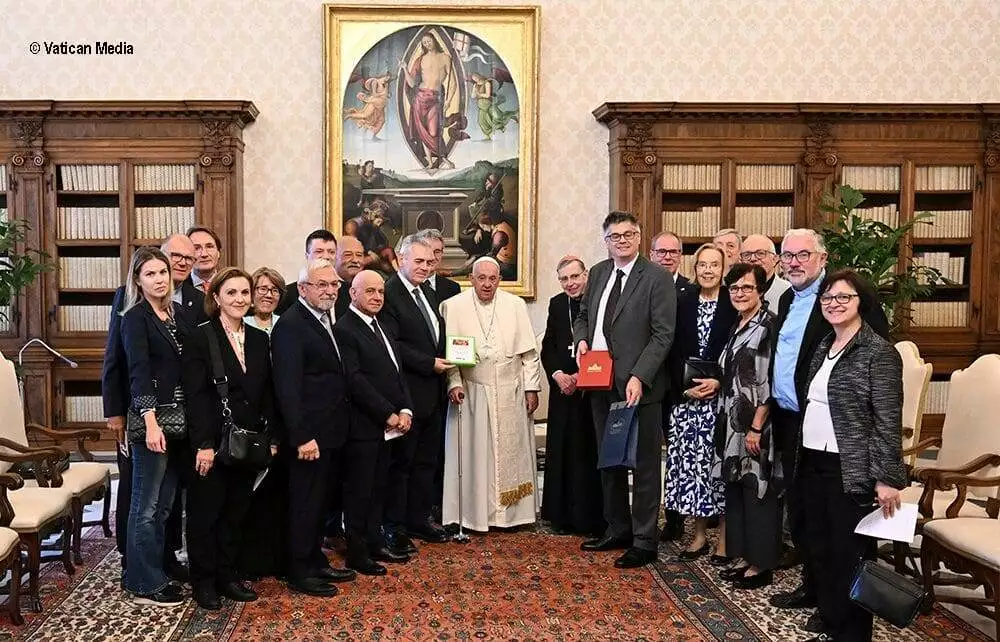
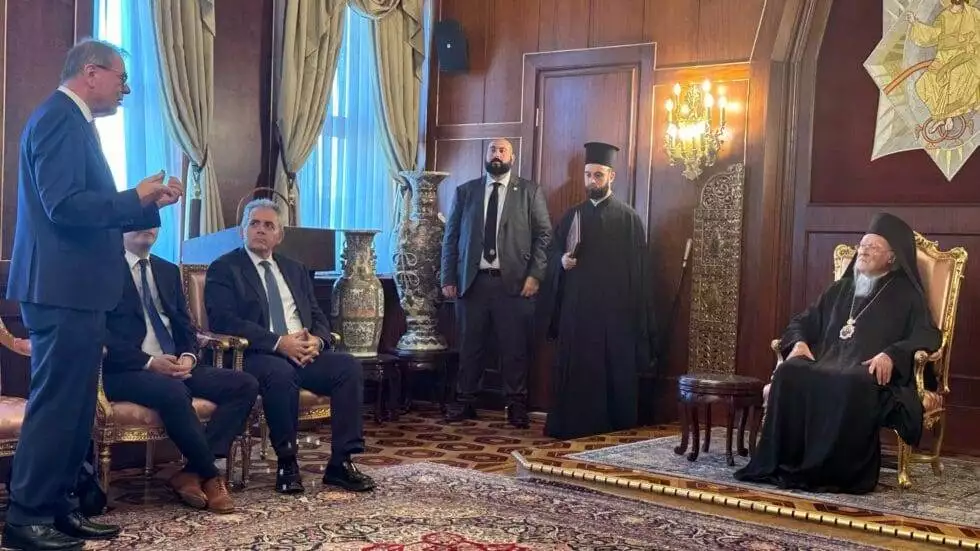
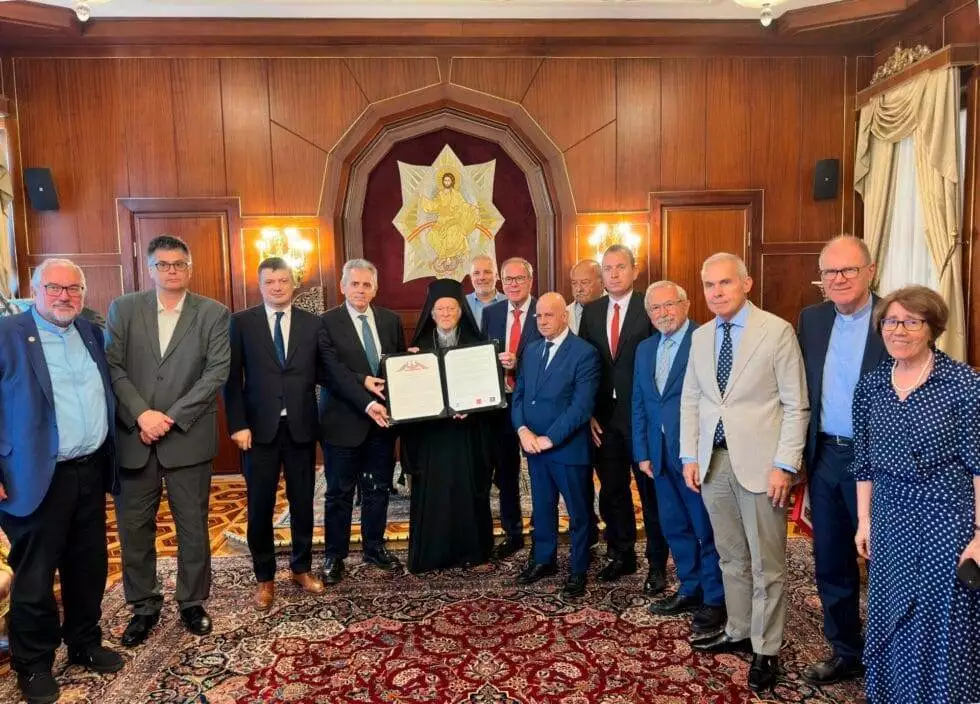
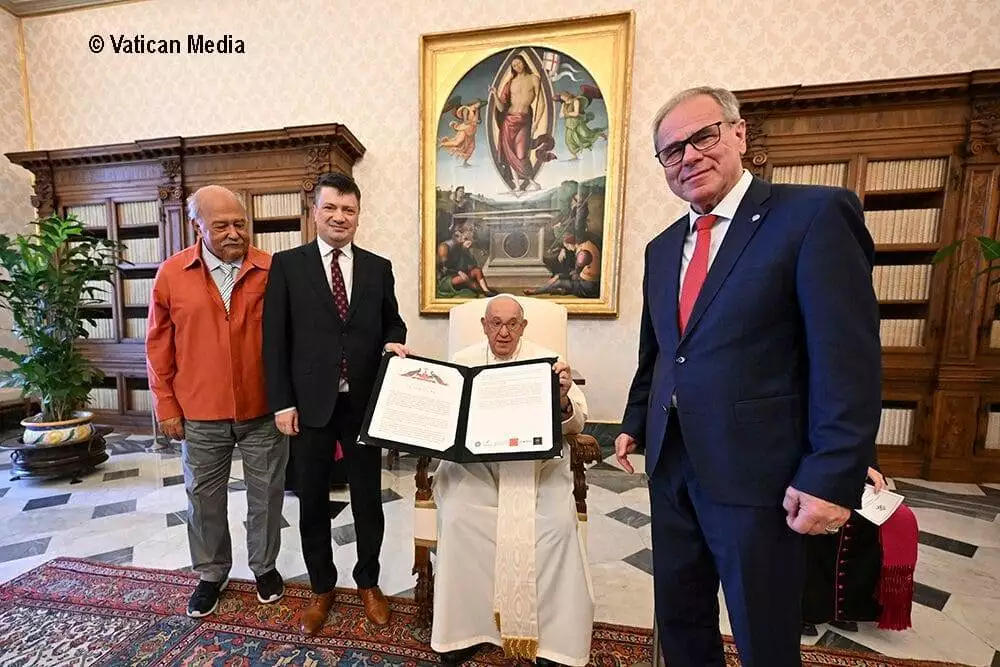
These words accompanied the ecumenical group “Pasqua Together 2025” (PT2025), that gathers groups and communities of various Christian denominations, first to Istanbul (Turkey), in audience with the Ecumenical Patriarch of Constantinople, Bartholomew I, then in the Vatican with Pope Francis, on the 14th and 19th of September respectively.
The group asked the two Christian leaders for next year’s common celebration of the Resurrection not to be an exception but to become the norm for all Christian Churches: a further step towards unity, in preparation for the upcoming Second Millennium of Redemption in 2033, which will be the 2,000th anniversary of Christ’s resurrection.
“Pasqua Together 2025” began precisely in view of the upcoming exceptional coincidence that, in 2025, the Easter date falls on the same day for the Julian and Gregorian calendars. Christians of the Western and Orthodox churches will, therefore, celebrate Easter on the same day. Moreover, the 1,700th anniversary of the Nicaea Ecumenical Council, which declared the Symbol of faith (the Creed) and addressed the theme of the Easter date, will be remembered.
The group is composed of representatives of various Christian churches and Christian political and social movements, like the Interparliamentary Assembly on Orthodoxy (I.A.O.) that was the promoter; the “Together for Europe” project, the “Jesus Christ 2033” movement and the “Centro Uno” of the Focolare Movement. The group has been following a common path for two years which has led them to signing a joint declaration that brought about the commitment to work so that all Christian churches may celebrate Easter together. Besides the Patriarch of Constantinople and Pope Francis, the document had been previously sent to the General Secretary of the World Council of Churches, Rev. Jerry Pillay and the former General Secretary of the World Evangelical Alliance, Bishop Thomas Schirrmacher. Contacts with other Christian leaders will take place soon.
Patriarch Bartholomew I announced that a joint commission made up of four Orthodox and four Roman Catholic members are already working on the programme for the celebration of the 1,700th anniversary of the first Ecumenical Council which will take place precisely in Iznick – the Turkish name of ancient Nicaea. The commission has already gone there to examine the feasibility. The mayor of the city is in favour and ready to collaborate. The invitation was naturally extended to Pope Francis, and this would be their thirteenth meeting.
The Patriarch also highlighted that the Easter date is not a question of dogma or faith, but fruit of an astronomical calculation.
Pope Francis too, in his talk reiterated that “Easter does not take place by our own initiative or by one calendar or another. Easter occurred because God “so loved the world that he gave his only Son, that whoever believes in him should not perish but have eternal life”. Let us not forget the primacy of God, his primerear, his having taken the first step. Let us not close ourselves within our own ideas, plans, calendars, or “our” Easter. Easter belongs to Christ!”
The Pope also invites to share, plan and “walk together” and he launches an invitation: that of beginning “from Jerusalem like the Apostles, who proclaimed the message of the Resurrection to the whole world”. The Pope encourages to “turn, today, to the Prince of Peace in order to pray that he gives us his peace.”
An invitation that echoes what the ecumenical Patriarch Bartholomew I had already expressed by urging the PT2025 group to promote activities defending human rights and a peaceful living together for all peoples, praying in this way: “We implore the Lord to enlighten the hearts of those in authority and to guide them on the path of justice and love, that we may heal these divisions and restore the unity that is at the heart of our faith”.