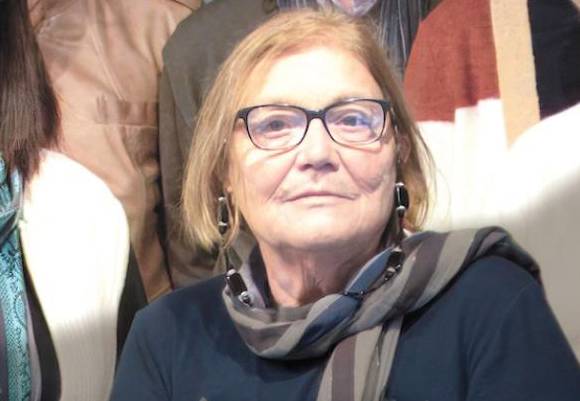
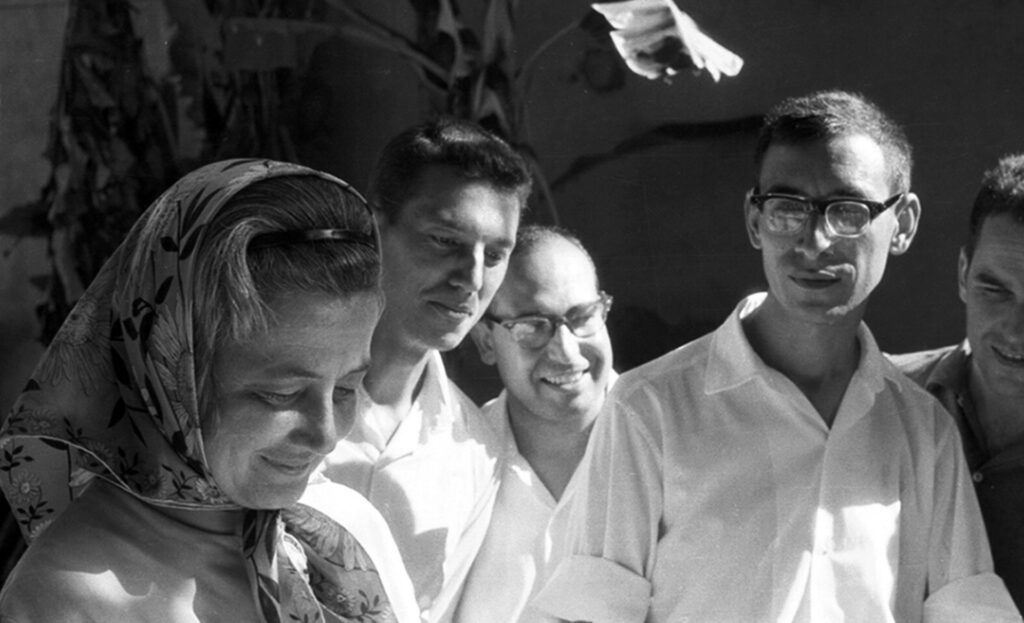
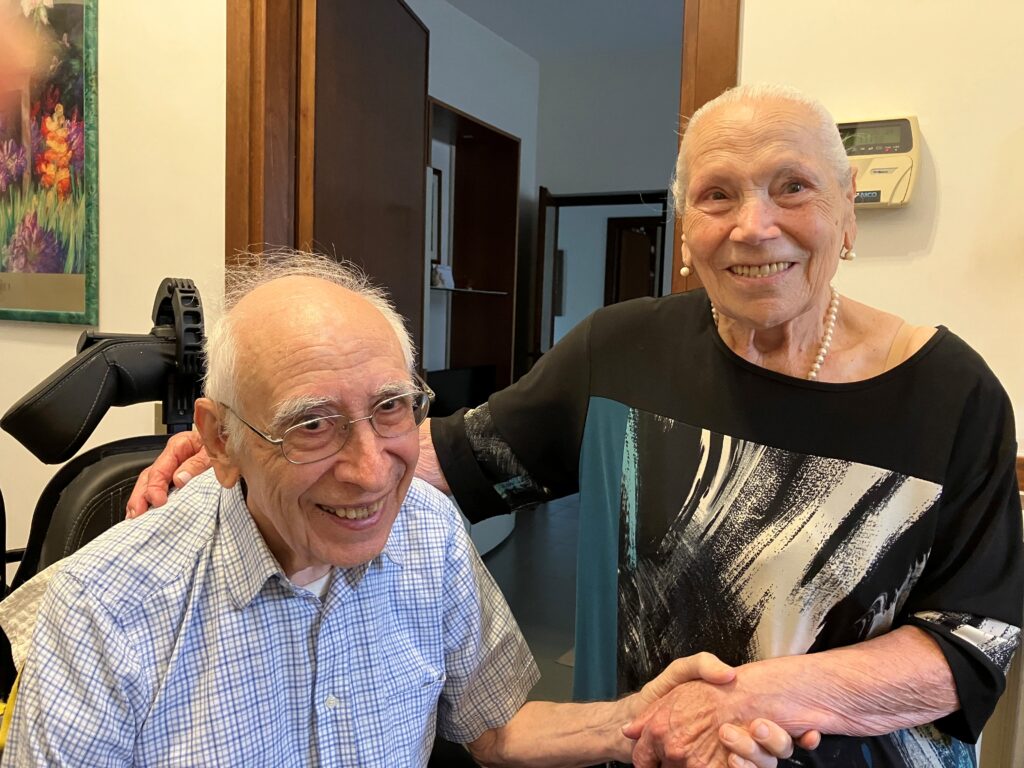
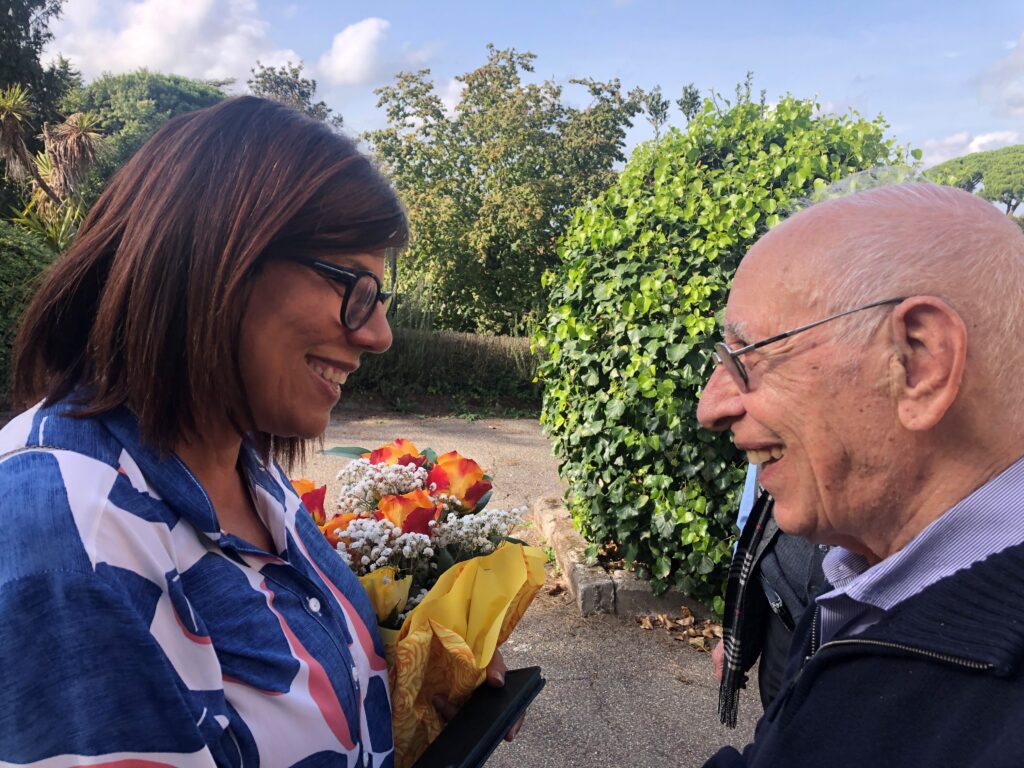
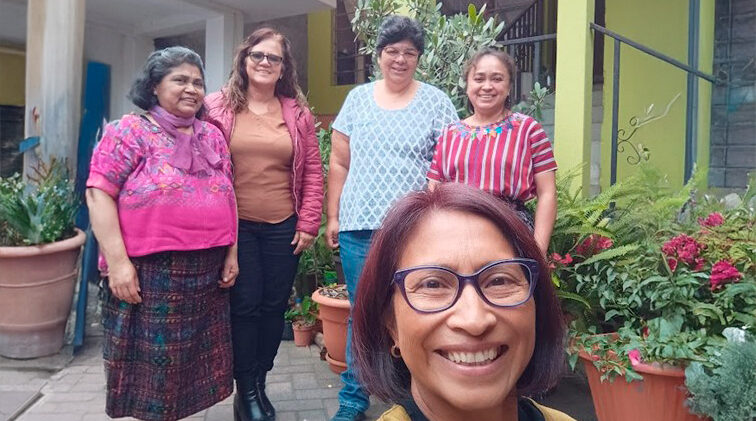
On 18th March, 2025, Luciana Scalacci left us. She was an extraordinary woman, a living witness of concrete and active commitment to 360° dialogue. Luciana, who was married to Nicola, both of non-religious beliefs, always felt that dialogue is a fundamental aspect of contemporary society which is characterised by many forms of division and conflict. A few years ago during a Focolare meeting, Luciana said, “My husband and I are non-believers, or rather, non-believers in God, because we believe in humanity and its potential”.
Luciana was born in Abbadia San Salvatore, a town in the province of Siena. From childhood, she was always committed to the least and the weakest, conveying values of honesty, inclusion and equality to everyone. Nicola and she were engaged in politics and trade unions through leftist activism, always focused on the values of justice, dialogue and freedom. Their encounter with the Focolare Movement came through their daughter Mascia.
Luciana recounted, “One day, our daughter wrote us a letter, in essence saying: ‘Dear parents, I have found a place where I can live out the values you always taught me. She had discovered the Focolare Movement”. So, to better understand their daughter’s decision, Luciana and Nicola decided to attend a Focolare event. “It was a meeting of people of different beliefs, but we didn’t know that. So, to avoid any confusion, we made a point of stating our political and religious position right away. The answer was: ‘And who asked you anyway!’ We immediately had the impression of being in an environment where there was respect for the ideas of others, we found an openness that we had never encountered in other associations or religious movements”.
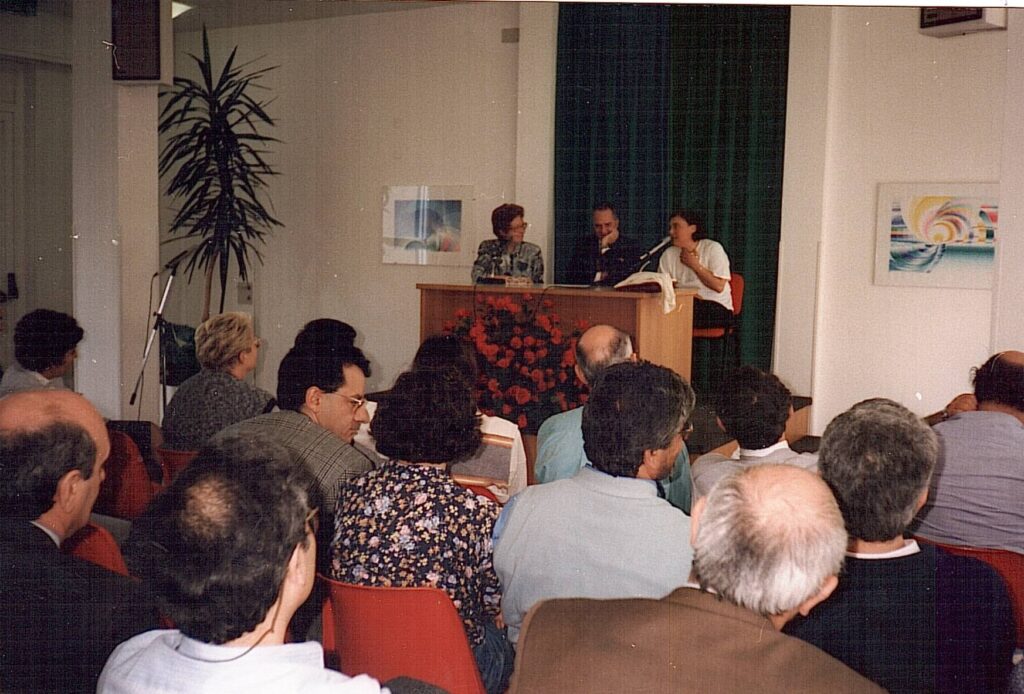
From that moment on and in the years to come, Luciana Scalacci’s contribution to the Focolare Movement was vital. She first met Chiara Lubich, founder of Focolare in 1995. Alongside her, Luciana worked to initiate and deepen dialogue with people of non-religious convictions, a dialogue that gained strength in large part thanks to Luciana’s enlightened intelligence.
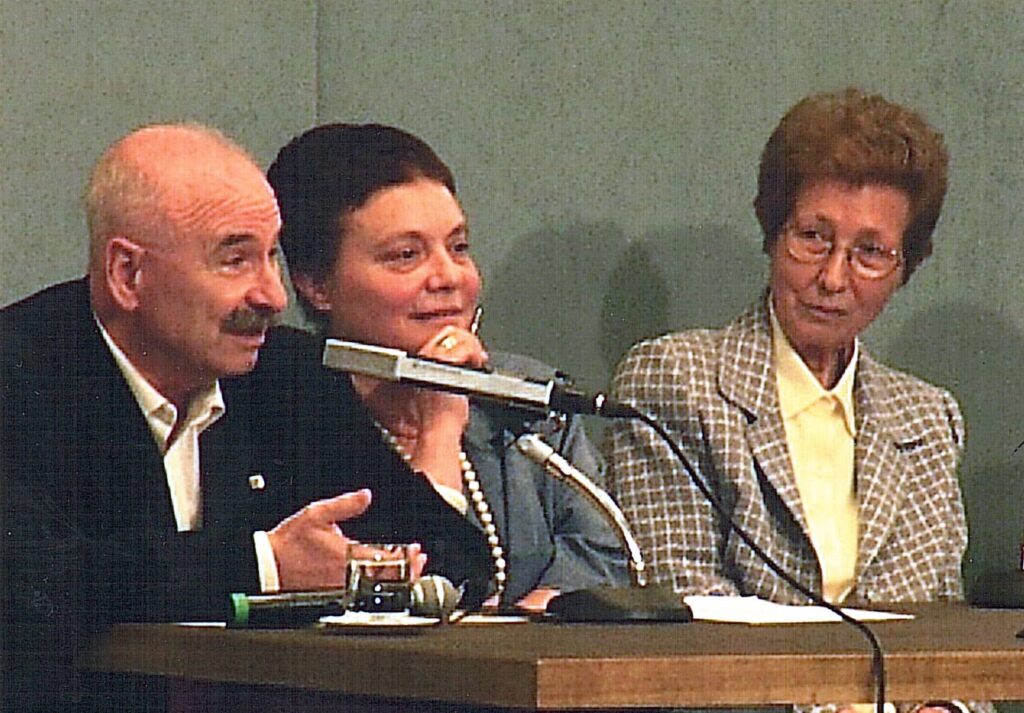
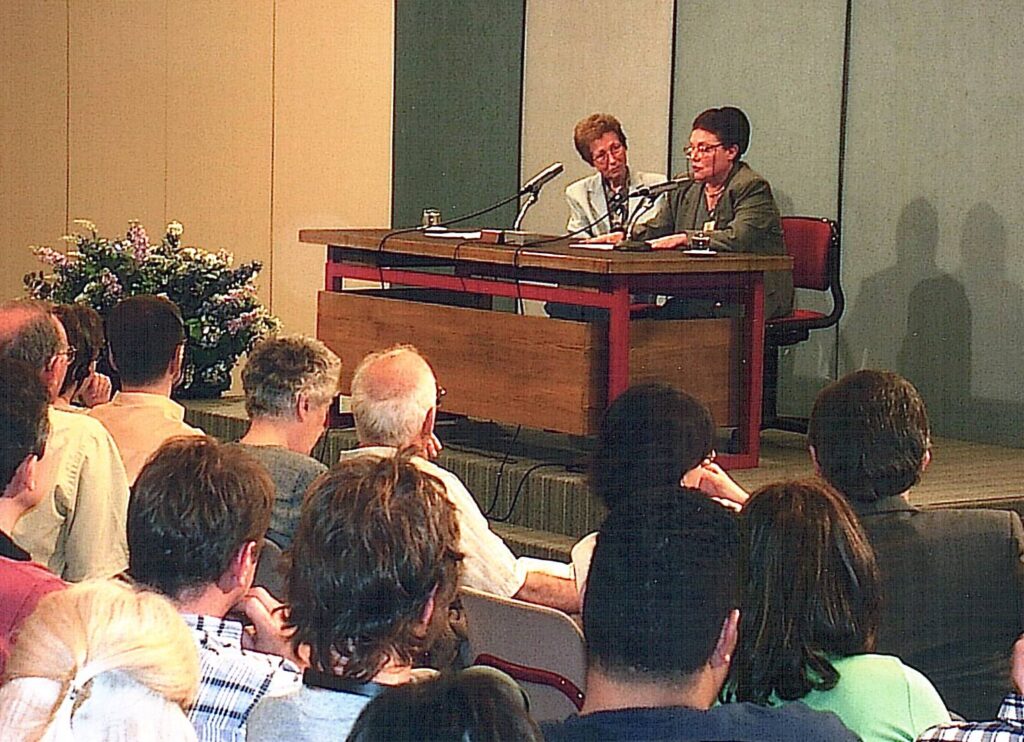
Since 2000 she was a member of the International Commission for Dialogue with People of Non-Religious Convictions, thus contributing to the organisation of conferences such as In Dialogue for Peace, Conscience and Poverty, Women and Men for a Society of Solidarity and many others. Luciana felt in full harmony with the Ideal of unity, through her personal meeting with Chiara and with the Focolare community. She once told a friend: “This dialogue (between people of different beliefs) was born not to convert non-believers, but because with Chiara we understood that the united world is built with everyone. May they all be one. If we exclude even one, it’s no longer All”.
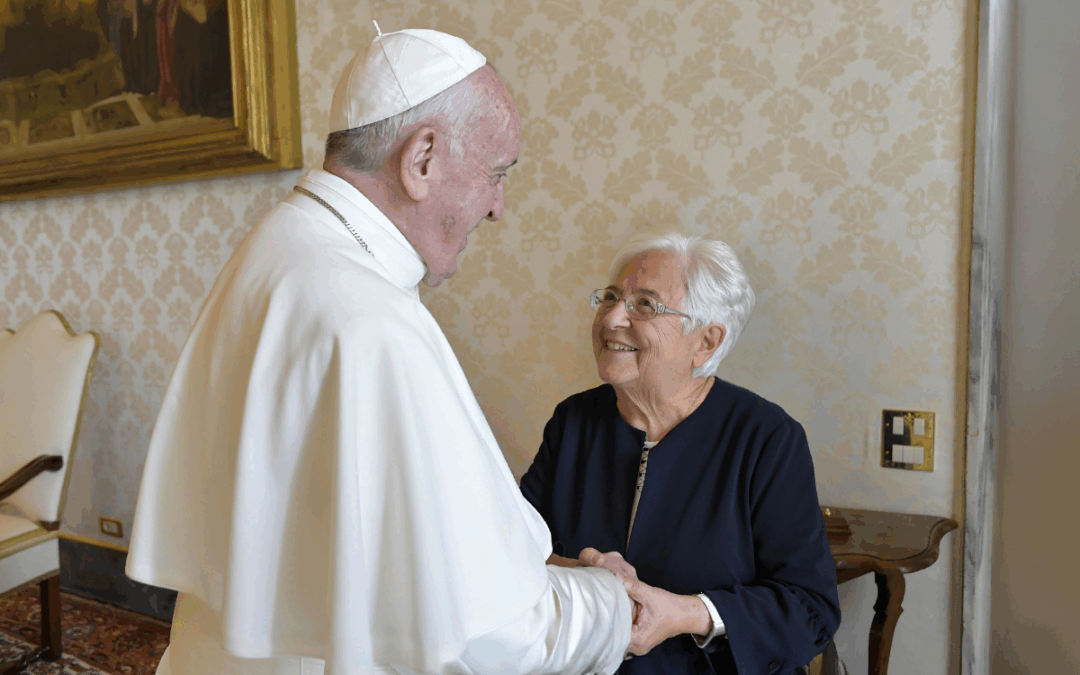
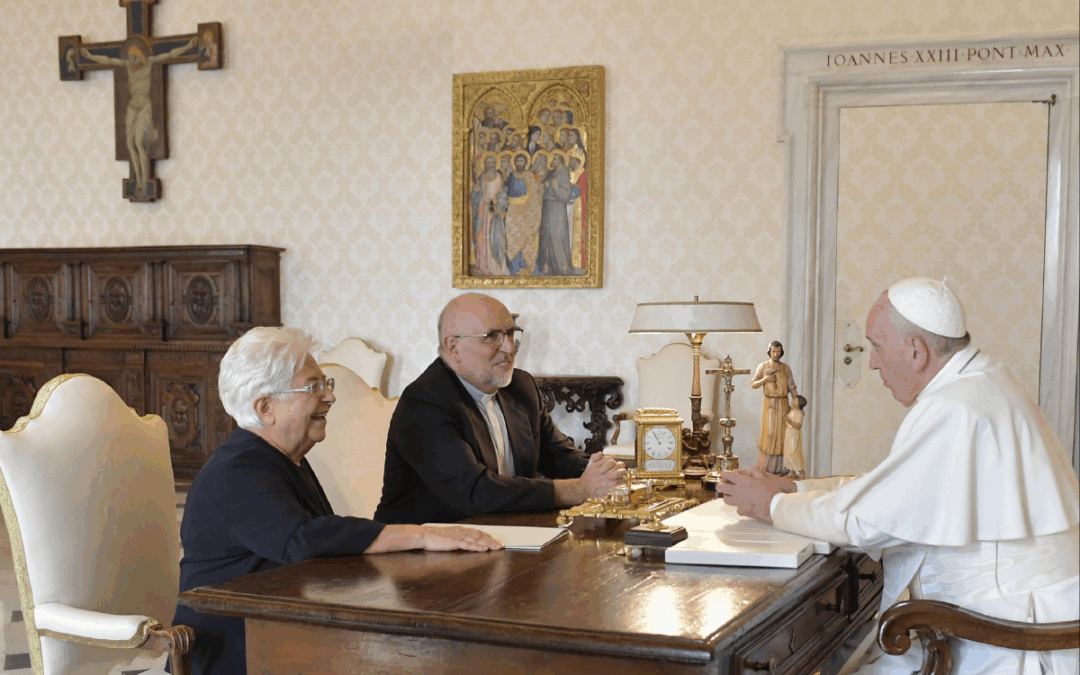
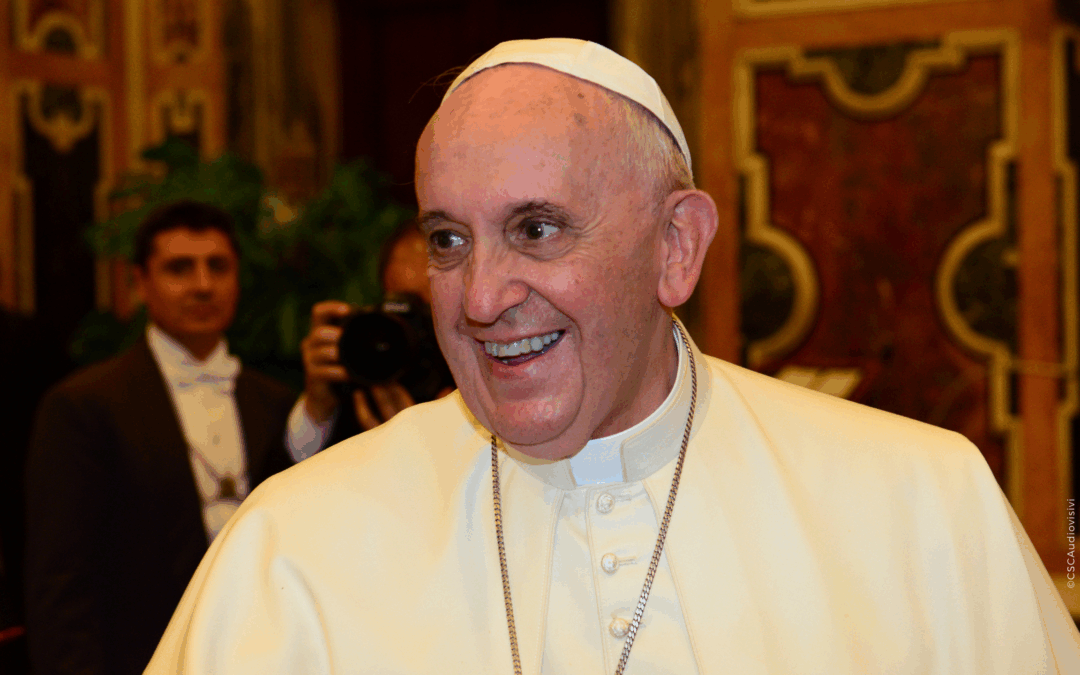
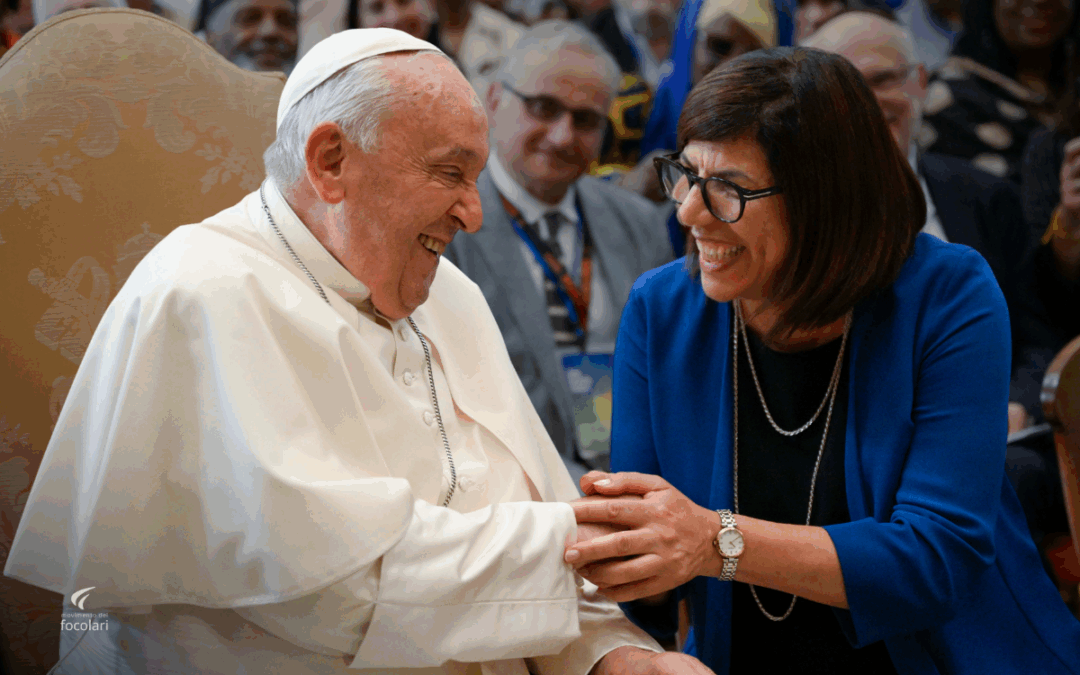
On 26th September, 2014, during an audience granted to the Focolare, she greeted Pope Francis. She recalled the moment in a letter she wrote to the Pope while he was hospitalized at the Gemelli Polyclinic. “On that extraordinary day, I had the privilege of exchanging a few words with you that I will never forget. Now, dear Pope Francis, you are in a hospital bed and I am too. Both of us face the frailty of our humanity. I wanted to assure you that I continue to think about you and to pray for you in a secular way. You pray for me in a Christian way “.
There were many tears of gratitude and deeply heartfelt words of thanks on the day of her funeral. One tribute in particular came from Vita Zanolini, a focolarina and friend of Luciana and Nicola. “Luciana: friend, sister, companion on the frontiers of what is new, but with respect for history and roots, teacher of life and much more,” said Vita, remembering her. “Thinking of her, of her freedom, brings to mind bright and clear skies, intensely colourful; a clear spring that in its sweet and silent flow, becomes a rushing waterfall. A fire burning in a welcoming home reflecting an ever open heart. But also a refined and rich menu with delicious and always creative recipes. Resilience, respect, listening, tenacity in all shades …
Years ago at one of the conferences on dialogue someone asked a rather original question: ‘What is the difference between a believer and a non-believer?’ Luciana’s answer, which was perhaps surprising for many, was: ‘Believers believe in God, Non-believers… God believes in them.’ And I think we can say that Luciana did not disappoint or betray the faith that God had in her!”
Luciana spent the last days of her earthly life in a hospice. She was always very vigilant and proactive in communicating what was in her heart. Despite her shortness of breath, she gave her final advice (sometimes with playful mock threats) with an extraordinary strength interspersed with the memories and stories of the many experiences lived together. Vita added, “It was as she were passing on the baton to us. Our goodbye hug was heart-wrenching and at the same time very serene, with a hint of eternity”.
In Latin America there are 826 indigenous peoples, with a population of about 50 million, 8% of the total population and an estimated 200 more live in voluntary isolation. Since the arrival of the Focolare Movement in these lands, importance has been placed on fostering dialogue among the region’s three major cultural roots: the original cultures of the Americas, the Hispanic-Portuguese-French cultures, and the African cultures of those brought to the Americas. The many members of the Movement belonging to these ethnic groups are proof of this commitment.
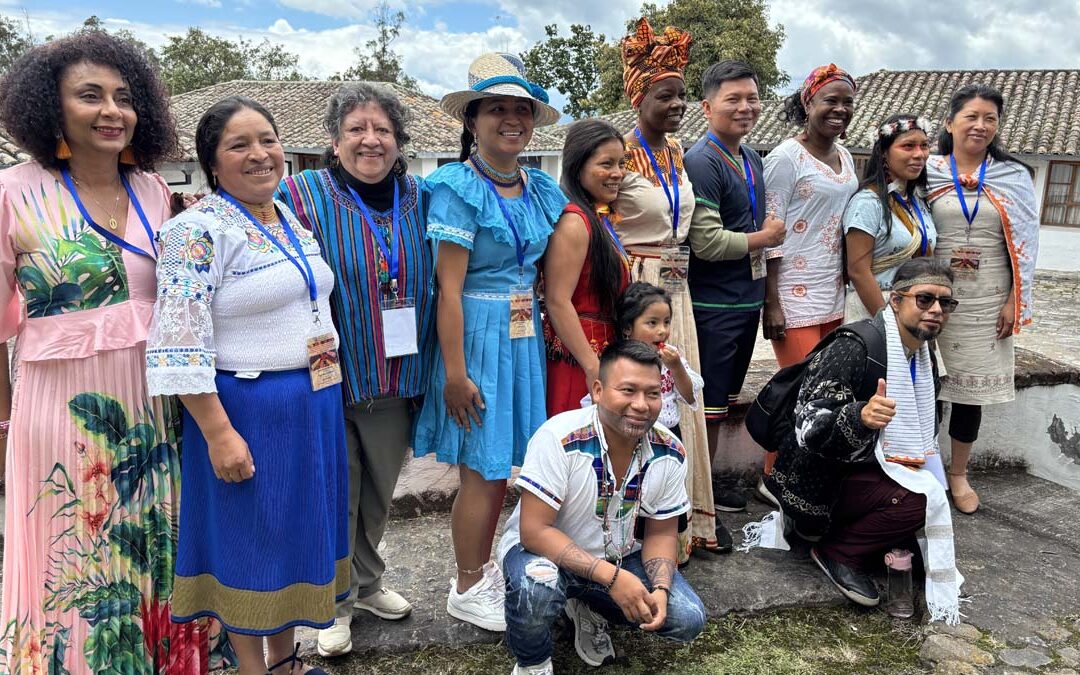
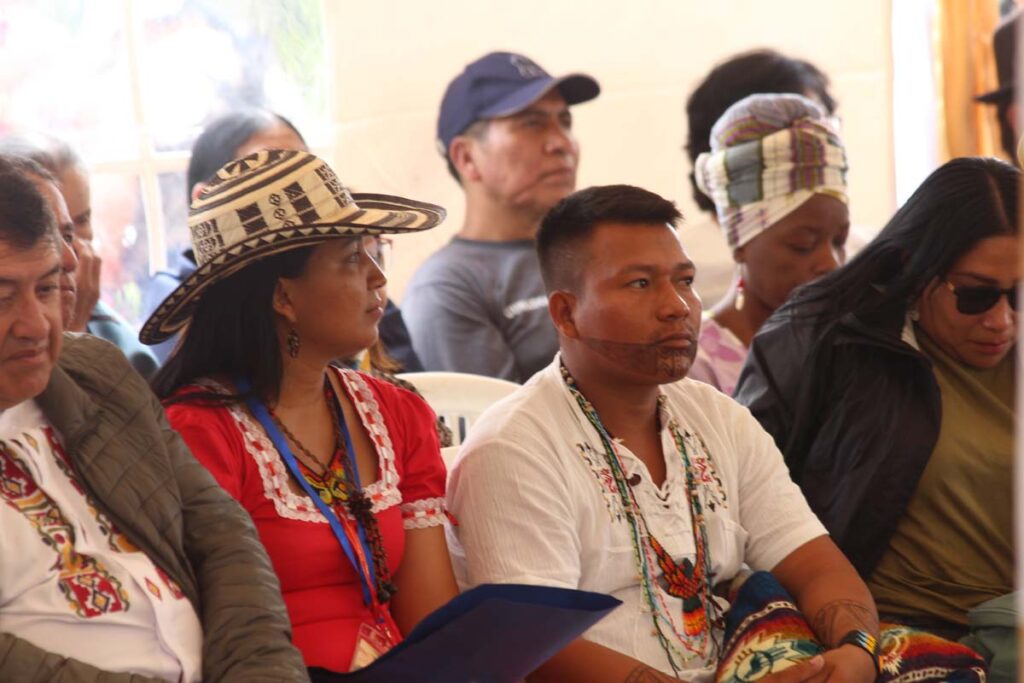
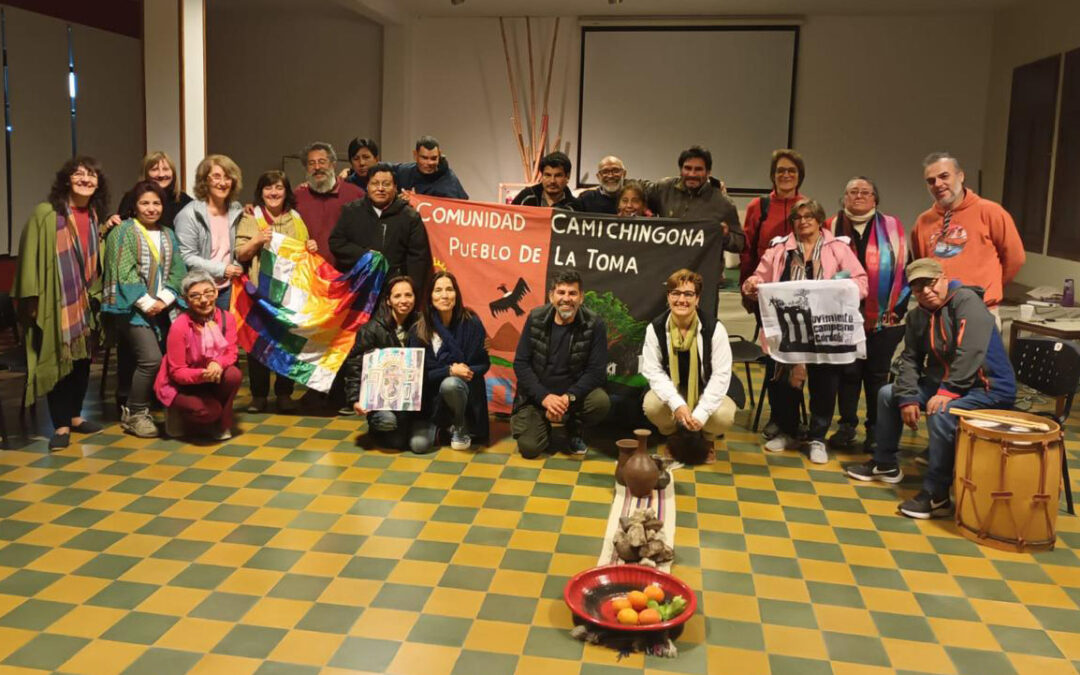
About one hundred people, representing almost all the countries of Latin America and the Caribbean, gathered in Atuntaqui, in northern Ecuador, from 1st-4th May, 2025, to participate in the “Rimarishun”, an inter-cultural experience based on an exercise in dialogue between the Andean and Caribbean worldviews of the native peoples and the charism of Unity. This initiative began a few years ago in Ecuador and is gradually spreading to all Latin American countries.
“Participants explained, “We are aware of the pain that, throughout history, has marked our relationships as Latin Americans due to racism and separation that have hindered the symmetrical relationship between cultures and broke down relations between people of different cultural groups, leading to unjust social relations. For this reason, in Ecuador, in 2017, we began a path of fraternity, which in the Quichwa language we call “Rimarishun” (Let’s talk), making inter-culturality a way of life and using fraternal dialogue as a method”. ”.
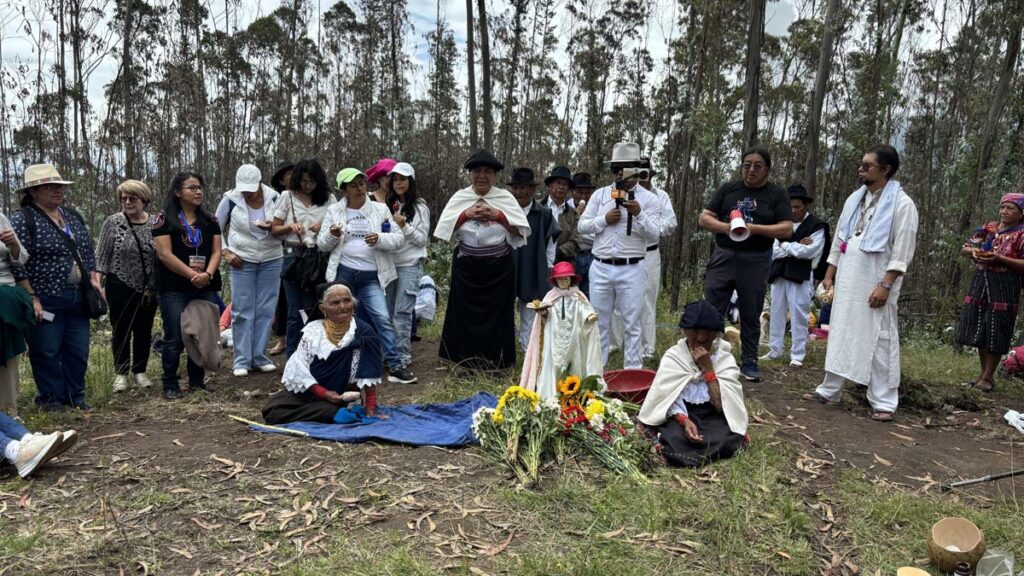
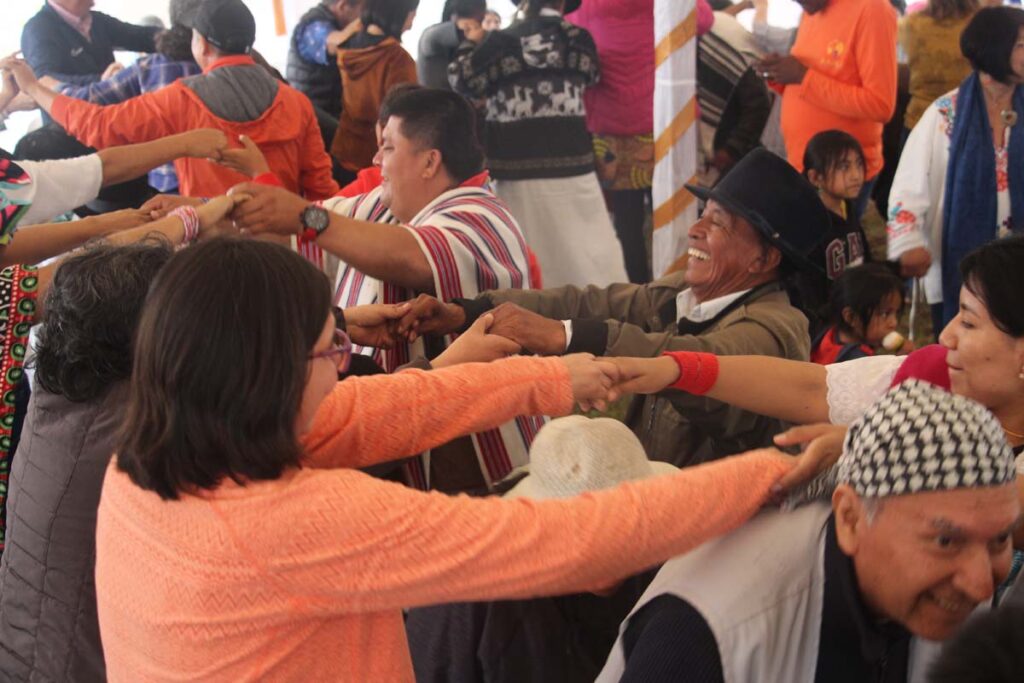
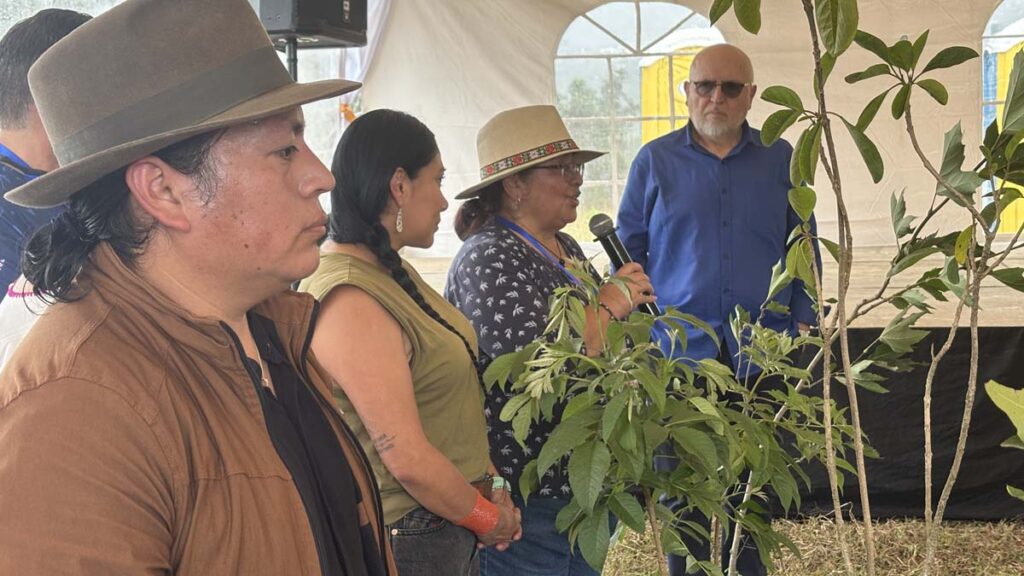
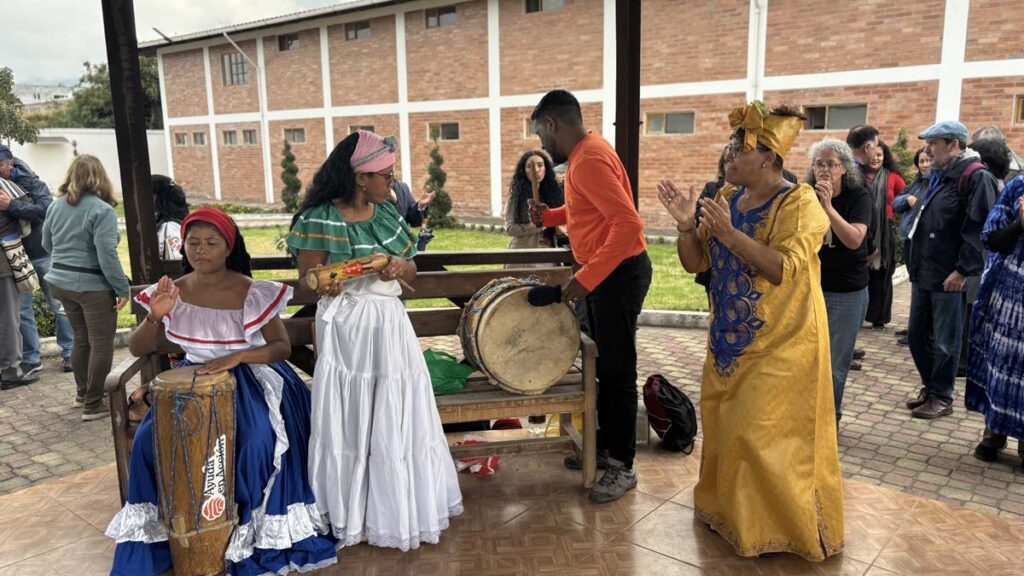
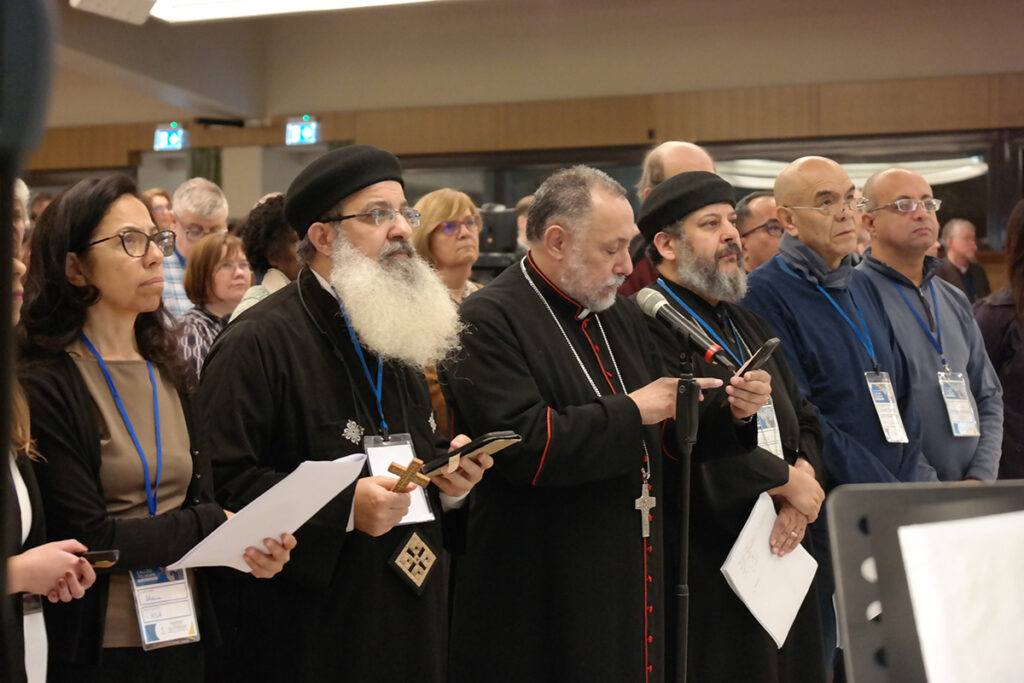
The Congress was conceived as a journey, a vital “pilgrimage”, which began with a visit of participants to the Quichua community of Gualapuro. It was immediately clear that the goal was to create intercultural spaces that build bridges between groups of peoples, nationalities or different cultures, where it is essential to meet each other, welcoming and taking care of each other as brothers and sisters. Manuel Lema, from the Quichua community, welcomed the participants under a large tent set up for the occasion: “We can generate a different way of thinking, to see the world in different ways, but, at the same time, be one”. And Jesús Morán, Co-President of Focolare, who with a small group of Focolare’s General Council, came from Italy to attend the Congress, brought the greeting of President Margaret Karram to everyone and added: “We are building something new. Faced with an overdeveloped society, we discover here that there is a deeper wisdom that comes from native peoples.” ”. Then they all climbed the hill to participate in the “Guatchacaram”, a rite of thanksgiving to Mother Earth. Later, after sharing lunch, the gathering became a moment of celebration that expressed fraternity in music, dances and singing. At the end of the day, some trees were planted in memory of those who helped initiate this dialogue and who are no longer among us, including one dedicated to Pope Francis.
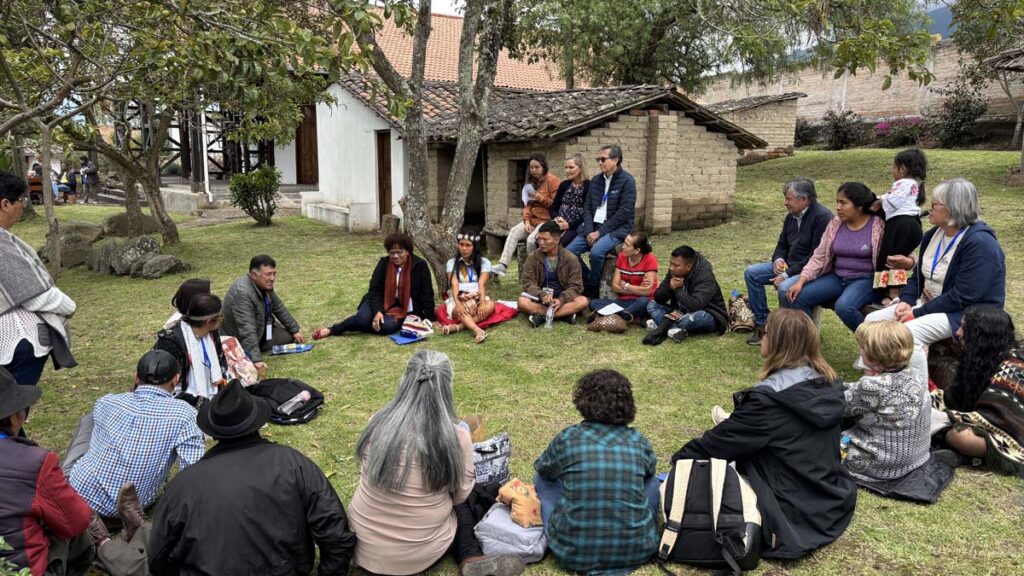
Another stop on this trip was a visit to the home of Bishop Leonidas Proaño (1910-1988), known as “the apostle of the Indians”. HIs dedication to the poorest and most exploited indigenous populations is a powerful example of interculturality. In this environment, the “mingas” began to develop, groups which together explore various topics: economy, ecology, education, spirituality, culture and racism, taking reciprocity as the central principle of relationships.
The rites of the Afro-descendants of the Caribbean and Central America and the Mayan rite were shared with great respect, taking into account their diversity, connected to a deep respect for nature, “Mother Earth” and for the transcendent. In this context, testimonies such as that of the Focolares in the regions of indigenous peoples, of schools aimed at recovering ancestral knowledge and culture, and even the Amerindian mathematical system, enriched everyone.
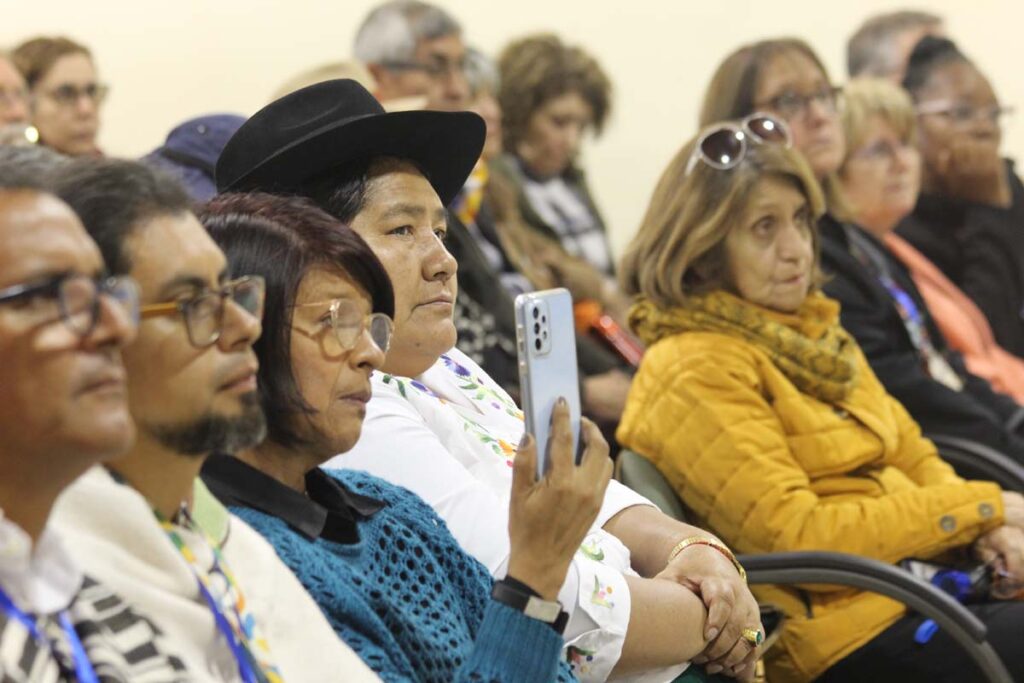
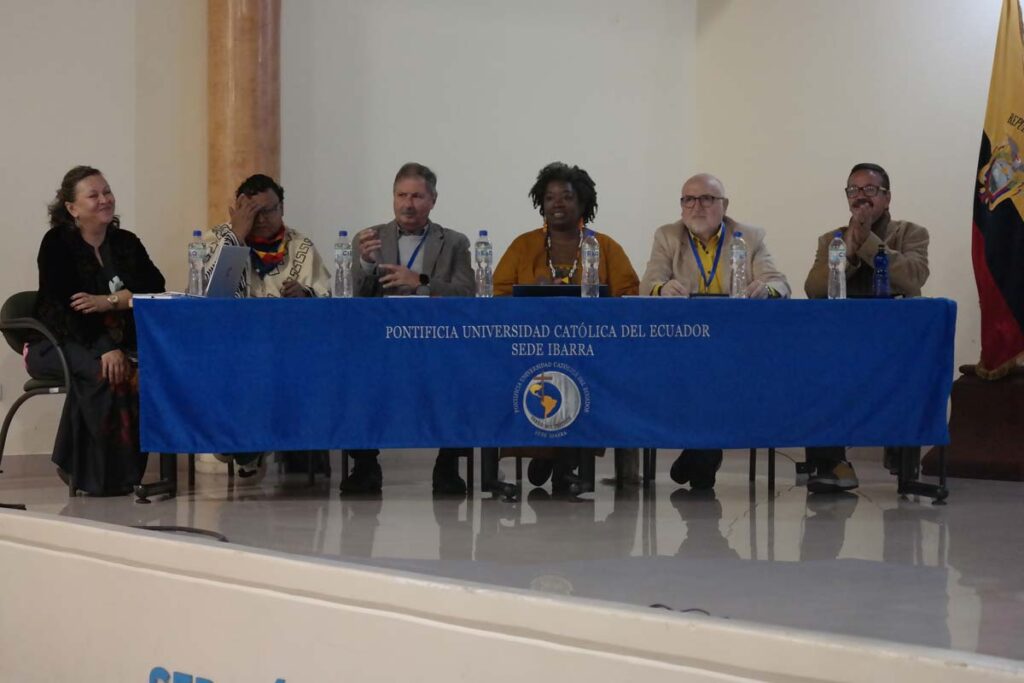
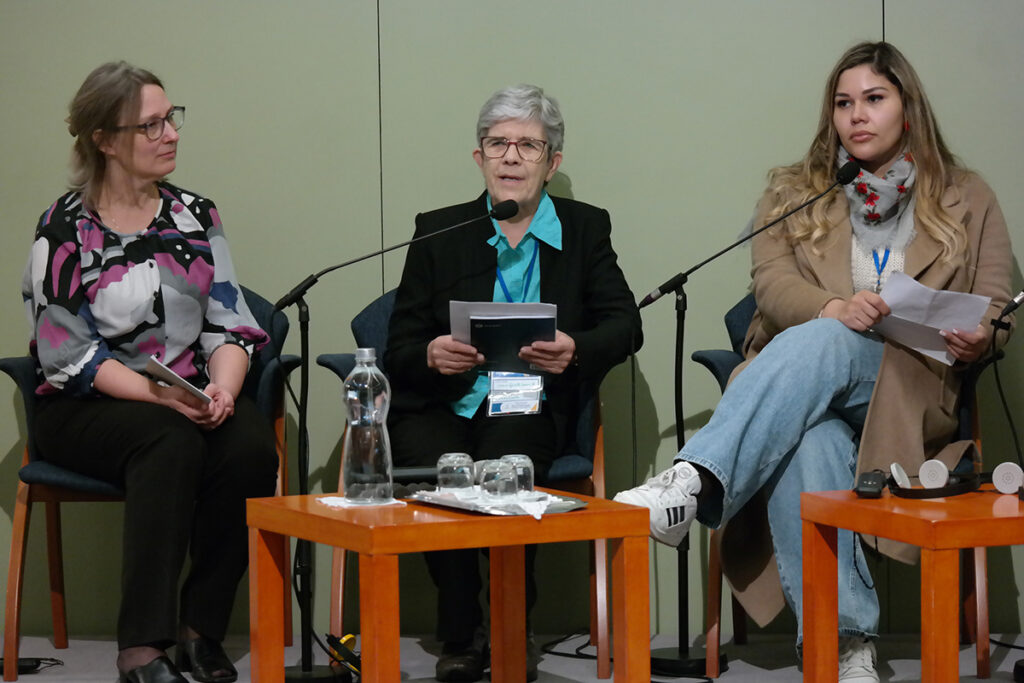
The “pilgrimage” continued at the Catholic University of Ecuador in Ibarra with an event open to the academic community and the public. Speakers at the round table included Custodio Ferreira (Brazil), a graduate in education, specialized in African history, who spoke about the “wounds of reality”: “the racism that exists today throughout Latin America and the Caribbean is an open wound that continues to bleed. Its healing and recovery require a fraternal dialogue and, in this sense, interculturality, as experienced by Rimarishum, is a concrete response to start this healing process “. ”.
Osvaldo Barreneche (Argentina), dottore in storia, responsabile del Centro dei Focolari per il dialogo con la cultura contemporanea, ha parlato di “fraternità e cura della terra attraverso alcuni scritti di Papa Francesco”.
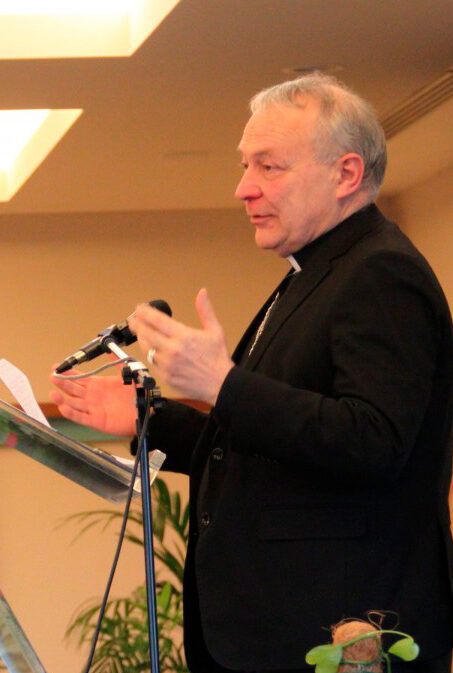
Jesus Moran (Spain), Co-President of the Focolare Movement, who lived in Latin America for 27 years, said:“This work of interculturality is very important and is being carried out with admirable dedication in many parts of Latin America. For us who are Christians, it means we can discover aspects of Christ’s revelation in Indigenous cultures that have not yet been sufficiently highlighted. ” ”.
Maydy Estrada Bayona (Cuba), PhD in Philosophical Sciences and lecturer at the University of Havana, presented the “Afro-Caribbean Worldview”. Monica Montes (Colombia), PhD in Hispanic Philology, lecturer and researcher at the University of La Sabana, addressed “Fraternity and care through Latin American thought”. Jery Chavez Hermosa (Bolivia), founder of an organization for Andean migrants (Aymara, Quechua, and Guaraní) in Córdoba, Argentina, gave a dynamic closing presentation that engaged everyone.
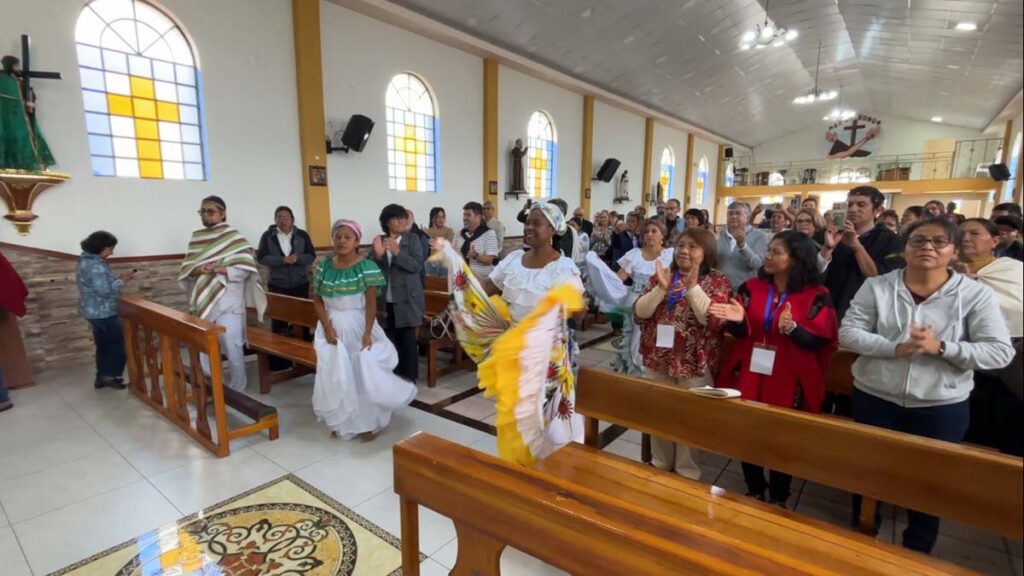
The meeting ended with a Mass featuring traditional dances, songs and drums in a church adorned with flowers and rose petals. It was celebrated by Msgr. Adalberto Jiménez, Bishop of the Vicariate of Aguarico, who had actively participated in the meeting. The Our Father was recited in 12 languages in succession, a powerful symbol of the intercultural experience lived over these days.
In his homily, Bishop Adalberto, reflecting on the Gospel account of the multiplication of the loaves, invited everyone to look to the future:: “This Jesus, this God who unites us in different names, in different rites, is the story we must tell, the rites of life, of unity. Today we leave with a little more light, which is fire, which illuminates. This is what Chiara Lubich and Pope Francis have left us, they are present and call us to take care of interculturality. Thank you Rimarishun”. ”.
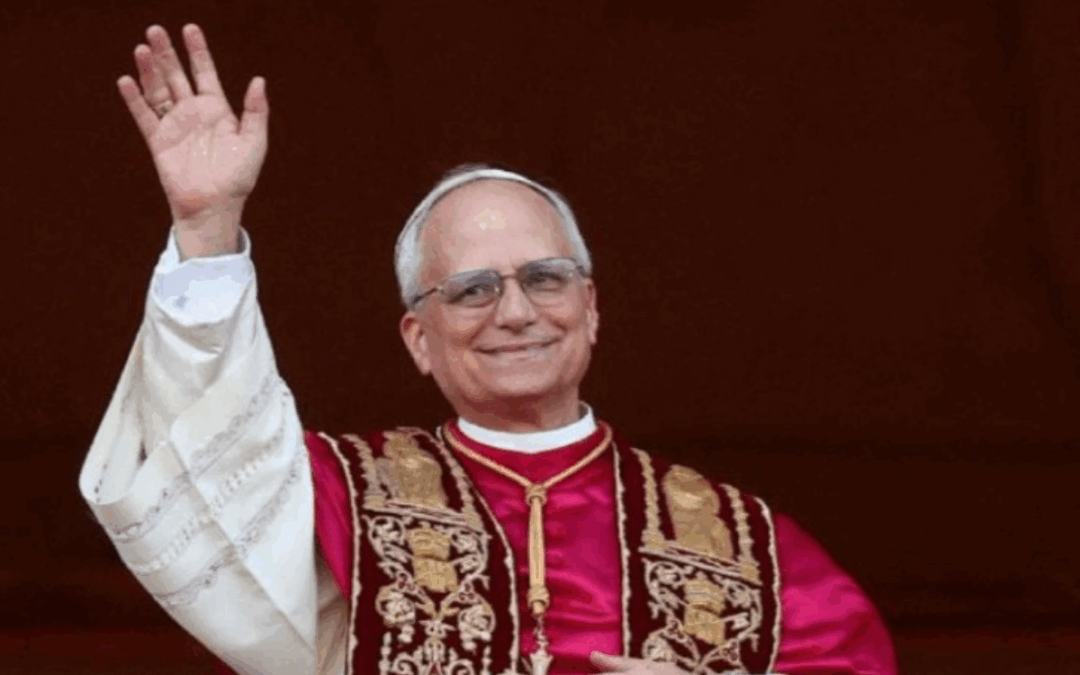
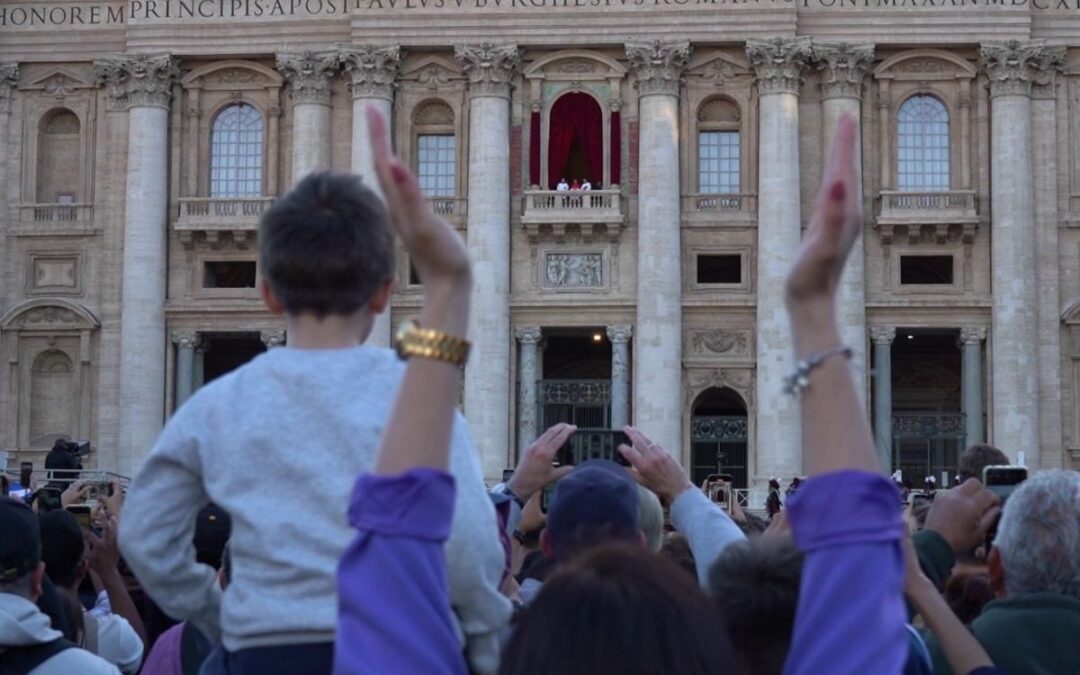
On behalf of the Focolare Movement throughout the world, I express my great joy for the election of Pope Leo XIV as the new Pontiff of the Catholic Church. We thank God for having listened to the prayers of so many people and having, with His Spirit, guided the work of the Cardinals in identifying the successor of Peter at the present time that is posing serious challenges for humanity.
Right From now, we want to assure the Holy Father of our filial closeness, our prayers and our commitment to be peacemakers, as he repeatedly emphasised in his first blessing.
Today the world is in urgent need of peace, light and hope. That is why we promise that we will continue to commit ourselves, together with the ecclesial communities in which we are inserted, to bring God’s love to all; to be open to dialogue, to be ‘one people always at peace’, bearing witness to the fact that the unity asked for by Jesus in his Testament is stronger than any division.
Moreover, we want to commit ourselves to embodying the synodal path ever more faithfully, to be able to apply it also in the various areas of society; to give our contribution so that the Church may be an open and welcoming home for every man and woman and for the new generations, especially for those who are most fragile, those who suffer most and those who are marginalised, so as to offer to all the ever new message of Christ.
Best wishes Pope Leo XIV, with all our love!
Margaret Karram – President of the Focolare Movement
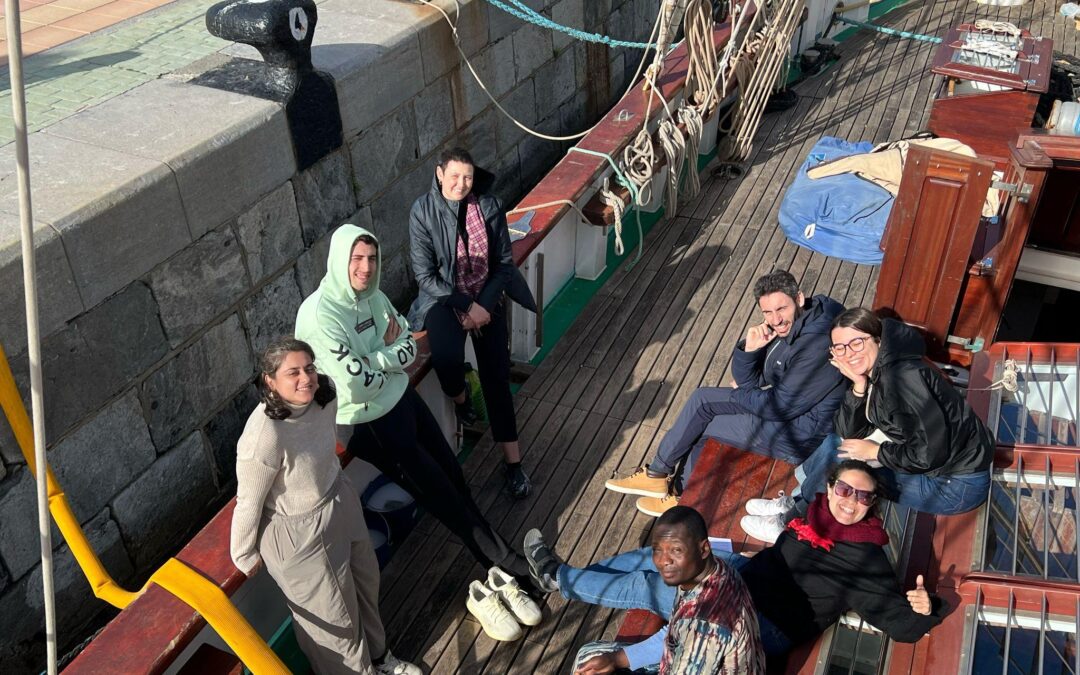
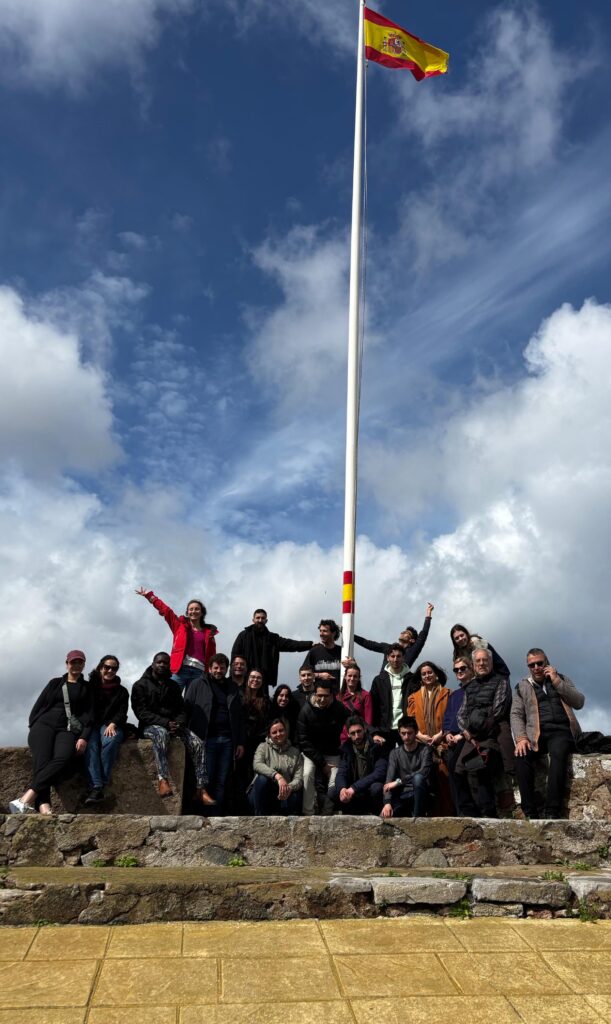
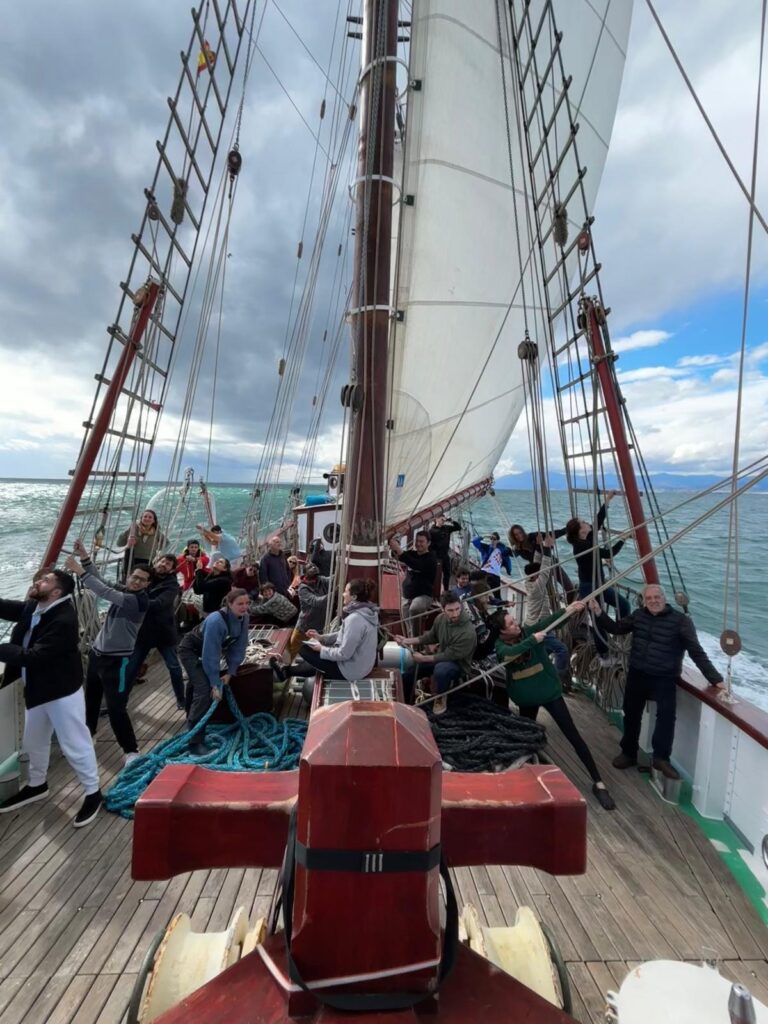
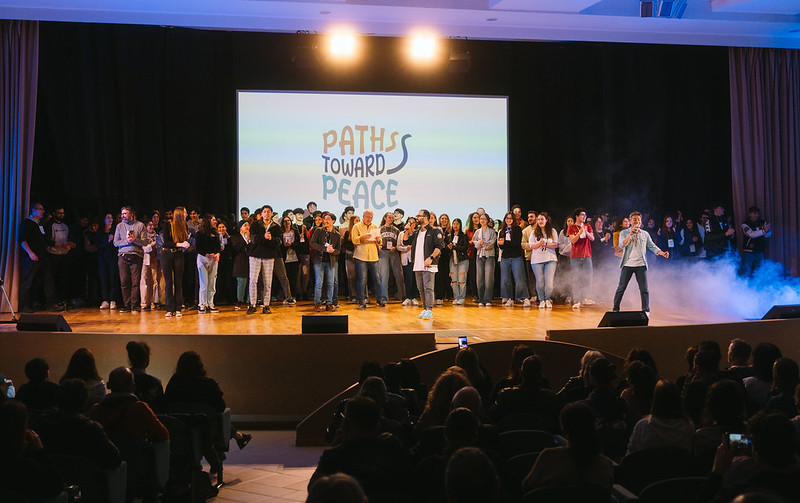
A few weeks ago, I was part of the MED25 project, a school-ship for peace. We were 20 young people from across the Mediterranean—North, South, East, and West—sailing together on a boat called “Bel Espoir.” We set off from Barcelona, and since the weather wasn’t as expected, we stopped in Ibiza before reaching Ceuta. From there, we traveled overland to Tetouan and then returned to Malaga. It wasn’t just a trip—it was a journey into each other’s lives, minds, and cultures.
Living on a boat with so many different people was beautiful, but not always easy. Every day, we had to share responsibilities: cooking, serving meals, cleaning, washing dishes. We rotated tasks in teams, so everyone experienced the full rhythm of life onboard. We also learned how to sail—which was pretty wild at first. I wish I could say it eventually became second nature, but in truth, it was harder than expected. You quickly learn how much teamwork it takes to move forward—literally.
But we weren’t there just to sail and cook. We were there to talk—really talk. We explored eight big topics together: culture, education, the role of women, religion, the environment, migration, Christian traditions, and of course, peace. These weren’t theoretical discussions. They were deeply personal. We shared our perspectives, and sometimes, we clashed. Some discussions got heated. There were moments of frustration. Some conversations even turned into real arguments.
But here’s the truth—on a boat, you can’t just walk away. You can’t go home and sleep it off. You live together. You eat together. You sail together. You are literally in the same boat. And that changes everything. It makes it impossible to stay angry for long. We had to talk it out. We had to listen. And sometimes, we had to admit we were wrong.
That, for me, was the most powerful part of the experience. I realized that most conflicts—between people or nations—don’t come from hatred. They come from ignorance. From stereotypes. From misinformation. And just like we had the chance to truly get to know each other on that boat, the world can do the same. If we could overcome years of misunderstanding in just two weeks together, imagine what could be possible if people were truly willing to listen.
I also discovered many unexpected things. Like how Lent is celebrated differently in Europe compared to the Middle East. Or how religion plays a completely different role in politics and public life depending on where you are. In Europe, it’s often a private matter, whereas in many Middle Eastern countries, it shapes laws, policies, and daily life. These weren’t just facts—I felt the difference through the people I lived with.
What touched me the most was that, despite all our differences, we had so much in common. We laughed a lot. We danced. We got seasick together. We also fasted together, since it was both Lent and Ramadan. We created art, read books, got silly, prayed in many different languages at the same time, discovered religions like Christianity, Islam, Hinduism, and Judaism, slept under the open sky, and shared quiet, sacred moments. And through all that, I realized that peace isn’t something far off or unreachable. It’s deeply human. It’s messy, and it takes work. But it’s possible.
I came back changed. Not because I think we’ve solved all our problems, but because I now believe that peace isn’t a dream—it’s a choice. A choice that starts with truly seeing and listening to the other.
And if 20 strangers could do that together on a boat in the middle of the sea, then there’s hope for the rest of the world too.
Agustin, Patricia and their two children are an Argentinian family. After following a course at Sophia ALC, the Latin-American branch of the university institute that is based in the international little town of Loppiano (Italy), they began to research their roots among the indigenous peoples, and this gave rise to a strong commitment in intercultural dialogue.
Often life presents us with situations which lead us to slowly and unintentionally close in on ourselves: this may be the result of an disagreement or because of our views or ego or even due toour fears.
But sometimes it is enough to stop and just ask ourselves a simple question, made up of simple words, and, unexpectedly, we become aware that change is possible. The questionis: “Who are you to me?” or, in other words, “Who am I to you?” Questions that, as Margaret Karram says, pave the way to taking concrete action: “take the first step, listen, spare no time, let yourself be ‘wounded’ by others.”[1] It is obvious: if we think about others, we do not think of ourselves, nor of our weaknesses, failures or emotional scars that others have inflicted. Thinking about the other person helps us put ourselves in their shoes, in an attitude of reciprocity: “how would I feel if the other person told me what I am telling him or her?” or “what can I do for him or her?”
lf our actions stem from a desire to put the well-being of those around us first, everything can acquire a greater dimension, to the point where we can tell the other person that we love them gratuitously and without expecting anything in return.
However, sometimes we are overwhelmed by discouragement, frustration, and tiredness. The American doctor, Ira Robert Byock, says that the times of greatest despair arise when we feel imprisoned in “a well of fear, anger and distrust”. [2] In those moments, let us surrender to the power of love that can do anything, can free us from all that holds us back and encourages us to begin again without fear. The music group “Gen Rosso” expresses this idea in one of its songs by saying, “Starting anew is like saying yes to life again, and then breaking free and flying to boundless horizons, where thoughtsare free from fear. Your home becomes as big as the world. To begin again is to believe in love and to feel that even in times of pain, the soul can sing and never stop.”
Such an attitude can bring about personal change, but can also make an impact upon the community when we share our difficulties with other people in sincere and constructive dialogue. An atmosphere of true friendship rebuilds relationships in the community enabling anger to be replaced by reflection, fear by the discovery of new pathways and distrust by hope. We will then become a sign of a different way of creating society.
[2] in: The Economist – The 2015 Quality of Death Index. Ranking palliative care acrosstheworld
THE IDEA OF THE MONTH is currently produced by the Focolare Movement’s “Centre for Dialogue with People of Non religious Beliefs”. It is an initiative that began in 2014 in Uruguay to share with non-believing friends the values of the Word of Life, i.e. the phrase from Scripture that members of the Movement strive to put into practice in their daily lives. Currently, THE IDEA OF THE MONTH is translated into 12 languages and distributed in more than 25 countries, with adaptations of the text according to different cultural sensitivities. dialogue4unity.focolare.org
The last chapter of John’s Gospel takes us to Galilee where Peter, John and the other disciples have returned to their work as fishermen. They have spent the entire night on Lake Tiberias but, unfortunately, their efforts have been fruitless.
The Risen Lord appears for the third time and encourages them to cast out their nets once more and this time they gather a large number of fish. The Lord invites them to join him on the shore and to share their food but though Peter and the others have recognized him, they dare not speak to him directly.
Jesus takes the initiative and asks Peter a very challenging question, ‘Simon son of John, do you love me more than these men?’ The tone seems solemn as Jesus continues by asking Peter[1] three timesi to care for his sheep [2]
Lord, you know all things; you know that I love you.
However, Peter knows he has betrayed the Lord, and the memory of this tragic experience prevents him from responding positively to Jesus’ question. He humbly replies, ‘You know that I love you.’
During their conversation, Jesus does not hold the betrayal against Peter; nor does he point out the mistakes he made. He reaches out to him in a way which makes Peter feels at ease and Jesus’ friendship heals his painful wound. The only thing he asks is to rebuild their relationship with an attitude of mutual trust.
Peter responds by showing not only an awareness of his own weakness but also a sense of unlimited trust in the welcoming love of his Master and Lord:
Lord, you know all things; you know that I love you.
Jesus asks each of us the same question: do you love me? Do you want to be my friend?
He knows everything: he knows the gifts we have received from him and he knows our weaknesses and wounds that may still be raw and unhealed within us. Yet he renews his trust, not in our strengths, but in our friendship with him.
This friendship gives Peter the courage to witness to his love for Jesus to the point of giving his life.
‘We all experience moments of weakness, frustration, and discouragement… adversity, painful situations, illness, deaths, inner trials, misunderstandings, temptations and failures… When people feel unable to overcome certain physical or spiritual challenges by relying on their own strength, they are forced into the position of having to trust in God. And he intervenes because he is attracted by this trust. He can achieve great things which seem all the more powerful because they spring from an awareness that we are small and incapable.’ [3]
Everyday we can stand before God just as we are and ask for his healing friendship. In this trusting surrender to his mercy we can return to intimacy with the Lord and resume our journey with him.
Lord, you know all things; you know that I love you.
This word of life can also become a personal prayer as we acknowledge the limits of our strength but place our trust in God and thank him for all the signs of his love:
‘I love you because you have entered my life more than the air in my lungs, more than the blood in my veins. You entered where no one could enter, when no one could help me, when no one could comfort me… Enable me to be grateful to you – at least a little – in the time I have left, for this love that you poured out on me, and forced me to say to you: I love you.’ [4]
We can follow Jesus’ style of loving in our relationships in the family, society and the Church. Jesus loved everyone, he was the first to love and he ‘washed the feet’ [5] of our brothers and sisters, especially the least and most fragile. By doing this, we will learn to welcome everyone with humility and patience, without judging, open to asking and accepting forgiveness and understanding together how to walk side by side through life.
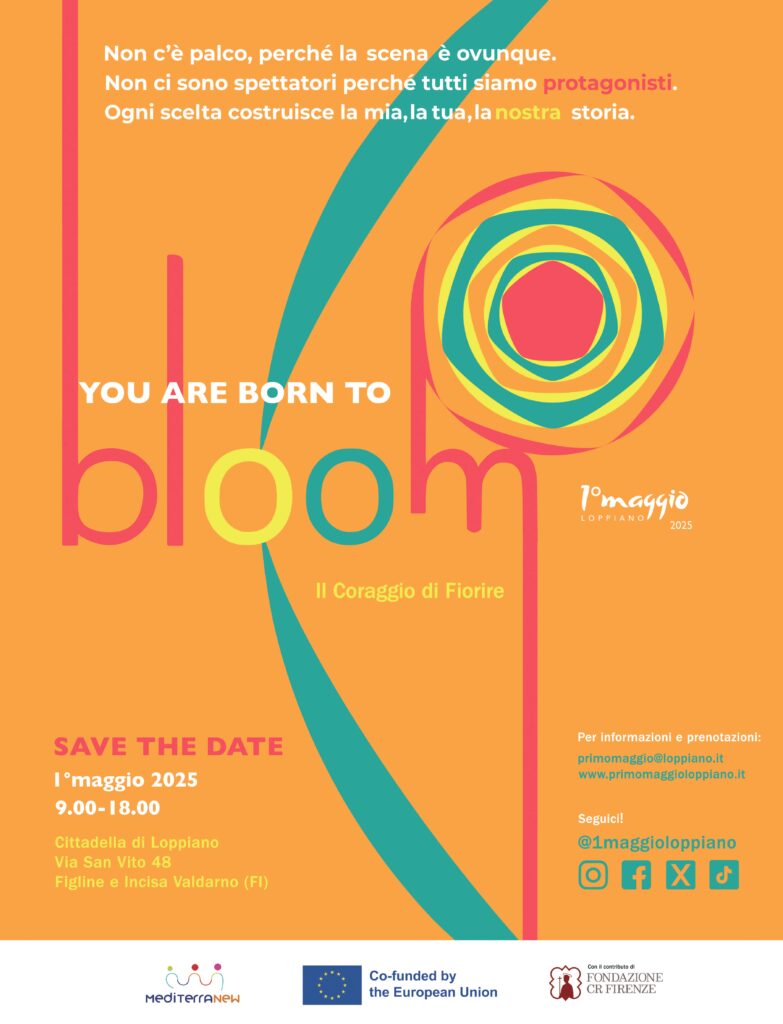
The 2025 edition of the traditional youth festival in the Focolare little town will showcase the fragility and conflicts experienced by young people today and transform them into an immersive artistic experience full of hope. There will be many workshops and a live final show to tell everyone: ‘You are born to bloom’.
‘Remember that you were born to bloom, to be happy’. This is the message that, in the Jubilee Year of Hope, the young organisers of May Day in Loppiano (Figline and Incisa Valdarno – Florence) want to give to their peers who will participate in the 2025 edition of the traditional festival that has been held since 1973 in the international town of the Focolare Movement on Labour Day.
The theme
At the heart of ‘You are born to bloom, the courage to flourish’, the title of the event, are the fragility, wounds and conflicts experienced by today’s children and young people, sublimated into an artistic, immersive and growth-oriented experience.
‘We believe that the conflict we often experience in the most difficult stages of life can become an opportunity to be reborn stronger and more aware of who we are,’ explain Emily Zeidan, from Syria, and Marco D’Ercole, from Italy, members of the international team of young organisers of the festival. As Pope Francis told us, ‘Conflict is like a labyrinth’, we must not be afraid to go through it, because ‘conflicts make us grow’. But ‘you cannot get out of the labyrinth alone; you get out with someone else who helps you’. So, on May Day in Loppiano, we want to remind everyone of the beauty of each other, even in moments of vulnerability.
The theme of May Day in Loppiano is highly topical, considering that in Italy, one in five minors suffers from a mental disorder (depression, social withdrawal, school refusal, self-harm, anxiety, eating disorders, suicidal tendencies), according to data from the Italian Society of Child and Adolescent Neuropsychiatry. Those under 35, on the other hand, experience job insecurity, are underpaid, suffer from territorial and gender inequality (‘Youth 2024: the balance sheet of a generation’, EURES), and do not feel understood by adults in their needs and experiences, particularly when it comes to fears and fragility, aspirations and dreams.
Pope Francis had great faith in us young people. He never missed an opportunity to remind us that the world needs us, our dreams, and great horizons to look towards together, in order to ‘lay the foundations of social solidarity and a culture of encounter,’ emphasise Emily and Marco. For this reason, ‘You are Born to Bloom’ will be a show created together, where the audience will not only be spectators but an integral part of the international town of the Focolare Movement. Narration: everyone who participates will be called upon to become a protagonist of the show, giving their best with others.
The programme
In the morning, participants in the May Day festival in Loppiano will have the opportunity to explore their own fragility and beauty through art, motivational and experiential workshops led by psychologists, trainers, counsellors, artists and performers.
Among these, the Gen Verde International Performing Arts Group will prepare young people to take to the stage and be part of the cast of choreographies, choirs, theatre company and band in the final show. The Gen Verde workshops are part of the project ‘M.E.D.I.T.erraNEW: Mediation, Emotions, Dialogue, Interculturality, Talents to foster youth social inclusion in the Mare Nostrum’, Erasmus Plus – Youth – cooperation partnership.
The festival will culminate in the afternoon with the collective creation of a live performance: all participants will be an active part of the story, and there will be no distance between the stage and the audience.
Among the artists who have confirmed their participation are Martinico and the band As One.
‘You are born to bloom, the courage to flourish’ is made possible thanks to the contribution of Fondazione CR Firenze.
Loppiano’s May Day is an event of the 2025 United World Week (1-7 May 2025), a global workshop and expo to raise awareness of fraternity and peace.
For information and reservations, please contact: primomaggio@loppiano.it +39 055 9051102 www.primomaggioloppiano.it
A path of dialogue and welcome rooted in the Gospel is the one shared by Pope Francis with the Focolare Movement. Maria Voce Emmaus, who was President of the Movement during the first eight years of his pontificate, describes it.
Enable subtitles and select your preferred language.
As a “distributor of tasks”, over ten years I had managed, in collaboration with our parish priest, to form the Parish Pastoral Council and the Sacristan group. As time went on, I realized my role was shrinking. Many people, previously less active, came forward to carry out various tasks and I chose to step aside to leave them space. Initially, I accepted my reduced role with serenity. Later, however, feeling excluded, I understood how easy it is to become attached to a role, but also how important it is to know when to let go. Sometimes, the Lord invites us to take a step back to prepare us for something new. It’s not easy, because it means accepting change and trusting. Today, although I feel a little on the side-lines, I remain willing to make my contribution if and when I am asked. I am convinced that every service, even the smallest, has a value and that every phase of life is an opportunity to grow in faith and love for others.
(Luciana – Italy)
God sees me
When I lived in Brussels, I sometimes went to Mass in the church of St. Michel’s College. To get there, you had to walk along long corridors with an endless series of classrooms on either side. Above the door of each one, there was a sign that read: God sees you. It was a warning to the boys that reflected a message from the past, expressed negatively: “Do not sin because, even if other people do not see you, God sees you”. Instead, for me, perhaps because I was born in another era or because I believe in his love, it resonated positively: “I do not have to do good things in front of men so that they see me, or to be praised or thanked, but live in the presence of God”. In the Gospel of Matthew 23: 1-12 speaking to scribes and Pharisees who love to show themselves off, Jesus invited them not to be called “teachers” but to have only one concern: to act under the gaze of God who reads hearts. I like this: God sees me, as the signs in the boarding school said; God reads our hearts and that must be enough for me.
(G.F.- Belgium)
The first step
My mother and her sister had fallen out over a matter of inheritance. They hadn’t seen each other for a long time and the rift grew wider, especially since we lived in the city and my aunt in a remote mountain village. This state of affairs lasted until the day, stimulated by the Words of Jesus: “If you are about to present your offering at the altar, and there you remember that your brother has something against you, leave your offering there before the altar and go first to be reconciled with your brother; then return and present your offering”, I plucked up my courage. I sought the right moment and then broached the subject with my mother. I managed to convince her to accompany me to visit my aunt. During the trip we kept quite silent so all I did was pray for everything to go well. In fact, things took place in the simplest way: taken by surprise, my aunt welcomed us with open arms. But we had to take the first step.
(A.G. – Italy)
Curated by Maria Grazia Berretta
(taken from The Gospel of the Day, Città Nuova, year X– no.1 March-April 2025)
A Pope who dreamed and made us dream… what was his dream? He once said it himself, that “the Church is the Gospel”. Not in the sense that the Gospel is the exclusive property of the Church. But in the sense that Jesus of Nazareth, the one who was crucified outside the walls as if he were a criminal and instead whom God Abbà raised from the dead as the first-born Son among many brothers and sisters, he continues here and now, through those who recognise themselves in his name, to bring the good news that the Kingdom of God has come and is coming… for everyone, starting with the “least” who have been touched by the Gospel for who they are in the eyes of God, the “first ones”. This is true and not a figure of speech. This is the Gospel, that the Church proclaims and contributes to making history. This is so, the more it is transformed by the Gospel. As it happened, from the very beginning, to Peter and John when, on their way up to the temple, they met the man who was crippled from birth at the entrance called the “Beautiful Gate”. Together they looked straight at him, and he in turn looked them in the eye. And Peter said to him: “I have neither silver nor gold, but I will give you what I have: in the name of Jesus Christ the Nazarene, walk!”
The Gospel of Jesus and the mission of the Church. Make the effort to stand up and walk. This is how the Father thinks of us, wants us and accompanies us. Jorge Maria Bergoglio – with all the strength and the frailty of his humanity, which made us feel that he was like our brother – it is for this that he has spent his life and his service as Bishop of Rome. From that first appearance from the balcony of St. Peter’s, when he bowed and asked for the People of God to invoke a blessing for him, to the last appearance, on Easter Sunday, when in a faint voice he gave the blessing of the risen Christ, then went down into the square to meet the eyes of the people. His dream was that of a Church which is “poor and of the poor”. In the spirit of Vatican II, which called the Church back to its only model, Jesus: who “stripped himself, making himself a servant”.
The name, Francis that he chose expresses the soul of what he wanted to do, and, first of all, to be: a witness to the Gospel “sine glossa”, that is, without comment and without adaptation. Because the Gospel is neither an ornament, nor a filler, nor an anaesthetic: it is a proclamation of truth and of life, of joy, of justice, of peace and fraternity. So, there we have the Church’s reform programme in Evangelii gaudium, and the manifestos of a new planetary humanism in Laudato sì and Fratelli tutti. We have the Jubilee of Mercy and the Jubilee of Hope. We have the document on universal fraternity signed in Abu Dhabi with the great Iman of Al Ahzar, and there we have the countless occasions of encounter experienced with members of different faiths and convictions. There we have the tireless work in defence of the abandoned, the migrants, the people who are abused. There we have the categorical rejection of war.
Francis was very clear that it is not enough for the Gospel to speak, with all its subversive force, in the complex and even contradictory Areopagus of our time. Something more is needed: because we are not only in an epoch of changes, but we are in the midst of a change of epoch. We need to look with a new perspective. The one with which Jesus looked and looks at us, from the Father. The gaze that, with tender and heartfelt words, is described in his spiritual and theological testament, the encyclical Dilexit nos. It is the simple and radical outlook of loving one’s neighbour as oneself and of loving one another in a selfless, free, hospitable reciprocity, open to everyone, everyone, everyone. The synodal process in which the Catholic Church – and, for their part, all the other Churches – has been convened shows the path to take in this third millennium of ours: beyond a clerical, hierarchical, male-dominated Church… A new path because it is as old as the Gospel. A difficult path, costly and full of obstacles. But a great prophecy, entrusted to our creative and tenacious responsibility.
Thank you, Francis! Your body will now rest beside Mary, who accompanied you step by step, as a mother, on your holy journey. With her, you now accompany all of us, from the womb of God, on the journey that awaits us.
It is with deep emotion that I write these lines about Pope Francis after his “flight” to the Father. I recall those many thoughtful and meaningful moments, when I was able to shake his hand and feel the warmth of his smile, the tenderness of his gaze, the strength of his words, the beating of his heart ready for a fatherly welcome. And I find it hard to believe that these encounters will no longer have a “tomorrow” or an “again” in my life.
I do not propose to make a thematic summary of Francis’ pontificate. To this end, it will be enough to review the many articles that have been published in recent days, especially the special issue of L’Osservatore Romano – just a few hours after his death – and the more or less exhaustive evaluations that will surely be published in the near future.
What moves me from within is to find that the golden thread that weaves his mission in guiding the Church, to try to be in tune with the centre of his heart and soul. And, from there, to relive the relationship he had with the Work of Mary during these twelve years.
To do this, I meditated deeply on his most recent talks, because I feel that this is where Pope Francis gave the best of himself and where you can find the key to all his thinking and to all his actions.
In the text he prepared for the Easter Mass, there is a quote from the great French theologian Henri de Lubac, who is also a Jesuit, that cannot simply be rhetorical: “it should be enough to understand this: Christianity is Christ. No, truly, there is nothing else but this.”
In my opinion, if we want to understand Francis, we must refer to this absolute: Christ, and only Christ, all Christ. From this we can understand the profound content of his encyclicals and apostolic exhortations, the choice of his journeys, his preferred options, the meaning of the reforms he undertook, his gestures, his words, his homilies, his meetings, and above all his love for those who are excluded, for those who are rejected, for women, for the elderly, for children and for creation.
‘No, there really is nothing else’. That is why one can say – using a pleonasm – that the Catholicism of Pope Francis is simply a “Christian Catholicism”. The new impulse he wanted to give the Church is based on this approach: the transparency of Christ. Because of this, on many occasions he has gone far beyond the politically correct, or rather, the ecclesially correct, without fear of being misunderstood, and without fear of being wrong, even aware of his “contradictions”. In fact, in an interview with a Spanish newspaper he said that what he wished for his successor was not to make his same mistakes.
Because of this Christological centrality, we can acknowledge that we have indeed been living – almost without realising it – with a Pope who is profoundly mystical. After all, this is how Pope Francis has thought and lived the Church: not as a religious organisation, nor as a distributor of sacraments, much less as a centre of economic, social or political power, but as the people of God, the body of Christ, which gives hospitality to humanity in His humanity. A Church, therefore, that is open to humanity, to service, because Jesus is “the heart of the world”.
To reduce Francis to a social reformer or a Pope of disruption shows a tremendous blindness. I often stared at his face when he inserted comments in his messages, for example at the Sunday Angelus. There, with the simplicity of a shepherd who passionately loves his flock, he displayed his harmony with the divine, his wisdom, his crystal-clear and straightforward faith, his profound humility.
In my humble opinion, from the centrality of Christ derive the two fundamental pillars of his magisterium: mercy and hope. Mercy is the expression of knowing ourselves as believers rooted in history, both personal and collective, with all its tragedies; hope manifests the eschatological and salvific tension that determines it. According to the Pope’s thought, there is mercy because there is hope; and it is hope that gives us a heart of mercy. Indeed, in his homily prepared for this year’s Easter Vigil, Francis affirms that ‘the Risen Christ is the definitive turning point in human history’. The important social and ecological messages of Pope Francis are misunderstood if this eschatological tension centred on the Risen Lord is not taken into account.
Francis’ relationship with the Focolare Movement has been very deep during the twelve years of his pontificate. He addressed ten official speeches to it: to the participants at the 2014 and 2021 Assemblies; to all those belonging to the Movement on the occasion of the 80th anniversary of its birth; to the academic community of the Sophia University Institute; to the family focolares; to the participants at the meeting of the bishops of various Churches; to the participants at the meeting on the “economy of communion”; to the participants at the interreligious conference “One Human Family”; to the citizens of the little town of Loppiano; to the Mariapolis of Rome – Earth Village. Furthermore, on one occasion, he granted a private audience to Maria Voce, the first president of the Work of Mary after Chiara, and to myself.
What emerges from these meetings is a great love and a touching pastoral concern of Pope Francis for the Movement. In the virtual ecclesial circularity between hierarchical and charismatic gifts, we can affirm that, on the one hand, the Pope has been able to grasp, value and highlight the gift that the charism of unity, with its emphasis on the spirituality of communion and its concrete achievements in very different ecclesial and civic contexts, represents for the synodal process that the whole Church is living in view of a new evangelisation. On the other hand, he has identified with extreme clarity the challenges and steps that the movement must necessarily take if it wants to remain faithful to its original charism, knowing how to go through the inevitable post-foundation crisis in a humble way, transforming it into a time of grace and new opportunities.
Pope Francis has been for the world an all-encompassing message of fraternity rooted in Christ and open to all. Fraternity is the only future that is possible. We, the people of unity, must treasure this legacy with humility, energy and responsibility.
It was with deep sorrow that I learned of the return to the house of the Father of our beloved Pope Francis. Together with the whole Church, we give him back to God, filled with gratitude for the extraordinary example and gift of love that he has been for every person and every people.
There have been many moments, throughout his entire pontificate, in which the Holy Father has been a close and loving shepherd also for the Focolare Movement. He has always welcomed us and has guided us to witness to the Gospel with courage and in a radical way.
We have lived many moments with him, which we will never forget In one of them we remember his words to the General Assembly of the Focolare, when he received us in audience in 2021:
‘Always listen to Christ’s cry of abandonment on the cross, which manifests the highest measure of love. The grace that comes from this, is capable of inspiring in us, who are weak and sinners, generous and sometimes heroic responses. It is capable of transforming suffering and even tragedy into a source of light and hope for humanity’.
Finally, I cannot fail to testify also to the Pope’s love and personal concern for me, for the sufferings of my people in the Holy Land, and my immense gratitude for having invited me to participate in the Synod on Synodality, where he himself opened the doors of the Synodal Church that is now starting to take its steps throughout the world.
Together with the entire Focolare Movement in the world, I unite myself to the prayer of the universal Church and of all men and women of good will, certain that Our Lady ‘Salus Populi Romani’, (Mary, Health of the Roman People) to whom he was so devoted, will welcome him into heaven with open arms.
This year 2025 the feast of Easter is celebrated on the same day by all Christian Churches. Margaret Karram, the President of the Focolare sends her wishes for this feast together with those of some representatives of various Churches..
Enable subtitles and select your preferred language.
An Easter of hope but above all, an Easter to be lived together. In this year 2025, which marks 1,700 years since the Council of Nicaea, Christian Churches will celebrate Easter on the same day: Sunday, 20th April.
This is a wonderful coincidence that calls all Christians to take a decisive step toward unity—a call to rediscover ourselves as united in plurality.
In an age marked by divisions on every front and especially at this time that brings us closer to the mystery of the Resurrection, we would like to share what Chiara Lubich said in Palermo in 1998 about “A Spirituality for Dialogues”, specifically an “ecumenical spirituality.”
It is a direct invitation to respond to the call of mutual love, not as individuals, but together. It is an opportunity to look upon the Jesus Forsaken on the cross as a light which, even in the ultimate sacrifice, not only leads us but becomes the sure pathway along which we can take our steps.
Enable subtitles and select your preferred language.
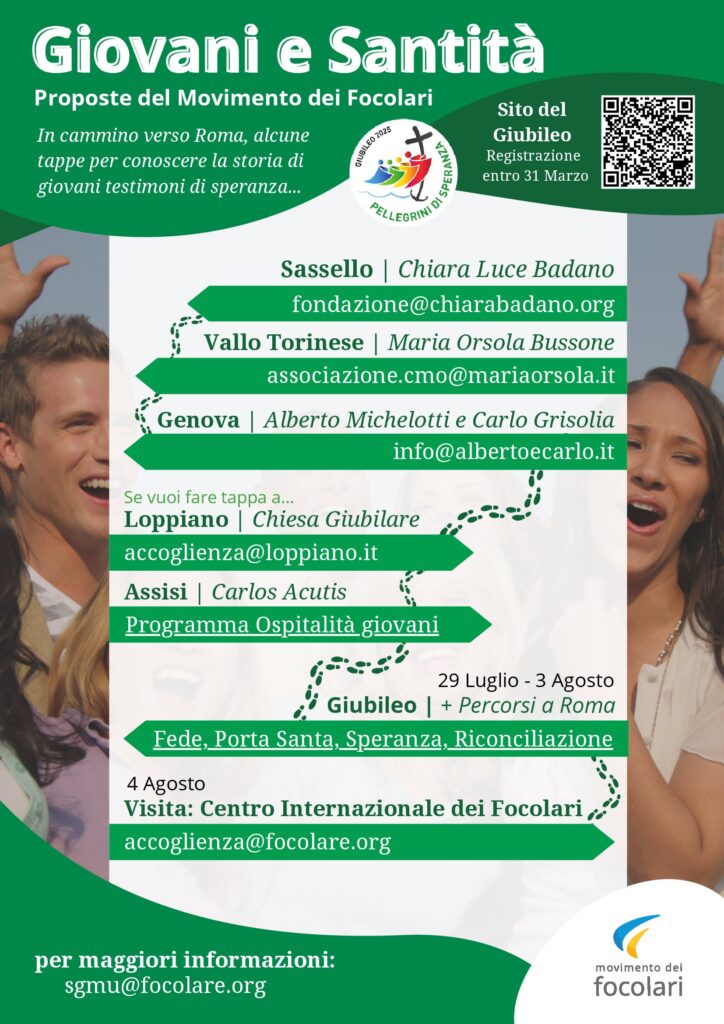
According to the calendar of major events for the Jubilee of Hope 2025, the Jubilee for Families, Children, Grandparents and the Elderly will take place from 30th May- 1st June and the Jubilee for Young People will take place from 28th July-3rd August. These will be two major events that will bring thousands of people from all over the world to Rome.
For the occasion, the Focolare Movement is offering several itineraries to provide opportunities to get to know more about the spirituality of unity and the lives of some witnesses of hope. In particular, a multi-stop tour for young people has been created around Italy entitled Youth and Holiness. We interviewed Paola Torelli and Lais Alexandre Pessoa from the Movement’s Youth Centres to find out more.
Let’s start with the Youth Jubilee: where did the idea of the “Young People and Holiness” tour come from?
The Youth Jubilee is a unique opportunity to set out on a journey, both physically in Rome and in other jubilee locations around the world. This journey is not just about visiting places, but above all it is an experience of encounter with God and with many witnesses of hope, whose lives can help us grow in faith and hope. Hence the idea of Young People and Holiness, a journey in the company of some witnesses of hope, for all the young people participating in the Jubilee at the end of July.
Genoa to getto know more about two friends Alberto Michelotti and Carlo Grisolia, now servants of God (info@albertoecarlo.it)
Loppiano (Florence), the international little town of the Focolare, to meet some of today’s witnesses of hope.(accoglienza@loppiano.it)
Assisi to discover the life and witness of saint Carlo Acutis, who will be canonised on 27th April 2025 as part of the Jubilee of Adolescents. (Youth Hospitality Program)
Rome for a journey in stages based on the four key words of the Jubilee: Pilgrimage and Profession of Faith, Holy Door, Hope, Reconciliation. The route will follow the traditional itinerary of the Seven Churches, accompanied by a spiritual guideline.
4th August, visit to the International Centre of the Focolare (Rocca di Papa). Visitors can take a guided tour to gain a deeper understanding of the charism of unity and the life story of the founder Chiara Lubich, whose body is buried there. (accoglienza@focolare.org)
Can you choose only one stage or is it one complete journey that includes all the stops?
The proposed stages are independent, each group or person can choose which ones to participate in or, if possible, follow the entire route. Contact details are provided for each stop regarding programs and visits.
Are there any other initiatives for young people?
Every month, at the Focolare Meeting Point in Rome there is a gathering entitled Call to one hope – Young people on the Journey. Together with some other Movements and Associations, we offer a chance to nurture and strengthen “hope” through shared testimonies, reflection, silence, and prayer. It’s an experience of mutual discovery. Preparing these events together with the other Movements and Associations helps us grow and become ever more the Church.
Let’s move on now to the Jubilee for Families, Children, Grandparents and the Elderly at the end of May: what does Focolare propose?
There will be two events on Friday, 30th May. They are interactive routes to deepen the Jubilee of Hope, designed for families with children and young people up to the age of 12, They include reflections and games suitable for that age group. The first will take place at the Focolare International Centre where participants can visit several significant places, such as the house where Chiara Lubich lived and the chapel where she is buried, together with the co-founders of the Movement. The second event will take place in Rome in several churches and significant places, starting from the Focolare Meeting Point.
Wars, massacres and bloodshed, extreme polarizations, situations in which even pacifism can become divisive: this is the current situation in which we are immersed.
The figure of Igino Giordani (1894-1980), a man of peace because he was a just and coherent man, gives us some inspiration today to lift our gaze and continue to hope, attempting to foster a dialogue even where it seems impossible, to break down crystallised ideologies and absolutisms, to build an inclusive society and to rebuild peace on unity.
One of the most vivid witnesses of the culture of peace of the twentieth century, his pacifism draws directly from the Gospel: killing another man means murdering a being made in the image and likeness of God. Giordani therefore yearned for peace, spent himself in every possible way for it ways, engaged in dialogue with anyone in the name of peace, did not back down even when it came to lending his support to the ratification of the Atlantic Pact and ensuring the security and defence of Europe and Italy… We can say that his pacifism was comprehensive and spared no effort.
Let’s look at some of his writings.
“…World War I broke out […] And massive pro-war rallies took place in the streets, which I attended so as to protest against the war; so much so that once a person I respected, upon hearing my shouts, admonished me: ‘You’re asking to be killed!’…
[…] In the “radiant May” 1915, I was called to arms. […] […]
The trenches. It was there, that I left school and entered life, in the arms of death under the salvos of cannons. Mud, cold, filth, there I bitterly discovered that the soldiers were all opposed to the ‘murder’ called war, because murder meant the killing of a man: they all detested it… […] We were in Oslavia, near some ruins called Pri-Fabrisu: Later during a three-year hospital stay, I recalled the memory of the agony (from the Greek, “agon” meaning struggle) suffered in those places in a short poem entitled The faces of the dead. I remember the last verse that said: “This is curse of war” [2]».
Giordani was seriously injured and when he returned from the trenches, he spent three years in the military hospital in Milan, suffering irreversible damage to one leg. His pacifism was therefore grounded in life experience. Later, when he was engaged in political life, he always strove for dialogue with everyone, even with those whose views differed from his, firmly believing that every person should always be welcomed and understood. He never entrenched himself in absolute positions. This is how he described his speech in Parliament in favour of the Atlantic Pact:
“I remember a speech I gave in the Chamber on 16th March, 1949 […], about the Atlantic Pact, which had for too long been presented solely in its anti-communist aspect, that is, as a military build-up against the Russians […] I said that every war is a failure of Christians: “If the world were Christian, there would be no wars… […] War, I added, is murder, it is deicide (killing of God’s image, that is, of man who is made in his image) and it is suicide”
Giordani’s speech was applauded by both the right and the left: a patient weaver of relationships, he highlighted the positive value of a choice by Italy that could have been interpreted as in favour of war. Giordani firmly believed that for peace to prevail, every possible path must be pursued, transcending strategic allegiances. He hoped that Christian politics would be capable of unravelling the existing polarizations to act in favour peace.
In 1953, he wrote:
“War is a large-scale murder, cloaked in a kind of sacred cult […]. It is to humanity, what disease is to health, what sin is to the soul: it is destruction and devastation, affecting both body and soul, individuals and communities.
[…] The end may be justice, freedom, honour, bread, but the means produce such destruction of bread, honour, freedom and justice, as well as human lives, including those of women, children, the elderly and innocents of all kinds, which tragically nullifies the very purpose for which they were intended.
In essence, war accomplishes nothing except to destroy lives and wealth
Giordani therefore reminds us that peace is the result of a deliberate project: a project of fraternity among peoples, of solidarity with the most vulnerable, of mutual respect. This is how a more just world is built, today too.
[1] Igino Giordani, L ‘inutilità della guerra, Città Nuova, Rome, 2003, (third edition), p. 57 [2] Igino Giordani, Memorie di un cristiano ingenuo, Città Nuova, Rome 1994, pp.47-51 [3]Idem, p.111 [4] Igino Giordani, L’inutilità della guerra, Città Nuova, Roma, 2003, (third edition), p. 3
We are publishing the report of the year 2024 on the activities of the Focolare Movement concerning the Safeguarding of the Person, starting with the words that Pope Francis addressed to the Pontifical Commission for the Protection of Minors and with which in fact, he updated the mandate with which he had established it 10 years ago. We feel strongly called to fulfil this ‘integral conversion’ to which the Holy Father is calling us, which is never completely accomplished, but asks us to question ourselves continuously, to have for each person a humble, always attentive, protective and welcoming attitude. He asks us to continue with perseverance on the path of formation and authentic closeness, aware of the need for change, so that each person may feel safe, loved and respected in our environments and in our various activities.
2024: listening, formation, regulations
There were three elements that characterised the past year from the point of view of safeguarding in the Focolare Movement: listening and the involvement of victims and witnesses in various capacities in the process of reparation, and the formation of the people in positions of responsibility in the movement; the expansion of courses and formation events for all participants and to continue to establish the regulations, with the updating of the document for the “Procedures for handling cases of abuse” as well as the drafting of the Guidelines for Listening and Welcoming Services.
The meeting last November of those responsible for the Movement around the world, with some people who had been affected either by sexual abuse or abuse of authority, by members of the Focolare Movement, was of fundamental importance. People told their stories of great suffering and the serious consequences on their lives and on the communities that they were or still are a part of. Also present were some family members of one of the people abused who gave their testimony of the serious impact that abuse has on all members of the family. The words of one participant expressed clearly the importance of that moment: ” Listening to these people marked a before and an after. With delicacy and clarity, they expressed to us how much the Movement has failed in what is at the heart of its charism: unity and love of neighbour, because in many cases we have not only been co-responsible in some way, for the abuse committed, but we have also left people alone to cope with their suffering ”.
In addition, the contribution of the those who have suffered abuse together with the involvement of professionals in various disciplines, from outside the Movement, have been fundamental to the work done at the International Centre and in the local areas. This included the documents that have been produced, as well as for the formation in Safeguarding of the Focolare communities around the world, together with the planning and opening of some spaces for listening and welcoming.
A Study Commission has now been set up to look at the abuses of authority and spiritual abuses that have occurred within the Movement. The aim is to investigate their causes, so as to be able to change harmful practices and implement the necessary prevention. The study, which is still ongoing, also makes use of advice from specialists from outside the movement in various fields: psychological, pedagogical and legal. This project was supported and encouraged by the Dicastery for the Laity, Family and Life and, despite being in its early stages, its great importance is recognised. So it is clear that the creation and enacting of norms and Procedures is not enough, but the dynamics, leading to the various forms of abuse, must be investigated.
Finally, regulatory documents and guidelines have been updated, developed and produced (as illustrated below), which are also the result of a fruitful collaboration with the Pontifical Commission for the Protection of Minors, which has followed and promoted the new steps taken.
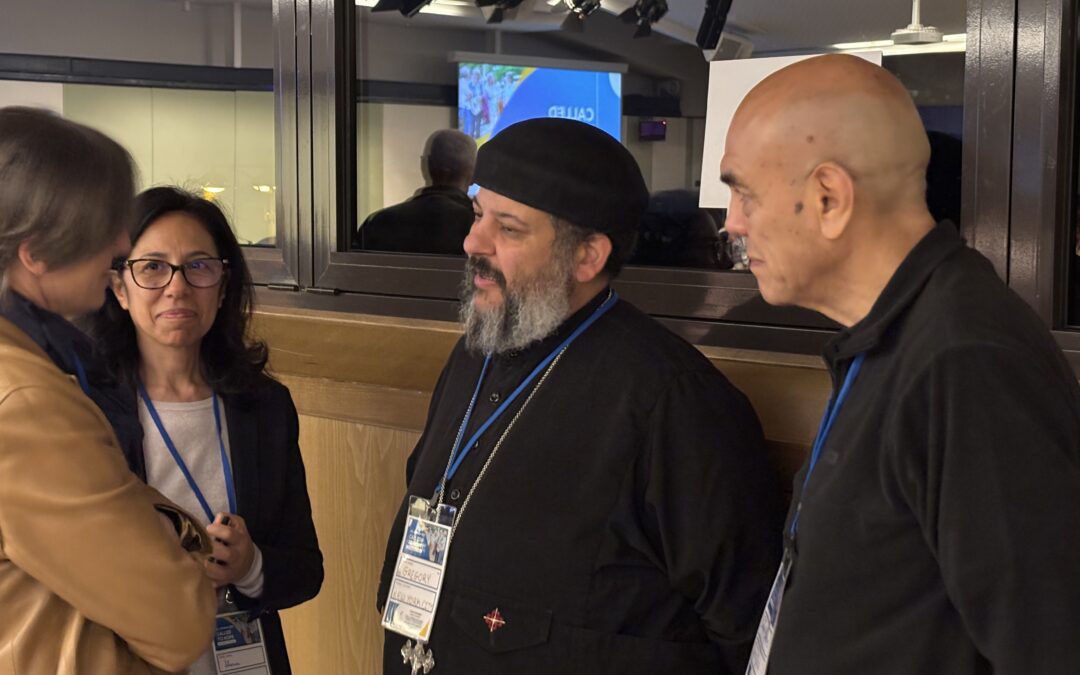
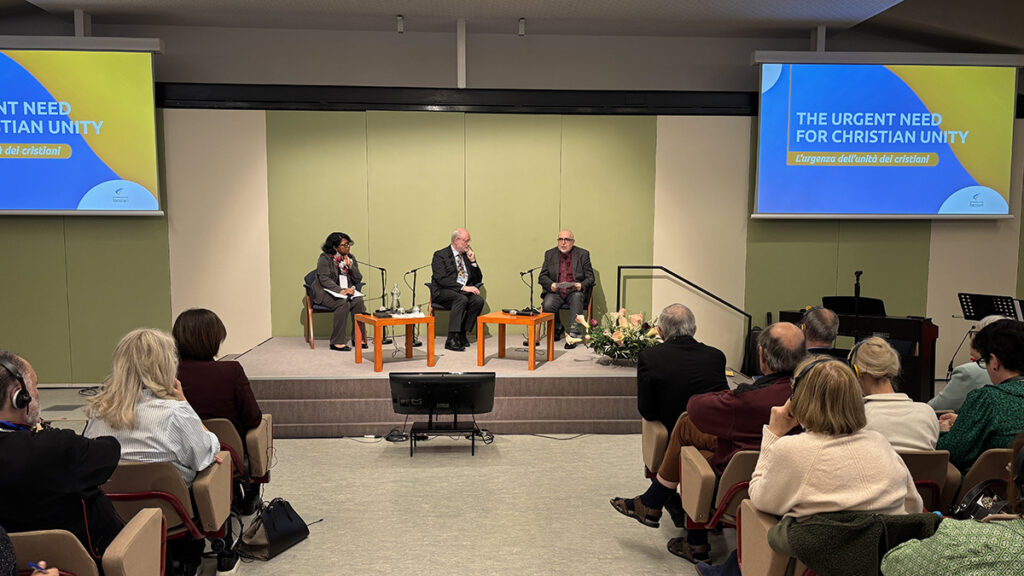
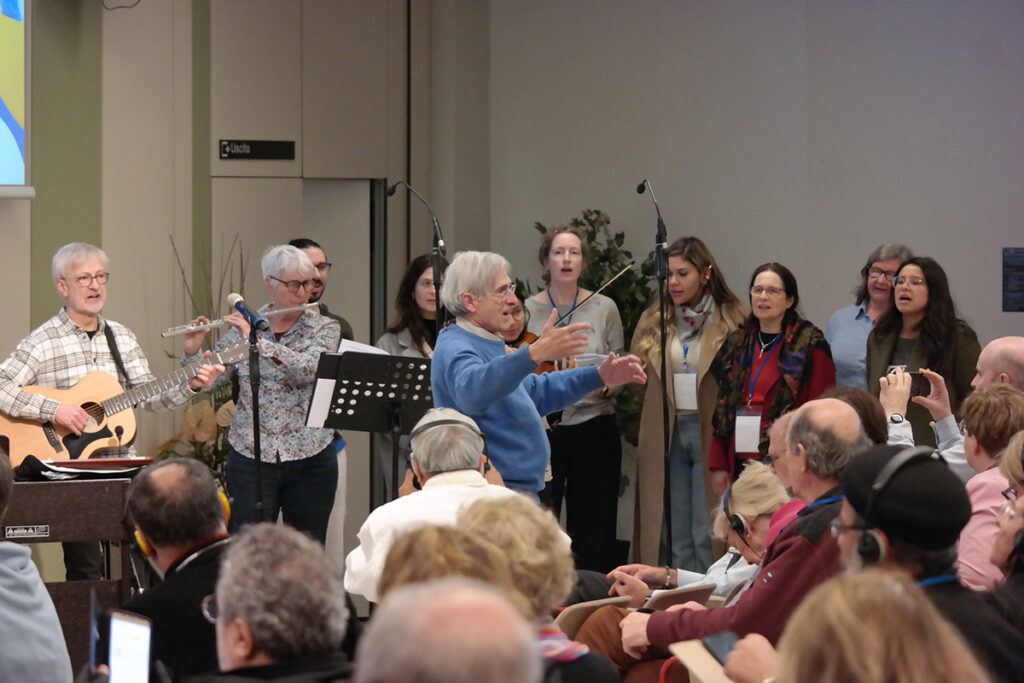
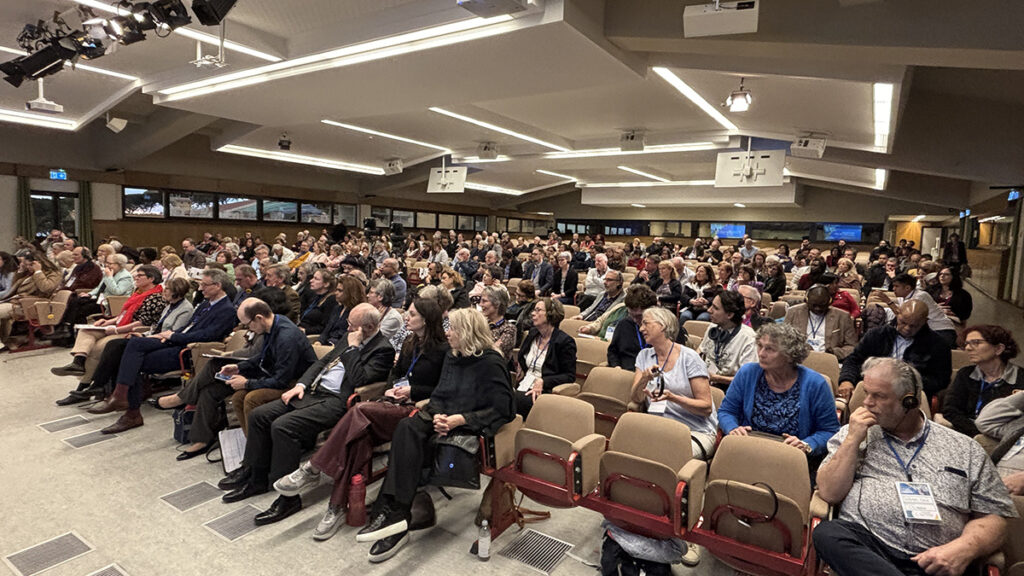
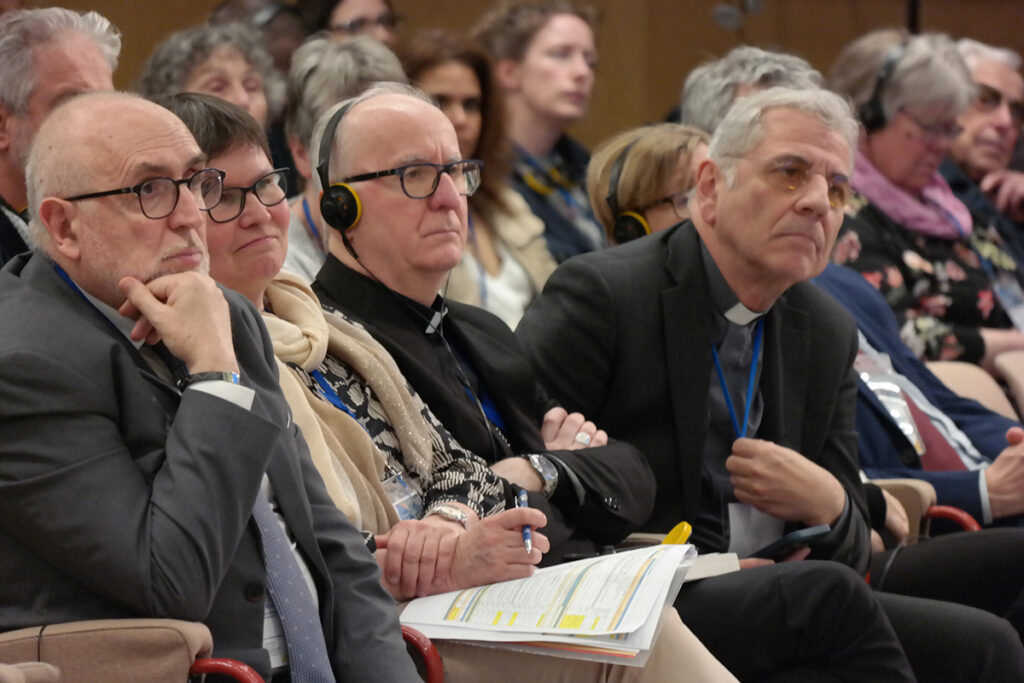
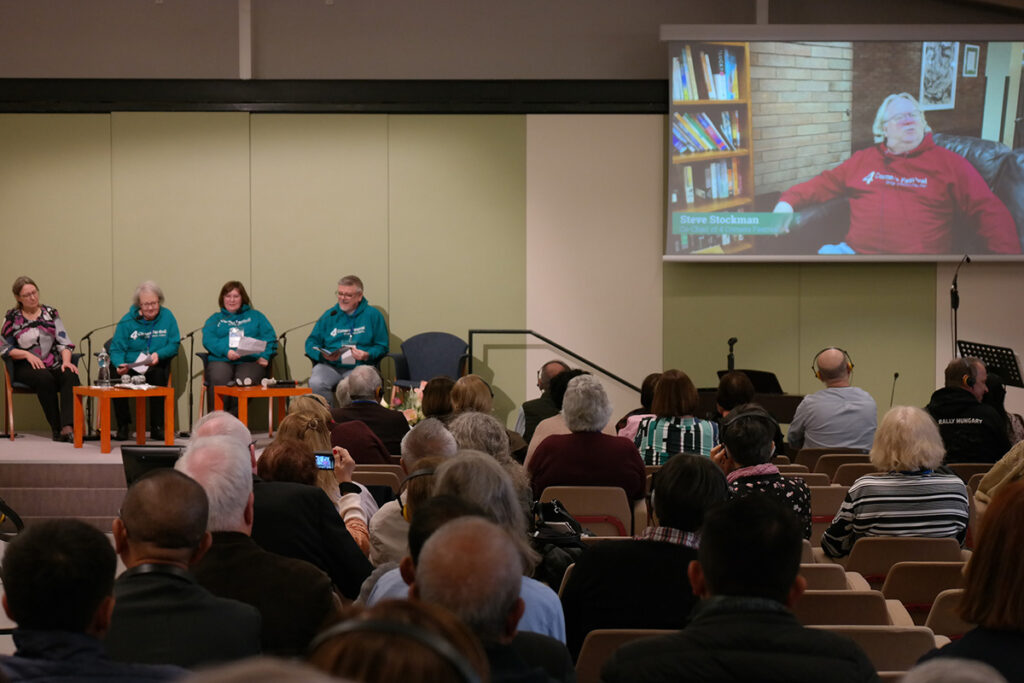
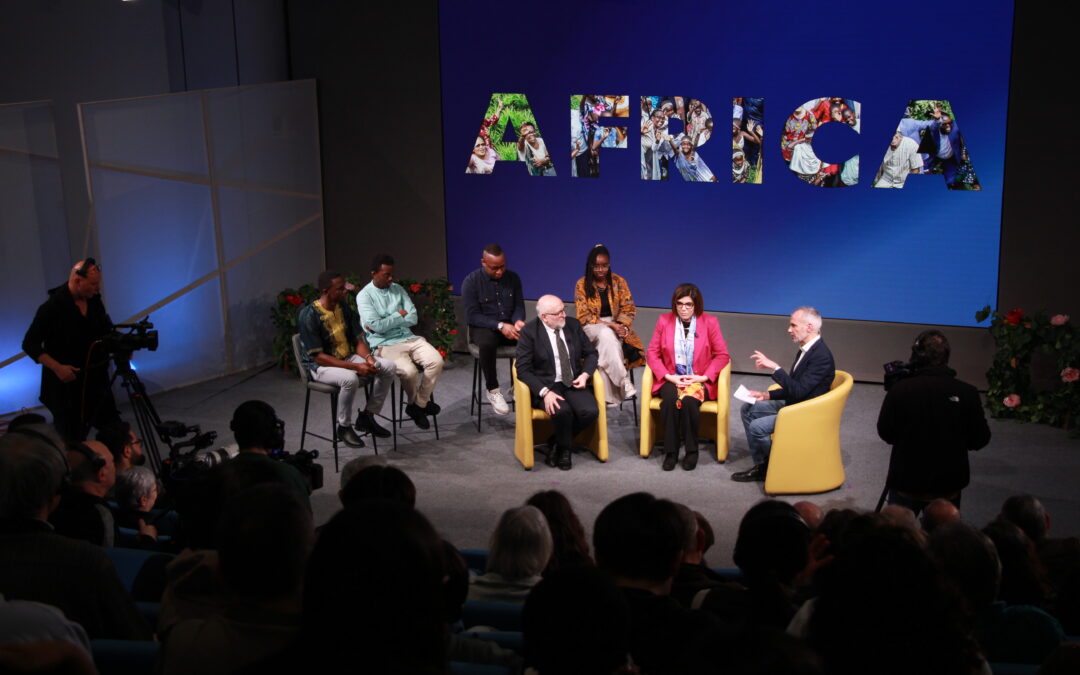
in an interview published on the Vatican News website, during the days of the ecumenical conference entitled “Called to hope – Key players of dialogue” promoted by Centro Uno, the Focolare’s international secretariat for Christian Unity, Margaret Karram, President of the Focolare Movement, said, “Today, more than ever, in the world in which we live, so full of divisions, tragedies, conflicts, where people do not engage in dialogue, meeting together is very significant.” Her words expressed a certainty that resonated in the hearts and in the experience of the 250 people from 40 countries and 20 Christian Churches and of the 4,000+ connected worldwide via streaming, who participated in the event.
The Conference, held at the Mariapolis Centre in Castel Gandolfo from March 26-29th 2025, opened with contributions from Jesús Morán, Co-President of the Focolare Movement and Callan Slipper, an Anglican theologian who said: “Ecumenism, by repairing our personal interactions within the Christian community, allows the Church to be herself. What humanity needs, we need too. Our spiritual health diminishes without it, just as every other dimension of human life cannot reach its fulfilment without the reconciliation brought by Jesus”. Morán concluded: “Unity rather than union and Christianity as a way of being rather than as a doctrine, can be two fruitful paths for ecumenism in response to what history demands of us today”.
The conference proposed a method for walking in unity: the kind of dialogue that emerges from the spirituality of the Focolare, the dialogue of life, the dialogue of the people alongside a similar concept known as receptive ecumenism. Through her experience, Prof. Karen Petersen Finch, an American Presbyterian, highlighted the importance of involving more people in dialogue on the doctrine of the faith, which is normally reserved only for theologians, Church leaders and official committees for dialogue.
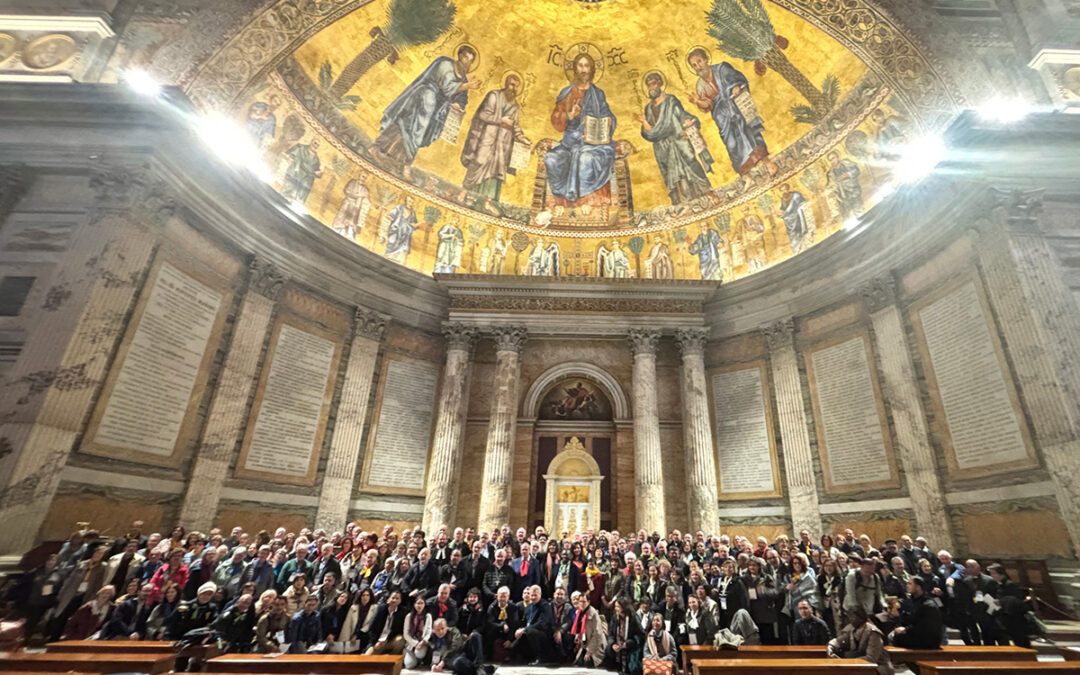
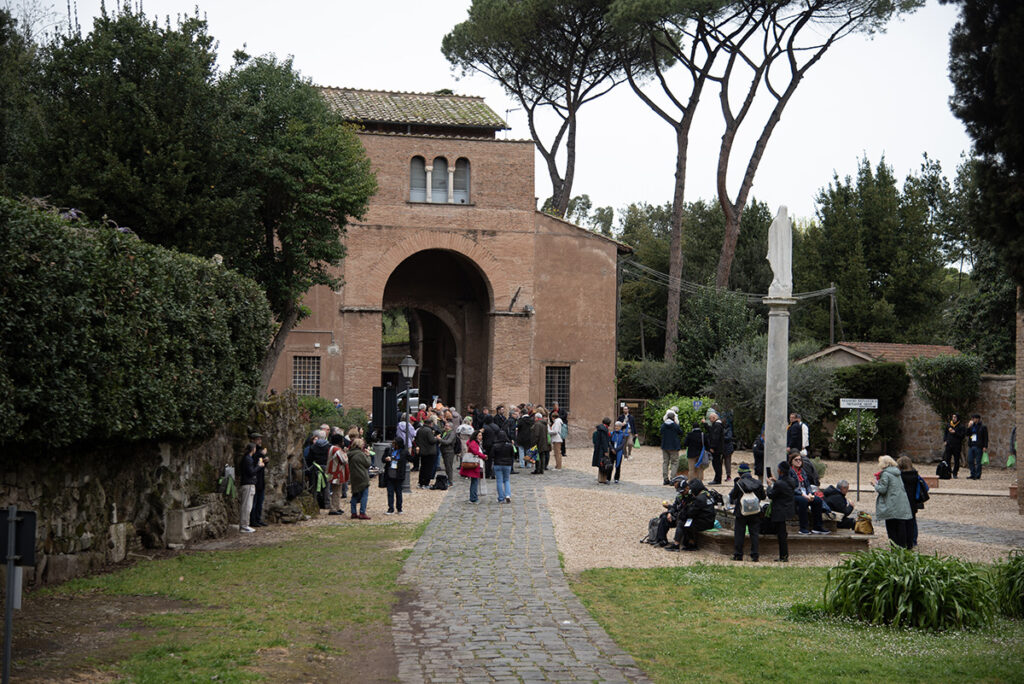
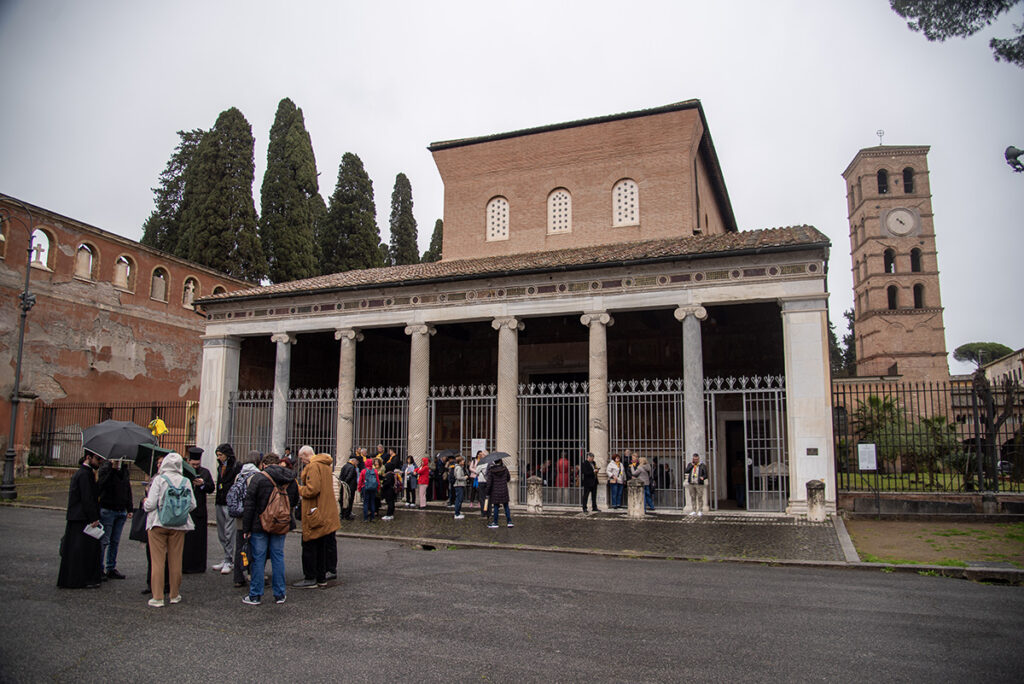
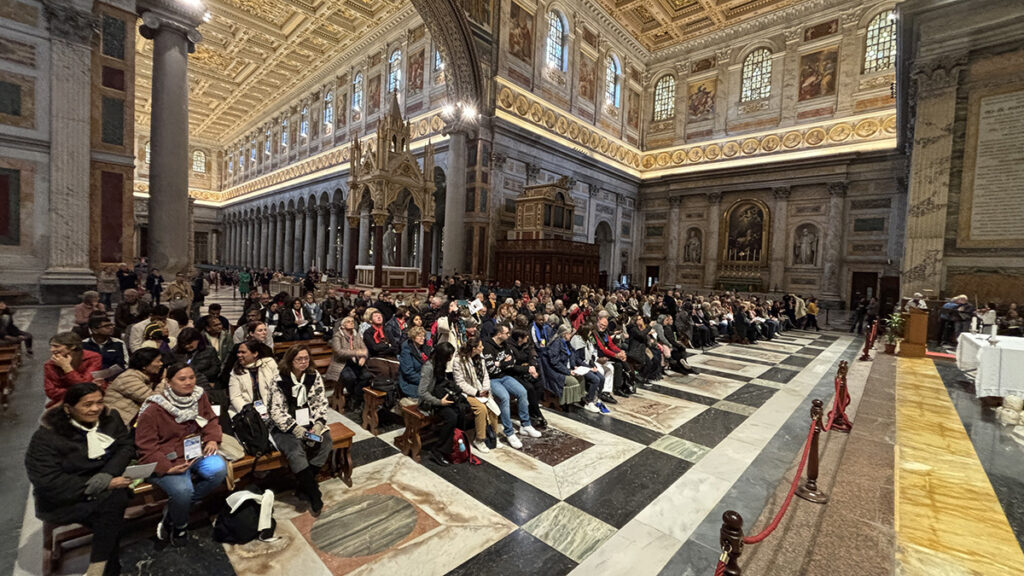
One day was dedicated to a pilgrimage to Rome with a visit to the Basilica of St. Lawrence the Martyr and the Abbey of the Three Fountains, where tradition places the martyrdom of St. Paul. In an atmosphere of recollection, one of the participants described the day as: “an encounter with the first martyrs of the undivided Church who, with their authentic life, faith and their witness, instil in us the courage to proclaim Christ today”. The pilgrimage concluded at the Basilica of Saint Paul Outside the Walls with an ecumenical prayer. Ecumenism has its biblical root in prayer, beginning with Jesus, who while praying, asked the Father: “That they may all be one”. His words, echoed in various passages of Scripture, invite us to ask anything of the Father “in his name, together and in agreement”. And so, together, gathered in unity, priests and lay people of all the Christian confessions present, jointly asked the Father for peace in every corner of the earth and for reconciliation among all Christians.
Three Fountains AbbeyBasilica of San LorenzoPrayer to St Paul
The themes addressed during the conference included the significant commemorations for 2025: the 1700th anniversary of the Council of Nicea; Easter which will be celebrated on the same day by all the Christian Churches; and the 60th anniversary of the lifting of the excommunications between the Church of Rome and that of Constantinople. Referring to the Council of Nicaea, Dr. Martin Illert, a representative of the World Council of Churches, said: “I am convinced that common prayer and reflection pave the way for unity, as they remind us of both our common roots and our shared mission.” Msgr. Andrea Palmieri of the Dicastery for Promoting Christian Unity observed: ” These events are undoubtedly important, but (…) words must be followed by concrete, prophetic decisions. I am convinced that the reflections initiated this year will contribute to the maturation of decisions that may shape the future of the ecumenical journey. ”
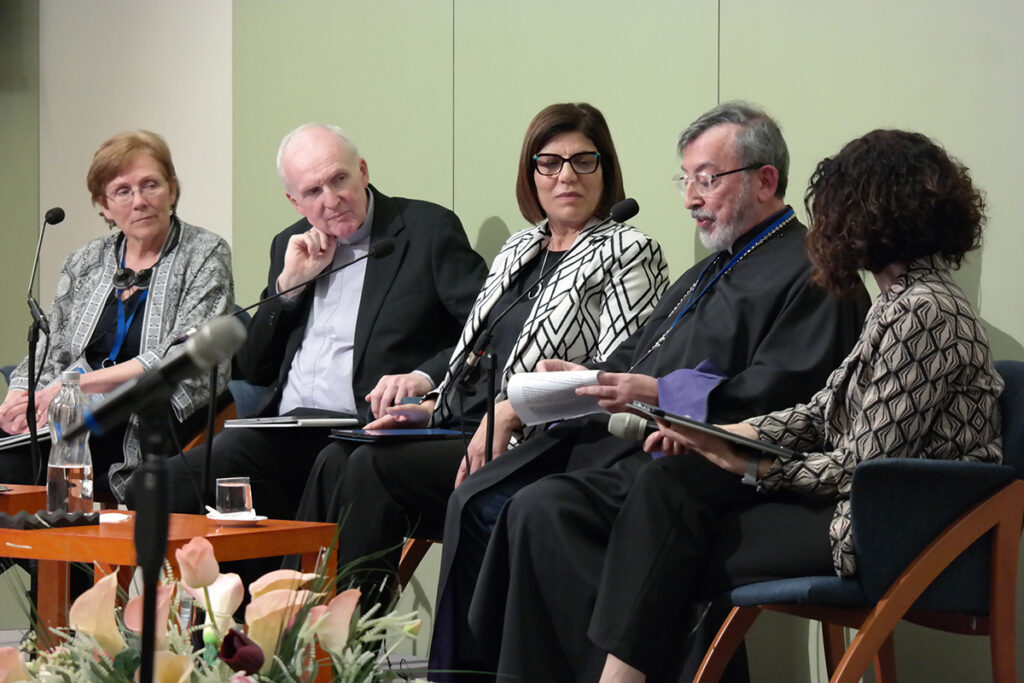
The Conference also explored how synodality can contribute to ecumenism. In a panel featuring participants of the Catholic Church’s Synod: three fraternal delegates (members of various churches), a Catholic Bishop and a Special Guest shared the lived experience of how the active participation of everyone contributed to affective and effective dialogue, which had as His Eminence Khajag Barsamian, of the Armenian Apostolic Church said, a “strong ecumenical dimension, which emphasized unity, shared spiritual experiences and mutual respect among Christians”. Rev. Dirk G. Lange of the Lutheran World Federation, affirmed, “The whole Synod as a spiritual exercise profoundly influenced my understanding of myself, my ministry, and my Church”. Monsignor Brendan Leahy, Catholic Bishop of Limerick (Ireland), added that the Synod’s method, the “Conversation in the Spirit,” made him “more attentive in my work and ministry to listen more, recognizing the seed of truth in every person,” while Dr. Elizabeth Newman of the World Baptist Alliance stated that synodality is grounded ” in the awareness and practice that one’s own point of view must not prevail. You don’t have to ‘win’.” Margaret Karram emphasized: “We know that hope is a virtue and we cannot lose it. We must nurture it, cultivate it within us so that we can give it to others,” and she invited everyone to increase hope and faith through “even small gestures towards others: gestures of solidarity, communion, and openness… only in this way can we hope”.
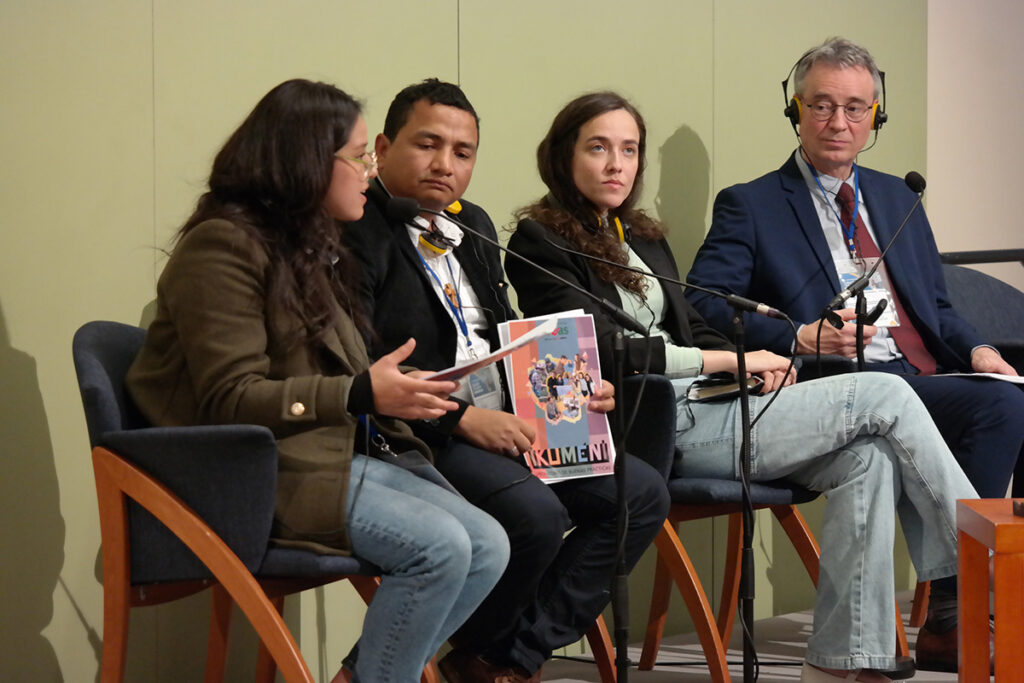
In summary, the Conference was a call to hope, marked by reflection, in-depth discussions, concrete actions and life testimonies which illustrated the path of ecumenical action at the global level (Global Christian Forum, JC2033), at the international level (Ikumeni– Latin America, Together for Europe, John17) and at local level (from Brazil to the Philippines, from Northern Ireland to Serbia, from the Netherlands to Venezuela, from Germany to Uganda…). It engaged churches, priests, laypeople, theologians, scholars, adults, and young people—truly, all were key players in the dialogue.
For over two years, on the initiative of NetOne, the international network of communicators of the Focolare Movement, a group of communication professionals, has been meeting online every month to explore themes related to the Synod of Bishops, in particular on synodality and communication. Key elements during these meetings include listening, silence, testimony and fraternal communication. In addition to these regular sessions, two webinars have taken place over the past two years: the first in April 2024 (an in-depth analysis is available online here) and the second in February 2025 entitled, “What kind of communication for synodality?” (VIDEO) This event was followed in various parts of the world with the participation of numerous communication experts connected from several countries.
Alessandro Gisotti, deputy director of Vatican Media, opened the series of interventions by citing three essential terms for a good communicator: Communication, Action and Community. He said, “In this Holy Year, we need a synodal communication that is able to accompany the people who will come, without the presumption of wanting to lead them but available to listen to them, to accompany them, to share a part of the journey together”.
From the United States, Kim Daniels, Professor at Georgetown University in Washington DC, Coordinator of the Synod of Study Group 3 explained, “Mission in the digital environment – our goal is to offer actionable recommendations to the Holy Father for the improvement of the Church’s mission in this digital culture, ensuring that it remains firmly rooted in our call to meet people wherever they are, leading them towards a deeper communion with Christ and with each other”.
Pál Tóth, a Professor at the Sophia University Institute in Loppiano, spoke from Hungary, explaining that “healing the deep wounds of the globalized world requires transversal collaboration including with those whose views differ from our own. The idea of differentiated consensus promotes a new type of social relationship: we collaborate for the realization of some values while remaining on different platforms for others”.
The starting point of the Synod is those on the margins. This emerged from the experience of Muriel Fleury and Beatrice Binaghi, respectively Head of Communication and Social Media Officer at the Dicastery for Integral Human Development. “Speaking for those who are exploited or marginalized by dominant processes means making these people visible. Without these countercurrent voices, everything would favour those who dominate, because silence supports those who mistreat, enslave, exploit, or render too many men and women invisible “. Binaghi described the collaboration network created among the “border bishops” responsible for migratory pastoral care in Colombia, Costa Rica and Panama, especially to address the critical situation in Darien through which hundreds of migrants pass every day. “Dialogue and communication have created communities, and the work that was previously fragmented is now more synergistic and impactful”.
The actress Stefania Bogo was asked to give two moments of reflection through an artistic reading of selected passages from the recent encyclical of Pope Francis, Dilexit nos and Chiara Lubich’s “The attraction of modern times”.
Erica Tossani, of the Presidency of the Synodal Assembly of the Italian Church, explained how important it is to listen, that “it is not merely a passive action, a silence waiting to be filled by the words of others. It is an active attitude that involves attention, discernment and a willingness to be challenged. Without listening, communication degenerates into polarization and sterile opposition”.
The experiences of synodality included that of Paolo Balduzzi, correspondent for the Italian Rai 1 program “A sua immagine”. He explained, “The stories told arise from a dialogue shared with the entire editorial team. For me, every interview is an encounter. And synodality begins with this encounter with my interlocutor, that is, entering into their story, into their lived experience and together seeking to grasp the most essential aspects of their story”.
The story of Mariella Matera, blogger of Alumera, a space for evangelization on social media, is the story of a communicator fascinated by the idea of transmitting the Gospel through the internet. She asked herself, “How can I be a little bridge between the web and Christ? In the Calabrian (southern Italy) dialect, the word Alumera refers to the old type of oil lamp. Just as the lamp, as long as it has oil, does not go out, so too I, as long as I have the love of Christ in me, cannot be silent”.
In conclusion, Anita Tano, head of communication for United World Project-NetOne Argentina recounted the experience of Genfest 2024 in Brazil, the youth event of the Focolare Movement which had the theme Together to Care. Featuring cultural exchanges, art and workshops, the aim was to recognise communication as a tool to take care of “one’s own life, that of others and that of the planet”. A message that emphasized the difference between simply being “connected” and being truly “united.”
The live broadcast was moderated by Enrico Selleri, presenter and author of the Italian Church broadcasters Tv2000 and InBlu2000, along with Sara Fornaro, editor-in-chief of the web version of the Italian magazine Città Nuova. The event was promoted by NetOne together with the General Secretariat of the Synod of Bishops, the Dicastery for Communication, the Dicastery for the Service of Integral Human Development, Vatican Media, the Synodal Way of the Church in Italy, TV2000, InBlu2000 and SIR (of the Italian Episcopal Conference), the Sophia University Institute, Weca (Association of Italian WebCatholics), the Città Nuova Editorial Group and the Pontifical University of the Holy Cross.
“I think that, after Don Silvano Cola, Don Pepe, was the most charismatic Focolare priest I have ever known,” remarked a priest from Italy upon hearing the news of the death of Don Enrico Pepe on 2nd March, 2025 at the Focolare Priest’s Centre in Grottaferrata (Rome). “He was a person with a pure gaze. He saw people in truth and also in mercy”, said another from the USA. Cardinal João Braz De Aviz, emeritus Prefect of the Dicastery for Consecrated Life, who presided at the funeral, said in the homily: “I thank the Lord for the care he has had for us priests, helping many not to lose the gift of the Christian life and the ministerial priesthood, because we were strengthened by the continuous search for unity among ourselves, with the Church and with the Work of Mary”.
But who was Don Enrico Pepe? He shared a lot about himself in the book, An Adventure in Unity (CNx 2018).
Enrico was born on 15th November 1932 in Cortino (Teramo, Italy), the first of nine brothers and sisters. Despite the shadows of war, he enjoyed a happy childhood. Late in life, he would gladly return to those places, also to reconnect with the warmth of his loved ones: the Pepe “tribe”, now numbering 76 nieces, nephews and great nephews and nieces.
During his secondary school years, Enrico felt called to the priesthood and entered the seminary. He experienced a moment of doubt when a young woman was affectionate towards him, but precisely in that circumstance, he renewed his choice with even greater awareness.
He was ordained a priest in 1956 and in 1958 the Bishop sent him to Cerchiara, a town near the Gran Sasso, divided by two political factions that also affected the parish. Don Enrico, with his evangelical “cunning”, manages to carve out his path and the situation soon calmed down.
In 1963 he met the Focolare Movement. Together with Don Annibale Ferrari, he travelled every fortnight from Teramo to Rome to meet Don Silvano Cola at the first Priests’ focolare. A year later he was offered the opportunity to move to Palmares in the North East of Brazil, where Bishop Dom Acacio Rodrigues had turned to the Focolare Movement, due to the serious shortage of priests. In 1965 Don Pepe became the parish priest in Ribeirão, in an area of sugar cane monoculture with burning social and moral problems. He responded with a pastoral approach enlightened by the Second Vatican Council and by his own common sense. Over the years, a Priests’ focolare was born, a community in which Dom Acacio frequently participated.
With Chiara Lubich, Brazil, 1965.With her sister Iole, July 2024.With Margaret Karram, 2022.
After a few months back in his homeland, in 1969 he left again for Brazil, this time to devote himself entirely to the Movement and to develop the spirit of unity among priests. In 1972 he relocated for this purpose to the Mariapolis Araceli, the little town of the Focolare near Sao Paulo. Years later, Don Pepe wrote to Pope Francis, “At that time, the Church in Brazil was going through a tremendous crisis, especially among the clergy. Together with the focolarini, I began to offer the spirituality of unity to diocesan and religious priests and seminarians. In this way, a new and joyful life was awakened in many dioceses and religious congregations.” This led to an unexpected result: “In the early 1980s, the Holy See began to appoint some priests who lived this spirituality as bishops”.
In 1984, Don Pepe was called to the Priests’ Focolare Centre in Grottaferrata (Rome), to look after, together with Don Silvano Cola, the thousands of priests who were living the spirituality of unity and the life flourishing in parishes around the world. In his spare time, he compiled the lives of Martyrs and Saints. This led to a book by the publisher Città Nuova that was so well received that he was asked to expand it to three volumes.
In 2001, the case of the Zambian Archbishop Milingo broke out. When he repented, the Holy See sought someone to guide him through a process of renewal and turned to the Focolare Movement. Don Pepe was assigned this task. Years later, Cardinal Bertone, then Secretary of the Dicastery for the Doctrine of the Faith, wrote to Don Pepe: “We met at a special moment in the life of the Church in Rome, without ever having met in person, but we sensed a convergence of ideals, of mission and of transmitting God’s merciful love, which sealed our relationships.”
In his later years, he faced significant health challenges. Don Pepe commented “In BrazilI passed through many airports and now I often see myself on the runway, ready for the final flight, the most beautiful one, because it will bring us to the Beyond”.
Nostalgia is a very specific feeling and, in many people, it often gives riseto moral, philosophical and spiritual questions. Etymologically it means “pain of return,” and sometimes has an indeterminate sense: sometimes it is not linked to a past made up of real places, people or events but to a deep emotion that makes us yearn for something beautiful, just and universal. It is as if we know we are part of it or called to this “something”.
The theme of exile runs through the history of human thought: the voyage of Odysseus (sung in Homer’s Odyssey) is a journey that recalls the infinite because although it is unfinished and open-ended, it also conveys a sense of wisdom.
(…)
“Keep Ithaca always in your mind. Arriving there is what you are destined for. But do not hurry the journey at all. Better if it lasts for years. (…) And if you find her poor, Ithaka won’t have fooled you. Wise as you will have become, so full of experience, you will have understood by then what these Ithakas mean.”[1]
Every story of exile, whether it is taken from ancient civilizations or the present day, addresses existential questions that are fundamental to all ages: does this story have meaning? Is there a “thread” behind it all? This question can also be addressed on a personal level: is there meaning to what I am experiencing or have experienced? Why the evil, the pain, the death? These are questions that are often not asked but, according to recent studies, they are deeply felt by young people and express their real needs. Nostalgia for the infinite is often manifested in melancholy, loneliness and a search for reasons and answers. [2]
Yet these questions struggle to emerge: we are distracted by what is happening around and by the worries that torment us. Perhaps we do not pause long enough to recognise the little answers that surround us that can be a light to help us maintain a sense of purpose in life.
So let us try to look for opportunities where we can find time and space for sharing, listening and reflecting with those who travel through life with us. Let’s do so with our community, our friends and work colleagues. Let’s tackle these questions without losing faith that things can change for the better. We too will feel changed as a result.
In Christian communities all over the world, Easter is celebrated this month. The message that lies behind the “three days” that are central to this season is strong: it poses questions for all people who are ready to reflect and are open to dialogue[3]. The mystery of pain, the ability to “enter” into the wounds of humanity and the strength to begin again are the values shared by every person who accompanies us as we journey forward through difficult times.iii They are a personal guide for us at all times.
THE IDEA OF THE MONTH is currently produced by the Focolare Movement’s “Centre for Dialogue with People of Non religious Beliefs”. It is an initiative that began in 2014 in Uruguay to share with non-believing friends the values of the Word of Life, i.e. the phrase from Scripture that members of the Movement strive to put into practice in their daily lives. Currently, THE IDEA OF THE MONTH is translated into 12 languages and distributed in more than 25 countries, with adaptations of the text according to different cultural sensitivities.
[1]Konstandinos P. Kavafis. Poesie, Mondadori, Milano 1961
[2]Istituto Giuseppe Toniolo: Cerco, dunque credo? (Vita e Pensiero, 2024) cura di R. Bichi e P. Bignardi
[3]Convegno Internazionale “Il senso nel dolore?” (Castel Gandolfo, 2017) https://www.cittanuova.it/senso-neldolore/?ms=006&se=007
The exile in Babylon and the destruction of the temple in Jerusalem created a collective trauma for the people of Israel and gave rise to a theological question: they asked themselves, ‘Is God still with us or has he abandoned us?’ This month’s Word of Life is taken from the part of the book of Isaiah that endeavoured to help the people understand that God was still at work. They could trust him and would, eventually, be able to return to their homeland. In fact, the face of God the creator and saviour is clearly revealed during this experience of exile.
See, I am doing a new thing! Now it springs up; do you not perceive it?.
Isaiah reminds us of God’s faithful love for his people that remains constant and unchanged during the dramatic period of exile. Even though the promises made to Abraham seem unattainable and the covenant seems to be in crisis, the people of Israel are in the privileged position of continuing to experience God’s presence in history.
The prophetic book addresses existential questions that are still fundamental today: who determines the unfolding of history? Who determines its meaning? We can ask these questions on a personal level too. Who holds my fate in their hands? What is the meaning of what I am experiencing now or have experienced in the past?
See, I am doing a new thing! Now it springs up; do you not perceive it?.
God is working in each person’s life and is constantly, doing ‘new things.’ If we do not always notice or can understand their meaning and scope, it is because they are still springing up or because we are not ready to recognize what he is creating. Perhaps we do not pause long enough to observe these tiny shoots of life that are a certain sign of his presence because we are distracted by all that is happening around us or because thousands of thoughts and worries invade our souls and weigh us down. Nonetheless, he never forsakes us and is continually creating and recreating our lives.
“We are the ‘new thing,’ the ‘new creation’ that God has generated… We no longer look back to the past and sometimes regret what has happened to us or mourn our mistakes: we strongly believe in the action of God who can continue to work new things.”[1].
See, I am doing a new thing! Now it springs up; do you not perceive it?.
We live alongside many other people; they may be members of our community or friends or colleagues at work. Let’s approach them and try to work together without ever losing faith that things will change for the better.
The year 2025 is special because the date of Orthodox Easter coincides with that of other Christian denominations. May this shared celebration of Easter be a testimony to the willingness of the Churches to unceasingly continue to dialogue about the challenges facing humanity and to promote joint action.
Let us prepare to live this Easter season with great joy, faith and hope. Christ rose from the dead so, although we may ‘cross through the desert’, let us continue to be accompanied on our journey by the One who guides both history and our personal lives.
It was a beautiful afternoon with perfect weather. Lima’s waterfront was crowded: entire families enjoying the beach, parents and children arriving with their surfboards and equipment, surf schools with their instructors, tourists and vendors of drinks and ice cream to offer to that swarm of potential customers.
We were accompanying a friend from northern Peru who had come to visit us. Marcelo and I were taking him to the most pleasant and attractive spots. On the horizon you could see surfers skilfully riding the high waves of the Pacific Ocean – an ocean which despite its name is anything but peaceful. It was a real spectacle! The sun was preparing for its final scene of the day casting an exclusive backdrop of fiery orange and red across the sky.
In this beautiful setting, accessible only to a certain social class, everything seemed to be going perfectly. Amidst the crowd, I noticed a tiny, man as thin as a stick carrying four large sacks of waste material that he had collected: cardboard, plastic bottles, glass… This small figure, completely invisible in that environment, was preparing to climb a long flight of stairs, leading to the overpass that crossed the highway from one side to the other, from the beach to the road. He looked like an invisible ant burdened with a load three times his weight.
In that faceless crowd, his presence caught my attention. “Come, sit beside me for a while,” I said, pointing to the empty seat on the bench where I was sitting. He looked at with surprised, then smiled. He set down his heavy sacks and took a seat. “Hi, my name is Gustavo, and you?”. “Arthur,” he replied with a wide, toothless grin. He explained that he had come from far away and that he needed to cross the highway, climbing up the steep staircase, to get the bus that would take him home. There, in his humble neighborhood, he would sell the waste material he had collected. This was his daily job which enabled him and his family to survive.
Marcelo gave him 5 Soles, the price of the bus ticket. We said goodbye shaking his sweaty hand warmly and wishing him good luck. As he climbed the stairs with his bags in his hand, every so often he looked back at us and flashed us his toothless smile.
In the midst of the faceless crowd, Arthur became the most important person, the one who touched our hearts, who stirred something deep within us, who connected us with the Beatitudes, to the way God sees.
The African continent is made up of 54 States. It is crossed by the Equator and the tropics of Cancer and Capricorn, so much of the territory is located in the torrid zone and is characterized by deserts, savannahs and rainforests. It is the continent with the largest area affected by arid and warm climate. Thirty million km² with about one thousand four hundred million inhabitants.
Jesús Morán, Co-President of the Focolare Movement, accompanied by some members of the International Centre, visited some countries in the east and west of the continent from 13th January-9th February 2025. Margaret Karram, President of the Focolare Movement, joined live via video link on nine occasions, especially for the days dedicated to meetings with local communities.
Jesús Morán said, “It is a trip we will remember for a long time.” Margaret Karram added, “This journey which many have called ‘historic’ has remained in our hearts“. Even though I was connected by video, I can still see their faces, their smiles and their commitment. I was deeply moved by the testimony of the communities of the Movement which live the Gospel radically. I think we have a lot to learn from them. ”
The trip included stops in Ivory Coast, Sierra Leone, Kenya, Rwanda and Burundi but many other people from various other African countries participated in many of the meetings.
It is impossible to summarize the intensity and richness of life found in each community. You can see here a part of the Link Up Conference Call of 15th March 2025 which included a report on this journey which was truly an immersion in the life and culture of the African continent.
The ecumenical conference Called to hope – Key players of dialogue, will take place from the 26th to the 29th of March 2025 at the Mariapolis Centre of Castel Gandolfo (Italy). It is promoted by “Centro Uno”, the Focolare Movement’s international secretariat for Christian unity. There will be more than 250 faithful of 20 Christian Churches participating in person, coming from over 40 countries of 4 continents, including the Philippines, Serbia, Bulgaria, Slovakia, Ireland, Venezuela, United States. There will be 15 translations, and the conference will also be broadcast via streaming.
Thursday, the 27th of March, the group will go to Rome to visit the Basilica of St. Paul Outside the Walls (at 4:00pm). An ecumenical prayer of reconciliation and for peace open to all is planned.
The conference programme will also focus on the three anniversaries that occur this year: in the context of the Jubilee Year “Pilgrims of Hope” of the Catholic Church, we will commemorate the 1,700th anniversary of the Council of Nicaea, the coincidence of the date of the celebration of Easter for all Churches, and the 60th anniversary of the abolition of mutual excommunications between the Church of Rome and the Church of Constantinople.
Among the ecumenical personalities present who will speak: Msgr. Andrea Palmieri, Undersecretary of the Vatican Dicastery for Promoting Christian Unity, Msgr. Derio Olivero, President of the Episcopal Commission for ecumenism and dialogue of the Italian Bishops’ Conference, Prof. Dr. Martin Illert, representative of the World Council of Churches (WCC), Archbishop Khajag Barsamian representative of the Armenian Apostolic Church to the Holy See, Dr. Natasha Klukach, Director of Research and Operations of the Global Christian Forum, Dr. William Wilson, President of the Pentecostal World Fellowship (via video message), Dr. Elisabeth Newman of the Baptist World Alliance, Dr. Margaret Karram and Dr. Jesús Morán, President and Co-president of the Focolare Movement.
Why is it urgent to work for ecumenism?
In this time of divisions and great challenges – wars, the increase in refugees around the world, unequal distribution of wealth, almost irreversible damage to the earth’s ecosystem – as Christians, we are called together to bear witness to the hope of the Gospel and to be protagonists of dialogue and unity, committing ourselves to live together for peace, to build fraternity, to spread hope. Christian unity is instrumental in bringing peace wherever it is lacking.
Bahía Blanca is a coastal city located at the gateway to Argentine Patagonia begins. With its 370,000 inhabitants, it is the economic, religious and cultural centre of a vast region. Just a few kilometres away, another 80,000 people live in the city of Punta Alta. Together, they have a very important petrochemical hub, a network of 7 different ports (including multipurpose, grain, fruit, fishing, gas, oil and fertilizers) and the main base of the Argentine Navy.
In this region, the average rainfall in a year is 650 mm, but on Friday, 7th March, 2025, 400 mm fell in just 7 hours. As this huge amount of water made its way to the sea, it gathered speed and destroyed everything in its path: bridges, canals, railways, roads, roads, vehicles, houses, shops… and people.
The population suddenly found itself in scene of unimaginable devastation, as if there had been a tsunami. A sudden power outage also cut off telephone communications, leaving everyone in the dark about the well-being of their relatives, friends, and colleagues.
However, something deep within this community awoke and all the universal laws converged into a single verb: to serve.
As soon as the water and mud allowed, thousands of people began to pour into the streets. Everyone assessed the damage in their own home, but then immediately turned their attention to their neighbours, to see if they needed help. Those who managed to get their situation under control devoted themselves entirely to helping others. We were all witnesses and protagonists of a gigantic miracle that has multiplied, with incredible creativity and strength.
Recovering photographs of an elderly womanYoung people preparing meals for distribution in the flooded areas.Distributing donations
The only thing that mattered was what could be done with our hands: help remove water and mud from homes, clean, tidy up, look for rags, buckets of water, disinfectant, take the injured to health centres, take care of pets, accommodate people who had lost everything, offer strength, encourage, hug, share suffering. No one complained but said, “It was very difficult for me, but in comparison to what happened to others…”
While I was helping some friends, a couple approached and distributed pasties, others came with drinks. Those who had an electricity generator offered to recharge mobile phone batteries. Others provided pumps to drain flooded areas. An optician donated glasses to those who had lost theirs. A woman distributed disinfectant, a doctor made house calls, a man offered his services as a bricklayer and another as a mechanic. Everything was shared: candles, food, clothes, nappies, mattresses, drinking water, brushes and hands – countless hands.
A bar offers free hot chocolateDonations of mattresses arriveVolunteers cleaning a kindergarten
And then came the solidarity of the whole country and of people from all over the world. By truck, by train, by bus, in vans… tons of donations, which needed more volunteers for loading, unloading, sorting and delivery. Volunteers kept multiplying. And also money, donated with great generosity. Parishes, clubs, schools, companies, all the existing organizations gave everything they could. Generous financial donations also arrived. Parishes, clubs, schools, businesses—every organization gave everything they could. And then, another kind of organization emerged: groups of friends. Like makeshift “patrols,” each group took charge of a section of the city where government aid would likely take longer to arrive. Even now, they continue going door to door, recording every need and ensuring that help arrives swiftly.
All the hands of these people, whether they knew it, believed it, or even imagined it, have become “divine hands”. Because they were the most tangible way God could reach those in need. Personally, I experienced deep anxiety not knowing if my siblings or friends were safe. I wanted to reach them, but it was impossible. So I decided to help wherever I could. I called it my “square metre.” Later, I finally managed to reach my loved ones, only to discover that others, strangers, had helped them where I could not.
Days later, some parts of the city are still under. The suffering and difficulties continue. The losses have been immense. Everywhere you meet people with big dark circles under their eyes and aching muscles from working almost without rest. But with their hearts wide open and a fullness in their eyes, for having given everything for others.
With what eyes do we look at the world and our fellow travellers in the adventure of life? It is a question of vital importance, in an era like ours marked by polarisation and disagreements, loneliness and distances between the haves and the have-nots, without forgetting the increasingly pervasive presence of artificial intelligence. Yet, at the same time, the thirst for harmony and truth grows.
Chiara Lubich used to say that everything depends on which “eyes” we look at people with. If we look with the eyes of the heart, which are the eyes of Love, we will not stop at appearances, we will instead grasp the deeper reality that is hidden in every human being. And from the gaze of the heart proceeds action, the quality of the relationship, becoming close, being near to the other person. (1)
In 1961 Chiara wrote:
If you enter the Gospel … you’ll immediately find yourself on the mountain ridge. Therefore, already at the top, already in God, even though looking over the side you’ll see that the mountain is not one mountain but a mountain chain and that for you, life is to walk along the crest up to the end.
Every Word of God contains both the minimum and the maximum that he can ask of you, so when you read, “Love your neighbour as yourself” (Mt 19:19), you have the law of fraternal love at its highest degree.
Your neighbour is another you, and you must love him or her bearing that in mind. When neighbours cry, you must cry with them, and when they laugh, laugh with them. If they lack knowledge, be ignorant with them. If they have lost a parent, make their suffering your own. …
What has value for you is God who is both their Father and yours. Don’t make excuses for love. Your neighbours are those who pass next to you, be they rich or poor, beautiful or ugly, brilliant or uneducated, holy or sinful, a fellow citizen or a foreigner, a priest or a layperson, whoever.
Try to love whoever passes next to you in the present moment of your life. You will discover within yourself a new energy and strength you did not know you had. They will add flavour to your life, and you will find answers to your thousand whys. (2)
Chiara Lubich
Watch the video
Our translation of the Italian text found in: See Vicinanza, lo stile di Dio nella vita e nel pensiero di Chiara Lubich, A cura di Povilus J. e Ciccarelli L., Città Nuova Editrice, Roma 2024, p. 5.
An exhibition dedicated to Chiara Lubich (1920-2008), witness and inspirer of the universal value of fraternity. A stop for those visiting Rome. At the centre of the exhibition is the theme of the “city”, as a privileged place for building fraternal relationships, open to the world. The multimedia exhibition has been produced by the Chiara Lubich Centre and the Historical Museum Foundation of Trentino.
It can be visited from Monday to Friday from 10:00 to 12:30 and from 14:00 to 17:00. On Saturdays from 10:00 to 13:00.
The Political Movement for Unity and the NGO New Humanity, both expressions of the Focolare Movement, supported by Porticus, are promoting a global political project entitled “One Humanity, One Planet: Synodal Leadership”. Aimed at young people aged 18-40 with experience in political representation, government leadership or social movements, the programme offers academic training, personalised mentoring and a hackathon in Rome with international experts.
Objective: to strengthen the participation of young politicians in global advocacy processes, through a collaborative journey of reflection and action between socio-political leaders, generating a global network of young leaders from different continents. The challenge is to overcome the current crises (social, environmental, political and economic) and contribute to building a leadership network for the development of international political strategies.
The program will start at the end of April 2025, the deadline for submitting applications is 31st March, it will last for two years and is fully funded (free of charge). It will include contributions from prestigious academic institutions and international NGOs. The format will be mixed, both in person and online through interactive modules with experts from around the world, including renowned political leaders and university professors. A week-long event is planned in Rome, from 6th-12th October 2025, with international guests to co-create proposals for collaborative actions at a global level to solve current social, environmental and economic challenges.
Language will not be an obstacle. Simultaneous translations will be available in Spanish, Portuguese, French, English, Italian and other languages as required.
What does the programme offer?
The initiative is a process of global collective action that integrates training, information, networking, tools and meetings. It offers experiences and methods to increase the quality of policy and improve its impact on social transformation. Participants will have access to learning spaces, collective knowledge-building and exchange with international scholars and experts, with spaces for reflection among the participants alongside dedicated discussion sessions. Each young participant will receive ongoing mentorship from an experiences political leader to refine their political, social, economic and environmental project. In the second year, participants will join a global network of 600 young leaders from different continents.
At the end of the program, participants will receive a formal diploma certifying their participation in the program.
In this year dedicated to the Jubilee of Hope, the Gen 4 (the children of the Focolare Movement) in Rome decided to embark on a journey to discover more about the history of Christianity and understand how to live the Jubilee in their city that is welcoming millions of pilgrims from all over the world. The stages of their journey are the Vatican Basilicas in Rome: St. Peter’s, St. John Lateran, St. Paul’s Outside the Walls and St. Mary Major. They asked Father Fabio Ciardi, OMI, professor of spiritual theology and author of numerous books and publications, to be their guide.
First stop: St. Peter’s Basilica
In October 2024, two months before the Jubilee began, the group of 33 children with as many adults, learned about a very special reality before entering St. Peter’s Basilica. It is located next to the residence where Pope Francis lives. It is the Dispensary of St. Martha, a place where the Gospel becomes incarnate every day through the assistance given to hundreds of mothers and children. It’s an opportunity to explain to the Gen 4 how the Jubilee can be lived concretely by helping others.
Father Fabio explained, “It is a real family clinic, which began this work of care for poor children and their families in 1922. Today over 400 children, with their mothers, are assisted free of charge by about sixty volunteer doctors. They are mostly people without a residence permit, without health care”. Services include gynaecological and paediatric examinations as well as dental care for the homeless.
Father Fabio then linked this story with the story of Saint Peter, using some drawings. The children listened attentively to his voice through headphones: “Jesus met Simon the fisherman and invited him to follow him. ‘Come with me,’ he said, ‘I’ll make you a fisher of men.’ And he gave him a new name, he called him Peter, which means “rock”, because he wanted to build his Church on him”. And as the story continued, we moved to the Basilica to pray at the tomb of St. Peter. “Peter came to Rome. When Nero set fire to the city he blamed the Christians. Peter was killed in the circus of the emperor Caligula that Nero had renovated…and finally the tomb of Saint Peter in his Basilica”. There was an atmosphere of deep recollection among Gen 4, despite the influx of tourists on that Roman Saturday afternoon. Going towards the Holy Door you pass some masterpieces of art. In front of the Pietà, Father Fabio said, “This statue of Our Lady was very dear to Chiara Lubich. Every time she came to the Basilica she stopped here to pray to Mary”.
The stop in San Giovanni in Laterano
The second stage was in January 2025. This time the group was larger: 140 people including 60 children, always under the expert guidance of Father Fabio, met to discover the Basilica of St. John Lateran, full of surprises and treasures related to the history of Christianity. Attentive and curious, with headphones in their ears, for just over two hours Gen4 listened to Father Fabio’s fascinating story.
Gen4 at St. John in Lateran Gen4 at St. John in LateranGen4 at St. John in Lateran
In his blog, Father Fabio wrote, “It was wonderful to tell the story of the obelisk, it was nice to explain the meaning of the cloister, it was nice to tell the stories of St. John the Baptist and St. John the Evangelist and to let the children go and find their statues in the Basilica. It was nice to show the ancient Papal throne and the current one, on which the Pope e sits to take possession of his office. It was nice to point out the relics of the table on which Jesus celebrated the last supper and the one on which Peter celebrated here in Rome. It was good to go through the Holy Door together…It’s good to be with the children and tell them beautiful things…”
At this point, the children have built a special bond with Father Fabio. They walked beside him in the Basilica, held his hand, asked him questions to learn more. A Gen 4 asked, “What’s Heaven like?” He replied, “Imagine a busy school day. When it’s over, you go home to a beautiful, welcoming, warm house, where your parents, grandparents and friends shower you with love. You feel happy in that moment, don’t you? It’s like that in Heaven: it’s a place where you feel good, where you feel at home!” This stage also came to an end. We returned home happy and aware that for us, the Jubilee must be a time to give hope and happiness to the most disadvantaged, to our poor, to those who suffer.
The journey with other generations
Waiting to continue this journey with the Gen 4, the Gen3 (40 teenagers), the Gen2 (30 young people) and a group of adults, fascinated by the positive experience that the children were living with Father Fabio, also wanted to follow the same journey, always guided by him.
Father Fabio wrote in his blog, “First the children, then the teens, then the young people and adults. St. John Lateran, St. Peter, St. Paul and St. Mary Major. So I keep living the Jubilee, over and over. The story of history, art and spirituality, because it is all intertwined, human and divine, past and present. These monuments live on, still speaking after hundreds of years and continue to narrate beautiful things”.
Gen 2 at St. Paul outside the WallsGen 2 at St. Paul outside the WallsGen 2 at St. Paul outside the Walls
And the young people thanked Father Fabio “for preparing our hearts for such a beautiful experience, you helped us to go through this stage of the holy year together, with meaning and joy. We really liked the atmosphere you managed to create, arousing in us the desire to visit together other places in Rome which were important for the first Christians and you gave us the desire to deepen the meaning of being pilgrims on the way to the goal of Paradise”.
On Tuesday 4th March, the 17th academic year of the’SophiaUniversityInstitutein Loppiano (Figline and Incisa Valdarno – Florence) was inaugurated. The ceremony took place in the main hall of the Institute, in the presence of the entire academic community and a representation of the rich network of relationships and collaborations that the Sophia University Institute has been able to weave with institutions, other universities and third sector organisations in these first 17 years of its existence.
The following people took part: the Rector, Declan O’Byrne; the Chancellor of the Institute, Gherardo Gambelli, Archbishop of Florence; the Vice-Chancellor, Dr Margaret Karram, President of the Focolare Movement; the Bishop of Fiesole,Stefano Manetti; the mayor of Figline and Incisa Valdarno, Valerio Pianigiani; Paolo Cancelli, director of the Development Office of the Pontifical University Antonianum; Marco Salvatori, President of the Giorgio La Pira International Student Centre
The centrepiece of the ceremony was the inaugural lecture entitled ‘Dialogue, religions, geopolitics’ given by Fabio Petito, Professor of International Relations and Director of the Freedom of Religion or Belief & Foreign Policy Initiative at the University of Sussex, as well as Scientific Coordinator of the Religions and International Relations Programme of the Ministry of Foreign Affairs and ISPI (Institute for International Political Studies). Petito emphasised that today, ‘religion seems to be part of, and sometimes at the centre of, the current scenario of instability and international crisis’. However, although this is a less visible phenomenon globally, ‘it cannot be denied that in the last quarter of a century there has been a significant increase in the efforts of representatives of religious communities to respond to violence and political tensions through initiatives of dialogue and interreligious collaboration’. Petito thus emphasised the importance that places like the Sophia University Institute can have in creatively deepening and spreading the culture of encounter and ‘making small seeds of hope and fruits of unity and human fraternity blossom’.
Professor Fabio Petito
In true Sophia style, an international academic community and a laboratory of life, education, study and research, the inaugural lecture was followed by a dialogue, moderated by the journalist and Vatican expert Andrea Gagliarducci (Eternal Word Television Network and ACI Stampa), which involved the Chancellor Arcbishop Gherardo Gambelli, on his first visit to the Institute, the Vice-Chancellor Dr Margaret Karram and six students from the university.
The dialogue, starting from the personal stories of young people from the Holy Land, the Philippines, Argentina, Kosovo, Sierra Leone and Peru, touched on topics of global importance and burning current affairs: the value of grassroots diplomacy for conflict resolution and the search for peace; the commitment to a more just and equitable economy, with the experience of Economy of Francesco; the role of young people from the Mediterranean in building a culture of encounter; the value
of reconciliation and interreligious dialogue, in particular between Christians and Muslims with the Sophian experience of Wings of Unity; the hopes of young Africans involved in the Together for a New Africa project, for change and the common good of their continent; the concerns and fragility of young people in search of a vocation and fulfilment in a globalised world.
The inauguration of the 2024-25 academic year highlighted, once again, the ability of this still small academic organisation to train young people to face the complexity of today’s world, in a trans-disciplinary perspective, and to work in synergy with specialists from various fields and institutions to promote dialogue between cultures in the concreteness of social life, giving impetus to the inner, intellectual and social growth of people in a dynamic of reciprocity.
Statements
The Grand Chancellor of the Institute, H.E. Mons. Gherardo Gambelli, Archbishop of Florence: “Among the objectives of the Institute is ‘to promote, in the concreteness of social life, dialogue between cultures, fostering the inner, intellectual, and social growth of individuals in a dynamic of reciprocity.’ Several key words emerge from this project: promotion, social life, dialogue, inner, intellectual, and social growth, reciprocity. All these terms point towards personal development, enabling individuals not only to inhabit the ‘we’ of the community they belong to with dignity but also to feel ever more inhabited by that ‘we’ to which they belong. A ‘we’ that does not seek to oppose a hypothetical ‘you’ but is instead capable, every day, of embracing all that appears with the face of the other, the different, the marginalized.”
The Vice Grand Chancellor, Dr. Margaret Karram, President of the Focolare Movement: “It is important that in an institution like ours, we emphasize dialogue and the role of religions in today’s global context, where—as we have seen in these past days—individuals and nations risk drowning in a state of confusion and despair. […] The Sophia University Institute, as a ‘home’ for a culture founded on the Gospel, is committed with and in the Church, to offer responses and guidance in the light of the Charism of unity. It is now up to us to move forward with courage and commitment, ensuring that this University Institute is increasingly recognized for its contribution to promoting a culture of unity that contributes to building peace and fraternity among individuals and peoples.”
Declan O’Byrne, Rector of the Sophia University Institute: “Together, as an academic community united by a common ideal, we continue to build Sophia as a beacon of wisdom and unity in the landscape of higher education. May our collective commitment continue to enlighten minds, inspire hearts, and transform society—one step at a time—towards that civilization of love to which we all aspire.”
Valerio Pianigiani,Mayor of Figline and Incisa Valdarno: “In the face of divisions and violence that cannot leave us indifferent, knowledge, understanding, tolerance and awareness of the world around us can serve as the antidote to brutality and divisions. A bridge that fosters understanding of the other, with the aim of working together and committing ourselves to the common good. I extend my gratitude to those who work in this Institute with passion and dedication every day, nurturing ever more aware minds here as well, in Figline and Incisa Valdarno—a community that stands firmly by the values of peace, solidarity, and dialogue.”
Stefano Manetti,Bishop of Fiesole: “The commitment to dialogue and communicate with everyone reduces distances, eliminates marginalization and becomes a sign of evangelical hope—something of which we are in great need. I therefore encourage professors and students to continue working for the benefit of the least among us through the gift of relationships, the sharing of cultural themes, and to keep being ‘angels of hope’ for all those you encounter on your path.”
Paolo Cancelli, Director of the Development Office of the Pontifical Antonianum University: “We are convinced that we must work together in the culture of dialogue as a path, in common collaboration as a way of acting, and in mutual understanding as both method and principle. […] We must place humility at the centre, the vocation to serve a process in which we hold one certainty: no one is saved alone. And it is precisely within this logic, the symphony of diversity, that the time has come to bring forth our talents, emotions and willpower to create the opportunity for a different future. A future in which fraternity and harmony can, in some way, guide us within that symphony of diversity, making the university’s mission truly authentic. I believe that at both an academic and scientific level, this is realized through inter- and trans-disciplinarity. We are facing a complex and multifaceted reality and we cannot solve challenges alone, from a single field of study. We need the idea of being together.”
Marco Salvadori, President of the Giorgio La Pira International Student Centre: “It is with great joy that I bring greetings from the Giorgio La Pira International Student Centre. The inauguration of a new academic year is always a moment of great enthusiasm and reflection. It is an opportunity to look ahead, embrace challenges and contribute to building a fairer and more sustainable world through study, commitment and dedication. What we celebrate today is not just the beginning of a new academic year, but also the chance to learn, grow together and build lasting bonds between cultures and generations. I wish all of you, especially the young students, a year full of discoveries and of personal and professional development.”
Marta, Lina, Efi and Moria are four women, four focolarine, who have followed different paths in life and who have now found common ground between dreams and reality. They chose to move to Chimaltenango from their previous communities, embarking on an experience of living in a multicultural city where poverty and ethnic fractures are part of everyday life.
Chimaltenango is a city in Guatemala, 50 km from the capital, at an altitude of 1800 meters above sea level. Nearly 120,000 inhabitants of 23 different indigenous peoples have settled there in order to survive economically.
Efi, from Panama told us, “I lived in Argentina for many years. Then I spent a few years in Mexico and, just before the pandemic, I arrived in Guatemala where I remained only 3 months as I had to return to Panama to be close to my mother who became ill and then passed away. That was a year that also helped me to rethink many things, to take stock of what I had lived up to that point and to renew my choice of donation to God made years ago”. She returned to Guatemala for this project in Chimaltenango.
She continued, “I grew up in a rural environment among very simple people and my dream has always been to do something for the humblest in society. There is immense poverty here. And there are also indigenous communities, people who have encountered the spirituality of the Movement and who, due to the pandemic and their social circumstances, have been left on the margins (of society)”.
Lina is Guatemalan, Kaqchikel, of Mayan origin. She explained that one of the most obvious fractures is between indigenous people and mestizos (also called “ladinos” in Guatemala, referring to all those who are not indigenous). Relationships are not fraternal, there is no dialogue. She said, “It has always been a goal for me to endeavour to overcome that fracture. From the moment I had my first contact with the Focolare, I thought that this was the solution for my culture, for my people, for my community. ” She recalled the moment in December 2007 when, at the end of her course of formation to become a focolarina, she greeted Chiara Lubich and said to her: “I am indigenous and I am committed to bringing this light to my Kaqchikel people”. She remembered that she “felt that it was a commitment expressed to Chiara but made to Jesus”. Upon her return to Guatemala, she dedicated herself to working with young people, always with the aim of generating bonds of unity both in indigenous communities and in the city.
Moria, Lidia, Marta, Lina, EfiLina visiting a familyWith a group in the focolare
Marta is also from Guatemala, of mixed race. In her early years in the focolare, she was able to devote herself to spreading the charism of unity in indigenous communities. Later, she managed the Mariapolis Centre, the Focolare’s residential centre in Guatemala City. It was a demanding task that lasted 23 years and saw the process of national reconciliation and the reclaiming of indigenous peoples’ rights, because various indigenous communities chose the Mariapolis Centre as a meeting place. Then she was in Mexico for a while. At that time discussions about identity arose and the question arose spontaneously in her: “What is my identity? What are my roots?” She found the answer in the “Virgin of Guadalupe” who, when she appeared in Mexico in 1531, was depicted on Juan Diego’s poncho with physical characteristics typical of native peoples. “For me it was to understand that I was a mestiza like her, that she has both roots and can dialogue with both groups”.
Moria, who is from Chimaltenango, lives with her natural family and is part of the focolare as is Lidia, a married focolarina who lives in Guatemala City.
Stories that intertwine until they settled in this city that unites so many backgrounds and cultures into one. Efi said, “Our desire is to be with people, to get closer. In simple, everyday things: that greeting, that smile, that pausing, simply being with that lady who doesn’t speak Spanish because she speaks her own language and we don’t understand each other”. And she recounted: “One day I needed to buy bread. I went to the market and the women who were selling were sitting on a wicker mat. If I wanted to begin a conversation with one of them, I would bend down to be on the same level and since it was a place for trading, I would try to be fair with her”.
Lina added, “Since we arrived, we have tried to reconnect with people who met the spirituality of unity over past years, by going to visit them in their homes, bringing something, for example some fruit, as is the custom”. In this way, a circle of reciprocity has grown and people began to keep in touch with the focolare which is now often filled with the voices of mothers with their children, young people and, sometimes, some fathers who pluck up the courage to come too. And so, almost effortlessly, a community has formed around this new focolare in the heart of Guatemala’s indigenous culture.