One day a co-worker of our center had received a gift of a pair of new sports shoes size 43. But who could have possibly needed them? That same day we learn that a 14-year-old boy we know really needed those shoes and that size! He is the son of a friend who was in the hospital at that time. Her other daughter had also visited our center that day and we had learned that they needed clothes and medicine. She made us understand that she is in need of a cell phone to keep in touch with her mother in the hospital. And…we had received one (a phone) a few days earlier! It is impressive to see how there is always “Someone” who provides us with just those ad hoc things which we can then donate!
A bed in two minutes
We were at the final goodbyes of a Sunday spent “as a family” (so to speak because we were surrounded by hundreds of people) with activities to raise funds for our youth. A Venezuelan friend among the first people I met years ago had introduced me to an 18-year-old young man – Jesús. He had told me some of what he had experienced having left Venezuela alone at the age of 16. Two years of adventures, enough to make an action film, with many moments of suspense. For 15 days he had been in Peru. Talking with him I discovered that he was sleeping on a mat on the floor! Diligently he had planned with his first paycheck (he had in fact found a job in Peru immediately) to solve the problem of documents and then think about the bed. At that time I had no solutions, but we promised to stay in touch. Shortly after saying goodbye to him I met one of our co-workers who, without knowing anything about Jesus’ needs, asked me, “So what do we do with that bed?” “But how? Do you still have it?” I was surprised. “Yes!” he said to me. I immediately called back Jesús who was leaving the Center. He joined us immediately, and upon hearing that there was already a bed for him, very strong was the light I saw in his eyes. It had not been two minutes since I had told him that I would try to find a solution!
Free ultrasound scans
Many of the migrants who arrive at our center need medical care and sometimes even diagnostic tests. Recently, another blessing from Heaven occurred: a medical center near us offered us the possibility of performing ultrasound scans for free. They want to give this opportunity to those who do not have the possibility of paying for these examinations. Truly a gift for so many of our patients.
The Condominio Espiritual Uirapuru (CEU) is a reality born in Fortaleza (Brazil) a few years ago, the choice of unity between charisms is the basis of community life. There are 23 realities that coexist and collaborate here for the recovery, protection and enhancement of human dignity.
At this crossroads of countries where the Iguaçu and Parana rivers meet, there is the busiest border in Latin America; the area is characterised by great cultural diversity and the centuries-old presence of indigenous peoples, such as the great Guaraní people. Tourism is the major economic resource of this region where people mainly come to visit the Iguaçu Falls, which are the largest in the world, with a width of 7.65 km and are considered one of the seven natural wonders of the planet.
In her welcome message, Tamara Cardoso André, President of the Human Rights and People’s Memory Centre of Foz do Iguaçu (CDHMP-FI), explains that in this place they want to give a different meaning to national borders: “We want our triple frontier to become more and more a place of integration, a land that everyone feels is theirs, as the original peoples who know no barriers understand it.”
Foz do Iguaçu, last stage
This is where Margaret Karram and Jesús Morán’s journey – president and co-president of the Focolare Movement – in Brazil comes to an end. They have travelled it from North to South: from the Brazilian Amazon, passing through Fortaleza, Aparecida, Mariapolis Ginetta in Vargem Grande Paulista, the Fazenda da Esperança in Pedrinhas and Guaratinguetà (SP), up to Foz do Iguaçu. Here the “extended” family of the tri-national Focolare community celebrates its young history and recounts the contribution of unity that it offers to this place: the embrace of three peoples that the spirituality of unity brings together into one, overcoming national borders, while each one maintains its own distinct cultural identity. Also present for the occasion are Card. Adalberto Martinez, Archbishop of Asuncion (Paraguay), local Bishop Sérgio de Deus Borges, Bishop Mario Spaki, Bishop of Paranavaí, and Bishop Anuar Battisti, Bishop Emeritus of Maringá. Also present was a group from the Islamic community of Foz, with whom there have been long-standing relations of fraternal friendship.
Peoples with common roots
Arami Ojeda Aveiro, a student of Cultural Mediation at the Federal University of Latin American Integration (UNILA) illustrates the historical journey of these peoples and the serious wounds that have accumulated over the centuries. The conflict between Paraguay on the one hand, and Argentina, Brazil and Uruguay on the other (1864-1870) was one of the bloodiest in South America in terms of human lives, with social and political consequences for the entire region. However, there are also many cultural factors in common, such as music, gastronomy, popular traditions derived from the same indigenous cultural root, such as the Yerba Mate Guaranì, a typical drink of the three peoples.
The Guaranì culture is one of the richest and most representative of South America; it is a living testimony of the resilience and adaptability of a people that has been able to preserve its identity over the centuries with a unique cosmogony, where the connection with nature and respect for traditions are fundamental and can be a great wealth for all humanity.
“This is why,” concludes Arami Ojeda Aveiro, “the Triple Frontier region is not just a geographical border, but a multicultural and cooperative space that strengthens the whole area”.
The “tri-national” community of the Focolare Movement
Among all the Focolare communities in the world, this one has a unique character: “It would be impossible to feel that we are one family if we only looked at our national histories,” says a young woman from Argentina. Monica, from Paraguay, one of the pioneers of the community together with Fatima Langbeck, from Brazil, recounts that it all began with a daily prayer of hers: “Lord, open the way for us so that we can establish a more solid presence of the Focolare and that Your charism of unity may flourish among us. Since 2013 we are one community and we want to write another history for this land, which witnesses that fraternity is stronger than prejudices and secular wounds. We are united by Chiara Lubich’s word of unity, when she said that true sociality goes beyond integration, because it is mutual love in action, as proclaimed in the Gospel. Our specificities and differences make us more attentive to one another, and the wounds of our national histories have taught us to forgive one another’.
The artistic contributions speak of the vitality and relevance of the cultural roots of the peoples who inhabit this area. There are the songs of the Argentinian community coming from the “litoral“, from the coast; then “El Sapukai”, the very rhythmic Paraguayan dance that is danced with (up to) three bottles on one’s head; the representation of the Guaraní people intone a song in their own language praising the “great mother”, the forest, which must be protected, produces good fruit and gives life to all creatures.
Father Valdir Antônio Riboldi, a priest from the diocese of Foz, who got to know the focolares in 1976, continues the story by writing: “The focolares of Curitiba in Brazil and Asuncion in Paraguay began to promote events involving people from the three neighbouring countries, an experience we called the ‘Tri-national Focolare’. Ecclesial life here is also moving in the direction of communion, promoting joint initiatives between the different dioceses’.
It is clear that the life of this region and of the local Focolare community does not only speak to Latin America, but to the whole world. And it says that it is possible to walk together, being different: it is the spirituality of unity that comes into contact with the deepest part of the identity of people and peoples, making the common humanity and fraternity flourish.
A few words from Margaret Karram and Jesús Morán
“I felt embraced not by one, but by three peoples,” Margaret Karram said. “Throughout my life I have dreamed of living in a world without borders. Here I have felt that my deepest wish has come true, that is why I feel part of you. You are the confirmation that only love removes all obstacles and eliminates borders”.
“I have lived in Latin America for 27 years,” continued Jesús Morán, “but I have never come to this area. You have experienced so much pain: the Guaraní people have been dispossessed of their land and dispersed. What you are doing today is important even if it is small: we cannot rewrite history, but we can move forward and heal the wounds, accepting the cry of Jesus forsaken. Wounds are healed by creating inter-regional relationships also with the original peoples because they are in fact the only truly ‘tri-national’ people. They too have received the light of Christ; let us not forget the work of evangelisation and human promotion that the Jesuits did in this region with “the Reductions” from the 1600s to the 1700s. Today we are connected to this history, to all that the Church does, and we know that unity is the answer in this world that needs a soul and limbs to achieve true globalisation at the height of human dignity”.
At the end, Margaret shared what she had experienced this month: “This trip has increased faith, hope and charity in me. In Amazonia, at the edge of the world, ‘faith’ emerged powerfully: I met people who strongly believe that everything is possible, even the most difficult things. They dream and they achieve! I wish I had even a pinch of their faith, as the Gospel says: “If you have faith the size of a mustard seed, you will say to this mountain, ‘Move from here to there’, and it will move, and nothing will be impossible for you” (Mt 17:20). From there I take this faith that moves mountains and the courage to dream great things. Then, the word of the Genfest can only be ‘hope’: we lived this experience together: the whole Movement was committed with young people and for young people. It was also an ecumenical and interreligious event that gave a lot of hope.
And lastly, ‘charity’, which I have seen here among you today and which we have touched with our own hands in the many social organisations we have come into contact with this month: the Fazenda da Esperança; the many movements and new ecclesial communities we met with in Fortaleza; the UniRedes meeting that brings together all the social organisations and cultural agencies of Latin America that are inspired by the charism of unity (which we will write about separately). All this says ‘charity’, because every social reality stems from loving one’s neighbour, from wanting to give one’s life for one’s people.
From this frontier starts a hope for all the Focolare communities in the world and beyond. Last December I suggested the “Mediterranean of fraternity” project, where we could gather all the actions already underway and those that will emerge, to build peace in that region that suffers so much from war. A “fraternity for Latin America” project could also start from here and be extended to all its countries, let us entrust it to Mary!”.
A long journey to celebrate 70 years since the creation of the General Council of Christians in Hong Kong, where just a little over 10% of the 7.5 million inhabitants profess to be Christians.
A delegation of 24 people from different Christian traditions: Catholic, Anglican, Lutheran, Methodist, and Pentecostal, embarked on an ecumenical pilgrimage making stops in Germany, Switzerland, and Italy, visiting cities such as Wittenberg, Augsburg, Ottmaring, Geneva, Trent, and finally Rome to review the past without prejudice and establish a new relationship among all members.“An opportunity to learn more about each other’s Church. There was so much sharing, so much love for each other, and we felt like brothers and sisters in Christ, His one Church!” ”, Theresa Kung affirms.
Welcomed at the Ecumenical Citadel in Ottmaring (Germany), at the Mariapolis “Chiara Lubich” Center in Trent (Italy) and at the International Center of the Focolare Movement in Rocca di Papa (Italy), the group got to know the charism of unity that animates the Focolare Movement and appreciate the work of dialogue between various Churches that has been taking place for years within the Movement, a “dialogue of life” in the sense that, as Rev. Hoi Hung Lin of Tsung Tsin Mission had this to say:“Respect other people’s differences in values, prioritize dialogue and always seek to establish fraternal relationships among people, among ethnic groups and in different cultural situations”.
In Rome, the group was received at the Dicastery for the Promotion of Christian Unity in an exchange meeting on their work worldwide.
As their last event, they were received by Pope Francis in a private audience on May 22, 2024. After greetings and introductions by Cardinal Stephen Chow SJ, Catholic Bishop of Hong Kong, and Rev. Ray Wong, President of the Hong Kong Christian Council, the Holy Father addressed those present, stressing the importance of “working together, because we all believe in Jesus Christ; praying together, praying for unity.” The Pope also recalled the Christian friendship that comes from common Baptism. “We have the same Baptism and that makes us Christians. Enemies, we have many outside. We are friends! Enemies, outside; here, friends.”[1].
In these past few days, I was watching on television some very young athletes, mostly from Eastern Europe, performing amazing routines of artistic gymnastics. It was really magnificent to see the way they repeatedly performed somersaults and spins and other movements! What perfection! What harmony and grace! They were in perfect command of their bodies, so much so that the most difficult exercises seemed to come naturally. They are the world champions.
Several times, while I was admiring them, I felt an urgent invitation within me (perhaps from the Holy Spirit). It was as if someone were telling me: “You, too, all of you have to become world champions.” Champions in what? Champions in loving God. But do you know how much training these young gymnasts have had to do? Do you know that day after day, for hours and hours, they repeat the same exercises, without ever giving up? You, too, all of you must do the same. When? In the present moment. Always, without ever stopping. And I felt a great desire welling up in my heart to work, moment by moment, so as to become perfect.
Saint Francis de Sales says that no one is so good that through repeated acts of vice they cannot acquire that vice. And so, we may say that no one is so bad that he or she cannot become virtuous through repeated acts of virtue. So, take courage! If we continue to practice, moment by moment, we will become world champions in loving God.
(…)
What is the Word that God has spoken to our Movement? We know it – “unity.” And so, we have to become champions of unity, of unity with God, with his will in each present moment, and of unity with our neighbour, with every neighbour we meet during the day.
So let’s start training, without wasting precious minutes. What awaits us is not the gold medal, but Paradise.
Change can be frightening especially when the past has been filled with deep and rewarding experiences. However, change happens at all different stages and areas of life – study, work and in all political, social and organizational realities. We may find it especially difficult if we have had a role of responsibility that we do not want to lose.
We would like certain experiences to continue forever. But this is not reality. Remaining lost in “true and beautiful experiences” does not make us live life now, because life itself is change and that is the dynamic that makes it fascinating even when it is difficult and painful.
This was well explained by Dame Cicely Saunders, founder of the first modern hospice. She was an extraordinary woman who as a nurse, social worker and physician “invented” a new way of caring for people during the most difficult periods of their lives. According to her, real experience depends on depth rather than duration. “The hours of real relationships seem to pass in a moment, while the boring days seem to last forever. But years later, the genuine times remain forever imprinted in our hearts whereas the meaningless days fade into nothing.” (1)
Sometimes, there is a sense of awe and excitement in realising that these “true and genuine” moments – even when they are filled with pain and darkness – can be transformed into opportunities for peace and light. During times of passage in life, deep relationships with others can give us the strength to face the difficulties, trials, sufferings and stress we encounter on the way. They encourage us to start anew without fear and boldly face what lies ahead. They enable us to reach out to others and embrace the pains of humanity around us: they even enable us to bring the light and peace we know to others who do not experience it.
Dietrich Bonhoeffer said, “Time lost is when we have not loved and lived a fully human life.”(2)
What happens when these true experiences finish and seem to disappear? Does this take away the value of the experience at its very roots? Absolutely not! Memory has a great worth of its own and is the very foundation of human progress. Moreover, as philosopher, George Santayana, says, “Those who do not remember the past are condemned to repeat it.”
People before us have given their lives for our freedom and happiness. We need to return to the experiences that lie at the foundation of our personal lives and the groups to which we belong in order to have the strength to always begin again, even in times of doubt, fragility and weariness.
Cicely Saunders. Templeton Prize 1981
Dietrich Bonhoeffer. “Resistance and Surrender” Letters and Other Writings from Prison
Phot by Sasin Tipchai – Pixabay
——————————–
L’IDEA DEL MESE è attualmente prodotta dal “Centro del Dialogo con persone di convinzioni non religiose” del Movimento dei Focolari. Si tratta di un’iniziativa nata nel 2014 in Uruguay per condividere con gli amici non credenti i valori della Parola di Vita, cioè la frase della Scrittura che i membri del Movimento si impegnano a mettere in atto nella vita quotidiana. Attualmente L’IDEA DEL MESE viene tradotta in 12 lingue e distribuita in più di 25 paesi, con adattamenti del testo alle diverse sensibilità culturali. www. dialogue4unity.focolare.org1
Jesus and his disciples are making their way to Jerusalem. When he announces that it is the place where he will suffer, die and rise again, Peter rebels and expresses a general sense of dismay and incomprehension. The Master then takes him and James and John and he climbs ‘a high mountain’ from where he appears to the three bathed in a new and extraordinary light. Jesus’ face ‘shines like the sun’ and Moses and the prophet Elijah converse with him. The voice of the Father is heard coming from a bright cloud and invites them to listen to Jesus, his beloved Son. When Peter witnesses this extraordinary event, he does not want to leave, and exclaims:
«Lord, it is good for us to be here.».
Jesus invited his closest friends to have an unforgettable experience that they would always be able to remember.
Jesus invited his closest friends to have an unforgettable experience that they would always be able to remember. Perhaps we too have felt wonder and emotion when we were aware of the presence and work of God in our lives. We may have had a sense of joy, peace and light and have wished that such moments would never end. We often have such experiences when we are with other people or thanks to what they do. Indeed, mutual love attracts God’s presence because, as Jesus promised: ‘Where two or three are gathered in my name, there am I in the midst of them’ (Mt 18:20). Sometimes, during these moments of intimacy with him, God makes us see ourselves and understand events as he does. It is as if we see through his eyes.
Such experiences are given to us so we will have the strength to make the effort and face the difficulties and challenges we encounter on our journey through life. They help us be sure that God has looked upon us and called us to be part of salvation history.
In fact, once the disciples have come down from the mountain, they will go together to Jerusalem where crowds of people full of hope await them but they will also meet with pitfalls, opposition, aversion and suffering. There ‘they will be scattered and sent to the ends of the earth to be witnesses that our final dwelling is the Kingdom of God.’(i)
They will be able to start building God’s house among men and women on earth because they have been ‘at home’ with Jesus on the mountain.
«Lord, it is good for us to be here.».
At the end of this mysterious experience, Jesus speaks to the apostles with the words, ‘Arise and do not be afraid’ (Mt. 17:7). He addresses the same words to us. May we face whatever awaits us with the same courage as the disciples had.
This was what Chiara Lubich did. After a holiday period so full light that it was described as ‘the paradise of 1949’ because of extraordinary contemplation of the mysteries of faith and deep awareness of God’s presence in the small community with whom she was resting, she too did not want to return to everyday life. However, she did so with a new impetus because she realised that it was precisely because of that experience of enlightenment that she had to ‘come down from the mountain’ and set to work as an instrument of Jesus in the building of his Kingdom. This meant injecting his love and light into the very situations where it was lacking and even facing hardship and suffering.
«Lord, it is good for us to be here.».
When it seems that darkness is falling around us, let us remember the times when the Lord has enlightened us. If we have already not experienced his nearness to us, let us seek it now. Let us make the effort to ‘go up the mountain’ to meet him in our neighbourhoods, to worship him in our churches, and also to contemplate him in the beauty of nature.
Perché per noi, Lui c’è sempre: basta che camminiamo con Lui e, facendo silenzio, ci mettiamo umilmente in ascolto, come Pietro, Giovanni e Giacomo (2).
Edited by Silvano Malini and the Word of Life team
THE IDEA OF THE MONTHis currently produced by the Focolare Movement’s “Centre for Dialogue with People of Non-religious Beliefs”. It is an initiative that began in 2014 in Uruguay to share the values found in the Word of Lifeis a phrase from Scripture that members of the Movement strive to put into practice in their daily lives. Currently, THE IDEA OF THE MONTH is translated into 12 languages and distributed in more than 25 countries, with adaptations of the text according to different cultural sensitivities.
“The charism of unity is one of these graces for our time, which experiences an epoch change and invokes a simple and radical spiritual and pastoral reform, to restore the Church to the ever-new and current wellspring of Jesus’ Gospel.”[1]
[1]29th January 2020, Message of the Holy Father Francis for the opening of the international conference “A charism at the service of the Church and humanity” on the occasion of the centenary of the birth of the servant of God Chiara Lubich
This sentence of Pope Francis appears on the web site of the “Mariapolis Ginetta“, the most developed of the three little towns of the Focolare in Brazil. It highlights the recent years’ focus: a journey towards organizational change to better witness to everyday fraternity and to meet the needs and questions of visitors and the surrounding environment.
This has taken shape through the initiation of an updating processand a more participatory and less centralized management of the different realities within it. Today, each part has its own council or management committee, composed of Mariapolis residents and professionals, working in synergy with the town council. “Co-responsibility” is a key word at Mariapolis Ginetta, alongside a forward-looking approach and the ongoing quest to update the town’s mission: “to welcome, educate, testify, and radiate.”
In 2022 Mariapolis Ginetta celebrated its 50th anniversary, having grown from the first group of Focolarine who came to a small house without electricity or gas, today it has a total of 454 inhabitants living on its grounds and nearby.
Over the years, tens of thousands of people have visited including families, priests, religious and occasional visitors. Many young people have spent time there learning to live fraternity in everyday life or to discern their way to follow God in the Focolare Movement.
The Mariapolis Ginetta is part of the municipality of Vargem Grande Paulista that is just an hour from the bustling megalopolis of São Paulo and the change of scene when you arrive is dramatic: greenery, houses, no skyscrapers, parks and playgrounds for children; the atmosphere of a small town, compared to a metropolis is the added value of this place. In recent years, fourteen families have moved from different cities to raise their children. A very young couple with three children say, “We moved from Sao Paulo 6 years ago to this place where people treat one another with love, where there is room to live a balanced, and person centred lifestyle”. This, together with a school for young people that started eight years ago, is signs of a renewed social vitality of the little town.
Co-responsibility and participatory management
Iris Perguer and Ronaldo Marques, co-managers of Mariapolis Ginetta explain, “Today in the little town there are many of the elements of urban coexistence, there are houses, a town centre represented by the Mariapolis Centre and the church dedicated to “Jesus Eucharist”, the publishing house “Editrice Cidade Nova”, an audio-visual centre, medical clinics, various workshops, the well-known bakery and cafeteria “Espiga Dourada”, social projects at the service of the most disadvantaged population, the “Polo Spartaco”, a commercial and manufacturing area where companies operate according to the principles of the Economy of Communion, the Brazilian section of the “Sophia ALC “University Institute (Latin America and the Caribbean)”.
Margaret Karram commented, “This new mode of participatory management that you are implementingis an extraordinary opportunity to open the little town to others who want to help build it, to learn about and to have an experience of unity. I must say that after attending the Genfest a great hope was born in my heart; I had the strong impression that in these days God has knocked again on the door of Brazil, asking for a response to and support for what began for the young people there. This little town, together with Mariapolis Gloria and Mariapolis Santa Maria, now has a new opportunity and responsibility to understand how to respond; to offer a witness of evangelical life lived in a social community.” ”.
The second generation of the “Polo Spartaco” Business Park
Mariza Preto told us that the Entrepreneurial Hub has also embarked on a courageous path of development and openness.
““In 2016, a debt accumulated over the years due to unpaid bills, clearly indicated that the economic sustainability of the Park was at risk. The entrepreneurs lacked motivation and were worried because there didn’t seem to be anyone interested in starting a new business. These have been difficult years, in which many things have been attempted, including building relationships with local entrepreneurs that has led to the common events and moments of dialogue and encounter. But the turning point came in 2019 when, during an exhibition we organised at the Park, most of the exhibitors were external to our reality. In that period “Espri”, our management company, had many vacant warehouses and a growing financial fragility. It was then that the Council decided to admit companies and entrepreneurs who were not involved in the Economy of Communion but who wanted to act according to its principles. Thus, a “rebirth” took place: every company that wishes to come today undergoes a process of induction about the business life that we live here and adheres to the lines of management of an Economy of Communion company “. ”.
Thirty years after its foundation, Polo Spartaco now consists of 9 buildings housing 10 companies with a total of 90 employees.
Jésus Morán said, “The economy of communion is alive here. In addition to the charismatic aspect, you can see that of manufacturing and a generational turnover of entrepreneurs is underway. All this tells us that we have entered a new phase in which the prophecy of Chiara Lubich is alive. We thank all the pioneers, those who started and believed in it and allowed us to reach this point”. ”.
SMFocolari
It is through the SMF, “Sociedade Movimento dos Focolari” that the little town engages in various social works in the area. SMF promotes community building, access to rights and protection guarantees, especially for children, youth and women in situations of social vulnerability. The three Social Assistance Projects, in which the inhabitants of Mariapolis Ginetta are involved, operate in the field of prevention for young people in vulnerable conditions, providing support networks for their families and welcoming homeless people. This is a drop in the ocean of the need for dignity, work and justice of many people and as Sérgio Previdi, vice president of SMF explained “It is just one piece of the cultural project based on fraternity that we want to develop in our area and in our town”.
Stefania Tanesini
[1]29th January 2020, Message of the Holy Father Francis for the opening of the international conference “A charism at the service of the Church and humanity” on the occasion of the centenary of the birth of the servant of God Chiara Lubich
Video in Italian. Activate subtitles for other languages
The whole Genfest experience – from ‘Phase 1’ to ‘Phase 3’ – is a tangible witness that you young people believe in, and indeed you are already working, to build a united world. These were days of extraordinary graces for all of us; we put ”care” into practice in various ways: – in Phase 1, through service to the poor, the marginalised, those who suffer most, and we have done this by living reciprocity, the typical way of living communion of the charism of the Focolare Movement; – in Phase 2, in sharing life, experiences and cultural riches; – and then, in Phase 3, we have experienced the extraordinary generativity of communities, which are also an intergenerational space for formation and projects.
Someone told me about the creativity that each community has developed and the interesting workshops in which you have participated (which you just told me about).
“From Genfest I take my community home with me,” one of you said, “it is something practical that continues. A chance to live the Genfest experience on a daily basis’.
You felt that you were protagonists in the construction of these communities, and you want to continue to “generate” ideas and projects. It has given me joy to know that some of you have said that you have rediscovered the meaning of your profession, and that you now want to live it in the name of a united world.
We have walked together during these days, with a style that Pope Francis would call ‘synodal’ and not only among you, young people, but with adults; with people from other movements and communities; with people from different Churches and Religions and people who do not identify with a religious belief. This network greatly enriched the Genfest!
The presence of some bishops who experienced Genfest together with us was also very beautiful.
Now Genfest does not end! But it continues in the United World Communities where we will remain connected both globally and locally
I am sure that when you arrive in your countries and cities, you will understand where you would like to get involved, according to your interests and your studies or your professions: in economics, intercultural dialogue, peace, health, in politics etc.
In these days you have had the experience of living these “communities” in “unity”; a reality that will continue. This will be your training ground in which you will learn and you will train to live fraternity.
When I was your age, I was very struck by an invitation Chiara Lubich made to everyone:
“If we are one, many will be one and the world will one day be able to see unity. And so? Establish cells of unity everywhere” (1) – perhaps Chiara, if she were alive today, would call these cells of unity, “United world communities” – she invited us to concentrate all our efforts in this.
That is why now, I would like to ask you something important: please, please do not miss this unique opportunity, it’s a unique opportunity that we have lived here. God has knocked on the door of the heart of each one of us, and is now calling you all to be protagonists and bearers of unity in the various spheres in which you are engaged.
Yesterday as I was leaving, someone stopped me, one of you who was here in the hall, and said I have to tell you something, please can I tell you something important. She said it was the first time she had participated in a Genfest and she didn’t know the Focolare Movement, and she said: “I want to tell you, you should do much more because this movement isn’t well known, you should do more but not as you have been doing up to now, you need to do more because this Movement, this idea of fraternity, needs to be known by many more young people.” So I asked her if she could help us and she wants to commit herself. But now I hope that all of us are committing ourselves to doing this.
Of course, as you heard before, it will not all be easy and we cannot deceive ourselves that difficulties will not come… but in this Genfest you yourselves have announced: ‘a God who is different, abandoned on the cross, you have said abandoned on the cross, all divine and all human, asking questions without answers’ and for this, a God who is close to all of us. It will be by embracing every suffering, our own or that of others, that we will find the strength to continue on this path.
So let us go forward together with a new hope, convinced more than ever that a path has now been mapped out.
And, something beautiful that the Chinese writer, Yutang Lin, says: “Hope is like a road through a field; there has never been a road, but when many people walk there, the road comes into existence”. I think that in this Genfest, this road has begun to exist, So, let’s walk, and this road will be there in front of us.
So I greet everyone, have a wonderful time to those of you who will be attending the post-Genfest and safe travels to those returning home!
Ciao to everyone.
Margaret Karram
(1) Chiara Lubich, Conversazioni in collegamento telefonico, Città Nuova, 2019, p. 64.
Twenty-three organisations – Catholic communities and institutes – spread out across Across 112 hectares of land, have chosen to live an experience of communion between charisms. This experience in Fortaleza (Brazil) has been known for 24 years as Condominio Espiritual Uirapuru (Spiritual Condominium Uirapuru) or CEU, an acronym which means ‘heaven’ in Portuguese.
Margaret Karram and Jesús Morán, President and Co-President of the Focolare Movement, stopped off at Fortaleza during their trip to Brazil to meet the Focolare communities. There they were able to take part in various meetings with different charismatic realities in the Church. At the CEU they met leaders of other communities, including Nelson Giovanelli and Brother Hans from the Fazenda da Esperança, Moysés Azevedo from the Shalom Community and Daniela Martucci from Nuovi Orizzonti.
Through the organisations that form the CEU, it carries out various activities to support and protect the individual, from vulnerable children who have suffered abuse and sexual exploitation to young people and adults living on the streets or suffering from addictions. The union of the charisms present is an expression of the love that makes it possible to develop activities to restore and enhance human dignity, particularly for those who are most in need.
‘The CEU is the realisation of a dream that Chiara Lubich promised Pope John Paul II in 1998, to work for the unity of Movements and the new communities,’ said Nelson Giovanelli, founder of the Fazenda da Esperança and newly elected president of the condominium. The charism of unity, spread by Chiara Lubich, is the inspiration for fulfilling the mission for the different communities present. Jesús Morán added: ‘If there is one place where an experience of the Church can be understood, it is here at the CEU. This is the Church – many charisms, both large and small, all walking together to make the Kingdom of God a reality”.
There are 230 people who live in the CEU, including children and adolescents, young people and adults in recovery, and over 500 volunteers. Last weekend, the Obra Lumen community organised a meeting entitled ‘Com Deus Tem Jeito’ (With God there is a way), which has taken 250 drug addicts off the streets and sent them for therapeutic treatment in various partner communities, such as the Fazenda da Esperança. The area also provides a stage for cultural activities aimed at social reintegration through art, such as the Halleluya Festival of the Shalom Community, which brings together more than 400,000 people each year.
The Genfest, an event organised by the young people of the Focolare Movement, is also currently taking place in Brazil. ‘Together to Care’ is the motto for the Genfest which comprises an international event in Brazil and over 40 local Genfests in various countries around the world. Each one will begin with an initial phase in which the young people will be able to have an experience of volunteering in and solidarity with various social initiatives, including the CEU. Between 12 and 18 July, a group of 60 young people participating in the GenFest were able to get to know the different communities and get involved with different activities. ‘All these communities are already involved with caring for marginalised and vulnerable people. Our proposal was to join them, as a bond of unity. The more we gave of ourselves, the more we were open to others, the more we discovered our essence, who we were,’ said Pedro Ícaro, a GenFest participant who stayed at the CEU for four months with young people from different countries.
‘When this communion of charisms inflames the hearts of our young people, they will be able to transform the world. This is the aim of the events we organise at the CEU, like GenFest,’ said Moysés Azevedo, founder of the Shalom Community.
‘Start Here and Now’ is the latest single from international band Gen Verde. A hymn of unity, strength, courage and joy featuring two youth music groups: Banda Unità (Brazil) and AsOne (Italy). ‘All of us, together with our diversity, are invited to go beyond borders to build a world where care, love, justice and inclusion are the answer to pain, the horror of wars and divisions,’ explains the band.
What is behind the song?
‘The new song is in itself a ‘beyond borders’ experience because of the way it was produced,’ the band continues. The vocals were recorded in three different parts of the world and the video was also shot in three different locations: Loppiano and Verona (Italy) and Recife (Brazil).
The project includes the participation of two youth music groups that share Gen Verde values. Banda Unità is a Brazilian band and AsOne is a band from Verona, Italy. These groups also want to share, through music, the values of peace, dialogue and universal brotherhood.
‘Start Here and Now’ has an intergenerational and intercultural mix,’ continues Gen Verde. “This single stands out for its highly engaging rhythm and powerful lyrics, sung in different languages, to bring out the creative process inspired by interculturality and the commitment to universal brotherhood that is emphasised in the international Genfest event”.
Gen Verde played this song for the first time in Aparecida, Brazil, together with the musical groups Banda Unità and AsOne on 20 July 2024 during Genfest, the Focolare Movement’s global youth event. This edition was entitled: ‘Juntos para Cuidar – Together to Care’.
The third phase of Genfest 2024, held in Aparecida, Brazil, included workshops organized by so-called United World Communities – meeting places where young people can share their talents and passions. These communities offer the opportunity to discover talented people, concrete forms of commitment and initiate actions and projects aimed at building a more united world, which seek to respond to the local and global challenges of today’s world; to activate processes of personal and collective change; and to grow fraternity and reciprocity in all dimensions of human life. An important feature of these communitites is that they are the fruits of work between people of different generations.
Continuing the experiences of the previous phases of Genfest, in this third phase the youth were able to participate in workshops in different areas, whose methodology was based on fraternity and dialogue, as a proof for projects and actions that can now be developed in the “glocal” sphere (local projects with a global perspective). Activities were held in the areas of economics and work, cross-culture and dialogue, spirituality and human rights, health and ecology, art and social engagement, education and research, communication and media, and active citizenship and politics. The teams responsible for running the workshops were composed of young people and professionals who worked intensively for months to organize these activities.
From now on, Communities will have a working method that consists of three steps: Learning, Acting, and Sharing. The first (to Learn) is an in-depth exploration and analysis of the most current themes and issues in each community, with the goal of identifying problems and presenting solutions. The next phase (Take Action) is the implementation of actions with primarily local impact, but with a global perspective. Finally, in the third phase (Sharing), it is proposed that the community promote spaces for ongoing exchange and dialogue between initiatives, with the aim of strengthening the global collaboration network. An application-the United World Communities WebApp, -has been created as a tool for sharing ideas, experiences and news, as well as promoting collaborative projects.
“God has visited everyone’s heart.”
Al termine della terza fase del Genfest, le Communities hanno presentato in modo creativo le loro impressioni e alcuni dei risultati delle attività svolte nei giorni precedenti. Da questo lavoro è nato il documento “The United World Community: One Family, One Common Home”, che sarà il contributo dei partecipanti del Genfest 2024 al “Summit of the Future” delle Nazioni Unite del prossimo settembre. Secondo i giovani che hanno presentato il testo, esso non è un documento conclusivo, ma vuole essere un “programma di vita e di lavoro” per le varie United World Communities, oltre che una testimonianza da presentare al “Summit of the Future”.
“With our communities we don’t want to make demands, formulate slogans or complain about political leaders,” the young people said. “Instead, we seek to name our common dreams, dreams of a united world. Personal and communal dreams, which will guide us in our activities in the coming years.” They concluded, “We hope that by living them, ‘together’ and step by step, they will become signs of hope for others.”
Margaret Karram and Jesús Morán, President and Co-President of the Focolare Movement, also spoke at the conclusion of Genfest 2024. Jesús Morán said that although the experience of care has been the most lived experience in human history, it is not the one that has been reflected on the most.
This has begun to change, as was demonstrated at the Genfest, in which care emerged as a response to the need for human dignity. In this sense, he concluded, it is important that young people remain connected to this global network of generative communities. Margaret Karram, for her part, said she has seen throughout the Genfest experience that young people have given tangible witness to their faith and are already in action to build a united world. Regarding Phase 3 in particular, she emphasized the richness of this experience because of its creativity, intergenerational and intercultural imprint, and the fact that, through the communities, there is a concrete possibility of living the same Genfest experience in one’s daily life. She concluded by calling on the young people to be the protagonists of these communities, the foundation of which is unity. “Please do not miss this unique opportunity that we are experiencing here: God has visited the heart of each of us and is now calling everyone to be protagonists and bearers of unity in the various areas in which they are involved”.
We have just heard stories of peace that were expressed in the most varied forms: songs, prayers, experiences, real projects.
All this strengthens in us the confidence and hope that it is possible to be peacemakers. Pope Francis says that we must be ‘artisans of peace’ every day. And to do this we need perseverance and patience to be able to look with love at all the brothers and sisters we meet on our path.
From this Genfest we have learnt that peace begins with me, with small gestures of care for others, for our peoples and for creation.
So where can we start?
We have said it several times in these days: by breaking down all the barriers that divide us, so as to live for fraternity. And this we can do:
by discovering that our common humanity is more important than all our differences;
then by being ready to forgive and to make gestures of reconciliation. Because to forgive means to say to the other: ‘You are worth much more than your actions’.
And as we did in the first phase of Genfest, let us continue, even when we return home, to be artisans of peace in our relationships, taking the first step towards others. Love will inspire us what to do, and to whom we should go.
Let us forgive without waiting for the other person to ask for forgiveness.
May this Genfest be the moment of our YES TO PEACE.
We must never feel alone again. In these days we have seen and certainly we have experienced the power of ‘togetherness’, Juntos.
Let us be united with all those who are living and working for peace. The communities we are going to build in Phase Three are already a possible way forward.
Open your eyes to visions of peace! Speak a language of peace! Make gestures of peace! For the practice of peace leads to peace. Peace reveals itself and offers itself to those who achieve, day after day, all the forms of peace of which they are capable.(*)
Open, speak and act.
So: let us not be at peace until we bring about peace!
Beginning on July 19, 2024, the second phase of Genfest 2024, the event and the youth of the Focolare Movement, concluded its program on July 21, 2024 with the celebration of the Holy Mass in the Basilica of the National Shrine of Aparecida, in Aparecida (São Paulo), Brazil. The central event of Genfest, which for the first time had its international version on the Latin American continent, brought together about 4,000 participants from more than 50 countries and, from the beginning, was marked by contagious joy. In addition, thousands of people around the world followed part of the program via streaming.
With the theme “Together to Care,” the young people gathered at the “Father Vítor Coelho de Almeida Event Center” promoted an intense program that combined celebration, art, creativity and testimony, an expression of the conviction that building universal fraternity requires concrete initiatives to take care of life on the planet, especially in terms of caring for people in different conditions of vulnerability and nature, as Pope Francis insistently requested.
Opening Ceremony
At the inauguration, the young people were welcomed by the Archbishop of Aparecida, Msgr. Orlando Brandes; the apostolic nuncio to Brazil, Msgr. Giambattista Diquattro; the rector of the Aparecida Shrine, Father Eduardo Catalfo; and the president of the Focolare Movement, Margaret Karram, among the dignitaries present. Bishop Orlando Brandes read a message sent by Cardinal Piero Parolin, Vatican Secretary of State, on behalf of Pope Francis. “We know how to react with a new dream of fraternity and social friendship that is not limited to words,” was the message read. In her words of greeting to the youth, Margaret Karram emphasized that “together, our dreams will come true.” Afterwards, the youth were treated to a “Latin American party” with artistic performances typical of different countries. It was an explosion of joy that involved everyone.
Day 2
A time to find directions, or more precisely, paths, for a united world. This is how the second day of the second phase of Genfest 2024 began. On the one hand, young people from around the world told how they tried to build fraternal relationships in their environments. This was the case, for example, of Adelina, from Rio Grande do Sul, Brazil, who had to deal with the tragedy caused by the rains that hit her city in May 2024, and Joseph, from Sierra Leone, who was separated from his family as a child and recruited by militiamen fighting the African country’s government troops with acts of violence. Artistic moments drew attention to some major issues in the world today, such as ecology and citizenship, while so-called spark changers, specialists in different areas, offered the audience some brief reflections that could bring about change in the world.
Saturday’s program also included a “preview” of Genfest Phase 3: workshops were held on different themes, always with a view to “caring” for life in its different expressions. Finally, a journey around the world with stories of personal resilience or social action, but all that had fraternity as their motivation to “embrace humanity and initiate change.” The second day’s program was concluded on the Genfest stage which saw a number of young people from Turkey, Australia, Zimbabwe, Bolivia, Italy and Colombia telling how they have faced or helped others cope with grief when it seems to take away the meaning of life. The presentations, however, were not limited to personal stories. A wide variety of social initiatives were also presented on stage, such as Rimarishun, a cross-cultural project in Ecuador. Also presenting from Brazil were the Amazon Project, Quilombo Rio dos Macacos di Salvador (Afro-descendant communities) and La Casa do Menor, whose choreography received a standing ovation.
Closing Ceremony
The program for the final day of the second phase of Genfest 2024 began by looking to the past to think about the future. Some of the projects launched at the last Genfest in 2018 were recalled and have already begun to bear fruit, even in the real sense, as in the case of planting trees in areas prone to degradation. Following the example of what was done in the last Genfest in Manila, Philippines, some projects were presented to be continued after these days.
The first project will start with the third phase of Genfest. These are the “United World Communities,” which will bring together young people-including those who could not attend the event in Aparecida-in groups by areas of knowledge, from economics to work, from politics to citizenship. Young people interested in the various areas will be able to sign up for these communities based on their “passion,” as the organizers put it.
An important tool for implementing these communities is the United World Project. Launched in 2012 at Genfest in Budapest, Hungary, it is in fact a program to spread fraternity on a large scale and bring together actions in this direction, making it possible to share experiences with many young people around the world.
Another action born of this Genfest, which was more immediate, is the launch of a questionnaire to collect proposals from young people for the “ Pact for the Future,” a manifesto that will be presented at the Summit of the Future, an international summit to be organized by the UN in September 2024.
Building international communities requires dialogue. Much of the session was devoted to this theme. Rabbi Silvina Chemen and a young Muslim leader, Israa Safieddine, shared how they try to build dialogue.
Fourteen young Latin Americans from six Christian churches presented Ikuméni, a workshop of ecumenical and interreligious best practices. These are all initiatives whose ultimate goal is peacebuilding, the theme to which the entire last part of the program was devoted.
Carlos Palma from Uruguay presented the Living Peace project. A video of Chiara Lubich reminded how peace can be built today: by living mutual love.
The young Genfest participants with flags from all countries finally paraded, calling for peace in every nation. At the end, Focolare Movement President Margaret Karram called on everyone to be peacemakers, breaking down barriers that divide people and taking the initiative to forgive: “Let this Genfest be a time to say yes to peace,” she concluded.
On a sunny day in June 2024, more than 400 guests from all over the world came to Montet, Switzerland, to greet the multicolored and international Focolare community. The Movement’s formation center will indeed be closed and the community will focus its efforts on other formation centers. During the second half of the year 2024, most residents will leave the small town in French-speaking Switzerland to join other communities.
The people in charge of the “Mariapolis Foco,” as this citadel is called, Maria Regina Piazza and Markus Näf explained the path that led to this step: “To understand this decision, one has to look at the path that the Focolare Movement has made considering the decline in vocations to consecrated life and the challenges of today’s society around the world.” It is about “redistributing forces and reducing structures to promote proximity to people where it is most needed.”
Markus Näf – Maria Regina PiazzaMargaret Karram – Jesús Morán – Celine RuffieuxIon Sauca
Guests in attendance from the worlds of politics, society and churches emphasized how much the citadel has shaped and positively influenced the surrounding area: peace, a sense of community, a spirit of unity and fraternity were spread, and a testimony of mutual love was given. In total, nearly 3,800 people lived here over the course of 43 years, most of them teenagers and young adults.
In a greeting statement, the Secretary General of the World Council of Churches in Geneva, Rev. Prof. Dr. Jerry Pillay, expressed gratitude for the rich ecumenical experiences shared and lived together during the students’ annual visits to Geneva and emphasized that “the real legacy of the Montet Center is not its physical structure, but rather the fellowship, relationships, and Gospel values promoted.”
Cédric Péclard, longtime mayor of Les Montets, to whose municipality the village of Montet belongs, greatly regretted this closure. However, he was pleased that the “ Cube of Peace” from the Focolare Center park was donated to the municipality. This interactive sculpture embodies and conveys values that are important to the Focolare Movement and in fact originated in the village: a group of focolarine had created it to work with children during their stay in Montet, then “the cube” spread around the world. A large mobile model of it can be found today in a playground in the center of Les Montets.
Dr. Vasile-Octavian Mihoc
In her speech, Focolare President Margaret Karram, who was present together with Co-President Jesús Morán in Montet, did not hide how painful it was for the international community to close this center. “We feel very clearly that we must look to humanity that awaits the gift of peace, of unity, and that we must be able to grasp, even through circumstances, God’s desire for us and for our activities and structures.” The decision to close the Focolare Citadel in Montet was not taken lightly. “It is like witnessing the pruning of a tree that has borne so much good fruit for many years,” she said. “But we know that nothing happens by chance, but Divine Providence is always behind everything.” And she encouraged everyone – guests and residents – to take the experience gained in Montet to the world: “Many of you will be destined for other cities, other countries, other communities or you will return to your own country and you will take wherever you go the valuable experience that you have had here, and that therefore, will not only continue but will bring you an even greater dimension of love that will amaze you because it will be new.”
The future involves the sale of the 5-hectare estate. A committee headed by Hugo Fasel, former director of Caritas Switzerland, will oversee the sale and ensure that the future use of the property is in line with the values of the Focolare Movement.
Juruti, in the State of Parà, is reached after seven hours by motorboat, the fastest means of transport, from Santarém. Its inhabitants say proudly that this area is the heart of the lower Brazilian Amazon, where the only connecting “road” is the Amazon River, the “river-sea”, as the local people call it. It is the first river in the world in terms of volume of water and the second by length. It marks time, social life, trade and the relationships between the approximately 23 million inhabitants of this vast region, where 55.9% of the Brazil’s indigenous population lives. It is one of the most precious ecosystems on the planet and yet political and economic interests are the cause of conflicts and violence that continue to multiply daily. Here the disruptive beauty of nature is directly proportional to the problems of quality of life and survival.
Care, the key word for the Amazon
Margaret Karram and Jesús Morán, President and Co-President of the Focolare, Bernadette Ngabo and Ángel Bartol of the Movement’s International Centre and Marvia Vieira and Aurélio Martins de Oliveira Júnior, national co-directors of the Movement came to meet and spend a few days with the Focolare communities of the region. They were welcomed by Msgr. Bernardo Bahlmann O.F.M., Bishop of Óbidos. He said, “Observing and listening is the first thing we can learn in the Amazon”.
He spoke of the differentiated culture of this land, where indigenous characteristics coexist with aspects of the Western world. Social coexistence presents many challenges: poverty, lack of respect for human rights, exploitation of women and destruction of the forest heritage. He said, “All this is a question of rethinking what it means to take care of the riches of this land, of its original traditions, of creation, of the uniqueness of each person, to find, together, a new path towards a more integrated culture”.
Santarém, where the Church is secular
Msgr. Ireneu Roman, Bishop of the Archdiocese of Santarém continued the commentary, saying that this would be, “An impossible task without the involvement of the laity. They are the true strength of the Amazon Church”. There are about a thousand catechists in its parish communities. They support Christian formation, the liturgy of the Word and social projects. Msgr. Roman asked the Focolare community in the Amazon to bring its specific contribution: “unity in ecclesial structures and in society, because what this land needs most is to relearn communion”.
The presence of the Focolare and the Amazon Project
The first men’s’ community of the Focolare arrived in Óbidos in 2020 at the request of Msgr. Bahlmann and six months ago a women’s’ one opened in Juruti. Today in the Amazon there are seven focolarini, including a doctor, two priests, a psychologist and an economist.
Marvia Vieira and Aurélio Martins de Oliveira Júnior explained, “We are in the Amazon to support the great missionary work that the Church carries out with indigenous peoples. In 2003, one of the guidelines of the Brazilian Bishops’ Conference was to increase the presence of the Church in the Amazon region, because the vastness of the territory and the lack of priests made it difficult to provide adequate spiritual and human assistance.”
Thus, 20 years ago, the “Amazon Project” was born where members of the Focolare Movement from all over Brazil went for a period to places chosen in agreement with the Dioceses, to carry out evangelization actions, training courses for families, young people, adolescents and children, medical and psychological visits, dental care and more.
Edson Gallego, a focolarino priest of Óbidos and the parish priest told us, “Perhaps we will not be able to solve the many problems of these people but we can be close to them, share joys and sorrows. This is what we have been trying to do since we arrived, in communion with the different ecclesial realities of the city.”
The women focolarine explained that it is not always easy to change one’s mental categories: “We often delude ourselves to give answers, but it is we who come out enriched by every encounter, by the strong presence of God that emerges everywhere: in nature, but above all in people”.
Building up people and society
In Juruti the focolarine collaborate with the agencies of the Church that work for development. The “Bom Pastor” “casulo” is one of the 24 kindergartens in the city, which follows a specific pedagogical line that educates children to be aware of their own culture and traditions, to have a sense of community and to be aware of themselves and of others. This is an important choice for an integral and person centred education. The “9 de Abril na Providência de Deus” Hospital is managed by the “São Francisco de Assis na Provincia de Deus” Fraternity. It serves the population of the city (approximately 51,000 inhabitants), nearby towns and river communities, focussing on those who cannot afford to pay for care. The Apostles of the Sacred Heart of Jesus, on the other hand, animate the “Mother Clelia” Coexistence Centre where they welcome a hundred young people annually, creating alternatives for professional training and contributing to personal development, in particular of young people at risk.
The Focolare community has also been working in synergy with parishes and ecclesial organizations for years. When Margaret Karram met it and other communities from around, she thanked the people for their generosity, evangelical concreteness and welcome: “You have reinforced in all of us the sense of being one world family and even if we live far apart, we are united by the same gift and mission: to bring fraternity where we live and throughout the world”.
Promoting human dignity
A one hour boat trip from Óbidos, through a network of canals that wind through the Amazon forest brings you to the Quilombo Pauxi Mocambo, an indigenous community of a thousand Afro-descendants. It is linked to Edson’s parish. He tries to go at least once a month to celebrate Mass and, together with the focolarini, share, listen and play with the children. The community is made up of about a thousand people who, although immersed in a paradisiacal nature, live in particularly disadvantaged conditions. Isolation, struggle for survival, violence, lack of equal rights, access to education and basic medical care, are the daily challenges these river communities face. Here too, for two years, the diocese of Óbidos has been running a project entitled, “Força para as mulheres e crianças da Amazônia”. It is aimed at women and children and promotes an integral formation of the person in the spiritual, health, educational, psychological, and economic sustenance fields. A young mother proudly recounted her progress in the home economics course: “I learned a lot and discovered that I have skills and ideas”.
Certainly it is a drop in the great sea of the needs of these peoples. Jesús Morán said, “It is true that alone, we will never solve the many social problems. Our mission, also here in the Amazon, is to change hearts and bring unity in the Church and in society. What we do makes sense if people focus their lives on the good. And that’s the real change.”
Listening to the focolarini in the Amazon highlights the fact that welcoming, sharing and learning is the “evangelical dynamic” that emerges, where each and every one feels personally called by God to be his instrument to “listen to the cry of the Amazon” (47-52), as Pope Francis wrote in his extraordinary post-synodal exhortation Querida Amazonia and to contribute to the growth of a “culture of encounter towards a ‘multifaceted harmony’” (61).
On July 16th, 1949, Chiara Lubich and Igino Giordani made a “Pact of Unity.” It was a spiritual experience that heralded in a period of light and special union with God.
It had an effect on the life of the first Focolare community back then, but also impacted the history of the Movement together with its commitment to working toward a more fraternal and united world.
Seventy-five years after that day, here is a brief look at what that Pact meant then, and what it can mean today as we continue to live by it.
“Peace between peoples, the care of the planet, economics and politics that put the person, justice and dignity at the centre. At the Genfest we will work, discuss and plan for this at a worldwide level”. This is what the youth of the Focolare Movement say, explaining the gathering of thousands of young people for this international event from the 12th to the 24th of July. The event “Juntos para cuidar” aims, as the title suggests, to promote care together at a worldwide level for the most vulnerable and distressed individuals and sectors of humanity, regardless of cultural, ethnic or religious differences.
In this period of change, a new cultural paradigm is needed, no longer based on the individual, but on social relationships open to all in a culture of universal fraternity. In this perspective complexities are valued rather than eliminated, in a deeper understanding of the story of humanity and its peoples.
Genfest 2024will have three phases: voluntary work, a main event, and the creation of groupings (‘communities’) according to academic or professional interest, which will remain connected and work for the furthering of a more united world in countries of origin. It aims to be an immersive experience, where the leaders and thinkers are the youth themselves. Dialogue and collaboration between generations will be the essential components for the changes to be proposed to international institutions. Some parts of the event will be streamed onthe Genfest 2024 Youtube channel.
As a conclusion, the new steps and existing or nascent projects which aim to build a more united and peaceful world will be brought together in a document to be presented to the United Nations Summit of the Future(22-23 September 2024). It will contain projects and practical ideas for a more just and fraternal world, as a contribution to the UN 2030 Agenda.
Those who cannot participate in the main event in Brazil can find an event nearer to home. There will be 44 local Genfests: in South Korea, India, Sri Lanka, The Philippines, Pakistan, Vietnam, Jordan, Egypt, Burundi, Tanzania, Angola, Zambia, Kenya, Ethiopia, South Africa, DRC, Ivory Coast, Cameroon, Burkina Faso, Peru, Bolivia, Mexico, Guatemala, Argentina, Hungary, Serbia, Czech Republic, Slovakia, Germany and Italy.
Juntos para cuidar: the programme
Experience – The first week of Genfest, from the 12th to the 18th of July, is an “immersive” experience of voluntary work in one of 40 projects and organisations offering opportunities in various countries of Latin America and elsewhere. These activities are the result of collaboration with UNIRedes, which brings together more than 50 organisations, projects and social movements in 12 countries of Latin America and the Caribbean, promoting transformation in various spheres (art and culture, the environment, democratic government, education, work, etc.) through the active commitment of all those involved.
Celebrate – From the 18th to the 21st of July the youth will come together for the main event at the National Shrine Arena in Aparecida. They will hear experiences and share strategies for peace and fraternity also through artistic and musical presentations. The event will be streamed to more than 120 different countries. It will be a wide-ranging festival of ideas and initiatives and inspire thousands of young people of many different cultures, ethnic groups and religions to live for a united world.
Learning and sharing – The third phase is from 21st to the 24th of July. The young people will come together in eight groupings called ‘communities’, according to their fields of interest: economics and work, interculturality and dialogue, spirituality and human rights, health and ecology, art and social commitment, education and research, communication and media, active citizenship and politics.
In these spaces the young people will learn, discuss, and formulate new ways of shared commitment to spread the culture of fraternity, through local projects in a global perspective. Returning to their countries of origin, they will work locally in their preferred sector, growing in a culture marked by fraternity and relationality.
An international team of academics, professionals, social and political activists and leaders – young and old – will assist the participants in their discussions and group work.
Among those who have confirmed their presence: Luigino Bruni, economist (Italy), Choie Funk, architect and social activist (Philippines), Jander Manauara, rapper and activist (Brazil), Carlos Palma, coordinator of Living Peace (Uruguay), Myrian Vasques, Indigenous advisor (Brazil), Silvina Chemen, director of the Centre for Interreligious Dialogue at the Rabbinic Seminary (Argentina), John Mundell, director of the Vatican Laudato Si Action Platform (USA), Nicolas Maggi Berrueta, violinist, Peace Ambassador (Uruguay), Israa Safieddine, education consultant and specialist in the teaching of Islam (USA).
The Gen Rosso international band recently visited Madagascar, performing eight shows in seven cities. They travelled extensively across this beautiful island to spread a message of peace and fraternity through music and dance.
The 950 kms journey from the capital, Antananarivo, to Toliara in the extreme south took two days.
Valerio Gentile, spokesperson for the band, told us, “The community of the Focolare Movement in Tolear welcomed us with a big celebration, gifting us traditional headgear and necklaces and expressing their joy through traditional dances and songs. We performed with a local group, the Choeur des Jeunes de Saint Benjamin, at a well-known restaurant in the city; that was the beginning of our tour in Madagascar”.
The next day Gen Rosso held workshops at the Don Bosco School, which culminated in a concert in the amphitheatre. One girl, moved to tears, said, “It was the best day of my life,”. And a young teacher added: “You have brought out real values for us to live by; I feel that I have to live my life according to the aims expressed in your songs and that we shared with you during the workshops.”
Valerio elaborated on the workshops, highlighting an innovative percussion session using recycled plastic bottles and yellow barrels, commonly used in Africa as water and oil containers. These became improvised musical instruments, turning the session into an environmental action promoting planet protection.
Another significant event took place at the École Père Barré School, where 300 high school students joined Gen Rosso on stage. In the introduction, the participants were invited to live out a saying during the workshop: “make space for love”.
Adelson of Gen Rosso began by saying, “We are not here to put on a show for you, but with you for the whole city”.
The final concert at the Jardin de la Mer came all too soon. It was opened by the Choeur des Jeunes de Saint Benjamin. However, an unexpected power cut interrupted the performance. When the power returned, Gen Rosso resumed, and the young audience participated enthusiastically.
A second blackout occurred at sunset, plunging the area into darkness.
Valerio explained, “We decided to improvise with torches. Several youth groups from the workshops performed, showcasing creativity and joy. The young people of Toliara were the true stars of the show!”
One participant remarked, “Thanks to Gen Rosso, we discovered our resilience,” echoing sentiments about uncovering life’s authentic values, talents, and the right direction to take.
Valerio shared, “These words encouraged us for our final event in Antananarivo at the Fanovozantsoa School. In just a few hours, the young people were ready to sing, dance—hip-hop and Latin American—and perform percussion. The concert on May 18th was a resounding success, filled with applause, hugs, and selfies. It was an unforgettable moment etched in everyone’s hearts.”
he tour concluded with a Mass for Pentecost in Akamasoa, near the City of Friendship, a community established 30 years ago by Argentine missionary Father Pedro to help the poor through job opportunities, education, and health services.
Valerio reflected, “We celebrated with a colourful Mass in the morning and a joyful show in the afternoon in the outdoor amphitheatre. The concert brought together families, young people, the elderly, and children, delivering a message of hope to build a new society based on love.”
On behalf of the band, Valerio concluded, “Thank you, Madagascar, for your millions of hearts beating every day with solidarity, resilience, simplicity, serenity, lightness, humility, joy, and peace. From now on, you ‘travel’ with us as a gift to take to the world!”
Our daily lives are never free from problems and challenges – health, family, work, unforeseen difficulties, etc. In addition, we are aware of the immense suffering experienced today by so many of our brothers and sisters due to war, the consequences of climate change, migration and violence. We may often feel overwhelmed by these situations.
It is normal to feel concern and to want to find security. We may not find a solution to the problem but the closeness of true friends comforts us and gives us strength. Facing difficulties together is a daily reminder to continue believing in those values of fraternity, reciprocity and solidarity that make the journey through life possible. Fraternal relationships help us experience the same security that children feel when they trust in the love of their parents. This helps them live with a sense of freedom and drive.
For Chiara Lubich and for so many who followed and follow her vision of life, this security comes from the faith of having a Father. Chiara said: “…the person knows he or she is loved and believes with all their being in this love….. abandons themselves to it trustingly and wants to follow it. The events that make up our lives, whether sad or joyful, are enlightened by the belief that everything happens because love has willed or permitted them all.” Her words can be applied to all those who have experienced true love at least once in their lives.
The characteristic of a good travelling companion is someone of service, someone who brings a personal dimension based upon knowledge and deep sharing in respect for everyone. This means living transparently, consistently, without a hidden agenda and with a pure and unconditional love that brings peace, justice and fraternity.
When this happens, it produces a new type of leadership that is so necessary nowadays. This leadership fosters a communitarian dynamic and enables us to recognise the unique contribution of each one without losing our individual identities. On the contrary, we know that it is when we are alone we experience disorientation and lack vision.
We ourselves will only be able to be ‘guides’ for those who are living through difficult times if we, in turn, have experienced trust in others. As the Brazilian educationalist and philosopher, Paulo Freire, says: ‘No one educates anyone; no one educates his or her self; people educate each other through the mediation of the world.’ 1 In other words, in the educational community, no one teaches anyone anything, but everyone learns from everyone in a context of dialogue and critical reflection on reality.1. We ourselves will only be able to be ‘guides’ for those who are living through difficult times if we, in turn, have experienced trust in others. As the Brazilian educationalist and philosopher, Paulo Freire, says: ‘No one educates anyone; no one educates his or her self; people educate each other through the mediation of the world.’ 1 In other words, in the educational community, no one teaches anyone anything, but everyone learns from everyone in a context of dialogue and critical reflection on reality.
1 Freire, Paulo (2012)”Pedagogía del oprimido” Ed. Siglo XXI
THE IDEA OF THE MONTH is currently produced by the Focolare Movement’s “Centre for Dialogue with People of Non-religious Beliefs“. It is an initiative that began in 2014 in Uruguay to share the values found in the Word of Life with friends who do not have religious beliefs. Currently, THE IDEA OF THE MONTH is translated into 12 languages and distributed in more than 25 countries, with adaptations of the text according to different cultural sensitivities.
Psalm 23 is one of the best known and most loved psalms. It is both a canticle of trust and a joyful profession of faith expressed by someone who belongs to the people of Israel. Through the prophets, the Lord has promised to be their shepherd. The psalmist expresses his personal happiness because he knows that he is protected in the Temple,[1] a place of refuge and grace, but also, drawing on his experience, he wants to encourage others to have confidence in the presence of the Lord.
The Lord is my shepherd, I lack nothing.
The image of the shepherd and the flock is very dear to all biblical literature. To understand it fully, we must think of the arid and rocky deserts in the Middle East. The shepherd gently guides his flock, for without him they could go astray and die. The sheep must learn to rely on him, listening to his voice. He is their constant companion.
The Lord is my shepherd, I lack nothing.
This psalm invites us to strengthen our intimate relationship with God by experiencing his love. Some may wonder why the author goes so far as to say that ‘I lack nothing’? Nowadays the problems and challenges of health, family, work, etc are part of everyday life. In addition, there is the immense suffering experienced by so many of our brothers and sisters due to war, the consequences of climate change, migration, violence, etc.
The Lord is my shepherd, I lack nothing.
Perhaps the key to interpretation lies in the verse where we read “for you are with me” (Ps 23:4). It refers to certainty in the love of a God who always accompanies us and makes us live in a different way. Chiara Lubich wrote: “It is one thing to know that we can have recourse to a Being who exists, who has mercy on us, who has paid for our sins, and quite another to live and feel ourselves at the centre of God’s predilection, with the consequent banishment of all the fears that hold us back, of all loneliness, of all sense of orphanhood and all uncertainty… Men and women can know they are loved and believe in this love with all their being. They can surrender to it trustingly and follow it. Everything that happens in life, whether sad or joyful, is enlightened by knowing love has willed or permitted it all.” [2].
The Lord is my shepherd, I lack nothing.
Jesus brought this prophecy to fulfilment: in John’s Gospel he does not hesitate to call himself the ‘good shepherd’. Relationships with this shepherd are personal and intimate in nature. “I am the good shepherd, I know my sheep and my sheep know me” (Jn. 10:14-15). He leads them to the pastures of his Word that is life, particularly the Word that contains the message enclosed in the “new commandment”, which, if lived, makes “visible” the presence of the Risen One in the community gathered in his name, in his love.[3]
Edited by Augusto Parody Reyes and the Word of Life Team
THE IDEA OF THE MONTHis currently produced by the Focolare Movement’s “Centre for Dialogue with People of Non-religious Beliefs”. It is an initiative that began in 2014 in Uruguay to share the values found in the Word of Lifeis a phrase from Scripture that members of the Movement strive to put into practice in their daily lives. Currently, THE IDEA OF THE MONTH is translated into 12 languages and distributed in more than 25 countries, with adaptations of the text according to different cultural sensitivities.
Bullying At school, during a break, I was washing my hands in the bathroom when five or six girls and two boys attacked me, pulling my hair and punching and kicking me. They also broke my glasses. They ran away quickly when, at my screams, the janitor rushed in. Why? Yet I seemed to have a good relationship with everyone. From the investigation that was later made, it turned out that on that day the group’s “game” was to attack the first blond girl they would meet. And I am blond. For days I was traumatized by the idea of going back to school. In the Catholic movement of which I am a member, one day we were telling each other how we had experienced Jesus’ invitation to forgive seventy times seven. For the first time I realized how difficult it is to forgive. I thought and thought about it for days. Then I realized that the strength to forgive is a gift from the Risen One. I would not have been able to do that. And when I went back to school, feeling free and peaceful, I felt I had taken an important step in my faith life. (M. H. – Hungary)
A ” Neighborhood Treasury” I had been struck by this definition heard during one of our community meetings, “A city is man in relationship with each other….” “So is a neighborhood,” I concluded, thinking of the one in which I live. Since then, every new day seems more interesting to me if I experience it as a chance to establish authentic relationships with neighbors, acquaintances, etc… One thus enters into the most diverse stories, shares joys and sorrows, discovers ever new ways of meeting certain needs. As in the case of the “neighborhood treasury,” born from the idea of putting something of our money in common for certain needs we learn about: we placed it in the garage provided by one of us, the door of which is not locked, so everyone can access it when needed. On the box are two inscriptions, “Give and you will be given” and “He who loves gives with joy.” The amount collected has sometimes been used to buy special shoes, clothes, for drop-off at a shelter, also for interest-free loans and even loans with no return. (A. – Italy)
Edited by Maria Grazia Berretta
(taken from The Gospel of the Day, Città Nuova, year X- no.1 May-June 2024)
“We were happy because we finally understood and Chiara Lubich confirmed it to us, that we were not made to remain closed in on ourselves, but we were called to go out into the world and meet all the children of the earth”.
Maria Chiara Biagioni, now a journalist, described it as a real mandate received directly from the founder of Focolare 40 years ago; the birth of a reality, of the Teens for Unity, which changed her life and that of many young people.
It was Easter 1984 and for the first time, the schools of formation for boys and girls of the Gen 3 Movement were underway in Castelli Romani (Rome). There were about eighty from all over Italy and a few representatives from Germany, Spain, Portugal, Holland, Belgium and the Philippines. No-one imagined being part of the beginning of a “new era”.
Chiara Lubich invited them to the Focolare Centre in Rocca di Papa (Rome) at 5 p.m. on Easter Sunday. Something amazing was waiting for them there.
Chiara had prepared a gigantic Easter egg for them. Inside, like in a series of Russian dolls, there were some envelopes and, in the end, a huge surprise: a message from her in which she announced the foundation of the Movement “Teens for Unity”.
Federica Vivian told us, “That moment was very important for me (…). Chiara Lubich sent us her gift, a long letter and I felt that it perfectly expressed what we were experiencing with our friends and with many others. We did many things to show that we believed in fraternity (…) and that seed gave rise to the desire in me to never set limits, to build bridges with everyone”.
In her message, Chiara Lubich urged the young people to live the Gospel concretely and to bring to many others that ideal they had in their hearts, with a single great purpose: to unite the world. The answers were not long in coming. The “Yes” to this mission resounded in the room and very soon many other answers arrived from all over the world.
Fiammetta Megli, a teacher, said, “I was 12 years old and when that big Easter egg was opened, I felt an immense joy, but I didn’t even realize what was really happening. I felt like I belonged to a big family. Everything I learned in those years, as a young person, not only remained, but is the basis for everything I do today, including the work I do with my students at school”.
Today, after 40 years, Teens for Unity, (the teenagers of the Focolare Movement), is present in 182 countries of the world. They speak different languages, belong to different religions or none but what unites them is that common goal: to work to achieve universal fraternity. They are engaged in the most diverse actions, at all latitudes to break down barriers and divisions, so that a united and peaceful world will soon be a reality among all the peoples of the earth.
Since that day, continued Maria Chiara Biagioni, “indifference had no place in my heart. Everything I saw around me, everything that happened in the world, belonged to me, somehow it involved me and I was committed to meeting the needs, problems and challenges that were also facing me in my life. The second thing was to believe (…) that good is stronger than evil. Believe despite everything, despite people’s tears, the bombs that continue to fall in many countries of the world, despite the many evils that we find around us (…) believe that light is stronger than the darkness, always”.
At the traffic light Once a week I take a trip from my town to a larger city to meet with friends with whom I share the same ideals. I try to take extra money with me to help people who ask for alms at traffic lights. Last week, on my way home, I stopped at a red light and was approached by a young man ready to clean my windshield. I rolled down my window and while looking for money to give him I told him not to clean it because he would not make it before the light turned green.
He looked at me and said, “Can you give me a little more? I need to buy some chicken for my children.” I answered yes. In fact what I was giving him was not going to do him much good. He took the money and said, “Will you let me earn it? I promise I will do it quickly.”
Almost without waiting for my response, he started cleaning the windshield, finishing just before the traffic light turned green. Immediately afterwards he approached the window of the car and, with a happy face, shaking my hand, thanked me and wished me well. As I drove home, I thought about what had happened and realized that small gestures sometimes edify us and teach us more about ourselves than the people for whom we do them. I know that God is everywhere, but it never occurred to me that He was waiting for me at a traffic light. (S. Z. – Argentina)
In prison For dealing drugs I had ended up in juvenile detention, but where I continued to receive visits from Valerio, my teacher from when I was in school. And that could not leave me indifferent. In life, I had been involved with bad people who I thought were my friends, but not with Valerio: he loved me without any interest. Moreover, he would tell me stories of other boys, who had made a different choice from mine, gospel facts. One day a new “guest” arrived in my cell: a boy so dirty he was smelly. The cellmates began insulting him, spitting on him, intimidating him to go wash up. Since he had no soap, no towel, and no spare clothes, I intervened in his defense and gave him my clothes, soap, and towel. He went to take a shower and peace returned. This experience was the beginning of a turning point. I thought that because of everything I had done, love had disappeared inside me. Instead it was like a seed that, more alive than ever, was beginning to blossom. (T. – Italy)
Edited by Maria Grazia Berretta
(taken from The Gospel of the Day, Città Nuova, year X- no.1 May-June 2024)
The fourth international six-year meeting of the Global Christian Forum took place in April in Accra, the capital of Ghana, bringing together about 250 people from over 50 countries, representatives of various Churches and global ecclesial networks and organizations.
The event is always held in a different city and on a different continent. Four members of the Focolare Movement attended the event in Ghana.
Alongside the World Council of Churches (WCC), the Global Christian Forum is perhaps the only other platform through which unity among the Churches is promoted on a global scale. Founded in 1998, it aims to promote dialogue with the vast world of Pentecostal Churches and ‘Free Churches’, most of which are not affiliated with the WCC. The approach has been and remains a dialogue “of the heart” rather than a theological dialogue. As the current Secretary General, Casely Essamuah, of Ghanaian origin, explained in Ghana: “It is a space for a profound encounter of faith. This is how we learn to discover the richness of Christ”.
Central to these meetings is the exchange of personal ’faith stories’ in small groups which was a significant feature in Accra. Bishop Rosemarie Wenner, representative of the Methodist Church at the WCC explained, “Seeing Christ in others is the goal of this exercise. Letting the Holy Spirit guide our words and listening carefully to the stories of others.” This truly gives rise to a spiritual friendship and a fraternal unity that generates great joy among all”.
The theme chosen for the meeting was “That they may all be one, so that the world may believe” (Jn. 17:20). Billy Wilson, president of the Pentecostal World Fellowship, highlighted three aspects of this unity: it is above all relational; it is realized in the mission: “so that the world may know and believe” and it is spiritual, like the relationships between the persons of the Trinity.
This gathering in Ghana was an experience of great spiritual richness, reflecting an image of the Church of the future that is already being realized through such encounters.
Violence, hatred, and bitter disputes are often present even in those countries that live “in peace”. Every people, every person feels a deep yearning for peace, for harmony, for unity. Yet, despite our efforts and goodwill, after millennia of history we are still incapable of achieving a stable and lasting peace. Jesus came to bring us peace, a peace – he tells us – that is not like the peace “the world gives”, because it is not only the absence of war, fighting, divisions and trauma. “His” peace is also this, but it is much more: it is the fullness of life and joy, it is the integral salvation of the person, it is freedom, it is fraternity in loving all peoples. And what did Jesus do to give us “his” peace? He paid for it himself. It was while he was promising us peace that he was betrayed by one of his friends, delivered into the hands of his enemies, condemned to a cruel and humiliating death. He put himself in between the opposing parties, took on the burden of all the hatred and division, broke down the walls that separated nations. By dying on the cross, after experiencing the abandonment by the Father out of love for us, he reunited human beings with God and among themselves, thus bringing about one universal family on earth. Building peace demands of us the same powerful love, a love capable of loving even those who don’t return our love, a love able to forgive, to see beyond the label “enemy”, to love the other person’s country as our own.
Peace begins with the relationship I am able to establish with each of my neighbours. “Evil originates in the human heart,” wrote Igino Giordani. And he added, “To remove the danger of war we need to remove the spirit of aggression, exploitation and egoism that are the cause of wars. We need to reconstruct a conscience”. … The world will change if we change. Of course we have to work, each of us doing whatever we can to resolve conflicts and to make laws that foster peaceful co-existence within communities and among nations. But above all, by underlining all that unites us, we will contribute to the creation of a mentality of peace and be able to work together for the good of humanity. We should bear witness to authentic values and spread attitudes of tolerance, respect, patience, forgiveness and understanding. As these increase, other approaches opposed to peace will gradually disappear. This was our experience during the Second World War, when there were just a few of us young women and we decided to live only to love. We were young and fearful, but as soon as we made the effort to live for each other, to help others, starting with those most in need, to serve them even if it meant risking our own lives, everything changed. A new strength was generated in our hearts and we saw society begin to change its appearance: a small Christian community came to life that became the seed of a “civilisation of love”. It is love that, in the end, wins out because love is stronger than anything else.
Chiara Lubich
(Chiara Lubich, Parole di Vita, Città Nuova, 2017, p. 709/12)
The international interreligious conference “One Human Family”, promoted by the Focolare Movement, has just concluded with a pilgrimage of fraternity to Assisi. There were 480 people present from 40 countries, speaking 12 languages.
In the city of peace, the prayer for fraternity, justice and reconciliation for all peoples in conflict resounded as a solemn pact, welcomed and pronounced by the participants, each according to their own faith
Among them were rabbis, imams, Catholic priests, Theravada and Mahayana Buddhist monks, as well as Jewish, Muslim, Christian, Hindu, Buddhist, Sikh, and Baha’i lay people, and believers of traditional African religions, of all generations.
The conference was organised by an interreligious team that centred its programme on the supreme good of peace, which is extremely threatened today.
Meeting, listening, steps of reconciliation, sharing the pain of peoples were the characteristic of this conference that alternated between panel discussions led by experts and dialogue groups among the participants. Politics and international diplomatic action, economics, artificial intelligence and the environment were the topics discussed, all in the perspective of peace. Numerous academics and experts from many cultures, religions and backgrounds addressed the conference. We will name but a few: Ambassador Pasquale Ferrara, Director General for Political and Security Affairs at the Ministry of Foreign Affairs and International Cooperation, Chief Rabbi Marc Raphaël Guedj, Muslim theologian Shahrzad Houshmand Zadeh, Dr. Kezevino Aram, President of the Indian organisation ‘Shanti Ashram’, Rev. Kosho Niwano, President-designate of the Japanese Buddhist movement Risho Kossei Kai, Mr. Fadi Shehadé, founder of the RosettaNet Project, former CEO of ICANN, the economist Luigino Bruni, Indian philosopher Prof. Priya Vaidya, Islamic theologian Adnane Mokrani, Indonesian Prof. Dicky Sofjan of the International Centre for Law and Religious Studies, Prof. Fabio Petito, Professor of Religion and International Affairs at Sussex University (UK) and many others.
Ambassador Ferrara emphasized, “Religions have a fundamental role to play today. Contrary to what the realists of international relations say, war is not the normal condition of humanity. Religions can perform the role of the ‘critical conscience’ of humanity and can address politics, pointing out what the priorities are. There is a need for political imagination; to imagine the future of this planet in a constructive, new, creative way. We need to cultivate something that is currently missing in international relations, which is trust.”
There were also many rich sessions dedicated to personal testimonies, projects, actions focused on collaboration between people and communities belonging to different religious faiths, for peace and in support of the needs of their respective peoples.
An Audience with Pope Francis
On the 3rd of June, a delegation of 200 participants was received in audience by Pope Francis, who in his speech defined the journey started by Chiara Lubich with people of different religions as: “A revolutionary journey that did much good for the Church”.“The foundation of this experience,”the Holy Father further affirmed, “is the love of God expressed through mutual love, listening, trust, hospitality and getting to know one another, all the while fully respecting each other’s identities.”
“Se da un lato queste parole ci danno profonda gioia – ha commentato “While these words give us deep joy,” commented Margaret Karram, President of the Focolare Movement, “we also feel the responsibilityto do much more for peace. This is why we want to work to strengthen and spread the culture of dialogue and of “care” for people and for creation. The Pope confirmed this to us when he said that dialogue between religions is a necessary condition for world peace. In such terribly dark times like these, humanity needs a common space to make hope tangible.”
“Embracing Hope.” With this wish, about 200 people from the Americas, Africa, the Middle East, Asia and all over Europe met at the Mariapolis Center in Castel Gandolfo (Rome) from May 16 to 19.
They are the contact persons of the Umanità Nuova, movement, the social expression of the Focolare Movement, New Humanity the NGO with consultative status in the United Nations, along with representatives of disciplines that dialogue with contemporary culture, the contact persons of Ragazzi per l’unità and of AMU (Action for a United World), the NGO that deals with special projects and development.
Also in attendance was a delegation of very young high school students who are part of Living Peace International, along with young ambassadors for peace, such as Joseph,
from Sierra Leone, who narrated how at the age of six he was recruited as a child soldier and has now become a young peace leader.
For some time now, these various social expressions -each with its own characteristics and goals- have been working together to help provide concrete responses to the burning issues and expectations of the contemporary world: “Together for Humanity” is their new name. Taking up the Pope’s invitation to the Focolare Movement during a private audience on Dec. 7, 2023, which was to “be artisans of peace in a world torn apart by conflict,” they wanted to dedicate the meeting precisely to peace.
An experience of listening, communal reflection and concrete planning, carried out in the eight communities distinguished by areas and passions. A journey that will continue with the Genfest in Brazil next July, intertwine with the United Nations Summit for Future in September 2024, and with the event in Nairobi with the youth and cities of the world, on the occasion of the 80th anniversary of the United Nations. During the meeting, those present, with the help of experts and testimonies, professors, diplomats, social and cultural actors, and organized citizens, reflected on the issue of what is peace, if it is indeed possible to achieve it and by what means.
So many touching experiences from countries in conflict. From Syria, they recounted the brutality of the war they have been experiencing since 2011, aggravated by the embargo affecting an exhausted population. AMU projects such as RESTART, which supports micro businesses with loans and personalized mentoring, have helped slow constant migration processes. Christiane, from Lebanon, despite the situation in her country, characterized by very high inflation and high emigration rates aggravated by the impacts of the war in the Middle East, did not give up: she set up with her husband a productive enterprise for family support and to also help other artisans and rural producers sell their products. The productive initiative also extended to Egypt. From Congo, the fruits of the school for training leaders for peace were presented. A graduate of this school, Joëlle, a journalist and a presidential candidate of the Republic of Congo, launched her presidential platform with the values of peace and social justice. Youths from Ukraine greeted those present with a video, and so did some youths from Bethlehem, Pakistan, Cuba, and the Philippines. The “Together for a New Africa” (T4NA) project for African youth interested in changing the continent was presented: trained hundreds of youth and involved another 9,000 youth in an experience that reached 14 African nations. The same is being done in Mexico with the National Agenda for Peace, in the United States with courageous conversations against racism.
There is a need for true peace and human rights education as well as the need to name conflicts, exploring their reasons, trying to resolve them with a community strategy that listens to diverse and plural positions which precedes and accompanies every negotiation. It has been said that peace is not only the absence of war. Not everything that is called order is peace. It is not ideological: it is not pacifism. It is the condition in which each person can think and realize his own future. But we need to learn dialogue as a methodology, with which to be willing to lose something for the greater good. This is basically the reason for which perhaps negotiations are not progressive and even international organizations do not seem to be able to handle the crisis. Dialogue, trust, local and global networks, inter-generation, community. We start from here, from these key words, encouraged also by Margaret Karram and Jesús Morán , President and Co-President of the Focolare Movement, who were present on the final day. This is the road to peace, to which we want to contribute concretely, and together.
The Awards Ceremony for the National Competition for Schools “One city is not enough. Chiara Lubich, citizen of the world”, took place on Friday 17th May, 2024, in the Auditorium of the International Centre of the Focolare Movement (Rocca di Papa – Rome). It was organized by the , Chiara Lubich Centre, New Humanity, Foundation Museo Storico del Trentino, and with the support of the Italian Ministry of Education and Merit.
The Competition took place for the 4th time. It was open to all Italian schools, nationally and abroad and once again provided an opportunity for many primary and secondary school students to reflect on pressing themes such as peace and the sustainability of humanity and the environment. These themes were aligned with the goals of the 2030 Agenda for Sustainable Development and inspired by the thoughts and testimony of Chiara Lubich, Founder of the Focolare Movement and advocate for a culture of unity and fraternity among peoples.
About 330 students from 14 schools across Italy including the major islands, participated. They presented 21 diverse projects, which the students carefully planned and executed processes with the support of their teachers.
The award ceremony, included both in-person and online participation from the winning schools and those receiving commendations, was a moment of sharing and exchange. It highlighted not only the creativity of the students but also their strong focus on the contest’s themes The new generations, often overlooked, demonstrated their ability to observe, reflect and envision a better future and world, proposing viable paths to achieve it.
The VIPS who attended and those who presented the prizes to the winning schools, included Dr. Luca Tucci, Director of Office III (Area of Bio-Psycho-Social Well-being, Transversal Education and Legality) of the General Directorate Student Affairs, Inclusion and School Orientation at the Ministry of Education and Merit (MIM); Dr. Fabrizio Bagnarini, Director of Office III (Area of Bio-Psycho-Social Well-being, Transversal Education and Legality) of the General Directorate Student Affairs, Inclusion and School Orientation at the Ministry of Education and Merit (MIM); Dr. Giuseppe Ferrandi, Director of the Historical Museum Foundation of Trent; Prof. Maurizio Gentilini, historian and researcher at the NRC (National Research Centre); and Dr. Marco Desalvo, President of New Humanity.
In his online greeting before the awards ceremony began, Dr. Tucci reaffirmed the Ministry’s support for this initiative, stating: “Promoting certain values through raising awareness among young people and students is fundamental not only for their growth but for our society as a whole.”
In the Primary School category, first place was awarded to Class 4^ C of the I.C. 2nd Circle “Garibaldi” A. Moro School in Altamura (Bari) for their poetic work “The country of Fraternity”, which creatively expressed key concepts of Chiara Lubich’s philosophy and offered a hopeful vision for the future of the world.
In the Lower Secondary School category, second place went to Class 1^ C of the I.C. “San Nilo” I. Croce School in Grottaferrata (Rome) for their innovative news program “Let’s Build Peace! Peace TV News” a project that showcased the class’s concrete experience and daily commitment to peace. First place was awarded to Class 3^ D of the I.C. “Filippo Mazzei” in Poggio a Caiano (Prato) for their project which was a game, “Origami for the environment”, an activity that transcended play to become a tool for reflection and concrete action in favour of the environment.
In the Upper Secondary School category, second place was a tie between Classes 2^ and 3^ C of the A. Doria Classical High School in Genoa for their digital project “The common home”, which proposed a reflection-based educational path on the aforementioned themes and Estelle Le Dauphin from Class 5^ I of the I.I.S. A. Bafile High School in L’Aquila for her textual work “Love that enlarges heart and arms” a reflection on Chiara Lubich’s philosophy focused on the concept of gift, also inspired by French anthropologist and sociologist Marcel Mauss.
First prize in this category went to the photographic project “Horizons” , ” by Giulia Bilardello, Sara Marino and Chiara Parrinello from Class 3^ G of the P. Ruggeri Scientific High School in Marsala (Trapani). Their work conveyed a message of peace and the hope for a horizon where sea and sky unite, symbolizing collaboration to build a more fraternal world.
The risen Jesus opened a way for us, but now the Resurrection happens every time I rise up in myself, overcoming my selfishness. This “coming to consciousness,” which is charity put into action, is changing my life little by little. I hear this not only from my husband, but it is something that my children, my friends, also notice. Driven to learn more, I read the lives of saints I previously avoided, and I find confirmation of this secret that is key to a true life. One evening our son came home lightheaded, almost absent-minded. He did not respond to questions. At night he was sick. He had used some hard drugs. Being perhaps one of the first times, the reaction was strong. In the following days I tried to get past all the questions in me, the search for culprits, to investigate his friendships. At some point, however, I was “resurrected” to be only love to him. One afternoon I was sitting beside him without saying anything. In that full silence he said to me, “Thank you, Mom, for how you welcome me. If I am a father someday, I want to be a parent like you, with a heart that has no horizons.”.
(M.S. – Netherlands)
Where there is no love…
In the post office where I usually go to pick up my mail or for other reasons, until recently I often found some employees nervous and rude to me, and most of all the manager, who one day even started yelling about my being late to pick up a certain amount. I, however, being guided by the phrase of St. John of the Cross, “Where there is no love, put love and you will find love,” endured, continuing to greet everyone with kindness. With this way of doing things out of love for Jesus, little by little I was able to establish more humane relationships in that office. A confirmation of this was when, having suggested to one of the employees a ticket for a charity raffle, the other colleagues also became interested and wanted one, including the janitor. Even the manager came to get a ticket, indeed shortly afterwards he asked me for another one. To which I said, “I hope at least one prize goes to one of you.” He said, “Who cares? Even if we don’t win, we did something good together!”.
(M.F. – Italy)
An opportunity to love
About 15 years ago, I was volunteering at a Diocesan Caritas listening center. One day a young woman came to visit us, and she asked me if I could put her in touch with a gynecologist because she wanted to have an abortion; she had no financial possibility to bear the expenses of growing the new life in her. At that moment I felt a pinch in my heart, but also the great opportunity to love that young mother and her baby. I told her about the wonderful gift that is life and that financial difficulties should not be an obstacle, that we were there to help her. The young woman was moved and told me that she wished to be helped. Some time later the young mother came to greet me; she was with a wonderful newborn in her arms. She told me with a big smile, “This is my baby and I wished to introduce her to you! Thank you for listening and helping me that day. Thank you from her too!” I was deeply moved and grateful to God, grateful for that very special encounter; grateful for giving me the opportunity to love.
(M.M- Italy)
Edited by Maria Grazia Berretta (taken from The Gospel of the Day, Città Nuova, year X- no.1 May-June 2024)
The heavy rains that have been lashing the south of Brazil since early May 2024 have caused heavy flooding and landslides in 425 municipalities in the state of Rio Grande do Sul, directly affecting 1.5 million people and, so far, causing 108 deaths and almost 130 missing.According to the latest official report, 232,675 people are still displaced from their homes, of whom 65,573 are taken in shelters.The most worrying situation is in the metropolitan area of Porto Alegre, where entire cities and neighbourhoods have been under water since Friday 2 May, with water supply problems and power outages. According to weather forecasts, heavy rains are expected in the coming days, which will further worsen the situation of this natural disaster.
The Emergency Coordination of the Focolare Movement has launched an extraordinary fundraising campaign in support of the population of the State of Rio Grande del Sud, Brazil, through Action for a United World ETS (AMU) and Action for New Families ONLUS (AFN). The contributions transferred will be jointly managed by AMU and AFN in coordination with the Focolare Movement in Brazil in order to provide the people affected by the heavy flooding with basic necessities for food, medical care, and housing. In Brazil you can donate to the following account: Banco do Brasil Agência: 2665-4 Conta Corrente: 39.322-3 Pix: acaoemergencial@anpecom.com.br Associação Nacional por uma Economia de Comunhão CNPJ: 07.638.735/0001-94 From other countries you can donate online AMU: https://www.amu-it.eu/campagne/emergenza-inondazioni-in-brasile/ AFN: https://afnonlus.org/#donaora
or by bank transfer to the following accounts: Action for a United World ETS (AMU) IBAN: IT 58 S 05018 03200 000011204344 at Banca Popolare Etica Codice SWIFT/BIC: ETICIT22XXX Action for New Families ONLUS (AFN) IBAN: IT 92 J 05018 03200 000016978561 at Banca Popolare Etica Codice SWIFT/BIC: ETICIT22XXX Reason for payment: Flooding emergency in Brazil
Tax benefits are available for such donations in many EU countries and in other countries around the world, according to different local regulations.Italian contributors will be able to obtain deductions and allowances from income, according to the rules for non-profit organisations(more…)
Those who love participate in the life of God and experience their freedom and the joy of self-giving. Going out of ourselves and meeting the other through listening opens the door to communion with our brothers and sisters and gives life to reciprocity.In prison I am a prison chaplain and for me each prisoner is ‘Christ-imprisoned’ to be loved. During Lent, to prepare them for Easter, I thought of reading some Gospel passages to them, accompanied by experiences. Noticing a certain interest, I thought of introducing them to some young people involved in a church movement. Having obtained the necessary permits, before even setting foot in the prison for the first time, we prayed that our being there would be a gift for the inmates. We did not talk much. But after celebrating Mass, enlivened by the young people’s songs, I saw hardened men begin to cry and heard them say: ‘Clean, innocent faces still exist!’ Evidently they had never met any before. Since then those young people have been coming once a month to the prison to animate the mass, which is always eagerly awaited. And when an inmate was transferred to another prison to be closer to his family, he had only one regret: losing contact with them. (Don Marco – Italy) In true communion One day I had a phone call from a fellow student at the academy where I studied whom I had not heard from for some time. She wanted to know how I was, among other things about the children and in particular the latest one. Evidently the news had not reached her that the pregnancy had not come to term. At that point I started telling her how things had gone, but at the same time I felt I was communicating to her the most intimate experience of that painful event: the special union with God that I experienced thanks to the support and concrete love of family and friends. As I spoke, I could sense that my friend was really listening, and it occurred to me that in those days when we studied together we had never dared to speak of God to one another. So it came as a great surprise at the end of the phone call when she confided to me: ‘You know, deep down I have always been a believer even if I didn’t want to admit it, but now hearing you speak so serenely I feel a great desire to get to know God more deeply. Why don’t we meet to talk about it?’. (J.V. – Belgium)
Edited by Maria Grazia Berretta
(taken from Il Vangelo del Giorno, Città Nuova, year X- no.1 May-June 2024)
May 1st to 7th: the return of the United World Week, a global workshop and expo of initiatives to restore peace and fraternity between people and peoples. The United World Week (UWW) returns from the 1st to the 7th of May 2024. This year it focuses its global commitment on peace, sought and built from multiple fronts: attention to the poorest and the excluded, care for the environment, formation of consciences and education towards peace. This year’s motto is “Embrace Humanity, Spark Change”; a starting point and inspiration for many initiatives taking place in various cities around the world. UWW 2024, a worldwide Genfest The UWW will start with an international opening event on the 1st of May in Loppiano (Florence-Italy), but from the outset, other cities around the world will also be involved and will continue until the 7th of May being types of “workshops” in creating synergies, sharing ideas, good practices and creativity. The UWW 2024 takes place two months prior to the Genfest, the worldwide Festival of fraternity promoted by the young people of the Focolare Movement. The Genfest will take place in July at Aparecida, Brazil and it will showcase the “local” commitment of many Focolare communities. Networking with Organisations, Movements and Institutions, the Focolare communities are engaged in local contexts to respond to the most urgent needs and challenges of a given area. The “change” that the young people of the Focolare Movement, together with their communities, want to promote is concentrated in the areas of the world that are most devastated by war, by the environmental impact and by forced migration. Who are the protagonists of the UWWThe protagonists are the young people from all over the world: there is Giacomo, Italian, who left for Kenya thanks to the MilONGa international volunteering project, where he worked in orphanages in Nairobi. Or Daphne, from India, who recounts the adventure of Reach Out, the project set up in Goregaon, a suburb of East Mumbai, by some local young people to support about 70 families in poverty. Icaro, Sam and David, on the other hand, live in Brazil, in Fortaleza, where they are volunteering in the “Uirapuru Spiritual Condominium” (CEU), a campus where 21 associations work to care for needy children, people with AIDS and drug addicts. 1st of May, the opening of the UWW These and other stories will be presented during the opening of the UWW from Loppiano with an international event that will be streamed live and translated into 5 languages (Italian, Spanish, Portuguese, English and French). It can be followed on the UWP Youtube channel or by connecting to the UWP website (unitedworldproject.org). On this occasion, the International little town of the Focolare will host three villages, each with a different theme: inner peace, peace with others, peace in the world. In these spaces, participants will be able to attend many workshops to explore the theme of peace (Economy of Peace, There is no dialogue without listening, Conflicts in our cities, Water, a source of peace?, The Living Peace International project, Peace and art: harmony between different peoples, etc.). The common thread that will ideally unite their itinerary is the discovery of the art of dialogue. If you go to the UWP website, you can also follow some of the other events and stories of the UWW, such as Peace Got Talent which will take place on the 4th of May. There is also Run4Unity, the relay race for peace and unity, promoted by thousands of teenagers all over the world (the adults are running too!). Run4Unity will be held on the 5th of May: wherever possible, the sport events will be held in places that are symbols of peace, on the border between countries or communities in conflict, or at least in places that “speak” of inclusion.
On 13 April, the CERAP University Institute in Abidjan, Côte d’Ivoire, hosted a symposium on the Economy of Communion entitled: ‘The gift revolution: a new paradigm for the African economy’. On April 13, 2024, the Cerap University Institute in Ivory Coast hosted a vibrant symposium focused on the Economy of Communion (EoC). Attended by 146 participants, primarily from the esteemed Economic Faculty of this University, the event provided a platform for stimulating discussions and fresh insights into alternative economic models. Against the backdrop of today’s prevailing economic norms, marked by a culture of consumption rather than contribution, attendees eagerly engaged with presentations from distinguished speakers. Father Bertin Dadier and Madame Julie Bodou Kone took center stage, illuminating the transformative potential of the EoC as a complementary force within our existing market framework. Their presentations delved into the foundational principles and values that underpin the EoC, fostering a deeper understanding among participants. Despite initial skepticism, robust exchanges ensued, with attendees seeking to unravel the practical implications of this innovative approach. One of the highlights of the symposium was the unveiling of the Chocomabs EoC enterprise, offering a tangible example of how these principles can be translated into action. As attendees delved into the case study, a palpable sense of enthusiasm and curiosity permeated the room, underscoring the relevance of such initiatives in today’s society. Steve William Azeumo, coordinator of Action for the Economy of Communion in Central Africa, delivered a powerful presentation. Azeumo emphasised the crucial role of incubating EdC entrepreneurs, offering convincing examples from Cameroon to illustrate his point. He also stressed the importance of fostering and promoting such enterprises in society, symbolising their importance with the seven colours of the rainbow. Looking ahead, the momentum generated by the symposium is poised to catalyze tangible change. Plans are underway to establish an EoC Club at the university, providing a platform for ongoing exploration and collaboration among the EoC Commission, students, and faculty members. In essence, the EoC symposium at Cerap served as a catalyst for dialogue, challenging conventional thinking and laying the groundwork for a more inclusive and sustainable economic future. Source: EoC
In an environment which is as fragmented and divided as the one we live in, we are often called to go towards the unknown, towards the peripheries. We are called to go out, sometimes even outside of ourselves, to enter the wounds of humanity. This is the testimony that comes to us from the neighbourhood of Yungay in Santiago, Chile.
The Inauguration ceremony of the 2023/2024 Academic Year of the Sophia University Institute (SUI) took place on Friday, 12th April 2024, in the Auditorium of the international little town of Loppiano (Figline and Incisa Valdarno – FI).On 12th April, 2024, on the occasion of the inauguration ceremony of the 16th Academic Year of the SUI that took place on, in the Auditorium of Loppiano (Figline and Incisa Valdarno – FI), Margaret Karram, President of the Focolare Movement, extended her best wishes to the students who, in this historical moment, have chosen “with courage and hope”, to prepare for the future by attending the Sophia University Institute. She said, “May Sophia be a place which forms women and men who are able to be bearers of peace and unity in these times”. The religious and civil authorities present included Cardinal Giuseppe Betori, Archbishop of Florence and Grand Chancellor of the Sophia University Institute, Msgr.Stefano Manetti, the Bishop of Fiesole and Giulia Mugnai, Mayor of Figline and Incisa Valdarno. In his opening remarks, Card. Betori referred to times of crisis such as the one we are experiencing, saying that the event was a moment of reflection on the role of universities and of Sophia in particular. He said that Sophia has “the task of testifying to the reasonableness of the faith. And therefore educating to read and interpret reality, guiding the gaze of every young person towards that truth that maybe unconsciously, each one seeks”. Newly appointed Rector, Declan O’Byrne, an Irish theologian declared the 2023-2024 Academic Year open at the end of a speech that led participants to reflect on the social value of universities. He said. “If States invest in universities, it is because it is believed to be in the national interest to invest in young people. Investment is made because well-educated young people bring social benefits. It is believed that a nation that ensures the education of new generations will be able to adapt and bring innovation that, in turn, will guarantee the future competitiveness of the nation itself.” Regarding the particular mission of the Sophia University Institute, he reiterated: “We want to be a place where, while aware that we are experiencing a dramatic historical moment, we look at the human capacity to build lasting peace. We want to study and teach how to see those ‘seeds’ that already today express the possibility of resolving the crisis we are experiencing”. The ceremony concluded with a lecture given by Massimiliano Marianelli, Full Professor of the History of Philosophy at the University of Perugia entitled“Sophia, rediscovering the human in the ‘between’”, which focussed on the human being and the primacy of relationships. The event was streamed live and is available on Youtube in Italian and English at the links accessible from www.sophiauniversity.org
Unexpected gifts received by those who, every day, care for the most fragile in a small town in the Peruvian Amazon. “We have money until the end of the month”. With this message, Javier Varela shares the monthly report with friends of the Hogar, the “Chiara Lubich Home for the Elderly,” located in Lámud in the Peruvian Amazon. In which he is in charge of administration and his wife Jenny coordinates direct care for the elderly. The message, as one can easily guess, is troubling because the nursing home has no one to fund it; it is running and sustained only by God’s providence manifested through many friendly hands and hearts. But Jenny and Javier’s faith is disarming and contagious. Soon after, Javier shares another message: “Rafael, one of the grandparents present at the Hogar, is not well. He has been intubated with oxygen. Jenny is on her way to Chachapoyas, (capital of the Amazon region 36 km from Lámud where the Hogar is located) To get him urgently to the hospital. Hopefully they won’t have to stay overnight, it would also be very challenging for Jenny’s health. God will provide!”. Meanwhile, Jenny signs the authorization for Rafael to be taken immediately to the Lámud Health Center (so that they can administer oxygen to him). “I was left alone in the kitchen, pondering how to proceed – Jenny says -. I noticed that tears were beginning to flow down my cheeks. I said to Jesus, ‘What do you want from me? Help me and suggest to me what I should do’. It is powerful to know that Jesus hears your miseries, your struggles, and that in Him you can abandon all worries. All the while, my cell phone had been ringing, ringing… I would have been asked to go and sign the declaration to become his guardian, which I would have liked to avoid. As I walked to the Health Center, a nurse called me to tell me that they had already contacted Rafael’s relative and that he was waiting for his nephew at the hospital in Chachapoyas. I felt great relief, although at no time did I hesitate to accept God’s will, whatever it was.” Shortly after, all was resolved: Rafael was gradually stabilized and Jenny was able to accompany him to the hospital in Chachapoyas, where she met the elderly man’s grandson, to whom she handed over his papers and a bag of clothes. Jenny is thus able to return home “tired, but calm and grateful for all that had been experienced….”. But it doesn’t end there: while they were taking care of Rafael’s health and the other elderly people in the Hogar House, God took care of them, sending the Providence they so desperately needed. “Someone very dear to me – Javier narrates – told us that the financial aid request we had made together two months earlier had been accepted. It was wonderful to meet this person; I saw in him a true brother. He showed me the letter from the institution we had approached asking for help and the generous amount they sent us”. Jenny and Javier decided to share some of what they had received with the sisters of the Chachapoyas nursing home.
“Dare to be one” is the title of the Conference of Bishops from various Churches, friends of the Focolare Movement, which took place from 27 February to 1 March in Augsburg. The meeting also commemorated an important anniversary in the journey of reconciliation: precisely in Augsburg 25 years ago, the signing of the historic Joint Declaration on Justification. https://youtu.be/8kBoqmRmHP4
A request for help for a young man from Cameroon in Ravenna, northern Italy, sets in motion a network of solidarity and inspires solutions and opportunities for other migrants in the city. A young man from Cameroon arrives in Italy from France. He has been assured a job in the city of Ravenna, northern Italy. However, upon arrival, he discovers that the job promised to him does not exist. With no financial support, his only accommodation is a sleeping bag. At night he sleeps on the grass beside some churches. His name is Bienvenue which means welcome. Amu (Action for a United World) – an NGO inspired by the Focolare Movement and works to help peoples and individuals in difficulty, informs the local Focolare community about this person. “One day we arranged to meet Bienvenue at the train station,” Nazzareno and Vincenzo tell us, from the local Focolare community. “We told him we’d be holding a copy of the magazine Città nuova. Bienvenue recognised us immediately and there was an immediate and strong understanding between us. From everything he told us we understood that he really needed help”. After listening to Bienvenue for a long time, the two friends decided to accompany him to the public dormitory where he would get more dignified accommodation, a hot meal and access to a bathroom. With the help of some other friends over the next few days, Bienvenue managed to find several jobs, albeit short term and irregular, and was welcomed into a family home. “Nevertheless, the accommodation and work arrangements were only temporary,” Nazzareno and Vincenzo told us. ‘We stayed in contact with him in the hope that an opportunity would present itself, and met up with him periodically.” One day, Vincenzo contacted a friend of his who owns a small flat, where he himself had stayed when he first arrived in Ravenna some time ago. He took the opportunity to ask if the flat might be available for Bienvenue to rent. Vincenzo had been a good tenant and offered to act as guarantor, ensuring the rent would be paid regularly. The friend agreed. “Bienvenue was overjoyed to finally have a stable place to live”, the two friends said, “but unfortunately, after about a week, he lost his job. Putting all our trust in God, we did not lose heart”. After a few days, Vincenzo telephoned a group of friends- four brothers who owned a company in the electrical sector. ‘They immediately and generously agreed to hire our friend after a trial period. We decided to visit him at the end of the first week, and took with us another friend we had just met, a young woman from Angola who had been living in Italy for four years and was looking for accommodation and work. Great was the emotion we all felt at this meeting that made us feel like brothers of Bienvenue and our new friend. Nazzareno and Vincenzo lived this experience with great courage which gave them the impetus to care for the people that life puts beside them and who need everything. “In the following days, we met a group of Salesian religious. The bishop had entrusted them with a parish. During the blessing of the houses by the parish priest, a tradition in the run-up to Easter, they had met several people who were non-Italian and looking for work. To be able to stay in Italy they needed to find employment otherwise their residence permits would not be extended. So we approached some entrepreneurs who were preparing to open the summer work season near the sea and needed workers the region attracts a lot of tourists. Providence was not slow in coming, and we were able to offer a job interview on the beach establishments to three people the Salesians had introduced to us. And so, day after day, we go forward with this spirit of welcome and social integration, knowing that nothing done out of love is small”.
“Called to unity – Towards an ecology of relationships” was the title of the online workshop promoted by the Together for Europe (TFE) network. Representatives of various Churches, Movements and Communities organized the event, with the aim of highlighting one of the “7 Yeses” of the journey together: the “Yes to creation”. The challenges for the protection of creation and an integral ecology are growing exponentially throughout the world and the Together for Europe network dedicated an entire day to this theme during a recent online workshop. Professionals and Christians from various Churches belonging to different Movements, from 9 European countries, spoke at the Seminar entitled: “Called to unity – Towards an ecology of relationships”. It was an engaging “journey”, in which in an atmosphere of growing convergence, the speakers presented their research and their commitment to environmental protection, then entering into dialogue with the approximately 130 people present in the “virtual room”. The experiences already ongoing in many places and the encouraging good practices, easily imitated, highlighted the desire and commitment to respect and preserve creation for future generations. This was a bond of unity that is strengthened among Christians and connects everyone with others. The heart of this event was: to deepen one of the “7 Yeses” to which the Together for Europe network committed during the Stuttgart Congress in 2007. A “Yes to creation, defending nature and the environment, gifts of God to be protected with respectful commitment for future generations”. Prof. Nicolaos Asproulis, Deputy Director of the Academy of Theological Studies of Volos (Greece) was one of the speakers who explored the theme of an Ecology of Relations from different angles, saying, “Nothing, no creature exists outside of relationship, every being is inconceivable without communion” Stefania Papa, Professor at the University of Campania, introducing the day had highlighted the “‘logic of relational harmony‘ that frees us from selfishness by promoting the first and most essential form of ecology”.Gerhard Pross, moderator of the network, said: “For many of our movements the theme of ecology has great value and today we connect it with our charism of unity, of relationships.” It is about reaching a holistic vision of our relationship with nature, with creation and with its creator. In summary, we could also call it “ecology of the heart”, summarized Pross, citing the writer Johannes Hartl. The seminar was part of a project supported by the European Union “DialogUE” Project. Workshops provided the opportunity for an intense exchange of testimonies and experiences of people from various Churches and then the European Green Deal document was presented. This is an ambitious project, in which the European Union has developed some of the strictest environmental standards in the world. The contents of the Webinar and the responses of the participants to the questionnaires related to this event will help to develop a KIT with concrete suggestions for the European Union. On 16th October 2024 it will be presented to the European Institutions in Brussels (Belgium), together with the results of the previous workshops on communication and social policies, held in 2023 and likewise co-funded by the European Union. More information is available on the website: Together4Europe | A European Network of Christians, to Unite People and Cultures. All the speakers’ interventions can be accessed here: Our common Yes to the protection of creation | Together4Europe
Maria Wienken, International Secretariat of Together for Europe
Città Nuova publishing house, in collaboration with the Chiara Lubich Centre, recently published “Diario 1964 – 1980” by Chiara Lubich, edited by Fr. Fabio Ciardi, OMI. Fr. Fabio Ciardi introduced the content of the new book of Chiara Lubich’s Diaries saying, “The Diary is an extremely valuable resource, which allows you to cross the threshold of external events (the ‘external life’) and to penetrate the way in which they are lived (the ‘intimate life’)”. The book is part of the “Works of Chiara Lubich” series. Fr. Fabio told us that even though 5 volumes of this series have already been published and fifteen are in the pipeline, “It is not the complete works because that would require an immense amount of work. Future books include Chiara’s main written works ranging from an introductory first volume that will be a historical biography, followed by her letters, public speeches, what we call founding speeches and then her more informal talks or conversations.” Fr. Fabio added, “The letters and diaries are perhaps the most intimate part of Chiara, the aspect that reveals most about her. When you give speech, it is an elaborate, prepared and revised text. When I access her correspondence or her Diary, there are no filters there. It is a direct grafting with Chiara’s soul. Her Diary and letters are those pages that allow us to have an immediate, direct, unfiltered relationship with her.” Fr. Fabio continued, “Chiara Lubich’s diary is quite special because it didn’t start as a personal diary, but as a way to involve all the members of the Movement in her travels. (…) . At first it started with a description of what happened, so it is a descriptive diary but it soon became an intimate diary. Because what she wanted to communicate was not simply the facts she was experiencing but how she was experiencing them”. The Diaries cover sixteen years and, to help the reader better place and understand Chiara’s texts, Fr. Ciardi made a deliberate editorial choice: “First I gave a general introduction to the entire Diary, year by year. Then I offered an introduction to that year, placing and contextualizing it in the life of the Church, in the life of the world, so that we can grasp what Chiara Lubich was experiencing but with the broader horizon of the life of the Movement, of the Church and of humanity.” For those who want to know how best to read this book and where to start, Fr. Fabio replied: “The first thing I would recommend is to open it at random and read a page. It’s sure to be addictive so then it’s like an invitation to read another page and another. Don’t worry about reading it continuously. You can open randomly and read one day, then another or one year then another. And then maybe this will make you want to follow the thread. So then start again from the beginning and slowly follow this path, which is a journey… Chiara’s path is not easy. It is a troubled journey, there are moments of trial and moments of illness. These are moments when she didn’t write in her diary which begs the question – why not? Maybe because she was living in a moment of darkness. So retracing the whole path chronologically helps to understand this world. But for starters, maybe you can open it randomly and read here and there. Then you’ll want to read it continuously and completely”. Fr. Fabio concluded, “The diary is hers, it is personal, it is her life and this can be deduced above all from the constant conversations with God, with Jesus, with Mary and with the saints that exists in the Diary (…) She reveals her soul to us, she shows us what she has inside. And this resonated with me because it is like an invitation to go on a similar journey, to experience that same intimacy; so in the end by reading Chiara I also reflect myself not in what I am, unfortunately, but in what I feel I should be”.
Carlos Mana
Video: In dialogue with Fr. Fabio Ciardi (subtitles in English)
The Fazenda da Esperança is one of the 47 activities involved in the first phase of the next Genfest, in which young people will be invited to make a concrete commitment to some social organisations which are already operating in the various areas. La Fazenda is a therapeutic community, founded in 1983. It helps people who want to get out of addictions. https://youtu.be/wtzSXGOd7y4
Message of Margaret Karram, President of the Focolare Movement, to all those who are preparing for the next Genfest 2024, the event of the Movement’s young people that will take place in Aparecida, Brazil, and in different parts of the world with various local Genfests.
A song born from the concrete experience of some young people of the Focolare Movement who, by putting their talents together, were able to transform, into music and words, their desire to get stuck in, so as to make a difference. https://youtu.be/m2NXAENhgiI
Journalists, teachers, communication experts: an international workshop on the synodal path“What Communication for Synodality?” This was the title of a webinar on 7 March live on Youtube, born after a long discussion among communication experts. A synodal path started last year with monthly meetings. Thus on the initiative of NetOne, the international network of communicators of the Focolare Movement, the idea of the webinar was developed. During the first session of the Synod last October, Pope Francis had asked the participants to ‘fast from’ the word. “Real communication has a rhythm to be respected with a time to be silent and a time to speak,” said Bishop Brendan Leahy, a member of the Synod Assembly who joined the webinar from Limerick in Ireland. “Synodality involves asceticism, the ability to look inside ourselves and offer the ‘distilled wine”, using the right words not empty words that lead to gossip. I think the Pope is inviting us above all to imitate Mary, in her contemplation”. “A synodal Church is essentially a Church of communion which becomes real when there is a communication of each one’s gifts,” said Msgr. Piero Coda, secretary of the International Theological Commission, who also spoke at the event. “It’s important to focus on the quality of communication: not giving opinionated answers but discovering the real questions that dwell in society so as to be able to give prophetic answers”. Bishop Coda’s words were echoed by Thierry Bonaventura, communications manager of the General Secretariat of the Synod when he said: “Communication forms the basis of any human relationship. God is communication, He communicates Himself, He is dialogue between the Persons of the Trinity. All the issues that emerged during the first session of the Synod last October are linked to the theme of relationality. Communication permeated the Synod even if there was a preference for communicating rather than thinking about communication”. This was followed by a speech from Argentina’s Isabel Gatti, NetOne’s international coordinator: “From the theory of communication, it is possible to offer keys to interpretation so that the philosophical and theological concepts of synodality can improve our ecclesial practices on an individual level as well as on a more social level”. “Our Church can be a family if, like Jesus and Mary, we take on the pains of suffering humanity that today has so many faces connected with communication – social polarisations, wars, social inequalities”. An example of a synodal path is the reform of Vatican communication. “The Pope desires an outward looking Church where there is a place for everyone,” says Msgr. Lucio Adrian Ruiz, secretary of the Dicastery for Communication. “This implies communication that on the one hand embraces all the new technologies and on the other hand does not forget any of the old ones because no one must remain excluded. Then there is the experience of the digital Synod, a missionary process to go and bring Jesus’ caress, his proclamation to people who do not live in the Church’s institutions”. Space was then given to artificial intelligence. How does it affect us in our profession as communicators? “The answer can be given in three words: knowledge, creativity and responsibility,” said Giovanni Tridente, Director of Communications at the Pontifical University of the Holy Cross linked up from Rome. “We need to know about this technological innovation in order to understand how to use it. It must be used creatively to improve our lives and it must be used responsibility, also from an ethical point of view, to make people aware and free to form their own opinions”. Finally, the speech by Liliane Mugombozi, a journalist from the Democratic Republic of Congo: ‘When we communicate we are giving something of ourselves, our view of the world, the values we believe in, our fears, our sorrows, but also our achievements, our victories, our doubts, our hopes, our deepest questions. An act of communication can be a gift that encourages people to meet together, that creates contexts of dialogue and trust even in difficult situations, and to walk together. An Amhara (Ethiopia) proverb says that ‘when spiderwebs join together, they can even trap a lion’. Finally, space for dialogue and questions, experiences and impressions. There was a desire to convey and experience more incisive and sincere communication. This webinar is only the beginning of a journey of synodality and communication For info: net4synodcom@gmail.com
(…) Easter will soon be here. It’s the greatest feast of the year and with it comes Holy Week which is filled with the most precious mysteries of Jesus’ life.
We are reminded of these especially on Holy Thursday, Good Friday, Holy Saturday and on Easter Sunday, the day of the Resurrection. For us,they represent central aspects of our spirituality: the mandate to live the new commandment, the institution of the priesthood and the Eucharist, the prayer for unity, the death of Jesus forsaken on the cross, Mary Desolate, the Risen Lord.
We will celebrate these mysteries with the Church through the sacred liturgies, but because ours is a “way of life” we will prepare ourselves to honour them also with our life. (…)
So what should we live as Holy Week draws near, during these blessed days?
I think the best way to live all of them is to live Easter, to let the Risen Lord live in us.
For the Risen Lord to shine out in us, we must love Jesus forsaken and always be, as we say, “beyond His wound” where charity reigns. Charity then encourages us to be the new commandment in action. Charity urges us to approach the Eucharist which nourishes this divine love in our heart and truly makes us become what we are consuming, that is, the Risen Jesus. Charity leads us to live in unity with God and with our brothers and sisters. It is through charity that each of us can, in a certain way, be another Mary.
Yes, there is no better way to live the various aspects of Jesus’ life recalled during Holy Week than by deciding in each present moment to let the Risen Lord live in us. (…)
Chiara Lubich
(Chiara Lubich, Per essere un popolo di Pasqua, 24 marzo 1994 in Conversazioni in collegamento telefonico, Città Nuova, 2019, pp. 461-2)
A passage from Chiara Lubich’s speech in Rome, in 2000, during the XV World Youth Day, attended by over two million young people from all over the world. (Tor Vergata – Rome, 19 August 2000). https://youtu.be/My3XSN8RNcE
Msgr. Piero Coda, theologian, Secretary of the International Theological Commission, former Dean of Sophia University Institute, received an honorary degree from the Catholic University of Córdoba in Argentina. A week of events marked the beginning of March 2024 at the Catholic University of Córdoba(UCC) in Argentina. These included: the Córdoba 2024 Itinerary Seminar, Jesuit University and Trinitarian Anthropology, and the conferral of an honorary doctorate on Msgr. Piero Coda, theologian, Secretary of the International Theological Commission, and former Dean of the Sophia University Institute. Other related events made known the thought and contribution of Msgr. Coda, which is not limited to anthropology and theology, but reaches out to the Church in its synodal journey and that of ecumenical and interreligious dialogue. The Trinitarian Anthropology Seminar was held from March 4 to 6. The study group, which has been active for 11 years, consists of 14 people, women and men, Franciscans, Jesuits, priests, religious, focolarini and lay people from different church movements. Sonia Vargas Andrade, of the Faculty of Theology, San Pablo of the Bolivian Catholic University, said: “We met to reflect on the path that a Latin American theologian should follow in dialogue with European theology, particularly Trinitarian Anthropology, taking into account what is typically ours, namely the plurality”. The seminar concluded by highlighting that the distinctive element of Trinitarian Theology – the subject of the group’s study – is precisely unity in plurality: “the other’s thinking is as good as my own, I have to think from the other and in the other”, added Vargas Andrade. Msgr. Piero Coda shared his first-hand experience and his view of the first session of the synodal assembly, in which he participated as a member of the Theological Commission of the General Secretariat of the Synod of Bishops. Coda defined the first session as a pause to learn how to meet, listen to each other and dialogue in the Spirit. And he added: “The journey has just begun. Patience and perseverance must go hand in hand with wisdom and prudence, but also with enthusiasm and the courage to take risks”. Dr. Tommaso Bertolasi, professor at Sophia University Institute in Loppiano (FI), closed the discussion by addressing the theme “youth and synodality,” stressing that young people experience the absent God: “God is experienced as the absent one, the one who is not there”. Therefore, it is necessary to consider the experience of Jesus’ abandonment on the cross. “It is right there, in death and resurrection, that God enters every human experience: from that moment on, there is no more distance from God, because God is in the absence of God”. From this thesis he deduced several implications for the church in general, especially for youth ministry. March 6 was the day of the conferral of the honorary doctorate to Msgr. Piero Coda. On this occasion, Cardinal Ángel Rossi S.J., Archbishop of Córdoba, called Piero Coda a “pilgrim of truth, who lived his life in the spirit of exodus and this has led him to leave his own ‘land’ in order to put his thought and theological insights in permanent dialogue with different cultures, with those who do not profess an explicit faith or with other disciplines”. Father Gonzalo Zarazaga S.J., Director of the UCC Doctoral Program in Theology, in presenting Coda’s contribution, said that “Piero Coda’s Trinitarian Ontology opens us to the intimacy of the Triune God and invites us to participate in his love in fullness”.Rabbi Silvina Chemen, through a video message, expressed her affection, admiration and gratitude to Piero Coda for his work in strengthening interreligious ties with the Focolare Movement In his words of gratitude, Msgr. Piero Coda said he considered the recognition he received as an appreciation of the style of understanding and implementation of philosophical and theological work, which is proving to be highly relevant in the process of synodal and missionary reform in which the Church is engaged under the leadership of Pope Francis. He added, “It’s about learning from each other, listening together to what the Spirit is saying to the churches: in exchanging the gifts of each other’s experiences of inculturation of faith and mission, of which our communities and cultures are bearers”. His lectio magistralis was entitled. “Inhabiting the reciprocity of the Father and the Son in the Holy Spirit to revive the meaning and destiny of history”.
María Laura Hernández Photo: courtesy of UCC and Guillermo Blanco
Thanks to the donations of many people, it has been possible to implement interventions to alleviate the suffering of populations affected by natural disasters or wars. The Focolare Emergency Committee has provided an update on the fundraising efforts for places affected by conflicts, epidemics and environmental disasters such as floods or earthquakes that may severely affect entire populations with immediate and long-term effects. To address these serious situations, the Emergency Committee was established to launch fundraising initiatives to assist the affected populations through programs supported by members of the Focolare or Focolare-affiliated organizations worldwide, operating independently or in partnership with others. Recently, the Emergency Committee presented its 2023 Report, revealing that, from 2016 to the end of 2023, a total of €5,361,505 has been raised for emergencies in Syria, Turkey, Ukraine, Italy, Pakistan and the Philippines. In Syria, the “Seeds of Hope” project, which began in September 2018, provided socio-medical assistance to families, access to essential medicines, healthcare services and basic surgery for patients with chronic diseases as well as educational support for children and adolescents. So far, 23,170 people have benefited from the program. 6,273 people were assisted in various ways following the earthquake in Syria and Turkey, which took place in February 2023. This included financial assistance to 405 families, distribution of detergents to 490 families and of food and clothing to 712 families, along with psychological support for the elderly, adults and young people and medical assistance. In addition, Work Empowerment initiatives (enhancing individual employment efforts with microcredit incentives) were provided to 16 families and 32 people along with housing interventions for 138 families. A community livestock project was also set up to supply milk and generate income for families in a Turkish village inhabited by Afghan refugees. In Ukraine, the emergency situation continues to evolve as the conflict persists and the multiple needs of the population increase. Since the beginning of the war, basic health care has been provided for about 12,000 people and extraordinary economic support has been extended to over 2,000 families. Several projects to welcome and accommodate displaced families and children from Ukraine have taken place in Italy. Furthermore, a school-camp was established in Austria for 30 children from a primary school in Kiev and a protected day centre for children and mothers was inaugurated. Another emergency this year was the flooding that affected various regions of the world. During the floods in Pakistan, construction materials were provided for the restoration of 20 destroyed homes and support was given to 1,150 people. During the 2023 floods in the Emilia-Romagna region of Italy, assistance was provided to 16 families for the purchase or repair of damaged material possessions and renovations were carried out in the homes of 7 families. In addition, a work camp and the renovation of an educational farm were realized. The Emergency Committee of the Focolare Movement manages these projects through AMU (Action for a United World) and AFN (Action for New Families), two NGOs born in the Focolare Movement that operate in the social sphere. Fundraising efforts for emergencies in Ukraine and following the earthquake in Syria and Turkey are ongoing.


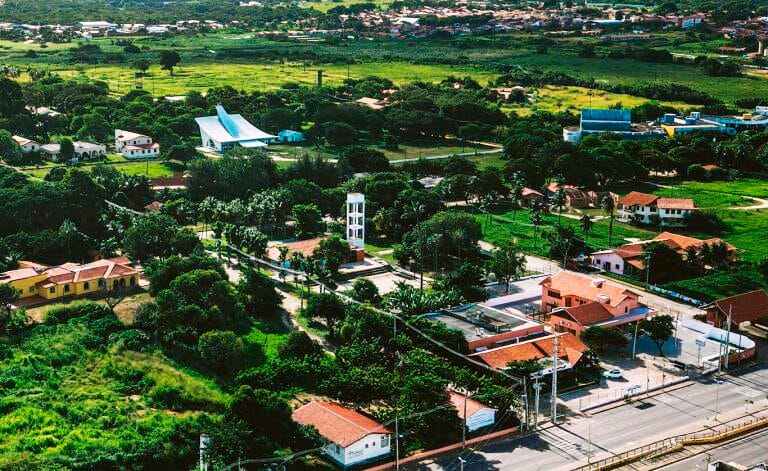

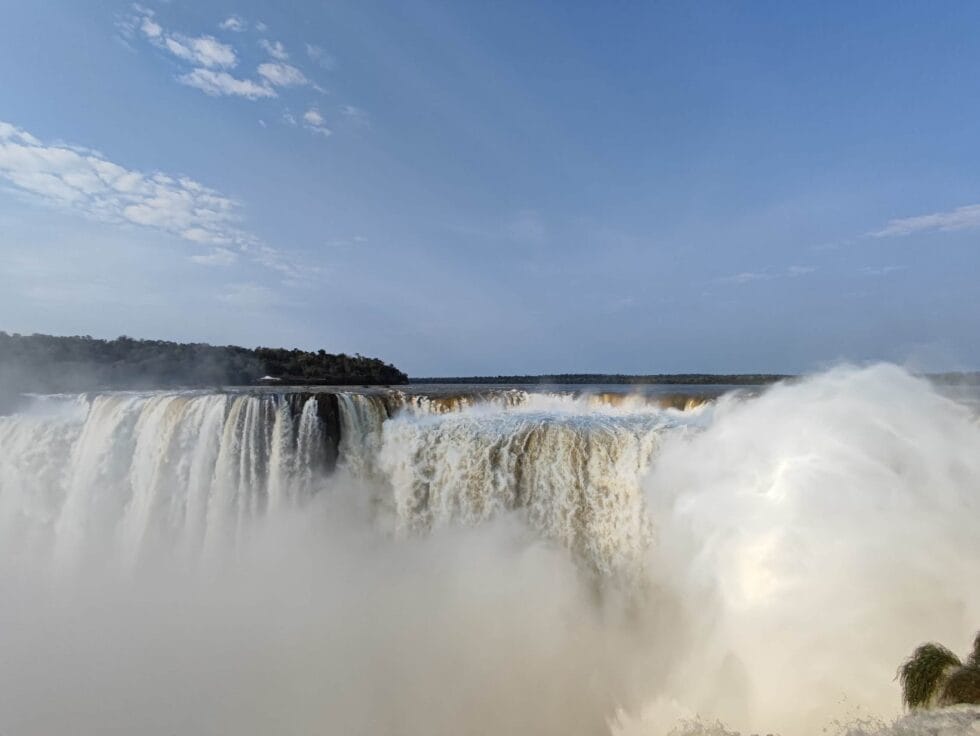


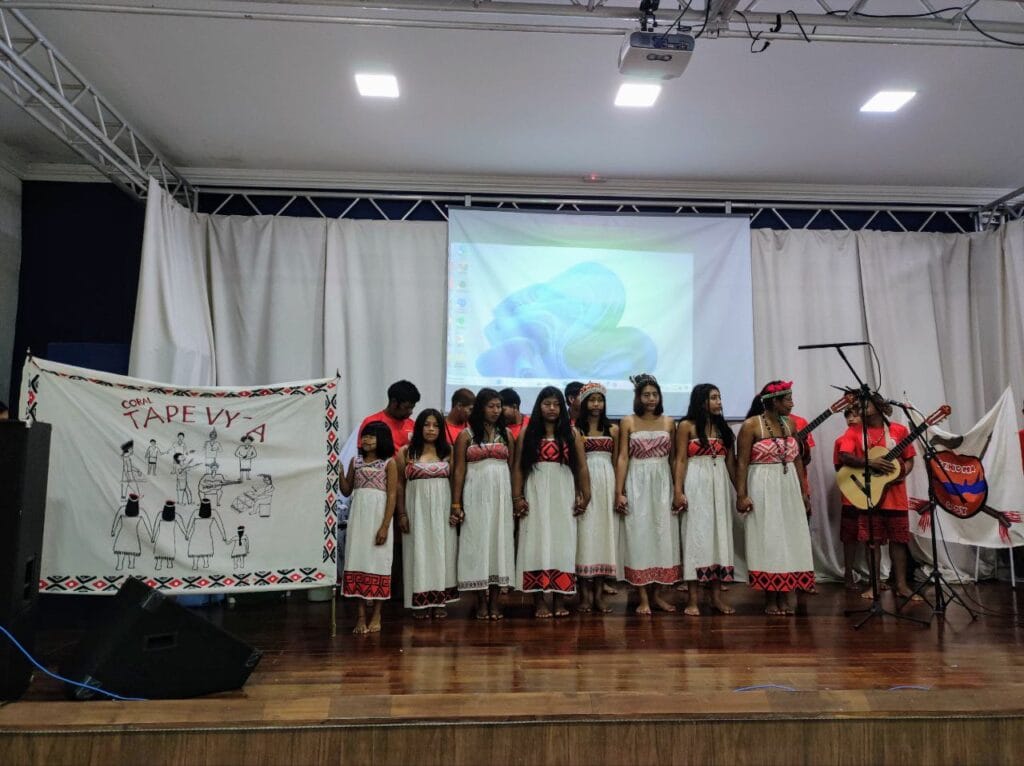
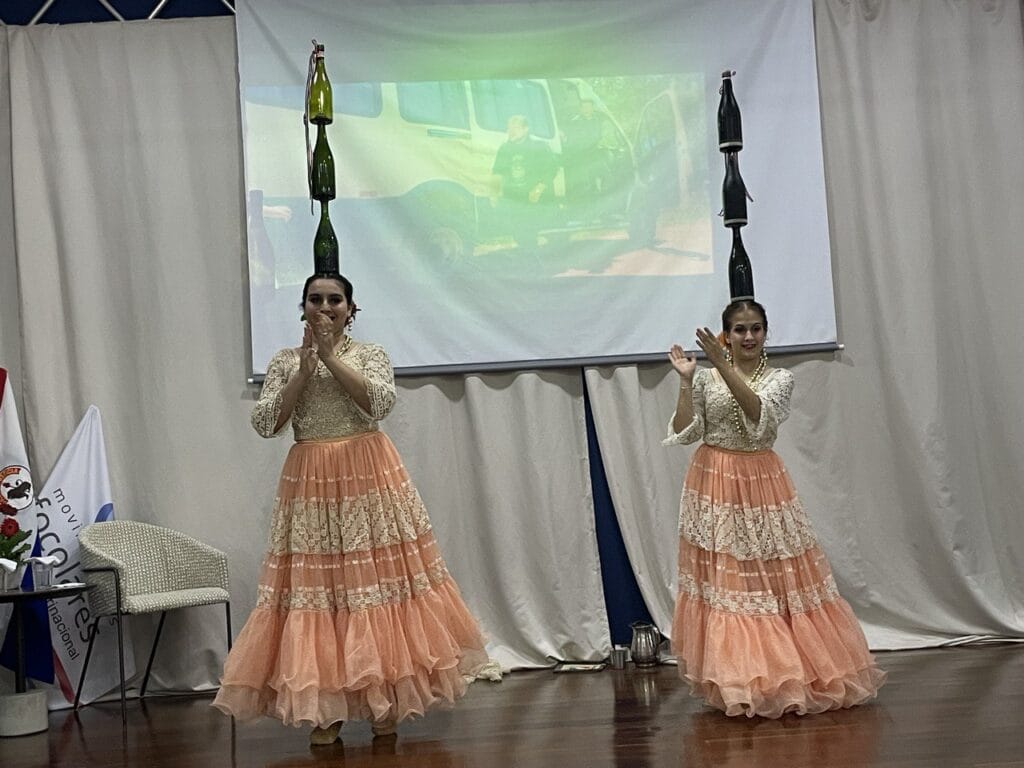
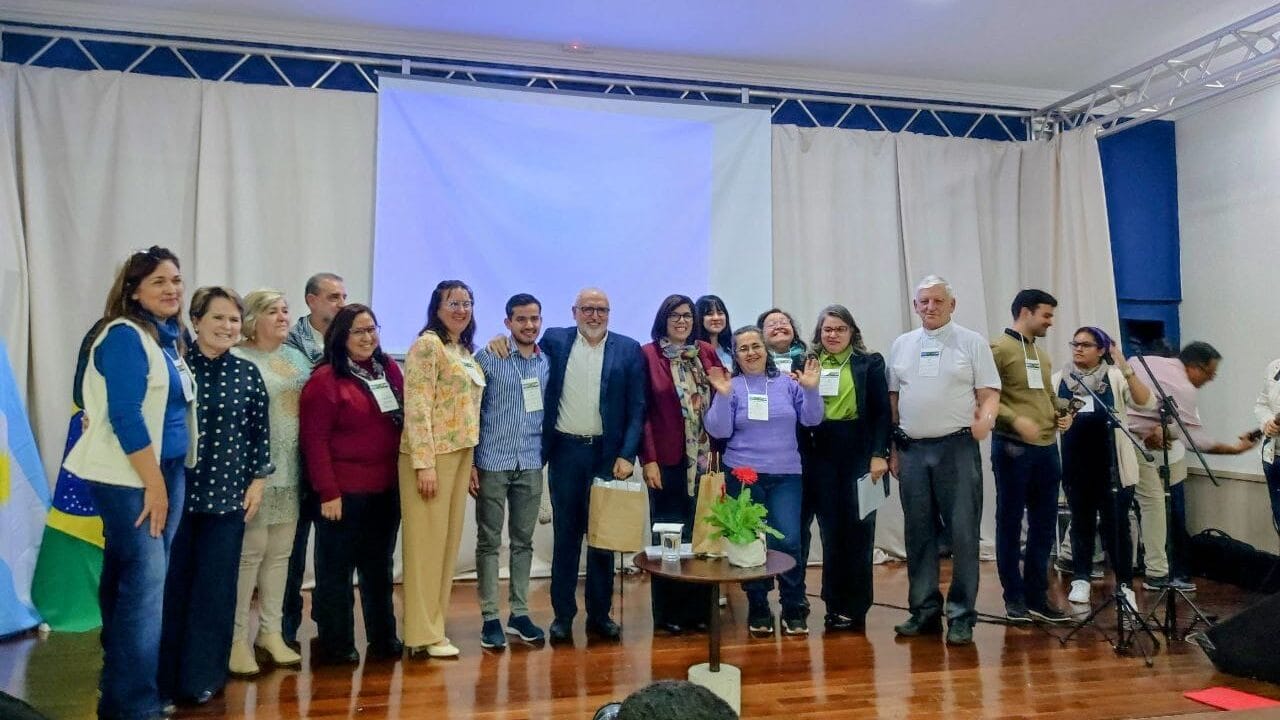
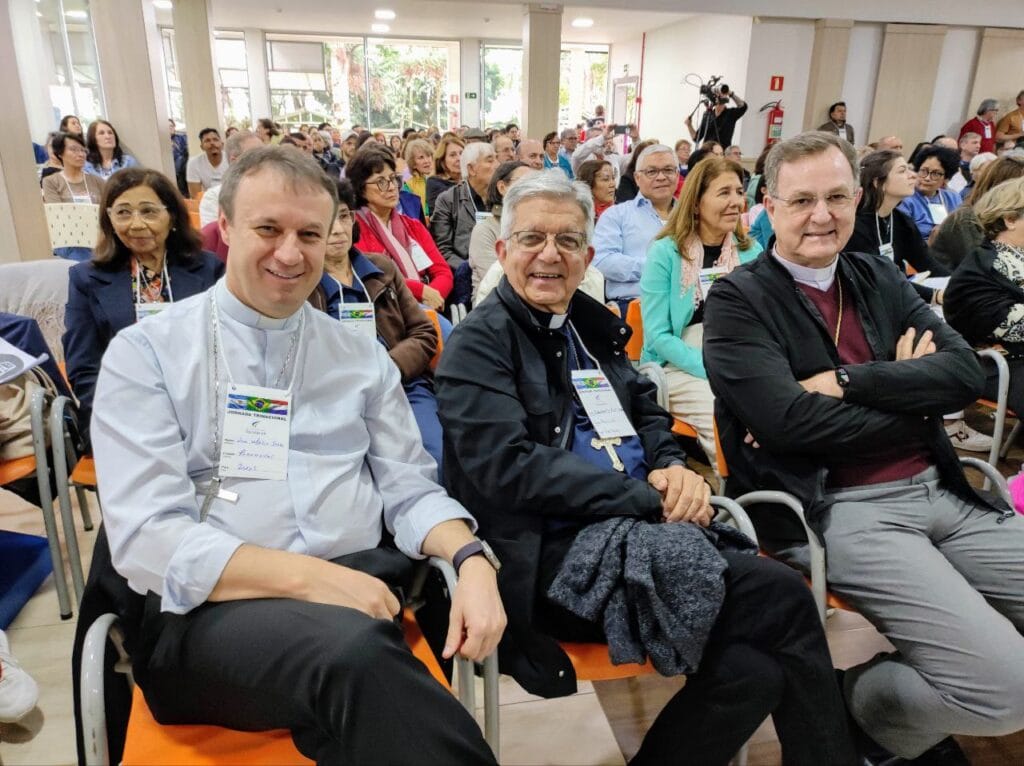
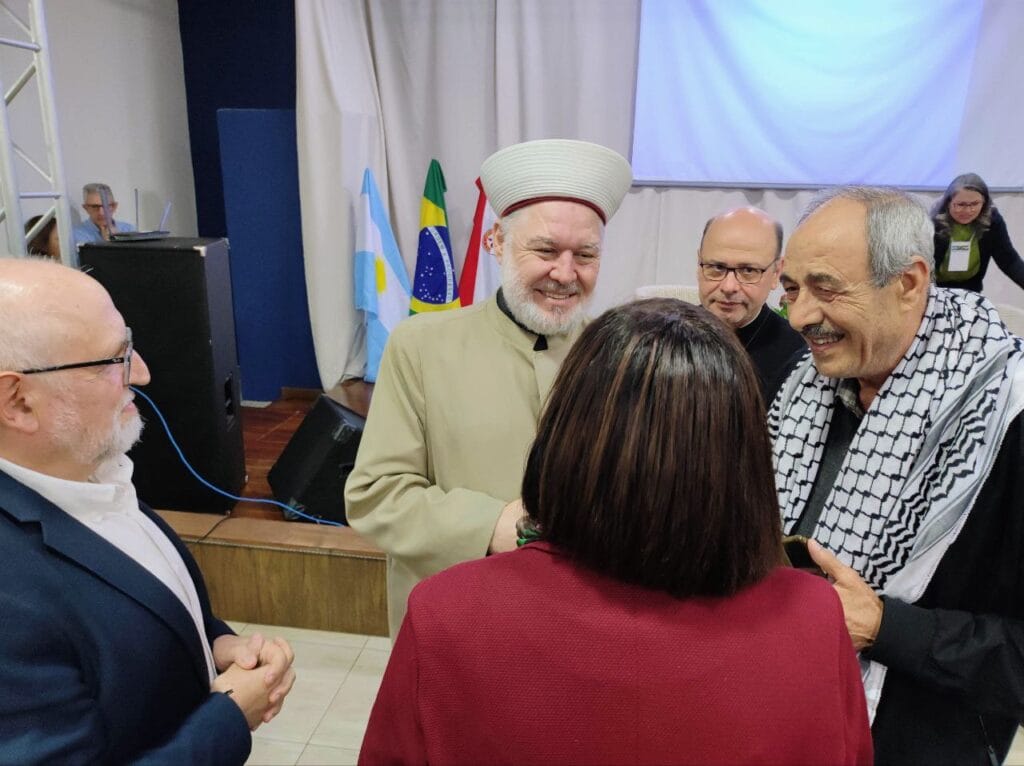
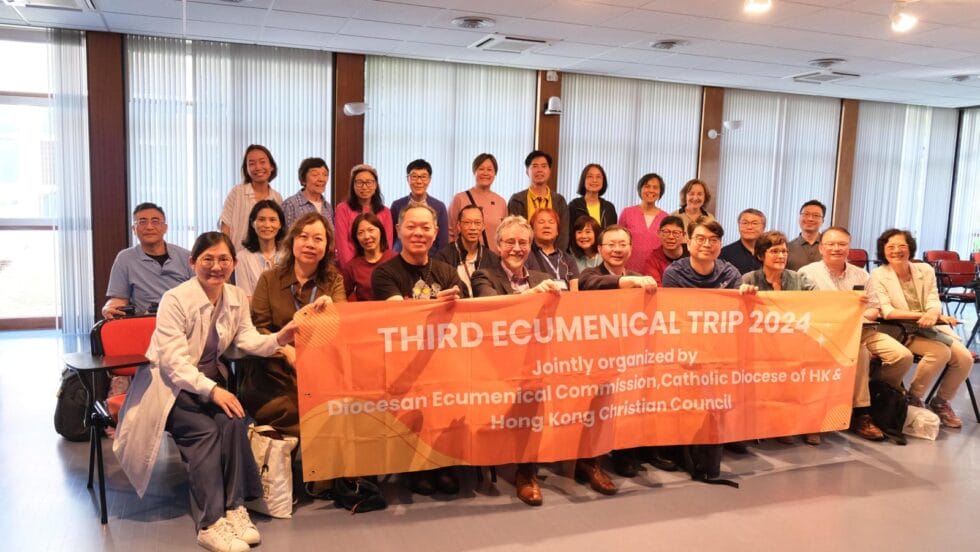
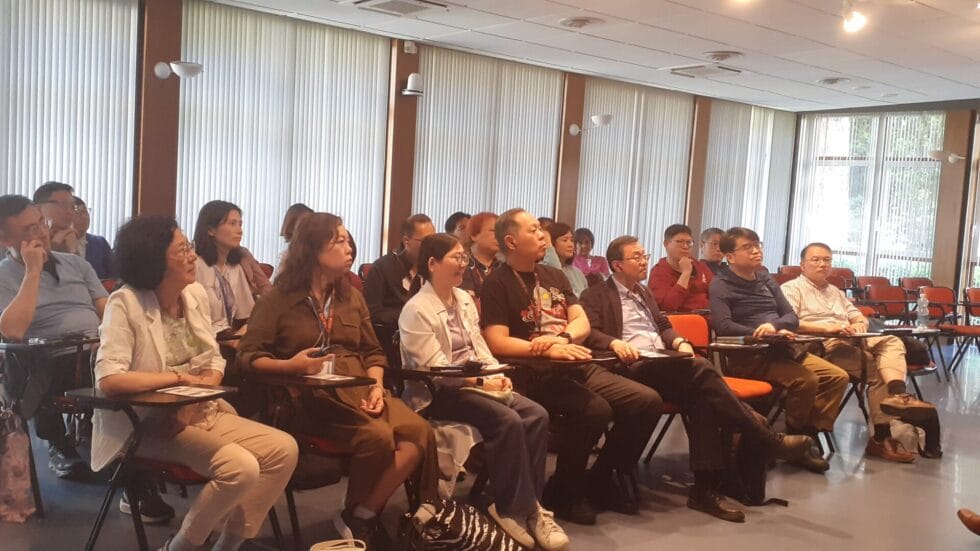
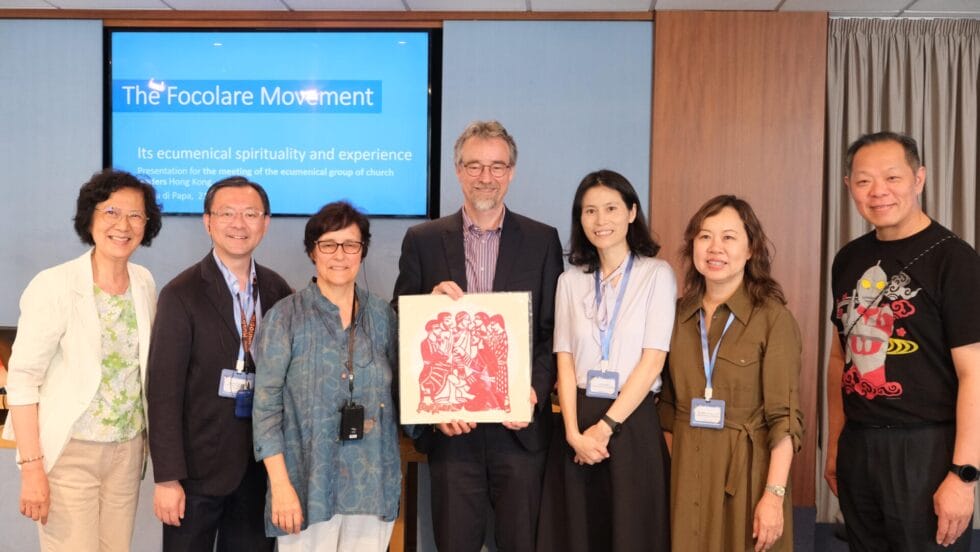


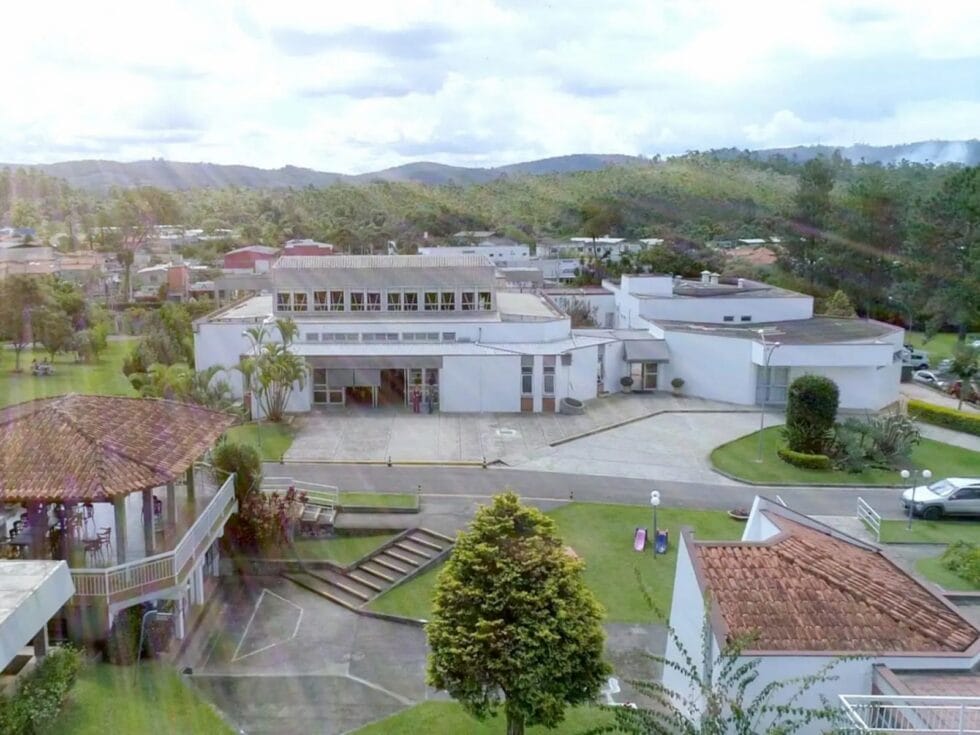
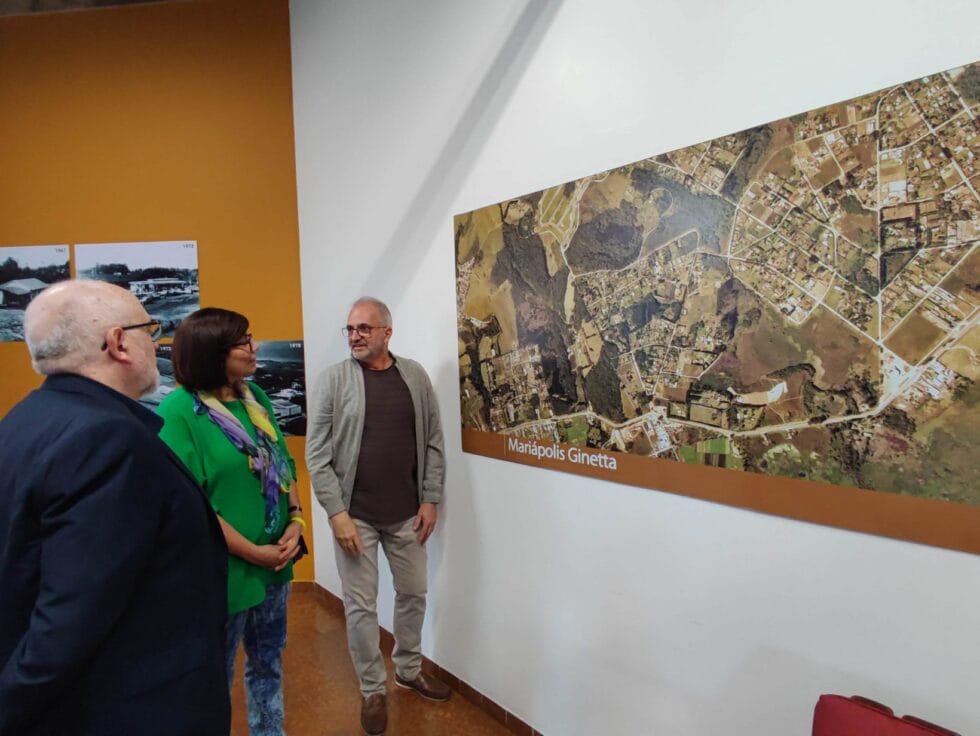
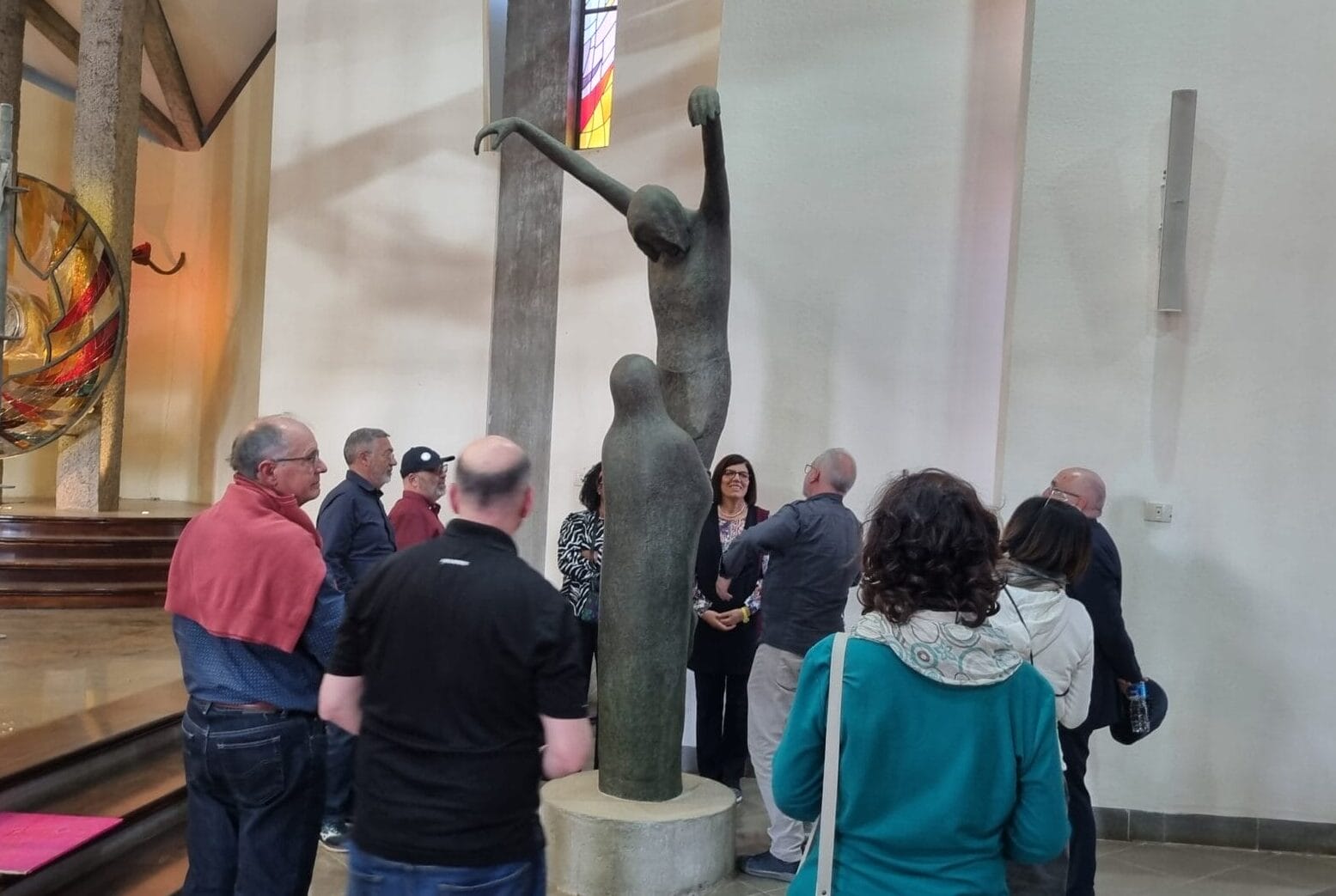
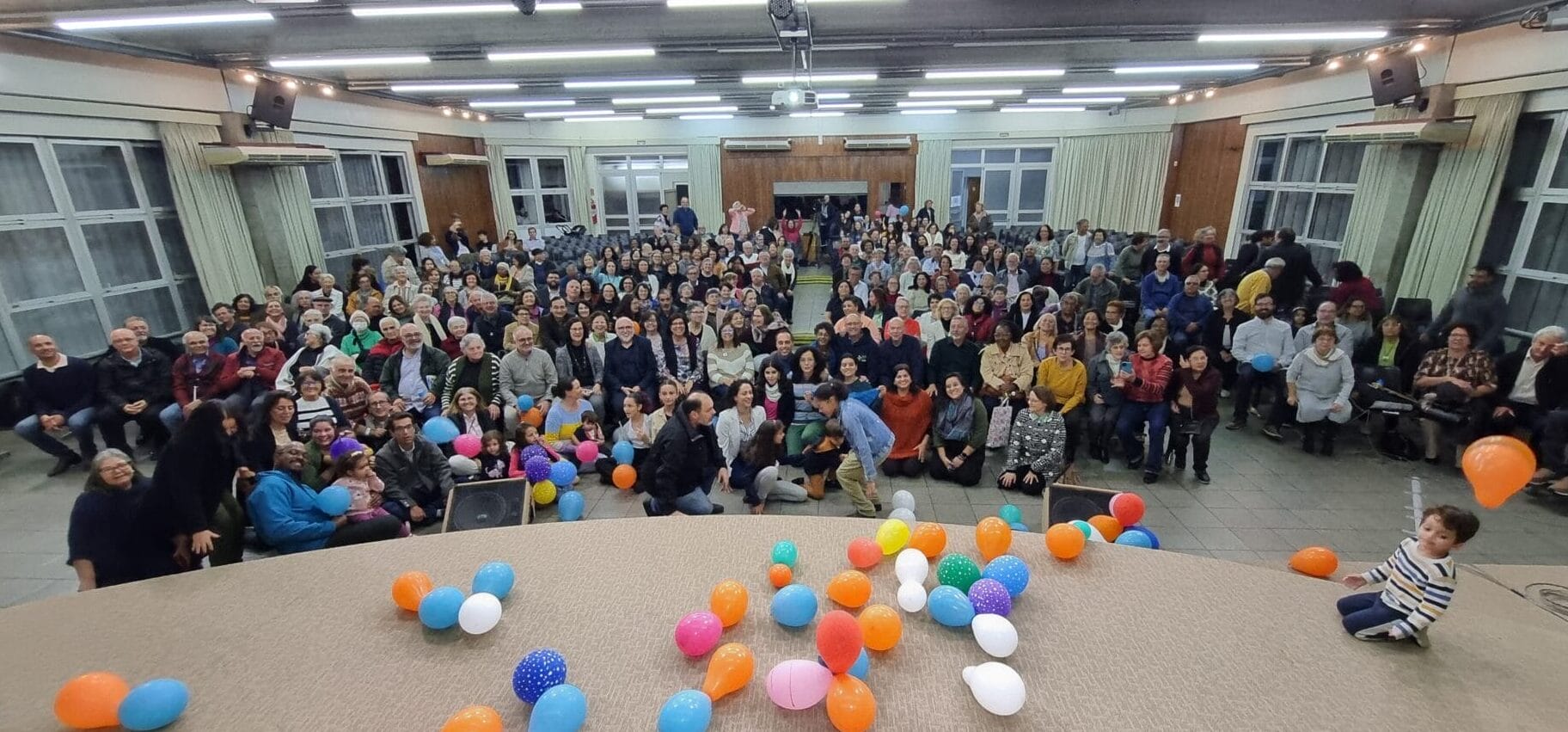
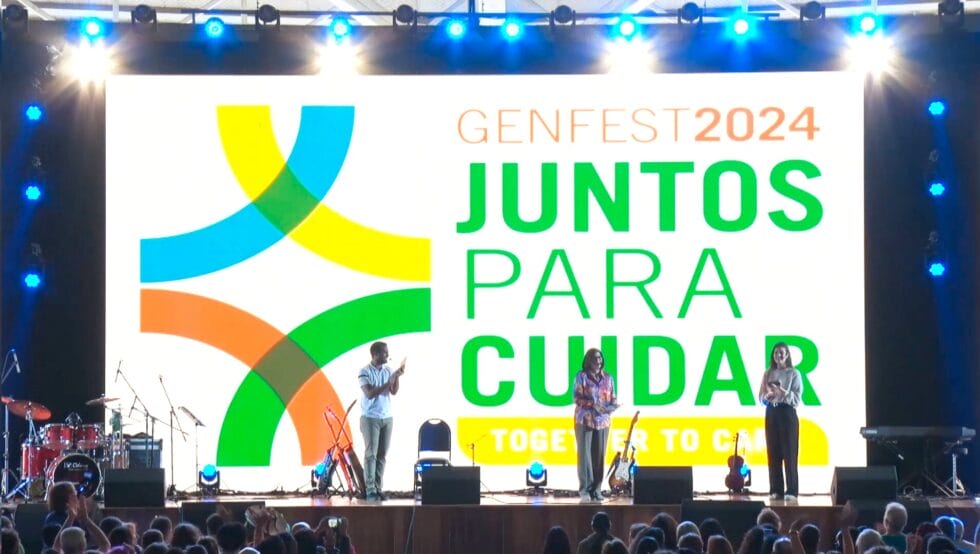
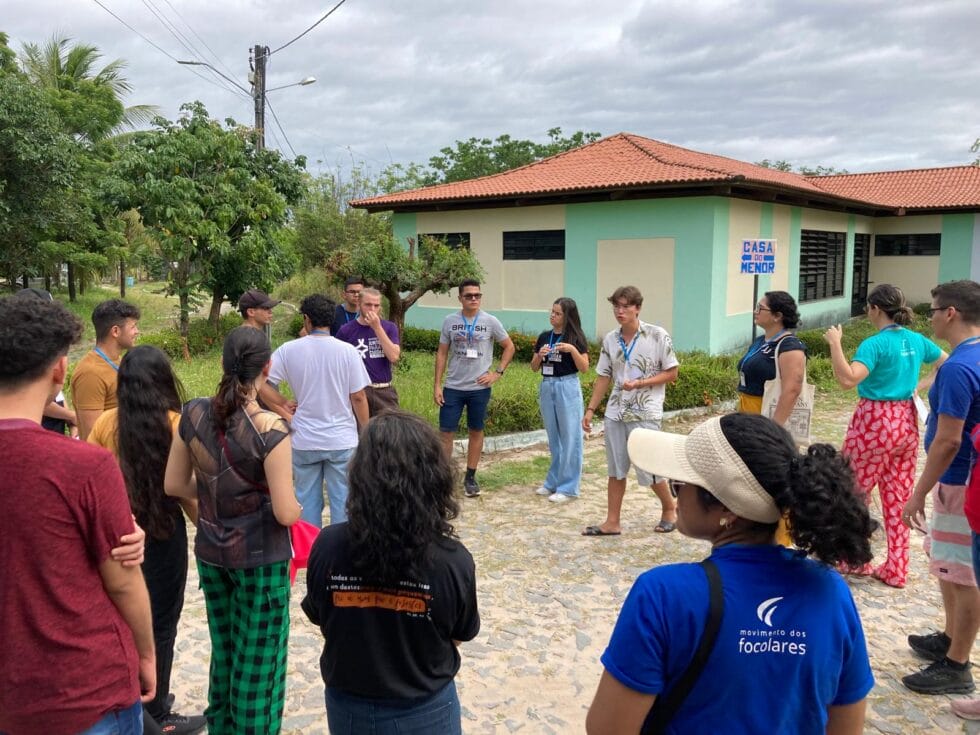
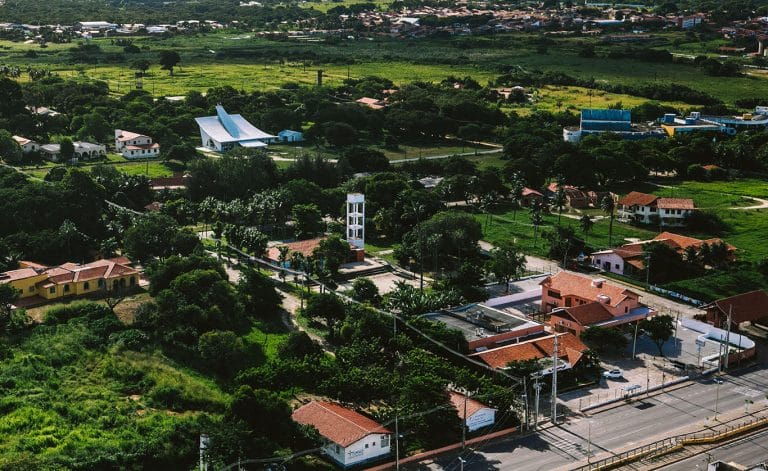
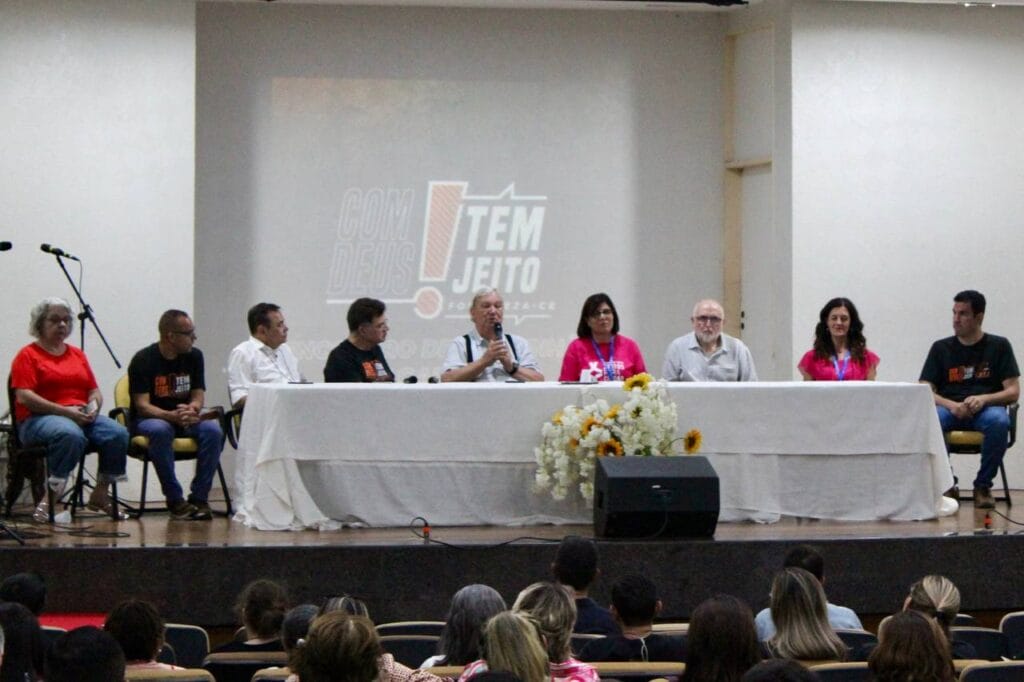
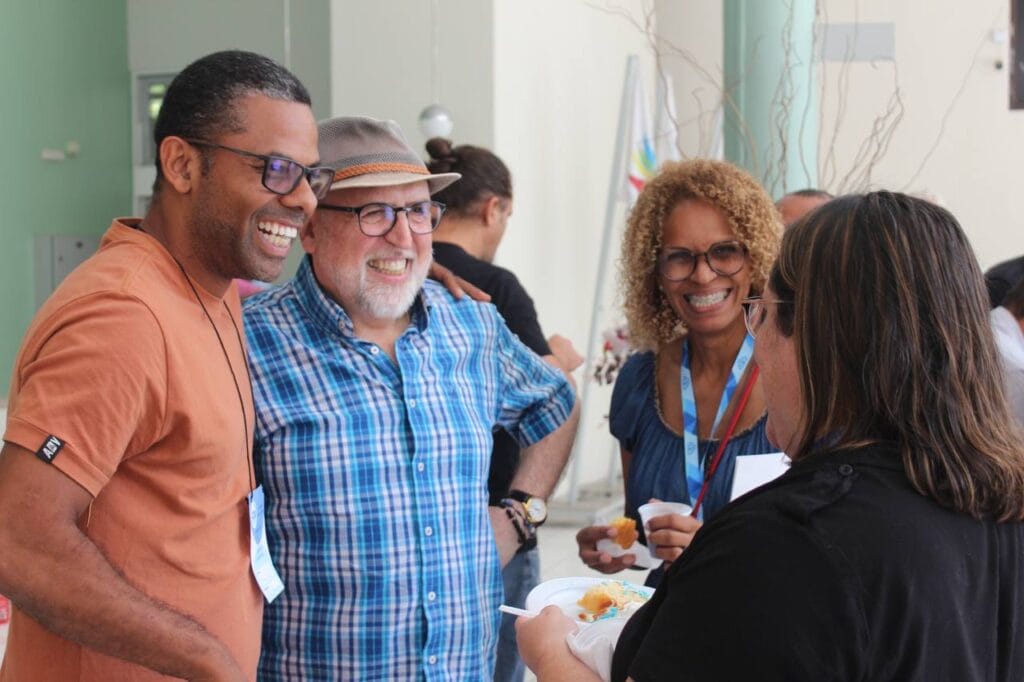
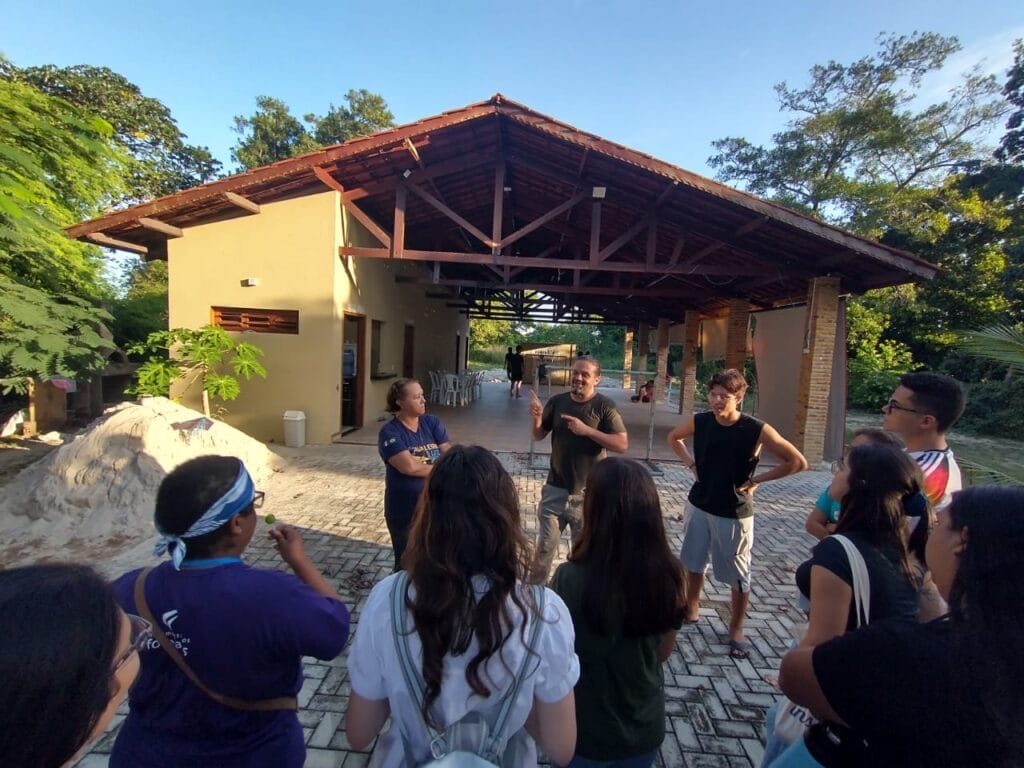
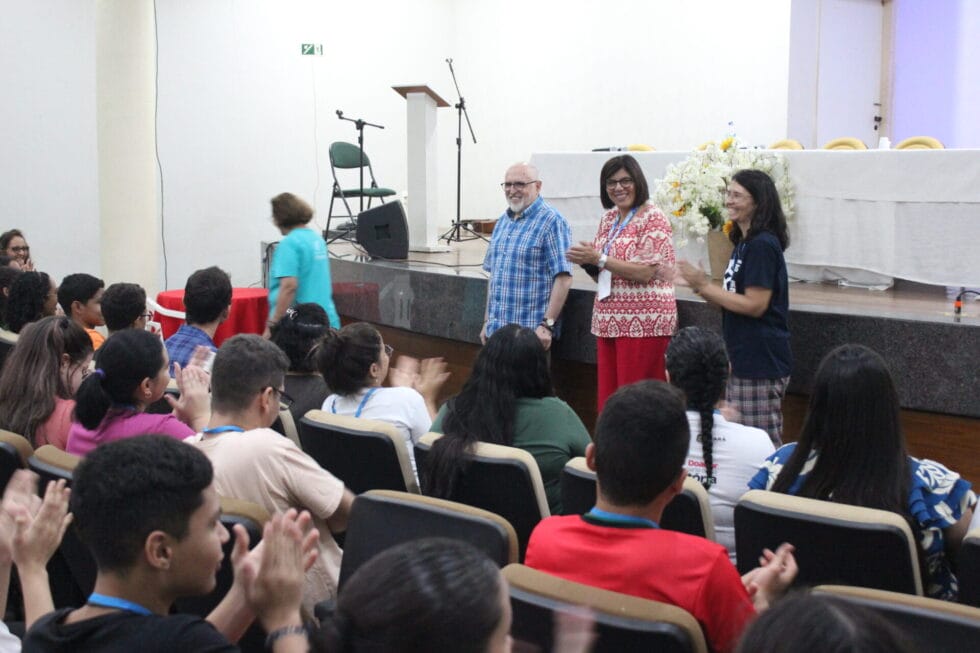
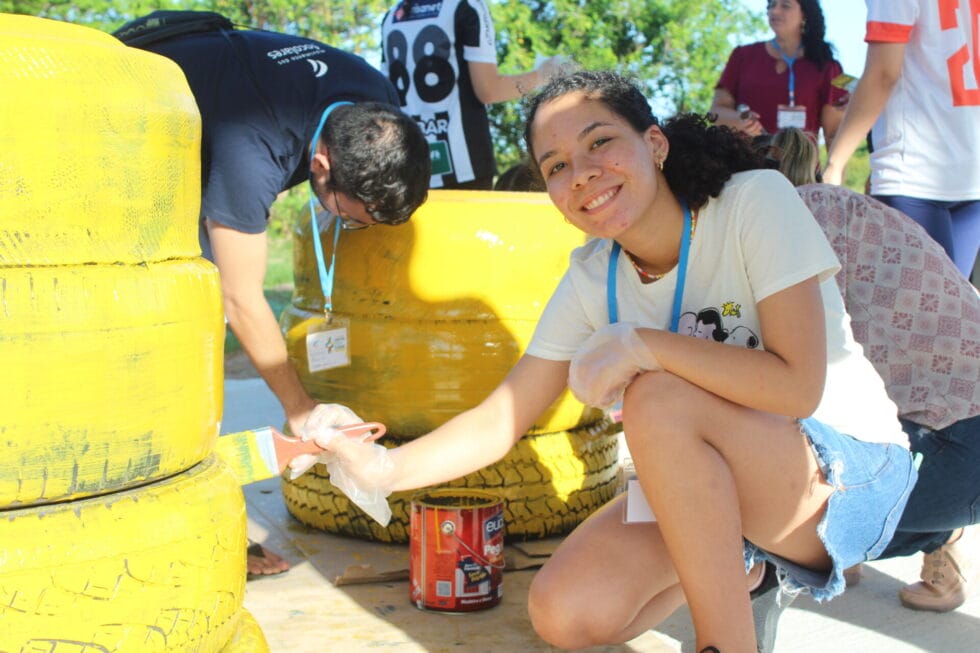
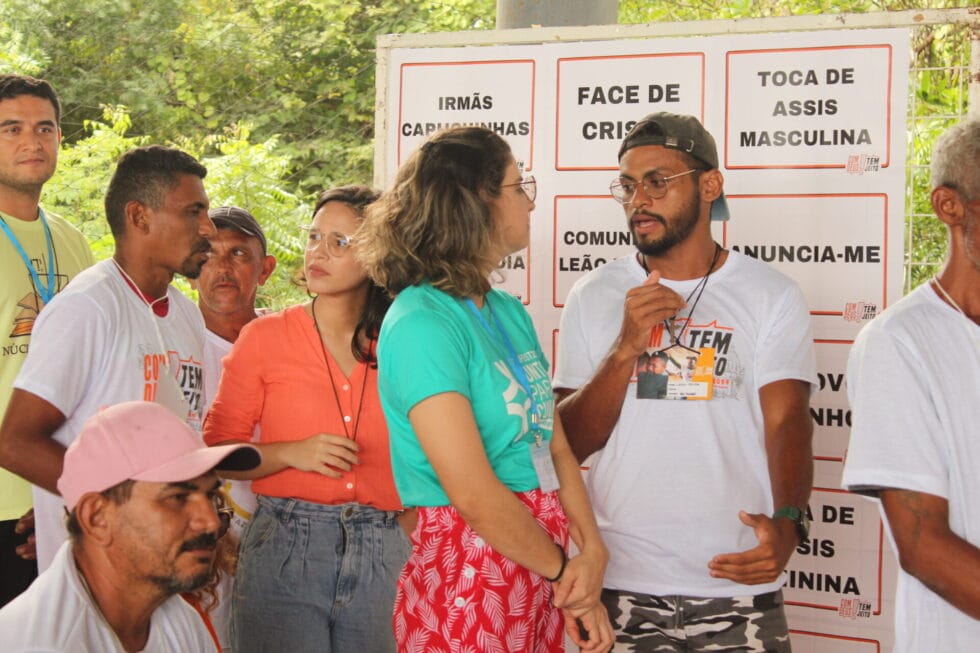
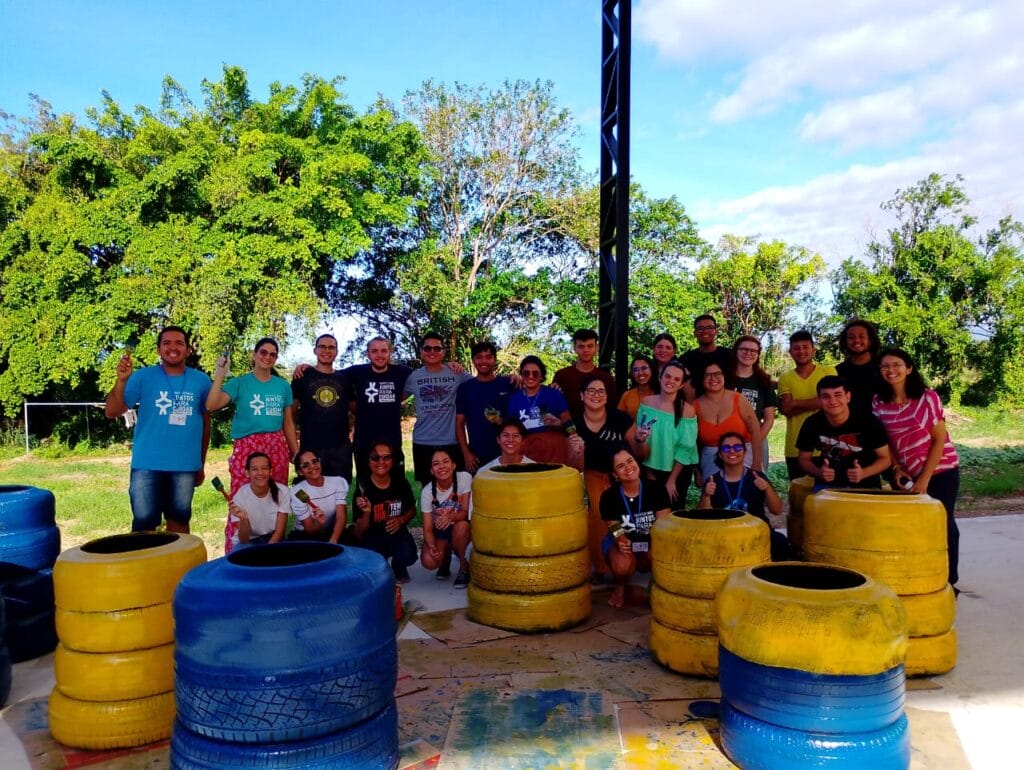
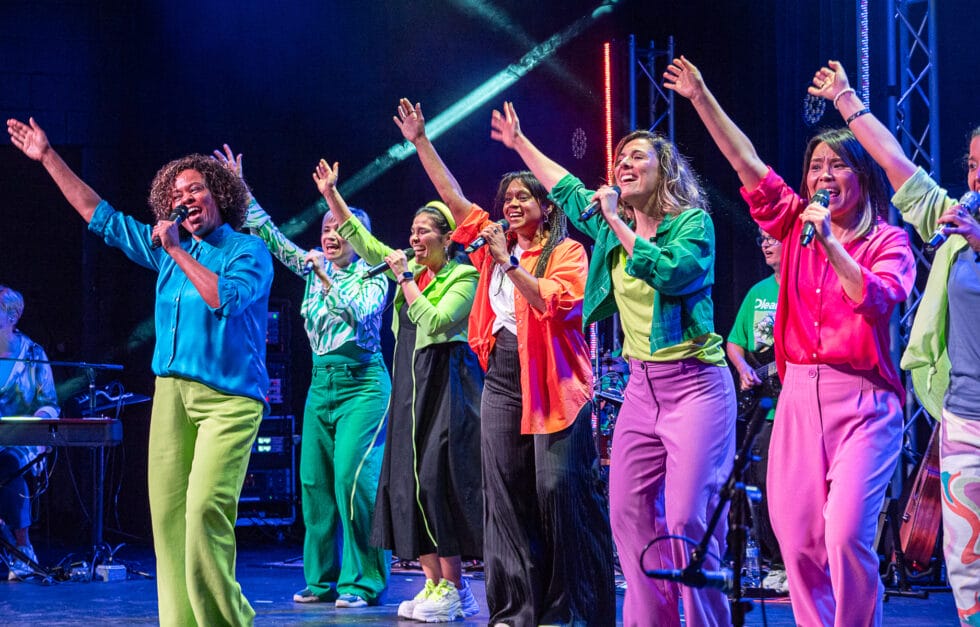
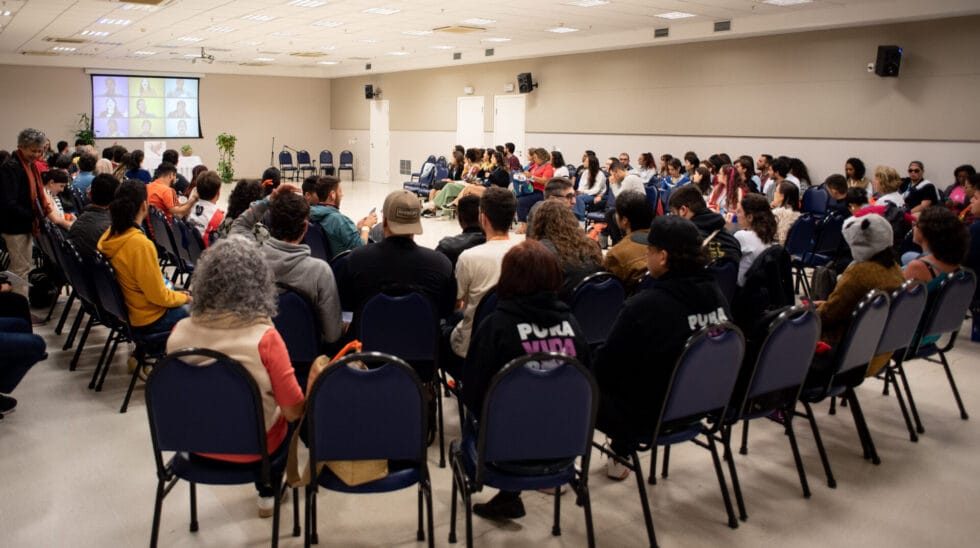
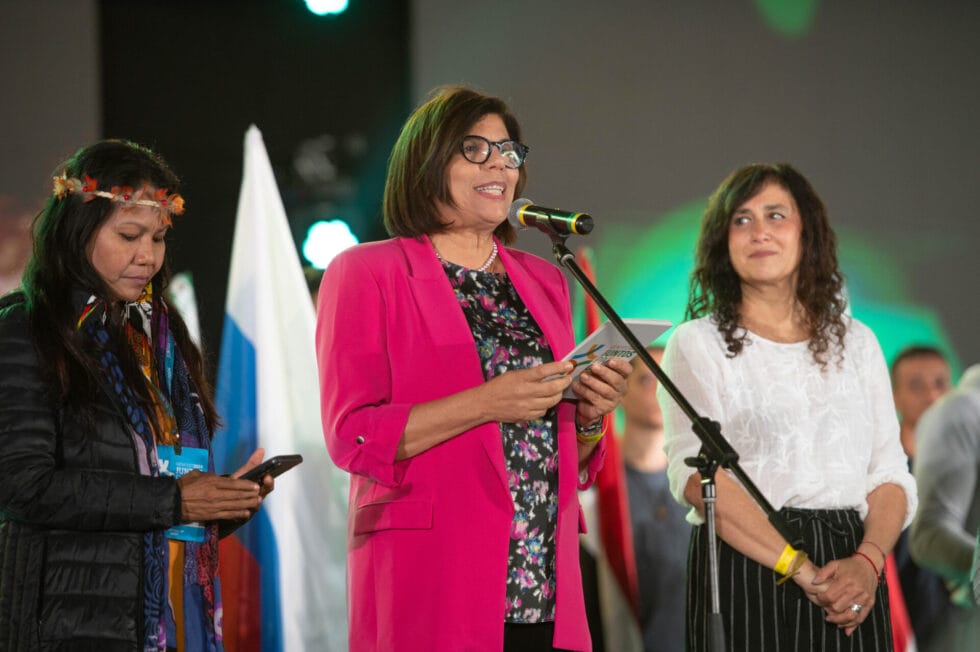
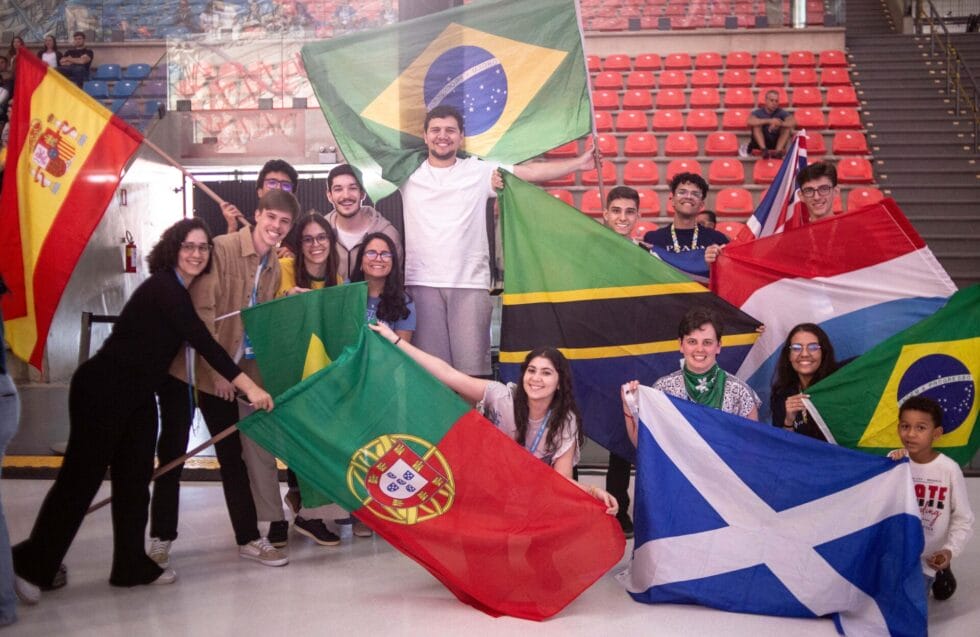
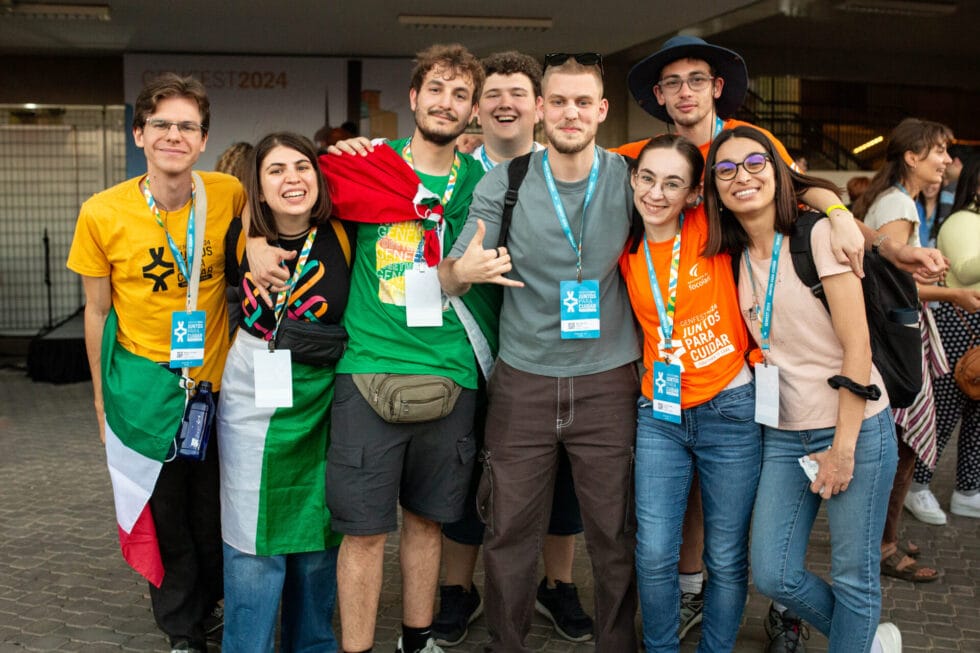
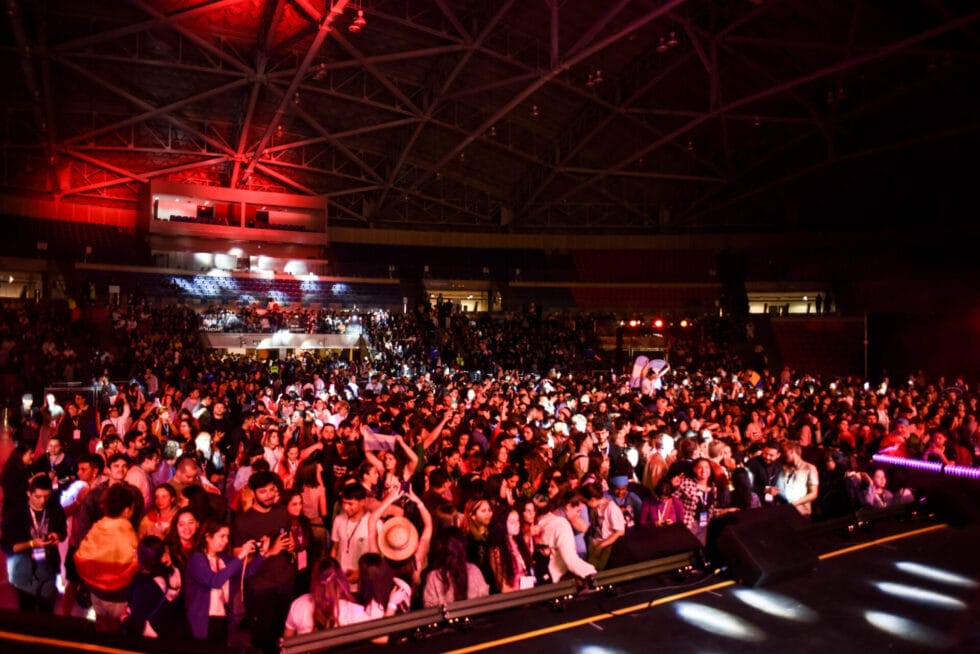
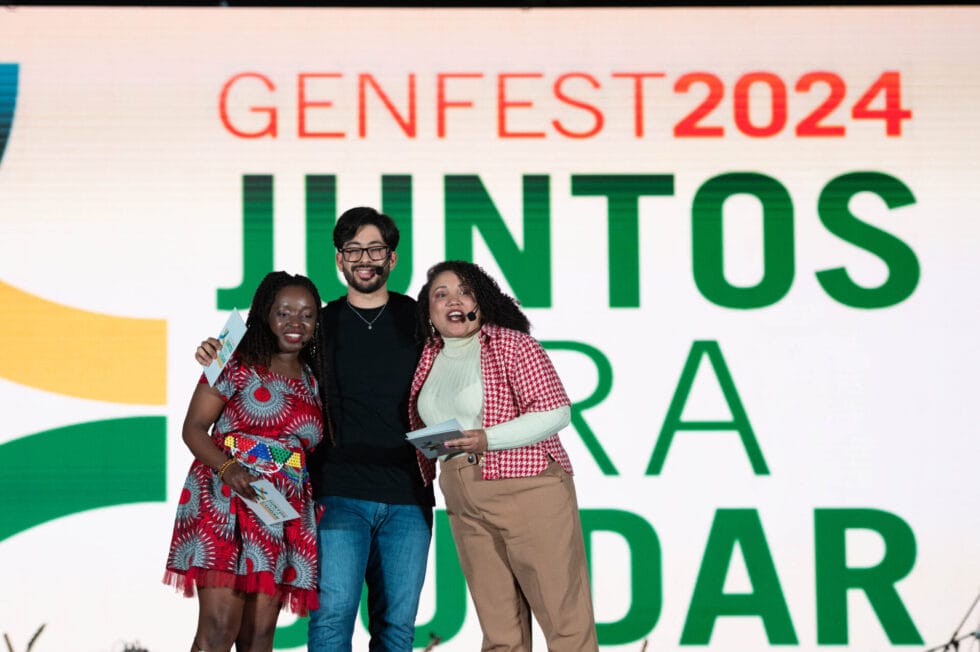
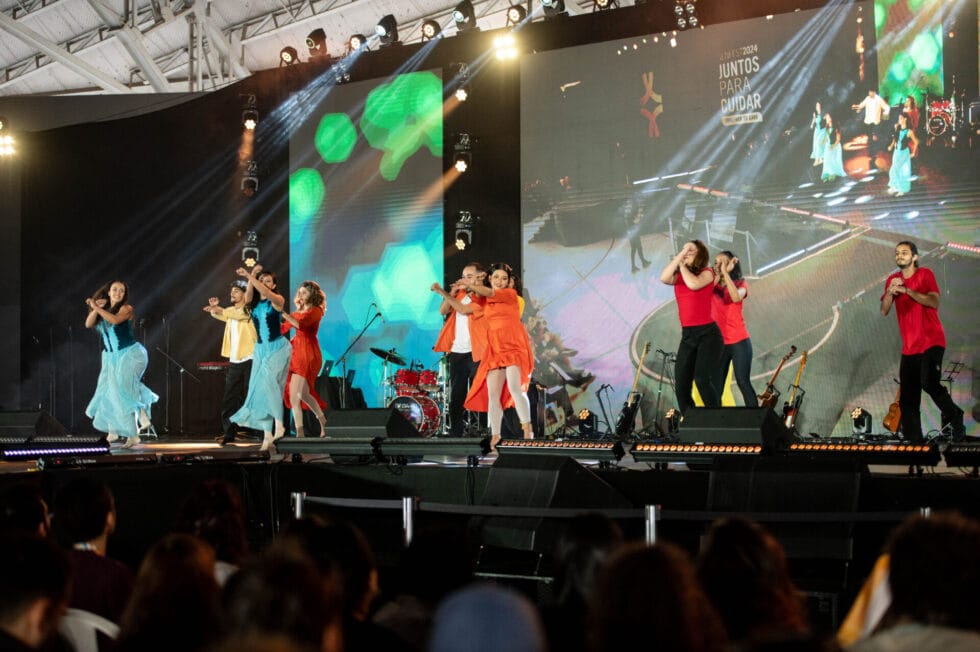
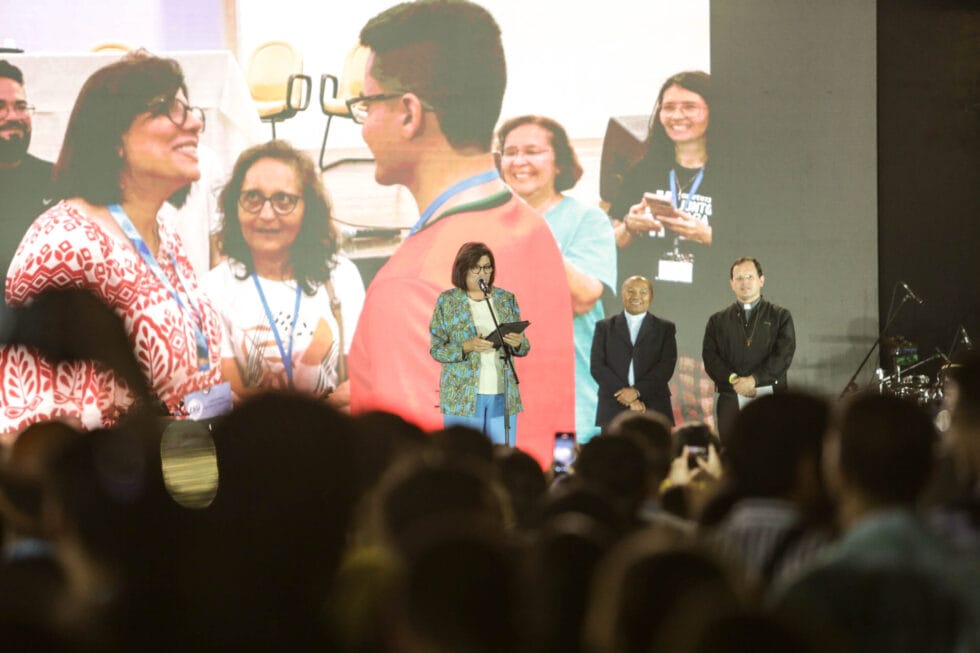
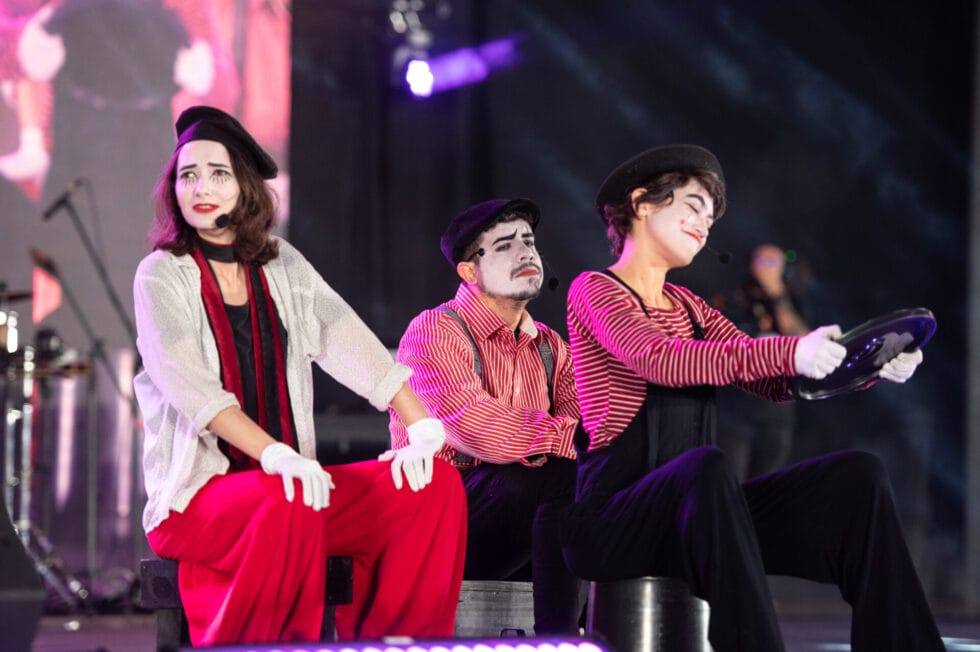
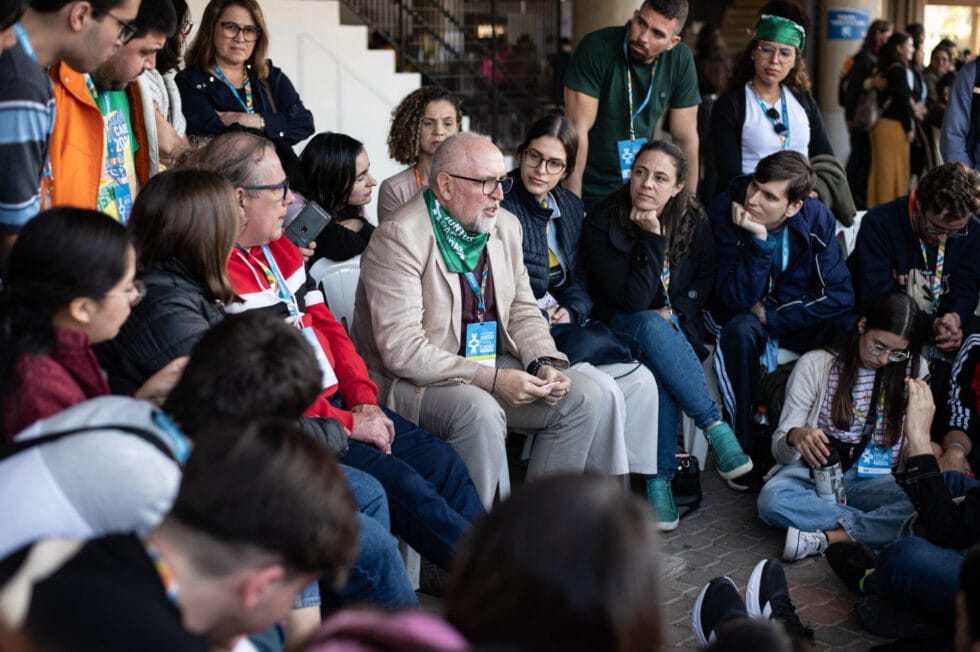
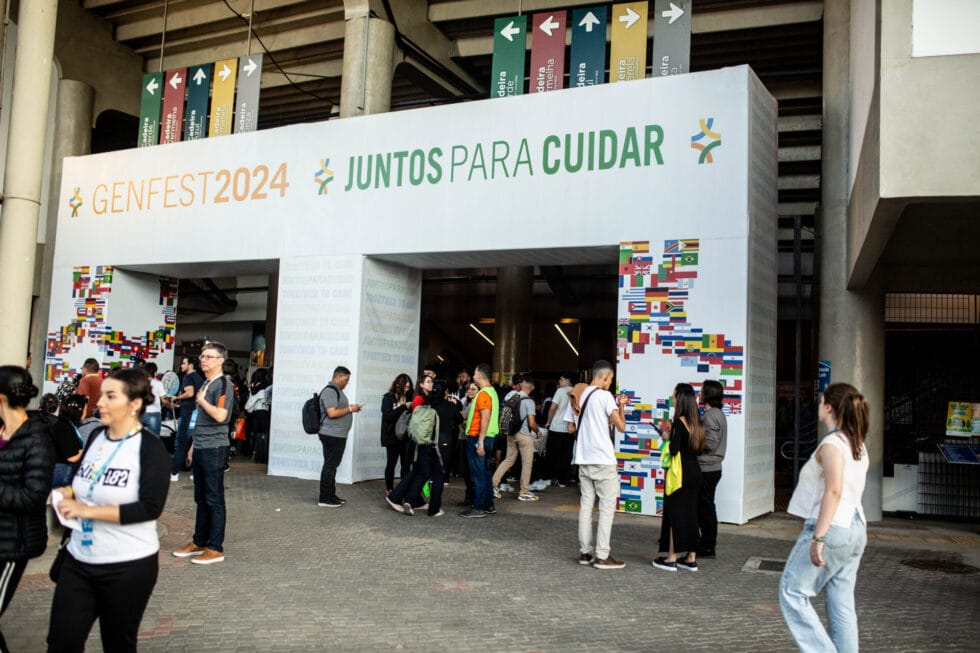
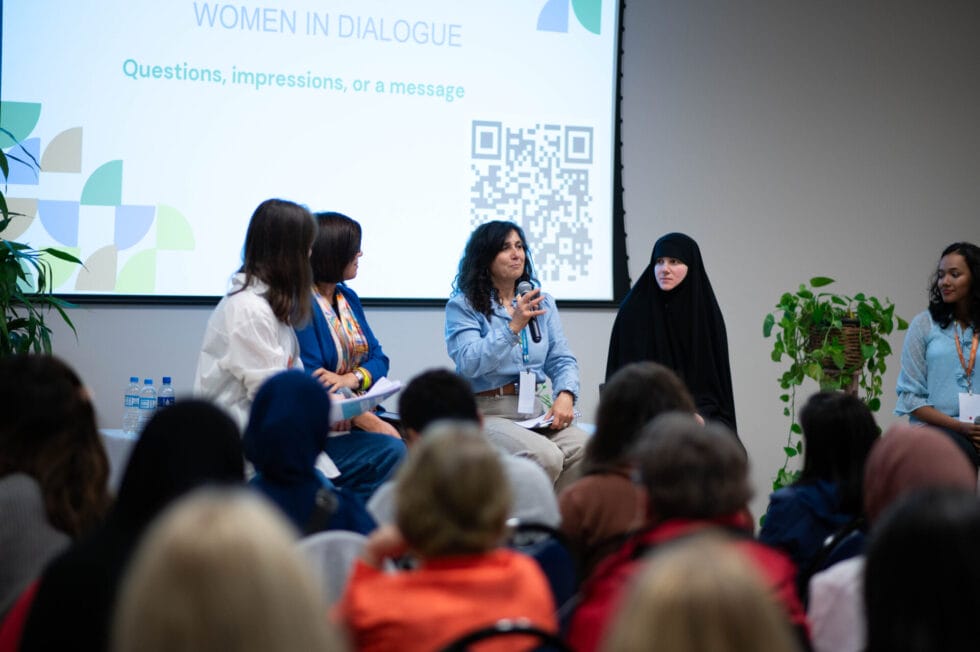
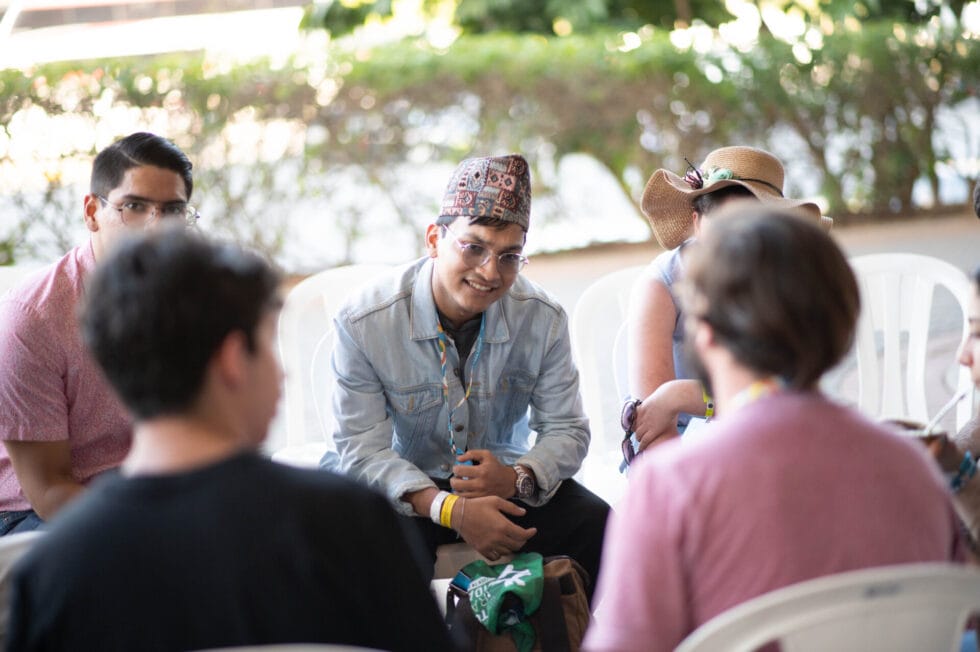
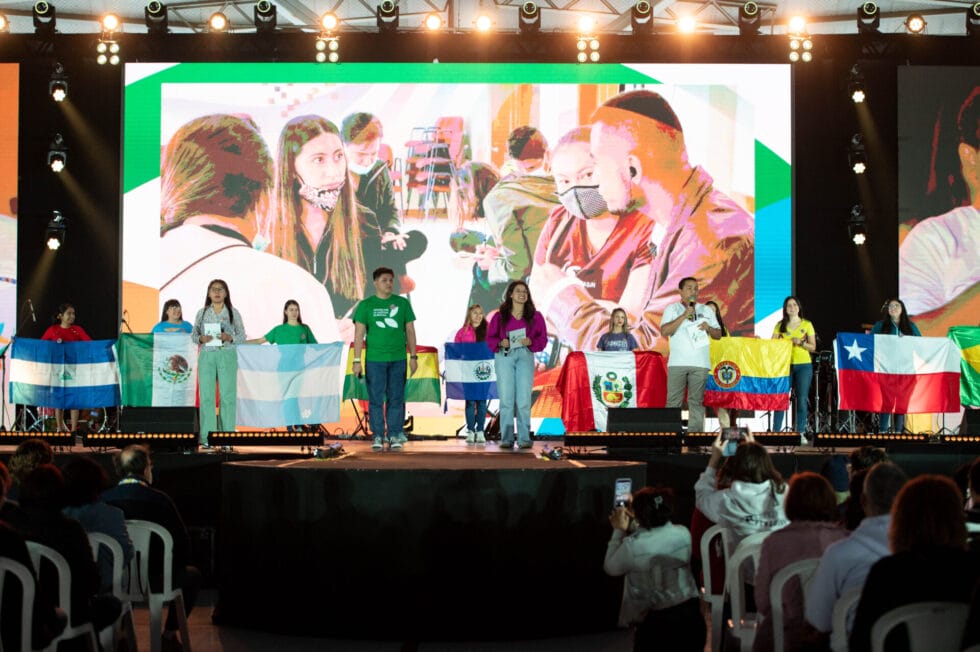
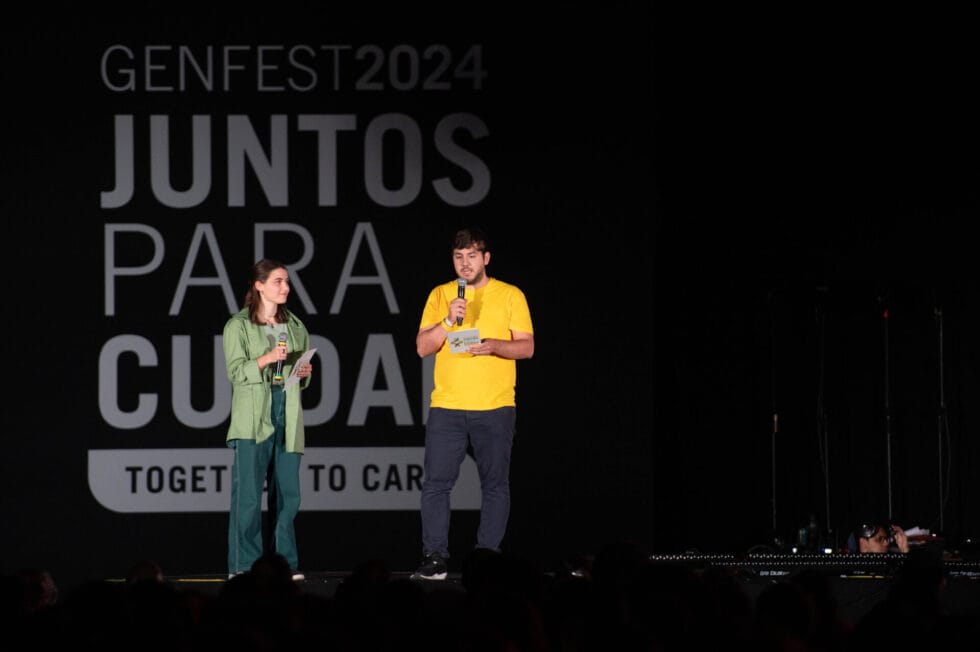
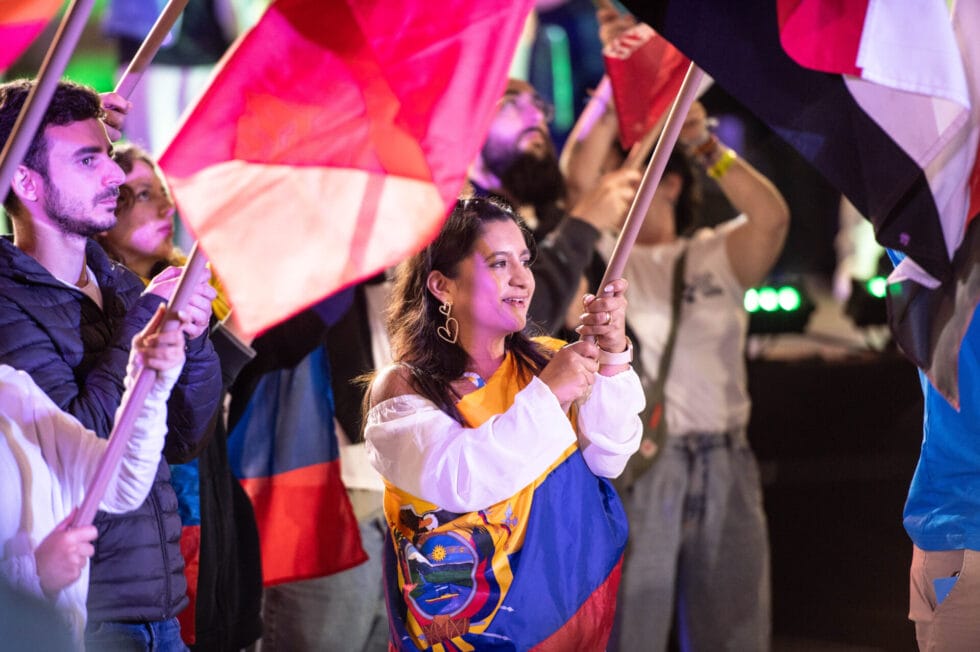
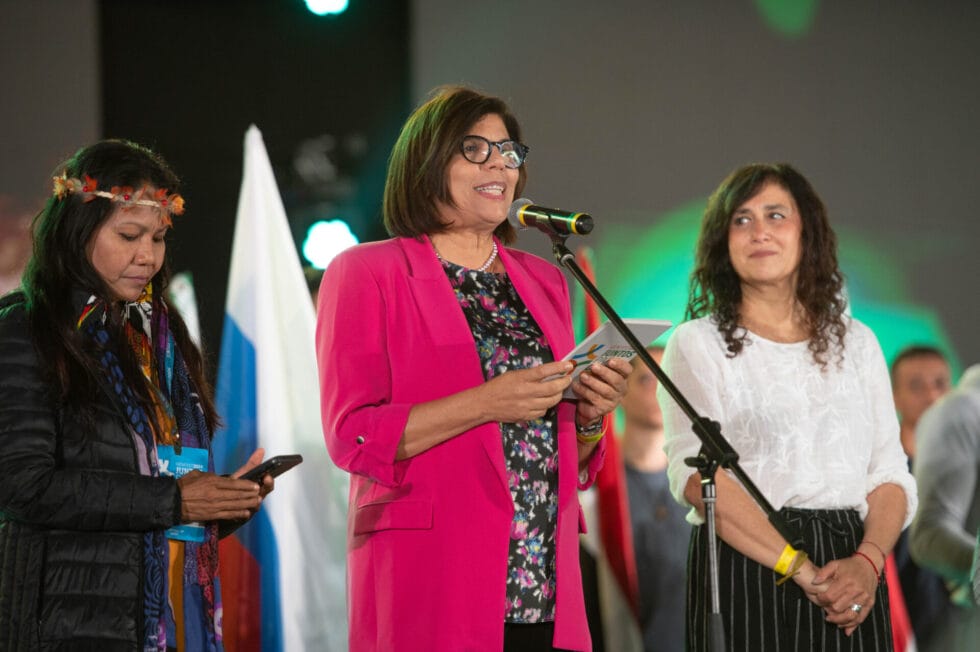
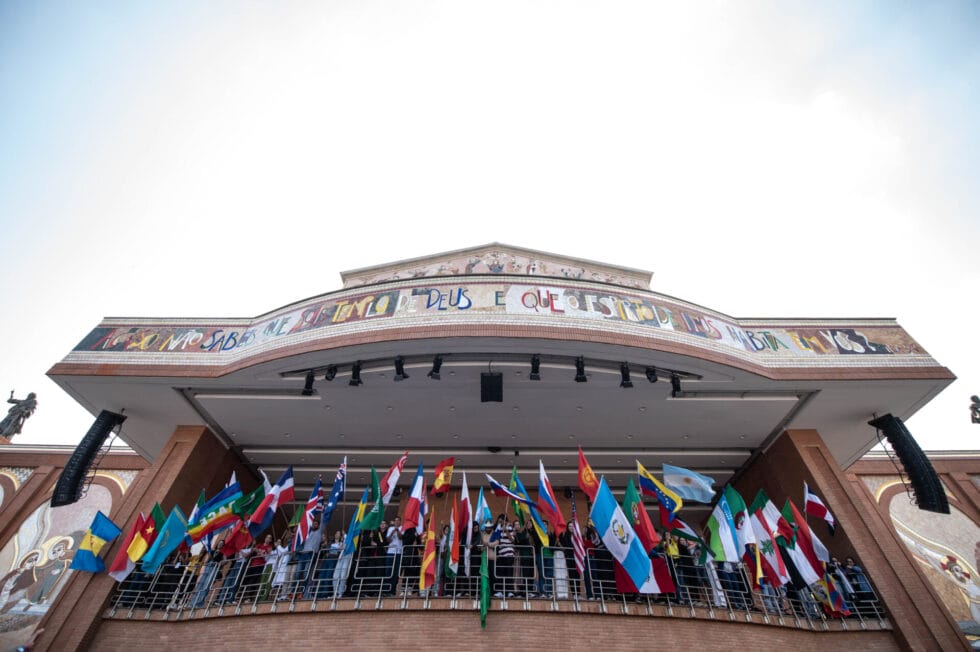
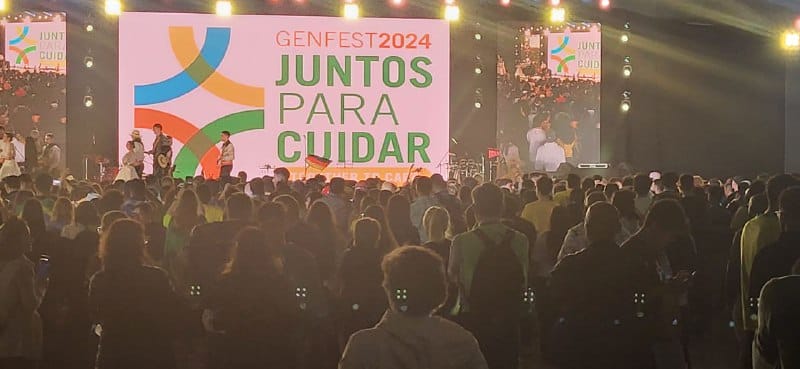
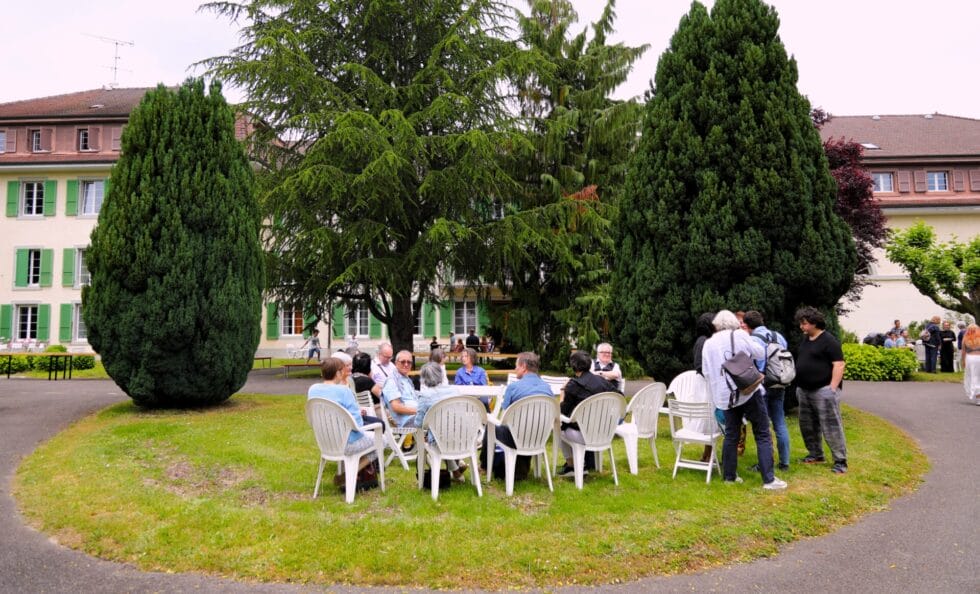
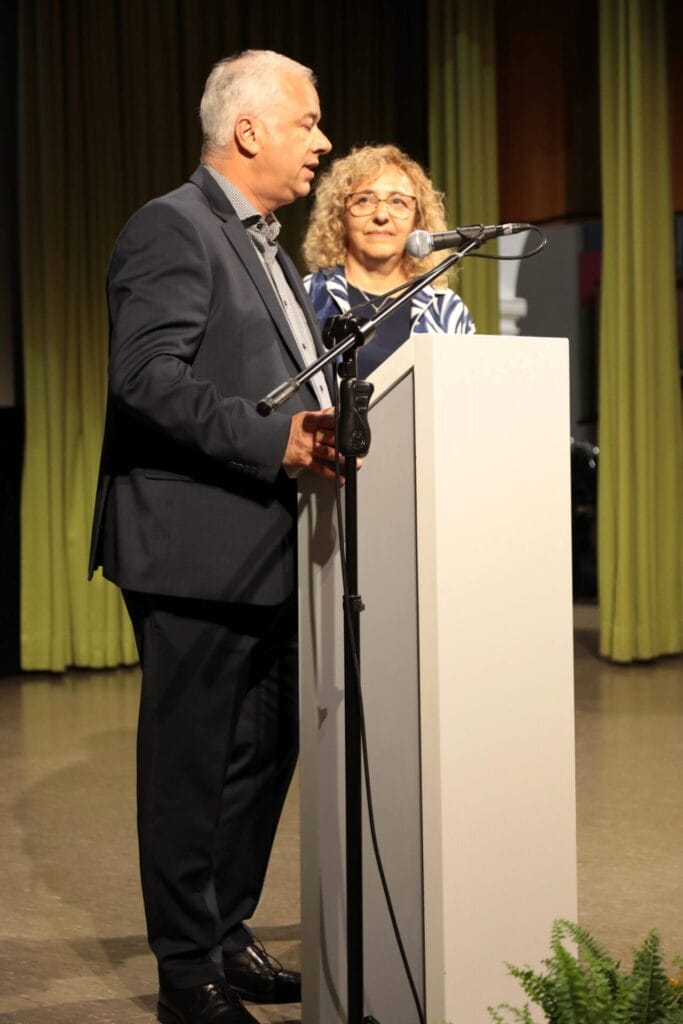
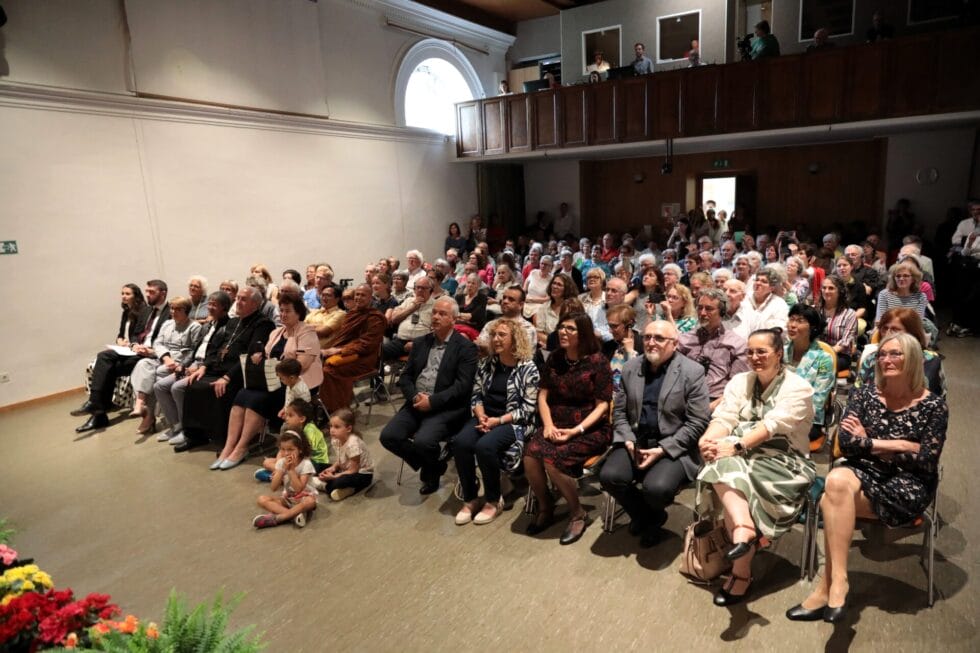
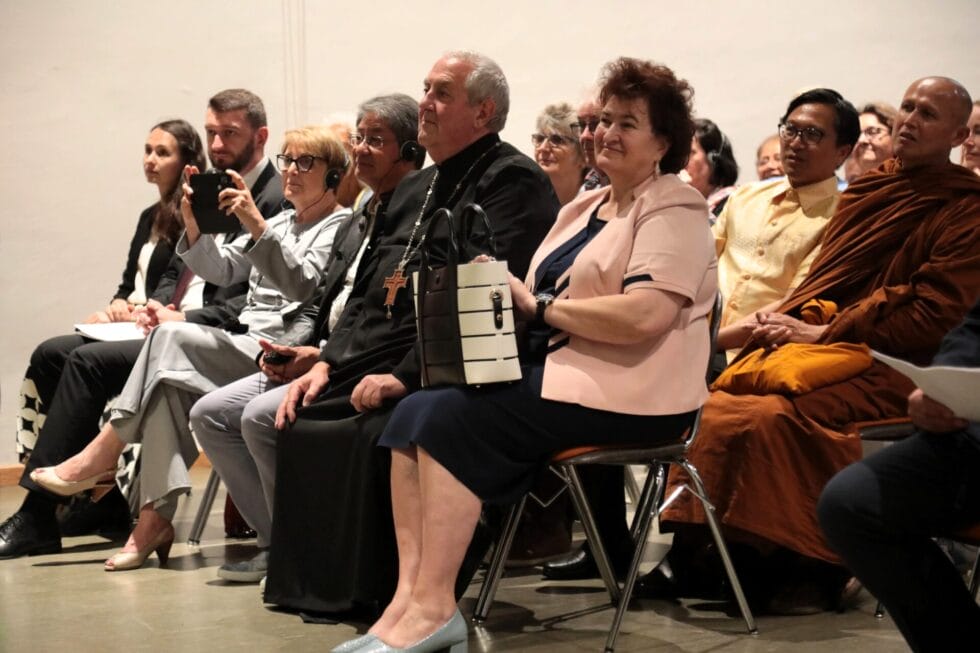
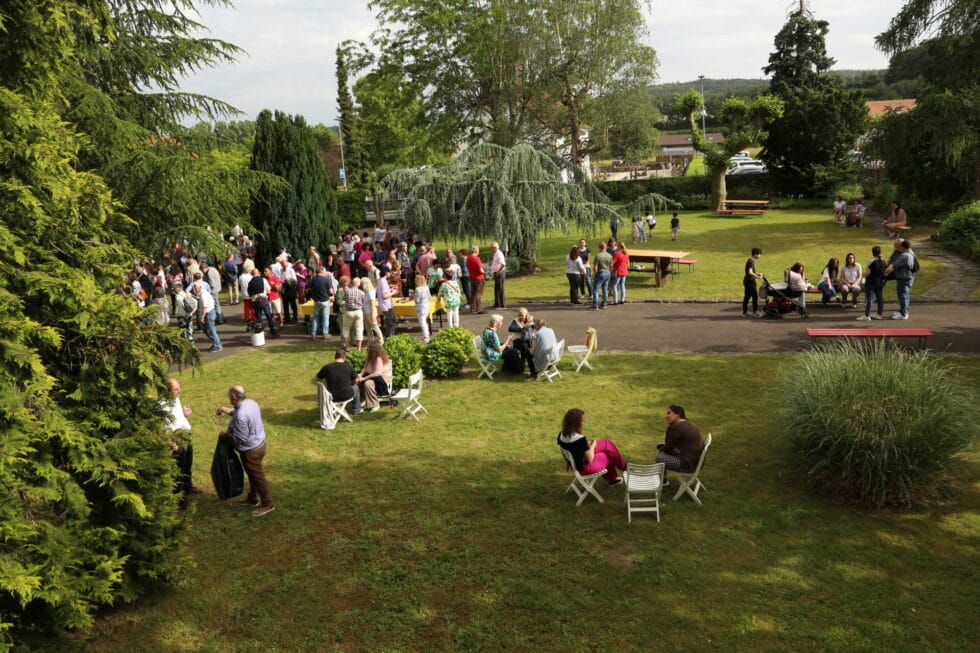
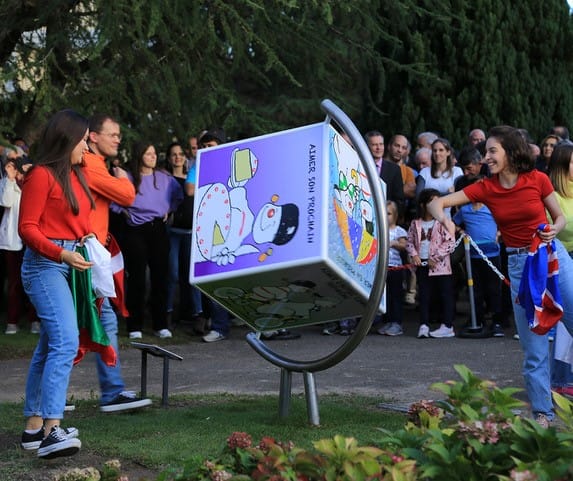
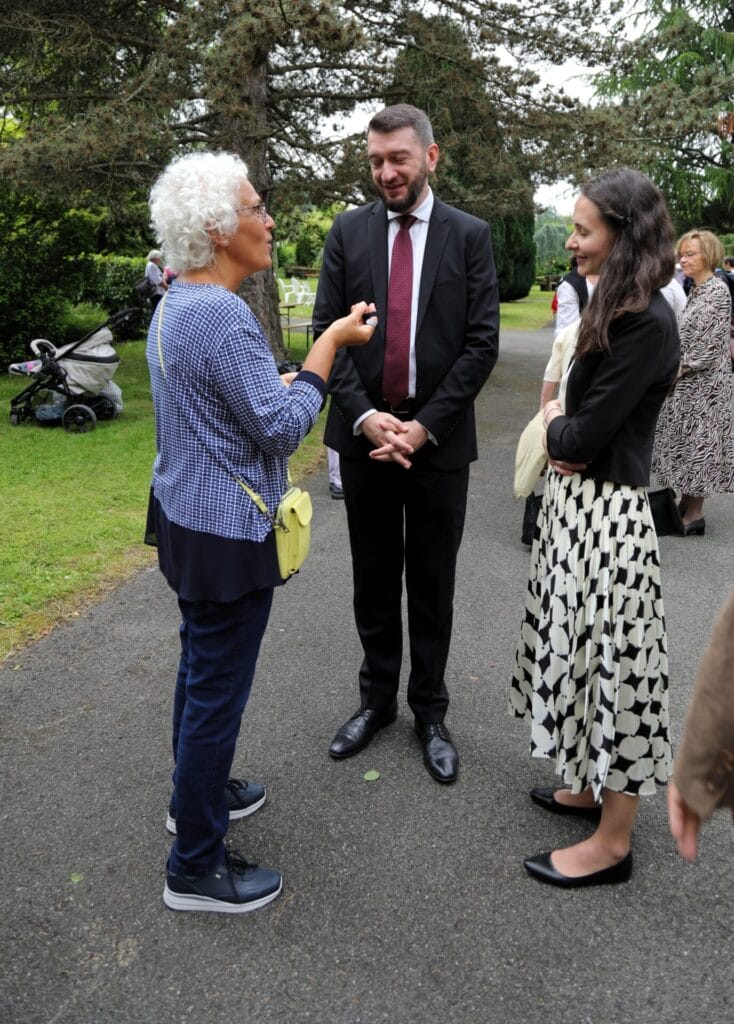
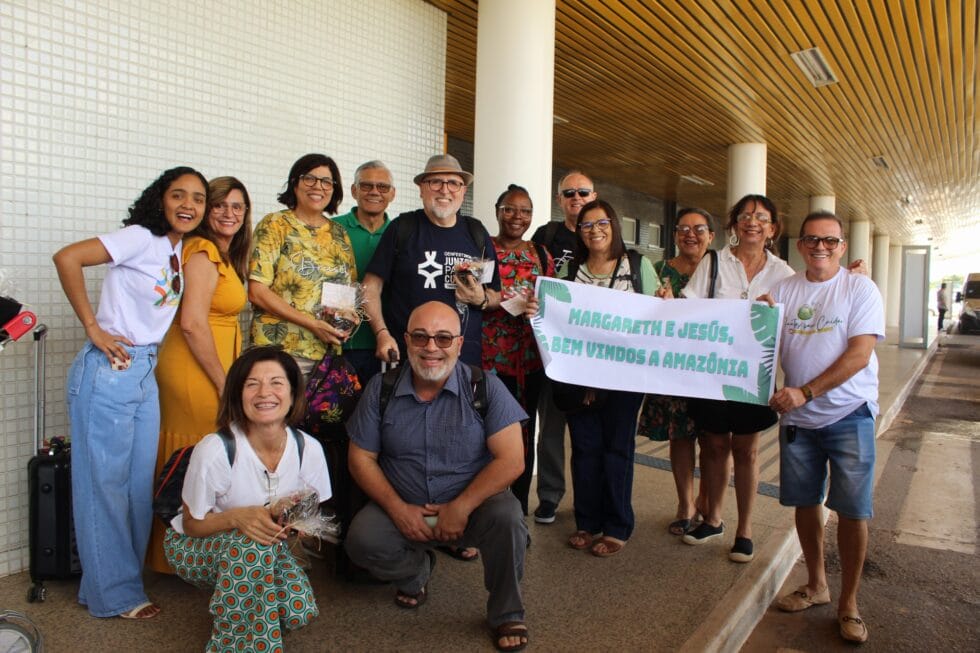
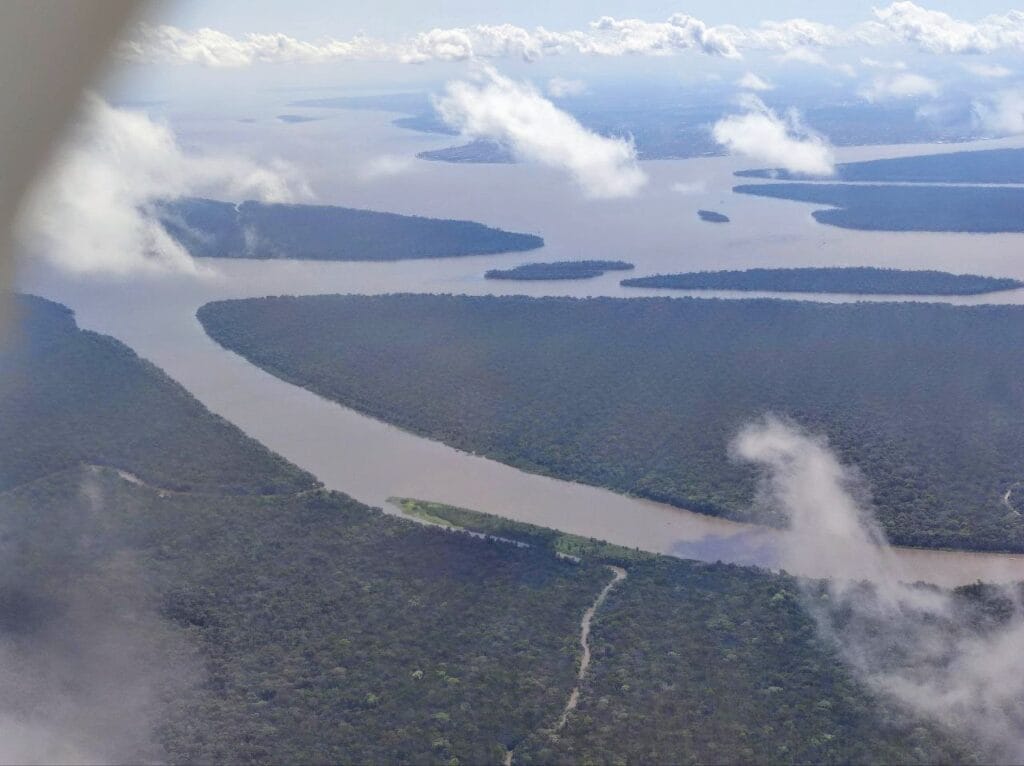

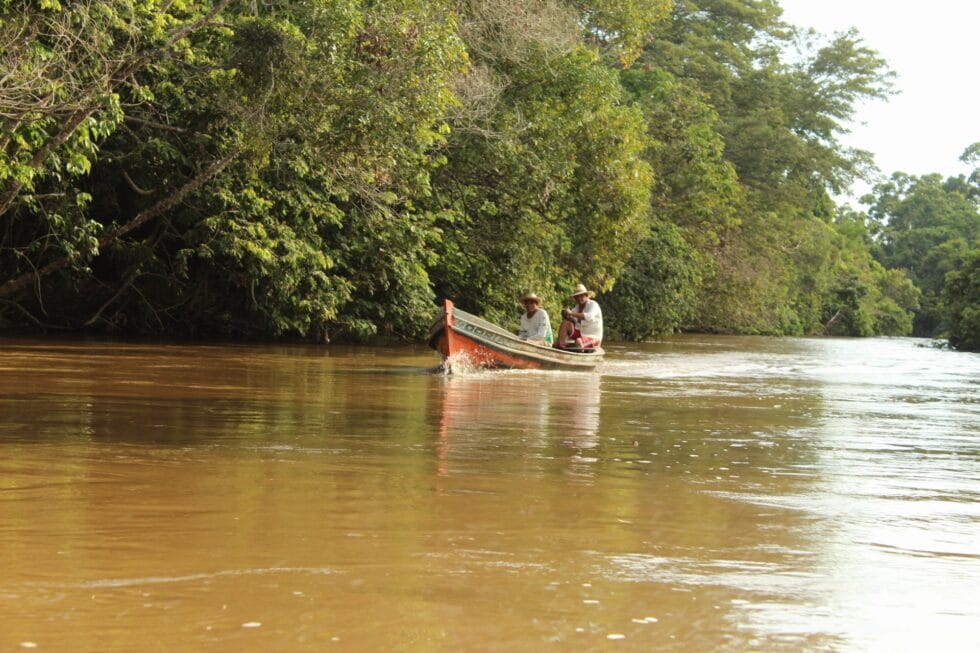
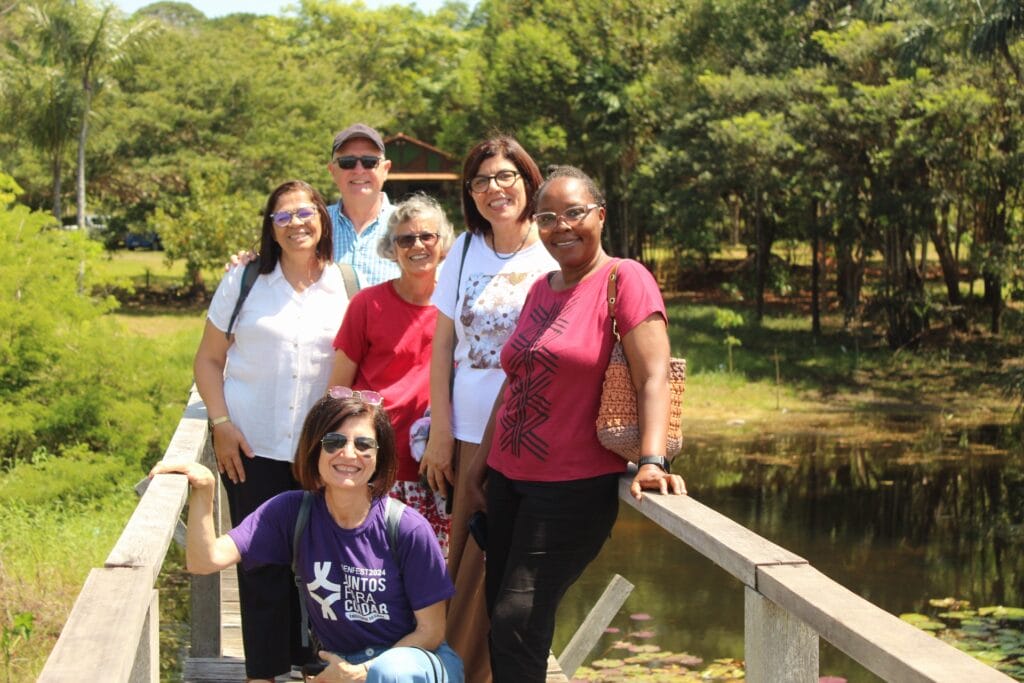
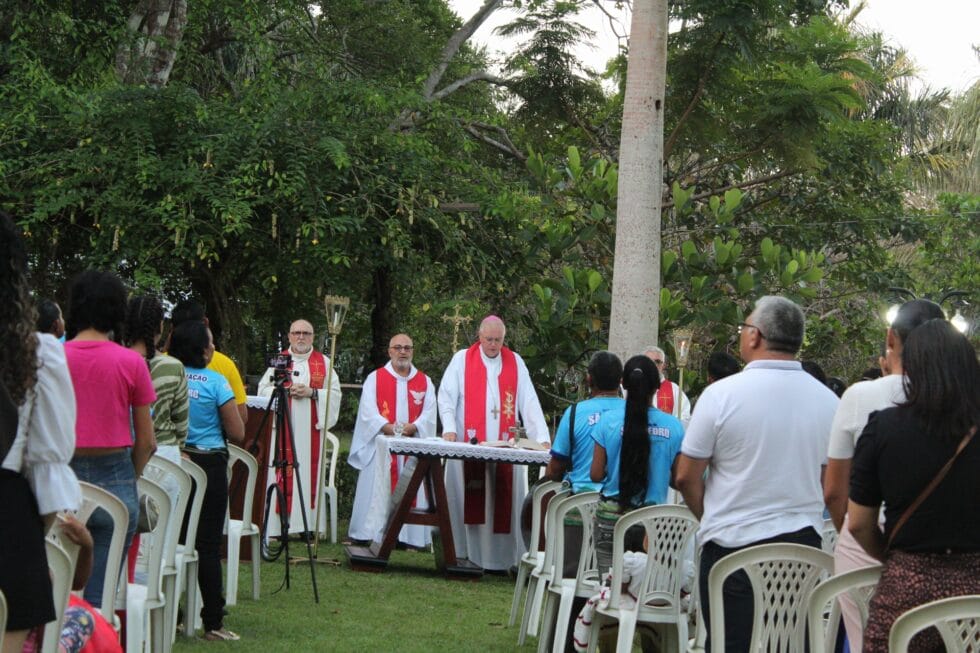
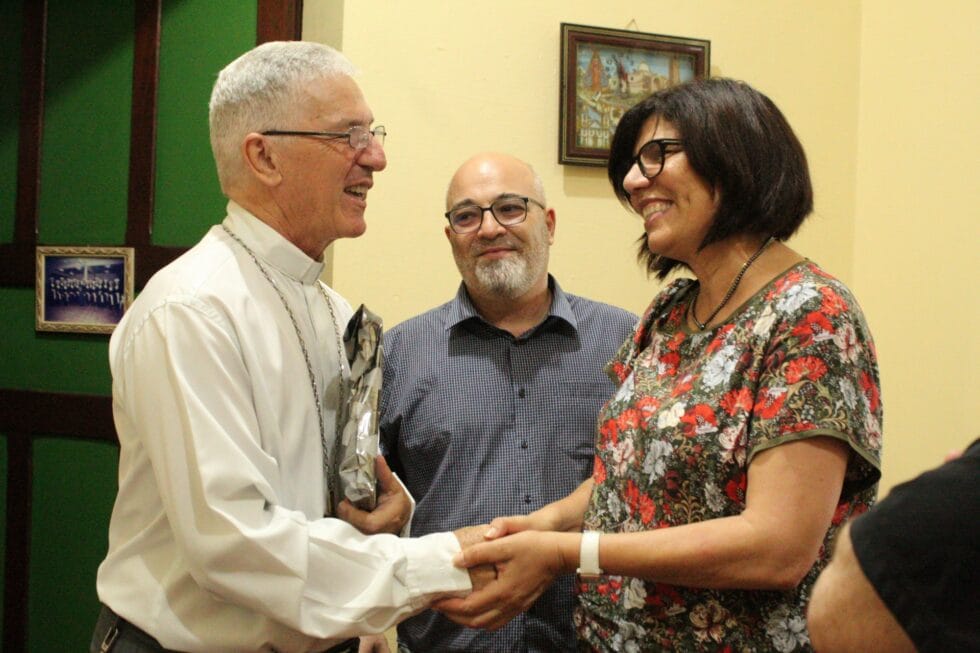
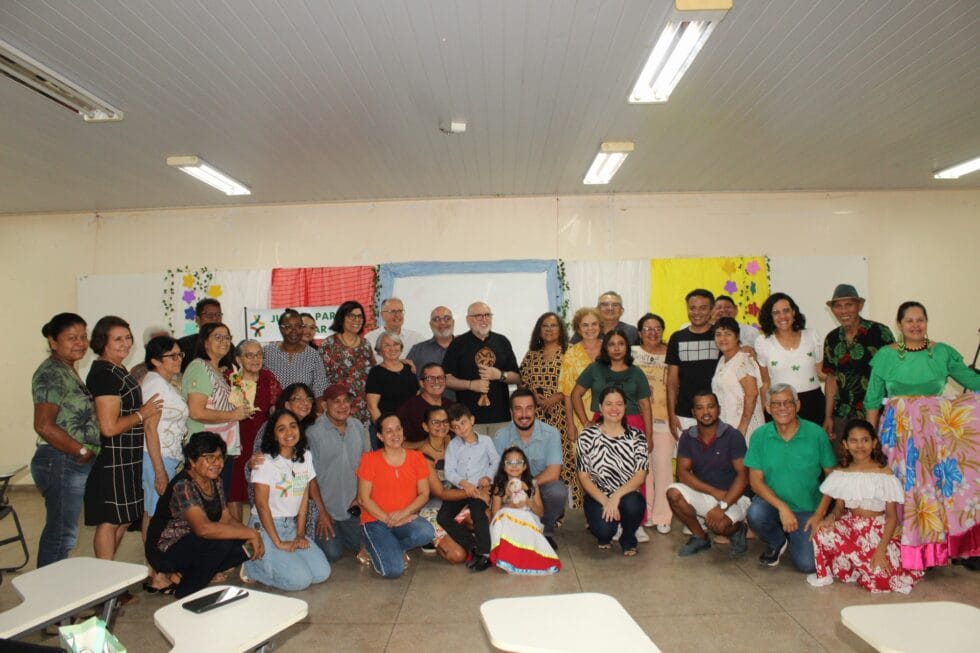
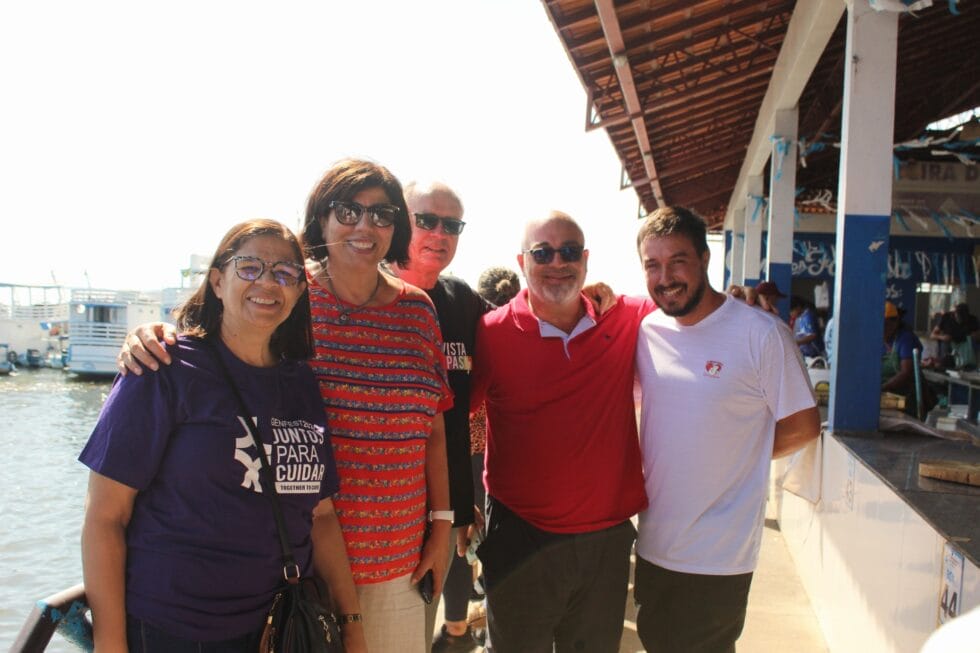
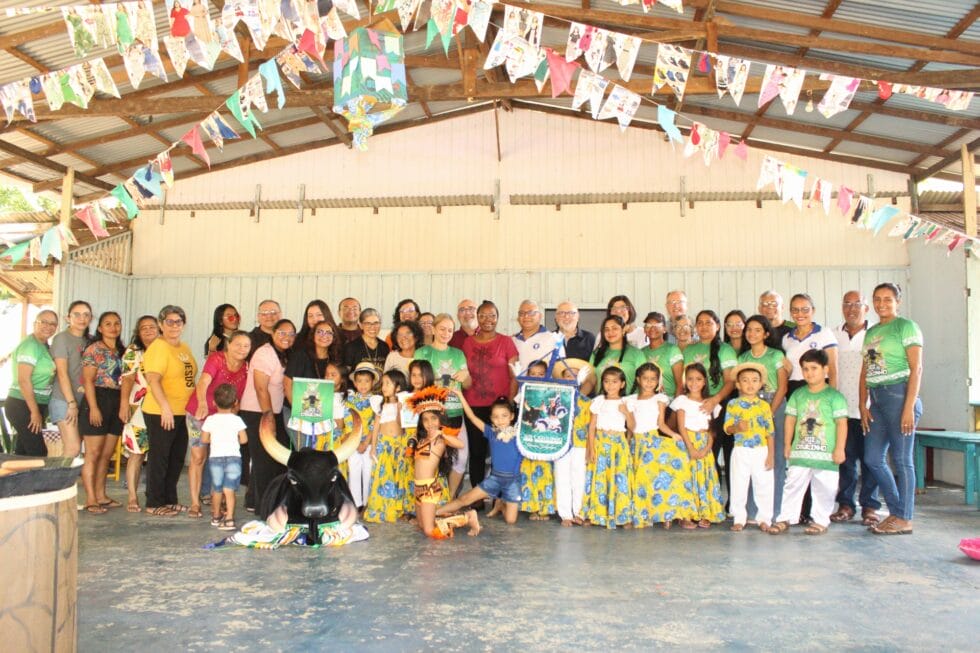
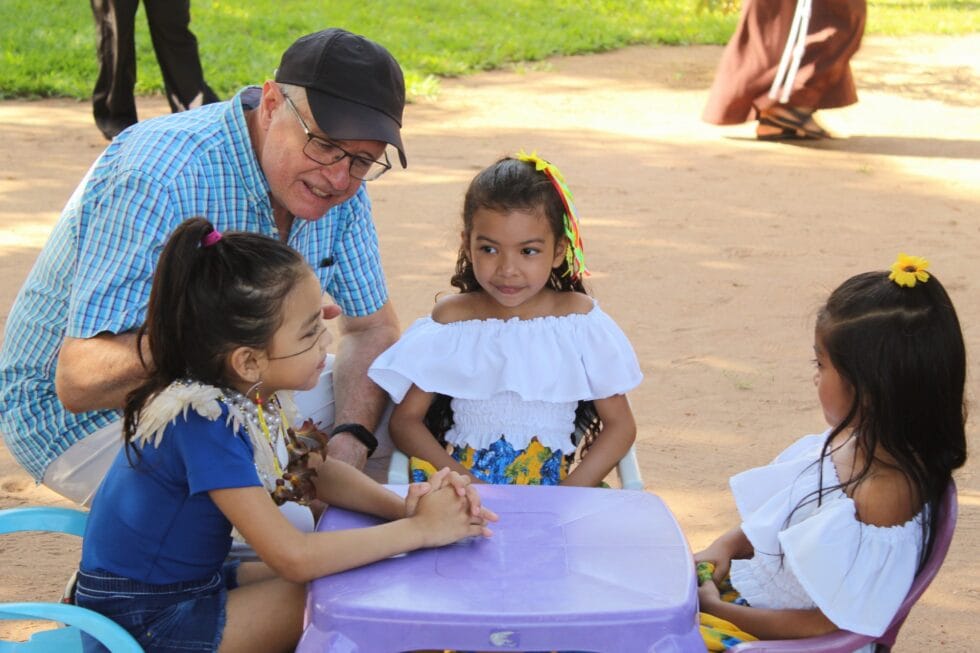
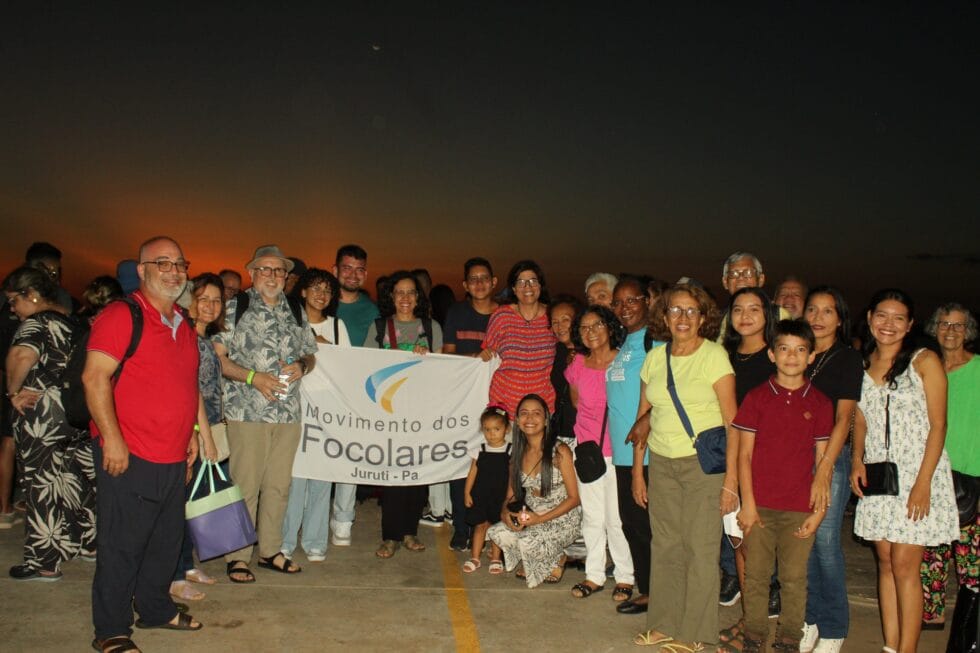
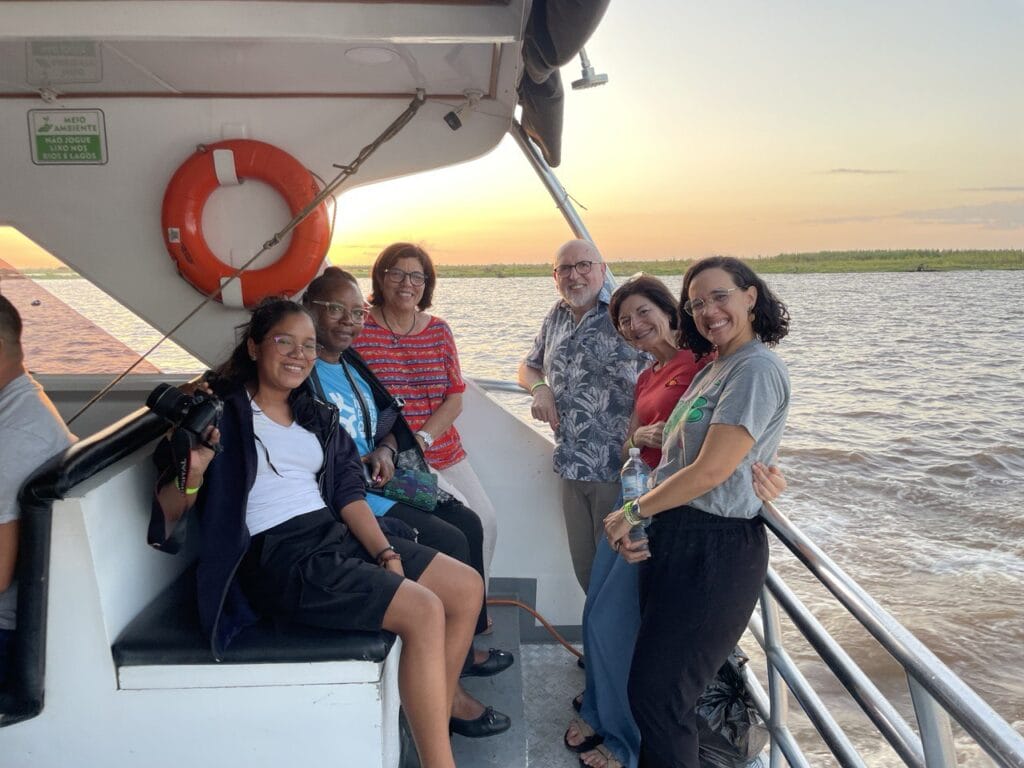
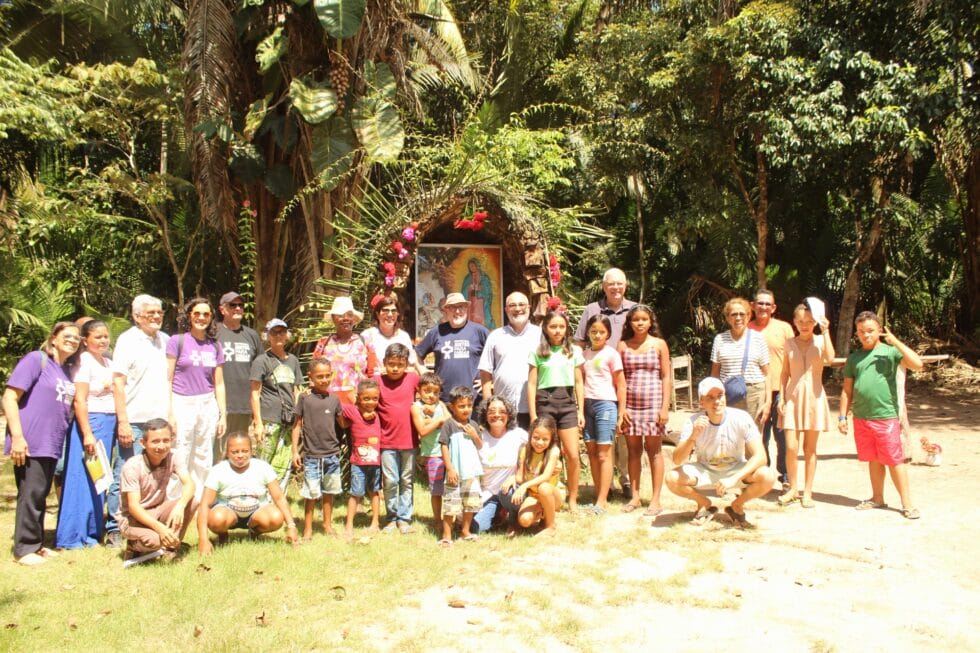
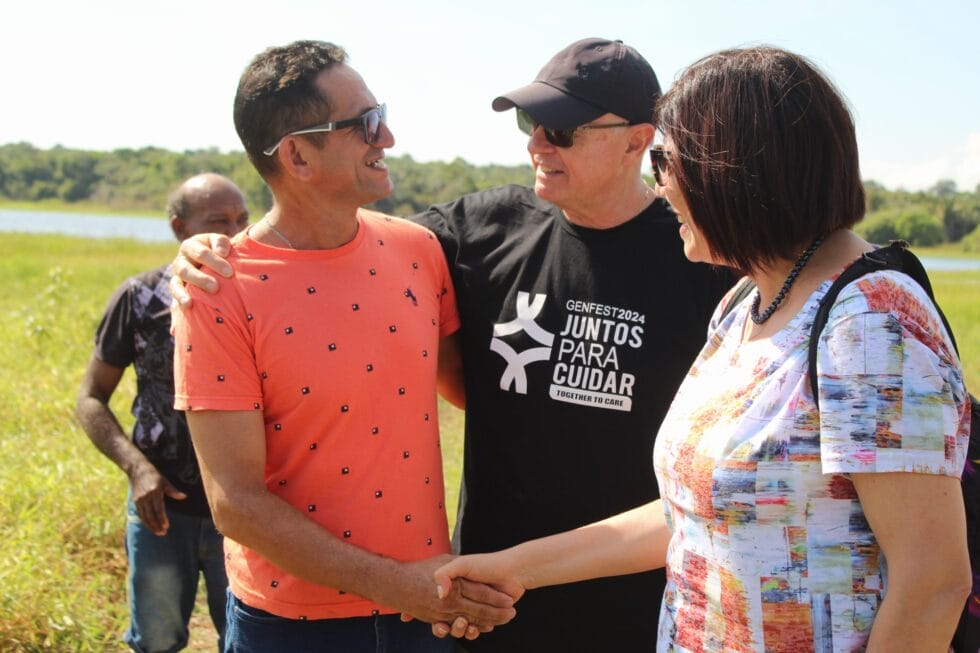
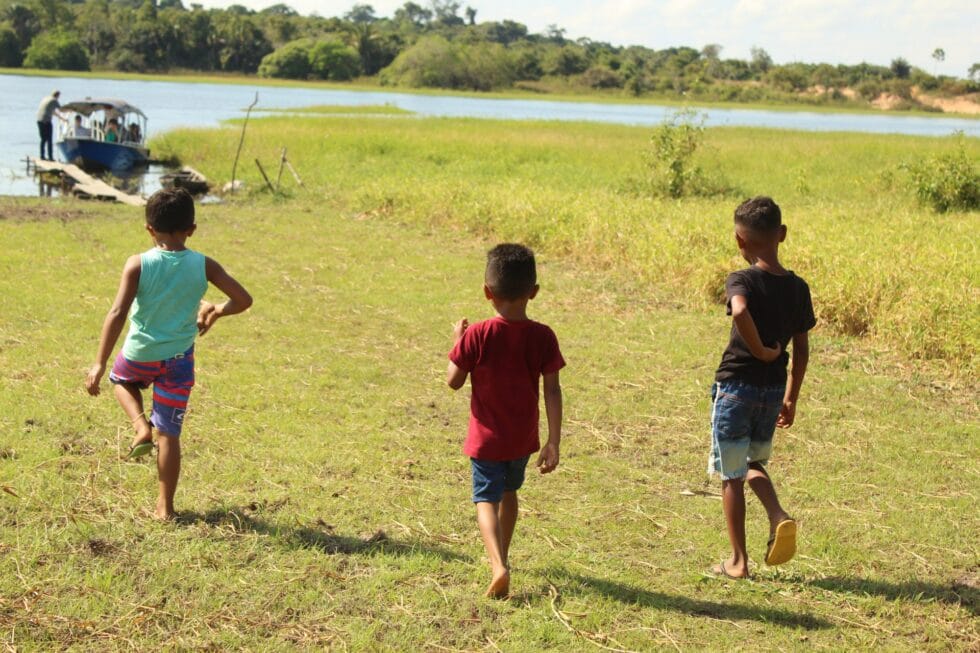

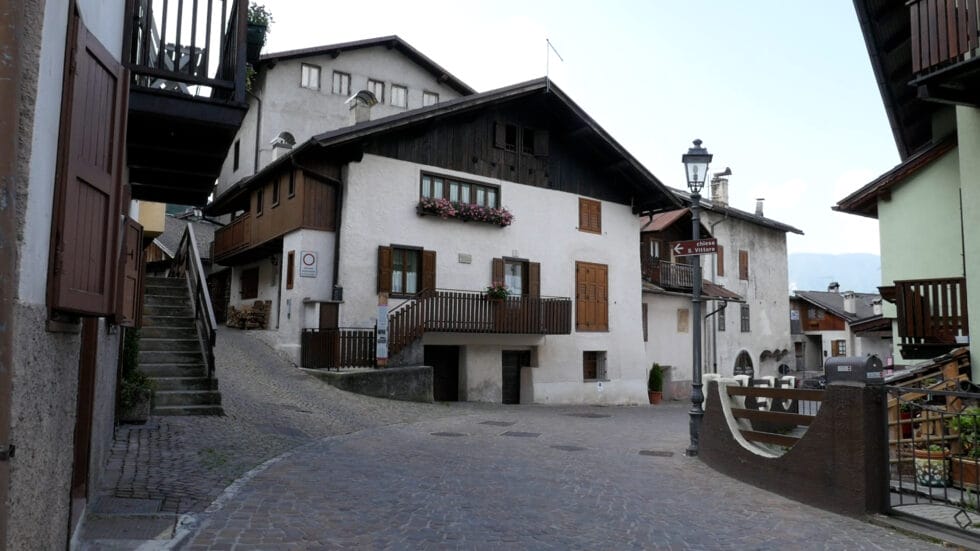
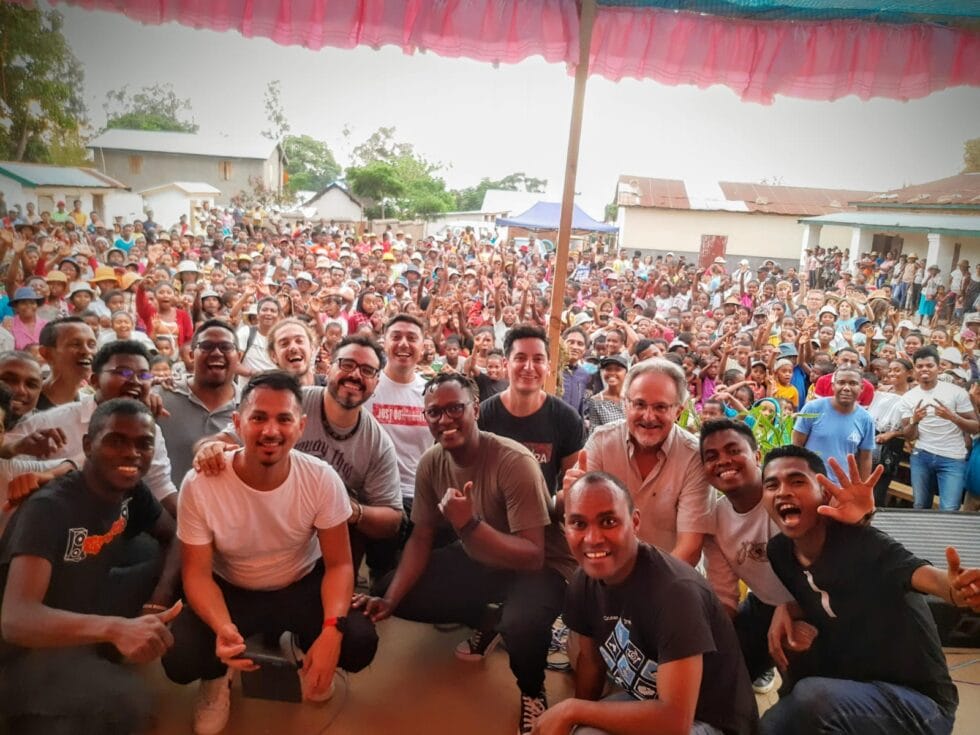
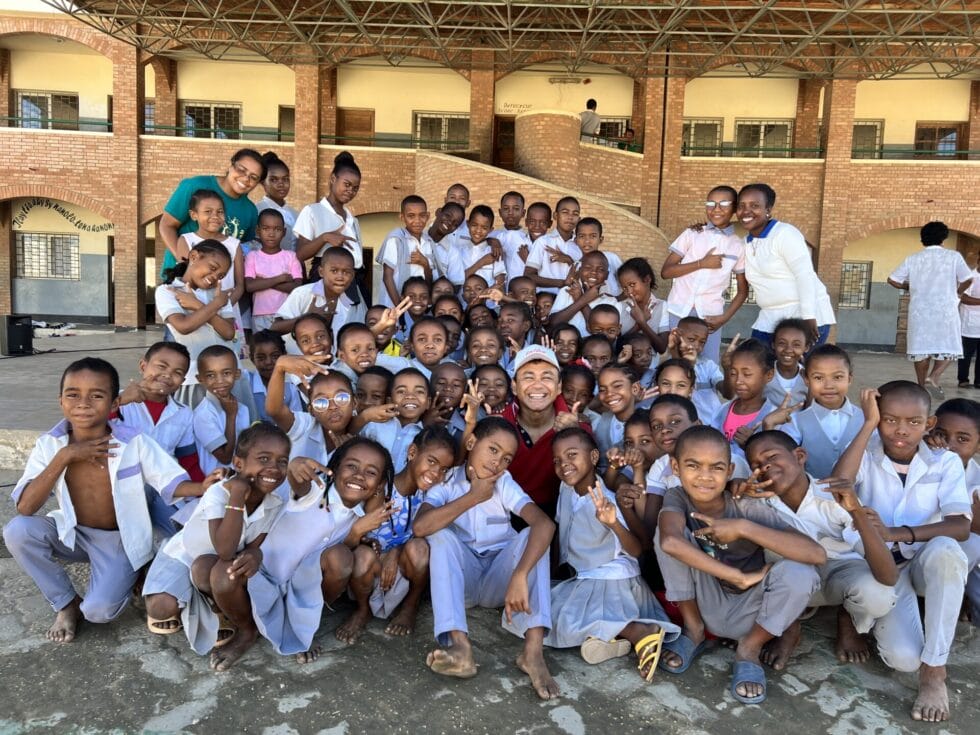
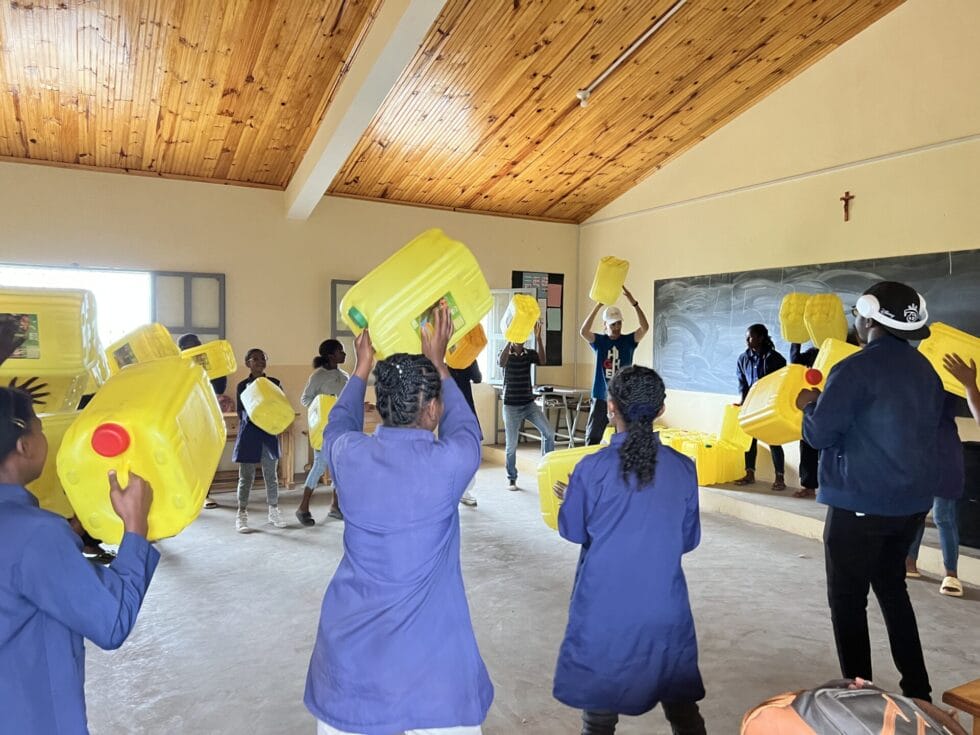
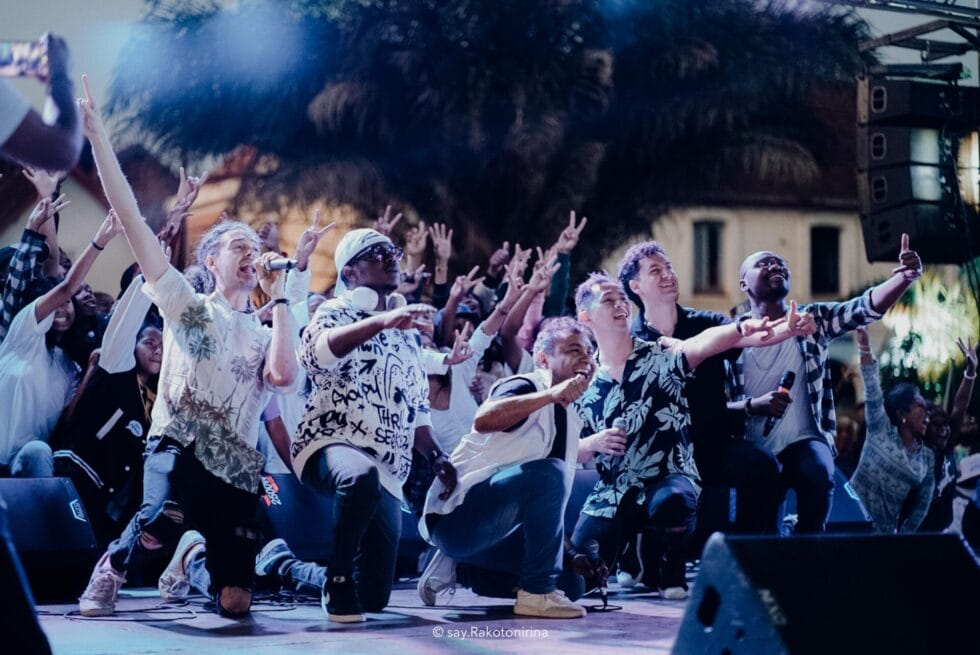
![The Lord is my shepherd, I lack nothing. (Ps 23[22] [22]:1).](https://www.focolare.org/wp-content/uploads/2024/07/flock-5077402_1920-980x653.jpg)



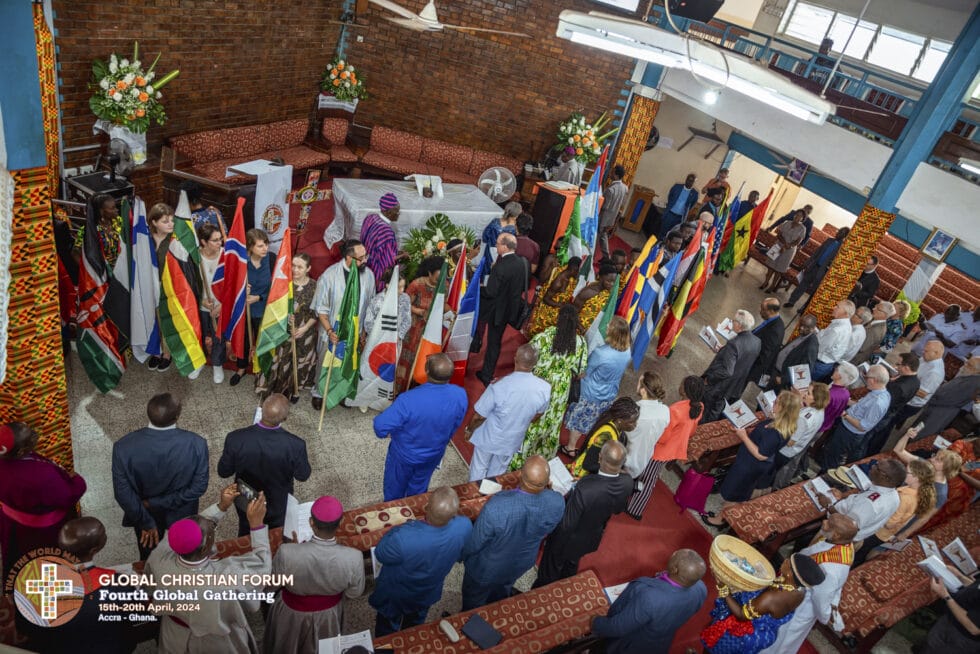
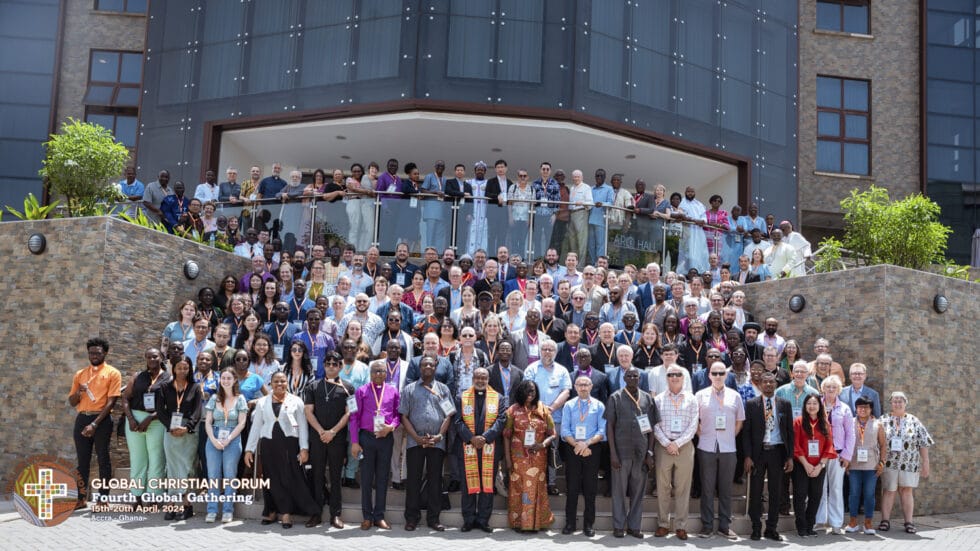
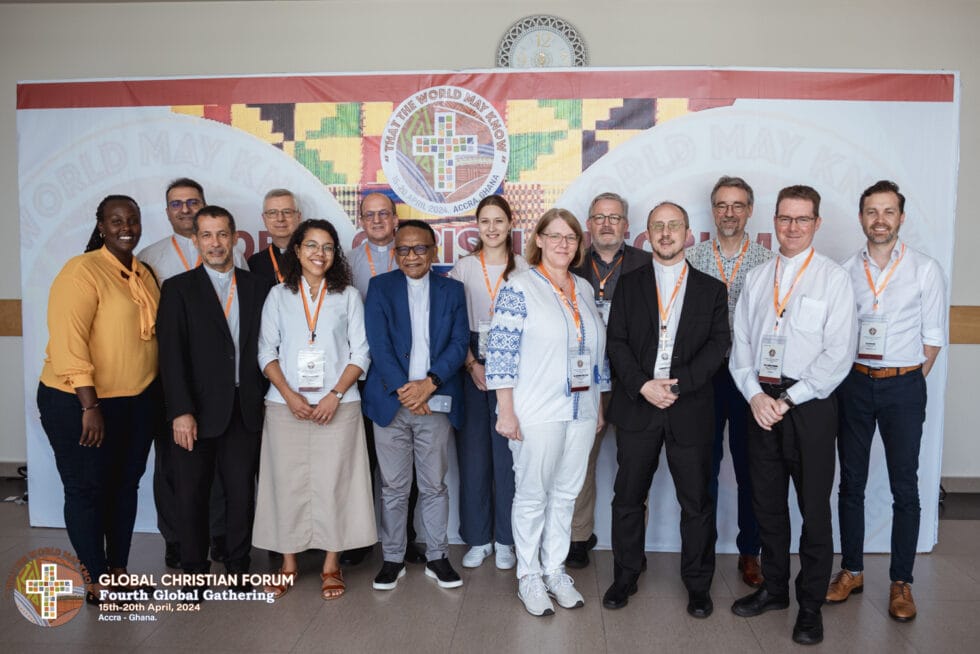

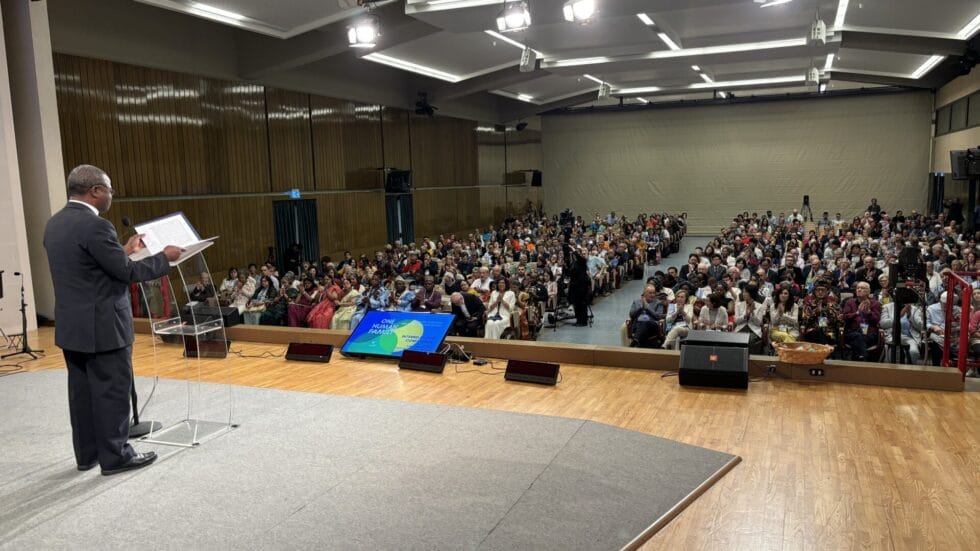
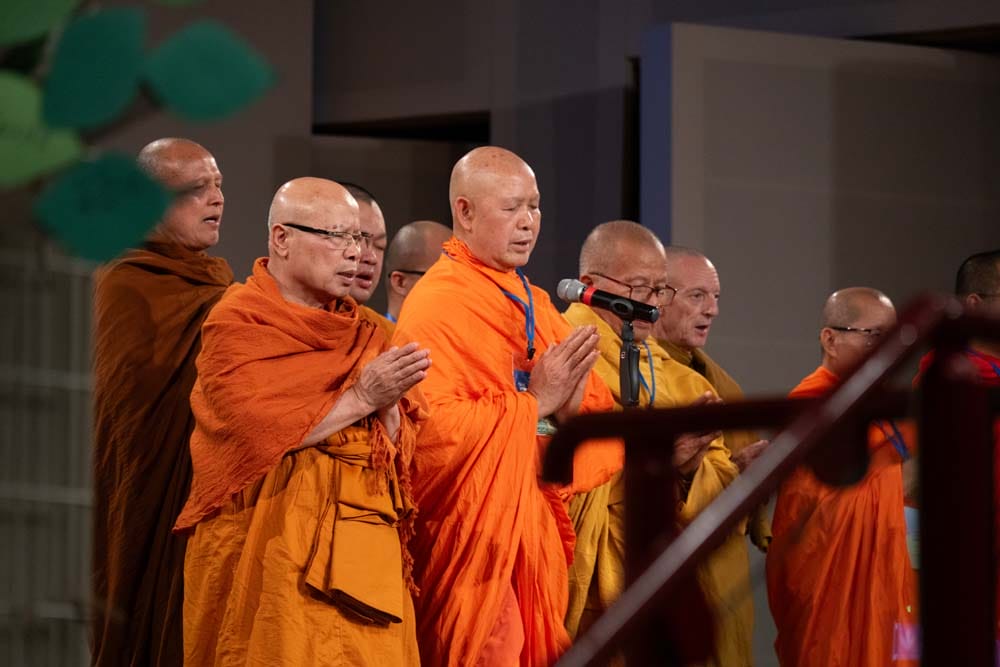
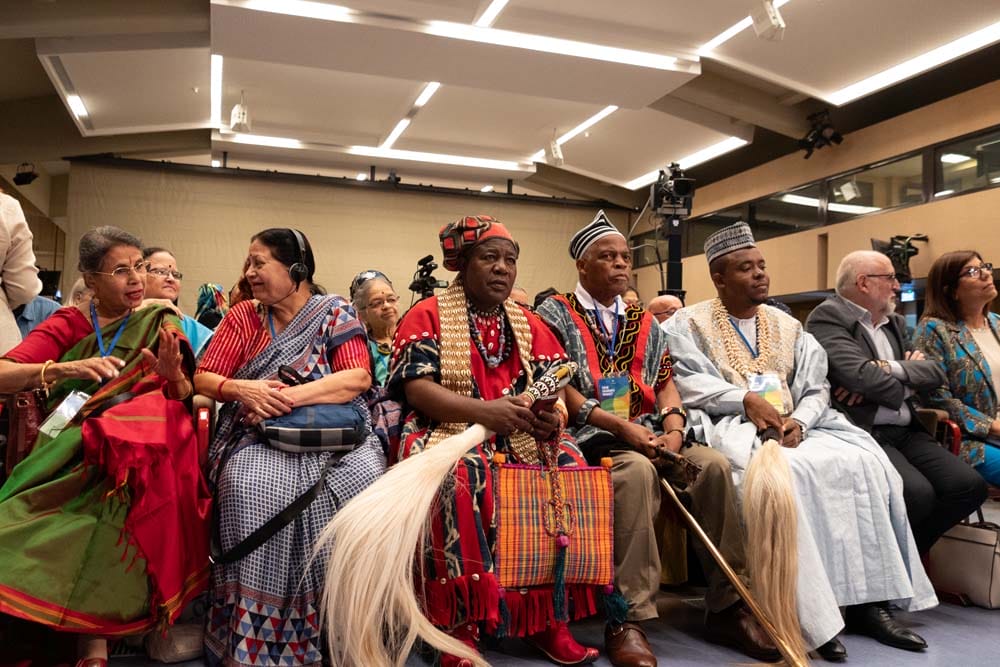
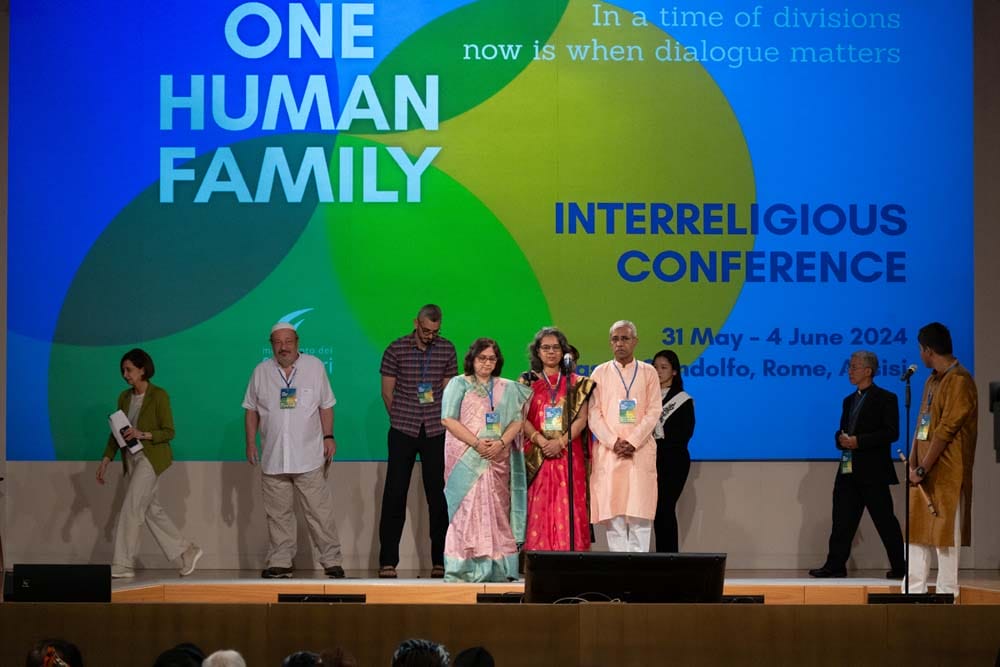
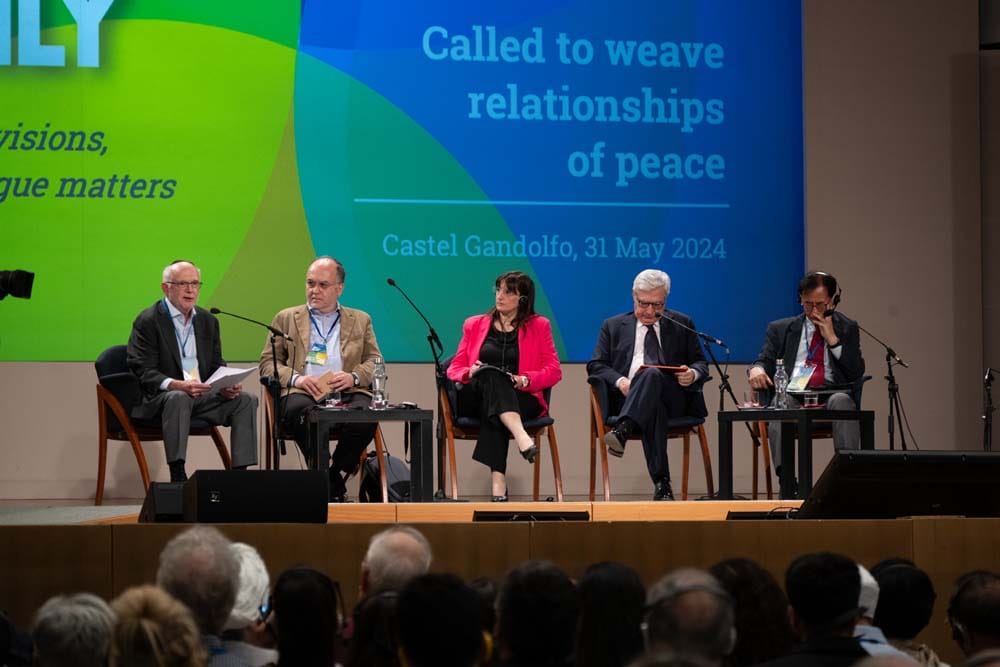
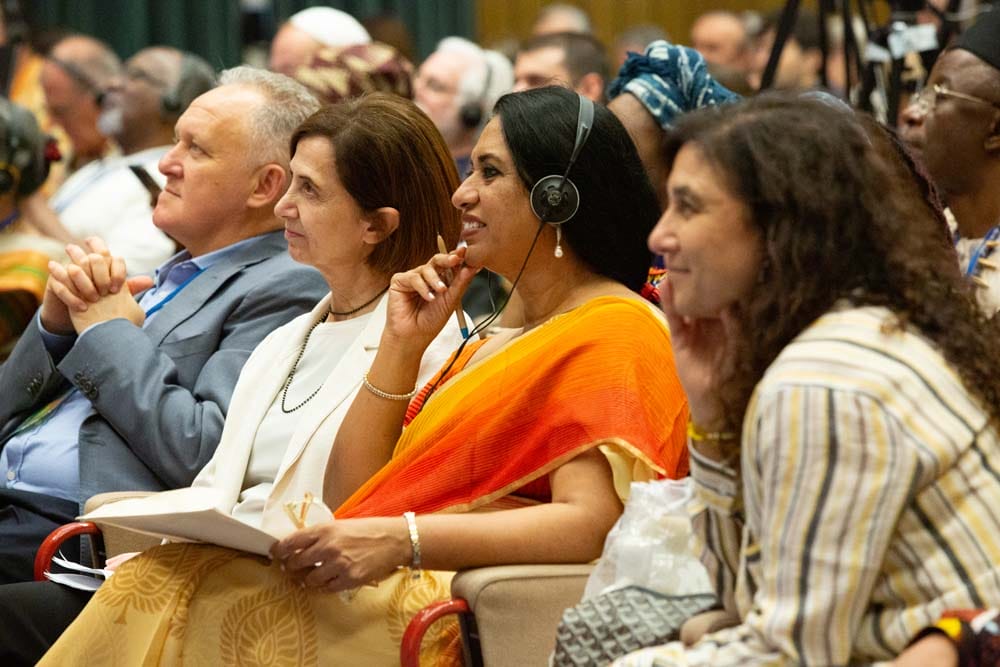
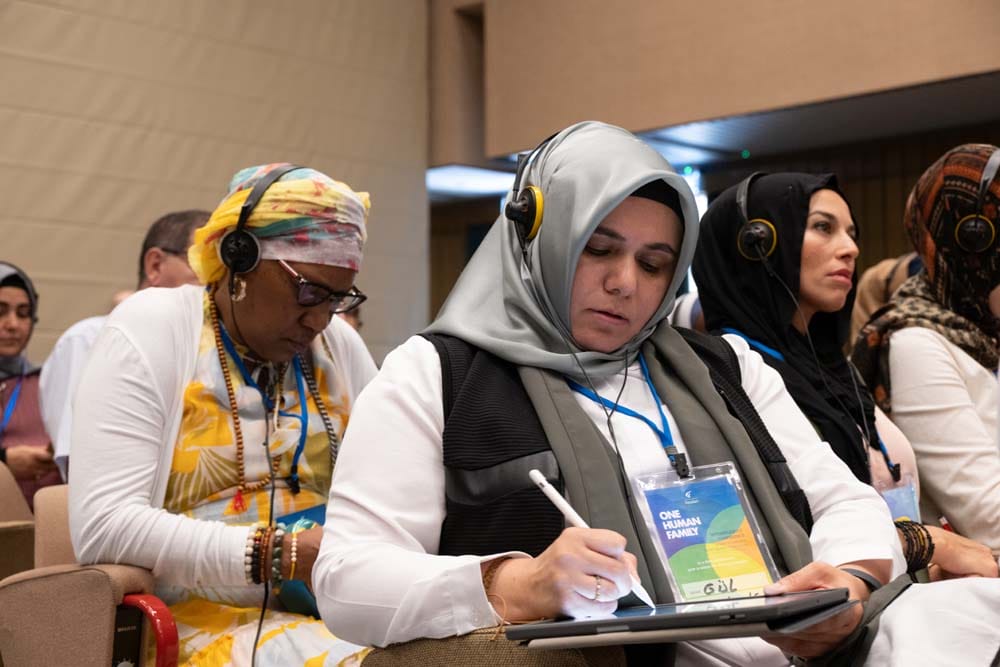
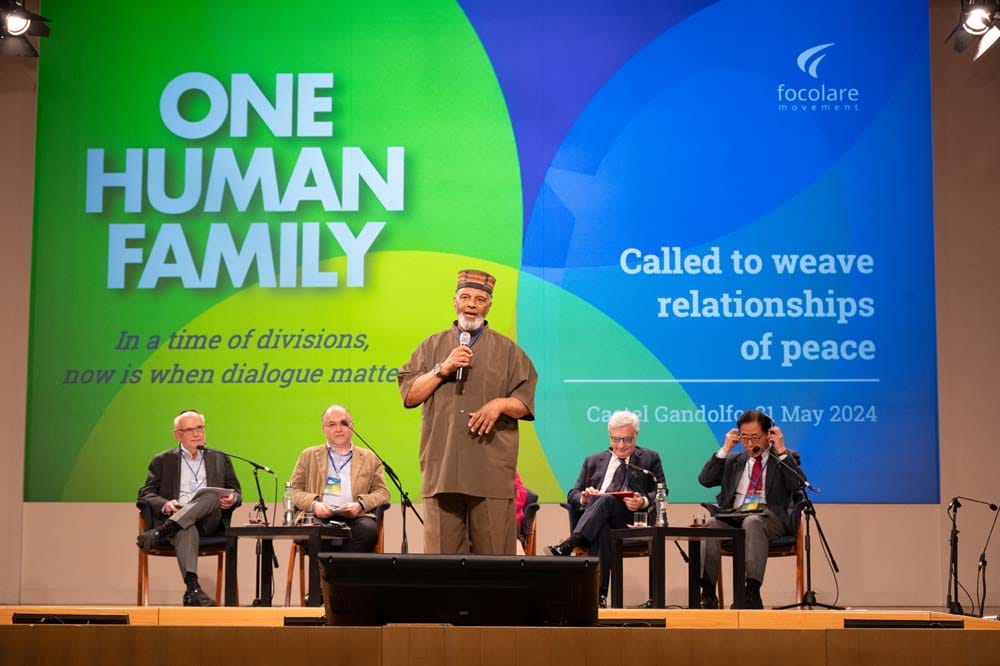
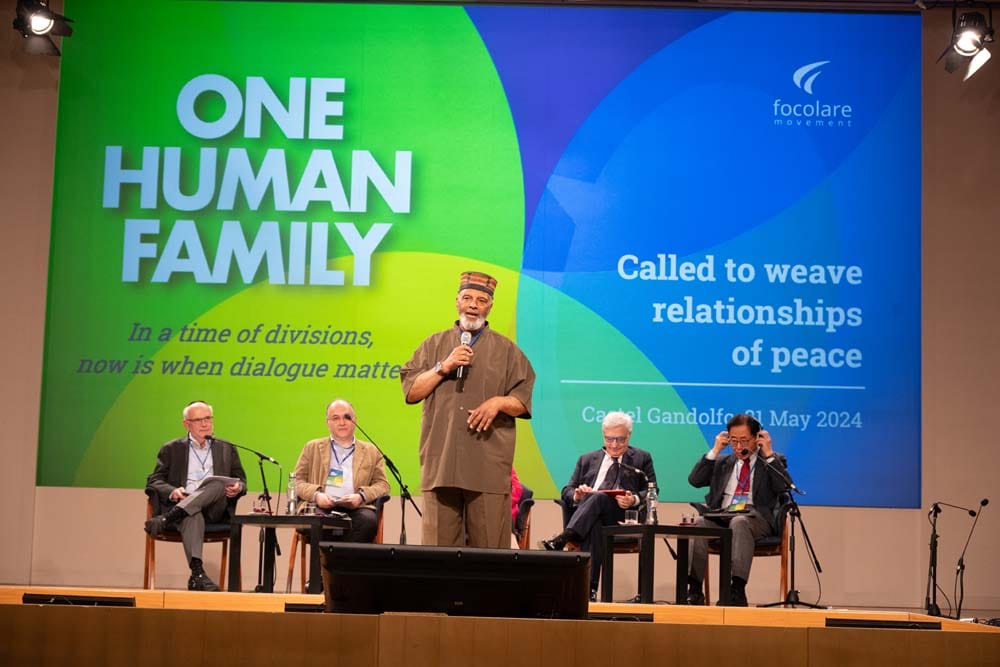
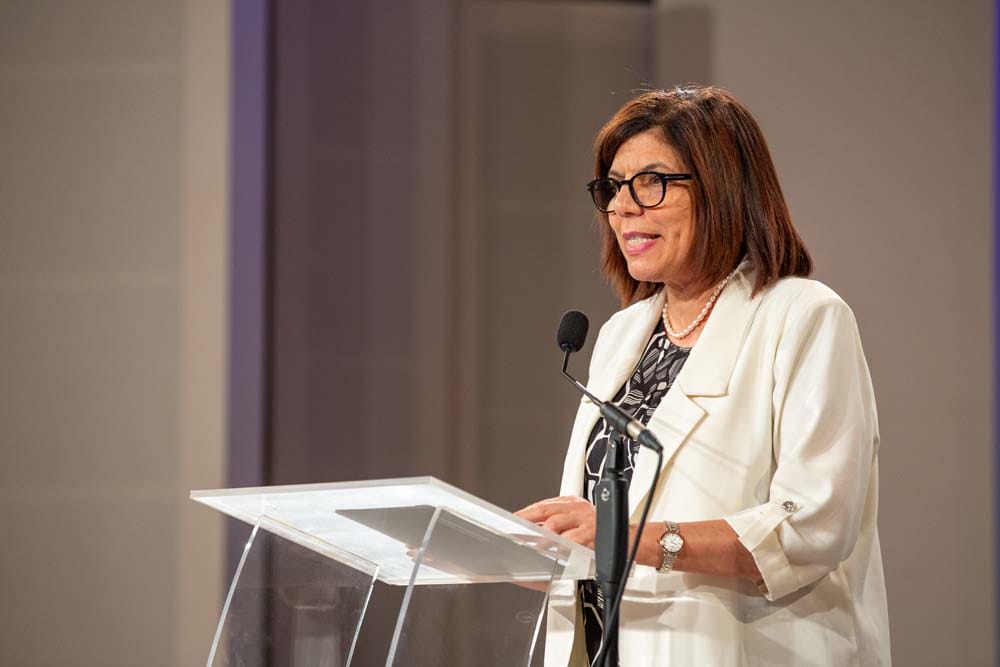
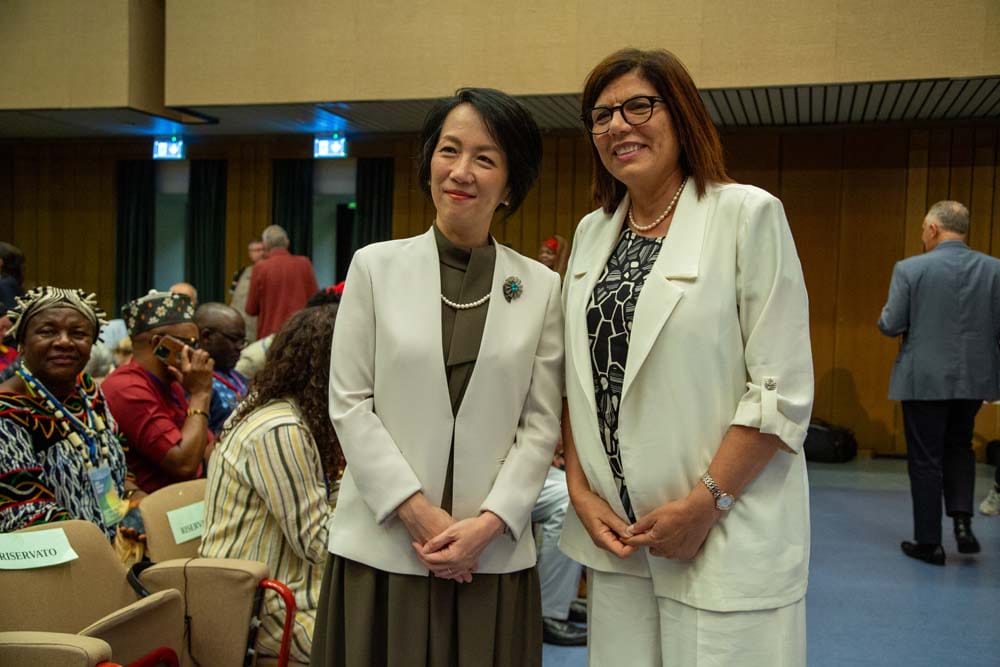
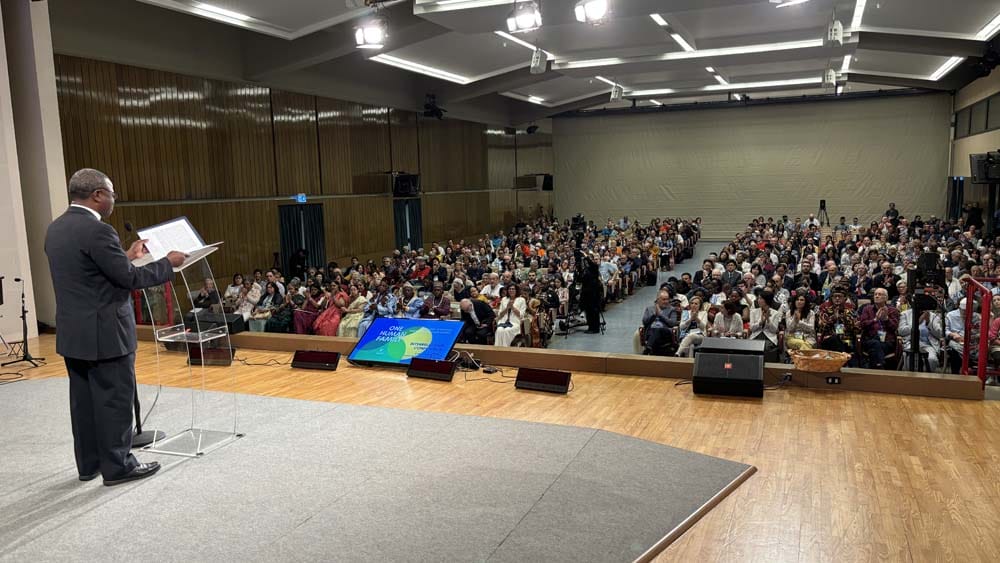
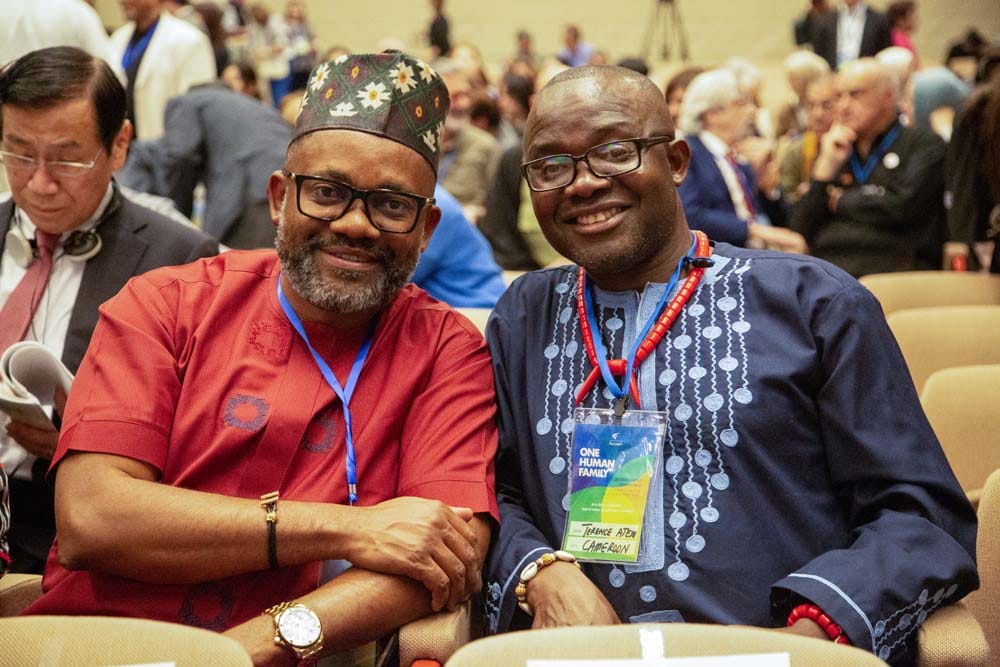
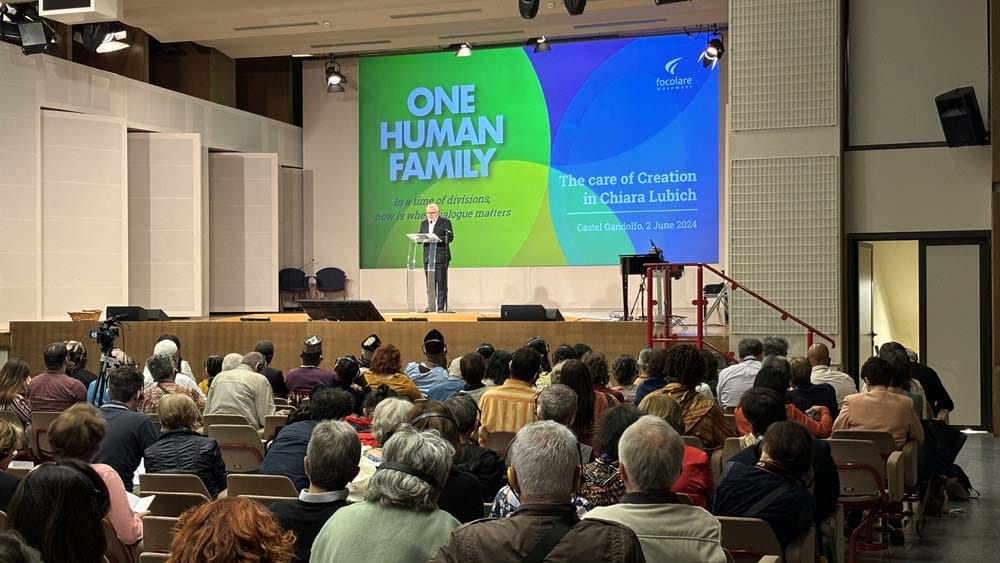
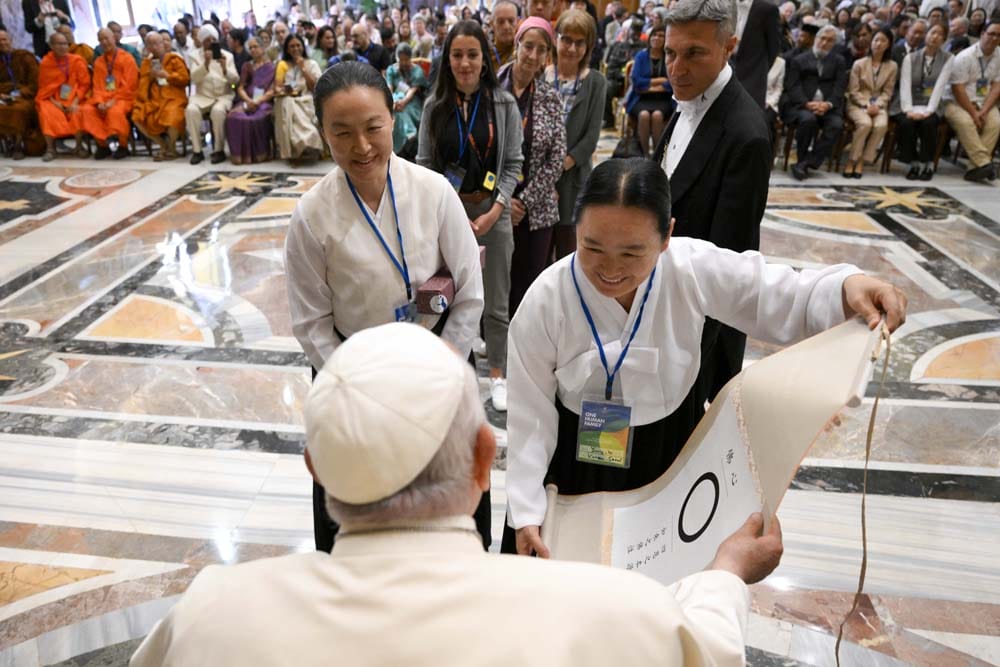
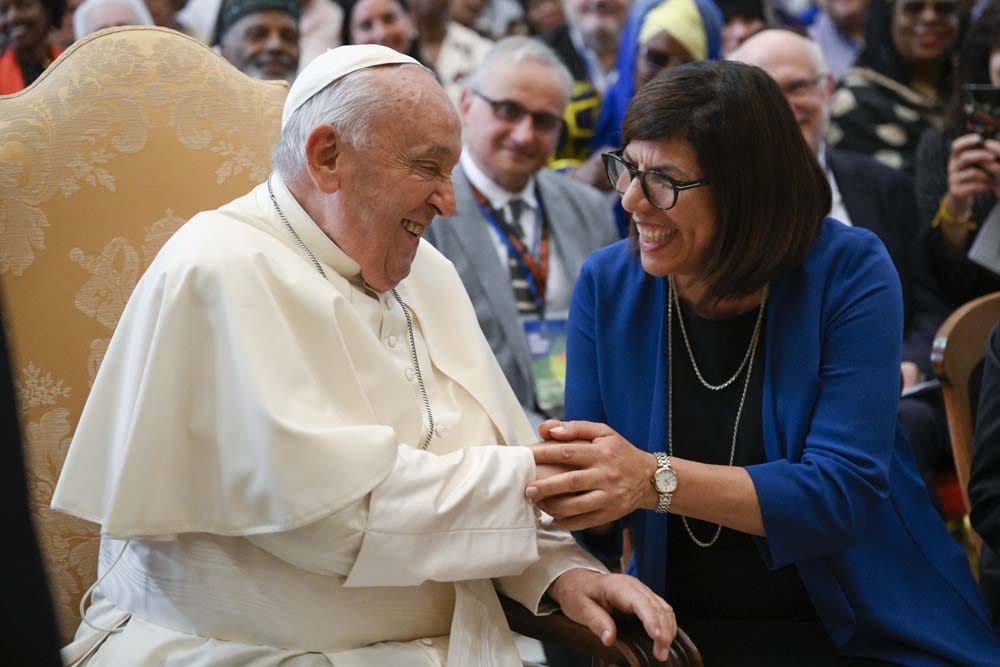
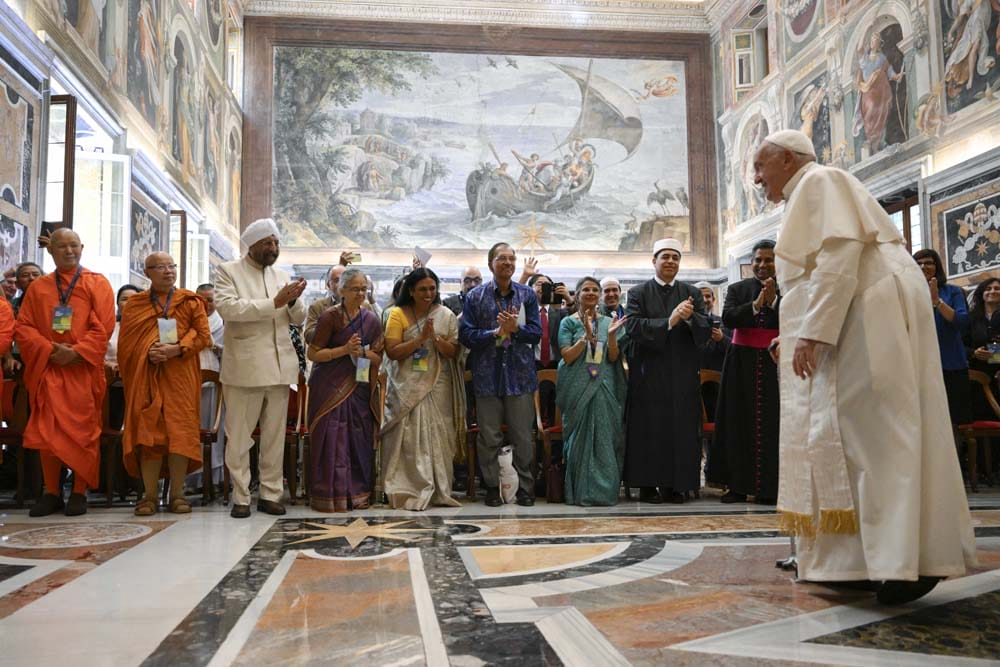
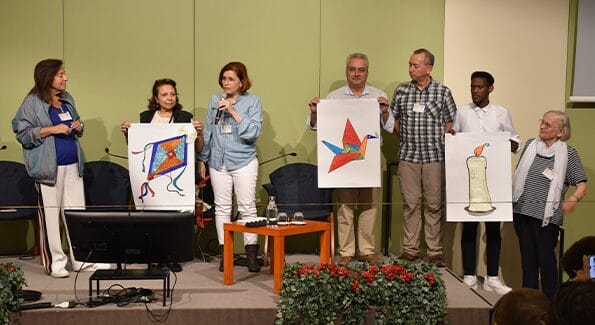
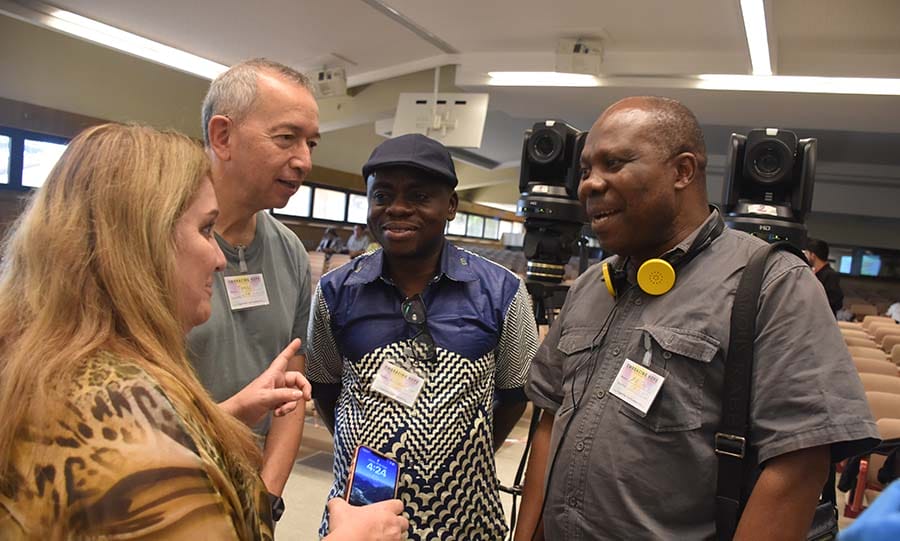
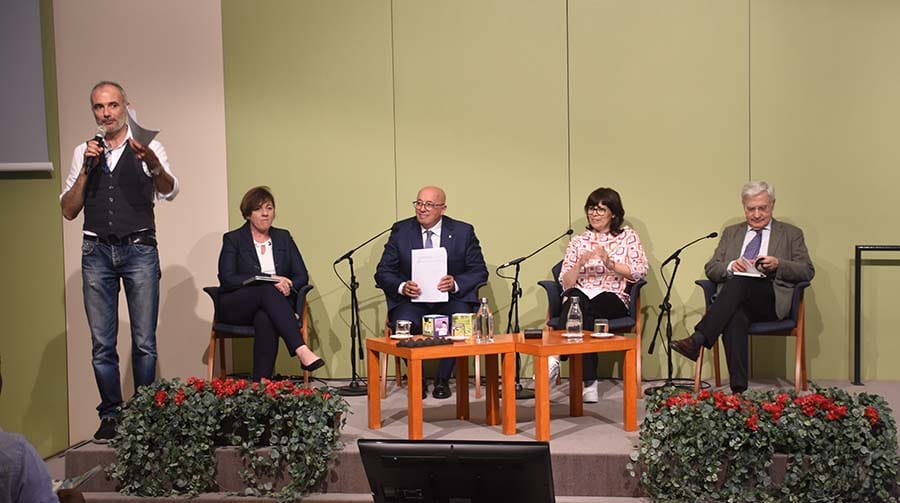
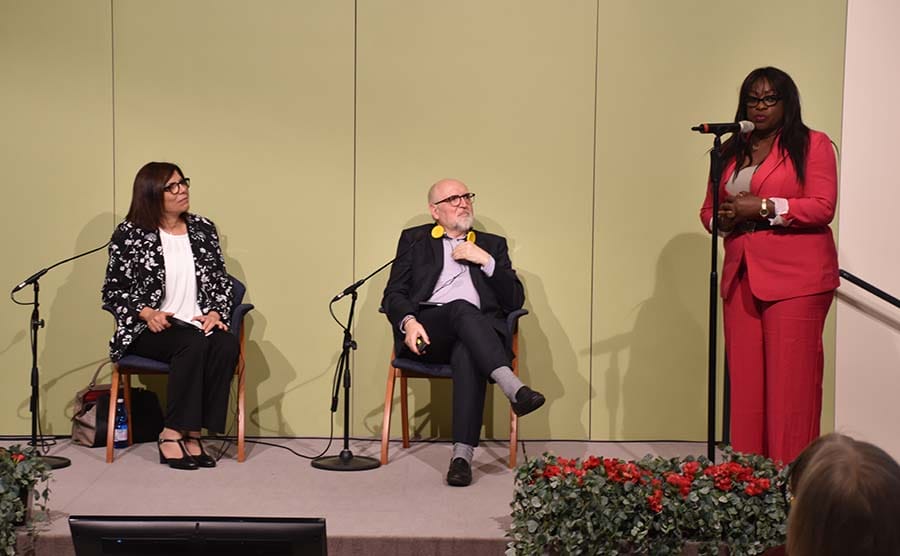
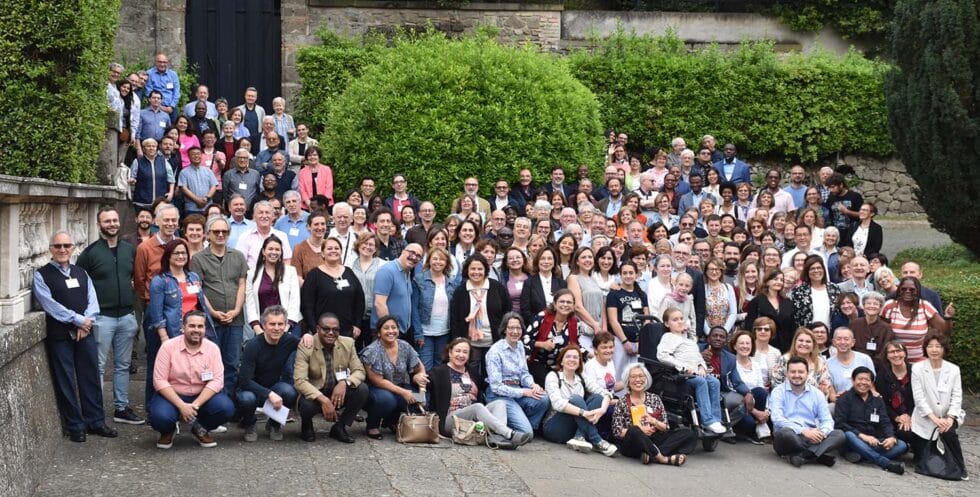
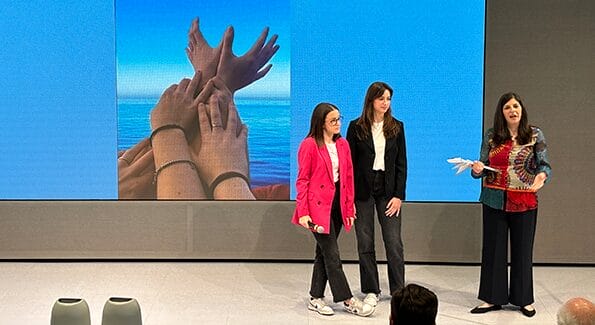
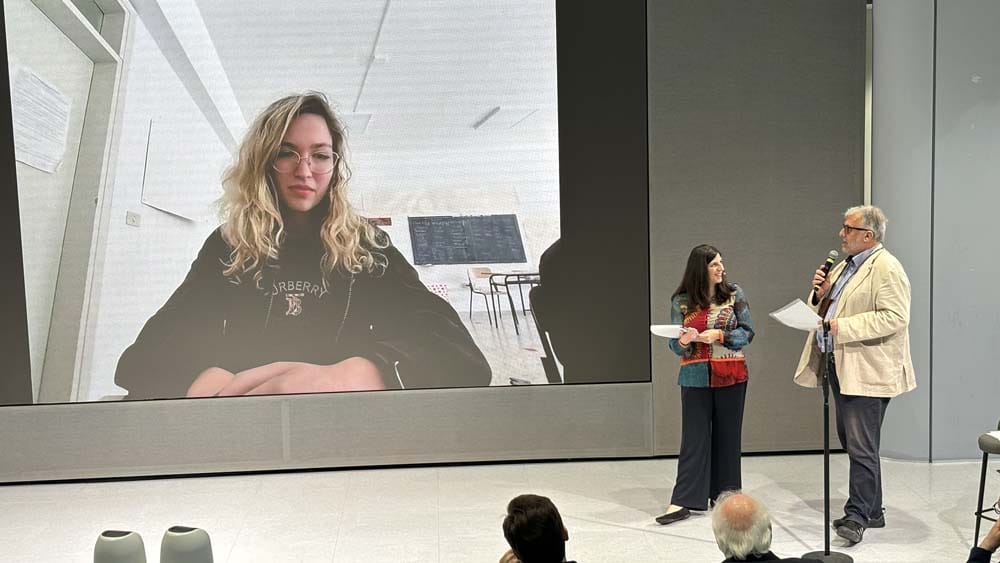
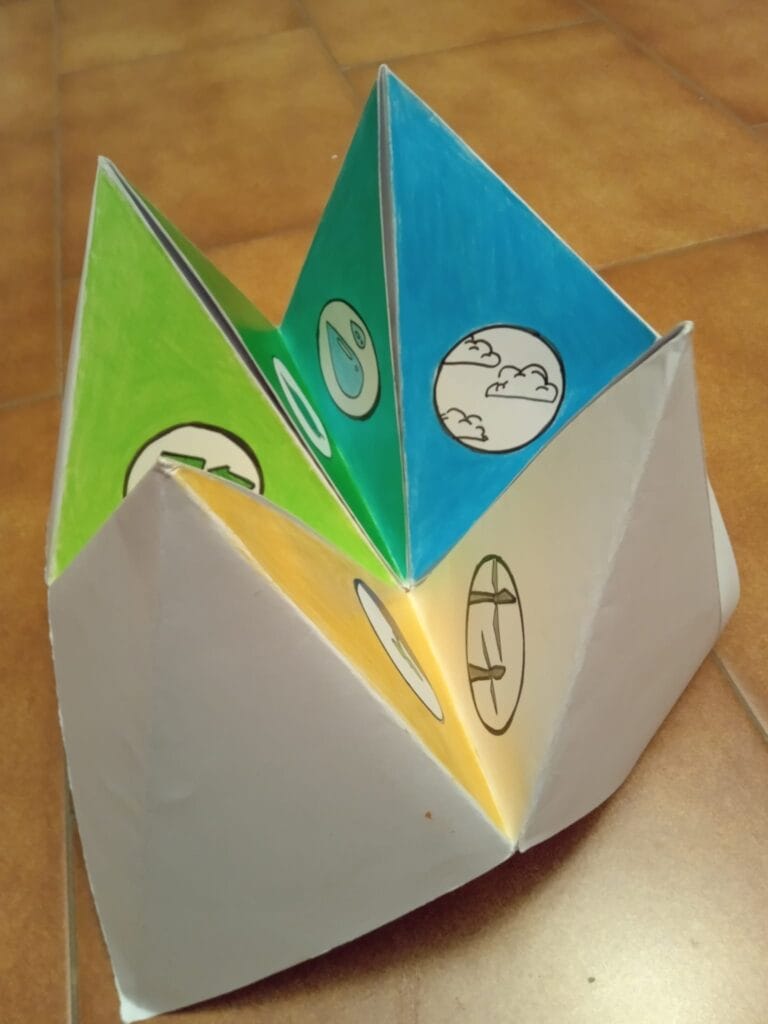
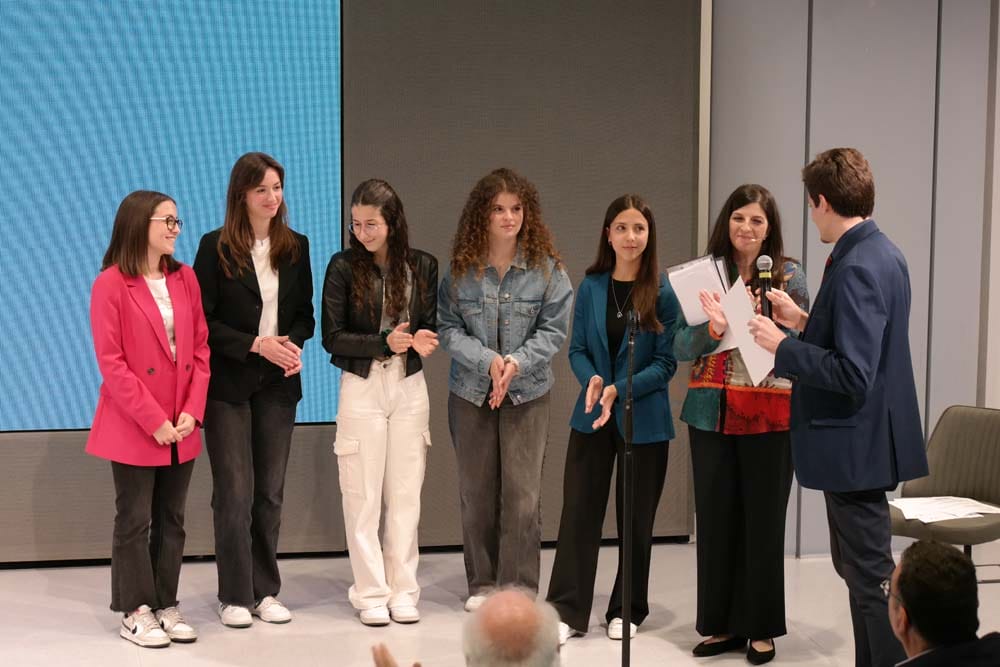
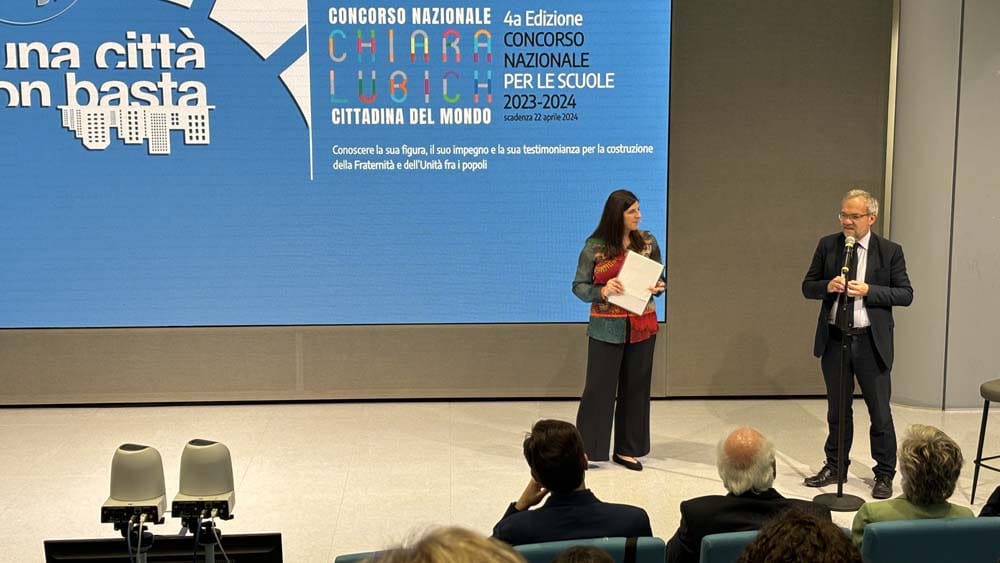
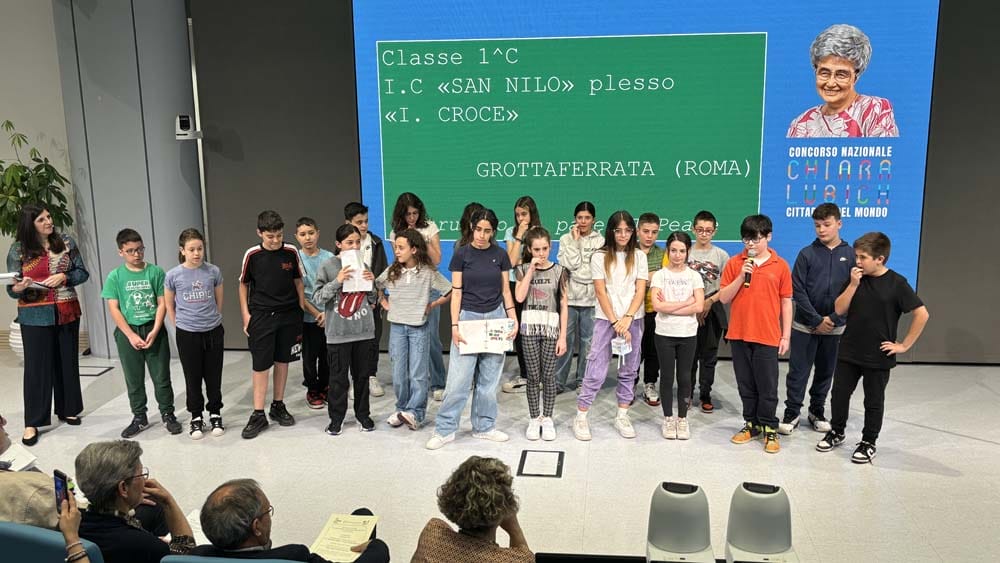
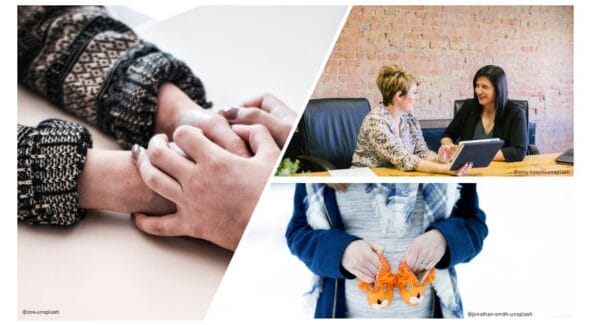
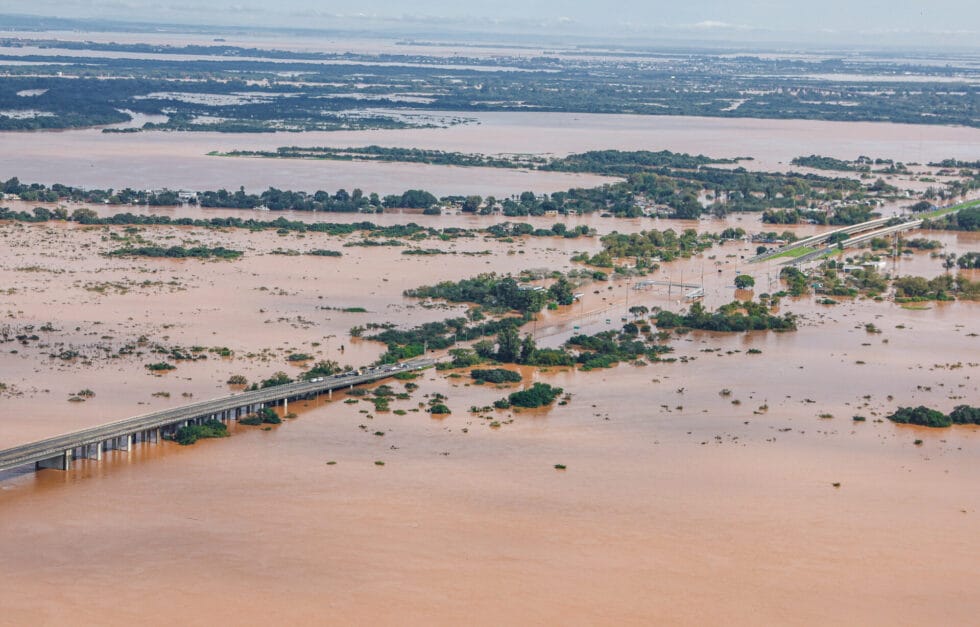
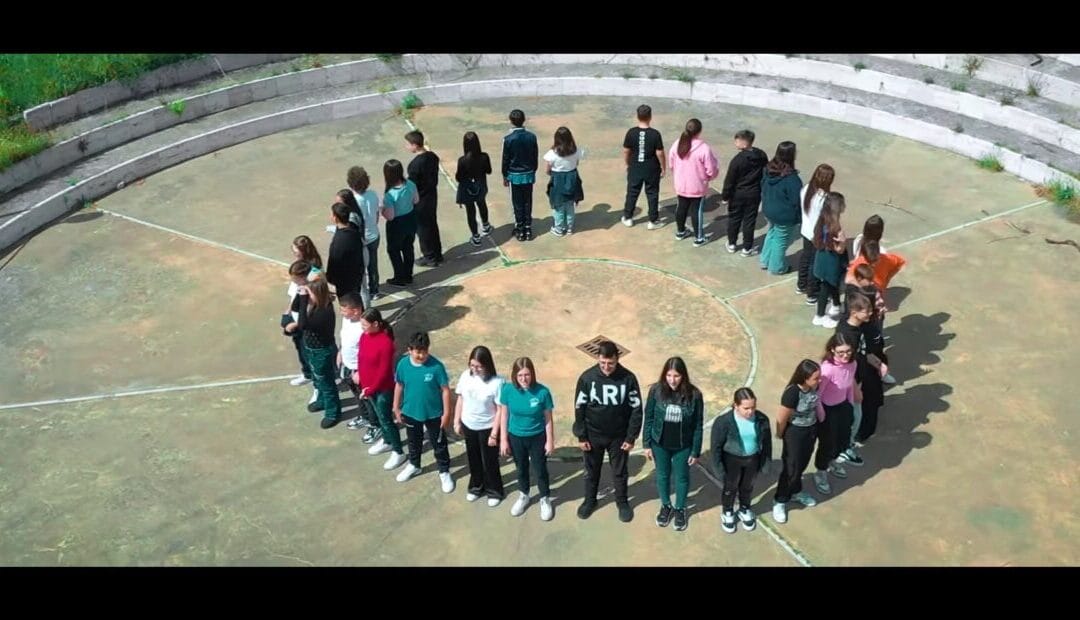
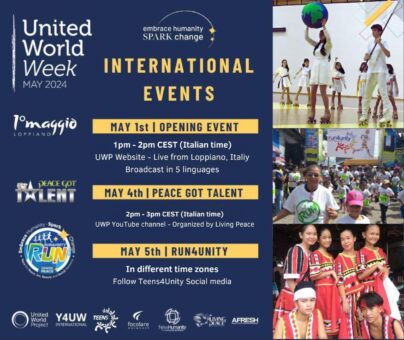 The protagonists are the young people from all over the world: there is Giacomo, Italian, who left for Kenya thanks to the MilONGa international volunteering project, where he worked in orphanages in Nairobi. Or Daphne, from India, who recounts the adventure of Reach Out, the project set up in Goregaon, a suburb of East Mumbai, by some local young people to support about 70 families in poverty. Icaro, Sam and David, on the other hand, live in Brazil, in Fortaleza, where they are volunteering in the “Uirapuru Spiritual Condominium” (CEU), a campus where 21 associations work to care for needy children, people with AIDS and drug addicts. 1st of May, the opening of the UWW These and other stories will be presented during the opening of the UWW from Loppiano with an international event that will be streamed live and translated into 5 languages (Italian, Spanish, Portuguese, English and French). It can be followed on the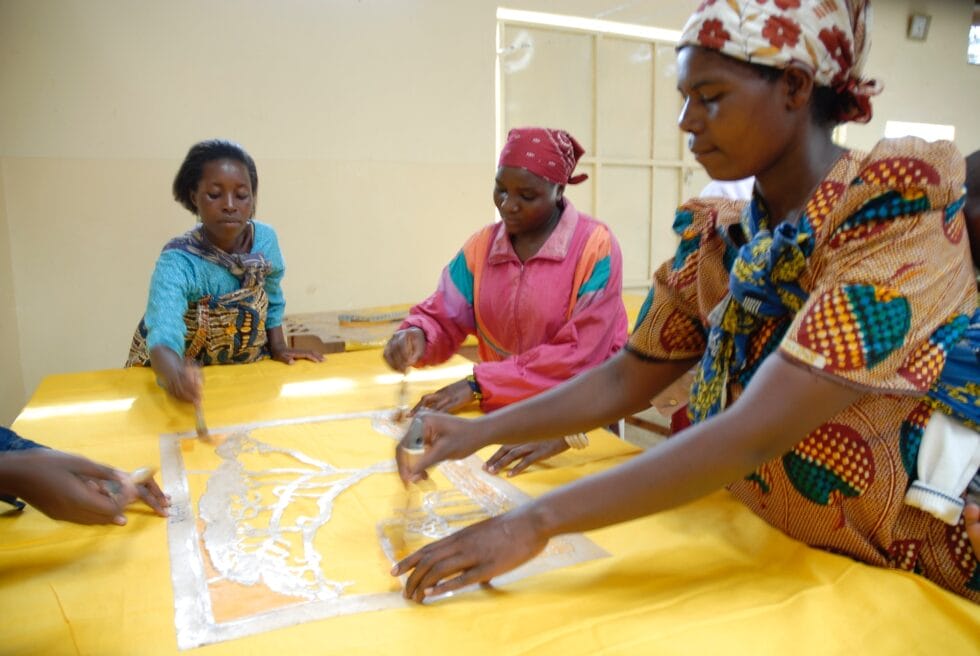
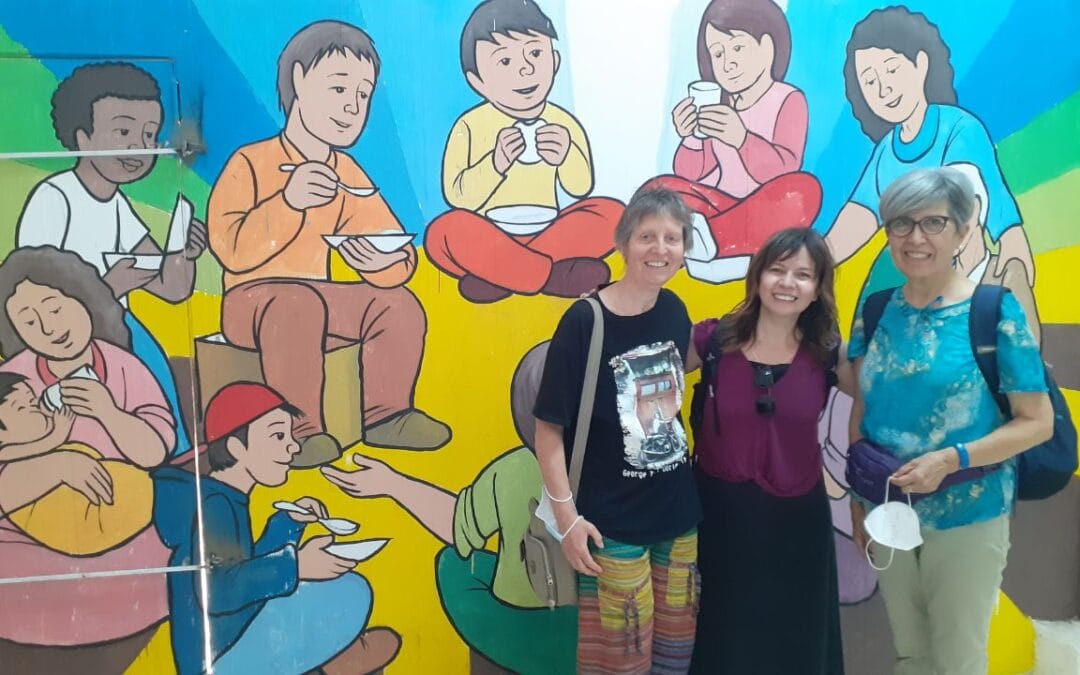
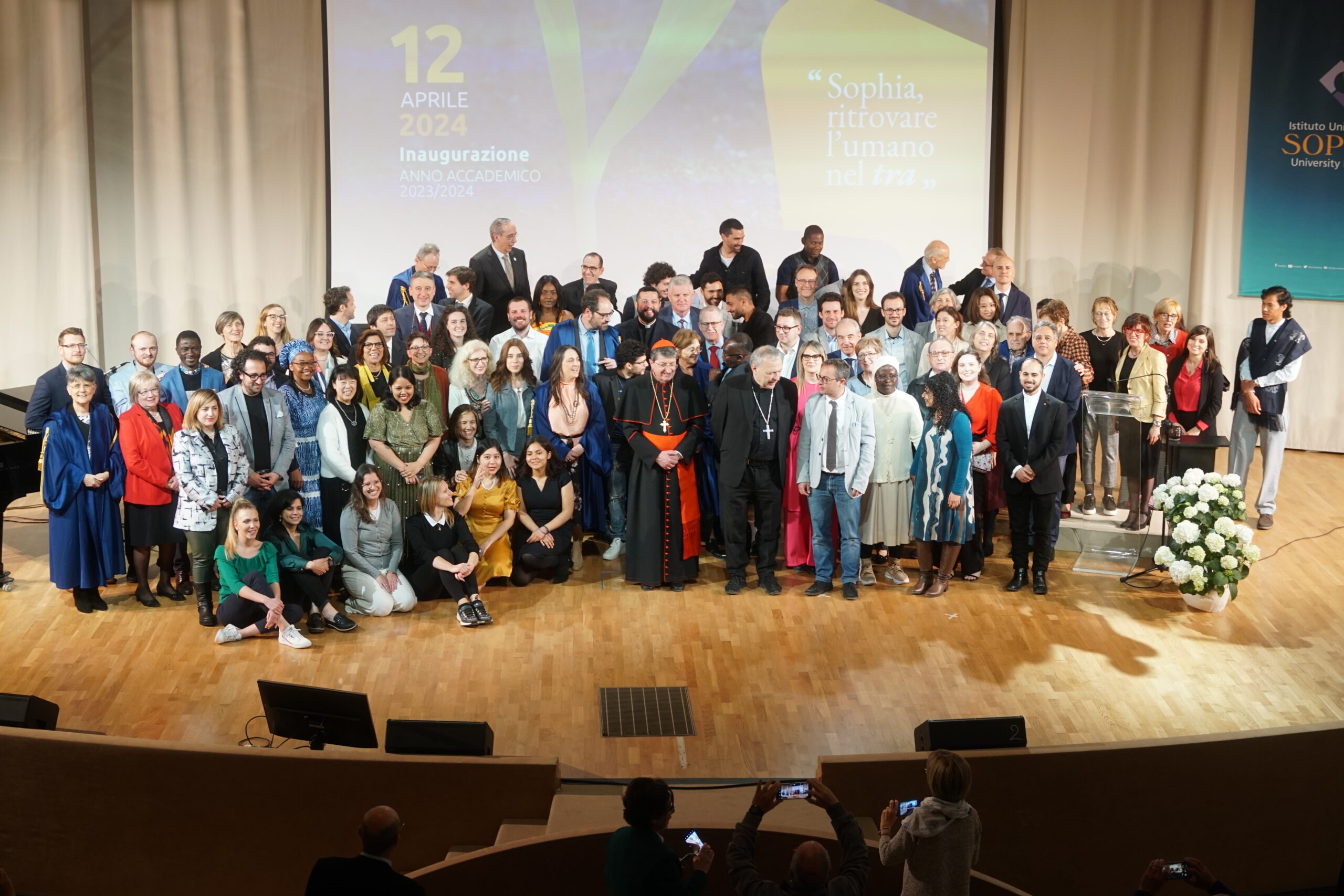 On 12th April, 2024, on the occasion of the inauguration ceremony of the 16th Academic Year of the SUI that took place on, in the Auditorium of Loppiano (Figline and Incisa Valdarno – FI), Margaret Karram, President of the Focolare Movement, extended her best wishes to the students who, in this historical moment, have chosen “with courage and hope”, to prepare for the future by attending the
 Academic Year open at the end of a speech that led participants to reflect on the social value of universities. He said. “If States invest in universities, it is because it is believed to be in the national interest to invest in young people. Investment is made because well-educated young people bring social benefits. It is believed that a nation that ensures the education of new generations will be able to adapt and bring innovation that, in turn, will guarantee the future competitiveness of the nation itself.” Regarding the particular mission of the Sophia University Institute, he reiterated: “We want to be a place where, while aware that we are experiencing a dramatic historical moment, we look at the human capacity to build lasting peace. We want to study and teach how to see those ‘seeds’ that already today express the possibility of resolving the crisis we are experiencing”. The ceremony concluded with a lecture given by Massimiliano Marianelli, Full Professor of the History of Philosophy at the University of Perugia entitled “Sophia, rediscovering the human in the ‘between’”, which focussed on the human being and the primacy of relationships. The event was streamed live and is available on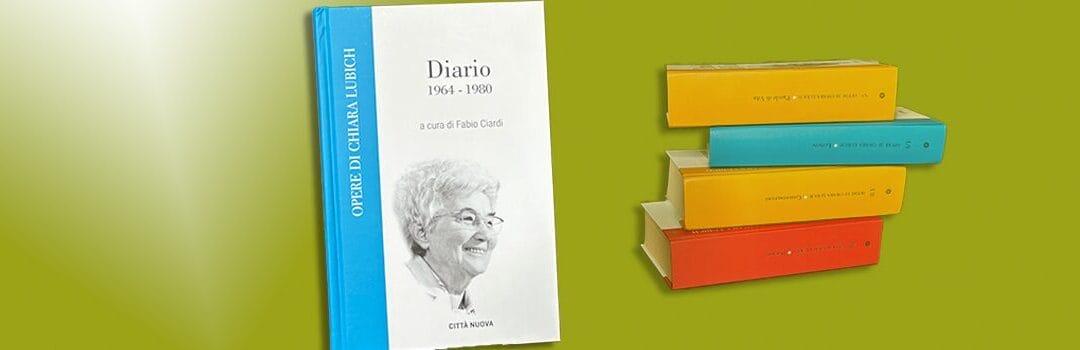
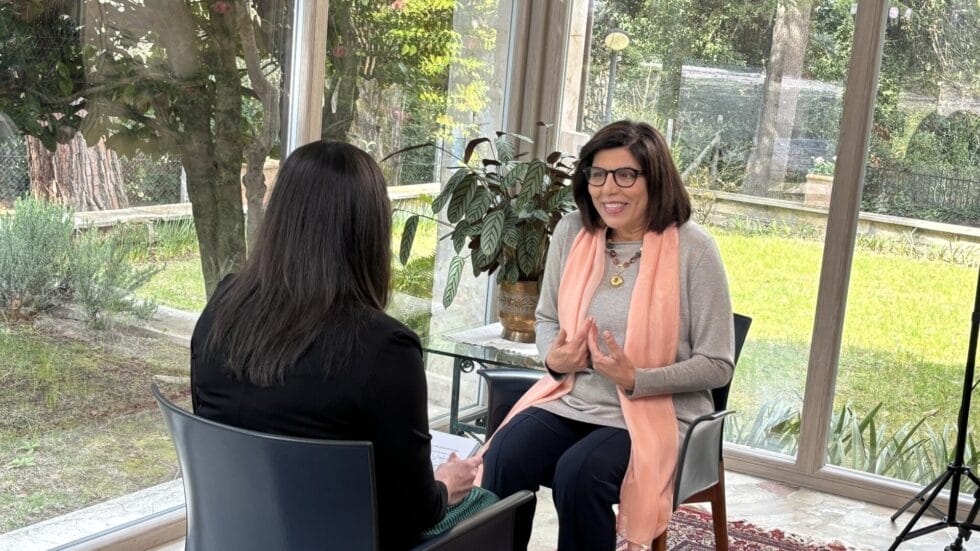
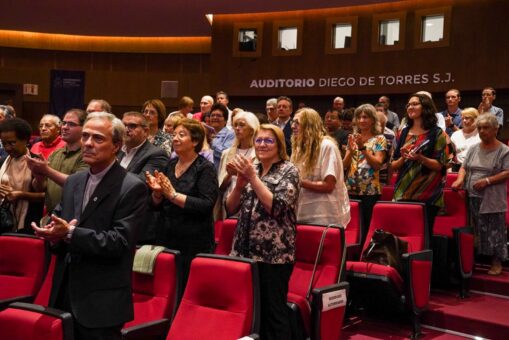
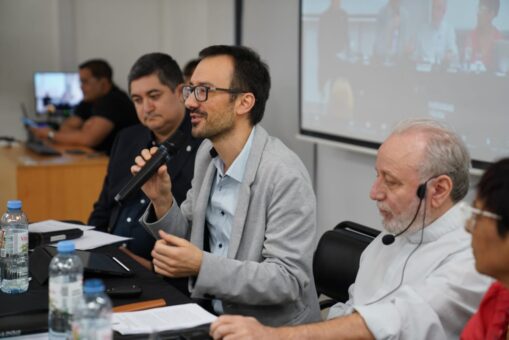 Church in its synodal journey and that of ecumenical and interreligious dialogue. The Trinitarian Anthropology Seminar was held from March 4 to 6. The study group, which has been active for 11 years, consists of 14 people, women and men, Franciscans, Jesuits, priests, religious, focolarini and lay people from different church movements. Sonia Vargas Andrade, of the Faculty of Theology, San Pablo of the Bolivian Catholic University, said: “We met to reflect on the path that a Latin American theologian should follow in dialogue with European theology, particularly Trinitarian Anthropology, taking into account what is typically ours, namely the plurality”. The seminar concluded by highlighting that the distinctive element of Trinitarian Theology – the subject of the group’s study – is precisely unity in plurality: “the other’s thinking is as good as my own, I have to think from the other and in the other”, added Vargas Andrade. Msgr. Piero Coda shared his first-hand experience and his view of the first session of the synodal assembly, in which he participated as a member of the Theological Commission of the General Secretariat of the
 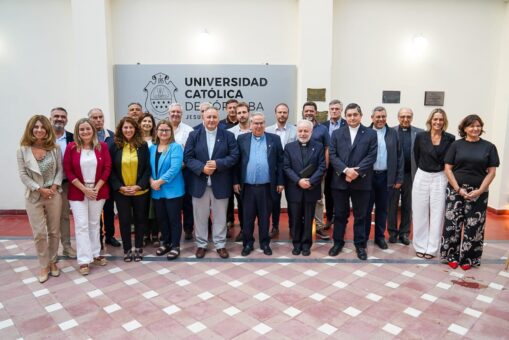 Dr. Tommaso Bertolasi, professor at Sophia University Institute in Loppiano (FI), closed the discussion by addressing the theme “youth and synodality,” stressing that young people experience the absent God: “God is experienced as the absent one, the one who is not there”. Therefore, it is necessary to consider the experience of Jesus’ abandonment on the cross. “It is right there, in death and resurrection, that God enters every human experience: from that moment on, there is no more distance from God, because God is in the absence of God”. From this thesis he deduced several implications for the church in general, especially for youth ministry.
 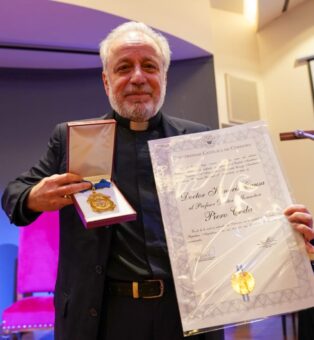 March 6 was the day of the conferral of the honorary doctorate to Msgr. Piero Coda. On this occasion, Cardinal Ángel Rossi S.J., Archbishop of Córdoba, called Piero Coda a “pilgrim of truth, who lived his life in the spirit of exodus and this has led him to leave his own ‘land’ in order to put his thought and theological insights in permanent dialogue with different cultures, with those who do not profess an explicit faith or with other disciplines”. Father Gonzalo Zarazaga S.J., Director of the UCC Doctoral Program in Theology, in presenting Coda’s contribution, said that “Piero Coda’s Trinitarian Ontology opens us to the intimacy of the Triune God and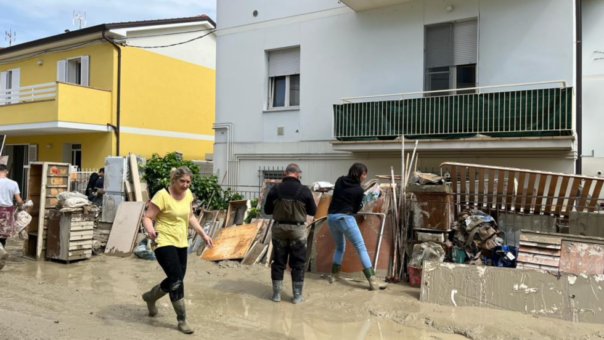
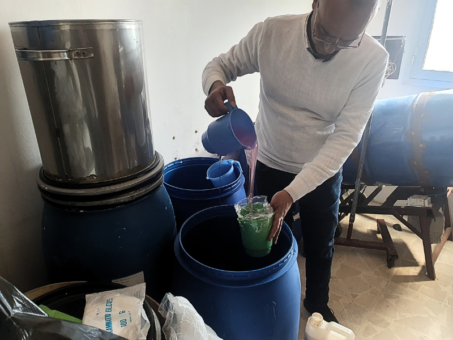 Recently, the Emergency Committee presented its 2023 Report, revealing that, from 2016 to the end of 2023, a total of €5,361,505 has been raised for emergencies in Syria, Turkey, Ukraine, Italy, Pakistan and the Philippines. In Syria, the “Seeds of Hope” project, which began in September 2018, provided socio-medical assistance to families, access to essential medicines, healthcare services and basic surgery for patients with chronic diseases as well as educational support for children and adolescents. So far, 23,170 people have benefited from the program. 6,273 people were assisted in various ways following the earthquake in Syria and Turkey, which took place in February 2023. This included financial assistance to 405 families, distribution of detergents to 490 families and of food and clothing to 712 families, along with psychological support for the elderly, adults and young people and medical assistance. In addition, Work Empowerment initiatives (enhancing individual employment efforts with microcredit incentives) were provided to 16 families and 32 people along with housing interventions for 138 families. A community livestock project was also set up to supply milk and generate income for families in a Turkish village inhabited by Afghan refugees.
 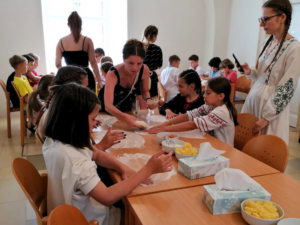 In Ukraine, the emergency situation continues to evolve as the conflict persists and the multiple needs of the population increase. Since the beginning of the war, basic health care has been provided for about 12,000 people and extraordinary economic support has been extended to over 2,000 families. Several projects to welcome and accommodate displaced families and children from Ukraine have taken place in Italy. Furthermore, a school-camp was established in Austria for 30 children from a primary school in Kiev and a protected day centre for children and mothers was inaugurated.