Be mothers and fathers to all
Be mothers and fathers to all

Be mothers and fathers to all
Be committed to your neighbours
Light up hope
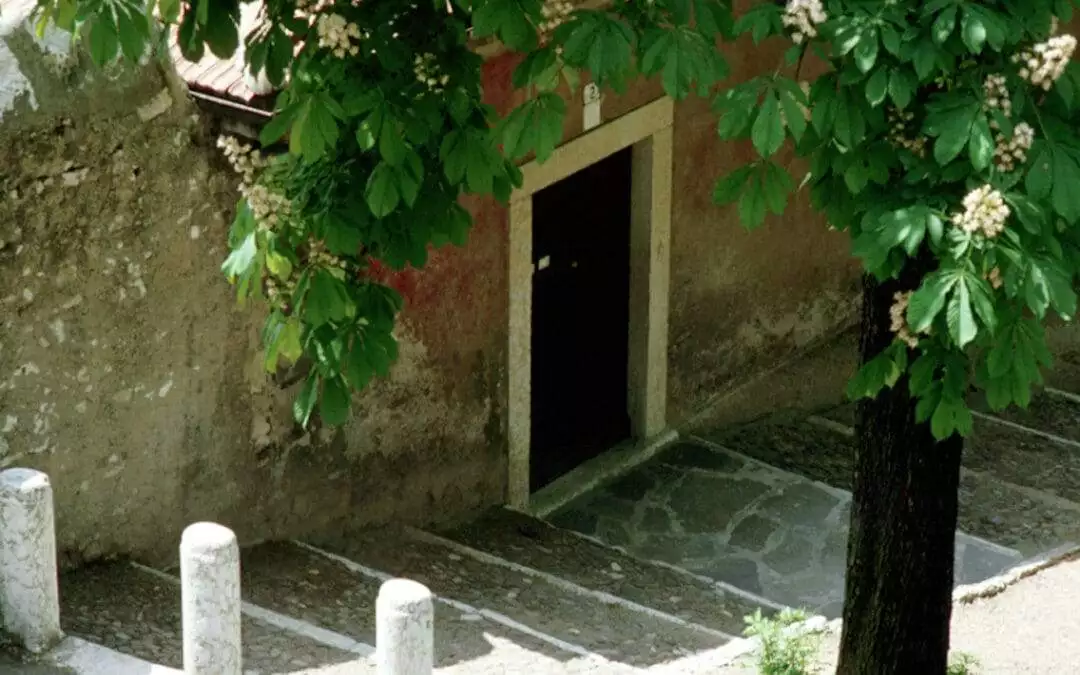
(…) Looking back today, we can understand what we can learn from December 7th, the day the Movement began decades ago. It affirms that a charism of the Holy Spirit, a new light, came down on earth during those days, a light which, in the mind of God, was destined to quench the burning thirst of this world with the water of wisdom, to warm it with divine love and thus give life to a new people nourished by the Gospel. This is what it tells us, above all.
And because God acts concretely, he immediately provided the first brick for the building that would serve his purposes, the building that is our Movement. He decided to call me, a girl like many others, and this led to my consecration to him, my “yes” to God, soon followed by the “yes” of many other young women and men.
That day speaks of light, then, and of the total gift of ourselves to God, so as to be instruments in his hands to achieve his goals.
“Light” and “giving oneself to God” are two realities that were extremely useful at that time when there was general confusion, reciprocal hatred, war. It was a time of darkness, when God seemed to be absent from the world, absent with his love, his peace, his joy, his guidance. It was a time when no one seemed interested in him.
“Light” and “giving oneself to God” are two realities that heaven wants to repeat to us today, too, when many wars continue to rage on our planet. (…)
“Light” means the Word, the Gospel, which is still too little known and, above all, too little lived. (…)
Chiara Lubich
(Conversazioni, Città Nuova, Roma 2019, p. 665)
Foto: © Archivio CSC Audiovisivi
Discover the hidden good
Together we are strong
Be close to others
Trust in God
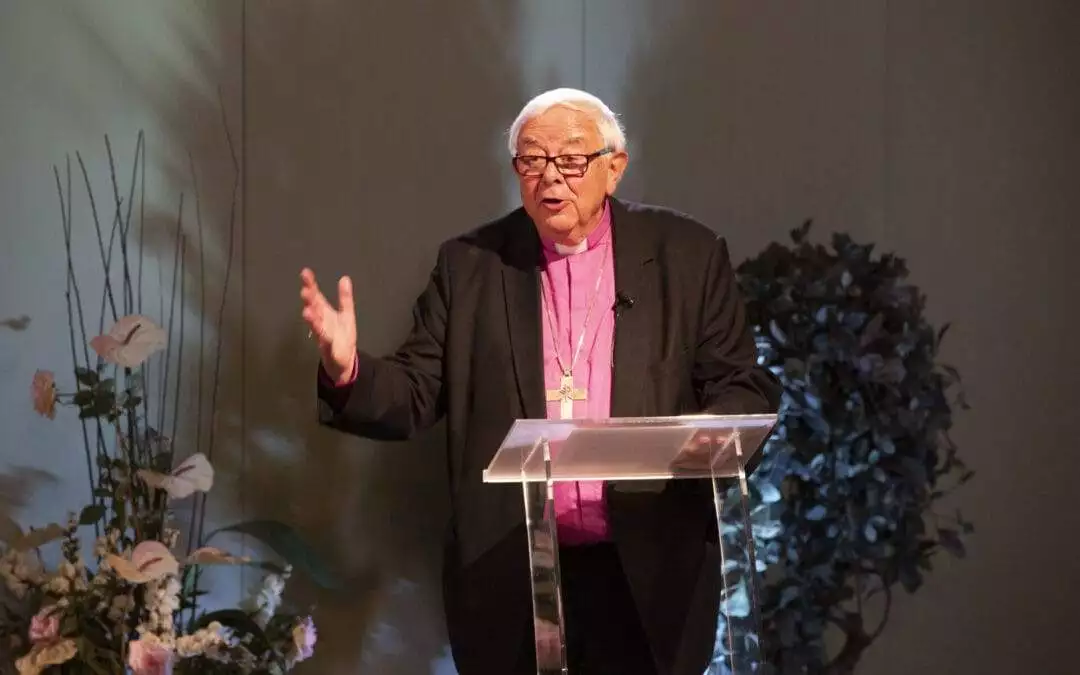
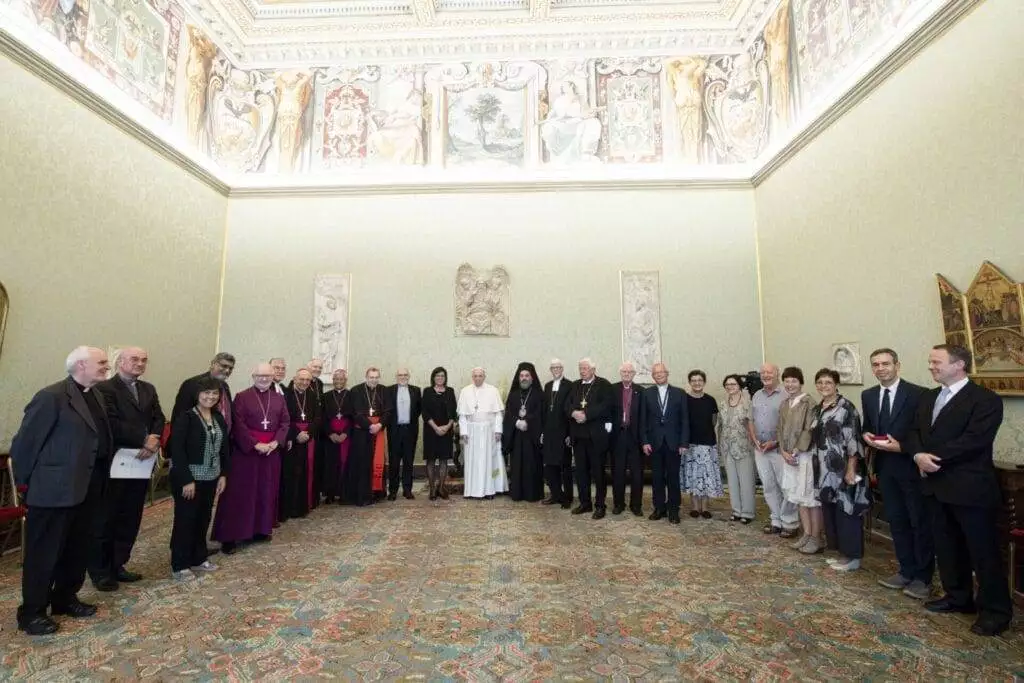
The news of Bishop Christian Krause’s death reached me just as I was beginning a Zoom conference call with Bishops from various churches who are friends of the Focolare Movement, with whom he has been a faithful traveling companion for many years. We knew his health had been deteriorating and we had been praying for him, so it was spontaneous to recite the ‘Our Father’ together, thanking God for his prophetic and encouraging presence among us. He was a man with a big heart and broad horizons.
“Colourful Bishops”
There would be a lot to say about Bishop Christian. As I write, I have before me a photograph of Cardinal Vlk of Prague (Czech Republic), Cardinal Kriengsak of Bangkok (Thailand), Dr. Mor Theophilose Kuriakose of the Malankara Syrian Orthodox Church (India), myself (a Catholic) and Bishop Christian walking towards the city centre of Lund (Sweden), dressed in our ecclesiastical robes, heading for a ceremony at the Cathedral to mark the 500th anniversary of the Protestant Reformation. This ecumenical event, hosted by the Lutheran World Federation (LWF) and attended by Pope Francis, was the first time that Catholics and Lutherans commemorated the Reformation together on a global level.
The photo reminds me of the fondness with which Bishop Christian called the Bishops of various Churches associated with the Focolare Movement “colourful bishops”. He was deeply passionate about the experience of unity in variety and diversity, inspired by a charism and by a spirituality of unity and supported by the Focolare, a predominantly lay movement. Our colourful vestments symbolized the deeper richness of the gifts exchanged during the dialogue of life undertaken by Bishops from various churches since 1982—a dialogue initiated by Bishop Klaus Hemmerle and Chiara Lubich, with the blessing of Pope John Paul II.
An Historic Day
Although Bishop Christian became acquainted with the Focolare in the 1980s through Bishop Hemmerle, his meeting with Chiara Lubich on 31st October, 1999 was a special moment for him. It took place in the context of what was undoubtedly a key moment in his life: the signing, on behalf of the LWF, of the Joint Declaration on the Doctrine of Justification with the Roman Catholic Church, on 31st October 1999 in Augsburg, Germany. Over the years, Bishop Krause has often shared with us the significance of that event, emphasizing its importance as a document signed on the brink of the 21st century. He often recalled how, on that very occasion, a group of founders and leaders of Evangelical and Catholic Movements and Communities gathered in the Focolare little town of Ottmaring to launch the ‘Together for Europe’ project. That day’s meeting with Chiara Lubich opened a path for him into an ecumenical experience whose prophetic possibilities and implications he perhaps understood more deeply than many of us.
Broad Horizons
When I became a bishop in 2013, I came into much closer contact with Bishop Christian within the framework of the Bishops of various churches who are friends of the Focolare Movement. After Lund, several of us met for monthly online teleconferences. Meeting with Christian was always a great way to broaden your horizons, because he liked to see things in the bigger picture. His sense of humour was evident in the sparkle in his eyes and his kind smile.
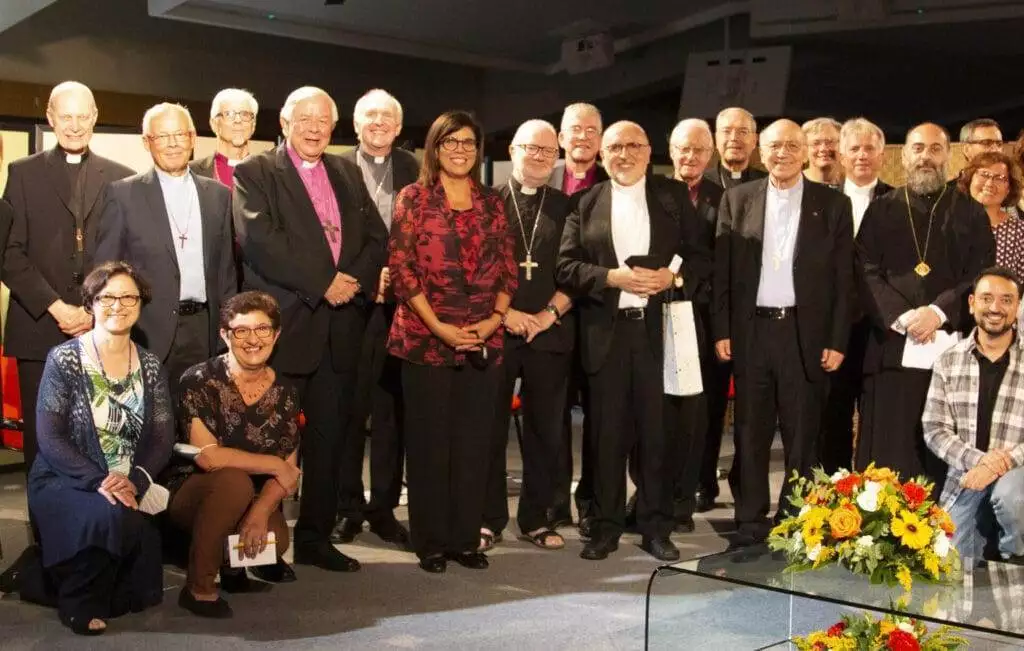
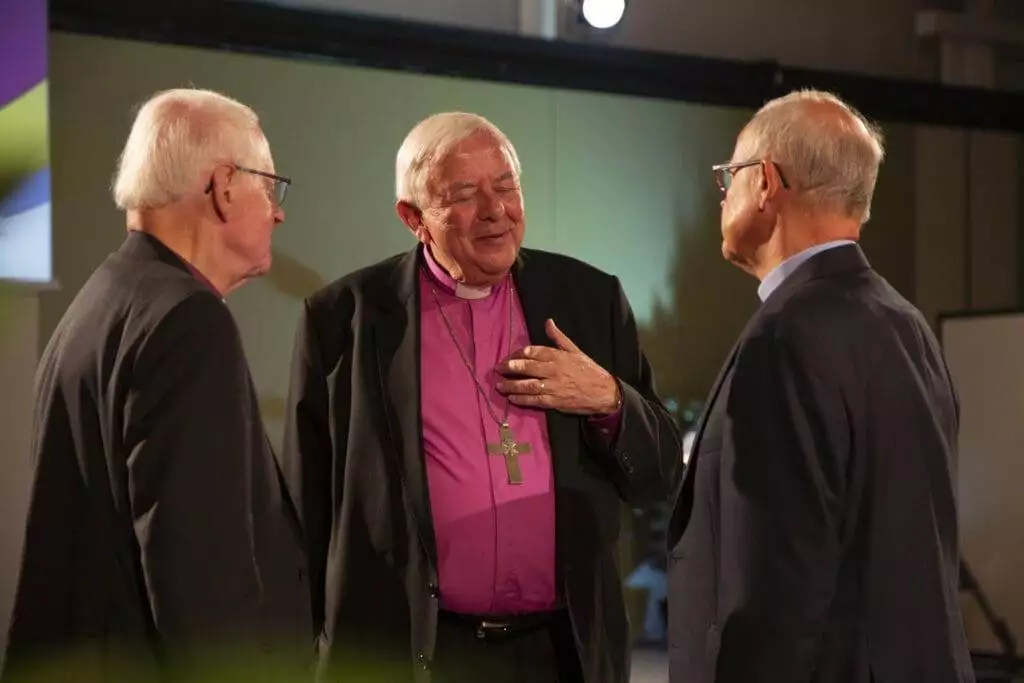
Bishop Christian Krause was passionate about the Church, about the unity of the Church and the need to move forward. For him, life was not about standing still. If we want to improve the future, we must be ready to disrupt the present! In the case of the Bishop Friends of the Focolare, Bishop Christian urged us to widen the circle and to commit ourselves to promoting circles of living dialogue with the Bishops of various Churches in the Global South. He was so pleased that in September 2021, in the midst of Covid, we were able to organize an online meeting for 180 bishops from 70 Churches from all over the world. It was a wonderful three-day meeting.
Glimpses of Hope
I recently visited Bishop Christian in the nursing home where he had moved in the last weeks of his life. Our conversation was one I will remember for a long time. He spoke to me of his gratitude for having encountered the charism of the Focolare, of the support and friendship he had experienced. Raised in the tradition of “awakening” (pietistic), his encounter with the Movement was in line with his personal conviction of the need for piety, for spirituality.
He did not hide the pain he felt at times, seeing how the world seems to have lost the visionary dynamic of hope from the 1960s, when global mission and the horizons of peace seemed within reach. Equally painful for him was the fact that it was still not possible to receive communion in the Catholic Church.
He told me about an event in the ‘90s when Chiara Lubich was not well. During a meeting, Cardinal Miloslav Vlk invited him to come with him and make a short phone call to Chiara. It was to be a short phone call and so to keep it that way, Bishop Christian simply asked Chiara: “Do you have a word for us?” Chiara did not hesitate to answer: “Always Go Forward!” Christian was very impressed.
“Always Go Forward” was the stimulus that Bishop Christian always brought us. Speaking to me about his preparation for death, he showed his strong faith with which he knew how to look to the future, including death, with hope. He shared with me the prayer taken from a famous poem by Dietrich Bonhoeffer that inspired him in that last period: “By gracious powers so wonderfully sheltered, And confidently waiting, come what may, We know that God is with us night and morning,
And never fails to greet us each new day”.
Bishop Brendan Leahy
Bishop of Limerick, Ireland
Bishop emeritus Christian Krause was born on 6th January 1940 in Dallgow-Döberitz, Brandenburg (Germany). He studied theology in Germany (Marburg, Heidelberg and Göttingen) and in the United States (Chicago). He was ordained a Pastor of the Evangelical Lutheran Church of Hanover in 1969. He worked as an assistant at the then Department of Theology of the Lutheran World Federation in Geneva (Switzerland) from 1969 to 1970 and at the headquarters of the Christian Service for Refugees of Tanganyika in Dar es Salaam, Tanzania, from 1970 to 1972. From 1972 to 1985 he was responsible for international ecumenical affairs, serving as Executive Secretary (Oberkirchenrat) to the United Evangelical Lutheran Church of Germany and the German National Committee of the LWF in Hanover, Germany. From 1985 to 1994 he was General Secretary of the German Evangelical Kirchentag (Lay Movement of the Protestant Church). He was Bishop of the Evangelical Lutheran Church of Brunswick, Germany, from 1994 to 2002. From 1997 to 2003 he was President of the Lutheran World Federation (LWF).
He died on 28th November in Wolfenbüttel, Germany, at the age of 84. Bishop Christian leaves behind his wife Gertrud Krause and four children.
Photo: © Caris Mendez – CSC audiovisivi e Vatican Media – Meeting of Bishops of various Churches (September 2021)
We are not alone
This sentence is taken from the story of the Annunciation. The angel Gabriel appears to Mary of Nazareth and makes known God’s plans for her: she will conceive and give birth to a son, Jesus, who ‘will be great and will be called the Son of the Most High.’ [1] The episode is in continuity with other events in the Old Testament whereby barren or very old women gave birth to children who were to play an important role in salvation history. Here, Mary, while wishing to fully and freely adhere to the call to become the mother of the Messiah, wonders how this will happen because she is a virgin. Gabriel assures her that it will not come about through the work of man: ‘The Holy Spirit will come upon you and the power of the Most High will overshadow you.’ [2] And he adds: ‘For nothing will be impossible with God.’ [3]
Such reassurance, which means that no declaration or promise made by God will remain unfulfilled – because nothing is impossible to him – can also be expressed in this way: nothing is impossible with God. In fact, the nuance of the Greek text ‘with, or near, or together with God’ highlights his closeness to men and women. In fact, when human beings are together with God and freely adhere to him, nothing is impossible.
«For nothing will be impossible with God».
How can we put this word of life into practice? We can do so by being confident in the belief that God can act even within and beyond our limitations and weaknesses and during the darkest periods of our lives.
This was the experience of Dietrich Bonhoeffer. Whilst in prison before being tortured, he wrote: ‘We must immerse ourselves again and again in the living, speaking, acting, suffering and dying of Jesus in order to recognise what God promises and fulfils. It is certain […] that for us nothing impossible exists anymore, because nothing impossible exists for God; […] it is certain that we must not expect anything and yet we can ask everything; it is certain that in suffering our joy is hidden and in death our life… To all this God has said ‘yes’ and ‘amen’ in Christ. This ‘yes’ and this ‘amen’ are the solid ground on which we stand.’ [4].
«For nothing will be impossible with God».
In trying to overcome the apparent ‘impossibility’ of short-comings and in striving to reach the ‘possibility’ of a sound and consistent life, the community dimension plays a decisive role. This developed when, as a group, the disciples lived Jesus’ new commandment and allowed the power of the risen Lord to dwell within them, both collectively and individually. In 1948, Chiara Lubich wrote to a group of young members of religious communities: ‘Let’s go ahead, not relying on our own strength which is petty and weak but with the omnipotence of unity. I have seen and touched with my own hands that God among us does the impossible: he performs miracles! If we are faithful to our task […] the world will see unity and with it the fullness of the Kingdom of God.’[5]
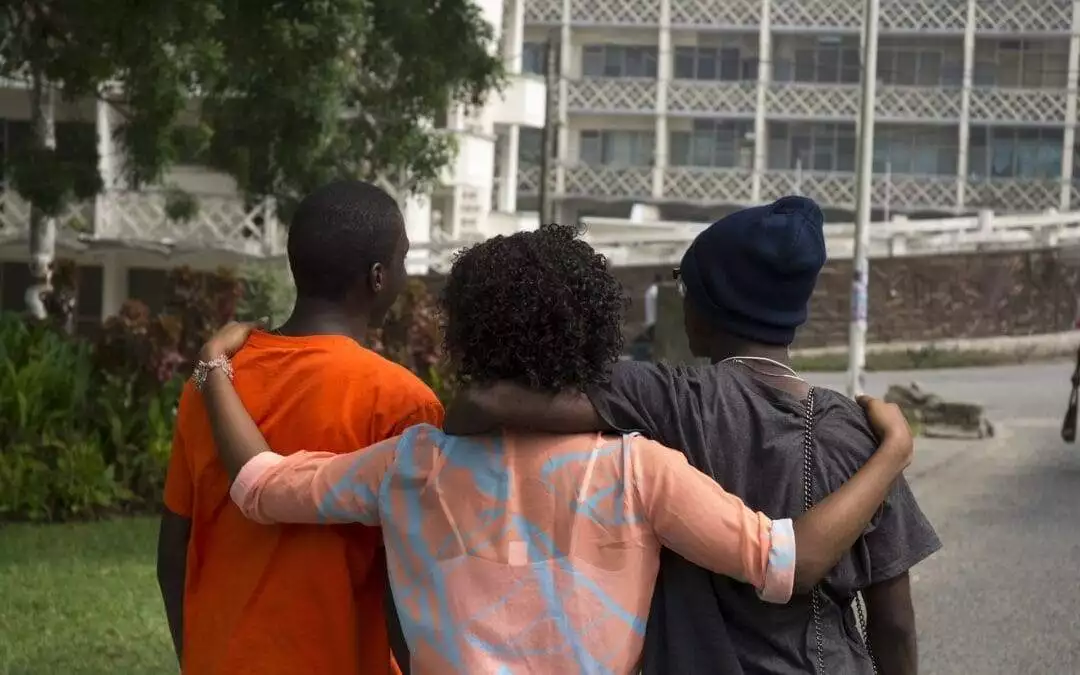
Years ago, when I was in Africa, I often met young people who wanted to live as Christians and who told me of the many difficulties, they faced each day in trying to be faithful to the commitments of faith and the teachings of the Gospel. We would talk about this for hours and, in the end, we always came to the same conclusion: ‘It is impossible if we are alone but not if we are together.’
Jesus himself guarantees this when he promises: ‘Where two or three are gathered in my name (in my love), there am I in the midst of them.’ [6] And with him all things are possible.
Edited by Augusto Parody Reyes & the Word of Life team
Photo: ©Sammmie – Pixabay
[1]Lc 1, 32.
[2] Ibid, 35.
[3] Ibid, 37.
[4] D. Bonhoeffer, German Lutheran Pastor, protagonist in resistance against Nazism
[5] C. Lubich, “Letters of the Early Times”. viCf Mt. 18:20.
[6] Cf. Mt 18, 20.
We may feel frightened when life presents us with challenging and unexpected choices but, nonetheless, it is then that our values and the desire to live with integrity clearly emerge.
It’s not always easy. When the answer to a situation requires our free and personal choice, we may feel that we are taking a difficult gamble, almost a leap in the dark, and we need the strength to go beyond our own limits.
Where can we find the strength to do this? For some people it comes from faith in the supernatural and belief in a personal God who loves us and accompanies us. For everyone it can come from the closeness of friends, of “travel companions” who support us, trust us and who we feel are near as we journey through life. They bring out the best in us and help us overcome the apparent “impossibility” of our insufficiencies to achieve the “possible” of a coherent way of life.
This happens as a consequence of relationships that are reciprocal and impacts upon us as members of a community. As Chiara Lubich said in 1948, using language typical of the time: “Let’s go ahead! Not with our strength, petty and weak as it may be, but with the omnipotence of unity. If we remain faithful to our commitment […] the world will see unity.”[1]
Going beyond our limits opens us to new opportunities and experiences that might otherwise seem out of our reach, allowing us to believe and witness that nothing we hope for is impossible.
But is it possible to believe “that everything is possible” in the face of the absurdity of Evil? This is the great question that humanity continues toask today as it has always done in the past.The absence of response unites everyone, believers and non-believers, as they search for the answeron a journey that can only be undertaken together. Because if “Evil” remains a mystery, the force of “Good” is equally powerful. There is no answer, but a way of understanding.
Edith Bruck recalled this in a recent interview.ii She was deported to Auschwitz at the age of 13 but still today, in her nineties, is a real witness of peace. When the war ended, she and her sister were faced with a dramatic dilemma. “Five Hungarian fascists who had supported the Nazis begged us to help them return home secretly and we did so by helping them on their journey. We shared bread and chocolate with them. It was one of the most intense moments I had ever experienced spiritually. I was treating someone who could have killed my father as a friend.” The decision was not easy and she argued a lot with her sister, but they did it because they thought that perhaps, this way, these people would never mistreat a Jew again. [2]
THE IDEA OF THE MONTH is currently produced by the Focolare Movement’s “Centre for Dialogue with People of Non religious Beliefs”. It is an initiative that began in 2014 in Uruguay to share with non-believing friends the values of the Word of Life, i.e. the phrase from Scripture that members of the Movement strive to put into practice in their daily lives. Currently, THE IDEA OF THE MONTH is translated into 12 languages and distributed in more than 25 countries, with adaptations of the text according to different cultural sensitivities. dialogue4unity.focolare.org
Photo: © Pixabay
[1] Chiara Lubich, “Letters of the Early Times”.
[2] Marisol Rojas Cadena SER- article on E. Bruck 26/01/2024
“The competition has been and remains a unique way to introduce Chiara Lubich, founder of the Focolare Movement, to younger generations and to an audience that engages with her work on a cultural level,” says Giuliano Ruzzier, a teacher and collaborator of the Chiara Lubich Centre.
Promoted by the Ministry of Education and Merit, New Humanity and the Historical Museum Foundation of Trentino, this year’s theme is peace. Participants are encouraged to explore the meaning of peace in light of Chiara Lubich’s contributions. Ruzzier explains, “From her extensive legacy, particularly where she explicitly addressed this theme, we have identified four perspectives from which to reflect on peace.”
These perspectives include constructive dialogue among people of different religions and cultures, overcoming economic disparities, fostering personal commitment to fraternity through relationships of proximity and spreading a culture of peace. Prof. Giuseppe Ruzzier continues, “Chiara Lubich viewed humanity as a whole. She is well-known for her call to ‘love others’ countries as our own. Her emphasis on everyday relationships is particularly distinctive. As she said, our days can be filled with practical, humble, intelligent acts of service, expressions of our love. Every little gesture has an effect on society.”
The contest is open to primary, middle and high school students. “As in past years, we especially hope for broad participation from Italian schools abroad, given the clear international scope of this year’s theme.”
When asked how he would encourage his colleagues to promote this initiative, Ruzzier replies: “This contest offers students the chance to reflect independently and creatively on a highly relevant and important topic like peace. It also provides an opportunity to engage with the significant thoughts of a woman who profoundly shaped and experienced the 20th century and expressed herself in many ways.”
The deadline for submissions is 31st March, 2025. For the contest rules and additional information, visit:
https://chiaralubich.org/concorso-per-le-scuole-2024-25/
Carlos Mana

Kindness
This morning, while shopping at the supermarket, I passed by a large trolley where a shop assistant was piling up boxes. I noticed two of them were on the ground.
Fearing that I had inadvertently dropped them, I apologised, picked up the boxes and placed them on the trolley.
The shop assistant thanked me and said not to worry, then called after me: ‘Kindness is rare!’. Another person who was passing by just at that moment confirmed: “That’s very true!” whereupon the shop assistant, by way of explanation, told her what had happened.
As for me, I was happy, not least because this little episode reminded me of a phrase I had heard some time ago which had struck me. It spoke about “sowing kindness”. It felt like a ‘caress’ from God.
G.S. – Italy (*)
Healing relationships
I have a brother, a Catholic Christian, who married a German woman from the Evangelical Church. When they settled in Italy, the relationship between my mother and sister-in-law was not easy, even though she was not against their children being educated in the Catholic Church. As for me, I tried to be a ‘mediator’ between her and my mother. My sister-in-law also suffered because of this misunderstanding, which was however healed shortly before our mother died. For some time now, I have been sharing the ‘Thought for the Day’ with her via Whatsapp which helps us to live Gospel-based love on a daily basis. One day the thought invited us to ‘be merciful’, with this short commentary sentence: “Mercy is a love that knows how to welcome every neighbour, especially the poorest and neediest. A love that does not measure, is abundant, universal, concrete”. Her response was immediate: ‘If I have made you feel bad in certain circumstances over the past years, please forgive me”. Astonished, I replied in turn: “I too apologise”. And she: “I don’t remember any incident for which need to apologise…’.
C. – Italy (*)
Called and sent
Someone very dear to me asked me to write something about my experience as a teacher for an acquaintance of hers from another country who was doing a project on values education.
I realised that it was an opportunity to transform into a testimony and ‘proclamation’ what, in some ways, has been my personal response to the ‘call’ to live according to the teachings of the Gospel as a teacher and as a mother.
The piece took many hours of writing, deleting, correcting, rewriting, remembering aspects that I could add, deleting others that seemed irrelevant and, above all, filtering each word with love. I tried to put myself in the place of the person I was writing for, because even though I did not know her, I could love Jesus in her.
I sent it to my friend, aware that it might not be exactly what she needed, and so was ready to change everything.
To my surprise, she replied: “I have already sent your letter. I really liked it”. No doubt it was not the writing itself that was liked, but the work that God had done in me which could be a little light for others by being shared.
And, of course, the other things I had to do in those days were easily taken care of, as there had been some changes in the rota that left me with more free time.
C.M. – Argentina
Edited by Carlos Mana
Photo © StockSnap-Pixabay
(*) From ‘The Gospel of the Day’ November-December, Città Nuova, Rome 2024.
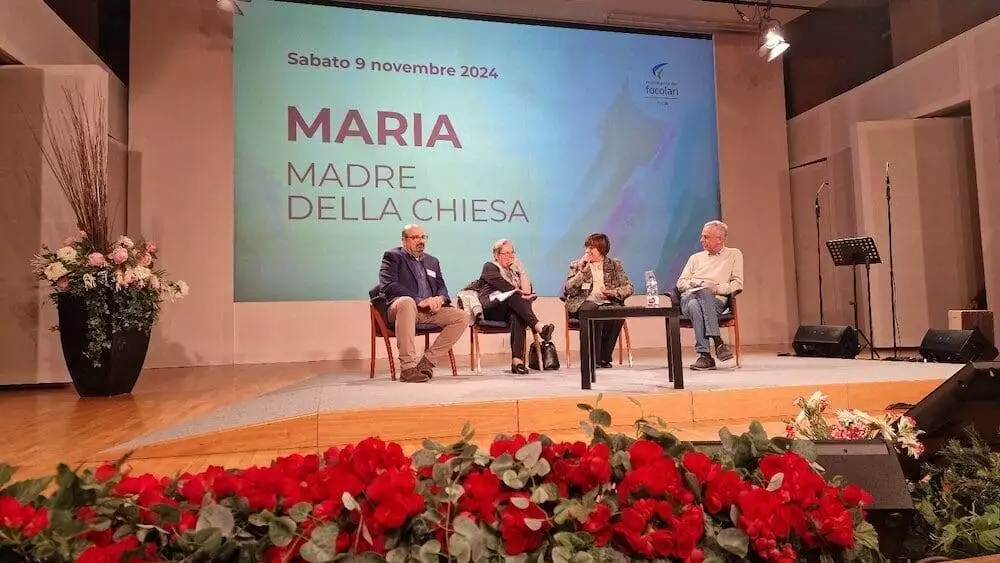
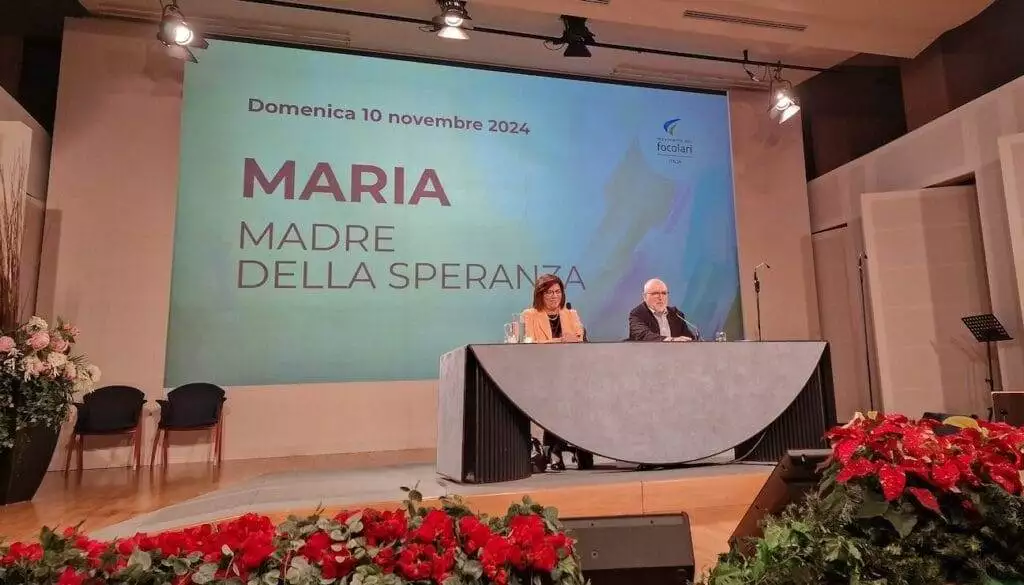
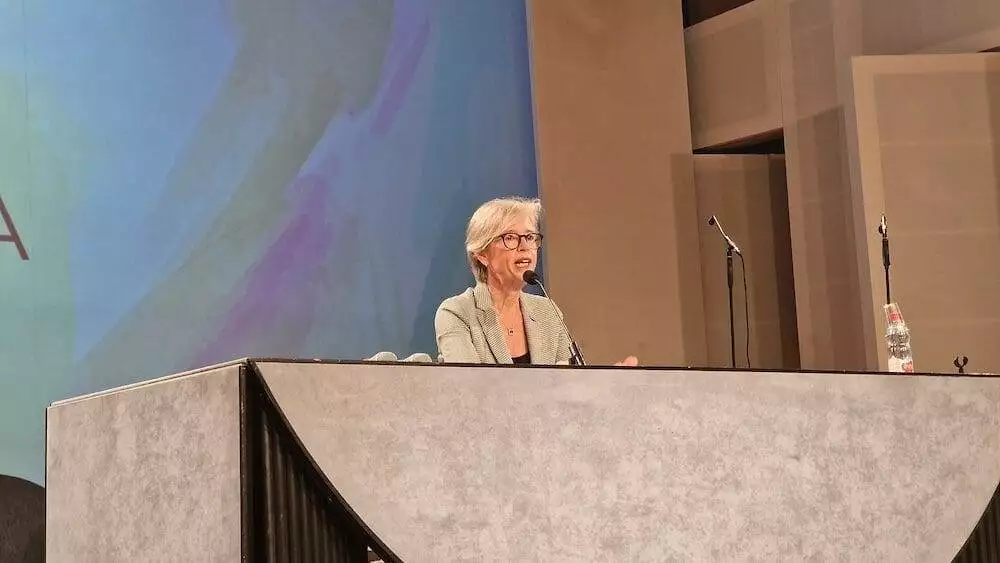
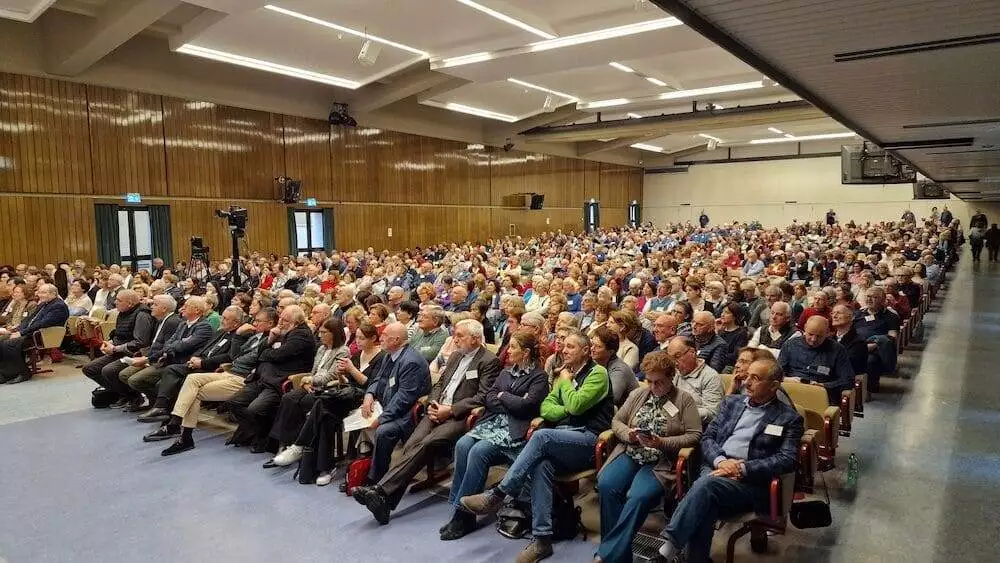
Experiencing the Church in its community dimension through the synodal method. This was one of the messages that emerged from the ecclesial convention organized by the Focolare Movement of Italy and Albania that was held in early November at the Mariapolis Center of Castel Gandolfo in Italy. An event that was attended by about a thousand people, of different ages and vocations, who adhere to the spirituality of the Focolare Movement, but also representatives of other associations.
Cristiana Formosa and Gabriele Bardo, Focolare leaders in Italy and Albania highlighted the path taken so far together with other groups of the Italian Church. It all stemmed from “a deep dialogue that grew over time, between priests and laity; a working together, people from all the branches of the Work of Mary (or. The Focolare Movement); a growing appreciation of all those who work in various capacities in the local church and in diocesan and national bodies. […] We feel that in recent years this sensitivity has grown a lot within the Movement, and both at the national and local levels there is much more collaboration with other Movements and Church Associations.”.
On the first day, Prof. Vincenzo Di Pilato, professor of Fundamental Theology and Academic Coordinator of the Centro Evangelii Gaudium emphasized (text) the figure of Mary as Mother of God and Mother of humanity, highlighting the Trinitarian root of the incarnation and Mary’s social dimension.
This was followed by Card. Giuseppe Petrocchi who deepened the reality of being church today, emphasizing how one needs to have a value compass to understand how to move, what church to be and how to be church. One must study and love the sociocultural context of the area in which one acts as well as being attentive to signs of the times: what the Lord is asking of us today.
Space then was given to various experiences on educational projects aimed at marginalized people, on the new generations, universal fraternity, the option for the “poor” for an inclusive synodality.
The second day was enriched with the presence of Dr. Linda Ghisoni, Under secretary of the Dicastery for the Laity, Family, Life, who brought greetings and encouragement from the Prefect of the Dicastery Card. Kevin Joseph Farrell. Dr. Ghisoni delivered a meditative reflection entitled “Marian dimension: a Church with a synodal face”. By retracing Mary’s life, she affirmed that we too must “trust God who is faithful. It’s up to us, far from all self-driven triumphalism, to be present in the face of the toughest situations in our society, in our family, in our movement. We should not be ashamed if we seem to belong to a group of failures, if we have people among us who are weaklings, and we should welcome the call to an ever-new generativity, proclaiming with closeness, care, listening, with intelligence, attention and dialogue, that God is faithful, is close, is merciful.”.
And she recalled the words that Cardinal Farrell addressed to the Focolare Movement on the 80th anniversary of its birth: “The ideal that Chiara (Lubich) transmitted to you remains ever relevant, even in today’s secularized world which is so different from that of when the Movement began. Your charism contains in itself a great life giving energy, but as the Holy Father often says: ‘it is not a museum piece… it needs to come into contact with reality, with people, with their anxieties and problems. And so, in this fruitful encounter with life, the charism grows, is renewed, and also reality is transformed, is transfigured through the spiritual force that such a charism brings with it.’”
With Marina Castellitto and Carlo Fusco the topic on the universal call to holiness was explored further through the figures of some Focolare members for whom the cause of beatification has been initiated.
This was followed by the experience of the Social Week of Italian Catholics held in Trent in July 2024. “Those days were an experience of listening and deepening the here and now of our time: questioning us about our being a community of believers in the larger ecclesial community and therefore politics as a history and network of human relationships,” stated Argia Albanese president of the Political Movement for Unity (Mppu) Italy.
The day continued with the experience of the National Council of Lay Aggregations (CNAL) in the presence of secretary Dr. Maddalena Pievaioli. The Council is the place where they live their relationship with the Italian Episcopate in a unified form, offering the richness of their associations and actively welcoming its programs and pastoral indications. The wish is that we can increasingly spread this reality within the Associations.
We concluded with the sharing of some best practices such as the Evangelii Gaudium Center, the experiences of the Diocesan Movement of Pesaro and Fermo, and insights on ecumenical and interreligious dialogue, dialogue with people of nonreligious beliefs, and dialogue with the world of culture.
Present on the last day were Margaret Karram and Jesús Morán, President and Co-President of the Focolare Movement. Margaret talked about her recent experience at the synod as one of nine specially invited guests. “The Synod, with its 368 participants, including bishops and laity, of whom 16 were fraternal delegates from other Christian Churches, offered us a perfect example of the universal dimension of this hope,” Margaret said. “We came from 129 nations and each of us was a bearer of our own experience of peace, of war, of poverty, of prosperity, of migration, of joys and sorrows of all kinds. So I would say that the first message, perhaps the most important, is the deeply missionary dimension of the Synod. […] And the first lesson we learned is: walk together, witness together, we need each other. The second lesson was the spiritual practice of discernment that requires: inner freedom, humility, mutual trust, openness to newness.” (…) Our responsibility is “to become bearers of synodality in every sphere: the ecclesial one in primis (first place), Just think of how many of us, and here you will be many! are engaged in our own local Church. But, we members of the Work of Mary, we cannot limit ourselves only to this sphere, we are a lay Movement and this lay characteristic is essential, it comes from the Charism and we cannot lose it. The Synod has stressed on many occasions that we must ‘widen our tent’ to include really everyone, especially those who feel outside.”
Jesús Morán gave a meditation-reflection on being a Church of Hope today. “Hope,” he said, ”makes us overcome fear. Hope must be united with faith and love, the three sisters of the theological life. Hope is a communal virtue; it frees us from the isolation of anguish and launches us toward ‘us’; an ‘us’ that becomes concrete love for our brother.”.
Link ai video
Lorenzo Russo
Photo: FocolarItalia
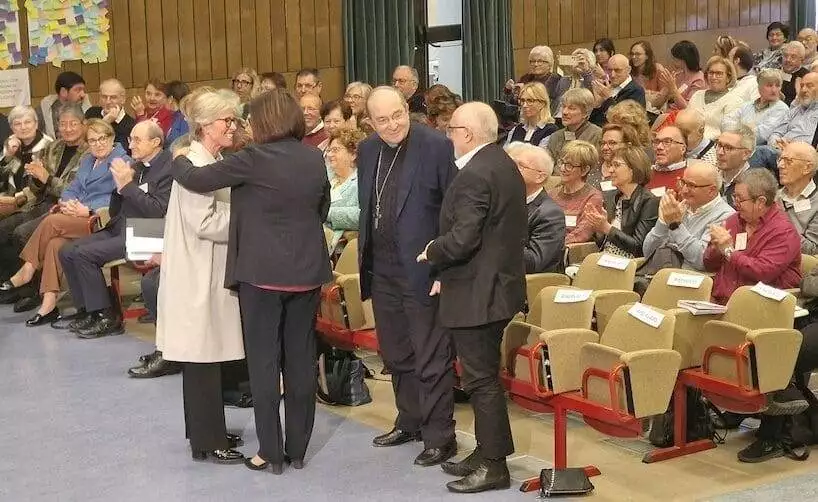
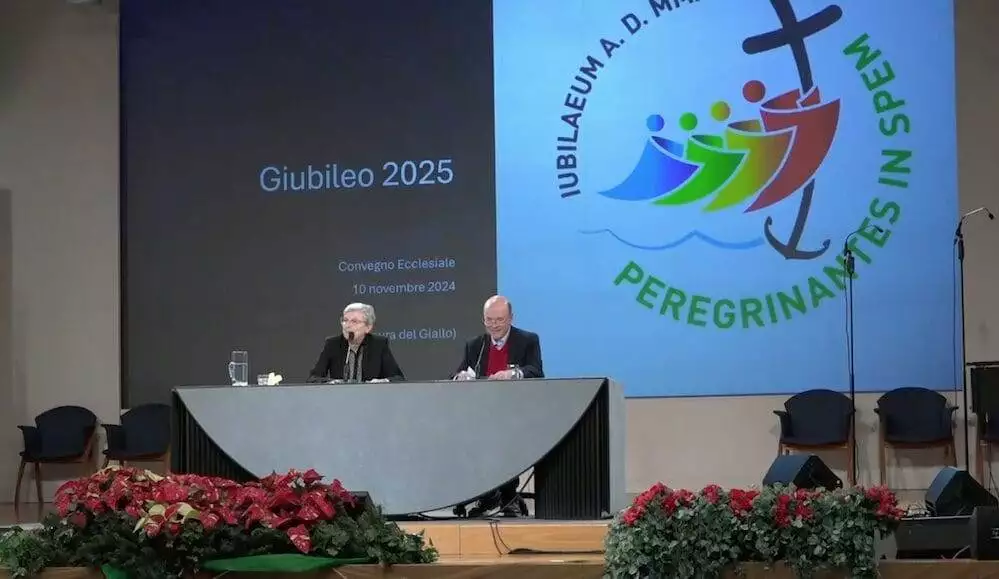
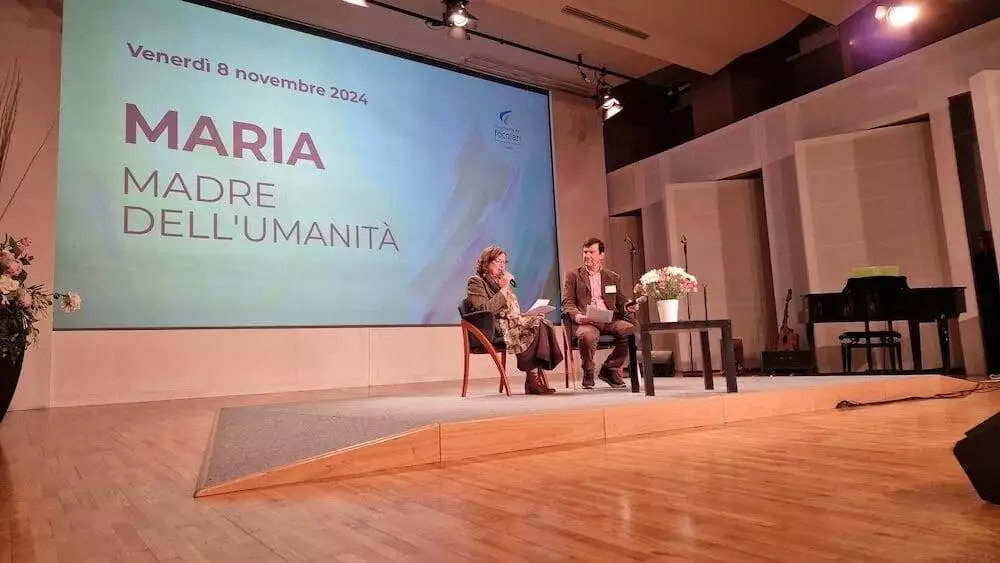

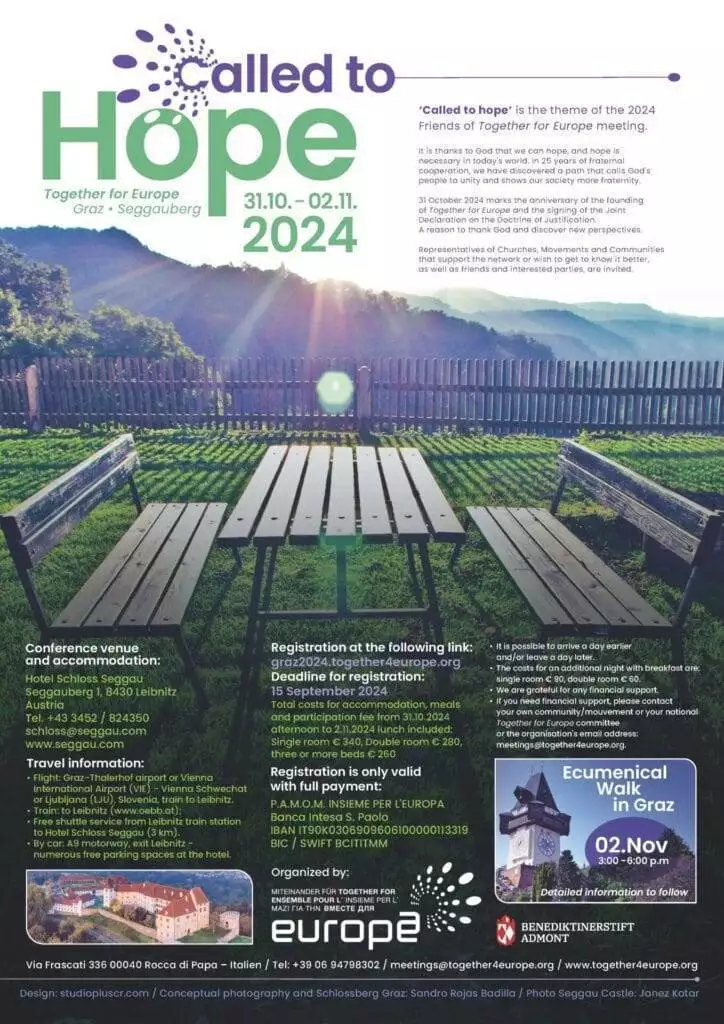
“To give a soul to Europe” is the aim of Together for Europe, a Christian network made up of over 300 Movements, Organizations and Communities from Western and Eastern Europe. It shines out as a sign of hope, especially in times of conflict and crisis.
On 31st October, Together for Europe (TfE) celebrated its 25th anniversary. This date also marked the historic 1999 Catholic-Lutheran Joint Declaration on the Doctrine of Justification in Augsburg, Germany, which healed a division of over 500 years between the two churches. In the years that followed, dialogue between them, based on mutual forgiveness, deepened, culminating in the historic Pact of Reciprocal Love in December 2001 at the Lutheran Church in Munich, attended by over 600 people.
The early promoters of TfE include Chiara Lubich, founder of the Focolare Movement, Andrea Riccardi, founder of the Community of Sant’Egidio and other founders of Italian Catholic and German Evangelical-Lutheran Movements and Communities, united by a commitment to journey together.
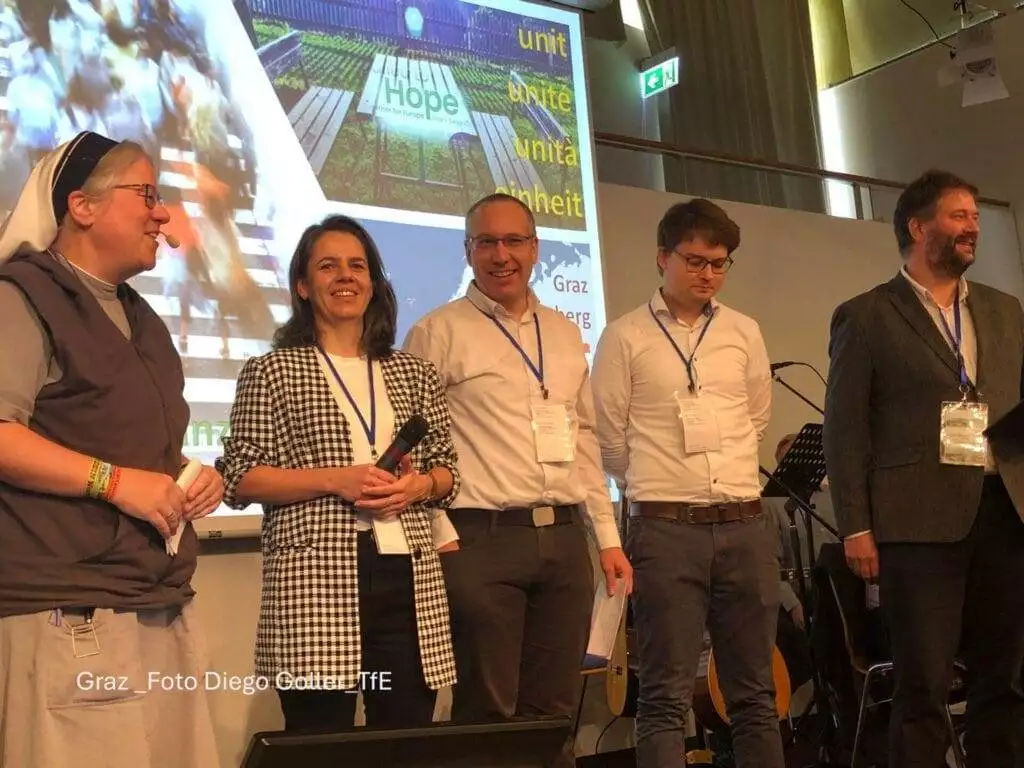
This year, from 31st October- 2nd November, more than 200 TfE representatives gathered in Graz-Seckau for the annual event, entitled “Called to Hope.” Participants represented 52 Movements, Communities and Organisations from 19 European countries and included Orthodox, Catholic, Protestant, Reformed and Free Church Christians, along with spiritual leaders, laypeople, civil authorities and political figures.
Among them were Bishop Wilhelm Krautwaschl of the host diocese, Bishop József Pál of the Diocese of Timișoara (Romania), Jesús Morán, Co-President of the Focolare Movement, Reinhardt Schink of the Evangelical Alliance in Germany, Markus Marosch of the Round Table (Austria), Márk Aurél Erszegi from the Hungarian Ministry of Foreign Affairs and former Prime Ministers Alojz Peterle of Slovenia and Eduard Heger of Slovakia. A delegation from the Interparliamentary Assembly on Orthodoxy, including Secretary-General Maximos Charakopoulos (Greece) and Advisor Kostantinos Mygdalis, also participated.
In his opening speech, Gerhard Pross (Esslingen YMCA), moderator of TfE and a witness of its beginnings, highlighted the many moments of grace experienced over the past 25 years. Bishop Christian Krause, who in 1999 was President of the Lutheran World Federation and co-signed the Joint Declaration, sent a message emphasizing the significance of this shared journey.
One participant shared, “Given the current situation in Europe, I arrived here discouraged and depressed. But these days have filled me with courage and hope.” A Ukrainian lady echoed this sentiment: “To be ambassadors of reconciliation, that is what I take away from this gathering. I live in a country at war, where reconciliation is not yet up for discussion. But I feel we can be ambassadors, because ambassadors are by definition diplomats who offer and prepare rather than imposing. This is the mission I feel called to bring where I live. I will try to do so, striving to be, as Jesús Morán said, ‘an artisan of a new culture.’”
In his address, Jesús Morán emphasized, “Change does not happen overnight. What we need are artisans and farmers of a new culture who work, sow and hope with patience. The ‘togetherness’ we speak of is not a simple union. Unlike union, unity regards participants as individuals. Its goal is community… Unity transforms those involved, because it reaches their essence without undermining their individuality. Unity is more than shared commitment; it is being united as one in commitment. While diversity in union can lead to conflict, in unity it becomes a source of richness. Ultimately, unity transcends participants and is received as a gift.”
During the gathering, participants solemnly renewed the Pact of Reciprocal Love, the foundation of their shared commitment, praying in four languages: “Jesus, we want to love one another as You have loved us.”
The event concluded with the idea of hosting a major event in 2027 to send a powerful message of unity and hope to Europe.
As a participant from the Netherlands reflected: “I am sure that work, life, love and suffering will bring good to Europe. It is very important to be ambassadors of reconciliation… Artisans are essential, to plant seeds of hope.”
Lorenzo Russo


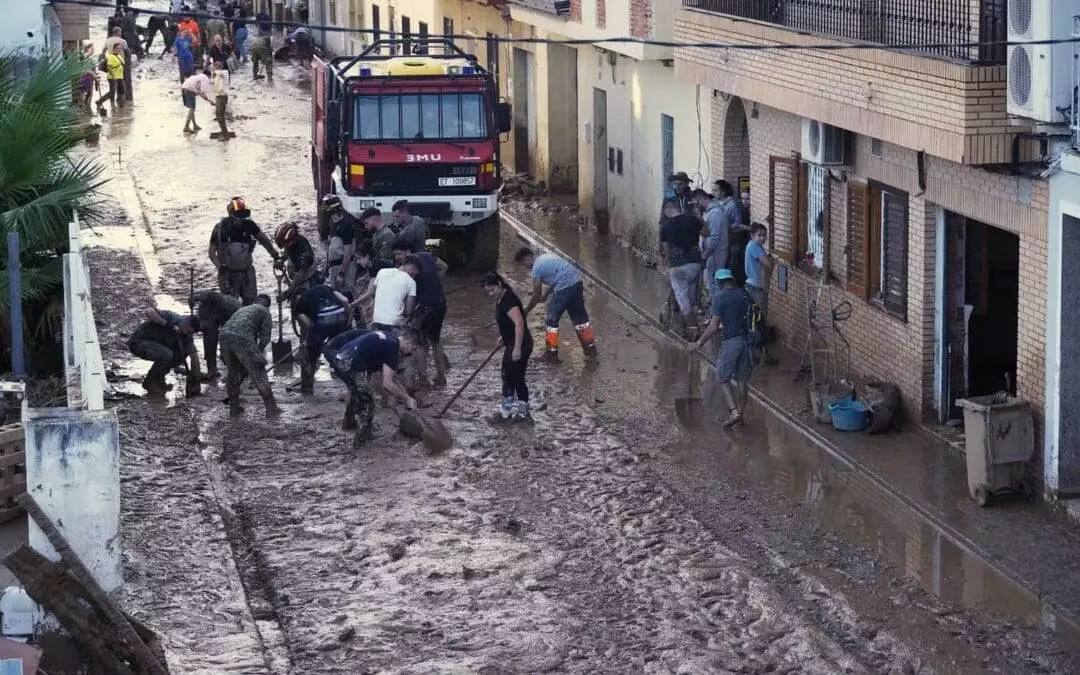
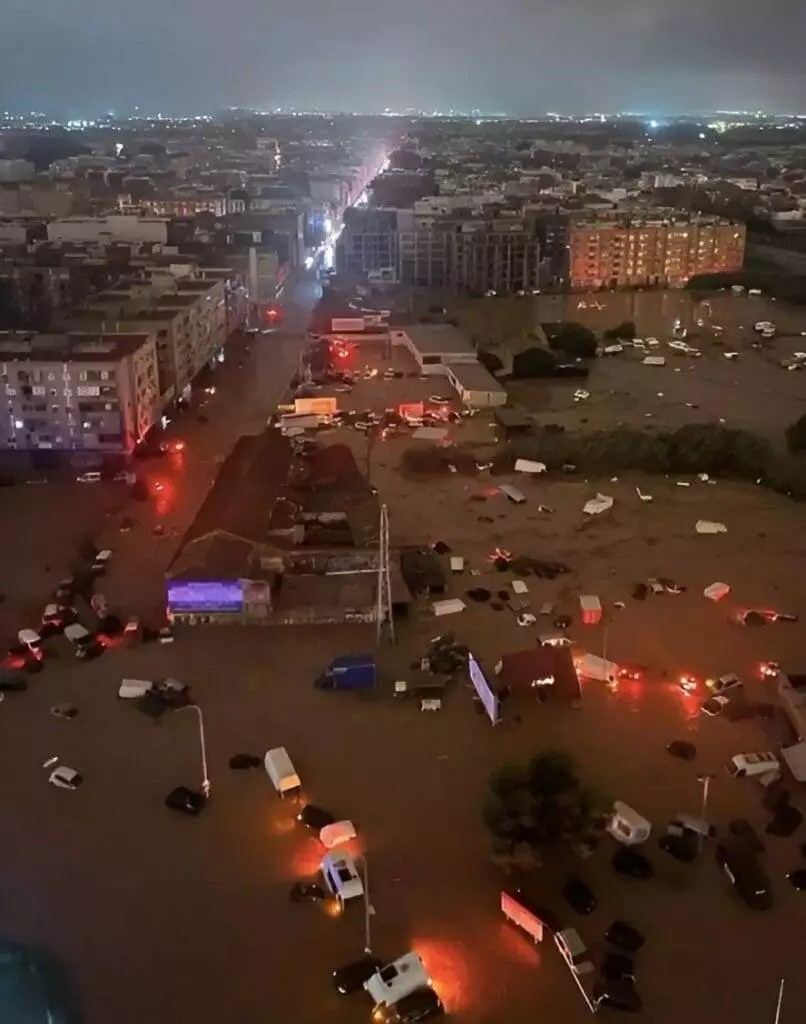
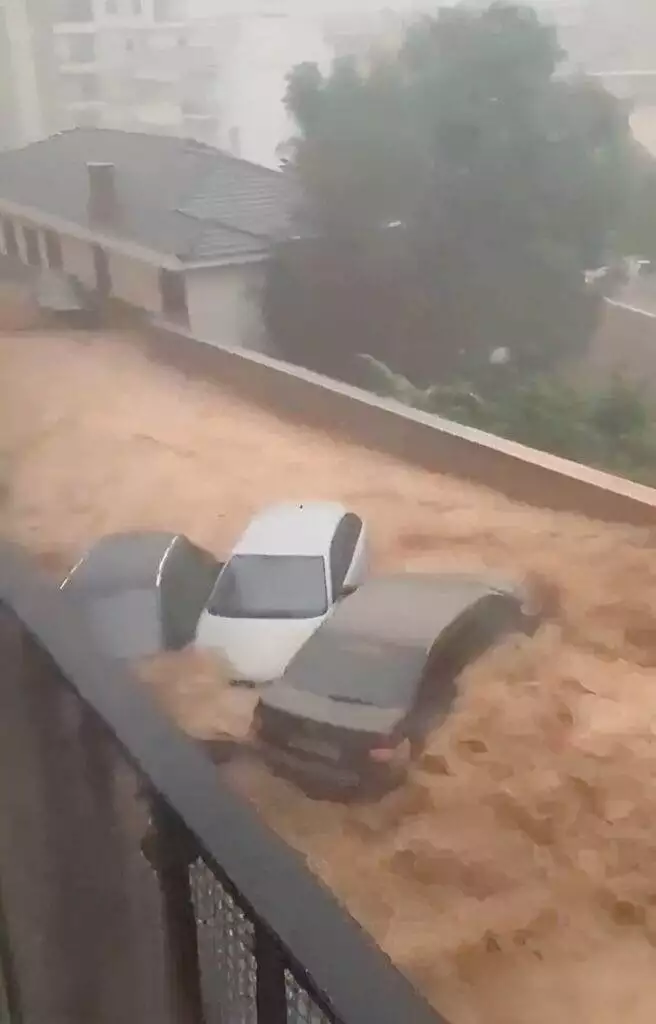
A few days ago, the Spanish province of Valencia experienced one of the greatest natural disasters in its history. Heavy rains, “DANA”, caused massive floods that swept through cities and towns in the region.
Currently, the toll is 214 dead and 32 people missing. An estimated 800,000 people, one-third of Valencia’s population, have been affected. Around 2,000 small businesses have been swamped with water and mud, losing everything. Cars floated through the streets, piling up like paper boats. The list of families who have lost their livelihoods has yet to be compiled. It is a major disaster made worse by the indefinite postponement of public works needed to prevent floods like these from occurring.
However, alongside this great disaster remarkable solidarity is being demonstrated. In the following days, as the waters receded, revealing a thick layer of mud covering everything, thousands of volunteers, mostly young people, began arriving in the affected area, armed with shovels and brushes, ready to help.
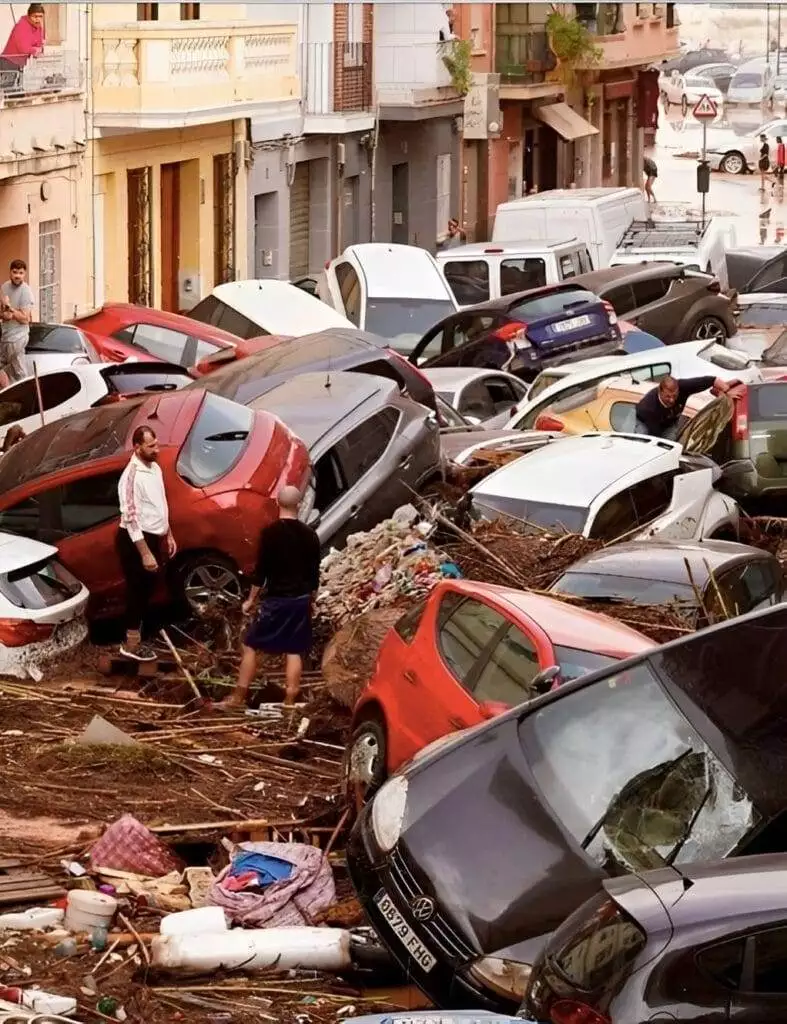
José Luis Guinot is a medical oncologist and president of the Viktor E. Frankl Association of Valencia, which provides emotional support for people affected by illness, suffering, death and other vital losses. The City Council asked him to help at a health and support centre set up for the occasion, where he could “listen and welcome those who need to share what they have experienced.” He said, “This has been and continues to be, an immense tragedy, far beyond anything we could have imagined. We couldn’t believe it was happening.”
He said that a few days later, while attending Sunday Mass, it saddened him to hear only prayers for the dead and those affected by the flood, without mention of any further support. He thought, “It’s not enough just to pray, even though we must pray a lot. We need to be close to people to give them hope. As Christians and as part of the Focolare Movement, we must offer that hope even in harsh experiences. Together and united, we can help each other overcome this situation.”
In one of the affected areas, a Focolare family with young children had their home flooded. Although they were unharmed, everything they owned was lost: washing machine, refrigerator, domestic appliances, furniture… Help from other families came quickly, someone washed their clothes, then another person gave them a new washing machine.
Eugenio, a member of the Focolare Movement who has a disability due to polio, was the President of the Federation of Adapted Sports in Valencia for many years. He couldn’t get around after the flood because of his mobility difficulty but by making phone calls he was able to contact local disabled associations asking for help. José Luis Guinot said, “We must offer ideas, help create solidarity and generate donations.” For example, these associations managed to obtain wheelchairs for those who had lost theirs in the flood.
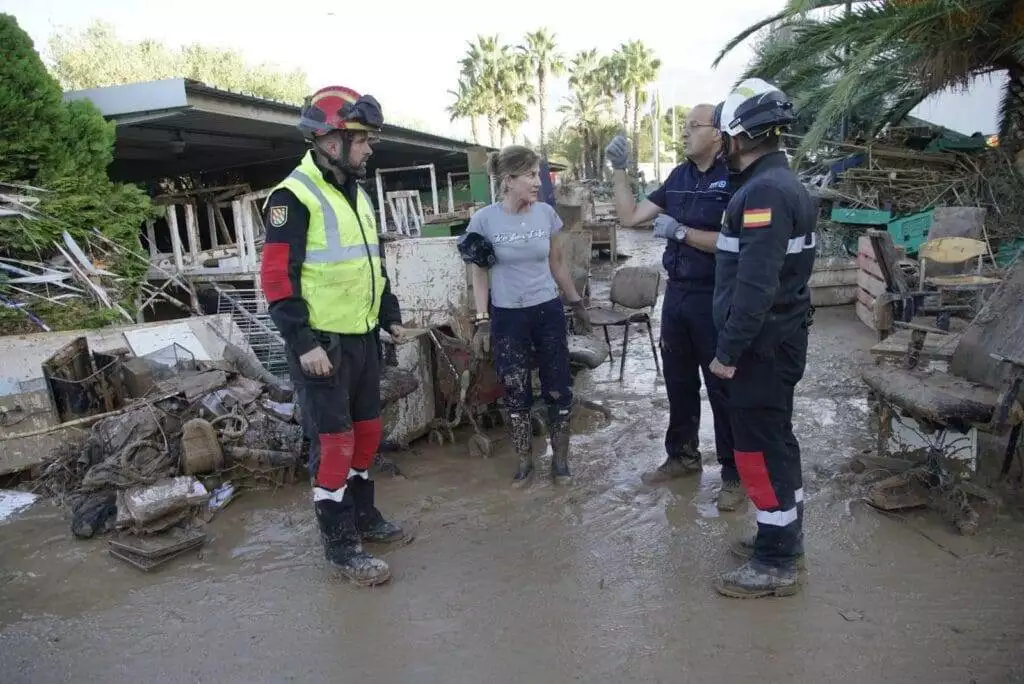
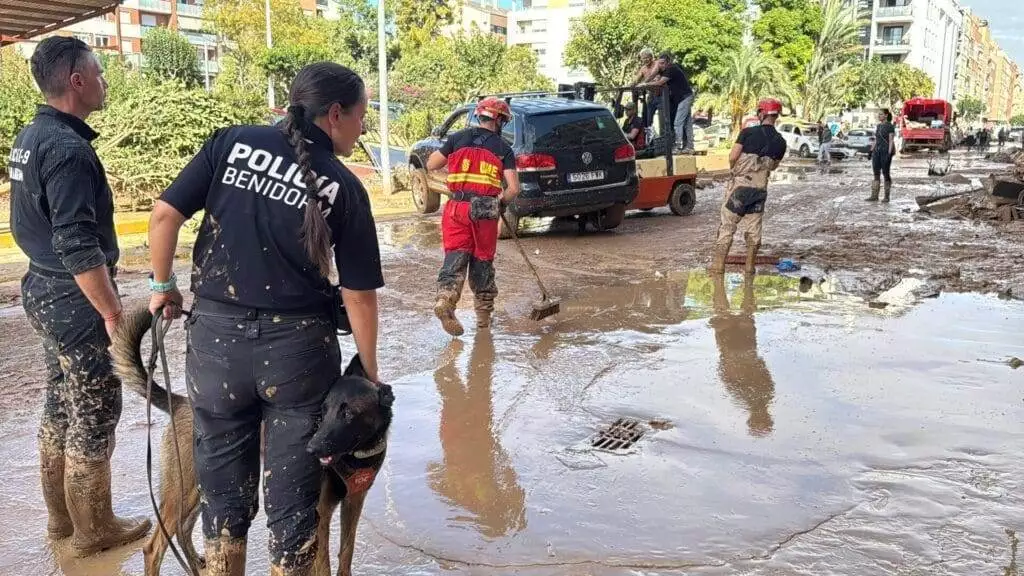
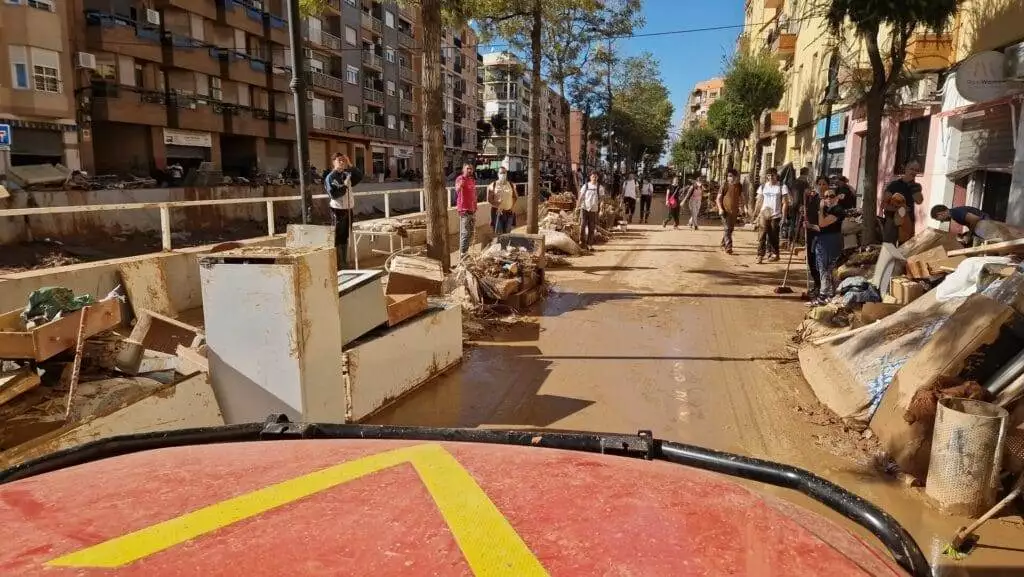
“I think this is a wake-up call for all of society. Spain is going through a period of politically polarized conflict,” José Luis reflected. “But there’s another side of society, many young people who we think are always glued to social media, yet they’re out here in the mud, seeking a society of solidarity, a united world, a society where fraternity is real. Until now, politicians hadn’t taken this message seriously. But now, no one can deny it.”
Next weekend, the Focolare community will meet to think and plan together how they can continue serving after these emergency days. As José Luis said, everyone can and must be involved, because, “two or three months from now, there will be a need for emotional support, for a sense of belonging to something, to a community or a parish… It will be a challenge for us: we’ll need to be on the phone a lot, visit people, listen to them, encourage them despite their hardships, but letting them know that we are with them. Even if you can’t leave your home, if you’re elderly or have small children… you can talk to your neighbours, make phone calls or offer words of encouragement. We must transmit a sense of community… I won’t try to explain anything to those who have lost loved ones or their livelihood, I will give them a hug and say: ‘We will help you find the strength to move forward'”. .
The Focolare community and the Fundación Igino Giordani, has launched a fundraising campaign. The funds collected will be managed locally to support the victims. The material damage and losses are immense. Many survivors have lost beds, tables, refrigerators, washing machines, cars, work equipment…
Contributions can be made through: Fundación Igino Giordani
CaixaBank: ES65 2100 5615 7902 0005 6937
Account Holder: Fundación Igino Giordani
Purpose: Emergencia DANA España
To claim a tax deduction, send your tax information to info@fundaciongiordani.org
Carlos Mana
Photo: © UME/via fotos Publicas
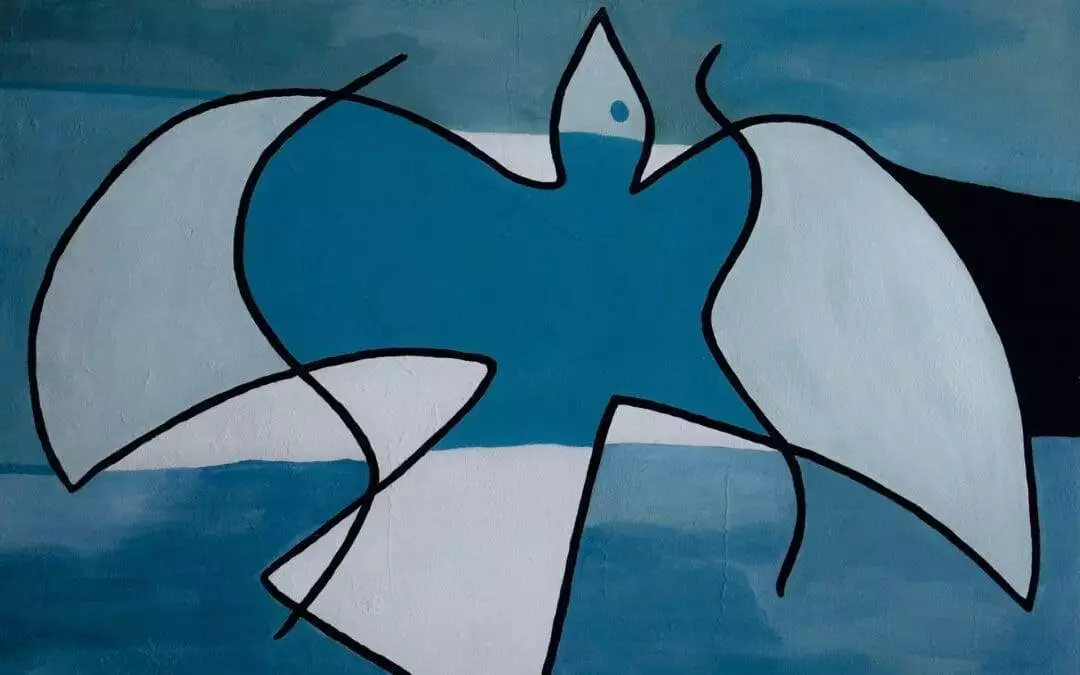
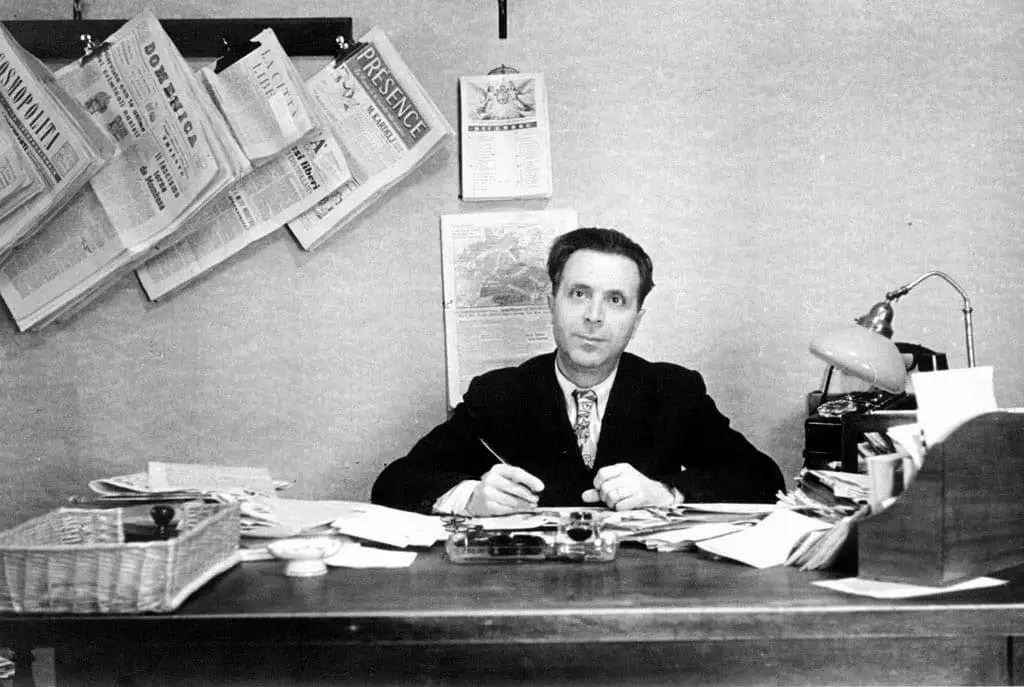
Peace is the result of a project: a project of fraternity between peoples, of solidarity with the weakest, of mutual respect. This is how a fairer world is built; this is how war is set aside as a barbaric practice belonging to the dark phase of the history of humanity. Many years have passed since the first publication of this writing, which is still very relevant today, at a time when the world is torn apart by terrible conflicts. History, Giordani tells us, could teach us a lot.
War is murder on a grand scale, clothed in a kind of sacred cult, as was the sacrifice of the first-born to the god Baal: and this is because of the terror it incites, the rhetoric in which it is clothed, and the interests it implies. When humanity will have progressed spiritually, war will be catalogued alongside bloody rites, the superstitions of witchcraft and the phenomena of barbarity.
War is to humanity, like illness to health, like sin to the soul: it is destruction and devastation, it affects body and soul, individuals and the community.
According to Einstein, human beings have a need to hate and to destroy: and war would satisfy this. But it is not so: most human beings, entire peoples, do not manifest this need. At any rate they repress it. Reason and religion condemn it.
« All things crave peace, » according to St Thomas. In fact, they all crave life. Only the insane and the incurable can desire death. And death is war. It is not desired by the people; it is desired by minorities to whom physical violence serves to secure economic advantages or, even, to satisfy harmful passions. Especially today, with the cost of war, the dead and the ruins, war manifests itself as “useless slaughter”. A massacre, and a useless one at that. A victory over life, and one that is becoming a suicide of humanity.
[…] Human ingenuity, destined for quite different purposes, has today devised and introduced instruments of warfare of such power that they strike horror in the soul of any honest person, especially since they do not only affect armies, but often still overwhelm private citizens, children, women, the elderly, the sick, and at the same time, sacred buildings and the most distinguished monuments of art! Who is not horrified at the thought that from the recent conflict, new cemeteries will be added to the numerous existing ones and new smoking remains of villages and towns will accumulate more sad ruins? Who, indeed, does not tremble to think how the destruction of new riches, the inevitable consequence of war, may further aggravate that economic crisis, by which almost all peoples, and especially the humblest classes, are afflicted? » [1]. […]
The futility was reaffirmed by Pius XII in 1951: « Everyone has manifested with equal clarity their horror of war, and their conviction that it is not, and now less than ever, a proper means to settle conflicts and restore justice. This can only be achieved by freely and legally consented understandings. If it could be a question of popular wars – in the sense that such wars respond to the votes and will of the people – it would only be in the case of such a flagrant and destructive injustice of the essential goods of a people as to revolt the conscience of an entire nation. » [2].
Just as the plague serves to infect, hunger to starve, war serves to kill: moreover, it destroys the means of life. It is a funeral industry: a factory of destruction.
Only a fool can hope to derive benefit from a massacre: health from a fainting spell, energy from pneumonia. Evil produces evil, as the palm tree produces dates. And the facts show, even in this field, the practical inconsistency of the Machiavellian saying that « the end justifies the means ».
The end may be justice, freedom, honour, bread: but the means produce such destruction of bread, honour, freedom and justice, as well as of human lives, including those of women, children, the elderly, the innocent of all kinds, that they tragically annul the very end that is proposed.
In essence, war serves no purpose other than destroying lives and riches.
IIgino Giordani, L’inutilità della Guerra (The Futility of War), Città Nuova, Roma, 2003, (third edition), pg. 3
da https://iginogiordani.info/
Photos: © Pixabay y CSC Audiovisivi
[1] Pio XII, “Mirabile illud”, 1950.
[2] Address to the Diplomatic Corps, 1-1-1951.
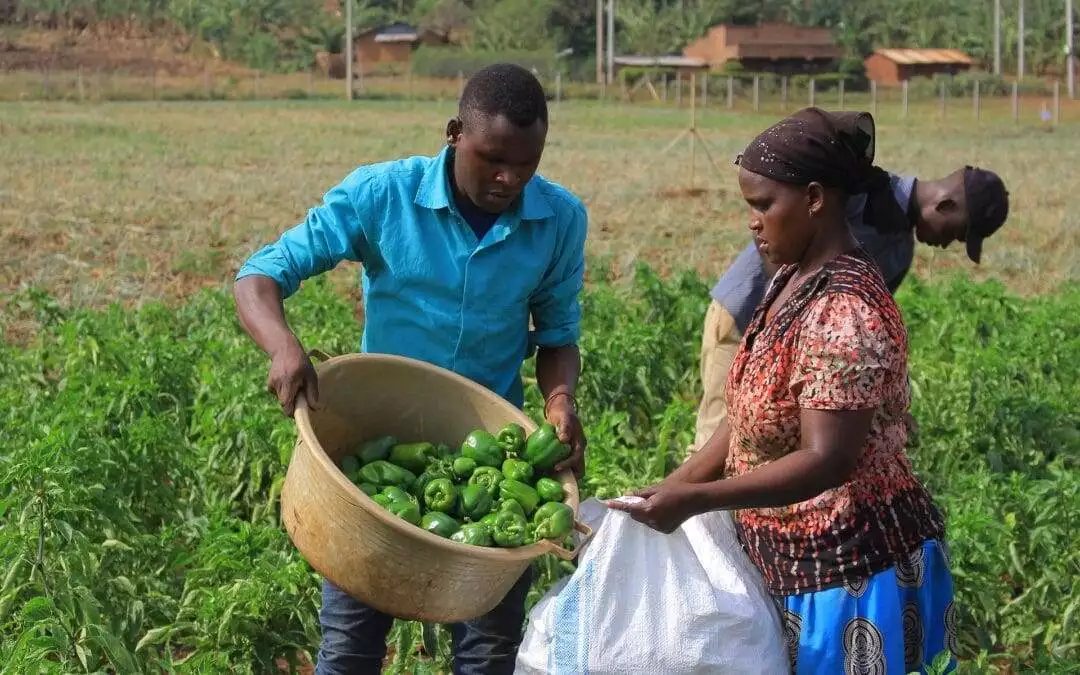
This verse comes at the conclusion of chapter 12 in the Gospel of Mark. Jesus is in the Temple in Jerusalem where he is both observing and teaching. Looking at the scene through his eyes, we become aware of the involvement of many different characters: people are simply passing through, some have come to worship, some are dignitaries in long robes and some are rich people throwing their substantial offerings into the temple treasury.
But here comes a widow; she belongs to a category of socially and economically disadvantaged people. Amid general disinterest, she throws two pennies into the treasury. Jesus, however, notices her and calls the disciples to him and instructs them:
They all gave out of their wealth; but she, out of her poverty, put in everything, all she had to live on.
‘Truly I say to you…’ These words introduce important teachings; Jesus’ gaze is focused on the poor widow, and he invites us to look in the same direction because she is a model for disciples.
Her faith in God’s love is unconditional; her treasure is God himself. She surrenders all that she is and has to him and, furthermore, she wants to give all she can to support those who are poorer than her. In a way, her trusting surrender to the Father anticipates the same gift of self that Jesus will soon make through his passion and death. It is that ‘poverty of spirit’ and ‘purity of heart’ that Jesus proclaimed and lived.
This means ‘placing our trust in God’s love and in his providence but not in his riches…We are “poor in spirit” when we allow ourselves to be guided by love for others. This results in our sharing and making what we have available to those in need; it may be a smile, our time, our possessions or our skills. When we give away whatever we have out of love, we become poor, with nothing of ourselves, with a free and a pure heart.’ [1]
Jesus’ proposal turns our usual way of thinking onto its head; those who are poor, insignificant and unimportant lie at the centre of his thoughts.
They all gave out of their wealth; but she, out of her poverty, put in everything, all she had to live on.
This Word of Life invites us to renew our total trust in God’s love and consider if our vision of life compares with his: do we see beyond appearances, do we avoid judging, do we take other people’s opinions into consideration if they are different from our own and do we see the positive in other people.
It suggests that there is an evangelical logic in freely giving to others and that doing so creates a peaceful community because it urges us to care for one another. It also encourages us to live out the words of the Gospel in everyday life even when other people may not notice, to trust when we are generous to others and to share whilst maintaining an attitude of balance and clear judgement. This Word focuses our attention upon the ‘least’ and asks us to learn from them.
Venant was born and raised in Burundi. He recounts: ‘In the village, my family had a good farm that always produced a good harvest. My mother believed that everything was providence from heaven and so, each year, she used to gather the first fruits and distribute them to our neighbours, starting with the neediest families and then allocated only a small part of what remained to us. I learnt the value of selfless giving from her example. Thus, I understood that God was asking me to give him the “best part”, indeed to give him my whole life.’
Edited by Letizia Magri & the Word of Life Team
© Photo by Leonard Mukooli da Pixabay
[1] Cf. C. Lubich, Word of Life, Nov 2003
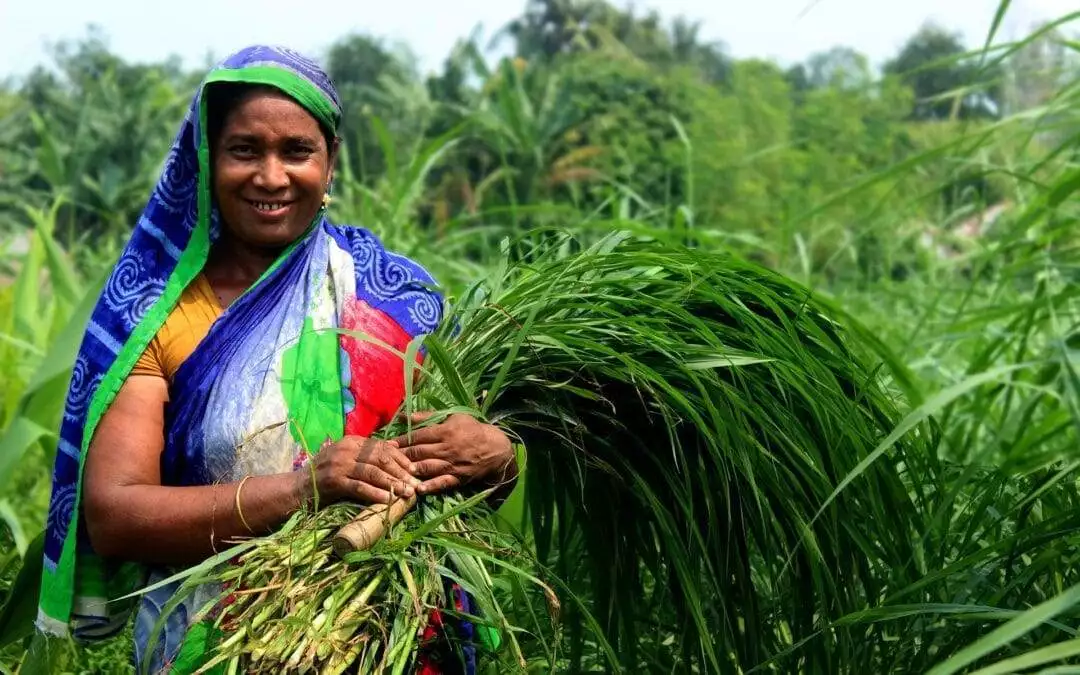
Every day we are bombarded by images that emphasise the value that our society places upon appearance. Globalization imposes a model in every part of the world whereby wealth, power and physical beauty seem to be the only values. Yet it is enough to stop and observe the people we meet daily in our cities (on trains, in the underground, on the street) to realize that there is a different reality, made up of small daily gestures of solidarity: for example, there are parents who accompany their children to school, nurses who get up at dawn to go to work alongside people who are suffering and there are workers who carry out their tasks with great commitment in factories, stores andoffices. In addition, there are countless voluntary activities.
There is a need to look truthfully at the world and go beyond appearances. We should value the positive in each person and realize that it is these small daily gestures of support and solidaritythat keep society on its feet. Even more revolutionary are the actions of those who, despite living in situations bordering on poverty, realize that they can still “give” in some way. Theywelcome others, share a meal or a room because there is always someone who has “more need” than themselves.Furthermore, they do this out of a sense of justice and with a generous and selfless heart.
We know that giving does not refer only to material things. Chiara Lubich used to tell us,: let this be the word that gives us no respite. “Let us always give; let us give a smile, understanding, forgiveness, a listening ear; let us give to others by drawing on our intelligence, our will, our availability; let us give our time, our talents, our ideas (…), our actions; let us share our experiences, our abilities and our possessions. By constantly reviewing what we no longer need and and sharing with others, we ensure everything circulates. ‘Give’ is the word that could accompany us always.”1
This idea, then, is an invitation to have a generosity that comes from within, from the purity of hearts that knows how to recognize the suffering of humanity and see themselves reflected in the disfigured faces of their neighbours. This is the very gift that makes us free and more capable of loving.
This what Etty Hillesum experienced. She was, a young Dutch woman who lived the last years of her life in a concentration camp before dying in Auschwitz. She was able to love the beauty of life till the very end and gave thanks for “this gift of being able to understand and ‘read’ others. Sometimes I see people people like houses with an open door. I go in and wander around corridors and rooms: each house is furnished differently but, basically, they are the same as one another – consecrated dwelling places” (…). And there, in those hovels, populated by crushed and persecuted men and women, I have found the confirmation of this love.” 2
There is a logic in freely giving to others because it creates a peaceful community and urges us to care for one another.It helps us focus upon profound human values in our everyday lives, without attention to outward appearance. It is a change of mindset that can become contagious.
Venant was born and raised in Burundi. He recounts, ” In the village, my family had a good farm, that always produced a good harvest. My mother believed that everything was a gift from nature and so, each year, she used to gather the first fruits and punctually distribute them to our neighbours, starting with the neediest families and then allocated only a small part of what remained to us. I learned the value of selfless giving from her example ”.
[1] CH – April 23, 1992
[2]Etty Hillesum, Diary
©Photo by Mdjanafarislam – Pixabay
THE IDEA OF THE MONTH is currently produced by the Focolare Movement’s “Centre for Dialogue with People of NonreligiousBeliefs”. It is an initiative that began in 2014 in Uruguay to share with non-believing friends the values of the Word of Life, i.e. the phrase from Scripture that members of the Movement strive to put into practice in their daily lives. Currently, THE IDEA OF THE MONTH is translated into 12 languages and distributed in more than 25 countries, with adaptations of the text according to different cultural sensitivities. https://dialogue4unity.focolare.org/en/
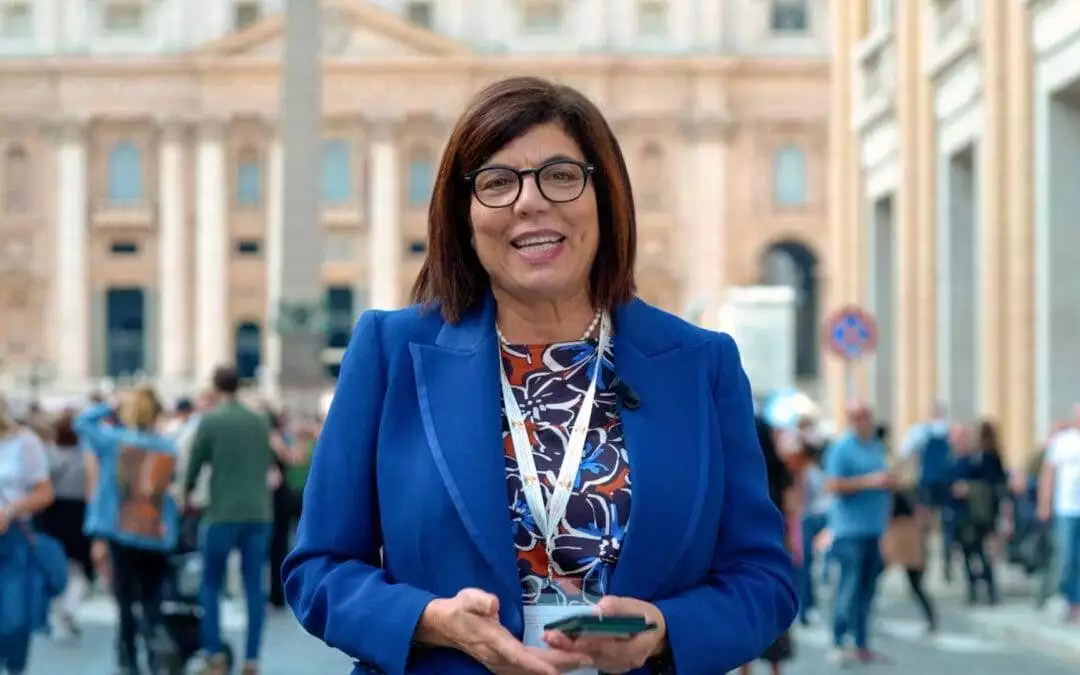
‘It has been an immense grace for me, a gift from God that is not only a personal gift, but i consider it a gift for the whole Focolare Movement’ with these words President Margaret Karram opens some reflections on the Synod experience and the final document of the 16th Ordinary General Assembly of the Synod of Bishops (2-27 October 2024) “For a Synodal Church: communion, participation, mission”.
Activate subtitles in your language

In the Waiting Room
A few months ago, I was diagnosed with a tumour. The doctor suggested starting with an alternative treatment and then finishing with radiotherapy.
On the first day of my radiotherapy cycle, I found myself in a large waiting room, full of patients, heads down. I checked in by presenting my magnetic card, standing because there were no more seats. That was the most intense moment, where I embraced and accepted the pain this situation caused me.
On the second day, I asked God for strength and began talking first with one, then two and even three other patients, asking where they were from and how their journey had been, as they came from various places. Day by day, the waiting room became a place of joy. The atmosphere changed – love, patience and calm filled the air. We even gave each other nicknames based on famous people.
On my last day of treatment, I brought sweets for everyone and we put on hats to take pictures. Finally, we placed our right hands together in the centre to make a pact of brotherhood: “until death do us part.”
The Director of the service called me to give me the report for my specialist and she said goodbye with a hug and a kiss, saying, “We’ll miss you a lot. You made us laugh so much… I could always hear you from my office.” As I left, I found myself back in the waiting room, everyone was standing and applauding me. Tears started to fall. I waved goodbye and, already out on the street, I said to myself, “How beautiful it is to put the words of the Gospel into practice. With a little love, everything is transformed.”
J.J.A
The Employee
At the factory, we needed someone to do the cleaning: the offices, kitchen, bathrooms and other shared areas.
During my working hours, I often have long phone calls and whenever I can, I take the opportunity to go for a walk to spend some time outdoors in the sun. One day, I set out determined to find someone from the area who could help with the cleaning. Just half a block away, I saw an older man who was mowing the grass in front of his house. I approached him, introduced myself and mentioned that we were looking for someone to assist with cleaning. I asked if he knew anyone looking for work.
He looked at me and said that his son could do the job. I replied, “Alright, tell him to come to see me tomorrow.” He then explained that his son had multiple sclerosis. “Tell him to come tomorrow,” I repeated.
The next day, Mauro arrived – a 36-year-old man. He told me that he was part of a research program in which he received a special medication injection once a week, which made him weak the following day. The treatment wasn’t always on the same day each week. He mentioned how hard it was for him to find a job due to this challenge.
Mauro has been with us for five months. Not only does he carry out the agreed cleaning tasks, but he also looks after the garden, maintenance, and other duties.
Reciprocity, giving and receiving, community and valuing each person is the way I want to live and work.
V.C.P.
Edited by Carlos Mana
Photo:© Truthseeker08 – Pixabay
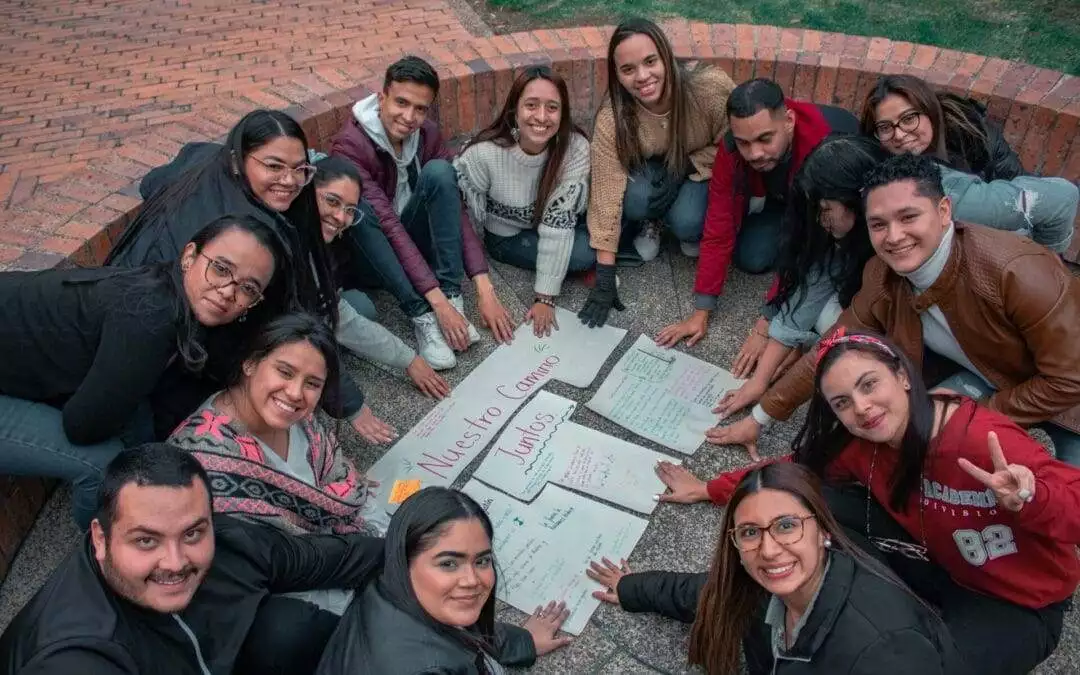
Speaking from the stage of the Genfest 2024 in Aparecida, Edy, a Peruvian Catholic, accompanied by 13 other young people from various Christian Churches and Latin American countries, said, “Ikuméni has transformed the way we young people relate to each other, the way we look at each other and how we can have unity in diversity”.
But what is Ikuméni? It is a four-month training course in a leadership style based on the art of hospitality, cooperation and good practice. Edy continued, “A highlight was our final face-to-face meeting”. Pablo, a Salvadoran Lutheran, immediately intervened: “One thing that had a big impact on us was learning to generate cooperation initiatives together, which we call good ecumenical and interreligious practices, working alongside people from different Churches and religions, willing to serve in the challenges we face today in our cities and rural areas.”
Ikuméni offers young people various paths for implementing good practices: this is how initiatives for peacebuilding, conflict resolution, integral ecology and sustainable development, humanitarian issues and resilience have emerged, working together not only with people from different Churches, but also with civil society to care for one another.
“In my case, we started a peace-building initiative in the social sciences faculty of the university where I study,” shared Laura Camila, a Colombian who lives in Buenos Aires and is a member of a Pentecostal ecclesial community. She stressed, “We need to work together for peace, we really need it. So in collaboration with various Churches, initiatives were born to strengthen resilience by creating ecumenical and interreligious networks and workshops for dialogue and training in conflict resolution”.
The Ikuméni training itinerary is a scholarship program and therefore there is no cost for the participants who are selected to participate in the course. It requires a commitment of 4 hours per week and attendance in person at the regional Ikuméni meeting. Young people aged 18-35 years old who have completed secondary education are eligible to participate. It is organized by CREAS (Regional Ecumenical Advisory and Service Centre) with the collaboration of several organizations.
Enrolment is currently open for the 2025 program. All the information is available here: https://ikumeni.org/
Have a look at the video we filmed a few months ago in Buenos Aires during the team meeting.
Carlos Mana
Photo: © Ikuméni
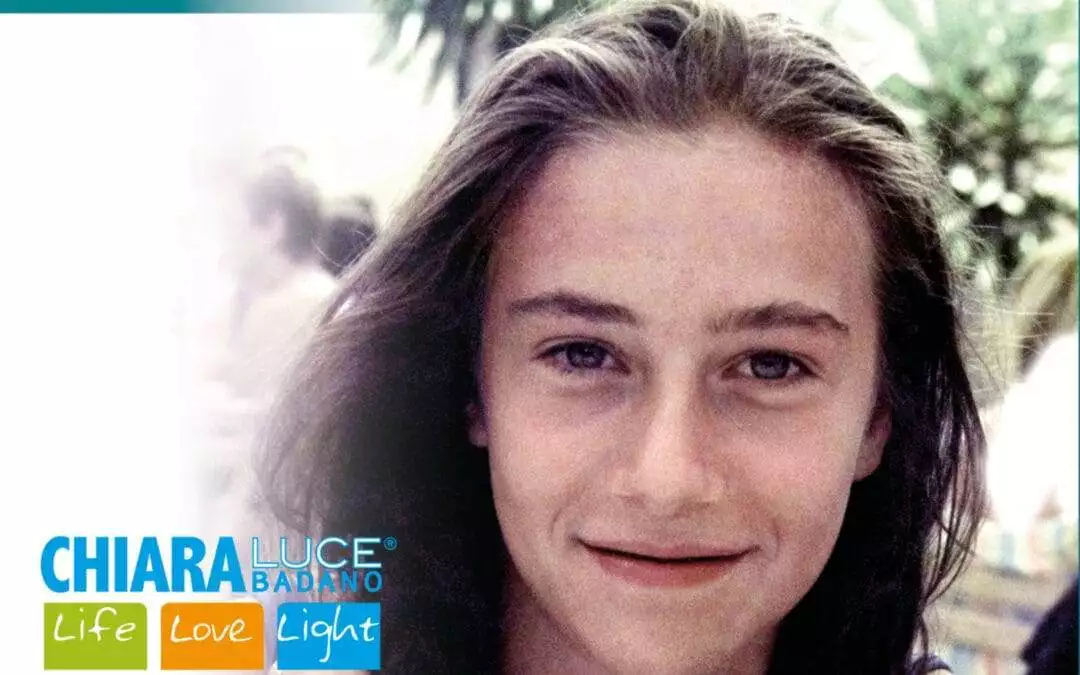
A young girl in love with God who discovered she had bone cancer at the age of 17, yet, even in her illness, she never stopped being nourished by her love for God which was stronger than anything else. “For you Jesus. If you want it, I want it too!”
She was in the fourth year of school when she got to know the Focolare Movement. She then joined a group of Gen (New Generation) who are the young people of the Focolare. She did not talk about Jesus to others, she communicated him with her life. In fact, she said: “I don’t have to talk about Jesus, I have to give Him… first of all by being in an attitude of listening, but above all by my way of loving”.
“Chiara Luce is the name I thought up for you. Do you like it?” wrote Chiara Lubich, foundress of the Focolare Movement, in response to one of Chiara Badano’s letters. “It is the light of the Ideal that overcomes the world…”
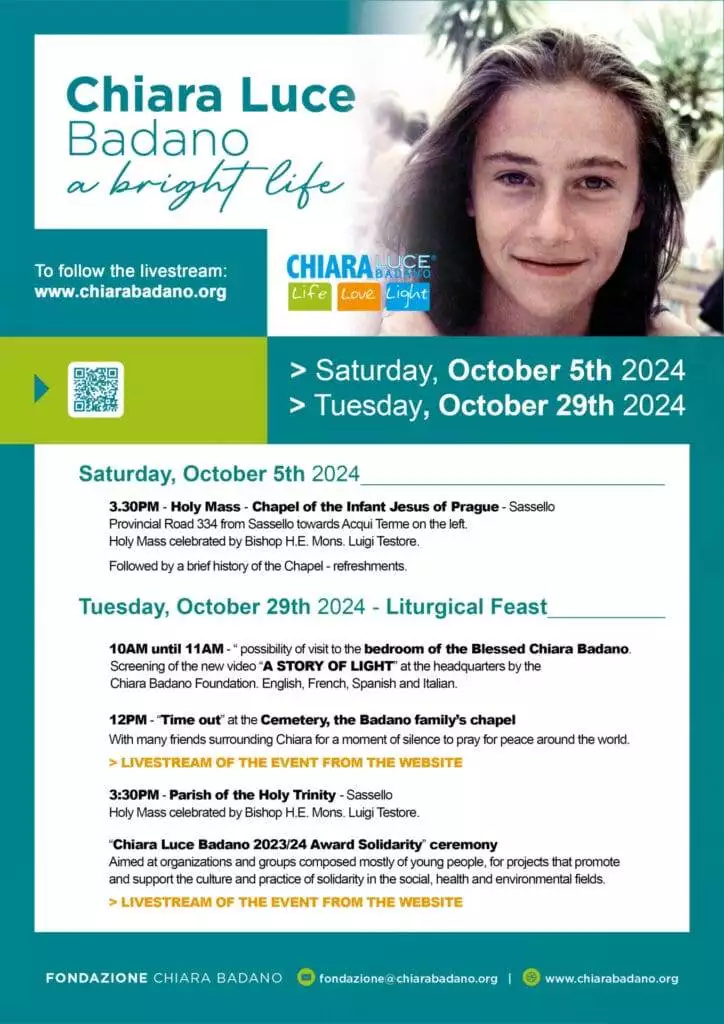
Chiara Luce left for Heaven on 7 October 1990 pronouncing these final words before she died: “Mamma, ciao. Be happy, because I am”, as the climax of suffering lived in the radiant light of faith. Her short life now serves as an example to follow for thousands of young people all over the world. The Chiara Badano Foundation set up to keep Blessed Chiara’s memory alive and eternal, and to preserve the places associated with her, continues to receive many requests and reports confirming that Blessed Chiara Luce is known and loved all over the world, especially among young people.
On her birthday which is her liturgical feast day (Chiara was born on 29 October 1971) there will be an intense day of celebrations in Sassello (Italy) where she was born, to which everyone is welcome. It will also be possible to follow some of the events via live-streaming on Chiara Badano’s official website: Fondazione Chiara Badano.
For full details of the programme, please see the poster (at UTC time+1).
For further information and enquiries, please contact: fondazione@chiarabadano.org
Lorenzo Russo
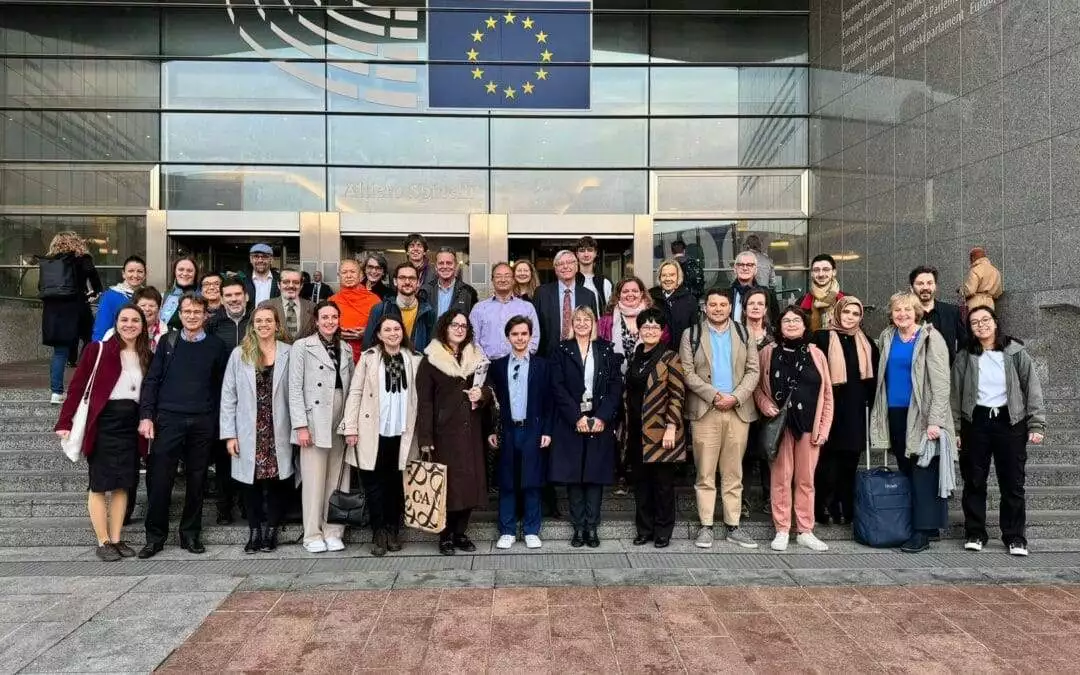
On October 16, 2024, the final conference of the DialogUE project, an initiative to promote intercultural and interreligious dialogue in Europe, was held at the European Parliament building in Brussels, Belgium. The event was hosted by MEP Catarina Martins (GUE-NGL) and was attended by 50 representatives of the project partners, European institutions, religious leaders and members of civil society.
Focus of the event was the presentation of recommendations for the European Union from the DialogUE project – “Diverse Identities Allied, Open, to Generate a United Europe” on issues crucial to the current European and world situation, summarized in the “DialogUE Kit” brochure.
“You can see with the naked eye that something happens when people of peace talk,” said MEP Catarina Martins of the European Left, who opened the meeting in a hall of the European Parliament. “And this is just such a moment. Dialogue is a powerful tool for peace.”
The project stems from the decades-long commitment of New Humanity, an expression of the Focolare Movement, which has significantly promoted good practices in interreligious and intercultural dialogue. The approach fosters mutual respect and trust, essential elements for fruitful dialogue and collaborative efforts.
Francisco Canzani, general counselor for the Culture and Study area of the Focolare Movement emphasized in his speech that dialogue is built from three elements: attitudes, tools, and method. On the latter, the method of differentiated consensus and qualified dissent, which originated within the platform between Christians and Marxists DIALOP, is now a source of inspiration and practice for other dialogue groups.
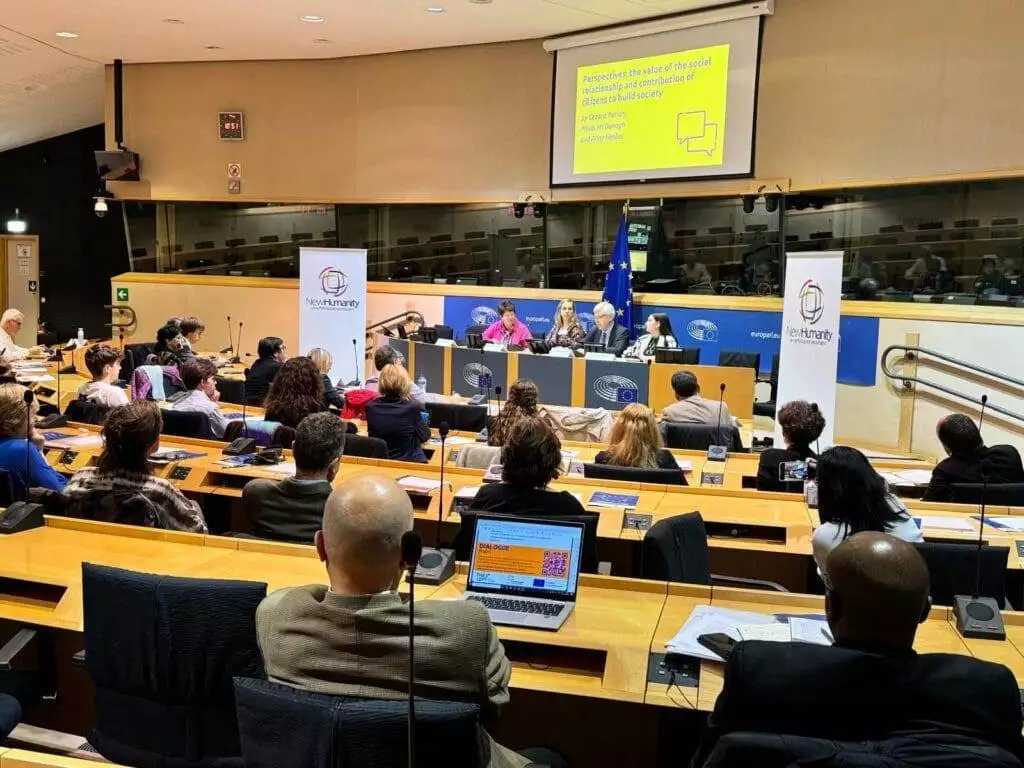
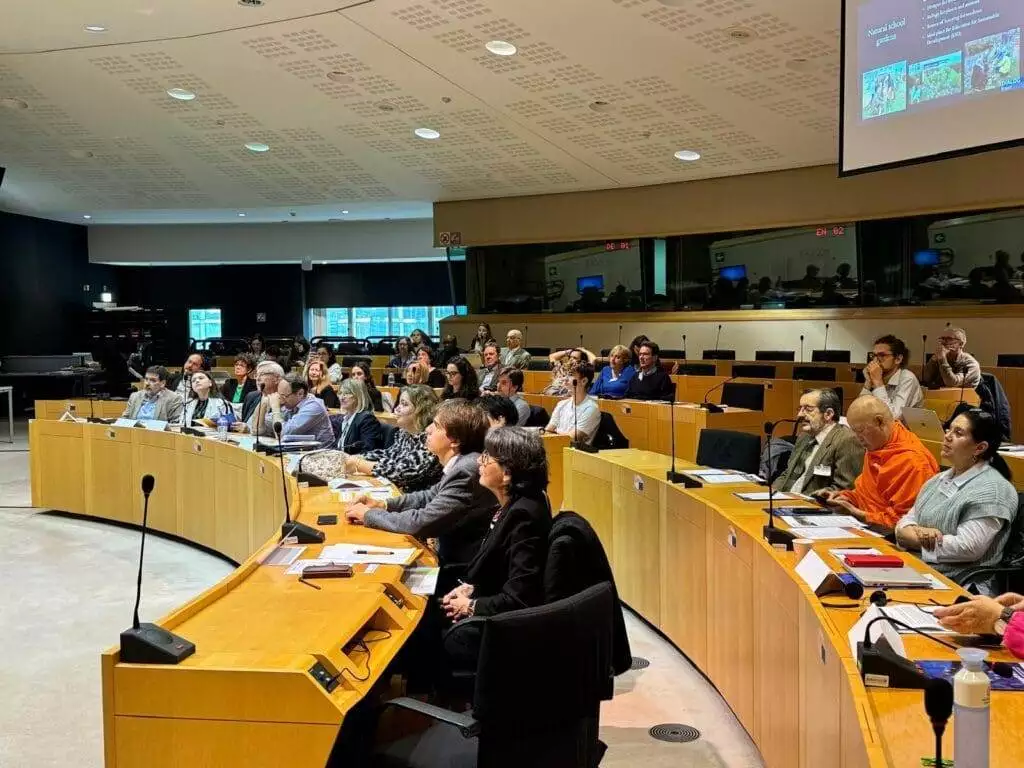
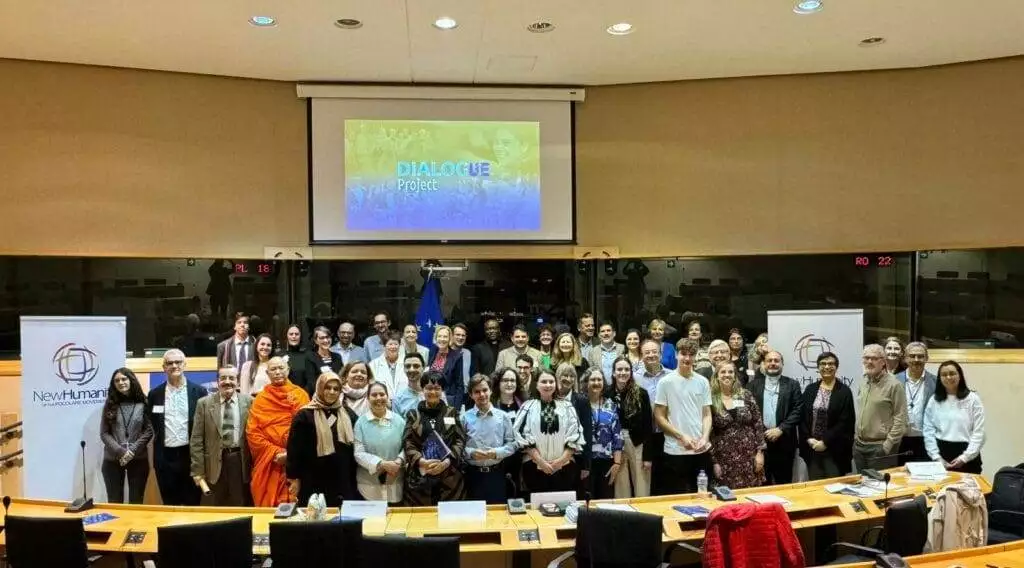
In 2023 and 2024, the project involved 4 dialogue groups in 3 main areas: Communication, Ecology and Social Policy. The dialogue groups were:
The project mainly facilitated the dissemination of the meaning and methodologies necessary for effective dialogue. It also brought together international experts on these three key challenges, who helped participants understand the main EU documents on these topics and explore the different dimensions of each theme.
The groups worked together to identify shared principles and common proposals. Their work led to recommendations that were submitted to the European Parliament.
The DialogUE project — was promoted by a consortium of 14 civil society organizations from 9 EU member countries.
Among the main results achieved by the project: 12 international meetings and a training for facilitators and experts; the direct involvement of 1,200 citizens and more than 10,000 indirectly; and the creation of the “Dialogue Kit,” intended for educators, NGOs, and policymakers to promote dialogue and social cohesion. These meetings resulted in shared recommendations for EU decision makers to promote more inclusive and sustainable policies.
In the afternoon of October 16, a discussion group hosted by KU Leuven (University of Leuven) in Brussels was held, during which participants analyzed some good practices that emerged from the project and discussed how to further disseminate these initiatives through the ‘Dialogue Kit.
Ana Clara Giovani – Tomaso Comazzi e Luisa Sello
Photo: ©Marcelo Pardo
For information about the project: https://www.new-humanity.org/en/project/dialogue/
To review the event click here:
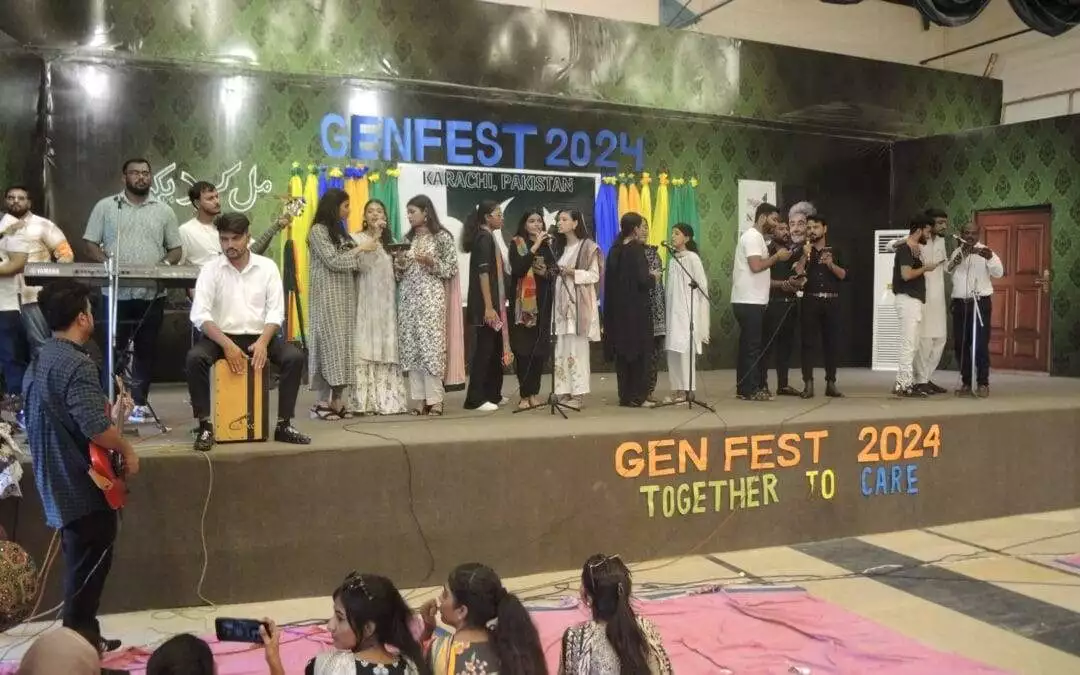
The young people of the Focolare Movement, in conjunction with the Genfest in Brazil, also organised 44 local editions of the Genfest in various countries around the world. Here are some pictures of the events in the various countries and some short testimonies from Ivory Coast, Ethiopia, Egypt, Jordan, Slovakia and Korea.
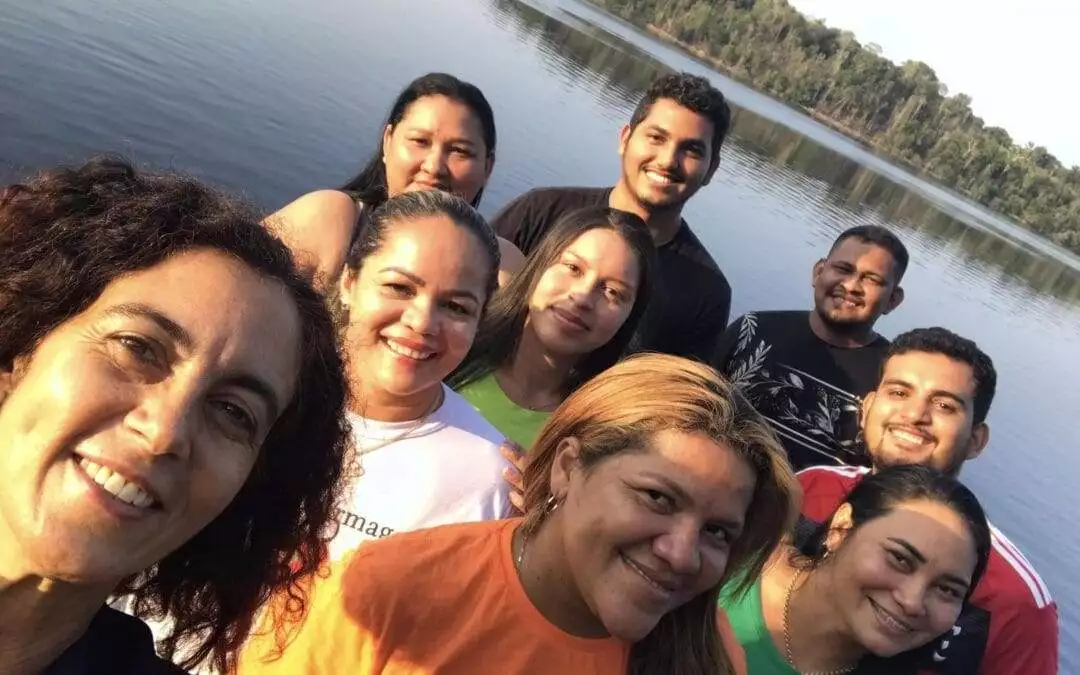
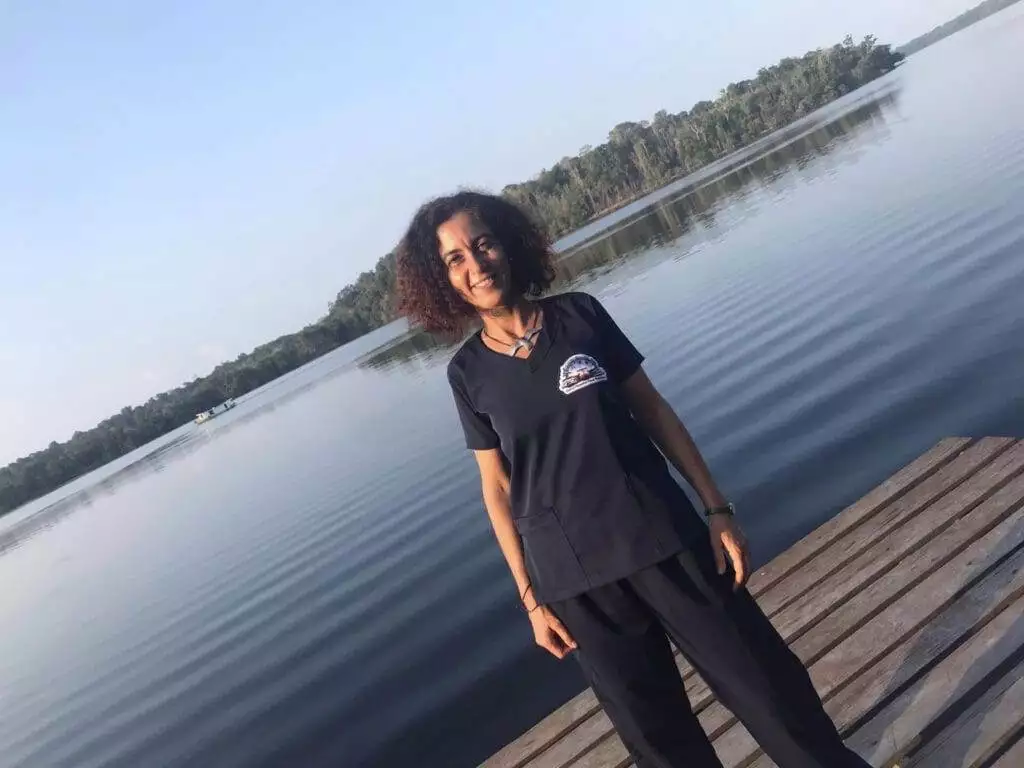
Paola Iaccarino Idelson is a nutritionist biologist and expert in nutrition. She lives in Naples, southern Italy. I learned from a friend that she went to Brazil during this summer 2024. Intrigued, I tried to find her on social networks. I was amazed by the beautiful photos she had taken during her trip and by the powerful stories, which revealed a profound experience. I therefore decided to contact her for an interview.
Paola, from Naples to Brazil: why did you choose to make this journey?
It is a very long story. I was in Brazil for the first time fourteen years ago in Florianópolis. I went there because I have a passion for the Brazilian language. But I didn’t want to go there as a tourist, so through a doctor friend, I went to help a colleague of hers as a volunteer. We supported a priest in his daily mission. He had opened a school to help children prevent delinquency, and started a surfboard repair shop to provide decent work for local youth. For three weeks I weighed and measured the height of the children in that school: it was such a strong, intense and beautiful experience that when I returned to Italy I had to remove it from my mind so that I could continue living my life as before.
And then? What happened?
Last year I broke up with my boyfriend who didn’t like Brazil. So I said to myself: the time has come to take up this dream once more. But again I wanted to experience it not as a tourist, but by helping the local community in some way. I talked about it with a focolarina friend and she put me in touch with the Focolare community in Amazonia.
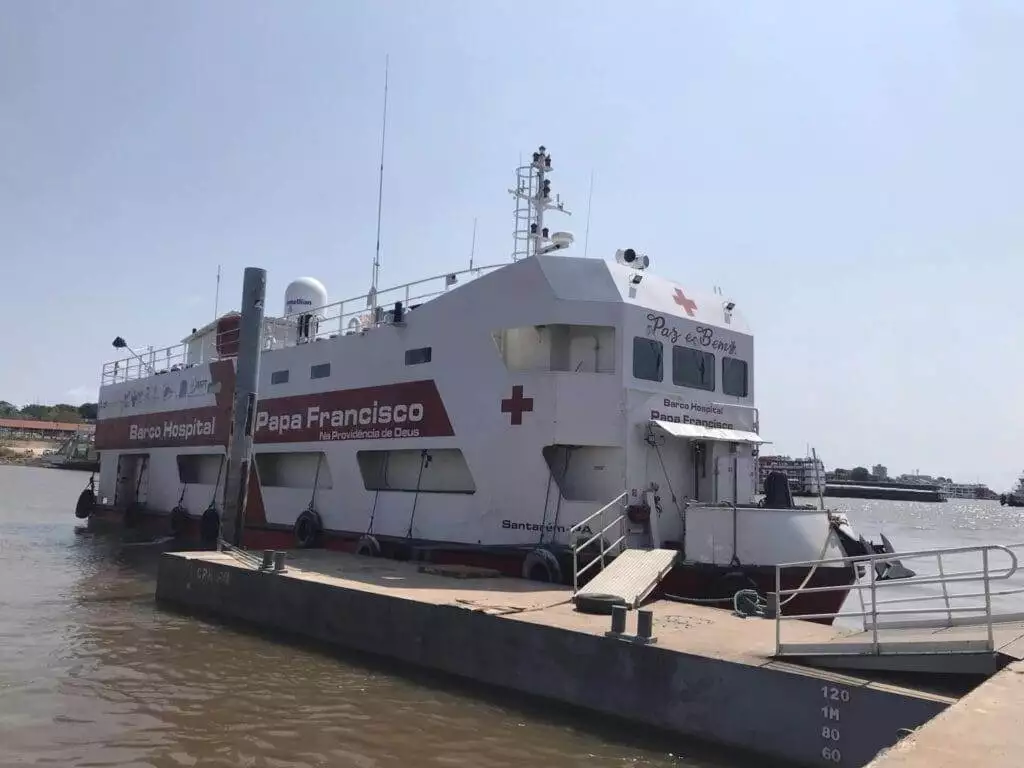
I would have liked to volunteer as a nutritionist, my profession, but I was willing to do anything. One of the focolarine in Brazil, Leda, told me about the hospital ship ‘Papa Francisco’ where I could work. So I finally left in August 2024. Leda was an angel, she organised my whole itinerary, put me in touch with the Focolare community and took care of me for the whole time there in Brazil.
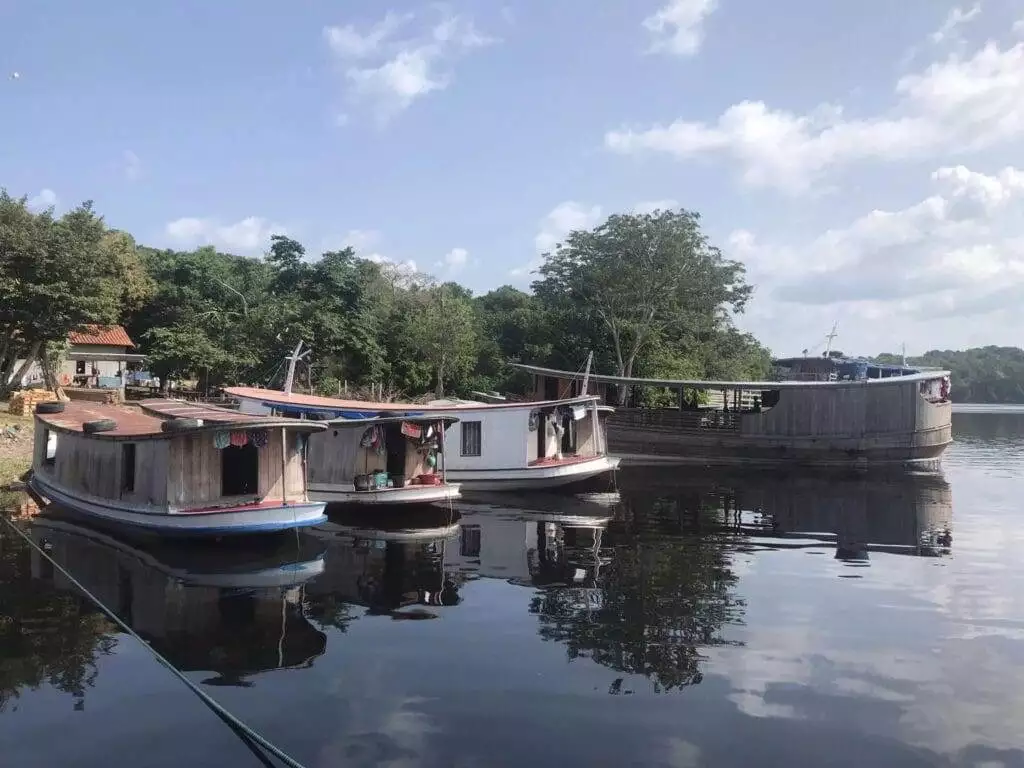
The hospital ship Papa Francisco: what did you do there?
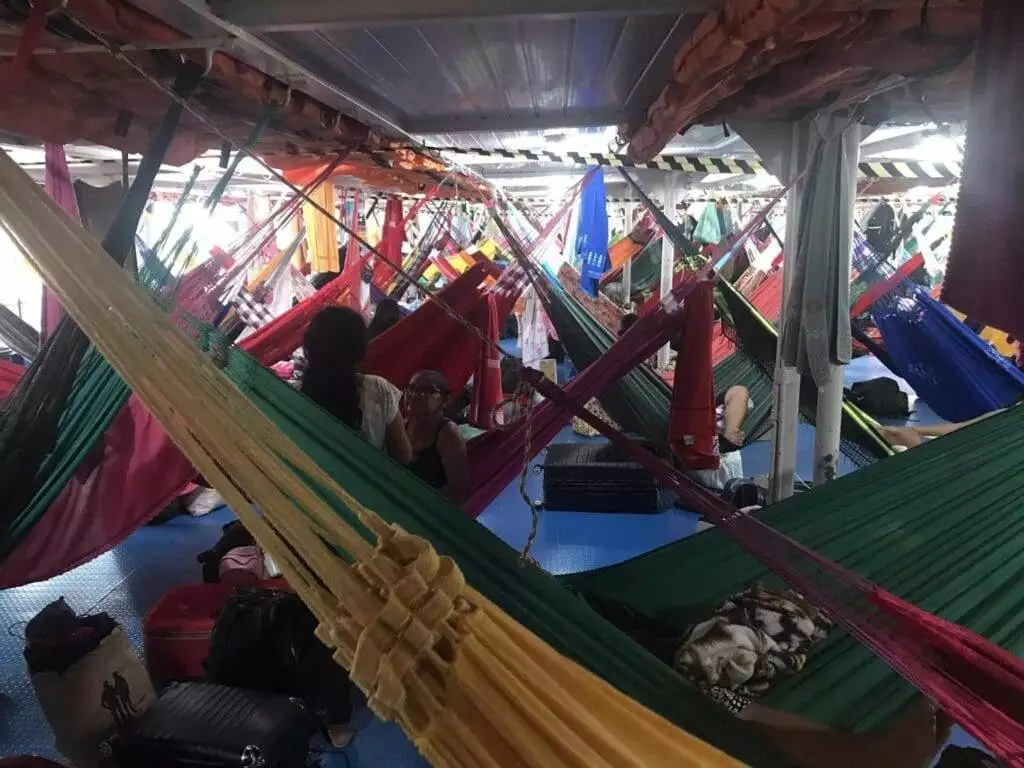
There was no specific task for me, as an expert in nutrition. There were about ten doctors, each with their own consulting room. I helped where I could. The alarm clock was set for 6 am as by 6.30 people were already arriving from neighbouring villages to be treated. We had to do reception, register the arrivals and manage the influx. I also did nutritional counselling and realised that there was an overweight and obesity problem, especially in women. I wondered a lot about the reasons for such conditions as it was quite a common problem there. Talking to someone, I realised the problem was a lack of physical activity and widespread use of sugary drinks, sweets and meat.
You were also able to experience first hand a lot of poverty….
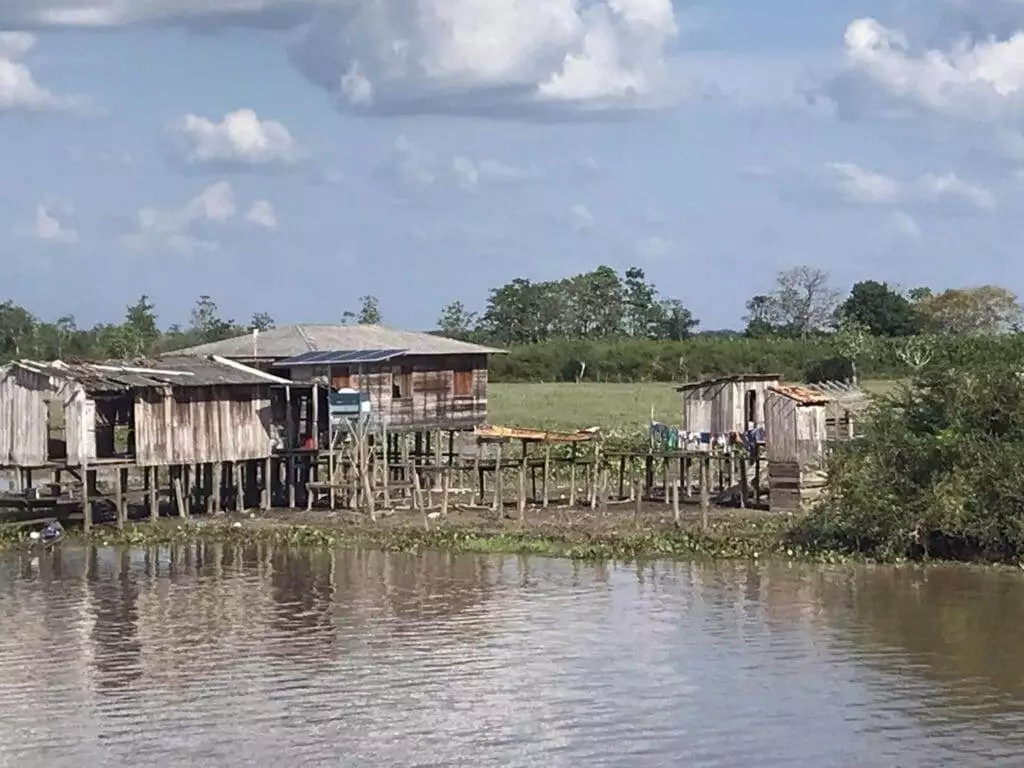
I saw really poor but very dignified people who manage to get their children to study. I was very impressed by one family. There are 10 children, you could see that they live in very poor conditions. The father also has some health problems. Despite that, the parents managed to get their children to study, and one of the daughters is about to become a photographer. Great dignity despite those living conditions.
You saw an abundance of diversity, from the natural environment to the colours of people’s skin, from food to smells to tastes…
It was one of the things that struck me most about this trip and that I carry with me. A huge diversity in the way of life, especially in the incredible variety of fruits, vegetables, grains, flowers, plants, the colours of the rivers, the animals, the people. When I registered the arrivals for the visits, in the computer you had to write the colour of the skin and I had four options related to the diversity of ethnicities, origins, skin colour… This diversity was a strong experience and I am convinced that it is a great richness.
How did the Focolare community welcome you and help you in this experience?
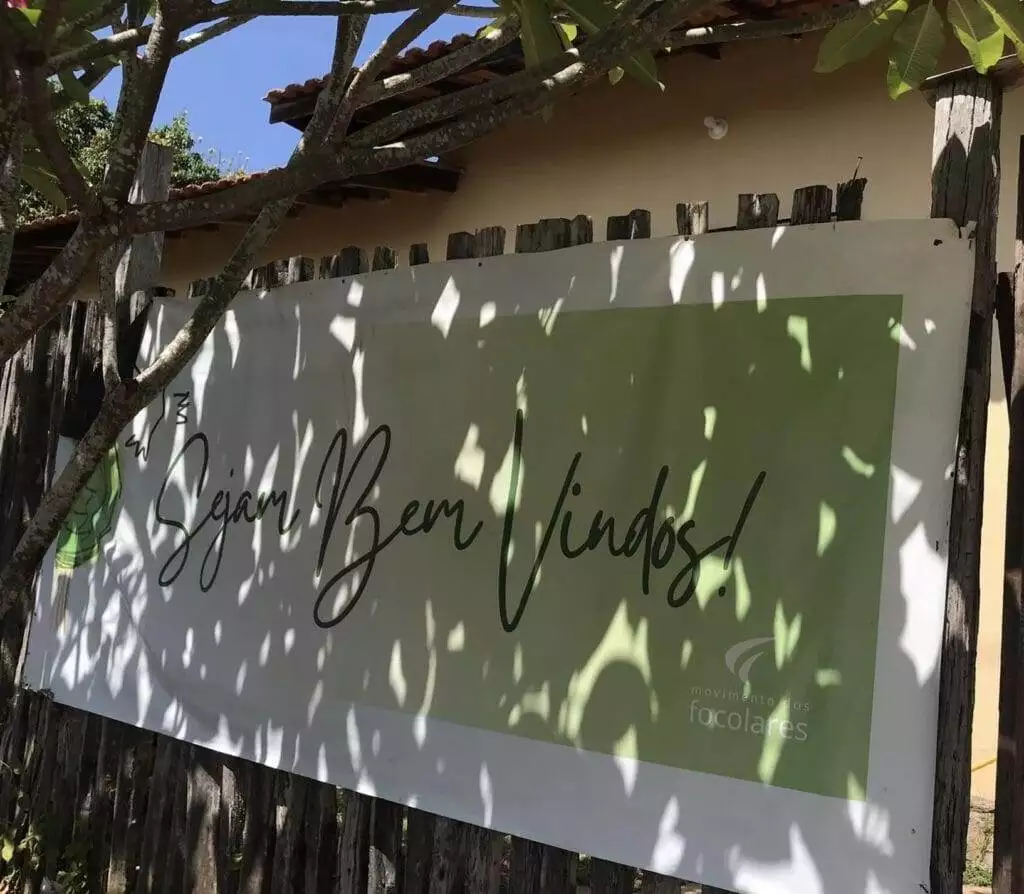
It was fundamental. I felt welcomed in every place I went. Loving everyone was not a slogan, it was real. I felt loved, people were so open and selfless. It did me a lot of good, a very moving welcome.
You went there to give of your time and professionalism but you received so much more. Has this trip changed your life a bit?
Look, I am fifty years old, not twenty. But why am I saying this? Because in my twenties, or even perhaps in my thirties, I still had the idea of going somewhere to give. Now it is very, very clear to me that the possibility of giving of myself in fact gives me something back. I knew very well that the word ‘volunteering’ included so much. Giving one’s time to others is good. First of all for the giver. I certainly had a very strong experience of sharing with the Focolare community. Although I don’t know the Focolare as a spirituality, I greatly appreciate all its other forms of expression of concrete love. I think it was a very, very beautiful experience. This idea of being able to live together, pooling everything you have, is precisely the idea of community. Being able to do good to others and live with others is something I really like.
This trip has enriched me a lot. It has had and will have a big impact on my life. I have come across wonderful people, realities completely different from my own. I now know that sharing is really possible.
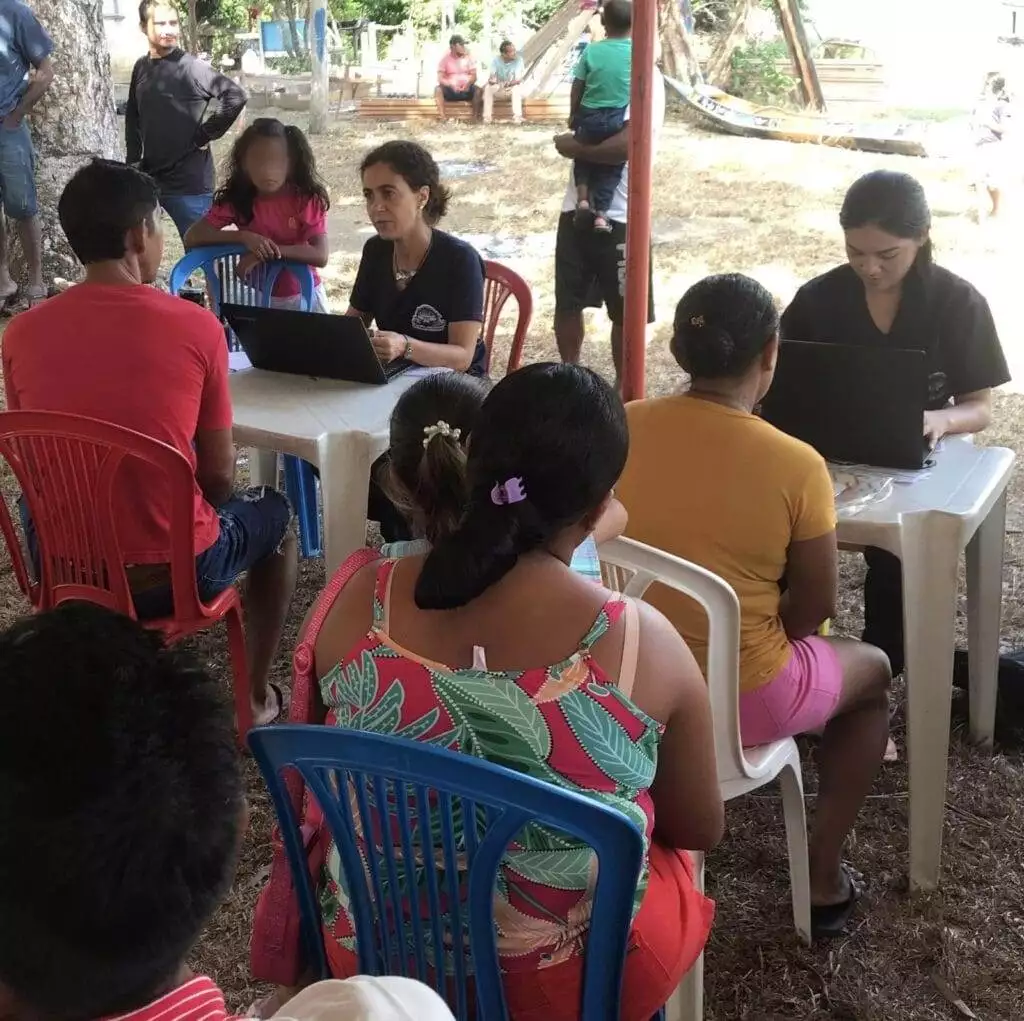
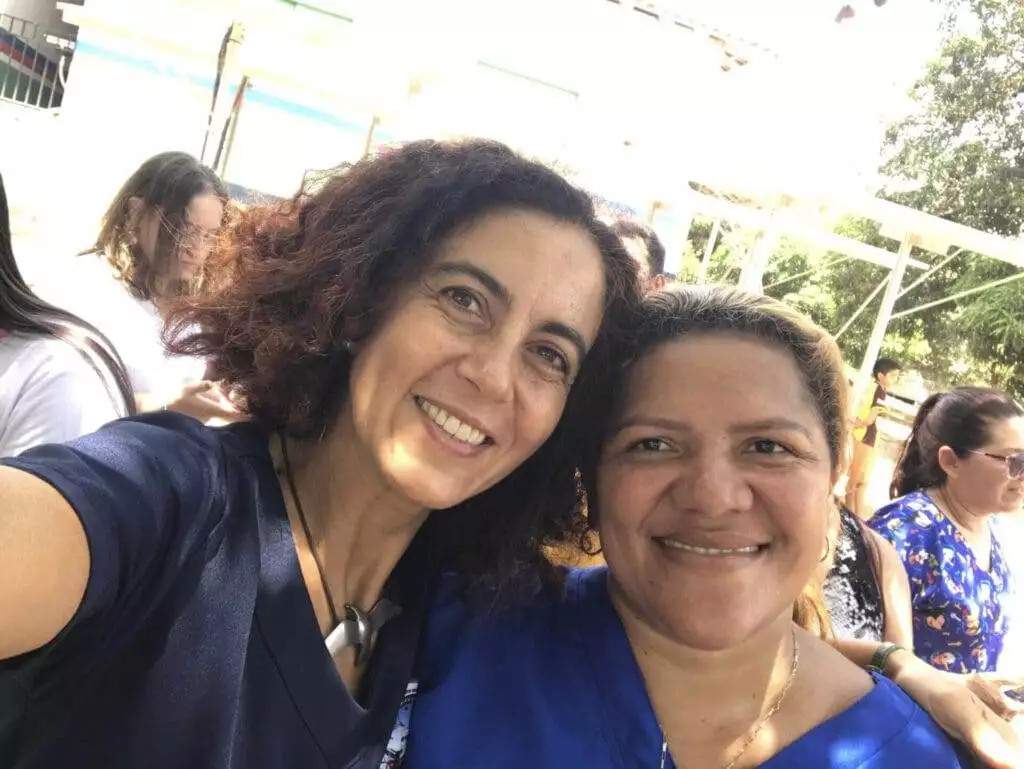
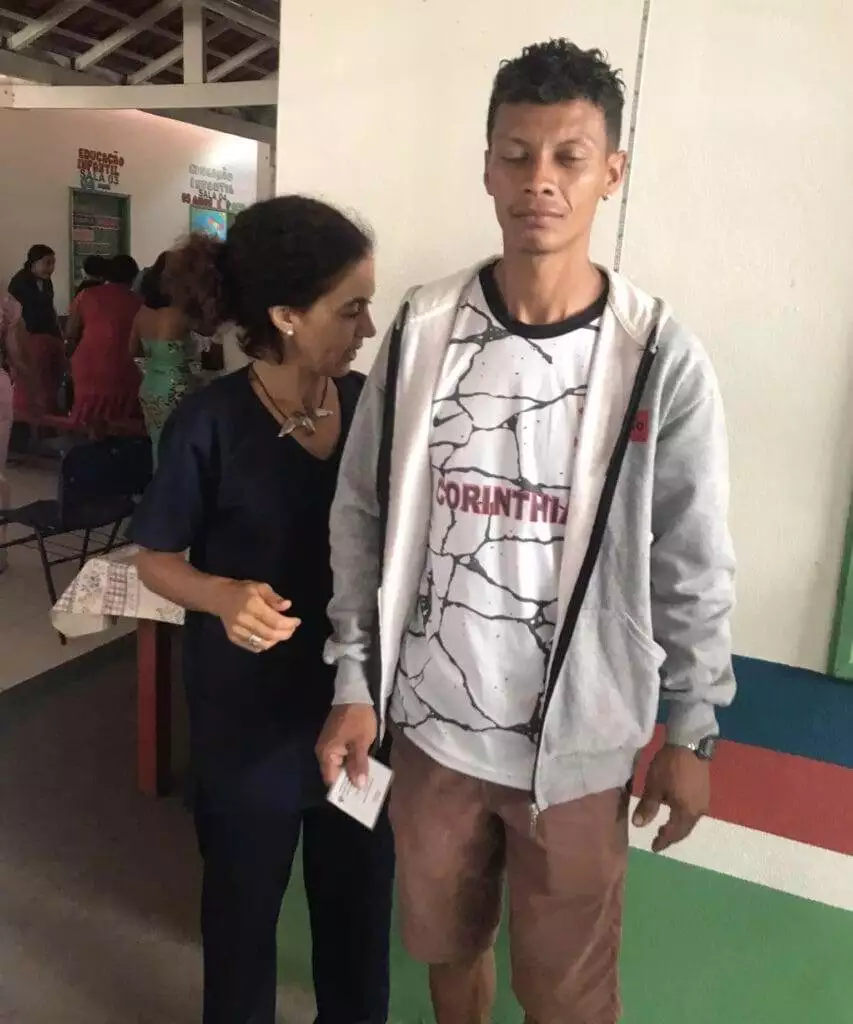
You then returned to Naples and had an unexpected welcome!
Yes, indeed many people I met on my return and who I still meet today, tell me they have read my travel diaries on social media, they thank me for sharing this experience. Many also thank me and some want to know more about this trip. So I got the idea to arrange photo prints and show them at an evening event, where I can also tell them more about the experience. This really struck me: we live in a society where there is never time for relationships. To be asked to spend time together to learn more about my experience is a beautiful thing.
In closing, let’s wind the tape back and look at both your first and second trip to Brazil: how do you live your life today?
My first Brazilian experience many years ago, as I said, had to be removed from my life. Now I am trying really hard not to remove this last trip, not to forget, to keep this experience in my life in Naples and Italy. I want to keep this memory alive. Why? Because it gives me a sense of purpose and strength and it is very gratifying.
The first thing I did, back in Naples, was to contact my Portuguese teacher, who is Brazilian, to learn the language better. But another thing I would like to achieve is a twinning between a Neapolitan kindergarten and a Brazilian one, which is under construction. It would be nice to help those children by sending backpacks and all the necessary school material. Above all, I would love to see Brazilian children and Neapolitan children share their experiences.
Lorenzo Russo
(photo: © Paola Iaccarino Idelson)
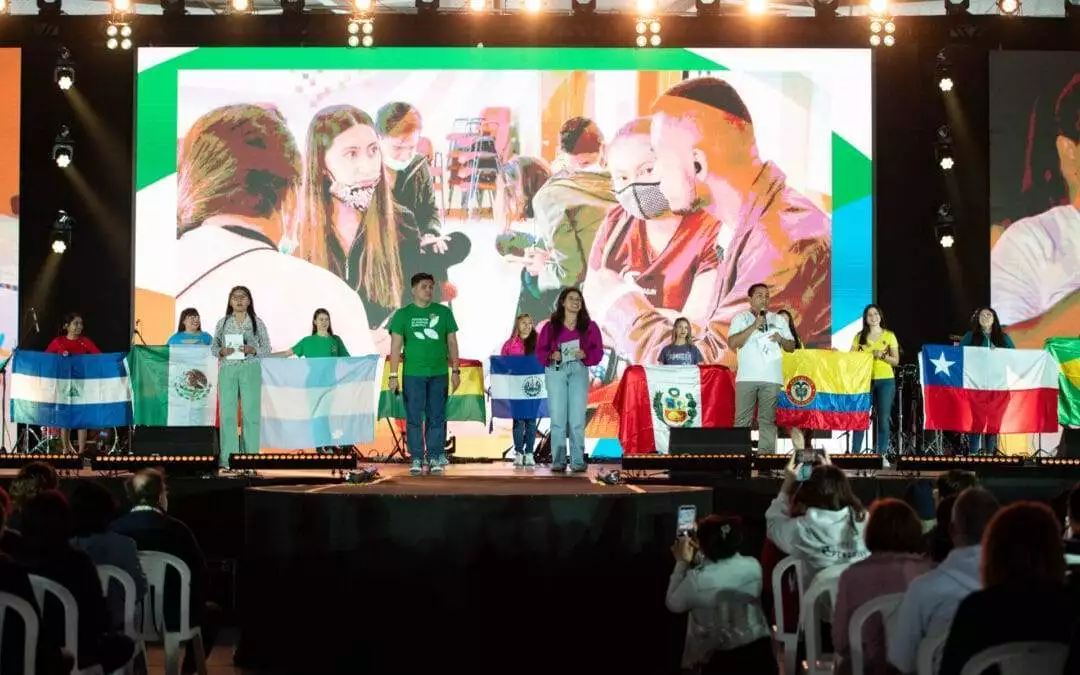
Genfest 2024, an international event promoted by the young people of the Focolare Movement, took place in Brazil in July and was attended by over 4,000 young people from all over the world. This event was divided into three phases.
In the first, the young people volunteered in some social projects in various countries of Latin America.
In the second phase the young people gathered together in the big arena of Aparecida to experience two days of celebration and sharing testimonies of life.
In phase three they then divided into small communities according to their professional experience to put into practice the ideal of unity and fraternity of Chiara Lubich.
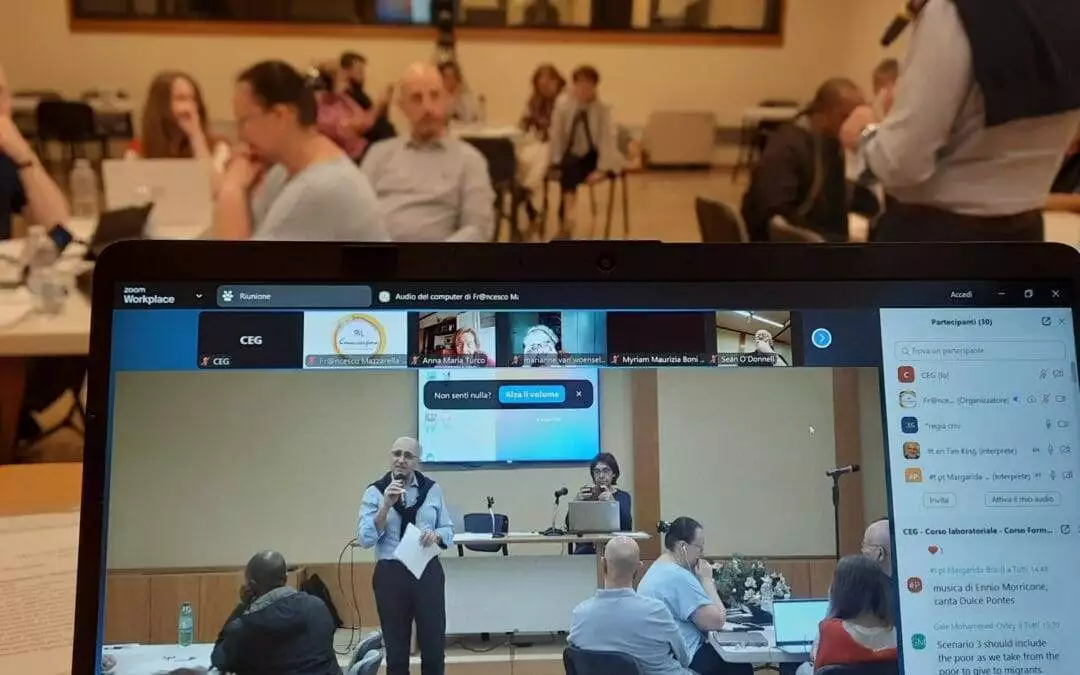
The third synodality training course organized by the Evangelii Gaudium Center of Sophia University Institute will soon begin its third edition. What kind of assessment can one make?
We are on our third edition, and so far this course has seen hundreds of participants from all over the world and dozens of faculty from various disciplines. It is an intercultural, interlingual and interdisciplinary course. The classes themselves are mini-workshops because an integral part of them are group meetings.
Thanks to online platforms, it is possible to take the course from anywhere in the world. The time for Europe is in the evening (6 p.m. to 9 p.m. Rome time) but some people connect at 3 a.m. from Singapore and Malaysia; some at lunchtime from the Americas.
We have had good participation. A total of 380 enrolled. Students can either just attend the lectures or engage with final papers and get academic credits from Sophia University Institute. We work in conjunction with the General Secretariat of the Synod, which is among the sponsors of the course.
It was interesting for us and a nice encouragement that during the press conference presenting the Instrumentum Laboris for the phase of the Synod Assembly that just began on October 1, 2024, Cardinal Hollerich said: “I would like to recall the many initiatives of formation on synodality (…) At the international level we recall the MOOC of Boston College that has seen the collaboration of many experts of the Synod or again the university course proposed by the Evangelii Gaudium Center of Sophia University here in Italy.” (Press conference 09-07-20249)
After two years, what are the prospects for this third edition?
It seems to us that the course has made a small contribution to help create communities of people committed to living and spreading synodality where they are. There are those who propose it to their diocese, organizing formation actions; those who live it in their parish or religious community… Very important is the multiplier effect of the course and the networks that are being created. Networks that are intertwined with many others from different church movements, universities or the Church itself.
Particularly interesting are the workshops that take place during the course, which can be joined via zoom or in-person.
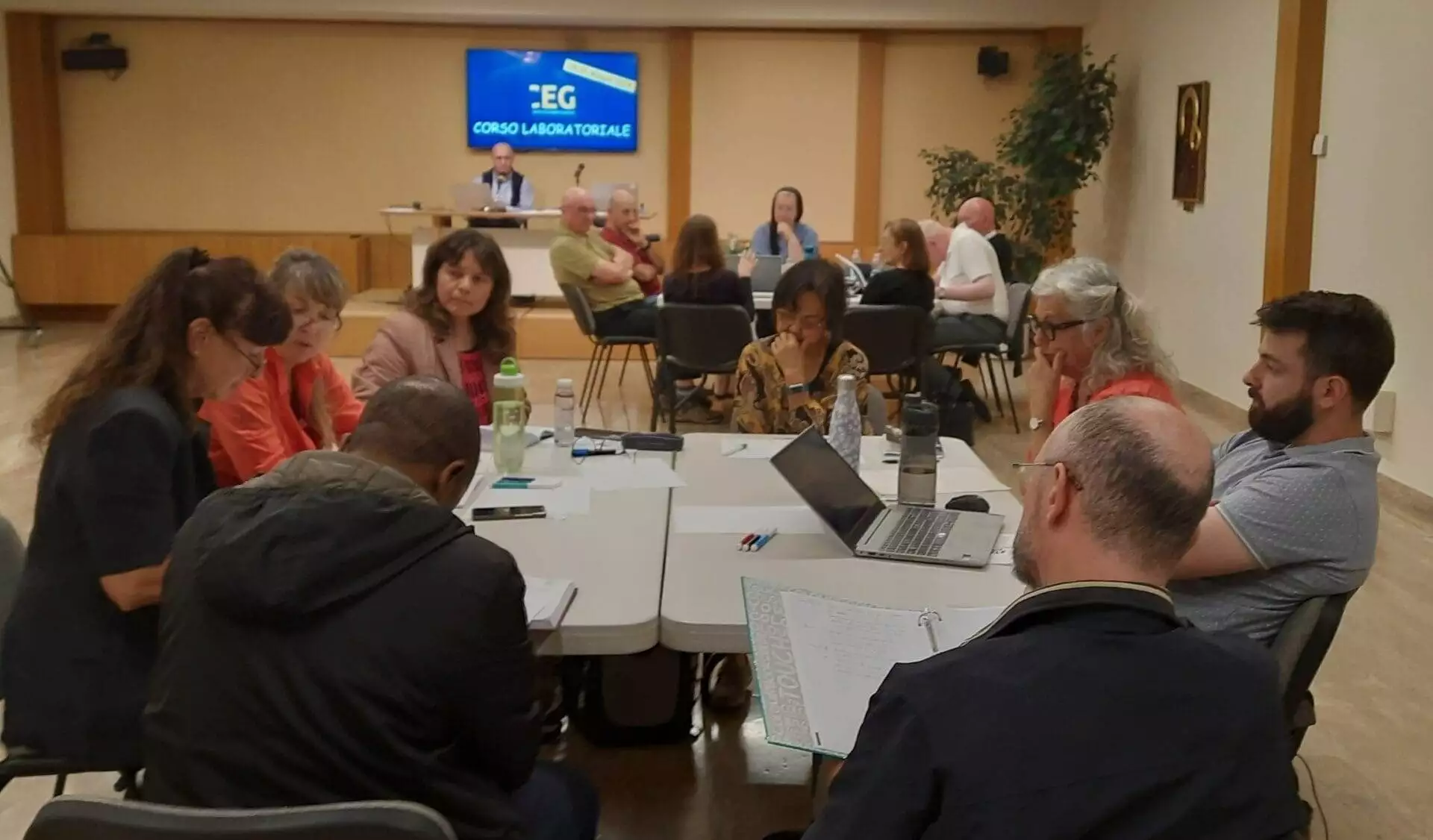
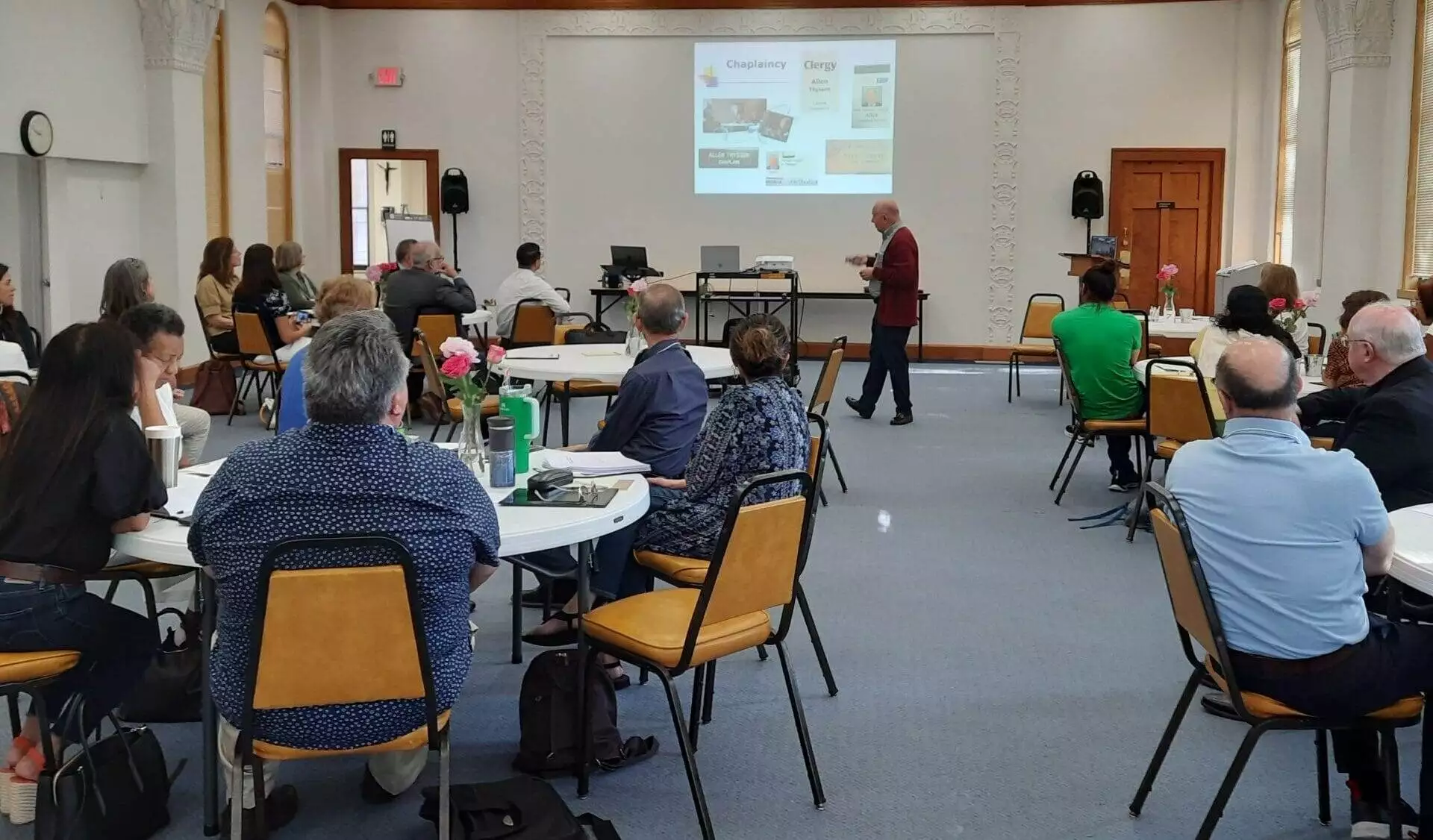
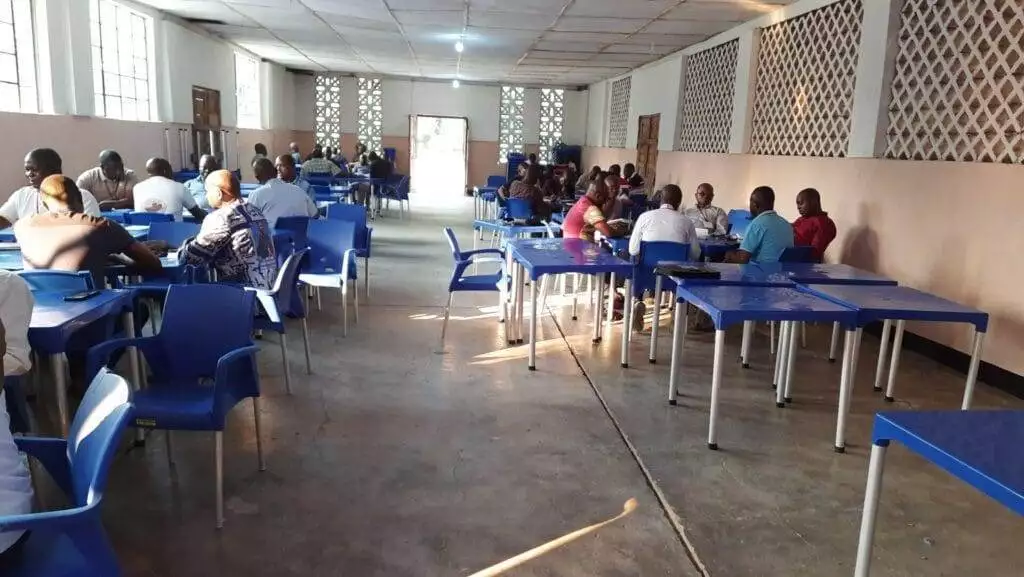
After the first year, a student from the U.S. proposed in her parish to take the course the following year: 12 signed up. At the end of the year, they asked to do the in-presence workshop in San Antonio. Forty people from various dioceses and the Oblate School of Theology in San Antonio participated.
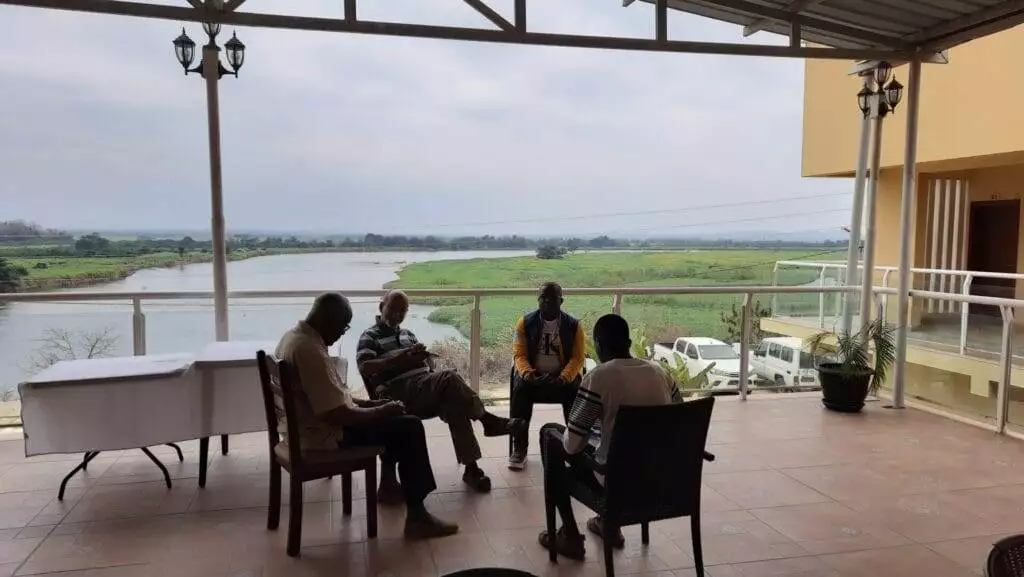
The number of formation actions carried out are countless because they are done by the students themselves using the content and method of the lessons: in Ireland for an entire parish, in Italy in several dioceses as well as in Australia, in Sydney; while in the Democratic Republic of Congo recently an action was done for more than a hundred priests from 8 dioceses, and in Angola for all the clergy of the diocese of Viana.
What will be the themes of the course that will start soon?
The next course will begin on Nov. 4, 2024, in the aftermath of the Assembly, with speeches by the Synod’s Secretary General himself, Msgr. Mario Grech, and the subsecretaries, Msgr. Luis Marin and Sr. Nathalie Becquart, theologian Piero Coda, and Margaret Karram, President of the Focolare Movement and special invitee to the Synodal Assembly.
The themes of the course will be those that emerged from the Assembly itself: paths opened by the 16th Ordinary Assembly of the Synod: new practices in a synodal and missionary Church; Christian initiation and transmission of faith in synodal style. It will conclude with an in-person workshop.
Why this commitment of the Evangelii Gaudium center to synodality? In the past you have devoted yourselves to other issues, such as training on abuse or training pastoral workers.
It seems to us that synodality is not a slogan destined to pass away. Synodality has always been part of the Church’s being, as is well understood even when reading the Acts of the Apostles. On the other hand, it is also the actualization of those reforms that the Second Vatican Council indicated for the Church but which, as can be understood, have struggled and are struggling to be implemented.
Pope Francis himself said in the celebration of the 50th anniversary of the establishment of the Synod of Bishops on Oct. 17, 2015: “The journey of synodality is the path God expects from the Church of the third millennium.”. And on October 9, 2021, he himself initiated the process of synod that today seeks to make its way throughout the Church.
From that point, we have been engaged in the formation and promotion of synodality through scholarships, seminars, trainings and networking around the world with other faculties and associations.
Synodality is also a style that is very much in keeping with the spirituality of communion that inspires the Sophia Center and Sophia University Institute. Card. Petrocchi, president of the Evangelii Gaudium Center’s Scientific Council, says we must come to “synodalize” our minds, both as individuals and as a church group, but also as a civil society group. Let us try to do our part, small but, we hope, effective.
Carlos Mana
Info: ceg@sophiauniversity.org
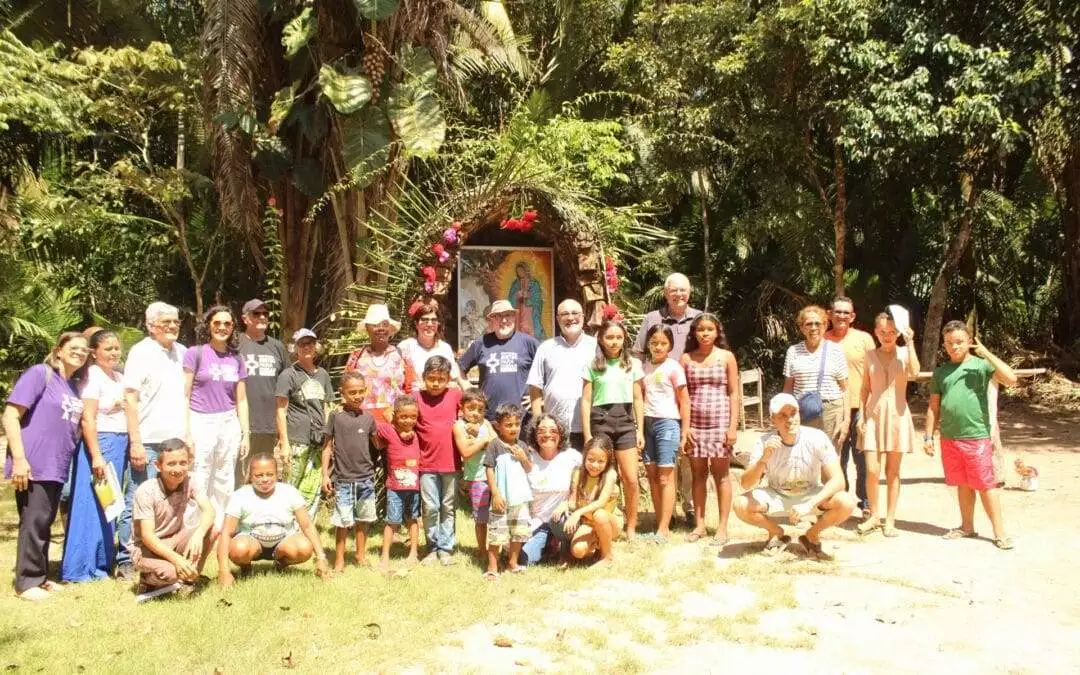
The President and Co-president of the Focolare Movement spent a month in Brazil to meet the local communities and live the experience of the Genfest, a worldwide event promoted by the young people of the Movement. Care, horizontal solidarity, believing in it: these are the 3 words that sum up the powerful experience lived during July 2024.
You strive and work for a united world (a world of peace and fraternity).
What are you doing to reach this goal? You are involved in activities that might appear to be small and, although meaningful, out of proportion with your proposed objective. When you are older, perhaps some of you will be more directly involved in the various organizations aimed at building a united world.
I believe that, although all that you do will be very helpful, it is not one activity or another that will play a decisive role towards this goal.
Instead, the deciding factor is that of offering a soul to the world. And this soul is love. …
Today we must “be love”, we must feel what the other person is feeling, live the other, the others, and aim at achieving unity … all over the globe. …
Therefore, we must build relationships of unity, solidarity, which are rooted in love.
You must live out this love first of all among yourselves.
So as to reach the point of living it with many, many others, wherever you go; when you meet ordinary people for example and with those who govern their future or those in public institutions, and in the smaller or bigger organizations of the world… everywhere. Only then will they fulfil the purpose for which they were established and truly work for a united world, (a world of peace).
Chiara Lubich
This thought was read by Margaret Karram, President of the Focolare Movement, during Connection on 28 September 2024. It can be seen by clicking here.
In the growing tensions in the Middle East powder keg, under the falling bombs and missiles into the ‘martyred’ Ukraine, amidst the great number of the conflicts that lacerate and starve the peoples of Africa, while ‘the winds of war and the fires of violence continue to upset entire peoples and nations’, Pope Francis calls to the ‘weapons’ of fasting and prayer – those which the Church indicates as powerful – millions of believers from all continents to implore from God the gift of peace in a world on the brink of abyss.
As he had already done for the conflicts in Syria, the Democratic Republic of Congo and South Sudan, Lebanon, Afghanistan, Ukraine and the Holy Land from 2013 to 2023, Pope Francis called for a new day of prayer and abstention from food to invoke the gift of peace for Monday 7 October 2024, also announcing his visit on Sunday 6 October 2024 to the Basilica of Santa Maria Maggiore in Rome to pray the Rosary and pray to Our Lady, asking for the participation of all members of the Synod.
‘We cannot but call once again on the rulers and those who have the grave responsibility for decisions,’ wrote Card. Pierbattista Pizzaballa, Patriarch of Jerusalem of the Latins in a letter to his diocese adhering to the Pope’s appeal – to a commitment to justice and respect for everyone’s right to freedom, dignity and peace’. The Patriarch went on to reiterate the importance of everyone’s commitment to building peace in their own hearts and in community contexts, supporting ‘those in need, helping those who are working to alleviate the suffering of those affected by this war and promoting every action of peace, reconciliation and encounter. But we also need to pray, to bring to God our pain and our desire for peace. We need to convert, to do penance, to implore forgiveness’.
Edited by Carlos Mana
Source: vaticannews.va
Photo: © Pixabay
On Oct. 4, the day of St. Francis of Assisi, ends the period of the Season of Creation, a period in which it is proposed to deepen dialogue with God through prayer, associated with concrete actions for the care of the planet. The Focolare Movement has always supported the initiative by participating and organizing events in various parts of the world. Here are some initiatives from the Season of creation 2024.
In Leonessa, at the center Italy, a nature walk was held. The event, entitled Breaths of Nature: together for our planet, was attended by young and old alike. The group of participants departed from the Capuchin friars’ monastery, led by the friars themselves together with the forest police, the Italian Alpine Club and Prof. Andrea Conte, astrophysicist and Italian coordinator of EcoOne, the Focolare Movement’s Ecology network. The excursion culminated at a spring, where Prof. Conte led an evocative meditation on the journey of a carbon atom in the environment. Conte then showed how to turn ordinary waste into tools for scientific experiments, demonstrating how science can be fun and affordable for everyone.
Following this, topics such as environmental awareness, the effects of climate change and the importance of education for sustainability were discussed in depth at the town’s Auditorium. Prof. Luca Fiorani, from the EcoOne International Commission, offered an in-depth analysis of Pope Francis’ encyclical Laudato Si’, the concept of integral ecology and relational sustainability. The large attendance and the attention shown by those in attendance is proof of a growing interest in environmental issues and a growing awareness of the importance of taking action to protect our planet.
In Oceania, this is the fourth year that the Focolare community has contributed to ecumenical prayer for the Season of Creation. “We have been praying and witnessing through various actions of caring for our common home,” they recount. ”This prayer service is our effort to give hope to our vast area that stretches 7,000 km from Perth, Western Australia, to Suva, Fiji, the largest island nation in the heart of the Pacific. This was followed by a reflection by Jacqui Remond, co-founder of the Laudato Si’ Movement and professor at the Australian Catholic University, who spoke about the need to change hearts for ecological conversion.
Archbishop Peter Loy Chong of the Archdiocese of Suva in Fiji could not join them because he was welcoming Pope Francis in Papua New Guinea. But he sent a message emphasizing in particular the importance of the word “Tagi,” which means “the cry of the peoples of Oceania.” It is the cry of the small Pacific islands in the face of climate change, which has not yet affected the world. Or rather: the world has not yet listened deeply to the voices and particularly the cry of the people of Oceania.
Various experiences followed such as the creation of an Aboriginal reconciliation garden at the Mariapolis Center in St Paul. Horticulture students and their teachers who use the center for their classes were invited here. They are all migrants and were very interested in learning about the important indigenous food plants.
Young people from Sydney, Canberra and Melbourne, on the other hand, joined with an Aboriginal elder for a walk in the countryside where they learned how to relate to and care for creation.
In Mexico, a course was held on ecological conversion and spirituality, an open dialogue for the care of the Common Home. It was an initiative of the Evangelii Gaudium Mexico Center, Sophia ALC University together with the Focolare Movement. Five online sessions – one each week during the Season of Creation – by Prof. Lucas Cerviño, focolarino theologian and missiologist. 87 participated from different Latin American countries, from Mexico to Argentina. Here are some of the themes addressed: the ecological crisis and conversion; metamorphosis of the sacred and spirituality; God is love as a fabric of life in love; listening to the cry of the earth and the poor as love for Jesus forsaken and crucified; unity looked at as cosmic fraternity to care for the Common Home; Mary as Queen of Creation and the presence of Mary’s mystical body.
Finally, in Italy, in the city of Padua, the “Path of the 5Cs of Laudato Sì” was inaugurated thanks to the network Nuovi Stili di Vita made up of civil, religious, and lay associations-including the Focolare Movement-that care about promoting lifestyles that are moderate and respectful of nature, sustainable economy, and that stimulate communities with initiatives and proposals to achieve the common good together.
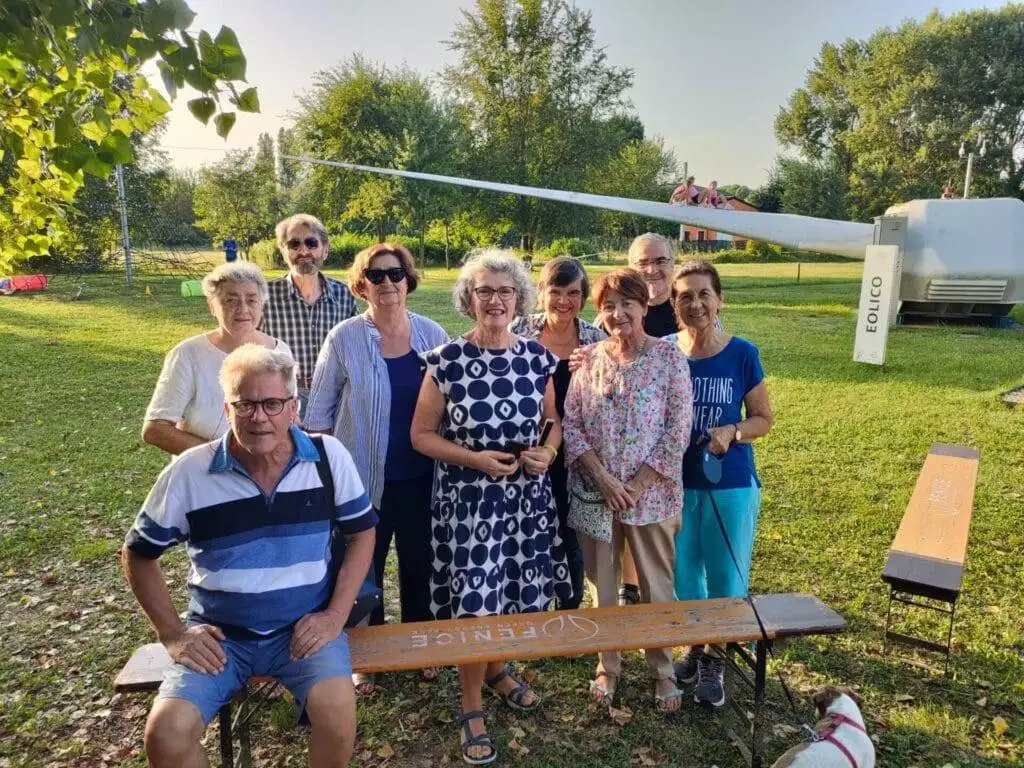
The 5Cs path was installed at a flowerbed where in 2011 the five Ecumenical Churches, (Catholic, Orthodox, Lutheran, Methodist and Evangelical), celebrated the Day for the Custody of Creation by planting five beech trees together. It was preceded by a short concert by a young singer-songwriter from Vicenza who communicated to us the sensitivity and dreams of today’s youth toward a future of hope.
The 5Cs highlight five terms taken from Pope Francis’ encyclical: custody, conversion, community, care, change. The event was lived with intensity and was a spur for resolutions of concrete commitment to achieve a better, more just and equitable world, in harmony with the Earth we inhabit.
Lorenzo Russo
Photo: © Pexels and Focolari Padova
Jesus is on his way to Jerusalem and, for the third time, he tries to prepare his disciples for the dramatic event of his passion and death but those who have followed him most closely are very ones who seem unable to understand what is about to happen.
Infact, conflict arises among the apostles themselves: James and John ask to occupy places of honour ‘in his glory’ [1] and the other ten become indignant and start to complain. In short, the group is divided..
Then Jesus patiently calls them and repeats what he has proclaimed. His words are so new that they create a sense of shock.
Whoever wants to become great among you must be your servant, and whoever wants to be first must be slave of all.
In this phrase from Mark’s gospel, the image of the servant-slave reaches a crescendo. Jesus leads us from having an attitude of simple availability within the limited and affirming groups to which we may belong to being totally dedicated to everyone, with no exception.
This is a completely alternative and countercultural proposal when compared to the usual human understanding of authority and governance which possibly fascinated the apostles themselves and impacts upon us too.
Perhaps this is the secret of Christian love?
‘One word in the Gospel that is not emphasized enough by Christians is “serve”. It may seem old-fashioned to us, unworthy of the dignity of human beings who both give and receive. Yet it is central to the Gospel which is all about love. And to love means to serve. Jesus did not come to command but to serve. To serve, to serve one another is the heart of Christianity, and whoever lives this with simplicity – and everyone can do so – has done all that is necessary. Doing so ensures that people do not remain alone because since love is the essence of Christian life, it spreads like fire.’ [2]
Whoever wants to become great among you must be your servant, and whoever wants to be first must be slave of all.
The encounter with Jesus in his Word opens our eyes, just as it did for the blind man, Bartimaeus, whose story is found immediately after this Word of Life. [3]Jesus frees us from our narrow vision and allows us to contemplate the horizons of God himself, of his plan for ‘new heavens and a new earth.’ [4]
Jesus washed the feet of others [5] and by his example overturned the often rigid practice in society, and even in religious environments, of relegating the task of practical service to a certain class of people.
Christians, therefore, should imitate Jesus’ example and learn from him a new style of life in society. This means being a ‘true neighbour’ to each person we encounter, whatever their social or cultural condition may be.
As John Anziani, a Methodist pastor of the Waldensian Church, suggests, ‘By agreeing to place our trust and our hope in the Lord, who is the servant of many, the Word of God asks us to act in our world and in the midst of all its contradictions, as people who work for peace and justice, as bridgebuilders who facilitate reconciliation among nations.’ [6]
This is also how Igino Giordani, writer, journalist, politician and family man, lived during a time marked by dictatorship. To describe his experience, he wrote: ‘Politics is – in the most dignified Christian sense – a “servant” and must not become a “master”: nor should it abuse, dominate or dictate. Its function and dignity is to be of service to society, to be charity in action, to be the highest form of love for one’s homeland.’[7]
Through the witness of his life, Jesus proposes to us a conscious and free choice. Rather than living closed in on ourselves and our own interests, we are asked to ‘live the life of the other person,’ feeling what they feel, carrying their burdens and sharing their joys.
We all have small or large responsibilities and spheres of authority. These may be in the field of politics or in other areas of society such as within our families, schools or faith communities. Let’s take advantage of our ‘places of honour’ to put ourselves at the service of the common good, creating just and compassionate human relationships with everyone.
Edited by Patrizia Mazzola and the Word of Life Team
Photo: © Pixabay
[1] Cf. Mc 10,37.
[2] C. Lubich, Servire, in «Città Nuova» 17 (1973/12), p. 13.
[3] Cf. Mc 10, 46-52.
[4] Cf. Is 65, 17 e 66, 22, ripreso in 2 Pt 3,13.
[5] Cf. Gv 13,14
[6] https://www.chiesavaldese.org/marco-1043-44/
[7] P. Mazzola (a cura di), Perle di Igino Giordani, Effatà editrice Torino 2019, p. 112.
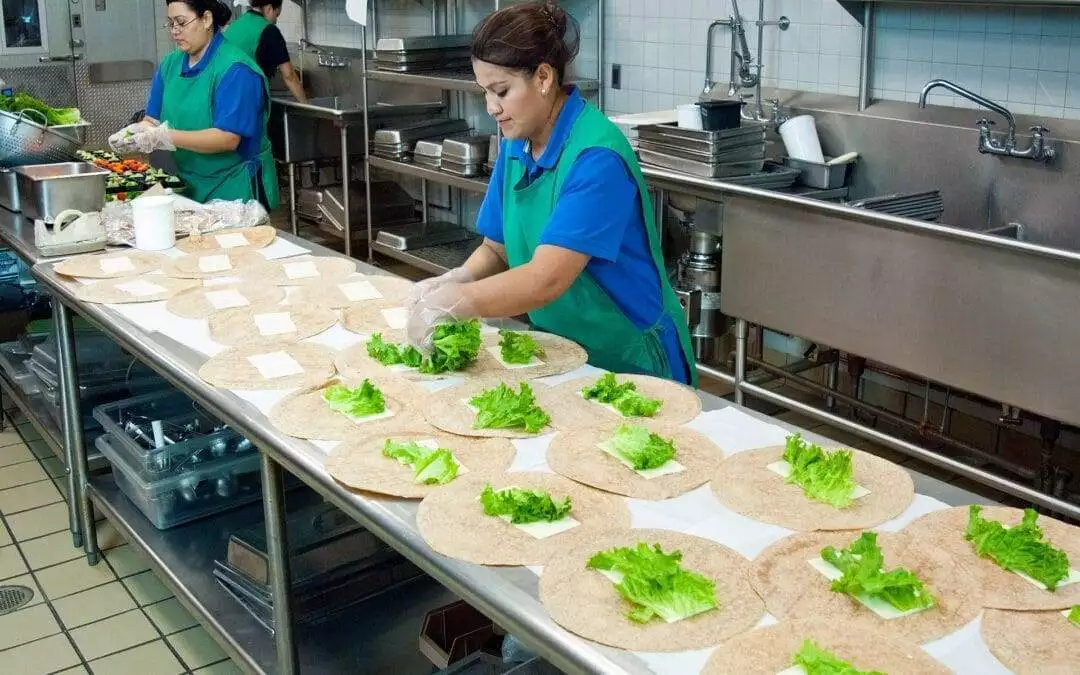
“Service” is a word that may seem old-fashioned in certain contexts. Servitude is certainly
unworthy of human beings when it is imposed or endured because of poverty or discrimination.
Instead, the “spirit of service,” especially when it is reciprocal in a community of any kind, is
a witness to changing social relationships that break down old patterns of behaviour and new
power structures. Indeed, service lived with humility characterizes protagonists of real progress.
Nitin Nohria, former dean of Harvard Business School, says that in the future, being a good leader will require learning about humility. He believes this “future” has already begun. According to him, humility will have to become a key word in the profiles of the next generation of aspiring managers andhe does not lack experience in this field. He says this because he realizes that the current trend of being increasingly competitive is producing results completely opposite to expectations. It is creating people who are psychologically fragile, needy, narcissistic and obsessed with appearance (1).
After all, great women and men are recognized through their small actions, just as ancient Eastern wisdom reminds us: “The largest tree is born from a small shoot. The tallest tower is born from a mound of earth. A journey of a thousand miles begins with a single step.” (2)
Living this way requires a conscious and free choice: it demands that we do not liveclosed in on ourselves and our own interests, but that we“live the other”,and feel whatever they feel, carry their burdens and share their joys. We all have responsibilities, bothlarge or small, and areas of authority. They may be in the political or social fields or within our family, school or community. Let us take advantage of our “places of honour” to put ourselves at the service of the common good, building just and supportive human relationships.
This is also how Igino Giordani, writer, journalist, politician and family man, lived during a time marked by dictatorship. To describe his experience, he wrote: ‘Politics is – in the most dignified
Christian sense – a “servant” and must not become a “master”: nor should it abuse, dominate or dictate. Its function and dignity is to be of service to society, to be charity (3) in action, to be the highest form of love for one’s homeland.
It was probably the personal relationship that Chiara Lubich had with this man who was
rooted in his time but also saw beyond its barriers and walls that led her to remind usmore than
once that true politics is “the Love of Loves,” because it is the means of the most authentic and
disinterested service to humanity in fraternity.
(1) Michele Genisio “Umiltà” (in press)
(2) Daodejing,64
(3) Giordani uses the word charity not in the ‘welfare’ sense, as it is usually understood, but in the Christian sense, which indicates the highest form of love.
——————
THE IDEA OF THE MONTH iscurrentlyproduced by the Focolare Movement’s “Centre for Dialogue with People of NonreligiousBeliefs”. It is an initiative that began in 2014 in Uruguay to share with non-believing friends the values of the Word of Life, i.e. the phrase from Scripture that members of the Movement strive to put into practice in their daily lives. Currently, THE IDEA OF THE MONTH is translated into 12 languages and distributed in more than 25 countries, with adaptations of the text according to different cultural sensitivities. https://dialogue4unity.focolare.org/en/
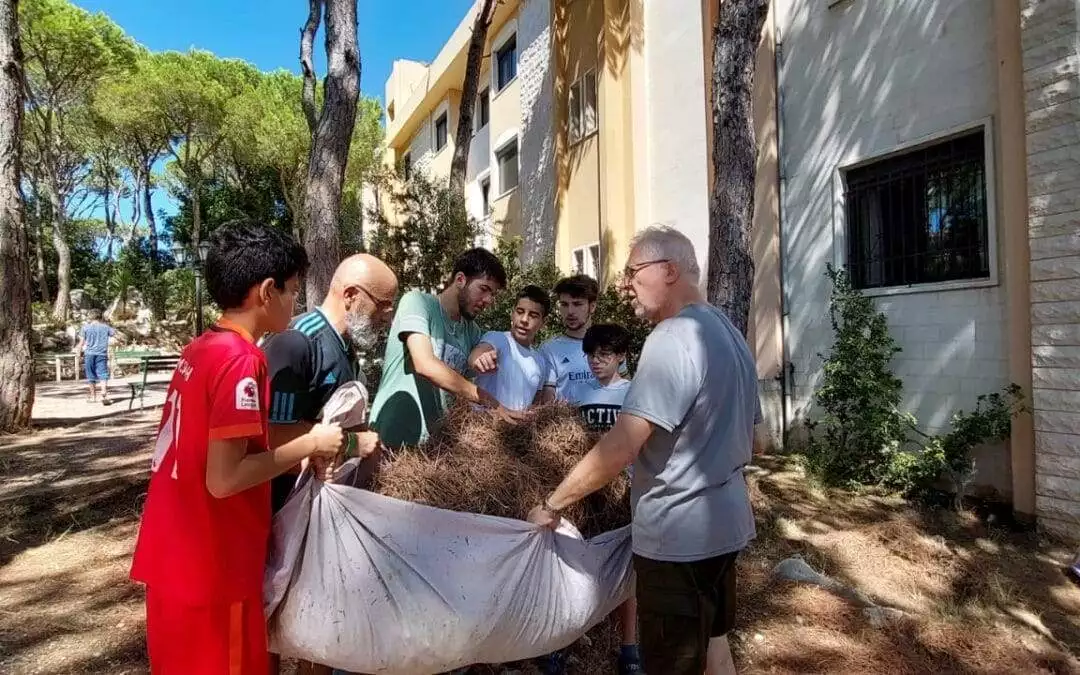
The “La Sorgente” Mariapolis Centre is located in Ain Aar, in a mountainous area, 20 kilometres north of Beirut. Just as it was in 2006, the year of the 34-day military conflict between Israel and Hezbollah, people fleeing the bombs that are devastating the South of the country are arriving here, in this predominantly Christian and asking for hospitality. “It is normal to knock on the door of the Mariapolis Centre and find it wide open,” says R. of the Lebanese community of Focolare. “How could we not welcome them? What would have become of the ideal of brotherhood that we cherish and which should be our hallmark?”
A similar experience occurred in 2006. Then too, Lebanon experienced large-scale movements of families and the Focolare welcomed more than a hundred friends, entire extended families in its Mariapolis Centre. “We met in those conditions and became like brothers and sisters, sharing joys and sorrows, hopes and difficulties, needs and prayer. In a simple and sincere relationship, woven into everyday life, a true experience of brotherhood started and grew, without filters or prejudices”.
No one expected the situation to deteriorate so quickly. “The Lebanese were preparing to return to school, optimistic about this new year”, says R. “Yet an unexpected storm erupted, relentless, threatening and deadly”, with “terrible consequences for a population thirsting for peace, justice and paths of dialogue”. In a few days, or rather hours, military actions hit ordinary neighbourhoods and the people found themselves living “a real nightmare”. According to the Ministry of Public Health, as of 25th September, almost 600 people have been killed in Lebanon, including more than 50 children and 94 women, and about 1,700 others have been injured since 23rd September. Mass displacement continues, reaching around 201,000 internally displaced persons (IDPs), according to data from the International Organization for Migration (IOM).
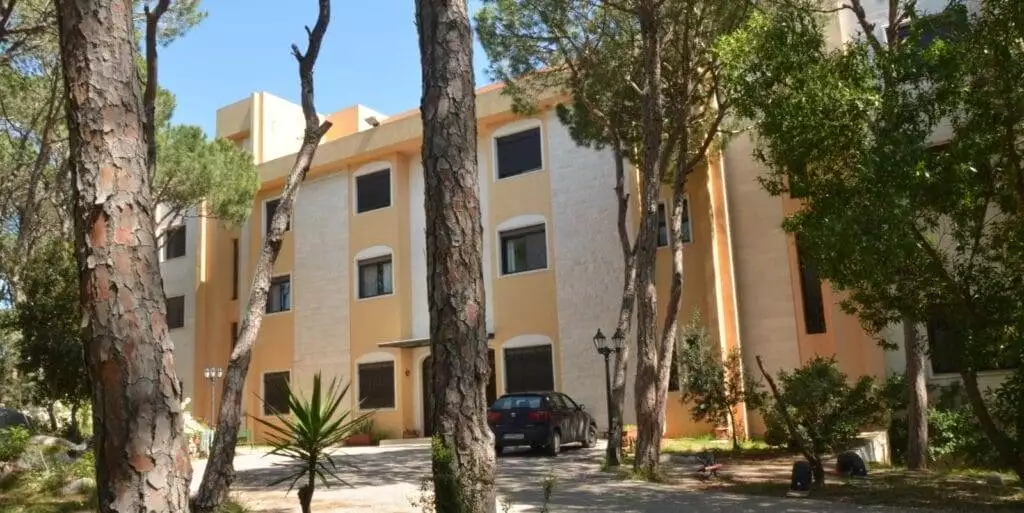
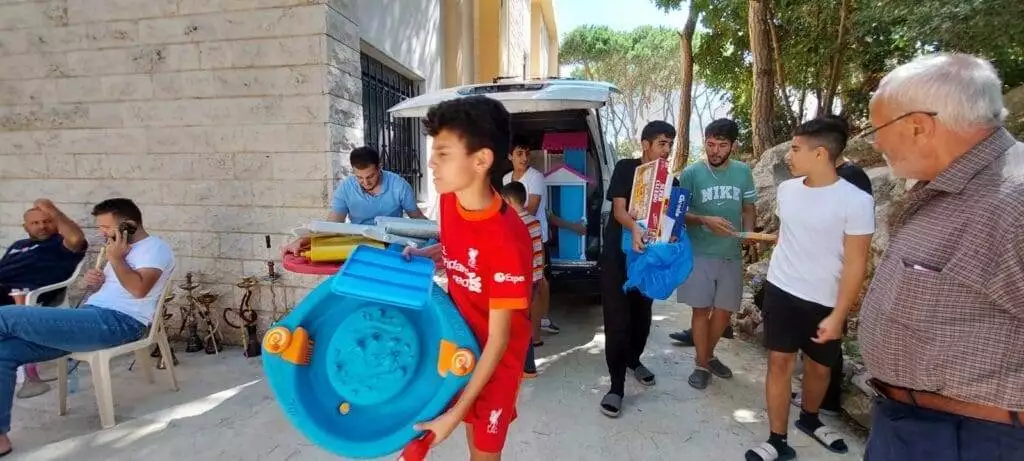
Since Sunday, the “La Sorgente” Mariapolis Centre has also been filled with guests “arrived with their fears, the trauma experienced in their targeted villages and neighbourhoods”. They drove 120 kilometres, taking between 5 to 8 hours. The roads are crowded with cars fleeing the South. They leave the villages before reaching the big cities of Tyre and Sidon. Around them, they see the destruction of the recent bombings. There are currently 128 guests at the Mariapolis Centre in Ain Aar. Some come from the South, others from the popular suburbs of Beirut hit by the latest attacks. It is not easy: “Their presence raises questions in the Christian community of the region”, say the focolarini. “One wonders: are there members of Hezbollah among them who could threaten peace in the region? But the sense of solidarity is stronger than suspicion. “R. adds: “Where could they seek shelter this time too? Where could they go and know that they would be welcomed without reservation?” For the community of the focolare, a new adventure begins. The welcome is coordinated with local, religious and civil authorities.
A “contest” of solidarity is taking place throughout the country. From the parish priest, to the faithful of the parish, to the volunteers. There are those who take care of the children by organising activities and football matches for them. Those who take care of the necessary help for the reception. “People arrive shocked, worried about their future, with the apocalyptic sight of destroyed houses, burned fields, but also news of acquaintances, relatives, neighbours, friends or students who were killed in the attacks and they will never see them again. Together we unite in living the present moment, with the faith that has allowed us to endure adversity for centuries”.
The “La Sorgente” Centre aims to be, along with many other places scattered throughout the country, true “oases of peace”. “The hope, the deepest wish is that we can soon return home. So much blood spilled must make the desert of hearts bloom. We hope that this ordeal we are experiencing will open a breach in the conscience of the powerful and of everyone, showing that war is a defeat for all, as Pope Francis repeats. But above all we believe and hope that from this crucible of pain a message of possible brotherhood for the entire Region can emerge from Lebanon “.
Maria Chiara Biagioni
Source: AgenSir
Photo: Focolare Lebanon
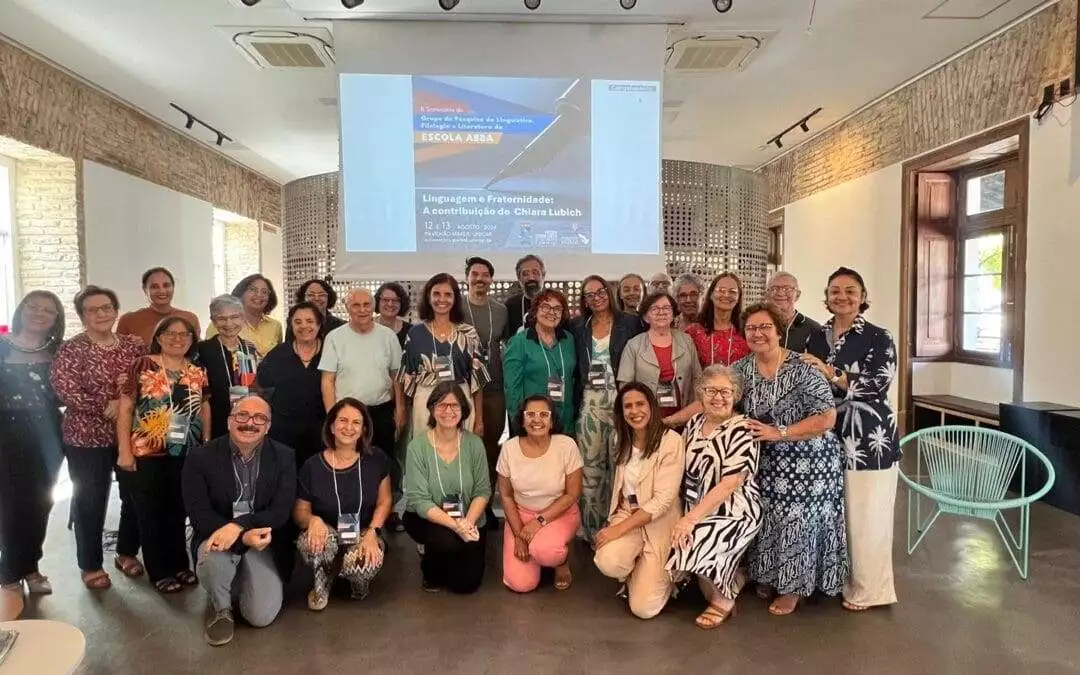
The Seminar, in its second edition after the first one held in 2017 at the Federal University of Paraiba in Joao Pessoa, presented 15 academic papers produced by researchers from six universities, around the Chiara Lubich Chair of Fraternity and Humanism at the Catholic University of Pernambuco (Unicap). The seminar comprised of two days of presentations and dialogue, introduced by a warm greeting from Vice-Rector Prof. Delmar Araújo Cardoso, and followed by live streaming to an audience of about 350 people.
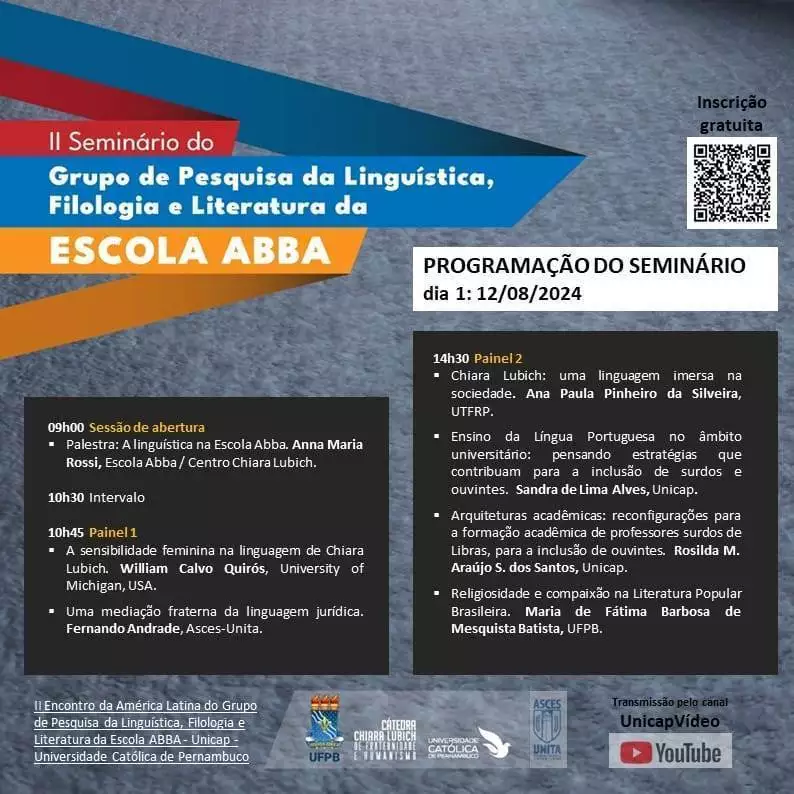
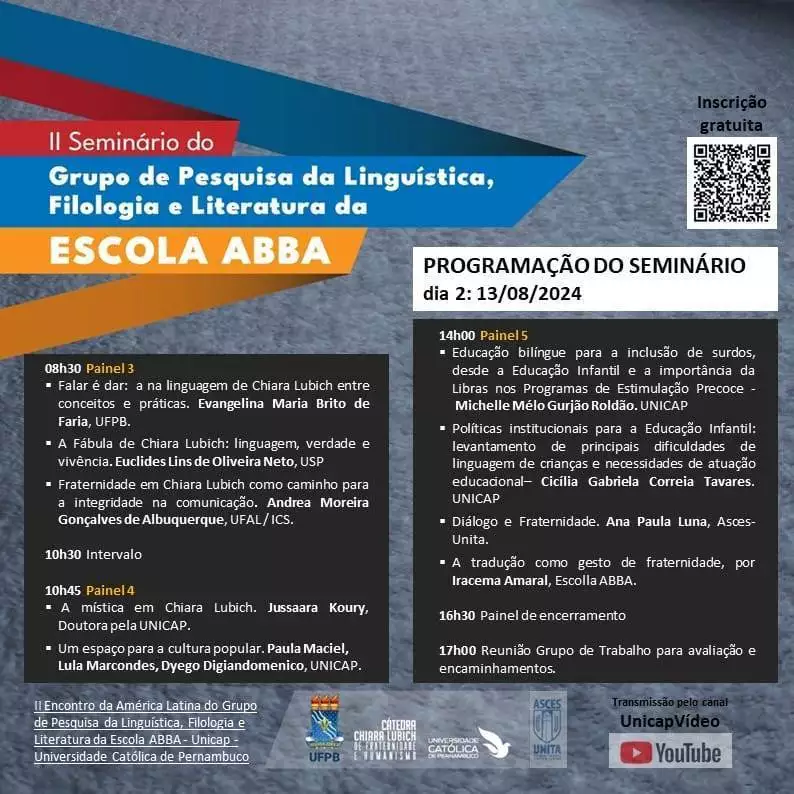
The event, which was organized with the support of the Chiara Lubich Centre, was held mainly in Portuguese and was particularly appreciated for its openness to an international dimension, for the consistent and qualified contribution of the speakers, for the interdisciplinary perspective that brought together papers around the theme of language, not just in the field of linguistics, but also in the fields of law, pedagogy, communication, sociology and architecture.
What emerged, in extreme synthesis, was how a language inspired by love, of which Chiara Lubich was an effective model, can contribute to building a world of peace and fraternity.
Anna Maria Rossi
(1) The Abba School is a Centre of life and study desired and founded by Chiara Lubich in 1990. It is composed of members of the Focolare Movement, united in the name of Jesus and experts in various disciplines, whose aim is to draw out and elaborate the doctrine contained in the charism of unity.
Links to the 2nd Seminar on Linguistics, Philology and Literature:
12/08/24 – Morning: https://www.youtube.com/watch?v=W7bZbiZz_T4
12/08/24 – Afternoon: https://www.youtube.com/watch?v=R65O526wQCE
13/08/24 – Morning: https://www.youtube.com/watch?v=JTnP2OF87xY
13/08/24 – Afternoon: https://www.youtube.com/watch?v=rGtpHakqrvs
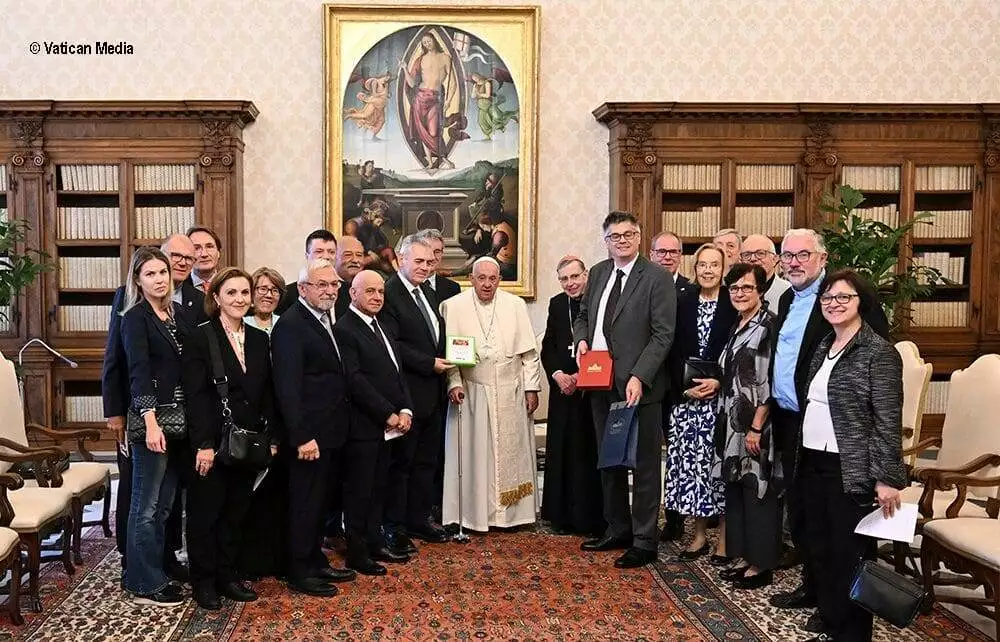
“We are convinced that the cooperation of the Christian world is essential. The common Easter celebration in 2025 of all Christians, together with events for the anniversary of the first Council of Nicaea, can serve as a meaningful starting point to take up the challenges of humanity together and promote joint activities. We hope to organize a meeting with representatives of the Christian world, with your presence, in the place where the Nicaea council originally took place ”.
These words accompanied the ecumenical group “Pasqua Together 2025” (PT2025), that gathers groups and communities of various Christian denominations, first to Istanbul (Turkey), in audience with the Ecumenical Patriarch of Constantinople, Bartholomew I, then in the Vatican with Pope Francis, on the 14th and 19th of September respectively.
The group asked the two Christian leaders for next year’s common celebration of the Resurrection not to be an exception but to become the norm for all Christian Churches: a further step towards unity, in preparation for the upcoming Second Millennium of Redemption in 2033, which will be the 2,000th anniversary of Christ’s resurrection.
“Pasqua Together 2025” began precisely in view of the upcoming exceptional coincidence that, in 2025, the Easter date falls on the same day for the Julian and Gregorian calendars. Christians of the Western and Orthodox churches will, therefore, celebrate Easter on the same day. Moreover, the 1,700th anniversary of the Nicaea Ecumenical Council, which declared the Symbol of faith (the Creed) and addressed the theme of the Easter date, will be remembered.
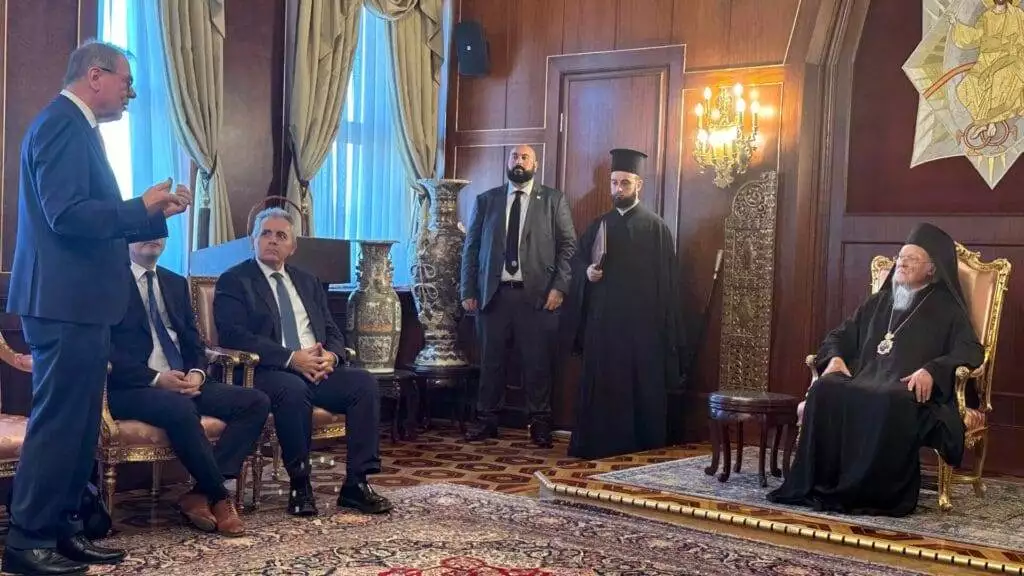
The group is composed of representatives of various Christian churches and Christian political and social movements, like the Interparliamentary Assembly on Orthodoxy (I.A.O.) that was the promoter; the “Together for Europe” project, the “Jesus Christ 2033” movement and the “Centro Uno” of the Focolare Movement. The group has been following a common path for two years which has led them to signing a joint declaration that brought about the commitment to work so that all Christian churches may celebrate Easter together. Besides the Patriarch of Constantinople and Pope Francis, the document had been previously sent to the General Secretary of the World Council of Churches, Rev. Jerry Pillay and the former General Secretary of the World Evangelical Alliance, Bishop Thomas Schirrmacher. Contacts with other Christian leaders will take place soon.
Patriarch Bartholomew I announced that a joint commission made up of four Orthodox and four Roman Catholic members are already working on the programme for the celebration of the 1,700th anniversary of the first Ecumenical Council which will take place precisely in Iznick – the Turkish name of ancient Nicaea. The commission has already gone there to examine the feasibility. The mayor of the city is in favour and ready to collaborate. The invitation was naturally extended to Pope Francis, and this would be their thirteenth meeting.
The Patriarch also highlighted that the Easter date is not a question of dogma or faith, but fruit of an astronomical calculation.
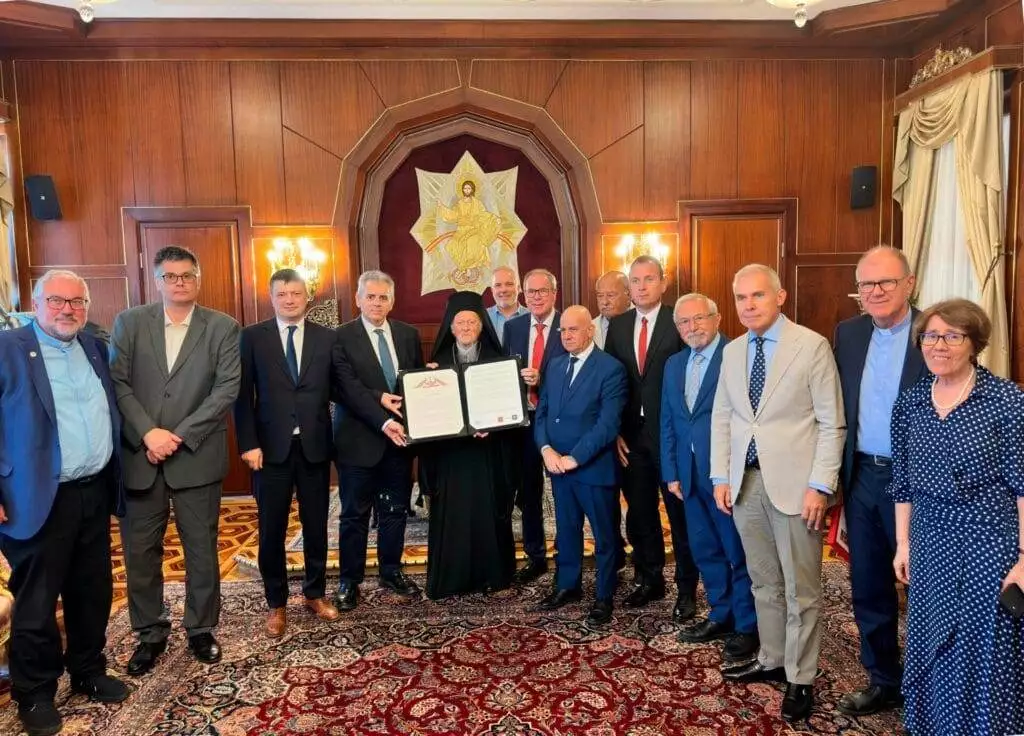
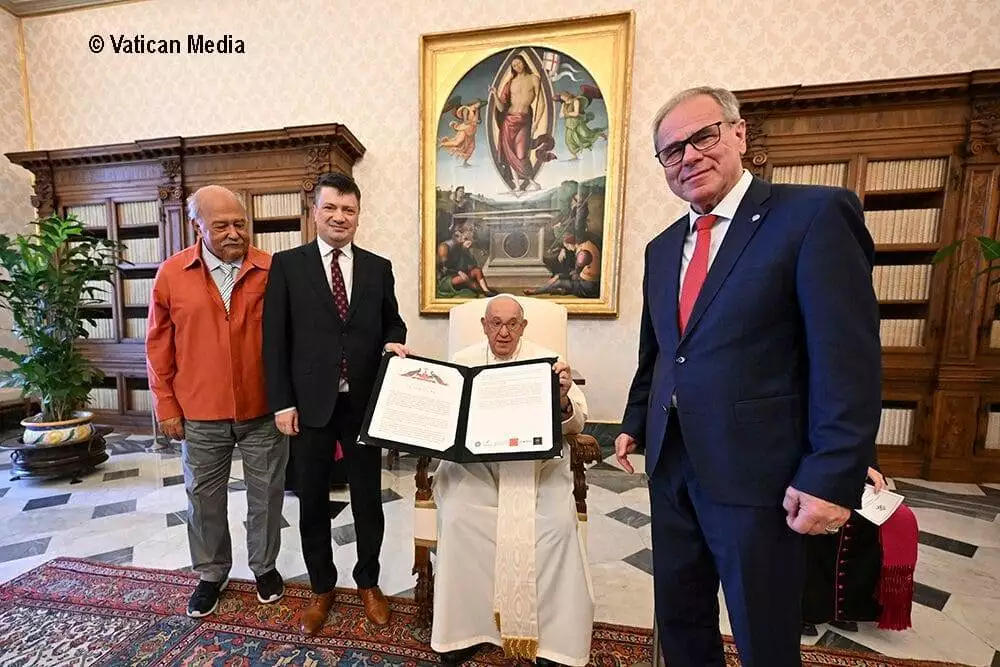
Pope Francis too, in his talk reiterated that “Easter does not take place by our own initiative or by one calendar or another. Easter occurred because God “so loved the world that he gave his only Son, that whoever believes in him should not perish but have eternal life”. Let us not forget the primacy of God, his primerear, his having taken the first step. Let us not close ourselves within our own ideas, plans, calendars, or “our” Easter. Easter belongs to Christ!”
The Pope also invites to share, plan and “walk together” and he launches an invitation: that of beginning “from Jerusalem like the Apostles, who proclaimed the message of the Resurrection to the whole world”. The Pope encourages to “turn, today, to the Prince of Peace in order to pray that he gives us his peace.”
An invitation that echoes what the ecumenical Patriarch Bartholomew I had already expressed by urging the PT2025 group to promote activities defending human rights and a peaceful living together for all peoples, praying in this way: “We implore the Lord to enlighten the hearts of those in authority and to guide them on the path of justice and love, that we may heal these divisions and restore the unity that is at the heart of our faith”.
Stefania Tanesini
Photo: © Vatican Media e Centro Uno
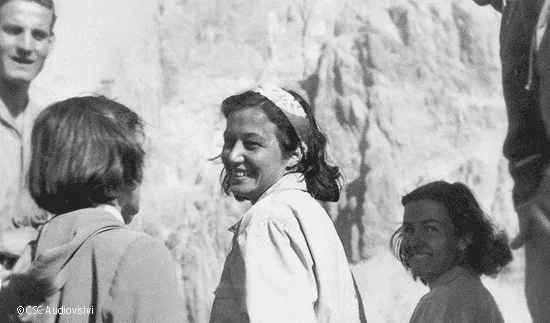
Seventy-five years have passed since the day Chiara Lubich wrote “I have only one spouse on earth”, which we have reproduced here. It’s a writing destined from the very beginning to become a true programmatic manifesto for Chiara and for those who would follow her by adopting the spirituality of unity as their own.
The handwritten manuscript, preserved in the Chiara Lubich Archive (in GAFM) and written on the front and back of a single sheet, records the date of its composition: 20-9-49. Published, in Italian, for the first time in 1957, in an incomplete version and with some modifications, in the magazine “Città Nuova”, it was then reprinted in other publications of Chiara Lubich’s writings, until it was finally included, in its entirety, and according to the original manuscript, in The Cry (New City, London 2001). This is a book that Chiara Lubich wanted to write personally “as a love song” dedicated precisely to Jesus Forsaken.
It began as a sort of diary page, written on the spur of the moment. Considering the unique lyrical tone that permeates it, it could be defined as a “sacred hymn”. This definition seems appropriate if one considers that the term “hymn” originates from the Greek hymnos. The word, although of uncertain etymology, has nevertheless a close relationship with the ancient Hymēn, the Greek god of marriage in whose honour it was sung. Moreover, the spousal aspect in this work is more than ever present, even if – and precisely because – we are within a strongly mystical context. It really is a “song” of love to Jesus Forsaken.
The context of the writing takes us back to the summer of 1949, when Chiara, with her first companions, and the first two men focolarini, was in the mountains – in the Primiero valley, in Trentino-Alto Adige – on holiday. Also, Igino Giordani (Foco) joined the group, for a few days. He had already met Chiara in Parliament a short time before, in September 1948, and he had been fascinated by her Charism.
It was a summer that Chiara herself described as “full of light”. Since then – going back over its stages – she did not hesitate to affirm that it was precisely in that period that she had a better understanding of “many truths of the faith, particularly who Jesus Forsaken was for humanity and for creation – he who recapitulated all things in Himself. Our experience was so powerful,” she noted, “it made us think life would always be like that: light and Heaven.” (The Cry, pages 60-61). But the time had come – urged precisely by Foco – to “come down from the mountains” to meet humanity that is suffering, and to embrace Jesus Forsaken in every expression of pain, in every “abandonment”. Like Him. Only out of love.
So, she wrote: “I have only one spouse on earth: Jesus Forsaken”.
Maria Caterina Atzori
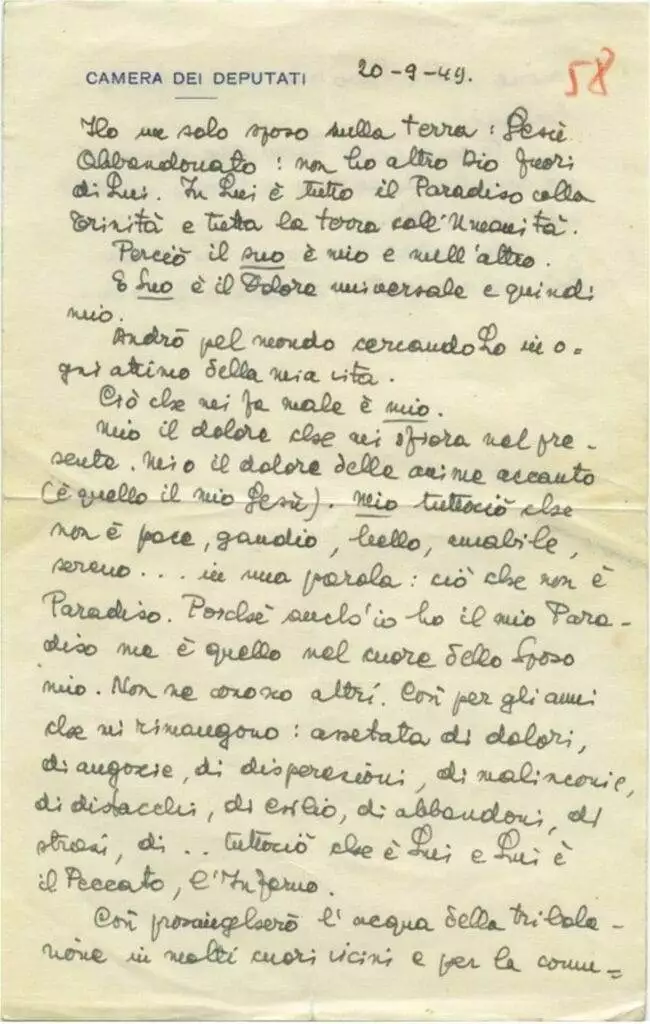
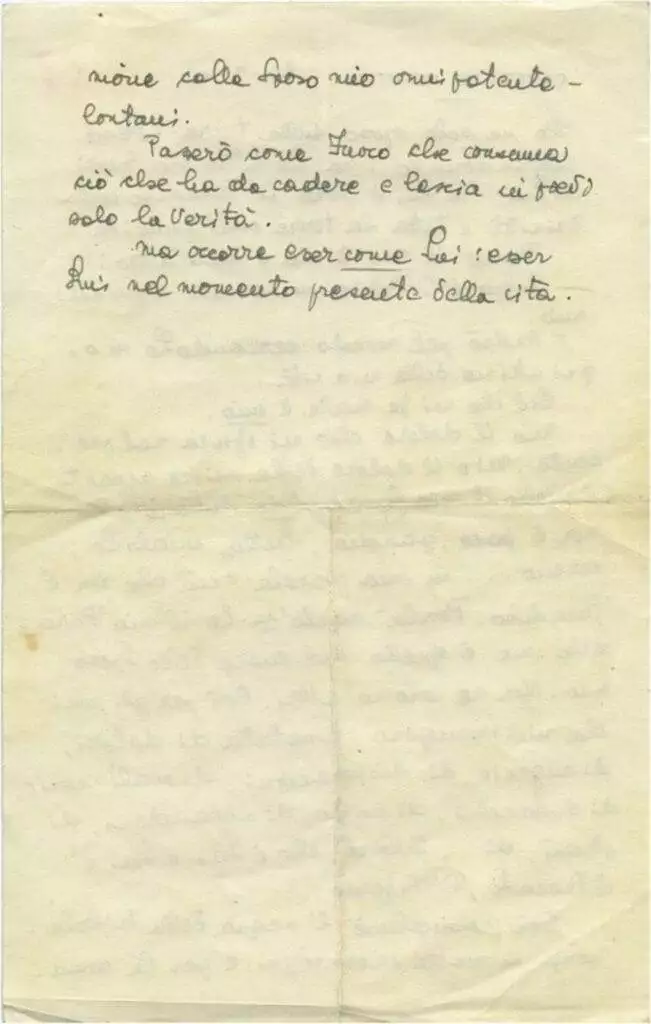
20-9-49
I have only one Spouse on earth: Jesus forsaken. I have no God but him. In him is the whole of paradise with the Trinity and the whole of the earth with humanity.
Therefore, what is his is mine, and nothing else.
And his is universal suffering, and therefore mine.
I will go through the world seeking it in every instant of my life.
What hurts me is mine.
Mine the suffering that grazes me in the present. Mine the suffering of the souls beside me (that is my Jesus). Mine all that is not peace, not joy, not beautiful, not lovable, not serene, in a word, what is not paradise. Because I too have my paradise, but it is that in my Spouse’s heart. I know no other. So it will be for the years I have left: athirst for suffering, anguish, despair, sorrow, exile, forsakenness, torment— for all that is him, and he is sin, hell.
In this way I will dry up the waters of tribulation in many hearts nearby and, through communion with my almighty Spouse, in many faraway.
I shall pass as a fire that consumes all that must fall and leaves standing only the truth.
But it is necessary to be like him: to be him in the present moment of life.
Chiara Lubich
The Cry (New City, London 2001, pages 61-62)
Source: https://chiaralubich.org/
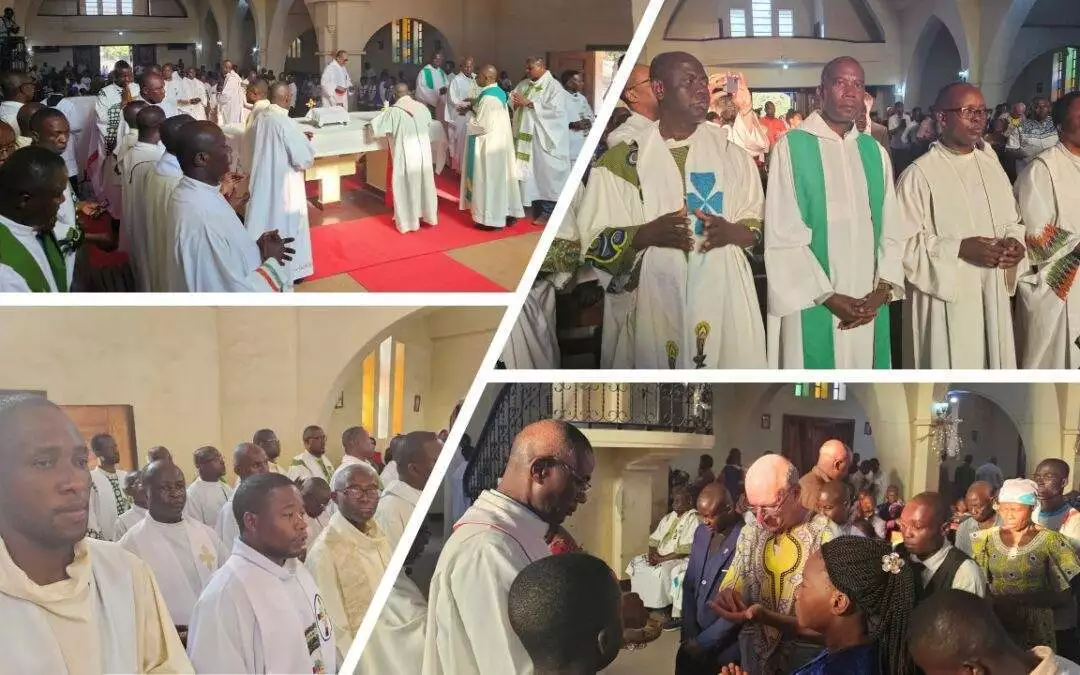
They arrived two by two by motorbike, the most common form of transport for getting to the town of Manono in Katanga province in the south-east of the Democratic Republic of Congo. Ninety-two priests from 8 dioceses of the ecclesiastical province of Lubumbashi met together in this town for one of the Focolare Movement’s periodical retreats. The Bishop of Manono, Mgr Vincent de Paul Kwanga Njubu invited the Focolare to hold the meeting there, as he had been struck by the testimony of his priests who had participated in a similar retreat in Lubumbashi in the past.
Mgr Oscar Ngoy wa Mpanga, the Bishop of Kongolo, a diocese which is 300 km from Manono, who had also been struck by young priests who had participated in similar retreats organised for seminarians, also asked all the priests in his diocese to join this retreat. Forty-three arrived. The local press described the retreat as ‘unforgettable’. At its conclusion, the bishop offered everyone a lunch which the participants subsequently shared with the city hospital bringing great joy to the patients.
Members of the Focolare community of Lubumbashi took care of the organisational part (even transporting all the pots and pans for cooking), and the programme was entrusted to members of the Focolare Movement’s International Centre.
The city of Manono which is about 800 km from Lubumbashi is the third largest city in Congo and represents a mining resource of global importance due to the presence of lithium and other minerals. Unfortunately, however, the population does not benefit from these resources. Entire families spend their days searching for minerals, and children leave school to devote themselves to this work. There is huge exploitation, and very low prices are paid for the minerals. There is even a village where houses are collapsing because minerals are being mined underneath them. The region is in a critical situation, having been devastated in the past by a conflict that destroyed the civil and religious infrastructure and left health facilities and schools in ruins. The school attendance rate is less than 30%. Malnutrition and food insecurity are severely affecting the children, with 15% of them suffering from malnutrition. The Bishop of Manono really wanted the retreat to be held here, and it was the first time that priests came from other dioceses, which was why the presence of such a large number of prelates was greeted with such an atmosphere of celebration. During Sunday Mass, the cathedral’s priest asked all the parishioners to bring water, a rare and precious commodity here, for all those participating in the retreat as a sign of love and welcome. Then the actual meeting days began. There were spiritual themes, meditations on the evangelical counsels and in-depth discussions on synodality. With the participants divided into small groups, there were many moments of communion of life, exchange of testimonies, knowledge, sharing and fraternity.
The spirituality of communion, the discovery of God Love, a new style of ‘synodal’ pastoral work that ‘liberates us from pre-packaged schemes and opens us up to mutual love’ as one person said, were some of the points that struck everyone the most.
Back in Lubumbashi, some members of the Focolare were able to greet a number of Bishops from various dioceses who were there for a meeting of the Bishops’ Conference. The Bishops warmly thanked them for the contribution that the retreats were making to the life of their dioceses. In particular, the Bishop of Manono expressed his gratitude for “the contribution made to the spiritual life of priests and laity, and to a communion among priests that is overflowing onto the lives of the laity, giving them the opportunity to live mutual love and put the word of God into practice“. The Archbishop of Lubumbashi, Archbishop Fulgence Muteba Mugalu, who has just been appointed President of the Bishops’ Conference, also expressed his heartfelt thanks for the retreats that have been held for several years, expressing the hope that this formation which is bearing so much fruit, will continue.
After the retreat, some of the members of the Focolare’s International Centre went to Goma in the north-east, where the focolarini organised two schools of formation attended by 12 young seminarians and 12 priests. The Bishop of Goma, Mgr Willy Ngumbi Ngengele was also present for a liturgical celebration. Several of the guests were unable to attend due to an intensification of clashes near the city. There are 7 million refugees in Congo, including 1.7 million in the North Kivu province where Goma is located. The meeting went into depth on the spirituality of unity and synodality. The programme included a visit to a parish surrounded by thousands of refugees where the parish priest gave a very strong testimony of how the Gospel is being lived. The visit to the “Père Quintard Centre”, run by the Movement and located in the middle of 2 large refugee camps, which offers a service of promotion, education and social development, was also a strong testimony for everyone present. Several saw it as a beacon of hope and asked for similar activities to be initiated in their parishes.
Anna Lisa Innocenti
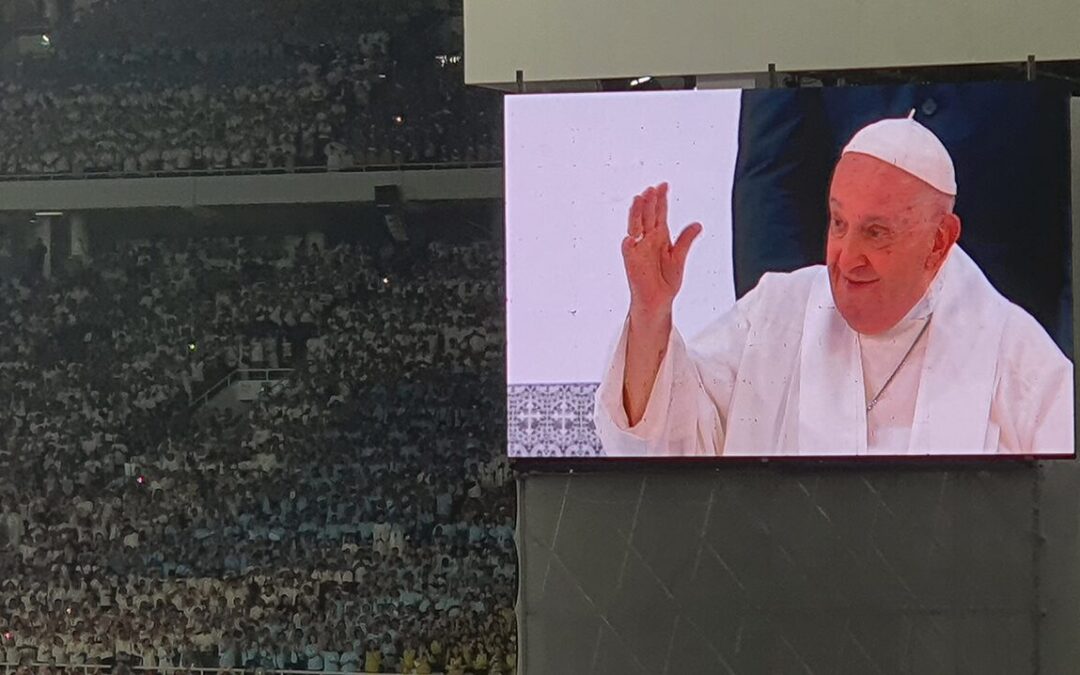
Pope Francis’ latest trip to Asia and Oceania has so far been the farthest, longest and probably the most physically demanding the Pope has ever undertaken. What does this visit mean for the local communities? We asked Paul Segarra, focolarino of the Indonesian community.
Paul, what was the significance of the Pope’s visit to your country?
“This heroic gesture of the Pope is for me an image of God’s love that knows no limits and reaches out to his most distant children, who are certainly not the least-valued in his eyes. The Holy Father took the time to look at them with love, marvel at their giftedness, share their sufferings and longings for justice and peace, then encouraged them to face their challenges together and transcend their limits.
But he did not only utter words that inspired and encouraged. He also demonstrated, by example, the strength in faith, the openness to fraternity and the nearness in compassion that he invites his listeners to acquire. He did this through his planned choices and spontaneous gestures, he acted and lived from the heart”.
“As news of his arrival spread quickly – Paul Segarra recounts -, there were also many comments on various social platforms about his chosen means of transport: a sober white sedan, in which he preferred to sit beside his driver, instead of taking the usual presidential back-seat, I imagined because he wanted to converse with his driver face-to-face. Seeing this gesture of his, I realised with regret that I could have done the same with the driver who brought me to my accommodations in Jakarta that same evening. But thereafter, my rides became undeniably more enjoyable, as I took to the habit of getting to know my hired drivers through friendly conversation”.
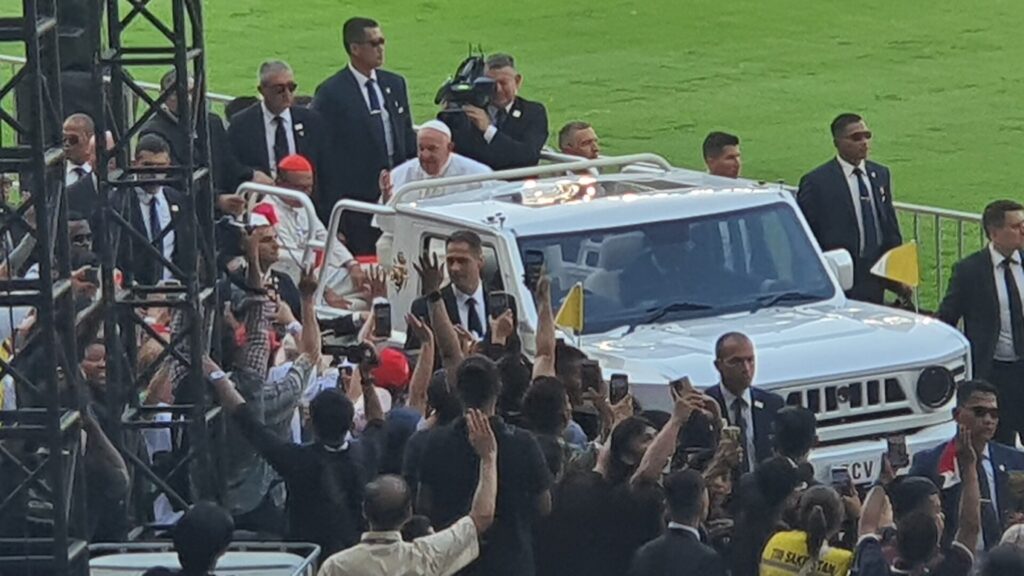
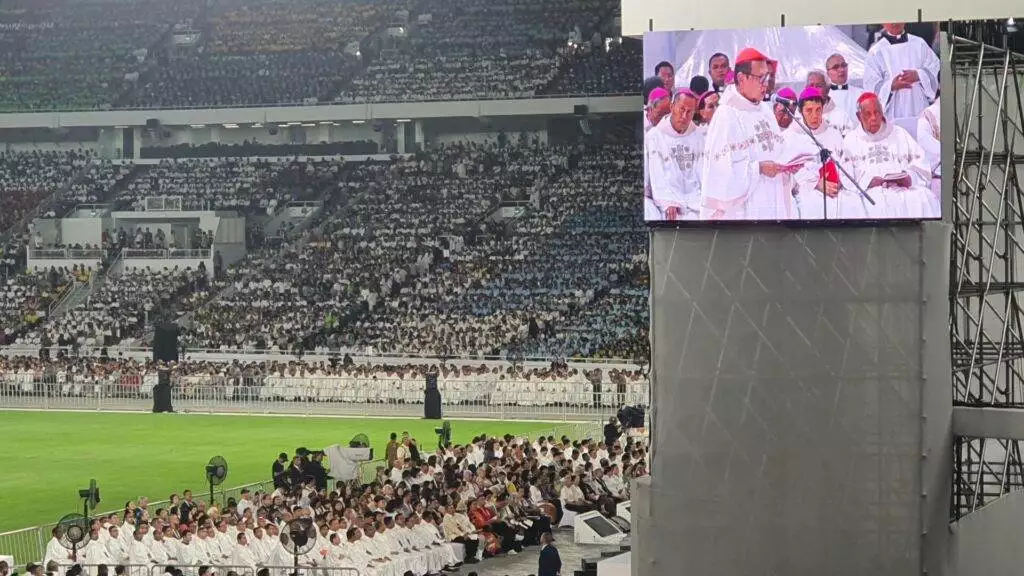
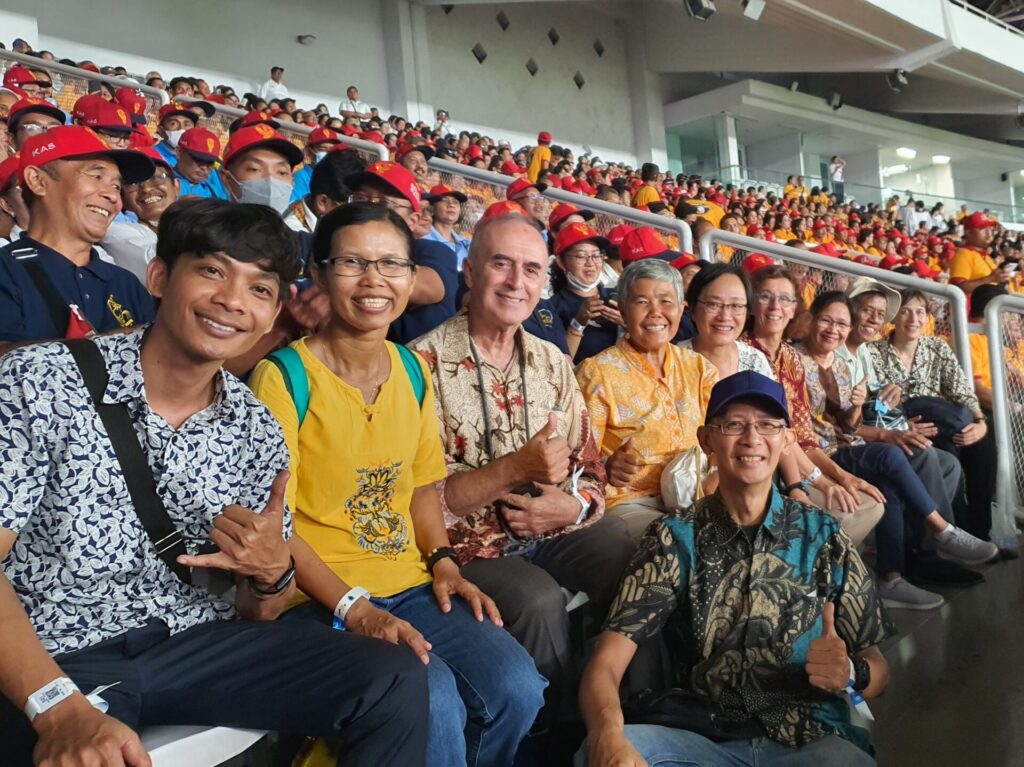
Paul, how did the local Focolare community experience this event?
“Some members of our Focolare communities in Jakarta and Yogyakarta had the privelege of participating in some of the events that were graced by the pope’s presence. At the Jakarta Cathedral (dedicated to Our Lady of the Assumption) the Holy Father acknowledged the work of catechists, describing them as “bridges of the heart that unites all the islands”. We were moved as he drew our attention to a statue of the Virgin Mary, and gave her as a model of faith that welcomes everyone, even as she keeps watch over and protects the people of God as the Mother of Compassion”.
Pope Francis and Imam Umar signed the Joint Declaration. What future do you see for Christians and Muslims together after this signing?
“Tomy, one of our photographers who covered the pope’s visit to the Istiqal Mosque and endured long hours of waiting under the city-heat, was visibly touched as the Holy Father finally arrived and greeted them from his car. Assuming a discreet position just outside the entrance to the underground, pedestrian tunnel that physically connects the Great Mosque to the Cathedral across the street, he managed to capture the moment Pope Francis and High Imam Umar signed the Declaration of Fraternity in front of a small crowd of bishops, imams and other religious figures, and said he had high hopes that this visit would create true harmony between all people of faith. And what is faith, if not seeing, acting and living from the heart?
Lorenzo Russo
Photo: © Paul Segarra – ©Tomy Wijaja
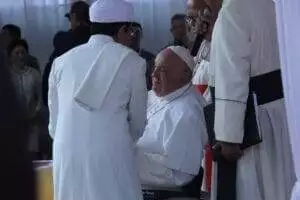
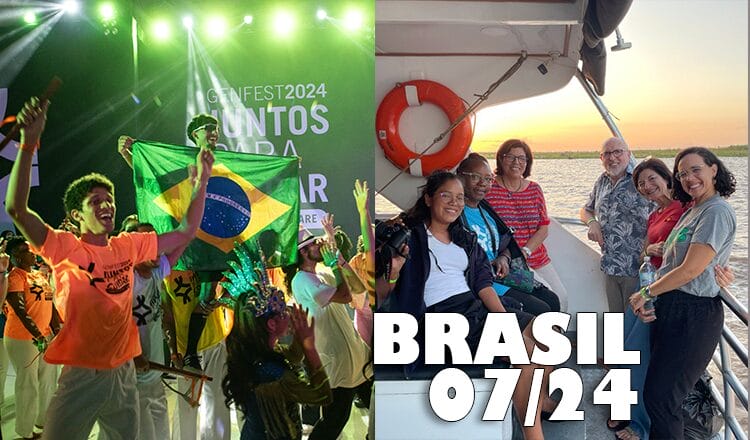
Articles in order of publication
 Genfest 2024: Together to care
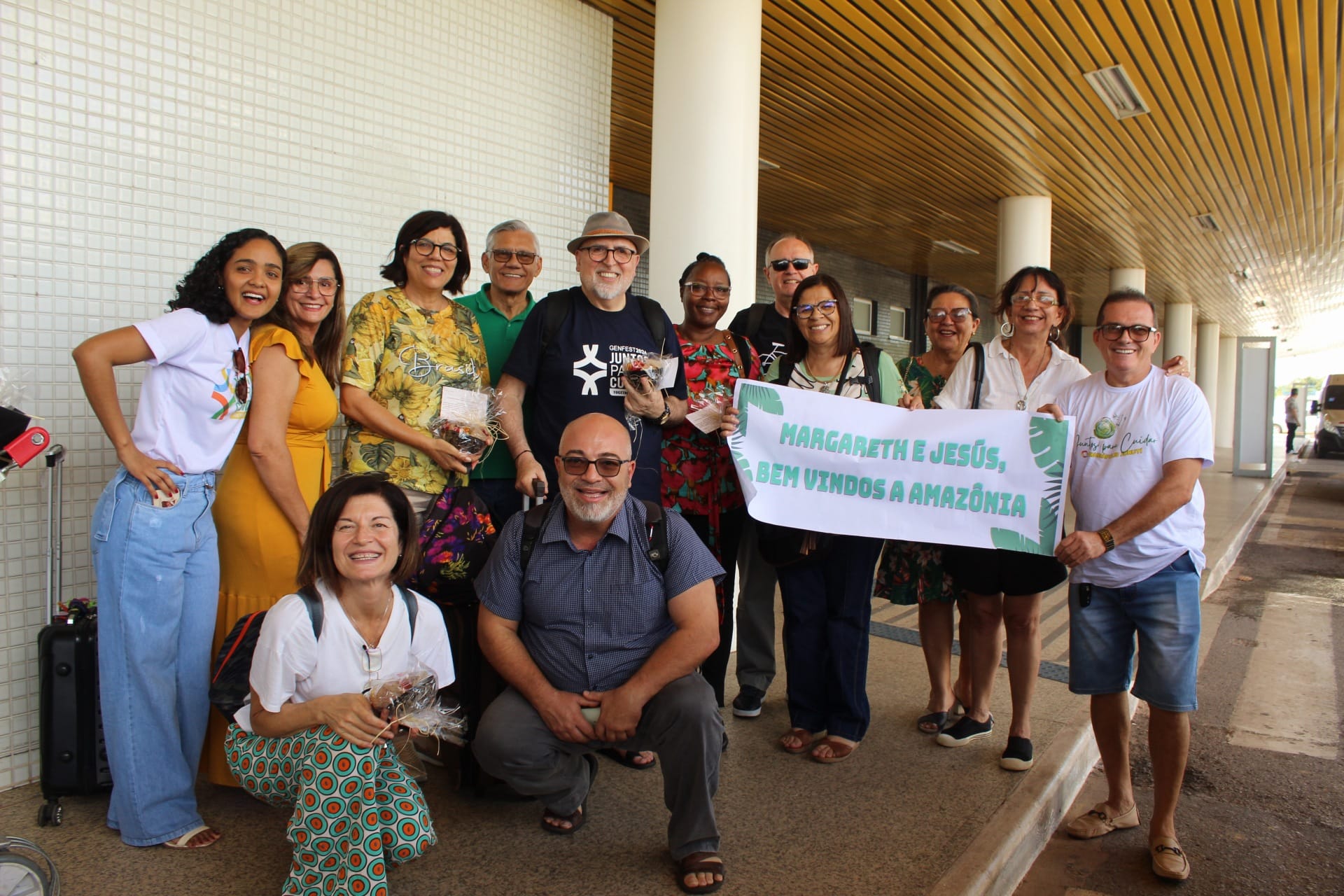 Amazon, land of caring and the future
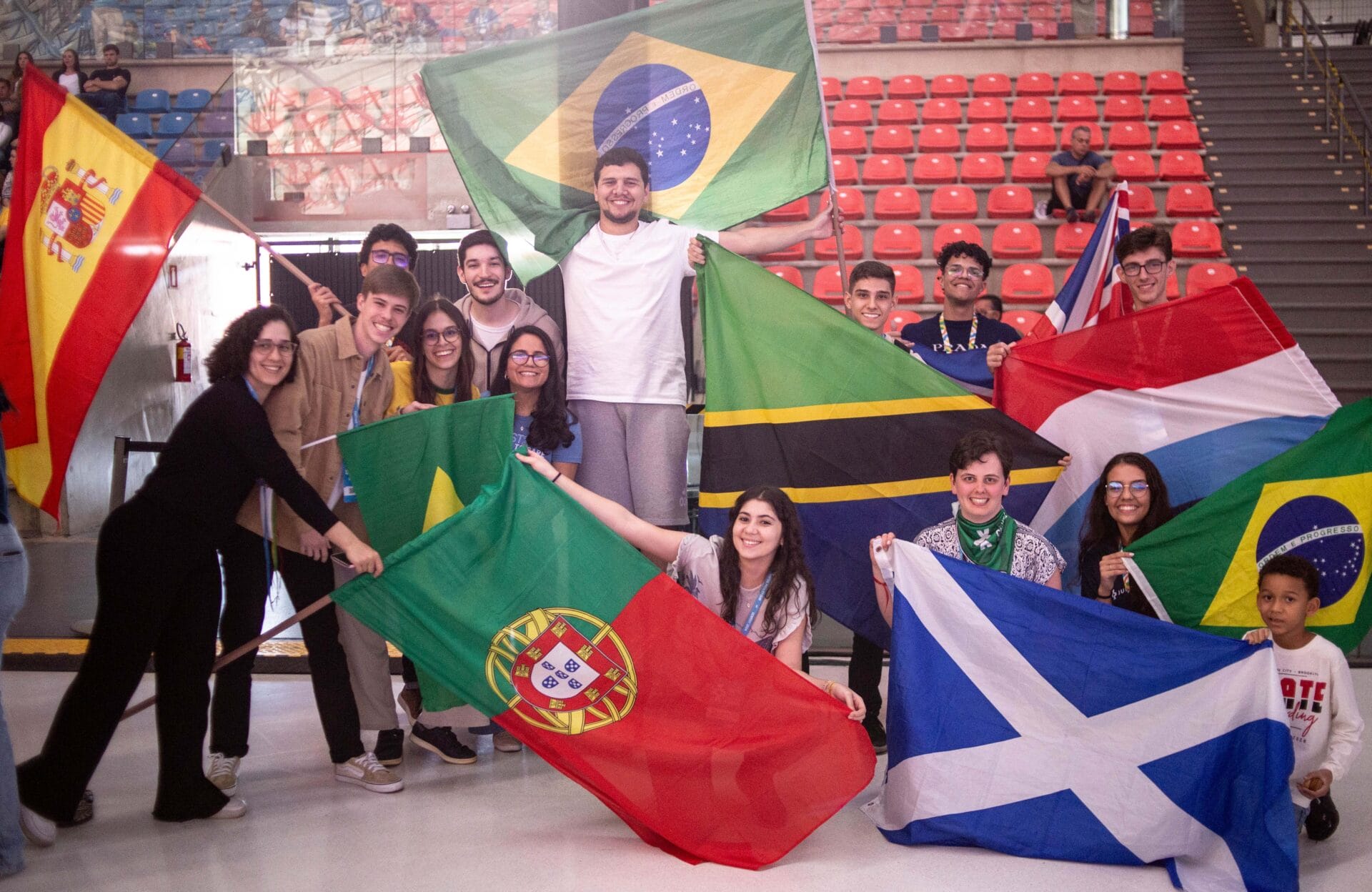 Genfest 2024 concludes second phase: a yes to peace
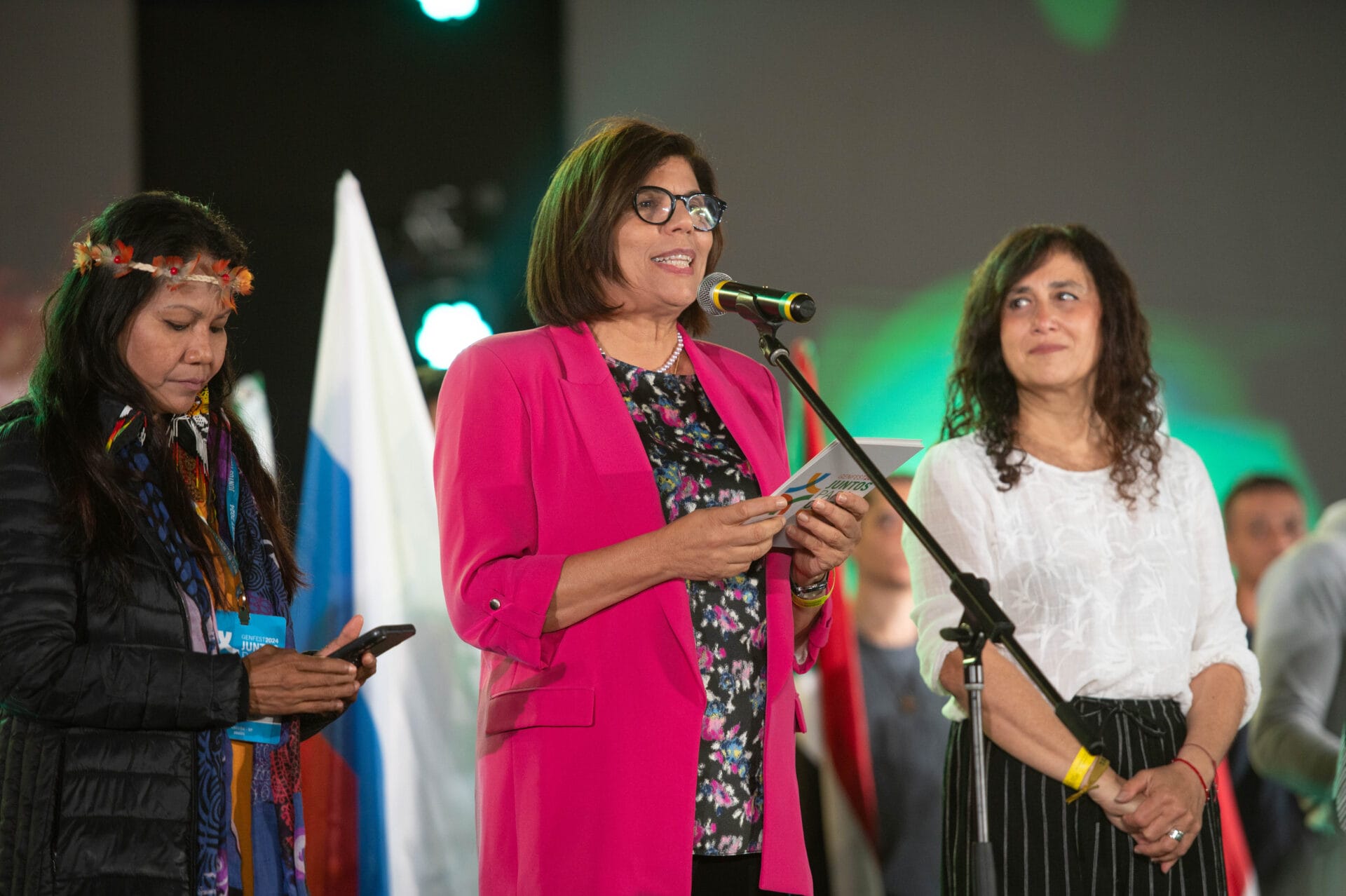 Let us not be at peace until we bring about peace!
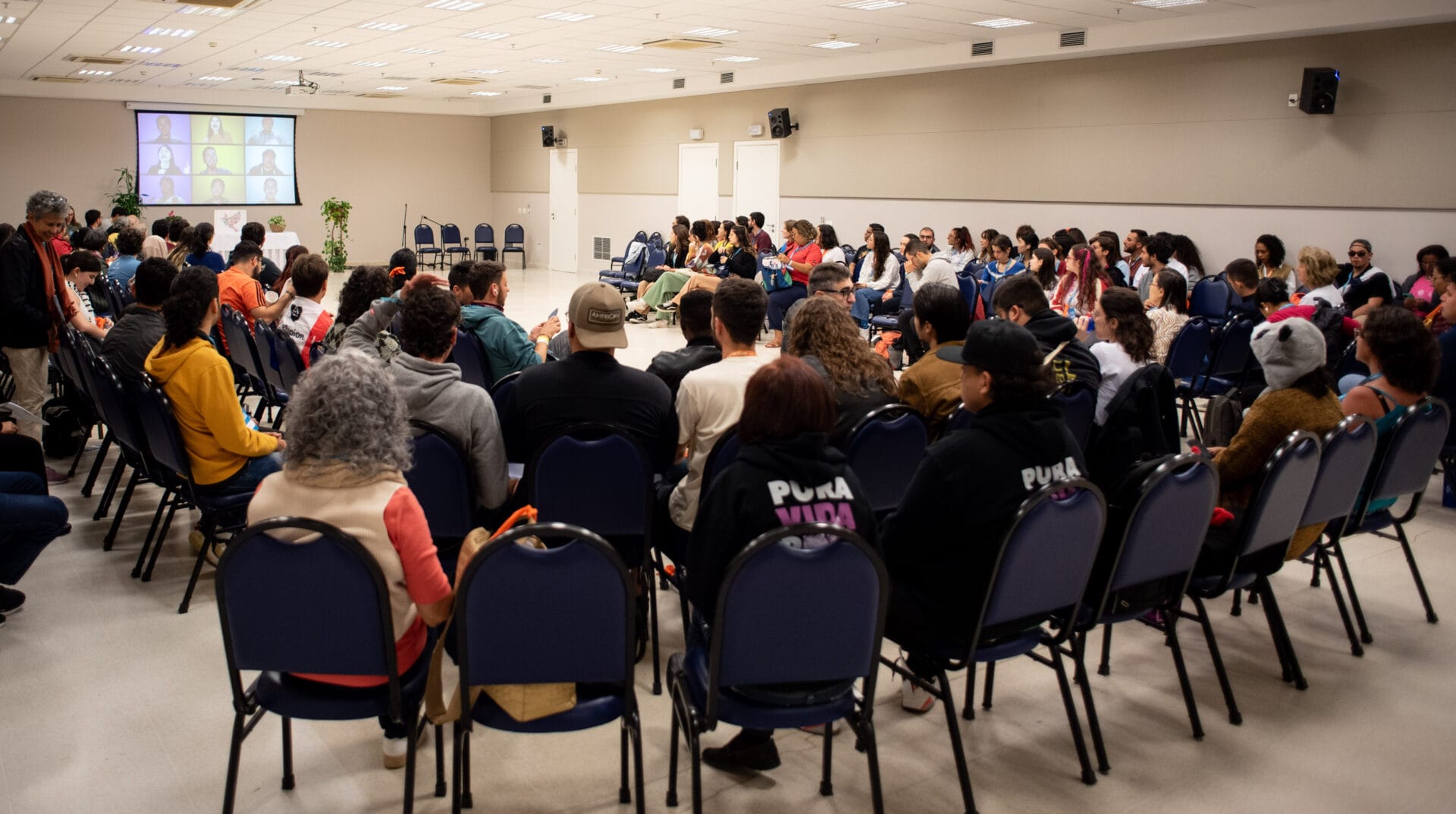 Phase 3 of Genfest 2024 has come to an end, but it is only the beginning…
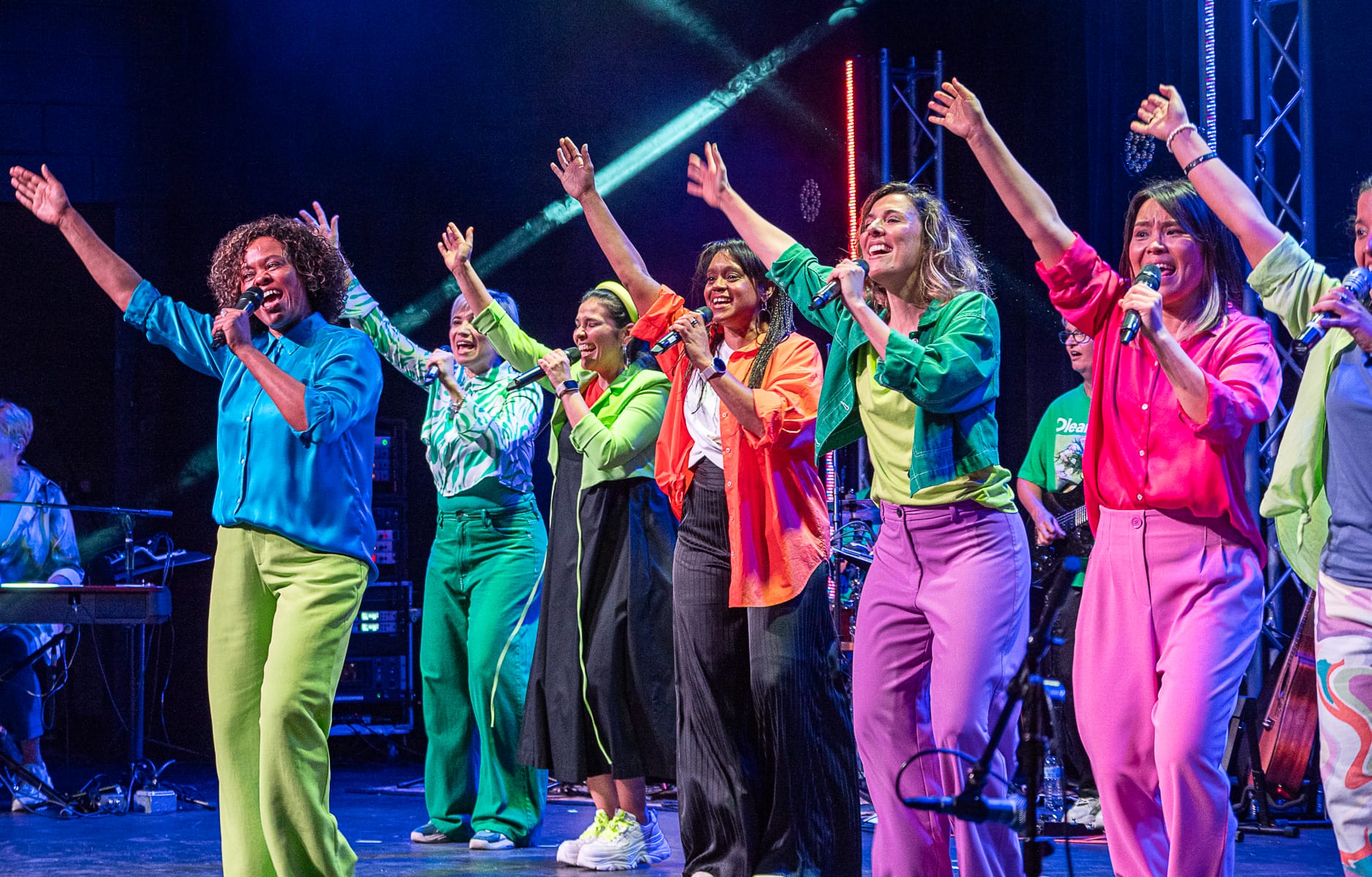 ‘Start Here and Now’ the new single by Gen Verde
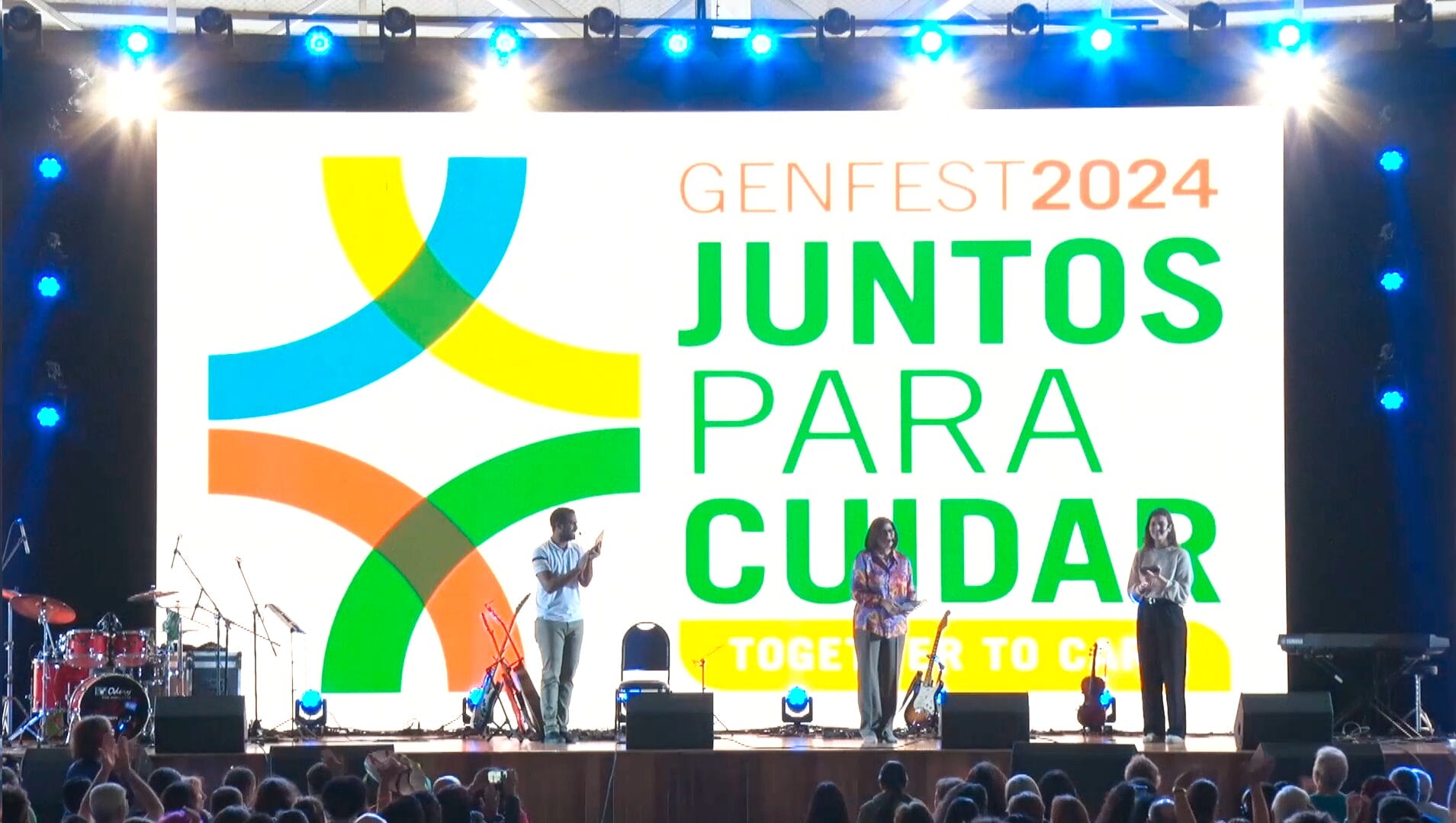 Genfest: the road comes into existence
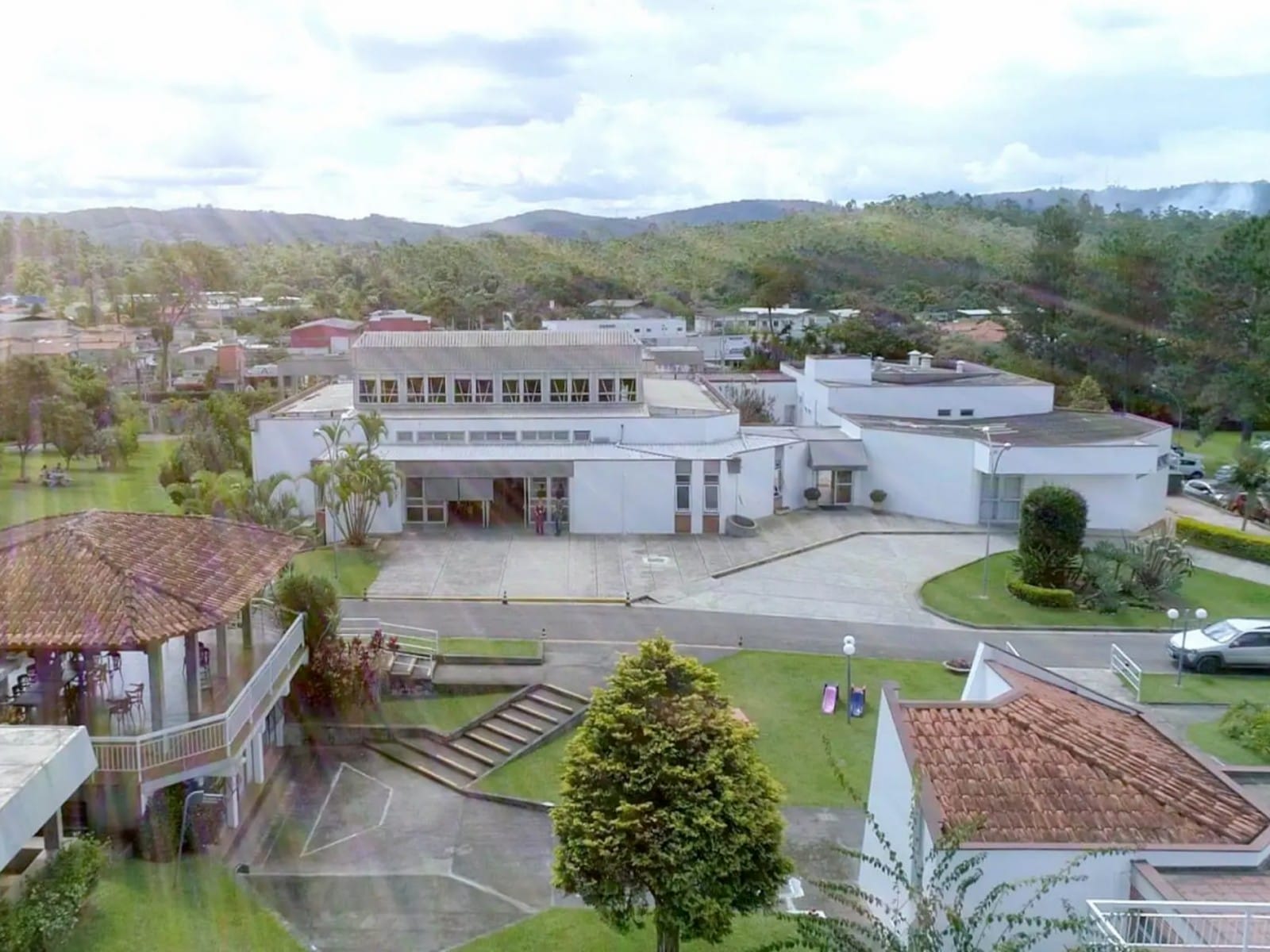 Mariapolis Ginetta and Polo Spartacus: the courage to change
 From the “tri-national” community – a future of fraternity for Latin America
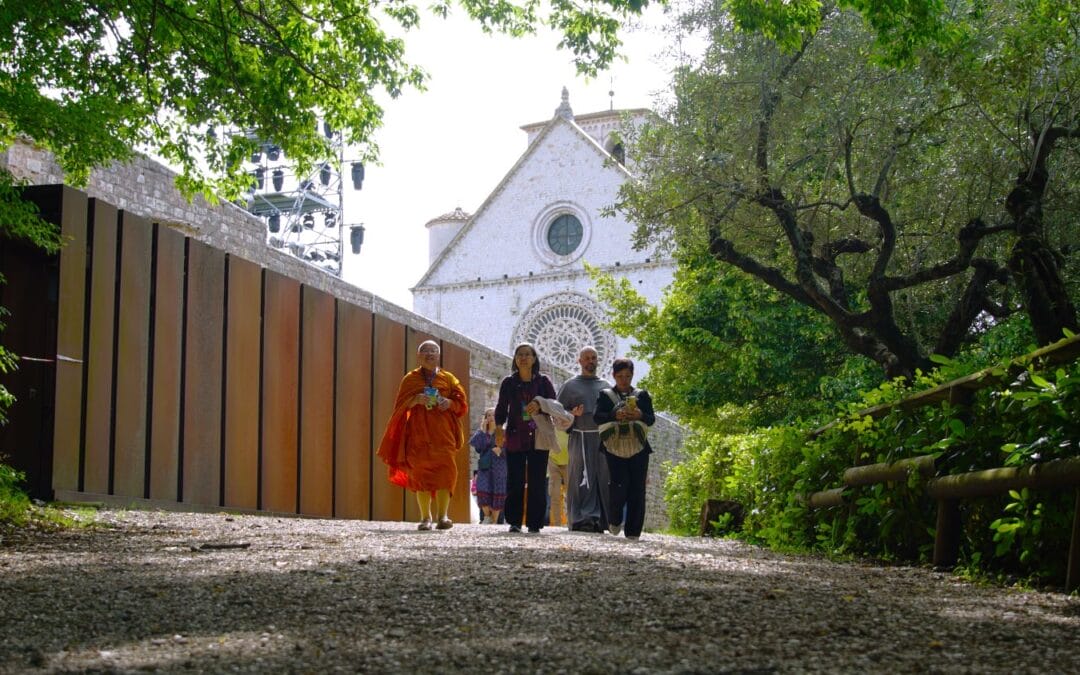
Chiara Lubich Chiara Lubich had an intuition of this in 1977 when she received the Templeton Prize for Progress in Religion in London. Since then, the worldwide expansion of the Focolare spirit has contributed to opening a dialogue with all the major religions of the world. A path that even Chiara had not imagined at the beginning, but that God had revealed to her over time, through events and circumstances; it was a path to pursue towards unity.
In this short excerpt, Chiara, in answering a question on the relationship with other religions, reveals the secret to building true universal fraternity: seeking what unites us in diversity.
The question put to Chiara is read by Giuseppe Maria Zanghì, one of the first focolarini. (From a reply by Chiara Lubich to a meeting of Muslim friends, Castel Gandolfo, 3 November 2002)
Giuseppe Maria Zanghì: This is the question: “We’d like to ask you, Chiara, how do you feel about the relationship with other religions. What does it make you feel within
your heart?”
Chiara Lubich: I’ve always felt very comfortable in my contacts with the faithful of other religions! Even though we are different from one another, we have a lot in common, a lot in common, and this unites us. Instead, diversity attracts us; it arouses our curiosity.
So, I like these contacts for two reasons: because I get to know new things, I enter into the culture of others, and also because I find brothers and sisters who are like me because we have many beliefs in common.
The most important of all – as I told you the last time I was here – is that famous Golden Rule, which says “Do not do to others what you wouldn’t want them to do to you.” This sentence can be found in all the most important religions, in their scriptures, in their sacred books. It’s also in the Gospel for Christians.
This phrase – “Do not do to others what you wouldn’t want them to do to you” – means “treat your brothers and sisters well, have great respect for them, love them.” And so, when they discover this phrase in their scriptures and I discover the same phrase in my scriptures, I love, they love, and so we love one another, and this is the basis, the first step towards universal fraternity So the first thing is to live the “Golden Rule.”
The second part of the question is about what I feel in my heart when I meet a brother or sister of another religion. I immediately feel a great desire to become friends, to build unity, to have this relationship as brothers and sisters. …

We have probably experienced how, at times, even though there are ideas and beliefs that lie deeply in our hearts and consciences, it is difficult to put them into action. It may help us to live an inspirational thought each day and know that other people all over the world are doing the same. We will not feel alone but part of a worldwide network. This was the intention that led to the development of the Idea of the Month: it was initiated by a few people in Uruguay who were passionate about dialogue and the ideal of unity.
This practice led to groups developing all over the world for people who want to reflect upon the Idea of the Month and share experiences of living it. Infact, in many places, these monthly meetings have become the norm. Could this become just a habit? Could the Idea become simply an all-encompassing good precept that is disseminated online like so many others on virtual groups? Certainly this is the biggest risk for initiatives of this kind. However, it is important that we do not settle for empty words and repeated platitudes. The English have the proverb: ‘Actions speak louder than words’. In the Netherlands, there is the saying: ‘Talk does not fill holes’. These expressions do not come about simply by chance. We can,however remember there is a word that guards against the risk of this happening and that word is ‘consistency’.
In the book entitled The Book Of Joy, the dialogue between the Dalai Lama and Desmond Tutu [1] highlights some points that can help us to live with consistency. First of all, we can listen to our consciences. Each person can assess what is their heart’s desire because this will almost certainly be linked to those human values that give a sense of happiness. We can also ask ourselves if what we want is just for ourselves or will it benefit others too? Will it serve a small number or many people? Now or in the future? When we have thought about these matters, we can formulate an intention for the day, with practical commitments even if they are small. For example, “Today I want to greet everyone; today I will be less judgmental; today I will be more patient…”
But how do you find the courage to follow your conscience? You need to speak to wise people about your ideas and try them out whilst remaining open to the possibility of being wrong. When you finally reach a mature decision, you can begin to put it into practice together but then regularly take time to reassess, renew and strengthen goals. You should not let setbacks, lack of cooperation or established but unhelpful habits put you off track and lose sight of what you hope to achieve.
This was seen in the actions of Piero Taiti when he began to know the Focolare Movement. He was truly a man of dialogue. This was seen in the many journeys he made to the little town of Fontem in Africa and in the personal relationship he built with the ‘focolarini’ for whom he held great respect. He saw that they were people whose actions came before their words and who worked with open minds alongside people, like him, who did not share their faith. He later found that his friendship with Chiara Lubich was a point of deep encounter and sharing of profoundly human values. Until the end of his life, Piero’s actions demonstrated and transmitted the power of this encounter in all areas of his life – as a family man, husband, doctor, politician and trusted friend of so many who recognised his moral calibre.
Not words, but actions. This gives energy to a person and makes them happy within. Living this way, we serve our neighbours.
[1]The Book of Joy: Lasting Happiness in a Changing World, Tenzin Gyatso, the 14th Dalai Lama, and Archbishop Desmond Tutu with Douglas Abram published in 2016 by Cornerstone Publishers
THE IDEA OF THE MONTH, THE IDEA OF THE MONTH is currently produced by the Focolare Movement’s ‘Centre for Dialogue with People of Non-religious Beliefs’. It is an initiative born in 2014 in Uruguay to share with non-believing friends the values of the Word of Life, i.e. the phrase from Scripture that members of the Movement strive to put into practice in their daily lives. Currently THE IDEA OF THE MONTH is translated into 12 languages and distributed in more than 25 countries, with adaptations of the text to different cultural sensitivities. www. dialogue4unity.focolare.org
The author of this month’s verse insists upon the fundamental importance of both listening and practice. The letter, in fact, continues: ‘But whoever looks intently into the perfect law that gives freedom, and continues in it – not forgetting what they have heard, but doing it – they will be blessed in what they do.’ (James 1:25) It is precisely this commitment to know God’s Word and to live it that sets us free and gives us joy.
One could say that this month’s Bible verse is the very reason why the practice of the Word of Life has spread throughout the world. Once a week, and then once a month, Chiara Lubich used to choose a sentence from Scripture and comment on it and then groups of people met and shared the fruits that living the Word had brought about in their everyday lives. This created a united community and, in a small way, revealed the social impact that living the Word can have upon society.
‘Despite its simplicity, the initiative made a notable contribution to the rediscovery of the Word of God in the Christian world of the 20th century’ [1] by transmitting a ‘method’ for living the Gospel and sharing its effects.
Do not merely listen to the word, and so deceive yourselves. Do what it says.
The letter of James takes up Jesus’ message that refers to experiencing the presence of the Kingdom of Heaven among us: Jesus declares blessed are those who listen to his Word and keep it; he recognises as his mother and brothers those who listen to it and put it into practice; iii he compares it to the seed that, if it falls on good soil – that is, on those who listen to it with a good and noble heart and keep it – they produce fruit through their perseverance.
‘In each of his words Jesus expresses all his love for us,’ writes Chiara Lubich. ‘Let us make the Word incarnate and make it our own. If we do so, we will experience the powerful life it unleashes in us and around us. Let us fall in love with the Gospel to the point of allowing ourselves to be transformed by it and enable it to overflow onto others… We will be free from ourselves and our limitations.
Furthermore, we will see a revolution of love explode everywhere because Jesus, freed to live in us, will bring about a change in society wherever we live.’[2]
Do not merely listen to the word, and so deceive yourselves. Do what it says.
How can we put the Word into practice? Let us look around us and do everything we can, to serve others in need, through both small and not so small actions. Such gestures transform injustice in society, combat violence, foster peace and reconciliation and increase sensitivity towards respect for our planet.
This can initiate a real revolution in our lives, in our work environments and in the communities in which we live.
Love manifests itself in social and political actions that seek to build a better world. The commitment of a small Focolare community towards the most vulnerable people in society led to the opening of the Chiara Lubich Centre for the Elderly in Lamud, Peru in the Amazon area, 2,330 metres above sea level.
‘The Centre was opened in the midst of the pandemic crisis and houses 50 elderly and lonely people. The building, furniture, crockery and even food came as a gift from the neighbouring community. It was a risk, not without difficulties and obstacles, but in March 2022 the Centre celebrated its first anniversary. It hosted a party and opened its doors to the city; even political representatives took part. The two days of celebrations enlisted new volunteers, adults and children, who want to enlarge their own families by taking care of lonely grandparents.’ [3]
Edited by Patrizia Mazzola and the Word of Life Team.
[1] C. Lubich, Parole di Vita, Introduzione, a cura di Fabio Ciardi, (Opere di Chiara Lubich 5), Città Nuova, Roma 2017, p. 9
[2] Lubich, Parole di Vita, Introduzione, a cura di Fabio Ciardi, (Opere di Chiara Lubich 5), Città Nuova, Roma 2017, p. 790
[3] Mission Report of Communion 2022. Focolare Movement , in https://eyut279xk3q.exactdn.com/wp-content/uploads/2024/02/BdC-2022-DialogoEN.pdf p.67
IDEA OF THE MONTH, based on the Word of Life of the Focolare Movement, was born in Uruguay as part of the dialogue between people of different convictions, whose motto is “building dialogue”. The purpose of this publication is to help promote the ideal of universal fraternity. The IDEA OF THE MONTH is currently translated into 12 languages and distributed in more than 25 countries
The ecumenical family from around the world comes together to listen and care for our common home. As usual, September 1 begins the Time of Creation, a period of prayer and reflection associated with concrete actions for the care of Planet Earth. This event will conclude on Oct. 4 with the feast of St. Francis of Assisi, the patron saint of ecology beloved by many Christian denominations. The Focolare Movement participates in the initiative. From the Week of Prayer for Christian Unity this January leading up to today, we have experienced the phase of “Preparation” for the Time of Creation, which is essential for creating bonds and relationships, renewing the joy of meeting and cultivating the gifts of communion and peace as the People of God together with our common home.
Theme of 2024
The theme of this year is Hope and act with Creation. Where does this theme originate? In the letter of the apostle Paul to the Romans, the biblical image depicts the Earth as a Mother, groaning as during childbirth (Rom 8:22). St. Francis of Assisi understood this when he referred to the Earth as our sister and mother in his Canticle of Creatures.
Unfortunately, the times in which we live show that we do not relate to the Earth as a gift from our Creator, rather as a resource to be used.
Can there still be hope?
Certainly, there must be, along with an expectation for a better future. Hoping in the biblical context does not mean standing still and remaining silent, but rather groaning, crying and actively striving for new life in the midst of difficulties. Just as during childbirth-taking up the apostle Paul’s depiction-we go through a period of intense pain but a new life is being born.
Hope is a gift from God. Only through hope can we fully realize the gift of freedom, which together with responsibility enable us to make the world a better place. Only when we cooperate with Creation can the first fruits of hope be born.
Hope and act
Hoping is trusting that our action is meaningful, even if the results of this action are not immediately seen. We know how urgent it is to take bold action to contain the climate and ecological crisis, and we also know that ecological conversion is a slow process as human beings are headstrong on changing their minds, hearts and way of life. Sometimes we do not know how our actions should be. There is much we can learn from other cultures and countries about how to hope and act together with Creation.
This year the 1st of September is a Sunday, we are all invited to celebrate the beginning of the Time of Creation in our respective countries and communities.
Lorenzo Russo

“Love your neighbour as yourself”*.
This is a continuous tension because our nature loves itself.
Often we hear news of disasters, earthquakes, hurricanes which claim victims and leave people injured and homeless. But it’s one thing to be one of those affected and another thing to be an onlooker.
Even if we are able to offer some aid to help the others, we are not them.
Tomorrow it could be the other way round: I on my deathbed (if I am given a bed!) and the others out in the sun enjoying life.
All that Christ has commanded us goes beyond our nature as it is now.
But also the gift he gave us, the one mentioned to the Samaritan woman, is not human in nature. So it is possible to share in our brother’s pain, joy or worries because we have in us charity which s of a divine nature.
With this love, that is with Christian love, our brother can be truly comforted and tomorrow I might be comforted by him.
And in this way it is possible to live, because otherwise human life would be very hard and difficult, indeed sometimes it would appear to be impossible.
Chiara Lubich
(1) Cf. Lv 19, 18.
Photo: © Pixabay
(From Chiara Lubich, 1964-1980 Diary, Città Nuova, 2023)
The edition of the Diary of Chiara Lubich was edited by Fabio Ciardi. We invite you to see the interview we conducted at the time of the presentation.
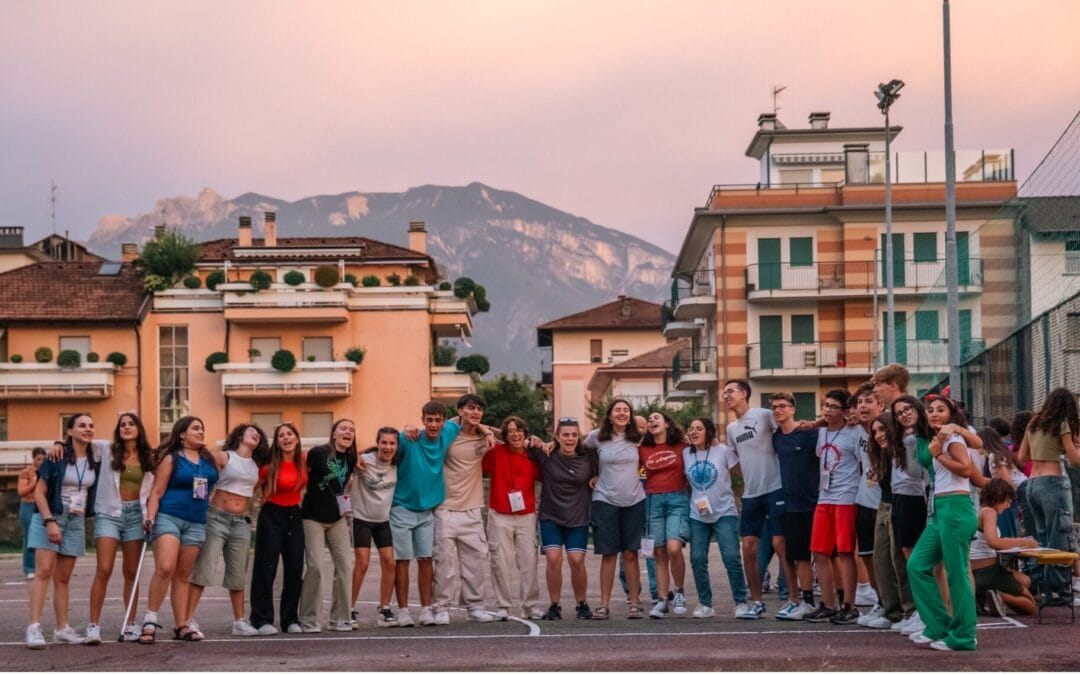
In early August in Trent, Italy, the Foco School, a Focolare Movement congress for the Gen3 boys and girls, the adolescent generation of the Movement, was held.
A total of 350 participants attended – ages 14 to 17 along with assistants ages 18 and older – from 19 nations with 12 different languages. A little over a week to deepen adolescent themes, experience in depth the relationship with God, discover how the Ideal of unity and universal fraternity is possible to live it and build it day by day despite the threat of wars in various parts of the world. There was also a Festival of peoples where each nation could represent itself through songs, dances, outfits, photos, and local food. A way to learn about each other’s culture and build a piece of a world that is more united and fraternal.
Here are some testimonies.
Sofia, Italy: “I decided to attend the Foco school to have a more intimate relationship with Jesus. From this school I learned the way to always love the people around me. I can better cope with moments of difficulty and pain by feeling closer to Jesus.”.
Veronika, Croatia: “I experienced a united spirit that flows from the desire for peace and community, which is based on prayer and dialogue with God. After listening to the testimonies about the violation of peace, about the struggle to keep peace in oneself, in one’s family, in one’s country, the desire to do everything to keep peace in these places was awakened in me.”.
Naomi, India: “I attended the Foco School to improve my relationship with God. At the end what I took home was how I can take comfort during times of difficulty or pain by thinking of Jesus forsaken on the Cross. But I also discovered the power of reconciliation through confession. I will always try to use my whole self to propagate the Gospel and make my city a place of love.”.
Tomás Portugal: “During the Festival of Peoples, I was proud to show our country and at the same time learn about the cultures of other countries. After this school, I miss everything I experienced there, but I also want to live what I learned there every day.”.
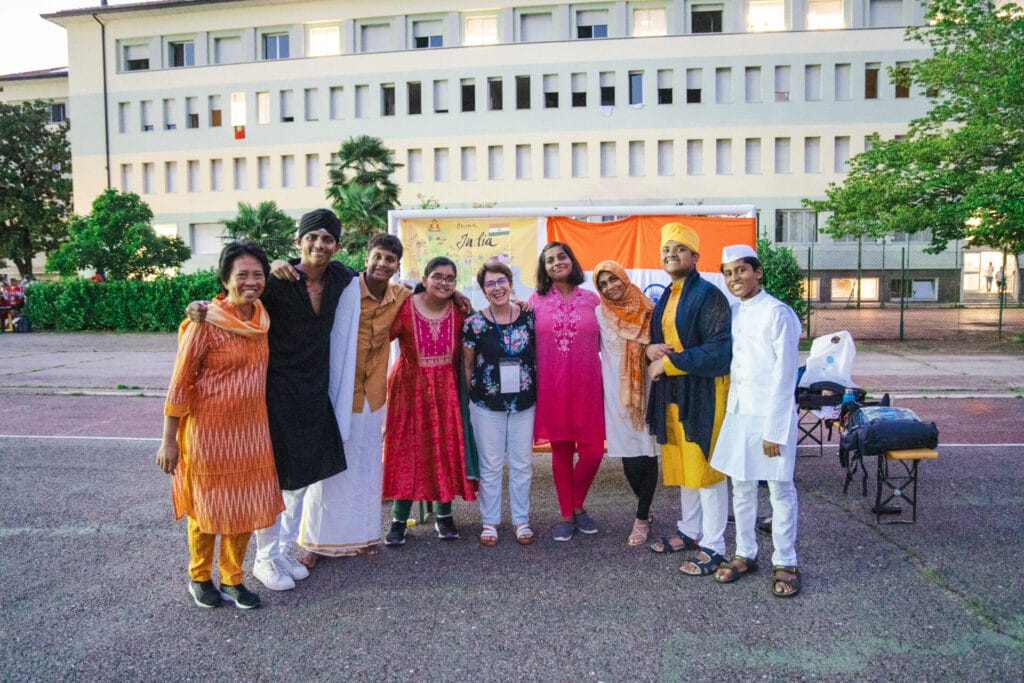
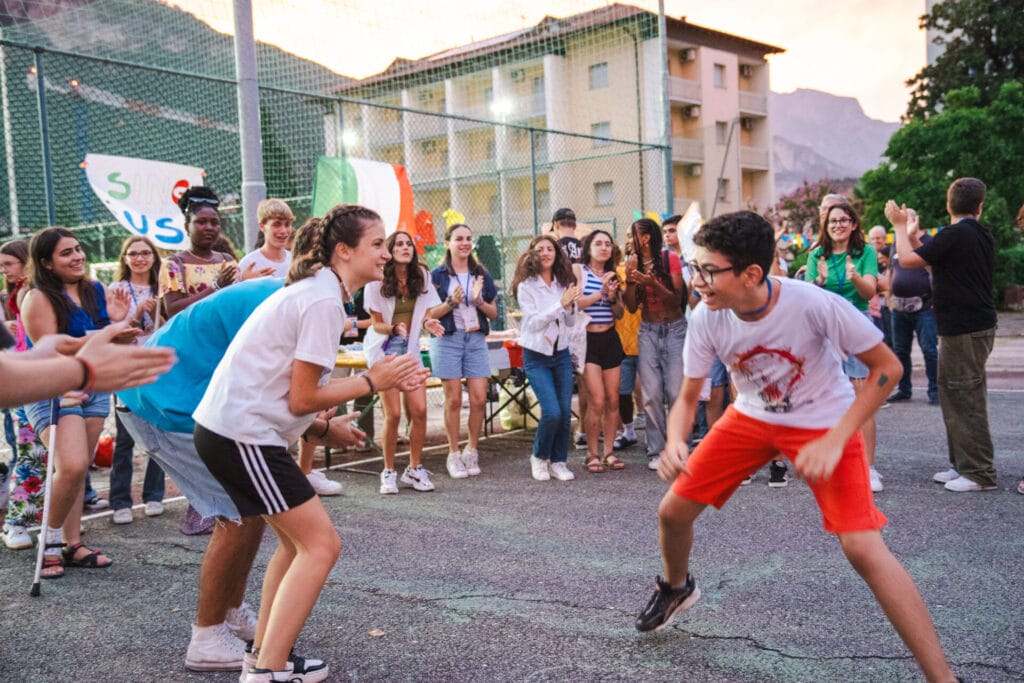
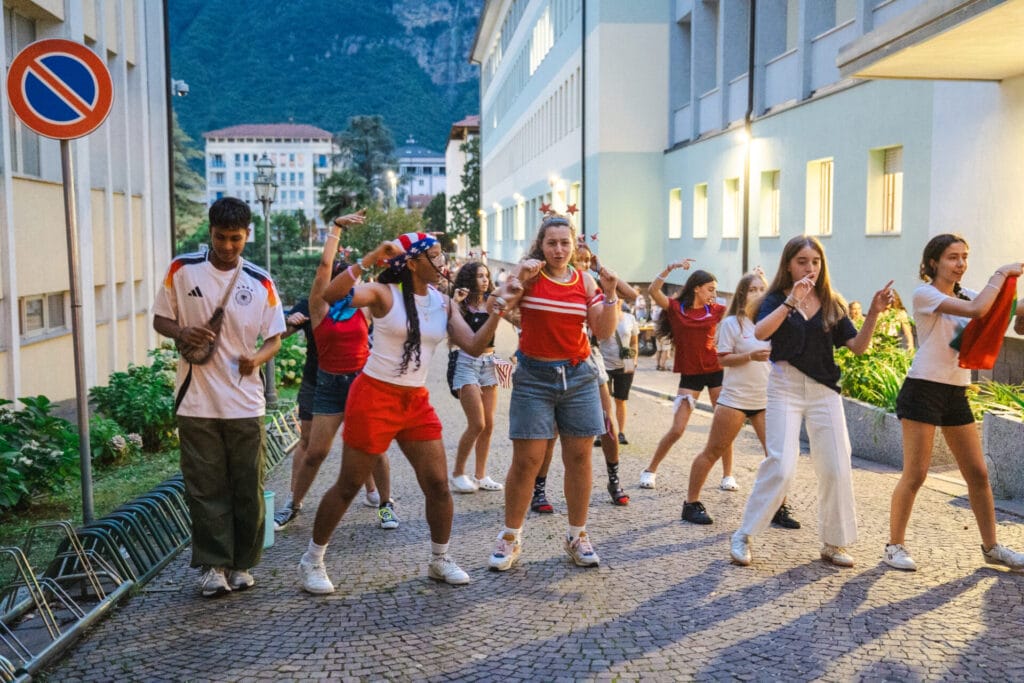
Emanuel, Croatia: “At Foco School, I enjoyed the Festival of Peoples. We were able to learn about different cultures and traditional dishes. I met many friends there and tried various specialties. I would gladly relive this experience 100 more times.”.
Gloria, Brazil: “I have felt changes in my relationship with God. At first I could not connect with Him and feel Him in people, but I know that after all the experiences I have heard and reflections I have experienced, I can easily feel Him in every situation. Also, I have learned to help people I don’t like, to help people with problems and to identify God in everyone.”.
Sarahi, Mexico: “I realized that even though we live in different countries and even on very distant continents, the Ideal of unity can always be lived. It was a very good experience especially to learn about other countries’ culture, food, their clothes, some words and traditions. What I took away from the school is that first of all I stopped being afraid of confession and this made my faith in God grow. Daily Mass has helped me a lot, I hope to continue going every Sunday of my own free will.”.
Sebastian, Croatia: “I liked it when we represented our countries at the Festival of Peoples: everyone showed some tradition of their country. It was a lot of fun when we played soccer in the evening and got to know each other like that. My favorite moment was the final party where we sang and had fun. My life changed after the school, now I try to live the gospel by loving the people around me.”.
Silvia, Italy: “After the school my life turned around and I began to see the world with different eyes. It was the most meaningful experience of my life and made me want to be able to resemble what Chiara Lubich always wanted from the Gen.”.
Anna, Italy: “I highly recommend Gen who have not yet attended a Foco School to do so! You will have a lot of fun, I can guarantee.”.
Jakov, Croatia: “At Foco School, I understood the importance of unity. When I arrived, everyone was welcoming, it felt like one family. Rarely have I experienced this feeling before, maybe never. Also, I understood how to love and want everyone, regardless of who they are and their background. I would like to experience more such encounters, it was an unforgettable experience.”!
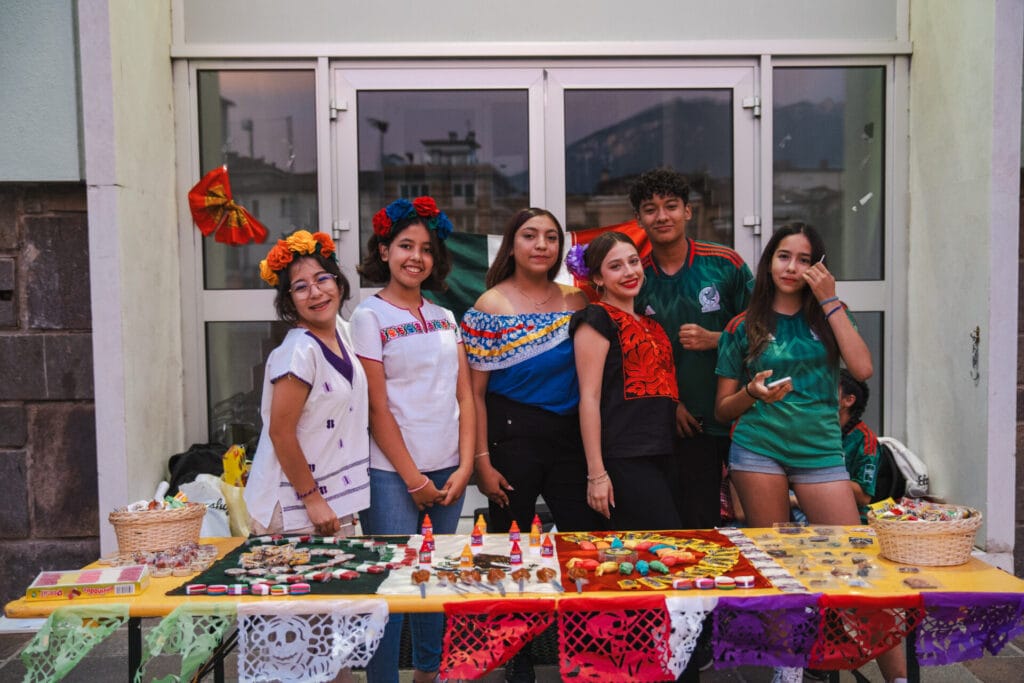
Julia, Brazil: “I take home the immeasurable love of Jesus for me and for everyone, as well as the hope and the feeling of wanting a united world to become a reality. Seeing that Jesus loves each one of us and being able to feel his love at Foco School was one of the most beautiful experiences I have had and I will definitely take it with me. I found hope and faith again. Now the challenge will be to bring the love and unity I felt at school into the “real world,” at home, at school, with my friends. But it is the memories and the love of what I learned in that experience that will push me to not give up and to fight for a united world.”!
Maria Teresa, Italy: “I participated in the Foco School as I felt a desire to know more about the origins of the Focolare movement. From this School I take home the hope for a better future for our generation. My life has improved because I have realized that I have to look at it from a different perspective, make every obstacle a launching pad! Being very insecure, I am always afraid to play the violin in public. In fact, when I was proposed to play at the school I was a little unsettled. Then one day there was a talk about how each of us can give to others our own talent or quality, which Chiara Lubich calls a “pearl.” So I decided to give my pearl to others, and while I was playing with another Gen, a group of boys and girls came up to accompany us with singing, giving us support. I lived Luke’s Gospel passage (Luke 6:38) “Give and it will be given to you.”.
Elena, Italy: “At the end of this school, I take home what I understood during a day dedicated to Jesus in his pain, abandoned on the Cross. It also affected me deeply because, thanks to the testimonies of the Gen, I was able to understand how to overcome pain through love.”.
Tomás, Portugal: “I brought home the discovery of Jesus forsaken, the power of prayer, as well as confession. I will carry God’s love wherever I go, I have strengthened my faith, I have learned a lot from this school.”.
Lorenzo Russo
Trieste is a city located in north-eastern Italy, on the border with Slovenia. Historically, it represents a crossroads of cultures, languages and religions. Today it is one of the main entry points to Europe for migrants following the Balkan route. They come with a burden of suffering, wars and persecutions.
In Trieste, the Focolare Movement community collaborates with other institutions to welcome migrants.
Claudia, from the local community told us, “The biggest problem is the perception of the problem itself. It is not an emergency, an unmanageable invasion as it is often portrayed but it is a structural phenomenon that is the reality of our historical present. A continuous flow of incoming people who, if properly welcomed, can enrich our city and our country. If the migratory phenomenon is not understood and addressed in appropriate ways, it will inevitably generate distrust, fear, impatience, rejection”.
Last autumn, in anticipation of the cold weather, the Bishop of Trieste, Archbishop Enrico Trevisi, expressed a wish to open a shelter as a concrete response to the reception of migrants. Together with other Catholic associations and individual citizens, some Focolare members responded to the Bishop’s appeal by volunteering. Claudia said, “For us it is not just a charitable service but an opportunity to meet a brother or a sister who needs to be loved in many details: by giving a smile, offering a meal or exchanging a few words. Often these brothers and sisters tell us pieces of their story, their sorrows and their hopes. They show us photos of their children but we also have a laugh and simply spend time together. Some of us have also looked after some migrants more closely for example by accompanying them to a hospital appointment or helping them prepare a CV for a job application”.
Sandra from the Focolare community added: “We try to get to know the migrants, their stories and their needs. This gives rise to experiences that have seen us involved in helping beyond our shift at the shelter and these experiences encourage us to continue. The shifts allow us to work with the other volunteers and to discover that even though many of them are not part of any associations or involved in parish life, they were happy to respond to the Bishop’s appeal”.
Claudia said, “Relationships grow slowly and are a sign of unity for the local Church. This experience, combined with the recent Italian Catholics’ Social Week[1], which took place in Trieste and was attended by Pope Francis, will bring great life to this border city of ours”.
A guest of the diocesan shelter said, “In Trieste I met the best volunteers, people who do not stop at distributing food. Satisfying the hunger of the needy and treating the wounds of the sick are noble tasks because they are the most urgent and essential. However, human beings have other extremely important needs, for example their emotional and spiritual health, which are symptoms of the state of their soul. This is not an individual or minor issue, it is what makes the difference between actions that have a momentary impact and those that persist and permeate the entire society. The best volunteers are so because they are aware that the needy are not just recipients of charity, we are people with stories worth listening to. They know every migrant mourns their lost roots, while also harbouring a hope that crashes against the walls of the system and an incessant struggle for survival. The best volunteers are moved by this suffering humanity and are encouraged to listen to our stories, despite the language barrier. They teach Italian or learn Spanish, use technology, give up their personal time, invest their energy in the common good and dream of a community in which we can all offer the best of ourselves”.
Lorenzo Russo
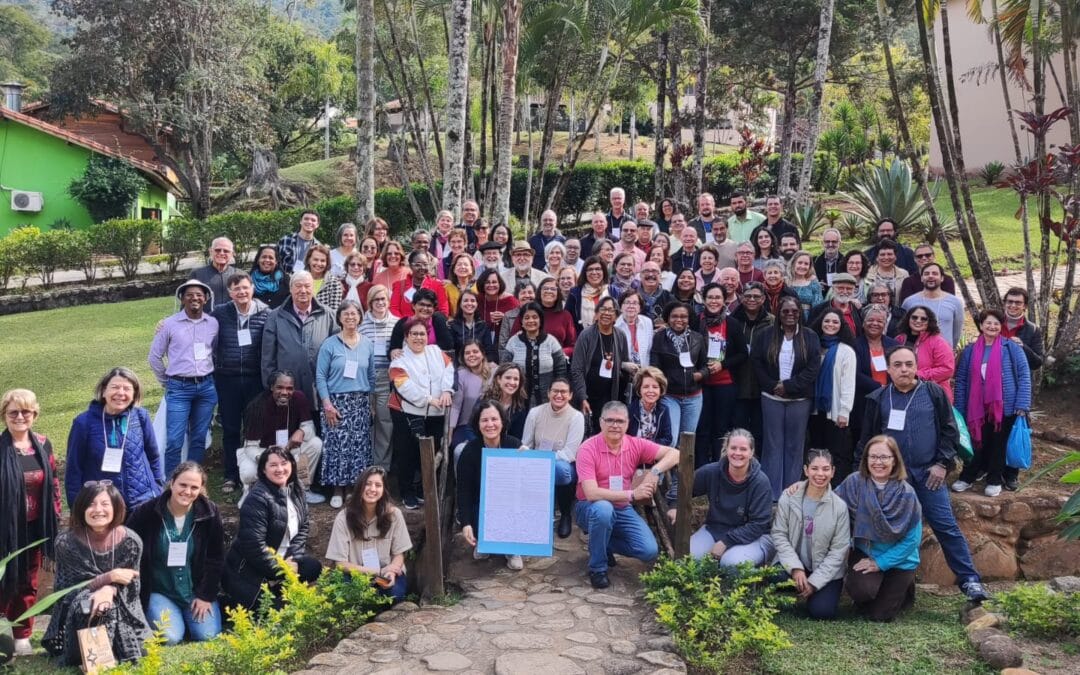
The Pedrinhas (SP, Brazil) headquarters of the Fazenda da Esperança welcomes young people and adults who are going through different stages of recovery from drug addiction and various forms of addiction and social distress. There could not have been a better place to host the conference of UNIRedes, the platform of NGOs, social and humanitarian projects and cultural agencies inspired by Chiara Lubich’s spirituality of unity in Latin America. In attendance were 140 people from 37 of the 74 partner organisations of UNIRedes, active in 12 countries of Latin America and the Caribbean.
The aim of the conference was to present the work of these years to Margaret Karram and Jesús Morán, who were present at the meeting; to define the next steps common to all the partner organisations and to strengthen the link with the Focolare Movement in order to share the experience gained beyond the Latin American continent.
UNIRedes: a network of networks
Maria Celeste Mancuso, Argentinian, international co-responsible of the New Humanity Movement, explains that UNIRedes is not only a solidarity super-project: “It is also a space that generates a cultural reflection to identify the anthropological and epistemological categories necessary to generate a new culture of care for the person and societies in Latin America”. This is why cultural agencies inspired by the charism of unity such as the Sophia University Institute (Loppiano, Italy), its local branch, Sophia Latin America and the Caribbean (ALC), and the ASCES UNITA University Centre in Caruaru (PE) are also fully part of it.
Virginia Osorio, Uruguayan, one of the initiators of the project, explains its origins: “The constant political and economic changes in our countries made our organisations increasingly fragile and isolated. With UNIRedes we found a place where we could strengthen each other and share our sufferings and hopes. Our most recent project was for Genfest: hundreds of young people volunteered with many of our organisations, experiencing first-hand fraternity and closeness to the poorest”.
The common root: “dying for one’s people”
The first root of UNIRedes is not based on geopolitical or economic analyses: we need to go back to the early 1970s when the Gen, the young people of the Focolare, like many of their peers in many countries, wanted to change the world and bring equality, justice, and dignity.
Chiara Lubich, who met with them frequently, supported and confirmed the need to make a peaceful social revolution, especially in Latin America, a continent she saw as having this special vocation. She told the young people of the Focolare that: “Each one must feel that we must die, yes, for humanity, but we must find our local Jesus Forsaken to die for our own people”[1].
“That’s how many people went to the peripheries of the cities, to the slums, wherever poverty took away people’s dignity,” says Gilvan David, a Brazilian from the Latin American articulation group of UNIRedes. “The first NGOs were established, and in the meantime we were trying to structure ourselves, but it was not enough: ‘You come to us,’ the poor told us, ‘but then go away and leave us alone’. To respond to this cry, we started to network with local public policies and at the same time, several priests who lived the spirituality of unity also founded social projects: Frei Hans with the Fazenda da Esperança, Father Renato Chiera with the Casa do Menor and others”.
One “single” Latin America
“Then the first groups of organisations were created,” continues Gilvan David, ‘Sumá Fraternidad’, which brought together projects from a number of Spanish-speaking countries; the civil association ‘Promocion Integral de la Persona’ (PIP) in Mexico; and the Brazilian social organisations continued to grow, finding their own identity and space for service. These were not easy years, but we started various paths in different territories in Latin America to support their social commitment, which then merged into UNIRedes. We met several times, but the founding meeting was in 2014, also attended by Emmaus Maria Voce and Giancarlo Faletti, then President and Co-President of the Focolare Movement. Emmaus on that occasion said: ‘You give the Movement a new visibilitỳ, a new meaning to its action, you are a testimony for those who look at you from the outside; you give complete visibility to the Charism through concrete actions’. I would say that it was then that we recognised ourselves as a unique reality for the whole of Latin America: we found ourselves embraced by the Charism of unity”.
There were many substantial contributions that built this conference, along with the presentation of the different partner organisations.
Juan Esteban Belderrain: from inequality to hope
The Argentinean political scientist Juan Esteban Balderrain analysed the wound of inequality of which Latin America holds the world record. “It is a matter of building a vision of this continent that starts from hope and this is possible because if we look at the deepest root of the problem of inequality, we find that we have lost the reference to that God who is love and who helps us understand that we are brothers and sisters of one another and with nature, which is also an expression of his Love. Referring to the 20th century, Paul VI said that it was a blessed time because it demanded holiness from everyone. I think these words also apply to ours.”
Padre Vilson Groh: the “open-eye mysticism”
For over 40 years, Father Vilson has lived in the “morro”, a slum in Florianopolis (Santa Catarina, Brazil), carrying out social projects especially for young people. He spoke of the “open-eye mysticism”: “We must take our organisations to the dark cellars of our peripheries; be a hope there. Genfest brought the perspective of “togetherness”, which Pope Francis promotes. This requires a patient, resilient journey; it demands being steadfast in the pursuit of the common good. Unity is superior to conflict, the Pope always says, and unity is plurality. Let us bring diversity into our organisations: the charism of unity is a door for the wounded Christ to open spaces”.
Vera Araujo: Latin America builder of fraternity
The Brazilian sociologist’s talk focused on a positive vision that recognises the Latin American cultural and human heritage and offers it as a gift to the world.
“UNIRedes originates in Chiara Lubich’s charism and can be transformed into an incredible opportunity for the rest of the world: unity seen not only as a religious value, but also as a force capable of effectively composing the human family, realising an interaction between the multiplicity of people, preserving distinctions in the context of social realities. Here the charism of unity offers a solution that is not easy, but rather a sense, a meaning, a Person: Christ Forsaken on the cross.
‘To love well‘, says Chiara, ‘we must not see in the difficulties and injustices of the world only social evils to be remedied, but discover in them the face of Christ who does not disdain to hide beneath every human misery’[2].
Susana Nuin Núñez: the path of peoples and social movements
The Uruguayan sociologist described the journey and the social, political, economic richness of the continent’s peoples and certain social movements. “These networks with their most varied physiognomies, with their developments in social practices or in the academic world, act in a complementary manner, generating an unquestionable socio-cultural fabric with a multifaceted community character that Latin America is the bearer of”. She then underlines the peculiarity of UNIRedes, which for over ten years has been a social subject that heals, revolutionises, transforms and influences from the Gospel and the word of unity.
Margaret Karram and Jesús Morán: UNIRedes is part of the Focolare Movement
“Those who want to live the Gospel in this region are always in crisis because they see inequalities constantly,” Jesús points out. “Unity cannot fail to take on this reality. How do we achieve unity on this continent, without taking into account those discarded by society? What you do as UNIRedes should inform the whole Movement in this region; its work for unity is not credible if it is not also done through social works. Of course, we will not solve social problems. The only thing we can do is to make people convert to love. If we touch hearts, someone will grasp the spirit and in freedom will understand how to live the Gospel”.
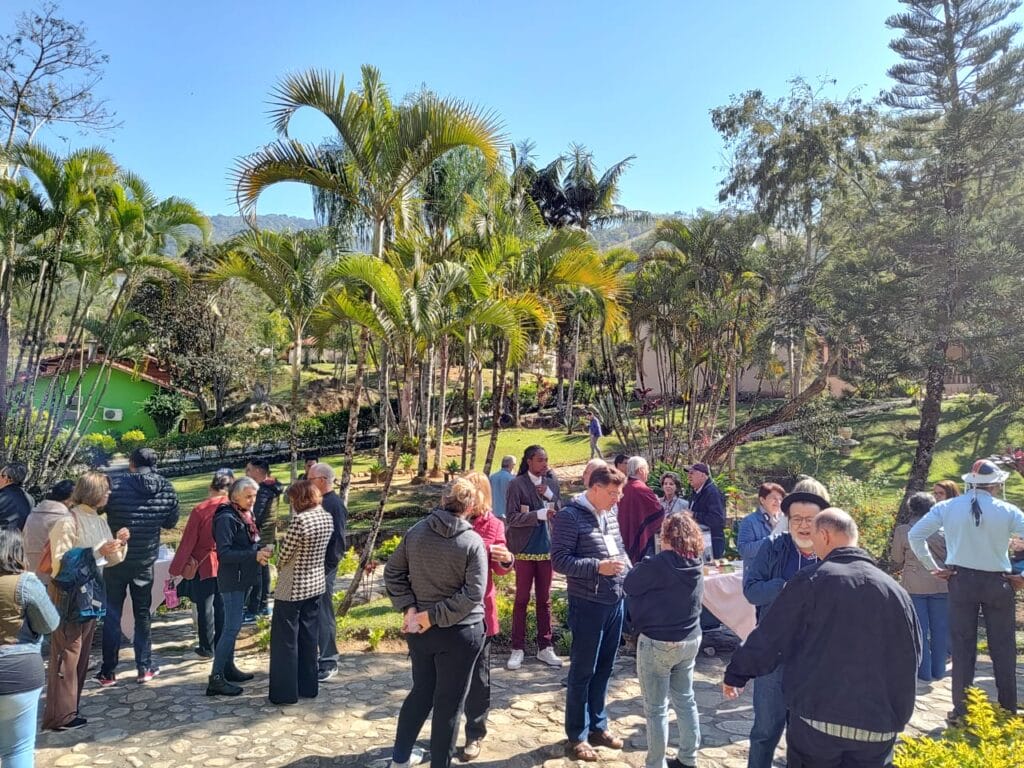
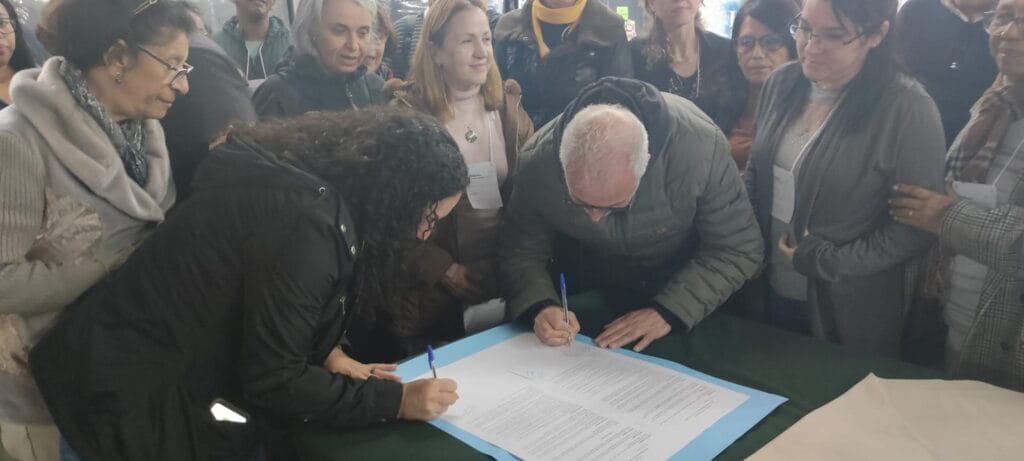
Margaret encouraged UNIRedes to move forward: “Now you have to figure out how to make your life and example reach everyone in the world. Quoting a conversation of Chiara Lubich from 1956, she reiterated that in its social commitment the Movement must not forget that the key to solving the problems that the Charism of Unity offers lies in the novelty of reciprocity rather than in justice. It promotes sharing, the putting in common among everyone the little or the much that is available to create a greater Common Good which, in addition to solving social problems, produces the human and spiritual fulfilment that only happens in fellowship among all. Finally Margaret launches a proposal: “Add a new article in your Charter of Principles and Commitments: a solemn pact of fraternity to be proposed to those who want to be part of UNIRedes: we are here to witness to mutual love and only if we have this love will the world believe”.
“UNIRedes speaks to us of hope,” concludes M. Celeste Mancuso. “It is a transversal and synodal proposal of an organisational network that can inspire similar models for those existential peripheries in other parts of our vast world. In this way we can think of building global networks of fraternity that promote the common good”.
Stefania Tanesini
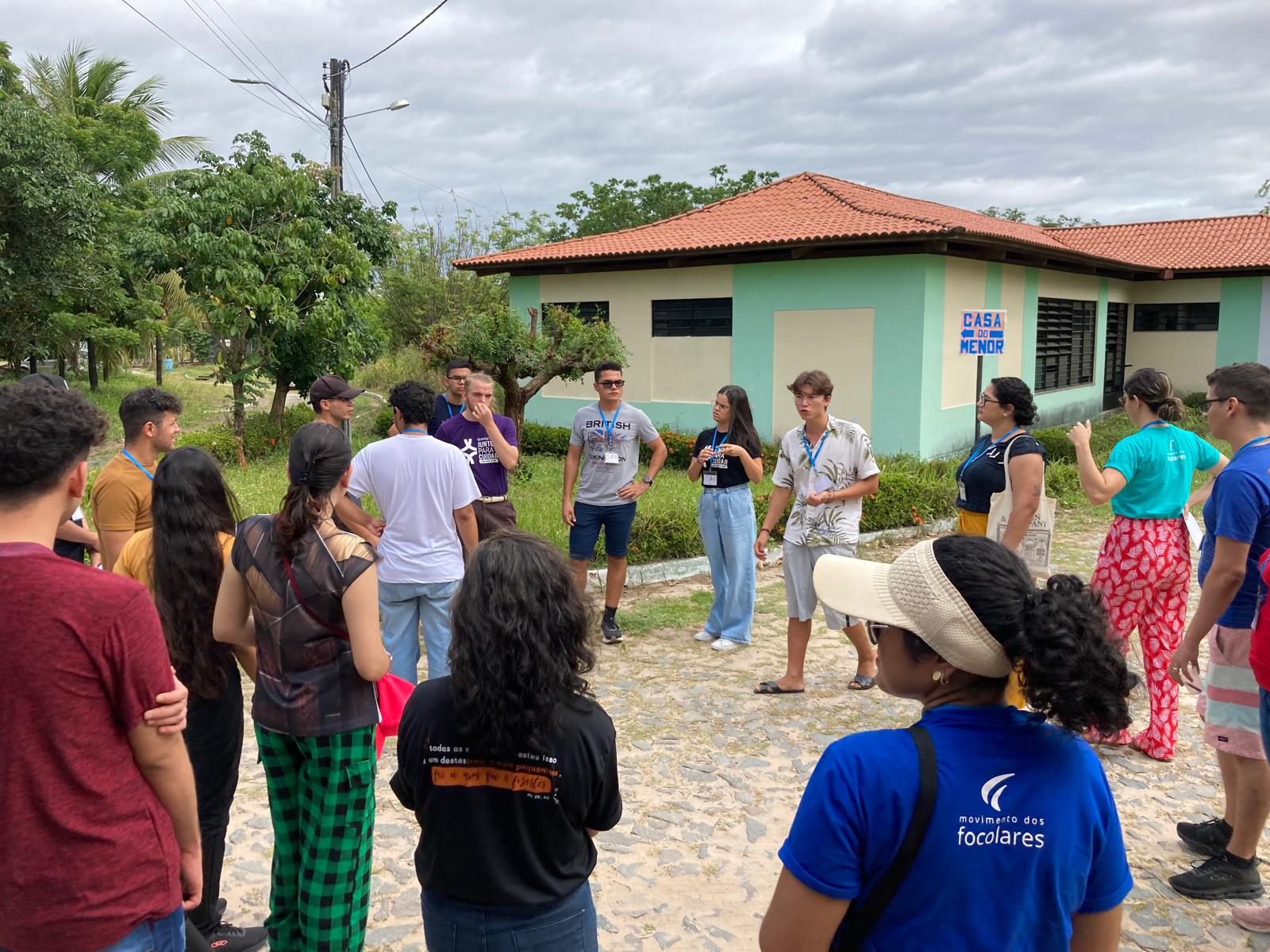 An original condominium
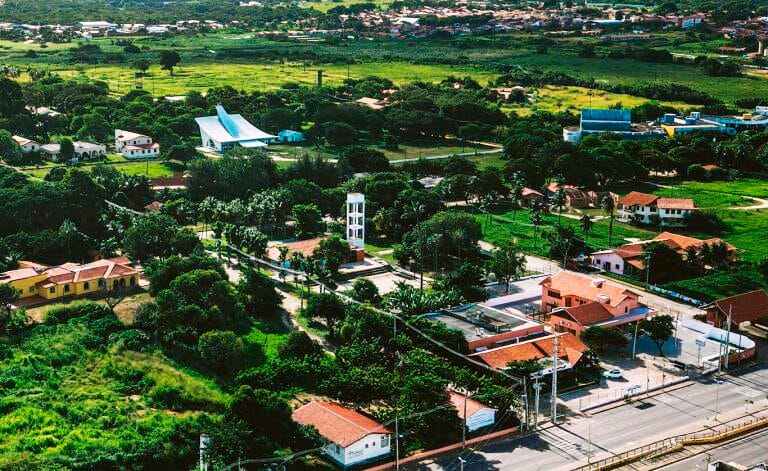 CEU: different flowers in the same garden
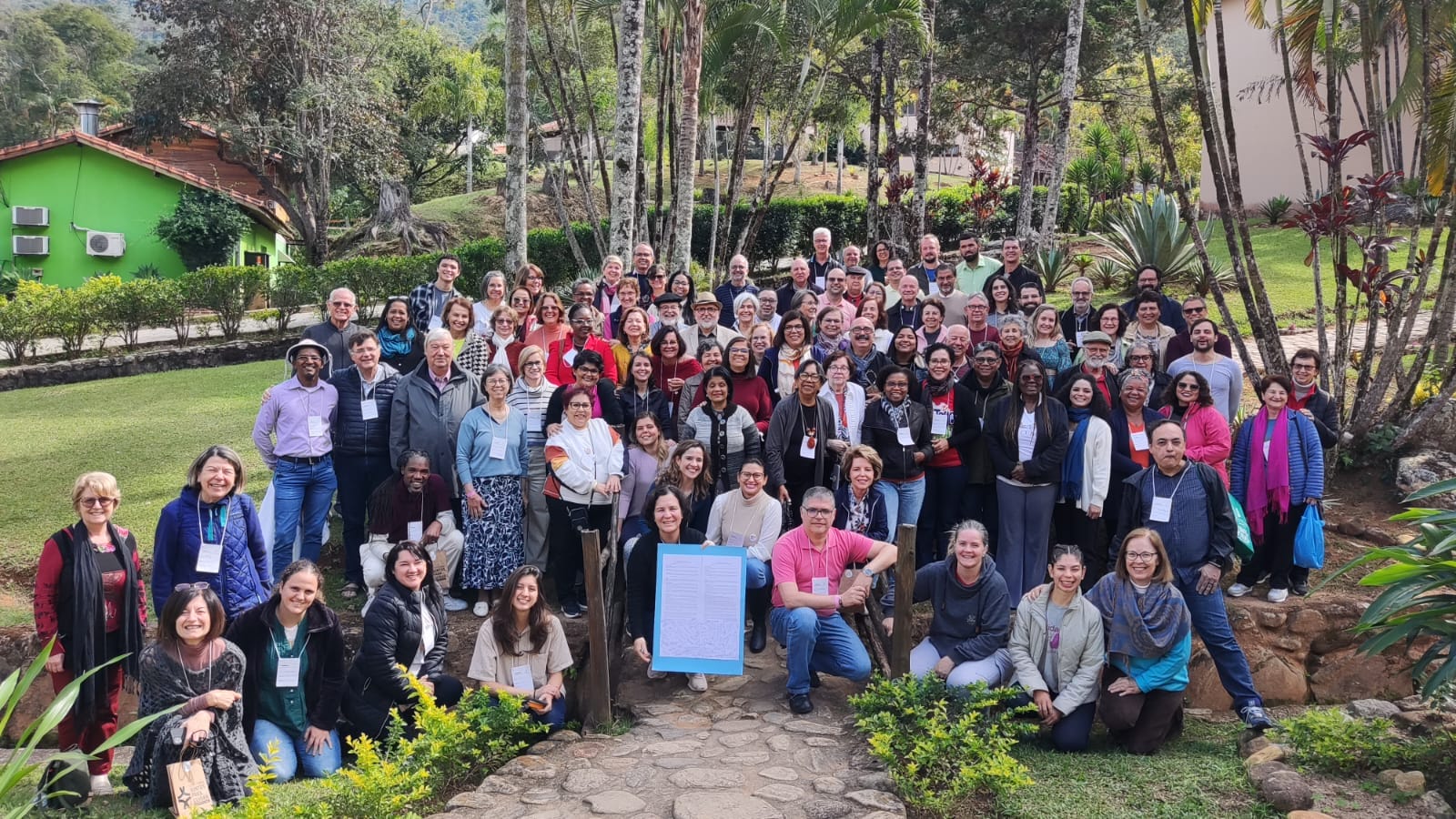 UNIRedes: hope for Latin America and the world